
Commentary: German economy Monthly Report – July 2026

Monthly Report

1 German economy withstanding headwinds
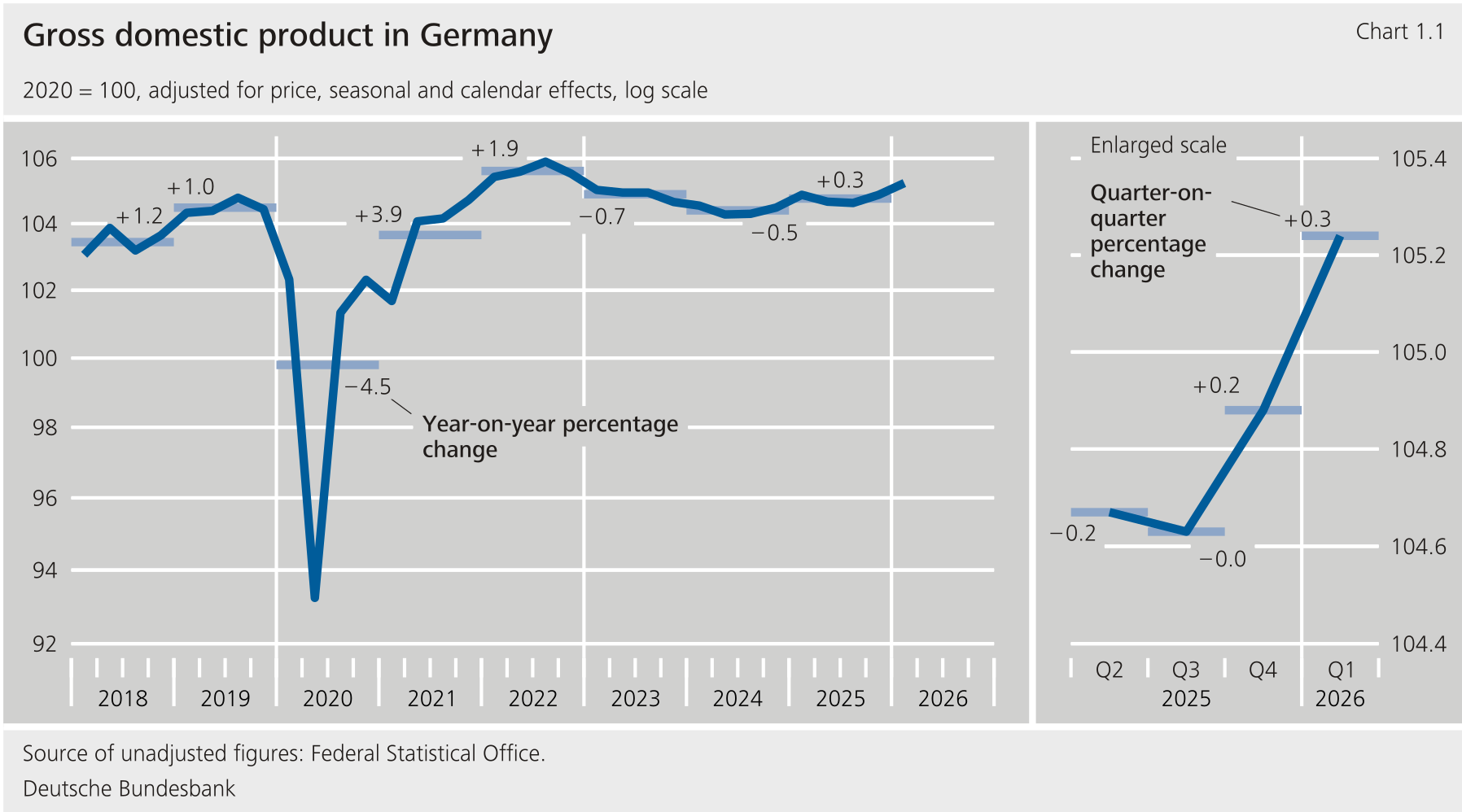
Economic output in Germany is likely to have risen somewhat in the second quarter of 2026. In spite of headwinds created by the war in the Middle East, real GDP is likely to have increased somewhat in the second quarter of 2026 after seasonal adjustment. 1 Industrial activity remained resilient. This is borne out by the data available for April and May. Industry is benefiting from dynamic foreign demand and growing exports. Consumers were relatively unaffected by the high energy prices and associated losses in purchasing power, and look to have kept their consumer spending at least stable. Finally, expansionary fiscal policy is supporting economic activity. Overall, the current picture painted by the indicators suggests a somewhat higher underlying pace of economic growth than was expected in the Bundesbank’s June Forecast for Germany. 2 There are also temporary factors supporting growth. The data available to date show that real imports of goods were weak, probably as a result of the war in Iran. 3 In addition, German exporters may have benefited from the fact that their international competitors (especially in Asia) were more affected by bottlenecks in the supply of intermediate goods. Moreover, it is possible that frontloading effects in anticipation of shortages and price rises stabilised parts of the industrial sector. Construction output is also likely to have increased significantly despite higher interest rates for building finance. However, a large part of this growth is attributable to a turnaround after the previous quarter’s weaker level in the face of adverse weather conditions. In the third quarter – provided the situation in the Middle East does not intensify further – the burdens stemming from the war could be smaller than on average in the second quarter. 4 At the same time, though, the temporary supporting factors from the second quarter are also likely to reverse or dissipate. GDP growth could then be somewhat weaker overall.

Gross domestic product in Germany

2 Industrial activity surprisingly robust
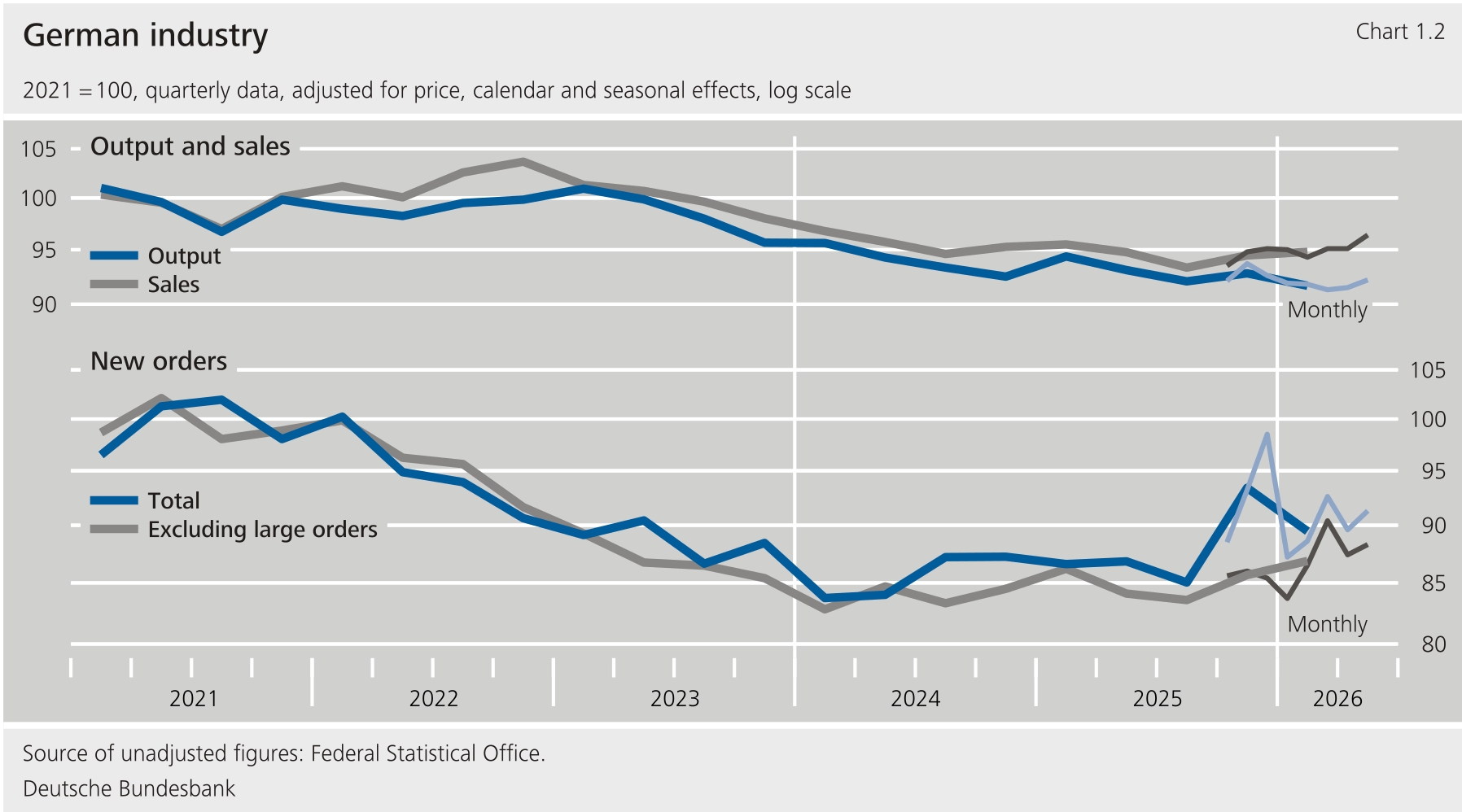
German industry is proving surprisingly robust given the war in Iran and probably made a positive contribution to gross value added. Both output and sales in the industrial sector rose in May from their April levels. Averaged over April and May, too, industrial activity picked up quarter on quarter, rising slightly based on industrial output data and significantly based on price-adjusted industrial sales. According to the data, developments were particularly favourable in the production of intermediate goods and in energy-intensive sectors. Due to the war in the Middle East, German manufacturers of primary materials and chemical products experienced increased demand. This was possibly also because their buyers frontloaded orders, fearing supply bottlenecks and price rises. At the same time, German manufacturers likely benefited from less stretched supply chains than international competitors (especially Asian countries). By contrast, output in the German automotive industry probably declined. In this sector, production and sales growth in May was unable to make up for the significant decline in April. The figures already reported up to June by the German Association of the Automotive Industry (VDA) also point to stagnation at best in the second quarter. Sentiment indicators are broadly robust in proportion to the international pressures. For example, the assessment of the situation in the manufacturing sector once again improved significantly in the second quarter, according to the ifo Institute, and deteriorated only slightly in July. S&P Global’s Purchasing Managers’ Index was also consistently above the expansion threshold.

Foreign demand for German industrial goods remained dynamic. New orders rose in May as against April. They were also distinctly higher than the previous quarter’s level when averaged over April and May – both including and excluding the often volatile large orders. Continued brisk momentum in external trade is overshadowing subdued domestic demand. Growth was mainly attributable to additional orders for intermediate goods, especially for chemical and metal products. In addition, the manufacture of other transport equipment again played a key role in the increase as well. In contrast to the improved business situation and favourable order growth, firms’ export and business expectations deteriorated considerably on average in the second quarter, according to the ifo Institute. They, too, have now bottomed out, however. Industrial enterprises were less pessimistic about the future in July than on average in the second quarter.

German industry
German industry

3 Service providers and private consumption subdued

The services sector may have grown slightly in the second quarter. Output in the services sector (excluding trade) picked up again distinctly in April – the latest month for which data are available – compared with the weak March. It thus reached a level slightly higher than the previous quarter’s average. As for further developments, the available sentiment indicators paint a mixed picture. The ifo business climate index for service providers declined somewhat due to the war in the Middle East, but improved again in June and July, almost returning to its pre-war level. At the same time, S&P Global’s Purchasing Managers’ Index fell well below the expansion threshold and remained just below it in July as well.

Private consumption may have provided some support for service providers’ activity. Consumption indicators remained surprisingly stable amid price increases and losses in real income stemming from the war in the Middle East. Real sales in accommodation and food services, which are available up to May, were below the previous quarter’s level on average. However, sales in the retail sector (excluding motor vehicles) were more favourable, with the average coming in slightly above the previous quarter’s average. In addition, the ifo Institute’s survey of firms for both consumer sectors points to a somewhat less pessimistic assessment of the business situation in June and July. Finally, household passenger car registrations recently saw a marked rise, especially for electric vehicles, according to VDA data. 5 That said, consumers’ propensity to buy was depressed overall in the second quarter, according to the GfK survey, but improved a little in July. Although consumers’ economic and income expectations have recovered again discernibly compared with the lows when the war in Iran began, they are still well below pre-war levels. Moreover, the purchasing power of real disposable income is still diminished and labour market developments also remain weak.

4 Labour market still on a slightly downward track
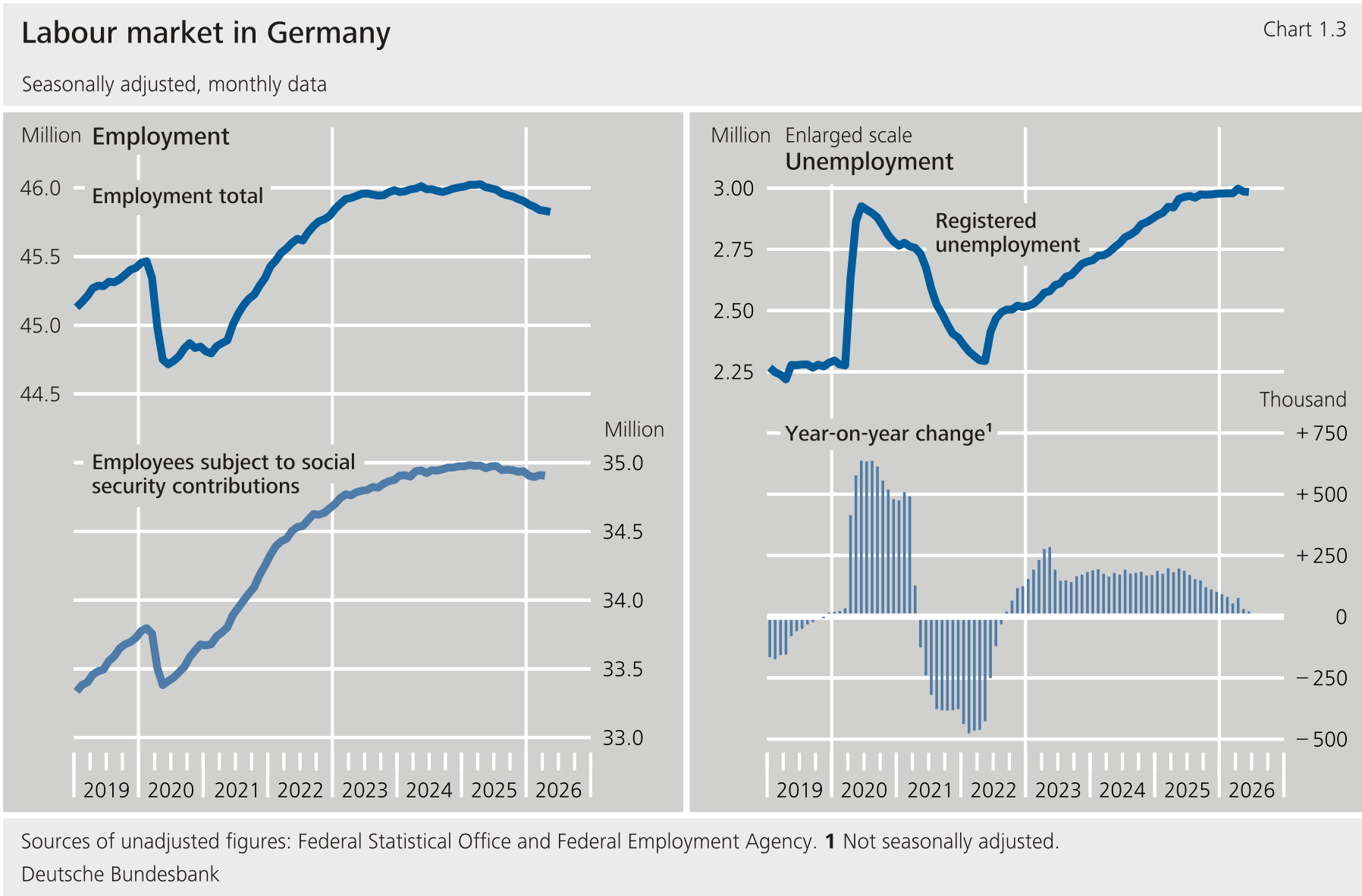
The moderate decline in employment in the economy as a whole continued in the second quarter, with further significant job cuts in industry. In May, employment in Germany declined on the month after seasonal adjustment, falling by 8,000 to 45.82 million persons. Employment thus dropped only slightly, as in April, after the significant contraction in the first quarter. Employment subject to social security contributions saw a moderate decrease; the first estimate of this is available for April. However, the number of jobs in manufacturing continued to fall considerably. Headcounts were also reduced on a smaller scale in temporary agency work and trade. Employment remained stable in the construction sector. As has been the case for some time now, additional labour was needed primarily in healthcare and social services. This was also true of business-related services to a lesser extent. In addition to employment subject to social security contributions, there was also a decrease in the number of exclusively low-paid part-time employees and the self-employed.

Labour market in Germany

Leading indicators show no signs of a recovery in the labour market over the coming months. The ifo employment barometer, a survey of employment plans in the business community over the next three months, remains deep in negative territory and fell again in June. The employment component of the IAB labour market barometer, which also encompasses publicly funded sectors, fell minimally below the neutral threshold after a slight deterioration. This signals a broadly stable level of employment in the aggregate economy. The number of vacancies reported to the Federal Employment Agency remained virtually unchanged once again. In particular, an extremely low number of new job vacancies were received. The labour market is thus not expected to see strengthening growth in the short term.

Unemployment recently fell slightly. The number of persons officially registered as unemployed was 2.98 million in June in seasonally adjusted terms. The unemployment rate held steady at 6.3 %. Unemployment covered by the statutory unemployment insurance scheme, which is closely linked to cyclical developments, continued to rise over the period under review. However, the number of unemployed people receiving the basic welfare allowance decreased. Total underemployment fell somewhat more sharply than registered unemployment. This is likely because of a slight decline in the number of people engaged in labour market policy measures. According to the IAB unemployment barometer, unemployment will probably barely increase over the next few months. This leading indicator has been rising for several months now and is slowly approaching the neutral threshold.

5 Energy commodity prices showing high volatility

Following sharp declines in June, energy commodity prices picked up again significantly in July. The main reason for the initial decline in prices was the temporary easing of the conflict in the Middle East. As a result, oil prices temporarily returned to their levels before the outbreak of the war in Iran at the end of February. However, the geopolitical situation in the region has intensified again since then. Renewed military attacks and the resumption of the US naval blockade of Iranian ports have largely brought shipping through the Strait of Hormuz to a standstill once again. The security situation in the Red Sea has also deteriorated recently. In the face of these developments, energy commodity prices picked up again considerably. A barrel of Brent crude oil cost around US$90 as this report went to press, which is 25 % more than before the war broke out. European gas prices (TTF) stood at roughly €60 per megawatt hour, which is almost twice as much as before the war. In this case, longer-term war-related loss of production capacities in major producing countries is having an added impact.

6 Inflation temporarily down to 2.4 % in June
In June, industrial producer prices for domestic sales fell slightly on the month in seasonally adjusted terms. This was primarily due to the lower energy prices, after sharp increases in the previous months. Excluding the energy component, they picked up moderately. Prices for intermediate goods, in particular, rose significantly recently. This is probably increasingly reflecting the impact of the higher energy commodity prices in recent months. Industrial producer prices rose by 1.8 % year on year. Seasonally adjusted import prices increased in May, the last month for which data are available. While import prices excluding energy were clearly on an upward path, energy prices went up only slightly after having previously risen sharply. Import prices rose by 6.8 % year on year.

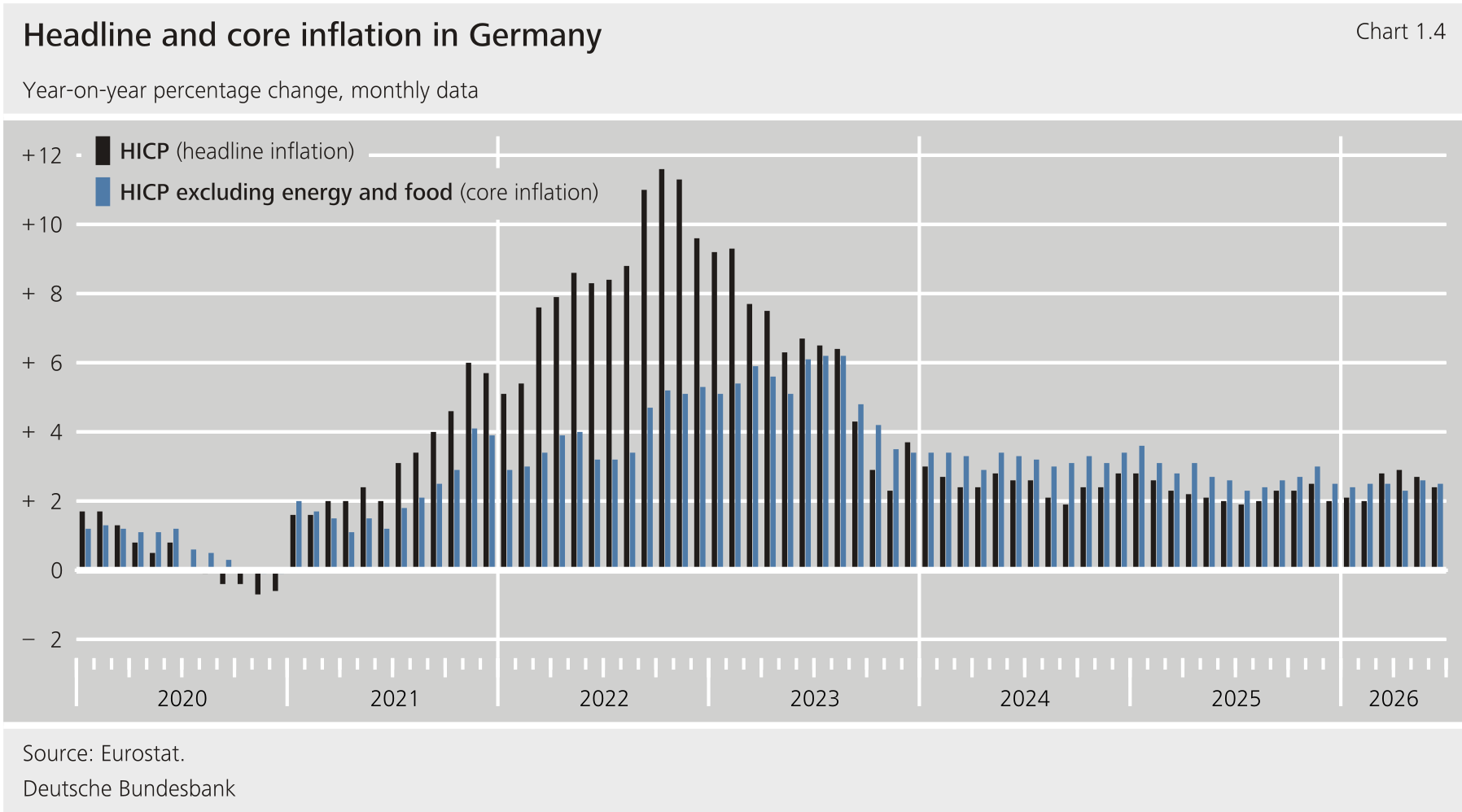
The inflation rate came down a little further in June, mainly thanks to lower energy prices. The year-on-year rate of the Harmonised Index of Consumer Prices (HICP) fell from 2.7 % in May to 2.4 % in June. 6 In both months, the temporary lowering of energy tax on petrol and diesel (fuel rebate) had a dampening effect. 7 In June, price dynamics also declined, especially for energy. But core inflation (excluding energy and food) likewise decreased slightly, dropping from 2.6 % to 2.5 %. The HICP fell again in June by a seasonally adjusted 0.2 % on the month. This was mainly due to lower fuel and heating oil prices, which reflected the drop in crude oil prices as the conflict in the Middle East eased. However, food prices declined again as well. Non-energy industrial goods also became slightly cheaper, after having seen sharp price rises in the previous month. Only services prices continued to rise moderately.

Headline and core inflation in Germany

Inflation is likely to climb again a little in the coming months from its current, still elevated level. The main factor behind this is the expiry of the fuel rebate at the start of July. In addition, the indirect effects of the recent surge in energy prices are likely to gradually feed through to consumer prices. Higher energy prices typically only have an impact on the overall HICP basket of goods after a lag. Amongst other things, this delay depends on how soon firms are confronted with higher production, transportation and input costs and how quickly they pass them on to households. 8 Overall, uncertainty about the future path of inflation remains high. The simmering conflict in the Middle East recently flared up again, for example. If tensions persist, energy prices are likely to go up again, including for consumers, and inflationary pressures will likely intensify once more.

This article is based on data available up to 27 July 2026, 11:00.

List of references

Deutsche Bundesbank (2026a), Forecast for Germany: Energy price shock fuels inflation and slows the economic recovery, Monthly Report, June 2026. 

Deutsche Bundesbank (2026b), Definitions of direct, indirect and second-round effects of an increase in energy commodity prices, Monthly Report, June 2026.

German Association of the Automotive Industry (2026), Production and Market in June 2026: New Electric Vehicle Registrations Drive Passenger Car Market, press release of 3 July 2026.