# The German economy
* [*1 German economy remains on recovery path in the second quarter*](#tar-1 "1 German economy remains on recovery path in the second quarter")
* *[*2 Exports up, temporary stimulus from construction*](#tar-2 "2 Exports up, temporary stimulus from construction")*
* **[*3 Labour market further weakened*](#tar-3 "3 Labour market further weakened")**
* ***[*Scope and structure of job losses in the manufacturing sector*](#tar-4 "Scope and structure of job losses in the manufacturing sector")***
* ***[*4 Negotiated wages rose less in the second quarter*](#tar-5 "4 Negotiated wages rose less in the second quarter ")***
* ***[*5 Inflation rose markedly in the second quarter, mainly due to higher energy prices*](#tar-6 "5 Inflation rose markedly in the second quarter, mainly due to higher energy prices")***
* ***[*6 Economic output is at best likely to increase marginally in the third quarter*](#tar-7 "6 Economic output is at best likely to increase marginally in the third quarter")***
* ***[*List of references*](#tar-8 "List of references")***
****Non-final working translation****{#par-o315a4}
***1 German economy remains on recovery path in the second quarter*** {#tar-1}
------------------------------------------------------------------------------
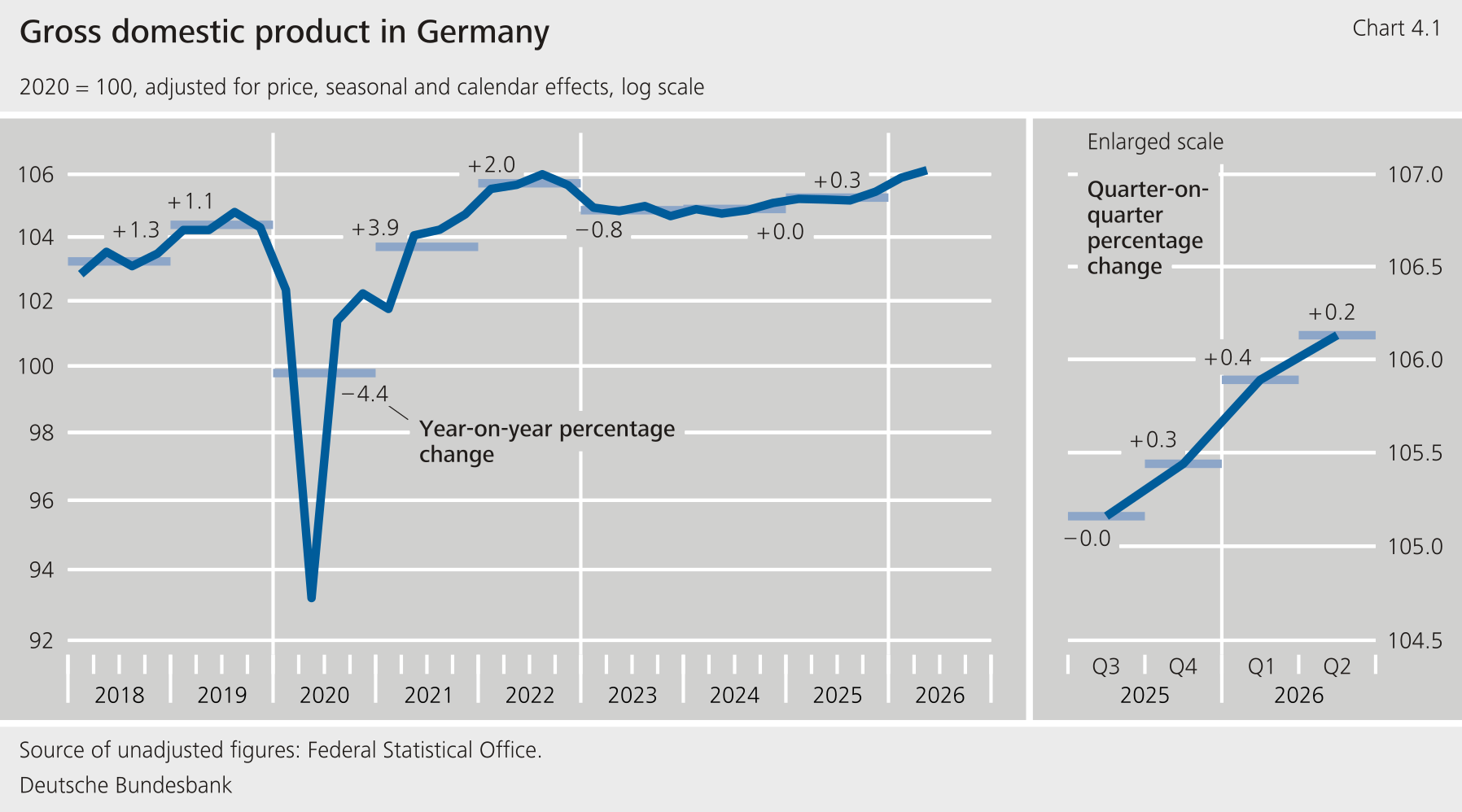
*****The German economy grew markedly again in the second quarter of 2026.** According to the Federal Statistical Office's flash estimate, real rose by 0.2 % on the quarter after seasonal adjustment.[\[1\]](#_ftn_root_1) Economic output had already risen quite steeply by 0.4 % in the previous quarter. However, this only became known when data were revised at the end of July and therefore could not feed into the June Forecast for Germany. In the face of many burdens, the German economy is thus now more robust than previously expected.[\[2\]](#_ftn_root_2) This is also consistent with the fact that the latest revisions by the Federal Statistical Office suggest that economic momentum has already been more favourable since the end of 2023 than previously assumed.[\[3\]](#_ftn_root_3) Taken together, this points to a somewhat stronger underlying cyclical trend at the current end. This means that the German economy is now clearly on a recovery path that the war in the Middle East has also failed to thwart. In the second quarter, exports, in particular, are likely to have contributed to growth. German industry was also bolstered by the persistently robust demand from abroad. Both production and sales rose slightly. It thus proved quite resilient to higher energy prices and supply chain problems. However, the recovery is unlikely to have provided a positive boost to private investment in machinery and equipment. Capacity utilisation in the manufacturing sector remained at a low level, and the increased uncertainty at the outbreak of the war in the Middle East and higher interest rates additionally dampened it. Despite weak housing demand and high construction costs, the construction sector is likely to have made a positive contribution to growth. This is a result of temporary catch-up effects following the depressed output owing to the weather in the first quarter. Developments among service providers remained heterogeneous. According to data available up to May, less consumer-oriented services, such as information and communications services, were the main contributors to growth. By contrast, household consumption and related sectors are likely to have grown only moderately owing to the deterioration in labour market conditions and the significant rise in consumer prices in the wake of the war in the Middle East.***{#par-u2ouio}
{#par-oi2343}
****
**2 Exports up, temporary stimulus from construction** {#tar-2}
---------------------------------------------------------------
****German industry and, above all, export activity were robust in the second quarter of 2026.** Price-adjusted industrial sales were again up on the previous quarter, albeit only marginally. Sales of intermediate goods, in particular, saw strong growth that was especially pronounced in the chemical industry. One-off effects related to the war in the Middle East are likely to have contributed to this. For example, the chemicals industry may have become more competitive, as it was probably affected less severely by supply chain bottlenecks as a result of the war in the Middle East than some international competitors. Frontloading effects may also have played a role with some intermediate goods, in anticipation of further shortages and rising prices, for example. Sales in the electrical equipment sector were particularly buoyant. This is likely to reflect the global increase in demand for artificial intelligence-related goods. The overall rise in industrial sales was largely attributable to strong foreign sales. Price-adjusted goods exports also increased markedly in the second quarter, mainly as a result of stronger exports to the euro area. Industrial production in June was at the previous month's level, which was slightly higher than the previous quarter on a quarterly average. This means that both sales and production for the second quarter indicate a slight expansion in industry.**{#par-eo5289}
{#par-u214e3}
**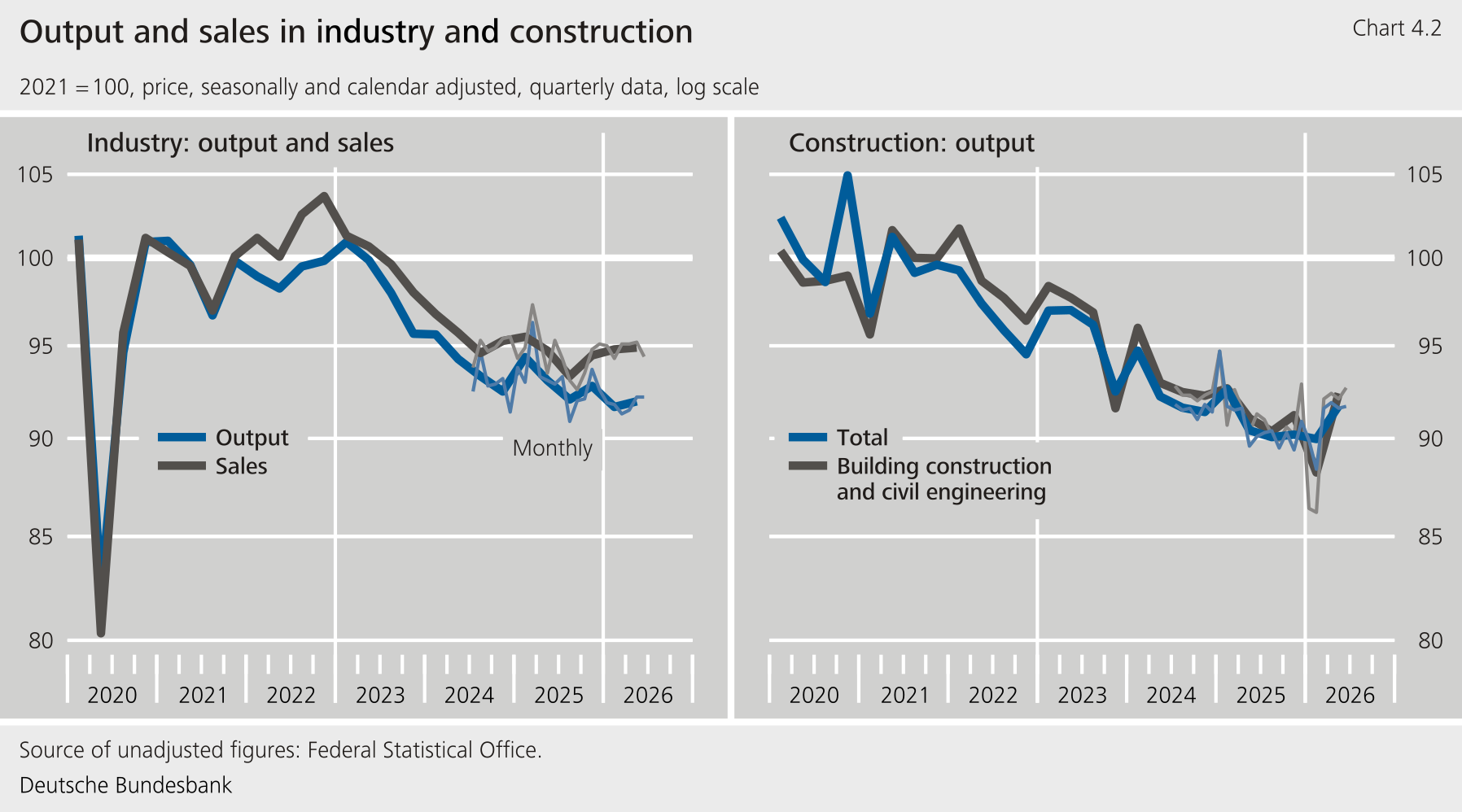**
****Private investment in machinery and equipment is probably still not providing any positive stimulus.** According to ifo Institute surveys, capacity utilisation increased slightly for the second time in a row in the second quarter, but remained well below the long-term average. This is continuing to dampen incentives to invest in capacity expansion. According to data available up to May, more capital goods were imported. However, the renewed slight decline in domestic sales by capital goods producers -- with and without motor vehicles -- and the decline in commercial motor vehicle registrations point to a continued weak propensity to invest. Overall, private investment in machinery and equipment is therefore likely to have remained weak.**{#par-u4iaa4}
****Construction output grew despite weaker demand.** Construction output rose sharply in the second quarter, and construction investment is set to have expanded as well. After construction activity had been significantly impaired by the unfavourable weather in January and February, it normalised from March onwards. In addition, there are likely to have been catch-up effects for some orders since then. In both building construction and civil engineering, output in the second quarter rose not only above the level of the first quarter, but also above that of the fourth quarter of 2025. By contrast, the finishing trades, which are less susceptible to weather conditions, saw only a slight increase. However, the positive catch-up effects were offset by significantly higher construction prices and slumping demand. According to the July Bank Lending Survey, households' demand for housing loans saw its sharpest decline in three years in the second quarter.[\[4\]](#_ftn_root_4) The rise in lending rates, in particular, was cited as a dampening factor for loan demand in this segment. Higher lending rates are also likely to be weighing on construction investment. New orders in housing construction declined significantly, especially in May.**{#par-ou9e52}
****Losses in purchasing power weighed on private consumption and the related service sectors.** Price-adjusted retail sales rose slightly in the second quarter. However, data on the hotel and restaurant sector available up to May point to a weak quarter. Within the services sector, too, consumer-related sectors, in particular, failed to benefit from the improved underlying cyclical trend. However, services output rose significantly overall in April and May. Consumption restraint is likely to have been driven by losses in purchasing power and continued weak labour market developments. This is also indicated by the significant decline in the consumer climate indicator in the second quarter, which was weighed down by pessimistic income and economic expectations, as well as rising price expectations. Only a higher number of motor vehicle purchases is likely to have provided a meaningful boost to consumption. However, the increase in motor vehicle registrations according to data from the German Association of the Automotive Industry is likely to be driven by one-off factors rather than broader cyclical consumption dynamics. The rise was mainly due to significantly higher registrations of electric cars, which was probably partly attributable to the Federal Government's electric car premium.[\[5\]](#_ftn_root_5)**{#par-uai597}
**3 Labour market further weakened** {#tar-3}
---------------------------------------------
****The labour market has not benefited from the economic growth and continued to deteriorate in the second quarter.** Employment declined further at a pace similar to that seen since mid-2025. Based on the usual revision of the national accounts, developments in total employment over the past two years are now also somewhat less favourable than when last reported. However, unemployment rose only marginally. Leading indicators provide little indication of an impending improvement.**{#par-a9ii5u}
****The number of people in employment fell slightly in the second quarter of this year.** Averaged over April to June, 45.70 million persons were in employment after seasonal adjustment. This was 52,000 fewer persons than a quarter before. This corresponds to a decline of around 0.1 %, as in the previous four quarters. In addition, employment developments over the past four years were adjusted downwards when making revisions to the national accounts. At the current end, employment is 0.3 % lower than previously published. Employment dynamics are now less favourable than previously reported, especially for the first half of 2025. The current decline in employment is mainly due to the fact that there were fewer people exclusively working in low-paid part-time jobs and fewer self-employed persons. By contrast, employment subject to social security contributions fell only very little up to May -- the last month for which data are available.**{#par-u8eo4a}
{#par-u184o1}
**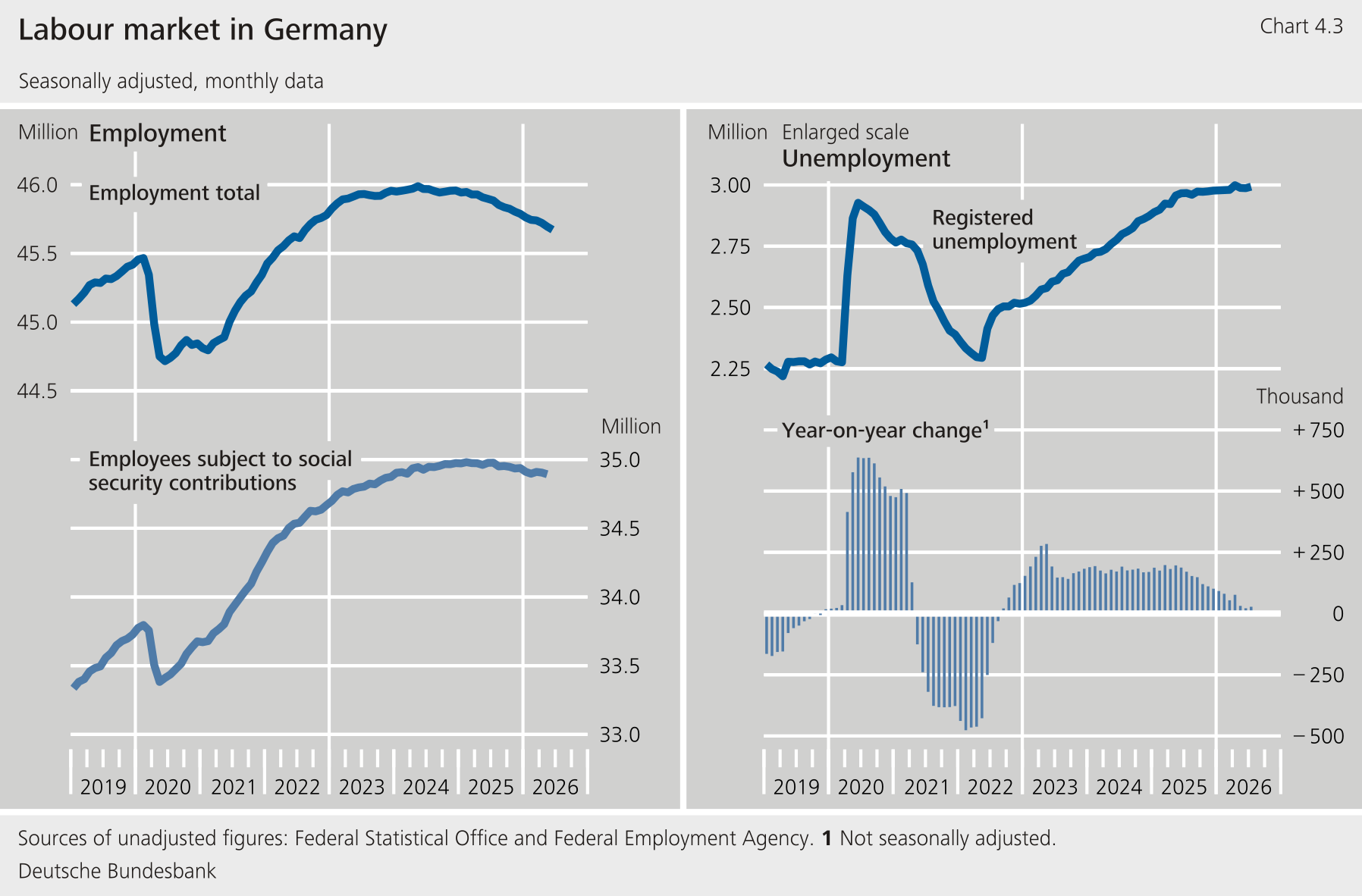**
****Employment developments continued to vary across the individual sectors of the economy.**In the manufacturing sector, between 12,000 and 15,000 jobs subject to social security contributions are being cut every month. Further information on the employment situation in this sector and its classification can be found in the supplementary information entitled "Scope and structure of job losses in the manufacturing sector". Job losses also continued in the retail sector and in information and communication. By contrast, employment remained stable in construction in the second quarter. However, the number of jobs has not grown significantly so far, contrary to what might be expected in view of the Federal Government's Infrastructure Fund. Employment in most services sectors is stable or slightly higher. Employment in the health and social work sectors is rising significantly, as has been the case for some time now due to the ongoing ageing of the population in Germany.**{#par-a3oo5e}
****Registered unemployment rose marginally in the second quarter.** On average in the second quarter of 2026, roughly 12,000 persons more were registered as unemployed than in the first quarter in seasonally adjusted terms. The unemployment rate went up by 0.1 percentage point to 6.4 % due to rounding. In July, too, 2.99 million persons were registered as unemployed with the Federal Employment Agency in seasonally adjusted terms -- as was already the April to June average. Over the past few months, unemployment in the statutory unemployment insurance scheme, which responds strongly to current economic developments, rose. However, unemployment among those receiving the basic welfare allowance fell slightly. Although the chances of starting work and ending unemployment for those receiving the basic welfare allowance are significantly lower than for those in the insurance system, unemployment is falling here. However, this is also due to an only moderate increase in entrants to the basic welfare allowance scheme -- compared to the statutory unemployment insurance scheme. Owing to a lack of entitlement under the unemployment insurance scheme, new immigrants initially receive the basic welfare allowance if they wish to take up work and do not move to Germany on the basis of a specific job offer. In this respect, the recent low level of immigration could also help to explain the decline in unemployment among those receiving the basic welfare allowance in recent months.**{#par-u8874o}
****Leading labour market indicators have so far given few signs of an imminent improvement.** The ifo employment barometer has barely changed. It remains at a very low level, albeit with significant monthly fluctuations. The barometer determines the industrial sector's recruitment plans for the next three months. In the manufacturing and retail sectors, staff reduction plans have been predominant for some time now. Employment plans in some services sectors had become considerably darker following the outbreak of the conflict with Iran. This effect has now largely receded. The employment barometer, which also takes into account the publicly financed service sectors such as health, education and administration, declined again and is now significantly below the neutral threshold. Total employment is therefore likely to go down further in the short term. The number of vacancies reported to the Federal Employment Agency remained largely unchanged in recent months in seasonally adjusted terms. However, labour demand shifted slightly from predominantly publicly financed sectors to more cyclical sectors such as manufacturing, construction and business services. Although the short-term unemployment indicator -- the unemployment barometer -- showed continuous slight improvements in the past few months, it remains below the neutral threshold. Unemployment could therefore continue to rise for the time being, albeit only slightly.**{#par-eu9iee}
**Scope and structure of job losses in the manufacturing sector** {#tar-4}
--------------------------------------------------------------------------
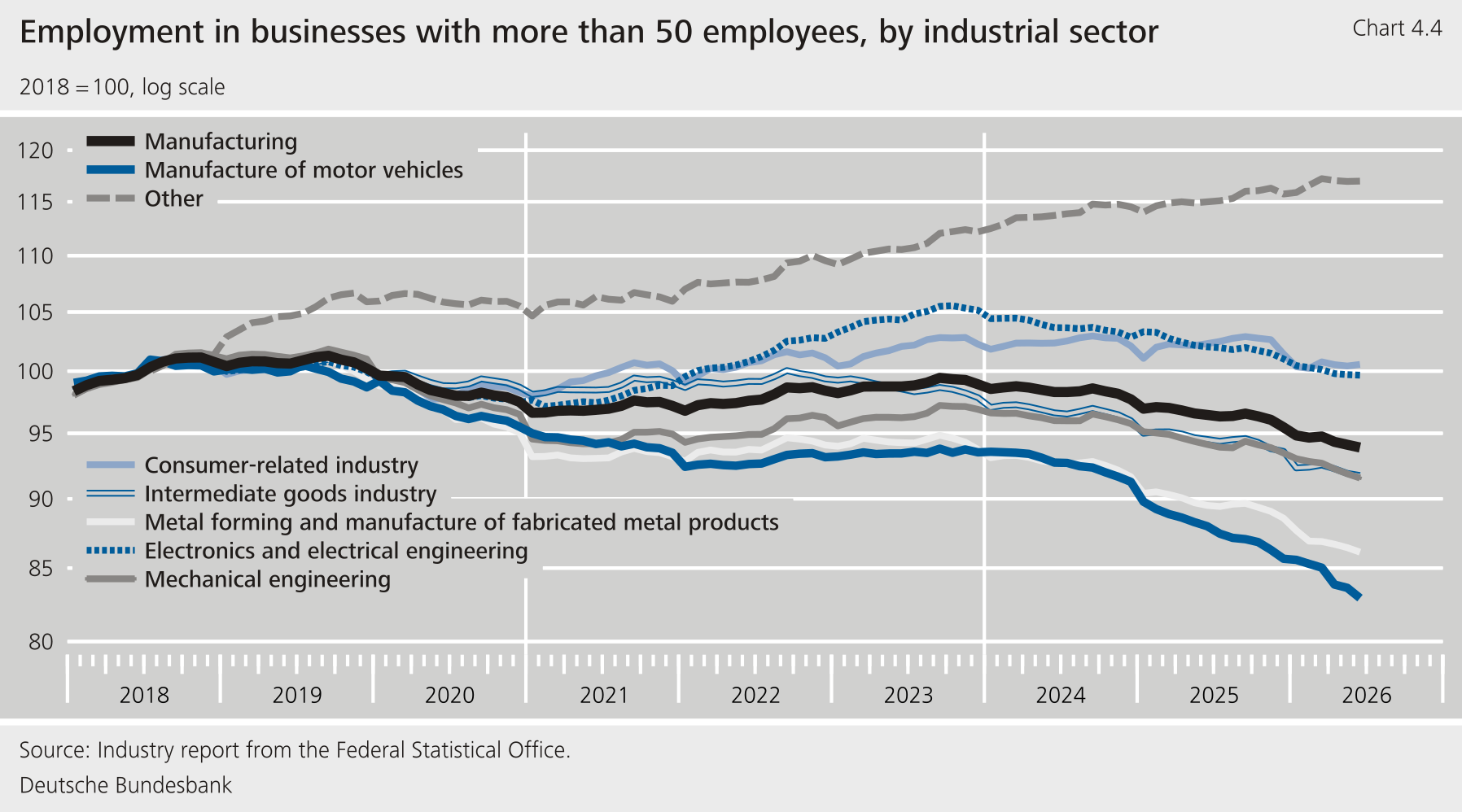
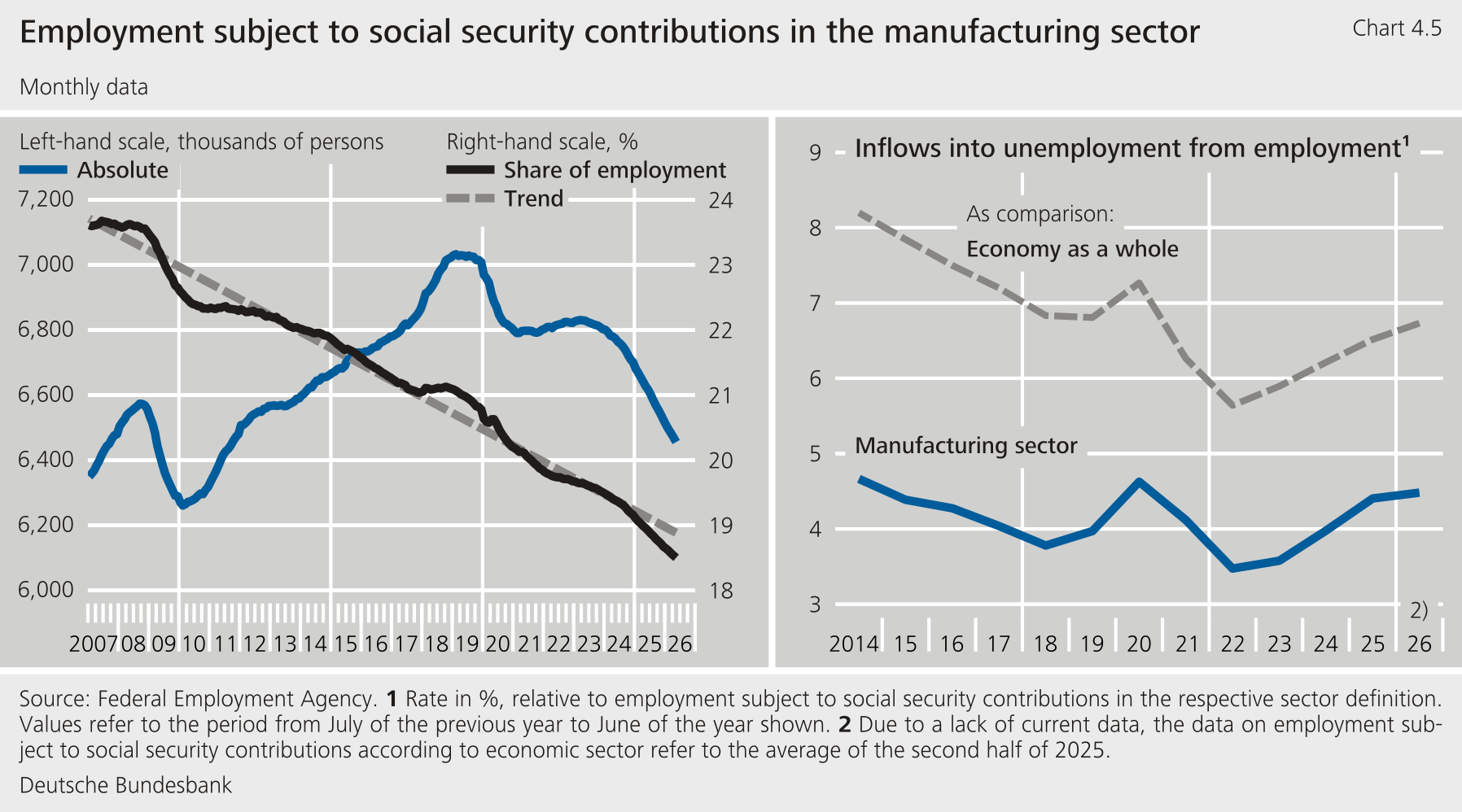
****Since the beginning of the current decade, large parts of the employment gains in the manufacturing sector generated during the economic upswing following the financial and economic crisis have been lost** . Many jobs in manufacturing were already shed during the ‑19 pandemic. Since 2024, large parts of the sector have once again been significantly reducing employment.**{#par-a7a155}
****A particularly large number of jobs have been lost in energy-intensive sectors and the automotive industry.** Since 2019, jobs have been shed disproportionately amongst intermediate goods producers, many of which are energy-intensive, and in metal forming and manufacture of fabricated metal products, which also tends to be energy-intensive, as well as in mechanical engineering and motor vehicle production. The transformation of the automotive industry towards e-mobility is expected to lead to a number of jobs cuts, as the degree of value added in the manufacturing of e-vehicles is lower than that in producing passenger cars with internal combustion engines. In addition, sales have been poor in important export markets. This was essentially due to weak global demand for vehicles with internal combustion engines and growing competition from Chinese suppliers in particular.[\[1\]](#_ftn_4d56b8e1_1) Employment in consumer-related industries and the electronics and electrical engineering sector remained relatively stable. Over a more prolonged period, employment in the "other" economic segments also increased significantly. These comprise other transport equipment, medical technology and the repair and installation of machinery and equipment, all of which have grown markedly.**{#par-a347e1}
****The decline in employment in the manufacturing sector has not yet led to a sharp rise in unemployment.** Moreover, despite the extensive job cuts, there has only been a moderate increase in the number of unemployed employees in the manufacturing sector in the past two years.[\[2\]](#_ftn_4d56b8e1_2) This suggests that jobs in manufacturing -- following a period of labour hoarding -- were largely reduced through natural fluctuation and subdued hiring rather than through large-scale redundancies.**{#par-u9u444}
{#par-e6a23u}
****
****Looking beyond cyclical fluctuations, the manufacturing sector has been losing importance for some time now.** The manufacturing sector's share of employment of total employees subject to social security contributions fell from just over 22 % in 2010 to around 18.5 % most recently. Even during the period of job creation during the 2010s, employment growth in the service sectors was significantly stronger than in industry. Structural change away from industrial production and towards the service industry has been ongoing for decades and is not a new phenomenon in the current transformation.**{#par-ue95ui}
{#par-u1e3ua}
****
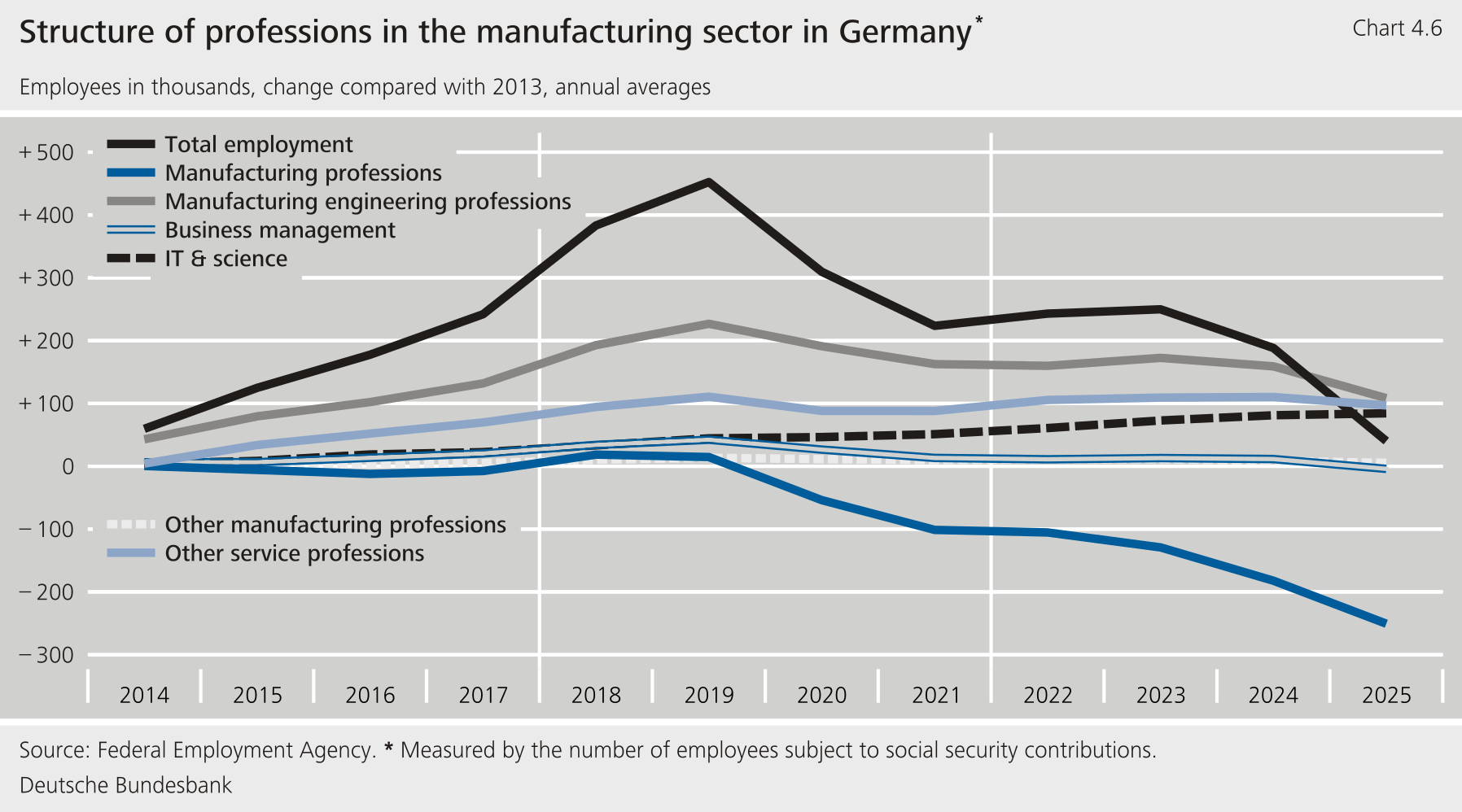
****Structural changes in industry resulted in shifting professional and qualification-related requirements.** The number of traditional manufacturing occupations in production has already been in decline since 2019. Furthermore, job cuts in manufacturing occupations accelerated in the past two years. This occupational segment thus accounts for a large share of the job losses in the manufacturing sector. At the same time, employment in some higher-skilled activities rose. specialists and natural scientists, in particular, were still being hired. The number of positions in manufacturing engineering occupations held up relatively well.[\[3\]](#_ftn_4d56b8e1_3) This illustrates the structural change in the manufacturing sector in Germany. Research and knowledge-intensive activities as well as steering and monitoring are gaining importance versus simple manufacturing occupations featuring pure production activities. Such structural change can strengthen the competitiveness of German industry. However, this would require conditions conducive to investment and employment that facilitate adjustments and new employment opportunities.**{#par-ei45i5}
{#par-aoi628}
****
1. **{#_ftn_4d56b8e1_1} See Deutsche Bundesbank (2025, 2026c).**
2. **{#_ftn_4d56b8e1_2} The transition rate of employment to unemployment in the manufacturing sector was consistently below the transition rate in the economy as a whole, as employment in the manufacturing sector tends to be more stable than in many service sectors. Since 2019, however, the transition rate in the manufacturing sector has risen in relation to the transition rate of the economy as a whole. This is likely also a reflection of the structural problems in the manufacturing sector.**
3. **{#_ftn_4d56b8e1_3} These include mechatronics, energy and electrical occupations as well as technical research, development, construction and production management occupations, which usually come with greater requirements in terms of skills and qualifications than manufacturing occupations. Manufacturing occupations are usually associated with pure production tasks (e.g. glass, ceramics and plastics production and processing, metal forming and manufacture of fabricated metal products, metal construction).**
**4 Negotiated wages rose less in the second quarter** {#tar-5}
---------------------------------------------------------------
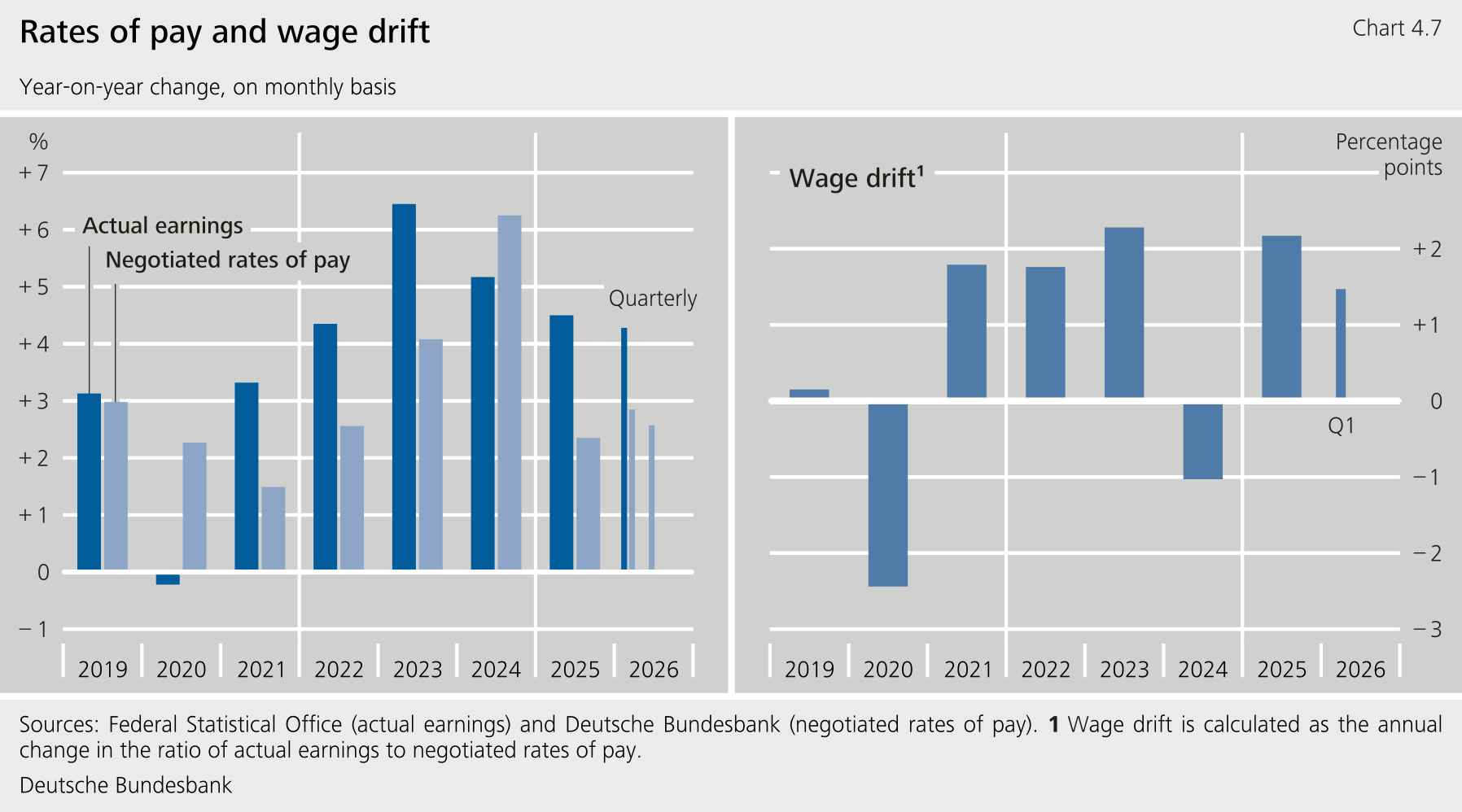
****In the second quarter of 2026, growth in negotiated wages was weaker than before.** Including ancillary agreements, they rose by 2.6 % on the year in the second quarter, after an increase of 2.8 % in the first quarter. With a year-on-year rise of 2.6 % in the second quarter, growth in basic pay, from which special and one-off payments are factored out, was significantly weaker than in winter (3.3 %).**{#par-o9u8i6}
****The recently agreed negotiated wage increases were lower than in previous years.**For example, the wage bargaining parties in wholesale and foreign trade agreed on wage increases of around 2.5 % per year, including "zero months". This is equivalent to the long-term industry average since 2007. Measured in terms of wage demands of 7 % for a term of 12 months, this wage result was rather low. That is due, amongst other things, to weak activity in the industrial sector and unfavourable employment expectations. The real wages of employees in this sector are expected to fall in 2026 and to rise slightly in 2027.**{#par-ae4o34}
****So far, there is no evidence that the war in Iran is triggering second-round effects on the inflation rate via higher negotiated wages.**New wage agreements envisage comparatively moderate wage growth, and wage demands are only slightly above their historical average. Trade unions have been stressing the higher inflation more frequently recently. However, this has not yet led to significant pay increases. Wage demands currently remain between 6 % and 11 % for a term of twelve months. An agreement is still pending in the retail sector.**{#par-ia2o27}
****In the second quarter, actual earnings growth is likely to have resembled that of the first quarter.** This is suggested by the 4.0 % year-on-year rise in nominal wages for the second quarter of 2026 in the Federal Statistical Office's earnings survey.[\[6\]](#_ftn_root_6) Gross earnings therefore again rose significantly more than negotiated wages.**{#par-ie2u77}
{#par-u24eie}
****
**5 Inflation rose markedly in the second quarter, mainly due to higher energy prices** {#tar-6}
------------------------------------------------------------------------------------------------
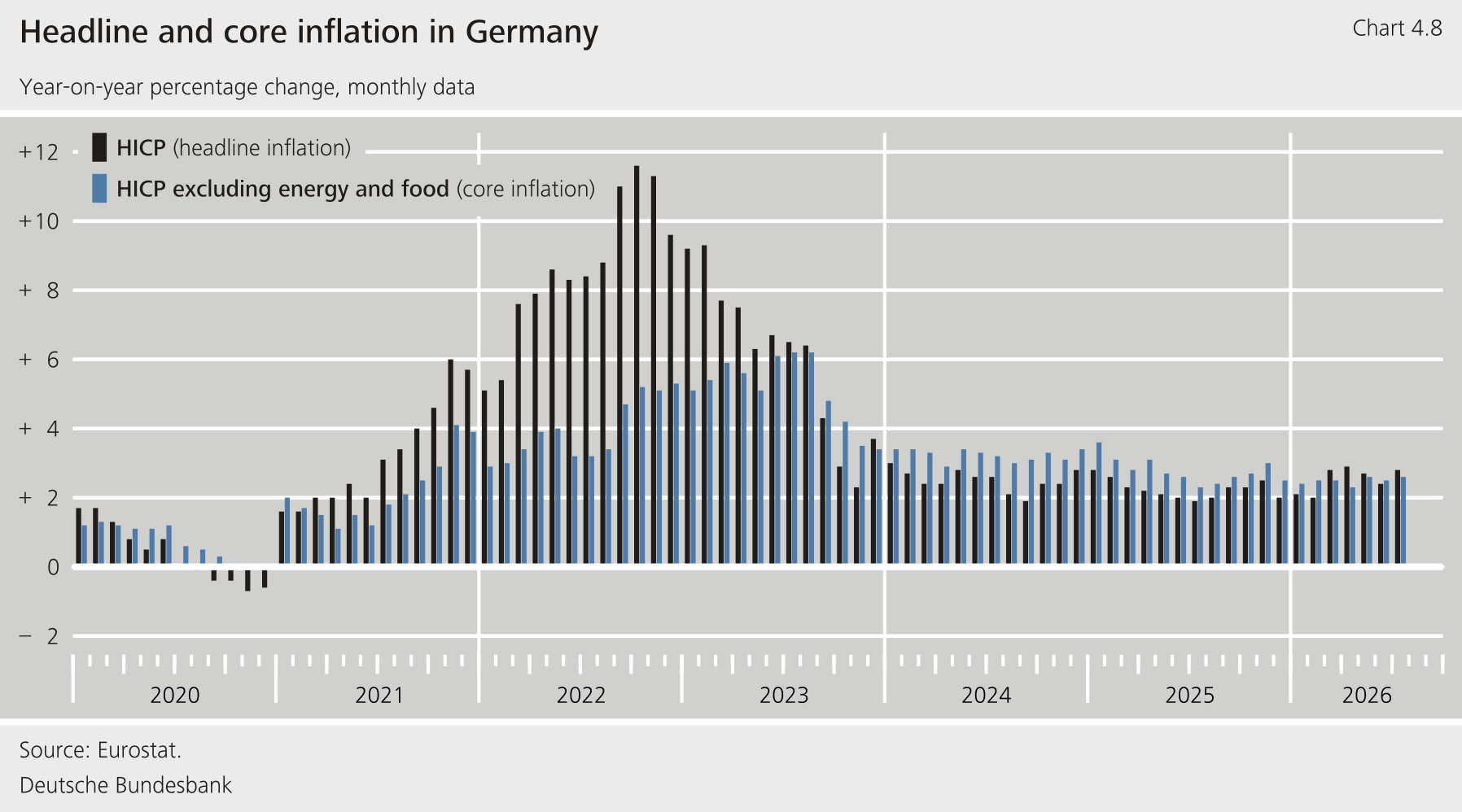
****Consumer prices increased sharply in the second quarter.** Consumer prices () rose by a seasonally adjusted 0.9 % on the quarter in the second quarter of 2026, compared with 0.7 % in the first quarter. The war in the Middle East continued to drive up the prices of energy products significantly, especially fuels and heating oil. In addition to higher crude oil prices, increased refining margins also had a price-driving effect on petroleum products. The temporary reduction in the energy tax on petrol and diesel ("fuel rebate") curbed price inflation somewhat. However, it only partially offset the impact of higher wholesale prices. In the case of non-energy industrial goods, however, upward price pressures picked up only slightly. Owing to the high demand for artificial intelligence applications, certain goods and services for information processing became significantly more expensive, especially storage media and specific software products.[\[7\]](#_ftn_root_7) However, their contribution to the inflation rate was minor owing to the small share in the basket of goods. Prices for services rose at a similar rate to the previous quarter, which thus remained above average by historical standards. The price of air travel rose particularly sharply. The higher kerosene prices are likely to have played a part in this. By contrast, food inflation moderated somewhat as price pressures eased at upstream stages. Agricultural producer prices fell significantly in April, May and June. Lower prices for fruit, vegetables and dairy products more than offset the sharp rise in tobacco prices.**{#par-u473ai}
****The annual inflation rate also increased markedly in the second quarter of 2026.** The inflation rate rose from 2.3 % in the first quarter to 2.6 % in the second quarter. The energy price shock thus interrupted the disinflation process, which had made major progress up to that point. In January and February 2026, annual inflation had been running close to 2 %. In contrast to the previous period of high inflation, however, the renewed rise in inflation has so far not been broad-based, but instead focused heavily on energy products. Indirect effects of the energy price surge on other components of the , particularly food and non-energy industrial goods, were limited. These usually occur with a significant lag.[\[8\]](#_ftn_root_8) The core inflation rate (as measured by excluding energy and food) dropped slightly from 2.5 % in the previous quarter to 2.4 %. This was mainly due to the surprisingly weak price dynamics of package holidays. Excluding the volatile clothing and travel services components, the core rate remained unchanged at 2.5 %.**{#par-a5285e}
****Following a brief decline in June, the inflation rate went back up significantly to 2.8 % in July.** [\[9\]](#_ftn_root_9)Energy prices, in particular, rose considerably more sharply than before, especially as the temporary energy tax cut for petrol and diesel came to an end. In addition, higher refining margins pushed up inflation. Food prices also climbed upward again after falling in previous months. Cheese and vegetables, in particular, became considerably more expensive. Price inflation also increased significantly in the case of non-energy industrial goods. The sharp rise in the price of pharmaceuticals, which added 0.2 percentage point to the inflation rate in July, was the main driver here. This is probably related to the amended Pharmacies Regulation (*Apothekenverordnung*), which came into force on 1 July. By contrast, prices for clothing and footwear fell. Services inflation declined. This was due to lower air fares and a diminishing base effect. However, inflation on rents, which was already above average in a long-term comparison, increased further in July. Core inflation (i.e. excluding food and energy) rose from 2.5 % in June to 2.6 % in July.**{#par-u1u937}
****The inflation rate could temporarily rise further in the coming months.**The outlook remains largely dependent on the course of the war in the Middle East and on energy price developments. In addition to crude oil prices, refining margins are particularly important for the short-term development of fuel and heating oil prices. A persistent or escalating war in the Middle East is likely to continue to weigh on crude oil production and exports. In addition, war-related damage to refineries there and in Russia, together with the blockade of the Strait of Hormuz, are already squeezing the global supply of petroleum products. If energy prices remain high at upstream stages or continue to rise, cost pressures could increasingly be transferred to the consumer prices of other goods and individual services.**{#par-a41382}
{#par-e6o9a6}
****
**6 Economic output is at best likely to increase marginally in the third quarter** {#tar-7}
--------------------------------------------------------------------------------------------
****In the third quarter, the consequences of low water levels on major waterways are set to temporarily stifle the recovery of the German economy.** The German economy is starting the second half of the year with a fairly strong underlying cyclical trend. The robust order situation in industry offers favourable conditions for continued positive export developments. Government spending is also likely to provide continued impetus to economic dynamics. In addition to higher defence expenditure, a gradual rise in infrastructure investment could gradually become more noticeable. This is because orders from contacting authorities in the main construction sector rose sharply in May. At the same time, however, several stress factors remain and the pronounced drought period is temporarily adding further constraints. Only limited availability of transport routes on major rivers and sharply rising transport costs are expected to place significant constraints on industrial output and export growth. The low water levels are thus also placing a marked strain on overall economic activity in the third quarter.[\[10\]](#_ftn_root_10) The economic tailwinds resulting from foreign demand that are generally expected will initially be largely dampened. Furthermore, the ongoing low capacity utilisation in industry and the recent rise in interest rates are weighing on firms' investment. The ifo business climate improved slightly among capital goods producers in July. However, there are still no signs of a significant boost to firms' investment. Among service providers, those in less consumer-oriented sectors, such as, above all, support service activities, are likely to expand further. This is supported by the fact that the ifo business climate has improved particularly in these areas. However, consumer-oriented service providers will probably remain under pressure. Persistently high energy prices are weighing on private consumption. Weak labour markets and pessimistic income expectations are also contributing to households' continued low propensity to consume. This is reflected, for example, in the gloomier consumer climate index. Finally, weaker demand for housing construction is likely to dampen construction activity. Overall, the recovery in the German economy is expected to temporarily lose significant momentum in the third quarter.**{#par-u71998}
****German industry is resilient but continues to face considerable risks.** It is likely to continue to benefit from rising exports in the short term. This is suggested, in particular, by stable foreign demand. Incoming orders from abroad in the second quarter were significantly up on the previous quarter, both including and excluding volatile large orders. Especially demand from countries outside the euro area remained on a clear upward path. Overall, demand for intermediate goods declined, while demand for capital goods and consumer goods increased. This could indicate that the supportive one-off effects related to the war in the Middle East are gradually coming to an end and increasingly being replaced by a broader-based upturn in economic activity. Sentiment indicators are also consistent with this. According to the ifo Institute, enterprises in the manufacturing sector were more optimistic about both their current situation and their business expectations in July. S\&P Global's Purchasing Managers' Index also rose significantly for industry recently and remains clearly above the expansion threshold. Although ifo export expectations remain negative, production plans have recently returned to positive territory. At the same time, however, according to the Institute, firms' perceived competitiveness relative to both euro area countries and third countries deteriorated. Stress factors, such as high energy costs and supply chain disruptions caused by the war in the Middle East, also continue to play a role. According to the Institute, material shortages in the manufacturing sector remain at an elevated level. In addition, there are new risks due to the persistently low levels on German waterways, especially as a result of the Rhine sinking to its lowest water level ever. This is likely to lead to additional delivery delays, further exacerbating material shortages, increasing transport costs and delaying production. There are expectations that this will put a marked strain on industrial activity that has otherwise just started to strengthen.**{#par-oieua9}
{#par-u69i5i}
**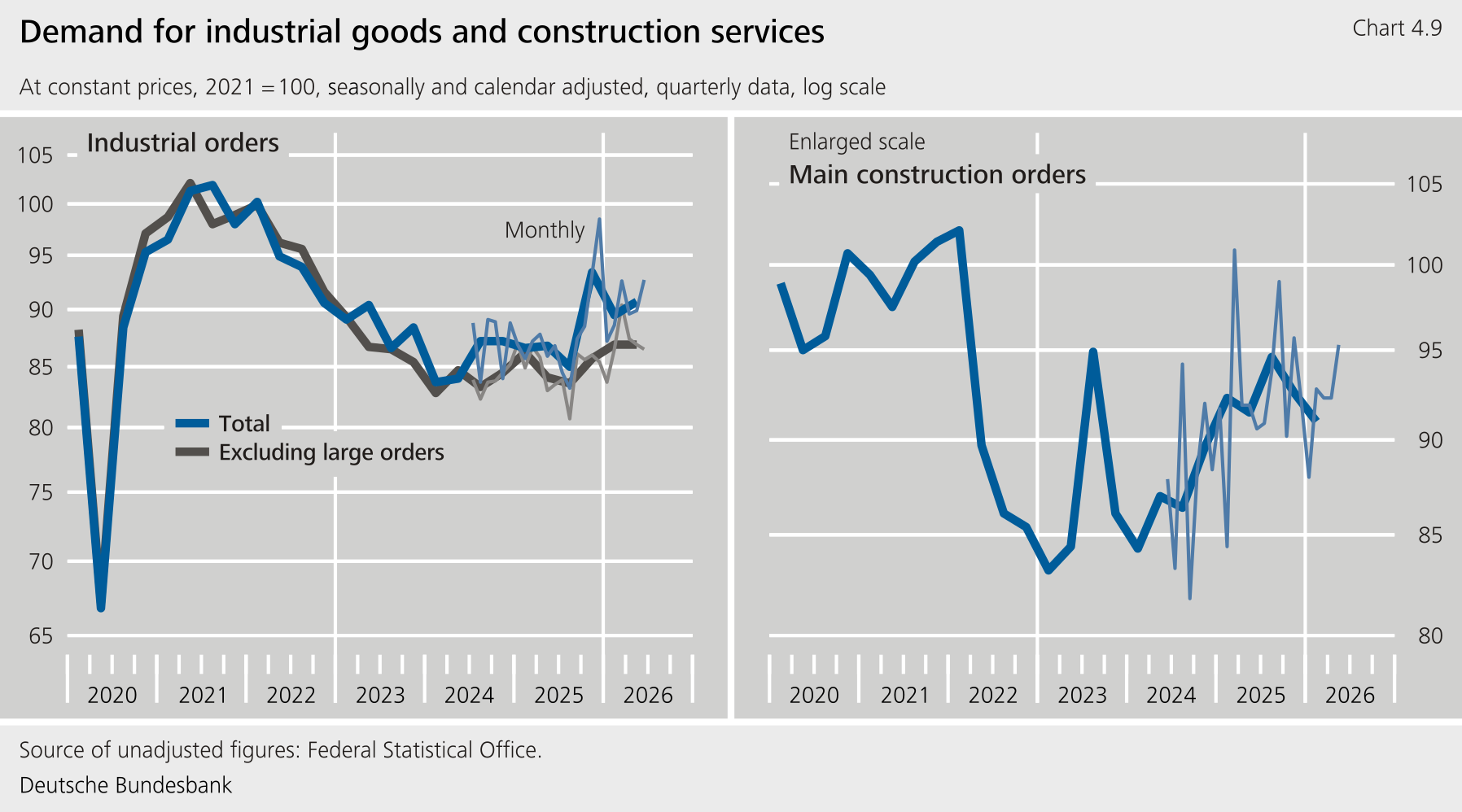**
****Construction is likely to continue its recovery in the third quarter, albeit with subdued momentum.** The temporary catch-up effects from the discontinuation of production in the first quarter are set to gradually recede. In addition, subdued demand in housing construction is likely to increasingly make itself felt. This was evident in building permits, which declined significantly on a quarterly average. The gloomier demand reflects the burdens caused by the war in the Middle East in the form of losses in purchasing power and increased mortgage rates. In addition, construction prices rose sharply, partly because the sector sustained material shortages due to disrupted supply chains caused by the war in April and May. By contrast, more public contracts -- presumably for infrastructure projects -- are giving the construction sector a boost. Overall, the indicators point to a further, albeit subdued, recovery in construction. According to the Institute, capacity utilisation in the sector was at its highest level in more than two years in July. In addition, according to the Institute, firms' assessments of both their situation and business expectations have improved somewhat of late.**{#par-uaeeo9}
***This article is based on data available up to 19 August 2026, 11:00.***{#par-e4i115}
**List of references** {#tar-8}
-------------------------------
**Ademmer, M., N. Jannsen and S. Meuchelböck (2023), [Extreme Weather Events and Economic Activity: The Case of Low Water Levels on the Rhine River](https://www.degruyterbrill.com/de/document/doi/10.1515/ger-2022-0077/html), German Economic Review, Vol. 24(2), pp. 121‑144.**{#par-o5256a}
**Deutsche Bundesbank (2026a), [Bank Lending Survey for Germany](https://www.bundesbank.de/content/618070).**{#par-oiiu82}
**Deutsche Bundesbank (2026b), [Forecast for Germany: Energy price shock fuels inflation and slows the economic recovery](https://publikationen.bundesbank.de/content/999218), Monthly Report, June 2026.**{#par-ea1i6o}
**Deutsche Bundesbank (2026c), [German balance of payments in 2025](https://publikationen.bundesbank.de/content/991186), Monthly Report, March 2026.**{#par-oou72a}
**Deutsche Bundesbank (2026d), [Monthly Report -- June 2026](https://publikationen.bundesbank.de/content/998078).**{#par-a41euu}
**Deutsche Bundesbank (2025), [What's behind the sustained decline in German export market shares?](https://publikationen.bundesbank.de/content/960442), Monthly Report, July 2025.**{#par-a1a872}
**Federal Statistical Office (2026), [Gross domestic product in the 2nd quarter of 2026 up 0.2 % on the previous quarter](https://www.destatis.de/EN/Press/2026/07/PE26_269_811.html), Press Release No 269.**{#par-o5877u}
**German Association of the Automotive Industry () (2026), [New Electric Vehicle Registrations Drive Passenger Car Market](https://www.vda.de/en/press/press-releases/2026/260703_PM_Nationale_PM_Production_in_Germany_in_June_2026), Press Release of 3 July 2026.**{#par-ii627e}
1. **{#_ftn_root_1} Seasonal adjustment here and in the remainder of this text also includes adjustment for calendar effects, provided they can be verified and quantified.**
2. **{#_ftn_root_2} See Deutsche Bundesbank (2026d).**
3. **{#_ftn_root_3} See Federal Statistical Office (2026).**
4. **{#_ftn_root_4} See Deutsche Bundesbank (2026a).**
5. **{#_ftn_root_5} See German Association of the Automotive Industry (2026). Higher fuel prices may also have made e-mobility more attractive.**
6. **{#_ftn_root_6} Actual earnings will not be available until detailed national accounts results for the second quarter of 2026 are published on 25 August 2026. The preliminary calculations based on the earnings survey use nominal wages, while the national accounts specify actual earnings. They are only available for industrial activity codes A to S.**
7. **{#_ftn_root_7} The share of information processing goods and services in the is currently relatively low, at around 0.1 % for software and 1.6 % for information goods. The inflation rate for software is generally subject to strong fluctuations. Among information goods, the inflation rate for storage media, in the production of which semiconductors play a crucial role, rose particularly sharply.**
8. **{#_ftn_root_8} See Deutsche Bundesbank (2026b).**
9. **{#_ftn_root_9} The annual rate of inflation as measured by the national Consumer Price Index () rose from 2.3 % in June to 2.8 % in July.**
10. **{#_ftn_root_10} This assessment is based on analyses of the low-water period in 2018; see Ademmer et al. (2023).**
*[COVID]: coronavirus disease
*[GDP]: gross domestic product
*[VDA]: German Association of the Automotive Industry
*[ifo]: economic research institution
*[IAB]: Institute for Employment Research
*[IT]: information technology
*[GfK]: market research institution
*[CPI]: consumer price index
*[HICP]: Harmonised Index of Consumer Prices