# Financial markets
* [*1 Financial market environment*](#tar-1 "1 Financial market environment")
* *[*1.1 Financial markets between energy-related inflation risks and higher earnings expectations*](#tar-2 "1.1 Financial markets between energy-related inflation risks and higher earnings expectations ")*
* **[*2 Exchange rates*](#tar-3 "2 Exchange rates")**
* ***[*The role of the euro as an invoicing currency*](#tar-4 "The role of the euro as an invoicing currency")***
* ***[*3 Securities markets*](#tar-5 "3 Securities markets")
* *[*3.1 Bond market*](#tar-6 "3.1 Bond market")*
* **[*3.2 Equity market*](#tar-7 "3.2 Equity market")*****
* ***[*References*](#tar-8 "References")***
****Non-final working translation****{#par-ie2i66}
***1 Financial market environment*** {#tar-1}
---------------------------------------------
### ***1.1 Financial markets between energy-related inflation risks and higher earnings expectations*** {#tar-2}
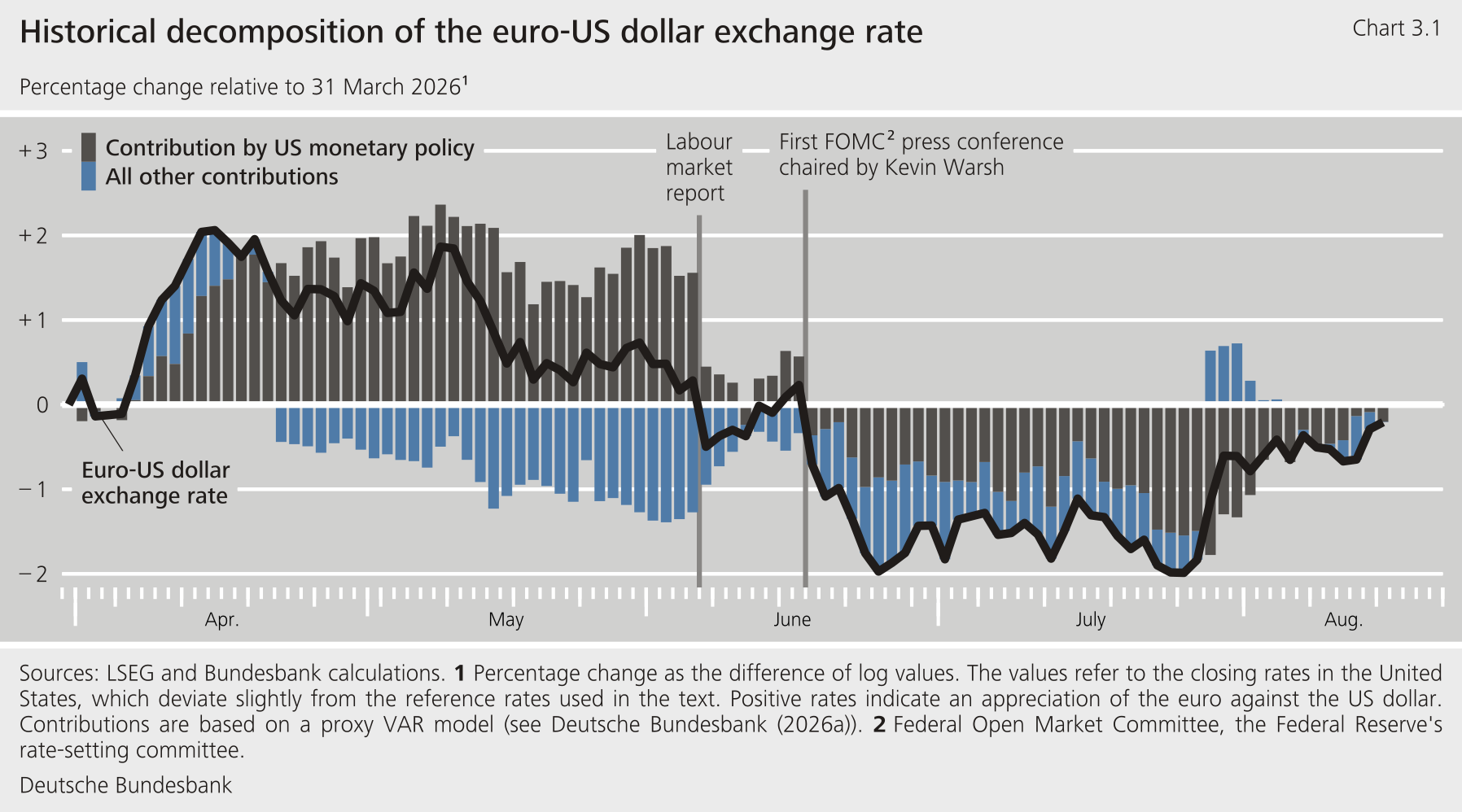
*****Over the reporting period from early April to mid-August, mounting short-term interest rate expectations and rising term premia increased long-term sovereign bond yields.** In the euro area, market participants had already priced in key interest rate increases before the start of the reporting period. This was in response to the energy-related inflation risks triggered by the outbreak of the war in the Persian Gulf. With the resurgence of the fighting in July, market participants revised their expectations for the future path of key interest rates further upwards. In the United States, a shift in the communication strategy following the change in Chair and robust economic data caused expected future short-term interest rates to rise. In addition, a higher term premium contributed to the rise in yields. Based on the model analyses, varying monetary policy impulses from the United States had a significant impact on the euro- dollar exchange rate. The euro appreciated slightly on balance against the dollar. However, it depreciated in trade-weighted terms.***{#par-ea7511}
*****The prices of risky assets displayed a mostly positive trend, supported by a higher risk appetite, increased earnings expectations and the ongoing** **boom.** Based on a price level that remained subdued, risk assets gained markedly in value in the period under review; phases of de-escalation in the Middle East additionally supported the risk appetite. Equity and high-yield corporate bond prices continued to rise. The risk premia of corporate bonds in the high-yield segment narrowed particularly substantially. In equity markets, higher earnings expectations and the ongoing boom led to price gains. Technology stocks, in particular, saw a steep rise. However, earnings expectations rose even faster than prices. The implied cost of equity thus also increased. This means that, all in all, equity valuations are now cheaper than at the beginning of the second quarter. In the interim, however, there were resurgent doubts as to whether the high investment in the sector could generate corresponding earnings on a permanent basis.***{#par-u3212i}
***2 Exchange rates*** {#tar-3}
-------------------------------
*****On balance, the euro appreciated slightly against the** **dollar. Changing expectations regarding** **monetary policy had a significant impact on exchange rate developments during this period.** As a case in point, the euro appreciated markedly at the beginning of the second quarter, when the ceasefire in the Persian Gulf caused energy prices to fall significantly. This was directly attributable to the fact that, as the markets see it, the euro area, being an energy importer, would benefit more from this price decline than the United States. However, market expectations that monetary policy would therefore be less restrictive than previously expected provided the decisive impetus for the euro- dollar exchange rate. By contrast, expectations of tightening for the euro area remained intact.[\[1\]](#_ftn_root_1) But market participants' expectations regarding the future path of monetary policy changed noticeably in June, and this was a major contributor to a countermovement in the foreign exchange market. A labour market report stating that the economy had unexpectedly created a large number of new jobs provided a trigger for the reassessment. From a market perspective, the robust employment data thus provided the with greater scope to focus on inflation, which remains high. Further downward pressure on the euro was exerted by the first meeting of the Federal Open Market Committee () under the new Chair, Kevin Warsh, in mid-June. To general surprise, Warsh made it quite plain that the Committee was determined to bring inflation back to its 2 % target. Markets saw this as a clear commitment to price stability and a signal that, for the time being, under the new leadership there was unlikely to be a rapid easing of monetary policy. As a result, expectations for key interest rates in the United States shifted upwards. In the wake of these developments, the euro temporarily fell to a 13-month low of $1.13 at the end of June. However, following the publication of surprisingly weak economic data in the United States and the decision by the in July to leave key interest rates again unchanged, the euro rebounded. At the end of the reporting period, it was trading at $1.16. This represented a slight increase of 0.8 % compared with the beginning of the second quarter. The significance of the euro and the dollar as currencies in which international trade is priced is explained in the supplementary information entitled "The role of the euro as an invoicing currency".***{#par-u4u8ia}
{#par-o1e96e}
****
**The role of the euro as an invoicing currency** {#tar-4}
----------------------------------------------------------
****One of the ways the international role of a currency is made evident is its importance in the invoicing of cross-border trade flows.** The Eurosystem is supporting efforts to promote the international role of the euro. Thus, in the words of President Christine Lagarde, "The way forward is to strengthen the international role of the euro, so that we move from being 'in between' to being a full international currency, with all the benefits that entails." Such benefits include reducing the euro area's vulnerability to economic influences from abroad. In addition, it could be possible to reduce financing costs in the euro area. The international role of a currency is reflected in its use as a reserve and anchor currency, in financial market business and the invoicing of cross-border goods and services transactions.**{#par-i8o48a}
{#par-u3o41u}
**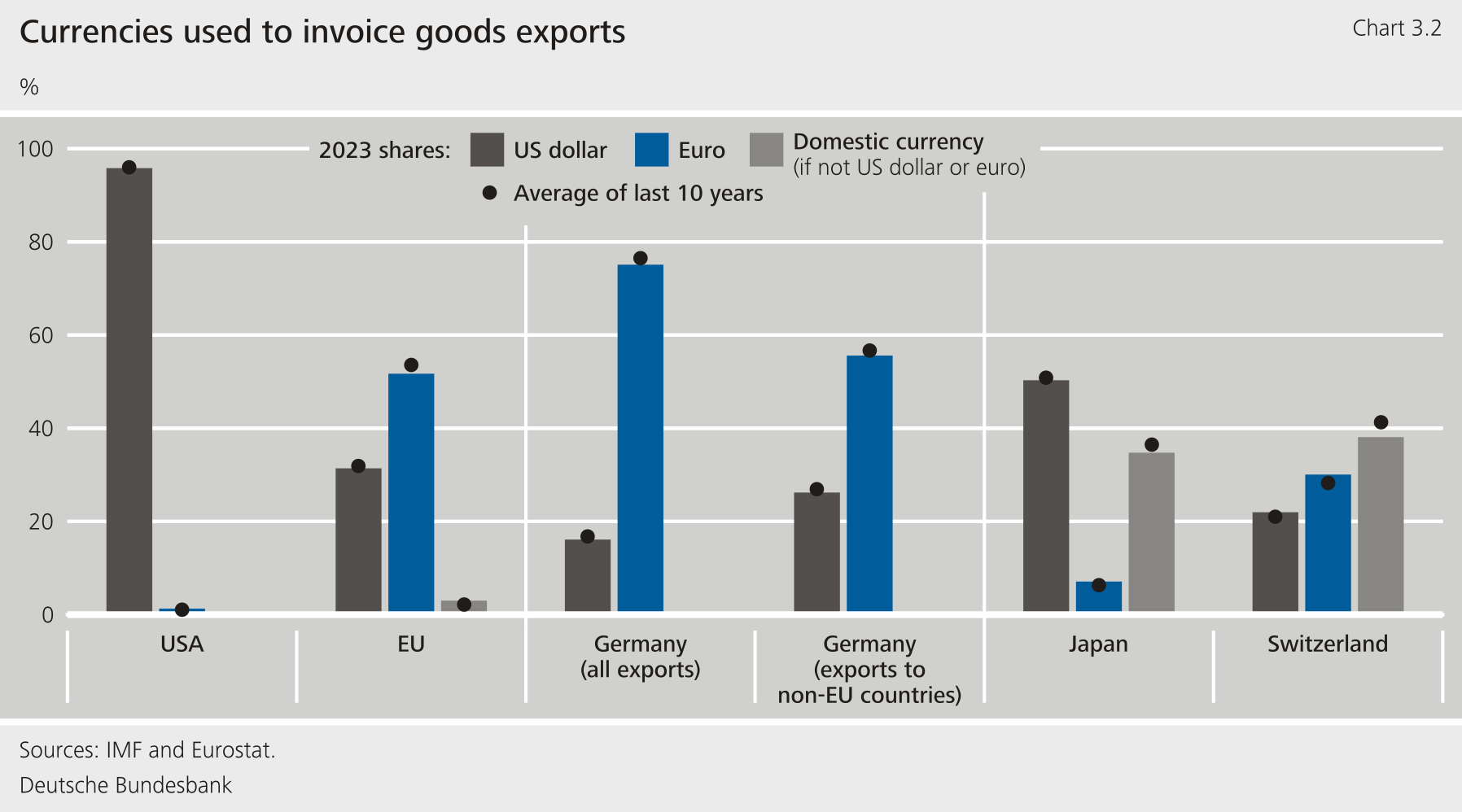**
****countries invoice around half of their goods exports to other** **countries in euro, but there are significant differences in the choice of invoicing currencies in an international comparison.** Chart 3.2 shows the currencies in which individual countries or groups of countries invoiced their goods exports in 2023. The United States invoices its exports almost exclusively in its own currency. countries mostly settle their exports to non- countries in their own currency, but the importance of the dollar is also high, at over 30 %. Around three-quarters of German exports are invoiced in euro, with the euro accounting for just under 60 % of exports to countries outside the . Japan invoices its exports predominantly in dollars, while the yen plays a smaller role. Switzerland uses dollars, euro and Swiss francs in equal measure. The invoicing shares of the individual currencies have changed little in recent years.**{#par-e99o5e}
{#par-e1ua65}
**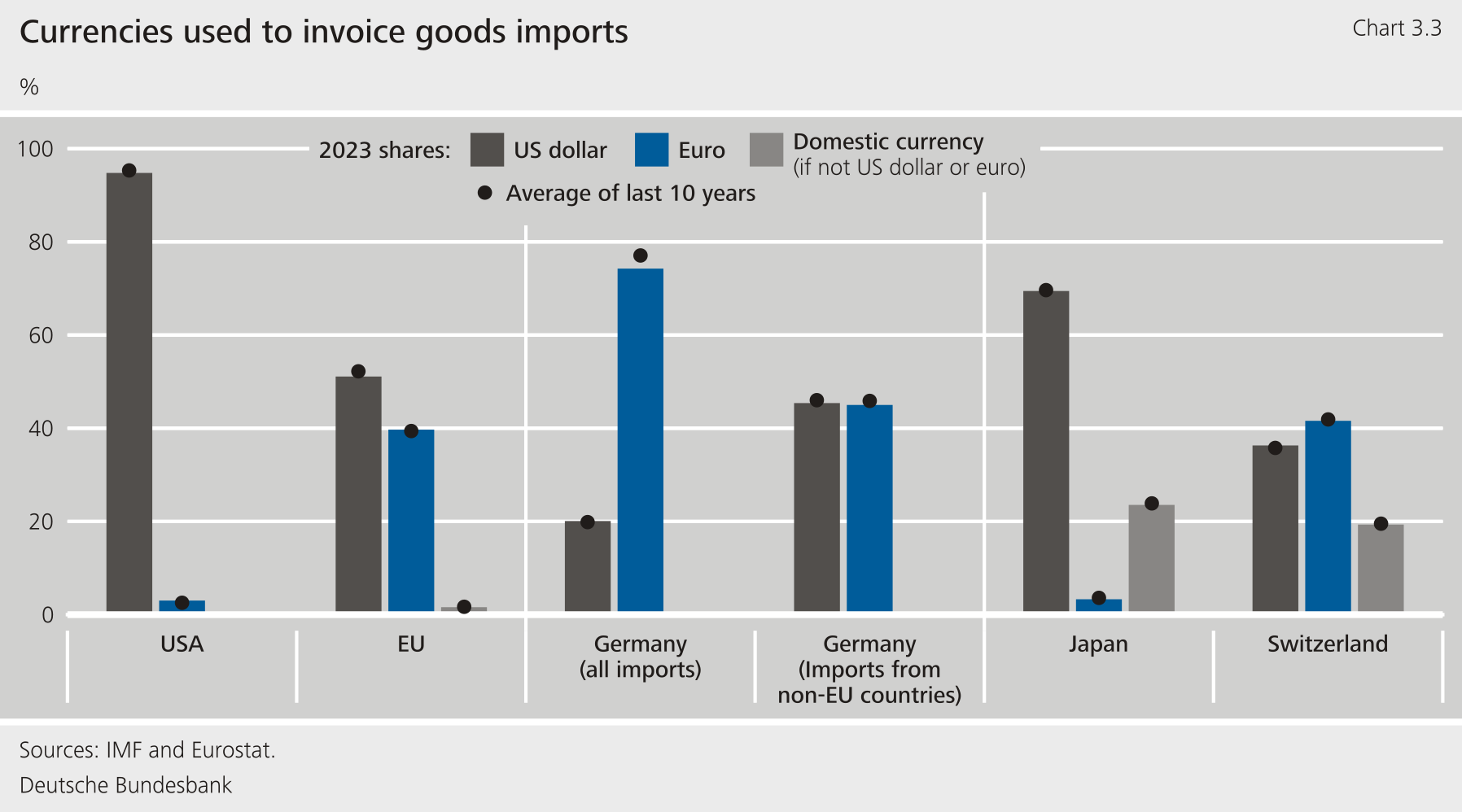**
****The role of the** **dollar in invoicing imports is even more pronounced than in the case of exports.** Chart 3.3 illustrates the share of various currencies in invoicing goods imports for selected countries and groups of countries. As with exports, it is evident that imports are almost exclusively denominated in dollars. imports from non- countries are predominantly denominated in dollars; this is partly attributable to oil imports. The invoicing of Germany's imports from countries outside the is split almost evenly between euro and dollars. If, however, countries of origin are added, German imports are invoiced predominantly in euro. Similarly to the , for example, Japan and Switzerland invoice a larger share of imports than exports in dollars. In the case of Switzerland, however, most of the imports are invoiced in euro.**{#par-e86o2a}
{#par-ooaiue}
**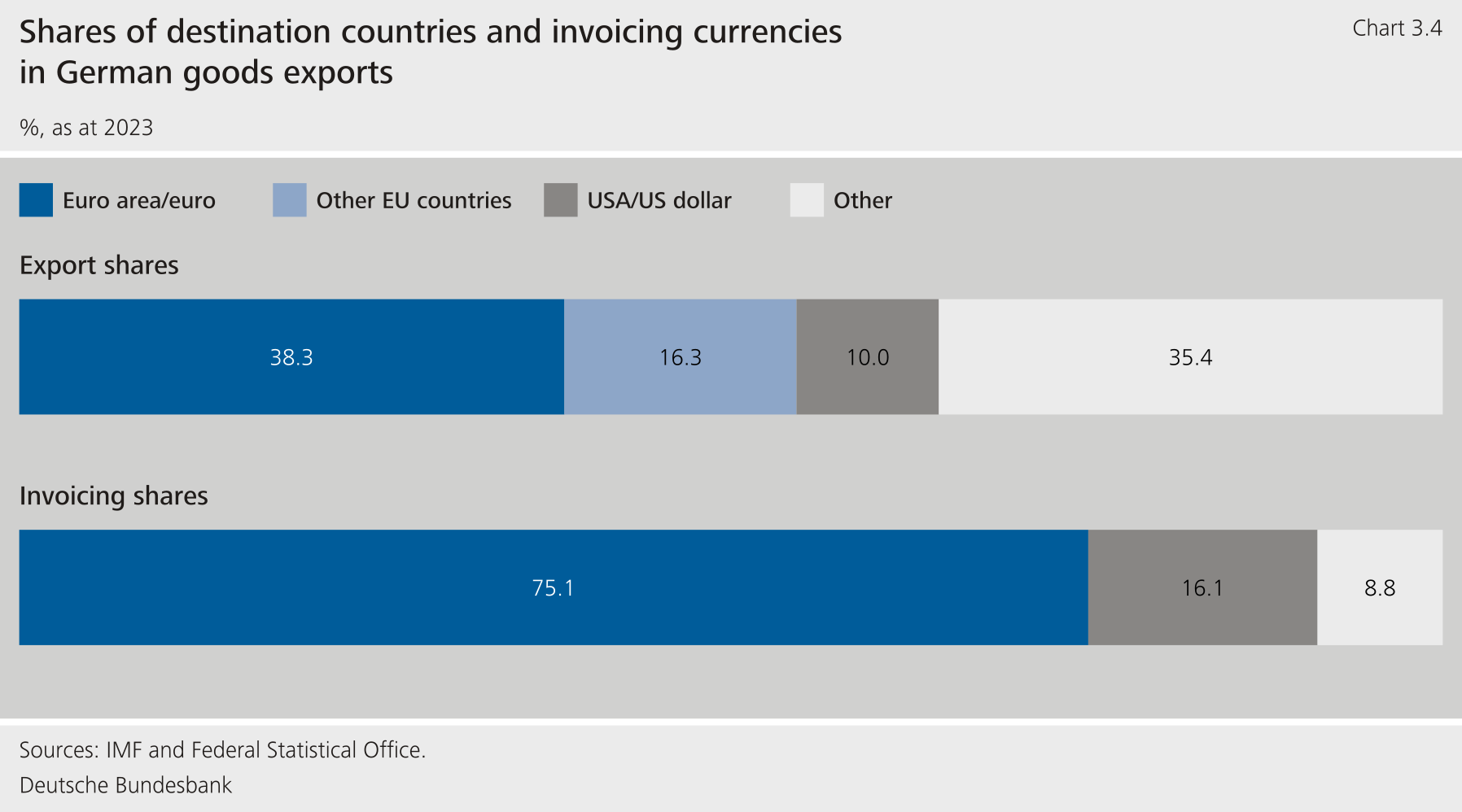**
****As a vehicle currency in trade with third countries, the** **dollar is of only limited importance for German enterprises; they use it primarily for their exports to the United States.** Chart 3.4 compares the percentage shares of the target countries of German goods exports with the percentage shares of the currencies used to invoice them. The 75 % share of euro invoicing significantly exceeds the share of exports to the euro area of just under 40 %. A considerable chunk of exports to countries that have a currency other than the euro are therefore settled in euro. The United States purchases around 10 % of German goods exports, which are likely to be invoiced almost entirely in dollars. Given that the dollar accounts for 16 % of total German exports, it can be assumed that only around 6 % of German exports to third countries use the dollar as a vehicle currency.[\[1\]](#_ftn_4d56b8e1_1) Since the dollar serves as a vehicle currency for just under 30 % of global exports,[\[2\]](#_ftn_4d56b8e1_2) it plays a minor role for German exporters by international standards. This suggests that the euro has been widely accepted.**{#par-ioa294}
****There are two possible reasons why some German and European enterprises do not invoice their exports in euro.** First, local currency pricing () can reflect a company's preferred pricing strategy, known as pricing to market. In this way, exporters hedge retail prices against exchange rate fluctuations by invoicing in the currency of the target market. In doing so, the enterprise buffers fluctuations via its profit margins. This strategy can be particularly advantageous if long-term customer relationships exist or if competition with local providers is intense. A move away from this practice in favour of increased euro invoicing could therefore entail economic disadvantages. Secondly, invoicing in another currency may also be due to limited acceptance of the euro by foreign customers. Buyers and buyer countries may prefer their own currency or the dollar, as they can avoid foreign exchange market transactions and hedging costs, reduce transaction costs or take advantage of other benefits offered by the dollar as an international reference and vehicle currency. The example of the United States, where almost all exports are invoiced in dollars, suggests that enterprises generally prefer their domestic currency for pricing, provided that this is internationally accepted.[\[3\]](#_ftn_4d56b8e1_3) This suggests that, at least in some cases, a lack of acceptance of the euro is one of the reasons why some European exports are invoiced in foreign currency. In these cases, it would be economically advantageous for these enterprises if they could switch to invoicing in euro.**{#par-a3ueie}
****The international role of the euro as invoicing currency could be substantially expanded if the euro increased in importance as an international reference and vehicle currency.** The euro, the world's second most important currency, is in a favourable starting position for this. Its position is based on the fact that the euro area is one of the largest economies with intense global trade and financial ties, the principles of the rule of law are credibly anchored, and the objective of maintaining price stability is enshrined in the 's mandate. However, pronounced network effects in international trade, an established payment infrastructure denominated in dollars and the historical persistence of dominant key currencies documented above make rapid progress more difficult.**{#par-u83ea9}
1. **{#_ftn_4d56b8e1_1} The United States purchases around 20 % of exports (2023 figure according to the Federal [Statistical](https://www.destatis.de/DE/Presse/Pressemitteilungen/2025/01/PD25_N002_51.html?utm_source=chatgpt.com%20) Office), while just over 30 % of exports are invoiced in dollars. This suggests that the role of the dollar as a vehicle currency across all countries is somewhat greater than for Germany alone, but the fact remains that the majority of all exports are invoiced in euro or the currency of the destination country.**
2. **{#_ftn_4d56b8e1_2} See Boz et al. (2025) and Bundesbank calculations.**
3. **{#_ftn_4d56b8e1_3} However, the large share of dollars in the invoicing of exports could also be explained by the dominant size of the home market for firms. Potentially expensive foreign exchange management is therefore not worthwhile for the consequently less significant export market. The specific export mix in the United States is also likely to focus more on goods that are already traded in dollars on the global market (e.g. oil or aircraft), meaning that is not a useful option here.**
****The euro was up slightly on balance against the yen.**After the yen had fallen to an all-time low of ¥188 against the euro in mid-April, extensive foreign exchange market interventions by the Japanese authorities triggered a significant countermovement. However, the resulting recovery was not sustainable. The yen was initially supported by expectations of an impending interest rate hike, which the Bank of Japan in fact went on to make in June. At the same time, however, new government spending and investment programmes raised doubts about Japan's fiscal sustainability. In this context, the government also emphasised more clearly than before the role of an appropriate monetary policy in ensuring the success of the associated growth strategy. This fuelled fears that the central bank's scope for further interest rate hikes could be limited as a result. One indication of rising risk premia was that rising long-term Japanese yields -- usually accompanied by a stronger yen -- instead repeatedly coincided with a depreciation of the yen.**{#par-e8332a}
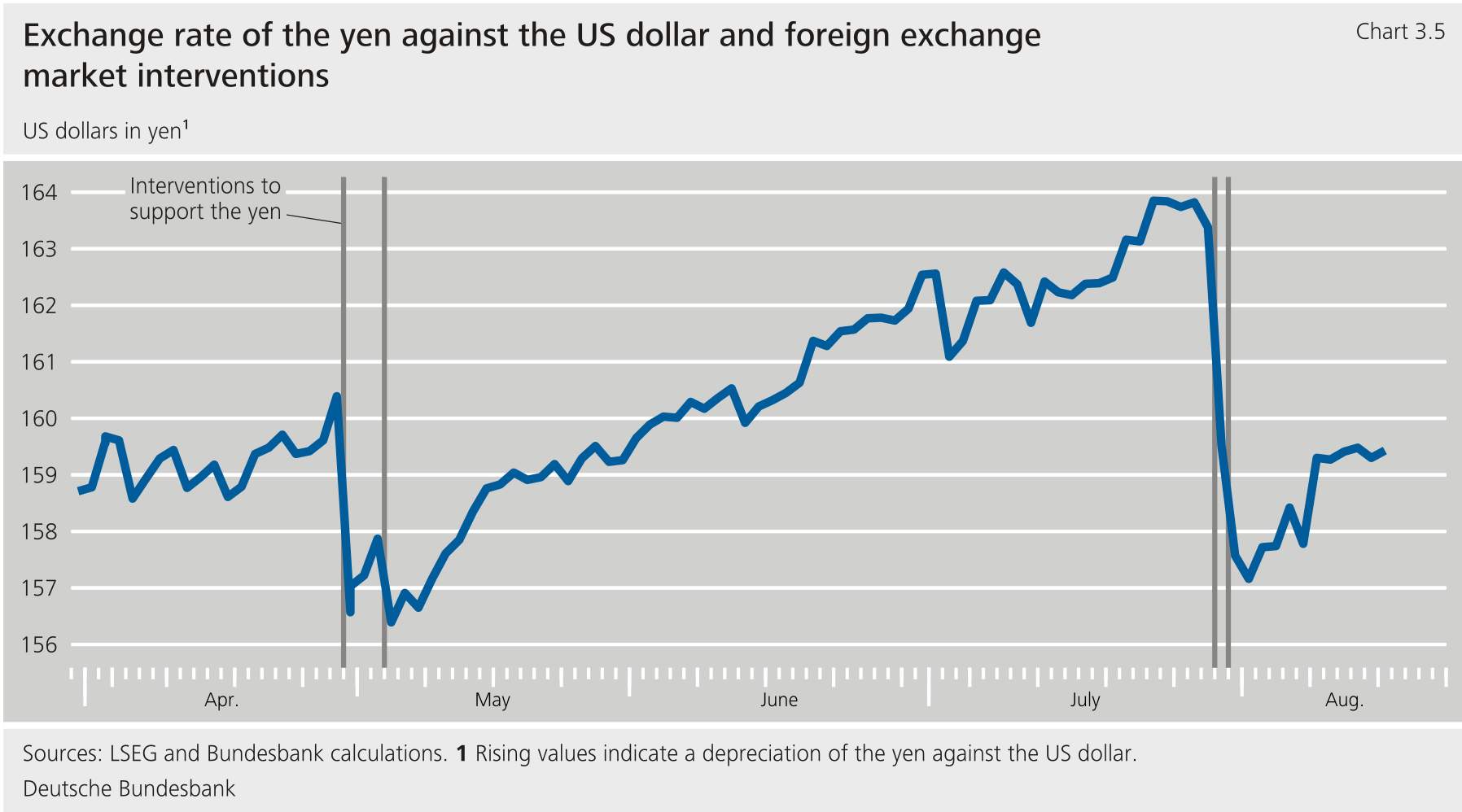
****The exchange rate of the yen was substantially influenced by foreign exchange market interventions.** After the Japanese currency had fallen to a 40-year low of ¥164 against the dollar at the end of July, renewed foreign exchange market interventions caused the yen to go back up sharply (see Chart 3.5). In the two-day intervention operation, the Japanese authorities initially intervened alone, and then the following day together with the United States. This was the first foreign exchange intervention by the United States in support of the yen since 1998. Unusually, the sold euro instead of dollars to buy yen in this recent intervention. This is because an intervention tends to have a particularly noticeable effect if the intervening central bank sells the currency that is available to it in unlimited quantities because it is able to create or print it. The intervention had no lasting impact on the exchange rate of the euro against the dollar. In connection with the intervention, Treasury Secretary Scott Bessent also mentioned the Federal Reserve's facility and suggested that the limits of the facility could be increased. According to the Japanese Ministry of Finance, Japan could make use of the facility in the future. The facility was established in 2020 to provide dollar liquidity to foreign monetary authorities in crisis situations without the need to sell dollar-denominated collateral on the market. As this report went to press, the euro stood at ¥185, up by 0.7 % since the beginning of the second quarter.**{#par-a468e8}
{#par-ui711a}
****
****The euro likewise depreciated against the pound sterling.**Exchange rate developments were primarily shaped by political news that affected market participants' assessment of fiscal policy in the United Kingdom. Following the Labour Party's losses in the local elections at the beginning of May, calls for resignation and speculation about a change of leadership initially intensified fears that a new government could move away from the fiscal rules currently in place. Thus the euro saw a marked appreciation in mid-May, when a change of government was clearly on the cards. However, subsequent commitments to fiscal discipline by the new Prime Minister-designate Andy Burnham were accompanied by a recovery in the pound. In particular, the prospect of a fiscally conservative chancellor pushed up the pound sterling markedly in mid-July, subsequently propelling it to a one-year high against the euro. At the end of the reporting period, the euro stood at £0.86, which was 1.5 % weaker than at the end of March.**{#par-a365o1}
****On a weighted average against the currencies of 18 major trading partners, the euro was weaker on balance.** It posted gains against the Swiss franc. In addition to the aforementioned losses against the pound sterling, the euro depreciated against the renminbi and the Korean won. In effective terms, it was 0.5 % lower than at the start of the second quarter.**{#par-u56uaa}
**3 Securities markets** {#tar-5}
---------------------------------
### **3.1 Bond market** {#tar-6}
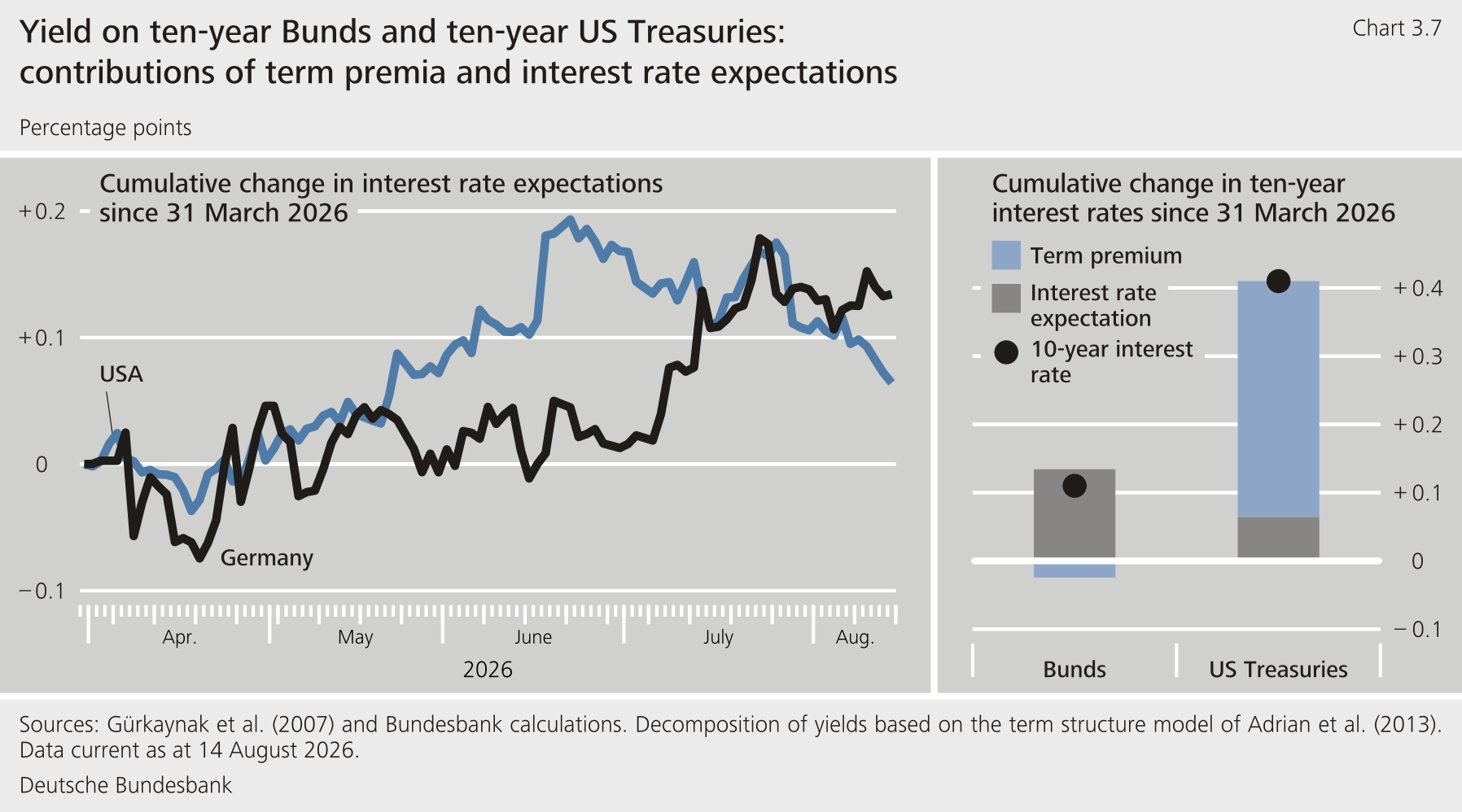
****Ten-year** **Treasury yields rose significantly since both the expected short-term interest rates and the term premium increased.** At the beginning of the reporting period and in the midst of the initial phase of the war between the United States and Iran, market participants expected key interest rates to remain unchanged for one year (see Chart 3.6). Subsequently, however, market participants revised the expected path of key interest rates significantly upwards. This was partly due to surprisingly robust economic data, particularly the publication of labour market figures at the beginning of June, and the realignment of the Open Market Committee's communication stream under new Chair Kevin Warsh.[\[2\]](#_ftn_root_2) A decomposition, using a term structure model, of the ten-year yield on government bonds into an interest rate expectation and a term premium component confirms that average key interest rate expectations in the United States rose during the period under review (see Chart 3.7).[\[3\]](#_ftn_root_3) The term premium, that is, the compensation that investors demand for bearing interest rate risk, was subject to significant fluctuations during the period under review, but rose far more sharply overall. These fluctuations were mainly due to further escalation in the Middle East. Added to this was the 's decision to communicate less information on the outlook for key interest rates and to keep key interest rates unchanged in July, despite the previous expectations of some market participants that there would be a hike. Overall, ten-year Treasury yields stood at 4.8 % at the end of the period under review, 45 basis points higher than at the beginning of the second quarter.**{#par-e8i6a4}
{#par-u8io37}
**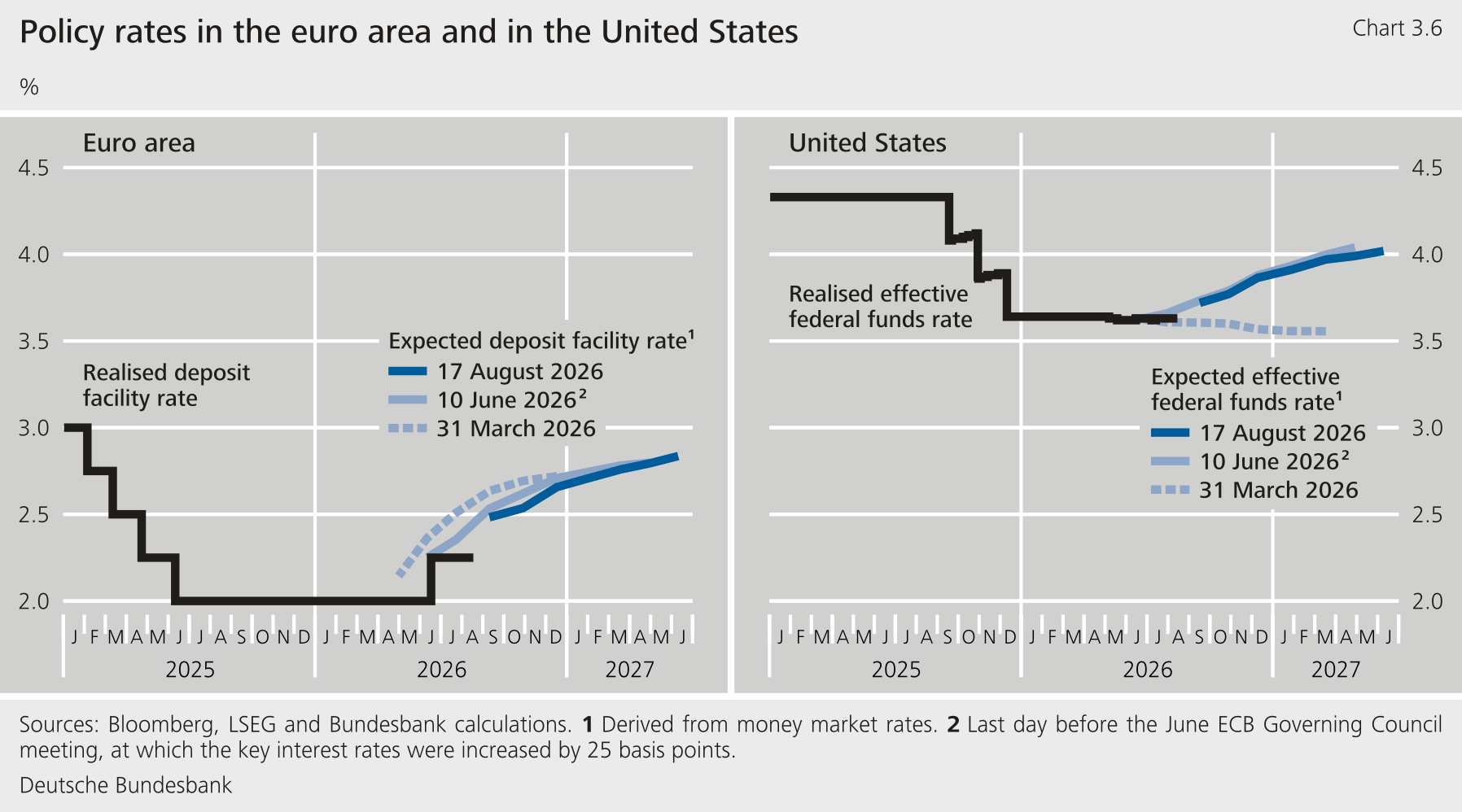**
****On balance, yields on ten-year Bunds also rose during the period under review. A key factor here was a further upward revision of longer-term expectations for the interest rates of short-term government securities.** Market participants had priced in key interest rate hikes for the Eurosystem in response to the rise in energy prices and the associated inflation risks even before the period under review began. In line with these expectations, at its meeting on 11 June, the Governing Council of the increased its key interest rates by 25 basis points (see Chart 3.6), pointing to higher inflation and inflation risks which remain tilted to the upside. When the war in the Middle East reignited in July, market participants revised their average expectations for the short-term interest rate, as measured by the expectations component of the ten-year Bund yield, significantly upwards (see Chart 3.7). This implies that they subsequently assumed that key interest rates would remain elevated for a longer period of time.[\[4\]](#_ftn_root_4) Although the term premium varied significantly over the period under review, it remained virtually unchanged all in all. Ten-year Bunds most recently reached 3.2 %, their highest level since 2011. Compared with the beginning of the second quarter, this nevertheless constitutes an increase of 22 basis points. The spread between the yield on ten-year Bunds and the maturity-matched euro area rate widened slightly over the period under review and remained positive. This means that there were still no signs of a scarcity premium for Bunds.[\[5\]](#_ftn_root_5) It would seem therefore that the supply of Bunds was sufficiently large enough for particularly risk-averse investors.**{#par-u431u7}
{#par-i7441i}
****
****Long-term sovereign bond yields rose significantly in Japan, while, on balance, picking up only slightly in the United Kingdom.** In the wake of the war between the United States and Iran, yields in Japan followed the international trend and rose continuously. Country-specific factors additionally supported the rise in yields. For example, the Bank of Japan continued its monetary policy tightening cycle, raising the key interest rate by 25 basis points to 1 % in June, while announcing a slowdown in the balance sheet reduction. In addition, concerns about the sustainability of its debt, caused by planned expansionary government fiscal measures, heightened upward pressure on Japanese government bond yields.[\[6\]](#_ftn_root_6) At 2.9 %, yields were recently 57 basis points higher for a ten-year maturity than at the beginning of the second quarter, thus reaching a multi-year peak. In the United Kingdom, yields on ten-year government bonds fluctuated significantly over the period under review. This was mainly due to changing expectations regarding future monetary policy and inflation developments, which were driven, amongst other things, by the war in the Middle East and uncertainty about fiscal consolidation as a result of the change of Prime Minister. On balance, ten-year sovereign bond yields rose by 14 basis points compared to the start of the period under review, standing at 5.1 % most recently.**{#par-a11u91}
****Ten-year euro area government bonds spreads vis-à-vis Bunds remained virtually unchanged on aggregate, but narrowed slightly for most euro area countries.** Over the period under review, the -weighted yield spread of ten-year euro area government bonds over maturity-matched Bunds decreased marginally by 3 basis points to 59 basis points. For the individual euro area countries, however, spreads fell slightly across almost all jurisdictions. France was an exception: Doubts about the path to consolidation and political uncertainty prior to the 2027 presidential election led to a net increase in the spread of 13 basis points.**{#par-e72o33}
{#par-o6ai44}
**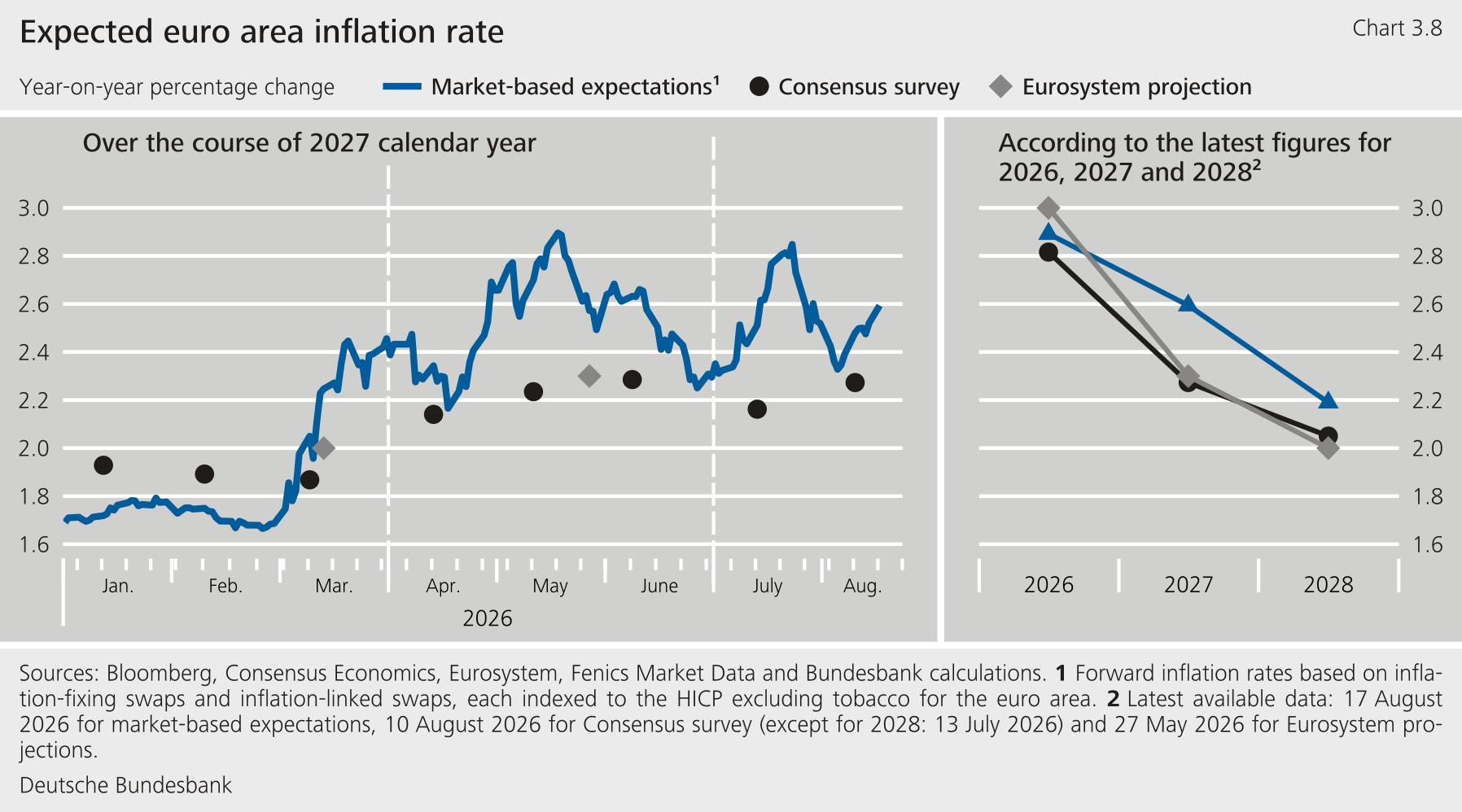**
****Given high volatility since the end of March, short-term market-based inflation expectations, on balance, rose slightly.**Market-based inflation expectations are derived from inflation swaps, the prices of which provide clues concerning the inflation expected by market participants. However, they can also contain inflation risk premia in addition to actual inflation expectations. On balance, the average inflation rate derived from inflation swaps increased marginally by 6 basis points to 2.9 % for 2026 and by 14 basis points to 2.6 % for 2027. Market-based inflation expectations suggest, though, that inflation will return sustainably to a level close to the Eurosystem's medium-term inflation target in the second half of 2027. Expert survey participants expect a faster return to the inflation target. The gap can reflect an inflation risk premium, but also differences between the measurement frameworks. Short-term market-based inflation expectations have fluctuated considerably since the beginning of the second quarter. The market-based inflation expectations for 2027 thus ranged from 2.2 % to 3.8 % over the period under review (see Chart 3.8). This was attributable to the frequent sharp swings in energy prices.**{#par-u125uu}
****Long-term market and survey-based inflation expectations remained close to the Eurosystem's medium-term inflation target.**Long-term market-based inflation expectations, which are available on a daily basis, fluctuated only slightly despite the strong variation over the short to medium term. A key indicator of this is the five-year forward inflation rate, which begins in five years' time. This indicator shows market inflation expectations for the period five to ten years ahead. Although the rate rose by 11 basis points over the period under review, it still stood at 2.2 % as this report went to press. Longer-term survey expectations among experts also remained close to 2 %. All these factors taken together show that long-term inflation expectations remain anchored at the Eurosystem's 2 % target.**{#par-i4u5ua}
****Risk premia on European corporate bonds narrowed significantly.** Yields on seven to ten-year AA-rated corporate bonds rose slightly by 6 basis points during the period under review, while those with a BBB rating fell by 2 basis points. Since the yield on maturity-matched Bunds increased during the period under review, the spreads in the AA and BBB ratings declined by 12 and 20 basis points, respectively. The narrowing of spreads was supported by the increased investor risk appetite, which rose primarily in the wake of initial signs of easing in the Middle East, but also on account of higher earnings expectations.[\[7\]](#_ftn_root_7) The decline in spreads on high-yield corporate bonds was particularly pronounced, with an 84 basis point drop.**{#par-e6ai6a}
### **3.2 Equity market** {#tar-7}
****Equity markets in the euro area and the United States have risen significantly since the beginning of the second quarter and were largely unimpressed by the continuation of the tense situation in the Middle East.** At the beginning of the period under review, equity markets on both sides of the Atlantic were still trading below the levels recorded at the start of the year, but they subsequently rose significantly. This was partly due to signs of easing in the Persian Gulf, notwithstanding the fact that those signs repeatedly turned out to be unsustainable and the situation in the region ultimately remained tense. Since the beginning of the second quarter, the EURO STOXX has surged by 15.5 %. This development was supported by more favourable economic signals, easing bottlenecks in energy markets, higher earnings expectations and a higher risk appetite among market participants. The 500 was even more dynamic still, with gains of 18.6 %. However, price gains in the equity markets were distributed very heterogeneously across sectors (see Chart 3.9). In the euro area, almost all sectors recorded price rises. But the positive development of the EURO STOXX was driven, in particular, by financial and technology stocks. In the financial sector, especially among banks, short-term earnings expectations rose as a result of higher interest rates and strong securities trading income on the back of higher bid-ask spreads in a volatile financial market environment. By contrast, the increase in the 500 was less broad-based than in the euro area. Its rise was largely driven by the ongoing boom, which helped technology stocks, especially semiconductor equities, to record considerable gains.**{#par-i37181}
{#par-u1o567}
**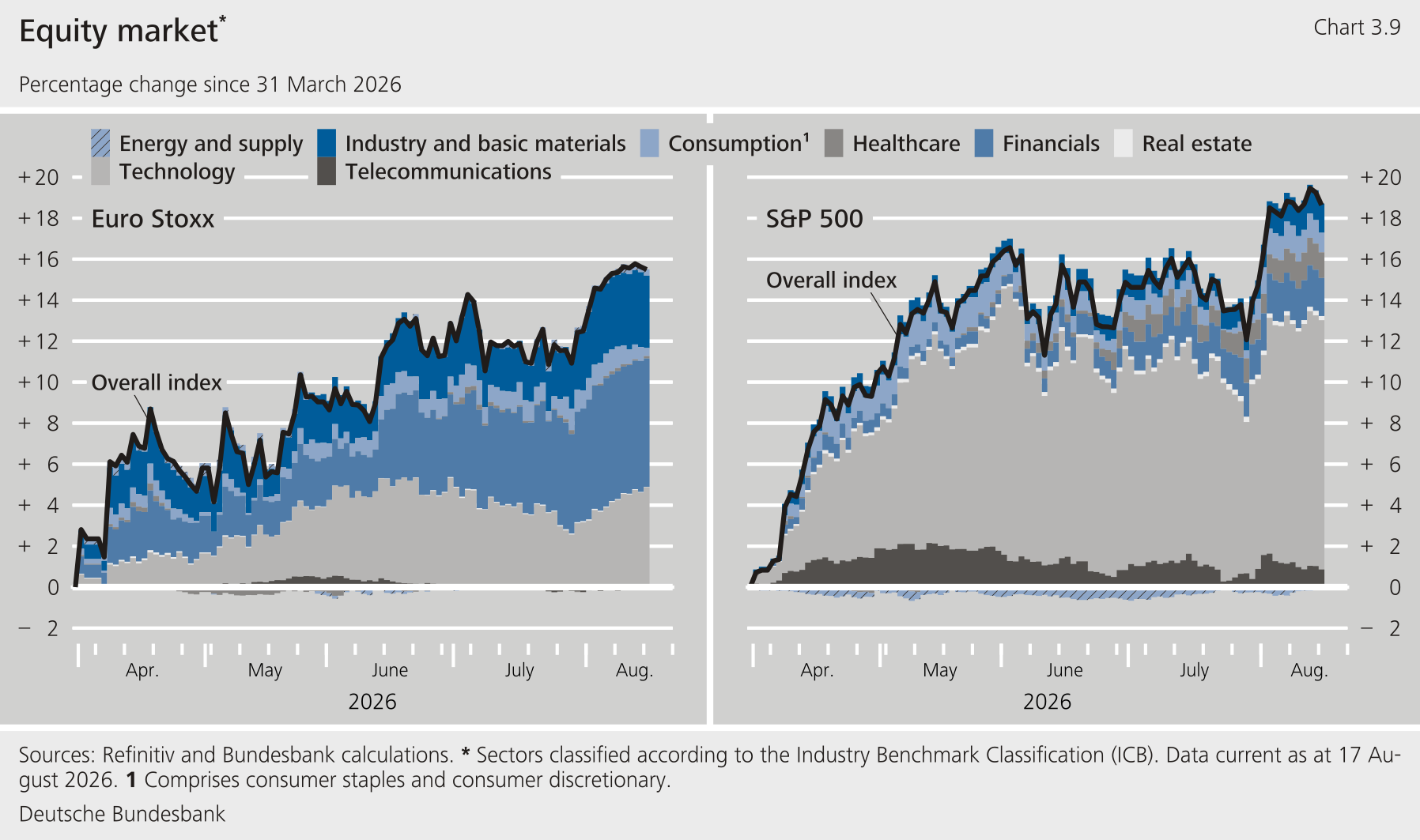**
****Equities of technology companies on both sides of the Atlantic outperformed the market as a whole, although there have recently been growing doubts about the sustainability of the** **boom.** Separated from developments in the Middle East, the prices of technology stocks in the euro area and the United States were up significantly during the period under review. This was primarily due to higher earnings expectations, which can be attributed in large part to persistently high demand for semiconductors and data centre capacity. However, concerns about the sustainability of the boom mounted in the run-up to the second-quarter reporting season. In particular, the focus was on sizeable investment expenditure, risks of potential overcapacity and increasing competition from Chinese companies. As this report went to press, technology stocks in euro area were 36.8 % higher than at the end of the first quarter, whilst technology stocks were up by 36.3 % over the same period.**{#par-ee427a}
****Despite higher equity prices, the implied cost of equity points to cheaper valuations at present compared to the beginning of the second quarter.** A decomposition of equity price developments based on a dividend discount model predicts price changes on changes in expected corporate profits and the implied cost of equity, which in turn consists of a risk-free interest rate and an equity risk premium.[\[8\]](#_ftn_root_8) According to the decomposition, price increases were mainly supported by the aforementioned higher short to medium-term earnings expectations. Since these rose more sharply than equity prices, the implied cost of equity increased at the same time. Relative to expected earnings, equities were thus better valued on both sides of the Atlantic than at the beginning of the observation period. However, the valuation varies depending on the measurement framework used. Measured in terms of its long-run average, the implied cost of equity in the euro area points to a comparatively cheaper valuation, whereas it would seem that the valuation of equities remains high. By contrast, the earnings yield, which is geared towards short-term earnings, signals a historically high valuation in both regions; the one for the United States is even higher than that based on the implied cost of equity. The difference is mainly explained by the currently very high medium-term earnings expectations in both currency areas, which support the implied cost of equity. The cheaper valuation based on this criterion therefore depends crucially on the fulfilment of these expectations, bearing in mind that they will extend further into the future. Otherwise, equity prices could come under downward pressure.**{#par-u74ei3}
**References** {#tar-8}
-----------------------
**Adrian, T., R. K. Crump and E. Mönch (2013), [Pricing the term structure with linear regressions](https://doi.org/10.1016/j.jfineco.2013.04.009), Journal of Financial Economics, Vol. 110(1), pp. 110‑138.**{#par-a888u5}
**Boz, E., A. Brüggen, C. Casas, G. Georgiadis, G. Gopinath and A. Mehl (2025), [Patterns of Invoicing Currency in Global Trade in a Fragmenting World Economy](https://www.imf.org/-/media/files/publications/wp/2025/english/wpiea2025178-source-pdf.pdf).**{#par-uo1e4a}
**Deutsche Bundesbank (2026a), [What determines the exchange rate movements of the euro against the US dollar?](https://publikationen.bundesbank.de/content/972880), Monthly Report, January 2026.**{#par-ai2u36}
**Deutsche Bundesbank (2026b), [Financial markets](https://publikationen.bundesbank.de/content/996606), Monthly Report, May 2026.**{#par-a24635}
**Deutsche Bundesbank (2025a), [Financial markets](https://publikationen.bundesbank.de/content/948880), Monthly Report, February 2025.**{#par-a8ea5o}
**Deutsche Bundesbank (2025b), [Financial market environment](https://publikationen.bundesbank.de/content/957530), Monthly Report, May 2025.**{#par-o29e46}
**Deutsche Bundesbank (2023), [Term structures in economic analysis](https://www.bundesbank.de/content/852280), Monthly Report, January 2023, pp. 53‑74.**{#par-ue59u3}
**Deutsche Bundesbank (2018), [The market for Federal securities: holder structure and the main drivers of yield movements](https://www.bundesbank.de/content/753990), July 2018, pp. 15‑38.**{#par-ei499e}
**Deutsche Bundesbank (2016), [Stock market valuations -- theoretical basics and enhancing the metrics](https://www.bundesbank.de/content/707556), Monthly Report, April 2016, pp. 15‑29.**{#par-a9a167}
**Gürkaynak, R., B. Sack and J. Wright (2007), [The U.S. Treasury yield curve: 1961 to the present](https://doi.org/10.1016/j.jmoneco.2007.06.029), Journal of Monetary Economics, Vol 54(8), pp. 2291‑2304.**{#par-ae22u5}
1. **{#_ftn_root_1} The divergent responses to and euro area monetary policy assessments were supported by statements by officials that the central bank might not respond to the rise in energy prices if the situation in the Persian Gulf were to ease soon. In addition, there was initial uncertainty as to whether the , under its new leadership, might not be more likely to tolerate slightly elevated inflation rates. See also Chapter 3.1 Bond market.**
2. **{#_ftn_root_2} For more information on these events, see also Chapter 2.**
3. **{#_ftn_root_3} For the yield decomposition methodology, see Deutsche Bundesbank (2023). The data for the chart are current as at 14 August 2026.**
4. **{#_ftn_root_4} By contrast, the expected key interest rates did not rise over the space of one year (see Chart 3.6).**
5. **{#_ftn_root_5} Following the end of net purchases under the Eurosystem's monetary policy asset purchase programmes, the free float of Bunds went back up, which helped cause the previously observed scarcity premium to vanish. See Deutsche Bundesbank (2018, 2025a, 2025b, 2026b).**
6. **{#_ftn_root_6} See also Chapter 2 Exchange rates.**
7. **{#_ftn_root_7} See also Chapter 3.2.**
8. **{#_ftn_root_8} See Deutsche Bundesbank (2016).**
*[Fed]: Federal Reserve System
*[ECB]: European Central Bank
*[AI]: artificial intelligence
*[**EU**]: European Union
*[EU]: European Union
*[**AI**]: artificial intelligence
*[GDP]: gross domestic product
*[S\&P]: Standard & Poor’s
*[UK]: United Kingdom
*[OIS]: overnight index swap
*[**US**]: United States
*[US]: United States
*[FOMC]: Federal Open Market Committee