Fiscal risks and financial stability: reform options for the sovereign-bank nexus in the euro area Monthly Report – September 2026
Published on
Fiscal risks and financial stability: reform options for the sovereign-bank nexus in the euro area Monthly Report – September 2026
Monthly Report Published on
The sovereign-bank nexus remains a key source of financial stability risk in the euro area. It is the term used to refer to the interconnectedness between sovereigns and banks: when a sovereign’s creditworthiness deteriorates, rising risk premia on its bonds can put pressure on banks holding large amounts of that debt. Conversely, bank distress can put pressure on public finances if government support is expected or becomes necessary. While the European resolution regime and banks’ strengthened capital positions have reduced the risk of bank crises damaging public finances, banks remain vulnerable to fiscal risk.
Many banks in the euro area hold a large share of their sovereign exposures to their home sovereign. This preference, known as “home bias”, amplifies the sovereign-bank nexus. The preferential regulatory treatment of sovereign exposures encourages high portfolio concentrations and can promote home bias. As a result, banks avoid large sovereign exposures to individual countries.
A model-based stress test analysis shows that banks with large holdings of sovereign bonds are disproportionately affected. In the simulations, the common equity tier 1 (CET1) capital ratio declines most sharply for institutions with large holdings of domestic sovereign bonds. By contrast, the declines are smaller where portfolios are more diversified.
Given the European monetary union’s distinctive institutional architecture – a single monetary policy combined with fiscal policies that remain largely national – there is a strong case for European reforms aimed at weakening the sovereign-bank nexus. This article discusses sovereign concentration charges and limits as instruments for curbing high concentrations of sovereign exposures. Sovereign concentration charges would trigger capital requirements for large exposures to individual countries. Concentration limits would directly cap such exposures. Both approaches could incentivise greater diversification of sovereign exposures.
Potential adverse side effects could be mitigated through careful calibration, a phased introduction and appropriate transition periods. In addition to strengthening financial stability, the regulatory treatment of the sovereign-bank nexus should also support further progress towards a European banking union.
1 Introduction
The global financial crisis of 2008 and the subsequent European sovereign debt crisis showed that links between banks and sovereigns can put financial stability at risk. In the euro area, doubts about a sovereign’s debt sustainability led to problems in the banking sector, which, in turn, affected the stability of public finances in the wake of government bailouts. At the same time, the banking crisis put pressure on public finances, particularly where government support measures became necessary. In several member countries, bank and sovereign debt problems were thus mutually reinforcing. 1
The close interdependence between banks and sovereigns, known as the sovereign-bank nexus, remains an important source of systemic risk to the financial system. 2 Banks’ exposures to individual sovereigns remain high in the euro area and often exceed their capital. High concentrations of a single sovereign’s debt 3 increase banks’ dependence on that sovereign’s creditworthiness. This is because a deterioration in credit quality or changes in the general interest rate environment can lead to considerable losses in the value of sovereign debt. Depending on how these losses are treated for accounting and regulatory purposes, they can place considerable strain on banks’ balance sheets. This vulnerability may become more significant as hedge funds and other financial market investor groups have been growing increasingly active in sovereign bond markets for some time now. These investors often pursue short-term strategies that have procyclical effects during periods of stress and can thus amplify price swings in sovereign bond markets. 4 At the same time, there are other transmission channels that can magnify risks within the financial system and propagate them across borders. These include, in particular, credit linkages, funding markets and confidence effects.
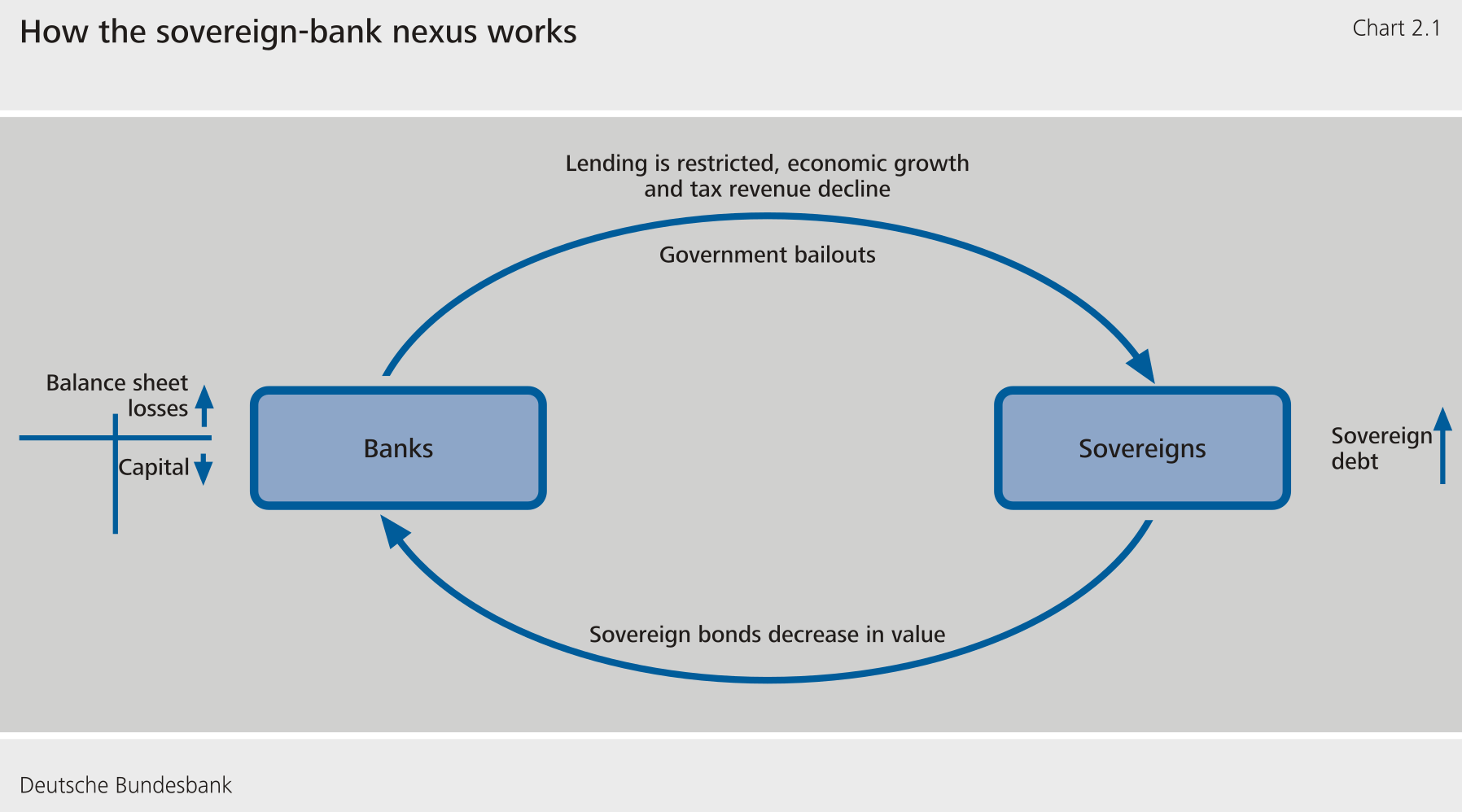
The sovereign-bank nexus can trigger a self-perpetuating spiral. Doubts about a sovereign’s debt sustainability weaken banks that hold large amounts of that sovereign’s debt. If the government considers it necessary to support these banks, the resulting bailouts put pressure on public finances. This, in turn, can cause misgivings about the sovereign’s debt sustainability to multiply. The mere expectation of government support may lead to a loss in confidence in financial markets and higher government borrowing costs. As a result, the spiral of interdependence between banks and sovereigns may intensify: further losses in the value of sovereign debt would place additional strain on the banking sector. Banks may therefore feel compelled to curb their lending. This, in turn, can dampen economic activity and put even greater pressure on public finances.
Reforms in the euro area have reduced sovereigns’ vulnerability to bank distress, but banks nevertheless remain exposed to fiscal risk. This fiscal vulnerability to bank distress has been reduced, in particular, by the European bank resolution regime. In addition, banks’ significantly strengthened capital base since the euro crisis has increased their resilience. The European resolution regime requires private creditors and shareholders to share in losses. At the same time, banks remain vulnerable when sovereign fiscal risks spill over into the banking sector. Sound fiscal policies in the member countries can significantly limit these risks. They enhance sovereign debt sustainability and thereby reduce the likelihood of defaults on sovereign debt. This makes strict compliance with European fiscal rules crucial to maintaining sustainable government finances. The issue is particularly important because, given banks’ portfolio structures, fiscal risks feed back especially strongly into national banking systems.
Banks frequently hold highly concentrated portfolios of domestic sovereign debt. This preference for domestic sovereign debt is referred to as “home bias”. It can be explained by factors such as lower information costs, greater familiarity with the legal, political and administrative framework of the home country, and political influence. 5 Home bias is a key channel through which the risk interdependence inherent in the sovereign-bank nexus becomes entrenched. It increases banks’ balance sheet dependence on the creditworthiness of their domestic sovereign. While banks’ demand for their home country’s sovereign debt can help support government financing even in periods of market stress, this stabilising function comes at the cost of greater interdependence: the country concerned remains reliant on its domestic banking sector as a buyer of its debt. At the same time, banks, for their part, become more dependent on sovereign creditworthiness. 6 However, home bias is not attributable solely to information advantages or political factors. The regulatory framework, too, plays a role in its formation.
The preferential regulatory treatment of sovereign exposures can promote home bias and concentration risks on banks’ balance sheets, thereby amplifying the sovereign-bank nexus. Under the European Capital Requirements Regulation (CRR), exposures to governments of member countries that are denominated in the national currency of that country are assigned a risk weight of 0 %. 7 Additionally, these exposures are exempt from the large exposure limit requirements. 8 Sovereign debt therefore receives preferential regulatory treatment over exposures to private borrowers, whose credit and concentration risks are generally captured within the regulatory framework. By granting preferential treatment to sovereign debt, the regulatory framework provides banks with little incentive to avoid building up substantial exposures to individual sovereigns. The rules currently in force thus contribute to concentrated holdings of sovereign debt and to the entrenchment of the sovereign-bank nexus. 9
The particular architecture of the European monetary union amplifies the risks arising from the sovereign-bank nexus. Despite the coordination mechanisms in place, the euro area countries retain broad decision-making autonomy over economic and fiscal policy. At the same time, the Eurosystem, which is responsible for monetary policy, was granted extensive independence and assigned a clear mandate focused primarily on maintaining price stability across the euro area. The Eurosystem determines the need for action on the basis of conditions across the euro area as a whole. Adverse developments in individual euro area countries therefore carry less weight. Accordingly, in the event of a crisis affecting a single member country, the monetary policy response can be expected to be more limited or less forceful. Despite the considerable progress made in banking regulation, the risks arising from the sovereign-bank nexus thus remain a key challenge for the euro area, even more than a decade after the European sovereign debt crisis. In light of these considerations, there is a strong case for targeted regulatory adjustments in the monetary union to counter the financial stability risks arising from the sovereign-bank nexus. 10
Regulatory reforms aimed at limiting the sovereign-bank nexus should not unduly impair the key functions that sovereign bonds perform in financial markets. Sovereign debt instruments are not only an important source of government financing; they are also a key element underpinning the stability and effective functioning of financial markets. For example, they serve as benchmarks for valuing a wide range of other asset classes and are highly significant for market liquidity, collateral transactions and monetary policy transmission. Regulatory interventions should therefore carefully balance their intended effects against the risk of excessively restricting these functions. A phased introduction would allow the necessary adjustments to be made over a longer period, thereby minimising the risk of market turmoil and significant adverse effects.
Proposals to reduce the preferential regulatory treatment of sovereign debt have already been put forward in the past. The Basel Committee on Banking Supervision has extensively examined the possibility of aligning the regulatory treatment of exposures to sovereign issuers with that of exposures to private borrowers and has discussed various reform options. 11 However, no consensus emerged in favour of a fundamental adjustment of the regulatory framework to achieve such alignment. The ending of preferential treatment for sovereign debt is therefore not likely to be politically deliverable on the global stage.
Sovereign concentration charges and concentration limits could be used to specifically curb excessive exposures to individual sovereigns on banks’ balance sheets. Both approaches aim to reduce the concentration risks associated with banks’ holdings of sovereign debt. Sovereign concentration charges would trigger capital requirements once exposures to an individual sovereign exceed a specified threshold. These requirements would increase as the degree of concentration rises. The relevant metric would be the size of the exposure relative to the bank’s CET1 capital, which serves to absorb losses. Concentration limits, by contrast, would impose an upper bound on exposures to any individual sovereign. These two approaches could thus complement the existing prudential framework. This would also incentivise banks to diversify their sovereign debt portfolios more strongly. That could reduce banks’ vulnerability to debt crises in individual countries and weaken the sovereign-bank nexus.
The remainder of this article discusses the risks arising from the sovereign-bank nexus and regulatory options for mitigating it.Chapter 2 first outlines the risk channels of the sovereign-bank nexus and provides an overview of its current relevance in the euro area based on supervisory data. Chapter 3 analyses the risks associated with high concentrations of sovereign exposures. Chapter 4 explains the existing regulatory framework. Chapter 5 discusses selected regulatory options for mitigating the sovereign-bank nexus, in particular sovereign concentration charges and concentration limits. Chapter 6 summarises the findings and outlines possible next steps.
2 The sovereign bank nexus in the euro area: a challenge for financial stability
The analysis of the sovereign-bank nexus and possible regulatory approaches to mitigating it requires a clear distinction to be made between the central transmission channels. Research shows that the sovereign-bank nexus is characterised primarily by a mutually reinforcing feedback loop between sovereign creditworthiness and bank solvency (see Chart 2.1). 12
Fiscal risks can spill over directly from sovereigns to banks. Doubts about a sovereign’s debt sustainability drive up the risk premia on its sovereign bonds. This reduces their market value, potentially causing balance sheet losses for banks. This transmission channel was particularly evident during the European sovereign debt crisis, when highly indebted member countries increasingly lost the confidence of market participants. Fiscal risks do not necessarily have to emanate from central government; they can also arise at subnational levels of the public sector, such as state and local governments (see the supplementary information entitled “Debt of regional governments and local authorities as part of general government debt”).
Supplementary information
Debt of regional governments and local authorities as part of general government debt
Central government is not the only relevant sovereign debtor. Banks often also have exposures to sub-national government authorities, such as federal states, regional governments or local authorities, and other public sector entities. CRR III differentiates between central governments, regional governments and local authorities, and public sector entities. Under certain conditions, however, exposures to regional governments and local authorities may receive the same regulatory treatment as exposures to central government. For this to happen, the sub-national authorities must have their own revenue-raising powers. Furthermore, specific institutional arrangements must also be in place to reduce the risk of default from a supervisory perspective. In Germany, state and local governments form part of the public sector and operate within a narrow constitutional, budgetary and fiscal constitutional framework. Furthermore, local governments cannot become insolvent under the law; local government supervisory instruments and federal equalisation mechanisms guarantee their financial viability. Given this context, exposures to German state and local governments generally receive the same regulatory treatment as exposures to central government. Using the standardised approach, banks can therefore assign such exposures a risk weight of 0 % under the relevant conditions.
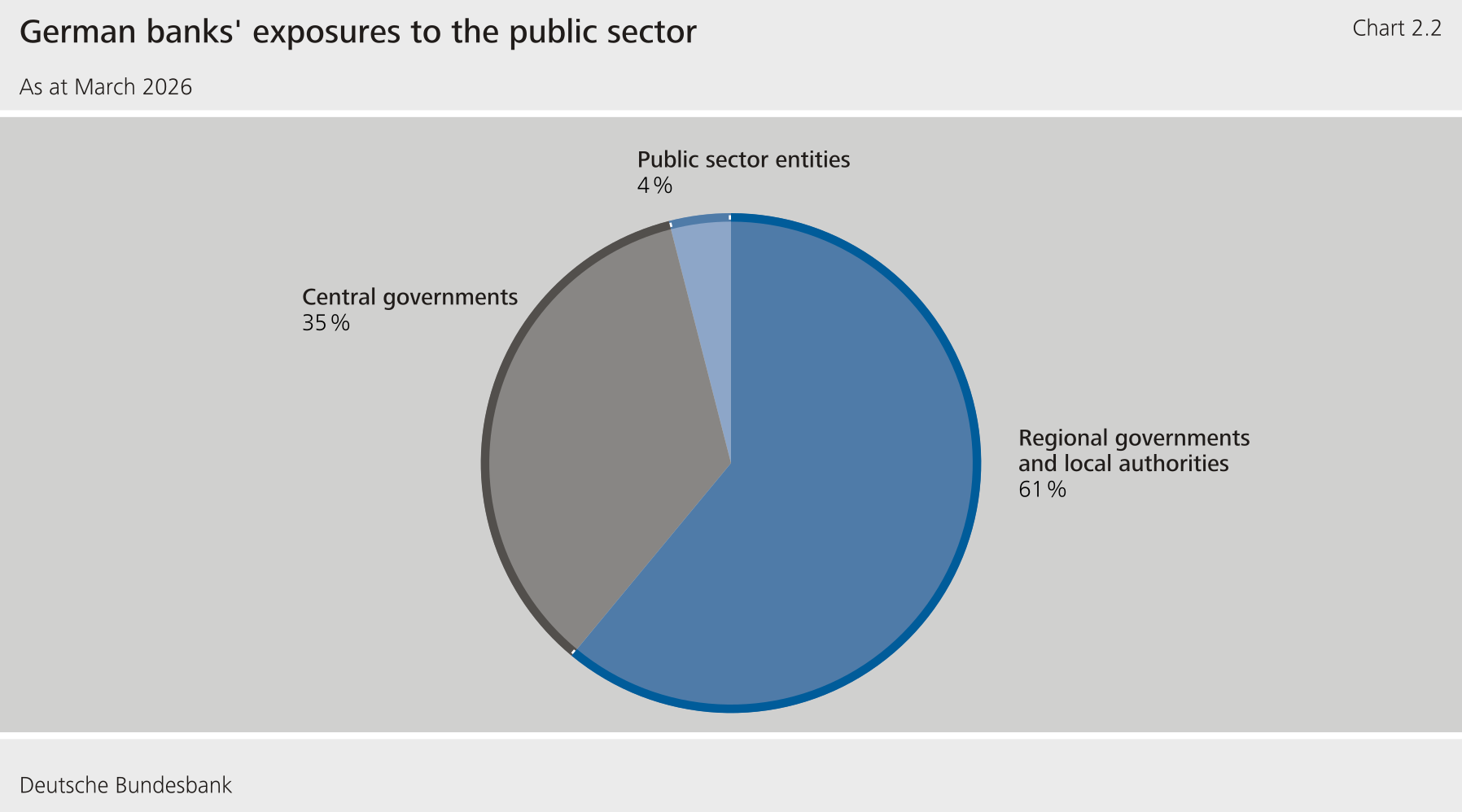
Particularly in federal systems such as Germany’s, it becomes clear that sovereign risks do not arise solely at the level of central government. They can also originate from sub-national government authorities and affect the banking sector. Exposures to local and state governments account for a substantial part of German banks’ exposures to general government (see Chart 2.2). This can have closely interlinked effects: a high concentration of exposures to sub-national government authorities increases the vulnerability of the banks holding them. At the same time, if individual government authorities experience solvency problems, this can increase the political and institutional pressure on the next government level up to stabilise the situation. This means that the sovereign-bank nexus should not be understood purely as a relationship between banks and central government; in federal systems, it can also take the form of a multi-tiered nexus between banks, local authorities, federal states and central government.
When considering possible regulatory changes, the first key question to answer is at which government level risks should be recorded. In particular, this means clarifying which public debtors are classified under supervisory law as affiliated borrowers or as belonging to a common risk unit. A comparison across Europe shows major differences in their supervisory treatment. While Germany’s state and local governments and Spain’s comunidades autónomas are, in regulatory terms, treated as broadly equivalent to central government, most French and Italian sub-national authorities are not. Even though sub-national authorities have their own revenue-raising powers in France and some local government tax rates apply in Italy, they are assigned the regular, stricter risk weights for regional governments and local authorities. The large differences in government structures across Europe therefore make it more difficult to ensure consistent regulatory treatment of banks’ claims on sub-national public debtors.
When banks hold substantial exposures to the sovereign debt concerned, valuation losses erode their capital. In order to keep their capital ratios stable, banks could subsequently be forced to reduce risk-weighted assets, for example by restricting lending to firms and households. This can impair the supply of credit to the real economy and, at the same time, increase doubts about the solvency of other institutions. 13
Conversely, risks in the banking sector can also be transmitted to the sovereign. In the past, distress events among large banks often led to government bailouts at the national level. These increased public debt, thereby weakening the fiscal credibility of the countries concerned. The European resolution regime established a mechanism for the orderly resolution of banks that are failing or likely to fail. It is intended to ensure continuity of critical functions and limit the use of public funds. A key element is requiring shareholders and creditors to absorb losses first, rather than taxpayers. The resolution regime is thus intended to weaken or interrupt the direct fiscal transmission channel from bank distress to the sovereign. Nevertheless, it does not sever the link between banks and sovereigns entirely. Bank distress can still affect sovereign debt sustainability indirectly if it leads to restrictions on lending. A credit crunch can adversely affect economic activity, thereby reducing government tax revenue and increasing government social spending.
The sovereign-bank nexus can amplify risks to financial stability across borders. European banks are interconnected through the interbank market, common sources of funding, derivatives positions and cross-shareholdings. They are also linked to other financial intermediaries, such as investment funds and central counterparties. This allows confidence shocks to spread rapidly to other banks, market segments and member countries. Moreover, when fiscal space is limited and doubts arise about governments’ ability to support the economy and safeguard deposits, confidence in the stability of their national banking systems may weaken further. The sovereign-bank nexus therefore poses a risk not only to individual national banking systems but also to financial stability across the internal market as a whole.
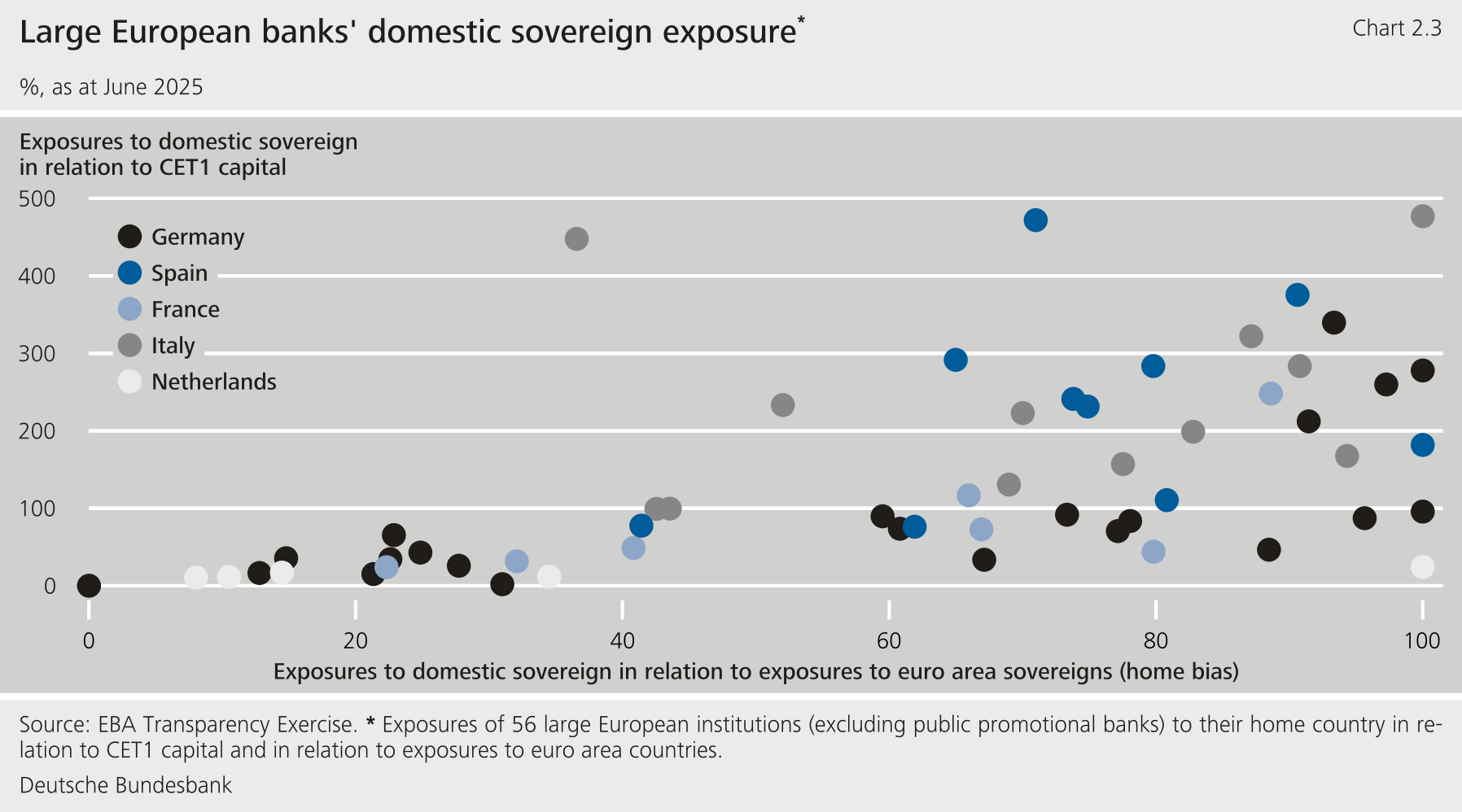
Some large European banks still have significant holdings of domestic sovereign exposures. Chart 2.3 shows the extent of home bias for 56 large institutions in the euro area and the vulnerability to risks posed by the home sovereign. Home bias is measured by the share of domestic sovereign exposures in the overall portfolio of sovereign exposures (horizontal axis). The vulnerability corresponds to the exposure to the home sovereign in relation to CET1 capital (vertical axis). 14 In around one-third of the institutions under review, domestic sovereign exposures account for more than 75 % of total sovereign exposures; in addition, almost half of the institutions under review (43 %) have home country exposures that exceed their CET1 capital. A portfolio with a high share of domestic sovereign exposures is not necessarily problematic if these holdings remain limited in relation to Tier 1 capital. The institutions in the upper right-hand area of Chart 2.3 therefore appear to be particularly vulnerable. In addition to a pronounced home bias, they also display a high concentration of sovereign exposures relative to their loss-absorbing capacity.
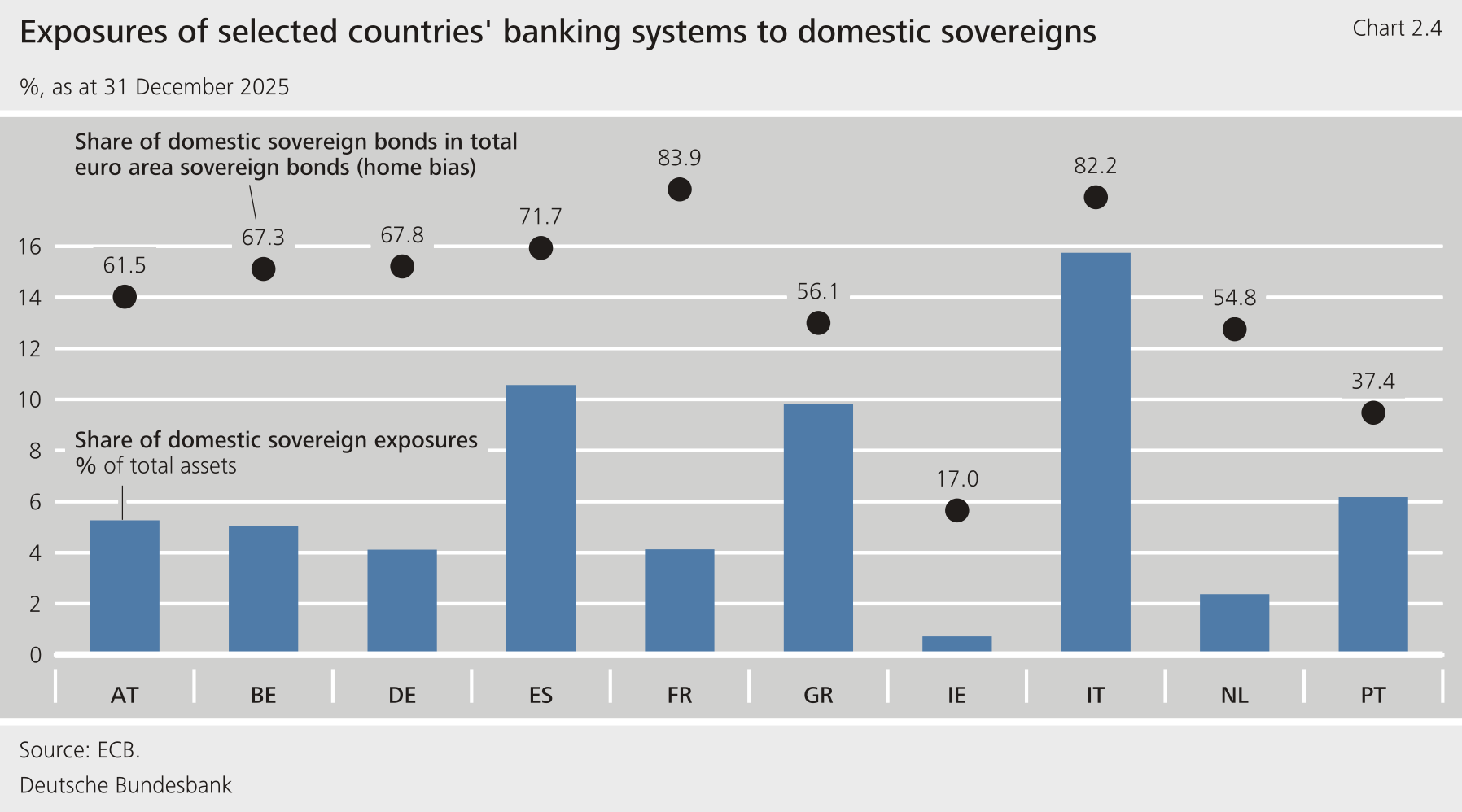
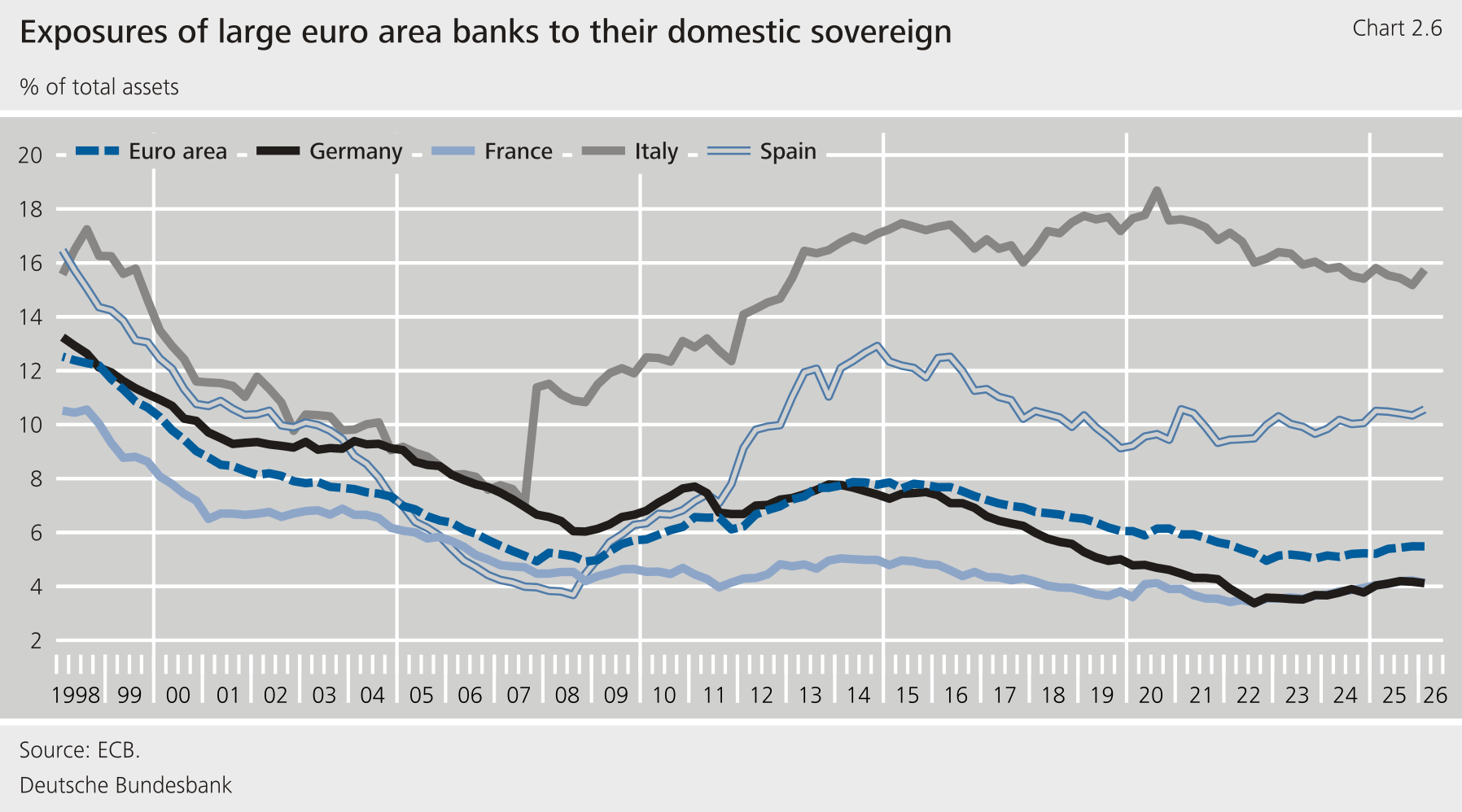
A breakdown of national banking system domestic sovereign exposures shows significant differences between member countries (see Chart 2.4). 15 Home bias is strong in almost all major euro area countries, with values above 67 %. The share of domestic sovereign exposures in total assets is just above 4 % in the German and French banking systems, while the aggregate figure is above 10 % for Spanish banks and almost 16 % for Italian banks.
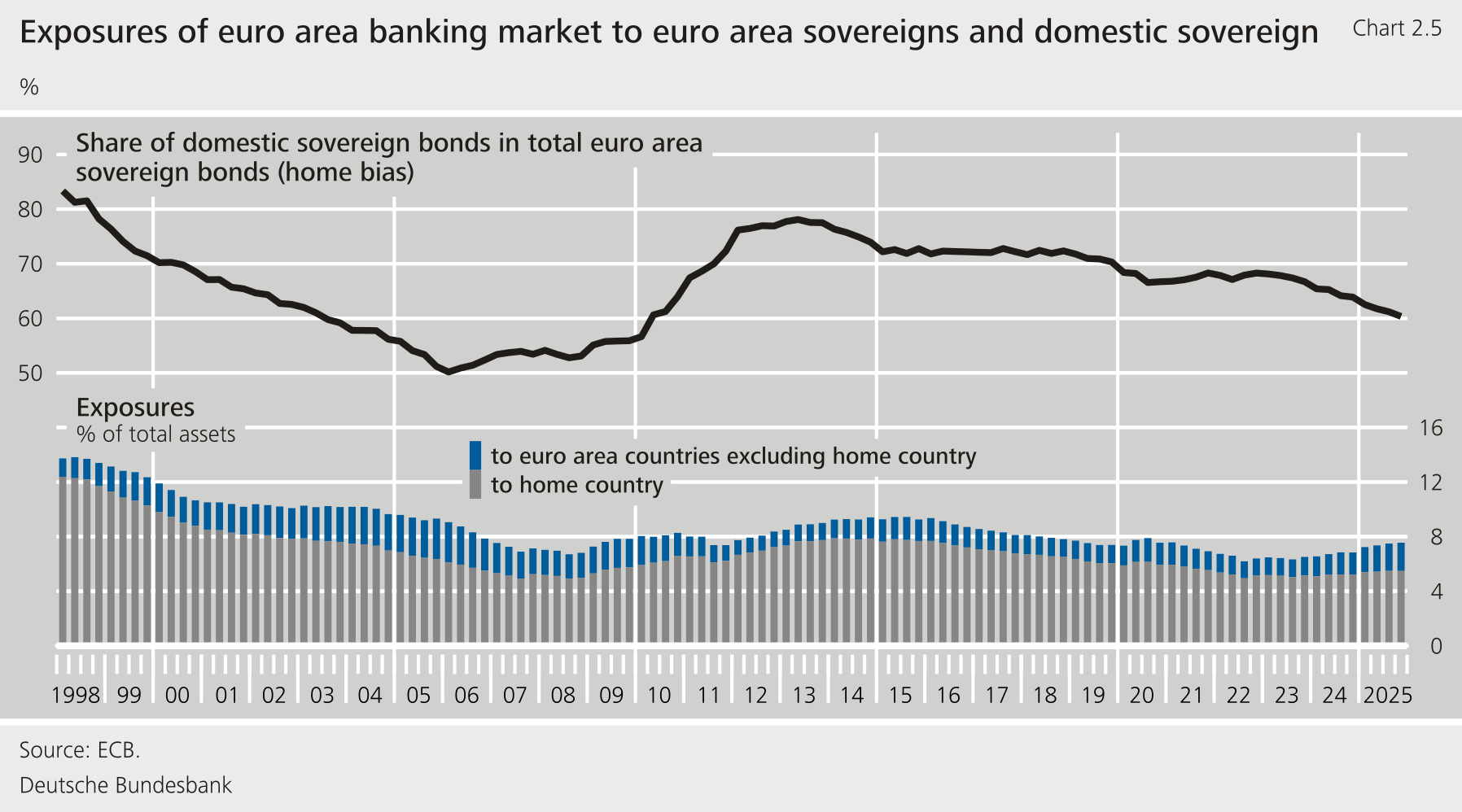
After the introduction of the euro, home bias initially receded (Chart 2.5). One key reason for this was the elimination of foreign exchange risk within the euro area, which made it easier and more attractive to invest in other member countries' sovereign debt. 16 However, the decline was due less to reduced holdings in absolute terms than to a change in the relative balance sheet structure. Banks’ domestic sovereign exposures continued to rise but grew more slowly than their total assets (see Chart 2.5, lower panel). However, this trend reversed itself in the wake of the 2008 financial crisis. Preference for domestic sovereign debt instruments increased significantly. In an environment of heightened uncertainty, falling confidence in financial markets and political interference, banks favoured supposedly safe, liquid and easier-to-price investments. Domestic sovereign debt instruments found particular favour amongst investors. 17 This raised concentration risks in bank balance sheets and heightened their vulnerability to sovereign risks. From 2013‑14, home bias declined again, encouraged by the calming of the sovereign debt crisis, ECB measures and progress in the European crisis architecture. Since the end of the zero interest rate policy and the gradual reduction in the Eurosystem’s bond holdings in the period 2022‑23, holdings of sovereign exposures in bank balance sheets have gone back up. At the same time, home bias weakened slightly as banks increasingly invested in foreign sovereign exposures. 18 Despite the recent decline in home bias, holdings of domestic sovereign exposures remain high, especially in certain euro area countries (see Chart 2.6).
Several structural, non-regulatory factors are systematically steering banks’ investment behaviour towards their home country:
Information and monitoring advantages: 19 banks are better acquainted with their home country’s fiscal policy, its institutions and political processes, and the legal framework and resolution regime. They can thus make a more exact assessment of the risks of domestic sovereign exposures than of foreign instruments. 20
Implicit home country guarantees: the literature emphasises that, in a crisis, banks are more likely to expect fiscal support if they are strongly interlinked with their home country, for example through large holdings of domestic sovereign exposures. This is due to the high economic costs of a bank insolvency. 21 If the home sovereign has limited fiscal space, a bailout financed by that country alone may appear less credible. Market participants could then expect a comprehensive stabilisation measure involving other public sector stakeholders, such as European institutions. The search for yield can amplify this effect because riskier domestic sovereign exposures usually offer higher yields. 22 For weakly capitalised banks, this can also be interpreted as “gambling for resurrection”. 23
Moral suasion: Research suggests that, especially in crisis situations, governments apply targeted informal political pressure on domestic banks to acquire more domestic sovereign exposures in order to limit the rise in yields. 24
The importance of these factors for home bias is also reflected in institutions’ self-assessments. In a European Commission consultation on the competitiveness of the EU banking sector carried out in 2026, banks cited several reasons for their home bias. These include, in particular, political pressure, business model considerations and the perception of domestic sovereign bonds as safe and highly liquid assets. 25
The preferential regulatory treatment of sovereign exposures enables large holdings of domestic sovereign debt instruments to be built up, even if they are risky. This preferential treatment alone does not explain home bias because regulation does not exclusively favour domestic sovereign exposures. However, one significant regulatory constraint is lacking. If domestic sovereign exposures appear attractive for political, information-related or return-oriented reasons, the leverage ratio is the only regulatory barrier to the build-up of correspondingly high holdings. 26 The combination of regulatory and non-regulatory factors can also distort market discipline and price formation. Reducing such incentives could therefore contribute to a more risk-appropriate approach to pricing.
3 Risks arising from high concentrations of sovereign exposures
Calculations carried out under a macroprudential banking stress test show that high concentrations of sovereign exposures can affect the resilience of individual banks and the euro area banking system in the event of a strong risk premium shock.The analysis captures both direct market value losses as a result of shocks to the risk premia of sovereign exposures and the resulting contagion effects in the banking system (for a detailed description of the methodology, see the supplementary information entitled “Stress test methodology to analyse the risks for banks arising from high portfolio concentration in sovereign exposures”). Two stress scenarios are taken into consideration. In the first scenario, premia on the sovereign exposures of the four largest euro area countries increase (idiosyncratically) by 200 basis points. In the second scenario, the risk premia of all euro area countries widen according to the scenario in the 2025 EU-wide banking stress test by the European Banking Authority (EBA). 27 While the first scenario captures country-specific stress in sovereign exposures, the second scenario assumes a broad loss in confidence in euro area sovereign exposures. Country-specific loss rates that reflect the loss in the value of sovereign exposures in the respective scenario are then derived from the changes in risk premia. Using data on holdings of sovereign exposures, the losses are ultimately transferred to the portfolios of 79 significant institutions (SIs) in the euro area. In addition, contagion effects are modelled via the interbank credit channel. The results should be interpreted as a model-based calculation of the impact of concentration of sovereign exposures on losses in the banking system; the actual effect on the CET1 ratio may vary depending on accounting treatment, valuation category, hedging and regulatory treatment of the holdings.
Supplementary information
Stress test methodology to analyse the risks for banks arising from high portfolio concentration in sovereign debt instruments
Risks for the banking system arising from portfolio concentration in sovereign debt instruments (see Chapter 3) are calculated on the basis of the Bundesbank’s market risk stress test and the banking system loss contagion model (see Falter et al. (2021) and Fink et al. (2016)). Using the approach presented below, it is possible to comprehensively analyse the impact of a shock on sovereign debt instruments, including direct losses and the resulting contagion effects in the banking system.
Two shock scenarios are observed: (i) an increase of 200 basis points in risk premia on sovereign debt instruments issued by individual, large euro area countries (Germany, France, Italy, Spain), referred to in the analysis as an idiosyncratic shock; (ii) a simultaneous shock to risk premia across all euro area countries based on the market risk scenario in the 2025 EU-wide stress test conducted by the European Banking Authority (EBA). 1
First, the average market value losses per sovereign bond are calculated by country, based on the increases in risk premia. Losses are stated as a percentage of the corresponding exposure (loss rate). 2 To calculate the bank-specific losses from the two scenarios, the calculated loss rates are then multiplied by the sovereign debt instruments of the individual euro area significant institutions (SIs) held for the euro area countries, using data from the EBAEU-wide Transparency Exercise. 3 The calculated market value losses of all sovereign bonds are then deducted from Common Equity Tier 1 (CET1) capital, resulting in a decline in the CET1 ratio. To ensure better comparability, the same loss rates per sovereign bond are used for all SIs, including the German SIs. 4 A total of 79 SIs from the euro area are shocked, including 16 German SIs. 5
In addition to market value losses, contagion effects via the credit channel between banks are calculated using the banking system loss model. In the banking system loss model, when borrowing banks’ credit quality deteriorates, lending banks have to write down the value of their exposures. This reduces their CET1 capital and changes the risk-weighted assets for these exposures. The contagion effects thus lead to a further reduction in banks’ CET1 ratio. In addition to the German and euro area SIs affected by the shock, (German) LSIs are also included in the calculation of contagion effects. However, the size of the contagion effects depends on the SIs that have already been shocked.
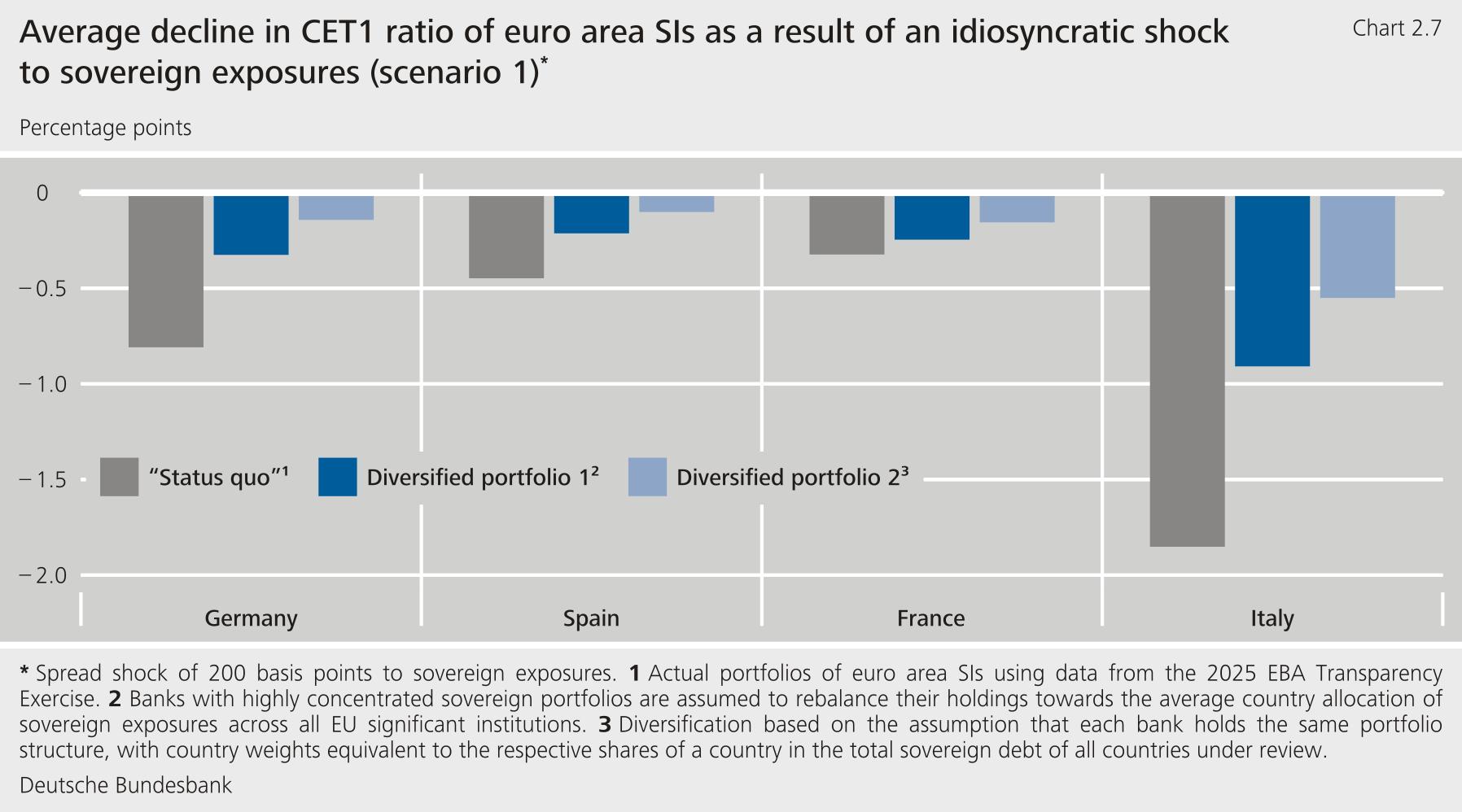
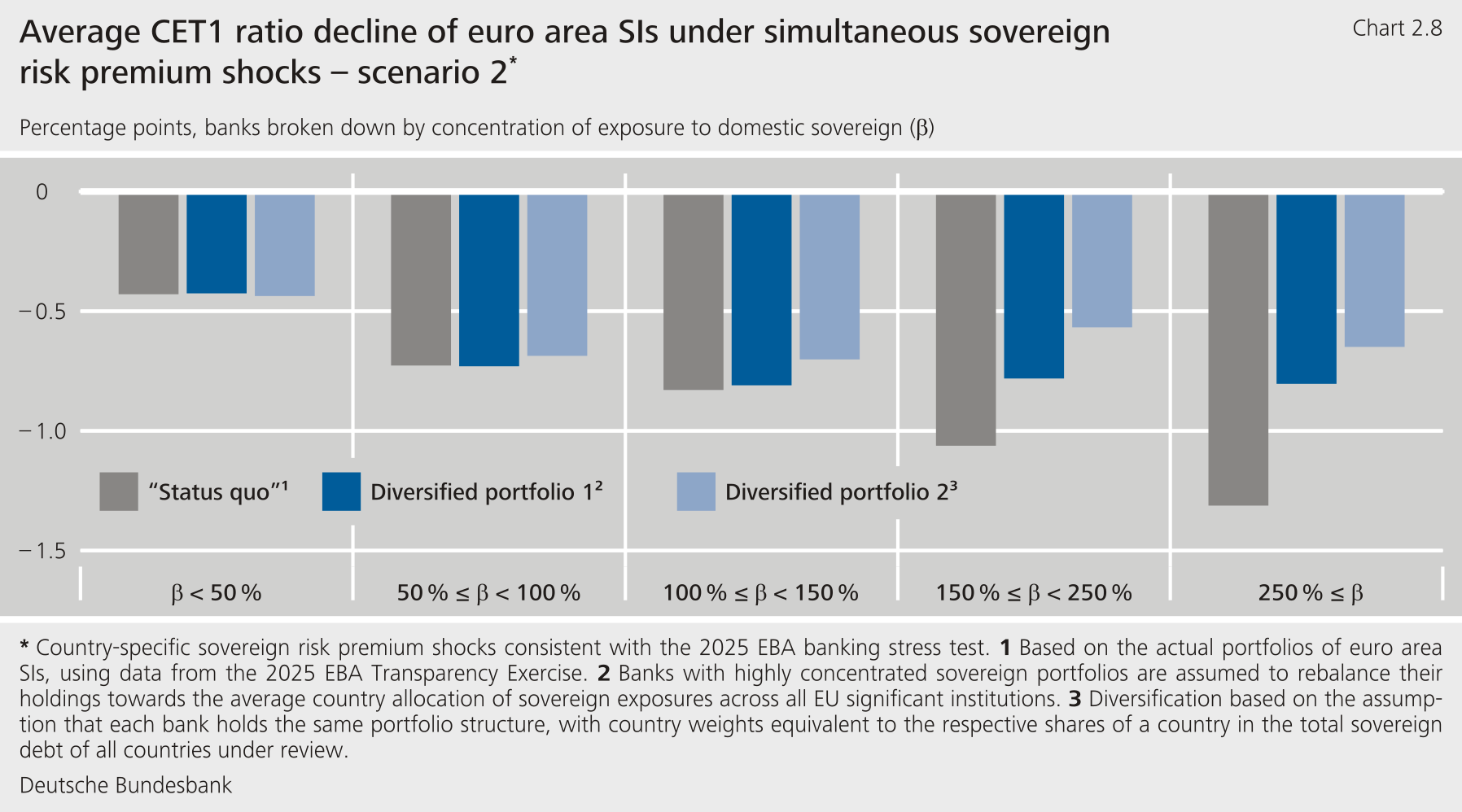
In both stress scenarios used as examples, the decline in the CET1 capital ratio depends on the concentration of exposure to the home sovereign. In scenario 1 with idiosyncratic shocks, at an average of 1.8 percentage points, the decline in the CET1 capital ratio is considerably stronger for Italian banks, as domestic sovereign exposures account for just under 16 % of total assets here (see Chart 2.7). By contrast, for French and German banks, holdings of domestic exposures account for around 4 % of total assets. The decline in the CET1 ratio in the stress scenario for banks from these two countries is significantly smaller, at 0.3 and 0.8 percentage points respectively. In scenario 2, which assumes a broad loss in confidence in all euro area countries (see Chart 2.8), the average declines in the Tier 1 capital ratio per bank increase as domestic sovereign exposures become more concentrated. Banks with low concentrations (less than 50 % of Tier 1 capital) experience a fall of 0.4 percentage points in the Tier 1 capital ratio, while those with the highest concentration (more than 250 % of Tier 1 capital) experience a decline of 1.3 percentage points.
If the banks under review were to diversify their holdings of sovereign exposures more strongly as a result of a reduction in preferential regulatory treatment, the decline in Tier 1 capital ratios would be smaller in the stress scenarios used as examples. To determine the impact of greater diversification, the analysis looks at two hypothetical variants of a diversified portfolio composition. The first variant assumes that banks with a high concentration of domestic sovereign exposures adapt their portfolios to the average country structure of all SIs in the euro area. The second variant for deriving diversified portfolios envisages an identical portfolio structure for each bank. The country weights of the portfolio correspond to each country’s share of total outstanding sovereign debt across the euro area countries under review. The higher a country’s outstanding debt relative to the other countries, the greater its weight in the portfolio. In this analysis, holdings of domestic sovereign exposures of more than 100 % of Tier 1 capital are considered to be a high concentration.
In the simulations, both hypothetical diversification variants significantly reduce the decline in Tier 1 capital ratios in the stress test. In the case of idiosyncratic shocks (scenario 1), the drop in the Tier 1 capital ratio for German banks, for example, decreases from 0.8 percentage points to 0.3 percentage points assuming the first diversification variant. In variant 2, the decline amounts to 0.1 percentage points (see Chart 2.7). In the second scenario of a broad loss of confidence in all euro area countries, too, the declines in Tier 1 capital ratios are smaller under the diversification assumptions (see Chart 2.8). In other words, even if confidence in all euro area countries diminishes, diversification mitigates banks' losses. The lower decline in the Tier 1 capital ratio through diversification is all the greater, the higher the concentration of domestic sovereign exposures at the respective bank. Only banks with low concentrations of less than 50 % of CET1 show no difference compared with a portfolio without diversification.
4 Regulatory treatment of sovereign exposures
Sovereign exposures, like other debt instruments, are assessed according to three main risk types: interest rate risk, credit migration risk and default risk. Interest rate risk is classified as market risk because changes in the interest rate level directly affect the market value of bonds. The treatment of risks attributable to credit rating changes and defaults depends on whether the respective debt instrument is allocated to the trading book or the banking book. In the trading book, they are assigned to market risk and in the banking book to credit risk. This results in different regulatory requirements depending on the risk category and valuation approach.
Risks of credit rating migrations and default for sovereign exposures in the banking book – i.e. holdings that are not used for short-term trading – are treated as credit risk. In the EU, a regulatory risk weight of 0 % is generally envisaged for exposures to sovereigns. This does not result in any risk-based capital requirements. 28 Therefore no risk-based capital requirements need to be imposed on losses resulting from credit rating deterioration or defaults. However, holdings of sovereign exposures are generally taken into account in the leverage ratio; they can therefore at least be limited for capital purposes through this non-risk-based leverage measure.
In the large-exposure regime, too, far-reaching exceptions apply to sovereign exposures. For private sector borrowers, a limit of 25 % of a bank’s eligible capital applies in general. However, these limits do not apply to sovereign exposures treated with a risk weight of 0 % under the standardised approach. This allows banks to have high exposures to individual sovereign issuers without being constrained by binding concentration limits.
The regulatory framework currently in force therefore does not place sufficient restrictions on high concentrations of sovereign exposures. Applying large exposure limits to sovereign exposures could directly mitigate concentration risk for exposures to individual countries. However, depending on the particular portfolio structure of banks, it could necessitate considerable rebalancing in some cases. By contrast, risk-based capital requirements for sovereign exposures would be a less direct instrument to limit concentration risk. They could capture credit risk more strongly, but reduce high individual exposures only indirectly. 29 In the case of countries with good credit ratings, requirements would remain minimal owing to low risk weights, meaning that there would be virtually no limit on high individual exposures and next to no incentive to diversify. Overall, the current regulatory framework thus lacks a specific instrument that provides effective incentives to reduce high concentrations of sovereign exposures.
At the same time, regulatory approaches should take into account the special functions of sovereign debt instruments for the financial system. Under European legislation, sovereign bonds denominated in domestic currency of all member countries of the European Union are classed as highly liquid assets within the framework of the liquidity coverage ratio. These include, in particular, euro-denominated bonds from euro area countries. Banks can hold these bonds to meet liquidity requirements. In addition, sovereign bonds serve as liquid assets to hedge liquidity outflows and as collateral in refinancing operations.
The particular architecture of monetary union makes a strong case for specific regulatory adjustments to the sovereign-bank nexus in the euro area. The Basel Committee on Banking Supervision has already been working intensively on the regulatory convergence of exposures to sovereign issuers and private debtors. It has also discussed potential reforms. However, a fundamental adjustment of the rules has found no majority backing so far. The regulatory incentives favouring sovereign borrowers could be reduced or eliminated by such an adjustment. Far-reaching convergence still appears to be a political non-starter on the global stage.However, this does not preclude the European Union introducing targeted, stricter requirements, in the context of the specific institutional architecture of the euro area, which complement the global regulatory framework. Measures to limit portfolio concentrations of sovereign debt instruments appear realistic here. Such instruments would not completely neutralise potential moral hazard benefiting sovereign issuers that could arise from the current regulatory regime compared with a far-reaching elimination of preferential treatment. However, the overall market impact would be more limited. This would not jeopardise the role of sovereign exposures as safe, liquid and broadly accepted assets.
5 Reform options: sovereign concentration charges and concentration limits
With regard to financial stability, reform options that provide effective incentives to reduce high concentrations of sovereign debt would be useful. Sovereign concentration charges and concentration limits could be suited to this purpose, complementing existing requirements. The scope and nature of the regulatory intervention is different under each approach. While concentration charges work via capital requirements, concentration limits directly influence the permissible level of individual positions.
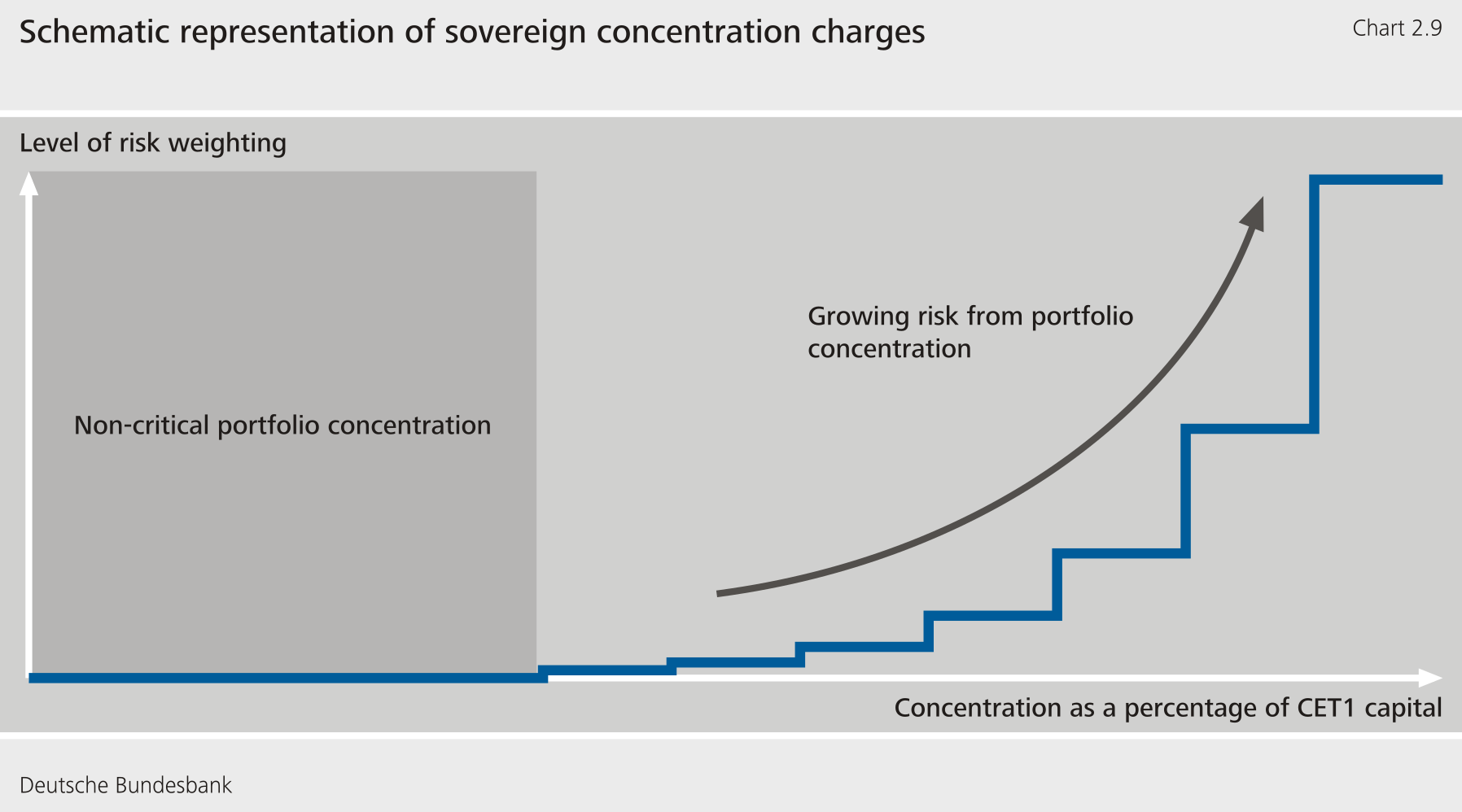
Sovereign concentration charges are linked to the capital requirements for sovereign exposures. From a certain threshold, they trigger capital requirements for exposures to individual sovereigns. The additional capital requirements rise as concentration increases (see Chart 2.9). The basis for calculating the charge is the ratio of a bank’s sovereign exposures to its CET1 capital. If high concentrations were accompanied by rising capital requirements, banks would have an economic incentive to gradually reduce high concentrations and diversify their portfolios more broadly. At the same time, banks would retain the flexibility to determine the desired portfolio structure themselves. 30 By contrast, banks with low concentrations relative to their CET1 capital would not have any additional regulatory incentives to diversify, even if their sovereign debt portfolios were heavily tilted towards their home country.
The effectiveness of such an approach depends heavily on the specific calibration of the sovereign concentration charge. Concentration charges that are too low would create additional capital requirements without significantly affecting banks’ diversification behaviour. By contrast, excessively high concentration charges could trigger considerable adjustment responses, disproportionately worsen the funding conditions of individual sovereigns and thereby impair the performance of key functions of sovereign debt instruments. Calibration examples featuring low 31 and higher 32 concentration charges can be found in the literature. A phased introduction could allow the necessary adjustments to be made over a longer period, thereby minimising the risk of market turmoil.
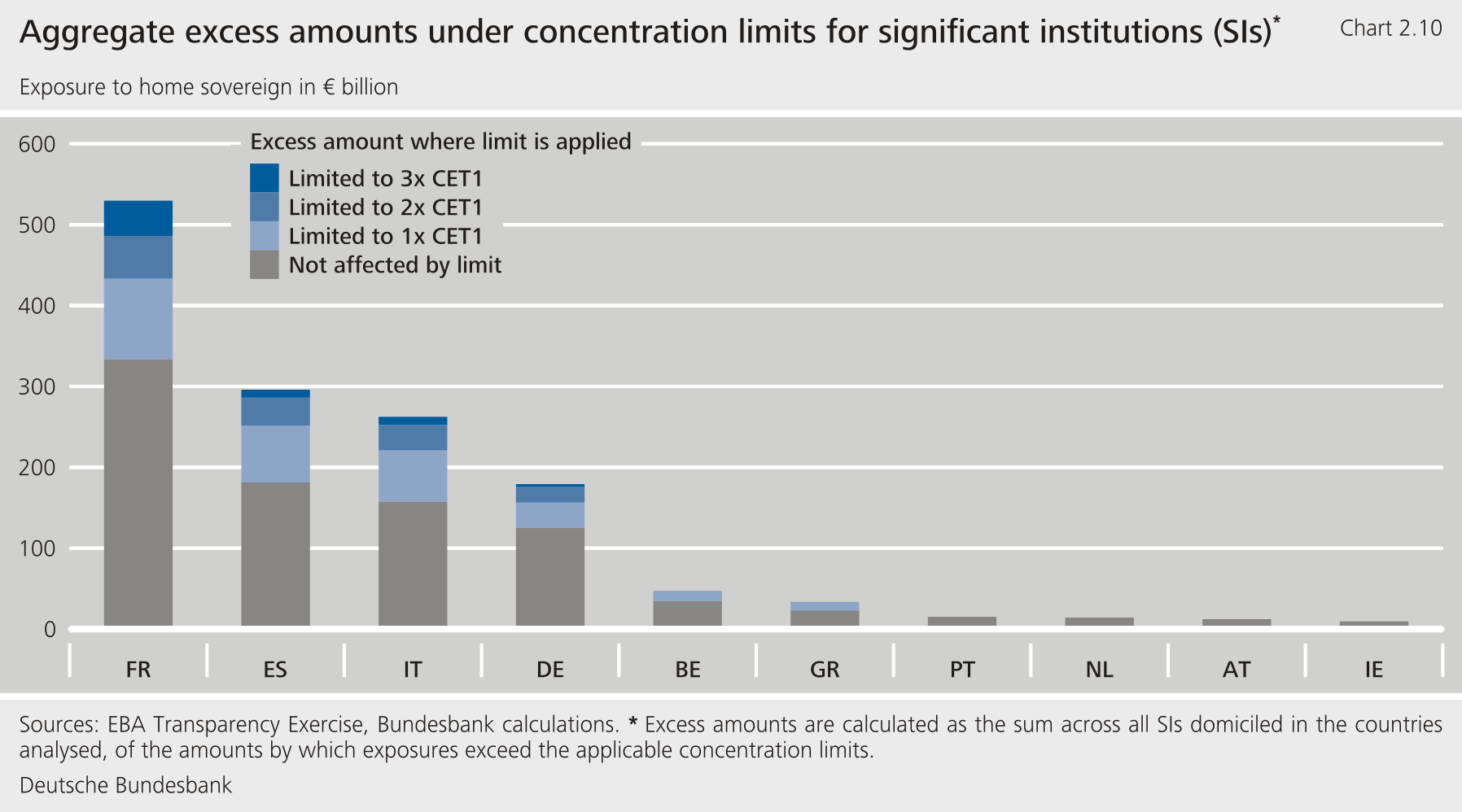
Concentration limits, by contrast, take a more direct and restrictive approach by capping the level of exposure to individual sovereigns. Should this limit be exceeded, existing holdings would have to be reduced and additional purchases of sovereign debt from the issuer concerned would no longer be permitted. 33 Compared with incentive-based instruments, they thus represent a much more restrictive form of regulatory risk management.
The lower the limit is set, the greater the share of existing holdings that would have to be reallocated (see Chart 2.10). 34 While restrictive designs can trigger considerable portfolio adjustments, overly generous limits correspondingly limit the intended diversification effects.
Greater diversification of sovereign debt holdings in bank portfolios could affect the demand for debt issued by individual sovereigns. If domestic banks with a pronounced home bias become less important as reliable buyers, the effects may be particularly noticeable in countries whose creditor structure has so far been heavily influenced by domestic investors. This could be reflected, for example, in changes in required yields, a stronger reaction to market movements or more difficulty in placing new issues.
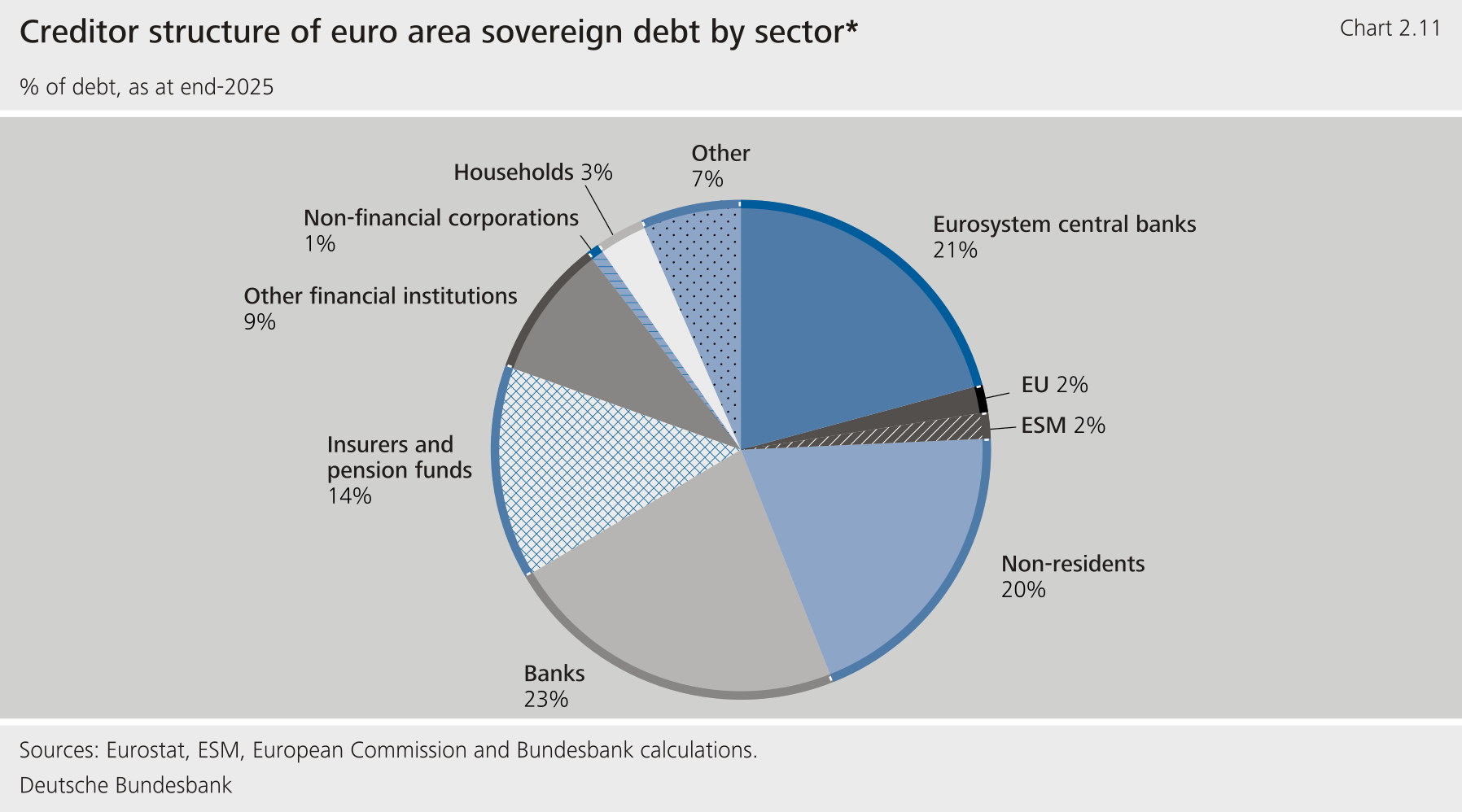
The creditor structure of euro area sovereign debt instruments is heterogeneous (see Chart 2.11). On the whole, banks are the largest group of sovereign debt holders in the euro area but, with a share of around 23 %, they are not dominant overall. Central banks (mainly through their asset purchase programmes), other financial intermediaries such as insurance corporations and pension funds, and foreign investors are also important creditors. As sovereign debt is thus spread across many different groups of creditors, regulatory changes for banks affect only one group of holders. If banks subsequently reallocate their holdings, other intermediaries could, in principle, also act as buyers of sovereign debt.
6 Conclusion
The sovereign-bank nexus continues to pose a structural risk to financial stability in the euro area, even after the reforms introduced in response to the financial and euro area crises. The results of a macroprudential banking stress test suggest that high concentrations of sovereign debt would weaken banks’ resilience in the stress scenarios examined. In the simulations, greater diversification of sovereign debt holdings reduces the decline in bank-specific CET1 ratios. Unlike risk-weighted capital requirements, sovereign concentration charges and concentration limits are suitable instruments that can provide effective incentives to diversify. In addition, they could help strengthen market discipline through more appropriate risk pricing. However, their effectiveness depends on calibration, the implementation period, grandfathering rules and possible side effects on sovereign bond markets.
Reducing high concentrations of sovereign debt could make an important contribution to refining the institutional architecture of the banking union. The persistently high concentrations of sovereign debt in individual banking systems pose a challenge to the introduction of a European deposit insurance scheme (EDIS), for example, because risks that are not solely market-driven would thereby be insured collectively. They also stem from regulatory privileges for sovereign debtors that deviate from risk-based regulation. In addition, non-regulatory factors linking domestic banks particularly closely to their home country play a role. Effectively curbing the sovereign-bank nexus should help underpin further progress on EDIS and secure broader political support for it. Important foundations have already been established through the European resolution regime and the Crisis Management and Deposit Insurance Framework (CMDI). 35 Effectively containing concentration risks on banks’ balance sheets would further support this development.
Effectiveness, simplicity and careful calibration that includes transition periods are key to future reforms. The rules need to strike a balance between effectiveness and simplicity. Concentration charges and limits should be transparent, easy to communicate and relatively easy to integrate into the existing CRR/CRD framework. In addition, careful calibration, along with appropriate transition periods, is needed to avoid undesirable side effects on market liquidity, sovereign financing costs and the functioning of financial markets.
Coordinated efforts across Europe to implement the rules could strengthen the regulatory framework and increase confidence in the single currency. The refinement of the CMDI framework, the completion of the banking union and initiatives such as a Savings and Investments Union would provide a basis for doing so.
Dell’Ariccia, G., E. Detragiache and R. Rajan (2008), The Real Effect of Banking Crises, Journal of Financial Intermediation, Vol. 17(1), pp. 89‑112.
Dell’Ariccia, G., C. Ferreira, N. Jenkinson, L. Laeven, A. Martin, C. Minoiu and A. Popov (2016), Managing the Sovereign-Bank Nexus, International Monetary Fund, Departmental Paper No. 18/16.
Ferri, G. and V. Pesic (2021), The Sovereign-Bank Nexus, in Ferri, G. and V. D’Apice (eds.), A Modern Guide to Financial Shocks and Crises, pp. 241‑261.