# Germany’s international interconnectedness via foreign direct investment: current developments
* [*1 Spotlight on German FDI relationships*](#tar-1 "1 Spotlight on German FDI relationships")
* *[*2 German outward FDI*](#tar-2 "2 German outward FDI")*
* **[*3 Foreign direct investment in Germany*](#tar-3 "3 Foreign direct investment in Germany")**
* ***[*4 Conclusion*](#tar-4 "4 Conclusion")***
* ***[*List of references*](#tar-5 "List of references")***
****Historians could look back upon the current decade as a turning point in the international division of labour. Following years of growing real and financial interconnectedness, signs were starting to emerge in the 2010s that some countries were beginning to renounce multilateralism and put greater stock in protectionist measures to promote their domestic economies. This was demonstrated in 2016 when Donald Trump was elected President of the United States and the United Kingdom voted to leave the European Union (Brexit referendum). The coronavirus pandemic in spring 2020 and Russia's attack on Ukraine two years later caused unprecedented disruptions to international supply chains. Production relationships, which are set to be guided more strongly by geopolitical criteria than in the past, could undergo lasting change owing to the two events. This article will cover the extent to which this is already being reflected in Germany's foreign direct investment () relationships. It raises three central issues and draws preliminary conclusions: (1) German firms have recently been investing heavily in the United States again, with both geopolitical aspects and attractive local production conditions being possible contributing factors. (2) Over the past few years, high reinvested earnings in China have hidden the fact that the dynamics of new in China have slowed down and that, to some extent, capital has even been pulled out. (3) As a location for multinational enterprises, Germany is competing intensely with other industrial nations for ; within the euro area, France and Spain, as a percentage of , have recently been more successful in attracting .****{#par-e993u2}
***1 Spotlight on German relationships*** {#tar-1}
--------------------------------------------------
*****The 2020s have thus far been marked by severe crises.** In the first half of 2020, the coronavirus pandemic sent the global economy into a tailspin in the space of just a few weeks. Two years later, Russia's war of aggression against Ukraine sent energy prices rising, especially in Germany. Trade and geopolitical tensions between the United States and China, having already mounted significantly under the Trump administration in the United States, intensified further. The events led to the resilience of cross-border relationships being questioned and greater importance being attached to geopolitical criteria as a location factor.***{#par-aiu937}
*****German firms are particularly affected by the global tensions.** They have traditionally put a lot of stock in the international division of labour and sell a lot of products abroad. Against this backdrop, politicians and the business community have been heatedly debating, in particular, three aspects of Germany's relationships. (1) Does Germany's provide any indication of potential offshoring on the part of Germany's industrial sector? (2) How should German firms' continuously high investment in China be assessed in light of rising geopolitical tensions? (3) Are reduced inward flows of into Germany a sign that Germany is becoming internationally less competitive as a business location? This article will address these three issues and shed light on them using current figures on Germany's relationships.***{#par-o7976a}
***2 German outward*** {#tar-2}
-------------------------------
### ***2.1 Potential relocations of manufacturing***
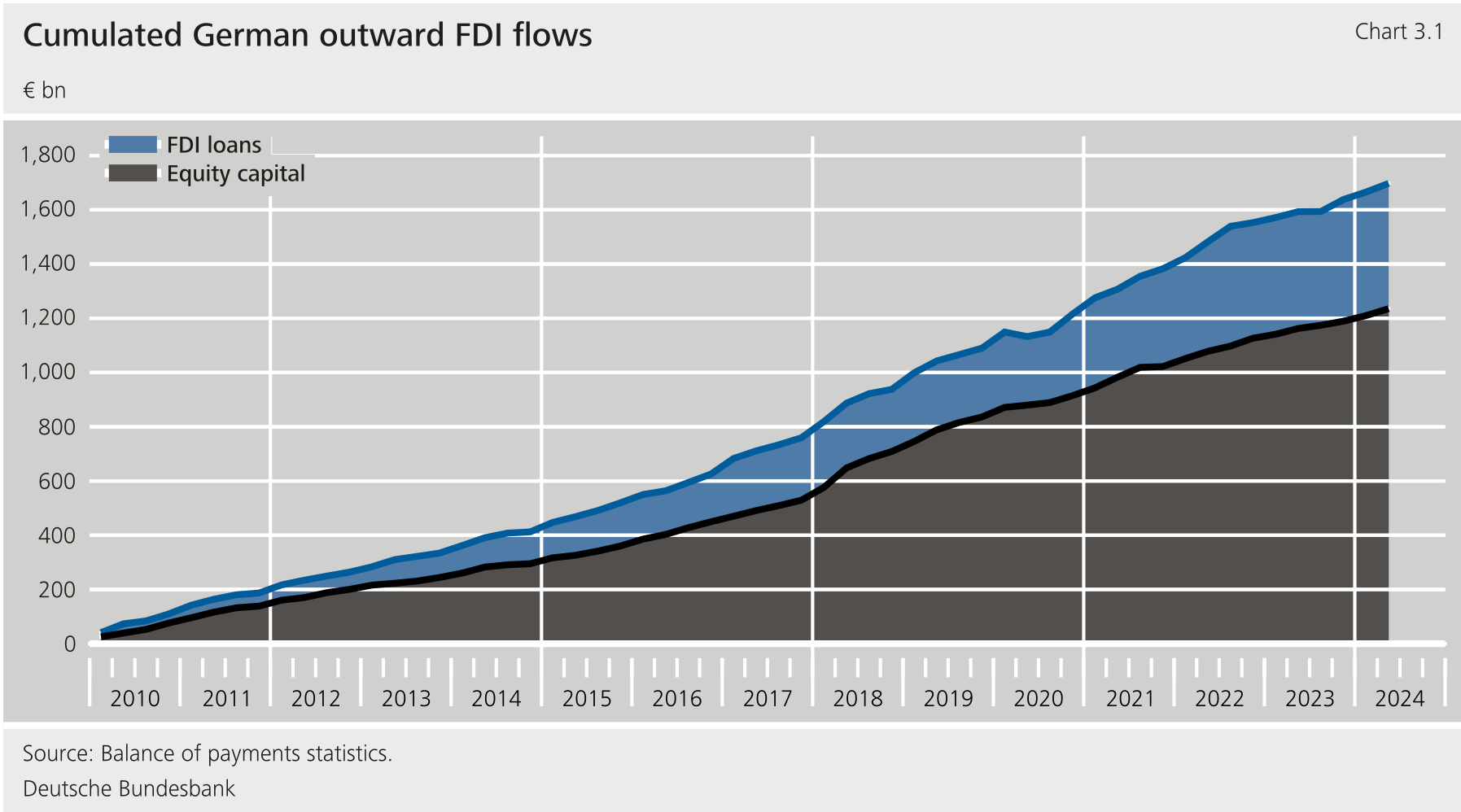
*****As in the past decade, German firms have been investing heavily abroad since the beginning of the 2020s** . Chart 3.1 shows that German rose cumulatively by just shy of €1,700 billion between January 2010 and June 2024.[\[1\]](#_ftn_root_1) The dynamics of the 2010s thus continued unabated. comprises equity capital and intra-group loans. Equity capital, especially in manufacturing, provides a realistic insight into German firms' cross-border investment in the real economy. It rose relatively constantly across the entire period, accounting for around two-thirds of recorded German transactions.***{#par-i8i847}
**Since 2022, the overall dynamics have weakened slightly in line with a global decline in cross-border flows.[\[2\]](#_ftn_root_2) However, this damper primarily affected intra-group loans, which often reflect financial transactions.[\[3\]](#_ftn_root_3)**{#par-o84uo2}
{#par-i9u9ei}
****
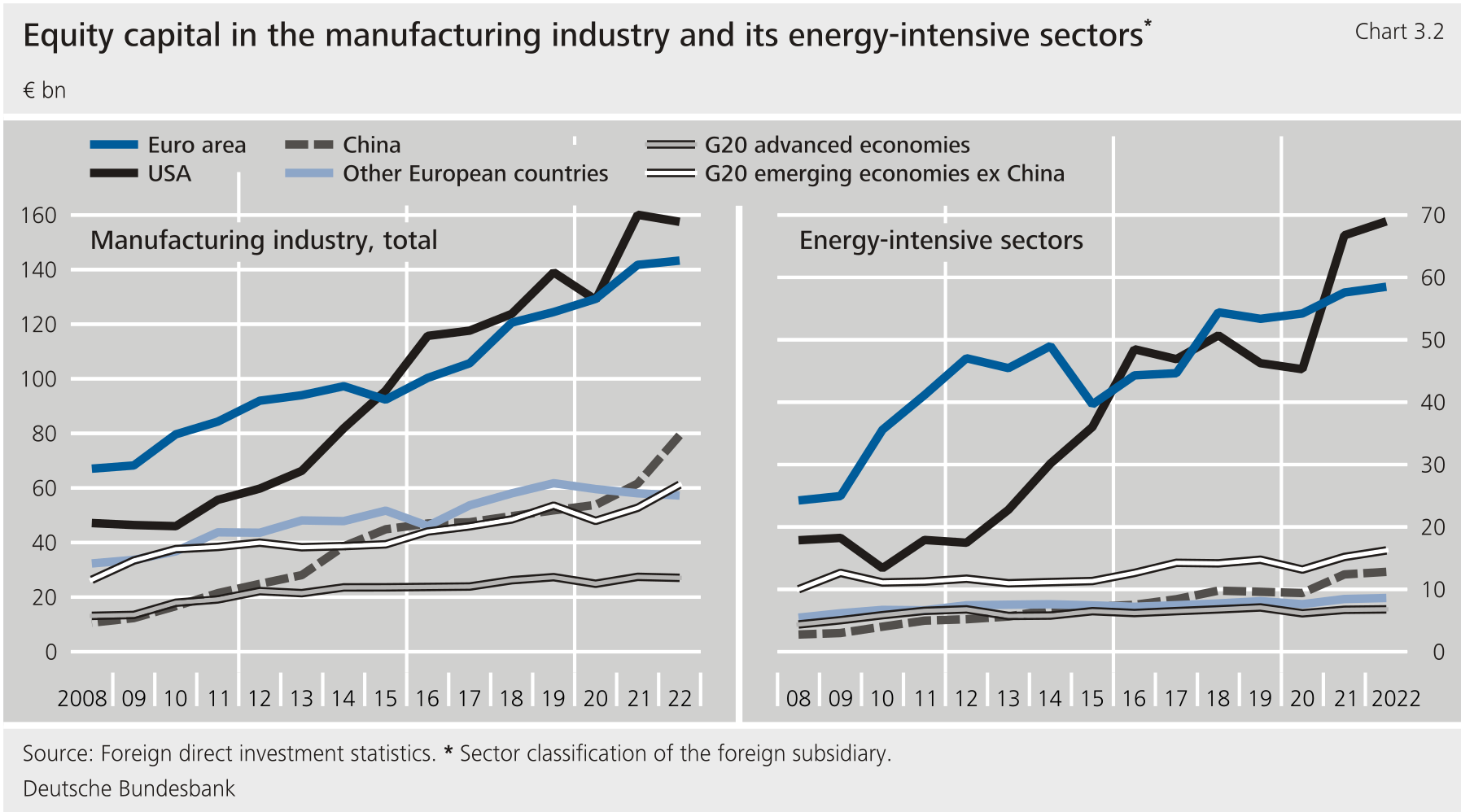
****Measured in terms of stock data, the United States and the euro area are the most important sites for German** **in manufacturing.** This is shown by detailed figures from the Bundesbank's Microdatabase Direct investment () (Chart 3.2, left panel).[\[4\]](#_ftn_root_4) At the end of 2022, the two economic regions collectively accounted for more than half of German equity capital held in manufacturing via . Up until 2014, the euro area was German conglomerates' preferred location; in 2015 the United States superseded the euro area as the most important partner region.**{#par-i32i66}
{#par-i554i3}
****
****Industrial production in Germany has been stagnating since 2022; in the energy-intensive economic sectors, it actually plunged when energy prices rose.** [\[5\]](#_ftn_root_5){#footnote5} Chart 3.3 illustrates that the industrial production of energy-intensive enterprises dropped by around 15% in 2022. This negative trend persisted until the end of 2023, causing a drop of 20% in all. At the same time, electricity prices for industry in Germany rose temporarily by up to 40%. In June 2024, they were still 27% above their end-2021 levels.**{#par-eoaoe1}
{#par-aai677}
**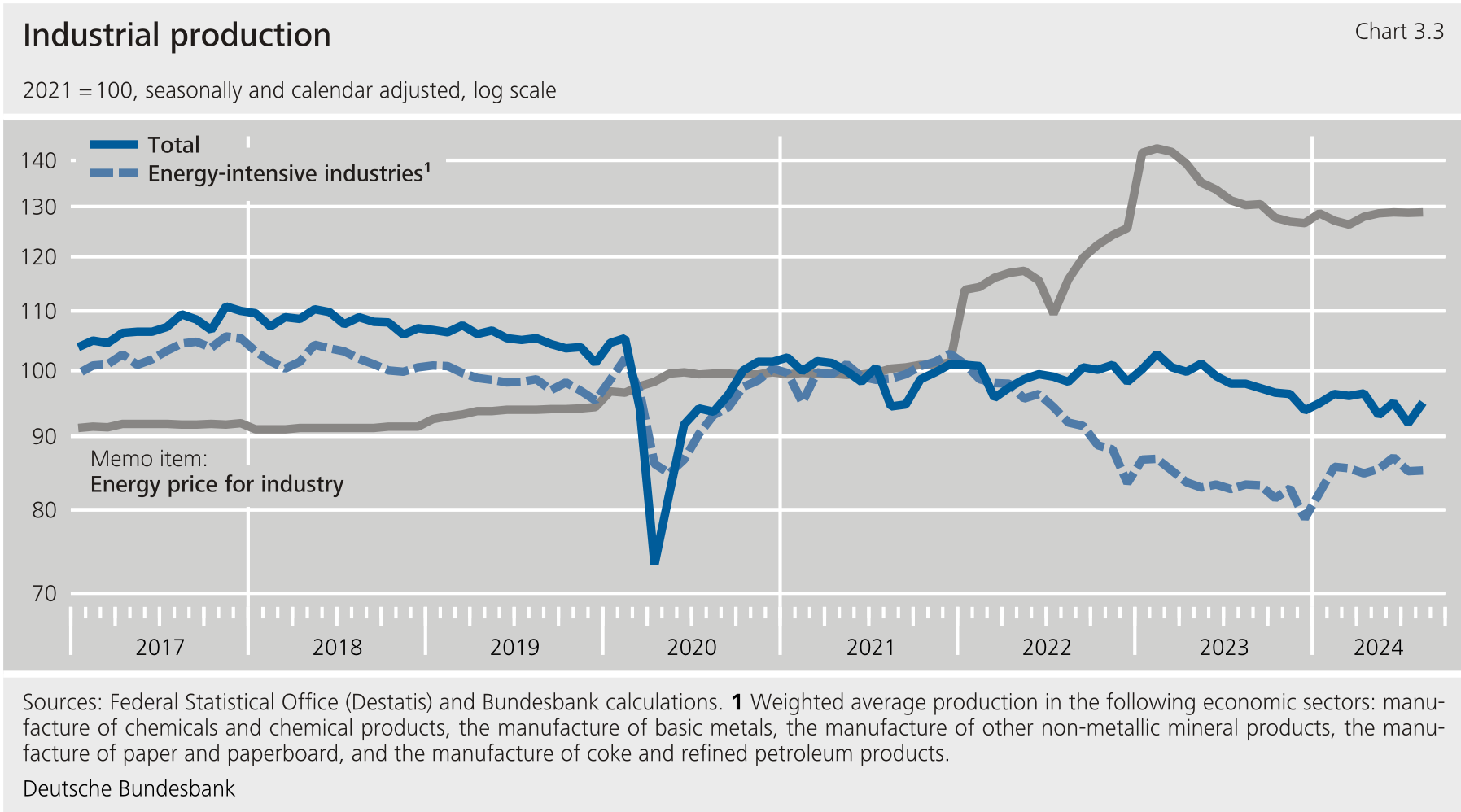**
****Between the end of 2020 and the end of 2022, stocks of German** **in energy-intensive economic sectors in the United States rose particularly sharply**(Chart 3.2, right panel). In connection with the slump in industrial production in Germany, this could indicate that energy-intensive enterprises are availing themselves of foreign production sites owing to relatively inexpensive production costs, amongst other factors.**{#par-o2593e}
### **2.2 German firms' presence in China**
****The importance of China and other** **emerging economies as destinations of German** **in manufacturing grew at an accelerated pace in the 2020 to 2022 period relative to the preceding years.** In 2022, German equity capital saw higher-than-average growth both in China (from €62 billion to €79 billion) and in the rest of the emerging economies (from €53 billion to €61 billion), whereas German equity capital in the United States decreased slightly (from €160 billion as at end-2021 to €157 billion as at end-2022). These countervailing developments took place in different manufacturing sectors, however: whereas in China picked up in the automotive industry, in particular, stocks in the United States fell primarily in pharmaceuticals and the manufacture of machinery and equipment, in stark contrast to investment in energy-intensive industries. From this, it can be concluded that the two phenomena were essentially independent of one another and at least do not reflect any direct substitution effects. This is also supported by the fact that the three (groups of) countries mentioned (United States, China and the other emerging market economies) had a relatively constant number of foreign subsidiaries. Therefore, plant closures and sales were balanced out by greenfield investments and acquisitions.**{#par-aa63a4}
****German firms' heavy investment in China in the past years and the first half of 2024 was attributable largely to reinvested earnings.** [\[6\]](#_ftn_root_6) This sets German enterprises apart from other foreign groups, the majority of which withdrew retained earnings from previous years, thereby reducing their equity interests in China.[\[7\]](#_ftn_root_7) The persistently high level of German in China has come under some criticism for being an obstacle to greater economic diversification -- something that is actually appropriate at the micro level as well -- and for cementing existing dependencies.[\[8\]](#_ftn_root_8) On the other hand, overall developments have been shaped by just a small number of German groups whose subsidiaries in China have been highly profitable .[\[9\]](#_ftn_root_9) These developments are therefore not necessarily representative of the numerous German enterprises active in China.**{#par-ei363u}
{#par-ua46i6}
**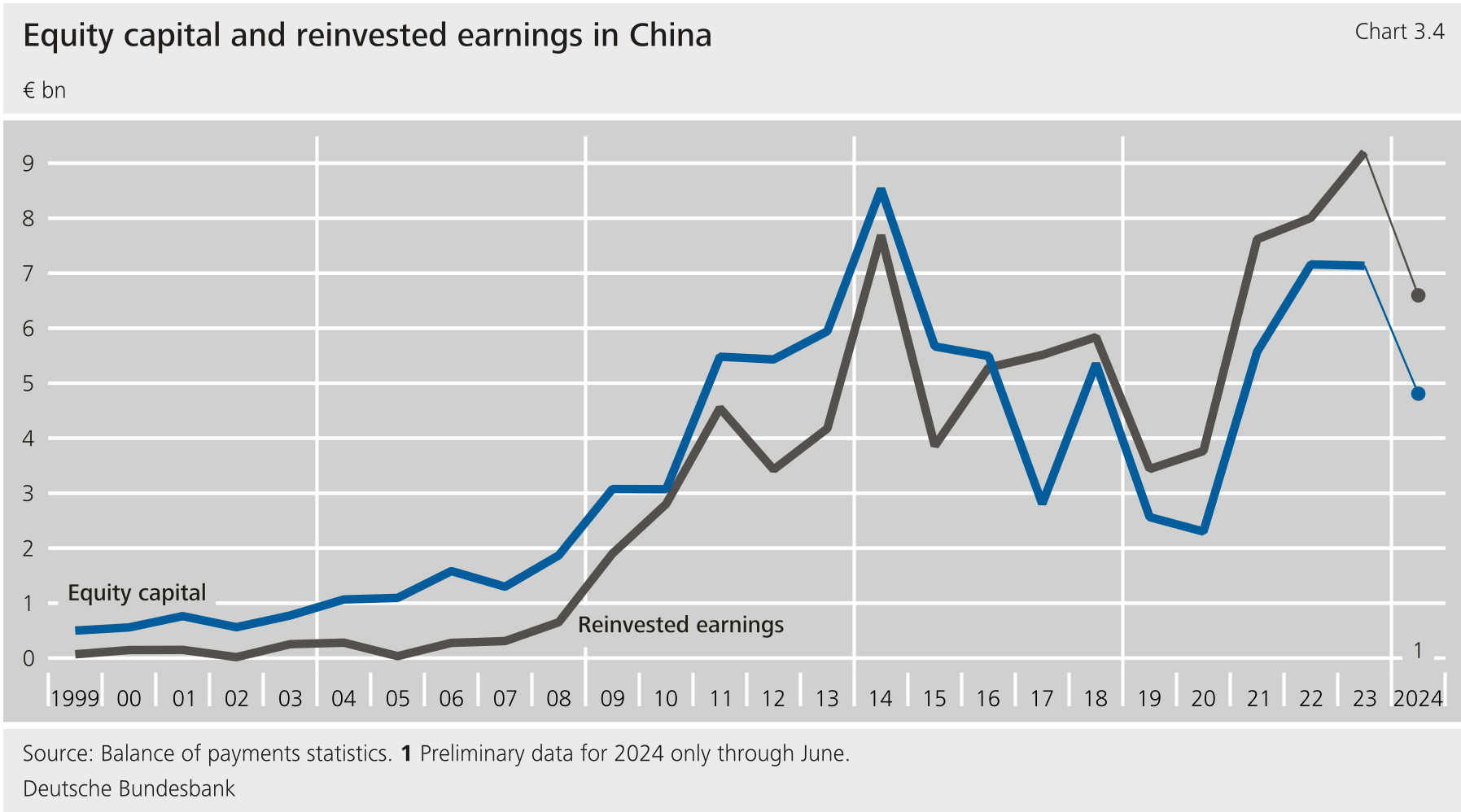**
****According to balance of payments data, German firms have tended to be cautious regarding new** **in China, whereas they have begun to invest more again in the United States.** The investment in cross-border equity capital reported in the balance of payments consists largely of transfers of equity capital funds in the narrower sense and reinvested earnings. If reinvested earnings are disregarded, a look at equity capital in the narrower sense shows that some German investors have withdrawn capital from China since 2017, with the liquidation of existing capital exceeding injections of new equity capital in recent years. By contrast, disinvestment from the United States in 2023 was probably more of an outlier: German enterprises significantly replenished their equity capital there in the first half of 2024 --- here, equity capital in the narrower sense was dominant, with reinvested earnings playing only a minor role.**{#par-o72697}
****The fact that there are fewer Chinese subsidiaries since 2017 is an indication that China may have lost some of its attractiveness as a destination for new** **by German enterprises.** [\[10\]](#_ftn_root_10)By contrast, German enterprises have stepped up their investment in new plant and equipment in the United States. Among many possible factors, two important ones, especially just recently, may be that economic growth in China has cooled off perceptibly and the administration, not least by passing the Inflation Reduction Act (), has set strong incentives for locating production in the United States. However, it is also possible that German enterprises -- running counter to the criticism expressed -- are responding increasingly to the current geopolitical environment.**{#par-o99657}
**3 Foreign direct investment in Germany** {#tar-3}
---------------------------------------------------
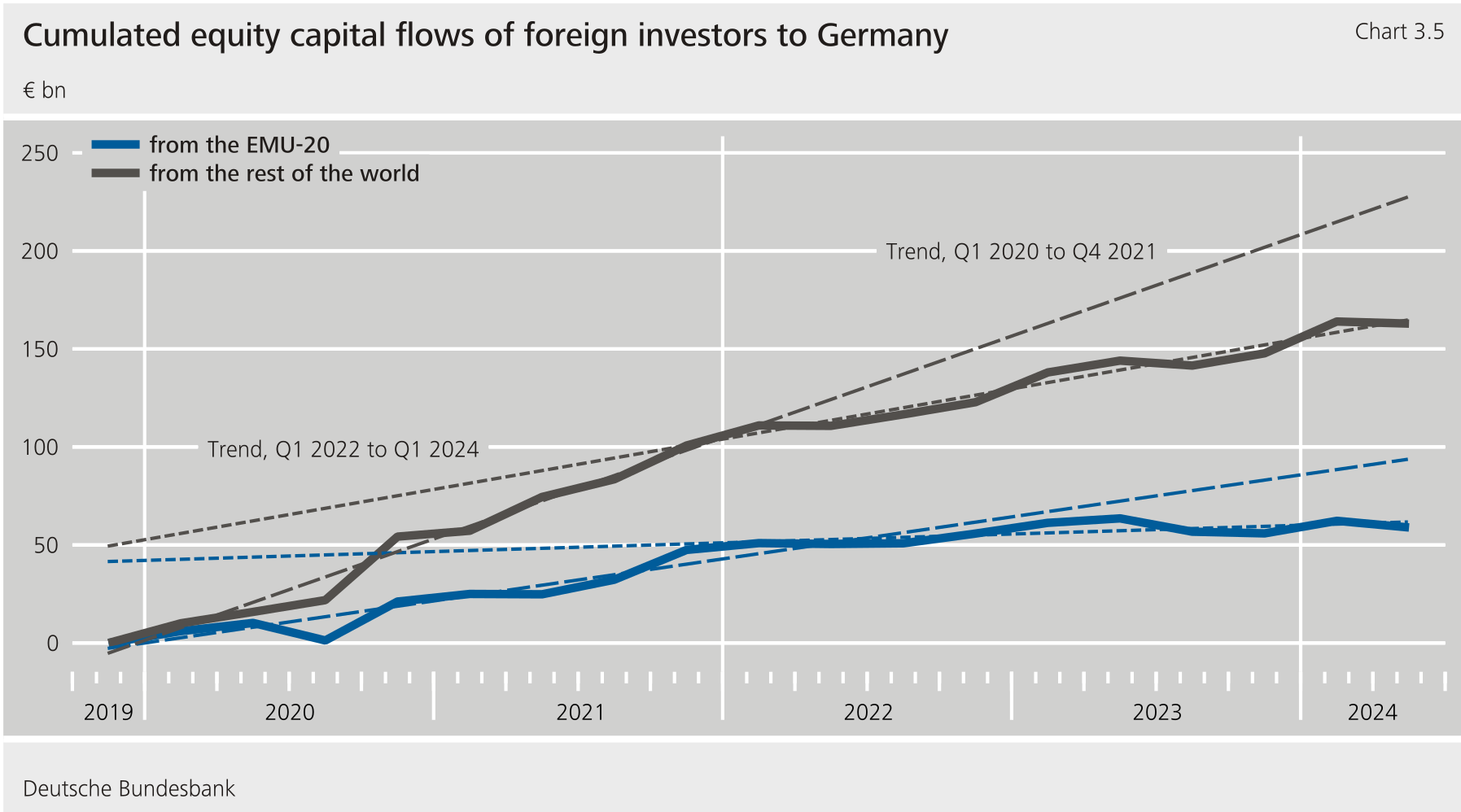
****From the end of 2019 to June 2024, foreign investors increased their equity capital in Germany by a cumulative €163 billion.** The majority of this investment was from non-euro area countries (€104 billion). The most important originator country was the United States, at €56 billion, followed by the Netherlands (€35 billion) and the United Kingdom (€17 billion).[\[11\]](#_ftn_root_11)**{#par-i7ai5a}
****Since 2022, inward** **in Germany has declined significantly.** Since the end of 2021, the rest of the euro area has made available next to no additional equity capital, on balance. Inflows from third countries, though still positive, have tailed off significantly relative to the period between the end of 2019 and the end of 2021. Following investments by foreign enterprises collectively amounting to just under €100 billion in equity capital in Germany in the years 2020 and 2021, Germany subsequently received only €62 billion in equity capital up until mid-2024. In fact, it is possible to identify a statistically significant structural break in 2022 leading to a significant reduction in the amount of received by Germany.[\[12\]](#_ftn_root_12) Whereas investors from the United States and the Netherlands played a central role both before and after this structural break, inflows of funds from the United Kingdom have diminished in importance markedly in the past two years. One probable factor here is that the United Kingdom left the European Union on 31 January 2020.**{#par-aa5849}
{#par-oo6236}
****
****In manufacturing,** **investors invested primarily in the manufacture of motor vehicles and motor vehicle parts, machinery and equipment, and computer products.** Since 2020, nearly 60% of all inflows of in manufacturing has gone to these three industries.[\[13\]](#_ftn_root_13) The manufacture of motor vehicles and motor vehicle parts and of machinery and equipment has traditionally represented the industrial core of the German economy. There was relatively little investment in the particularly energy-intensive industries (see [footnote 5](#footnote5)) (less than 10% of inward in manufacturing).**{#par-o3752o}
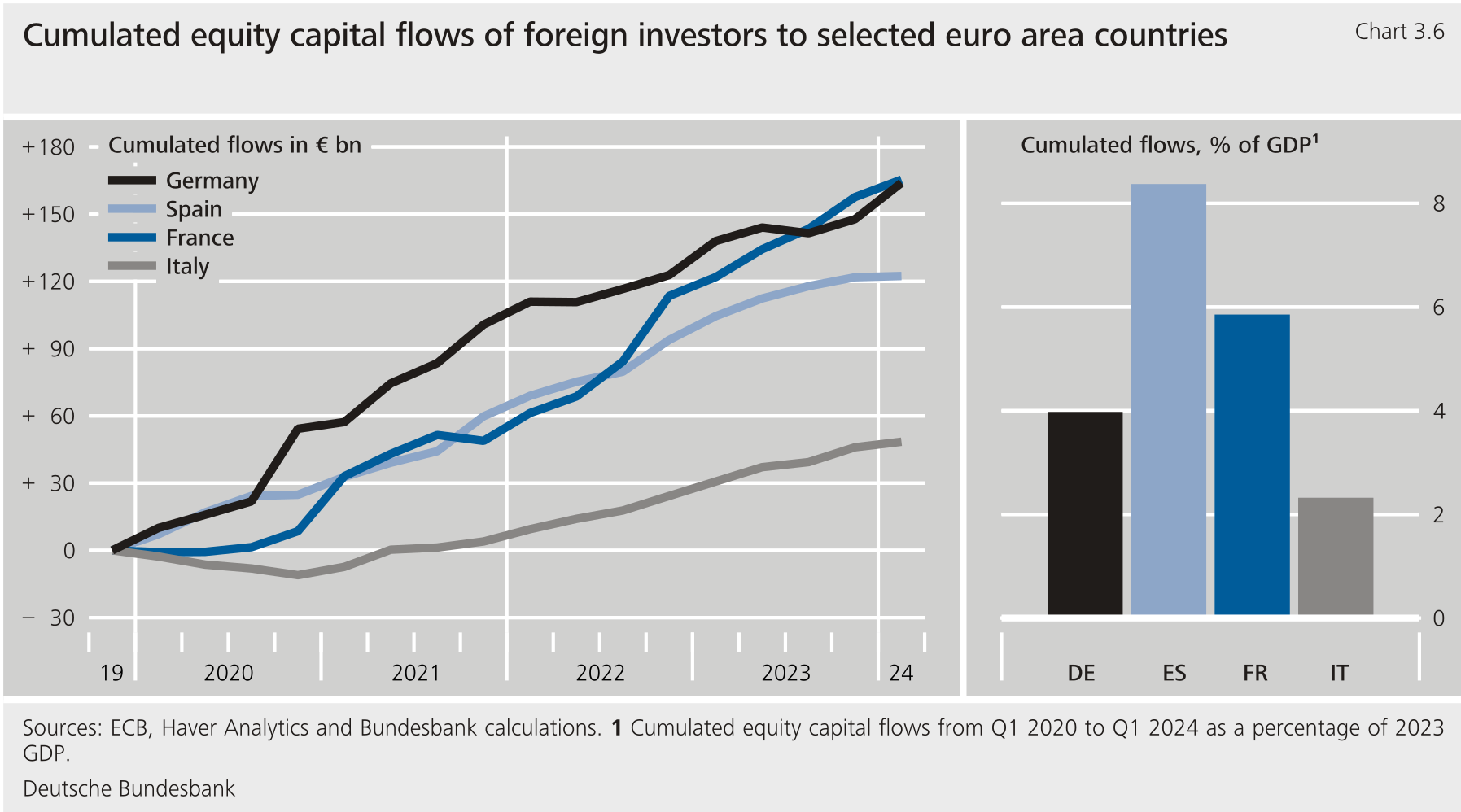
****Other advanced economies in the euro area are also receiving** **inflows.** Measured in terms of their , France and Spain were more popular among donors. in Italy recovered somewhat following a pronounced slump in 2020, but its dynamics remain stunted. By contrast, the marked pullout of capital from key euro area holding locations was particularly evident. stocks in Ireland, Luxembourg and the Netherlands have dropped off considerably since 2021, causing the euro area as a whole to suffer disinvestment.[\[14\]](#_ftn_root_14)**{#par-a9122a}
{#par-a85o7i}
****
****Reasons for the reduction in** **inflows into Germany since 2022 cannot yet be pinpointed with certainty.** However -- as with German abroad -- high energy prices in Germany could be a factor. Both cyclical and structural factors are at work here.[\[15\]](#_ftn_root_15) Another key factor is also the intense competition between locations for foreign investment, especially in future-oriented and strategically important industries. Here, Germany and Europe will have to show in the coming years that they can maintain their international competitiveness and ability to attract foreign capital.**{#par-i91u21}
**4 Conclusion** {#tar-4}
-------------------------
****Since 2020, Germany's** **relationships have displayed some characteristic developments that could indicate lasting changes in international interconnectedness.** Looking at Germany's outward , geopolitical considerations are becoming an increasingly important factor alongside production conditions in choosing where to invest. The United States is particularly attractive to German enterprises, both in terms of production conditions and as a strategic partner. China remains an important destination of German . However, the dynamics of new have been visibly slowing down, and firms have been pulling out capital. Conversely, Germany as an investment location is competing with other countries for . Germany has recently lost ground to other euro area industrial countries such as France or Spain. However, the available data do not imply that international investors are turning their backs on Germany altogether.**{#par-oi3u77}
**List of references** {#tar-5}
-------------------------------
**[Deutsche Bundesbank (2024a), Risks facing Germany as a result of its economic ties with China, Monthly Report, January 2024](https://www.bundesbank.de/resource/blob/920354/f55ae8e38e3bb5c4cb8c5e0f426552cd/mL/2024-01-china-data.pdf).**{#par-aee58i}
**[Deutsche Bundesbank (2024b), Developments in euro area business dynamism, Monthly Report, March 2024](https://publikationen.bundesbank.de/publikationen-en/reports-studies/monthly-reports/developments-in-euro-area-business-dynamism-928128).**{#par-u33u31}
**[Douglas, J. and W. Soon (2023), Foreign Firms Pull Billions in Earnings Out of China, The Wall Street Journal, 6 November 2023](https://www.wsj.com/world/china/foreign-firms-pull-billions-in-earnings-out-of-china-0423b68a) (paywall).**{#par-i5a134}
**[PricewaterhouseCoopers (2023), Ausschüttung von Gewinnen chinesischer Tochtergesellschaften nach Deutschland, March 2023](https://www.pwc.de/de/internationale-maerkte/firmengruendung-im-ausland/china-business-group/ausschuettung-von-gewinnen-chinesischer-tochtergesellschaften-nach-deutschland.html).**{#par-o4uuo8}
**[Siebelt, F. (2024), Direktinvestitionen in China deutlich gestiegen, MarketScreener, 13 August 2024](https://de.marketscreener.com/boerse-nachrichten/nachrichten/Direktinvestitionen-in-China-deutlich-gestiegen-47634913/).**{#par-u1uie1}
**[United Nations Conference on Trade and Development (2024), World Investment Report 2024](https://unctad.org/system/files/official-document/wir2024_en.pdf).**{#par-i68uo9}
1. **{#_ftn_root_1} Data are based on flows of the German balance of payments, which is prepared by the Bundesbank.**
2. **{#_ftn_root_2} See United Nations Conference on Trade and Development (2024).**
3. **{#_ftn_root_3} Differences between countries in taxation and capital market funding conditions play a particularly important role in transactions of this type.**
4. **{#_ftn_root_4} Data in are available through 2022. They encompass the global firm structure of German multinationals' foreign subsidiaries.**
5. **{#_ftn_root_5} The four following sectors (2-digit level of Rev. 2) are defined by Bruegel as energy-intensive: manufacture of paper and paper products (sector 17); manufacture of chemicals and chemical products (sector 20); manufacture of other non-metallic mineral products (sector 23); manufacture of basic metals (sector 24).**
6. **{#_ftn_root_6} This was also addressed in Deutsche Bundesbank (2024a). That article, however, was still based on data prior to the most recent, comprehensive data revision of the spring of this year. According to current calculations, reinvested earnings in China in the past few years fell short of previous estimates yet, even according to the revised data, still dominate the trend in German enterprises' equity investment in China.**
7. **{#_ftn_root_7} For more on this, see Douglas and Soon (2023). This also runs counter to the notion that strict regulation of in China, in particular, is responsible for the high reinvested earnings of German enterprises. Amongst other things, this regulation stipulates high statutory reserves, but it affects other foreign groups as well. See PricewaterhouseCoopers (2023).**
8. **{#_ftn_root_8} For more on this, see Siebelt (2024).**
9. **{#_ftn_root_9} It is particularly in the automotive sector, which accounted for more than one-third of German stocks in China as at the end of 2023, in which the earnings of Chinese subsidiaries are highly concentrated.**
10. **{#_ftn_root_10} The number of Chinese subsidiaries continued to rise in the past few years, but at a significantly slower pace since 2017.**
11. **{#_ftn_root_11}Although China is a key destination for German , in terms of volume it is only a minor player as a country of origin of in Germany. Since 2020, Chinese enterprises have invested, on balance, only €237 million in additional equity capital in Germany.**
12. **{#_ftn_root_12} Statistical tests such as the Chow breakpoint test, Chow forecast test and Quandt-Andrews unknown breakpoint test point to such a structural break. However, these results should always be interpreted against the background of a relatively small sample size and the associated uncertainty.**
13. **{#_ftn_root_13} Including repair and installation of machinery and equipment.**
14. **{#_ftn_root_14} These holding companies manage funds across the globe. There were also net withdrawals of equity capital from the aforementioned countries in 2023 as well, though on a considerably lesser scale than in 2022. believes that this may be due to restructuring operations by multinational enterprises in response to the introduction of a global minimum tax. See United Nations Conference on Trade and Development (2024), Chapter 1.**
15. **{#_ftn_root_15} See Deutsche Bundesbank (2024b).**
*[**FDI**]: foreign direct investment
*[NACE]: Nomenclature générale des activités économiques dans les Communautés européennes
*[GDP]: gross domestic product
*[**G20**]: Group of 20
*[G20]: Group of 20
*[MiDi]: Microdatabase Direct investment
*[IRA]: Inflation Reduction Act
*[FDI]: foreign direct investment
*[UNCTAD]: United Nations Trade and Development
*[US]: United States