# Stability situation in the German financial system
* [*4.1 The macro-financial environment and the situation in the real sector*](#tar-1 "4.1 The macro-financial environment and the situation in the real sector")
* *[*4.1.1 The macro-financial environment improved over the course of last year*](#tar-2 "4.1.1 The macro-financial environment improved over the course of last year")*
* **[*4.1.2 Downturn in the financial cycle is slowing*](#tar-3 "4.1.2 Downturn in the financial cycle is slowing")**
* ***[*4.1.3 Despite burdens, enterprises are largely robust*](#tar-4 "4.1.3 Despite burdens, enterprises are largely robust")***
* ***[*4.1.4 Declining debt ratios and rising nominal incomes support households' debt sustainability*](#tar-5 "4.1.4 Declining debt ratios and rising nominal incomes support households’ debt sustainability")***
* ***[*4.1.5 Globally high debt levels render the financial system more vulnerable to adverse developments*](#tar-6 "4.1.5 Globally high debt levels render the financial system more vulnerable to adverse developments")***
* ***[*4.1.6 The macro-financial environment remains challenging*](#tar-7 "4.1.6 The macro-financial environment remains challenging")***
* ***[*Geopolitical risks: impact on financial stability*](#tar-8 "Geopolitical risks: impact on financial stability")***
* ***[*4.2 Banking system: vulnerabilities and resilience*](#tar-9 "4.2 Banking system: vulnerabilities and resilience")
* *[*4.2.1 Unrealised losses in banks' banking books are declining*](#tar-10 "4.2.1 Unrealised losses in banks’ banking books are declining")*
* **[*4.2.2 Net interest income remains good, but risks to income are increasing*](#tar-11 "4.2.2 Net interest income remains good, but risks to income are increasing")**
* ***[*4.2.3 Risks in lending business are rising significantly*](#tar-12 "4.2.3 Risks in lending business are rising significantly")***
* ***[*4.2.4 Banks have high capital reserves*](#tar-13 "4.2.4 Banks have high capital reserves")***
* ***[*4.2.5 Reported resilience may have been overestimated*](#tar-14 "4.2.5 Reported resilience may have been overestimated")******
* ***[*Digital euro: impact on bank liquidity and funding costs*](#tar-15 "Digital euro: impact on bank liquidity and funding costs")***
* ***[*4.3 Non-bank financial intermediaries: vulnerabilities and resilience*](#tar-16 "4.3 Non-bank financial intermediaries: vulnerabilities and resilience")***
* ***[*Contagion channels between banks and investment funds*](#tar-17 "Contagion channels between banks and investment funds")
* *[*4.3.1 Structural change in the financial system is causing NBFIs to become increasingly important*](#tar-18 "4.3.1 Structural change in the financial system is causing NBFIs to become increasingly important")*
* **[*4.3.2 Life insurers are exposed to elevated, but manageable, liquidity and investment risk*](#tar-19 "4.3.2 Life insurers are exposed to elevated, but manageable, liquidity and investment risk")**
* ***[*4.3.3 Despite own funds being sound, life insurers' stabilising effect on the financial system during periods of stress could be less pronounced than before*](#tar-20 "4.3.3 Despite own funds being sound, life insurers’ stabilising effect on the financial system during periods of stress could be less pronounced than before")***
* ***[*4.3.4 Liquidity risk in open-end real estate funds reduced through notice periods and minimum holding periods*](#tar-21 "4.3.4 Liquidity risk in open-end real estate funds reduced through notice periods and minimum holding periods")***
* ***[*4.3.5 Growing interconnectedness within the fund sector may weaken resilience of open-end securities funds*](#tar-22 "4.3.5 Growing interconnectedness within the fund sector may weaken resilience of open-end securities funds")******
* ***[*4.4 Overall assessment and implications for macroprudential policy*](#tar-23 "4.4 Overall assessment and implications for macroprudential policy")
* *[*4.4.1 German financial system coped well with the exceptionally strong rise in interest rates*](#tar-24 "4.4.1 German financial system coped well with the exceptionally strong rise in interest rates")*
* **[*4.4.2 Macroprudential policy in Europe is evolving*](#tar-25 "4.4.2 Macroprudential policy in Europe is evolving")*****
* ***[*The economic benefits of releasable capital buffers and the positive neutral rate*](#tar-26 "The economic benefits of releasable capital buffers and the positive neutral rate")
* *[*4.4.3 Macroprudential oversight of non-bank financial intermediaries should be enhanced*](#tar-27 "4.4.3 Macroprudential oversight of non-bank financial intermediaries should be enhanced")****
* ***[*List of references*](#tar-28 "List of references")***
***4.1 The macro-financial environment and the situation in the real sector*** {#tar-1}
---------------------------------------------------------------------------------------
### ***4.1.1 The macro-financial environment improved over the course of last year*** {#tar-2}
*****The end of 2023 marked the conclusion of a period of exceptionally strong rises in interest rates.** The interest rate hikes in 2022 and 2023, which were rapid and substantial by historical standards, represented a turning point for the German financial system. This followed a long period of low interest rates, during which considerable risks to financial stability had built up. The European Central Bank () had raised its key monetary policy interest rates for the last time in the autumn of 2023. Thereafter, market interest rates gradually declined and, in June 2024, the began lowering its key interest rates. Financial markets are expecting further gradual cuts in key interest rates. However, market participants do not expect that the coming quarters will see a return to the exceptionally low interest rate levels from the years prior to 2022.***{#par-ii9712}
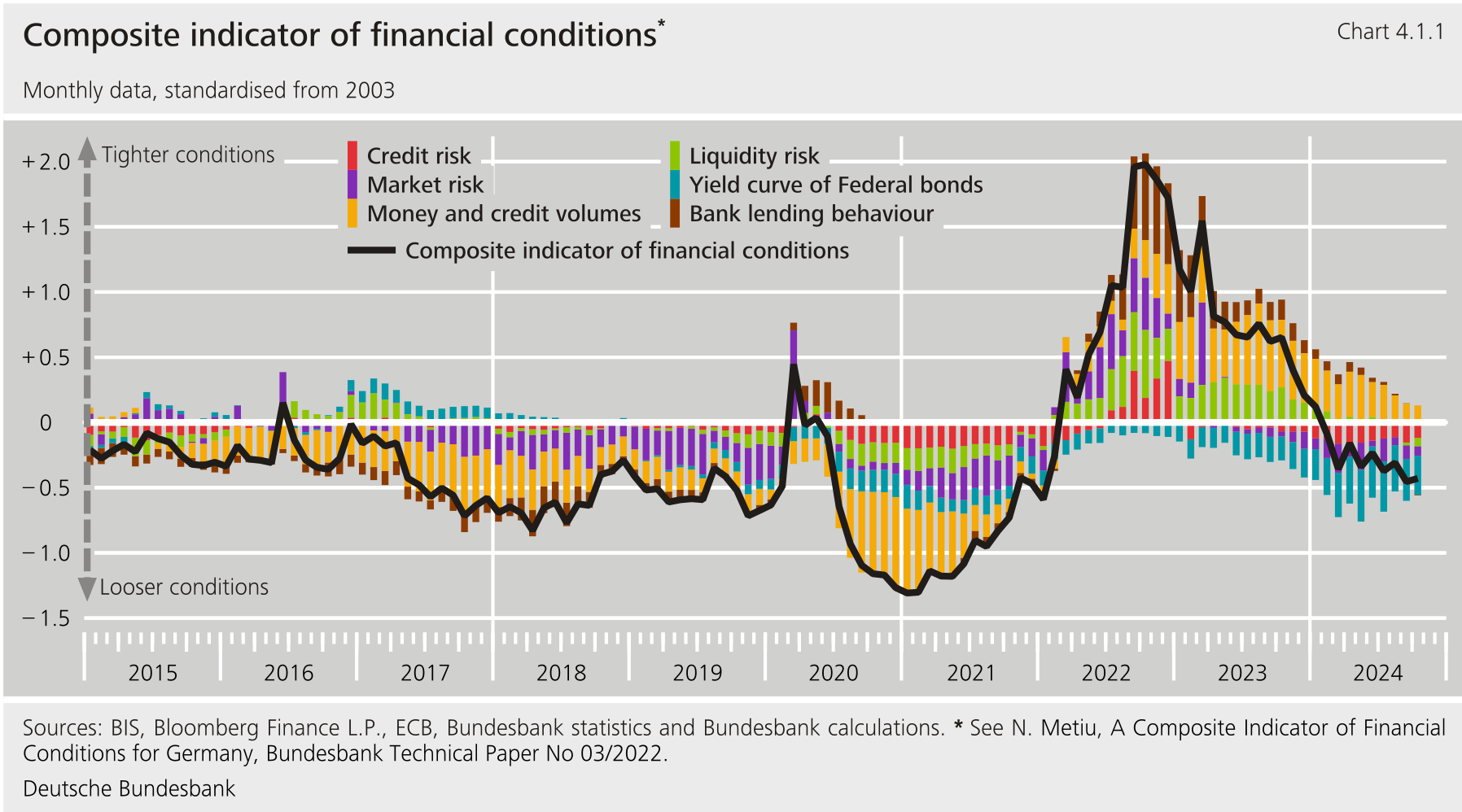
*****Given the gradual decline in short-term and longer-term interest rates, market financing conditions have successively improved over recent quarters.** Longer-term real interest rates in Germany -- i.e. the difference between nominal interest rates on five-year and ten-year federal bonds (Bunds) and expected inflation over these respective maturities -- have fallen compared with the end of 2023 and are close to zero.[\[1\]](#_ftn_root_1) The broad improvement in financing conditions is reflected by the Bundesbank's composite indicator of financial conditions, which has been below its historical average again since the beginning of 2024 (see Chart 4.1.1).[\[2\]](#_ftn_root_2) The lower values mean that financial conditions have eased again and that tensions within the financial system have abated. The indicator weakened as both credit risk premia and liquidity risk premia decreased and volatility in financial markets lessened as well. Additionally, the flattening of the yield curve for federal bonds contributed to this development.***{#par-e17335}
{#par-a43e24}
****
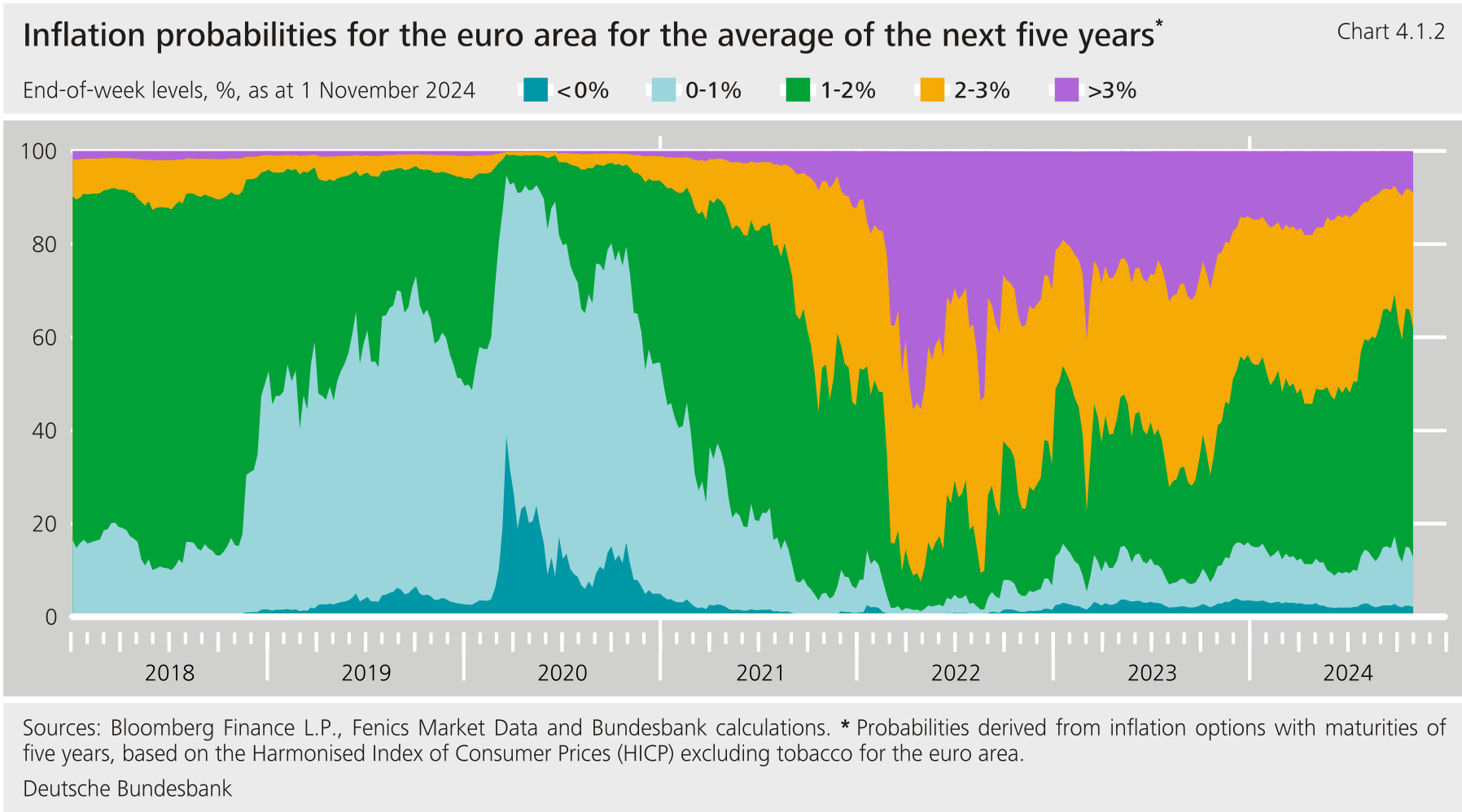
****The declining interest rates and improved financing conditions reflect the significantly lower inflation rate compared with last year.** In its June forecast, the Bundesbank projected that the inflation rate would fall to 2.8 % in Germany in 2024, down from 6.0 % the year before. By 2026, inflation is projected to further decline to 2.2 %.[\[3\]](#_ftn_root_3) Hence, the inflation rate in Germany, as well as in the euro area as a whole, is gradually approaching the 's target of 2 % over the medium term. Market participants also consider it increasingly less likely that average euro area inflation over the coming years will be significantly above target. The majority of market participants now expect an average inflation rate of up to 2 % over the next five years. In their view, the probability of an average euro area inflation rate above 3 % has dropped noticeably since last year (see Chart 4.1.2). Over the medium term, however, the upside risks to inflation still predominate. This is due, in particular, to strong wage cost dynamics, which are partly a consequence of the high inflation in previous years as well as a result of the structural shortage of labour.[\[4\]](#_ftn_root_4)**{#par-a79u9a}
{#par-e12e92}
****
****The German economy is still experiencing a period of weakness.** It has been treading water since the start of Russia's war of aggression against Ukraine more than two years ago. In addition to elevated uncertainty surrounding economic policy, higher financing costs are continuing to make themselves felt and are weighing on corporate investment activity. Exports remain subdued, although there are signs of a slight recovery in foreign demand. At the same time, private consumption is still lacking momentum, despite real incomes rising broadly. Overall, gross domestic product () is likely to more or less stagnate this year.[\[5\]](#_ftn_root_5) The performance of the German economy is therefore weak in an international comparison.**{#par-i797e1}
****At the same time, the German economy is still facing profound structural challenges that are weighing on the medium-term growth outlook.** Higher energy prices tend to affect Germany to a greater degree than other countries and decarbonising the economy is a major challenge. In Germany, the manufacturing sector makes a comparatively large contribution to economic output, and energy-intensive sectors also have a relatively high weight by international standards.[\[6\]](#_ftn_root_6) In addition, demographic change is dampening the supply of labour and thus potential growth. Given the rapid ageing of German society, the labour market is likely to become tighter over the coming years.[\[7\]](#_ftn_root_7)**{#par-ia6o1o}
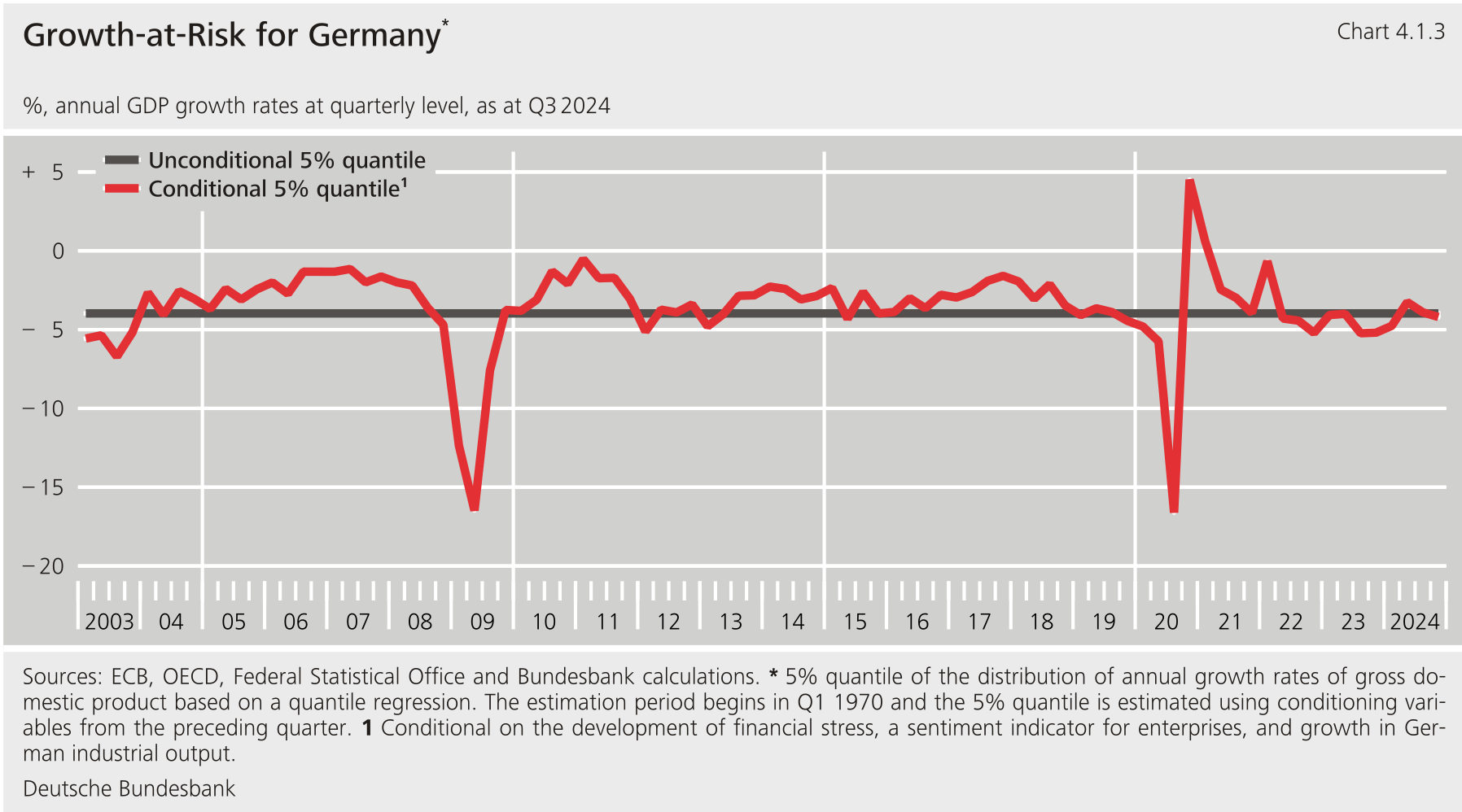
****Despite the ongoing period of weakness, Germany so far appears to be returning to price stability without any major disruptions to the real economy.** In the past, declines from high inflation rates were often accompanied by larger losses in growth than those observed in the current episode thus far.[\[8\]](#_ftn_root_8) If the macro-financial environment develops as expected, disorderly developments will have become less likely than they were at the end of 2023. Accordingly, the short-term downside risks to growth, as measured using a growth-at-risk estimate, have also decreased compared with last year. The conditional 5 % quantile of growth has risen over the course of 2024. This indicates that the chances of particularly low growth rates have decreased (see Chart 4.1.3).[\[9\]](#_ftn_root_9)**{#par-e238u9}
{#par-oo55a7}
****
### **4.1.2 Downturn in the financial cycle is slowing** {#tar-3}
****Against the backdrop of developments in the macro-financial environment, the downturn in the financial cycle slowed last year.** The financial cycle describes fluctuations in financial variables such as credit growth and asset prices.[\[10\]](#_ftn_root_10) Amid high inflation, rising interest rates, subdued economic prospects and falling real incomes, the upswing in the financial cycle began to wane from 2022 onwards. Since 2023, the financial cycle has been experiencing a downturn. Given the gradual improvement in the macro-financial environment last year -- particularly the more favourable financing conditions and gradually rising real incomes -- the downturn slowed considerably.**{#par-e9e1oa}
{#par-e9e1oa}
**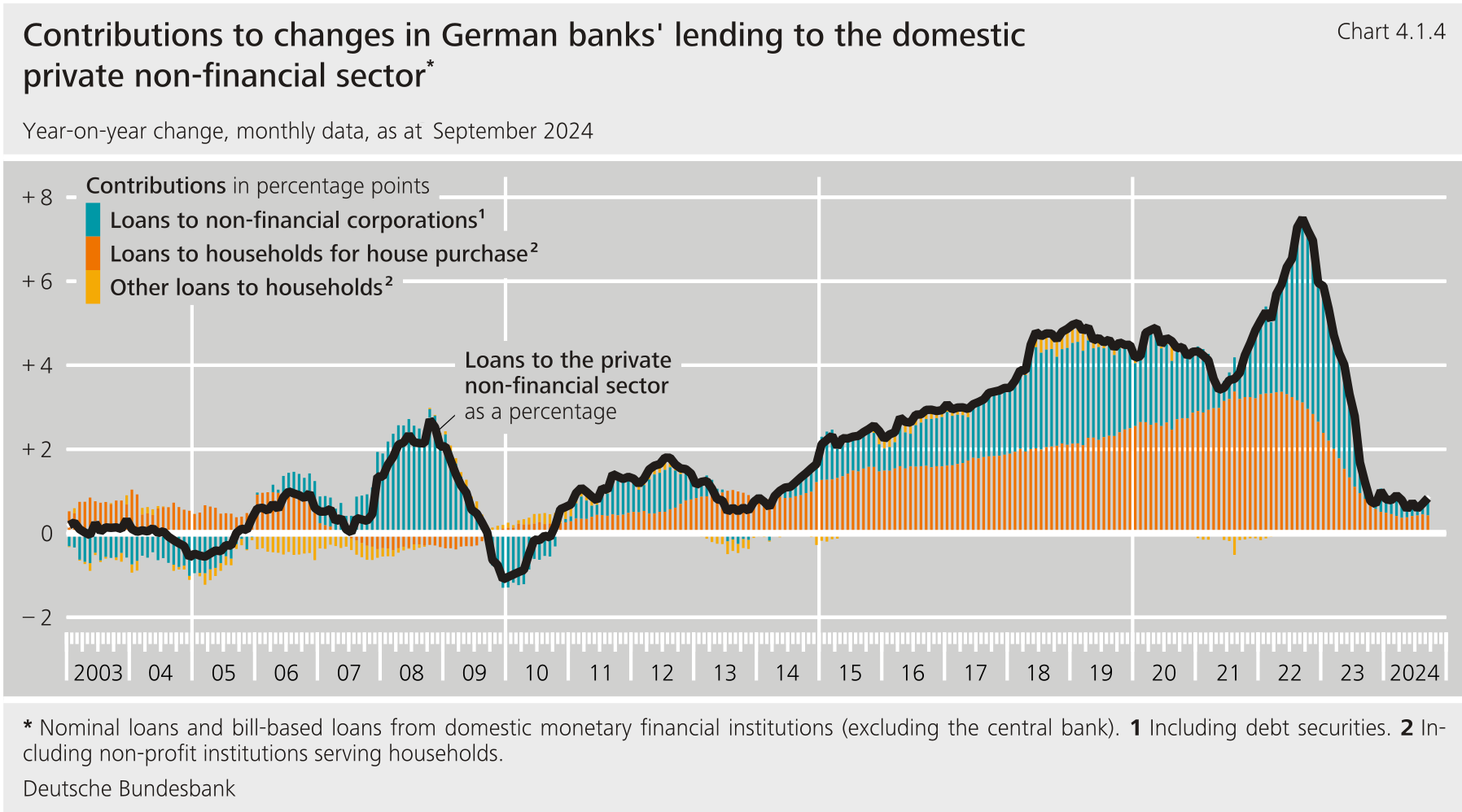**
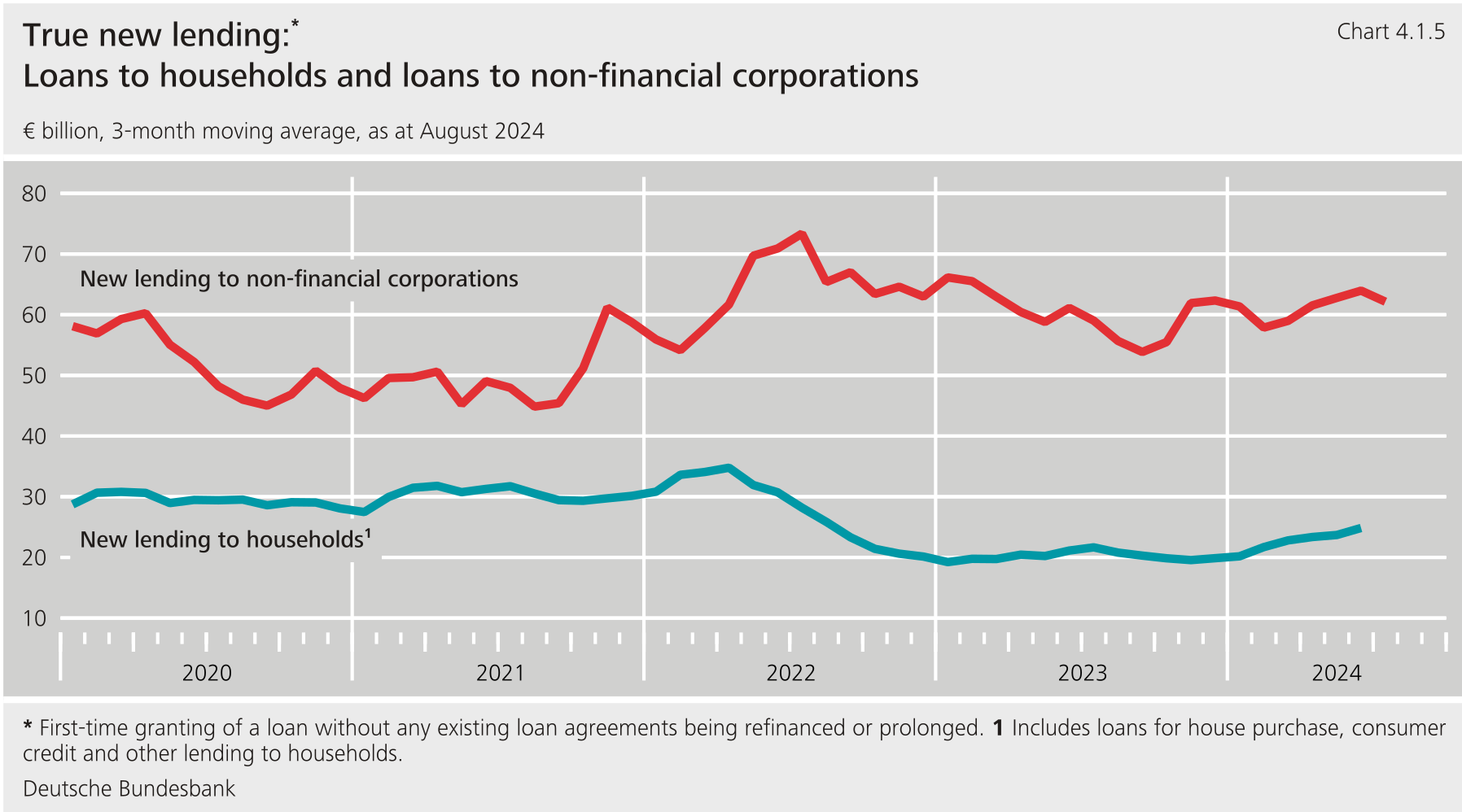
****Credit growth -- which, alongside asset prices, is an important financial cycle indicator -- stabilised at a low level over the course of last year.** Year-on-year growth in gross lending remains subdued, both for loans to non-financial corporations and for loans to households. However, the downward trend from last year did not continue: growth in gross lending to both non-financial corporations as well as to households has stabilised in slightly positive territory over the past quarters (see Chart 4.1.4).[\[11\]](#_ftn_root_11) While new lending to households is still at a low level compared with the period before the interest rate hikes, it has shown visible signs of recovery since the start of the year (see Chart 4.1.5). There are also first signs of a revival in new lending to non-financial corporations. In line with this development, demand for loans to households for house purchase and demand for loans in the corporate sector also appear to be stabilising, according to the German banks responding to the Bank Lending Survey (). The surveyed banks expect this trend to continue in the fourth quarter of 2024, with demand in both segments rising on balance.[\[12\]](#_ftn_root_12) Nevertheless, surveys indicate that banks' lending behaviour has remained restrictive in 2024, too, particularly towards enterprises.[\[13\]](#_ftn_root_13) The economic situation as well as enterprise-specific and household-specific factors have led to a greater assessment of risk. By contrast, bank-specific factors, such as their capital situation, did not play a role according to the .**{#par-euu268}
{#par-ii83o3}
****
****Residential real estate prices are stabilising as demand for housing loans recovers.** Starting in mid-2022, higher costs of living and increased financing costs, in particular, led to a turnaround in demand for purchases of residential real estate.[\[14\]](#_ftn_root_14) According to the Federal Statistical Office, prices for residential real estate fell by around 13 % from their peak in mid-2022 to the first quarter of 2024 (see Chart 4.1.6).[\[15\]](#_ftn_root_15) Overvaluations from the low interest rate period have declined significantly, but have not yet been fully eliminated.[\[16\]](#_ftn_root_16) In the second quarter of 2024, residential real estate prices rose again compared with the previous quarter for the first time in two years.[\[17\]](#_ftn_root_17) Model estimates show that the probability of further sharp declines in prices has recently decreased.[\[18\]](#_ftn_root_18) The recently slightly lower financing costs, higher incomes and weak new construction activity are supporting residential real estate prices. Overall, an orderly reduction of vulnerabilities in the residential real estate market has become more likely.**{#par-u619a8}
{#par-i1i815}
**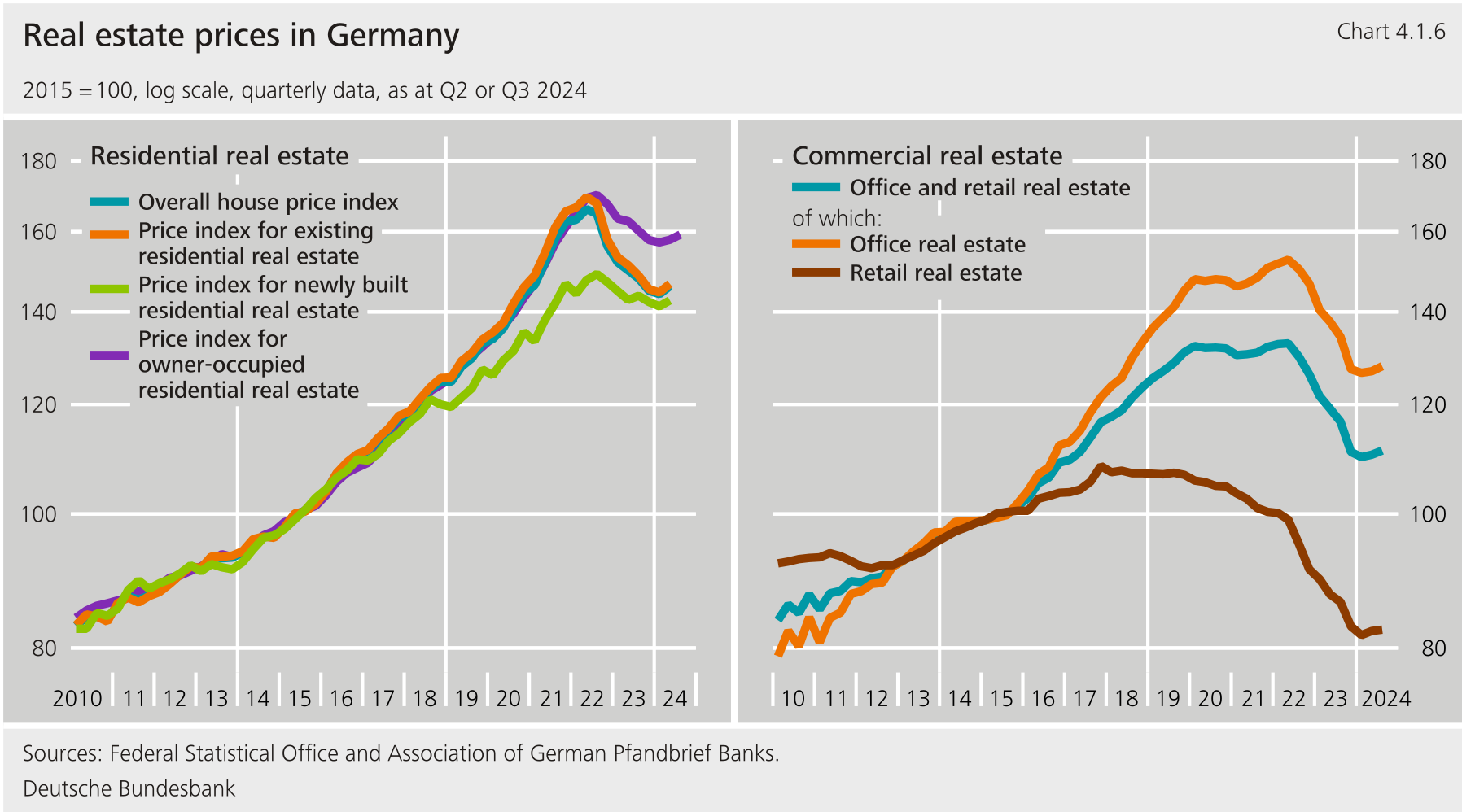**
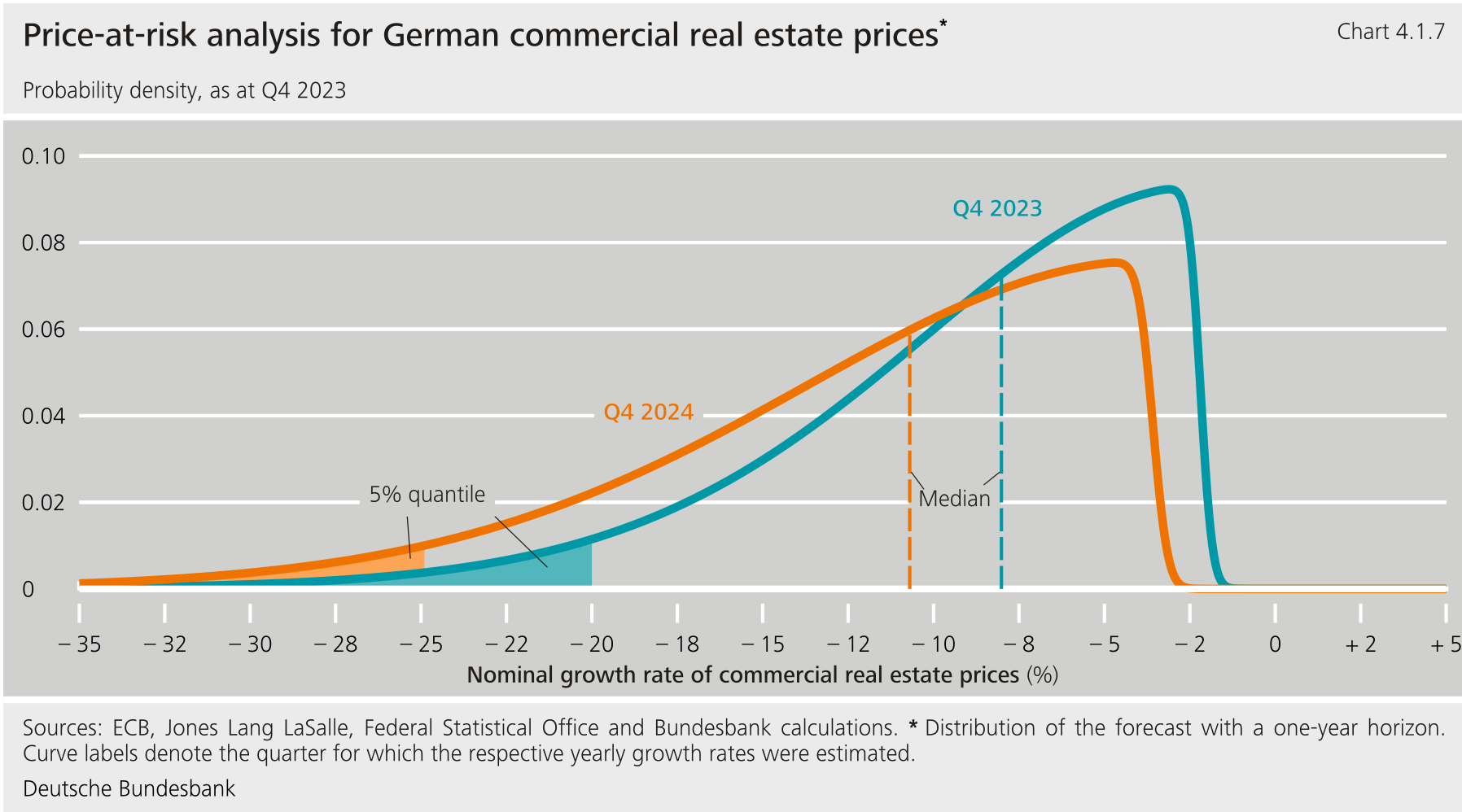
****Commercial real estate prices did not fall any further in the first half of 2024, but the risk of additional significant drops in prices has increased compared with last year.** Following still substantial price declines in the second half of 2023, commercial real estate prices began to stabilise in the first half of 2024 (see Chart 4.1.6).[\[19\]](#_ftn_root_19) However, these price dynamics are based on just a small number of transactions, which could distort the picture. The market correction has been largely orderly thus far. In contrast to the residential real estate market, however, model-based analyses point to the possibility of further price declines in the commercial real estate market. Compared with the previous year, the expected situation has even deteriorated on average, and larger declines in prices have become more likely overall.[\[20\]](#_ftn_root_20) This is indicated by a price-at-risk analysis for German commercial real estate prices (see Chart 4.1.7). Compared with the same quarter of the previous year, the estimated distribution of the growth rate of prices for the fourth quarter of 2024 shifted further to the left, with the median of the distribution also falling. For the fourth quarter of 2023, the median of the estimated distribution of price growth was still around − 8 %; for the fourth quarter of 2024, it is close to ‑11 %. At the same time, the probability of particularly low growth rates for commercial real estate prices (5 % quantile) has also risen again.[\[21\]](#_ftn_root_21)**{#par-a29i95}
{#par-i4o72o}
****
****The ongoing downturn in commercial real estate prices could be exacerbated by fire sales among financial intermediaries or by the liquidation of loan collateral.** For example, a worsening situation among project developers could lead to banks becoming more active on the seller side by liquidating real estate collateral (see section 4.2 "[Banking system: vulnerabilities and resilience](#4.2-Banking-system-vulnerabilities-and-resilience)"). In addition, an increase in net outflows from open-end retail real estate funds, which are still moderate at present, could further reinforce price declines on the commercial real estate market if a larger number of funds need to sell real estate (see section 4.3 "[Non-bank financial intermediaries: vulnerabilities and resilience](#4.3-Non-bank-financial-intermediaries-vulnerabilities-and-resilience)").[\[22\]](#_ftn_root_22) Moreover, structural factors are weighing on developments in the commercial real estate market. Key factors include, above all, the significant rise in the importance of online retail, the increased prevalence of remote work, and higher energy standards.**{#par-iaiooa}
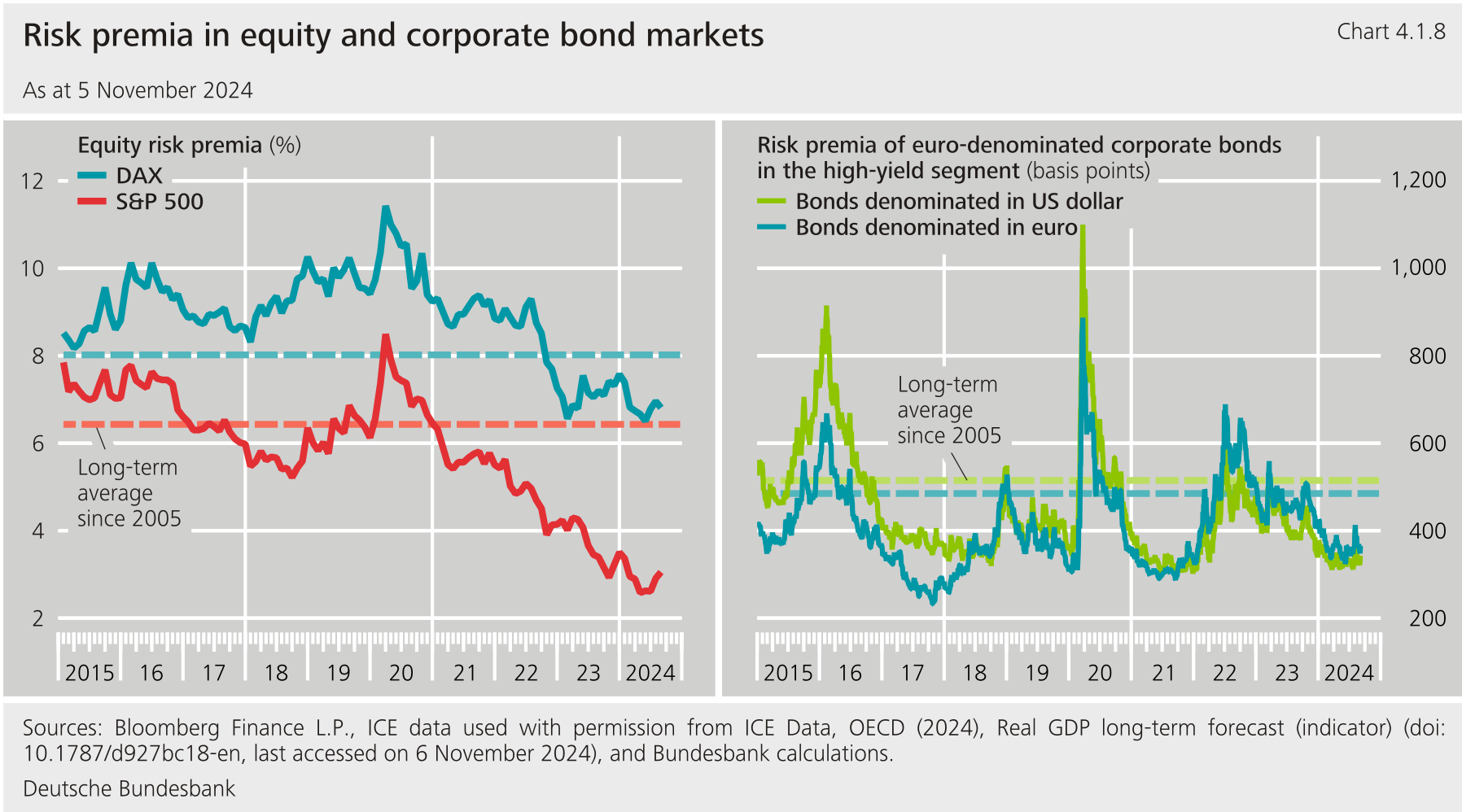
****Valuation levels in financial markets continued to rise over the course of last year, partly because market participants were expecting a soft landing for the global real economy.** In equity markets, risk premia for both European and equities are below their long-term averages (see Chart 4.1.8), despite existing downside risks in the macro-financial environment (see section 4.1.5 "[Globally high debt levels render the financial system more vulnerable to adverse developments](#4.1.5-Globally-high-debt-levels-render-the-financial-system-more-vulnerable-to-adverse-developments)" and section 4.1.6 "[The macro-financial environment remains challenging](#4.1.6-The-macro-financial-environment-remains-challenging)").[\[23\]](#_ftn_root_23) In corporate bond markets, too, risk premia in the euro area and the United States have fallen to even lower levels compared with the previous year, which may not fully compensate investors for existing risks. This holds particularly true for high-yield corporate bond markets (see Chart 4.1.8).[\[24\]](#_ftn_root_24)**{#par-i24529}
{#par-ei21a7}
****
****The high valuation levels suggest a significant potential for setbacks in financial markets.** The risk of market price corrections and the associated losses among financial intermediaries remains elevated. Price declines could be amplified by factors including the unwinding of leveraged positions by hedge funds and other investors as well as, in some cases, substantial share redemptions amongst investment funds (see section 4.3 "[Non-bank financial intermediaries: vulnerabilities and resilience](#4.3-Non-bank-financial-intermediaries-vulnerabilities-and-resilience)"). The global financial market turbulence in early August, triggered by concerns about the economy, shows that negative developments after long periods of large risk appetite and high valuations can quickly cause significant corrections and high volatility.[\[25\]](#_ftn_root_25)**{#par-oiue3e}
****Overall, the vulnerabilities in the German financial system have been declining in an orderly manner thus far.** However, this decline is occurring only gradually. The vulnerabilities in the German financial system that built up during the upswing in the financial cycle over the course of the low interest rate period and the coronavirus pandemic therefore remain substantial (see section 4.2 "[Banking system: vulnerabilities and resilience](#4.2-Banking-system-vulnerabilities-and-resilience)" and section 4.3 "[Non-bank financial intermediaries: vulnerabilities and resilience](#4.3-Non-bank-financial-intermediaries-vulnerabilities-and-resilience)").**{#par-o6i6ea}
### **4.1.3 Despite burdens, enterprises are largely robust** {#tar-4}
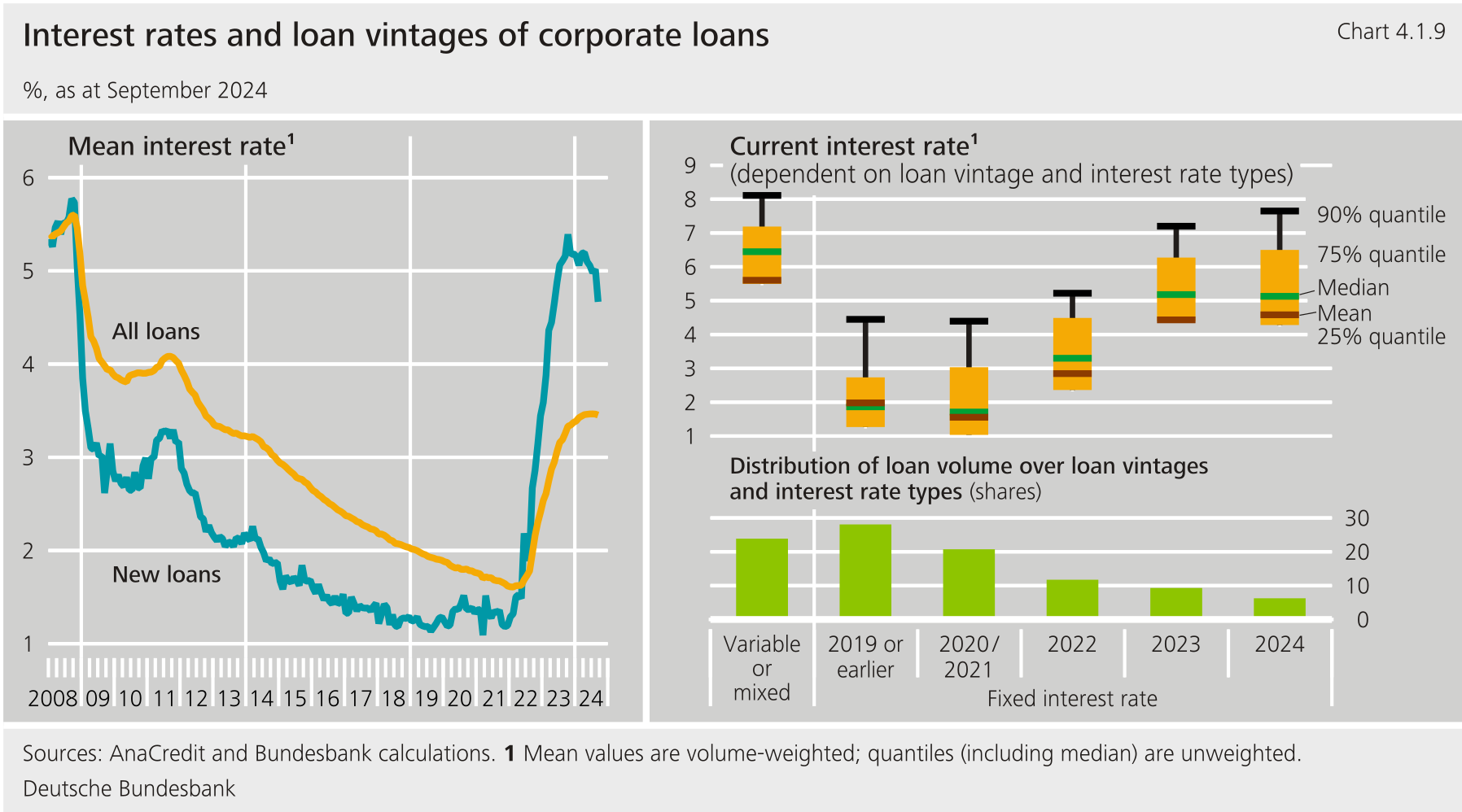
****Economic weakness and rising costs are putting pressure on enterprises.** The current slump in growth is dampening demand for goods and services. At the same time, enterprises are facing higher costs. The strong growth in actual earnings seen since 2023 has resulted in higher wage expenditure amongst enterprises.[\[26\]](#_ftn_root_26) In addition, the rise in interest rates led to significantly higher borrowing costs. Since the end of 2021, yields on euro-denominated corporate bonds have risen by more than 2.5 percentage points, despite lower risk premia in some segments. Interest rates on new loans have even increased by just under 4 percentage points (see Chart 4.1.9). If existing loans are taken into account, the rise in average interest rates amounts to just 1.8 percentage point overall. This is because some enterprises are still benefiting from comparatively favourable financing costs. For fixed interest loans that were taken out in or before 2021, the mean and median of current interest rates are no greater than 2 % (see Chart 4.1.9). These account for just under half of the outstanding loan volume (see section 4.2 "[Banking system: vulnerabilities and resilience](#4.2-Banking-system-vulnerabilities-and-resilience)").**{#par-o8eau8}
{#par-e924o3}
****
****Ultimately, the corporate sector must face up to structural change.** Structural change caused by digitalisation, demographic change and climate change presents both opportunities and challenges for the corporate sector. It requires investment, for example in new technologies, and implies that resources will be reallocated between different sectors of the economy. On the one hand, new enterprises may emerge, such as in the fields of renewable energy, e-mobility or in the platform economy. On the other hand, reallocation processes may be accompanied by an increase in insolvencies in sectors that are particularly affected by structural change. This is because, given structural change, some business models may prove to be outdated and no longer profitable, causing enterprises to disappear from the market. The policy measures accompanying structural change set out the regulatory framework, but may also have undesirable side effects and trigger sudden developments (see Chapter 5 "[Risks arising from an unexpected and immediate carbon price increase](?article=special-chapter-risks-arising-from-an-unexpected-and-immediate-carbon-price-increase-943200)").**{#par-a55891}
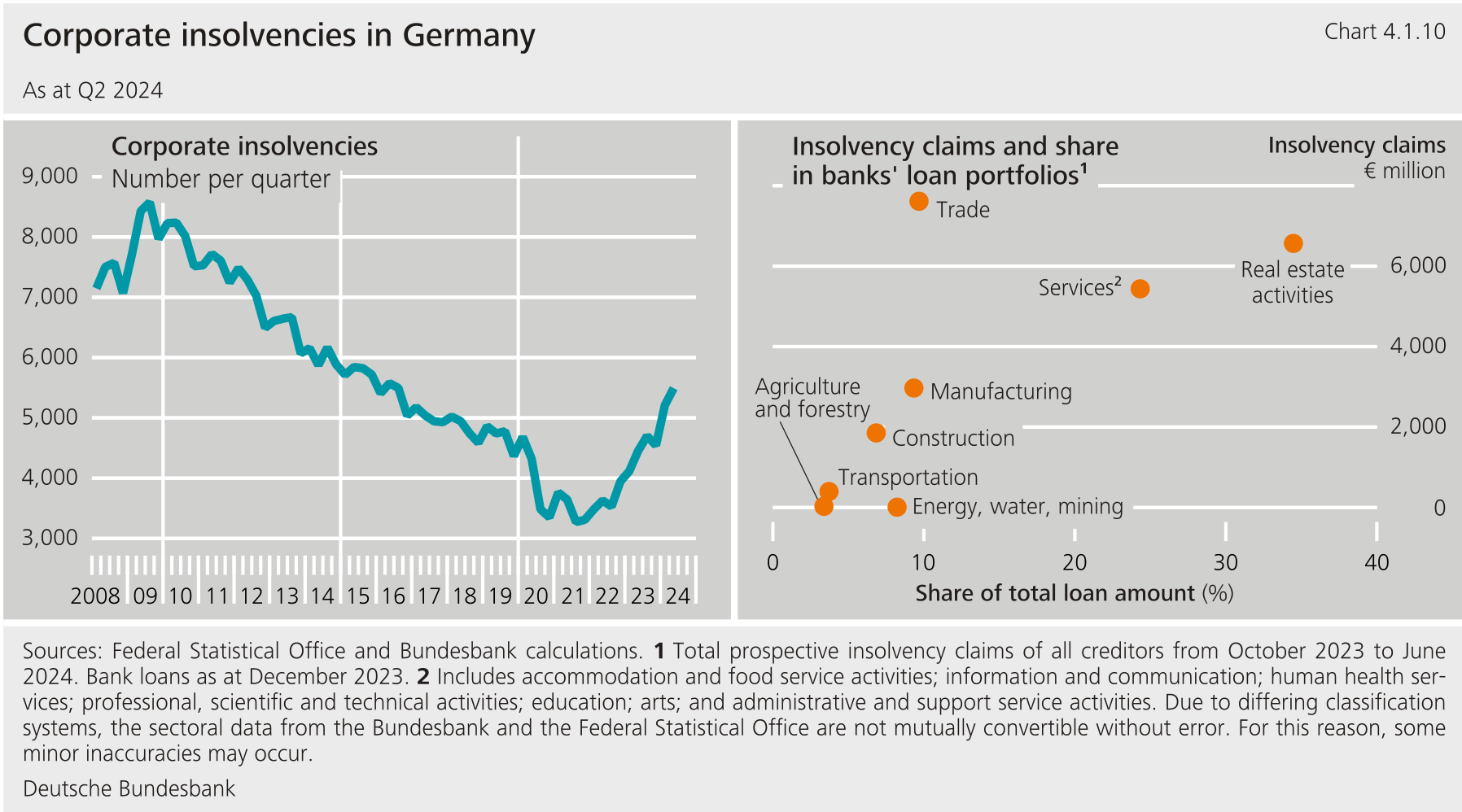
****Corporate insolvencies have risen further in 2024.** After the number of corporate insolvencies dropped sharply in 2020 and 2021 as a result of government assistance measures and the suspension of the obligation to file for insolvency, this figure has risen again considerably since 2022 (see Chart 4.1.10). In the first half of 2024, it was 25 % higher than in the previous year. However, when viewed over the long term, the number of corporate insolvencies was not exceptionally high.[\[27\]](#_ftn_root_27) Nevertheless, expected insolvency claims have grown significantly. For example, insolvency claims, especially against trading companies, have been very high since October 2023. Likewise substantial, but somewhat smaller, are the claims against companies in the real estate activities sector and various services sectors (see Chart 4.1.10).[\[28\]](#_ftn_root_28) The defaults in the real estate activities sector in particular are directly related to financial stability, as around one-third of outstanding bank loans are accounted for by this sector. However, the share of secured loans is higher in this sector than in others, which is likely to result in lower loss given default rates.**{#par-u2756i}
{#par-i7e42o}
****
****Nevertheless, most enterprises' fundamentals are still largely sound.** In nominal terms, interest expenditure rose slightly on the year but so did earnings overall, meaning that the aggregate debt service ratio remained low by international standards.[\[29\]](#_ftn_root_29) However, the earnings situation could be strained for some enterprises. Surveys show that the percentage of enterprises whose earnings declined was higher in 2022 and 2023 than the percentage of firms with rising earnings.[\[30\]](#_ftn_root_30) Adjusted for inflation, enterprises' aggregate earnings have declined in almost every quarter since the end of 2022.[\[31\]](#_ftn_root_31) By contrast, their capitalisation still appears to be sound.[\[32\]](#_ftn_root_32) Enterprises held significantly less liquidity in the first half of 2024 than in previous years.[\[33\]](#_ftn_root_33) Surveys do not indicate increased liquidity problems, however.[\[34\]](#_ftn_root_34)**{#par-ai632o}
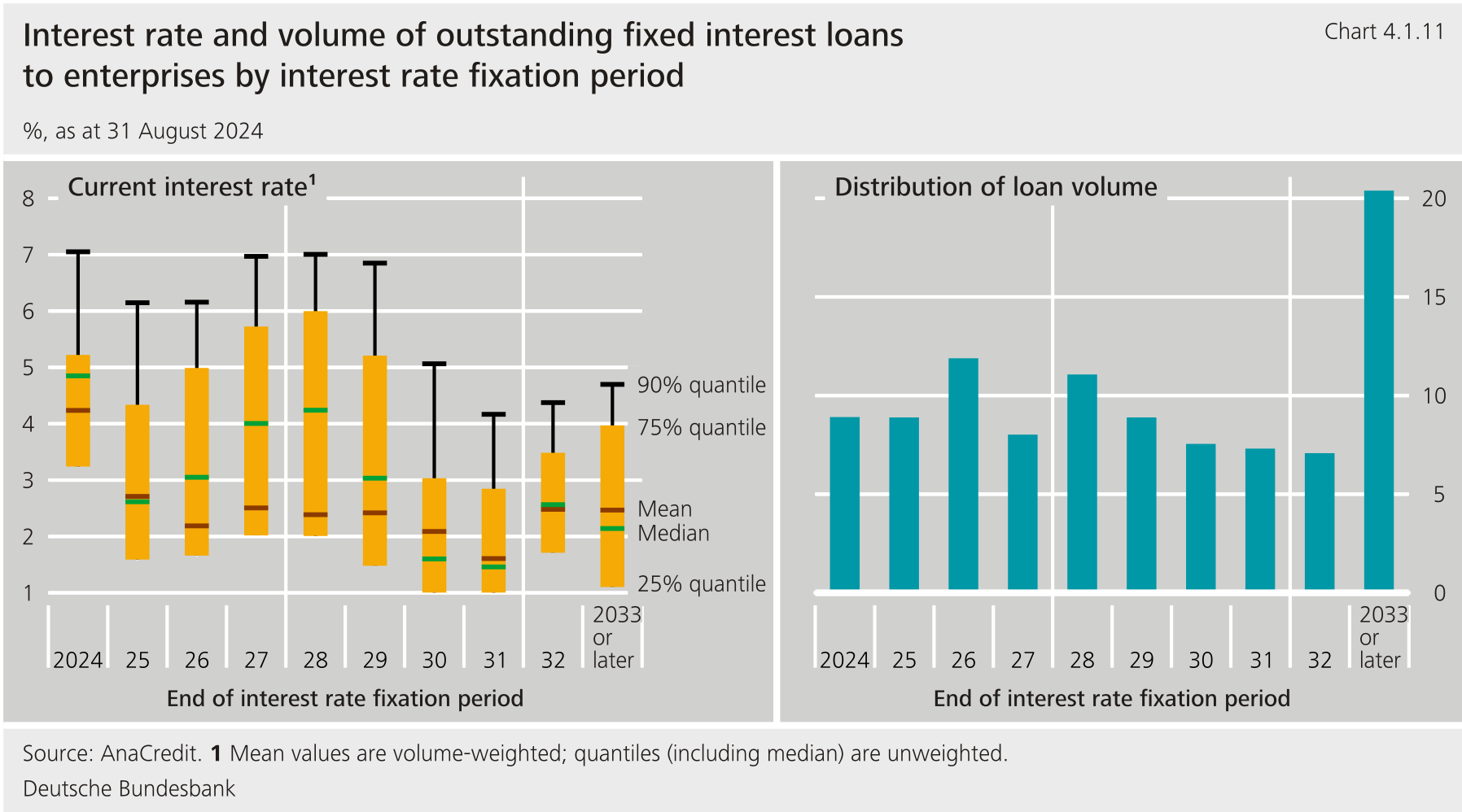
****Default risk for non-financial corporations is likely to remain elevated in 2025.** A significant number of corporate insolvencies are likely next year given ongoing structural change and the continued economic weakness. In addition, insolvencies often lag the economic cycle and may continue to rise even as an economic recovery sets in.[\[35\]](#_ftn_root_35) The higher interest expenditure where follow-up financing is required could also contribute to more defaults. At present, fixed interest loans with interest rate fixation periods ending in 2025 are still comparatively cheap at a median interest rate of 2.6 %, as a large percentage of these loans were concluded in the low interest rate period before 2022 (see Chart 4.1.9). If enterprises need to refinance their loans in 2025 and take out new loans with an interest rate fixation period of three to five years, the mean interest rate could then rise to approximately 4 %. This is suggested by rough estimates based on current terms and conditions for new lending business. That said, loans with interest rate fixation periods ending in 2025 account for only 9 % of the volume of outstanding fixed rate loans (see Chart 4.1.11). When loans are refinanced from 2026 onwards, the differences between the existing and the newly agreed interest rates are likely to be smaller, for the most part. First, the existing interest rates tend to be higher already and, second, the interest rates agreed upon then are likely to come down should market expectations be confirmed. Sound fundamentals mean that the vast majority of enterprises should be able to cope with these burdens. If, on the other hand, developments in the macro-financial environment are noticeably weaker than forecast, higher default risks are to be expected.**{#par-ei5o92}
{#par-u9a5o3}
****
### **4.1.4 Declining debt ratios and rising nominal incomes support households' debt sustainability** {#tar-5}
****The predominantly robust labour market situation continues to contribute to the resilience of households** . Despite the economic weakness, the unemployment rate has only risen relatively moderately over the past two years.[\[36\]](#_ftn_root_36) With demand for labour high, employees were in a strong bargaining position and therefore able to achieve significant increases in nominal wages in 2024 as well.[\[37\]](#_ftn_root_37) Further developments in the labour market are fraught with uncertainty. Due to the demographic decline in the working-age population, labour shortages are likely in the medium term. Nevertheless, the structural challenges faced by the German economy (see section 4.1.3 "[Despite burdens, enterprises are largely robust](#4.1.3-Despite-burdens-enterprises-are-largely-robust)") also imply downside risks for the labour market.**{#par-u913i7}
****Nominal wage increases support the resilience of households.** The long interest rate fixation periods for residential real estate loans granted in the previous low interest rate period are protecting most households from rising debt service costs for the time being. The burden from interest and redemption payments on existing residential real estate loans generally remains constant in nominal terms for the duration of the agreed interest rate fixation period. Rising nominal incomes therefore tend to improve the ability of households with existing loan contracts to service their debt. If, however, the interest rate fixation period of an existing loan contract ends and follow-up financing at higher interest rates becomes necessary, households could face rising debt service costs.[\[38\]](#_ftn_root_38)**{#par-a815o5}
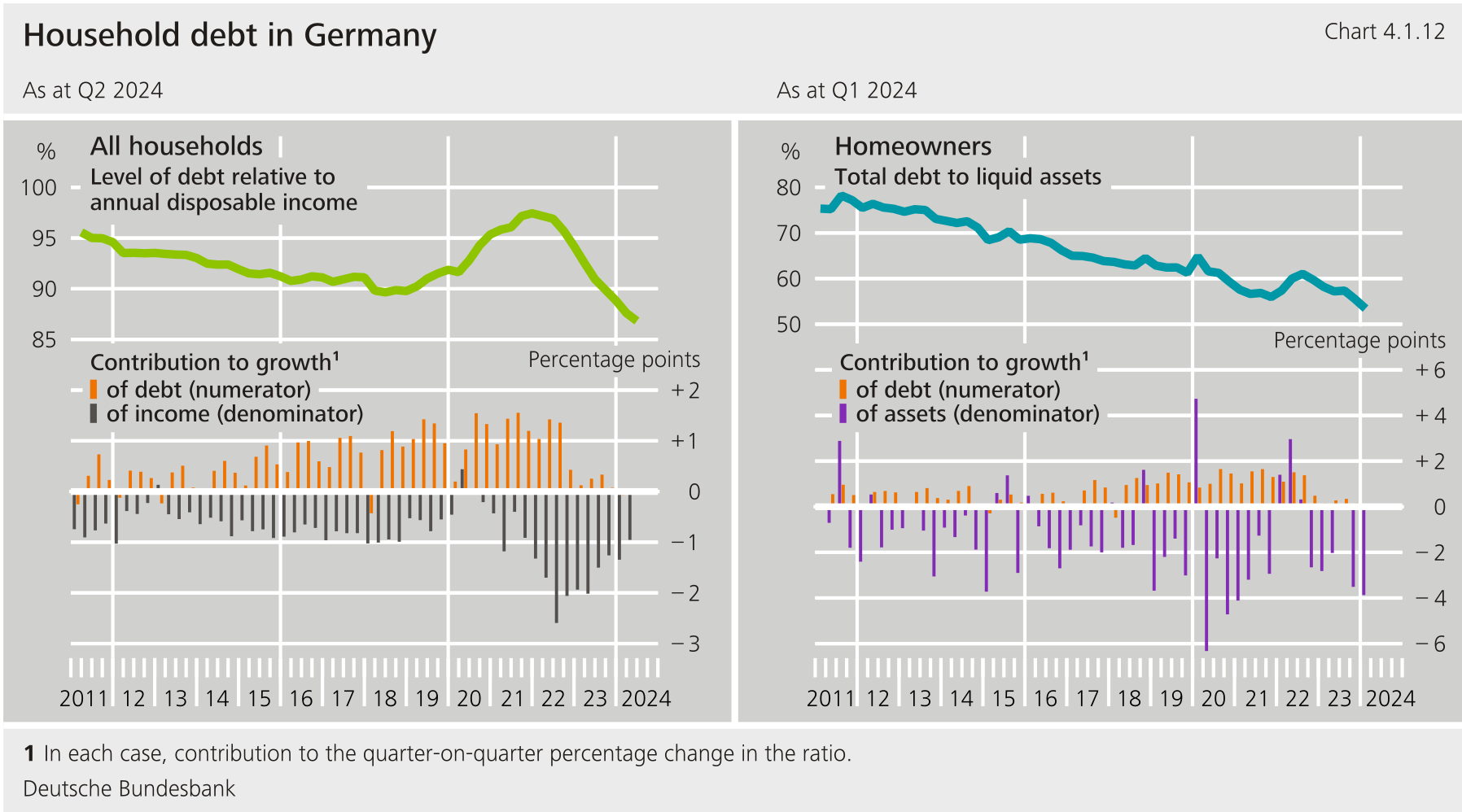
****The debt sustainability of households in Germany has improved overall.** By mid-2024, households' aggregate debt-to-disposable-income ratio fell to around 87 % -- corresponding to a decline of around 11 percentage points compared with the peak at the end of 2021 (see Chart 4.1.12). This decline is not only due to rising incomes, but also to a drop in new lending compared with the period before the increase in interest rates (see section 4.1.2 "[Downturn in the financial cycle is slowing](#4.1.2-Downturn-in-the-financial-cycle-is-slowing)"). Looking at households that own residential property, the ratio of liquid assets to outstanding debt has improved overall (see Chart 4.1.12). This indicates that these households are more resilient.[\[39\]](#_ftn_root_39)**{#par-u57876}
{#par-o7uo7o}
****
### **4.1.5 Globally high debt levels render the financial system more vulnerable to adverse developments** {#tar-6}
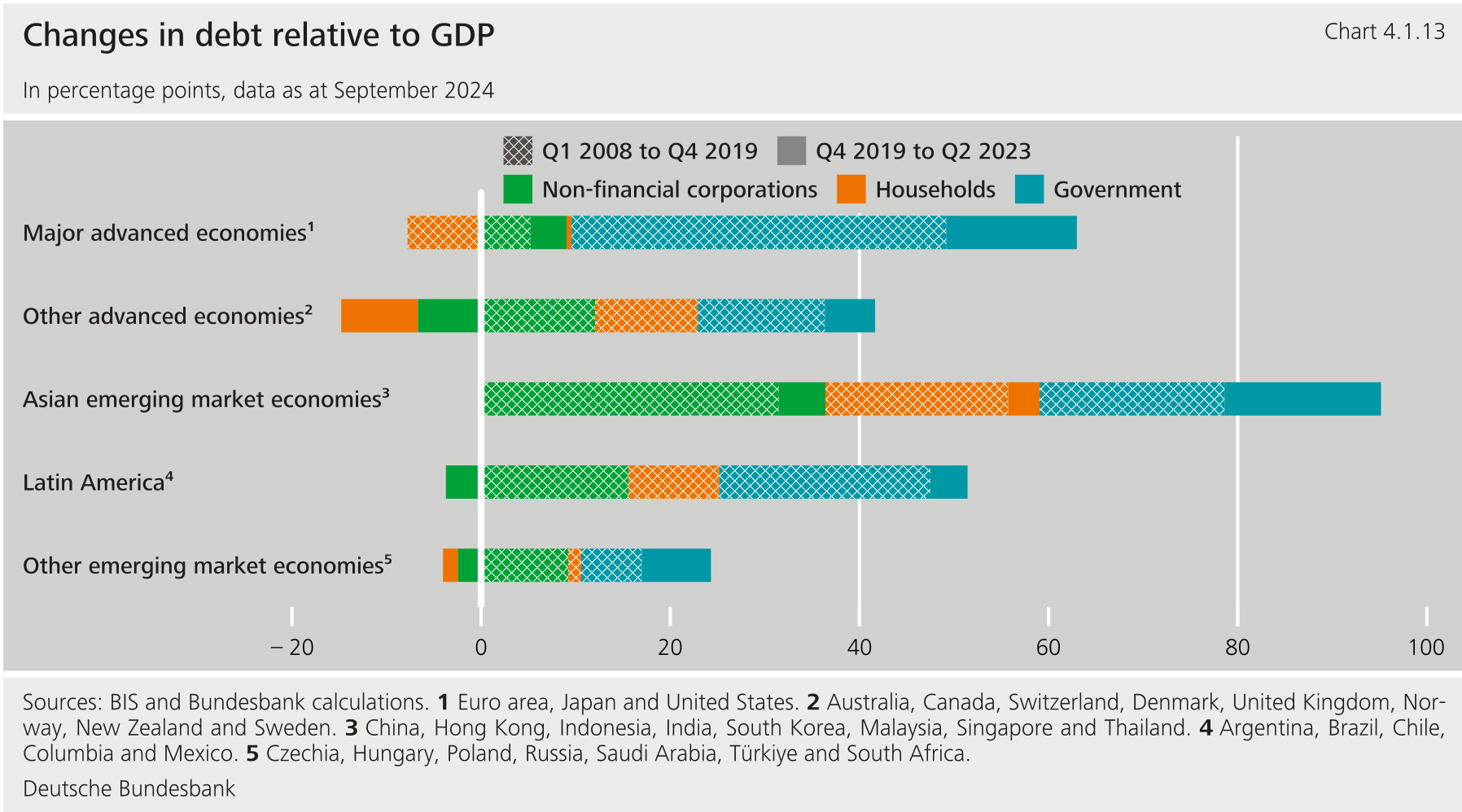
****Public and private debt levels remain high worldwide.** In many advanced and emerging market economies, government debt had reached historical highs even before the coronavirus pandemic. During the pandemic, government debt increased even further due to the measures taken to address the public health crisis (see Chart 4.1.13).[\[40\]](#_ftn_root_40) Despite coming down slightly from 2022 onwards, government debt ratios are still significantly elevated both in a long-term comparison and relative to the pre-pandemic period.[\[41\]](#_ftn_root_41) In the private non-financial sector, until the outbreak of the coronavirus pandemic, changes in debt relative to were largely shaped by the legacy of the global financial crisis: debt rose especially in economies that had recorded more moderate debt growth in the decade leading up to the financial crisis. By contrast, non-financial corporations and households tended to reduce their debt in economies where debt had risen particularly sharply before the crisis. During the pandemic, debt rose significantly in the private non-financial sector, particularly amongst enterprises.[\[42\]](#_ftn_root_42) Since then, debt ratios in the private non-financial sector have remained consistently high in many advanced and emerging market economies. In some countries, debt ratios have even increased further (see Chart 4.1.13).**{#par-o8582a}
{#par-u55a22}
****
****High levels of debt render the global financial system vulnerable to macroeconomic shocks.**High levels of debt and debt service costs reduce the options available to governments and private actors when it comes to cushioning the impact of unexpected negative developments. In addition, debt service costs are likely to increase in the future: when financing expires, it may have to be renewed at higher interest rates given that rates have risen in recent years. Adverse developments could cause a sudden increase in default risk and risk premia.**{#par-u5ee2e}
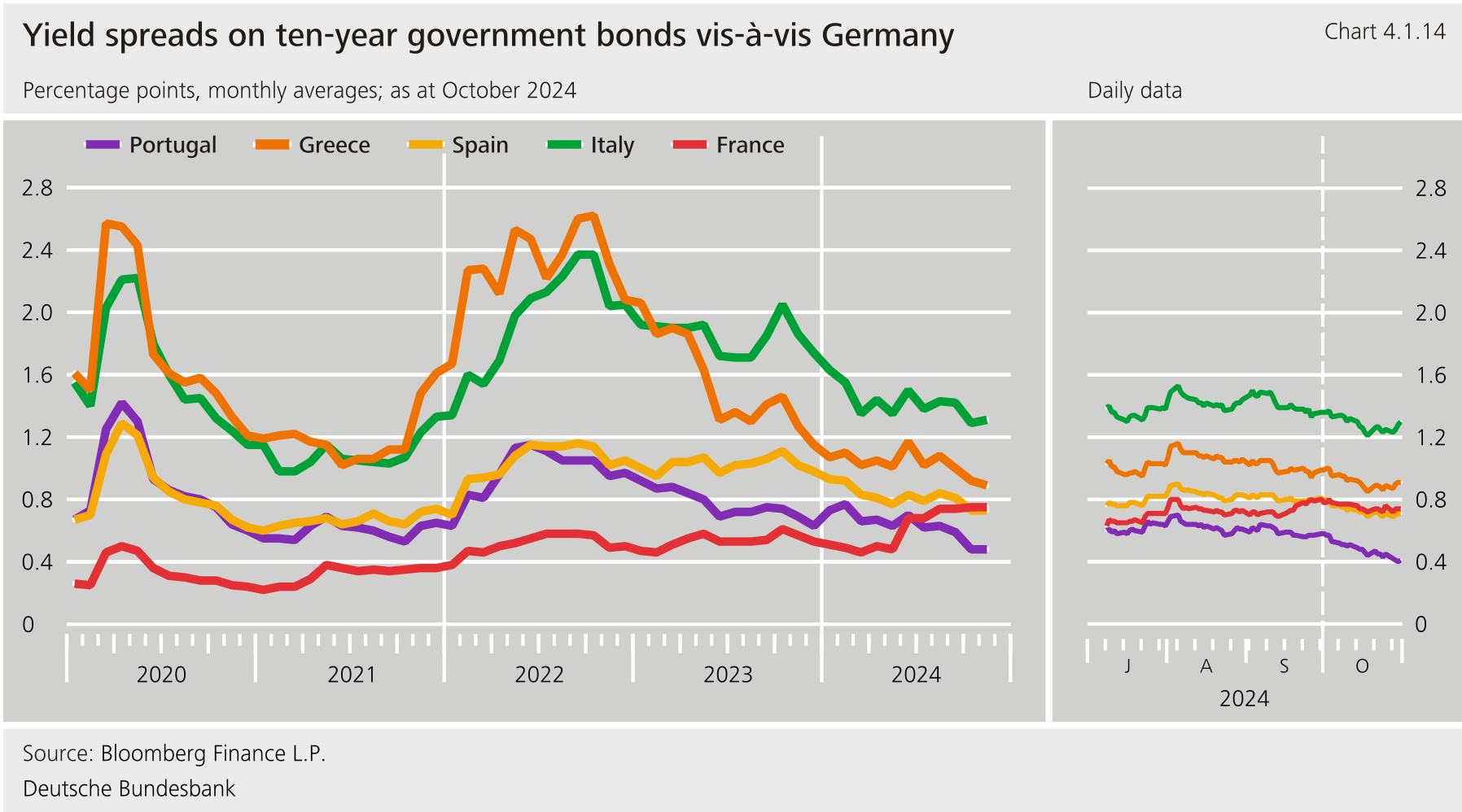
****Government debt is expected to rise further in some euro area countries and in the United States.** [\[43\]](#_ftn_root_43)According to forecasts by the Congressional Budget Office, the government debt ratio is expected to increase significantly over the next ten years, rising more than 20 percentage points by 2034 from a level of 99 % of in 2024.[\[44\]](#_ftn_root_44) This development could trigger concerns about the sustainability of debt in the financial markets, causing yields to rise.[\[45\]](#_ftn_root_45) Two factors could limit a possible rise in bond yields. First, government bonds have always been considered a safe haven. Second, the dollar remains the world's most important reserve currency. The increase in risk premia for French government bonds after snap elections were called in June 2024 highlights how sensitive markets can be to the risk of rising government debt. The interest rate premium on French government bonds has not come back down since. It remains elevated when compared with other European countries owing to ongoing concerns about France's debt sustainability (see Chart 4.1.14).**{#par-uu6651}
{#par-i65724}
****
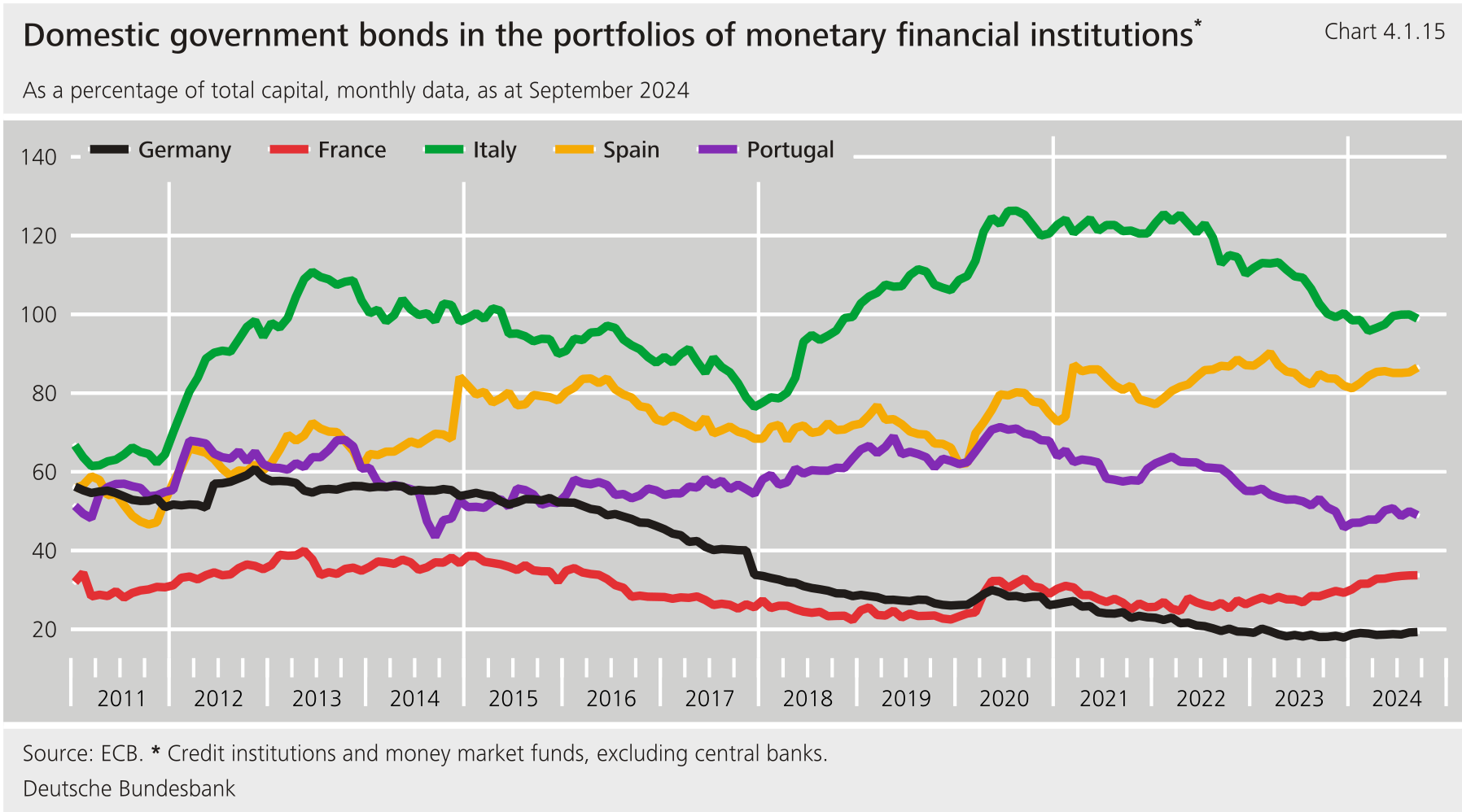
****Concerns over debt sustainability in other countries, especially in the euro area and the United States, can ultimately affect the German financial system through real economic and financial interconnections.** Banks, investment funds and insurers in Germany are interconnected with foreign non-financial debtors through loans and investments. Foreign government bonds, in particular, play a central role, serving as both investment and collateral. However, these direct links are not the only channel of contagion. In the euro area, national banks, and to a lesser extent insurers and pension funds, too, remain significant buyers of their home country's government bonds. This is particularly the case in Italy (see Chapter 6 "[The German and Italian government bond markets from a financial stability perspective](?article=Special-chapter-The-German-and-Italian-government-bond-markets-from-a-financial-stability-perspective-943206)") and Spain (see Chart 4.1.15).[\[46\]](#_ftn_root_46) Should doubts about a sovereign's debt sustainability emerge, this could initially affect that country's financial system through the sovereign-bank nexus and, ultimately, spill over to the German financial system through interconnections with German intermediaries. In addition, concerns about a country's creditworthiness, especially in the case of the United States, could trigger a shock in global financial markets. As a result, the prices of numerous securities could fall -- including some that were not directly affected by the shock. The German financial system could indirectly suffer additional losses through these market price effects.[\[47\]](#_ftn_root_47)**{#par-aa56oi}
{#par-a324a3}
****
### **4.1.6 The macro-financial environment remains challenging** {#tar-7}
****An unexpected deterioration in the macro-financial environment could challenge the financial system.** While the likelihood of disorderly developments has decreased compared with 2023 (see section 4.1.1 "[The macro-financial environment improved over the course of last year](#4.1.1-The-macro-financial-environment-improved-over-the-course-of-last-year)"), downside risks nonetheless persist. If, unexpectedly, there were a more severe economic downturn and the anticipated economic recovery were delayed, default risk in both the household and the corporate sector could rise more sharply.**{#par-ie2o67}
****In particular, elevated geopolitical risks are causing uncertainty in the macroeconomic outlook and harbour significant downside risks for macroeconomic developments.** Geopolitical risks can have a significant impact via real economy and financial channels (see the supplementary information entitled "[Geopolitical risks: impact on financial stability](#Geopolitical-risks-impact-on-financial-stability)" below). As geopolitical tensions rise, the hybrid threat situation is also intensifying. Cyberattacks, in particular, may jeopardise financial stability. Geopolitical risks have characteristics comparable to those of systemic financial stability risks. From a systemic perspective, enterprises and financial market players may not take geopolitical risks sufficiently into account when planning their individual supply and value chains. In the real economy, as in the financial system, interconnectedness can imply that losses and difficulties faced by individual market participants affect the system as a whole and amplify the initial effects of geopolitical shocks. Government action can influence the impact shocks have and who ultimately bears risks. Systemic risk requires appropriate regulation which focuses on the system as a whole. Geopolitical risks may also require macroprudential measures to safeguard financial stability.**{#par-e16i9a}
**Geopolitical risks: impact on financial stability** {#tar-8}
--------------------------------------------------------------
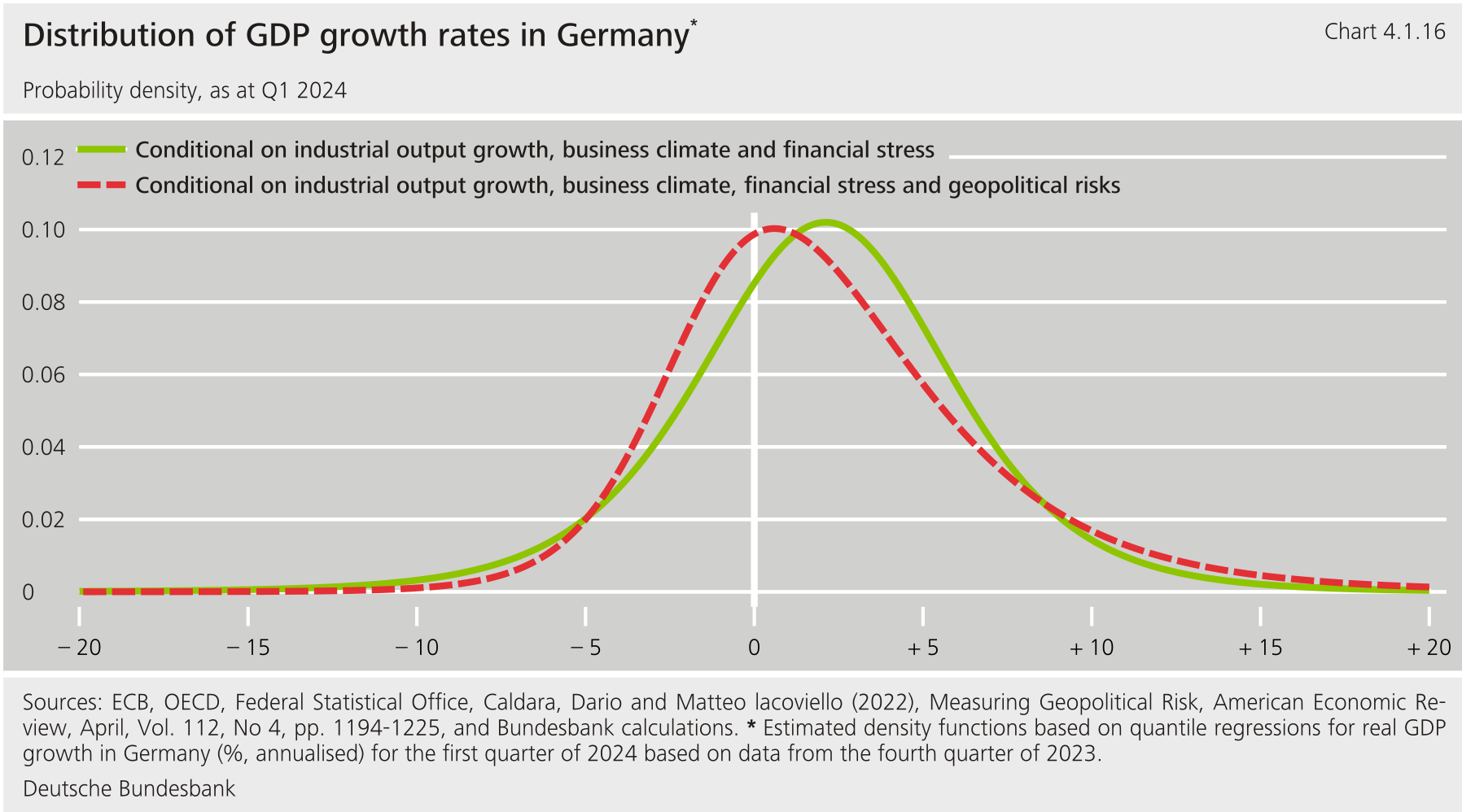
****Geopolitical developments could significantly hamper economic growth in Germany.** The extent to which cyclical downside risks are correlated with changes in geopolitical risks can be estimated using a growth-at-risk approach. Quantile regressions are used to estimate the overall probability distribution of future growth depending on various factors. If, in addition to the current growth in German industrial output, the regressions also account for a sentiment indicator of business climate, financial stress as well as geopolitical risks, the estimated distribution shifts to the left. [\[1\]](#_ftn_479a891b_1) The probability of lower growth rates in Germany tends to increase (see Chart 4.1.16).[\[2\]](#_ftn_479a891b_2)**{#par-a873a5}
{#par-u66ii9}
****
****In the short-term, risks to financial stability from geopolitical developments arise from abrupt changes, in particular, that can have a substantial macroeconomic impact via real economy, financial and hybrid channels.** [\[3\]](#_ftn_479a891b_3) The real economy channel describes how geopolitical events affect production and value added processes. The financial channel refers to the impact on the financial system, for example on risk premia, financing conditions, asset prices and capital flows. The hybrid channel refers to geopolitical threats and actions that can hamper the functioning of critical infrastructure -- for instance, the energy supply, communications and payment systems. Cyberattacks are typical examples of such actions. Through these channels, geopolitical shocks can create uncertainty in the financial system and increase liquidity and credit risk. Typically, a shock is transmitted through several of the channels simultaneously.**{#par-i4uiuu}
****Amid mounting geopolitical tensions, geopolitical shocks could increase in frequency and intensity in the future.** The macroeconomic and macro-financial consequences of geopolitical shocks can be illustrated using a factor-augmented vector autoregressive () model.[\[4\]](#_ftn_479a891b_4) The model captures the interaction between a geopolitical risk index and a small number of unobserved factors estimated on the basis of monthly data for the countries and selected euro area countries.[\[5\]](#_ftn_479a891b_5) These factors reflect the information that is available in a large international dataset and thus enable Germany's economic and financial links with other advanced economies to be taken into account.[\[6\]](#_ftn_479a891b_6) Global geopolitical shocks are identified in the model based on the assumption that they occur exogenously from the perspective of the country in question and can directly influence the macro-financial environment.**{#par-oa962i}
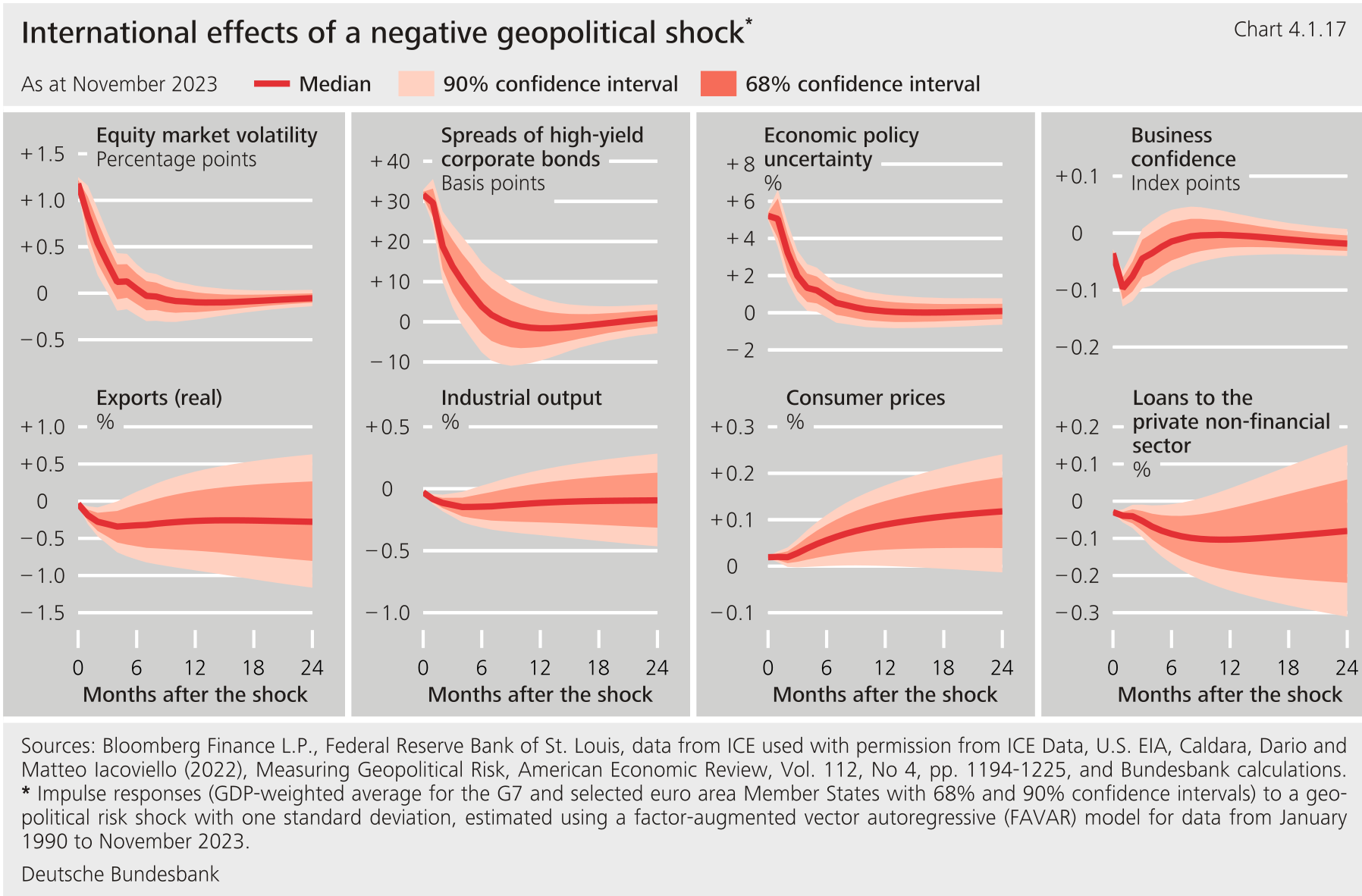
****The global macro-financial environment may deteriorate substantially following a geopolitical shock.** Chart 4.1.17 shows the estimated responses of selected variables to an adverse geopolitical shock. The results suggest that geopolitical shocks directly increase uncertainty and risk aversion in the international macro-financial environment. Equity market volatility rises immediately, and corporate credit spreads widen. Economic policy uncertainty grows, and business confidence dwindles. Furthermore, geopolitical shocks can, via supply chain disruptions and disruptions to critical infrastructure, lead to supply-side bottlenecks and dampen international trade and global oil and natural gas production.[\[7\]](#_ftn_479a891b_7) Taken together, these developments weigh on private consumption, output growth and lending, and create inflationary pressures.[\[8\]](#_ftn_479a891b_8)**{#par-oi26ia}
{#par-a79379}
****
****The German financial system is vulnerable to geopolitical shocks given Germany's global trade and financial ties.**In view of rising geopolitical tensions, risks to financial stability could increase further going forward. From a macroprudential perspective, it is therefore important to understand how geopolitical shocks can affect the financial system given macroeconomic linkages. For instance, monitoring geopolitical developments can help identify risks early on. Even in the wake of Russia's war of aggression against Ukraine and the energy price crisis that followed, losses in domestic lending business remained small, not least due to economic policy responses. Partly because of this experience, there is a risk of geopolitical risks being systematically underestimated. Market participants should proactively consider geopolitical risks in their business decisions to pre-emptively mitigate the impact of potential geopolitical escalations.**{#par-i78e53}
****In addition, the hybrid threat situation is intensifying in the wake of geopolitical tensions -- particularly the threat posed by cyberattacks.**This is why supervisors and the financial sector should prepare for specific hybrid threat scenarios. A cyberattack on large, internationally interconnected credit institutions may have a substantial impact on the real economy if the institutions' systems are no longer accessible. Investment in cyber resilience in the financial sector is therefore of vital importance. Enhancing cyber resilience is also a key focus of microprudential and macroprudential supervision in Germany and Europe. Furthermore, macroprudential policy is tasked with enhancing the resilience of the financial system against other types of geopolitical shocks as well.**{#par-u8398e}
1. **{#_ftn_479a891b_1} The current geopolitical risk level is approximated using a historical geopolitical risk index; see Caldara and Iacoviello (2022). This allows some aspects of geopolitical risks to be measured empirically. The index is based on coverage of geopolitical threats and incidents in three English-language newspapers. It reflects global geopolitical risks from an Anglo perspective. Given the central role of the United States, in particular, for the global economy and global financial system, the index provides a good metric for assessing the impact of geopolitical risks on the global macro-financial environment. Higher index values indicate a greater probability or intensity of adverse geopolitical events and shocks. However, its design implies that the index does not fully reflect two central dimensions of geopolitical risks: cyber incidents and hybrid threats.**
2. **{#_ftn_479a891b_2} This relationship is also evident when using an index for geopolitical risks based on reporting in German newspapers. See Bondarenko et al. (2024).**
3. **{#_ftn_479a891b_3} In addition to the macroeconomic impact of geopolitical shocks, geopolitical tensions lead to structural changes in the economic and financial system in the medium term, if, for example, de-risking or a friend-shoring strategy is pursued. As part of such strategies, supply chains are diversified and reshored to countries with similar values. Abrupt adverse developments stemming from geopolitical shocks may then become less likely. At the same time, less use may be made of the efficiency gains from the international division of labour. In addition, broad-based fragmentation, i.e. a move away from global economic and financial integration on the grounds of geopolitical considerations, reduces the opportunities for diversifying risks globally over the medium and long term. Studies indicate that increasing fragmentation could significantly hamper global economic growth. See Aiyar et al. (2023), Baba et al. (2023), Cerdeiro et al. (2021).**
4. **{#_ftn_479a891b_4} See Bernanke et al. (2005) and Eickmeier et al. (2024).**
5. **{#_ftn_479a891b_5} See Caldara and Iacoviello (2022). Developments in the euro area beyond the are represented by aggregated variables that assign a weighting to the countries included (Austria, Belgium, Finland, Ireland, the Netherlands, Portugal and Spain) according to their average real adjusted for purchasing power in the years 1999 to 2023.**
6. **{#_ftn_479a891b_6} The dataset is an unbalanced panel containing 195 monthly time series for the period from January 1990 to November 2023. Indicators for the real economy, price level, business climate, economic policy uncertainty and international trade are modelled. Time series for the equity, bond, foreign exchange, commodity and precious metals markets are taken into account for the transmission across the financial markets. The unobserved factors are estimated using an approach that allows for missing observations; see Buch et al. (2014). The variables are transformed to ensure their stationarity; see Stock and Watson (2002). The data are also adjusted for outliers; see Stock and Watson (2005). Outliers are observations from the stationary data with absolute median deviations greater than five times the interquartile range.**
7. **{#_ftn_479a891b_7} Depending on the trigger, a geopolitical shock can affect the real economy not only on the supply side, but also on the demand side. In view of heightened economic policy uncertainty and eroding business confidence, a geopolitical shock can also have a dampening impact on global demand and international trade. Economic activity deteriorates and consumer prices tend to fall as a result. Given the broad range of geopolitical shocks covered by the geopolitical risk index, demand-side and supply-side effects overlap in the model results; see Caldara and Iacoviello (2022). On balance, the model results suggest that inflationary effects more than offset deflationary effects. See Caldara et al. (2024).**
8. **{#_ftn_479a891b_8} In line with the model estimates, analyses conducted by the also show that a geopolitical shock leads to a deterioration in the macro-financial environment, with adverse effects on macroeconomic activity and uncertainty in the financial markets. In addition, analyses show that equity funds experience capital outflows and that banks' funding conditions (including creditworthiness) deteriorate as a result of a geopolitical shock. See European Central Bank (2024b).**
**4.2 Banking system: vulnerabilities and resilience** {#tar-9}
---------------------------------------------------------------
****Overall, the German banking system coped well with the sharp rise in interest rates in 2022; however, vulnerabilities remain.**After the sharp rise in interest rates led to considerable volatility in the international financial markets, the markets initially focused on banks' market and liquidity risks.[\[48\]](#_ftn_root_48) German banks were barely affected by deposit withdrawals, but recorded significant losses in their securities portfolios in 2022. The high losses in value were a result of the high interest rate risk that banks had built up in the previous phase of low interest rates. In addition to the losses reported on balance sheets, high unrealised losses (losses in value not recognised on balance sheets) accumulated in their banking books for a time, but have since subsided significantly, albeit not completely. The sharp increase in funding costs that was feared on account of the rise in interest rates in 2022 did not materialise. Nevertheless, as lending rates rose, banks were able to generate unexpectedly good net interest income in 2023.**{#par-i939i5}
****In view of the economic situation, credit risk is now increasingly coming under the spotlight.** In the past, the Bundesbank has repeatedly drawn attention to institutions' low risk provisioning. This low provisioning reflected low insolvency rates in the corporate sector, but future credit risk could have been underestimated.[\[49\]](#_ftn_root_49) This is because a sharper rise in insolvencies was prevented in no small part by the fiscal policy interventions in favour of the corporate sector during the global financial crisis and also during the pandemic. Institutions could now expect similar measures in times of crisis. The macro-financial environment has since changed significantly. While loan loss allowances have risen, the assessment of future default risks has remained virtually unchanged overall. Hence, there is a danger that banks might continue to underestimate these risks. The interconnectedness with non-bank financial intermediaries () could further weaken the resilience of the banking system during periods of stress (see the supplementary information entitled "[Contagion channels between banks and investment funds](#Contagion-channels-between-banks-and-investment-funds)" and section 4.3 "[Non-bank financial intermediaries: vulnerabilities and resilience](#4.3-Non-bank-financial-intermediaries-vulnerabilities-and-resilience)").**{#par-iiaa3a}
### **4.2.1 Unrealised losses in banks' banking books are declining** {#tar-10}
****The value losses resulting from higher interest rates only had to be partially recognised on banks' balance sheets, but the unrealised losses that have arisen could potentially depress future income.**Under the German Commercial Code (*Handelsgesetzbuch* ), banks value securities assigned to long-term assets using the lower of cost or market value principle. Similarly, under the International Financial Reporting Standards (), banks can measure securities at amortised cost. Unrealised losses arise when the market value of securities falls below their balance sheet value.[\[50\]](#_ftn_root_50) The formation of unrealised losses does not therefore have an impact on profit or loss and does not have an adverse effect on banks' balance sheet equity. Nonetheless, unrealised losses do entail economic costs. The institutions in question miss out on the commensurate amount of higher interest income from securities that have become cheaper. They therefore merely spread out the securities losses over a longer period of time, especially as long-term securities are normally not sold before maturity.**{#par-i2u3oa}
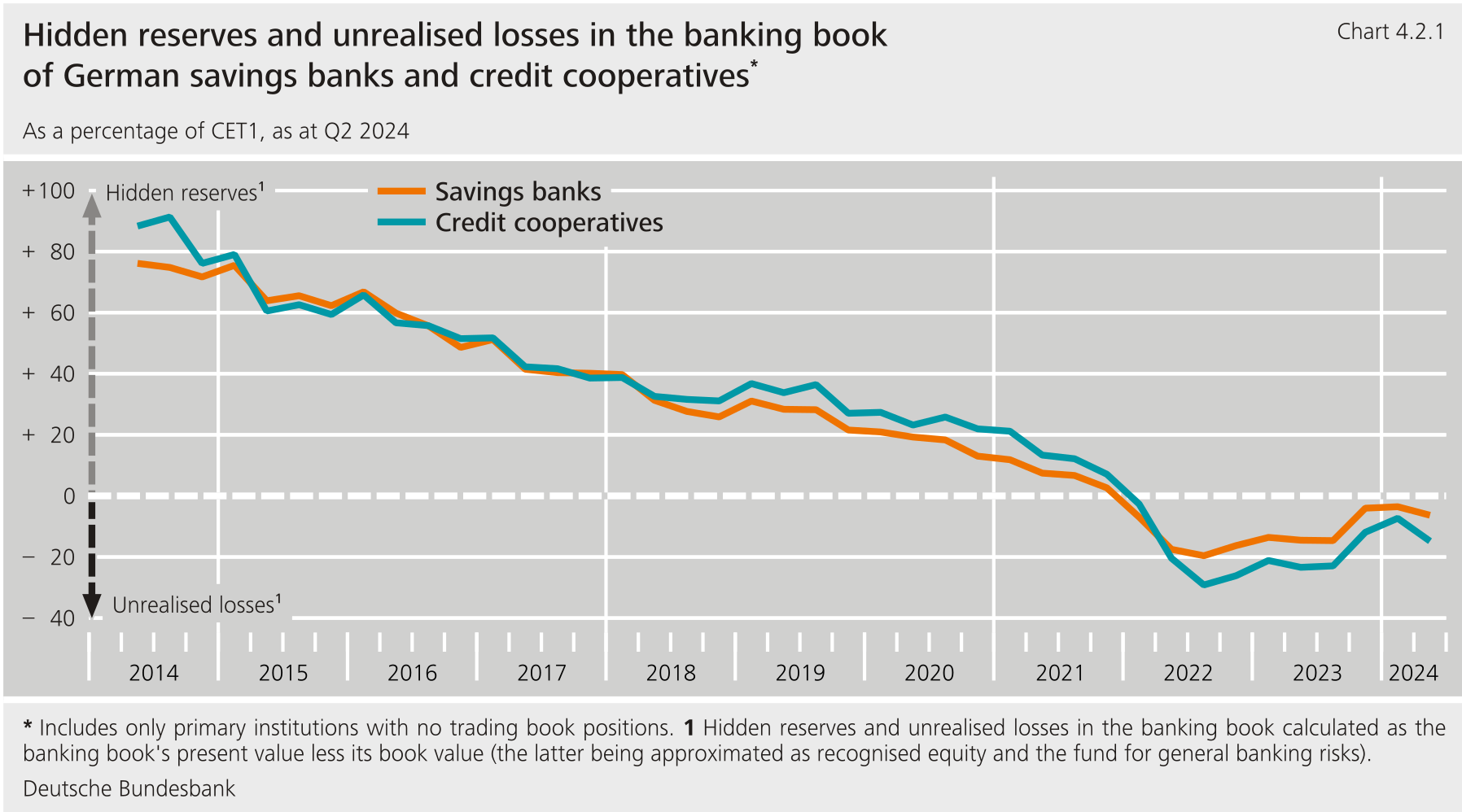
****Unrealised losses arose not only for securities but the banking book as a whole.** The banking book contains all the interest-bearing assets and liabilities of a bank, regardless of whether they are marketable or not. Unlike interest-bearing securities, which form part of the banking book, the market values of other items in the banking book are not readily available. This is particularly true of loans. Nevertheless, an economic value can be assigned to such items through their present value. This is defined as the sum of the values, discounted using current interest rates, of all future payments of the respective item. The present value of the banking book is a supervisory metric for interest rate risk, which banks are required to determine on a regular basis. According to estimates, in the third quarter of 2022 the unrealised losses in the banking books of savings banks amounted to around 20 % of common equity tier 1 () capital, and were even as high as around 29 % in the case of cooperative banks (see Chart 4.2.1). Since the end of 2022, unrealised losses in the banking books of savings banks and credit cooperatives have fallen significantly, standing at around 6 % and 15 % of capital, respectively, in the second quarter of 2024. The decline in unrealised losses is due to interest rate developments and interest rate positions reaching maturity or approaching their maturity date (pull-to-par effect).[\[51\]](#_ftn_root_51)**{#par-e17167}
{#par-o62192}
****
****Unrealised losses are also declining at large, systemically important banks.** If viewed purely in relation to securities, unrealised losses at other systemically important institutions () fell significantly to 2.2 % of capital at the end of 2023. For the banking book as a whole, however, it is difficult to assess the evolution of unrealised losses at large banks. This is mainly due to the difficulty of using supervisory reporting data to determine what the banking book contains when institutions conduct complex transactions on a large scale. However, developments in the present value of the banking book at large, systemically important banks indicate that these institutions have suffered lower present-value losses in relation to their banking book as a whole. This is probably because large institutions actively manage interest rate risk to a greater extent, for example using derivatives.**{#par-u8eaue}
### **4.2.2 Net interest income remains good, but risks to income are increasing** {#tar-11}
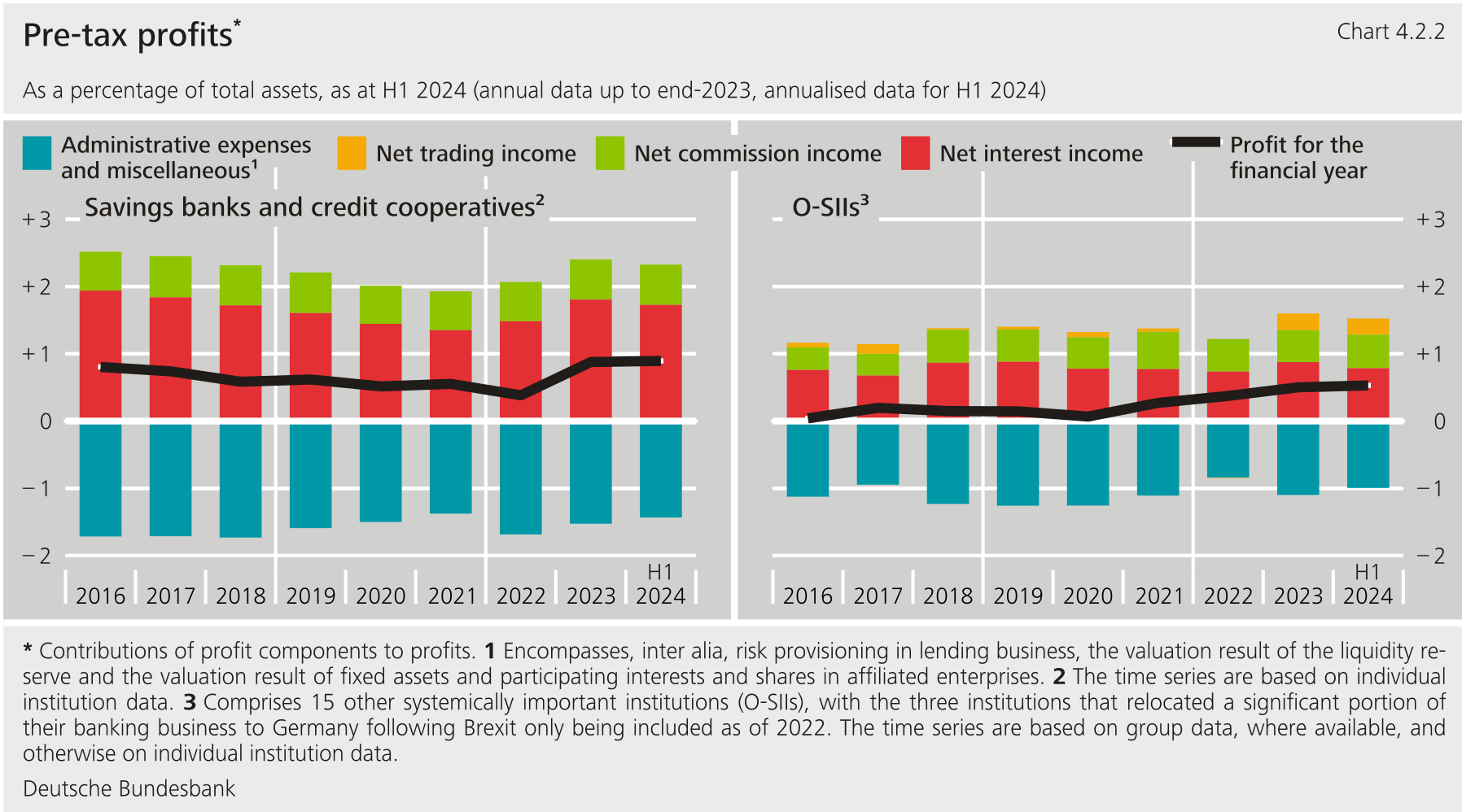
****After very high net income for the year in 2023, banks' profitability is continuing to develop positively.**In 2023, savings banks and cooperative banks, in particular, recorded high net interest income in absolute terms.[\[52\]](#_ftn_root_52) In relation to total assets, however, net interest income for these banks, at 1.8 %, was no longer quite as exceptional, but roughly matched a level last seen in 2017 (see Chart 4.2.2). The large, systemically important banks, for which traditional lending is less important, also performed strongly in 2023 by this measure, posting net interest income amounting to 0.88 % of total assets. In addition, these banks generated good net trading income, which stood at 0.24 % of total assets in 2023 and continued on this positive trend in the first half of 2024.[\[53\]](#_ftn_root_53) Developments in banks' other profit components were unremarkable.**{#par-a9ei2a}
{#par-eiu23i}
****
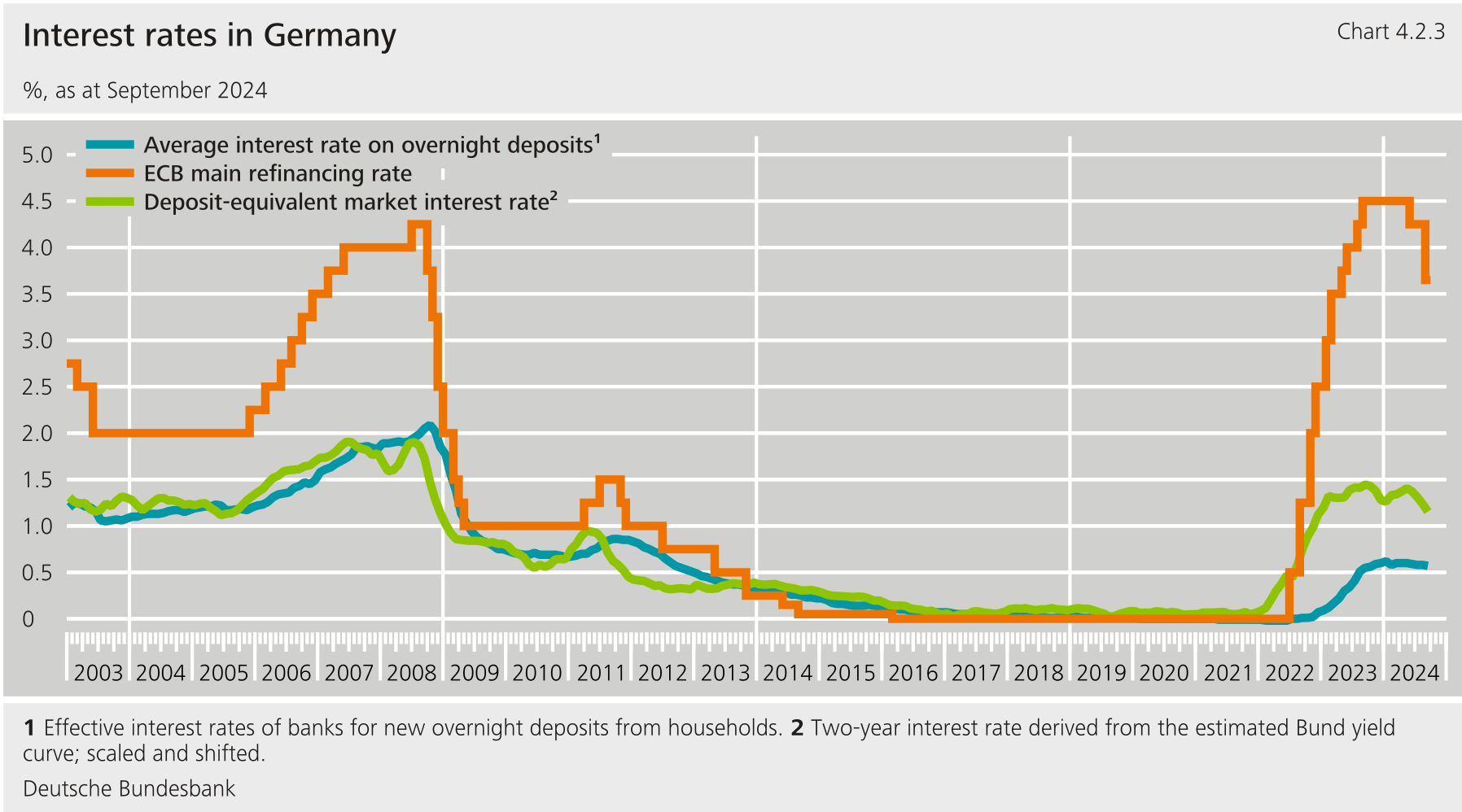
****Banks continue to benefit from low interest rates in deposit business and correspondingly low funding costs.**Interest rates on overnight deposits normally correlate significantly with market interest rates, even if their levels differ. Up until interest rates began going up in 2022, the interest rate on overnight deposits was well approximated by a transformed, deposit-equivalent market interest rate (see Chart 4.2.3).[\[54\]](#_ftn_root_54) This relationship partially broke down following the rise in interest rates in 2022: while the deposit-equivalent market interest rate rose from 0.06 % at the end of 2021 to 1.31 % in July 2024, the average interest rate on households' overnight deposits increased from − 0.01 % to just 0.58 %. This is less than half of the deposit-equivalent market rate. In addition, the rise in interest rates on overnight deposits began much later than for market interest rates and monetary policy interest rates. One reason for the weakened pass-through of monetary policy interest rates could be that German banks have high excess liquidity due to the long period of unconventional monetary policy and also have high deposit holdings. Due to the high level of excess liquidity, banks could be less reliant on deposits than before. At the same time, banks have an incentive to show considerable restraint when increasing interest rates on the large holdings of overnight deposits because the impact on funding costs of any increase would be commensurately high.**{#par-e8o49a}
{#par-i11814}
****
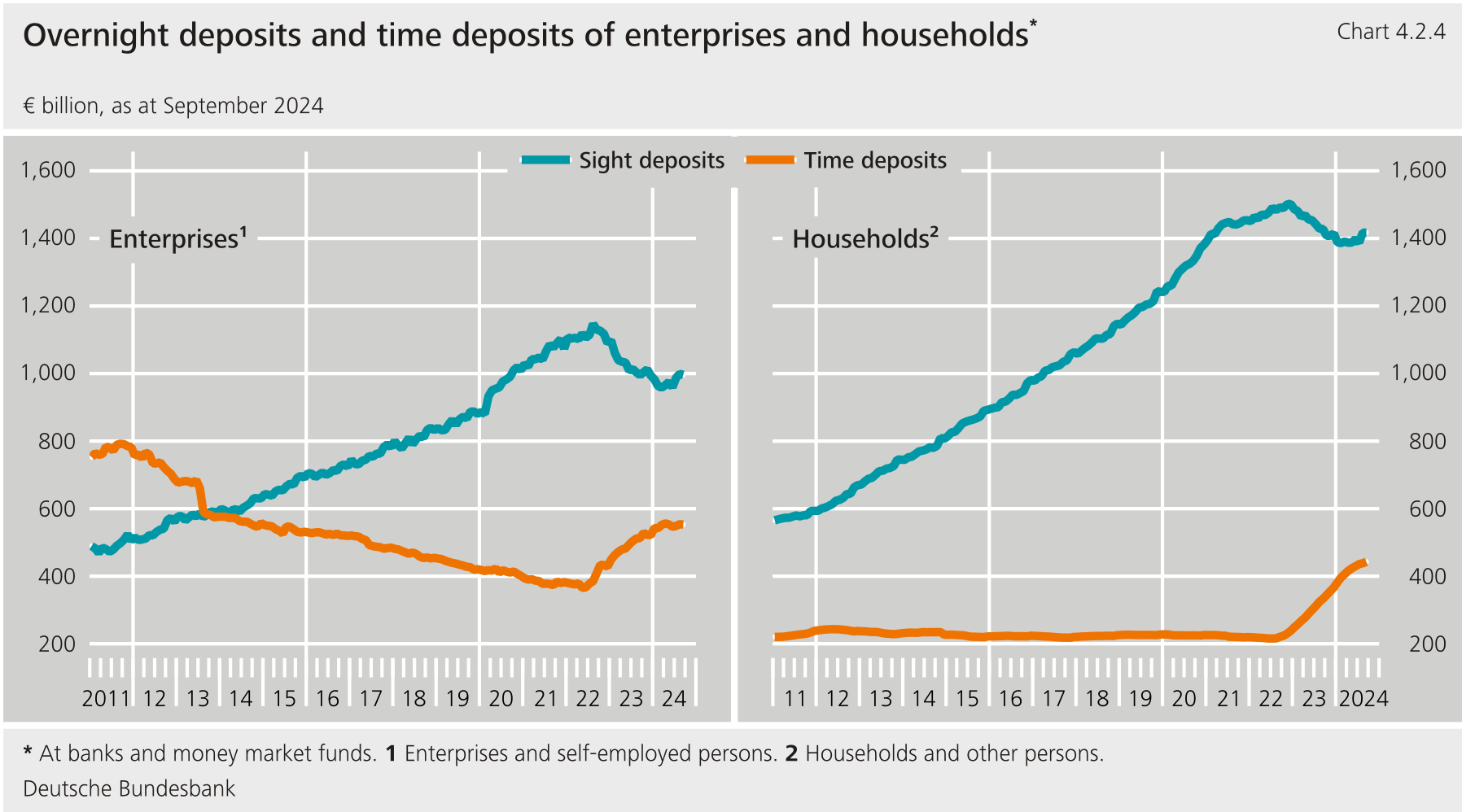
****Banks' funding could become more expensive in future, despite the recent interest rate cuts.**After a moderate increase, deposit rates appear to be stabilising at what remains a low level. At the same time, however, customers have reallocated some of their funds from sight deposits to higher yielding investments, such as time deposits (see Chart 4.2.4). This holds true both for enterprises and households. These developments, if sustained, tend to increase the funding costs of credit institutions. Higher funding costs have an impact, in particular, on banks with strong deposit business. While the reallocation of funds now seems to be slowing, it is not yet possible to say whether the process is complete.**{#par-ua222e}
{#par-u8e63a}
****
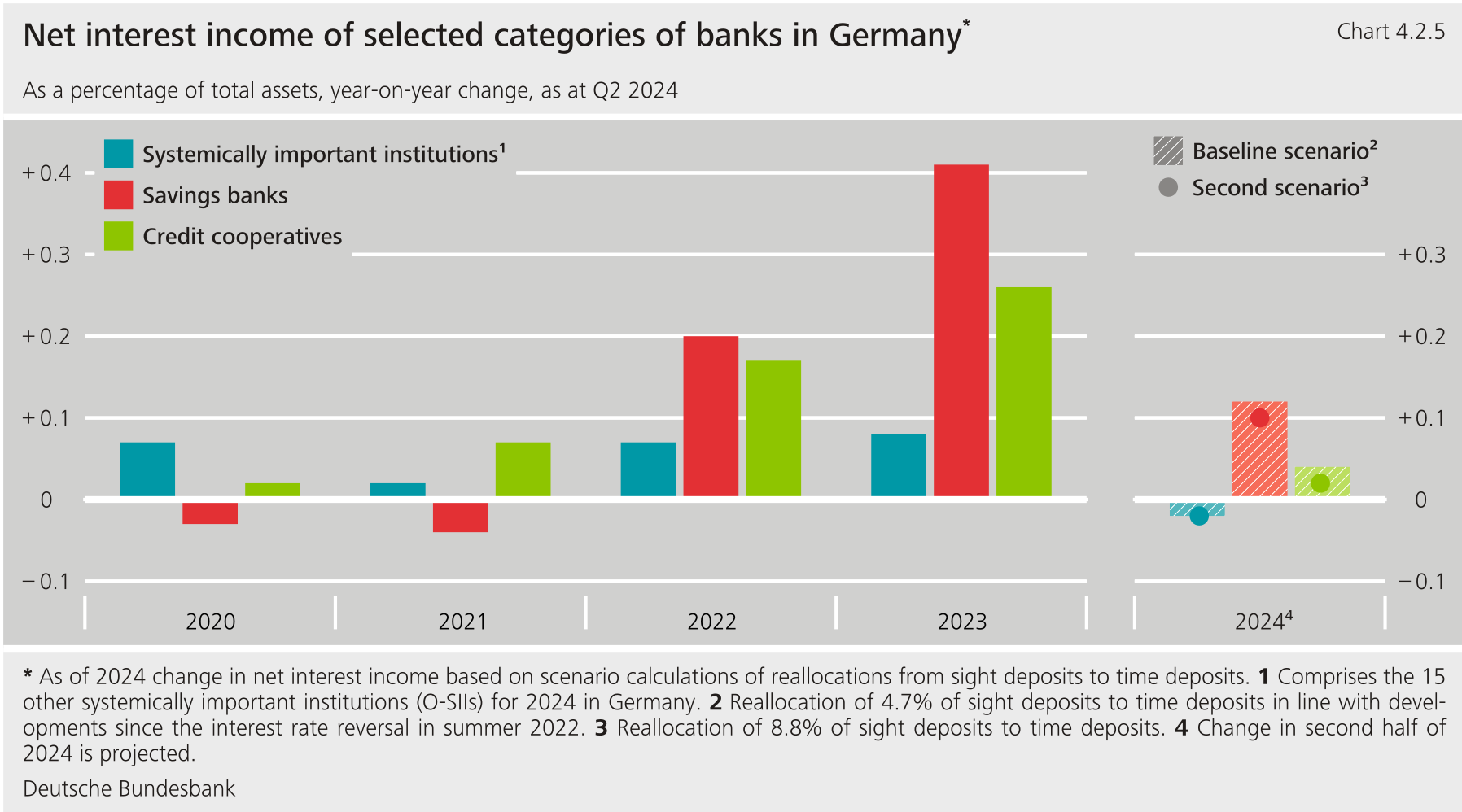
****Nevertheless, net interest income this year could be roughly as good as the previous year's levels in the case of savings banks and cooperative banks, but might well decline at large, systemically important banks.** For example, net interest income at savings banks and cooperative banks was stable in the first half of 2024, but declined slightly at O- (see Chart 4.2.5). According to scenario calculations, net interest income from securities holdings and business with enterprises and households is likely to be better for all categories of banks in the second half of 2024 than in the same period of the previous year.[\[55\]](#_ftn_root_55) For 2024 as a whole, this results in the developments shown in Chart 4.2.5. The reason for the projected increase in net interest income in the second half of 2024 is that low-interest loans and bonds are expiring and being replaced by instruments at the current interest rate. In the assessment, this effect exceeds the negative contribution of the reallocation of funds from low-interest sight deposits to higher-interest time deposits. Even unexpectedly strong reallocations would probably have only a limited impact on net interest income.[\[56\]](#_ftn_root_56) It should be borne in mind that the scenario calculations do not take into account all balance sheet items contributing to net interest income.[\[57\]](#_ftn_root_57) As some of these items are sensitive to the interest rate cuts that have taken place, institutions' net interest income could therefore be more subdued overall than calculated in the scenarios.**{#par-i1i826}
{#par-u367u5}
****
### **4.2.3 Risks in lending business are rising significantly** {#tar-12}
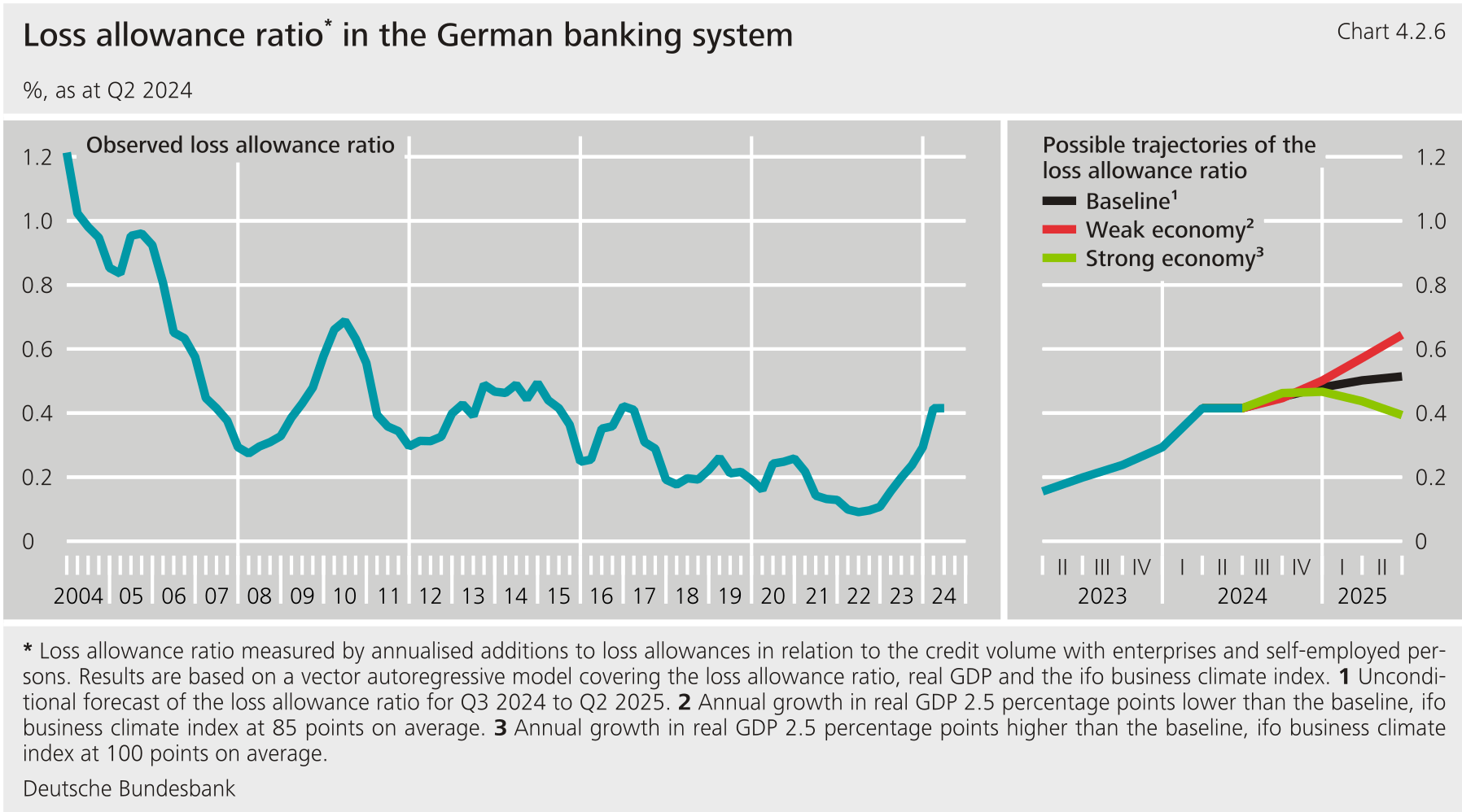
****Institutions have made significantly higher loss allowances for loans to enterprises and households in recent quarters.**In relation to the exposure amount, annualised additions to loss allowances amounted to around 0.4 % in the second quarter (see Chart 4.2.6), thus reaching their highest level in over seven years. The increase is likely to be due to weak economic developments and the higher lending rates. In the coming quarters, loss allowances could increase further. In a model analysis, the Bundesbank examined possible developments in the loss allowance ratio. In the baseline scenario,[\[58\]](#_ftn_root_58) additions to loss allowances could, it found, increase again significantly over the course of one year. The loss allowance ratio could then reach 0.5 %, close to the historical average since the global financial crisis. If economic activity were significantly weaker, loss allowance ratios could rise to levels that correspond to the highs seen after the global financial crisis. In this scenario, where annual growth in real gross domestic product () is 2.5 percentage points lower than in the baseline scenario, the loss allowance ratio is more than 0.6 %. This corresponds to a decline in ratios of only 7 basis points compared with the baseline. In view of German banks' capital reserves (see section 4.2.4 "[Banks have high capital reserves](#4.2.4-Banks-have-high-capital-reserves)"), these additional losses seem manageable. If the economy performs better, however, this development in the loss allowance ratio could soon peak.**{#par-u8aa25}
{#par-u98ie7}
****
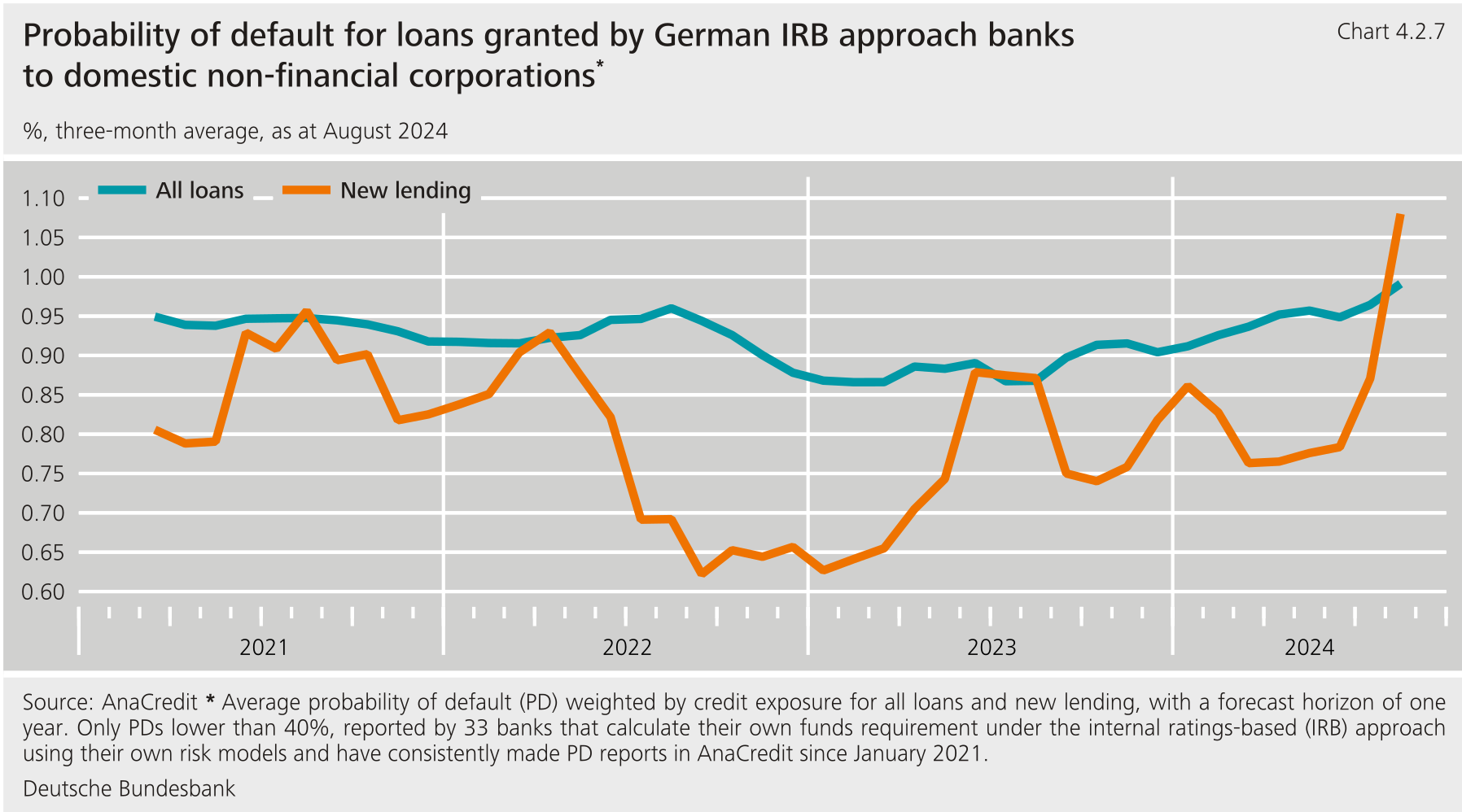
****Systemically important banks still estimate the probability of default of their corporate borrowers to be low, despite weak economic developments.**These institutions quantify the risk of their borrowers on the basis of probabilities of default (), which they calculate using models based on financial mathematics or statistics. These quantify the risk of a borrower not being able to service its liabilities in full within one year. Across all loans to enterprises, the calculated by banks increased only slightly on average, after having actually fallen slightly in the second half of 2022 despite the rise in interest rates (see Chart 4.2.7).[\[59\]](#_ftn_root_59) They currently stand at around 1 %. In the case of new loans, the increase in the first half of 2023 was initially stronger, but the respective had also fallen more sharply prior to this. The present low values may underestimate current credit risk, also partly because systemically important banks calculate based on long-term averages. This avoids large fluctuations in capital requirements. However, low normally also lead to low risk weights in the calculation of own funds requirements. This aspect is discussed in more detail later in this article. However, it is to be expected that higher interest burdens on enterprises and increased risks given the structural challenges facing the entire sector (see section 4.1.3 "[Despite burdens, enterprises are largely robust](#4.1.3-Despite-burdens-enterprises-are-largely-robust)") will also be reflected in higher mean values in the medium term and thus in the reported .**{#par-a144au}
{#par-ie9a7a}
****
****The heightened geopolitical risks could lead to high losses in the banking system, should they materialise.**The Russian war of aggression against Ukraine and the ensuing energy price crisis were manageable for the financial system, mainly owing to economic policy responses. The measures taken have greatly mitigated the impact of the rise in energy prices on firms and households. Without these measures, the financial system might have suffered significant losses. Geopolitical risks can arise through various channels (see the supplementary information entitled "[Geopolitical risks: impact on financial stability](#Geopolitical-risks-impact-on-financial-stability)"). It is questionable whether banks are sufficiently factoring in the current geopolitical risks in the low reported for their borrowers, even if these risks are difficult to quantify.**{#par-o1ieo4}
{#par-a775o3}
**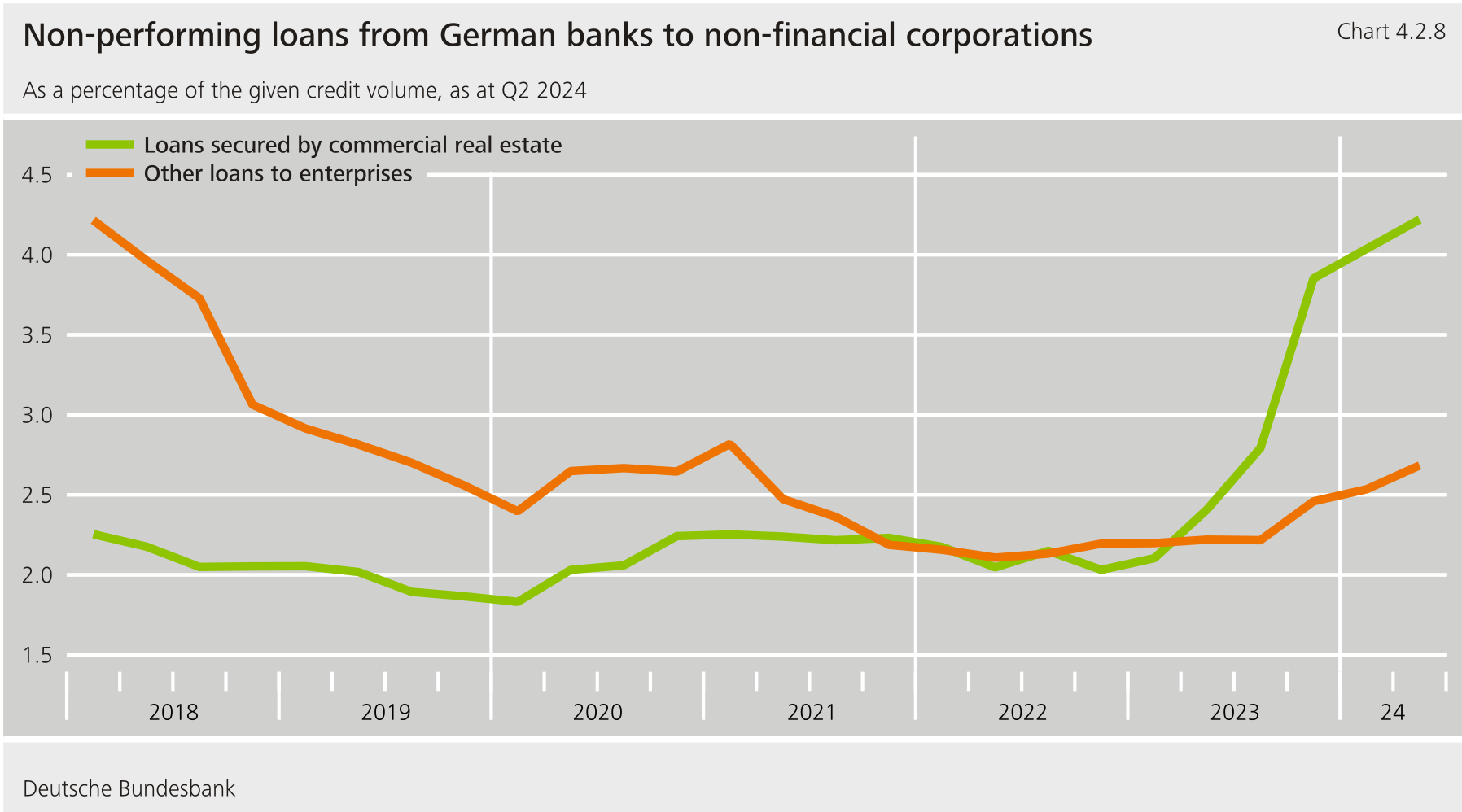**
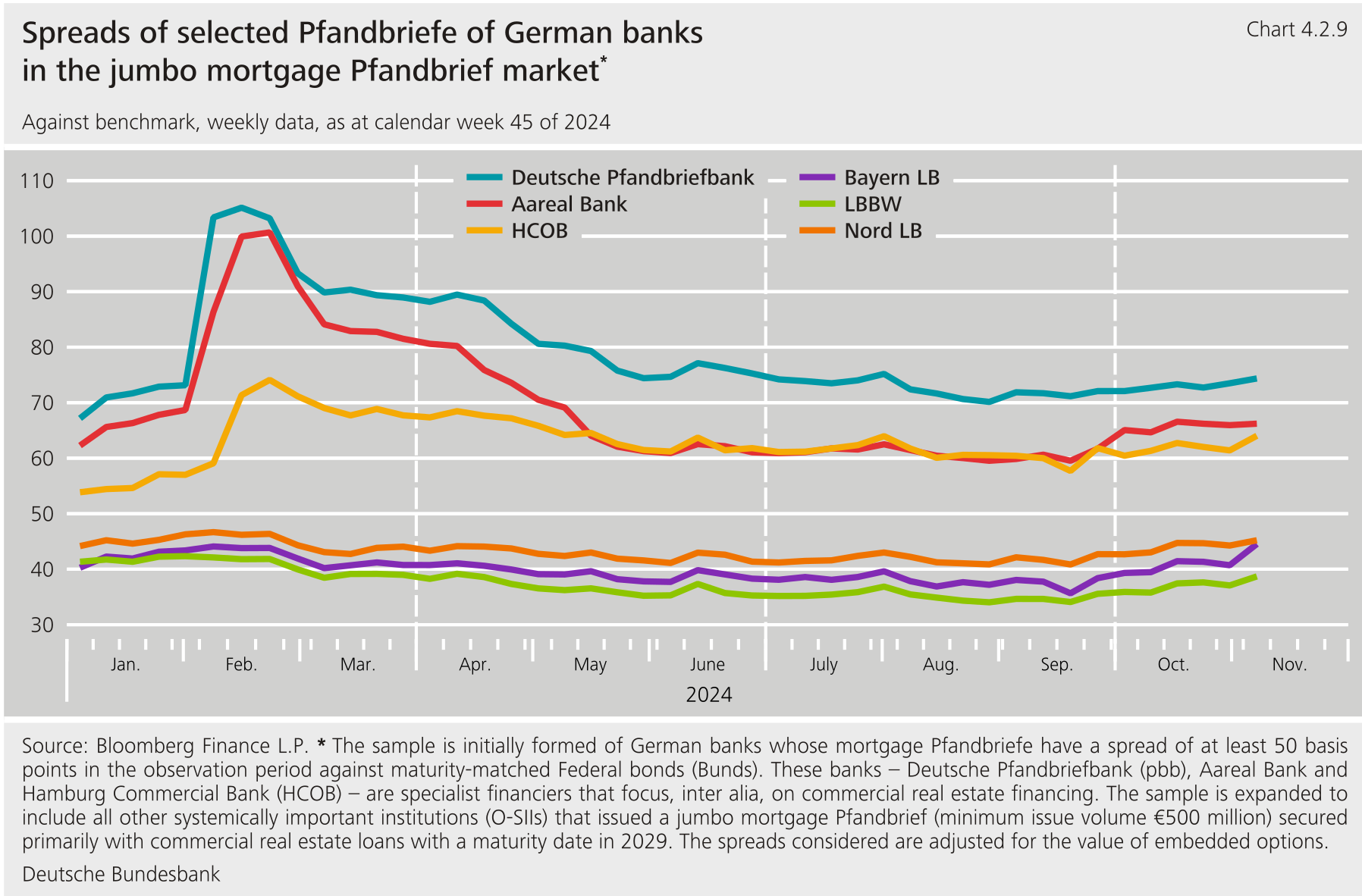
****The rise in loss allowances for commercial real estate loans is substantial.** The downturn in the commercial real estate () markets continued during 2024, though with weakened momentum. As a result, banks that are particularly active in these markets had to make large loss allowances in some cases. The non-performing loans () ratio for loans secured by commercial real estate has doubled since the end of 2022, albeit from a low level. The aggregate ratio in the second quarter of this year is 4.2 % (see Chart 4.2.8), while the ratios of significant institutions () for the same period are higher than average, at 5.1 %.[\[60\]](#_ftn_root_60) One reason for this is that these banks have above-average exposure to the particularly affected market. The ratio of is 12.6 % for such exposures, but just 3.3 % for German exposures. Less significant institutions (), on the other hand, have a significantly lower ratio for commercial real estate loans, at 3.4 %, owing to their focus on the domestic commercial real estate market.[\[61\]](#_ftn_root_61) Some specialist financiers, such as Deutsche Pfandbriefbank, Aareal Bank and Hamburg Commercial Bank, were also impacted by market reactions. Spreads on Pfandbriefe from these banks rose sharply at the beginning of the year, after risk provisions were significantly higher than expected. However, contagion effects on other banks were largely absent. Spreads on bonds issued by the affected banks have now fallen significantly again (see Chart 4.2.9).**{#par-ua7662}
{#par-a7152a}
****
****The banking system is likely to cope if credit defaults for commercial real estate increase more strongly than expected.** The Bundesbank analysed the risks arising from commercial real estate using a scenario calculation.[\[62\]](#_ftn_root_62) One risk scenario, featuring a limited commercial real estate downturn, stressed the particularly affected sub-segment of real estate development.[\[63\]](#_ftn_root_63) The result: German banks' aggregate ratio fell by 0.8 percentage point over the course of a year. These losses, however, were not evenly distributed, but were instead concentrated within one part of the banking system (see Chart 4.2.10). The banks affected would suffer comparatively high losses. Very few banks fall into this category, primarily smaller to medium-sized institutions.**{#par-oi67u6}
{#par-oi72i2}
**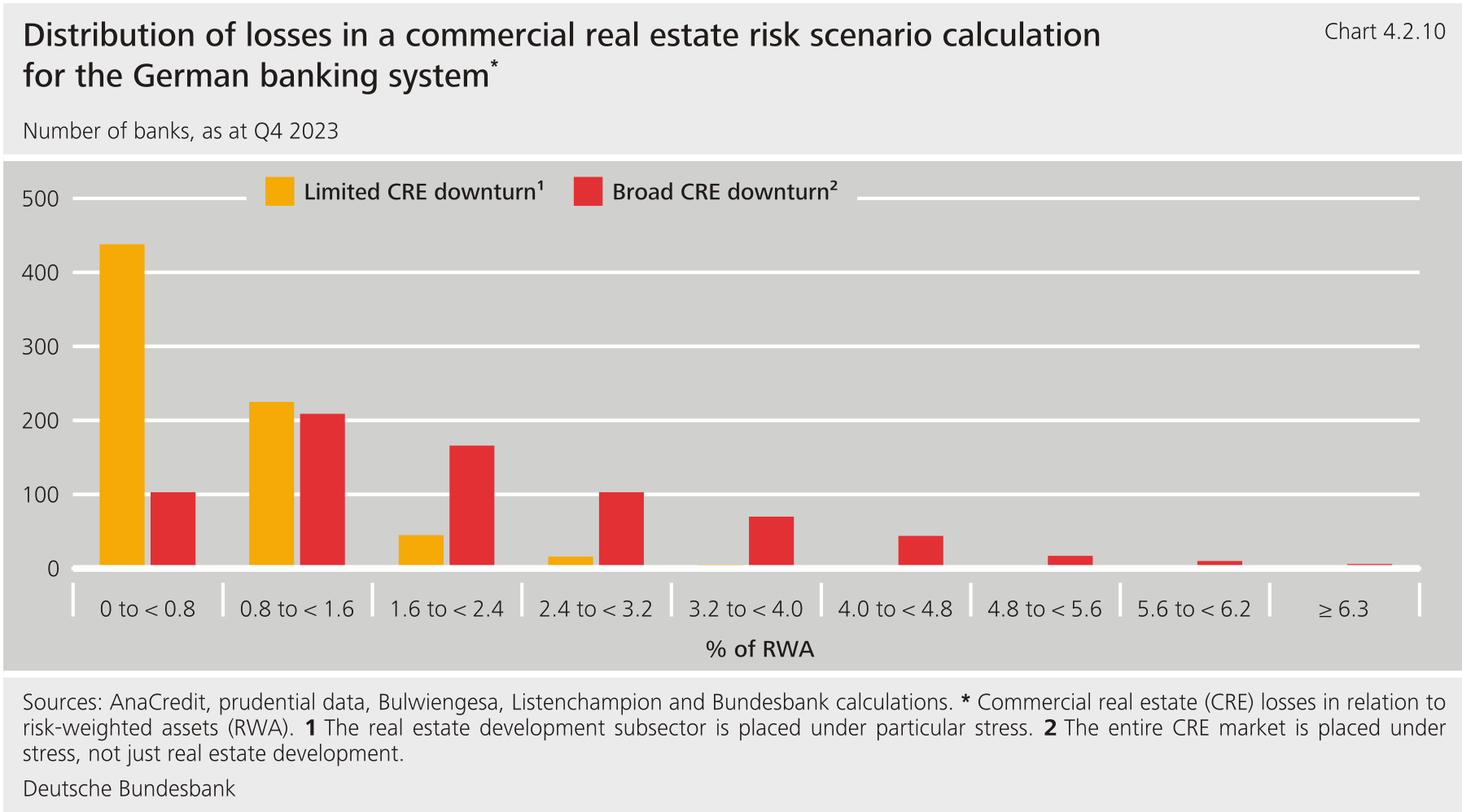**
****By contrast, a broader** **downturn shows the banking system being affected across the board.** If a sharp downturn were to affect not only real estate development but also the entire commercial real estate market, the median capital ratio would fall significantly more sharply, at up to 1.6 percentage points, owing to losses from credit risk.[\[64\]](#_ftn_root_64) A significant proportion of banks would experience losses of more than 2.4 % of risk-weighted assets (see Chart 4.2.10). Risks could be heightened by contagion of other banks. Model calculations show that a number of small and medium-sized banks would likely no longer be able to meet their aggregate buffer requirements. These banks could then try to meet their buffer requirements again by deleveraging.[\[65\]](#_ftn_root_65) The banking system as a whole would still have the capacity to provide sufficient loans, though, but it is not always possible for firms to switch to a new bank without any problems.**{#par-i54ae2}
****Credit defaults remain low for residential real estate financing.** First, given the rise in interest rates, the typically long fixed interest rate period for loans concluded during the period of low interest rates initially protects most households from an increase in debt service. Second, nominal income has risen as a result of higher wage settlements (see section 4.1 "[The macro-financial environment and the situation in the real sector](#4.1-The-macro-financial-environment-and-the-situation-in-the-real-sector)"). However, the situation could change in the event of an unexpected, significant increase in unemployment. In this case, defaults would likely rise more sharply, especially for borrowers with high debt servicing. Empirically, the individual default risk of an unemployed borrower increases disproportionately if their debt service rises to over 30 % of original net income.[\[66\]](#_ftn_root_66) According to household data, around 15 % of borrowers have a debt service ratio of 30 % or higher.[\[67\]](#_ftn_root_67) The probability of default among these households could increase as unemployment rises.**{#par-i24o9i}
****The structural challenges facing the German economy increase the risks with regard to labour market developments in individual sectors** (see section 4.1.3 "[Despite burdens, enterprises are largely robust](#4.1.3-Despite-burdens-enterprises-are-largely-robust)"). If structural changes spark changes in the corporate landscape, an unfavourable scenario could lead to an increase in job losses in industry. High-income employees, who are disproportionately represented as borrowers in private residential real estate financing, would also then be affected. In such a scenario, credit defaults in residential real estate financing could also increase more strongly across the board.**{#par-ea8o99}
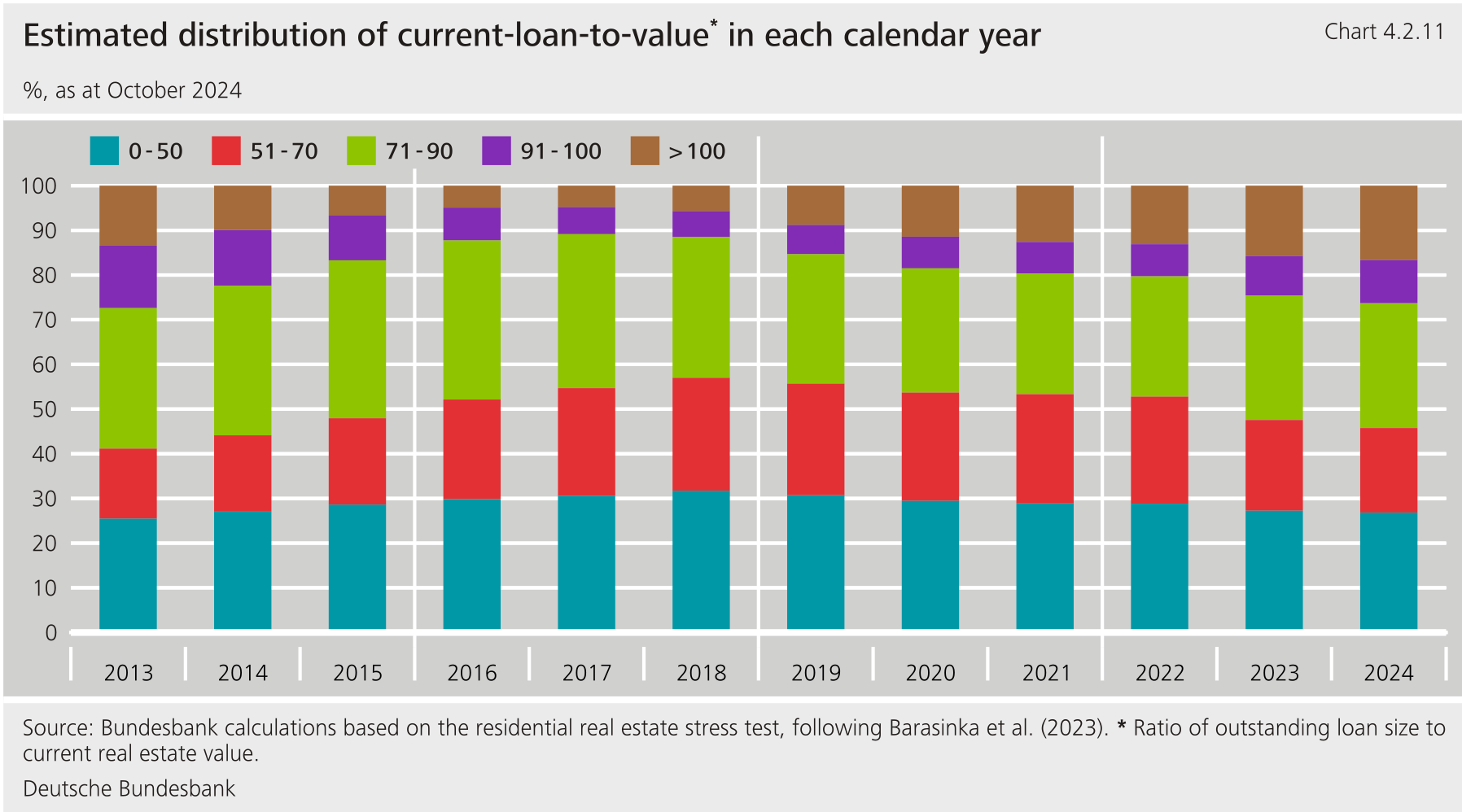
****Setting aside the low default rates, the recent decline in real estate prices has tended to increase losses on residential real estate loans.** If housing prices fall, the value of the available credit collateral that can be used in the event of a credit default decreases. One indicator of impending loss rates is the ratio of outstanding loan size to current real estate value (current loan-to-value, ). This can be estimated from available data. Households with a of over 100 % are of particular interest. In such cases, the residual debt would exceed the current value of the property, which could potentially lead to increased losses in the event of the borrower's default. In 2024, the share of loans for house purchase with a over 100 % increased on the year, reaching around 17 % (see Chart 4.2.11). Newer loan vintages often have an elevated potential for loss due to decreased collateral values as a result of the recent significant fall in residential real estate prices. The underlying properties were often purchased at high prices and little of the loans has been repaid so far.**{#par-uu261i}
{#par-i4e4o4}
****
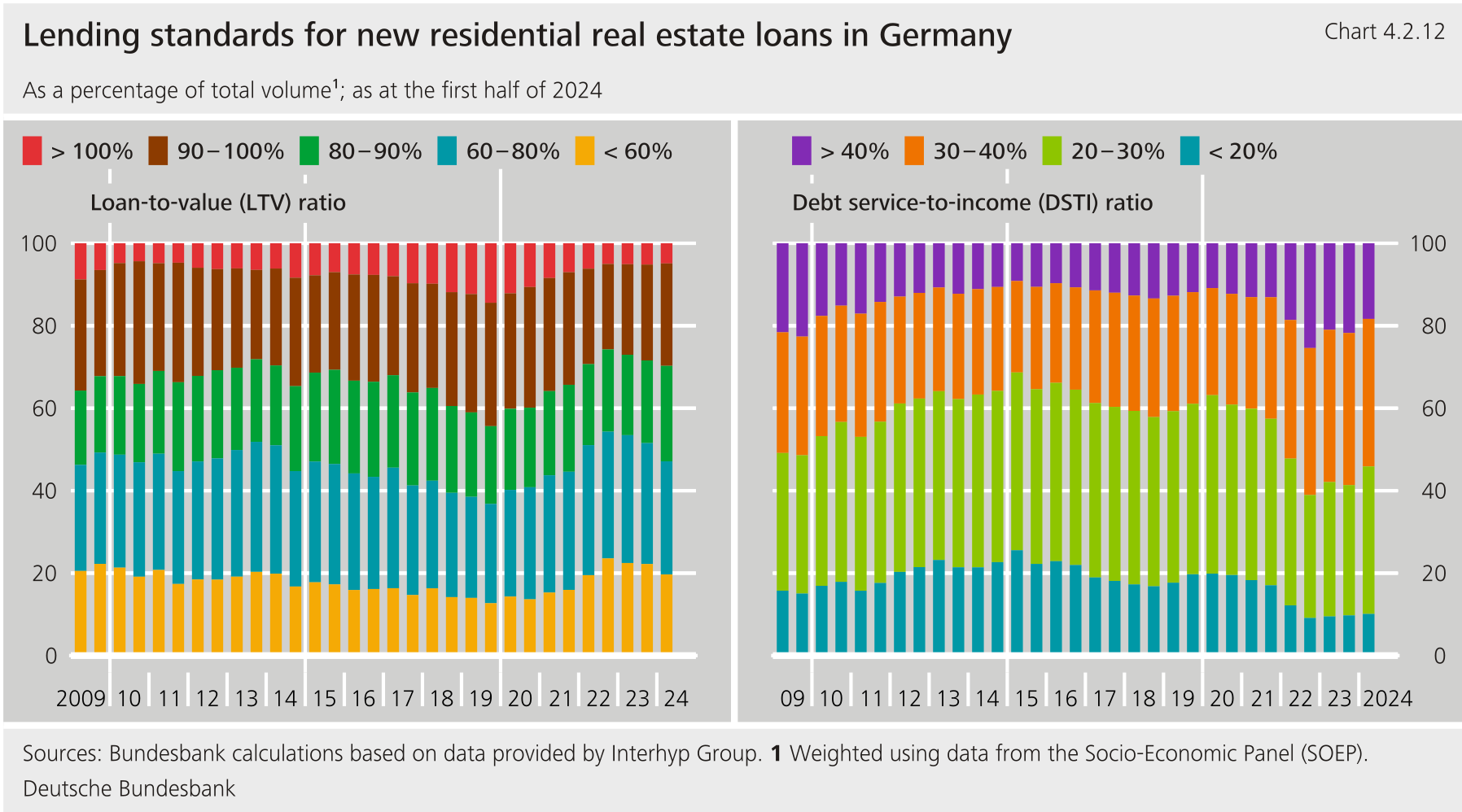
****Lending standards in residential real estate financing show rather limited changes on the year.** The loan-to-value () and borrower's debt service-to-income () ratios are key metrics here. According to data from the mortgage broker platform Interhyp, loans with a high (90 % and above) accounted for a substantial share of new lending business, last measured at 30 % in the first half of 2024 (see Chart 4.2.12). A default on a loan of this kind usually results in a significant loss rate for the bank. The share of new loans with a high (40 % and above) is also significant, at 18 %. Borrowers with a high are more likely to no longer be able to service a loan if their economic situation worsens. After the average of new residential real estate loans fell in the wake of the interest rate reversal (74 % in 2023), the average proportion of borrowed funds rose again to 76 % in the first half of 2024. As a result of higher lending rates, average rose somewhat from 2022 onwards. It was last measured at 32 % in the first half of 2024, roughly the same level as in the previous year. The debt service of new loans has recently been relatively stable because initial repayment rates have fallen. The risk situation for new loans is therefore mixed, but the available data do not, overall, point to significantly increased risk-taking in private residential real estate financing.[\[68\]](#_ftn_root_68) Nevertheless, future and developments should be closely monitored.**{#par-o71oi9}
{#par-a49877}
****
****In order to improve the data on private residential real estate financing, the Bundesbank has been collecting data from banks on lending standards since 2023.** At the start of this collection process, different reporting institutions implemented the definitions differently.[\[69\]](#_ftn_root_69) As a result, the Bundesbank and reporting institutions agreed on measures intended to aid harmonisation of this dataset, which is of central importance for macroprudential supervision. These should be implemented by the beginning of 2025, meaning macroprudential supervisors will analyse the data more intensively in future.**{#par-uio9ue}
****In addition to risks from the real sector, macroprudential supervision is also turning its attention to consequences arising from the banking sector's interconnectedness with non-bank financial intermediaries** ().Direct interconnectedness is when there are contractual relationships between financial intermediaries, for example those resulting from credit relationships. If losses occur in the sector, these losses can impact the German banking system through the contractual relationships, for example due to higher risk provisioning. As at the second quarter of 2024, German banks' balance sheet exposure to the global sector amounted to around 12 % of the aggregate total assets of the German banking system. The sector is particularly closely linked to German O-. In addition to direct interconnectedness, there is indirect interconnectedness in which non-contractual transmission channels play the central role in the transmission of shocks (see the supplementary information entitled "[Contagion channels between banks and investment funds](#Contagion-channels-between-banks-and-investment-funds)" and 4.3 "[Non-bank financial intermediaries: vulnerabilities and resilience](#4.3-Non-bank-financial-intermediaries-vulnerabilities-and-resilience)").**{#par-i9eaou}
### **4.2.4 Banks have high capital reserves** {#tar-13}
****The German banking system's capital base remains sound.** The risk-weighted ratio stood at an average of around 17 % for O- in the second quarter of 2024, around 16 % for savings banks and credit cooperatives and around 20 % for other small and medium-sized banks (see Chart 4.2.13). ratios thus clearly exceed the regulatory minimum requirements.[\[70\]](#_ftn_root_70) Capital reserves, i.e. in excess of minimum requirements, consist of regulatory capital buffers and freely available excess capital chosen by the banks themselves. Unlike minimum requirements, capital buffer requirements may be undershot during periods of stress. This is desirable from a macroprudential perspective, as it counteracts a sharp reduction in the balance sheet, which may adversely affect lending. However, failing to meet capital buffer requirements will result in a profit distribution ban.[\[71\]](#_ftn_root_71)**{#par-e649u7}
{#par-o5aiuo}
**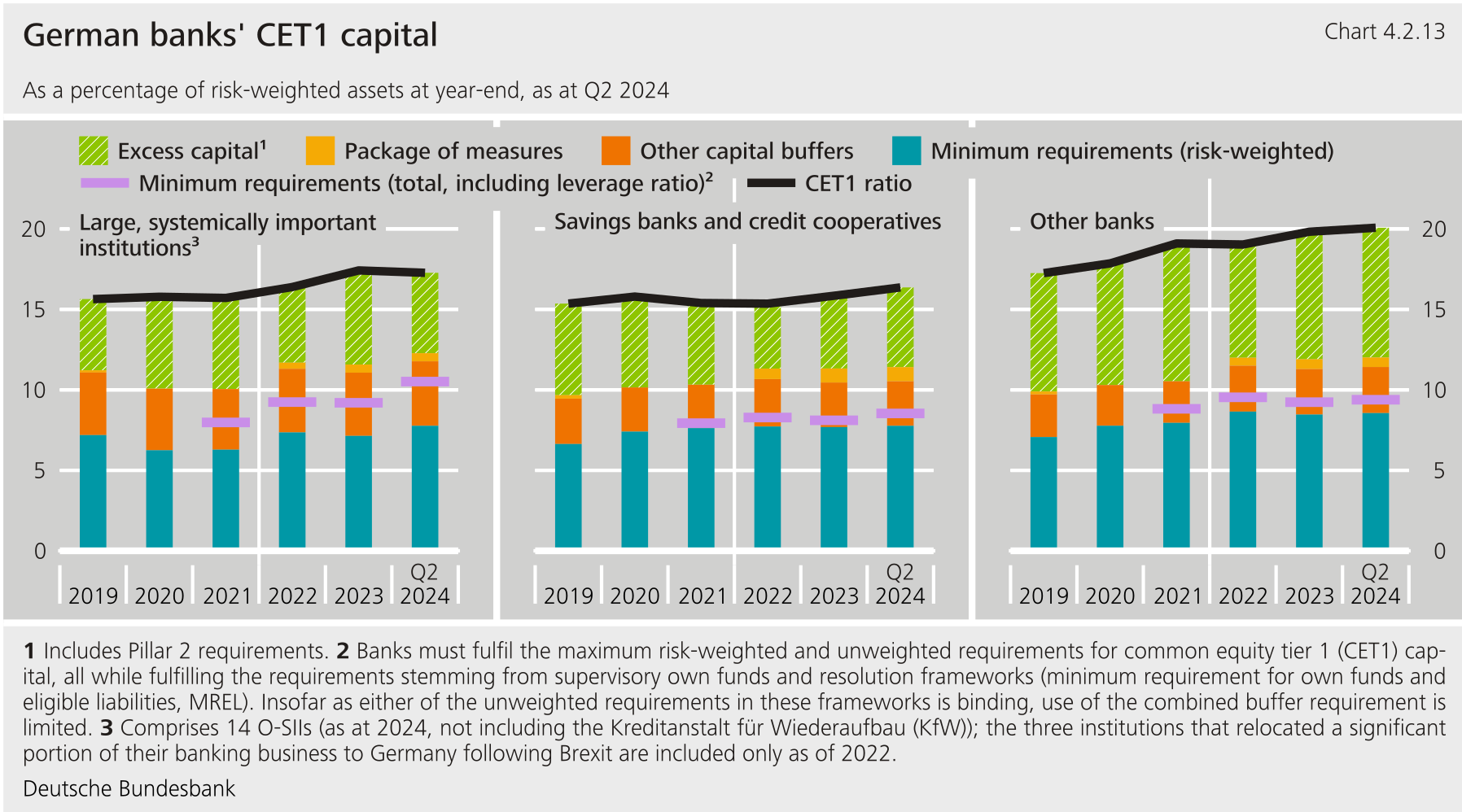**
****Thanks to their capital reserves, most banks can also cope with larger losses without falling below regulatory minimum requirements.** This was borne out by a Bundesbank and Federal Financial Supervisory Authority () survey of small and medium-sized banks ( stress test).[\[72\]](#_ftn_root_72) The package of macroprudential measures adopted in January 2022 contributed to good capitalisation (see Chart 4.2.13).[\[73\]](#_ftn_root_73) The package of measures was introduced at the time to tackle sizeable vulnerabilities in the banking sector. These included dynamic lending, potential underestimation of credit risk and potentially overvalued assets. The package of measures included an increase in the countercyclical capital buffer () and the introduction of the sectoral systemic risk buffer ().[\[74\]](#_ftn_root_74) The combined requirements of these two buffers amount on aggregate to 0.7 % of risk-weighted assets (see Chart 4.2.13). However, the amount contained within actually usable buffers is lower, as they may be constrained by parallel unweighted capital requirements from the minimum leverage ratio.[\[75\]](#_ftn_root_75)**{#par-u44436}
### **4.2.5 Reported resilience may have been overestimated** {#tar-14}
****Unrealised losses in the banking book are declining, but still a reality for many institutions.** After the period of sharply rising interest rates, some banks recorded considerable unrealised losses. The value of bonds fell significantly in some cases. As banks often keep a large portion of these holdings in fixed assets, these losses only had to be recognised to a lesser extent.[\[76\]](#_ftn_root_76) This spared banks' equity. At the end of 2022, unreported losses in value for securities accounted for 4.1 % of capital for -- at the end of 2023 this was 2.2 %. At savings banks and cooperative banks, unrealised losses can be estimated for the entire banking book as opposed to just in relation to securities, with the banking book containing, in particular, loans as well. Unrealised losses amounted to 6 % of savings banks' capital in the second quarter of 2024 (20 % in the third quarter of 2022) and 15 % of cooperative banks' capital (29 % in the third quarter of 2022). Unrealised losses affect the resilience of the banking system, in particular by reducing the economic value of equity. If items with unrealised losses must be liquidated, the previously hidden impairments are then revealed and corresponding losses realised.**{#par-a545a4}
****Resilience could also be overestimated due to persistently low average risk weights for** **despite increased cyclical risks.** usually use their own models to determine their capital adequacy requirements in lending business. They use these to calculate, among other things, their borrowers' probability of default () (see section 4.2.3 "[Risks in lending business are rising significantly](#4.2.3-Risks-in-lending-business-are-rising-significantly)"). Risk weights for individual credit claims and thus the risk-weighted assets in lending business are determined on the basis of . Risk-weighted assets form the denominator in the risk-weighted ratio.**{#par-a4o3e8}
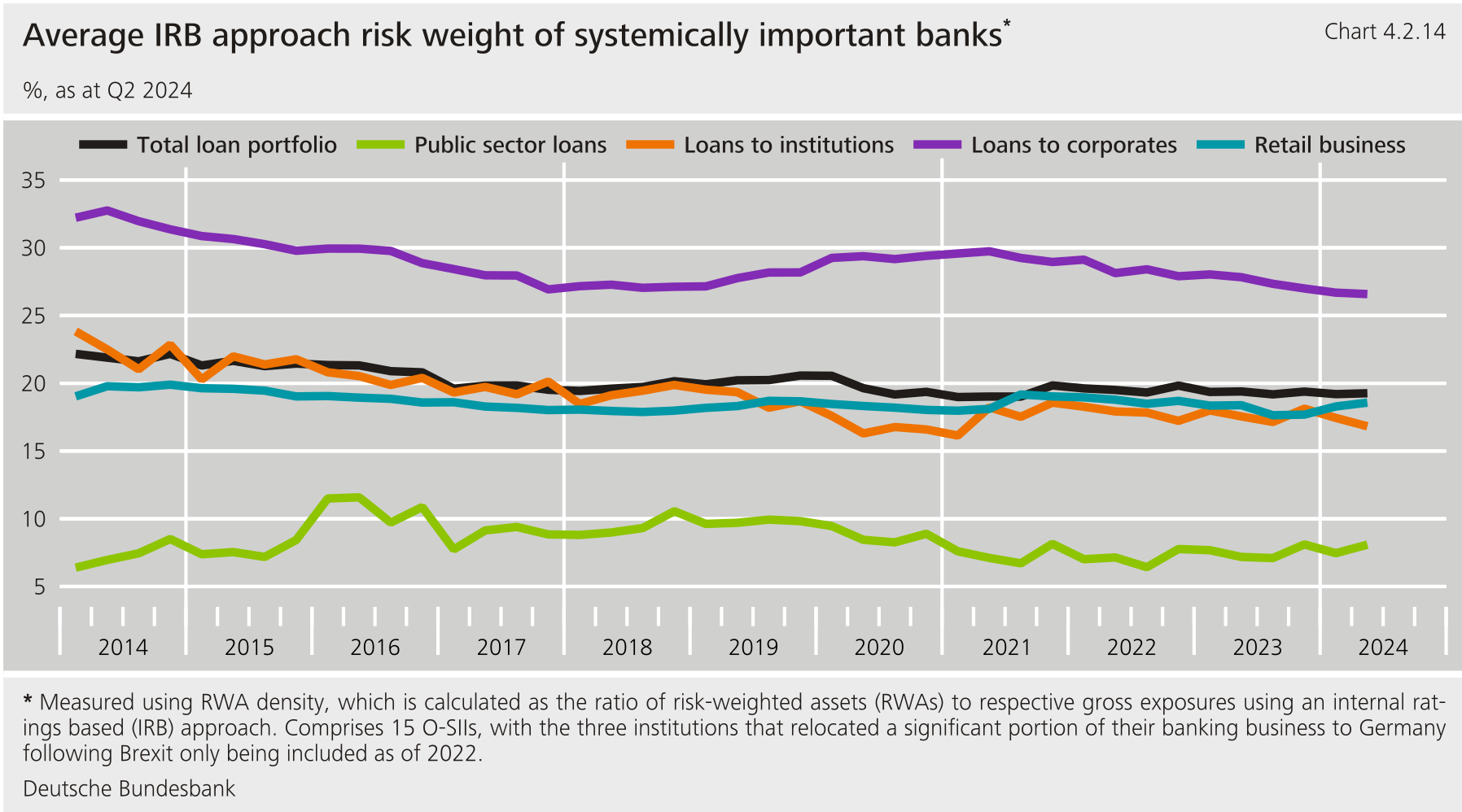
****The low average risk weights for O-** **are the result of a favourable perception of risk.** In the last decade, the average risk weights in the loan portfolio of large, systemically important banks have hardly changed (see Chart 4.2.14), especially not for corporate exposures. Even after the rise in corporate insolvencies since the end of 2021 (see Chart 4.1.10), there was no increase. This is not least a result of banks' low assessment of loan (see Chart 4.2.7). Any underestimation of these could in turn mean a commensurate overestimation of the current resilience of the banking system as measured by capital ratios.**{#par-uaa661}
{#par-iu77uu}
****
**Digital euro: impact on bank liquidity and funding costs** {#tar-15}
----------------------------------------------------------------------
****Impact analyses of the introduction of a digital euro (D€) and its methodological refinements are one of the Bundesbank's key tasks.** The Governing Council's decision of 18 October 2023 marked the Eurosystem's launch of a two-year initial preparation phase for the introduction of the D€. One of the Eurosystem's current areas of focus is on impact analyses regarding holding limits for the D€. A holding limit is a maximum amount of D€ per depositor, with the aim being to prevent bank deposits being shifted to D€ holdings on a large scale. This could otherwise have an adverse effect on bank liquidity and financial stability.**{#par-eee888}
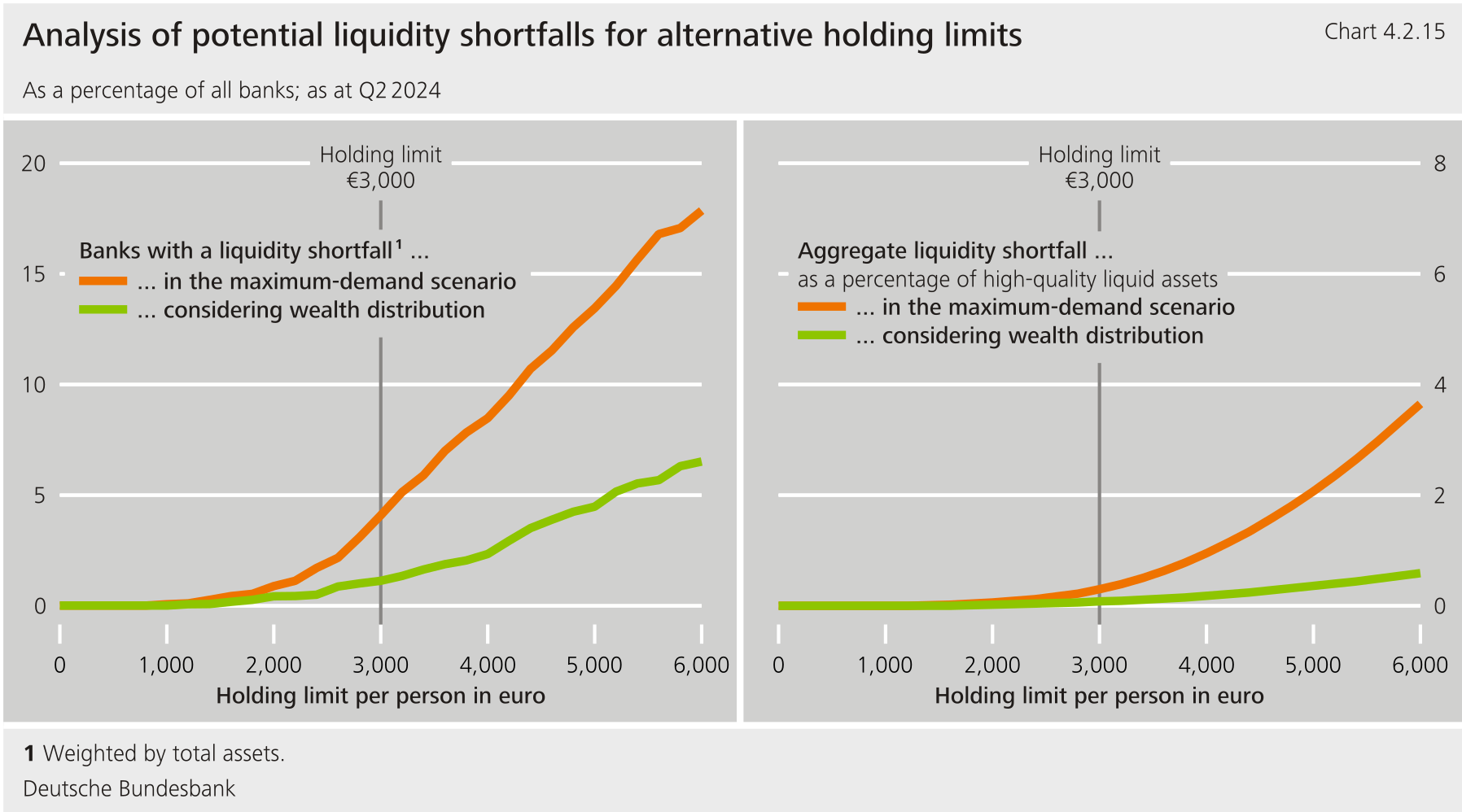
****Even if all depositors were to shift their balances up to a holding limit of €3,000, the impact on liquidity in the German banking sector would be limited.** The analysis refers to a scenario from the previous year in which depositors fully utilise the holding limits (maximum-demand scenario).[\[1\]](#_ftn_4c009e3e_1) The liquidity buffer, which is derived from the liquidity coverage ratio (), is key in this context. The buffer supplements the with non-high-quality liquid -- but eligible -- assets as well as short-term liquidity available in bank networks. The liquidity buffer of individual banks is compared with the possible withdrawal of deposits upon introduction of a D€. If the buffer is not sufficient to cover the withdrawal of deposits, a liquidity shortfall arises. According to the latest data, only around 4 % of banks in Germany have a liquidity shortfall in the maximum-demand scenario with a holding limit of €3,000 (see Chart 4.2.15, left panel).[\[2\]](#_ftn_4c009e3e_2) In addition, the liquidity shortfall remains relatively small (see Chart 4.2.15, right panel). On aggregate, affected banks would have to add an additional 0.3 % of high-quality liquid assets to their stock in order to cover the liquidity shortfall. The comparatively low liquidity needs (around 0.5 % of interbank trading, as at the fourth quarter of 2023) could be provided via interbank trading. A supplementary analysis for the euro area shows that a small number of euro area banks would additionally be affected by a liquidity shortfall in the case of a holding limit of €3,000. In a scenario with a holding limit of €1,000, almost no banks in the euro area would have a liquidity shortfall.**{#par-o6aoo9}
{#par-o2io69}
****
****When the distribution of deposit balances among the population is taken into account in the maximum-demand scenario with a holding limit of €3,000, the impact on liquidity is reduced by around three-quarters.** Bundesbank survey data suggest that only around 50 % of households in Germany permanently hold deposits in excess of €3,000 in their current accounts.[\[3\]](#_ftn_4c009e3e_3) Therefore, only these households would be able to fully utilise a €3,000 holding limit. In addition, it is unlikely that all depositors would liquidate their balances in full and shift them to D€ holdings. Further surveys indicate that even during periods of stress in the banking sector, depositors would be willing to transfer only around one-fifth of their balances to D€.[\[4\]](#_ftn_4c009e3e_4) This shows that households are willing to shift deposits to D€ holdings -- but not in full. If the partial withdrawal of deposits during periods of stress as indicated by these survey results is taken into account alongside the distribution of deposit balances, almost no banks would have a liquidity shortfall in the case of a holding limit of €3,000.**{#par-a23i1a}
****If banks adjust their funding structure, they could significantly reduce the structural impact of the introduction of a D€.** An analysis by the Bundesbank shows which trade-offs banks would face in a structural adjustment process towards a D€. Accompanying measures taken by the central bank to introduce a D€ are not taken into account. The focus is therefore on how banks can adjust their funding structure. In principle, banks could service outflows of deposits to D€ holdings by reducing their liquidity buffer and shrinking their balance sheet. This would avoid alternative, more expensive funding, but a lower liquidity buffer increases the risk of default. As a result, credit risk premia for wholesale funding -- market funding, for instance -- and therefore banks' overall funding costs would rise.[\[5\]](#_ftn_4c009e3e_5) These costs increase especially sharply if the liquidity buffer approaches the regulatory minimum requirements.[\[6\]](#_ftn_4c009e3e_6)**{#par-ao9io3}
**To avoid this, banks can adapt their funding strategies in two ways. First, they can raise deposit rates to reduce outflows of deposits to D€ holdings.[\[7\]](#_ftn_4c009e3e_7) Second, they can increase their market funding -- by issuing bank bonds on the capital market, for instance -- in order to compensate for deposit outflows. Funding costs depend on both funding strategies in a nonlinear way, since price and volume effects act simultaneously. An evaluation for a representative bank from the group of small and medium-sized institutions shows that, with a holding limit of €3,000, funding costs are highest if the bank neither raises deposit rates nor increases market funding (see Chart 4.2.16, point A).[\[8\]](#_ftn_4c009e3e_8) This passive approach leads to high deposit outflows and a rise in existing market funding costs. However, the increase in funding costs can be minimised by making an active adjustment that combines both funding strategies in a balanced way (see Chart 4.2.16, point B).**{#par-oi1a45}
{#par-i4oi37}
**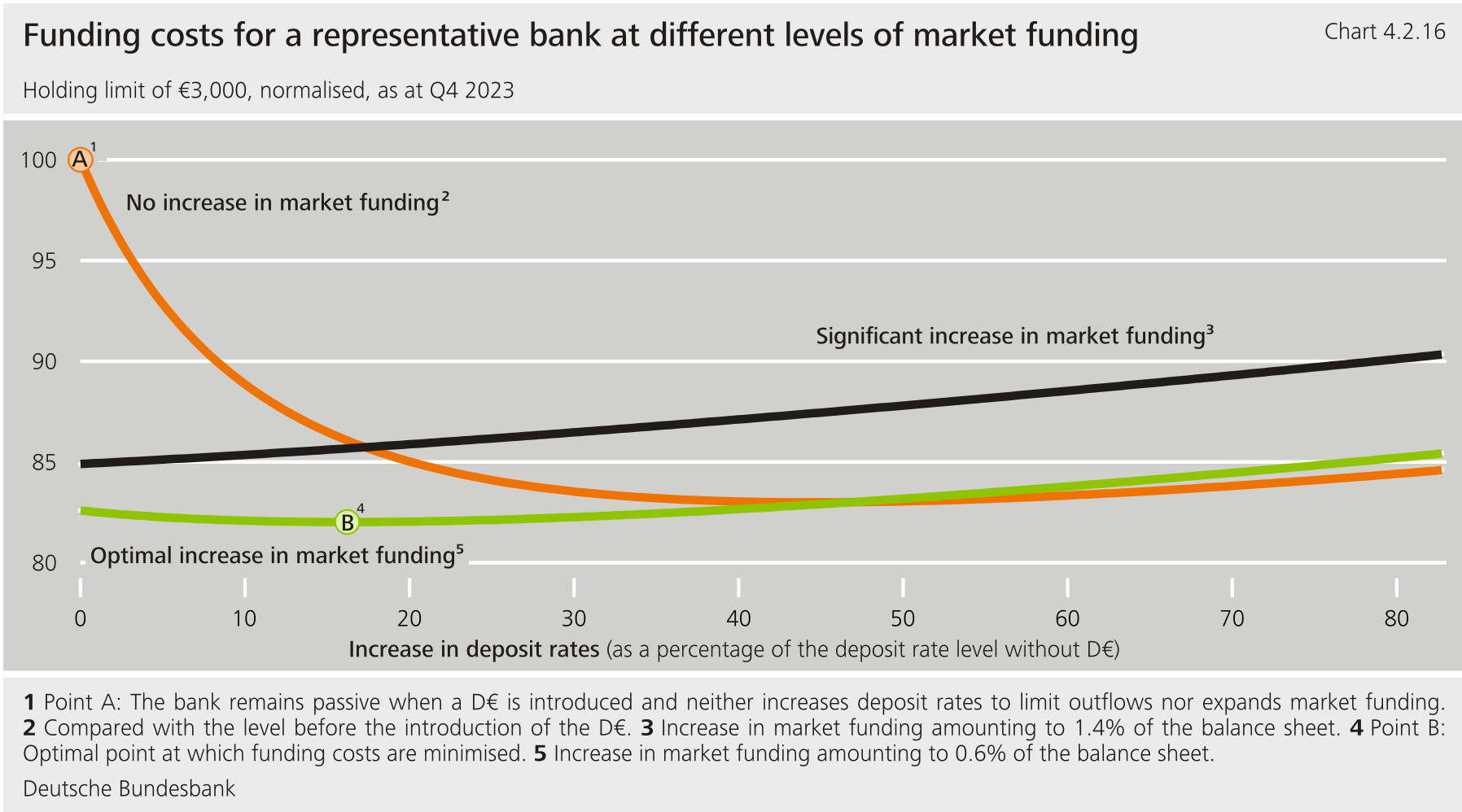**
{#par-o632i5}
1. **{#_ftn_4c009e3e_1} Initial Bundesbank analyses from the previous year show that the impact on the German banking sector in the scenarios under consideration would be manageable for the holding limit of €3,000 currently being discussed; see Deutsche Bundesbank (2023a).**
2. **{#_ftn_4c009e3e_2} Besides the , the systemic liquidity buffer (), which assigns more conservative liquidity weights to high-quality liquid assets () than the , is taken into account as an alternative measure; see Krüger et al. (2024). Despite the more conservative liquidity weights of the , the percentage of banks with a liquidity shortfall barely exceeds 6 %.**
3. **{#_ftn_4c009e3e_3} See Deutsche Bundesbank (2024b).**
4. **{#_ftn_4c009e3e_4} See Bidder et al. (2024).**
5. **{#_ftn_4c009e3e_5} In addition, the credit risk channel plays a role via the leverage ratio; see Bidder et al. (2024). An outflow of deposits leads to a decline in the leverage ratio and reduces the probability of default. This analysis assumes that, in the event of deposit withdrawals and an associated reduction in central bank reserves, the liquidity buffer channel dominates the credit risk channel.**
6. **{#_ftn_4c009e3e_6} A logistic regression model with a coefficient of − 2 is used for the analysis. This implies that, when a bank approaches the regulatory minimum requirements and/or a decline in central bank reserves of around 80 %, the bank's forecast probability of default on average corresponds to a non-investment grade rating. The value is in the lower range of other empirical estimates; see Chen et al. (2021), Filippopoulou et al. (2020).**
7. **{#_ftn_4c009e3e_7} Survey results indicate that demand for a D€ is sensitive to the relative interest rate on deposits; see Bidder et al. (2024). Consequently, even a relatively low interest rate on current account deposits would be enough to significantly reduce any outflow that may arise.**
8. **{#_ftn_4c009e3e_8} The representative bank has average values for certain balance sheet items, such as central bank reserves. Long-term interest rate-sensitive demand is assumed, represented by the formula α -- β \* Δr. In this context, α (0.3) describes the base benefit, which represents the share of deposits withdrawn at a deposit interest rate level prior to the introduction of the D€. The parameter β (165) describes the interest rate sensitivity of depositors to increases in deposit rates Δr. The assumed interest rate level before the introduction of a D€ lies within a low to moderate range with an average deposit rate of around 22 basis points.**
**4.3 Non-bank financial intermediaries: vulnerabilities and resilience** {#tar-16}
-----------------------------------------------------------------------------------
****Non-bank financial intermediaries**()**serve important functions in the German financial system by bundling savings, financing the real economy and households, and hedging against risk.**The sector is heterogeneous and comprises investment funds, insurance corporations and pension funds as well as other financial intermediaries.[\[77\]](#_ftn_root_77) As active investors, play a role in price formation in the financial markets. They also provide financing to enterprises, households and the general government sector, thereby complementing the banking system, which continues to provide the majority of funding in Germany (see section 4.3.1 "[Structural change in the financial system is causing to become increasingly important](#4.3.1-Structural-change-in-the-financial-system-is-causing-NBFIs-to-become-increasingly-important)").[\[78\]](#_ftn_root_78) Investment funds enable investors to spread their risk by investing in a variety of securities. Furthermore, investment funds grant investors access to specialised asset classes as well as to expertise. Insurance corporations offer households and enterprises protection against financial risk. This can contribute to the stability of the financial system as it diversifies the financial implications of unforeseen events, making them manageable for individuals. In addition, primary insurers and reinsurers contribute to the appropriate pricing of risks in the financial system through their expertise in risk management.**{#par-o8eao5}
****Although German****weathered the phase of rising interest rates well, they continue to face liquidity risk.** Given the current risk situation on the commercial real estate market, the liquidity risks of open-end real estate funds are of particular relevance to financial stability -- these risks are, at least in the case of open-end retail real estate funds in Germany, limited by minimum holding and redemption notice periods (see section 4.3.4 "[Liquidity risk in open-end real estate funds reduced through notice periods and minimum holding periods](#4.3.4-Liquidity-risk-in-open-end-real-estate-funds-reduced-through-notice-periods-and-minimum-holding-periods)"). Within the German sector, life insurers also play an important role due to their large holdings of assets and past promises of high guaranteed returns. The resilience of life insurers, measured by regulatory solvency under Solvency II, has been high since interest rates started rising in 2022 and remains so even in spite of recent interest rate cuts (see section 4.3.3 "[Despite own funds being sound, life insurers' stabilising effect on the financial system could be less pronounced than before](#4.3.3-Despite-own-funds-being-sound-life-insurers--stabilising-effect-on-the-financial-system-during-periods-of-stress-could-be-less-pronounced-than-before)"). At the same time, however, unrealised losses built up on life insurers' balance sheets prepared pursuant to German . Such losses raise liquidity risk for life insurers whilst at the same time reducing their incentives to buy securities during periods of stress in which prices have fallen sharply. As a result, life insurers' stabilising effect on the financial system could be less pronounced in the next few years than it used to be.**{#par-i94aao}
****European and global****are also vital to financial stability in Germany, as German financial intermediaries have close ties with foreign**. Since the global financial crisis, -- especially in Europe -- have experienced significant growth (see section 4.3.1 "[Structural change in the financial system is causing to become increasingly important](#4.3.1-Structural-change-in-the-financial-system-is-causing-NBFIs-to-become-increasingly-important)"). At the same time, German banks and investment funds have become more interconnected with foreign . This is opening up direct and indirect contagion channels between banks and investment funds (see the supplementary information entitled "[Contagion channels between banks and investment funds](#Contagion-channels-between-banks-and-investment-funds)").**{#par-e51oee}
**Contagion channels between banks and investment funds** {#tar-17}
-------------------------------------------------------------------
****Contagion channels between banks and investment funds arise from both direct and indirect interconnectedness.**[\[1\]](#_ftn_460a8835_1)Direct contagion channels arise from contractual relationships based on financing instruments, such as loans, shares, fund shares or derivatives. If, for example, a real economic shock triggers a fall in the value of an investment fund, this has a direct impact on banks which hold the respective fund shares. However, investment funds can also transmit shocks to banks if they are not connected through a contractual relationship. This takes place through indirect contagion channels. If a fund manager sells securities as a result of a liquidity shock, for example, this can cause the price of the securities to drop. A fall in prices has an indirect impact on banks and other financial intermediaries which hold the same or similar papers on their balance sheets. The growing portfolio overlap in the fund sector can exacerbate price effects in the event of fire sales and thus increase indirect contagion risks (see section 4.3.5 ["Growing interconnectedness within the fund sector may weaken resilience of open-end securities funds"](#4.3.5-Growing-interconnectedness-within-the-fund-sector-may-weaken-resilience-of-open-end-securities-funds)).[\[2\]](#_ftn_460a8835_2)**{#par-i8167e}
****A European stress test model quantifies these contagion channels for banks and investment funds and shows that the contagion effects between banks and investment funds can be significant.**[\[3\]](#_ftn_460a8835_3) The model deals with a real economic stress scenario. It shows that losses for banks are underestimated if contagion effects emanating from investment funds are not taken into account. For example, banks' capital ratios in the observed stress scenario go down by one percentage point on average if the model includes investment funds as well as banks. The majority of losses are a result of indirect contagion effects as banks and funds hold the same or similar securities. It is therefore necessary to look at the financial system as a whole in order to take into account the direct and indirect interconnectedness between various sectors of the financial system.**{#par-io8oi9}
****The results of this European stress test model cannot be applied to the German financial system on a one-to-one basis but they are relevant for the German financial system due to the cross-border linkages.**In comparison with other European fund sectors, Germany boasts a large share of single-investor specialised funds (see section 4.3.1 ["Structural change in the financial system is causing to become increasingly important"](#4.3.1-Structural-change-in-the-financial-system-is-causing-NBFIs-to-become-increasingly-important)). These funds have a lower liquidity risk compared to other funds. This means that fire sales and the resulting contagion effects are less likely. Possible contagion effects in Germany between banks and investment funds are not yet quantified in an integrated stress test model. As German banks and other financial intermediaries have close ties with foreign , both a cross-sector and cross-country perspective is important when analysing transmission channels. It is only on this basis that second-round effects from abroad can be quantified for the analysis of German financial stability. One key prerequisite for this is the international exchange of data (see section 4.4.3 ["Macroprudential oversight of non-bank financial intermediaries should be enhanced"](#4.4.3-Macroprudential-oversight-of-non-bank-financial-intermediaries-should-be-enhanced)).**{#par-i8u2ui}
****Direct contagion risks for the German banking system are posed, inter alia, by derivatives links with foreign hedge funds.** This is because some large German banks are strongly interconnected with highly leveraged hedge funds. Furthermore, a large share of the derivatives between banks and hedge funds is settled bilaterally, meaning that the counterparties concerned need to have high risk management requirements in place. If a hedge fund faces payment difficulties, the banks involved in the derivatives transactions can suffer major losses. This is highlighted by the case of the -based family office Archegos Capital Management which operated similarly to a hedge fund and ran into payment difficulties in 2021. Although international financial stability was not jeopardised in this case, some credit institutions suffered losses running into the billions. The limited reporting and disclosure requirements for family offices[\[4\]](#_ftn_460a8835_4) in the United States make it more difficult to identify such risks.[\[5\]](#_ftn_460a8835_5)**{#par-uu79uo}
****Sufficiently capitalised European banks, in particular, support group-affiliated investment funds during periods of stress.**Much like in other European countries, investment companies in Germany mainly belong to large banks and insurance groups. Sufficiently capitalised European banks, in particular, provide support to group-affiliated investment funds during periods of stress by purchasing their fund shares when other investors return them.[\[6\]](#_ftn_460a8835_6) This can limit further outflows of funds, thereby strengthening the resilience of the fund sector. Key to the resilience of the financial system is the extent to which the supporting banks are able to assess the risks in the funds appropriately and their ability to bear them.**{#par-oaeee3}
1. **{#_ftn_460a8835_1} The term contagion effect describes the transmission of shocks or losses from one intermediary to another. This can occur via direct channels (e.g. reciprocal contractual relationships through loans) or indirect channels (e.g. similar business models, correlated portfolios or market price developments), with potential negative developments for agents who had initially not been affected by the shock. Contagion channels are thus the mechanism through which these effects are transferred to other intermediaries.**
2. **{#_ftn_460a8835_2} See Fricke and Wilke (2023).**
3. **{#_ftn_460a8835_3} See Sydow et al. (2024).**
4. **{#_ftn_460a8835_4 }The term family office refers to an entity whose purpose is to take care of the wealth management of ultra-high-net-worth families.**
5. **{#_ftn_460a8835_5} See Deutsche Bundesbank (2021).**
6. **{#_ftn_460a8835_6} See Bagattini et al. (2023).**
### **4.3.1 Structural change in the financial system is causing to become increasingly important** {#tar-18}
****The****sector has grown significantly since the global financial crisis, both globally and in Germany.**At the global and euro area levels, hold around one-half of all financial assets.[\[79\]](#_ftn_root_79) In the euro area, this share has grown by roughly 18 percentage points since the global financial crisis. Additionally, in the euro area provide around 40 % of financing to the real economy, with direct lending by seeing particular growth.[\[80\]](#_ftn_root_80) German -- i.e. insurance corporations and pension funds, investment funds and other financial intermediaries -- together hold around 40 % of all financial assets in the German financial system (see Chart 4.3.1). The share of in the German financial system has risen by 15 percentage points since 2009, which represents a slightly smaller rise than that of in the rest of the European financial system. The banking sector continues to play the biggest role in the German financial system, holding 49 % of all financial assets.**{#par-aieoei}
{#par-aeu977}
**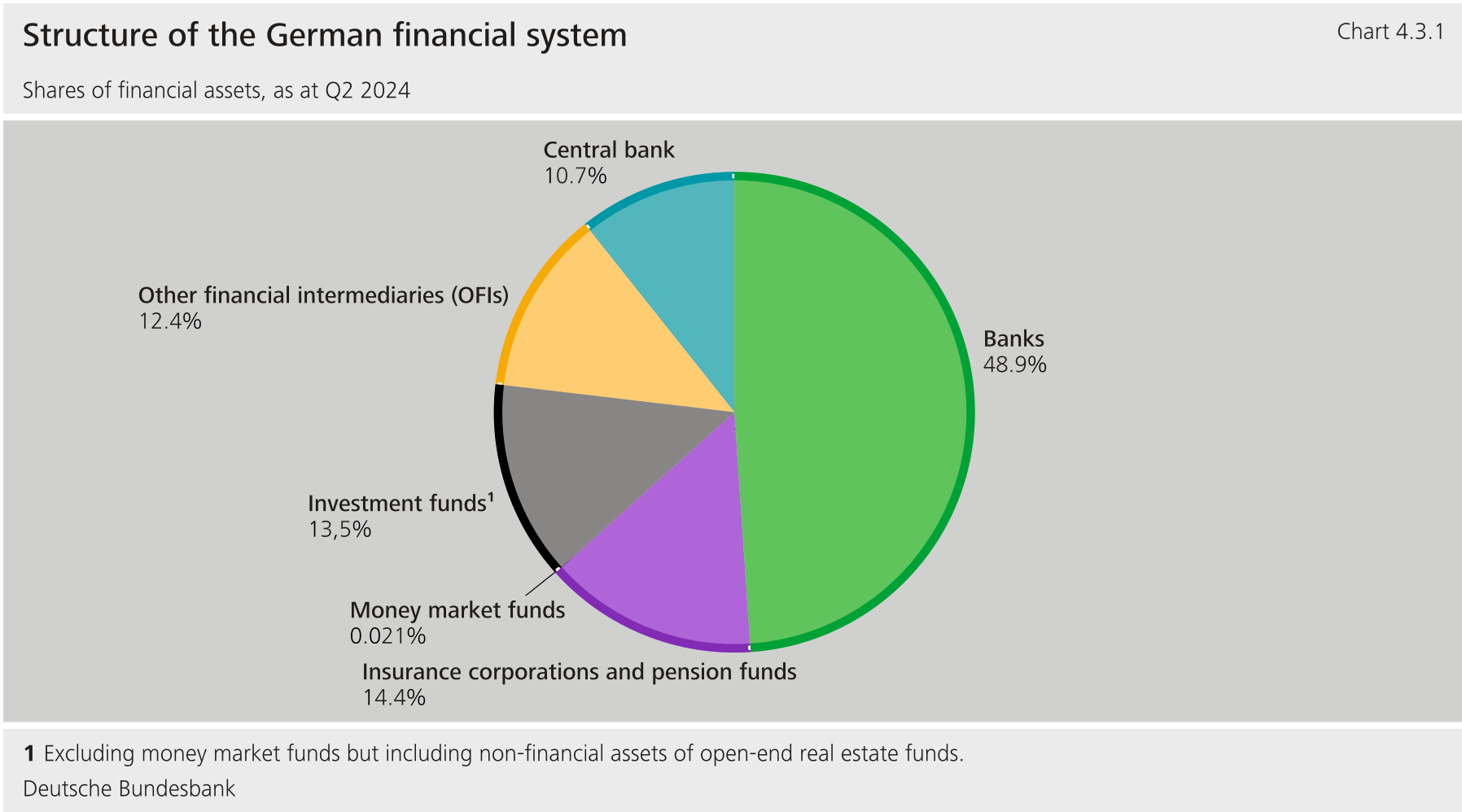**
****By international standards, the provision of financing to the real economy in Germany remains heavily bank-based despite the growth in**.[\[81\]](#_ftn_root_81)In Germany, around 32 % of financing to the real economy is provided in the form of loans issued by German banks, while loans issued by German only account for around 8 %. Additionally, German provide financing to the real economy via purchases of capital market instruments such as corporate bonds. One of the objectives of the European capital markets union is to further strengthen the real economy's access to the capital market, including for small and medium-sized enterprises. This would enable enterprises to more greatly diversify their sources of funding and reduce their dependence on bank loans. This may have a positive impact on financial stability and the real economy. One precondition for this is that, besides the banking sector, the sector also needs to be resilient, especially in periods of stress.[\[82\]](#_ftn_root_82) It is therefore crucial that the macroprudential surveillance of the increasingly important sector be strengthened (see section 4.4.3 "[Macroprudential oversight of non-bank financial intermediaries should be enhanced](#4.4.3-Macroprudential-oversight-of-non-bank-financial-intermediaries-should-be-enhanced)").**{#par-u4977e}
****The German****sector differs structurally from the global and European****sectors.** The largest in Germany are securities funds and life insurers, which hold around 12 % and 6 %, respectively, of the financial assets in the German financial system. Unlike in other countries, the share of financial assets held by money market and hedge funds in Germany is very low, at less than 0.1 %. However, due to their interconnectedness with the German financial system, foreign money market and hedge funds play an important role (see the supplementary information entitled "[Contagion channels between banks and investment funds](#Contagion-channels-between-banks-and-investment-funds)").[\[83\]](#_ftn_root_83) Around 54 % of total fund assets in the German investment fund sector are held in single-investor funds. These funds have just one single investor, who therefore has no incentive to pull their assets from the fund before other investors. Since the global financial crisis, German life insurers, in particular, have invested more and more through funds, primarily single-investor funds, in order to manage their accounting profits.**{#par-oi4oe6}
**A Bundesbank analysis has confirmed that, in periods of stress, insurers withdraw less from funds than banks and other investment funds, with the same being true of households. At the same time, hoewever, investment funds in Germany are becoming increasingly important investors in other funds. This interconnectedness within the fund sector may weaken the resilience of funds in periods of stress (see section 4.3.5 "[Growing interconnectedness within the fund sector may weaken resilience of open-end securities funds](#4.3.5-Growing-interconnectedness-within-the-fund-sector-may-weaken-resilience-of-open-end-securities-funds)").**{#par-oi4oe6}
****European and global****are vital to financial stability in Germany, as they have close ties with the German financial system.**As lending to the German real economy largely takes place via banks, the contagion risks from are particularly relevant to banks in Germany. These risks can result from both direct and indirect, i.e. non-contractual, ties between and banks (see the supplementary information entitled "[Contagion channels between banks and investment funds](#Contagion-channels-between-banks-and-investment-funds)"). As at the second quarter of 2024, German banks' direct balance sheet exposures to the global sector amounted to around 12 % of the aggregate total assets of the German banking system.[\[84\]](#_ftn_root_84) This share is up by one-fifth since the end of 2019. Over the same period, German banks' liabilities to the global sector rose by just over 2 percentage points to 13 % of aggregate total assets at present. Global are thus important to German banks in terms of both their funding and the investment risk to which they are exposed. The direct and indirect interconnectedness between German banks and global is a growing matter of concern for macroprudential supervisors. Available data on need to be shared between macroprudential authorities across Europe in the future, and worldwide data sharing likewise needs to be improved (see section 4.4.3 "[Macroprudential oversight of non-bank financial intermediaries should be enhanced](#4.4.3-Macroprudential-oversight-of-non-bank-financial-intermediaries-should-be-enhanced)").**{#par-a4u7a6}
### **4.3.2 Life insurers are exposed to elevated, but manageable, liquidity and investment risk** {#tar-19}
****German life insurers' vulnerabilities stemming from unrealised losses are decreasing far more slowly than those of banks.** As in the banking sector, the rise in interest rates in 2022 caused unrealised losses to build up on life insurers' balance sheets prepared pursuant to German due to the market values of fixed interest assets falling below their book values (see Chart 4.3.2).[\[85\]](#_ftn_root_85) Given the assets' long terms to maturity, the unrealised losses of life insurers are far larger than those of banks. Specifically, the unrealised losses of life insurers in the second quarter of 2024 amounted to around 9 % of assets at their book value (see the upper section of Chart 4.3.2). More than 80 % of German life insurers have unrealised losses (see the lower section of Chart 4.3.2). As long-term interest rates fell slightly in the third quarter of 2024, unrealised losses are also likely to have become somewhat smaller. Unrealised losses are partly offset by funds from the released additional interest provision (*Zinszusatzreserve* ).[\[86\]](#_ftn_root_86) According to a survey conducted by the Federal Financial Supervisory Authority (), life insurers are planning to use part of the additional interest provision, more of which will be freed up from 2026, to realise unrealised losses.[\[87\]](#_ftn_root_87) However, this survey indicates that, if capital market conditions remain unchanged, unrealised losses will remain up to the end of the forecast horizon in 2036. Unrealised losses will thus decrease far more slowly among German life insurers than among banks.**{#par-ou3199}
{#par-u6ioio}
**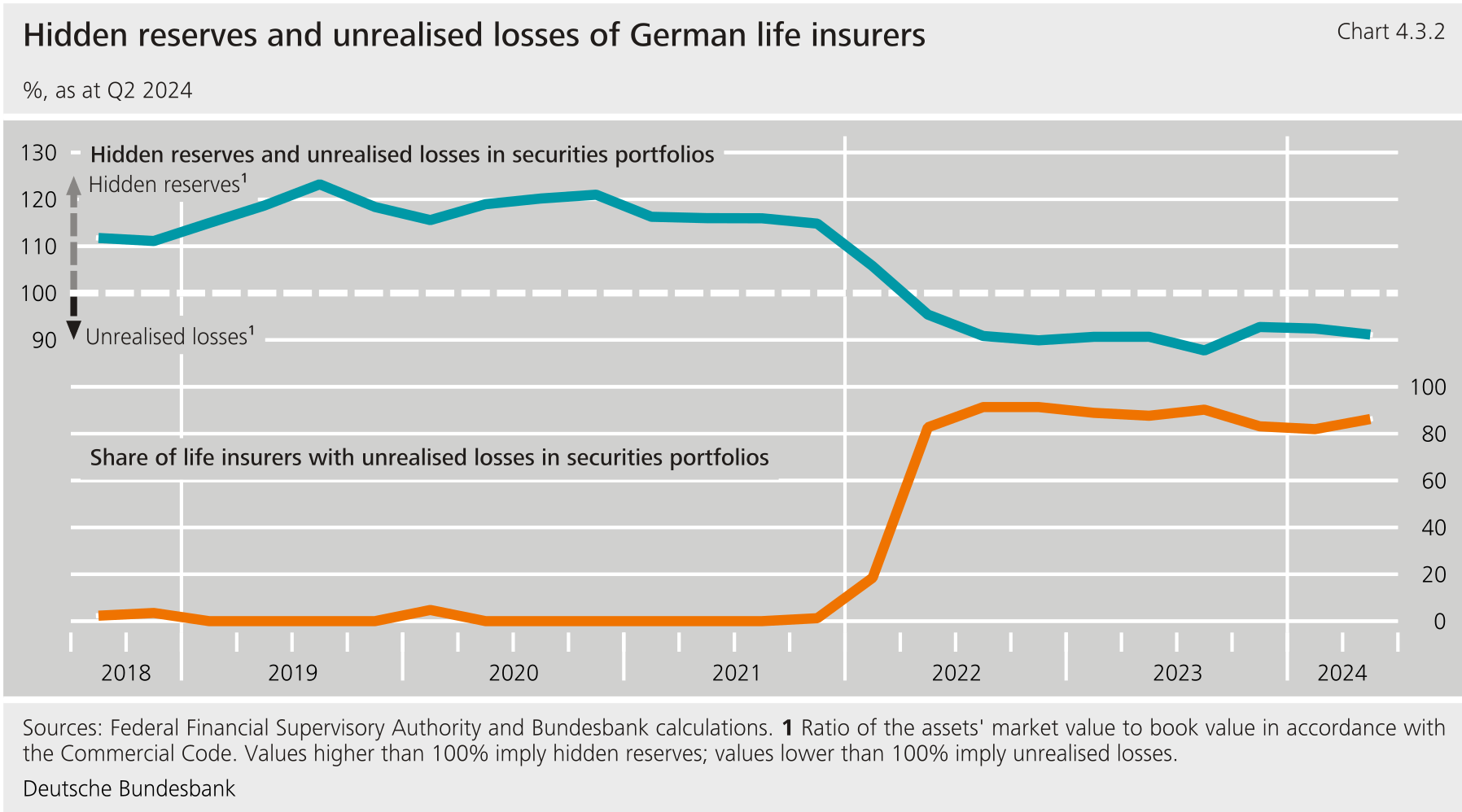**
****The unrealised losses are raising the liquidity risk in the German life insurance sector.**Life insurers and their customers are benefiting from higher market interest rates only gradually through new investments and reinvestments of maturing bonds. The bulk of life insurers' portfolio investment still dates back to the low interest rate period and is therefore, despite the recent interest rate cuts, still predominantly remunerated at rates lower than those on market-traded securities. This limits the attractiveness of life insurance policies compared with other investments.[\[88\]](#_ftn_root_88) By contrast, when policyholders let their policies lapse, German life insurers often pay out fixed surrender values that are unaffected by interest rates. A policy lapse incurs no deductions even if the value of the portfolio investment has fallen and unrealised losses have arisen. It can therefore be worthwhile for policyholders to let their policies lapse and invest the money on the capital market.[\[89\]](#_ftn_root_89)**{#par-o68uee}
****However, the risk of a wave of policy lapses at German life insurers appears to remain limited.** Policy lapses among German life insurers are currently at a slightly higher level than they were prior to the rise in interest rates.[\[90\]](#_ftn_root_90) According to a Bundesbank survey, lapse rates in Germany would only surge if low-risk bank investments promised an annual return of at least 6 %.[\[91\]](#_ftn_root_91) In Germany, life insurance policies often also cover other risks, e.g. occupational disability. This reduces customers' incentive to let their life insurance policies lapse. While the risk of an upsurge in policy lapses among German life insurers therefore remains limited, it cannot be ruled out in the event of particularly adverse developments, such as multiple coinciding shocks (see section 4.1.6 "[The macro-financial environment remains challenging](#4.1.6-The-macro-financial-environment-remains-challenging)"). To limit potential liquidity risks for life insurers during periods of stress, the planned adjustments to Solvency II set out additional powers for macroprudential supervisors (see section 4.4.3 "[Macroprudential oversight of non-bank financial intermediaries should be enhanced](#4.4.3-Macroprudential-oversight-of-non-bank-financial-intermediaries-should-be-enhanced)").**{#par-e46o62}
****Due to liquidity risk and an inverse yield curve, life insurers have made shorter-term investments.** The average term to maturity of the fixed income securities in which they have invested and reinvested fell from almost 21 years in 2021 to a little over 13 years in 2023. Overall, data on the liquidity risk of life insurers are scarce. The planned adjustments to the Solvency II regulatory framework could result in more information on liquidity being available in the future (see section 4.4.3 "[Macroprudential oversight of non-bank financial intermediaries should be enhanced](#4.4.3-Macroprudential-oversight-of-non-bank-financial-intermediaries-should-be-enhanced)").**{#par-e1o885}
****Investment risks stemming from commercial real estate are concentrated amongst a handful of life insurers, but appear to be manageable for the sector as a whole.** In June 2024, German life insurers had just under €80 billion invested in commercial real estate, equating to just over 7 % of their total investments. Around one-third of commercial real estate investments are investments made using debt instruments such as loans and bonds. The other two-thirds are equity-financed. These include investments in real estate funds, which altogether make up 23 % of German life insurers' investments in commercial real estate (see section 4.3.4 "[Liquidity risk in open-end real estate funds reduced through notice periods and minimum holding periods](#4.3.4-Liquidity-risk-in-open-end-real-estate-funds-reduced-through-notice-periods-and-minimum-holding-periods)"). Some of the losses in market value were already taken into account in the portfolios.[\[92\]](#_ftn_root_92) Further valuation losses would affect life insurers in very different ways. For example, around one-third of life insurers have excess regulatory capital exceeding their total investments in commercial real estate. Other life insurers, however, have invested more than three times their excess regulatory capital in commercial real estate, leaving them especially vulnerable.**{#par-i4i124}
### **4.3.3 Despite own funds being sound, life insurers' stabilising effect on the financial system during periods of stress could be less pronounced than before** {#tar-20}
****Life insurers have a sound amount of own funds.**Since 2022, life insurers' solvency ratios without transitional measures have increased due to rises in interest rates (see Chart 4.3.3).[\[93\]](#_ftn_root_93) This is mainly because their liabilities have considerably longer maturities than their investments.[\[94\]](#_ftn_root_94) Consequently, when interest rates are raised, liabilities depreciate in value more sharply than investments. In the second quarter of 2024, the median regulatory solvency ratio of German life insurers was just over 300 %.[\[95\]](#_ftn_root_95) Even the 10 % of life insurers with the lowest capitalisation exhibited solvency ratios of as high as nearly 200 %. Hence, German life insurers have a sufficient amount of own funds, even in light of the latest cuts in interest rates.**{#par-ii7i81}
{#par-e2o8e9}
**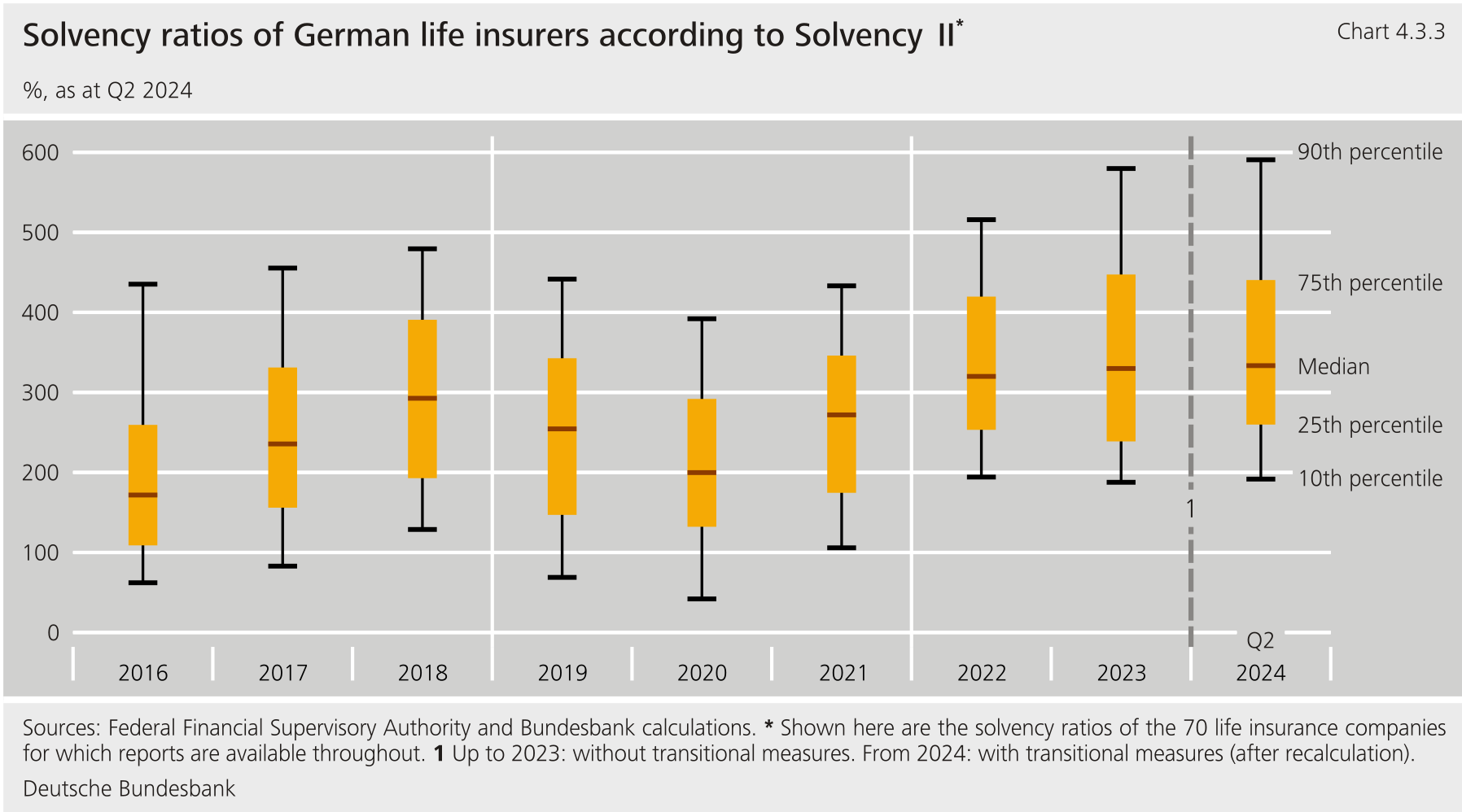**
****Under normal circumstances, the long maturities of life insurers' liabilities allow them to ignore short-term value fluctuations and invest countercyclically.**[\[96\]](#_ftn_root_96) This dampens shocks in the financial system and thus contributes to resilience. A key prerequisite for life insurers to invest countercyclically during periods of stress is that they have a sufficient amount of own funds. If they had low levels of own funds, life insurers could sell risky assets to improve their solvency ratios during periods of stress.[\[97\]](#_ftn_root_97) In so doing, they would procyclically reinforce the shock to the financial markets, thereby undermining the financial system's resilience.[\[98\]](#_ftn_root_98) Since the interest rate hike in 2022, all German life insurers have exhibited sound solvency ratios. As a result, life insurers currently have little incentive to improve their solvency ratios by acting in a procyclical manner during periods of stress.**{#par-ia1873}
****Since interest rates were raised, however, unrealised losses have reduced incentives for life insurers to invest countercyclically and thereby dampen shocks in the financial system during periods of stress.** Since 2022, for example, life insurers have been buying and selling far fewer fixed income securities than they had in the low interest rate environment (see Chart 4.3.4). The reason for this may be that life insurers are managing their accounting profits.[\[99\]](#_ftn_root_99)**{#par-e7uo9o}
**In the low interest rate environment, life insurers had to build up an additional interest provision and thus restructured their portfolios in order to realise hidden reserves.[\[100\]](#_ftn_root_100)**{#par-e7uo9o}
**However, since the rise in interest rates, life insurers have had unrealised losses and have no longer been required to build up any further additional interest provision (see section 4.3.2 "[Life insurers are exposed to elevated, but manageable, liquidity and investment risk](#4.3.2-Life-insurers-are-exposed-to-elevated-but-manageable-liquidity-and-investment-risk)"). In order to optimise their accounting profits, life insurers could avoid selling investments with unrealised losses. This would cause a reduction in net investment income pursuant to German , and hence also in profit participation for policyholders as well as distributions to shareholders.[\[101\]](#_ftn_root_101) To avoid rendering life insurance policies and their shares less attractive, life insurers could refrain from actively trading. Consequently, life insurers would not amplify any shocks, but they would also no longer dampen them either. Bundesbank analyses show that the German insurance sector, which consists largely of life insurers, has tended to invest countercyclically less frequently since the interest rate hike in 2022 than it did beforehand.[\[102\]](#_ftn_root_102) Long-term interest rates declined in the third quarter, albeit only marginally. If long-term interest rates do not fall significantly, life insurers' unrealised losses will continue to recede only slowly in the future due to a slow pull-to-par effect.[\[103\]](#_ftn_root_103) As a result, the incentives for life insurers to take on the role of stabilising investors during periods of stress will grow only gradually going forward. Overall, the stabilising effect from life insurers in periods of stress may be less pronounced over the next few years than it has been previously.**{#par-e7uo9o}
{#par-ae31uo}
**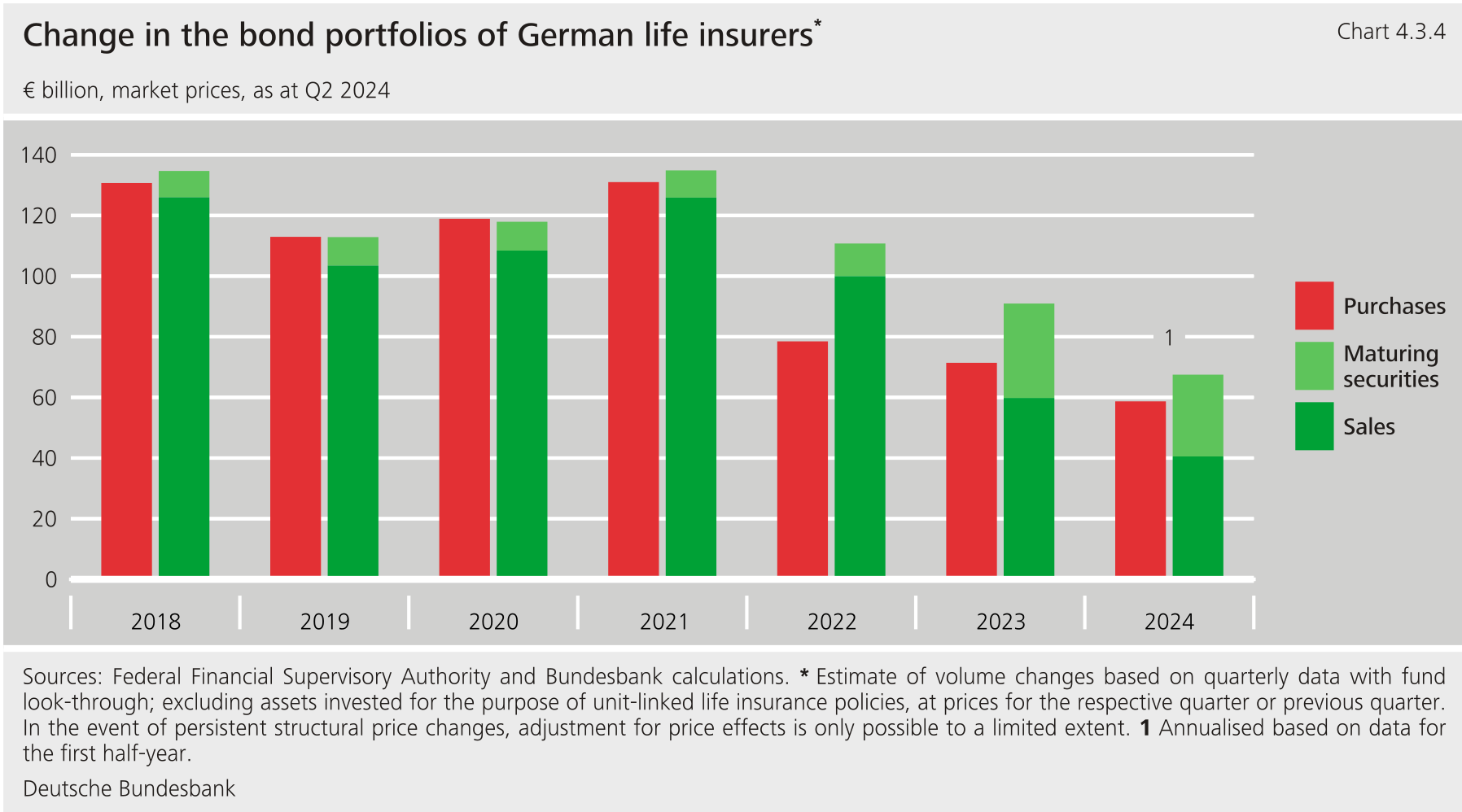**
****At present, life insurers are unlikely to act as a stabilising force in the event of a sharper downturn in the commercial real estate market**(see section 4.1.2 "[Downturn in the financial cycle is slowing](#4.1.2-Downturn-in-the-financial-cycle-is-slowing)"). Despite the decline in prices, life insurers have hidden reserves in their commercial real estate investments. Given transaction costs and life insurers' long-term investment horizons, it is not very likely, in the current risk environment, that they will sell commercial real estate on a large scale with the sole aim of unlocking hidden reserves and managing their accounting profits.[\[104\]](#_ftn_root_104) Although life insurers are not amplifying shocks in the commercial real estate market for this reason, they would not currently dampen any shocks either and would thus no longer act as a stabilising force in this segment.**{#par-aau596}
### **4.3.4 Liquidity risk in open-end real estate funds reduced through notice periods and minimum holding periods** {#tar-21}
****Open-end real estate funds harbour liquidity risks that may exacerbate shocks in the commercial real estate market.** Open-end real estate funds typically invest in commercial real estate. These are illiquid assets and often may take several months to sell. For this reason, real estate funds hold liquid funds in order to service fund share redemptions. German open-end retail real estate funds recently saw net outflows of funds, not least because investors expect alternative investments to yield higher returns in relation to their risk exposure. As a result, the assets of German open-end retail real estate funds decreased slightly (see Chart 4.3.5). Open-end specialised real estate fund assets remained virtually unchanged of late. This was probably on account of the lower number of investors compared with retail funds and the incentive patterns resulting from this.[\[105\]](#_ftn_root_105) High net outflows from open-end real estate funds can exacerbate price declines in the commercial real estate market if funds are forced to sell real estate in an illiquid transaction market (see section 4.1.2 "[Downturn in the financial cycle is slowing](#4.1.2-Downturn-in-the-financial-cycle-is-slowing)"). If, given this challenging market situation, real estate fund managers first offload assets that can be sold more easily, leaving the less attractive ones in the fund, the risk-return ratio for the remaining investors deteriorates. Fund investors therefore have an incentive to seize the first-mover advantage and withdraw funds as soon as problems arise. To date, this channel of reinforcement has been limited in that commercial real estate market risk materialised only for a few financial intermediaries, and regulatory provisions are keeping retail real estate funds' liquidity risks in check.**{#par-ou39uo}
{#par-u7eoe2}
**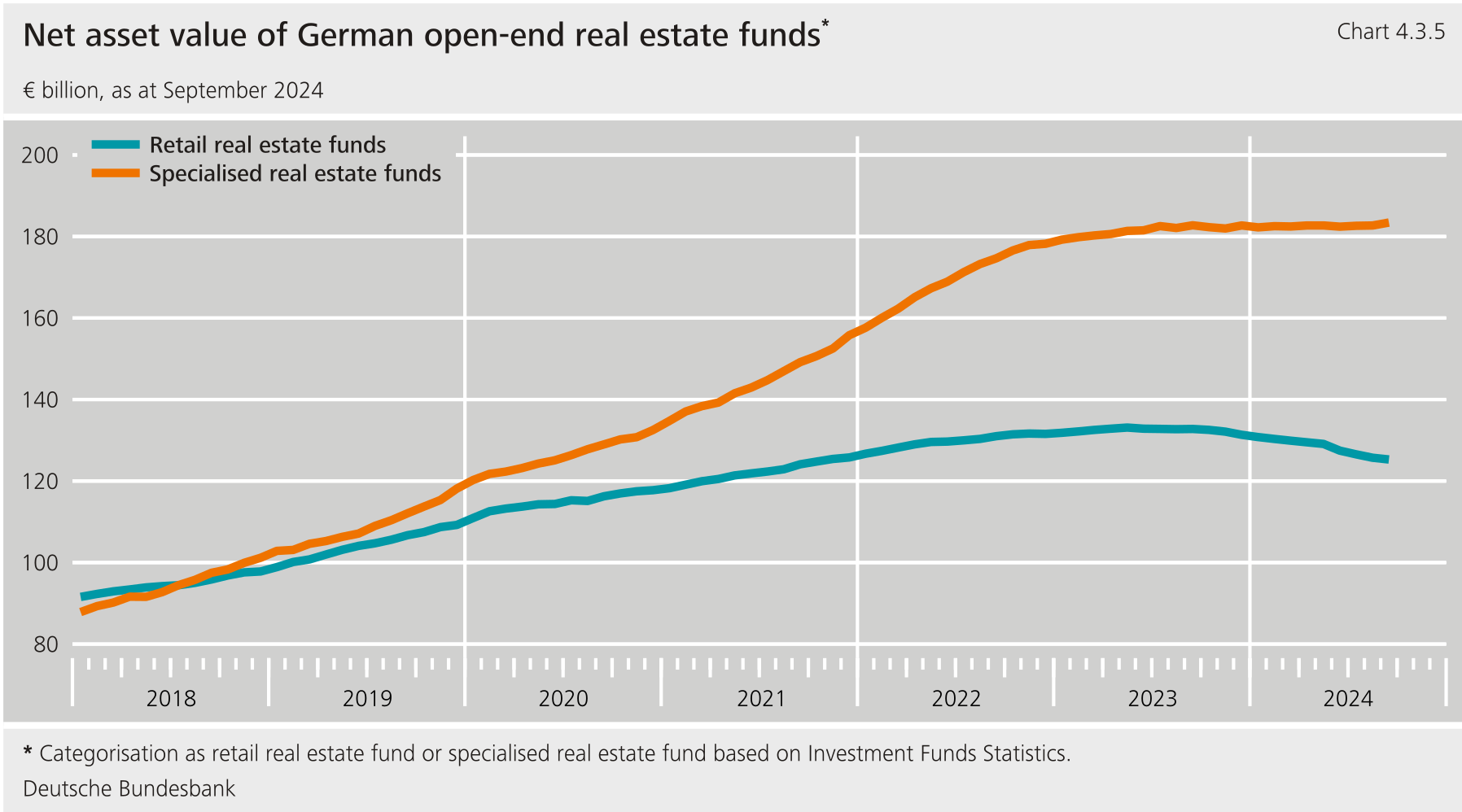**
****German real estate funds' existing liquidity buffers reduce liquidity risk.**The liquid funds of German retail real estate funds -- i.e. bank deposits, money market fund shares and liquid securities -- are well above the liquidity ratio of 5 % of fund assets stipulated by regulators.[\[106\]](#_ftn_root_106) On a weighted average, bank deposits alone recently accounted for around 11 % of assets held by open-end retail real estate funds. However, there is wide dispersion in this share across the real estate fund sector, which means that some funds are more vulnerable to liquidity risk stemming from net outflows.**{#par-a7o145}
****Minimum holding periods and notice periods are keeping German retail real estate funds' liquidity risk in check.**The minimum holding periods and notice periods introduced in Germany in 2013 partly mitigate liquidity risk in retail real estate funds by protecting against sudden strong outflows. Since then, investors in retail real estate funds are required to announce fund share redemptions twelve months in advance and are subject to a minimum holding period of 24 months.[\[107\]](#_ftn_root_107) As a rule, this allows funds more time to respond to announcements of fund share redemptions in good time. In addition, minimum holding periods and notice periods may change the investor base of open-end real estate funds in favour of investors with very long-term investment horizons. On the whole, this dampens real estate funds' procyclical behaviour during a downturn, reducing the risk of amplification effects in the commercial real estate market. Minimum holding periods and notice periods do not apply to open-end specialised real estate funds.**{#par-a64628}
### **4.3.5 Growing interconnectedness within the fund sector may weaken resilience of open-end securities funds** {#tar-22}
****Open-end securities funds continued to see net inflows, but liquidity risk persists.**[\[108\]](#_ftn_root_108) Net inflows of funds since January 2024 amounted to just under €17 billion, which corresponds to around 0.7 % of aggregate fund assets. Liquidity risk in open-end securities funds arises because investors are often able to redeem their shares within one day, whilst a fund's liquidity is usually limited. In periods of stress, investors may therefore have an incentive to pull out their funds at an early stage, to the detriment of the remaining investors. Furthermore, fund managers tend to sell more assets than necessary to service net outflows in periods of stress. This is due to the fact that fund managers want to increase their liquid assets during periods of stress (cash hoarding).[\[109\]](#_ftn_root_109) Overall, open-end securities funds therefore mostly take procyclical action in periods of stress, potentially amplifying shocks. In the context of securities funds, liquidity risk should therefore be mitigated by deploying liquidity management tools (see section 4.4.3 "[Macroprudential oversight of non-bank financial intermediaries should be enhanced](#4.4.3-Macroprudential-oversight-of-non-bank-financial-intermediaries-should-be-enhanced)").**{#par-ae5o97}
****The growing interconnectedness within the fund sector may result in open-end securities funds amplifying shocks in the financial system.**[\[110\]](#_ftn_root_110) To diversify their portfolios and have access to liquidity, securities funds hold shares of other securities-based funds (cross-holdings). This is because securities fund shares may be redeemed at short notice. This interconnectedness within the fund sector has grown in many significant fund jurisdictions since the global financial crisis (see Chart 4.3.6). In Germany, shares of other funds accounted for as much as 23 % of fund assets at the end of the period under review. However, Bundesbank analyses show that funds' cross-holdings are largely comprised of securities that are more volatile or less liquid than their direct investments.[\[111\]](#_ftn_root_111) As a result, if a fund manager regards their shares in other funds as liquid assets because they may be redeemed at short notice, they will overestimate their own fund's liquidity in periods of stress. The rise in cross-holdings has made yields across the entire fund sector more procyclical and more volatile. In addition, through mutual cross-holdings of fund shares, the portfolios of individual funds have become four times more similar than they would have been without cross-holdings. Consequently, funds are increasingly affected by shocks in the same direction. This increases contagion risk.**{#par-uo411i}
{#par-ou1441}
**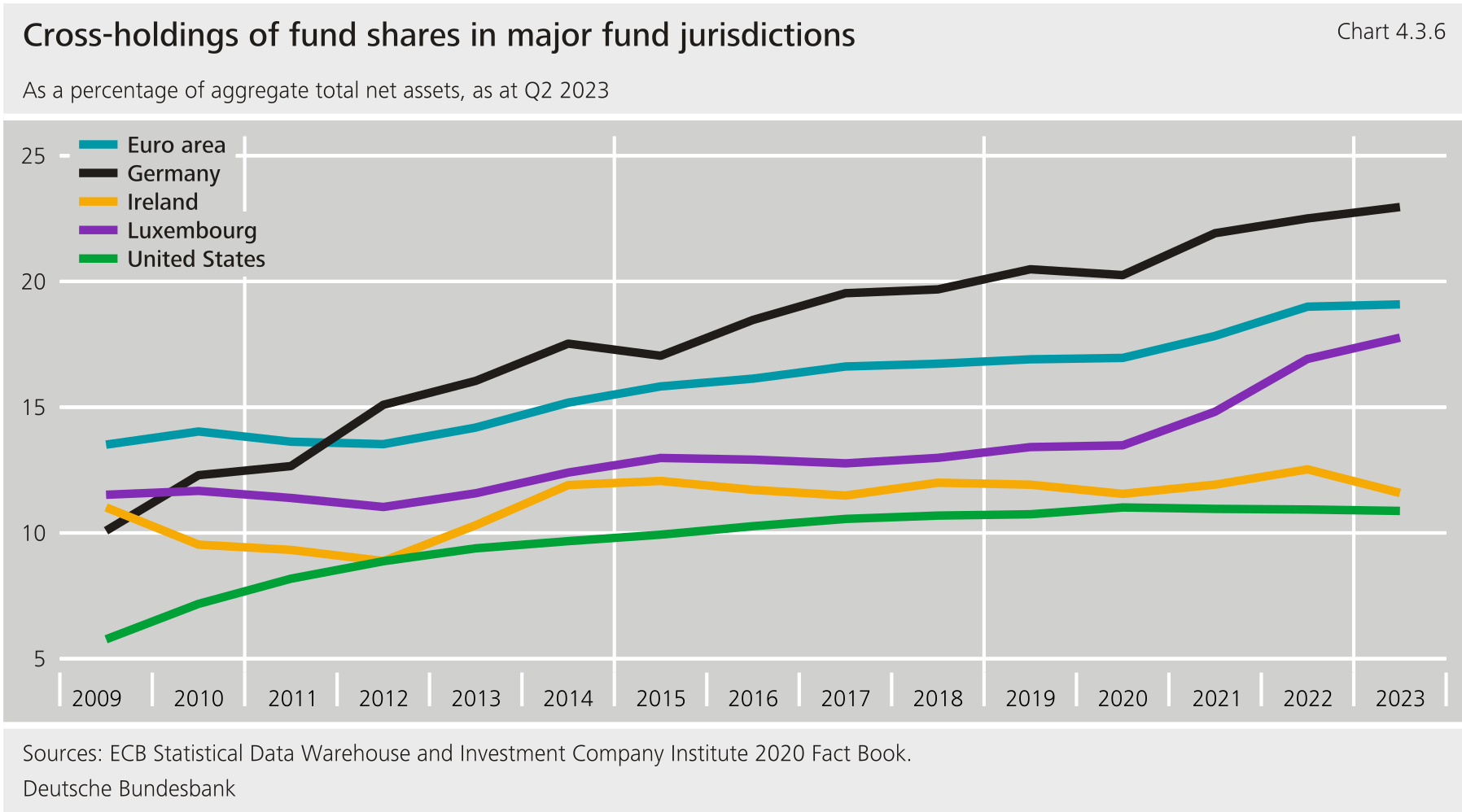**
**4.4 Overall assessment and implications for macroprudential policy** {#tar-23}
--------------------------------------------------------------------------------
### **4.4.1 German financial system coped well with the exceptionally strong rise in interest rates** {#tar-24}
****The German financial system coped well with the period of sharply rising interest rates overall and remained stable throughout the last year, too.**Interest rates have peaked; in June 2024, the began to lower its key interest rates. The transmission of the interest rate increase to the banking system is likely to be largely complete. Yet life insurers are only just now gradually feeling the impact of higher market interest rates since most of the fixed income instruments in their portfolios were acquired during the low interest rate period. The unrealised losses that had accumulated on financial intermediaries' balance sheets as interest rates were rising are now receding, though more slowly for life insurers than for banks. Existing unrealised losses increase liquidity risk and reduce the financial system's resilience. If banks would need to realise unreported losses, the relatively high capital ratios would be lower. For life insurers, unrealised losses reduce the incentives to act as stabilising buyers in the financial market during periods of stress, as they have in the past.**{#par-a74122}
****The high vulnerabilities that had built up in the German financial system over the long low interest rate period have been declining in an orderly manner thus far, albeit only gradually.** Vulnerabilities in the German financial system remain substantial. Amidst improved debt sustainability and households' robust resilience, the risks to banks and insurers from residential real estate loans are tending to decrease, though. The non-financial corporate sector finds itself in difficult waters, however, owing to structural challenges and subdued economic developments. In addition, the refinancing of some of the existing loans to non-financial enterprises and households at higher interest rates is still pending. If the macro-financial environment develops as expected and does not deteriorate further, credit defaults are not expected to surge, however. Overall, loss allowance ratios, especially for bank loans to enterprises, are set to continue rising in the coming quarter, but should remain manageable for banks.**{#par-e8i58a}
****The commercial real estate market remains a source of elevated financial stability risks.**Commercial real estate prices did not decline further in the first half of 2024, but the risk of a further fall in prices remains heightened. Loss allowances with respect to commercial real estate exposures have increased significantly. The banking and insurance sectors appear capable of generally coping with investment risk from commercial real estate; however, such risks are highly concentrated among some intermediaries. Despite long minimum holding periods and notice periods, open-end retail real estate funds in Germany have still been seeing net outflows of funds recently. Should these outflows necessitate sales, this could exacerbate the situation in the commercial real estate market. Owing to unrealised losses on their balance sheets, life insurers are hardly likely to act as investors in the event of a more extreme commercial real estate market downturn.**{#par-oa572u}
****The risk of adverse developments remains high amidst current geopolitical tensions**. Geopolitical tensions can affect the financial system both through the macro-financial environment and also directly, for example in the event of major cyberattacks. Since the outbreak of the Russian war of aggression against Ukraine, cyberattacks on the financial sector have increased significantly. These cyberattacks have so far caused only moderate damage. Nevertheless, attack surfaces are tending to grow as a result of the ongoing digital transformation and the high level of operational networking, not least due to the increasing use of specialised services and software products.**{#par-o8o2a3}
****The January 2022 package of macroprudential measures, containing the countercyclical capital buffer and sectoral systemic risk buffer, remains adequate given the overall risk situation.**[\[112\]](#_ftn_root_112)Uncertainty in the macro-financial environment remains elevated and vulnerabilities continue to exist. Against this backdrop, the countercyclical capital buffer () strengthens the resilience of the banking system to cyclical risks. The sectoral systemic risk buffer additionally counteracts the specific risks in the real estate market that cannot be fully addressed by the countercyclical capital buffer. However, vulnerabilities in this area are declining only gradually. Overall, an orderly reduction of vulnerabilities in the residential real estate market has become more likely. Macroprudential supervisors will monitor further developments in this area closely.**{#par-a1u74u}
### **4.4.2 Macroprudential policy in Europe is evolving** {#tar-25}
****In order to ensure that banks remain resilient in the long term, macroprudential supervisors must retain their scope for action, particularly in periods of stress.**Releasable capital buffers, as provided for in the current package of measures in Germany and other European countries, are a key macroprudential policy instrument. Unlike microprudential capital requirements, these capital buffers can be lowered in a crisis scenario, reducing the likelihood of undesirable adjustments, such as banks curtailing their credit supply in response to capital losses. For the releasable buffers to fulfil their purpose, they have to be sufficiently large.**{#par-ao8o89}
{#par-i64oo8}
**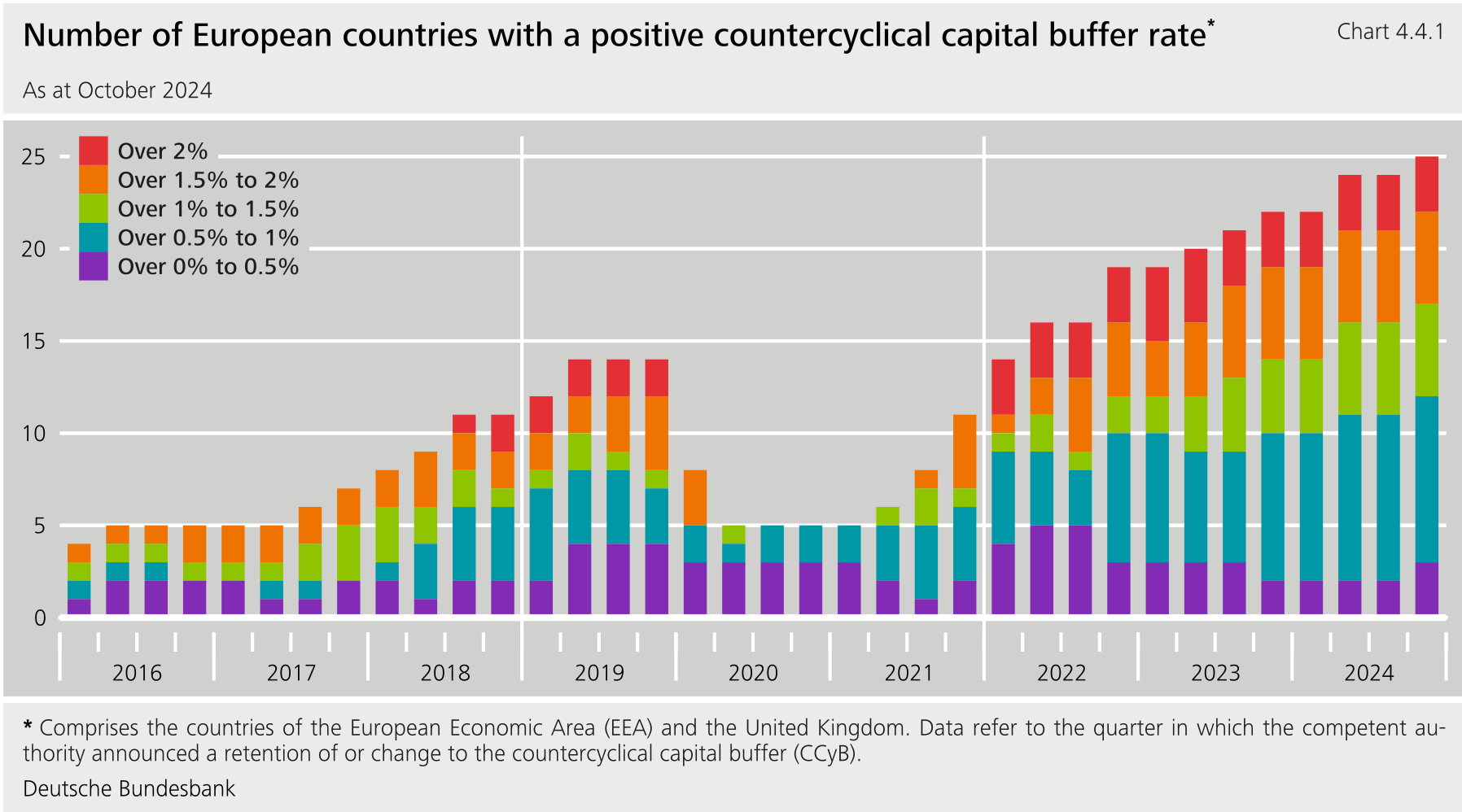**
****Against this background, a number of European countries have adjusted their macroprudential strategies for the banking sector.** Prior to the coronavirus (-19) pandemic, many countries had built up a only slowly and to a limited extent (see Chart 4.4.1), restricting their scope for macroprudential action when the pandemic broke out. Many countries were therefore quick to reactivate the after the pandemic, in many cases to a level significantly higher than before the pandemic. Some countries have also fundamentally changed their strategy for setting the . They introduced an explicit target ratio which applies even in cases where cyclical risks are not elevated. Should cyclical risks rise sharply, a further increase of the above the target ratio will be considered. These countries choose their positive neutral rate () somewhere between 0.5 % and 2 % (see Chart 4.4.2). Bundesbank analyses confirm that a timely build-up of releasable buffers significantly reduces the likelihood of balance sheet contractions. Therefore, building up releasable buffers at an early stage and in a forward-looking manner generally fosters financial stability. The macroeconomic costs of this are low if the build-up phase is chosen such that banks build up capital buffers through retained earnings (see the supplementary information below entitled "The economic benefits of releasable capital buffers and the positive neutral rate").[\[113\]](#_ftn_root_113)**{#par-ee8433}
{#par-i698i3}
**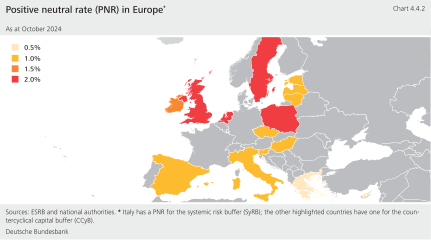**
****The residential real estate sector often triggers crisis-like developments; the macroprudential policy toolkit for this sector should therefore be expanded.** is currently not authorised to impose caps for income-based lending standards. With a full set of instruments, could focus on limiting systemic risks to financial stability caused by rising house prices, mounting stocks of housing loans and deteriorating lending standards.[\[114\]](#_ftn_root_114)**{#par-iau123}
**The economic benefits of releasable capital buffers and the positive neutral rate** {#tar-26}
-----------------------------------------------------------------------------------------------
****A structural model for the euro area banking sector illustrates how releasable capital buffers can significantly reduce the likelihood of a crisis-induced credit crunch and mitigate its macroeconomic impact.**[\[1\]](#_ftn_49c8b753_1) It is particularly in times of stress, when banks incur very large losses, that the advantages of releasable capital buffers become evident. During such stress periods with large banking sector losses, capital ratios in the banking system can shrink to the point where banks undershoot, or are in danger of undershooting, regulatory minimum capital requirements. The banking system thus runs into hard balance sheet constraints.[\[2\]](#_ftn_49c8b753_2) The only way to meet regulatory capital requirements would be by sharp deleveraging, either by selling off securities, allowing loans or credit lines to expire or restricting new lending. Releasing sufficiently-sized available capital buffers can loosen this balance sheet constraint and reduce or even prevent excessive deleveraging. The model simulations show that releasable buffers amounting to 1 % of risk-weighted assets reduce the probability of a credit crunch to around 3 %. In the absence of releasable buffers, the probability would exceed 10 %.[\[3\]](#_ftn_49c8b753_3) A buffer of 2.5 % would reduce the probability to around 1 % (see Chart 4.4.3).**{#par-oeeo9u}
{#par-i858i8}
**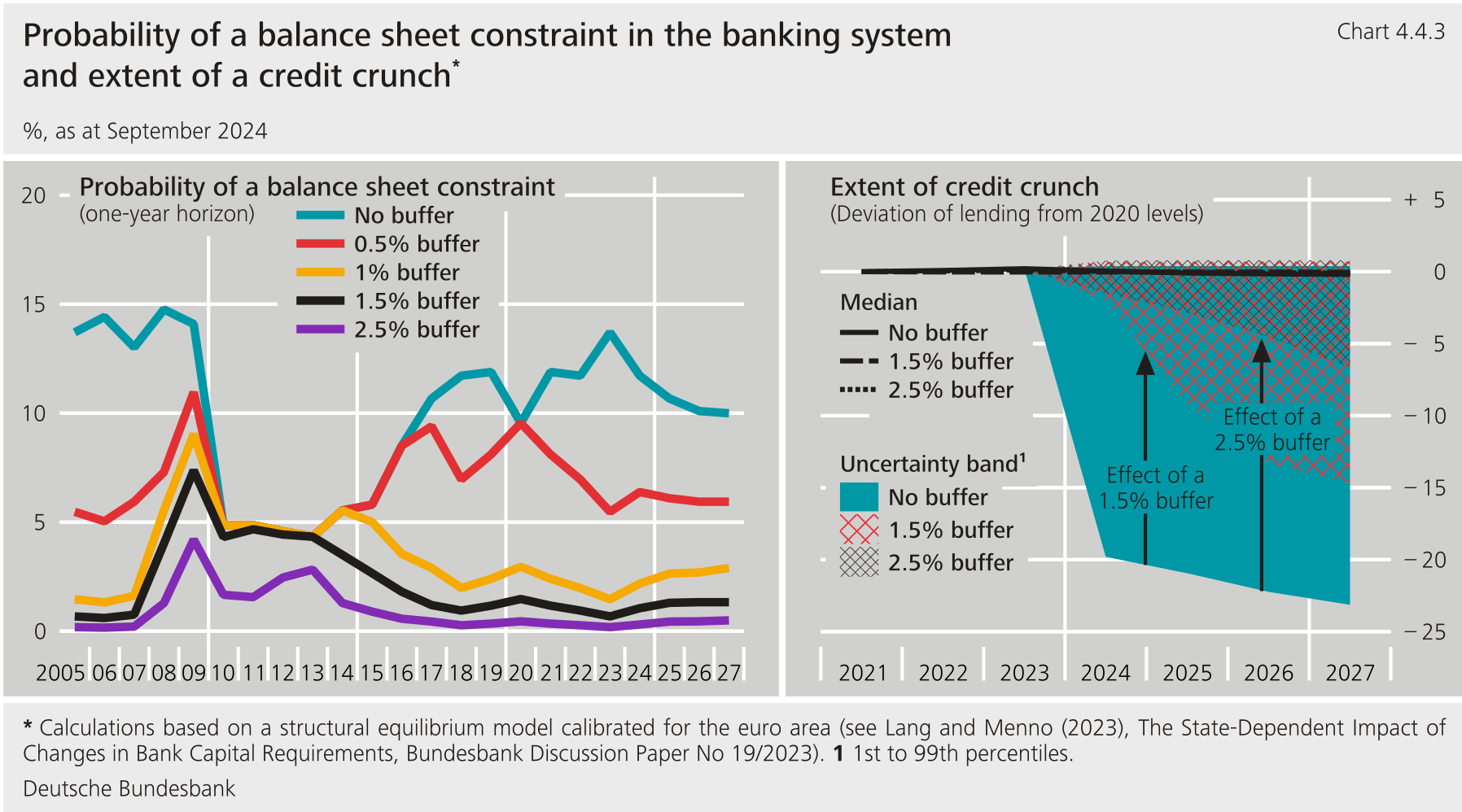**
**The risk of banks sharply curtailing their credit supply in the case of a credit crunch would also drop significantly in the presence of releasable buffers. The model looks at a case of extreme losses. According to the simulations, there is a 1 % probability that lending would contract by more than 20 % without buffers (see Chart 4.4.3). With releasable buffers of 2.5 %, however, there is a 1 % probability that lending, under the same extreme conditions, would contract by only around 6 %.**{#par-o6au2e}
****A formalised target rate is one possible way of building up releasable buffers at an early stage and minimal costs.** The impact of a positive neutral rate () can be studied in the model. This is implemented with a rule according to which the countercyclical capital buffer () is always built up to the prescribed target only in times when the banking sector generates sufficient profit and distributes sufficient dividends. In such periods, banks can raise the capital ratio gradually by retaining a portion of their earnings in each period, and while doing so continue to fund lending. The speed at which the buffers are built up to the target thus depends on the profitability of the banking sector: if profitability is very high, the can be rapidly accumulated up to the target , whereas if profitability is at average levels, a longer build-up phase is necessary. The costs of the arise because banks have to fund a larger portion of their lending through own funds. In the model, however, lending rates rise only slightly: if a of 1 % (2.5 %) is introduced, lending rates in the euro area rise by 0.12 (0.25) percentage point from an average level without buffers of 4.42 %.**{#par-eo84u6}
1. **{#_ftn_49c8b753_1} Based on Lang and Menno (2023). The calibration horizon for the euro area is from 2005 to 2019. For the analysis presented here, the time series were updated: the ratio of provisions to lending up to 2022 come from the "Cost of Risk" time series for significant institutions () for countries participating in the Single Supervisory Mechanism ().**
2. **{#_ftn_49c8b753_2} A balance sheet or capital constraint is assumed to be binding if the common equity tier 1 () ratio of the bank in the model falls below the regulatory minimum requirement owing to losses following a shock. This minimum requirement was set at 10 % in the model.**
3. **{#_ftn_49c8b753_3} Following the financial crisis in 2009, the decline in the probability of encountering a balance sheet constraint was more pronounced in models without releasable buffers than in models with releasable buffers. That is because, in models without buffers, banks curtailed their lending considerably during the financial crisis in order to keep meeting supervisory minimum requirements. In models with buffers, balance sheets were shrunk less sharply during the crisis, leading to a relatively smaller decline in the probability of balance sheet constraints. As the balance sheet contraction was stronger, relatively speaking, in models without releasable buffers, the actual costs of the crisis were higher than in models with releasable buffers.**
### **4.4.3 Macroprudential oversight of non-bank financial intermediaries should be enhanced** {#tar-27}
****The macroprudential perspective in the regulation and oversight of non-bank financial intermediaries**()**acts as a complement to what has thus far been primarily microprudential regulation.**The macroprudential perspective on is important, especially in order to analyse and mitigate liquidity risks and contagion arising from interconnectedness (see section 4.3 "[Non-bank financial intermediaries: vulnerabilities and resilience](#4.3-Non-bank-financial-intermediaries-vulnerabilities-and-resilience)"). In Germany, with its bank-based financial system, the risk of contagion effects on banks is important in terms of the risks to financial stability posed by (see the supplementary information entitled "[Contagion channels between banks and investment funds](#Contagion-channels-between-banks-and-investment-funds)"). The focus of macroprudential policy should be to strengthen the resilience of pre-emptively. A comprehensive approach to the macroprudential perspective on could be entity-based, i.e. directed at types of (as is the case under the existing macroprudential framework), as well as activity-based, thus recognising the diversity of activities and risks in this sector. Macroprudential oversight and regulation of insurers is further evolved than that of funds.**{#par-ae3244}
****In Solvency II, the European regulation for insurers, there are plans to incude new powers for macroprudential supervisors to enhance the resilience of the insurance sector.**[\[115\]](#_ftn_root_115) The accord achieved in the political process should be implemented by national legislators in a timely manner. It envisages a package of measures that can mitigate solvency and liquidity risk in the insurance sector and thereby enhance the resilience of the financial system as a whole. In the event of considerable liquidity risks, supervisors can, for instance, temporarily suspend repayments from life insurance policies. This can mitigate life insurers' liquidity risk in periods of stress and thus counteract procyclical behaviour. In addition, the following measures should be taken to close data gaps: insurers should, in future, develop liquidity risk indicators, prepare liquidity risk management plans and expand their own risk and solvency assessment () to include scenario calculations that are of macroprudential relevance.[\[116\]](#_ftn_root_116)**{#par-o99oau}
****The****Insurance Recovery and Resolution Directive**()**likewise contributes to mitigating financial stability risks in periods of stress.**[\[117\]](#_ftn_root_117) The directive requires harmonised recovery and resolution instruments for the largest insurers and will enhance cross-border cooperation between national resolution authorities.[\[118\]](#_ftn_root_118) The new rules could help to deliver an early cross-border response in periods of stress and to mitigate the negative impacts of a looming insolvency of a major insurance company.[\[119\]](#_ftn_root_119)**{#par-i61811}
****A globally coordinated and consistent regulation of funds is important.**The Financial Stability Board () recommends that funds introduce liquidity management tools and appropriate redemption periods in order to mitigate the liquidity risks of funds where these tools have not yet been created (see section 4.3 "[Non-bank financial intermediaries: vulnerabilities and resilience](#4.3-Non-bank-financial-intermediaries-vulnerabilities-and-resilience)").[\[120\]](#_ftn_root_120) It also recommends enhancing the resilience of money market funds. Until 22 November 2024, the European Commission is conducting a consultation to see whether macroprudential policy for needs to be adjusted. The Bundesbank believes that the recommendations should be implemented in Europe in a timely fashion. In addition, the macroprudential toolkit for should be expanded in a targeted manner and system-wide top-down stress tests introduced in the euro area. To this end, the exchange of granular data within Europe is crucial.**{#par-u83843}
****Given the interconnectedness of funds across national borders, macroprudential supervisors need a legal basis for data sharing in Europe.**Owing to the high interconnectedness of the German financial system with European and global funds, national fund data are insufficient to comprehensively assess the risks to German financial stability. For instance, it is currently difficult for national macroprudential supervisors to assess contagion risks from other European countries since data on funds in other European countries are not shared. In addition, data gaps on other financial institutions hamper the assessment of risks relating to financial vehicle corporations and captive financial institutions.[\[121\]](#_ftn_root_121) The Bundesbank is therefore making the case for creating the legal framework conditions for improved access to and sharing of data for national macroprudential authorities in Europe. The nature and scope of access to and sharing of data still have to be fleshed out. Above and beyond the European process, a basis for global data sharing would also be desirable.**{#par-oo4u11}
**List of references** {#tar-28}
--------------------------------
**Aiyar, S., J. Chen, C. H. Ebeke, R. Garcia-Saltos, T. Gudmundsson, A. Ilyina, A. Kangur, T. Kunaratskul, S. L. Rodriguez, M. Ruta, T. Schulze, G. Soderberg and J. P. Trevino (2023), Geoeconomic Fragmentation and the Future of Multilateralism, Staff Discussion Notes, No 2023/001.**{#par-e787i2}
**Alter, H., J. Feuerhake and S. Jacob (2021), Insolvenzstatistik in der Corona-Pandemie -- aktuellere Ergebnisse durch Webscraping, -- Wirtschaft und Statistik, Vol. 73, No 3, pp. 58--70.**{#par-a99438}
**Aquilina, M., M. Lombardi, A. Schrimpf and V. Sushko (2024), The market turbulence and carry trade unwind of August 2024, Bulletin, No 90.**{#par-u165ia}
**Auerbach, A. J. and W. Gale (2024), The Federal Budget Outlook: Update for 2024, March 2024.**{#par-u25386}
**Baba et al. (2023), Geoeconomic Fragmentation: What's at Stake for the , Working Paper, No 23/245.**{#par-i29i86}
**Bagattini, G., F. Fecht and A. Maddaloni (2023), Liquidity support and distress resilience in bank-affiliated mutual funds, Working Paper Series, No 2799.**{#par-o14654}
**Bank for International Settlements (2022), Private Sector Debt and Financial Stability, Papers, No 67.**{#par-iu4897}
**Bernanke, B. S., J. Boivin and P. Eliasz (2005), Measuring the Effects of Monetary Policy: A Factor-Augmented Vector Autoregressive () Approach, The Quarterly Journal of Economics, Vol. 120, No 1.**{#par-e2eu52}
**Bidder, R., T. Jackson and M. Rottner (2024), and banks: Disintermediating fast and slow, Deutsche Bundesbank Discussion Paper, No 15/2024.**{#par-aua1a2}
**Bondarenko, Y., V. Lewis, M. Rottner and Y. S. Schüler (2024), Geopolitical risk perceptions, Journal of International Economics, No 152.**{#par-o4u95e}
**Boone, L., J. Fels, Ò. Jordà, M. Schularick and A. Taylor (2022), Debt: The Eye of the Storm, Geneva Reports on the World Economy, No 24.**{#par-uo7i1o}
**Borio, C. (2014), The Financial Cycle and Macroeconomics: What Have We Learnt?, Journal of Banking \& Finance, Vol. 45, pp. 182‑198.**{#par-i746o5}
**Boysen-Hogrefe, J., K.-J. Gern, D. Groll, T. Hoffmann, N. Jannsen, S. Kooths, J. Reents, C. Schröder and N. Sonnenberg (2024), Mittelfristprojektion für Deutschland im Herbst 2024, Kieler Konjunkturberichte, No 118.**{#par-oi32a1}
**Brandao Marques, L., G. Gelos, M. Narita and E. W. Nier (2020), Leaning against the wind: A cost-benefit analysis for an integrated policy framework, Working Paper, No 20/123.**{#par-a5o2u7}
**Buch, C. M., S. Eickmeier and E. Prieto (2014), Macroeconomic Factors and Microlevel Bank Behavior, Journal of Money, Credit and Banking, Vol. 46, No 4, pp. 715‑751.**{#par-uuiiu5}
**Bureau of the Fiscal Service (2024), Executive Summary to the Fiscal Year 2023 Financial Report of U.S. Government: An Unsustainable Fiscal Path, March 2024.**{#par-i4ia4o}
**Caldara, D. and M. Iacoviello (2022), Measuring Geopolitical Risk, American Economic Review, Vol. 112, No 4, pp. 1194‑1225.**{#par-i3o227}
**Caldara, D., M. Iacoviello, M. Penn and S. Conlisk (2024), Do Geopolitical Risks Raise or Lower Inflation?**{#par-i47895}
**Cerdeiro, D. A., R. Mano, J. Eugster, D. V. Muir and S. J. Peiris (2021), Sizing Up the Effects of Technological Decoupling, Working Paper, No 21/69.**{#par-u75e25}
**Chen, W.-D., Y. Chen and S.-C. Huang (2021), Liquidity risk and bank performance during financial crises, Journal of Financial Stability, Vol. 56.**{#par-i5a1a5}
**Committee for a Responsible Federal Budget (2024), 's February 2024 Budget and Economic Outlook, press release of 7 February 2024.**{#par-aa252a}
**Committee on Financial Integration (2022), Financial Integration and Structure in the Euro Area.**{#par-o8a6uu}
**Congress of the United States Congressional Budget Office (2024), An Update to the Budget and Economic Outlook: 2024 to 2034, June 2024.**{#par-a83a5e}
**Congress of the United States Congressional Budget Office (2020), The Budget and Economic Outlook: 2020 to 2030, January 2020.**{#par-u6985a}
**Deutsche Bundesbank (2024a), Monthly Report, June 2024.**{#par-e5ua3i}
**Deutsche Bundesbank (2024b), Monthly Report, September 2024.**{#par-a19495}
**Deutsche Bundesbank (2024c), Monthly Report, July 2024.**{#par-i73oia}
**Deutsche Bundesbank (2024d), Monthly Report, February 2024.**{#par-oi68e5}
**Deutsche Bundesbank (2024e), Monthly Report, August 2024.**{#par-o85u92}
**Deutsche Bundesbank (2024f), Monthly Report, October 2024.**{#par-aaoaee}
**Deutsche Bundesbank (2024g), Monthly Report, April 2024.**{#par-a43696}
**Deutsche Bundesbank (2023a), Financial Stability Review.**{#par-a2i85u}
**Deutsche Bundesbank (2023b), Monthly Report, April 2023.**{#par-a2i9ao}
**Deutsche Bundesbank (2022a), Financial Stability Review.**{#par-ae25o7}
**Deutsche Bundesbank (2022b), Monthly Report, July 2022.**{#par-oo1u98}
**Deutsche Bundesbank (2021), Financial Stability Review.**{#par-ai2e42}
**Deutsche Bundesbank (2019), Financial Stability Review.**{#par-u8ua18}
**Deutsche Bundesbank (2014), Financial Stability Review.**{#par-au3uuu}
**Deutsche Bundesbank and Federal Financial Supervisory Authority (2024), Results of the 2024 stress test, press release of 7 October 2024.**{#par-eaeu5a}
**Dunne, P. G., L. Emter, F. Fecht, R. Giuliana and O. Peia (2024), Financial fragility in open-ended mutual funds: The role of liquidity management tools, Deutsche Bundesbank Discussion Paper, No 36/2024.**{#par-eu5353}
**Eickmeier, S., N. Metiu, J. Quast and S. Tanneberger (2024), Global financial stress and financial transmission channels, Handbook of Financial Integration, Edward Elgar Publishing, pp. 134‑171.**{#par-oeeii2}
**Ellul, A., C. Jotikasthira and C. T. Lundblad (2017), Spillover Effects of Risk Regulation on the Asset Side to Asset Markets, The Economics, Regulation, and Systemic Risk of Insurance Markets, pp. 165‑192.**{#par-uo4662}
**Ellul, A., C. Jotikasthira, C. T. Lundblad and Y. Wang (2015), Is historical cost accounting a panacea? Market stress, incentive distortions, and gains trading, The Journal of Finance, Vol. 70, No 6, pp. 2489‑2538.**{#par-ao9e52}
**European Central Bank (2024a), Survey on the Access to Finance of Enterprises in the euro area: Second quarter of 2024, July 2024.**{#par-a4862e}
**European Central Bank (2024b), Financial Stability Review, May 2024.**{#par-a77852}
**European Commission (2024), Spring 2024 Economic Forecast: A gradual expansion amid high geopolitical risks, press release of 15 May 2024.**{#par-iooo74}
**European Insurance and Occupational Pensions Authority (2024), Financial Stability Report, June 2024.**{#par-iiii8e}
**European Parliament (2024a), OF THE EUROPEAN PARLIAMENT AND OF THE COUNCIL amending Directive 2009/138/ as regards proportionality, quality of supervision, reporting, long-term guarantee measures, macro-prudential tools, sustainability risks, group and cross-border supervision, and amending Directives 2002/87/ and 2013/34/, October 2024.**{#par-aai956}
**European Parliament (2024b), OF THE EUROPEAN PARLIAMENT AND OF THE COUNCIL establishing a framework for the recovery and resolution of insurance and reinsurance undertakings and amending Directives 2002/47/, 2004/25/, 2007/36/, 2014/59/ and () 2017/1132 and Regulations () No 1094/2010, () No 648/2012, () No 806/2014 and () No 2017/1129, November 2024.**{#par-uiu4o9}
**European Systemic Risk Board (2024), Monitor: Non-bank Financial Intermediation Risk Monitor 2024, Monitor No 9.**{#par-ia7854}
**European Systemic Risk Board (2019), Recommendation of the European Systemic Risk Board of 21 March 2019 amending Recommendation /2016/14 on closing real estate data gaps, /2019/03, March 2019.**{#par-i8oeuu}
**European Systemic Risk Board (2016), Recommendation of the European Systemic Risk Board on closing real estate data gaps, /2016/14, October 2016.**{#par-aoo48o}
**Federal Financial Supervisory Authority (2022), Package of macroprudential measures: plans to increase the countercyclical capital buffer and set a systemic risk buffer for the residential property sector, press release of 12 January 2022.**{#par-oe7o45}
**Federal Statistical Office (2024a), Prices of residential property in the 2nd quarter of 2024: − 2.6 % year on year: First quarter-on-quarter increase since 2nd quarter of 2022, press release of 20 September 2024.**{#par-u45876}
**Federal Statistical Office (2024b), Reallöhne im 2. Quartal 2024 um 3,1 % höher als im Vorjahresquartal, press release of 29 August 2024.**{#par-a4aa23}
**Filippopoulou, C., E. Galariotis and S. Spyrou (2020), An early warning system for predicting systemic banking crises in the Eurozone: A logit regression approach, Journal of Economic Behavior \& Organization, Vol. 172.**{#par-u57e1e}
**Financial Stability Board (2023), Global Monitoring Report on Non-Bank Financial Intermediation, December 2023.**{#par-uo18o3}
**Förstemann, T. (2021), Lethal Lapses: How a Positive Interest Rate Shock Might Stress Life Insurers, mimeo.**{#par-o29u99}
**Fricke, D. and H. Wilke (2023), Connected Funds, Review of Financial Studies.**{#par-aee6u9}
**German Financial Stability Committee (2022), German Financial Stability Committee welcomes the Federal Financial Supervisory Authorityʼs announced package of macroprudential measures, press release of 12 January 2022.**{#par-o1u636}
**German Financial Stability Committee (2015), Recommendation of 30 June 2015 on new instruments for regulating loans for the construction or purchase of residential real estate, /2015/1, June 2015.**{#par-uuu693}
**Hafemann, L. (2023), A house prices at risk approach for the German residential real estate market, Deutsche Bundesbank Technical Paper, No 07/2023.**{#par-u81463}
**Herbst, T., J. Plaasch and F. Stammwitz (2024), A price at risk approach for the German commercial real estate market, Deutsche Bundesbank Technical Paper, No 08/2024.**{#par-i377iu}
**International Monetary Fund (2024), Fiscal Monitor: Fiscal Policy in the Great Election Year, April 2024.**{#par-uo95ie}
**International Monetary Fund (2023), Global Financial Stability Report: Safeguarding Financial Stability amid High Inflation and Geopolitical Risks, April 2023.**{#par-ia2827}
**Krüger, U., C. Roling, L. Silbermann and L.-H. Wong (2024), Bank's strategic interaction, adverse price dynamics, and systemic liquidity risk, Journal of Banking Regulation.**{#par-aoa847}
**Lang, J. H. and D. Menno (2023), The State-Dependent Impact of Changes in Bank Capital Requirements, Deutsche Bundesbank Discussion Paper, No 19/2023.**{#par-eoe86a}
**Laux, C. and C. Leuz (2010), Did fair-value accounting contribute to the financial crisis?, Journal of Economic Perspectives Vol. 24, No 1, pp. 93‑118.**{#par-u5223a}
**Memmel, C., A. Seymen and L. Strobel (2024), Technische Dokumentation zur Analyse der Änderung des Zinsergebnisses, Deutsche Bundesbank Technical Paper, forthcoming.**{#par-e84u24}
**Metiu, N. (2022), A composite indicator of financial conditions for Germany, Deutsche Bundesbank Technical Paper, No 03/2022.**{#par-ue2oiu}
**Möhlmann, A. and E. Vogel (2024), Late payments on mortgage loans and unemployment: Evidence from a German household panel, Deutsche Bundesbank Technical Paper, forthcoming.**{#par-i6u68i}
**Nicoletti, G., J. Rariga and C. Rodriguez d'Acri (2024), Spare Tyres with a Hole: Investment Funds Under Stress and Credit to Firms, Working Paper Series, No 2917, European Central Bank.**{#par-e772o4}
**Projektgruppe Gemeinschaftsdiagnose (2024), Deutsche Wirtschaft im Umbruch -- Konjunktur und Wachstum schwach: Herbst 2024, Gemeinschaftsdiagnose, No 2/2024.**{#par-a5o879}
**Stock, J. H. and M. W. Watson (2005), Implications of Dynamic Factor Models for Analysis, National Bureau of Economic Research Working Paper, No 11467.**{#par-i6uu8a}
**Stock, J. H. and M. W. Watson (2002), Forecasting Using Principal Components From a Large Number of Predictors, Journal of the American Statistical Association, Vol. 97, No 460, pp. 1167‑1179.**{#par-e3eoaa}
**Sydow, M., A. Schilte, G. Covi, M. Deipenbrock, L. Del Vecchio, P. Fiedor, G. Fukker, M. Gehrend, R. Gourdel, A. Grassi, B. Hilberg, M. Kaijser, G. Kaoudis, L. Mingarelli, M. Montagna, T. Piquard, D. Salakhova and N. Tente (2024), Shock amplification in an interconnected financial system of banks and investment funds, Journal of Financial Stability, Vol. 71, pp. 101‑234.**{#par-i25i49}
**Timmer, Y., Cyclical investment behavior across financial institutions, Journal of Financial Economics, Vol. 129, No 2, pp. 268‑286.**{#par-i48914}
**Wesker, H. (2024), Neu rechnen, bitte!, Journal Juli 2024, Federal Financial Supervisory Authority.**{#par-o7939a}
**Wollmershäuser, T., S. Ederer, F. Fourné, M. Lay, R. Lehmann, S. Link, S. Möhrle, M. Schasching, G. Wolf and L. Zarges (2024), Economic Forecast Autumn 2024: German Economy is Stuck in Crisis, Schnelldienst digital, No 7.**{#par-a742ei}
{#par-u2ui41}
1. **{#_ftn_root_1} Data source: Deutsche Bundesbank. Calculated from the yields on ten-year and five-year Federal securities as well as from weighted inflation expectations (consensus forecast).**
2. **{#_ftn_root_2} See Metiu (2022).**
3. **{#_ftn_root_3} See Deutsche Bundesbank (2024a).**
4. **{#_ftn_root_4} See Deutsche Bundesbank (2024a).**
5. **{#_ftn_root_5} See Projektgruppe Gemeinschaftsdiagnose (2024).**
6. **{#_ftn_root_6} See Boysen-Hogrefe et al. (2024), Wollmershäuser et al. (2024).**
7. **{#_ftn_root_7} See Deutsche Bundesbank (2024a).**
8. **{#_ftn_root_8} See Deutsche Bundesbank (2024b).**
9. **{#_ftn_root_9} See Deutsche Bundesbank (2019, 2021). This specification does not take geopolitical developments into account. In the past, adverse geopolitical developments were less frequently associated with short-term downside risks to economic output, which are measured by the 5 % quantile. Nevertheless, adverse geopolitical developments may have a noticeable impact on economic developments (see the supplementary information entitled "[Geopolitical risks: impact on financial stability](https://preview.publikationen.bundesbank.de/publikationen-en/reports-studies/financial-stability-reviews/stability-situation-in-the-german-financial-system--944380?view=fragmentPreview#Geopolitical-risks-impact-on-financial-stability)").**
10. **{#_ftn_root_10} Empirical studies suggest that these fluctuations are often medium term in nature. By comparison, fluctuations in the economic cycle tend to be shorter. See Borio (2014). Cyclical vulnerabilities build up during an upswing in the financial cycle. This makes the financial system vulnerable to adverse developments. For example, a cross-country analysis suggests that, in the past, recessions that began a few quarters after a peak in the financial cycle have tended to be deeper and more protracted. See Deutsche Bundesbank (2022a). One possible explanation is that the financial system reduces lending excessively during such episodes, thereby amplifying the recession.**
11. **{#_ftn_root_11} See Deutsche Bundesbank (2024c).**
12. **{#_ftn_root_12} The majority of the banks surveyed as part of the stress test also reported that they were expecting an increase or major increase in demand for loans (data as at May 2024). See Deutsche Bundesbank and Federal Financial Supervisory Authority (2024).**
13. **{#_ftn_root_13} This is indicated by business surveys (Bundesbank Online Panel -- Firms (BOP-F) and the Credit Constraint Indicator) as well as the results of the .**
14. **{#_ftn_root_14} See Deutsche Bundesbank (2023a).**
15. **{#_ftn_root_15} At just under 15 %, the fall in prices for existing residential real estate was significantly larger than that for newly built housing, which only saw a price decline of just over 4 %. This is likely to be attributable to the growing significance of energy efficiency for residential real estate as well as increased construction costs.**
16. **{#_ftn_root_16} See Deutsche Bundesbank (2024d).**
17. **{#_ftn_root_17} See Federal Statistical Office (2024a).**
18. **{#_ftn_root_18} See Hafemann (2023). According to the estimation using a price-at-risk approach, the interest rate hike in 2022 initially resulted in a significant increase in the potential for setbacks in residential real estate prices in 2022 and 2023. Over the course of 2024 so far, the estimated further potential for setbacks has declined again on account of slightly lower financing costs for residential real estate loans, lower risk premia, and reduced downward momentum in residential real estate prices.**
19. **{#_ftn_root_19} While prices stagnated in a quarter-on-quarter comparison in the first, second and third quarters of 2024, they continued to fall in a year-on-year comparison.**
20. **{#_ftn_root_20} According to a survey, the majority of credit institutions are also expecting prices to either stagnate or fall over both the short and medium terms. See Deutsche Bundesbank and Federal Financial Supervisory Authority (2024).**
21. **{#_ftn_root_21} See Herbst et al. (2024).**
22. **{#_ftn_root_22} In recent years, real estate funds have been among the most important net purchasers on the commercial real estate market in Germany. However, this role could be reversed if outflows of funds grow. This also holds true for real estate groups that became increasingly prominent as net purchasers after the coronavirus pandemic. Institutional investors, particularly life insurers, would also not be able to function as countercyclical purchasers in this downturn (see section 4.3 "[Non-bank financial intermediaries: vulnerabilities and resilience](https://preview.publikationen.bundesbank.de/publikationen-en/reports-studies/financial-stability-reviews/stability-situation-in-the-german-financial-system--944380?view=fragmentPreview#4.3-Non-bank-financial-intermediaries-vulnerabilities-and-resilience)").**
23. **{#_ftn_root_23} Equity risk premia can be derived using a residual income valuation model. According to this model, current equity prices correspond to the current book value of equity plus the future residual income discounted using the equity cost rate ((return on equity minus equity cost rate) multiplied by the book value of equity in the previous period).**
24. **{#_ftn_root_24} According to a regression model, the risk premia on euro-denominated corporate bonds from the high-yield segment are significantly lower than their estimated "fair" value based on fundamentals such as growth forecasts, the standard deviation of growth forecasts, and corporate debt. The estimation using fundamentals is based on a model developed by the International Monetary Fund (). See International Monetary Fund (2023). Data from Data, the , Refinitiv and Bloomberg Finance L.P. were used in this context.**
25. **{#_ftn_root_25} See Aquilina et al. (2024), Deutsche Bundesbank (2024e).**
26. **{#_ftn_root_26} While commodity prices have remained roughly constant compared with last year, they have risen markedly over the long term when compared with 2020. For more information on developments in wages and commodity prices, see Deutsche Bundesbank (2024e).**
27. **{#_ftn_root_27} In the first half of 2024, it was, on average, around the same as in 2016.**
28. **{#_ftn_root_28} For the definition of the services sector, see the explanation in Chart 4.1.10.**
29. **{#_ftn_root_29} Data source: Bank for International Settlements.**
30. **{#_ftn_root_30} See European Central Bank (2024a).**
31. **{#_ftn_root_31} Data source: National accounts, as at June 2024; prices adjusted using consumer prices, data source: Federal Statistical Office, as at June 2024.**
32. **{#_ftn_root_32} This is suggested by various data sources. According to the latest available balance sheet data from the financial statement statistics, enterprises' average equity ratio declined somewhat in 2022, but actually improved slightly in the 25th percentile. More recent data from financial accounts and the consolidated financial statement statistics suggest that the equity ratio remained stable in 2023 and in the first half of 2024 and is at least at the long-term average.**
33. **{#_ftn_root_33} Measured by the stock of cash and deposits, prices adjusted using producer prices for industrial products in domestic sales. Data sources: Financial accounts and Federal Statistical Office, as at June 2024.**
34. **{#_ftn_root_34} Bundesbank study on the financial situation of enterprises (Bundesbank Online Panel -- Firms, or BOP-F).**
35. **{#_ftn_root_35} See Alter et al. (2021).**
36. **{#_ftn_root_36} A massive deterioration in the labour market situation is not expected in the near future either; see Deutsche Bundesbank (2024f).**
37. **{#_ftn_root_37} The sharp increase in nominal wages and the comparatively weaker rise in inflation led to further growth in real wages in 2024, after employees had, on average, seen real wages drop between the end of 2021 and the beginning of 2023; see Federal Statistical Office (2024b).**
38. **{#_ftn_root_38} Follow-up financing for residential real estate loans taken out during the low interest rate period is likely to increase from 2028 in particular. However, the debt burden is likely to remain sustainable overall even then, due to repayments already made and increased incomes; see Deutsche Bundesbank (2023a).**
39. **{#_ftn_root_39} Liquid assets comprise the sum of cash and deposits, debt securities, listed shares and shares in investment funds; see Deutsche Bundesbank (2022b).**
40. **{#_ftn_root_40} See Boone et al. (2022).**
41. **{#_ftn_root_41} See International Monetary Fund (2024). Although the government debt ratio in the euro area has declined since 2020 owing to high inflation rates, it remains above the pre-crisis level of 2019, at 90 % relative to . In the United States, the government debt ratio stood at 97 % at the end of 2023, just under 18 percentage points above the level of 2019. See Committee for a Responsible Federal Budget (2024), Congress of the United States Congressional Budget Office (2020).**
42. **{#_ftn_root_42} See Bank for International Settlements (2022).**
43. **{#_ftn_root_43} See European Commission (2024).**
44. **{#_ftn_root_44} See Congress of the United States Congressional Budget Office (2024).**
45. **{#_ftn_root_45} For more on concerns about the sustainability of government debt, see Auerbach and Gale (2024), Bureau of the Fiscal Service (2024).**
46. **{#_ftn_root_46} See Deutsche Bundesbank (2024g).**
47. **{#_ftn_root_47} See Deutsche Bundesbank (2019). For more on the effects of a shock in the United States on global financial markets, see Eickmeier et al. (2024).**
48. **{#_ftn_root_48} Market risk refers to the risk of changes in the value of market-traded instruments. Liquidity risk is defined as the risk that banks will no longer be able to meet their immediate payment obligations in full or on time, or only at prohibitive cost.**
49. **{#_ftn_root_49} See Deutsche Bundesbank (2021).**
50. **{#_ftn_root_50} Hidden valuation reserves arise when the market value of securities rises above their balance sheet value.**
51. **{#_ftn_root_51} At maturity, the price of a bond is normally equal to its nominal value. The pull-to-par effect describes the price of a bond converging to its nominal value over time.**
52. **{#_ftn_root_52} See Deutsche Bundesbank (2024b).**
53. **{#_ftn_root_53} For small and medium-sized banks, by contrast, net trading income plays a minor role.**
54. **{#_ftn_root_54} The risk-free interest rate for a term of two years was used here. This risk-free interest rate reflects the yield on federal securities with the same maturity. The transformation (deposit rate ≈ 0.32 + 0.36\*market rate) was estimated using a regression analysis.**
55. **{#_ftn_root_55} See Memmel et al. (2024).**
56. **{#_ftn_root_56} In the baseline scenario, it is assumed that just under 5 % of sight deposits will be reallocated to time deposits in 2024. In the adverse scenario, these reallocations amount to just under 9 %. The values are based on historical relationships.**
57. **{#_ftn_root_57} They do not include, for example, loans and deposits with financial counterparties or the central bank, issued bonds, derivatives or foreign exposures.**
58. **{#_ftn_root_58} The baseline shows a development based exclusively on historical relationships. It does not draw on any forecasts of future economic developments.**
59. **{#_ftn_root_59} The values shown in Chart 4.2.7 relate to all banks that calculate using the internal ratings-based () approach. In addition to the large, systemically important institutions, these also include some other institutions.**
60. **{#_ftn_root_60} Significant institutions are all banks that are directly supervised by the .**
61. **{#_ftn_root_61} are all banks that are subject to national supervision and are therefore not directly supervised by the .**
62. **{#_ftn_root_62} The stressed loans also include loans to enterprises secured with real estate for residential purposes, e.g. apartment buildings, a categorisation analogous to the definition in Recommendation 2016/14 in conjunction with 2019/03; see European Systemic Risk Board (2016, 2019).**
63. **{#_ftn_root_63} Real estate developers, such as the now insolvent Signa Group, plan and implement both new construction projects and the refurbishment of existing buildings. Their aim is to achieve higher resale value or higher rental income.**
64. **{#_ftn_root_64} In addition to real estate development borrowers, the risks facing other commercial real estate borrowers would also increase in such a scenario. These include construction companies or real estate companies with a focus on renting apartments.**
65. **{#_ftn_root_65} Deleveraging describes a reduction in the balance sheet with the aim of reducing the debt share.**
66. **{#_ftn_root_66} See Möhlmann and Vogel (2024).**
67. **{#_ftn_root_67} See Deutsche Bundesbank (2023b).**
68. **{#_ftn_root_68} Macroprudential requirements or recommendations in other countries often provide for an ceiling of 80 % to a maximum of 100 % for owner-occupiers. Macroprudential ceilings between 35 % and 50 % are common for . Macroprudential supervision may allow a free quota. The free quota framework allows the relevant lender to proportionately exceed the requirement at the loan portfolio level.**
69. **{#_ftn_root_69} The primary objective of the collection of data on housing loans (*Wohnimmobilienfinanzierungsstatistik* or ) is to identify and monitor threats to financial stability. The survey thus serves to fulfil the Bundesbank's tasks under the Financial Stability Act (*Finanzstabilitätsgesetz*). The data will also be used by banking supervisors for making cross-comparisons. Collecting the data involves recording aggregated information on indicators and their distribution as they relate to new housing loans to households.**
70. **{#_ftn_root_70} According to the rules of the Capital Requirements Regulation (), banks must calculate a total risk exposure amount, which is the sum of their credit risk, their operational risk, their market risk and the risk of a credit valuation adjustment ( risk). This total risk exposure amount is compared with own funds (common equity tier 1 capital, additional tier 1 capital, tier 2 capital).**
71. **{#_ftn_root_71} These buffers include releasable buffers, such as the countercyclical capital buffer. In periods of stress, supervisory authorities can lower these buffers so that banks do not fall below capital requirements if they wish to use the capital previously preserved by the buffers.**
72. **{#_ftn_root_72} See Deutsche Bundesbank and Federal Financial Supervisory Authority (2024)**
73. **{#_ftn_root_73} See German Financial Stability Committee (2022).**
74. **{#_ftn_root_74} The is intended to allow the banking sector to weather systemic risks arising from the credit cycle. The currently stands at 0.75 % on domestic exposures. As foreign exposures are taken into account on the basis of reciprocity regulations, different institutions have different buffers. The was adopted in the light of high valuations for residential real estate and dynamic lending, and amounts to 2 % on exposures to loans secured by residential real estate.**
75. **{#_ftn_root_75} The leverage ratio expresses the relation between a bank's supervisory tier 1 capital (numerator) to its total exposure on and off the balance sheet (denominator). Unlike risk-based capital requirements, which are based on assumptions, in the leverage ratio the individual exposures are not risk-weighted but instead included in the metric value for the most part unweighted.**
76. **{#_ftn_root_76} See Deutsche Bundesbank (2023a), pp. 35 ff.**
77. **{#_ftn_root_77} In line with the definition from the Financial Stability Board, the discussion on funds, insurance corporations, pension funds and other financial intermediaries in this Financial Stability Review fall under the umbrella term "", see Financial Stability Board (2023). The other financial intermediaries sector comprises, inter alia, financial vehicle corporations and captive financial institutions.**
78. **{#_ftn_root_78} fund enterprises and the general government sector primarily via the capital market. Life insurers also provide financing to households in the form of residential real estate loans, but, compared with banks, this is only on a small scale. Lending by other financial intermediaries includes loans to enterprises.**
79. **{#_ftn_root_79} See Committee on Financial Integration (2022), Financial Stability Board (2023).**
80. **{#_ftn_root_80} provide financing to the real economy, i.e. to non-financial corporations, in the form of loans and securities such as bonds. In particular, the share of loans issued directly by to enterprises has increased since the global financial crisis; see Committee on Financial Integration (2022), European Systemic Risk Board (2024).**
81. **{#_ftn_root_81} In this section, "financing" refers to debt financing and the "real economy" refers to non-financial corporations.**
82. **{#_ftn_root_82} See Nicoletti et al. (2024).**
83. **{#_ftn_root_83} The case of the family office Archegos Capital Management, which acted like a hedge fund, is one example of how a single market participant could pose a considerable risk to the German financial system through the use of leverage effects and a lack of transparency.**
84. **{#_ftn_root_84} These exposures do not include off-balance-sheet interconnectedness or derivatives.**
85. **{#_ftn_root_85} Insofar as these losses in value are attributable solely to higher interest rates, life insurers are not required to recognise any corresponding write-downs on their balance sheets prepared pursuant to German provided that they intend to hold the securities to maturity.**
86. **{#_ftn_root_86} The additional interest provision is a reserve that was built up within the low interest rate environment to enable life insurers to honour their guarantee commitments to their policyholders in the long term.**
87. **{#_ftn_root_87} In the unpublished survey, the extended forecast, life insurers are asked to predict important financial and regulatory metrics.**
88. **{#_ftn_root_88} Life insurance policies are understood to be all contracts offered by life insurers, including private pension insurance.**
89. **{#_ftn_root_89} See Deutsche Bundesbank (2014, 2023a), Förstemann (2021).**
90. **{#_ftn_root_90} Policy lapses are lower than they were during the -19 pandemic and as a result of the global financial crisis, however.**
91. **{#_ftn_root_91} See Deutsche Bundesbank (2023a).**
92. **{#_ftn_root_92} See European Insurance and Occupational Pensions Authority (2024), pp. 64 ff.**
93. **{#_ftn_root_93} The introduction of Solvency II in 2016 was accompanied by transitional measures to enable a linear increase of solvency requirements from Solvency I to Solvency II levels by 2032. As of the second quarter of 2024, the regulatory solvency ratios with transitional measures are no longer comparable over time. This is because mandated insurers to recalculate a transitional measure for provisions (*Rückstellungstransitional*) in response to the rise in interest rates; see Wesker (2024). The new, recalculated regulatory solvency ratios now better reflect life insurers' economic resilience and are closer to the solvency ratios without transitional measures.**
94. **{#_ftn_root_94} See Deutsche Bundesbank (2022a).**
95. **{#_ftn_root_95} A solvency ratio of 300 % means that own funds are three times as high as regulatory capital requirements.**
96. **{#_ftn_root_96} Empirical studies show that, prior to the rise in interest rates, insurers and pension funds would largely buy securities when their prices had fallen and sell securities when their prices had risen, which is indicative of countercyclical behaviour; see Timmer (2018).**
97. **{#_ftn_root_97} See Ellul et al. (2017). Given that European insurance regulation is risk-sensitive and based on market prices, mandatory capital requirements, in particular, could create incentives for procyclical behaviour.**
98. **{#_ftn_root_98} This procyclical behaviour could be observed during the coronavirus pandemic among German life insurers with very low levels of own funds. By contrast, sufficiently capitalised life insurers exhibited countercyclical behaviour; see Deutsche Bundesbank (2022a).**
99. **{#_ftn_root_99} The "gains from trade" theory assumes that intermediaries strive to optimise their balance sheet metrics at amortised cost. When trading for gains, assets with hidden reserves are sold, whilst assets with unrealised losses are kept on the balance sheet; see Ellul et al. (2015), Laux and Leuz (2010).**
100. **{#_ftn_root_100} The additional interest provision is a reserve that was built up during the low interest rate environment to enable life insurers to honour their guarantee commitments to their policyholders over the long term.**
101. **{#_ftn_root_101} Profit participation for policyholders and distribution of dividends to shareholders depend on the profit and loss accounts according to the German Commercial Code (*Handelsgesetzbuch* -- ). Although the Solvency II prudential regime for insurance undertakings is based on market prices, unrealised losses may arise under the Commercial Code due to amortised cost accounting.**
102. **{#_ftn_root_102} See Timmer (2018). The Bundesbank analyses apply this method to similar data and a more recent time frame.**
103. **{#_ftn_root_103} At maturity, the price of a bond should be equal to its nominal value. The pull-to-par effect describes how the price of a bond converges to its nominal value over time.**
104. **{#_ftn_root_104} For more information on managing accounting profits, see Laux and Leuz (2010).**
105. **{#_ftn_root_105} Households are virtually the sole investors in retail real estate funds. By contrast, specialised real estate fund shares are predominantly held by institutional investors such as banks, insurers, pension funds and other investment funds.**
106. **{#_ftn_root_106} Specialised real estate funds are exempt from these provisions.**
107. **{#_ftn_root_107} Investors who acquired shares in retail real estate funds prior to 22 July 2013 have certain allowances that are not subject to notice periods for redemption.**
108. **{#_ftn_root_108} Hereinafter, "securities funds" refer to all investment funds except real estate funds.**
109. **{#_ftn_root_109} See Fricke and Wilke (2023).**
110. **{#_ftn_root_110} See Fricke and Wilke (2023).**
111. **{#_ftn_root_111} See Fricke and Wilke (2023).**
112. **{#_ftn_root_112} On 12 January 2022, set a countercyclical capital buffer of 0.75 % of risk-weighted assets on domestic exposures. It also introduced a sectoral systemic risk buffer of 2.0 % of risk-weighted assets on loans secured by residential real estate. Alongside the capital measures, supervisors admonished banks, insurers and other lenders in the residential real estate market to exercise particular caution when granting new loans. They expect conservative valuation and lending practices which restrict financing with a high loan-to-value () ratio and ensure borrowers' sound debt sustainability over the long term, i.e. including in periods of stress. See Federal Financial Supervisory Authority (2022).**
113. **{#_ftn_root_113} This is consistent with the fact that a more active macroprudential policy fosters economic growth, even over a longer period and in a global perspective. The stabilising effects generated through enhanced resilience and diminished vulnerability considerably exceed the potential costs. In addition, empirical results show that, even outside of periods of stress, the increased use of macroprudential measures does not act as a drag on economic activity. See Brandao Marques et al. (2020).**
114. **{#_ftn_root_114} See also the recommendation of the German Financial Stability Committee (2015). It recommended not only the creation of a loan-to-value () ratio and the amortisation requirement, already accomplished in 2017, but also the creation of a legal basis for two income-based instruments: the debt-to-income () ratio and debt-service-to-income () ratio. European and global organisations such as the and have also repeatedly pressed Germany to create these instruments.**
115. **{#_ftn_root_115} See European Parliament (2024a).**
116. **{#_ftn_root_116} As part of their risk management, insurers are required to conduct their own risk and solvency assessment () at single-entity and group level at least once a year. In an , insurers identify potential risks and assess both the efficacy of their risk management and the associated capital adequacy. Insurers then notify their competent authority of the results in an report.**
117. **{#_ftn_root_117} See European Parliament (2024b). An directive for the recovery and resolution of banks has already been in force since 2015.**
118. **{#_ftn_root_118} The largest insurers will be required in future to prepare preventive recovery plans such that, in all, at least 60 % of the national market is covered. For mandatory resolution plans, coverage is at least 40 %.**
119. **{#_ftn_root_119} The threat of a major insurer filing for insolvency will have negative repercussions on the real economy and the financial system, particularly if critical functions are no longer discharged, such as regarding risk allocation and risk sharing.**
120. **{#_ftn_root_120} For empirical evidence that liquidity management tools for Irish funds mitigated liquidity risks during the coronavirus pandemic, see Dunne et al. (2024).**
121. **{#_ftn_root_121} See European Systemic Risk Board (2024).**
*[CBDC]: central bank digital currency
*[WISTA]: Wirtschaft und Statistik
*[SIIs]: systemically important institutions
*[VAR]: Value at Risk
*[SLB]: systemic liquidity buffer
*[GDP]: gross domestic product
*[FSB]: Financial Stability Board
*[FAVAR]: factor-augmented vector autoregression
*[PNR]: positive neutral rate
*[DIRECTIVE]: European Community
*[US]: United States
*[EC]: European Community
*[HQLA]: high-quality liquid assets
*[CET1]: common equity tier 1
*[**SIIs**]: systemically important institutions
*[HGB]: Handelsgesetzbuch
*[LSI]: less significant institution
*[**NBFI**]: non-bank financial intermediaries
*[IMF]: International Monetary Fund
*[cLTV]: current loan-to-value
*[GAAP]: Generally Accepted Accounting Principles
*[**IRRD**]: Insurance Recovery and Resolution Directive
*[IT]: information technology
*[**EU**]: European Union
*[CGFS]: Committee on the Global Financial System
*[CVA]: credit valuation adjustment
*[IFRSs]: International Financial Reporting Standards
*[EU]: European Union
*[O-SIIs]: other systemically important institutions
*[LSIs]: less significant institutions
*[**NBFIs**]: non-bank financial intermediaries
*[NBFIs]: non-bank financial intermediaries
*[CRE]: commercial real estate
*[IRB]: Internal Ratings Based
*[DTI]: debt-to-income
*[LCR]: liquidity coverage ratio
*[CRR]: Capital Requirements Regulation
*[BLS]: Bank Lending Survey
*[NPL]: non-performing loan
*[AFS]: Ausschuss für Finanzstabilität
*[LTV]: loan-to-value
*[G7]: Group of Seven
*[COVID]: coronavirus disease
*[CBO]: Congressional Budget Office
*[NBFI]: non-bank financial intermediaries
*[ORSA]: own risk and solvency assessment
*[sSyRB]: sectoral systemic risk buffer
*[CCyB]: countercyclical capital buffer
*[**O-SIIs**]: other systemically important institutions
*[SIs]: significant institutions
*[BaFin]: Federal Financial Supervisory Authority
*[DSTI]: debt service-to-Income
*[ECB]: European Community
*[ICE]: Intercontinental Exchange
*[SSM]: Single Supervisory Mechanism
*[BIS]: Bank for International Settlements
*[**CRE**]: commercial real estate
*[ifo]: economic research institution
*[PD]: probability of default
*[WIFSTa]: Wohnimmobilienfinanzierungsstatistik
*[PDs]: probabilities of default
*[ESRB]: European Systemic Risk Board