# Financial market environment
* [*1 Financial market environment*](#tar-1 "1 Financial market environment")
* *[*2 Exchange rates*](#tar-2 "2 Exchange rates")*
* **[*3 Securities markets*](#tar-3 "3 Securities markets")**
* ***[*Higher free float of government bonds*](#tar-4 "Higher free float of government bonds")***
* ***[*List of references*](#tar-5 "List of references")***
***1 Financial market environment*** {#tar-1}
---------------------------------------------
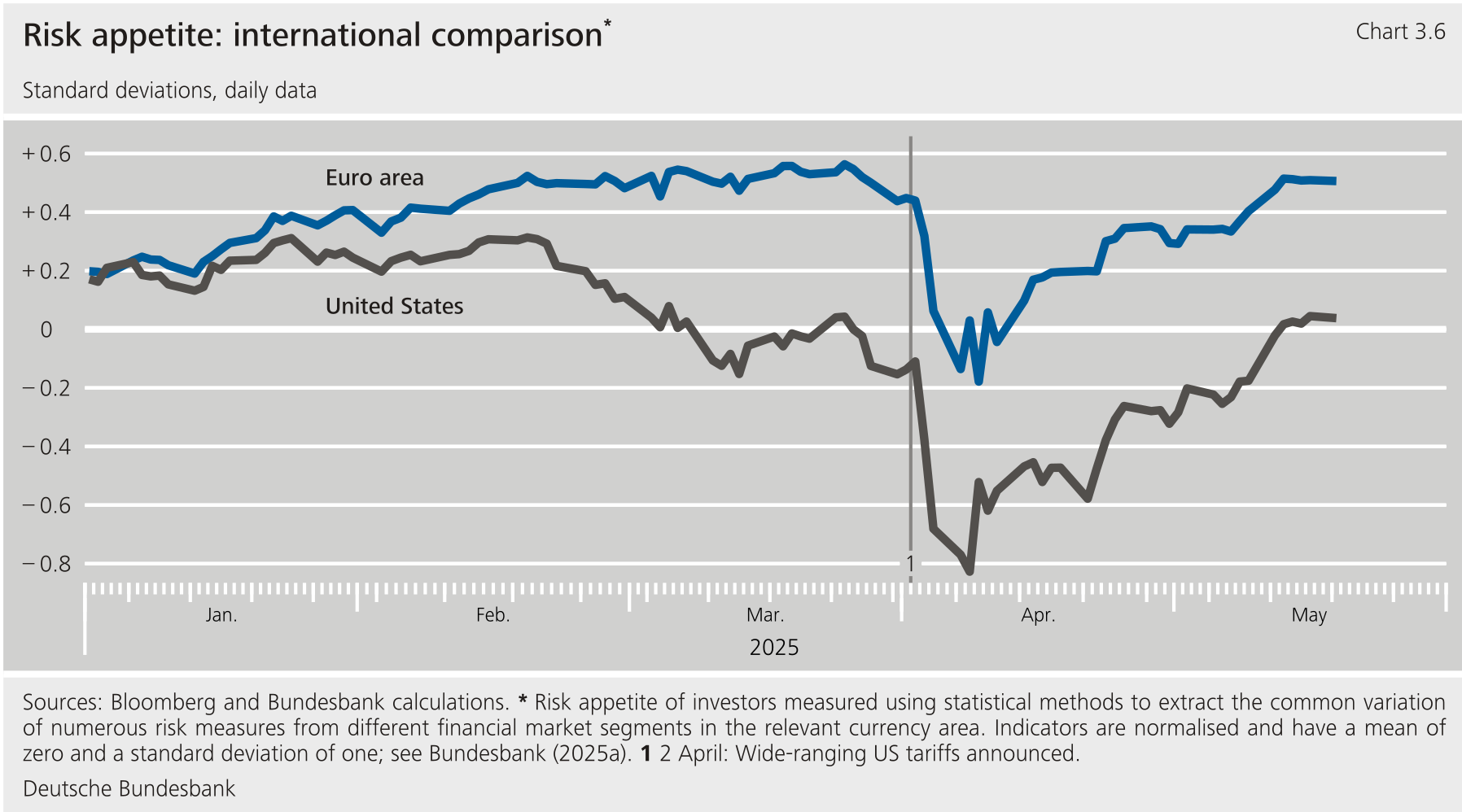
*****International financial markets were also strongly influenced by political developments in the United States.** For example, the tariff announcements at the beginning of April triggered severe financial market reactions, which probably also showed that confidence in the safe haven status of the currency had been damaged, at least temporarily. Some market participants also suspected that this policy initiative was part of a broader economic policy attempt to reduce the trade deficit via a weaker dollar. This perception was amplified by the President's repeated public and in some cases severe criticism of officials. For all these reasons, market participants expected significant growth risks and investment risks for the economy. The emerging concerns led to an extremely unusual financial market response: the dollar came under marked broad-based downward pressure. At the same time, investors' risk appetite slumped, leading to strong equity market losses amid high financial market volatility, and Treasury prices fell markedly. The response thus differed qualitatively from the otherwise usual safe haven movements under financial market stress, in which the dollar appreciates and Treasuries gain in value.***{#par-o787u8}
*****International government bond yields saw mixed developments amid high levels of uncertainty.** Market participants' concerns about a further significant slowdown in economic activity dominated at the beginning of the first quarter of 2025. The administration's tariff announcements amplified these developments, but abruptly halted the previous decline in yields and caused a surge in yields over German federal securities. This was partly due to the fact that Bund yields fell significantly, given their safe haven status among investors. Looking at the entire review period, however, this was offset by the impact of high planned fiscal spending on defence and infrastructure in Germany and the rest of the euro area, which, taken in isolation, is associated with medium-term growth impulses from the perspective of market participants, thereby supporting the picture of higher longer-term real interest rates in particular. The expected increase in free float of Bunds in view of the expected issuance volume also contributed to the rise in yields.***{#par-o39e1a}
*****As a result of** **policy, market participants' risk appetite saw striking declines at times.** The market for risky financial market investments thus came under massive pressure.For example, the tariff announcements led to sharp equity price losses, rising yield spreads on corporate bonds and an exceptionally strong increase in implied stock market volatility. However, the administration's announcement of a temporary suspension of a large number of tariffs then set a countermovement in motion and contributed to strong price gains, which more than offset the previous losses. The potential for downward corrections in the event of further volte-faces in economic policy remains considerable. Given the comparatively favourable earnings outlook for European enterprises, the uncertainty still associated with tariff policy weighed mainly on earnings expectations. Overall, equity prices rose slightly, while European equities recorded strong gains.***{#par-o6o7uo}
***2 Exchange rates*** {#tar-2}
-------------------------------
*****The euro has appreciated significantly against the** **dollar since the beginning of the year.** In the eyes of market participants, the economic outlook for the euro area improved markedly at the beginning of March. This was because the negotiations between the parties to Germany's new coalition government had produced the prospect of a surprisingly comprehensive fiscal package aimed at significantly improving Germany's defence capacity and infrastructure. Taken in isolation, this weighed on the dollar against the euro. In addition, disappointing data on the labour market, consumer confidence and, later, the business climate in the United States also weakened the dollar. Following the initial optimism surrounding Donald Trump's election victory, attention thus turned increasingly to the inflation and growth risks posed by his tariff plans. Against this backdrop, the Federal Reserve in mid-March revised its growth forecast for the United States downwards for 2025 and 2026.***{#par-u41u4e}
{#par-i242a3}
***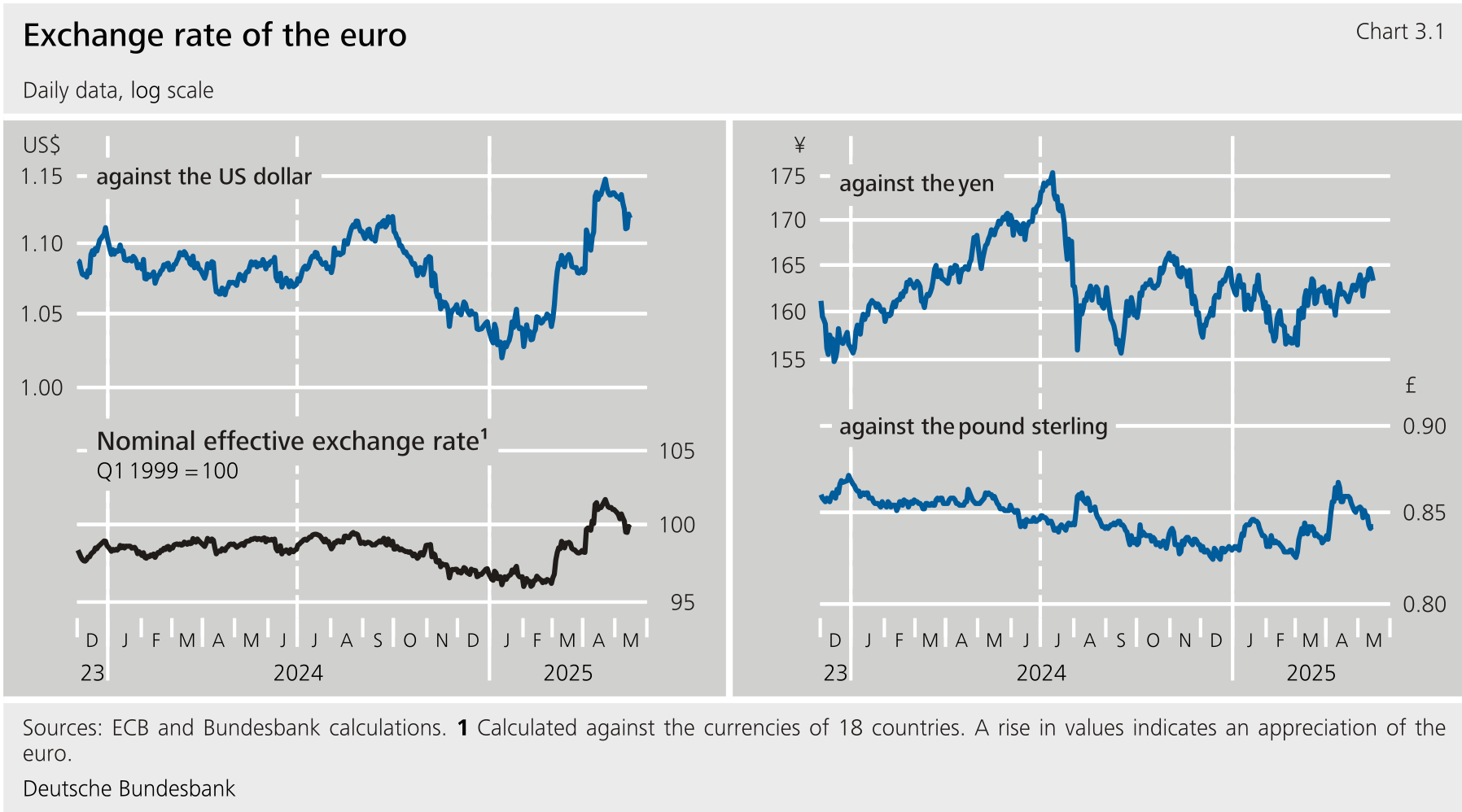***
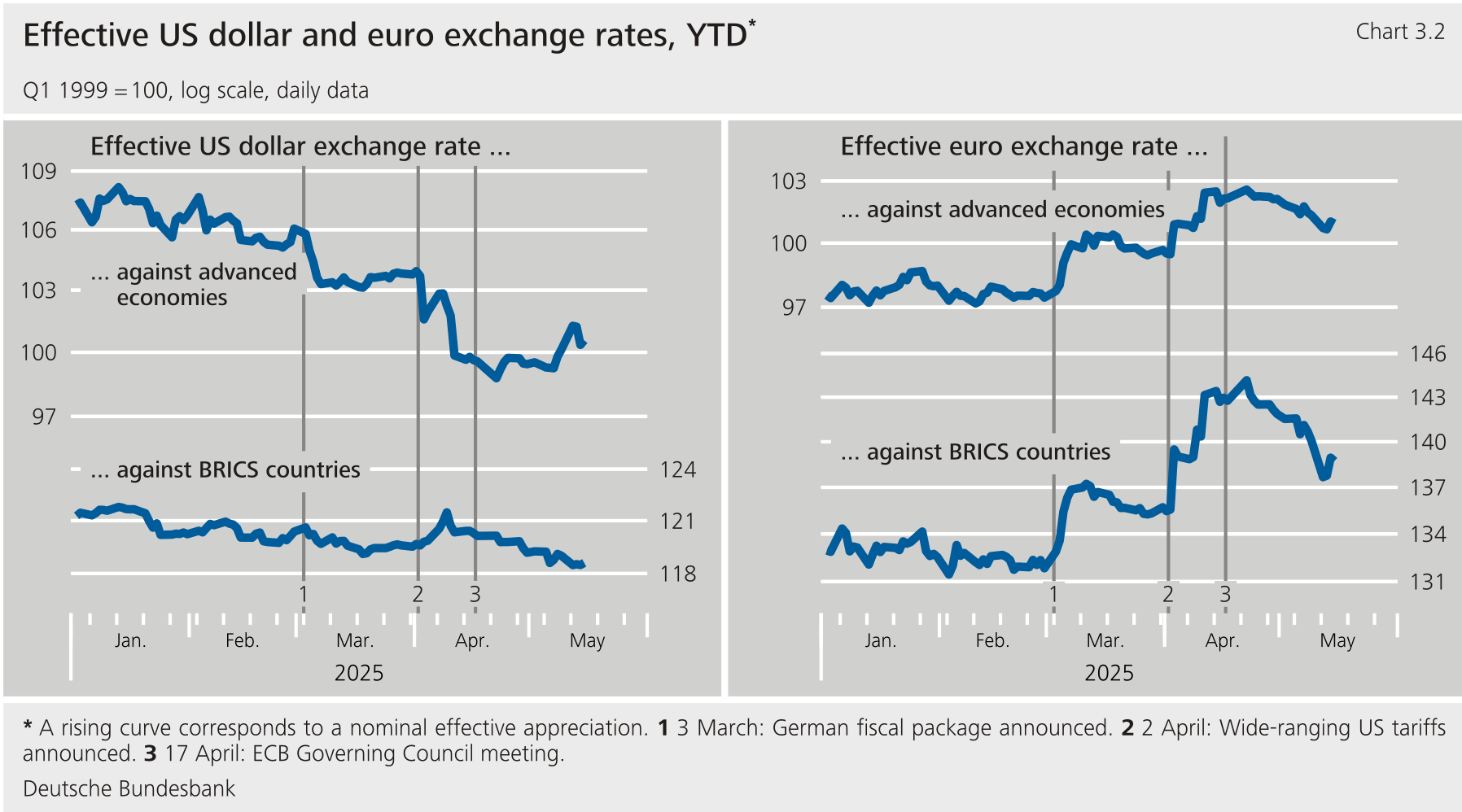
*****American economic policy weighed on the** **dollar** . The global import tariffs announced by the administration at the beginning of April were significantly more extensive than expected. This increased expectations of interest rate cuts in the United States, and the dollar depreciated by 2.8 % against the euro within the space of two days. This response was remarkable, as the adoption of import tariffs is usually accompanied by an appreciation due to the expected lower demand for foreign currency. There were two main reasons why the effect on the dollar was different in this case: First, market participants apparently assessed the tariff package as posing particularly serious risks to economic growth in the United States. Moreover, markets do not appear to have placed their usual high level of confidence in the dollar during this event. This is suggested by the fact that the tariff announcement not only weighed on the dollar, but also led directly to considerable losses in the prices of shares and long-term Treasuries as well as to a decline in risk appetite that was at times striking (see the "[Securities markets](https://publikationen.bundesbank.de/publikationen-en/reports-studies/monthly-reports/monthly-report-may-2025-957960?article=financial-market-environment-957530#3-Securities-markets)" chapter). Such a reaction is unusual because similar financial market turmoil normally results in increased demand for government bonds, which are considered particularly safe. Although the President partially suspended the newly adopted tariffs imposed on the and other trading partners, tariff policy vis-à-vis China nevertheless had a marked impact on the euro- dollar exchange rate. For example, the euro once again appreciated markedly when tariffs on imports from China and Chinese countertariffs were raised considerably in a multi-step process of escalation (see the "[Global economy buffeted by tariff storm](https://publikationen.bundesbank.de/publikationen-en/reports-studies/monthly-reports/monthly-report-may-2025-957960?article=global-and-european-setting-957526#1-Global-economy-buffeted-by-tariff-storm)" chapter in the "Global and European setting" article). By contrast, when the two countries were later able to provisionally agree on a reduction in tariffs, the euro temporarily depreciated again. In addition to volatile tariff policy, the President's political pressure on the Federal Reserve also weighed on the dollar. Finally, the dollar also declined due to one of the major credit rating agencies downgrading the credit quality of government paper. On balance, the dollar depreciated against the euro and in effective terms against the currencies of advanced economies. Although high import tariffs are likely to weigh heavily on emerging market economies in particular, the dollar depreciated against an average of major emerging market currencies as well, which is also a rather unusual development. As this report went to press, the euro stood at $1.13 and was thus 8.4 % stronger than at the beginning of the year.***{#par-ao2ei5}
{#par-uuoi12}
****
****On balance, the exchange rate of the euro against the yen has remained virtually unchanged since the beginning of the year.** Following the Bank of Japan's policy rate hike at the end of January, the euro initially depreciated against the yen. The Bank of Japan's communication was seen as a signal that it would continue to raise interest rates against the global monetary policy trend, thereby narrowing the interest rate differential with the euro area. The publication of better-than-expected economic data and comparatively high inflation figures for Japan supported this assessment. At the beginning of March, the announcement of the planned German fiscal package and the associated positive economic expectations also supported the euro against the yen. Since then, the single currency has been moving against the yen without a clearly identifiable trend. Most recently, the euro was trading at 163, meaning the euro's exchange rate against the yen has remained virtually unchanged on balance since the beginning of the year.**{#par-o948iu}
****The euro has appreciated against the pound sterling since the beginning of the year.** Over the review period, the exchange rate movements of the euro against the pound sterling were driven by factors similar to those influencing its movement against the dollar. The euro also appreciated against the pound sterling following the announcement of the fiscal package agreed by Germany's future coalition government. A second surge in appreciation came after the administration announced plans to impose high additional tariffs worldwide. The comparatively close political and economic ties between the United Kingdom and the United States made themselves felt here. The pound sterling gradually recovered in the wake of the United Kingdom's tariff agreement with the United States. As this report went to press, however, the euro stood at £0.84, still 1.5 % up on end-December 2024.**{#par-e7o937}
****The effective appreciation of the euro has worsened Germany's price competitiveness.** As a weighted average against 18 trading partners, the euro has appreciated by 3.4 % since the beginning of the year. This was mainly due to the significant appreciation against the dollar mentioned above. However, the euro also appreciated markedly against numerous emerging market currencies. For example, the marked 7.1 % appreciation against the renminbi made a further important contribution to the euro's strength. Therefore, the price competitiveness of Germany and the euro area has worsened since the beginning of the year. Nevertheless, according to our calculations, the price competitiveness position of the euro area vis-à-vis a broad group of countries can currently be regarded as favourable. Based on this measure, however, Germany's price competitiveness has fallen to a neutral level.**{#par-ao1oiu}
**3 Securities markets** {#tar-3}
---------------------------------
### **3.1 Bond market**
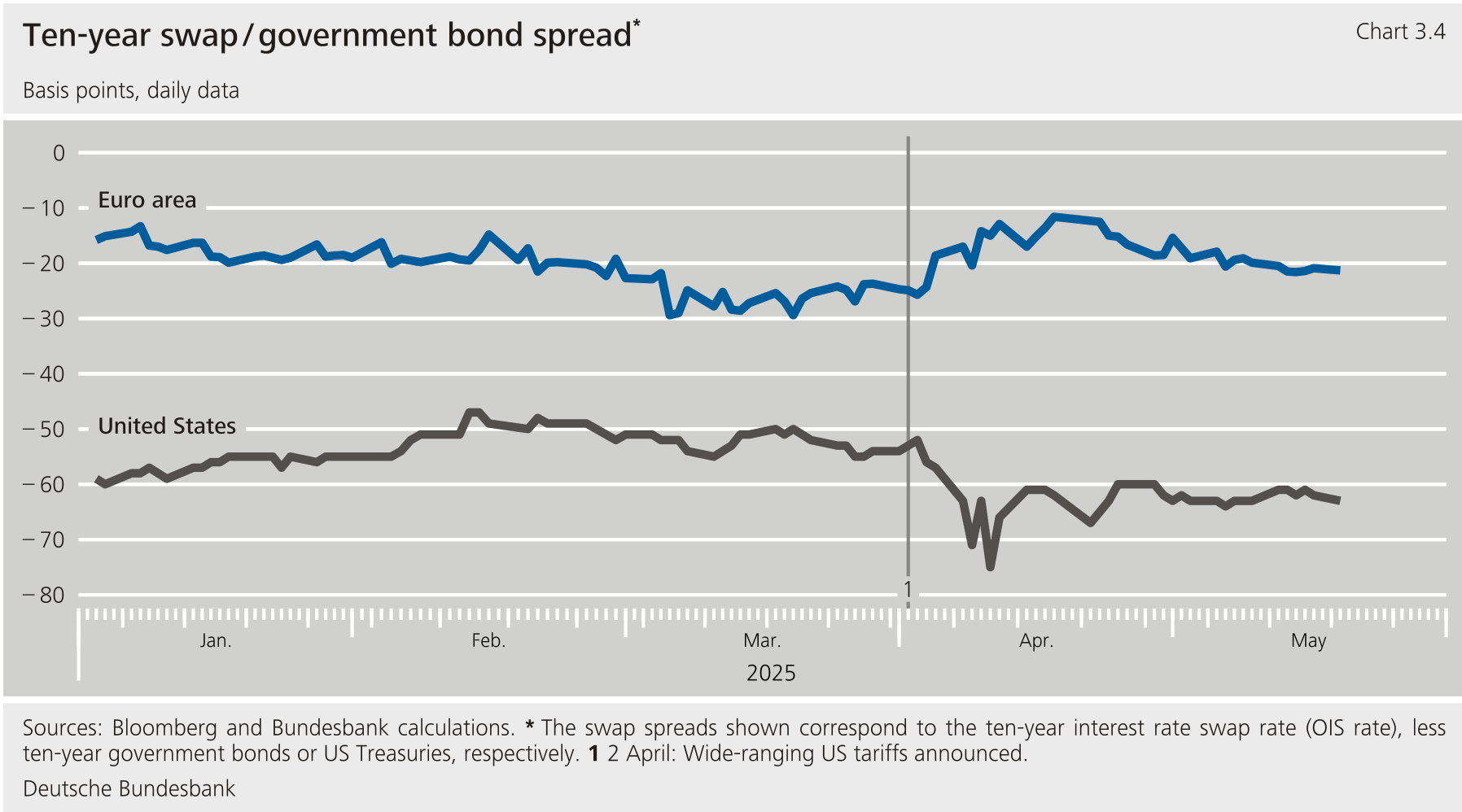
****sovereign bond yields declined markedly in the face of increasingly entrenched expectations of a slowdown in economic activity.** Since the beginning of the year, signs of a slowdown in the economy have increased, putting pressure on both policy rate expectations and long-term Treasury yields. For example, unexpectedly unfavourable sentiment indicators dampened the previously strong level of economic optimism. This deterioration in sentiment affected consumer confidence in particular, but also hit services and industry. One important reason for this was uncertainty about the administration's economic policy stance, particularly its tariff policy. At the beginning of April, this led to temporary disruptions in the long-term Treasury market, with yields spiking higher at times amid reduced market liquidity. According to market observers, this abrupt rise in yields may have been self-reinforcing in some cases. For example, it may have forced investors who typically exploit small price differences between Treasuries and related futures contracts to sell their Treasury positions.[\[1\]](#_ftn_root_1) In addition, the simultaneous losses in Treasury and equity prices, in some cases, may have led investors to offload Treasuries as a way of generating liquidity in the face of heavy portfolio losses.[\[2\]](#_ftn_root_2) Another striking observation was that ten-year yields on Treasuries rose more strongly than the rates of equivalent interest rate swaps ( rates) as a result of the tariff announcements. Together with a significant decline in investors' risk appetite and the effective depreciation of the dollar, this suggests that market participants had their doubts about the safe haven status of Treasuries, at least temporarily. The subsequent announcement by the administration to waive a large portion of the recently adopted country-specific tariffs for the next 90 days then helped to calm the market and to bring Treasury yields back down somewhat. In addition, the aforementioned agreement between the and Chinese governments helped to de-escalate the trade dispute. Nevertheless, uncertainty about the 's future economic policy remained high and continued to weigh on the economic outlook. Towards the end of the reporting period, the rating downgrade of Treasuries from AAA to AA1 by the rating agency Moody's gave yields somewhat of a boost. On balance, however, nominal yields on ten-year Treasuries sank by 12 basis points to 4.5 % as this report went to press.**{#par-ea47uo}
{#par-i7865e}
**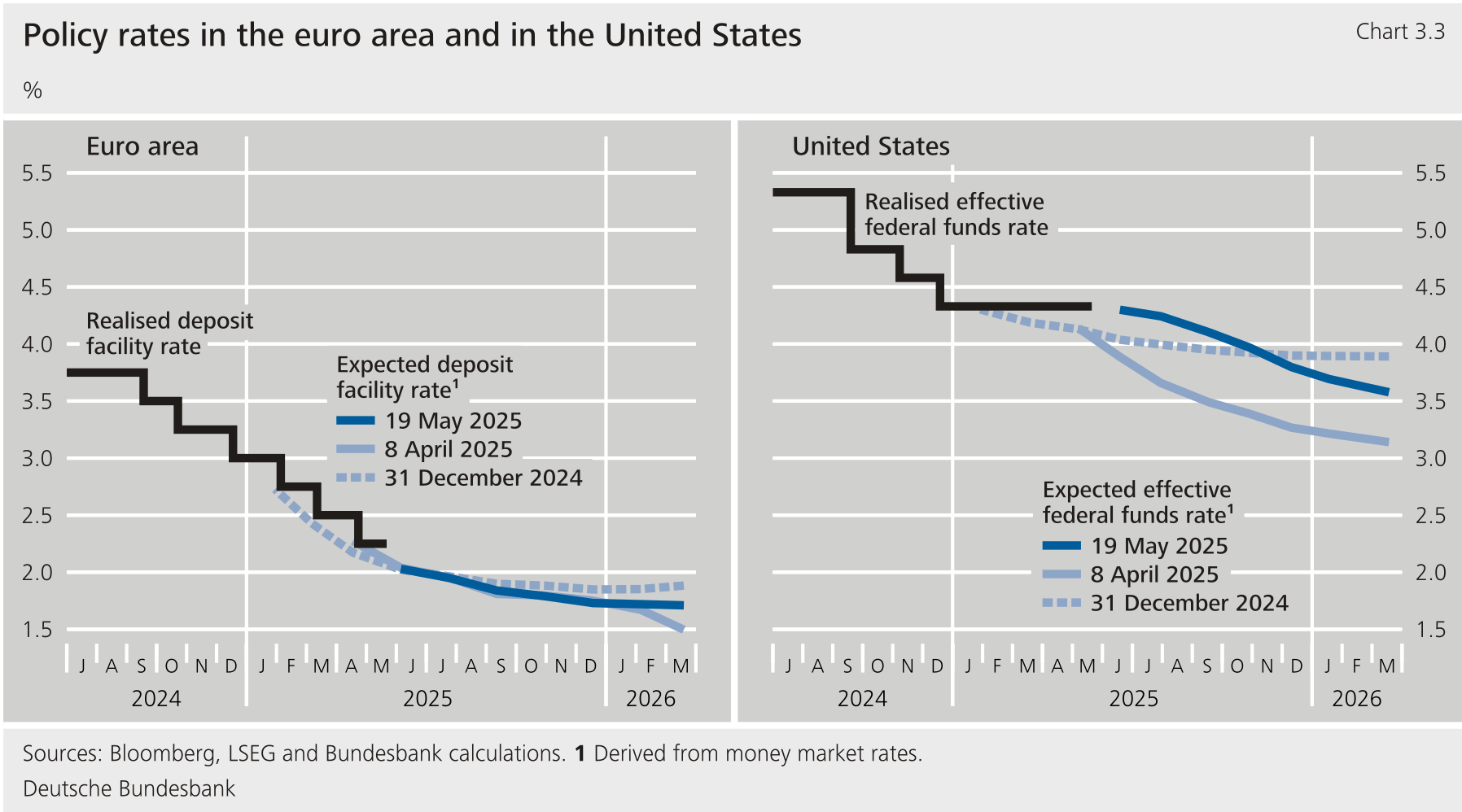**
****Long-term government bond yields in the euro area rose despite declining** **yields and stronger expectations of policy rate cuts.** The Eurosystem cut key interest rates by 25 basis points in January, and again in March and April. In view of progress made in the disinflation process and concerns about a global slowdown, the path for policy rates also declined somewhat in the short and medium term. For example, calculated on the basis of money market rates, the expected deposit facility rate for the period up to end-2025 most recently stood at 1.7 %, which is around 55 basis points lower than its current level. The fact that government bond yields nevertheless rose slightly on balance is largely due to the expansionary fiscal measures planned by the new German Federal Government. Market participants interpreted these measures primarily as a positive medium-term growth impulse and accordingly priced in a higher longer-term real interest rate level. They expected that the anticipated fiscal effects would not remain confined to Germany but would support activity in the euro area as a whole. These effects on long-term interest rates overshadowed both the expectation of larger policy rate cuts and the yield-dampening effects from the , meaning that the -weighted yield on ten-year euro area bonds rose by 15 basis points to 3.0 %.**{#par-a6i315}
{#par-uoa78a}
****
****Yields on ten-year Bunds and government bonds issued by other euro area countries rose similarly sharply.** On 5 March, the day after the fiscal measures were announced, ten-year Bunds recorded their highest daily increase since 1990, with a yield increase of 29 basis points. The growth stimulus that market participants expected these measures to deliver was reflected in both long-term expected real interest rates and real term premia, while the impact on inflation expectations remained limited. The rise in yields also exceeded the increase in the interest rate swap rate ( rate) for the same maturity. This reflects a higher expected free float that investors would have to absorb (see the supplementary information entitled "[Higher free float of government bonds](https://publikationen.bundesbank.de/publikationen-en/reports-studies/monthly-reports/monthly-report-may-2025-957960?article=financial-market-environment-957530#Higher-free-float-of-government-bonds)"). From the perspective of market participants, the planned fiscal measures will not weigh on Germany's triple A credit rating or the benchmark status of Bunds. This was also evident after the tariff announcements of 2 April, when investors' risk appetite slumped and the increased demand for safe Bunds dampened their yields again (safe haven flows). In addition, global growth concerns associated with the tariff announcements have recently put pressure on yields. On balance, yields on ten-year Bunds nevertheless rose by 22 basis points during the period under review, closing at 2.6 %.**{#par-a8a865}
**-**weighted yield spreads of ten-year euro area government bonds over Bunds with the same maturity narrowed slightly.** The decline in risk appetite triggered by the tariff announcements was not reflected visibly in the yield spreads on euro area government bonds. It is worth noting that the yield spreads of French government bonds over Bunds narrowed by a total of 165 basis points. At the turn of the year, they had reached a relatively high level in the face of great political uncertainty.**{#par-o329u3}
****Yields on ten-year** **and Japanese government bonds rose.** After the Bank of Japan raised its policy rates to 0.5 % in January, speculation about further interest rate hikes boosted Japanese government bond yields. In addition, supported by rising wages and relatively high inflation rates by historical standards, yields rose to 1.6 % at end-March, a level last reached in 2008. They declined again as a result of the tariff announcements in April and the resulting economic concerns and safe haven flows. Nevertheless, at 1.5 %, they are currently 38 basis points higher than at the turn of the year. The Bank of England lowered its policy rate by 25 basis points in February and then again in May. With regard to further interest rate cuts, it stressed that a gradual and cautious approach was appropriate. As in the euro area, interest rates in the United Kingdom responded strongly to the latest events in the tariff dispute. On balance, ten-year British gilts yielded 10 basis points above their levels at the beginning of January.**{#par-a3i72o}
****Market-based inflation indicators barely changed overall in the period under review.** For 2025, market-based inflation expectations derived from euro area inflation swaps stand at 2.0 %, meaning they are still in line with the price stability objective. Market-based inflation expectations for 2026 and 2027 remained virtually unchanged on balance. They signalled downside risks and remained entrenched at the lower end of the inflation target. According to surveys conducted by Consensus Economics, inflation expectations stood at 1.9 % for 2026 and 2.0 % for 2027. While the Federal Government's fiscal package had barely any effect on market-based inflation compensation in the euro area, the tightening of tariff and trade policies and changing commodity prices had a major impact on short to medium-term inflation expectations in the period under review. Market participants in the euro area saw in these measures primarily the threat of a deteriorating growth outlook, which was also reflected in the significant fall in oil prices following the tariff announcements. In addition, the significant appreciation of the euro against the dollar had a dampening effect on inflation expectations in the euro area. The countermovement in financial markets also led to a certain increase in market-based inflation expectations towards the price stability objective.**{#par-ou7ae2}
{#par-a761ao}
**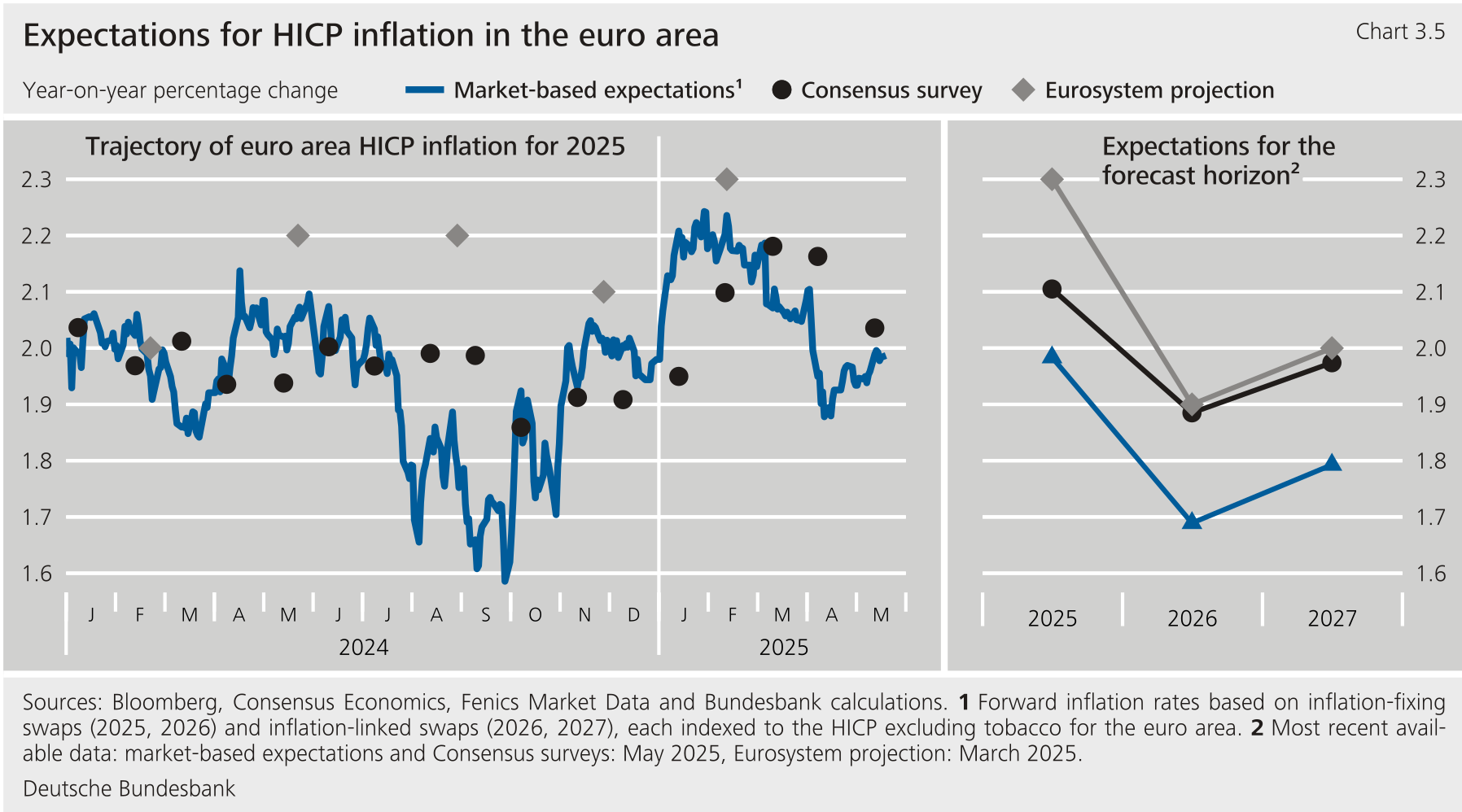**
****Market prices and surveys point to inflation expectations remaining firmly anchored at the level of the stability objective.**The five-year forward inflation rate five years ahead has risen by 7 basis points since the beginning of the year, remaining in line with the target at 2.1 %. Longer-term survey-based inflation expectations for the euro area calculated on a quarterly basis by Consensus Economics also remained at the 2 % inflation target level in April.**{#par-i9595u}
****Yields on European corporate bonds rose initially as market participants' risk appetite fell sharply, but declined again recently as the market broadly recovered.** Yields on BBB-rated corporate bonds with residual maturities of between seven and ten years rose on balance for both financial and non-financial corporations. As yields on matched-maturity federal securities rose in a similar manner, yield spreads barely changed on balance. Overall, the financing costs of European firms, as measured by yield spreads, were recently below their corresponding five-year averages irrespective of their credit quality ratings.**{#par-e78692}
{#par-e75o74}
****
### **3.2 Equity market**
****Amid considerable fluctuations, equity prices saw slight gains in the United States and strong gains in the euro area.** The S\&P 500 index first rose to a new record high in February before suffering significant price declines. Ultimately, however, it recovered and was, at the end of the period under review, 1.4 % higher on balance than at the beginning of the year. The EuroStoxx rose sharply during the same period, gaining a total of 12.6 %. In the United States, prices were buoyed mainly by a good reporting season at the beginning of the year. However, the technology sector dropped off significantly when a Chinese company unveiled a surprisingly efficient -based language model. As a result, the overall market also developed much more weakly, as consumer confidence, which is very relevant for the economy, deteriorated sharply. One key reason for this is likely to have been the prospect of restrictive tariff and trade policy, the potential consequences of which led to high uncertainty among consumers. In the euro area, by contrast, prices rose in the review period on the back of somewhat better-than-expected economic signals, which was also reflected in firms' higher medium-term earnings expectations. The fiscal package adopted in Germany provided a key impulse here, as reflected, amongst other things, in above-average equity price gains in the construction and armaments sectors. However, the surprisingly confrontational tariff announcements of 2 April caused temporarily strong price losses not only in the United States but also in the euro area, in addition to a slump in risk appetite and a sharp rise in uncertainty. For example, implied volatility in equity markets rose to multi-year highs on both sides of the Atlantic following the tariff announcements. The aforementioned tariff deals that the administration has negotiated in the meantime would later help calm the market. This led to a significant decline in uncertainty -- at last count, it was once again below the respective five-year averages as measured by implied volatility for both the EuroStoxx and the 500 index. Against this backdrop, German equity prices () rose to a new record high, posting gains of 18.1 %, which was once again stronger than the European market as a whole. All in all, the divergent developments between the euro area and the United States seem to reflect the damage to confidence suffered in the currency area. Equity prices in the , as measured by the 100 index, gained 6.4 % in value. By contrast, Japanese equities (Nikkei index) recorded a significant decline of 6.0 % during the period under review, mainly owing to the appreciation of the yen against the dollar, close economic ties with the United States and the resulting uncertainty about future trade policy.**{#par-i91o79}
****Euro area bank shares recorded an exceptionally strong increase, while** **banks also recorded price gains.** Over the period under review, European banks' equity prices significantly outperformed the EuroStoxx overall index (+38.2 %). One reason for this was the significantly higher earnings expectations in the banking sector over both the short and medium term. The impact of potential interest rate declines on interest income was largely limited and offset by the strong dynamics in fee receipts. Large systemic financial institutions in particular benefited from the high market volatility caused by tariff policy. banks recorded significantly lower price gains, but also outperformed the market as a whole. Concerns about rising corporate insolvencies and weaker investment activity in the United States are likely to have had a dampening effect on banks' share prices.**{#par-u5ii7i}
****European and** **equity valuations have declined since the turn of the year.** Equity risk premia and the implied cost of equity, i.e. the sum of risk-free interest rates and risk premia, changed little or increased. These valuation measures, calculated using a dividend discount model, take into account both short and medium-term earnings expectations and risk-free interest rates. Medium-term earnings expectations increased for the euro area, while they weakened for the United States in line with the gloomier economic outlook. Given the administration's economic policy stance, market participants thus corrected their previous assessment that medium-term earnings in the United States would continue to grow rapidly. Higher risk-free interest rates made a notable contribution to the higher implied cost of equity in the euro area. Measured in terms of the implied cost of equity, the valuation of European equities is close to its long-term average, while it is higher for equities.**{#par-ii792i}
****Higher free float of government bonds**** {#tar-4}
------------------------------------------------------
****The free float of Bunds is a key factor in the development of long-term yields in the euro area.** Being highly creditworthy and very liquid, these securities serve as a benchmark for pricing other financial instruments in the euro area. A sufficiently high free float is crucial for ensuring that Bunds can fulfil this benchmark function. The free float comprises the holdings of bonds that are freely available for trading. A high free float guarantees that the market is liquid, trading is possible at all times, and the market processes incoming information in a timely manner.**{#par-eou8i4}
****To better contextualise developments in the Bunds market, it makes sense to draw a comparison with the free float of government bonds elsewhere in the euro area.** The free float is calculated based on the Eurosystem's Securities Holdings Statistics by Sector ().[\[1\]](#_ftn_4234802e_1) This body of statistics can be used to derive which stocks are held by the private sector. From these total holdings, we deduct the volume held by long-term private investors such as insurance corporations and pension funds.[\[2\]](#_ftn_4234802e_2) We do this because regulatory requirements and investors' investment strategies generally prevent them from selling securities before maturity. This means that their holdings are not freely available for trading and therefore do not count towards the free float.**{#par-o7aia2}
****The size of the free float can be expressed both in absolute values and as a percentage of the total outstanding volume.**The absolute data provide information on the size of the bond market and help price-sensitive investors to assess the merits of specific trading decisions. Viewing the data in percentage terms, meanwhile, enables bond markets to be compared across jurisdictions and over time. This perspective is useful for assessing market functionality and investors' role in price formation, which is why the relative measure is used below.**{#par-a1ooi8}
{#par-io2818}
**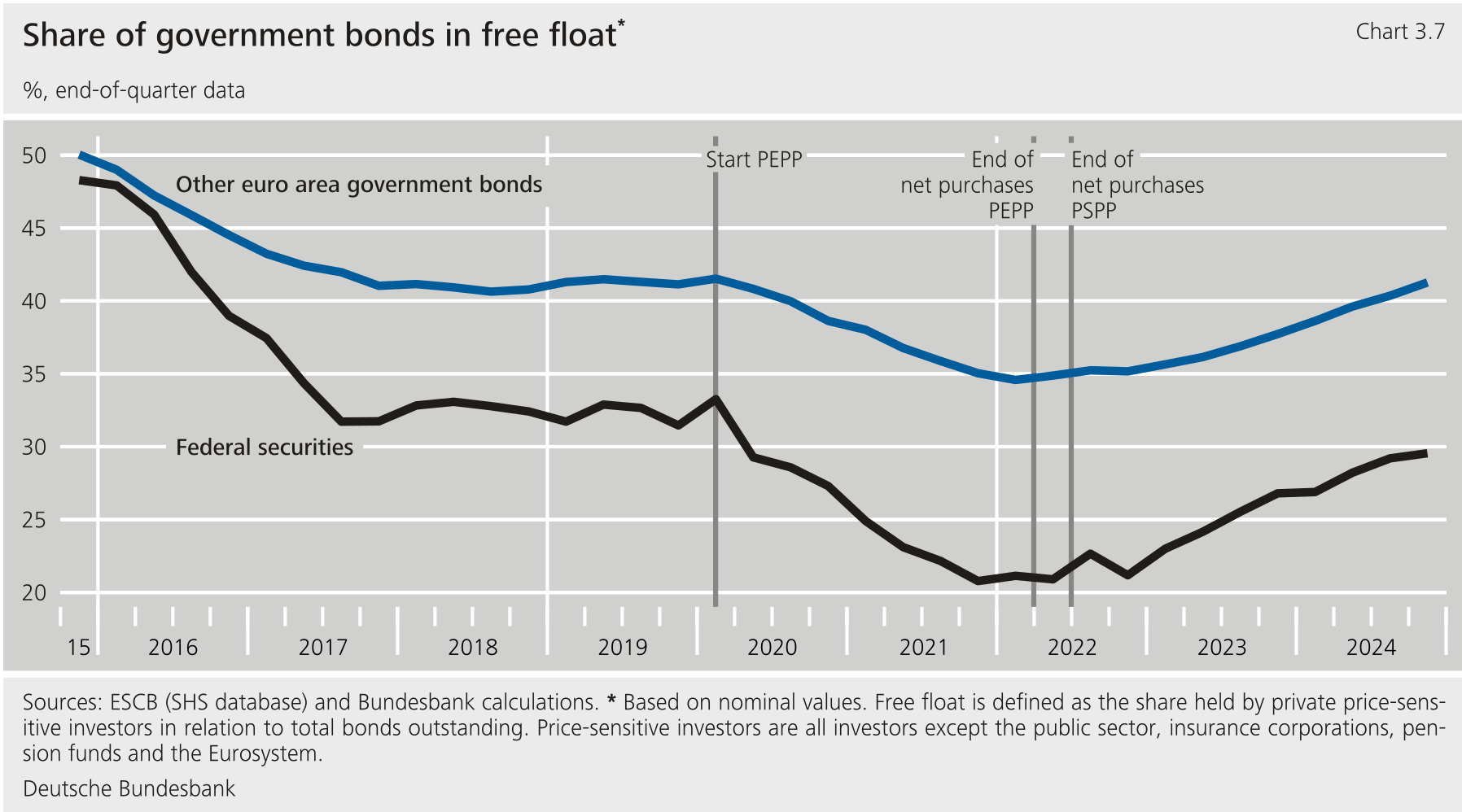**
****Since net purchases under the monetary policy purchase programmes came to an end, the free float of government bonds in Germany and elsewhere in the euro area has picked up again markedly.** The preceding significant decline in percentage terms was chiefly due to the asset purchases by the Eurosystem, which grew to become the largest individual investor in euro area government bonds under the public sector purchase programme () and the pandemic emergency purchase programme (). Before the net asset purchases were discontinued in mid-2022, the Bundesbank was holding more than one-third (36 %) of the total outstanding volume of federal securities.[\[3\]](#_ftn_4234802e_3) By the end of 2024, this share had fallen back significantly to 25 %.[\[4\]](#_ftn_4234802e_4) There were two reasons for this. First, the Eurosystem steadily reduced its holdings. Second, however, the Federal Government's net bond issuance continued to rise. As a result, these holdings were additionally available to trading market participants and thus to free float investors, which meant that the free float share for both federal securities and other euro area government bonds climbed to levels last seen shortly after the began at the beginning of 2020. Since the onset of the coronavirus pandemic at the beginning of 2020, the outstanding volume of federal securities has seen significant growth, rising by more than €700 billion by the end of 2024 on the back of higher government expenditure. So if the relative free float share has broadly returned to early-2020 levels, this calculation will be based on higher absolute levels. This is likely to additionally buoy the liquidity and tradeability of federal securities. It is a trend that looks set to continue this year, in light of the German fiscal package adopted at the beginning of 2025 and the plans to spend more on defence and infrastructure. So far, the additional issuance volume has been absorbed by investor demand, meaning that it was easy for the German Finance Agency to place in the market.**{#par-ouu2ii}
{#par-e96i42}
**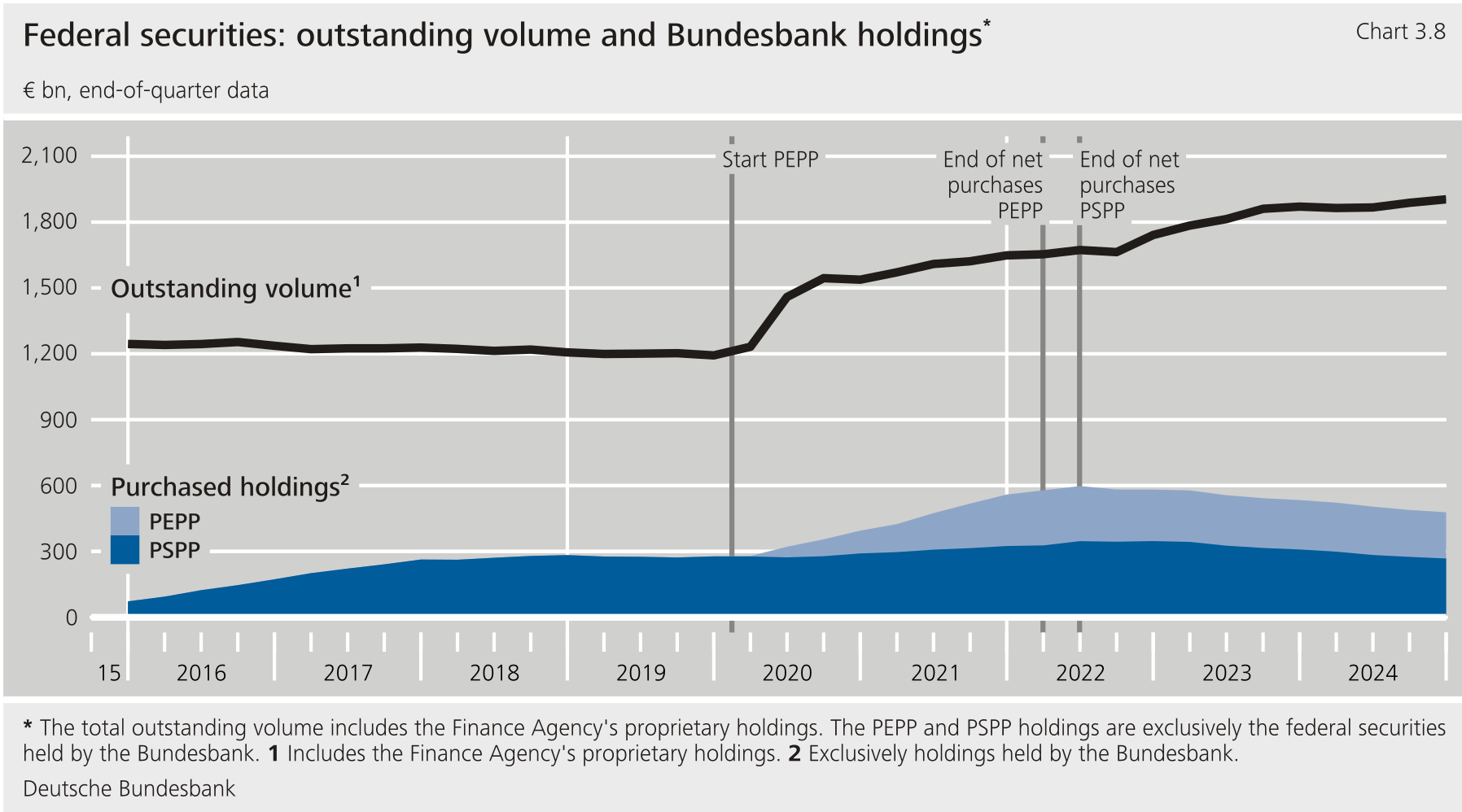**
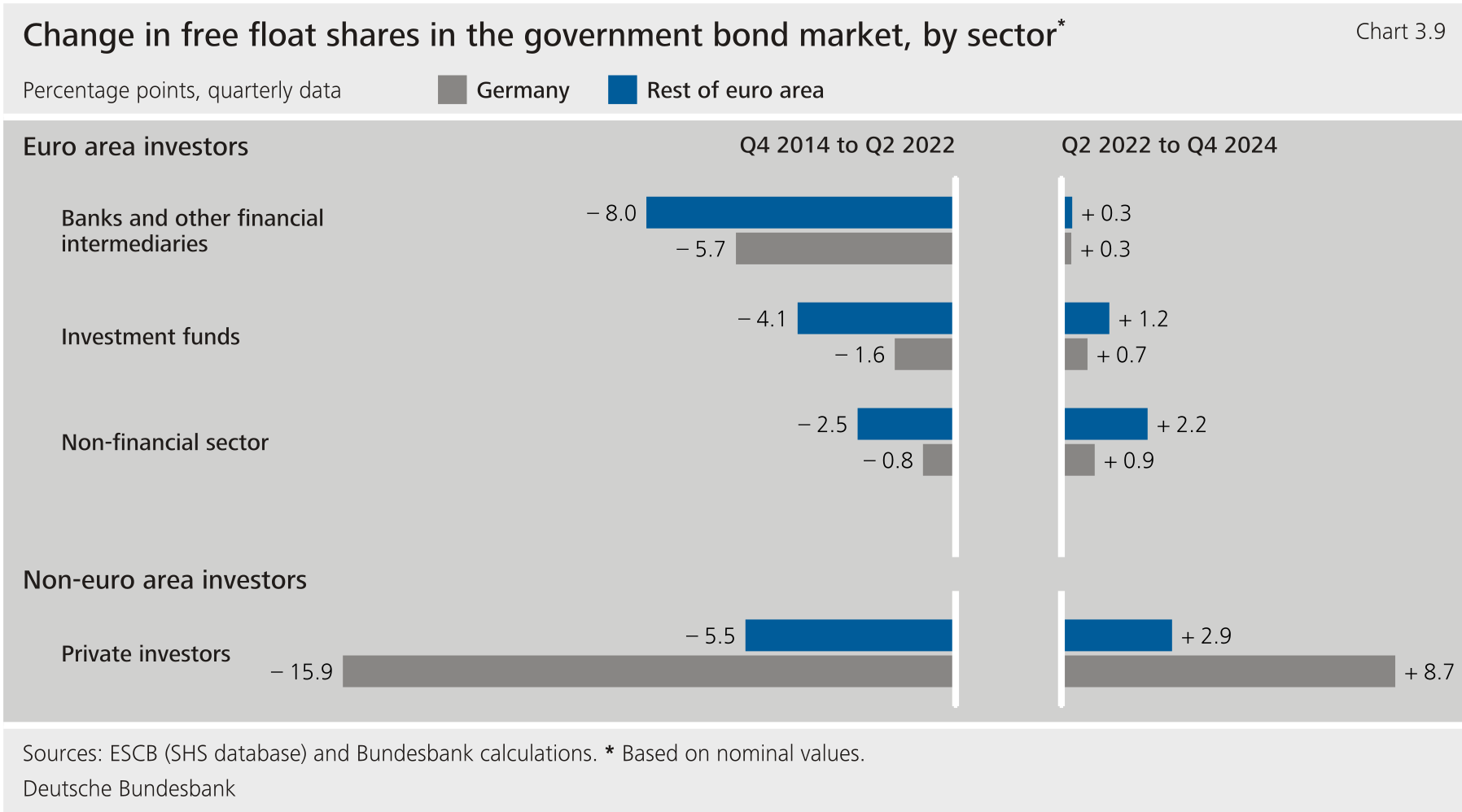
****Non-euro area private investors, whose holdings count towards the free float, have purchased the largest volumes since mid-2022.** However, data for this third-country buyer group are not recorded in the with as much granularity as for investors within the euro area. For example, it is not possible to drill down private investors from outside the euro area further into sub-categories. It is likely, though, that a considerable share of the observed purchases will be on the books of large international financial investors. Their exposure to federal securities is higher in percentage terms than for the rest of the euro area. This suggests that the bout of heavy selling left them needing to catch up by repurchasing federal securities -- assets which they seem to regard as a benchmark investment for the euro area as a whole.[\[5\]](#_ftn_4234802e_5)**{#par-e35979}
****Within the euro area, buyer groups mainly included investment funds alongside the non-financial sector, with banks joining again recently as well.** This means that price-sensitive investors from the euro area whose holdings count towards the free float also stepped up their holdings of European government bonds. Banks in particular returned to bond markets as a buyer group, raising their holdings again slightly over the course of 2024. As was the case with third-country private investors, this reflects something of a catch-up effect and is likely to have been due to European government bonds offering higher yields again after an extended period of low interest rates.[\[6\]](#_ftn_4234802e_6)**{#par-eooooa}
{#par-o78547}
****
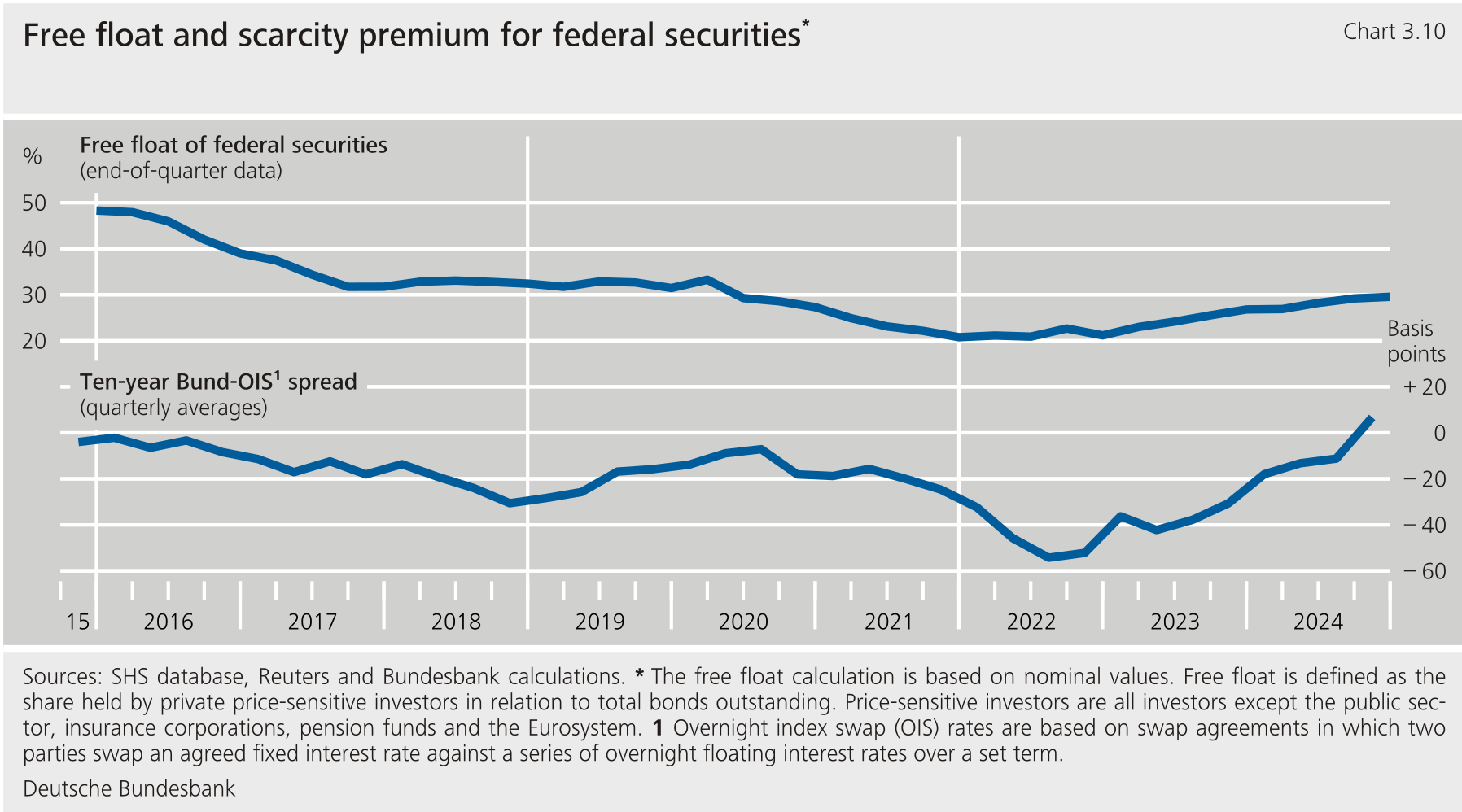
****The continued increase in the free float of federal securities caused the scarcity premium to narrow.** The scarcity premium is defined as the spread between ten-year Bund yields and the ten-year rate for interest rate swaps ( rate).[\[7\]](#_ftn_4234802e_7) Since mid-2022, this spread has narrowed gradually (amid slight fluctuations) as the free float of Bunds has increased. Consistent with relaxed repo markets, this indicates that the availability of federal securities is very good.**{#par-ai4a5o}
{#par-ee913o}
****
{#par-a2i331}
1. **{#_ftn_4234802e_1} The capture the proprietary and customer securities holdings of all reporting account-keeping institutions in the euro area. Not included in the are the holdings of the and the euro area national central banks. See Deutsche Bundesbank (2015).**
2. **{#_ftn_4234802e_2} To avoid the risk of double counting in the data, the holdings are compared with the outstanding volume on a bond-by-bond basis. If the stock recorded in the is higher, the holdings of the non-euro area private investor sector are reduced accordingly. See Eser et al. (2023).**
3. **{#_ftn_4234802e_3} Federal securities holdings resulting from the Bundesbank's monetary policy purchases. Securities held by the remainder of the Eurosystem are not counted here.**
4. **{#_ftn_4234802e_4} Net asset purchases were discontinued at the end of 2022 under the , and at the end of 2022 under the . Starting in March 2023, the Eurosystem only partially reinvested principal payments from maturing securities under the expanded asset purchase programme (), which also includes the , and discontinued these reinvestments altogether in July 2023. Under the , the Eurosystem only partially reinvested principal payments from maturing securities as of July 2024 and discontinued these reinvestments altogether at the beginning of 2025.**
5. **{#_ftn_4234802e_5} See Deutsche Bundesbank (2025b).**
6. **{#_ftn_4234802e_6} Banks' relative holdings declined up to the end of 2023; see Deutsche Bundesbank (2024).**
7. **{#_ftn_4234802e_7} This comparison is based on the assumption that the Eurosystem has purchased government bonds broadly proportionally across all maturity bands and that scarcities in the ten-year segment are also reflected in the free float of all federal securities. See Deutsche Bundesbank (2023).**
***(This article reflects data up to 19 May 2025, 22:00.)***{#par-oeoe11}
**List of references** {#tar-5}
-------------------------------
**Acharya, V. V. and T. Laarits (2025), [Tariff War Shock and the Convenience Yield of Treasuries -- A Hedging Perspective](https://papers.ssrn.com/sol3/papers.cfm?abstract_id=5229097#:~:text=Abstract,covariance%20computed%20using%20intraday%20data), Department of Finance, New York University (), Stern School of Business, Working paper.**{#par-o7866u}
**Deutsche Bundesbank (2025a), [Risk appetite in financial markets and monetary policy](https://publikationen.bundesbank.de/publikationen-en/reports-studies/monthly-reports/monthly-report-january-2025-948696?article=risk-appetite-in-financial-markets-and-monetary-policy-948698), Monthly Report, January 2025.**{#par-iaa636}
**Deutsche Bundesbank (2025b), [German balance of payments in 2024](https://publikationen.bundesbank.de/publikationen-en/reports-studies/monthly-reports/monthly-report-march-2025-952320?article=german-balance-of-payments-in-2024-952336), Monthly Report, March 2025.**{#par-i8oae8}
**Deutsche Bundesbank (2024), [Free float of government bonds in Germany and the rest of the euro area](https://publikationen.bundesbank.de/publikationen-en/reports-studies/monthly-reports/monthly-report-may-2024-931608?article=financial-markets-931602%23Free-float-of-government-bonds-in-Germany-and-the-rest-of-the-euro-area#Streubesitz-von-Staatsanleihen-in-Deutschland-und-im-uebrigen-Euroraum), Monthly Report, May 2024.**{#par-ia653i}
**Deutsche Bundesbank (2023), [Term structures in economic analysis,](https://www.bundesbank.de/resource/blob/852280/f8c31052641a9e507117fbd4c8dd85f4/472B63F073F071307366337C94F8C870/2023-01-zinsstrukturkurven-data.pdf) Monthly Report, January 2023, pp. 53‑74.**{#par-e54156}
**Deutsche Bundesbank (2015), [Securities holdings statistics for analysing holdings of securities in Germany and Europe: methodology and results](https://www.bundesbank.de/resource/blob/622484/c3fdebf39a071a4057fe0682d95a9534/472B63F073F071307366337C94F8C870/2015-03-securities-data.pdf), Monthly Report, March 2015, pp. 95‑107.**{#par-u4243i}
**Eser, F., W. Lemke, K. Nyholm, S. Radde and A. L. Vladu (2023), [Tracing the Impact of the 's Asset Purchase Programme on the Yield Curve](https://www.ijcb.org/journal/ijcb23q3a9.pdf), International Journal of Central Banking 19, pp. 359‑422.**{#par-o77ui1}
1. **{#_ftn_root_1} A price gap of this kind (the "basis") can, for example, reflect regulatory imbalances between demand and supply in the relevant markets. Basis trades, as they are known, are attempts by market participants to benefit from the convergence of bond and futures prices as the futures contract approaches maturity. As part of this trading strategy, they typically take on highly leveraged positions. In the event of strong price fluctuations, there is a risk that these positions will have to be unwound quickly, for example due to high margin calls.**
2. **{#_ftn_root_2} See Archaya and Laarits (2025).**
*[Q1]: first quarter
*[FTSE]: Financial Times Stock Exchange
*[Q2]: second quarter
*[APP]: asset purchase programme
*[Fed]: Federal Reserve System
*[ECB]: European Central Bank
*[PSPP]: public sector purchase programme
*[CDAX]: Composite DAX
*[AI]: artificial intelligence
*[**GDP**]: gross domestic product
*[NYU]: New York University
*[EU]: European Union
*[PEPP]: pandemic emergency purchase programme
*[JPY]: Japanese Yen
*[GDP]: gross domestic product
*[SHSS]: Securities Holdings Statistics by Sector
*[S\&P]: Standard & Poor’s
*[**UK**]: United Kingdom
*[UK]: United Kingdom
*[OIS]: overnight index swap
*[**US**]: United States
*[US]: United States
*[SHS]: Securities Holdings Statistics