# Commentary
* [*1 German economy unable to break free from economic weakness*](#tar-1 "1 German economy unable to break free from economic weakness")
* *[*2 Industrial output suffers dampening effects*](#tar-2 "2 Industrial output suffers dampening effects")*
* **[*3 Private consumption still lacklustre*](#tar-3 "3 Private consumption still lacklustre")**
* ***[*4 Little movement in labour market*](#tar-4 "4 Little movement in labour market")***
* ***[*5 Little change in energy commodity prices recently*](#tar-5 "5 Little change in energy commodity prices recently")***
* ***[*6 Inflation up to 2.4 % in September*](#tar-6 "6 Inflation up to 2.4 % in September")***
***1 German economy unable to break free from economic weakness*** {#tar-1}
---------------------------------------------------------------------------
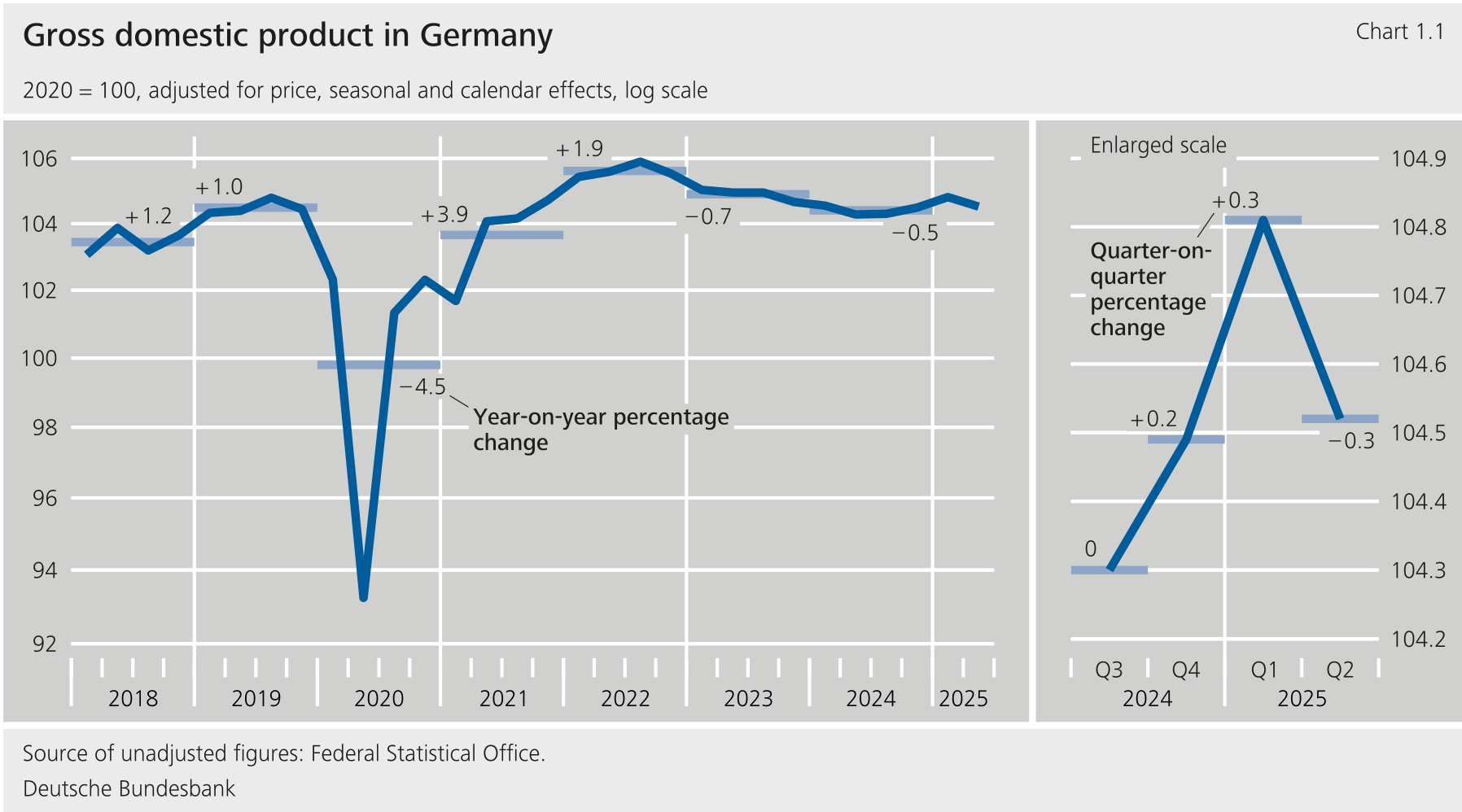
*****Real gross domestic product** ()**is likely to flatten at best in the third quarter of 2025** . Industry is continuing to suffer due not only to structural problems, but also raised tariffs. Output, real sales and real exports of goods saw a decline recently. The same is now also true for industrial new orders. Moreover, the still low level of capacity utilisation in industry and weak competitiveness probably continued to weigh on investment activity and thus on demand for capital goods. Standing somewhat in contrast to this, however, is the improvement in short-term production expectations and, above all, export expectations in September reported by the Institute. A broad-based recovery is likewise still to materialise in the construction sector. Construction output rose slightly averaged across July and August. The increase was attributable solely to the finishing trades, though, whilst output in building construction and civil engineering was lower. The situation in civil engineering is still significantly better than in building construction. Private consumption is likely to have registered a slight increase at most. Activity in the services sector was likewise sluggish. Service providers' output declined slightly in July and the business situation of consumer-related service providers deteriorated in the third quarter, according to surveys conducted by the Institute. However, the Global Purchasing Managers' Index remained just above the expansion threshold in the services sector.***{#par-i913a2}
{#par-i913a2}
******
***2 Industrial output suffers dampening effects*** {#tar-2}
------------------------------------------------------------
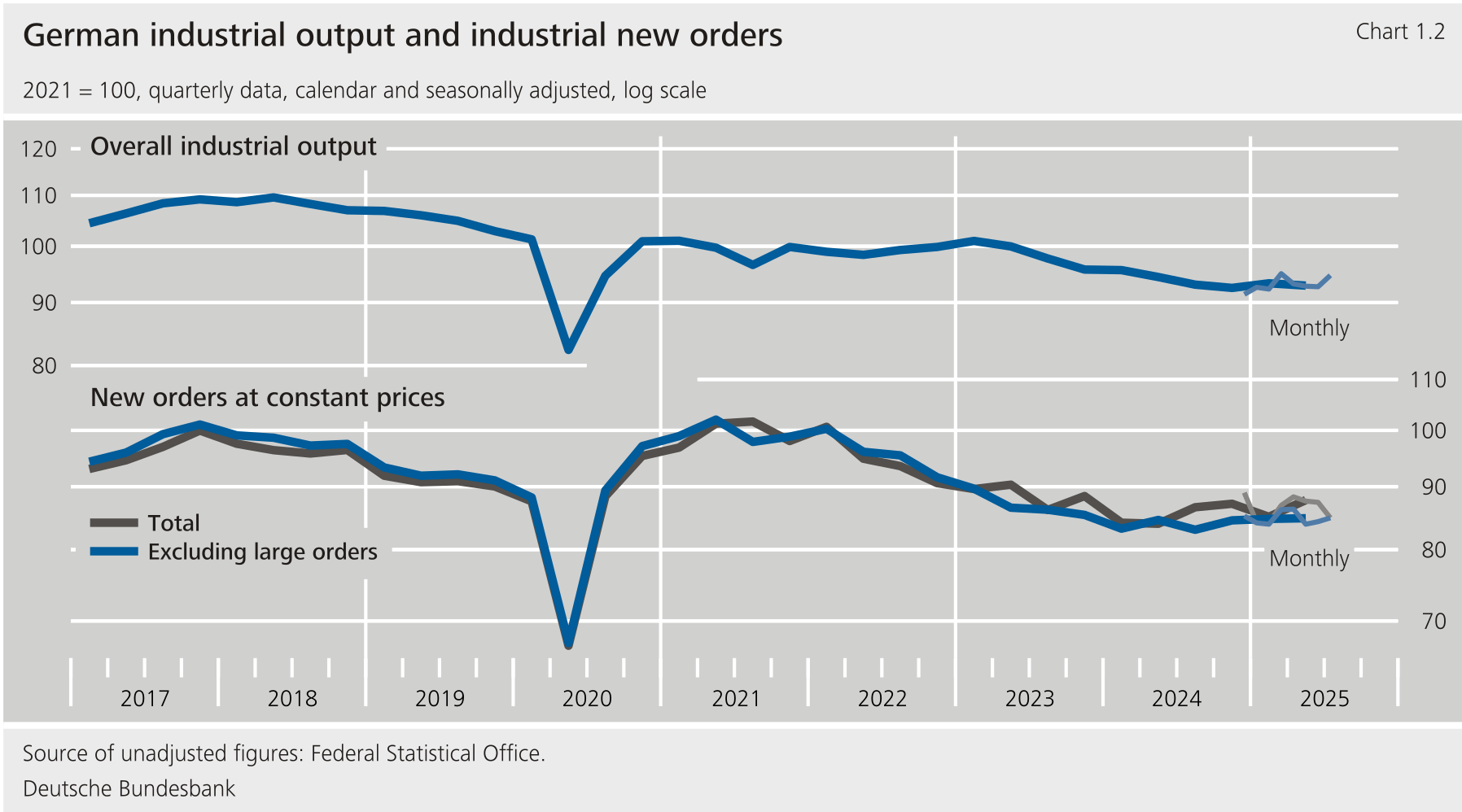
*****German industry's surprisingly strong start to the third quarter of July was significantly stifled in August.** In August, seasonally adjusted[\[1\]](#_ftn_root_1) industrial output was considerably lower than its strong showing in the previous month. The decline in industrial output in August affected all sectors, but especially manufacturers of capital and consumer goods. This was partly due to the fact that car manufacturers' plant shutdowns increasingly occurred in August this year rather than in July, as is the norm.[\[2\]](#_ftn_root_2) However, industrial output also remained below the level of the previous quarter overall when averaged across both months. Alongside the automotive industry, the decline was especially pronounced in the manufacture of electrical and electronic equipment. By contrast, while mechanical engineering output normalised somewhat in August following its surprisingly strong performance in July, it remained significantly higher averaged across both months than in the previous quarter. Within the consumer goods sector, pharmaceutical product manufacturing was weak, in particular. Price-adjusted industrial sales likewise fell in August. They have also been revised downwards for July. Taking the average of July and August, they were therefore worse than in the previous quarter. Figures from the German Association of the Automotive Industry on the number of passenger cars manufactured, which are already available up to September, also point to a weak quarter for the sector. Part of the decline in output is likely to be due to weaker exports owing to the negative impact of the sharp rise in tariffs on imports from the . These are placing an especially heavy strain on Germany's export-oriented economy. Price-adjusted exports were down more sharply in August than in July and are slightly below the previous quarter's level on average. Nominal exports to the United States fell particularly sharply. By contrast, firms' survey data paint a somewhat friendlier picture. Although the business climate index in the manufacturing sector declined again in September, the average level in the third quarter was still higher than before. The Purchasing Managers' Index for industry also remained clearly above the expansion threshold.***{#par-a18e79}
****The previously slight upward trend in demand for German industrial products slowed significantly recently.** Seasonally adjusted industrial new orders contracted somewhat in August and, taking an average of July and August, were clearly below the previous quarter's level. Even excluding the more volatile large orders, new orders in August were considerably down on July. Averaged across July and August, they were thus markedly lower than the previous quarter's level. Most notably, the trend in foreign demand, which had been pointing upward so far, suffered a significant setback. New orders from non- countries (including the United States), especially, recorded a sharp drop recently. The weak increase in domestic demand was unable to compensate for this decline. Demand for capital goods, in particular, fell. However, according to the Institute, improved production plans as well as business and export expectations in the third quarter point to somewhat more robust industrial activity towards the end of the year.**{#par-u1i3au}
{#par-u1i3au}
****
**3 Private consumption still lacklustre** {#tar-3}
---------------------------------------------------
****Private consumption is unlikely to have given much impetus to economic activity in the third quarter either** . The indicators paint a mixed picture. On the one hand, according to data from the German Association of the Automotive Industry, private motor vehicle registrations rose steeply on the quarter. In addition, according to surveys, consumers' income expectations improved markedly in the summer half-year, although they remained at a low level. On the other hand, consumers' propensity to purchase fell, and, mirroring this, their propensity to save increased significantly. In addition, there were economic concerns, as expectations regarding the economy declined. This restraint is also reflected in real retail sales, which fell again slightly in August and remained weak averaged across the first two months of the third quarter. According to data available up to July, price-adjusted sales in the accommodation and food services sector likewise declined on the quarter. Further evidence of weak developments in private consumption in the past quarter is provided by the Institute's survey on the assessment of the business situation by retailers and consumer-related service providers, which deteriorated somewhat.**{#par-i83581}
**4 Little movement in labour market** {#tar-4}
-----------------------------------------------
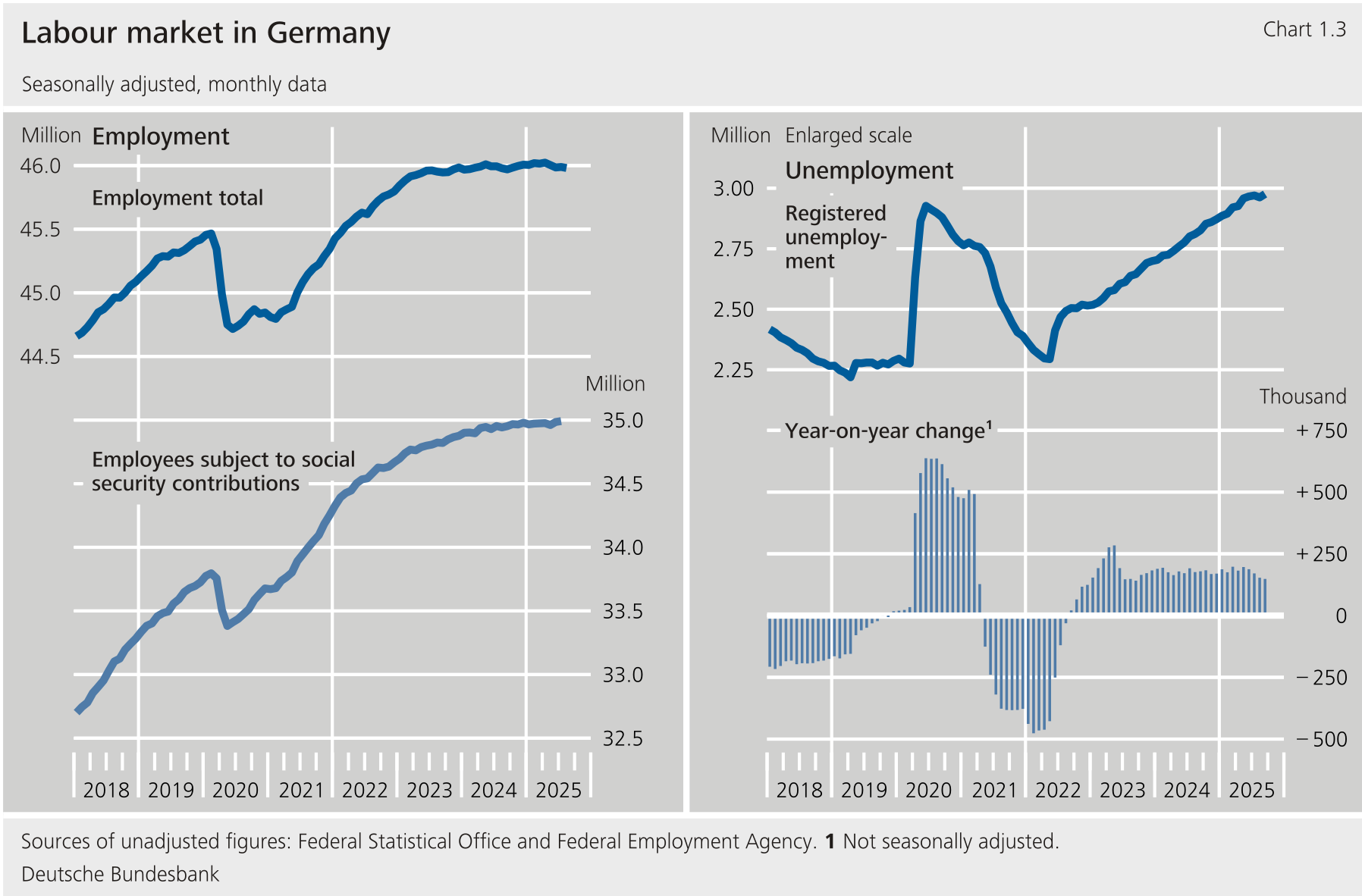
****Continued industrial job losses are still being offset by growth in the services sector.**Total employment in Germany fell only slightly by a seasonally adjusted 8,000 to 45.98 million persons in August. This minor decline is attributable to the downward trend in self-employment and marginal employee numbers. By contrast, employment subject to social security contributions -- initial estimates are only available for July -- recorded a slight month-on-month rise of 7,000 persons. In the manufacturing sector, it continued to decline significantly, but not at an accelerated pace. Conversely, employment in various areas of the services sector increased. Health and social services have been one of these for some time now, as have public administration, education and energy supply. The number of jobs in the construction sector is stable. The use of short-time work for economic reasons has declined markedly since the beginning of the year.**{#par-oe5931}
{#par-oe5931}
****
****The leading indicators of employment paint a split picture.** The employment barometer, a survey of the recruitment plans of trade and industry over the next three months, dropped again significantly in September. According to this barometer, short-term staff reduction plans have been predominant in the manufacturing and retail sectors for some time now, although there appears to have been a bottoming-out in both cases. Furthermore, commercial services scaled back recruitment plans. The main construction sector remained in neutral territory. Standing in clear contrast is the employment barometer, which also looks at publicly financed sectors. This remained virtually unchanged in slightly expansionary territory. According to this barometer, total employment should pick up again slightly soon. The number of vacancies reported to the Federal Employment Agency barely declined during the summer months, following substantial declines. However, newly reported job vacancies remain at a very low level.**{#par-ia953e}
****Unemployment went up somewhat in September.** In seasonally adjusted terms, the number of persons officially registered as unemployed went up by 14,000 on the month to 2.98 million. The unemployment rate remained unchanged at 6.3 % due to rounding. The first month-on-month decline in registered unemployment since 2022 recorded in July has thus not continued as things stand. The number of unemployed persons receiving the basic allowance decreased. Here, the share of immigrants is disproportionately large and their gradual integration into employment, mainly in the growing services sector, is progressing. However, unemployment in the statutory unemployment insurance scheme, which is more cyclically driven, increased. Another factor in the rising unemployment is the decline in labour market policy measures. Persons taking part in these measures are not included in the unemployment statistics, but are effectively underemployed. The total number of underemployed persons reported by the Federal Employment Agency, which includes persons in labour market policy measures in addition to the unemployed, fell in September for the fourth consecutive month. This decline is still small, though. The prospects of registered unemployment also declining again are good, however. The unemployment barometer has recovered markedly in the last few months and is now in positive territory, which suggests that unemployment will go down in the coming months.**{#par-e9o6e4}
**5 Little change in energy commodity prices recently** {#tar-5}
----------------------------------------------------------------
****Energy commodity prices have changed little recently.** Crude oil prices moved sideways in September. Price-dampening factors, such as announcements by countries about plans to expand their oil production, were offset by price-supporting factors, such as concerns about possible Russian oil supply disruptions. Overall, these opposing factors balanced each other out. In October, crude oil prices came under pressure as a result of renewed trade tensions between the United States and China, and the price of a barrel of Brent crude oil recently fell to $63. By contrast, European gas prices remained at the level seen in previous months. This was partly due to a rise in liquified natural gas exports and weaker Chinese demand for gas recently. Conversely, prices were buoyed by the fact that, ahead of the heating season, European gas storage facilities were not as well stocked as last year. Similar to crude oil prices, gas prices are currently around 19 % lower than a year earlier.**{#par-a3a458}
**6 Inflation up to 2.4 % in September** {#tar-6}
-------------------------------------------------
****Prices at the upstream stages of the economy declined in August compared with the previous month.**This is true of both imports and industrial goods on the domestic market. The development was mainly driven by lower prices for energy commodities. However, domestic producer prices excluding energy also fell slightly, whilst import prices excluding energy rose moderately. In year-on-year terms, import prices fell by 1.5 % and industrial producer prices by 2.2 %. Lower energy prices and the exchange rate appreciation of the euro both played a role here.**{#par-ou7846}
****The inflation rate picked up again somewhat in September.** The annual inflation rate as measured by the Harmonised Index of Consumer Prices () increased from 2.1 % in August to 2.4 % in September.[\[3\]](#_ftn_root_3) This was due, amongst other things, to the decline in energy prices in the same month of the previous year and the resulting positive base effect. However, it is likely that core inflation (rate excluding energy and food) also increased from 2.4 % to 2.6 %, with volatile components being the main driver. Excluding travel and clothing, the core rate remained at 2.9 %. The went up again by a seasonally adjusted 0.2 % compared with the previous month. It was mainly services prices that continued to rise. This was primarily due to higher prices for travel, although inflation also remained noticeable for the less volatile services components. Prices of non-energy industrial goods likewise increased, driven in particular by volatile clothing prices. By contrast, food prices remained virtually unchanged on the month, while energy prices went down slightly.**{#par-ooeo97}
{#par-ooeo97}
**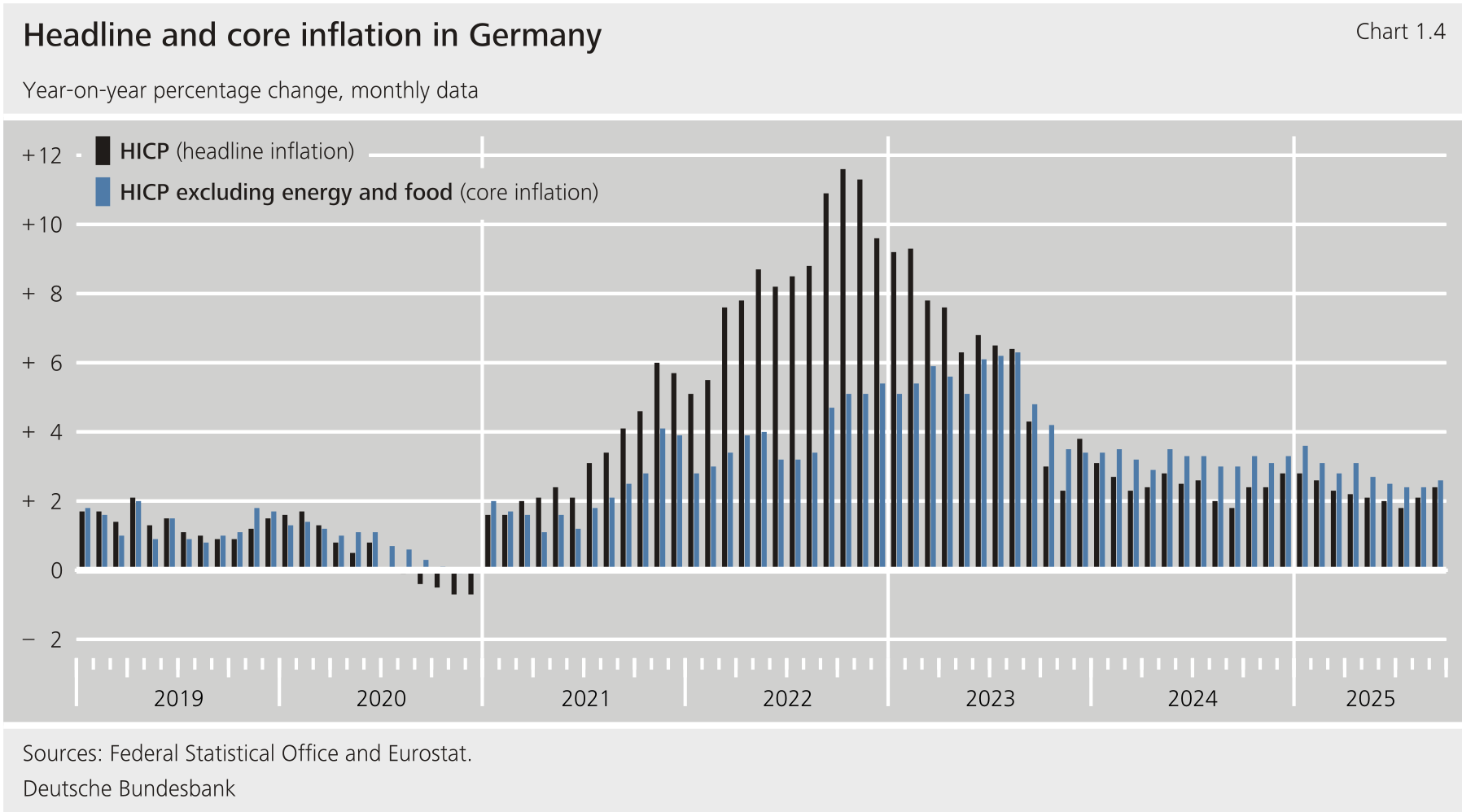**
****In the coming months, the inflation rate is likely to fluctuate around the level reached most recently.** This is mainly due to volatile developments in services prices towards the end of last year and the resulting base effects, especially in the travel sector. Unlike in previous quarters, energy is unlikely to have any further dampening effect on headline inflation in the fourth quarter. The reduction in transmission grid charges for electricity and the abolition of the gas storage levy in January 2026 are likely to dampen the inflation rate somewhat more strongly again, even if the reduction in electricity prices for households is considerably lower than originally planned and the national carbon price for heating and transport will rise again at the turn of the year.[\[4\]](#_ftn_root_4)**{#par-e85ia9}
1. **{#_ftn_root_1} Seasonal adjustment here and in the remainder of this text also includes adjustment for calendar effects, provided they can be verified and quantified.**
2. **{#_ftn_root_2} The calendar adjustment for manufacturing takes into account the monthly number of working days in the five-day work week. Other calendar effects, such as those caused by weather conditions or the timing of school holidays or plant shutdowns, are generally disregarded.**
3. **{#_ftn_root_3} The annual rate of inflation as measured by the national Consumer Price Index () rose from 2.2 % to 2.4 %.**
4. **{#_ftn_root_4} From January 2026, the national carbon price in the heating and transport sector will move from the previous fixed price of €55 per tonne to an auction system. It will then lie within a price corridor of €55 to €65 per tonne.**
*[EU]: European Union
*[ifo]: economic research institution
*[S\&P]: Standard & Poor’s
*[**GDP**]: gross domestic product
*[OPEC]: Organization of the Petroleum Exporting Countries
*[IAB]: Institute for Employment Research
*[GfK]: market research institution
*[CPI]: consumer price index
*[US]: United States
*[HICP]: Harmonised Index of Consumer Prices