Economic conditions Monthly Report – July 2025

1 German economic output more or less unchanged in the second quarter of 2025
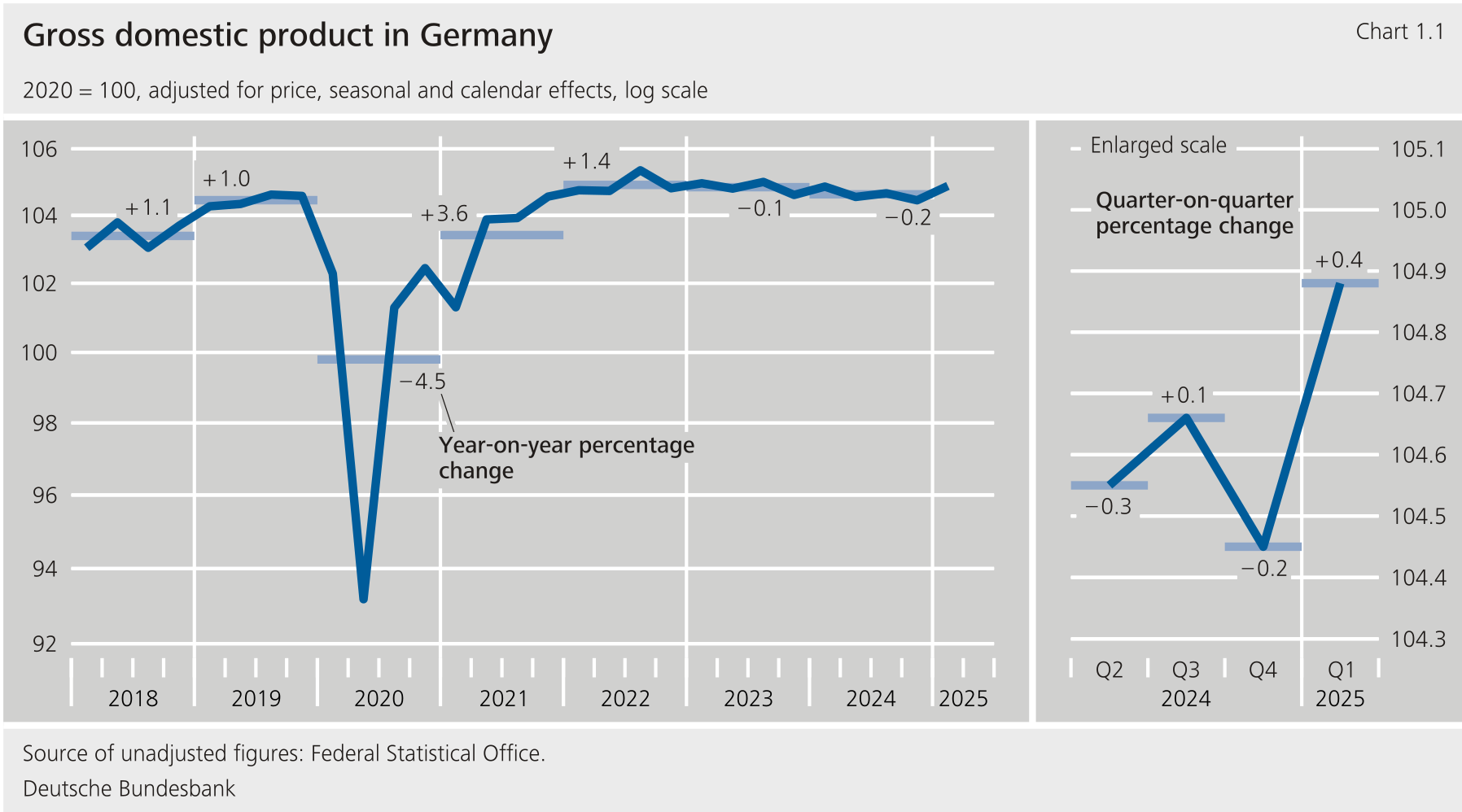
Lapsing anticipatory effects contributed to the fact that seasonally adjusted real gross domestic product (GDP) probably stagnated in the second quarter. In anticipation of higher tariffs, Germany’s industrial output and exports had risen significantly in the first quarter. In the second quarter, some US import tariffs on German goods and services were suspended, while future tariff levels remained unclear. However, it can be assumed that the high level of activity normalised somewhat compared with the previous quarter. Averaged across April and May, real exports of goods stagnated quarter on quarter. Meanwhile, industrial output also expanded with somewhat less momentum. Moreover, in the second quarter, the services sector likely expanded its activity slightly at best, partly because households’ propensity to save probably did not decline any further and private consumption therefore provided less impetus. The construction sector is expected to make a significantly negative contribution to growth.

The underlying basic trend remains weak overall. Domestic and foreign demand for German industrial products picked up somewhat but is still weak. Low capacity utilisation in industry continues to weigh on firms’ propensity to invest. Business sentiment did improve in June. In particular, business expectations as surveyed by the ifo Institute brightened. In addition, the S&P Global Purchasing Managers’ Index for June rose just above the expansion threshold again. However, this may partly reflect expectations about the impact of the more expansionary fiscal stance. Its impact on economic output is expected only with a delay, though. US tariff policy threatens to bring additional headwinds to German exporters in the short term. In particular, US President Trump recently announced that additional tariffs of 30 % (in place of the baseline 10 % tariff introduced in April) on products imported from the EU will enter into force from 1 August 2025 if no agreement is reached before that date. In the June Forecast for Germany, the Bundesbank had still assumed a tariff rate of 10 % for the baseline. If the newly announced tariff rate takes effect, it would thus represent a considerable downside risk to the economy. With regard to the adverse risk scenario also outlined in the June Forecast for Germany, however, two things should be noted. On the one hand, it only assumed an additional tariff rate of 20 % for EU exports. On the other hand, it assumed other factors that would act as a drag, such as reciprocal EU tariffs of the same amount, once again very high tariffs between the United States and China, and persistently high uncertainty as well as strong financial market reactions. The extent to which these factors will become relevant is currently unclear.

Gross domestic product in Germany

2 Rise in industrial output boosted by motor vehicle production
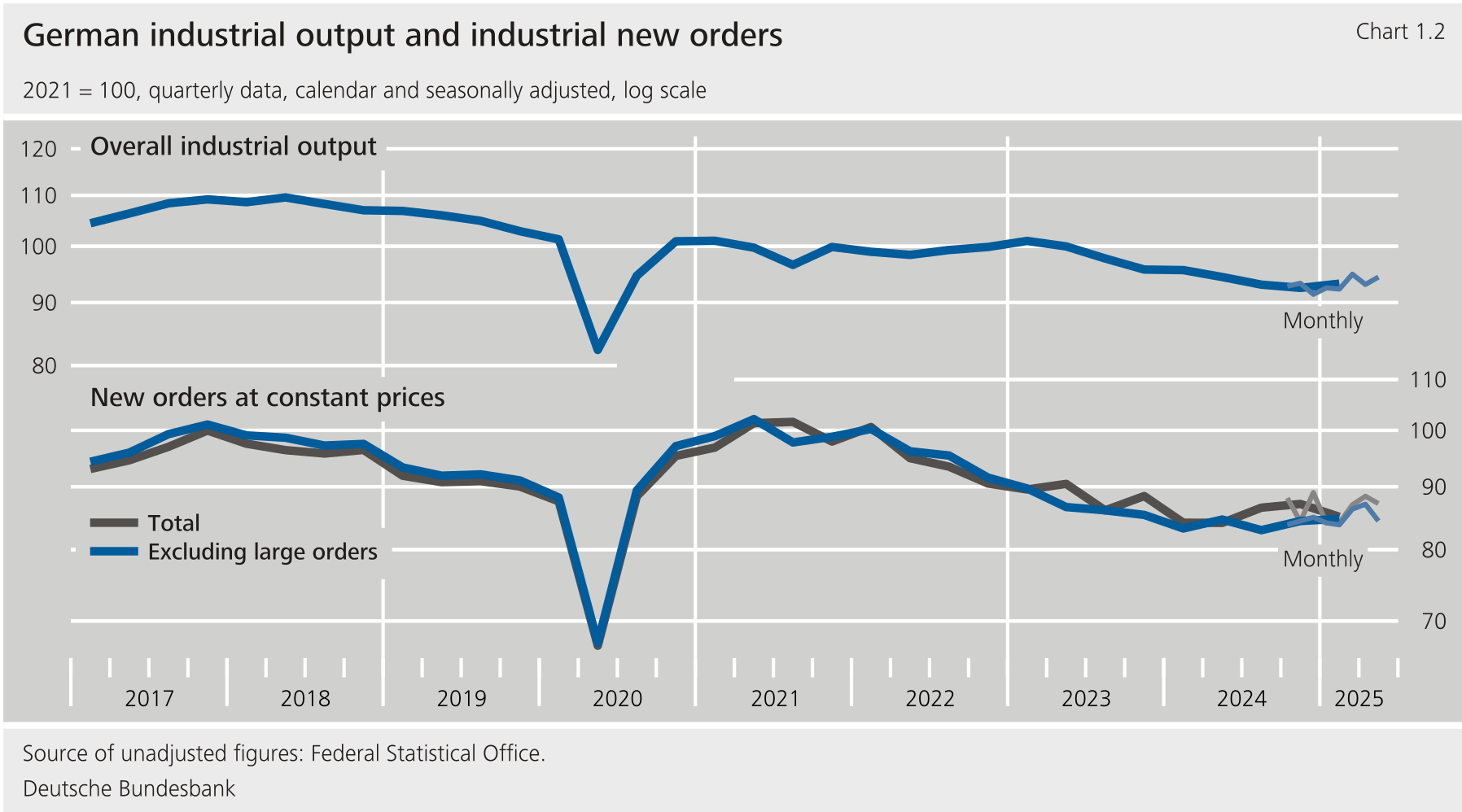
Driven by the automotive industry, industrial output rose slightly averaged over April and May compared with the previous quarter. After ending the first quarter strongly, industrial output initially recorded a fall-off in April, which it largely made up for in May, however. Overall, industrial output rose slightly averaged across the first two months of the second quarter compared with the previous quarter. It is thus heading towards the second consecutive quarter of growth, after having contracted for seven quarters. Not all sectors saw an improvement, however. There was a broad-based decline in production of intermediate goods. By contrast, the production of consumer goods expanded slightly and significantly more capital goods were produced. Production of the latter was boosted by the automotive sector, in particular, but also by manufacturing of other transport equipment. The number of passenger cars manufactured in June, as reported by the German Association of the Automotive Industry, suggests that this is also true of the second quarter as a whole for the automotive industry. However, new orders for motor vehicles stagnated in May.

Industrial new orders remained on an upward trajectory despite the lapsing of anticipatory effects. Industrial new orders fell significantly in May. However, averaged across April and May, they were still above the previous quarter’s average owing to the strong start to the quarter in April. The increase was driven by orders from abroad, while domestic demand was more or less stagnant in the second quarter. Furthermore, large orders, in particular, recently showed a more favourable development than in the previous quarter. However, even excluding volatile large orders, new orders rose slightly in the second quarter. This means that the underlying trend recovery in new orders that began last year remains on course. By contrast, price-adjusted goods exports declined month on month in April and in May. Following the strong March value, they fell back to the previous quarter’s average when averaged across April and May. The main reason for this was likely a significant decline in exports to the United States. Higher exports to the United States had previously provided strong stimulus towards the end of the first quarter. This was probably due to anticipatory effects stemming from tariff announcements by the US administration. 1 Depending on the future tariff level, there is further potential for a setback on account of goods exports. In addition, firms’ export expectations, which were surveyed by the ifo Institute, recently declined again somewhat, especially in the automotive sector. Overall, the short-term outlook for export business and industry remains gloomy given the US administration’s tariff policy.

German industrial output and industrial new orders

3 Slight growth for services sectors at most

The services sector is likely to have grown slightly at most in the second quarter. In April, output in the services sector (excluding trade) was down on the previous month, but was still somewhat higher on the quarter. For the remainder of the quarter, the sentiment indicators already available up to June paint a mixed and overall rather subdued picture. The service providers surveyed by the ifo Institute assessed their current situation more favourably than in the first quarter. However, the S&P Global Purchasing Managers’ Index was consistently below the expansion threshold and the previous quarter’s average in the services sector.

Private consumption looks to have barely fuelled service providers’ activity. Real sales in the accommodation and food services sector available up to April suggest that consumers did spend somewhat more in this area. However, price-adjusted and seasonally adjusted sales in the retail sector in April and May show that they were holding back significantly compared with the previous quarter. According to the ifo Institute's survey, retailers assessed their business situation as being scarcely more favourable in the second quarter, while businesses in the accommodation and food services sector considered their situation to be only slightly better than in the previous quarter. In addition, the slight recovery in the GfK consumer climate index for the second quarter came less from a higher propensity to consume than from improved income expectations. Despite an improvement in consumers’ economic expectations, their propensity to save rose again in the second quarter, according to GfK. According to the national accounts, the saving ratio had already broadly normalised in the first quarter. The previous additional impetus for private consumption stemming from the decline in the ratio is thus likely to cease.

4 Labour market still stable

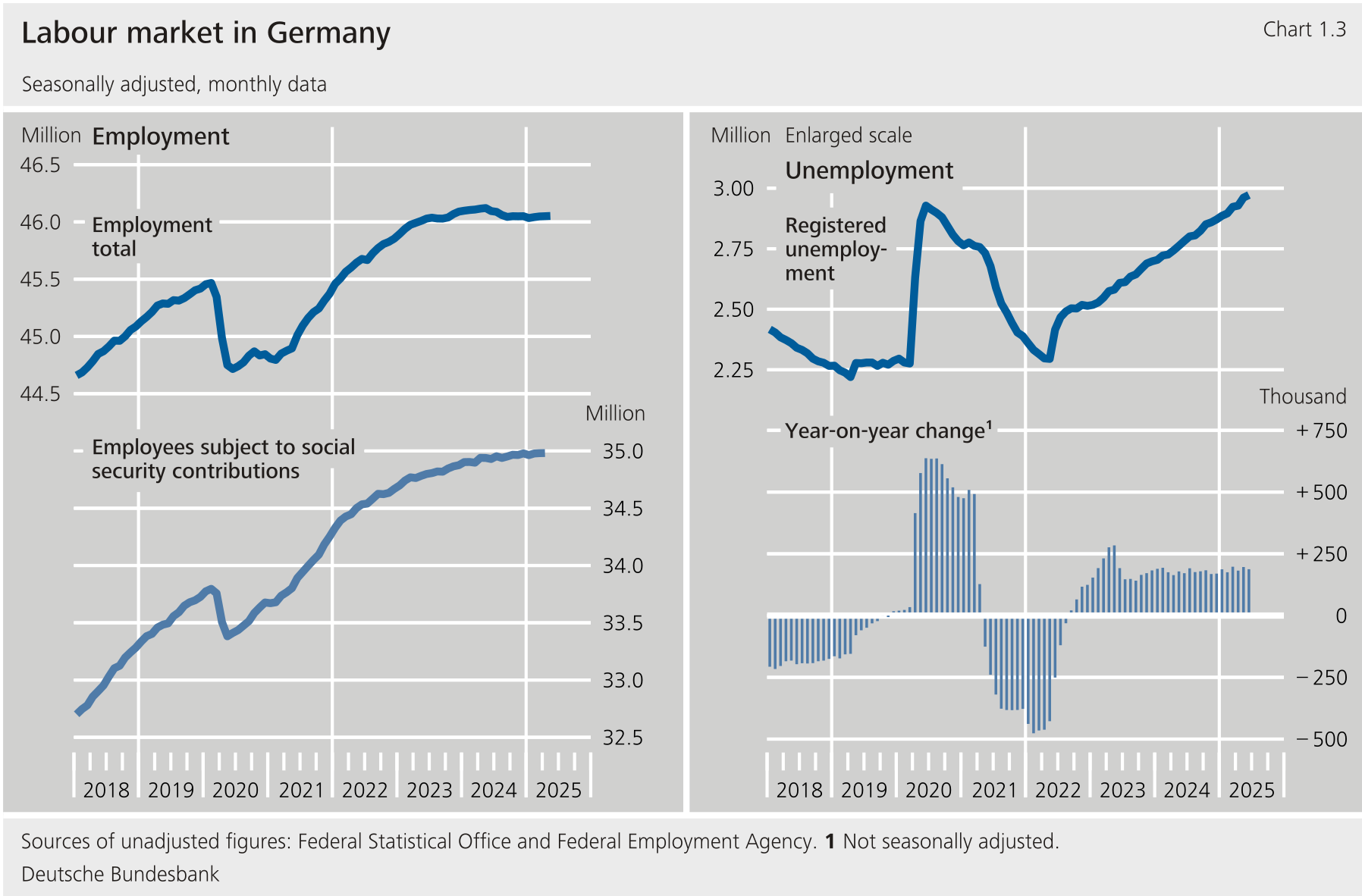
Employment remained virtually unchanged for the third consecutive month. Seasonally adjusted employment in Germany rose only marginally by 2,000 people in May compared with the previous month. However, this masks a shift between forms of employment and sectors. The ongoing decline in the number of self-employed persons is offset by a continued moderate increase in the number of employees. Employment subject to social security contributions (here the initial estimate by the Federal Employment Agency refers to April) also remained virtually unchanged. A significant number of jobs continued to be cut in the manufacturing sector, with around 2 % of jobs having been shed here over the past 12 months. This was largely offset by an increase in healthcare and social services. A similar number of jobs were created in this sector, with job growth of 2½ % over the past 12 months. In other sectors, the changes were comparatively minor of late. The decline in the construction sector, for example, came to a virtual standstill, as did the increase in public administration. The use of short-time work for economic reasons decreased slightly over the course of the year so far from its moderately elevated level.

Labour market in Germany

Leading indicators of employment remain weak. The ifo employment barometer, which reflects staff planning for trade and industry over the next three months, fell clearly again in June, after emerging from its deep trough a little in the two months before. Plans to reduce staff predominate. They continue to affect mainly the manufacturing sector, whereas the construction sector actually slightly exceeded the expansion threshold. The IAB employment barometer – which also encompasses publicly financed sectors – improved somewhat and is marginally above the expansion threshold. The number of vacant positions reported to the Federal Employment Agency continued to decline, however. Newly reported job vacancies stabilised at their low level. 

Unemployment was only slightly higher in June. After seasonal adjustment, there were 2.97 million people registered as unemployed, around 11,000 more than in May. The unemployment rate remained unchanged at 6.3 %. The number of underemployed persons reported by the Federal Employment Agency, which includes persons in labour market policy measures, even fell somewhat. The shrinking difference of late between registered unemployment and underemployment suggests that the increase over the past two months is mainly due to a decline in labour market policies designed to alleviate pressure. Nevertheless, unemployment has risen relatively evenly by almost half a million persons since the beginning of 2023. One result of the shift in employment between economic sectors, which has been shaped by structural change, is that it is more difficult for the unemployed to find a new job and they may be forced to change their field of work. In addition, reductions in employment due to new vacancies not being filled lower the chances of unemployed persons and job starters being recruited and extend the duration of unemployment. The outlook improved slightly. In June, the IAB unemployment barometer recovered for the third consecutive month. However, it is still in negative territory, suggesting that unemployment will rise in the next three months. 

5 No further decline in energy commodity prices recently

Following declines in previous months, energy commodity prices recently have not gone down any further overall. Amidst the military escalation of the conflict between Israel and Iran, prices even rose significantly at times. This was mainly due to concerns about supply shortfalls. With the subsequent easing, prices went down again. The decision by some OPEC countries to expand their production also had a dampening effect on prices. In mid-July, a barrel of Brent crude oil cost US$71, almost the same as in June. Year on year, however, this was a price drop of just under 20 %. At €35 per MWh, gas prices in Europe were a little lower than the June level and almost the same as a year earlier.

6 Inflation down slightly to 2.0 % in June
Prices at the upstream stages declined in May compared with the previous month. This is true of both imports and industrial products on the domestic market and was due, in particular, to lower energy commodity prices. However, prices of non-energy imports likewise fell in May, as in previous months. By contrast, domestic producer prices excluding energy remained stable. On an annual basis, import prices fell by 1.1 % and industrial producer prices by 1.2 %.

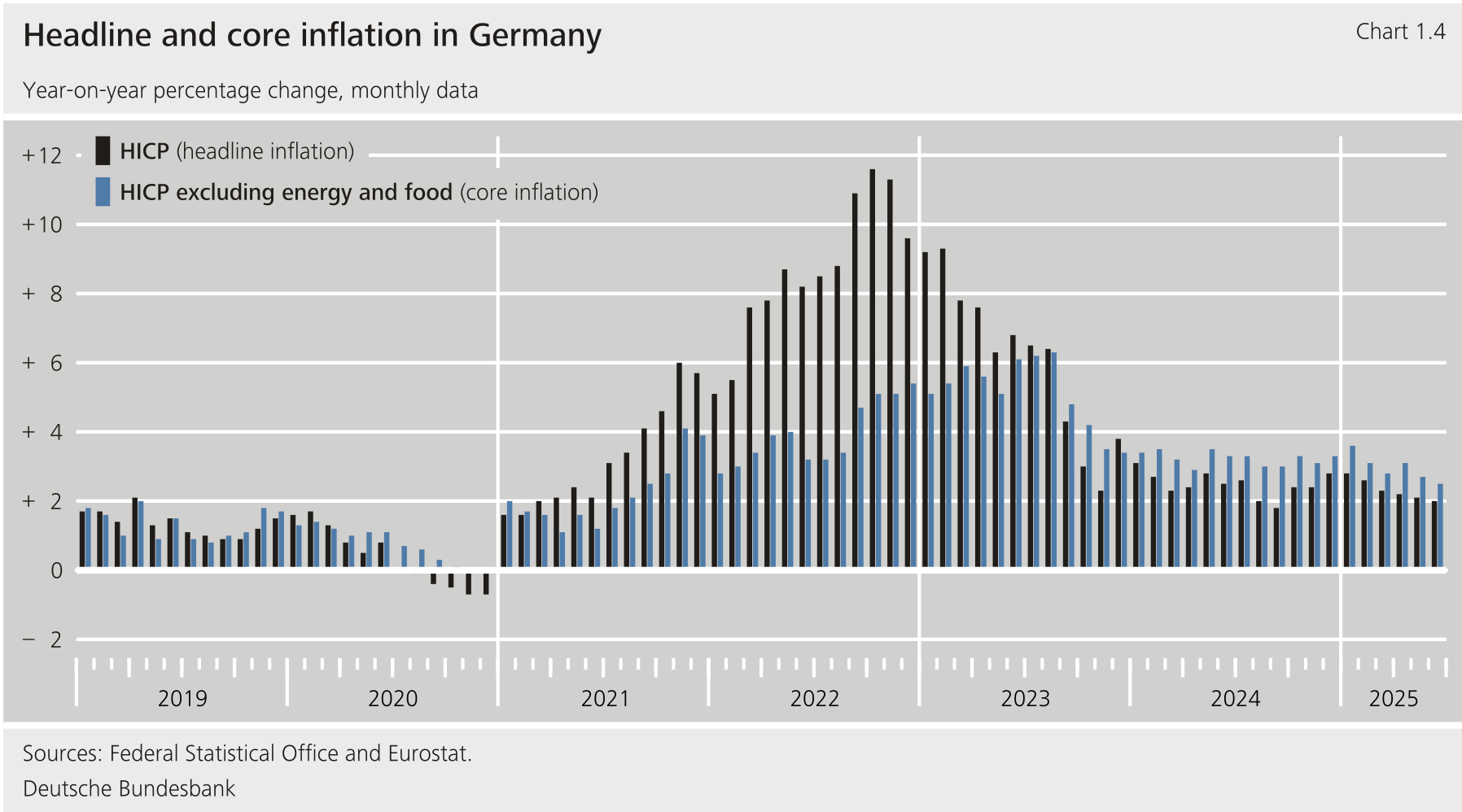
The inflation rate came down a little further in June. The Harmonised Index of Consumer Prices (HICP) rose again slightly by a seasonally adjusted 0.1 % compared with the previous month. Slightly cheaper food prices largely offset the moderate rise in services prices. Prices for services in the public sector, in particular, continued to rise. By contrast, energy prices barely changed, after having fallen significantly in the previous months. Prices for non-energy industrial goods also remained virtually unchanged, as in the previous months. Annual headline inflation fell slightly, from 2.1 % in May to 2.0 % in June. 2 Core inflation excluding energy and food likewise declined, dropping from 2.7 % to 2.5 %.

Over the coming months, inflation is expected to move around the 2 % mark, provided there is no change in the current oil price path and the exchange rate of the euro against the US dollar. Energy prices are likely to have a smaller dampening effect than in the first half of the year. This is partly due to the decline in oil prices last autumn. Taken in isolation, this base effect will push up the annual rates of inflation in the second half of this year. Nevertheless, the contribution from energy prices is likely to remain negative and thus significantly below average. By contrast, services prices, in particular, are likely to continue to make an above average contribution to headline inflation in the coming months. Overall, the inflation outlook remained virtually unchanged compared with the June Forecast. 3 If, contrary to previous assumptions, the electricity tax is not lowered for consumers, the inflation rate could be just under 0.2 percentage point higher in 2026 than envisaged in the June projection. 4  

Headline and core inflation in Germany

This article is based on data available up to 15 July 2025, 11:00.

List of references

Deutsche Bundesbank (2025), Forecast for Germany: US tariffs initially weigh on economic growth; fiscal policy provides impetus with a delay, Monthly Report, June 2025.

Has this page helped you?