US tariffs and geoeconomic fragmentation: implications for the global economy Monthly Report – July 2026
Published on
US tariffs and geoeconomic fragmentation: implications for the global economy Monthly Report – July 2026
Monthly Report Published on
US trade policy has become much more protectionist since the beginning of 2025. The United States has sharply increased its import tariffs and openly challenged core principles of the rules-based multilateral trade order.This article examines the macroeconomic repercussions of this realignment, placing it in the context of the longer-term trend of growing geoeconomic fragmentation.
So far, the US tariff increases have had only a limited impact on the global economy. This is partly because some tariffs were lowered again after a phase of escalation and many trading partners decided against sweeping retaliatory measures. In addition, anticipatory effects ahead of tariff increases and strong demand for AI-related goods supported global trade. A stronger or longer-lasting escalation of the trade conflicts would have caused much greater harm to the global economy. However, the robustness of the global economy so far should not blind anyone to the fact that protectionism comes with substantial costs. Indeed, trade restrictions entail noticeable welfare losses in the long term.
Some of the United States’ own key tariff policy objectives have not yet been fulfilled. The trade deficit has remained high, tariff costs played a key part in the persistently high domestic inflation, and there is no sign of a broad-based reindustrialisation. Germany and the euro area have been affected primarily through weaker exports to the United States and increased trade policy uncertainty. Overall, however, the macroeconomic effects have so far remained limited.
The restrictive trade policy measures taken recently by the United States are amplifying an already apparent fragmentation of the global economy along geopolitical lines. The challenge for the European Union is to hold its own as a trade policy player in this harsher external environment. This will require a reduction in critical dependencies and an expansion of relations with reliable trading partners, for example through new trade agreements. At the same time, an open, multilateral trade order remains crucial. However, its rules should be refined in areas where they are reaching their limits, without undermining the fundamental principles.
1 Introduction
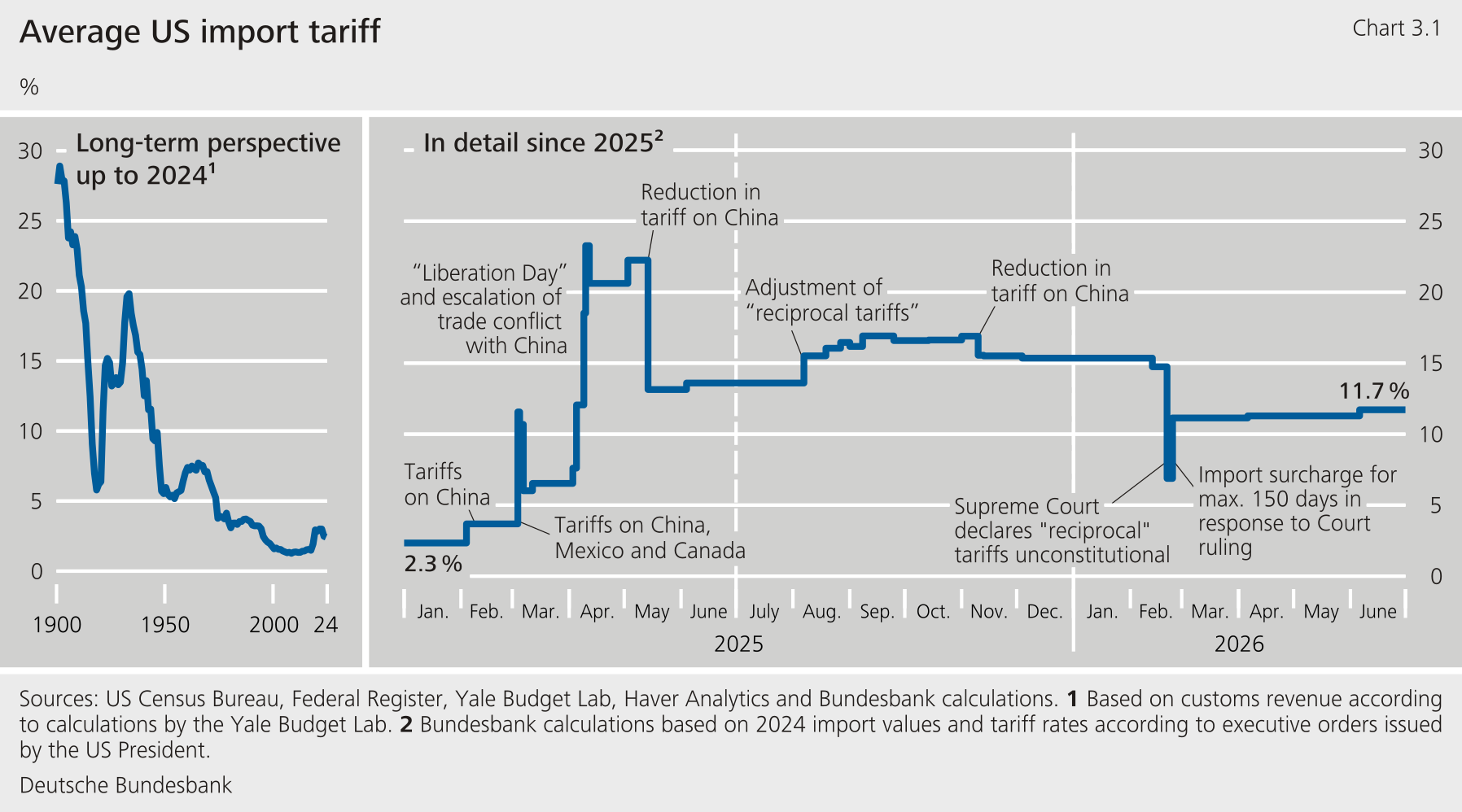
Since January 2025, US trade policy has become much more protectionist. Although the United States had already raised import tariffs in 2018 and 2019, its trade policy measures were then mostly confined to China and their scale was manageable from a macroeconomic perspective. 1 The measures adopted since the beginning of 2025 have gone well beyond that. The US administration raised import tariffs across the board, placing a greater emphasis on certain trading partners and sectors. Overall, the average US import tariff rate rose from 2.3 % in 2024 to almost 12 % at present – a level last reached in the early 1940s. 2
The US administration gave trade, security and industrial policy objectives as justification for its tighter tariff policy. The main motives included reducing persistent trade deficits, which were interpreted as being caused by unfair trade practices, and strengthening the domestic industrial base. This objective was related to the growing competitive pressures from Chinese firms in global markets. China’s state-led industrial policy and the strong expansion of its industrial capacity have been accompanied in some sectors by competitive distortions and overcapacity. In addition, tariffs have been used for foreign policy objectives; for example, they have been imposed on Canada, Mexico and China with reference to illegal migration and international drug trafficking. Finally, the US administration presented import tariffs as being a potential source of revenue to limit the budget deficit, whilst also repeatedly stating the view that the costs would largely be borne by foreign trading partners.
Although the realignment of US trade policy has followed a clear underlying protectionist trend, the specific form it has taken has been subject to frequent changes and uncertainty. Tariff rules were repeatedly adjusted, temporarily suspended or had new exemptions added. Furthermore, there were court disputes over the legality of individual measures. 3 This increased trade policy uncertainty for firms worldwide, and made decisions about investment, procurement and production locations more difficult.
Most trading partners concluded agreements with the United States to avoid an escalation of the trade dispute. The process began with the country-specific additional tariffs announced on “Liberation Day”, through which the US administration intended to even out what they perceived as competitive disadvantages for the United States and reduce persistent bilateral trade deficits. Almost without exception, the trading partners made concessions to the United States on important points. The pattern was that trading partners accepted a US import tariff that was higher than before but lower than what had been threatened and, in return, allowed easier market access for US exports. This was mainly due to the great importance of the US market for many exporting countries and the concern that countermeasures would lead to an escalation of trade policy, causing severe damage to their own economy. For some countries, dependencies on the United States in other policy areas, such as defence, probably played a non-negligible role, too.
The EU and the United States also passed a trade agreement. The agreement provides for a tariff ceiling of 15 % for the vast majority of EU exports to the United States. 4 Compared with the average tariff rate of around 1.2 % in 2024, this is a significant increase. Market access conditions for European exporters thus worsened markedly compared with companies operating in the United States. The agreement was broadly in line with the conditions that the United States imposed on other significant trading partners, such as Japan and South Korea.
China, by contrast, initially responded to US tariff increases with sweeping trade policy countermeasures. In the spring of 2025, the tariff dispute between the United States and China escalated. Both countries sought to outdo each other by imposing huge tariffs on the other. In addition, China implemented export controls on rare earths, an area where it has a very strong market position along key parts of the value chain. The two countries then agreed on a significant reduction in reciprocal tariffs. This stabilised trade relations but did not end the conflict. Both countries are continuing their efforts to reduce mutual dependencies.
The tighter US tariff policy hit the global economy hard and amplified the trend towards fragmentation in the global trade landscape. Against this backdrop, this article first examines the global economic impact of the new US tariffs. It analyses the direct and indirect effects on trade, production and prices. Trade policy developments are then placed in the context of the longer-term trend of growing geoeconomic fragmentation in the global economy. The focus is on how Europe can strengthen its economic resilience in a more power-based trade policy environment without sacrificing the benefits of open markets and rules-based multilateral cooperation.
2 The economic impact of the new US tariffs
2.1 Effects on the United States
Macroeconomic developments in the United States remained robust following the introduction of the new tariffs. Real GDP rose by 2.1 % in 2025. This meant that growth was weaker than in the previous years, but remained in the region of potential growth. Supporting factors, especially the AI investment boom, more than offset the negative effects of tariff policy.
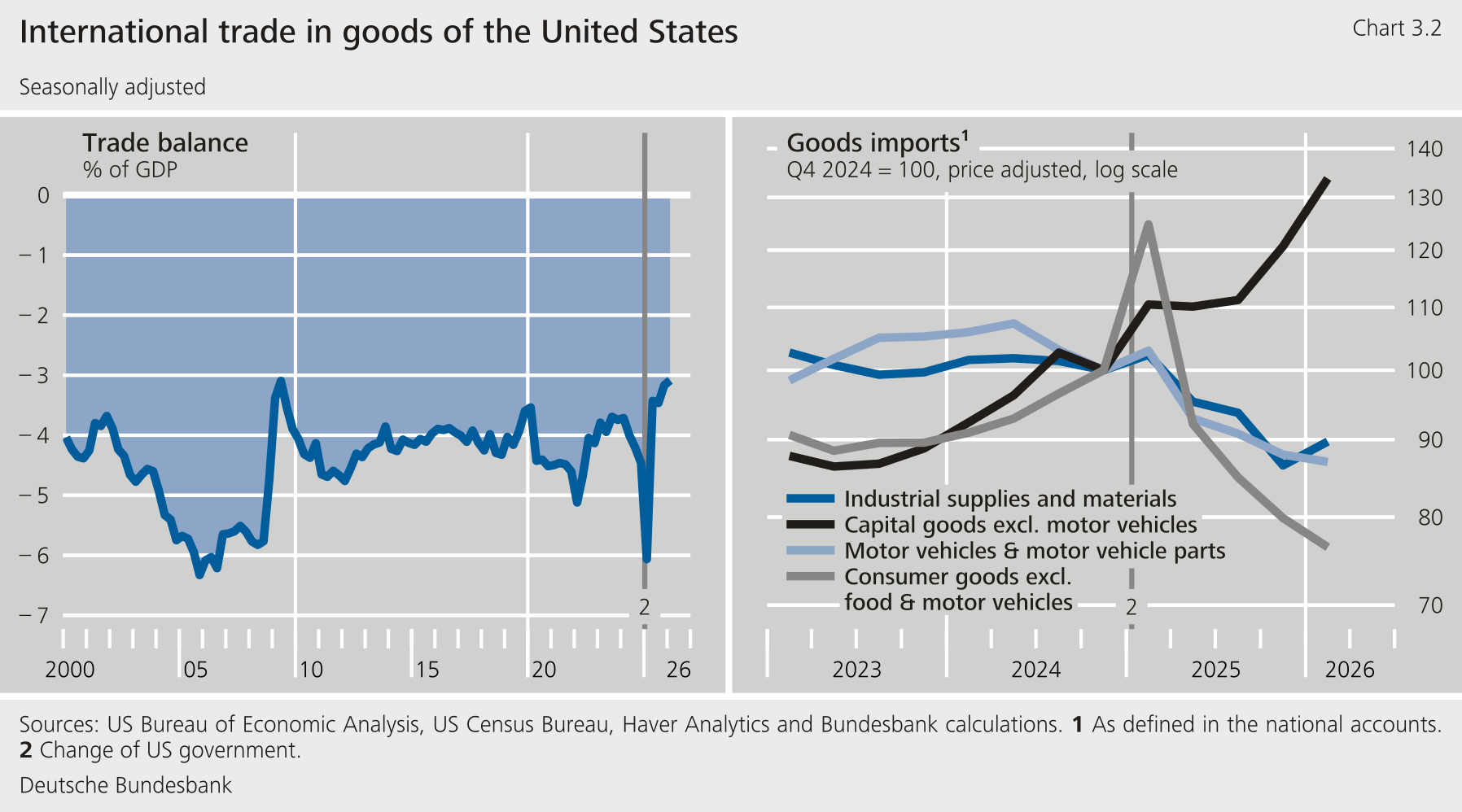
Tariff policy led to considerable fluctuations in US imports. Imports were brought forward to a considerable extent in the run-up to the tariff increases. US imports of goods rose sharply in the first quarter of 2025 across many countries of origin. Following the entry into force of many additional tariffs announced on “Liberation Day”, they fell again significantly. At times, imports of intermediate goods, consumer goods and motor vehicles were around one-fifth below their 2024 level in real terms. At the same time, imports of capital goods rose considerably. On an annual average of 2025, imports of goods exceeded their previous year’s level by 2½ %. 5 This suggests that, once tariffs were introduced, import demand was dampened, but the decline for the year as a whole was limited by the robust economic situation, the exceptional boom in the high-tech segment and anticipatory effects.
The US administration’s objective of significantly improving the trade balance has not been fulfilled thus far. The deficit in the trade balance contracted somewhat as a percentage of GDP but remained high, at around 3 % in the first quarter of 2026. The slight improvement was mainly due to rising exports. This development is likely to have been supported by exchange rate movements: in 2025, the US dollar depreciated significantly against the euro and a broad basket of currencies. This depreciation contrasted with standard macroeconomic models, which would point to an appreciation of the US dollar in response to the sharp tariff increases. The depreciation probably reflects factors that reduced demand for assets in the United States. These included concerns about trade wars with negative repercussions for the US economy and an apparent increase in uncertainty among market participants regarding the reliability of US trade policy and US economic and fiscal policy in general. 6
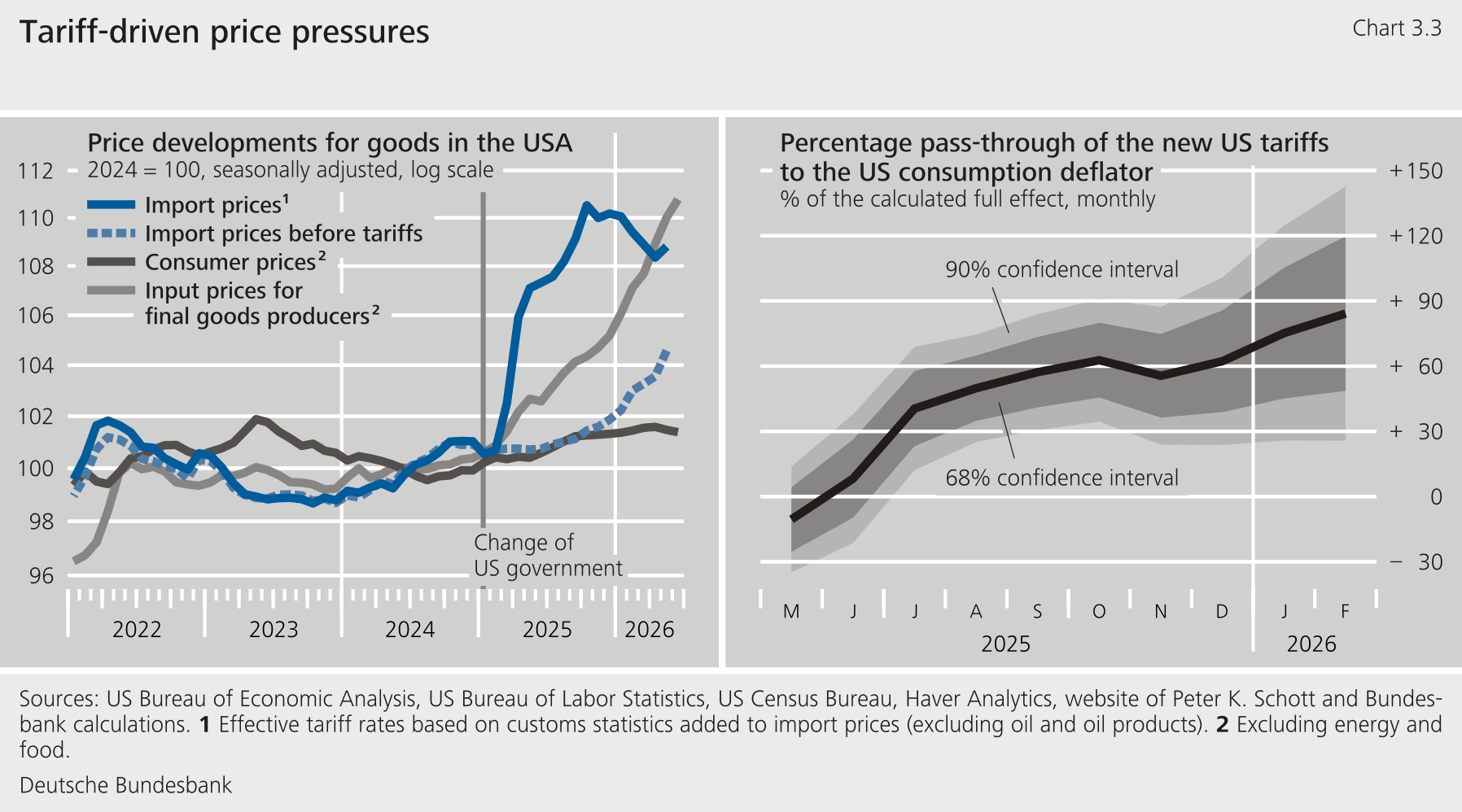
The tariff burden has so far been borne largely in the United States. Import prices in the United States continued to rise last year, even without taking tariffs into account. This counters the notion that foreign exporters compensated for the higher tariffs to a substantial and lasting extent by lowering prices. A detailed Bundesbank econometric analysis confirms this picture. 7 According to these figures, an increase of 10 percentage points in the tariff rate led to a short-term decline of just over 5½ % in import prices before tariffs. In the following months, however, the price decline rapidly receded. This meant that, after a short period of time, the tariff burden was borne almost entirely by US importers.
The cost burden spread beyond directly affected imports along the value chain. Many imports of intermediate inputs became significantly more expensive for US customers. The associated cost increases were passed on with a lag to downstream production stages, and ultimately to final consumers. Accordingly, consumer goods inflation has increased again markedly since the beginning of 2025. According to our estimate, up to February 2026 just over 80 % of the price effect that would be expected under full tariff pass-through was reflected in consumer prices. The estimate indicates that US import tariffs increased the inflation rate, as measured by the private consumption deflator, by 0.6 to 0.7 percentage point in February 2026. 8 Nevertheless, inflation saw only a limited increase overall, as services inflation slowed markedly at the same time.
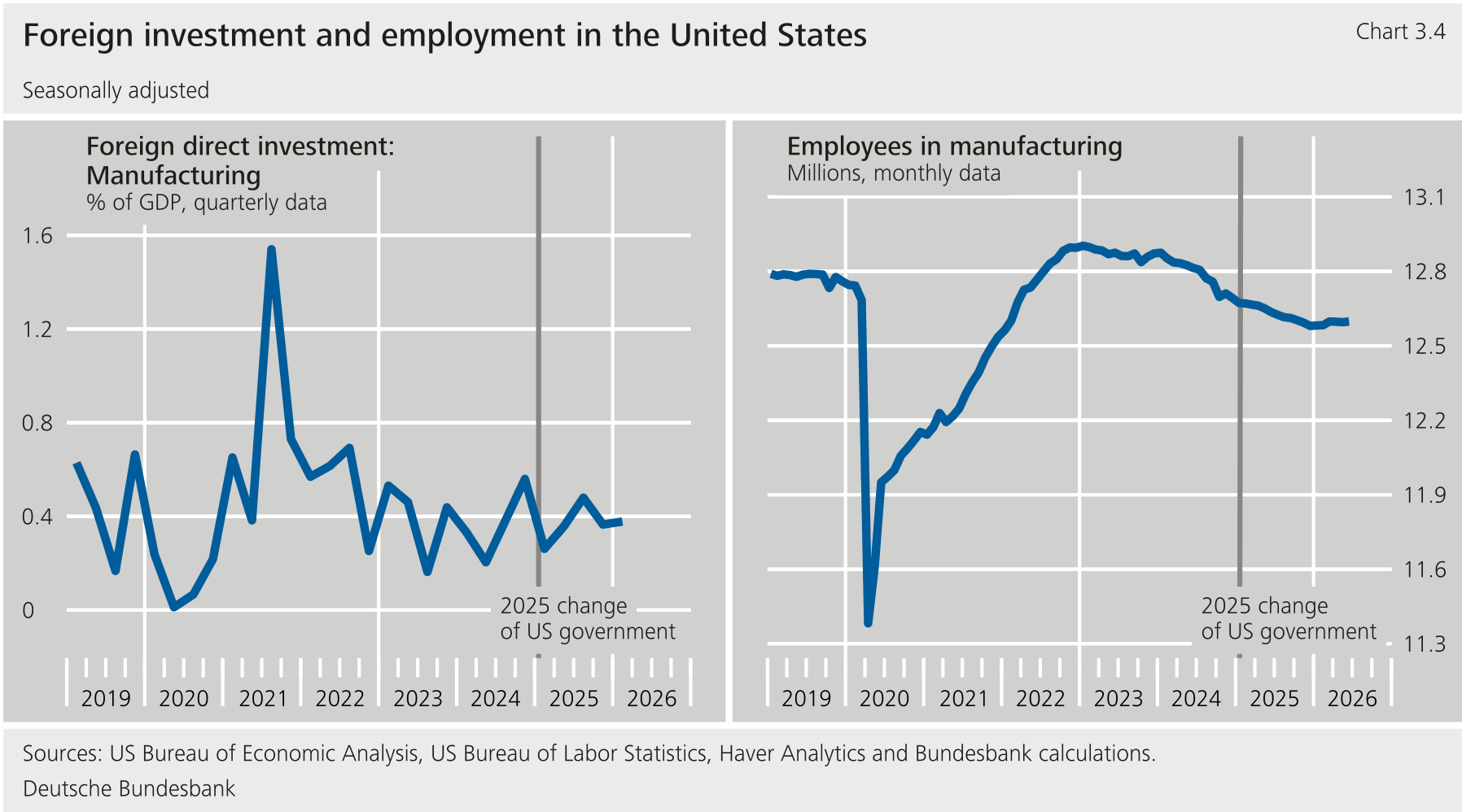
So far, US tariff policy has not triggered a process of reindustrialisation. There is still no sign of a broad-based recovery of industrial production in the United States.Employment developments in US industry show no indication of this yet, either. On the contrary, the number of employees in the manufacturing sector continued to fall in 2025. 9 Only recently was there a small rise. Moreover, neither the prospect of circumventing tariff barriers nor the various trade agreements seem to have led foreign enterprises to relocate production to the United States on a substantial scale. Nominal foreign direct investment flows to the United States in 2025 were actually slightly down on the previous year’s figure. 10
2.2 Global effects
The global economy, too, has so far proved resilient to US tariff increases. The marked dips in global economic activity and global trade which many expected to see following “Liberation Day” did not materialise in the form anticipated (see the supplementary information entitled “Model-based estimates of the global impact of US tariffs)”. 11 In fact, global trade continued to expand briskly in 2025, and global GDP growth exceeded expectations. German economic activity also held up better than risk scenario estimates suggested. 12
Supplementary information
Model-based estimates of the global impact of US tariffs
The macroeconomic consequences of US trade policy can be assessed using simulations. To do this, we use the NiGEM 1 and EAGLE 2 macroeconomic multi-region models. 3 The model calculations take into account all tariff changes by the United States since the beginning of 2025 on a quarterly basis. 4 A hypothetical situation in which the previous low tariff rates remain permanently in place serves as the benchmark.
Exchange rate and uncertainty effects are excluded from the calculations. Model simulations would suggest that the US dollar would appreciate endogenously since higher US import tariff rates cause US demand for foreign currency to fall. In actual fact, however, the US dollar depreciated following the tariff announcement on “Liberation Day”. The main reason for this is likely to have been that the erratic trade policy had a negative impact on market participants’ perceptions of risk vis-à-vis investments in the United States. 5 In order to abstract from the effects of this atypical exchange rate response, the simulations assume that changes in trade policy have no impact on foreign exchange markets. The analysis also does not take into account any additional adverse macroeconomic effects arising from the heightened uncertainty.
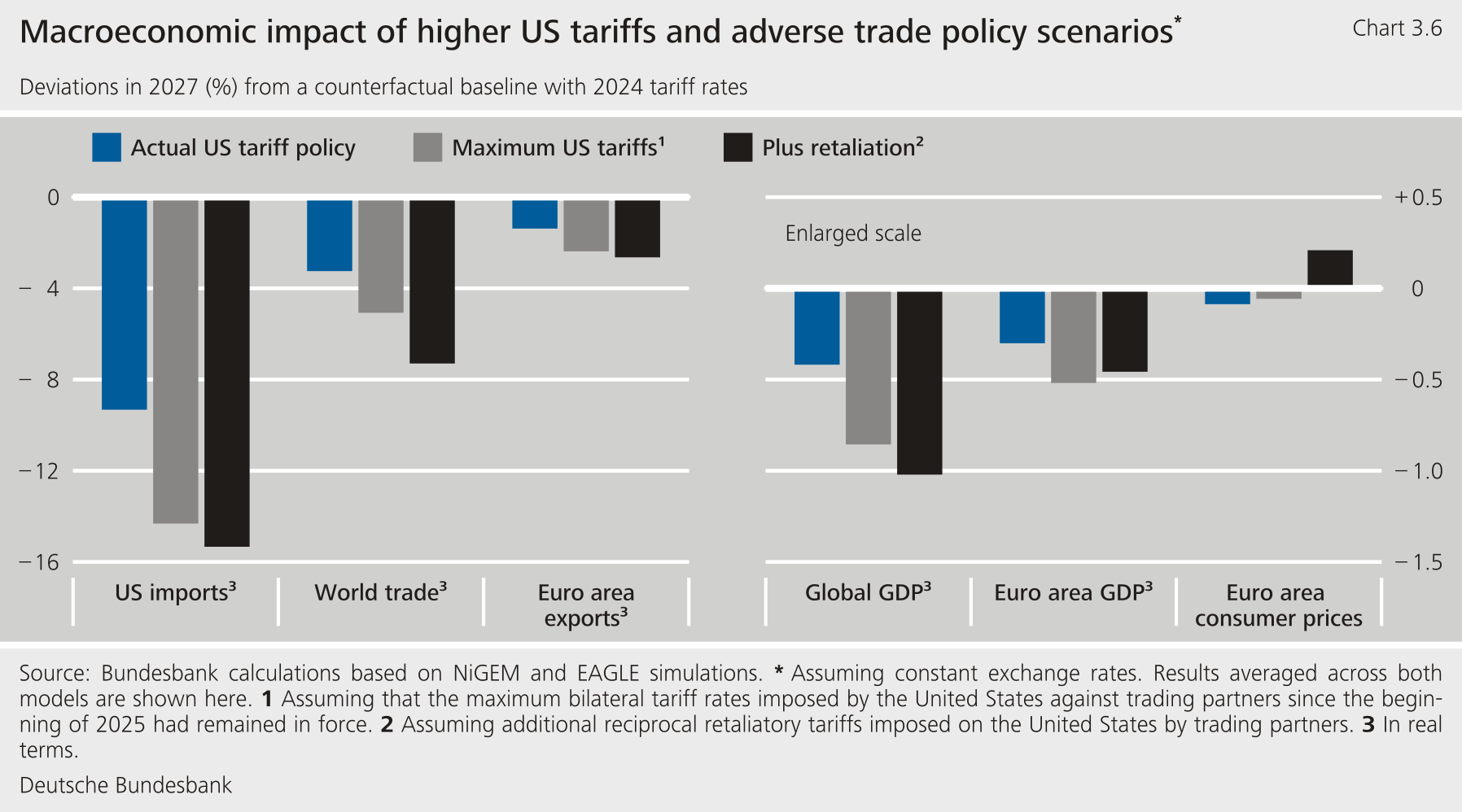
The simulation results indicate modest macroeconomic effects of the tariff increases to date. The losses are most pronounced for US real imports. According to the model, in 2027 these will be around 9 % below the level that would have been expected if the previously applicable tariff rates had been maintained. Global trade flows are dampened by just over 3 %. Euro area exports hold up better owing to the diversified export range and the relatively low tariff burden. Macroeconomic growth losses are correspondingly small. After three years, euro area real GDP is just under 0.3 % below the baseline. The effects on consumer price inflation are negligible.
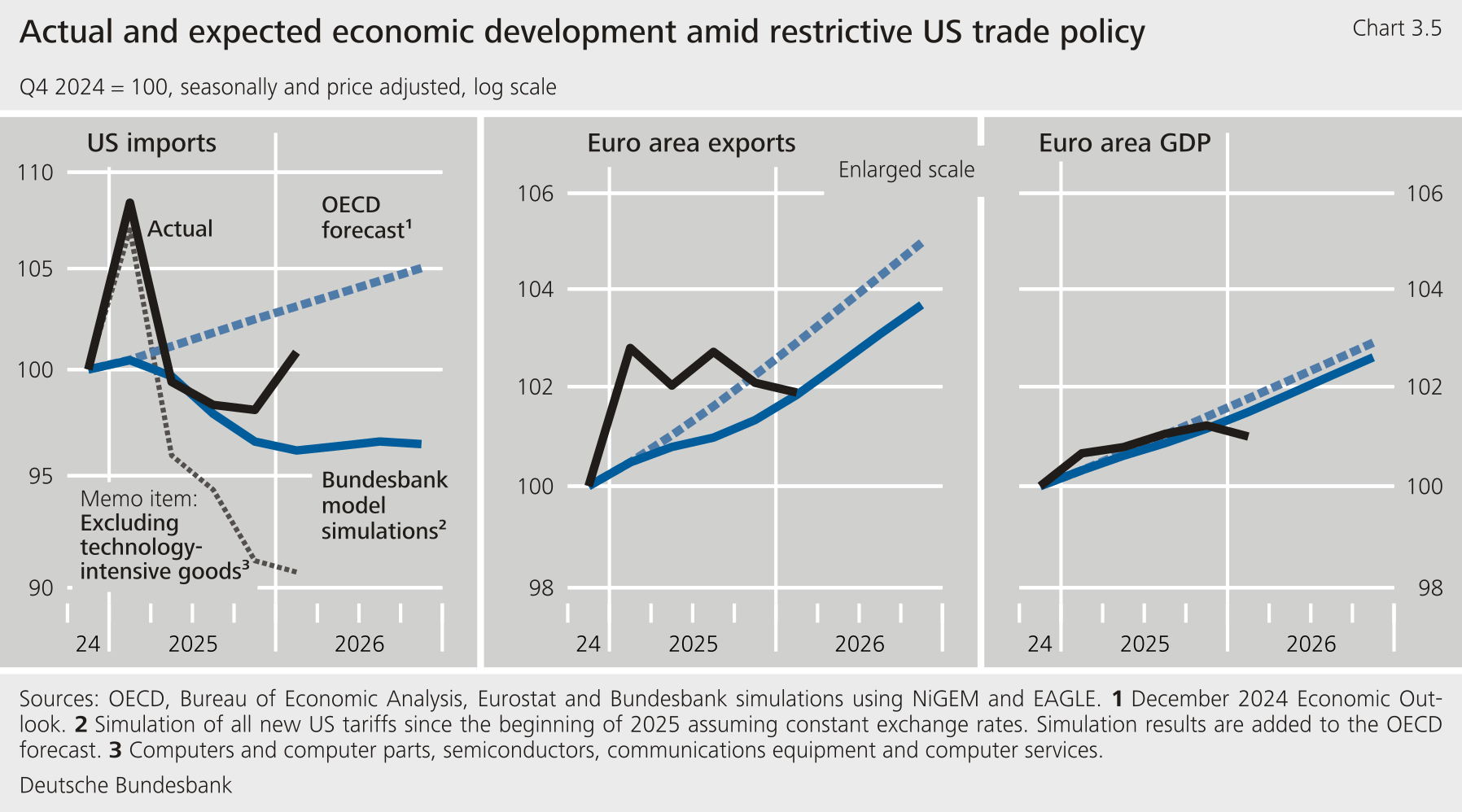
Macroeconomic developments over the past 18 months have been broadly in line with the simulated effects. This can be seen when the simulation results are combined with forecasts produced prior to the adjustment of US tariff policy. 6 In the short term, the tightening of US trade policy weighed somewhat less on economic developments than expected. This was mainly due to a pronounced front-loading of US imports in response to the tariff announcements. Exports and, to a certain extent, total economic output in the euro area also benefited from this. Following the end of the frontloading effects, US imports fell at the end of 2025 to the level suggested by the scenario calculations. The losses were actually slightly larger for most categories of goods. However, these tariff effects were increasingly offset by the ongoing AI boom. Total US imports recovered again recently, mainly due to sharp increases in imports of semiconductors, computer hardware and communications equipment. 7 Euro area exports only benefited from this to a limited extent and continued to decline at the start of the year. Real GDP also came back closer to the simulated path even before the recent energy price shock.
Counterfactual scenarios illustrate how much the impact would have amplified if the trade conflicts had intensified. In an initial scenario, it is assumed that, for each country, the maximum tariff rate imposed by the United States in 2025 would have remained in force permanently. Had this scenario – which had been looming for a time – materialised, the effective US additional tariff rate would stand at more than 20 %. If Chinese goods were imported into the United States, three-digit tariff rates would even be due. 8 A further escalation scenario additionally assumes that trading partners had raised their tariffs imposed on the United States to the same extent.
If the United States had maintained its interim peak tariff rates, the macroeconomic damage would have been significantly greater. The negative impact on key economic indicators would have been about twice as large (see Chart 3.6). According to the simulations, global GDP would have been at risk of losing almost 1 % within three years. The volume of global trade would even have fallen by almost 5 %. The euro area would also only have been affected to a below-average extent in this scenario. Given the generally subdued pace of growth, however, the GDP losses, in particular, would have been painful. Symmetric retaliatory tariffs imposed by trading partners would have further amplified these effects and caused consumer prices to rise throughout the globe. The price level in the euro area would be 0.2 % higher in 2027.
Experience gained from the US tariff hikes shows that the effects of trade policy shocks can only be predicted with considerable uncertainty. This fuzziness concerns, for one thing, the actual burden of tariffs. Alternative options comprising products subject to lower tariffs or alternative supplier countries play a role here, but these are difficult to quantify. 9 In addition, the developments in the spring of 2025 underline the importance of anticipation effects. Large macroeconomic models can, at best, approximate the attendant fluctuations in trade flows. In addition, dramatic adjustments to tariff rates can have further signalling effects, especially if they coincide with other economic policy announcements and measures. The resulting expectation and uncertainty shocks can obscure the immediate tariff effects, especially on the financial and foreign exchange markets. The international spillover effects of tariff increases are therefore also subject to additional uncertainty. 10 The experience gained over the past year and a half therefore calls for caution in the quantitative assessment of trade policy measures. However, this does not change the fundamental impact of import tariffs: they make imported goods more expensive and are thus akin to a tax on imports.
The fact that trade conflicts did not end up escalating is likely to have played a key role in the global economy's unexpectedly buoyant performance. On the occasion of “Liberation Day” on 2 April 2025, the US administration announced a base tariff of 10 % as well as significantly higher country-specific tariffs, including a 20 % tariff on goods from the EU. However, these higher tariffs were soon suspended for most countries and became the object of negotiations. 13 Ultimately, the United States reached agreements with most trading partners, settling on tariff rates that were well below the original threats; at the same time, the trading partners of the United States not only refrained from imposing retaliatory tariffs, but in some cases also granted the USA considerable trade concessions. 14 In addition, the average tariff rate actually paid was significantly lower than suggested by calculations based on 2024 trade weights: imports subject to heavy tariffs declined, while those subject to lower or no tariffs gained in importance.
The sharp rise in demand for AI-related goods was another factor behind the global economy's strong performance. The new tariffs did dampen US demand for traditional imports such as intermediate and consumer goods. However, imports of AI-related goods surged and more than offset this effect. 15 The AI boom is going hand in hand with a massive ramping-up of physical computing infrastructure. This requires chips, storage, servers, networking technology and other high-end capital goods manufactured around the world. As a result, US imports remained robust overall and supported global trade. 16 In addition, import activity was brought forward in anticipation of the tariff hikes, which temporarily boosted trade volumes significantly. Global trade also benefited from strong demand for AI-related goods beyond the United States. According to the World Trade Organization (WTO), such goods accounted for around 42 % of the increase in global trade in goods in 2025, despite only making up around one-sixth of global trade. 17
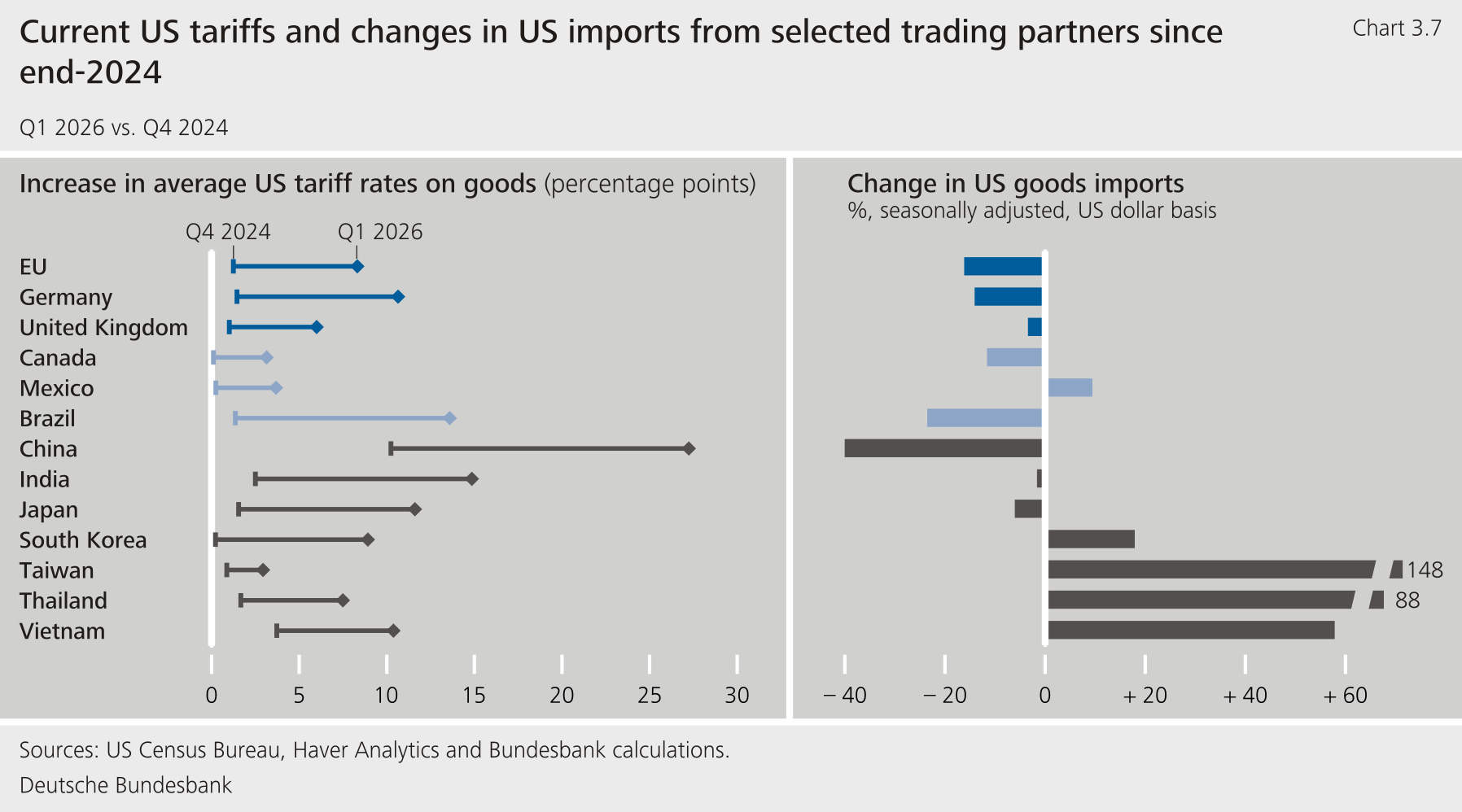
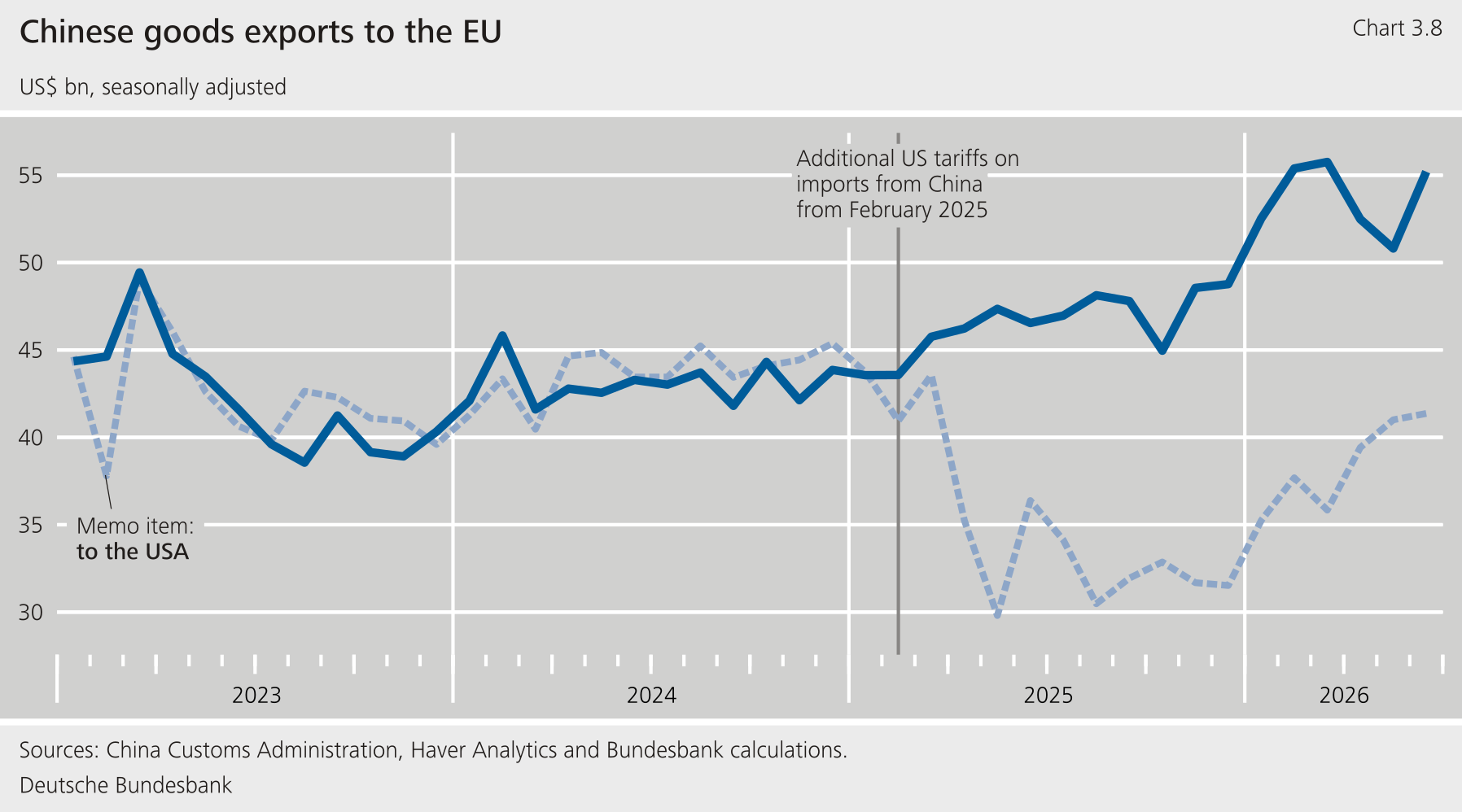
China sustained significant losses in its export business with the United States, but was able to cushion the blow by increasing deliveries to other sales markets. While Chinese exports to the United States fell by around one-third due to tariffs, exports to other markets – especially to other Asian countries as well as to Africa and Europe – grew. Some of the additional exports to Asian countries are likely to have continued their journey from there to the United States, circumventing the high US tariffs on imports from China. 18 However, China’s success as an exporter in other regions of the world cannot be put down to redirection effects alone. Longer-term developments, such as the expansion of industrial capacity, technological advances and weak domestic demand in China, were factors of greater importance. By contrast, there is barely anything to indicate that price reductions have been used to achieve a large-scale diversion of goods originally intended for the United States. In particular, such price-driven effects played only a minor role in the increase in Chinese exports to the EU (see the supplementary information entitled “Possible tariff-induced diversions of Chinese exports to the EU”).
Supplementary information
Possible tariff-induced diversions of Chinese exports to the EU
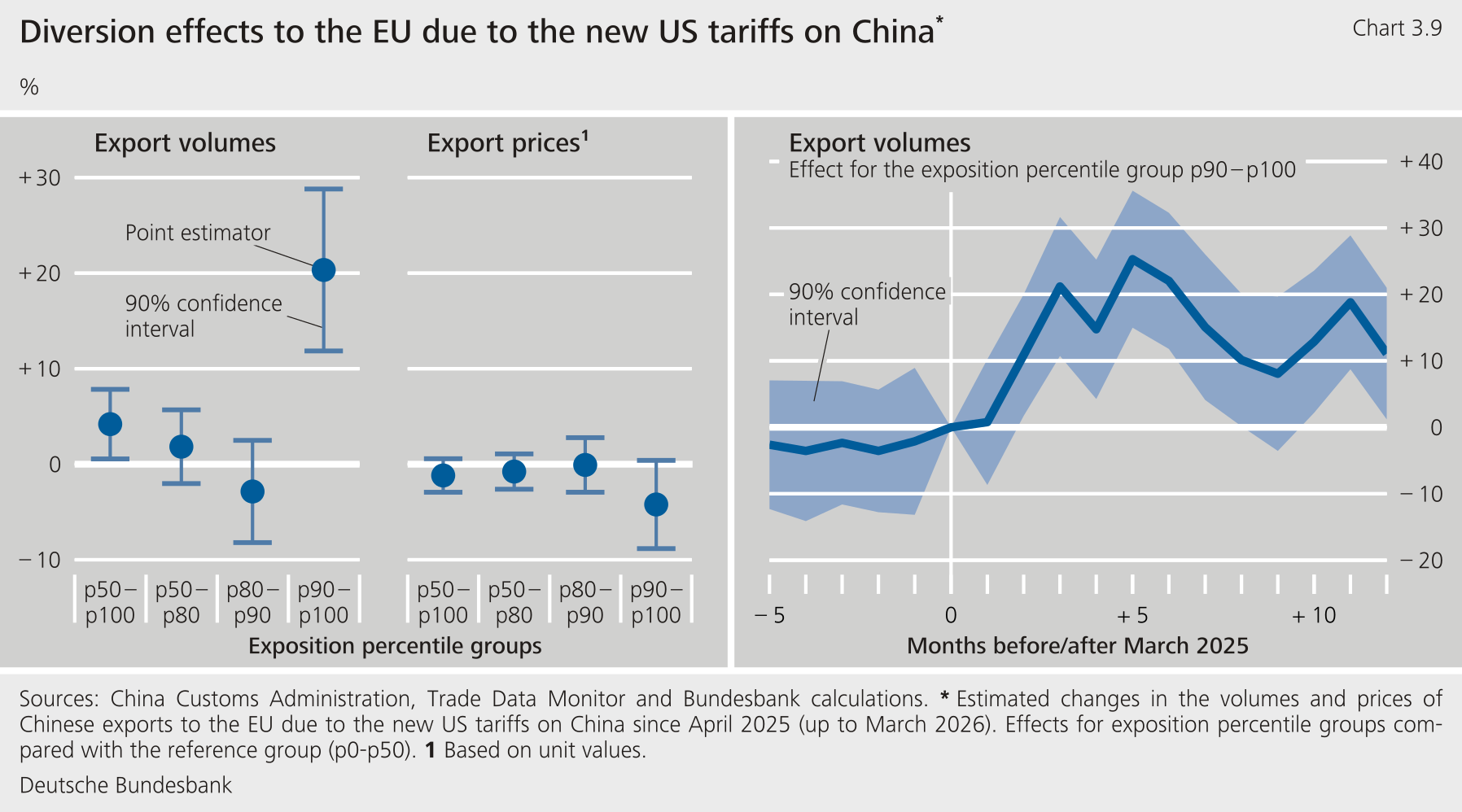
The sharp increases in US tariffs on Chinese products in 2025 brought possible trade diversions into the spotlight. It was feared that China might divert some of the goods it had previously delivered to the United States to other sales markets. As the EU’s market structures are similar to those of the United States, this could particularly affect the EU. 1 A sharp rise in low-cost Chinese exports to Europe could significantly increase competitive pressures on European enterprises. Chinese exports to the EU did in fact rise significantly following the introduction of new additional US tariffs on Chinese goods, 2 while deliveries to the United States temporarily fell sharply. However, the extent to which this increase in Chinese exports to the EU is due to diversion effects requires in-depth analysis to distinguish its impact from other drivers of Chinese exports.
An analysis at the product level suggests that diversion effects are likely to have been limited so far. A difference-in-differences approach was used to examine the extent to which the export volumes and prices of those products that could potentially be hit hardest by US tariffs developed differently from those of less exposed products after the tariffs were introduced. 3 The results show that possible diversion effects were concentrated on a limited group of particularly exposed products. For these goods, Chinese export volumes to the EU rose significantly, while prices tended to decline – a pattern that is consistent with diversion effects. However, no corresponding effects were observed for the vast majority of products. Overall, the affected products account for only around 10 % of Chinese exports to the EU, meaning that the macroeconomic impact of the diversion effects is likely to have been very limited so far.
In addition, there is no evidence so far that the diversion effects have intensified since the tariffs entered into force. Adjustments to supply chains and sales markets generally take some time. However, the available data do not point to any gradual intensification of diversion effects. Instead, the effects appear to have receded again somewhat. One reason for this could be the easing of the trade dispute between China and the United States, as reflected in significantly reduced tariffs on Chinese products from May 2025.
The sharp rise in Chinese exports to Europe in recent years can probably be explained mainly by structural factors. These include, in particular, China’s increased competitiveness, the expansion of its industrial capacity in several key sectors, which has also been supported by its industrial policy, and weak domestic demand. These factors are driving China's exports not only to Europe, but also to the rest of the world. This is particularly apparent in the case of technology goods such as batteries and vehicles with alternatively powered vehicles, for which China has significantly expanded its role as a global producer in recent years. The key challenge for Europe’s industry therefore lies not so much in the short-term indirect effects of third-party trade policy measures as in structural factors that are likely to uphold export pressure for even longer.
German exports to the United States declined noticeably over the course of the year. Motor vehicles and parts, chemical products, machinery and electronics, in particular, were affected. 19 These losses are painful for the German export industry, as the United States is one of its most important export destinations. In addition, another key export market – China – has been performing weakly for some time. In macroeconomic terms, however, the burdens stemming from weaker exports to the United States are likely to have been tempered by a significant uptick in exports to other regions, especially to other EU countries. Nevertheless, the US tariffs increased the adjustment pressure on sectors heavily geared towards the United States.
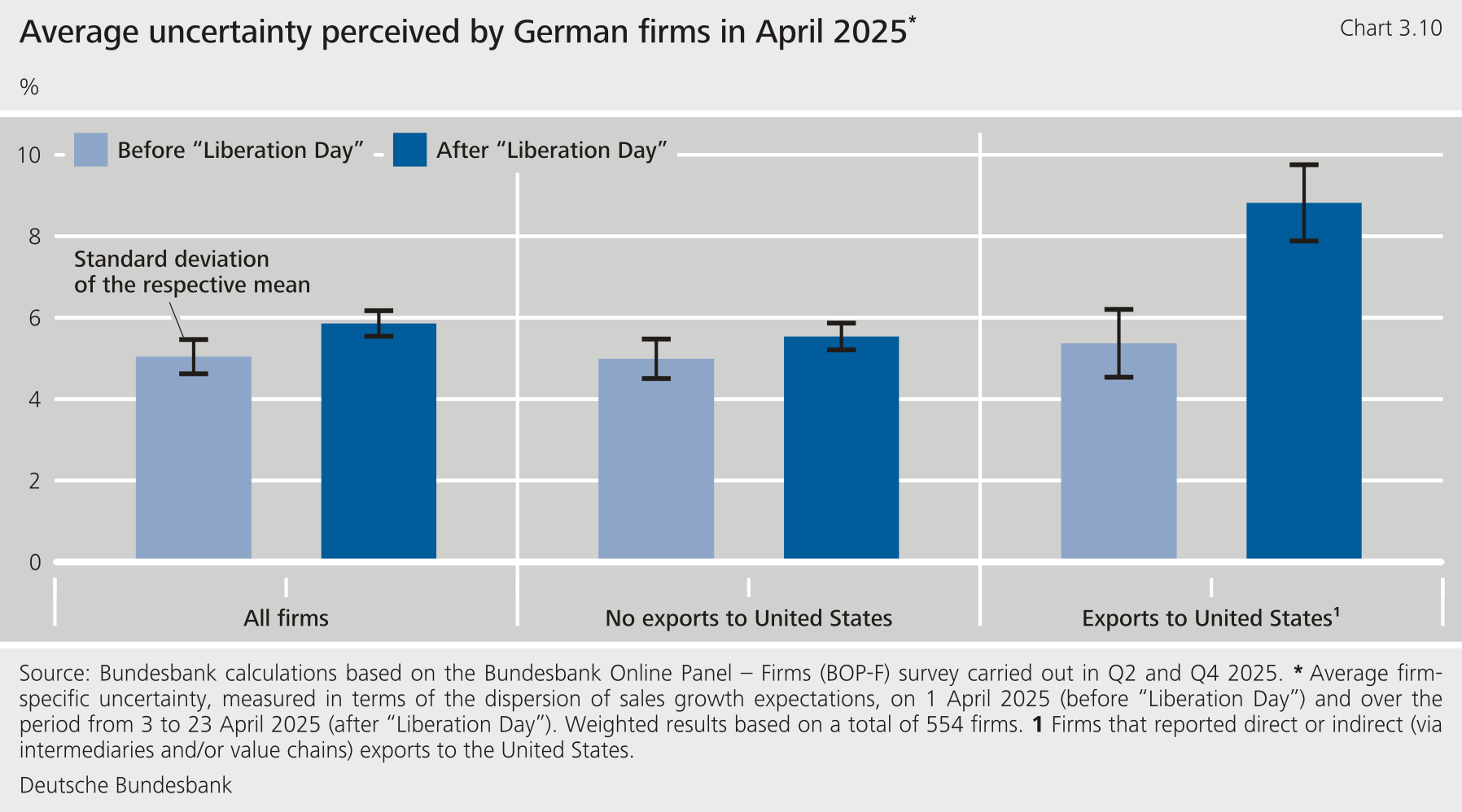
US tariff policy increased trade policy uncertainty, which weighed on the global and German economy. It was not only the level of tariffs but also their lack of consistency that made it difficult for firms to assess future trading conditions. Repeated changes to announcements, deadlines and exemptions, as well as the prospect of bilateral agreements, all contributed to this uncertainty. From a macroeconomic perspective, uncertainty perceived by German firms increased only slightly. However, in the case of firms with export ties to the United States it climbed significantly more strongly following “Liberation Day” (see the supplementary information entitled “The impact of “Liberation Day” on the uncertainty perceived by German firms”). This is likely to have contributed to the investment restraint displayed by the firms affected. 20
Supplementary information
The impact of “Liberation Day” on uncertainty perceived by German firms
The significant tightening of US trade policy at the beginning of 2025 impeded firms’ planning. On 2 April 2025, referred to as “Liberation Day”, the US administration announced extensive country-specific import tariffs. At the same time, it signalled its willingness to negotiate bilateral agreements. This shift towards a more power-based trade policy in the United States changed the business environment. In particular, it remained unclear which rules would govern trade with the United States in the future. The resulting uncertainty may have influenced firms' decisions and, in particular, dampened their willingness to invest. This could also have been relevant for the economy as a whole. 1
Using firm survey data, we estimate the impact of the tightening of US trade policy on the uncertainty perceived by German firms. One challenge we face here is that uncertainty itself is inherently difficult to measure and commonly used uncertainty indicators sometimes yield contradictory results. The picture for April 2025 is similarly mixed. Text-based measures of uncertainty show a sharp increase, whereas financial market-based indicators reacted more moderately. 2 We therefore seek to measure firms’ perceived uncertainty directly, using the dispersion of their sales expectations. 3 For this purpose, we draw on data from the Bundesbank's firm survey, the Bundesbank Online Panel – Firms (BOP‑F), in particular data on expected sales growth in the upcoming year. 4 We use the data to calculate the firm-specific standard deviation of expected sales growth. A high standard deviation indicates that a firm expects a wide range of potential sales developments, which is interpreted as an indication of pronounced uncertainty.
The analysis focuses on the perceived uncertainty around “Liberation Day” in April 2025. In that month, more than 2,000 German firms took part in the BOP‑F survey. Around a quarter of them supplied data on their expected sales growth in the following year, the associated probability distribution and their export activity. 5 The data allow us to distinguish between firms that submitted the questionnaire before (one-third of firms) or after “Liberation Day” (two-thirds of firms).
According to the survey results, the tariff announcement only led to a slight increase in the uncertainty perceived by German firms overall. On average, the dispersion of firms’ expectations regarding their sales growth increased only modestly. 6 This suggests that uncertainty rose only marginally across all firms. 7
By contrast, perceived uncertainty increased considerably more sharply for firms with export ties to the United States. According to the BOP‑F survey, around 11 % of German firms exported to the United States in 2025. 8 For this group, the standard deviation of sales expectations rose by 3.4 percentage points on average to 8.8 %. 9 Given an average expected sales growth of around 5 %, this represents a substantial increase. 10 This increase was also highly statistically significant. In addition, unlike the period prior to 2 April, there were now pronounced differences in perceived uncertainty between exporters to the United States and firms without US export ties.
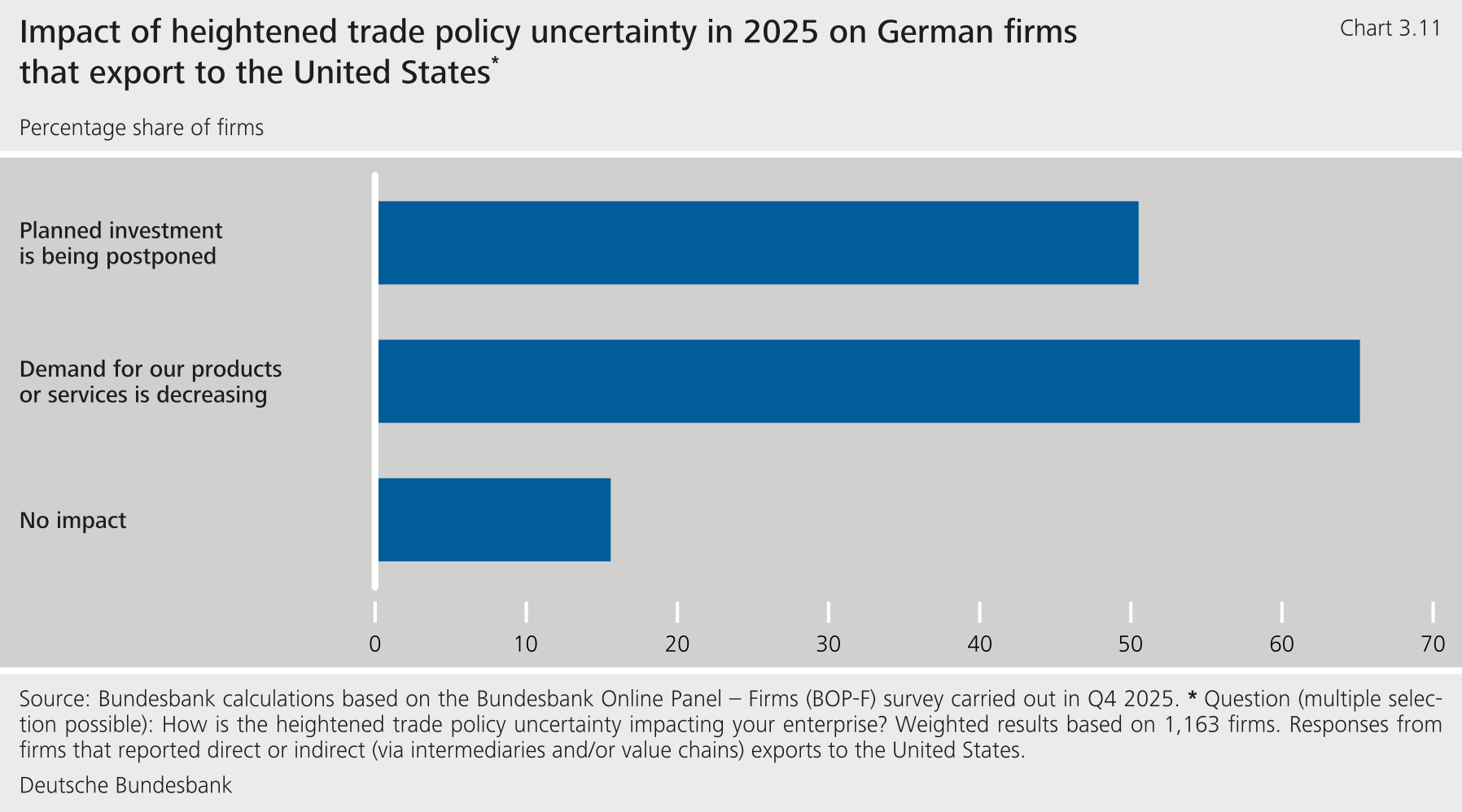
A follow-up survey confirms that heightened uncertainty placed a burden on German firms with export relationships to the United States. In the fourth quarter of 2025, the BOP‑F directly canvassed exporters about the potential impact of increased trade policy uncertainty. Just over half of firms with export relationships to the United States reported postponing planned investment. Around two-thirds expected a decline in demand for their products or services. 11 Only 16 % reported no effects. However, these findings do not allow direct conclusions to be drawn about the economy as a whole, as the share of firms with export relationships to the United States is relatively small. 12 Moreover, no enquiries were made regarding the volume of the postponed investments.
All in all, the impact of the tightening of US trade policy on the uncertainty of German firms is likely to have remained modest. While the effects on German firms as a whole were relatively minor, the results showed that firms that export to the United States were impaired significantly more. In line with previous analyses, the impact on the economy as a whole is likely to have remained fairly contained. 13
2.3 Potential long-term repercussions
In addition to short-term trade and price effects, tariffs are likely to impair the growth potential of the economies affected. The effect that tariffs and other protectionist measures exert on economic activity, prices and trade flows is not merely temporary. These measures can also dampen productivity and real incomes in the longer term. Such effects often take some time to come to light, and it is not yet possible to reliably quantify them for the new US tariffs. However, theoretical considerations and experience with previous episodes of trade policy tightening suggest that there are several transmission channels at play.
Trade barriers can impair competition and productivity in the long term. Import restrictions reduce the competitive pressure on domestic producers. As a result, resources may remain tied up in less productive firms rather than migrating to more efficient providers. The macroeconomic costs thus arise not only through lower trading volumes, but also through an inefficient allocation of labour and capital. 21 A reduced degree of competition can also encourage higher margins and diminish consumer welfare.
Economies of scale and product diversity also suffer when insularity increases. Trade barriers make imports of intermediate inputs more expensive and, if trading partners impose retaliatory measures, can diminish the availability of sales markets to exporting firms. Fixed development, production and distribution costs are then distributed across smaller volumes of goods, meaning that economies of scale are utilised to a lesser extent. At the same time, product diversity and opportunities for consumption dwindle. 22
Lastly, protectionist measures can dampen innovation and investment. Research, technology adoption, and product development typically go hand in hand with high upfront costs and tend to be more worth the outlay for those with access to larger markets. Tariffs and other trade barriers reduce this sales base. At the same time, they make intermediate inputs and capital goods more expensive or more scarce. This can hamper modernisation and innovation. 23 24
In line with these reflections, empirical analyses provide clear evidence that broad-based tariff hikes dampen productivity and output. According to estimates in the literature, a ten-percentage-point increase in the average import tariff rate reduces aggregate output in the country imposing the tariffs by around 1 % after five years. 25 Productivity, measured as the ratio of GDP to employment, declines by about twice as much as output. These effects do not materialise immediately: it takes four to five years to reach their full magnitude. The finding that the macroeconomic impact of the tariff escalation has not been particularly large so far should therefore not blind anyone to the fact that protectionism comes with substantial costs. In the long term, trade policy restrictions are typically associated with significant welfare losses.
3 Geoeconomic fragmentation and implications for Europe
The recent restrictive trade policy measures introduced by the United States form part of a long-standing trend towards fragmentation in the global economy. For a period of several decades, global economic developments were characterised by ever deeper integration and far-reaching moves towards a liberalisation of international trade. Recent years, however, have seen a significant increase in geopolitical conflicts. Against this backdrop, geopolitical and security considerations have taken on greater significance in economic decision-making. Trade policy measures have been presented not only as a way of correcting unfair competitive conditions, but also – increasingly – as a way of safeguarding strategically relevant industries and reducing dependencies. The new US tariffs therefore represent a development whereby the borders between trade, industrial and security policy are becoming increasingly blurred.
One key driver of geoeconomic fragmentation is China’s economic rise, which has shifted global power relations. Through its increasing integration in international trade links, China’s economic and strategic weight has grown considerably. This is due not least to the country’s pivotal role in the manufacture of numerous intermediate goods 26 and as an important market for products from western countries. At the same time, these linkages can serve as an instrument of power, with economic dependencies leveraged to assert political interests. Advanced economies might therefore be keen to reduce dependencies on China so as to minimise their own vulnerabilities and safeguard their economic policymaking leeway. 27
The rivalry between the United States and China is a particularly clear illustration of this. It is centred, most of all, on technology – a space where access to key technologies and the raw materials required for them are increasingly being treated as a security and industrial policy issue. However, the rivalry stretches far beyond bilateral US‑China trade. It has an impact on the way in which global supply chains are set up.
Geoeconomic fragmentation is associated with changes in the structure of international trade. An environment of heightened geopolitical risk and trade policy uncertainty prompts firms to diversify or regionalise their supply chains to a greater extent. Production capacity is relocated closer to sales markets or is organised within groupings of countries that are more closely linked in political terms. In the academic literature, shifts of this nature are referred to as friend-shoring or near-shoring. 28
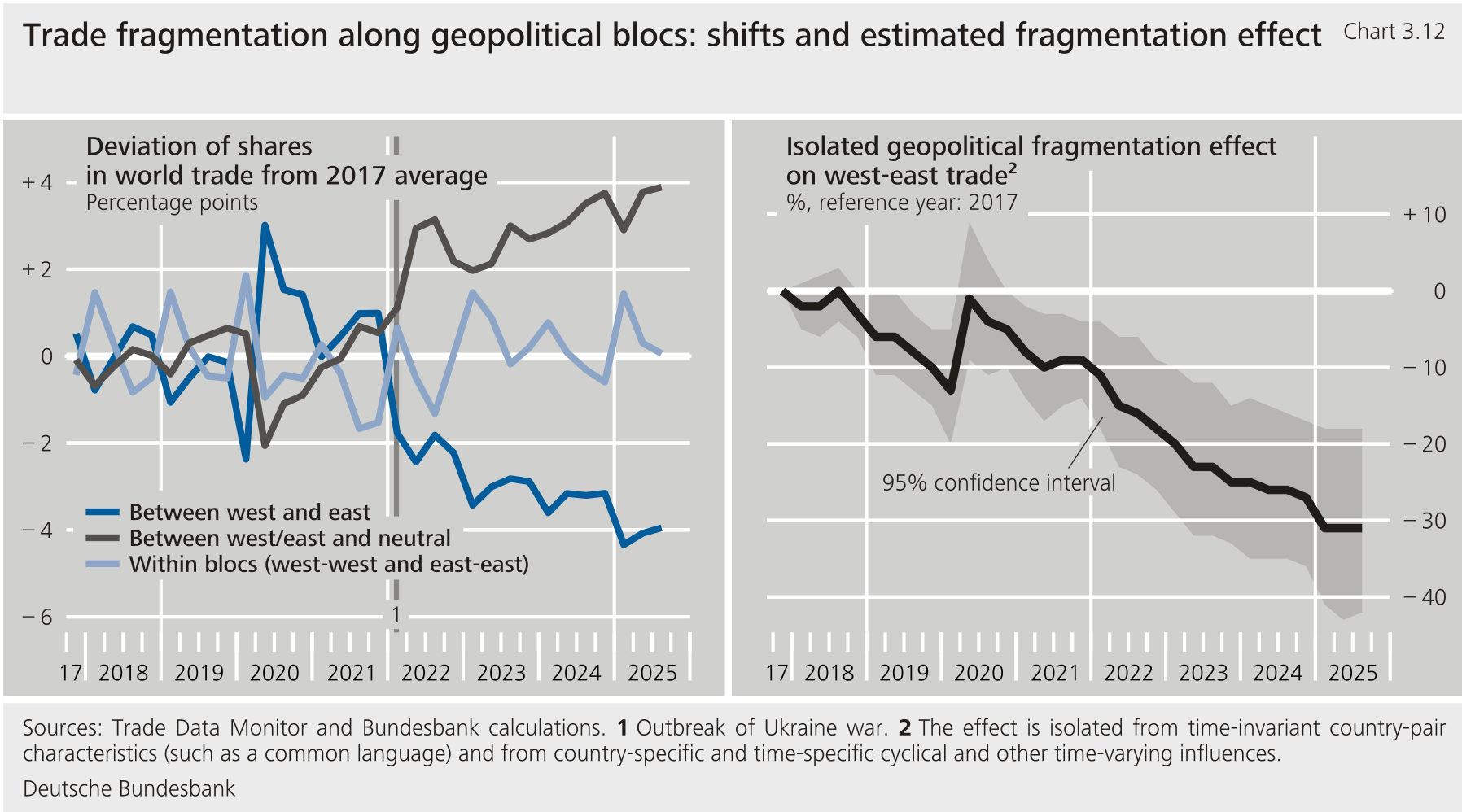
Empirical analyses show that trade intensity between countries with differing geopolitical stances has declined. To analyse the impact of geopolitical factors on international trade, we divide countries into three groups for the sake of simplicity: a western bloc that – geopolitically-speaking – tends towards the United States, an eastern bloc that is more closely associated with China, and a group of neutral countries. 29 Since 2022, there has been a decline in the share of global trade accounted for by trade between the western and eastern geopolitical blocs. At the same time, trade with neutral countries has gained in significance, while the shares of intra-bloc trade have remained broadly stable. An econometric analysis based on a gravity framework confirms the finding of growing trade fragmentation. It shows that trade between the two geopolitical blocs (west/east) had already been on a comparatively steady decline since 2018 compared with trade within each bloc. 30 Towards the end of the analysis period, trade between the west and east relative to trade within each geopolitical bloc was around 30 % weaker than would have been expected on the basis of previous trade patterns.
Geoeconomic fragmentation exacerbates the trade-off between efficiency and resilience. Globalisation has long contributed to the international specialisation of production processes, enabling significant productivity and welfare gains. Greater politicisation of economic relationships can impair the international division of labour and diminish the advantages afforded by specialisation. 31 Economic policy must carefully weigh up which areas warrant greater diversification or regional protection.
These developments pose particular challenges for Europe. The economies of Europe, and particularly Germany, have traditionally been highly interlinked and benefit especially from open markets and stable multilateral trade rules. Increasing fragmentation of the global economy could therefore hit Europe comparatively hard. 32 At the same time, the size of the Single Market makes the EU an attractive trading partner for many economies. The EU needs to deploy this economic weight in a targeted manner in order to confidently assert its interests against large economic areas such as the United States or China.
The experience gained from the trade conflict between the United States and China underscores the need for Europe to reduce risks stemming from critical dependencies. Following the massive escalation of the trade dispute with the United States in the spring of 2025, China introduced general export controls on rare earths, which also affected the EU. This shows that economic dependencies can quickly become vulnerabilities in geopolitical conflicts. For a long time now, the EU has been pursuing a strategy of economic resilience and diversification in order to reduce such vulnerabilities. With regard to China, this strategy is often referred to as “de-risking”. 33 This is intended to address a coordination problem: procurement decisions taken by individual firms typically take insufficient account of the macroeconomic damage associated with the potential absence of these goods. This can justify government intervention provided that it remains limited to clearly identified critical dependencies and does not lead to widespread self-isolation.
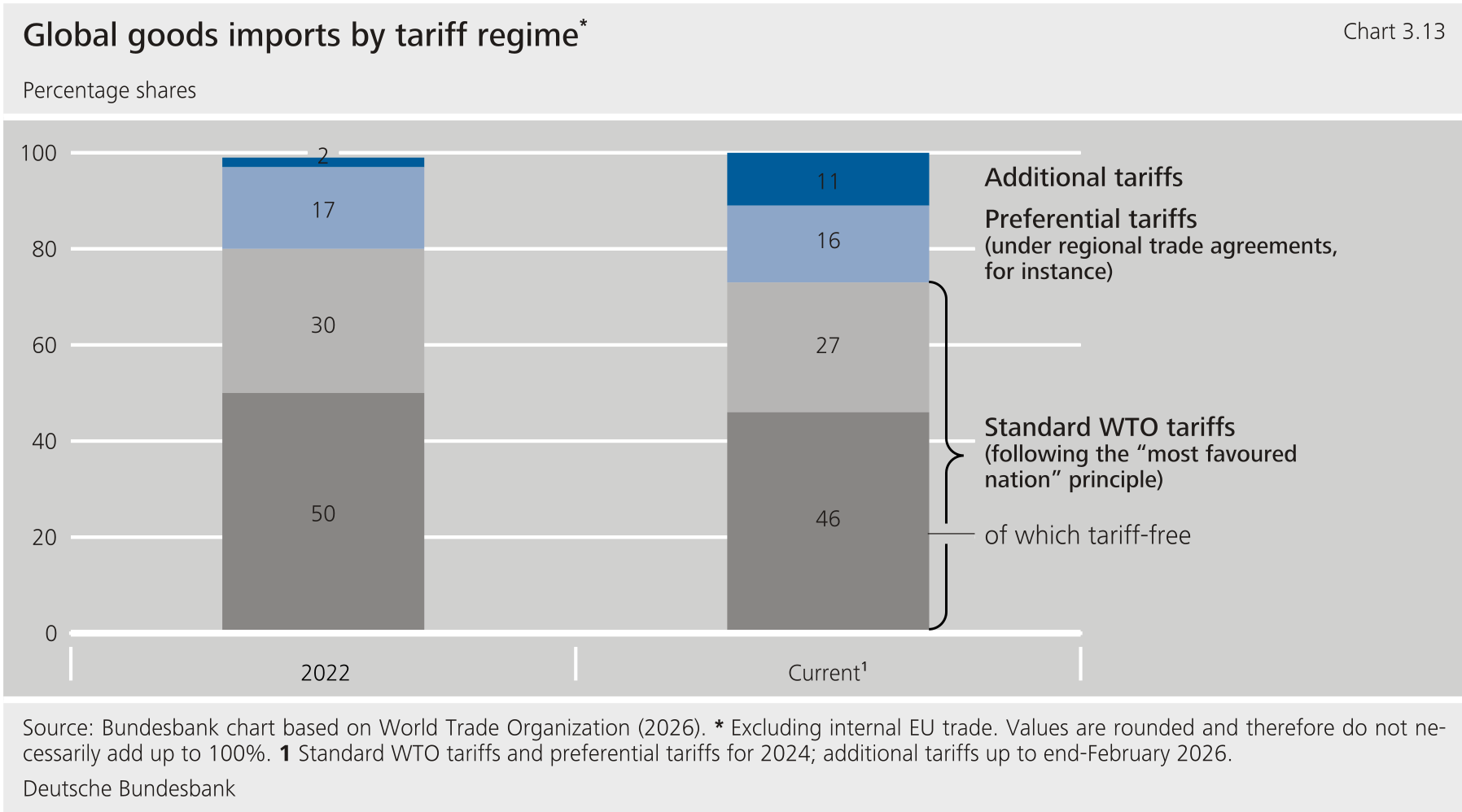
Despite mounting geopolitical tensions, the multilateral trading system with the WTO at its core is likely to remain attractive to a large part of the global economy. Small and medium-sized economies, in particular, depend on reliable and rules-based trade relations and benefit from the WTO’s institutional structures. Core principles, such as the most favoured nation (MFN) principle, ensure that trade benefits are enjoyed by all members. Despite the new US tariffs, a large part of global trade continues to be conducted within the WTO framework. 34 There is no sign of a general departure from the core principles of the WTO. That said, parts of the WTO rules are in need of reform. A particular need for adjustment exists to better capture government subsidies, government-linked firms and opaque promotional practices. Reforms should generally aim to strengthen the binding effect of the rules and to preserve the principles of an open, non-discriminatory trade order. Constructive cooperation from all major trading nations – including the United States and China – would be key to this.
An important starting point for the EU is to intensify relations with its trading partners. In addition to strengthening and reforming the multilateral trading system, bilateral and regional trade agreements can help diversify selling and buying markets, anchor standards and strengthen economic cooperation with rules-based partners. The provisional application of the trade agreement with the Mercosur countries since May 2026, as well as the recent negotiations with India and Australia, are steps in this direction. Nevertheless, we must not place too much stock in the possibilities of such agreements. They can only gradually complement existing linkages with large economic areas such as the United States or China, and their impact often only unfolds over longer periods of time. 35
In addition, developing and refining the European single market will take on a crucial role. Further deepening the Single Market can strengthen Europe’s economic resilience by facilitating economies of scale, fostering competition and productivity, and reducing dependence on non-European markets. It should be promoted, in particular, in critical areas where dependencies are greatest, such as energy and capital markets and parts of the services sector – for instance, financial market services and digital services in the areas of IT and artificial intelligence. 36 It is particularly in an environment of increasing external uncertainty that stronger internal integration can help to better exploit Europe’s growth potential and cushion adverse effects of geoeconomic fragmentation.
4 Conclusion
The much more protectionist US trade policy since the beginning of 2025 has presented the rules-based international trade order with a challenge. The US administration has raised import tariffs to an unprecedented extent. In so doing, it has called into question core principles of the rules-based, multilateral system of trade and moved increasingly towards the use of raw power to pursue its own interests. To a degree, the swing in US trade policy should be seen as a response to China’s growing importance in global markets, which is likely to have been aided and abetted by competition-distorting government intervention. This poses significant trade policy challenges. From an economic perspective, however, broad-based tariffs are only partially suited to addressing them.
So far, the realignment of US trade policy has had only a limited impact on the global economy. This is partly because some tariffs were lowered again after a phase of significant escalation and many trading partners decided against sweeping retaliatory measures. Despite the burdens, global trade proved robust, supported by dynamic demand for AI-related goods. However, US tariff policy is likely to have amplified trade policy uncertainty worldwide, especially in the face of ever-new threats, exemptions or tightening.
Some of the United States’ own key tariff policy objectives have not yet been fulfilled. The trade deficit has narrowed only slightly and remains high. Nor is there any sign of a broad-based reindustrialisation. The costs of the tariffs appear to have been borne predominantly within the United States so far, where they fuelled upward pressure on prices.
Beyond short-term trade and price effects, protectionist measures entail considerable longer-term risks. Tariffs can impair competition, productivity and thus potential growth. The fact that the global economy has seen robust growth should therefore not be interpreted as meaning that protectionism will not come with a “price tag”. Indeed, trade restrictions could entail significantly higher welfare losses in the long run.
In the face of a changed global economic environment, Europe needs to draw a closer conceptual connection between openness, resilience and competitiveness. Growing geoeconomic fragmentation is changing the framework for international economic cooperation. The challenge Europe is facing is to adhere to the fundamental principles of an open, rules-based economic order whilst at the same time strengthening economic resilience. WTO-compliant trade and industrial policy measures can help to limit external vulnerabilities. Moreover, new trade agreements can improve access to growth markets, diversify supply relationships and enhance rules-based cooperation. However, neither is a substitute for leveraging reliable framework conditions, a deeper internal market and supply-side reforms in order to strengthen Europe’s own competitiveness.
Bernard, S., L. De Greef, I. Hurst, A. I. Kaya, I. Liadze and B. Naisbitt (2024), The Effects of Higher US Tariffs, National Institute of Economic and Social Research, Global Economic Outlook Topical Feature, October 2024, pp. 64‑77.
Boddin, D., M. Köhler and P. Smietanka (2023), Bundesbank Online Panel – Firms (BOP‑F), Data Report 2023‑07, Deutsche Bundesbank, Research Data and Service Centre.
Gopinath, G., P.-O. Gourinchas, A. F. Presbitero and P. Topalova (2024), Changing Global Linkages: A New Cold War?, International Monetary Fund Working Paper No 24/76.