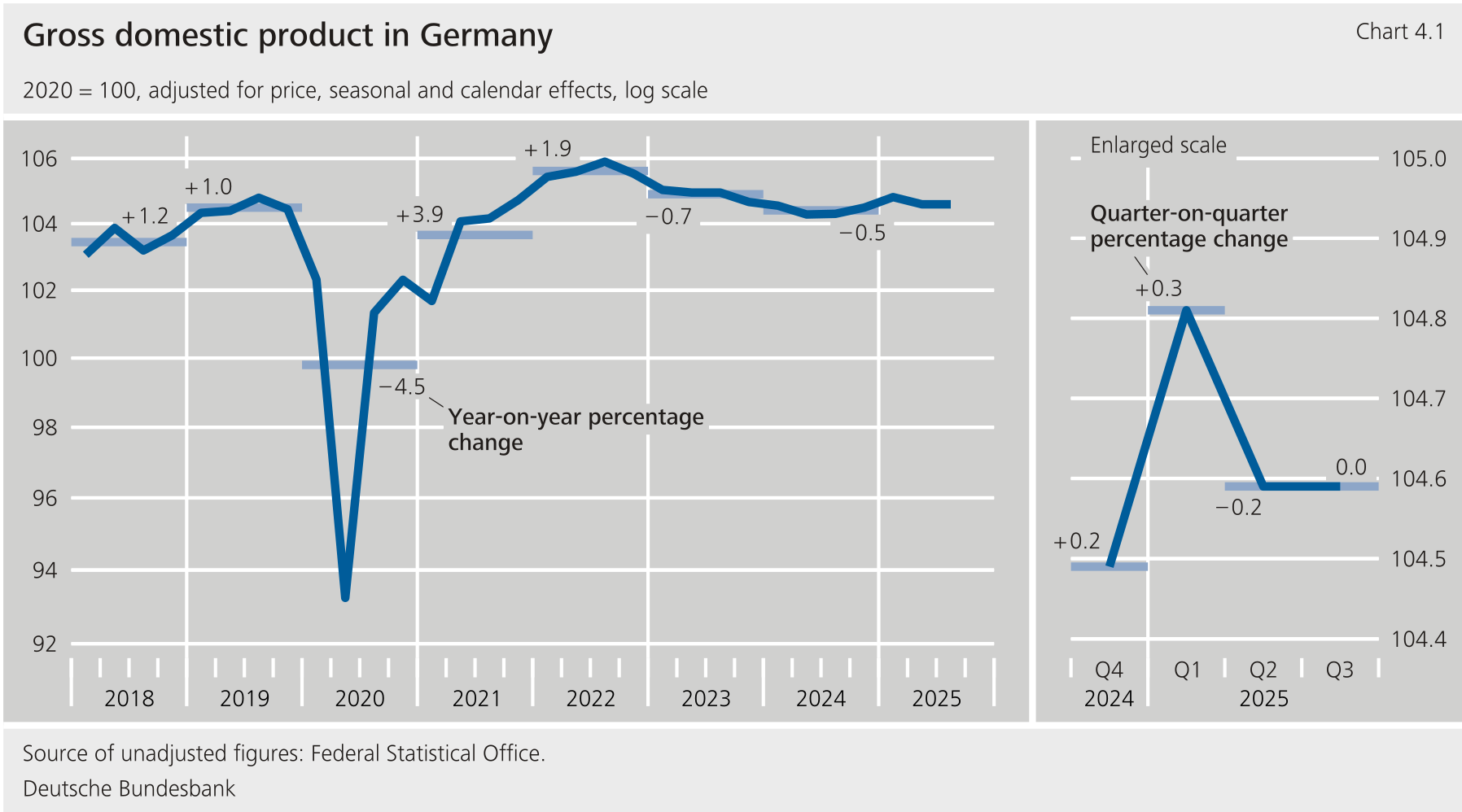
Economic output in Germany remained stable in the third quarter of 2025 despite adverse circumstances. According to the Federal Statistical Office’s flash estimate, real GDP remained unchanged on the quarter in seasonally adjusted terms, 1 after having fallen by 0.2 % in the previous quarter. Economic activity was dampened, in particular, by the headwinds for the export industry caused by higher US tariffs, but also by the appreciation of the euro. This is putting additional strain on the already worsened competitive position of German exporters. Nominal exports of goods to the United States fell steeply, as in the previous quarter. This meant that overall exports also declined. German industry therefore remained weak, with sales and production falling. Investment in machinery and equipment made a positive contribution to economic output, according to a press release from the Federal Statistical Office. 2 Temporal shifts due to the more generous depreciation options in place since July may have played a role in this. These had been introduced under the immediate tax investment programme. However, there is still no evidence of a broad-based improvement in investment sentiment. The latest autumn survey conducted by the German Chamber of Commerce and Industry, for example, shows that enterprises’ investment plans remain cautious. 3 The situation in the construction sector remains mixed. Output in building construction shrank, partly because there is still a large-scale lack of orders, while in civil engineering more significant growth was mainly inhibited by labour shortages. Overall, construction output declined somewhat. By contrast, service providers were able to step up their activity, even though private consumption probably did not provide any impetus.
2 Industry and construction again subdued, whilst service providers likely supported the economy
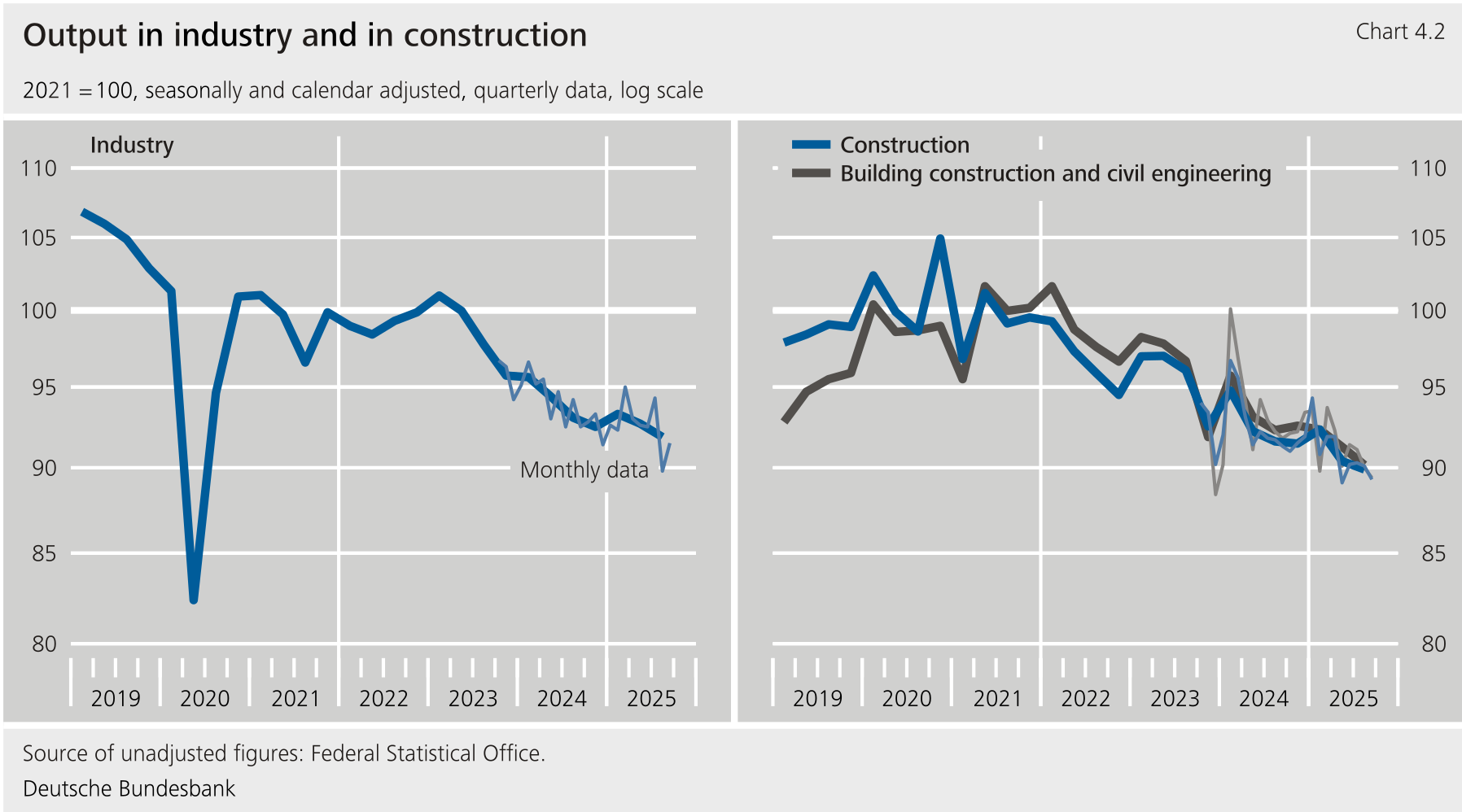
Industry and exports remained weak in the third quarter. Seasonally adjusted industrial output was up on the month in September 2025. The increase was attributable to motor vehicle production, in particular, which had fallen sharply in the previous month, due in part to the timing of plant holidays. However, production of motor vehicles was down substantially when averaged over the third quarter. Overall industrial output also saw a marked drop from the previous quarter, even though mechanical engineering and production of intermediate goods increased. Price-adjusted industrial sales declined on a similar scale. The higher US tariffs had a clear impact on exports. Nominal exports of goods to the United States were once again down sharply on average over the third quarter. However, in September they recovered again to some extent compared with the previous month. One factor that may have played a role here is that tariffs on motor vehicles decreased, seeing as the relevant EU-US agreement only came into effect in September. In the past, though, strong monthly fluctuations of this kind have generally also been driven by highly volatile one-off developments relating to specific goods. 4 Real exports as a whole were supported by more favourable developments in other sales markets and therefore declined only slightly on average over the third quarter. Exports to euro area countries, in particular, rose significantly.
Investment in machinery and equipment looks to have increased. This is supported by the fact that more capital goods were imported according to price and seasonally adjusted data available up to August. This may have compensated for the slight decline in the price-adjusted domestic sales of capital goods manufacturers in the third quarter. Both indicators signal that firms invested more in motor vehicles. The steep rise in commercial motor vehicle registrations, according to data from the German Association of the Automotive Industry, is another indication of this. Demand remains weak, and capacity utilisation in industry is still heavily depressed according to the ifo Institute, both of which continue to inhibit investment. However, the introduction of more generous depreciation options may have provided support since July. The slightly increased volume of long-term loans to enterprises in the third quarter also suggest that this is the case (see “Monetary policy and banking business“). It is possible that some investment was postponed from earlier months to a future date in expectation of these tax relief measures being introduced. In addition, the particularly high degree of uncertainty signalled by certain indicators in recent months probably played only a minor role from a macroeconomic perspective and is likely to be overshadowed by other effects. This is consistent with empirical studies, which currently are not indicative of any strong effects of uncertainty (see the supplementary information below).
Supplementary information
Effects of heightened uncertainty on the German economy
The latest trade tensions have once again brought the issue of uncertainty into sharper focus. In particular, the erratic direction of US tariff policy may have led to significant uncertainty among firms and consumers. There are numerous conceivable ways in which heightened uncertainty can dampen economic activity. 1 One of them is the pursuit of precautionary motives: firms and households could delay consumption and investment decisions and wait for more information to become available (wait-and-see approach). Another one is the response from financial markets: rising risk premia and lending restrictions resulting from greater uncertainty worsen investment conditions. The effects on inflation to be expected in theory are not clear-cut. 2 The question of the effects of uncertainty is ultimately an empirical one.
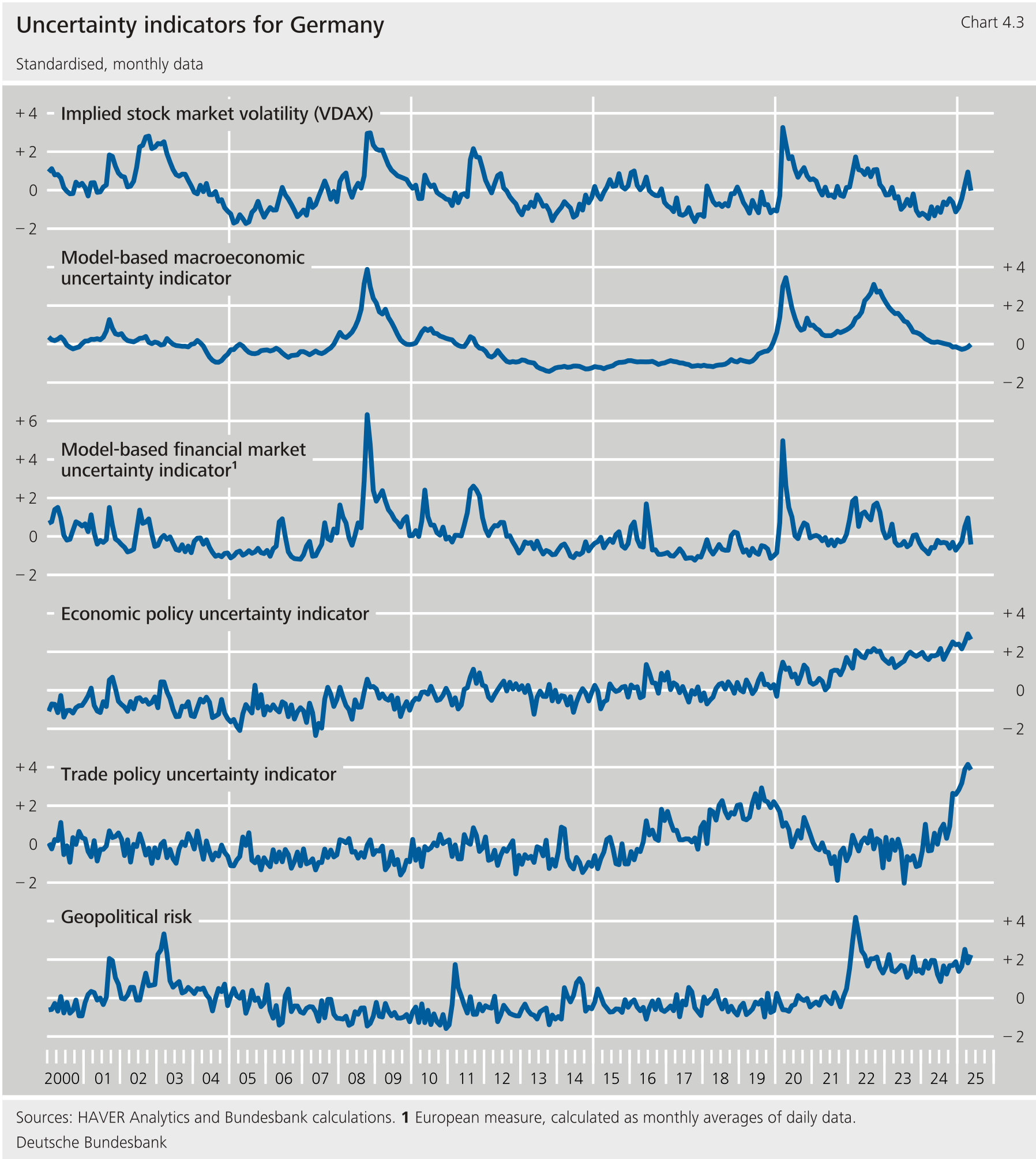
Uncertainty cannot be measured directly. For this reason, measures have to be used that approximate the actual extent of uncertainty. 3 Concepts commonly used to this end are (i) volatility measures and (ii) text-based measures. 4 In total, three measures of uncertainty from each category are considered here: implied stock market volatility (measured by the VDAX), one model-based indicator (derived from forecast errors) each for financial market and for macroeconomic uncertainty, 5 and one text-based indicator each for economic policy uncertainty, for trade policy uncertainty and for geopolitical risk. 6
Only text-based indicators are currently suggesting a particularly high level of uncertainty in Germany. Although most measures increased significantly at the start of the Russian war of aggression against Ukraine, the volatility measures largely returned to their historical average relatively soon. Most recently, the discrepancy between the measures has widened again significantly. The unremarkable values returned by the model-based measures indicate that important macro and financial market time series are not fluctuating exceptionally strongly at the current end. The implied stock market volatility is currently showing raised but by no means exceptionally high volatility. The changeable US trade policy therefore seems to be reflected in a sustained manner mainly in the text-based measures, especially of trade policy uncertainty.
There is no consensus in the academic literature on how to measure uncertainty or on how to identify uncertainty shocks. For this reason, the uncertainty shocks (that is, unexpected jumps in measured uncertainty) and their effects on production and consumer prices are calculated for each of the measures of uncertainty using structural vector autoregressive (SVAR) models. The following common identification approaches are used in this process: 7
Recursive: it is assumed that uncertainty shocks can simultaneously affect all variables in the estimation equation with the exception of actual stock market volatility (see Bloom (2009)).
Sign restrictions: unfavourable uncertainty shocks are assumed to lead to a widening of the spread, a decline in industrial output and a falling short-term interest rate (see Meinen and Röhe (2018)).
Penalty function: uncertainty shocks are identified as those with the greatest impact on the measure of uncertainty within a given period (see Caldara et al. (2016)).
Max share: uncertainty shocks are determined as those shocks in the model that contribute the most to explaining the variance in the measure of uncertainty within a period of 24 months (see Berger et al. (2019)).
Instrumental variables: identification on the basis of fluctuations in the gold price around historical events (see Piffer and Podstawski (2018)). 8
The estimation results suggest that, although uncertainty shocks are a relevant contributing factor for the business cycle in Germany, they are not its key driver. On average across all models, uncertainty shocks explain roughly 10 % of the variance in industrial output, the HICP and employment. This corresponds to findings from the literature, which do not normally identify uncertainty shocks as the main driver of the business cycle. 9
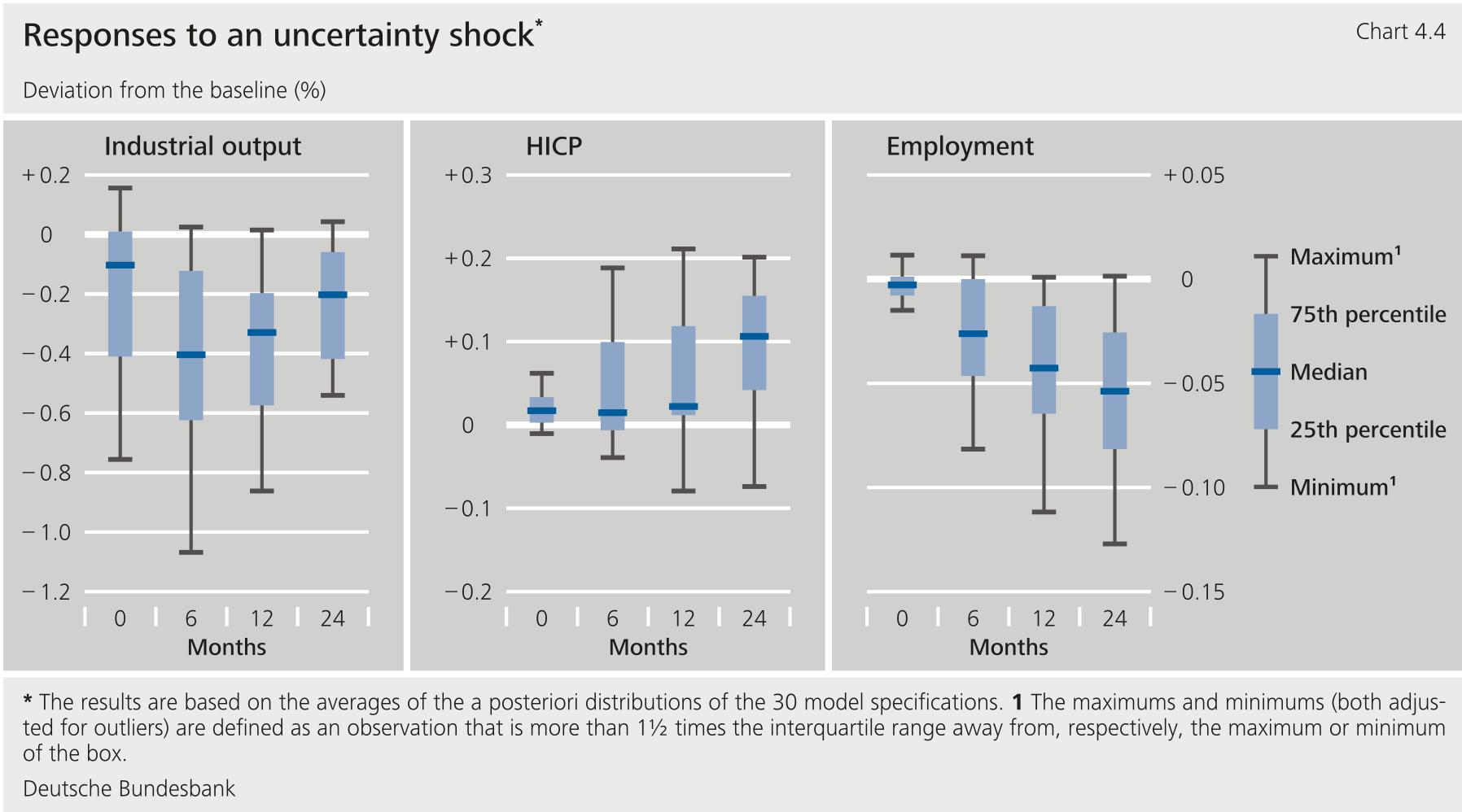
On average across the models, uncertainty shocks in Germany dampen output. The range of estimated impacts across the various measures and models is considerable. 10 At the time (h=0) of the shock (amounting to one standard deviation in each case), industrial output is expected to respond with a change of between + 0.1 % and –0.7 %. Most models suggest a decline in industrial output below its hypothetical path without an uncertainty shock – by around 0.1 % on average. This effect typically increases significantly six months after the shock. The average decline across all models is then around 0.4 %, although individual models suggest an even greater slump. The impact diminishes again after one year, meaning that industrial output climbs back towards its long-term growth path.
For the HICP, the models suggest a significant time lag and typically a comparatively weak response, if any. On average across the models, there is a price effect that builds slowly but then persists. The HICP rate rises temporarily and with a lag. However, totalling just over 0.1 percentage point two years after the shock occurred, this average price effect is small. Disagreement among the models is smallest for employment. Almost all models assume a small but lasting decline, peaking at just over 0.05 % on average two years after the shock occurred and decreasing slowly from then on.
The findings show that text-based measures of uncertainty do not signal any noticeable impact on industrial output – irrespective of the time horizon and on average across the models. In contrast, the model-based indices – the indicators for financial market uncertainty and macroeconomic uncertainty –show a clear and significant dampening effect on output, which is fairly persistent. Another striking observation is that the two measures produce relatively similar results across the approaches used to identify shocks. Even if similar results do not, by themselves, provide proof of quality, it means that both measures seem potentially useful for business cycle analysis. 11 There is, however, no evidence that the high level of uncertainty currently suggested by text-based measures is having an impact on the economy. Although this does not rule out impacts on other variables not considered here, these indicators seem to be overstated on the whole. 12 These findings are in line with analyses for the euro area. 13
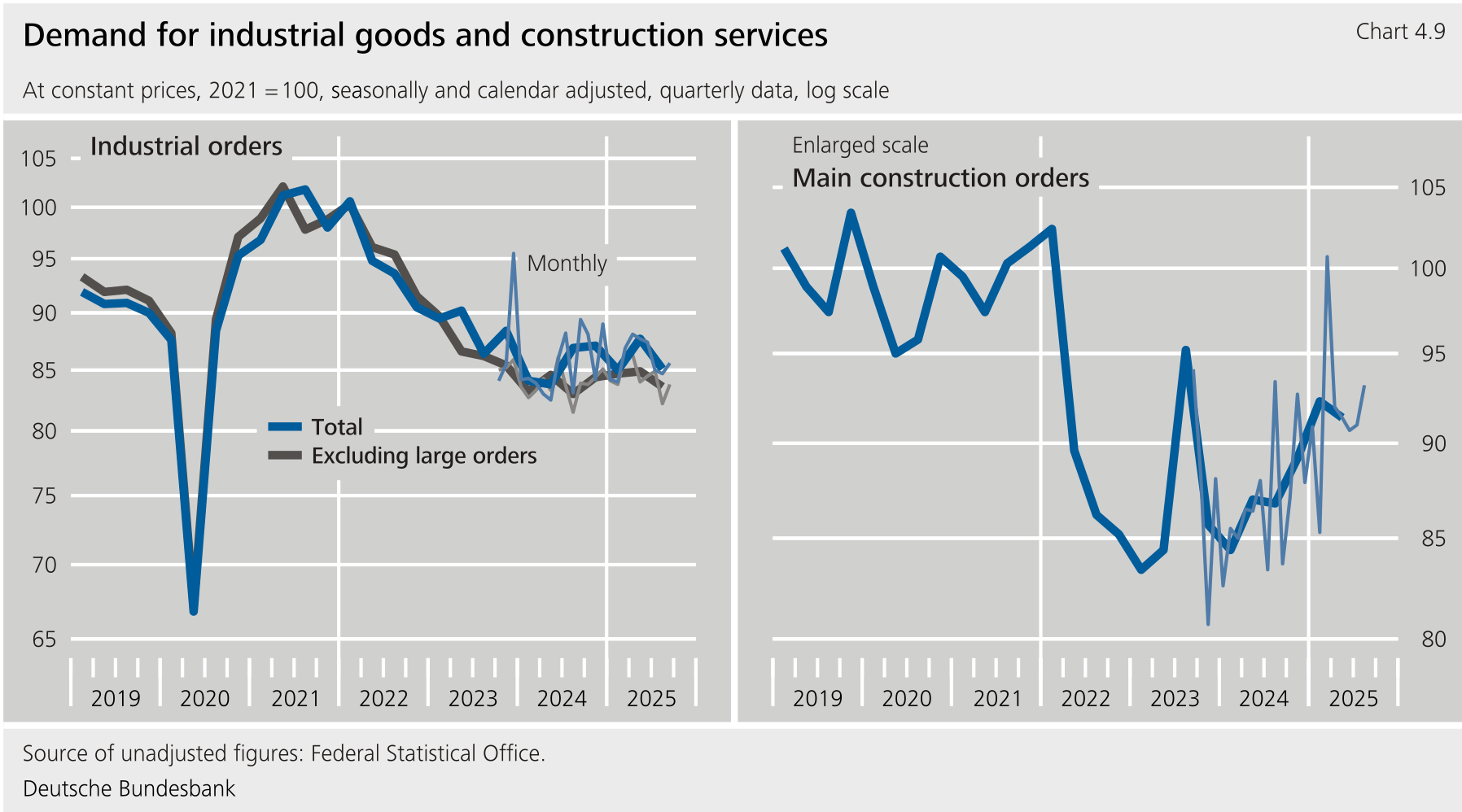
Construction activity remained subdued in the third quarter, too. Seasonally adjusted construction output was once again down on the quarter. Civil engineering continued to significantly outperform building construction and the finishing trades. Output fell further in these latter two sectors. In civil engineering, by contrast, it went up for the fourth quarter in a row. Even though the lack of orders in building construction has been undergoing a trend decline for two years now, according to the ifo Institute, it is still clearly elevated. In civil engineering, by contrast, which has a much better demand situation, surveys show that labour shortages were a bigger problem. Overall, construction investment is likely to have declined in line with production.
Service providers saw growth, even though private consumption probably did not provide any impetus. Price and seasonally adjusted sales remained unchanged in the retail sector. They declined in the accommodation and food services sector according to data available up to August. However, a sharp rise in car purchases probably supported households’ consumption. According to data from the German Association of the Automotive Industry, there was a major uptick in private motor vehicle registrations. Overall motor vehicle sales are also likely to have increased, as commercial motor vehicle registrations picked up sharply as well. This boosted activity in the services sector. Output data for the services sector (excluding trade), which are available up to August, also point to an increase. Price-adjusted sales in wholesale trade declined, however. Weak industrial activity had an impact here.
3 Labour market remains subdued
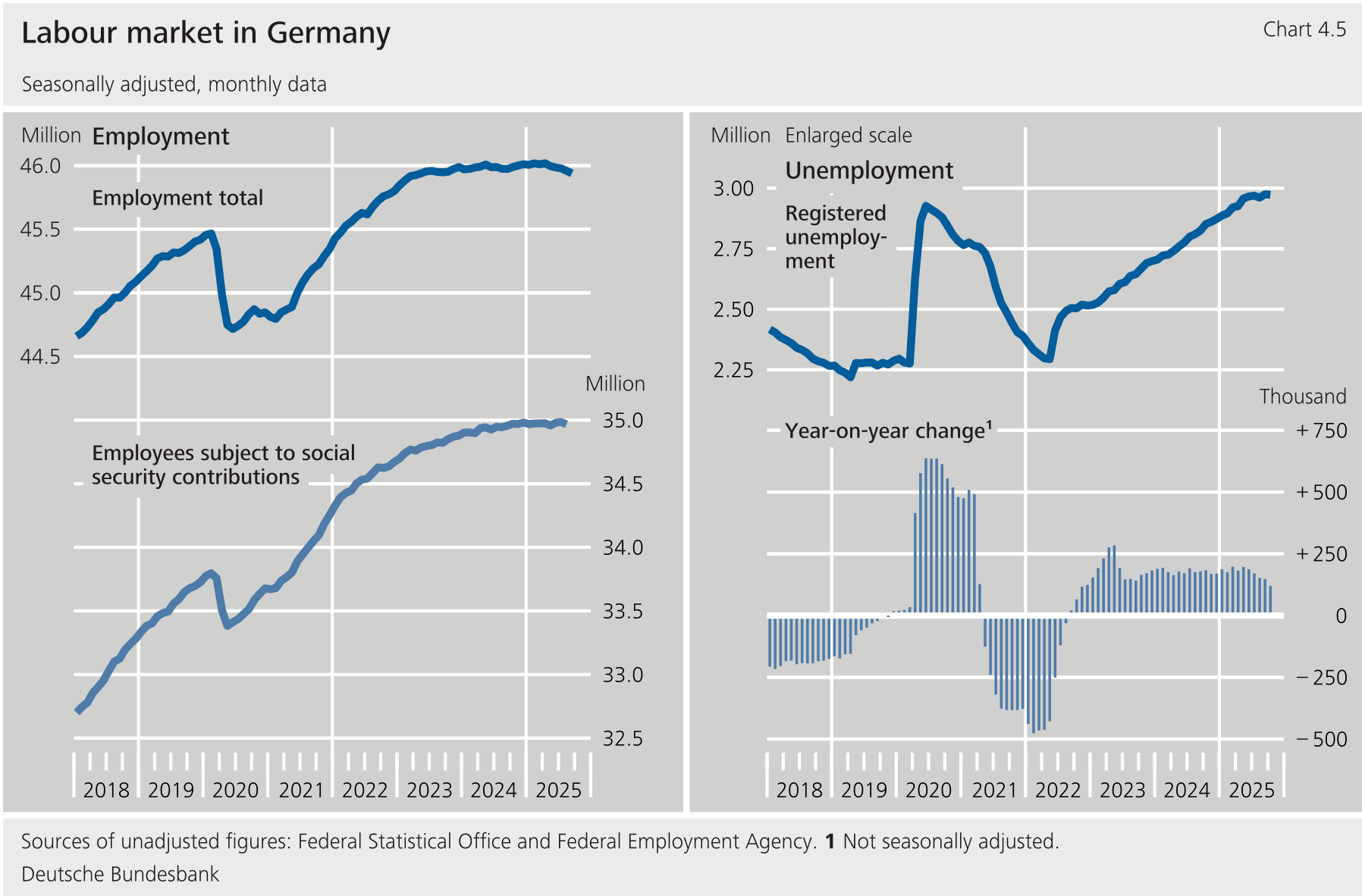
There is still no sign of an improvement in the labour market. Employment fell slightly in the third quarter, after having remained virtually unchanged since mid-2023. However, employment subject to social security contributions, an important pillar of the labour market, remained stable. Unemployment went up only marginally. Leading indicators still do not suggest an improvement in the subdued rate of employment growth.
The number of people in employment fell slightly in the third quarter of this year. According to the initial estimate of the Federal Statistical Office, a seasonally adjusted 45.96 million people were in employment on average over the July to September period. This was a decline of 41,000 people, or 0.1 %, compared with the second quarter. The decline was probably mainly due to the reduced number of people working exclusively in low-paid part-time jobs. However, initial estimates of this figure only extend to August. Self-employment also decreased, albeit moderately. In July and August, employment subject to social security contributions roughly corresponded to the level of the second quarter. Similarly to the second quarter, short-time work for economic reasons was used to a somewhat greater extent.
The stable situation of employment subject to social security contributions as a whole masks considerable changes in employee numbers across individual economic sectors. Employment in the manufacturing sector continued to fall markedly. This mainly affected the manufacture of motor vehicles and some energy-intensive sectors. There is also less use of temporary agency work. The number of employees in the construction sector remained virtually unchanged thanks to the stabilising outlook. A certain decline was registered once again in trade and was newly observed in the information and communication sector. However, more jobs were filled in some sectors of the economy, especially services, which are benefiting from demographic change and the energy transition. The main contribution is being made by the healthcare and long-term care sector. Although substantial hiring is also taking place in the energy supply sector, it is a small sector within the aggregate economy. There was also employment growth in the public administration including defence, in logistics, financial services, education and in other personal service activities.
The three-year-long rise in registered unemployment came to a virtual standstill recently. Averaged over the third quarter of 2025, a seasonally adjusted 2.97 million people were registered as unemployed, around 18,000 more than in the previous quarter. The unemployment rate remained unchanged at 6.3 % due to rounding. Registered unemployment held steady at the previous month’s level in October. On the one hand, unemployment covered by the statutory unemployment insurance scheme, which is heavily influenced by cyclical developments, rose further in the reporting quarter. On the other, the number of unemployed persons claiming the basic welfare allowance came down minimally. Total underemployment, which also includes people participating in labour market policy measures, actually declined somewhat quarter on quarter.
The combination of barely rising unemployment and falling employment indicates that the labour supply has recently stopped increasing. For some time now, demographics have meant that the labour supply from the domestic population has been shrinking considerably, despite the increasing individual propensity to work. So far, this has been more than offset by the high level of immigration in recent years. Since mid-2024, however, immigration figures have been comparatively low. Less dynamic labour demand has resulted in a lower level of labour market-oriented immigration. This is probably one of the reasons why net migration relative to the other EU Member States turned negative at the beginning of last year. In addition, there has been a sharp drop in the number of refugees, especially from the key countries of origin, Ukraine and Syria. However, there is still a certain lag here, as integrating refugees into the labour market is a long and difficult process. According to the IAB Immigration Monitor, the number of employees (excluding civil servants and the self-employed) with foreign citizenship rose by around 240,000 in August compared with the same month of the previous year. 5 However, this no longer fully offset the decline in employment of German nationals, which came to more than 290,000. 6 As the foreign population is now barely growing year on year (as at September: + 40,000), this increase is also likely to weaken significantly in the coming quarters. This development is likely to significantly increase the shortage of skilled workers again, especially given the expected uptick in economic activity as of next year. In addition to greater labour market participation among the domestic population, it is thus also particularly important to attract more skilled workers from abroad to the German labour market and to retain them.
Leading indicators of employment still give no promise of a recovery in the coming months. The ifo employment barometer, which reflects recruitment plans in trade and industry for the next three months, improved in October after a setback in September. However, plans to cut jobs continue to significantly outweigh plans to create jobs. This is especially true of manufacturing and trade. The IAB employment barometer, which also includes publicly financed services sectors such as healthcare, education and administration, deteriorated somewhat and is close to the neutral threshold. The number of vacancies reported to the Federal Employment Agency barely declined over the past three months in seasonally adjusted terms. The number of new job vacancies subject to social security contributions received by the Federal Employment Agency has stabilised, but at an extremely low level. Overall, employment subject to social security contributions is likely to keep moving sideways in the short term. The picture looks similar for unemployment over the next three months. The IAB unemployment barometer remained only just above the neutral threshold in October. Unemployment could remain stable or even fall slightly.
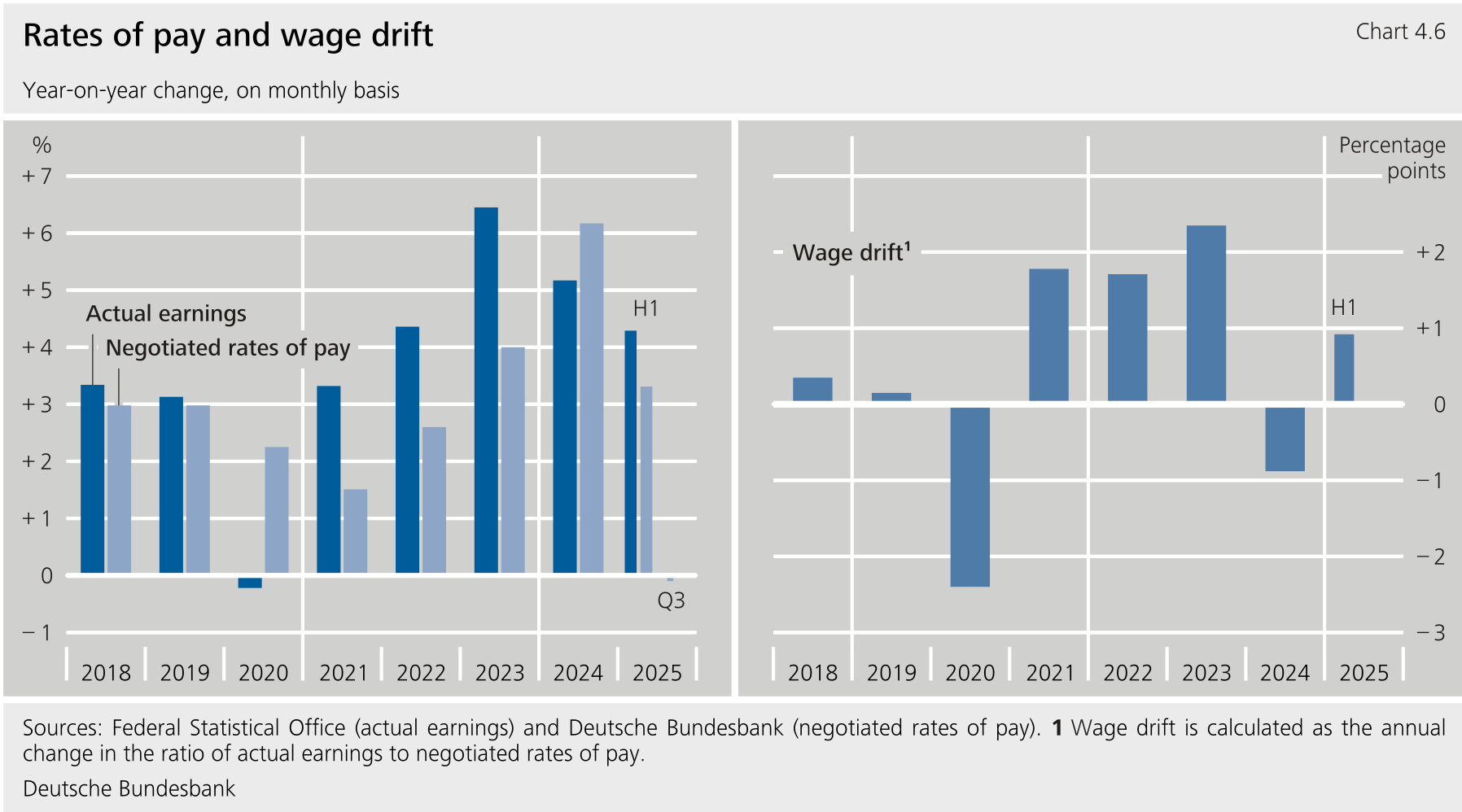
Negotiated wages temporarily stopped rising in the third quarter owing to one-off effects. Including additional benefits, they fell slightly by 0.1 % on the year in the third quarter of 2025, compared with + 5.8 % in the second quarter. This temporary stagnation in the third quarter is based on a negative base effect from the third quarter of 2024, when high inflation compensation bonuses and previously agreed increases in negotiated wages were paid out in retail and wholesale trade. The underlying dynamics of negotiated wage developments can be seen in an analysis excluding special and one-off payments. With a year-on-year rise of 5.0 % in the third quarter, basic pay rates for the economy as a whole calculated in this way continued to rise sharply, albeit not quite as strongly as in the second quarter (6.8 %). This is because the old wage agreements with higher phased increases are gradually expiring.
The most recent wage agreements show lower wage increases than before. In the steel industry, the social partners agreed to significantly lower wage increases than during the period of high inflation. This was in response to the challenging situation in the industry, amongst other things. In the electrical trades, too, the latest agreement was lower than its predecessor.
Owing to the weaker macroeconomic environment and declining inflation, new wage agreements will probably remain lower. Trade unions’ recent wage demands are currently mostly between 5 % and 7 %, thus approaching the levels prior to the pandemic and high inflation. Up until the end of the year, new agreements will still be negotiated for around 3 million salaried employees. However, according to the negotiation schedule, a pay settlement for the majority of these employees in the public sector of the federal states (excluding Hesse) is not expected to be reached until the winter of 2026.
In contrast to negotiated wages, actual earnings probably rose steeply in the third quarter. This is indicated by the nominal wage data for July to September obtained from the Federal Statistical Office’s earnings survey. 7 This means that they would significantly exceed negotiated wages. One factor here is that, in 2024, the frequent and high inflation compensation bonuses were paid predominantly at enterprises bound by collective agreements. As a result, their discontinuation is dampening negotiated wages in 2025 significantly more strongly than actual earnings, which also include non-negotiated wages and wages outside of collective agreements.
The general statutory minimum wage will be raised substantially from January 2026. On 29 October, the Federal Cabinet decided to gradually raise the rate from the current €12.82 per hour to €13.90 as at 1 January 2026 and to €14.60 per hour as at 1 January 2027. These increases will have a direct and strong impact on the lower wage brackets in the low-wage sectors. In addition, by way of spillover effects on remuneration somewhat above the minimum wage, they will also contribute to a higher aggregate wage increase. After the first quarter of 2026, this is likely to continue to support actual earnings, in particular, for a while.
5 Inflation rate still slightly above 2 %
Consumer prices continued to pick up moderately in the third quarter of the year. In seasonally adjusted terms, the Harmonised Index of Consumer Prices (HICP) rose again by 0.5 % on the quarter. Price dynamics for services, though still strong, declined somewhat. This was partly due to falling prices for travel services, especially for air travel and package holidays, which generally fluctuate quite strongly. By contrast, prices for industrial products rose somewhat more strongly than in the two preceding quarters, despite the overall dampening effect of the appreciation of the euro, even though the corresponding import prices fell. This suggests that the potential tariff-induced effects relating to the diversion of Chinese goods exports from the United States to Germany have at least so far not yet had a major price-dampening impact at the consumer level. 8 Clothing and footwear, in particular, but also digital products such as software, streaming services and games became more expensive. Energy prices remained virtually unchanged in the third quarter. Unlike in the previous quarter, crude oil prices denominated in US dollars rose moderately, but in euro terms they declined slightly as a result of the appreciation. Consequently, prices for petroleum products fell somewhat in the third quarter, albeit by a significantly smaller margin than in the previous quarter. On the other hand, electricity prices rose slightly. Food price dynamics were similar to those in the previous quarter. Meat and coffee prices once again rose at an above-average rate.
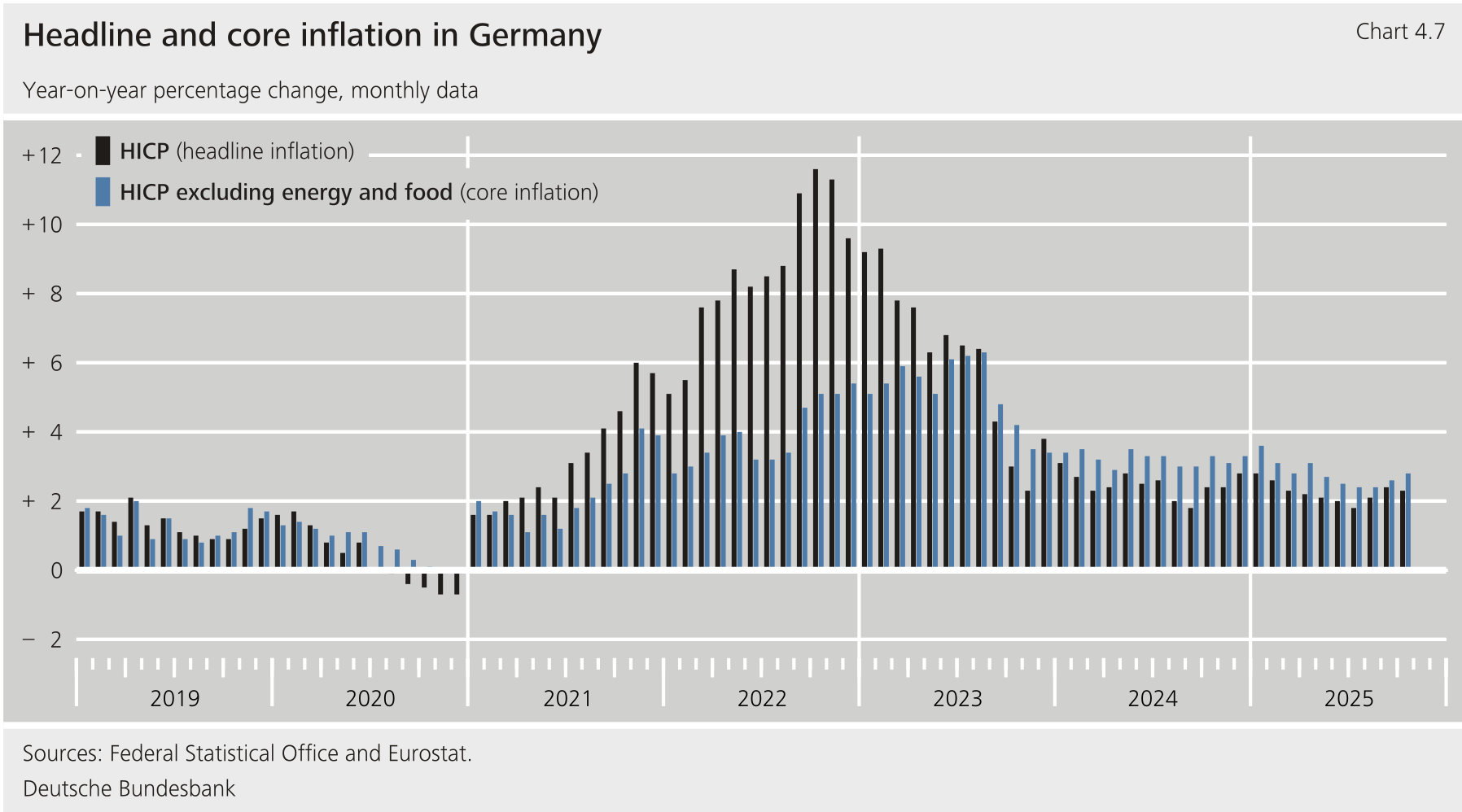
The annual inflation rate remained unchanged in the third quarter of 2025 at 2.1 %, but underlying price pressures were stronger. The core inflation rate (HICP excluding energy and food) dropped sharply from 2.8 % in the previous quarter to 2.4 %. Here, the decline in services inflation was only partly offset by a stronger rise in the prices of non-energy industrial products. If the volatile components clothing and travel services are excluded, however, the core rate held steady at around 3 % – virtually unchanged since mid-2024.
In October, the inflation rate remained somewhat above2 %. After seasonal adjustment, the HICP ticked up by 0.3 % compared with September. The dynamics of prices for services increased once again compared with previous months, as the holiday markup for air travel prices was particularly strong. The dynamics for non-energy industrial goods also picked up slightly, mainly owing to significantly higher prices for individual product categories. For example, jewellery price inflation accelerated, attributable most likely to the high price of gold. Energy prices also rose slightly in October, especially those of fuels, even though crude oil prices fell. Food prices dropped slightly. Butter and cheese, in particular, became significantly cheaper, which was probably also due to high milk production. In addition, there was an abundant harvest of potatoes and fruit. The annual inflation rate fell slightly from 2.4 % to 2.3 %. 9 This was partly driven by the significant spike in energy and food prices in October 2024, which has now dropped out of the annual rate. By contrast, core inflation rose to 2.8 %.
Over the next few months, the inflation rate is likely to be somewhat higher for a time, mainly owing to base effects. In November 2024, prices for travel services had fallen significantly, which is now pushing up the inflation rate. In the short term, this is likely to overshadow the generally expected disinflation process in the services sector owing to the trend decline in wage growth rates. At the beginning of next year, an inflationary base effect on food will contrast with falling energy price inflation. The latter is likely to decrease again significantly owing, amongst other things, to lower electricity grid fees, despite higher carbon prices in the national emissions trading system. The inflation rate could then fall back to somewhat above 2 %. The inflation outlook for the beginning of next year will generally be more uncertain than usual as the HICP in Germany and all other euro area countries will be migrated to a new classification framework in January 2026. 10 Furthermore, HICP measurement errors generally harbour uncertainties. However, these have fallen compared with the past period of high inflation (see supplementary information below).
Supplementary information
Change in consumption structure and measurement bias in the inflation rate
As a result of the COVID-19 pandemic and Russia’s attack on Ukraine, the inflation rate in the euro area increased to unprecedented highs in 2022 and 2023. Inflation peaked at 10.6 % in the euro area and at 11.6 % in Germany in October 2022. However, due to potential measurement biases, the way the measured inflation rate is calculated is subject to uncertainty. The inflation rate in the euro area is derived from the percentage change in the Harmonised Index of Consumer Prices (HICP) compared to the same month of the previous year. The calculation of the HICP is based on the principle of a Laspeyres index; it measures the changes in the prices of goods and services in a representative basket of goods. This is primarily derived from data on household consumption expenditure recorded in the national accounts. The expenditure weights of the HICP, which reflect households’ consumption behaviour in the previous year, are updated annually. 1
During periods of high inflation, households’ purchasing power decreases significantly, 2 and consumers tend to switch to lower-cost goods and services within a relatively short time. Since the HICP 3 assumes a constant basket of goods within a one-year period, it cannot take these types of changes in consumption behaviour into account in the short term. The officially measured inflation rate tends to be biased upwards in such a case. The potential measurement bias is referred to as substitution bias. 4
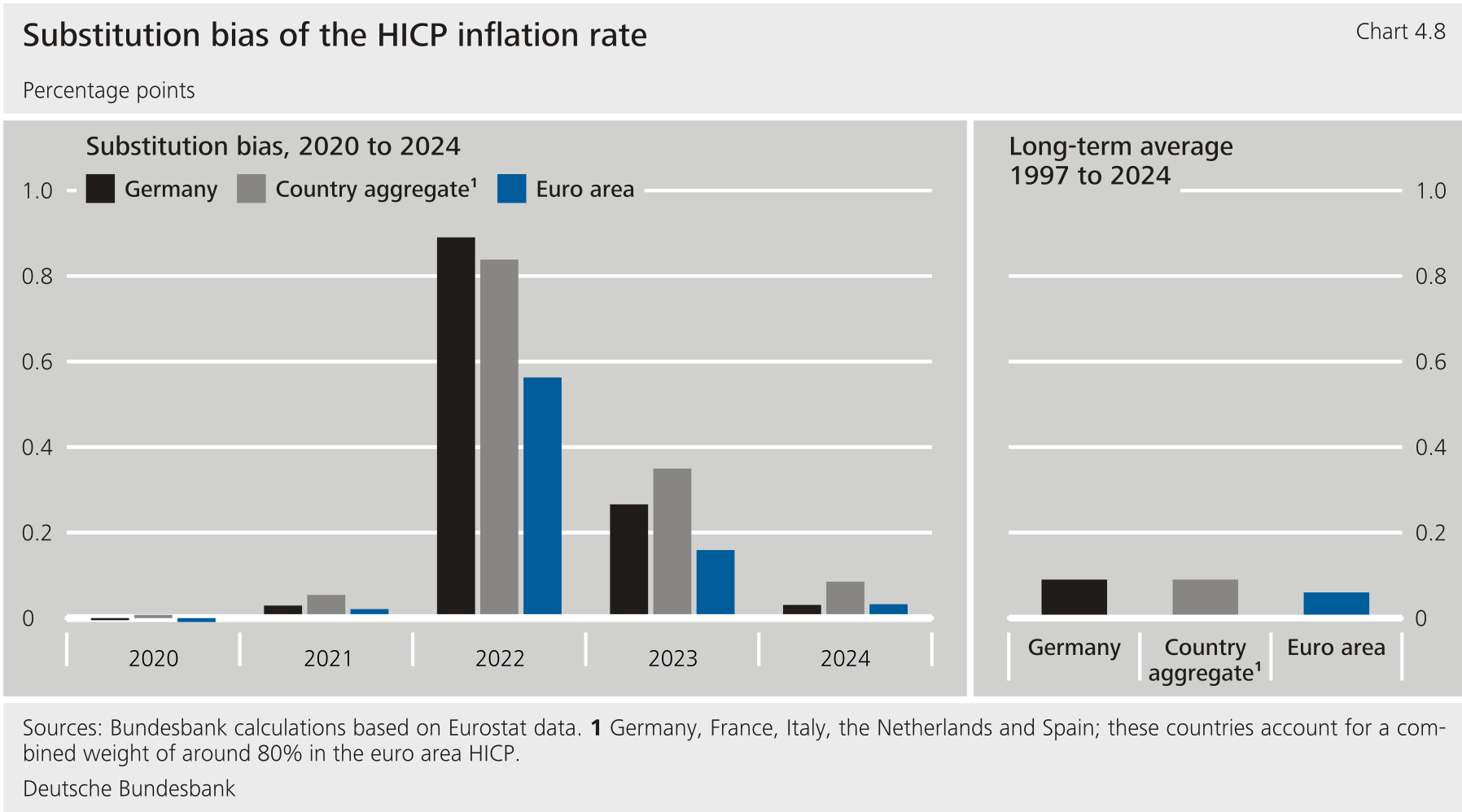
The substitution bias of the HICP inflation rate for the euro area reached a considerable level of 0.6 percentage point at the peak of inflation in 2022, after amounting to less than 0.1 percentage point in the ten previous years. On aggregate for the five largest euro area countries – Germany, France, Italy, the Netherlands and Spain – the substitution bias in 2022 was 0.8 percentage point, whilst it was 0.9 percentage point in Germany. In the course of the disinflation process, the substitution bias has recently declined significantly. As the rate of inflation approached the Eurosystem's medium-term price stability objective of 2 %, the substitution bias in all the groups of countries under consideration returned to a level of less than 0.1 percentage point, which is typical in times of normal inflation.
The annual update of the HICP weighting with the previous year’s expenditure structure ensures that the substitution bias is as low as possible, even if a certain amount of data vintage bias has to be accepted when the update is made. The HICP weights are calculated using preliminary national accounts data. 5 Since subsequent revisions of the national accounts data are not reflected in the HICP weighting, 6 the use of preliminary national accounts data is another potential source of measurement bias. 7 It is not possible to make any predictions of the sign of the data vintage bias from a theoretical perspective.
In times of normal inflation, substitution and data vintage biases contribute to an overall small measurement bias in roughly equal measure. The distortionary effect on the official rate of inflation amounted to less than 0.1 percentage point on average in the years from 2012 to 2021 for the euro area’s five largest countries on aggregate as well as for Germany. The root mean square deviation, which provides information on the uncertainty of the inflation rate measured, amounted to 0.1 percentage point for the German HICP and was even lower for the HICP of the five largest euro area countries. 8
Table 4.1: Average measurement error of the HICP inflation rate, 2012 to 2021
Data in percentage points
Total1
Substitution component
Data vintage component
Germany
0.079
0.037
0.041
Country aggregate
0.060
0.035
0.025
Sources: Bundesbank calculations based on Eurostat data. 1 Total refers to the sum of the substitution and data vintage components; possible discrepancies are due to rounding.
Table 4.2: Square root of the average squared deviations of the HICP inflation rate, 2012 to 2021
Data in percentage points
Total1
Substitution component
Data vintage component
Germany
0.106
0.057
0.058
Country aggregate
0.073
0.045
0.033
Sources: Bundesbank calculations based on Eurostat data. 1 Unlike for the average measurement error, total here does not refer to the sum of the substitution and data vintage components, as the covariance is additionally relevant for calculating the sum total.
Against the backdrop of the considerable shifts in consumption in connection with the COVID-19 pandemic, the European statistical offices amended the procedure for the annual update of the expenditure weights for the 2021 reporting period. Until the 2020 reporting period, the HICP weights had been derived from data on household consumption expenditure from two years previously, which had usually been extrapolated to December of the previous year using price indicators. To ensure the representativeness of the basket of goods in light of the massive pandemic-related shifts in consumption, the weights for the 2021 HICP were for the first time based on the best possible estimates of consumption expenditure for 2020, using very preliminary national accounts data. 9 It had practically no impact on the data vintage bias. The fact that, as from the beginning of 2025, the national statistical offices can use both the new procedure and the old procedure as an option 10 should therefore be seen as a setback in the efforts to achieve optimal representativeness of the HICP basket of goods and further harmonise the statistical methods for calculating the HICP.
In addition to measurement biases resulting from changes in consumption behaviour, there are other potential biases. They include, among other things, the freedom to choose options when aggregating individual price observations, 11 statistical uncertainty in connection with adjustments to price changes for quality effects, 12 for example as a result of technological progress, as well as the inclusion of new products in the basket of goods or sample-related biases. 13 There are partial empirical findings for the HICP for many of these potential biases. 14 However, it is still necessary to investigate potential biases of the HICP inflation rate, quantify their significance and, if possible, reduce them further by adjusting the statistical methods. 15 This is of major significance for monetary policy. 16
6 Economic activity could increase slightly in the fourth quarter
Economic output could go back up slightly in the fourth quarter. Owing to its poor competitive position, German industry is deriving only limited benefit from the persistently moderate global economic growth. The higher US tariffs are another reason why foreign demand is not expected to provide any impetus in the short term. However, the dampening after-effects of the anticipatory frontloading of exports to the United States seen in the first quarter are now likely to have receded. Overall, exports and industry could therefore stabilise in the fourth quarter. Construction is also likely to move more or less sideways. Demand for construction work continued to pick up, but remained too low to be reflected in production. In addition, interest rates on housing loans have gone back up since the beginning of the year, which, all else being equal, dampens the increase in demand in this segment. Continued impetus for investment in construction and machinery and equipment as a result of the announced fiscal easing will probably only materialise as from next year. Moreover, industrial capacity utilisation remains low, which is likely to continue to be a drag on business investment. According to surveys conducted by the ifo Institute, it increased in October, but remained significantly below average. By contrast, service providers, though not necessarily in the consumption-related sectors, are likely to continue to provide positive growth stimuli in the fourth quarter. The subdued labour market outlook is weighing on private consumption, even despite a renewed increase in private car purchases in October.
Although industry is set to stabilise in the current quarter, it will probably remain weak. This is partly due to declining competitiveness. Surveys by the ifo Institute show that the competitive position deteriorated considerably further in October, especially versus non-EU countries. Industry therefore derives only limited benefit from a pick-up in global economic activity. On a positive note, according to the ifo Institute, firms’ export expectations and production plans were in positive territory and exceeded the previous quarter’s average. However, industrial enterprises assessed their current business situation much worse. The dearth of stimuli from foreign business being received by the German economy currently is also being reflected in industrial new orders, the third quarter average of which was down from the previous quarter after seasonal adjustment, both including and excluding large orders. The slight upward trend observed since last year has thus been noticeably dampened, but does not appear to be fundamentally broken. New orders from abroad, especially from non-euro area countries, fell particularly sharply. After declining in August, they recovered only slightly in September excluding volatile large orders. This is likely to have reflected the impact of US tariff increases. The influx of domestic orders was able to counterbalance weak foreign demand to a point. Excluding volatile large orders, they were up. Passenger car production figures collected by the VDA indicate a weak start to the fourth quarter. Although production increased in October from the previous month, it was below the previous quarter’s average. What these figures do indicate, though, is that the suspension of Nexperia chip deliveries by China has not yet triggered major production losses. 11 Recently, there have been signs of a détente of sorts in this trade policy conflict. Nevertheless, the risk of chip bottlenecks and associated cutbacks in production remains.
Service providers could contribute positively to economic growth in the fourth quarter. This is indicated by the S&P Global Purchasing Managers’ Index, which rose sharply for the services sector in October and was well above the expansion threshold of 50. By contrast, surveys conducted by the ifo Institute are giving off mixed signals. While the business situation in the retail sector improved on the quarter, it deteriorated in the wholesale and service sectors (excluding trade). Motor vehicle trade is likely to make a positive contribution to activity in the services sector once again, as suggested by vehicle registrations which, according to the VDA, once again rose sharply in October on the quarter after seasonal adjustment. Private consumption could also continue to benefit from rising car purchases, as not only commercial but also private car registrations rose sharply. However, private consumption is unlikely to provide any strong stimulus. This is indicated by the GfK consumer climate index, which has recently deteriorated owing to falling income expectations.
This article is based on data available up to 18 November 2025, 11:00.
List of references
Ahir, H., N. Bloom and D. Furceri (2025), Uncertainty about uncertainty, Finance & Development, September 2025, International Monetary Fund.
Bondarenko, Y., V. Lewis, M. Rottner and Y. Schüler (2024), Geopolitical risk perceptions, Journal of International Economics, 152.
Born, B., S. Breuer and S. Elstner (2017), Uncertainty and the Great Recession, Oxford Bulletin of Economics and Statistics, 80(5), pp. 951‑971.
Boskin, M. J., E. R. Dulberger, R. J. Gorden, Z. Griliches and D. Jorgenson (1996), Toward a More Accurate Measure of the Cost of Living, Final Report to the Senate Finance Committee from the Advisory Commission To Study The Consumer Price Index, December 4, 1996.
International Monetary Fund, International Labour Organization, Organisation for Economic Co-operation and Development, European Union, United Nations, and The World Bank (2020), Consumer price index manual: Concepts and methods.
Jurado, K., S. C. Ludvigson and S. Ng (2015), Measuring Uncertainty, American Economic Review, Vol. 105(3), pp. 1177 1216.
Menz, J.-O., E. Wieland and G. W. Beck (2025), Estimating the impact of quality adjustment on consumer price inflation, International Journal of Central Banking, forthcoming.