Germany’s external assets in the light of geoeconomic tensions Monthly Report – April 2026
Published on
Germany’s external assets in the light of geoeconomic tensions Monthly Report – April 2026
Monthly Report Published on
International literature on trade, portfolio investment and foreign direct investment (FDI) points to the pace of globalisation slowing in recent years. At the same time, geopolitical factors are increasingly influencing international economic relations. The findings of empirical studies suggest that cross-border trade and financial relations within political blocs have recently increased more strongly than between them (see Gopinath et al. (2025)). This indicates that market participants are increasingly aligning their decisions with political conditions.
Against this backdrop, this article examines whether geopolitical factors are also increasingly influencing the structure of Germany’s external assets. The focus is first on descriptive analyses. They provide an initial overview of how foreign direct investment stocks, portfolio investment and other investment have developed under the changed political conditions and how the geographical focus of Germany’s external assets has changed. On the basis of this, regression models are used. These examine the effect of geopolitical factors on Germany’s investment abroad in addition to selected economic variables. The analysis is based on granular stock data from the Bundesbank.According to the analysis, there is no evidence yet of a broad deglobalisation of German capital investments. International interconnectedness continues to increase. However, the focus is shifting. Three general findings can be observed: first, the stocks of foreign direct investment, portfolio investment and other investment rose up to the current end of the data, suggesting that German investors are continuing to increase international financial links. Second, in all three sub-categories, German investors are most interlinked with countries that are more closely aligned with the United States from a foreign policy perspective. According to the definition used here, this group of countries includes all countries in the European Union. The distance between exposures and countries that are more aligned with China in foreign policy terms is particularly large in the cases of portfolio investment and other investment. Third, it is evident that both German portfolio investment and Germany’s other investment in a partner country decline if that country moves away from Germany’s foreign policy orientation. By contrast, German foreign direct investment stocks did not respond statistically significantly to such developments until at least 2023. This could be due to the fact that German enterprises strategically plan their foreign direct investment decisions over the long term. They only react with a time lag to changes in the underlying conditions and initially adopt a wait-and-see approach. This behaviour is consistent with the theory that, in cases of heightened uncertainty and irreversible investment, the value of waiting increases and enterprises delay investment decisions.
1 Introduction
International economic relations have been influenced by growing geopolitical tensions for some years now. Since the outbreak of the coronavirus pandemic, if not before, it has become clear how vulnerable cross-border production and supply networks are to political and economic disruptions. This has been compounded by the Russian war of aggression against Ukraine that has been ongoing since 2022, the US administration’s changed economic policy stance as of 2024 and recent conflicts in the Middle East. These events have amplified the debate on whether the phase of progressive globalisation is losing momentum, and whether the global economy is increasingly being reorganised along geopolitical lines and is being replaced by a more fragmented global economic system.
Geoeconomic fragmentation, as defined by den Besten et al. (2023), is a reduction in the degree of economic integration and multilateral cooperation, accompanied by a stronger alignment of trade and financial relations with geopolitical preferences. Production networks, capital flows and payment relationships could thus focus more on countries that are politically close, while economic linkages across geopolitical blocs lose importance in relative terms. At the same time, the findings to date suggest that this process has so far been reflected in selective shifts rather than in a comprehensive reduction of international linkages.
This issue is of particular interest to Germany as a large open economy with a high level of external assets. Germany is closely integrated into international financial and production networks. Changes in the geographical structure of Germany’s external assets therefore shed light not only on the behaviour of enterprises, investors and banks in general, but also on the extent to which geopolitical tensions are already perceivable in external positions. Of particular interest here is whether a withdrawal from international markets is already becoming apparent. Against this backdrop, this article examines how Germany’s external assets have evolved in recent years and the extent to which their geographical composition has changed in the wake of geopolitical tensions.The focus is on three sub-sectors: foreign direct investment, portfolio investment and other investment. These forms of investment differ significantly in terms of their economic function, liquidity and adjustment costs. Therefore, it can be expected that they will not respond in the same way to geopolitical changes. It is precisely these differences that are at the heart of the analysis.This article uses two complementary concepts for the empirical classification: the concept of “geopolitical blocs” and the concept of “geopolitical distance”.
The descriptive analysis is based on the concept of geopolitical blocs and assigns partner countries to different blocs according to their foreign policy orientation. An approach adopted by the International Relations Committee of the European Central Bank (ECB) in 2024 serves as a guide, classifying countries according to whether they are more closely aligned with the United States (“western” bloc) or China (“eastern” bloc) in terms of foreign policy; a distinction is also made for a group of neutral countries (“neutral” bloc). This classification is based on several auxiliary variables, including sanction patterns, military alliances, voting behaviour at the United Nations and external debt structures vis-à-vis China. It provides clear heuristics to visualise possible shifts in external variables between geopolitical blocs. At the same time, its informative value is limited: it reduces foreign policy orientations to a simplified, one-dimensional axis, combines heterogeneous countries into collective categories and does not capture geopolitical reorientations of individual countries between the blocs defined only once at the outset.
The deeper econometric analysis uses the concept of geopolitical distance, which is measured as a continuous indicator. The starting point is the approach taken by Bailey et al. (2017), which is based on voting behaviour at the United Nations General Assembly. Each country is described by an “ideal point”, which summarises a latent basic foreign policy position. The geopolitical distance between two countries is determined by the distance between these ideal points.
While the classification into blocs is thus a discrete and heuristic grouping, geopolitical distance allows for a finer, metric quantification of foreign policy proximity. Both concepts capture the same basic idea, but differ in their function: the classification into blocs structures the descriptive results. The distance variable is used to check whether geopolitical factors exert an independent, significant influence on Germany’s external assets even when standard economic determinants are taken into account.
The aim of this article is to paint a nuanced picture of Germany’s external assets in a period of growing geoeconomic tensions. It appears that, even before the recent geopolitical tensions emerged, Germany’s external assets tended to be invested in countries that were politically closer to Germany. This is particularly true of portfolio investment and other investment. These two asset categories have also been relatively sensitive to the changed political framework conditions of recent years. By contrast, in terms of foreign direct investment, German enterprises were represented comparatively strongly in countries with close foreign policy ties to China as early as at the beginning of this millennium. And not much has changed on this front in the past few years.
2 Foreign direct investment
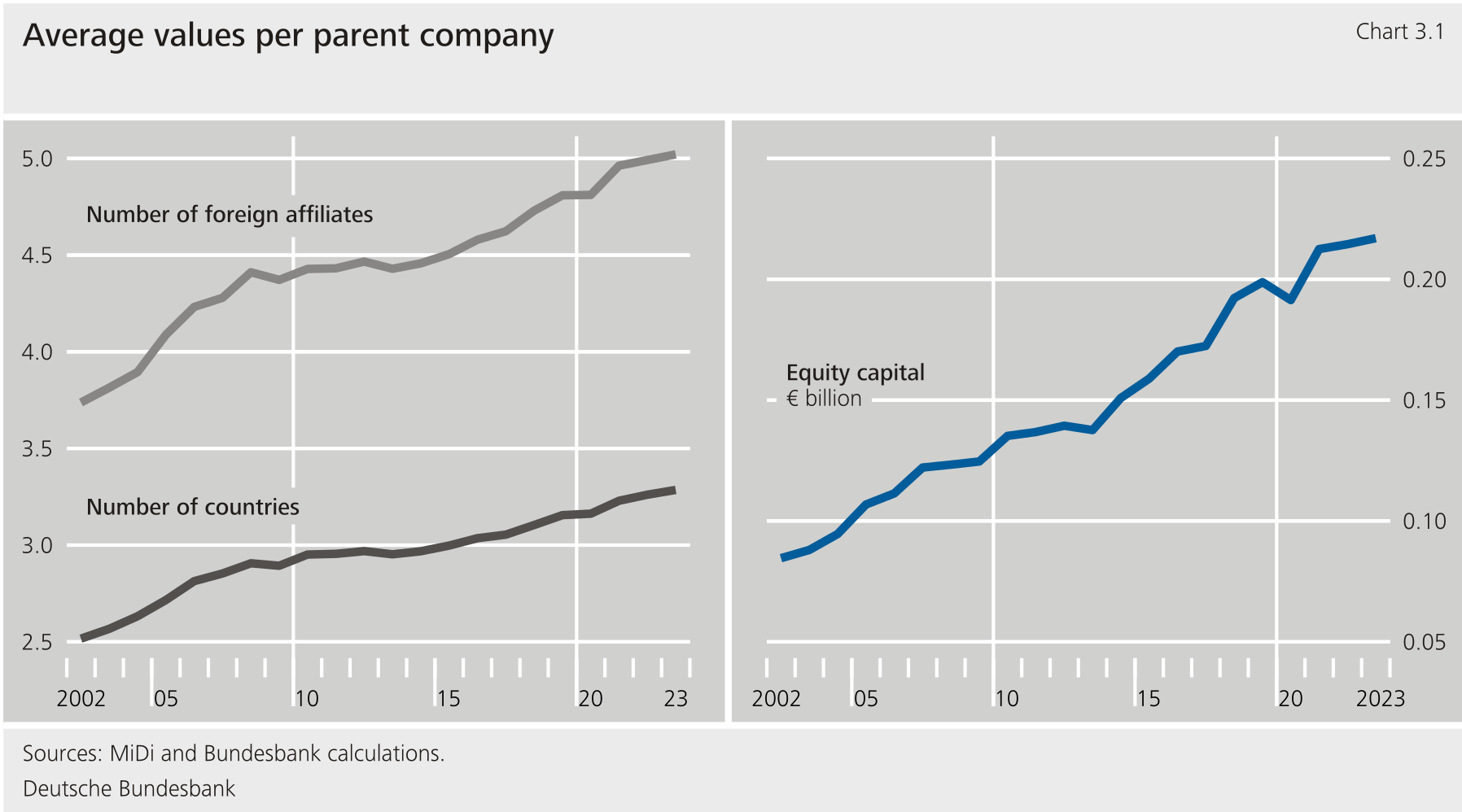
German enterprises have further increased their global foreign direct investment stocks in recent years. The equity capital included in German foreign direct investment has continued to rise overall during the current decade, despite the coronavirus pandemic and foreign policy tensions. At €2.3 trillion at the end of 2025, Germany’s international investment position is at the highest level ever calculated for this metric. Detailed data from the Microdatabase Direct Investment (MiDi) are only available up to the end of 2023. These data confirm increasing internationalisation using several metrics (see Chart 3.1): the number of destination countries, the number of foreign affiliates and the equity capital (in € billion) per German parent company have risen continuously on average. No indications of potential onshoring – i.e. German enterprises withdrawing from abroad in favour of increasing production in Germany – could be identified. 1
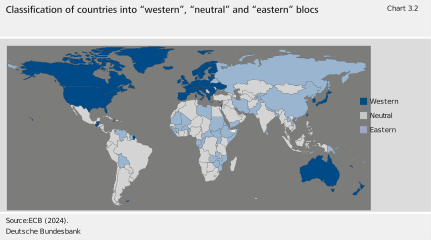
German equity capital in “western-oriented” and “neutral” countries continued to increase up to 2023, whereas it has declined slightly in “eastern-oriented” countries of late. 2 The classification of countries into “western”, “neutral” and “eastern” blocs is based on the report by the ECB’s International Relations Committee (2024) and indicates the extent to which countries are aligned with the United States or China in terms of foreign policy. Chart 3.2 illustrates this classification by means of a world map.
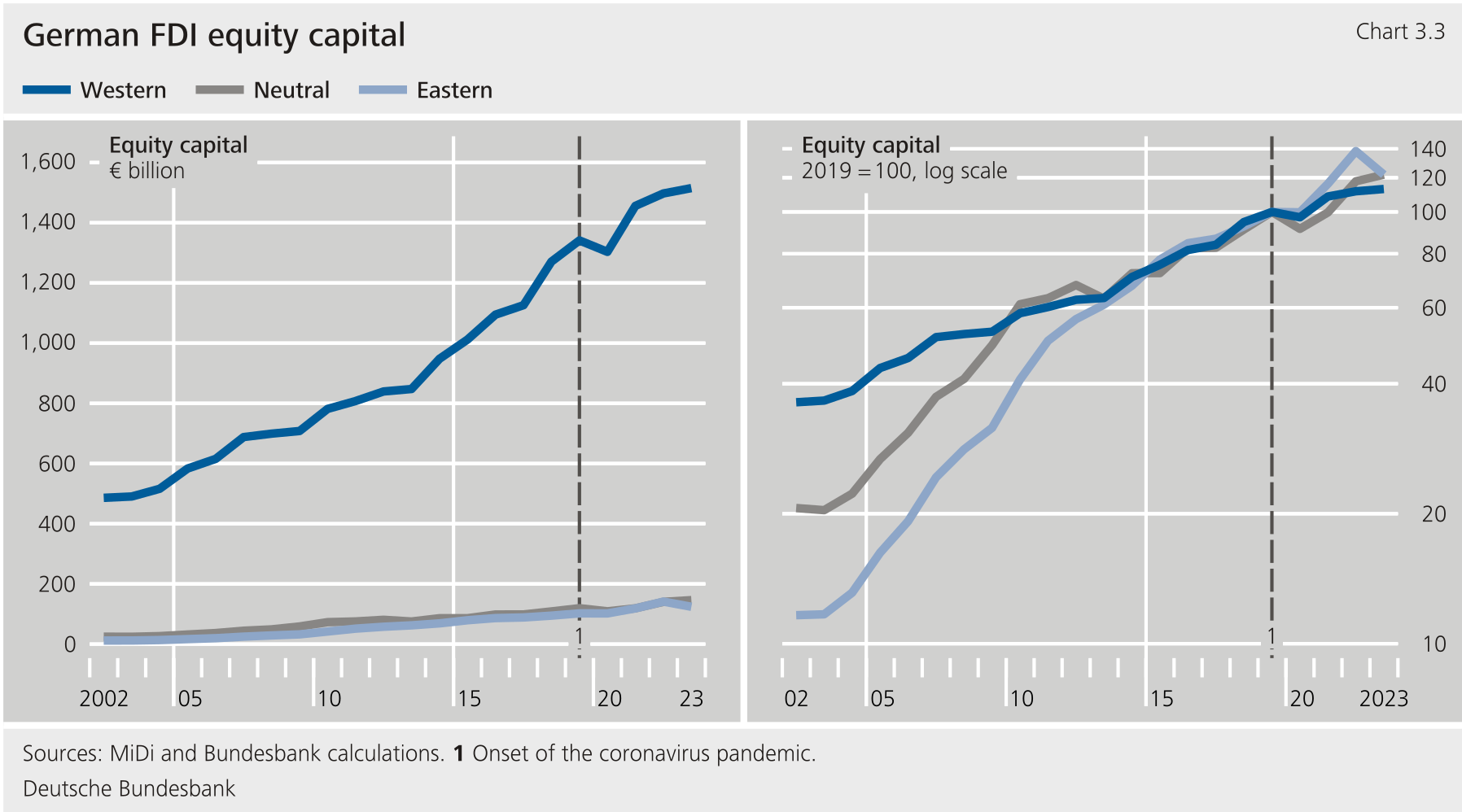
Chart 3.3 shows how German equity capital developed in the respective country groups. In 2023, stocks of German equity capital amounted to €1.5 trillion in the “western” bloc, €146 billion in “neutral” countries and €124 billion in the “eastern” bloc. The coronavirus pandemic led to a decline in stocks in 2020, especially in “neutral” countries. 3 In the following years, growth in this group of countries and in the “eastern” bloc was particularly dynamic.
While equity capital included in foreign direct investment in the “western” bloc remained at a very high level until recently, the “eastern” bloc recorded a decline in 2023 for the first time since the start of the reference period in 2002. This decline is mainly attributable to lower German equity capital in Russia and China. Equity capital fell particularly sharply for foreign affiliates in the “manufacture of motor vehicles, trailers and semi-trailers” in China. By contrast, “wholesale trade, except of motor vehicles and motorcycles” in Russia was affected by the significant decline.
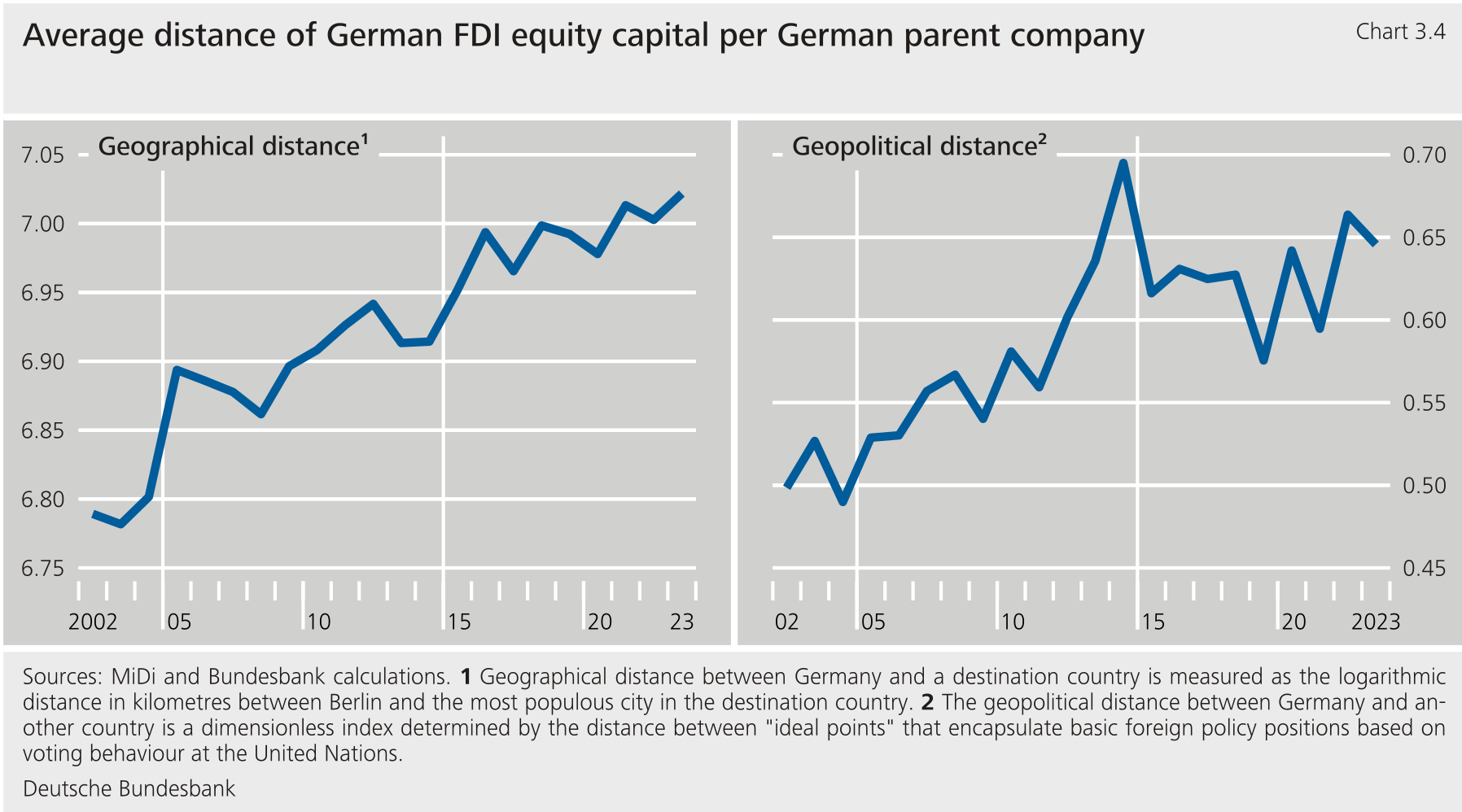
German enterprises have recently increased their investment in geographically distant countries on average, while geopolitical distance has been tending to decrease somewhat since 2014. Geographic distance, measured by the (logarithmic) distance between the most populous cities of various countries in kilometres (linear distance), is a common determinant of the gravity model of trade for explaining bilateral trade and investment relationships. Similar to this approach, geopolitical distance can provide indications as to whether geoeconomic or geopolitical factors play a role for economic agents. Unlike geographical distance, it can change over time. Chart 3.4 shows the average change in geographical and geopolitical distance per German parent company, weighted by equity capital. The average geographical distance of foreign direct investment increased over time. 4 Germany’s geopolitical distance to its destination countries, as measured by voting behaviour at the UN General Assembly, initially increased up to 2014 and then declined moderately. 5 One possible determinant could have been Russia’s annexation of Crimea in 2014. It may have increased German enterprises’ sensitivity to geopolitical risks. In some cases, a smaller geopolitical distance can also be explained by the fact that, after 2014, Germany’s partner countries more frequently voted in a similar way to Germany at the United Nations General Assembly.
Supplementary information
Econometric analyses on the effect of geopolitical distance on German foreign direct investment
This analysis is based on data from the Bundesbank’s Microdatabase Direct Investment (MiDi) for the period from 2002 to 2023. 1 The database contains detailed information on German foreign direct investment (FDI) at the enterprise level. It enables German parent companies as well as foreign affiliates to be identified in anonymised form. Enterprises in Germany are legally obliged to report direct and indirect equity interests in foreign enterprises, provided that these interests exceed certain thresholds. If an equity interest meets the statistical definition of a foreign direct investment, the MiDi covers the entire spectrum of such German foreign investment. The data are available on an annual basis and cover the period from 2002 to 2023. A foreign affiliate is an enterprise that is directly or indirectly owned by a domestic parent company and is domiciled abroad. 2 A detailed description of the database can be found in Blank et al. (2020).
Panel regressions allow us to examine whether geopolitical distance affects the bilateral stocks of German FDI – while controlling for classic factors of the gravity model such as market size, distance and economic interconnectedness. The estimates are based on balanced panel data using the Pseudo-Poisson Maximum Likelihood (PPML) method and can be presented as follows:
whereby \( equity \)\(capital_{ct} \) stands for the value in euro of German equity capital in country \( c \) in year \( t \). The \( ideal point-distance_{ct-1} \) represents Germany’s geopolitical distance to country \( c \) in the previous year \( t-1 \). The vector \( control \)\(variables_{ct} \) comprises bilateral standard variables of the trade gravity model for country \( c \) in year \( t \). 3 The fixed effects (\( \alpha_{c}, \delta_{t} \) and \( \rho_{rt} \)) take into account country-specific, time-specific and bilateral region-year effects. 4 Standard errors are clustered at the country level to ensure robust estimates.
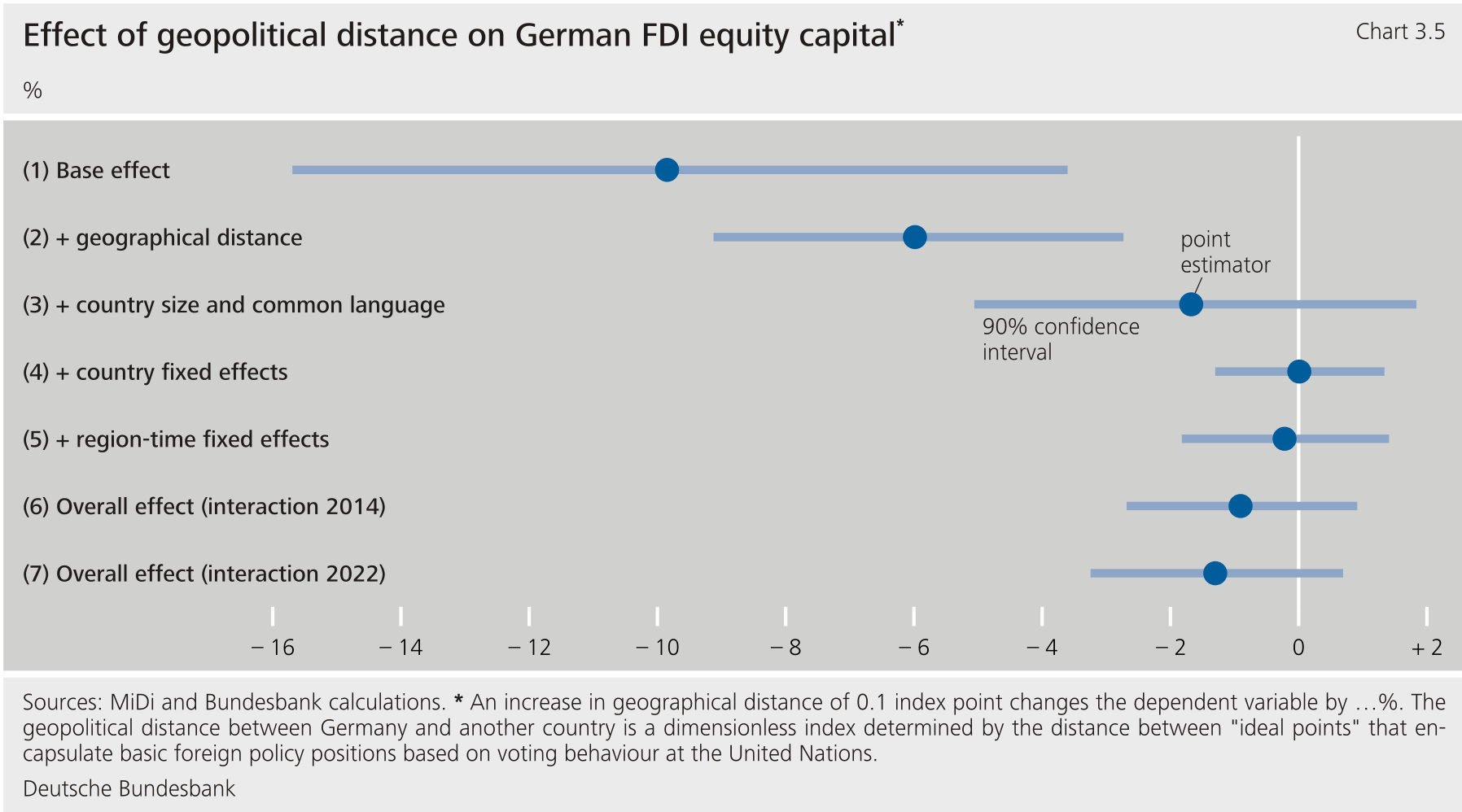
If control variables are fully taken into account, there is no evidence of geopolitical distance having a significant impact on German equity capital abroad. Chart 3.5 summarises the estimation results for the influence of geopolitical distance (\( \beta \)) of various regression models. As the number of control variables increases from top to bottom, the initially negative effect disappears. If merely time fixed effects and geographical distance are controlled for, the effect of geopolitical distance is negative and significant (row 2).It becomes insignificant (row 3) when country size and the binary variable “common language” are included.Specifications with structural breaks − 2014 (annexation of Crimea by Russia) and 2022 (war in Ukraine) – do not provide a robust relationship either (rows 6 and 7). 5 In the case of German FDI, the results do not confirm statements in the empirical literature that greater geopolitical distance leads to lower FDI. 6 Geopolitical factors therefore do not appear to have significantly influenced German enterprises’ investment decisions, at least up until 2023. 7 Responses to more recent geopolitical developments may not be reflected in the data available. However, FDI often reacts sluggishly to changing conditions.
Econometric analyses show that geopolitical distance had no significant influence on German equity capital abroad until into 2023. German direct investors had not responded much to geopolitical changes up to 2023. There is therefore no robust empirical evidence thus far of a systematic effect of geopolitical distance on equity capital.
3 Portfolio investment
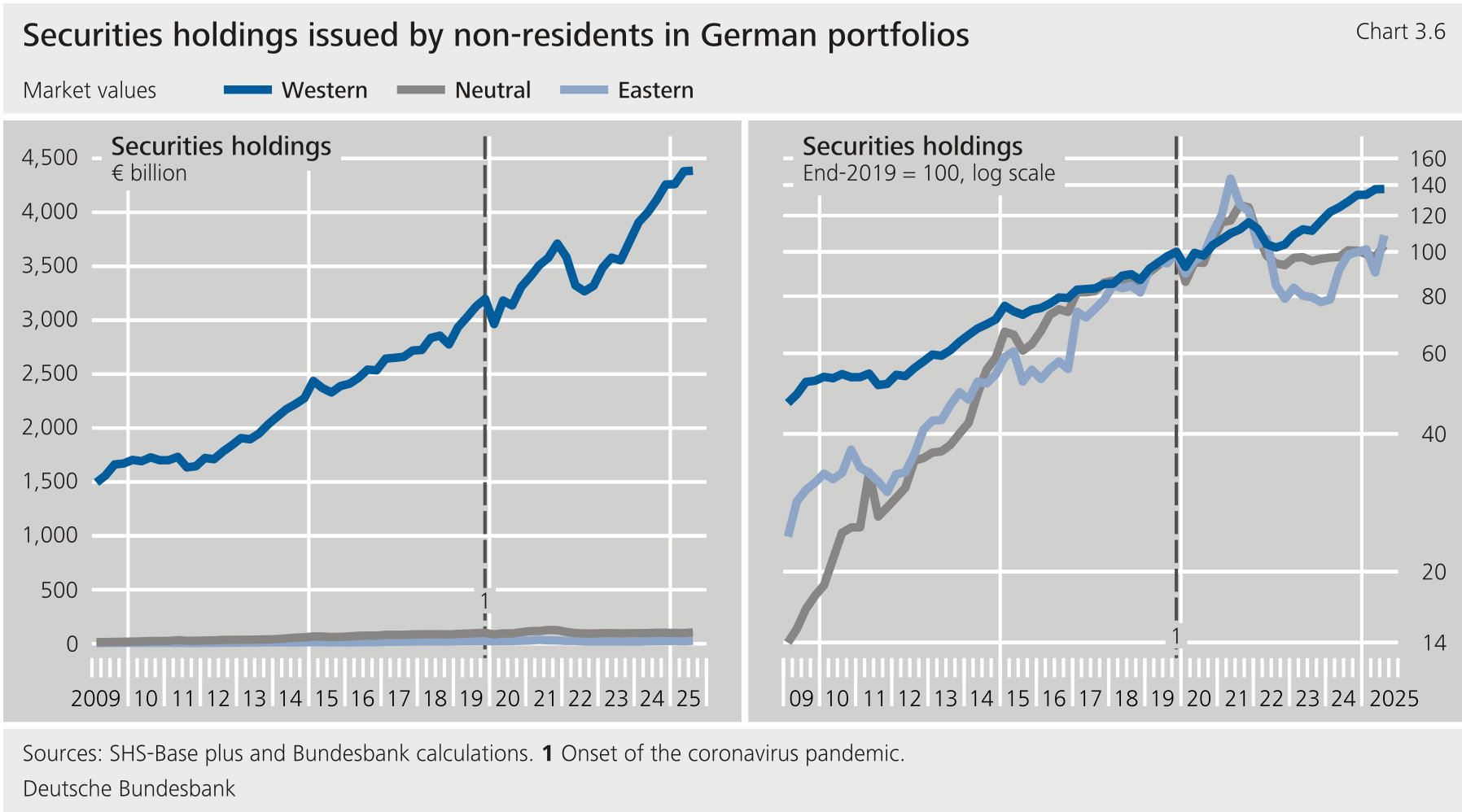
According to the Bundesbank’s Securities Holdings Statistics (SHS-Base plus), German investors have reduced their securities holdings from “eastern” issuing countries since mid-2021. 6 Chart 3.6 shows German investors’ securities holdings at market values, broken down by the three country blocs “western”, “neutral” and “eastern”. 7 A strong and growing concentration of German securities holdings can be seen in “western” countries. Investments in “neutral” and “eastern” countries remain significantly lower. 8 The coronavirus pandemic temporarily led to a decline in reported securities holdings from all country groups, mainly owing to falling market prices. Subsequently, the increase in securities holdings issued by “neutral” and “eastern” countries continued the dynamic trend seen before the pandemic. These holdings continued to grow faster than those issued by “western” countries. This trend was broken in mid-2021. Investors reduced their holdings of securities from the “eastern” bloc of countries and – as of the beginning of 2022 – from the “neutral” bloc of countries, too. This could be an indication that geopolitical factors have become more influential. In the third quarter of 2025, holdings from “neutral” and “eastern” countries returned roughly to their levels at the beginning of 2022.
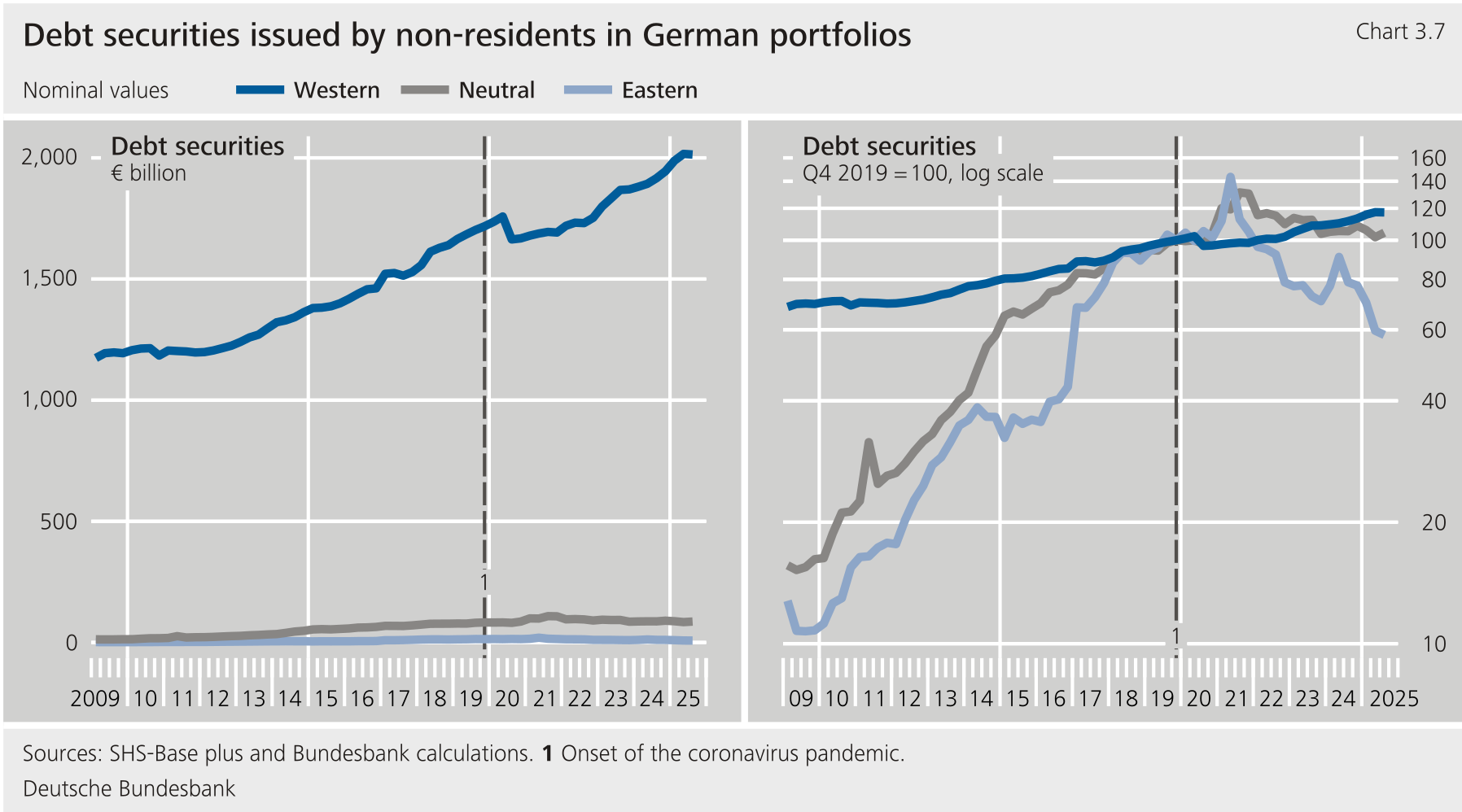
Bonds from western countries had a key impact on developments. Chart 3.7 shows the increase in the nominal values of debt securities – in other words bonds and money market paper – over time. 9 The curves are similar to those of market values across all instruments. Bonds make up by far the largest share of debt securities. Much like securities holdings across all instruments (market values), it is striking that the holdings of debt securities from the “neutral” and “eastern” groups of countries started to rise again by the end of 2020 – and in fact did so very sharply, in line with the pre-pandemic trend. Later, starting in 2022, the holdings of securities from “eastern” countries fell to around half of the level seen at the end of 2019, while securities from “neutral” countries fell back to their end-2019 level. 10 By contrast, holdings of debt securities from “western” countries continued to increase continuously up to the third quarter of 2025.
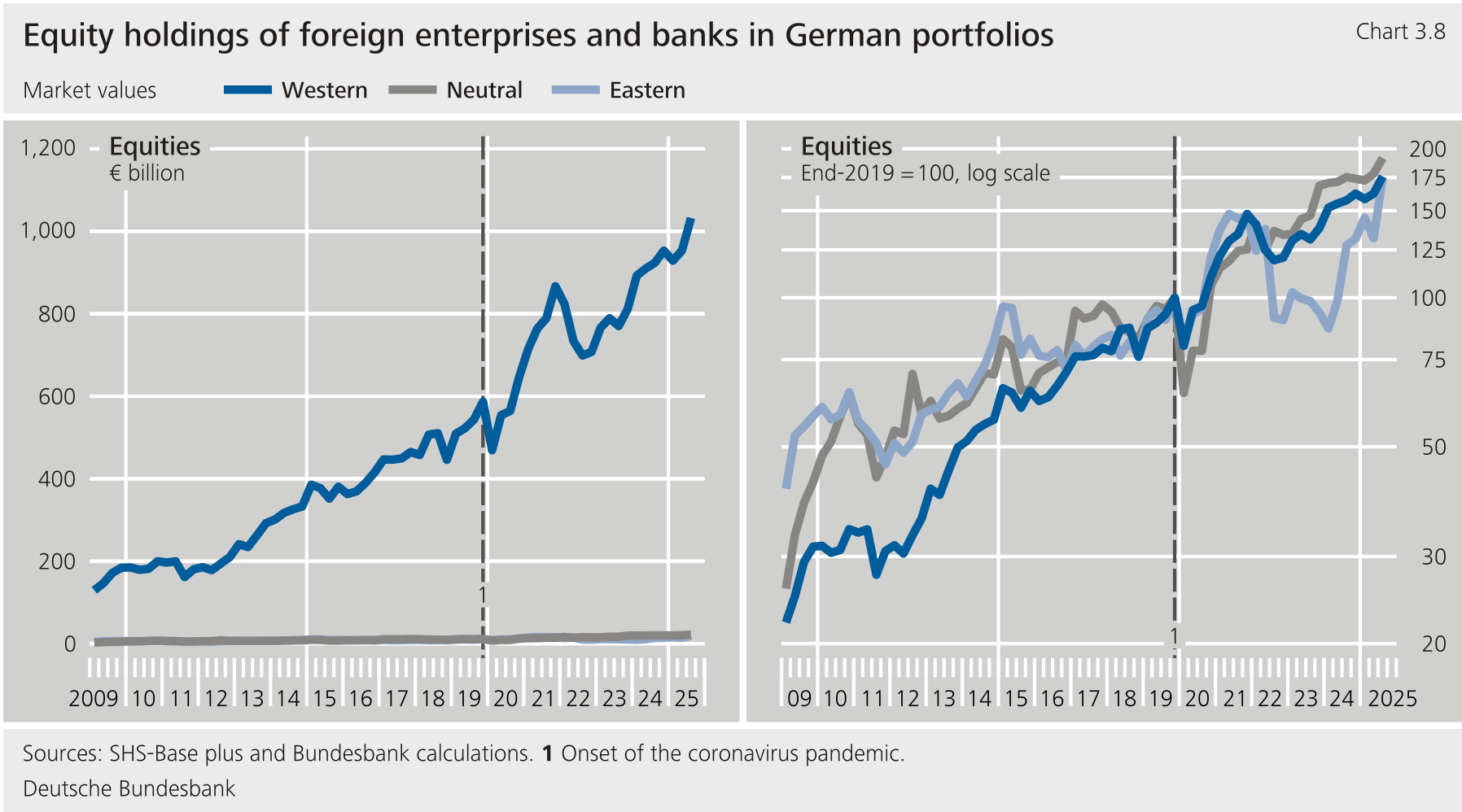
German investors’ foreign equity holdings show no signs of pulling back from “eastern” or “western” countries. 11 Chart 3.8 shows the market values of German investors’ foreign equity holdings. 12 On average over the years under review, the value of these instruments amounted to around half of the nominal value of foreign debt securities holdings. Holdings of shares from all regions rose continuously up to the end of 2019. The onset of the coronavirus pandemic in early 2020 and Russia’s war of aggression against Ukraine in early 2022 led to significant valuation-related declines in holdings, which, however, subsequently recovered as prices rebounded. Market participants refrained from making large-scale net sales. At the current end, holdings of shares from all country regions are around 75 % higher than their level just prior to the coronavirus pandemic.
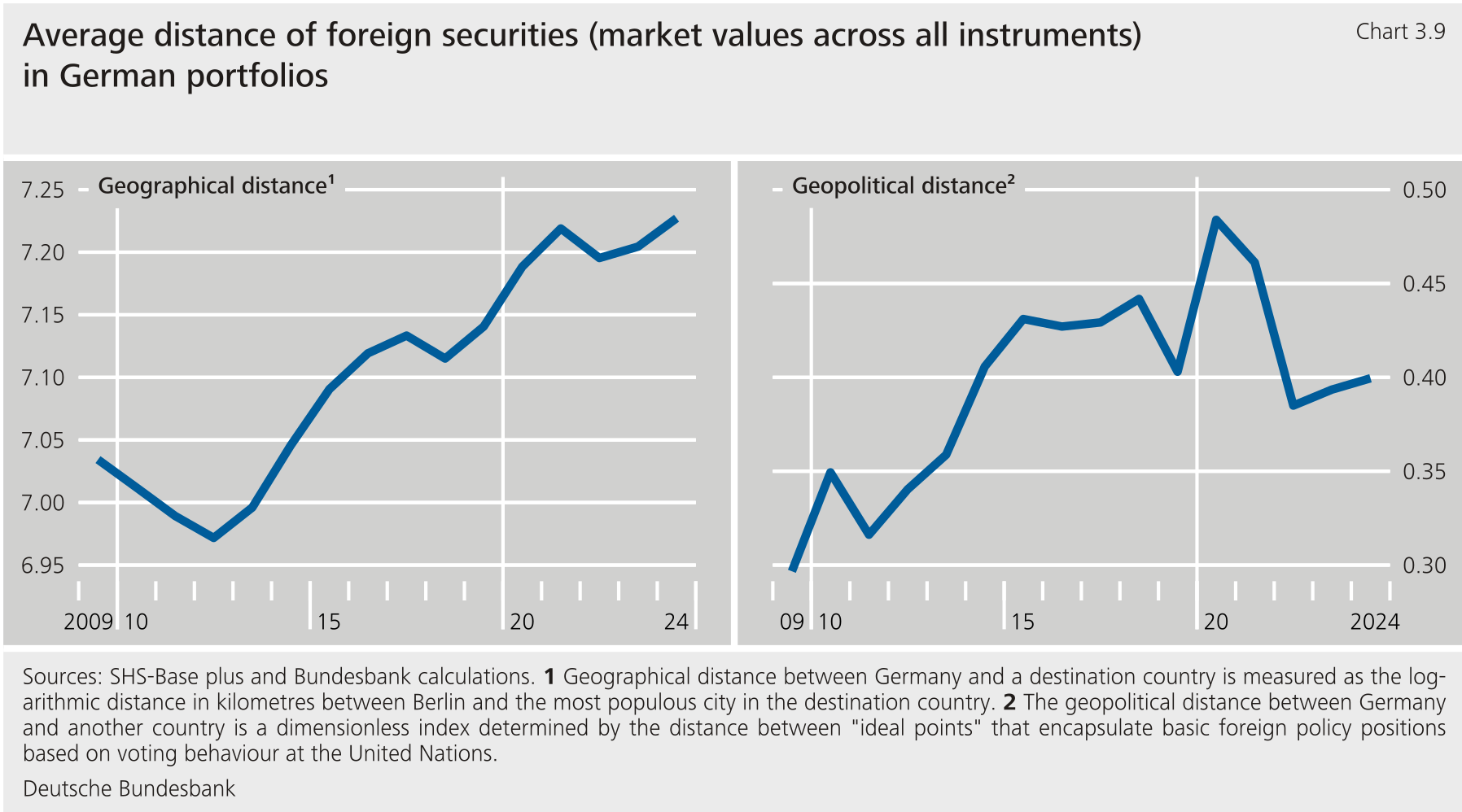
The geographical distance of German portfolio investment increased, while the geopolitical distance increased until 2020 and then declined. Geographical distance and geopolitical distance are calculated as value-weighted averages, with a country’s share of value in the total holdings weighted by the respective distance measure. Chart 3.9 illustrates developments in these distances for German portfolio investment based on market values across all instruments. 13 The average geographical distance of German portfolio investment increased continuously, for the most part, as of 2012. Geopolitical distance increased significantly up to 2020, then fell until 2022, before increasing again slightly until 2024. The increase in geopolitical distance as of 2011 is partly attributable to partner countries moving further away from Germany in geopolitical terms – that is, voting differently to Germany in the United Nations General Assembly more frequently – but also to changes in German investors’ behaviour.
Supplementary information
Econometric analyses on the effect of geopolitical distance on holdings of foreign debt securities in German portfolios
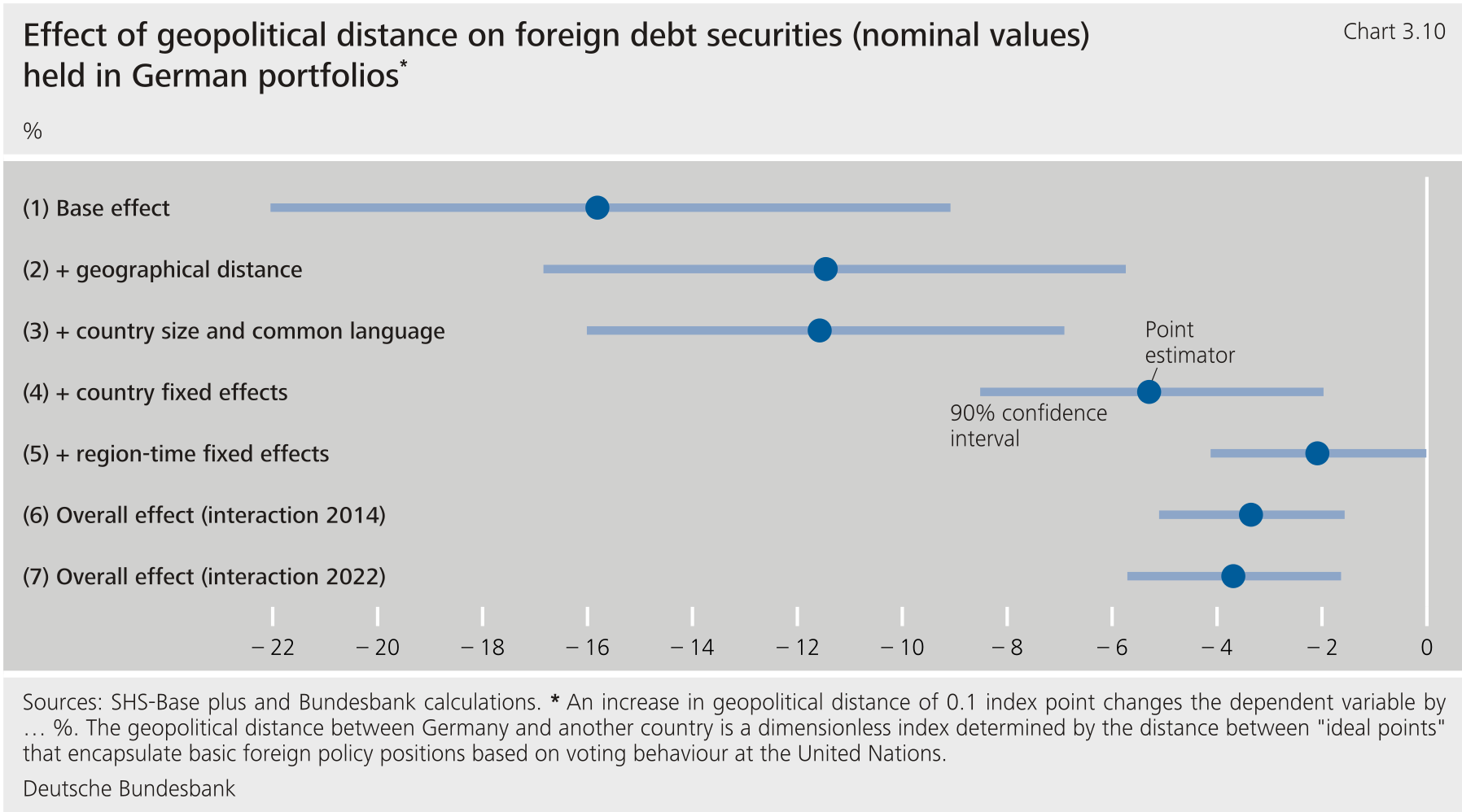
The regressions focus on the key segment of debt securities (nominal values) and follow the methodological approach of the supplementary information on the effect of geopolitical distance on German foreign direct investment. The data basis comprises the year-end figures for foreign debt securities in German portfolios, based on Securities Holdings Statistics (SHS-Base plus) for the period from 2009 to 2024. Chart 3.10 shows the results of the regressions. Each row displays the results of a standalone estimate. The effect of the geopolitical distance on the nominal values of debt securities is shown. Specifications with interaction terms (2014 and 2022) test possible structural breaks (row 6: 2014, row 7: 2022). Interaction terms combine the geopolitical distance with a binary variable that takes the value of one from the year in which the structural break is suspected – in this case, 2014 and 2022, respectively. Row 6 shows the sum of the base effect and the 2014 interaction term. Row 7 shows the overall effect with the 2022 interaction term. The results illustrate that a greater geopolitical distance between Germany and the respective country of the issuer is associated with smaller holdings of debt securities. This effect persists across all specifications, even if additional control variables are taken into account. Unlike FDI stocks, securities holdings appear to react more strongly to geopolitical factors. This could be because portfolio investment is more liquid and less strategically focused on the long term than FDI. This allows investors to respond more quickly to political changes.
The results of a panel estimate indicate that geopolitical distance has a significant effect on German investors’ securities holdings. All specifications show that an increase in the geopolitical distance between Germany and the issuing country leads to a significant reduction in the holdings of foreign debt securities (at nominal values) in German portfolios. This also applies if the specification is very restrictive in terms of its control variables. Thus, German portfolio investors react faster than German direct investors to changes in geopolitical conditions. An important factor here may be transaction costs. Debt securities mature without incurring any costs. In addition, securities holdings are cheaper to sell than physical assets abroad.
4 Other investment
The main trends in other investment were not influenced by geographical or geopolitical distance. For example, the observed developments in other investment between 2007 and 2012 mainly reflected market participants’ actions in the wake of the financial and sovereign debt crisis. Up until the onset of the financial crisis, German banks’ net external claims grew rapidly. Domestic credit institutions granted foreign partner institutions liquidity facilities to purchase asset-backed securities from the United States or the euro area, for example. This development came to an abrupt end in 2007 with the global financial crisis. According to the external position of banks, German banks (excluding the Bundesbank) subsequently reduced their lending volume to foreign partner banks. They pulled back from international markets and held more liquidity in Germany (deleveraging). During the sovereign debt crisis, the process of balance sheet reduction continued in some euro area countries until mid-2012. 14 External assets subsequently stabilised, albeit with temporary fluctuations, until the outbreak of the coronavirus pandemic. As of that point in time, intra-group cross-border loans of German commercial banks, amongst other things, increased.
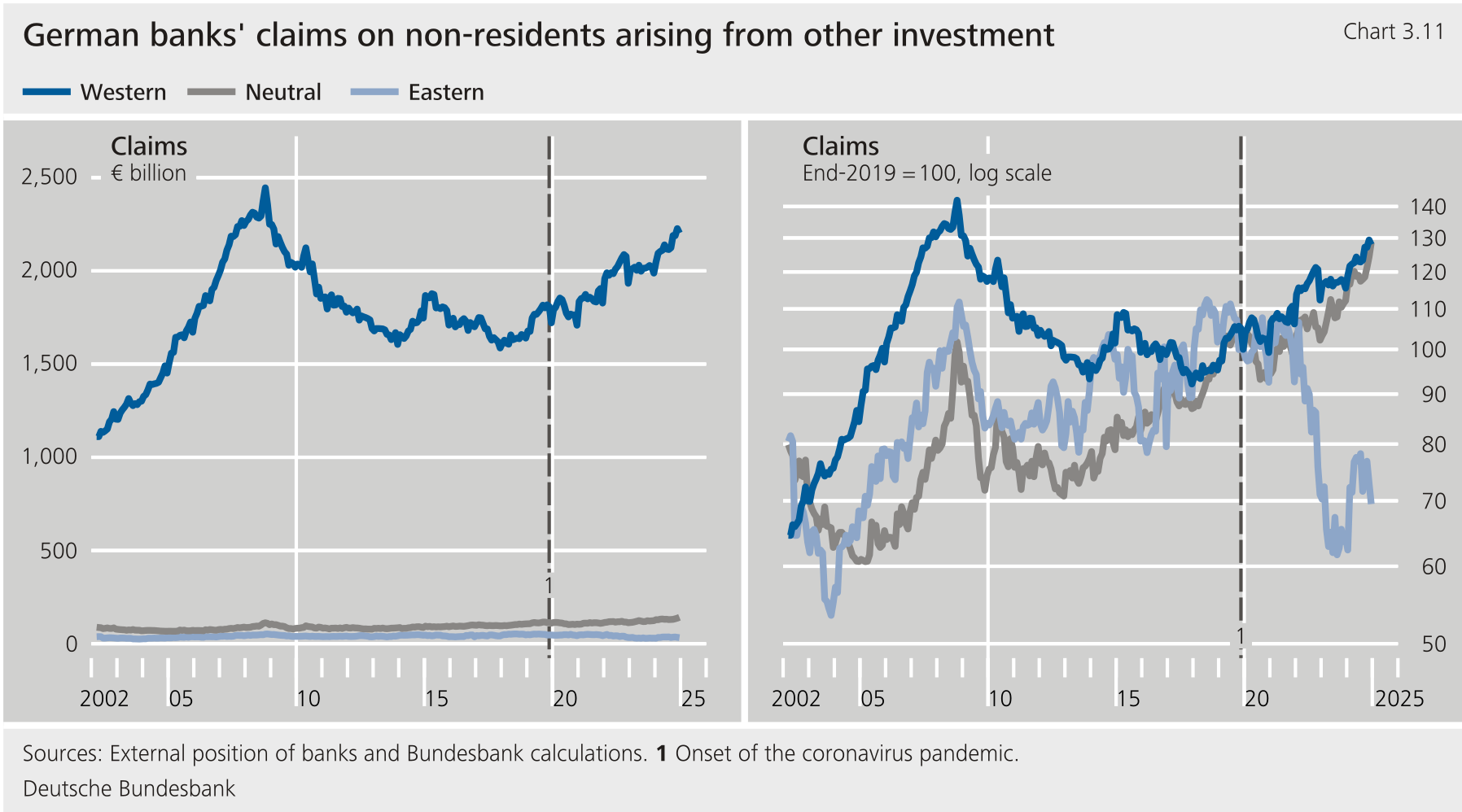
Within the overall trend, it is evident that claims on “western” countries, in particular, declined sharply at times. This was largely due to German banks’ disproportionately high level of exposure in these countries. In addition, these countries were also more affected by the global financial crisis than “eastern” or “neutral” countries. Chart 3.11 shows German banks’ other investment, broken down by the three “western”, “neutral” and “eastern” country blocs. In this area, German banks scaled back their claims on European neighbours – particularly in the wake of the global financial market crisis. 15 This decline continued with the European sovereign debt crisis before subsequently stabilising. In mid-July 2022, claims on the “West” were back at roughly the same level as in 2015, i.e. before the start of the ECB’s asset purchase programmes. It is striking that after the coronavirus pandemic, German banks’ claims on both “western” and “neutral” countries rose by around 25 %, while claims on the “eastern” bloc of countries fell by around 30 %.
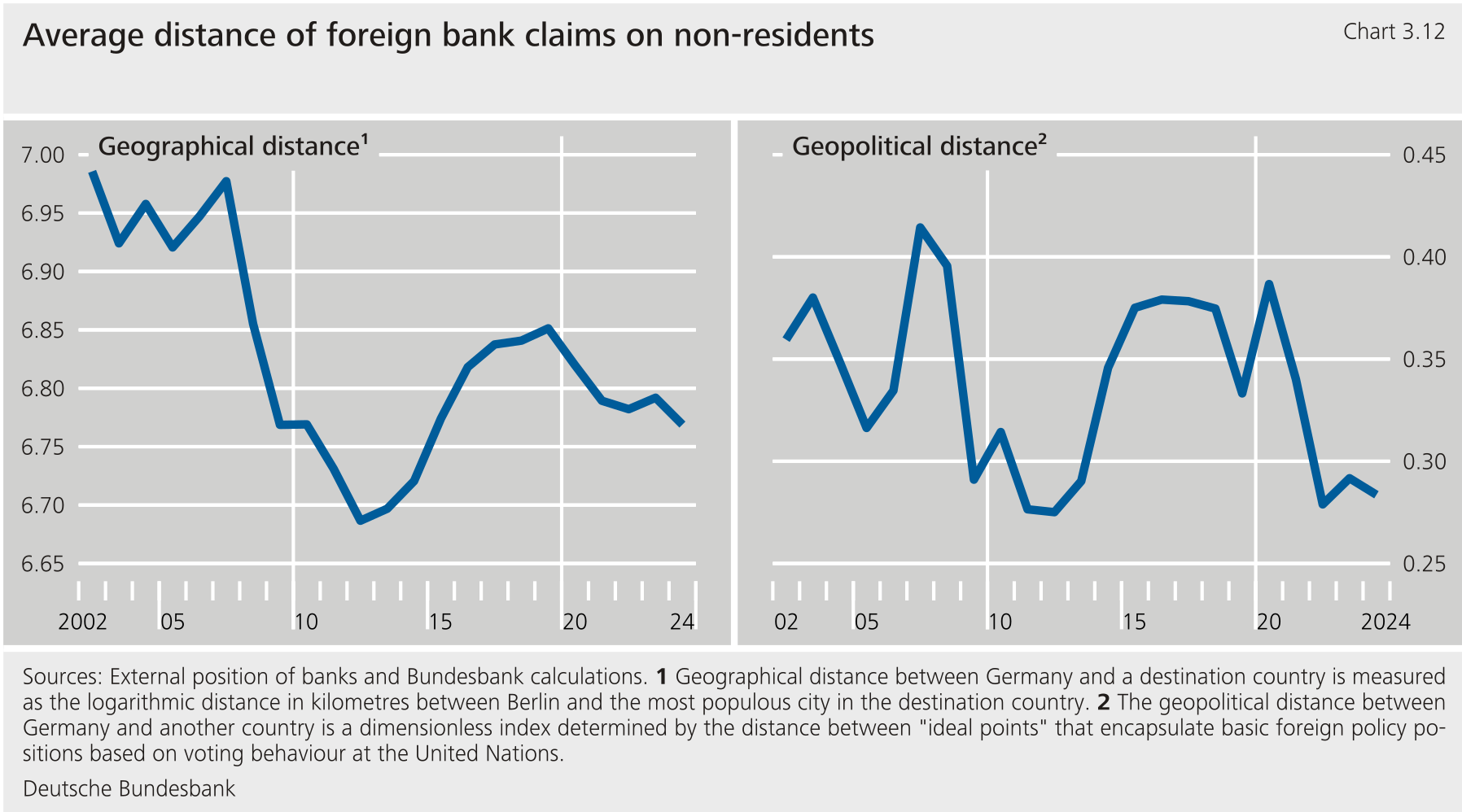
The geographical and geopolitical distance of German banks’ external assets tended to decline, despite significant fluctuations over time. The distance measures are calculated as value-weighted averages. The share of bilateral claims in total claims serves as the weight for each German bank. Chart 3.12 shows changes in the average geographical and geopolitical distance of all German banks’ other investment over time. 16 Developments here are different to those seen in foreign direct investment and portfolio investment. Following a temporary increase in the years 2012 to 2019, geographical distance declined overall. The same applies to geopolitical distance, though this was subject to very strong fluctuations. For other investment, it is therefore not clear at first glance whether geographical and geopolitical distance played a key role in German banks’ business decisions.
Supplementary information
Econometric analyses on the effect of geopolitical distance on German banks’ other investment abroad
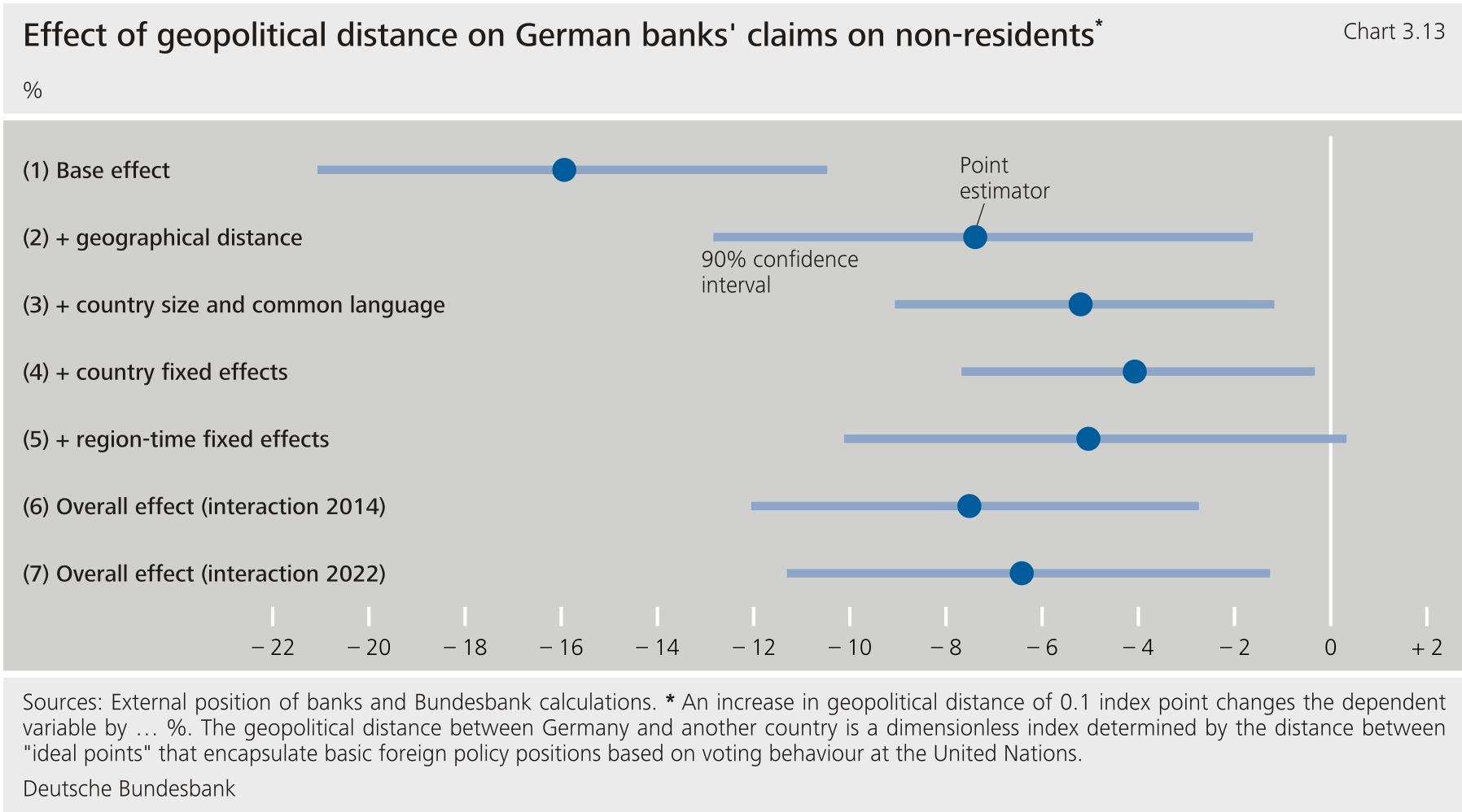
The estimation approach is the same as for foreign direct investment and securities holdings. The data basis comprises the year-end figures of German banks’ other investment abroad for the period from 2002 to 2024. Chart 3.13 shows the results. Each row represents a separate specification. Rows 6 and 7 illustrate the results of the estimates using interaction terms for 2014 and 2022, which test possible structural breaks (see above). The findings are similar across all specifications. Except for the specification with region-time fixed effects, the influence of geopolitical distance is negative and significant. Other investment therefore responds to geopolitical factors in a similar way as do securities holdings. Banks appear to adjust their foreign exposures more quickly than FDI investors.
Regression analyses on German banks’ other investment show, however, that the geopolitical distance has a negative impact on German banks’ claims on non-residents. 17 The responsiveness of other investment is thus comparable to the responsiveness of foreign debt securities holdings in German portfolios. Similar to these holdings, other investment can be reallocated relatively easily. This is particularly true of short-term loans that are not prolonged at maturity. Therefore, other investment is, as expected, more sensitive to policy changes than strategic foreign direct investment with high fixed costs.
5 Conclusions
Geopolitical factors have an effect on both German portfolio investment abroad and other investment, but they have not been shown to influence German stocks of foreign direct investment. The analyses show that German investors continue to expand their investment abroad and that there are no indications of a general pullback from abroad. German investors are most heavily invested in countries that are politically close to Germany. This applies to portfolio investment and other investment, in particular. Foreign direct investment appears to be less affected by geopolitical factors, as it is strategically planned over the long term. Adjustments are therefore made only with a time lag. Nevertheless, it remains to be seen how German enterprises will react to changes in geopolitical conditions in the future. In theory, lagged adjustments to foreign direct investment can be explained by the fact that the value of waiting increases in the event of high uncertainty and irreversible fixed costs.
Gopinath, G., P.-O. Gourinchas, A. F. Presbitero and P. Topalova (2025), Changing global linkages: A new Cold War?, Journal of International Economics, Vol. 153, 104042.