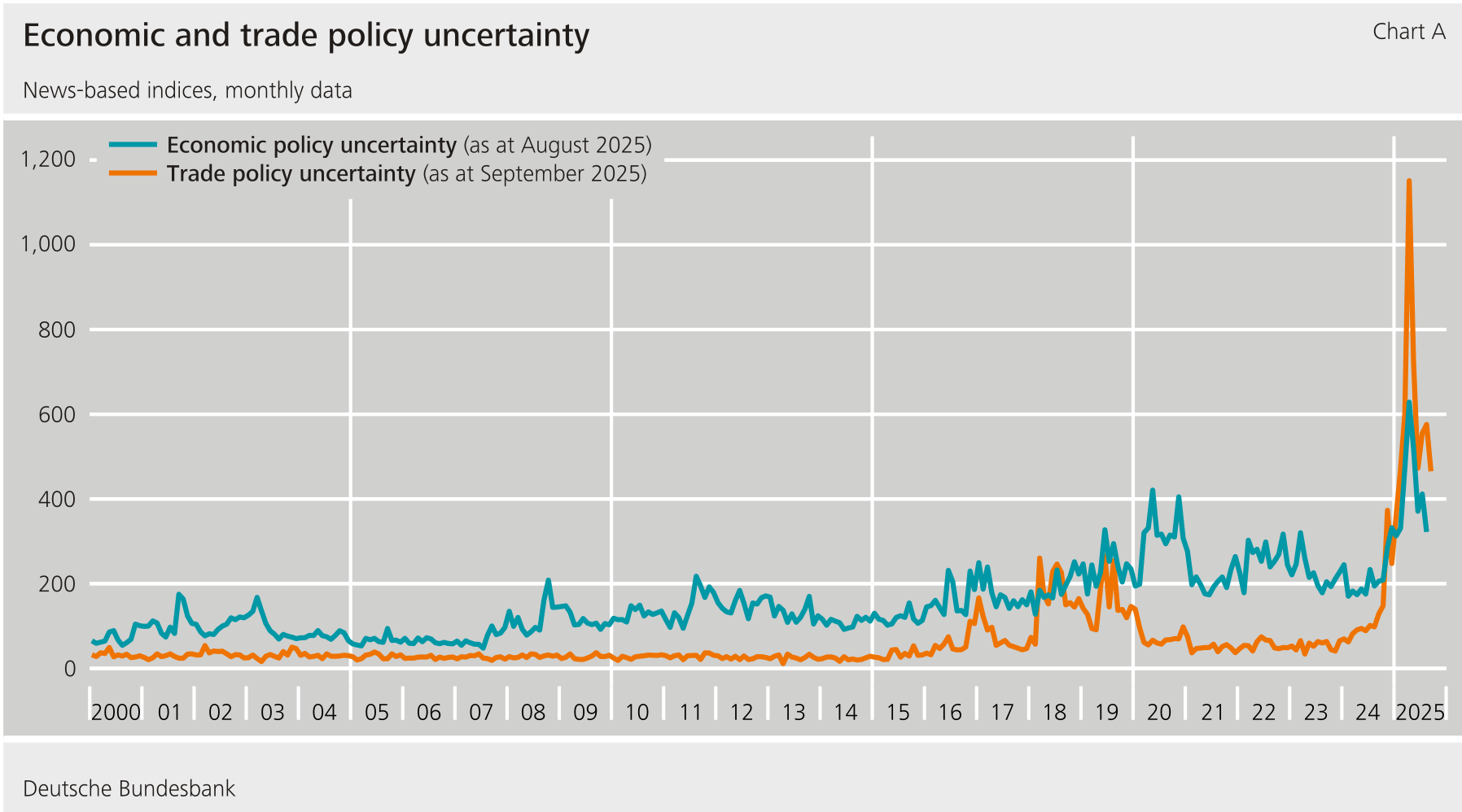
Trade policy conflicts and ongoing geopolitical tensions have increased the risks to financial stability in the past year, while structural challenges are weighing on the German economy. Although trade policy uncertainty decreased somewhat starting in mid-2025, the risk of new trade conflicts persists (see Chart A). Geopolitical tensions remain high. In this environment, market participants could be particularly sensitive to abrupt changes. This increases the risk of financial market turmoil. Protectionist US trade policy is hitting Germany’s export-based economy especially hard. The persistent economic weakness in Germany, along with structural challenges at home and from abroad, are putting additional pressure on the German corporate sector. Structural challenges include growing competition from emerging market economies, demographic change and excessive red tape. This is dampening the outlook for the labour market, which has so far been fairly robust. However, Germany’s fiscal package could bolster economic activity and financial stability as of next year. Beyond that, targeted structural reforms are needed to address the structural challenges at home and from abroad and thus reduce financial stability risks from the corporate sector over the medium term. Overall, against this backdrop, the downside risks to output growth have increased compared with last year.
Given the persistent geopolitical tensions, cyberattacks pose a threat to the stability of the German financial system. Increasing digitalisation and the resulting growing dependence on digital infrastructures have increased the financial system’s exposure to cyber threats. At the same time, the risk of hybrid threats, which combine cyberattacks with other destabilising measures such as disinformation campaigns, has been building in recent years. Investment in cyber resilience in the financial sector is therefore vitally important.
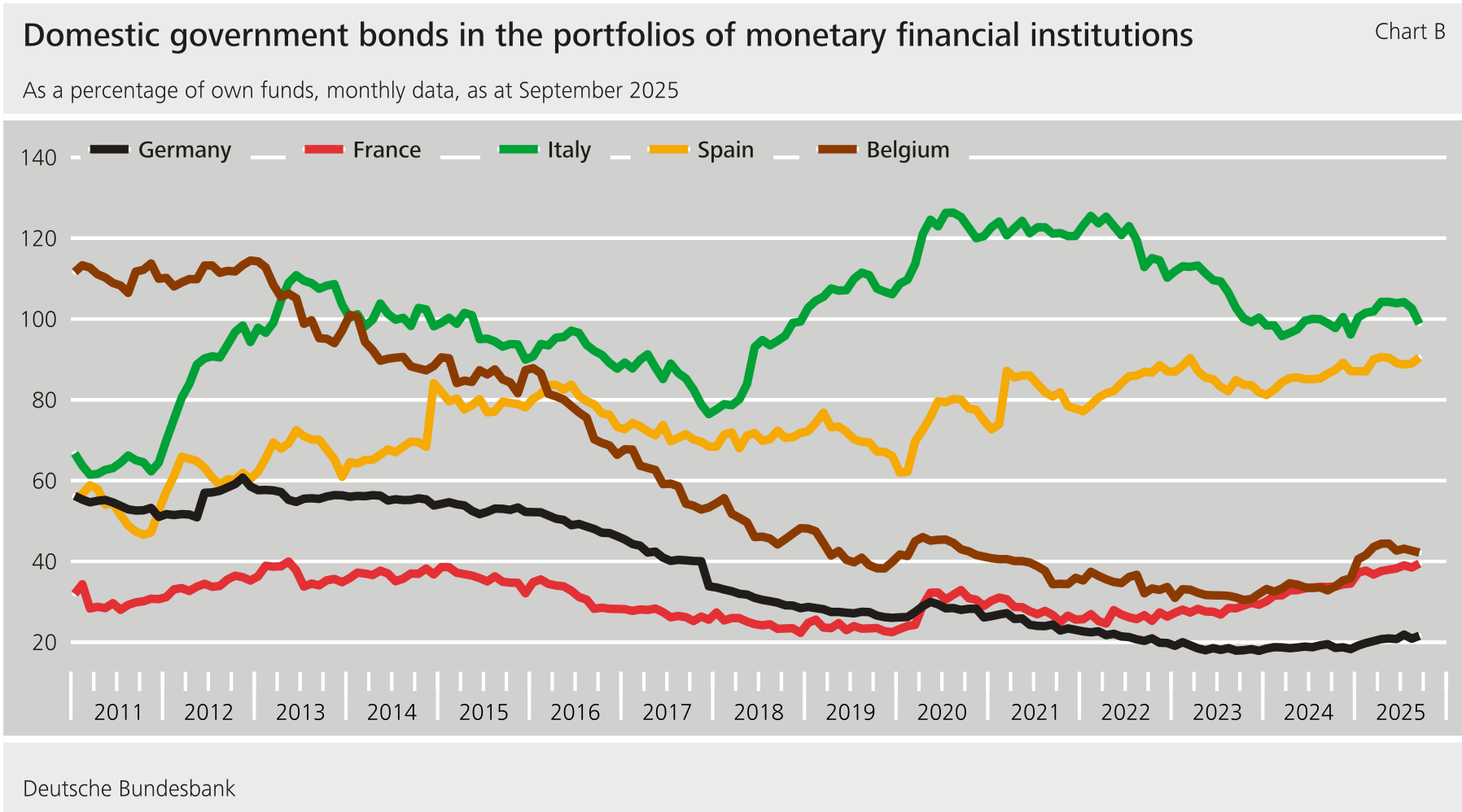
Alongside global and structural challenges, high government debt ratios in some euro area countries pose additional financial stability risks in Germany. Increasing government spending will likely lead to higher debt ratios and a growing interest burden. While Germany’s debt sustainability is regarded as solid even over the medium term despite the fiscal package, debt sustainability risks are higher in other euro area countries. Even with these risks, the yield spreads of many euro area countries compared with Germany have narrowed in recent years, not least owing to comparatively more optimistic growth expectations in those countries. If these expectations are not met or new unknowns arise, the yield spreads could abruptly widen again. Given the pronounced sovereign-bank nexus in some countries and how deeply Germany’s financial system is integrated into the European financial system, growing public debt poses a considerable risk to financial stability (see Chart B).
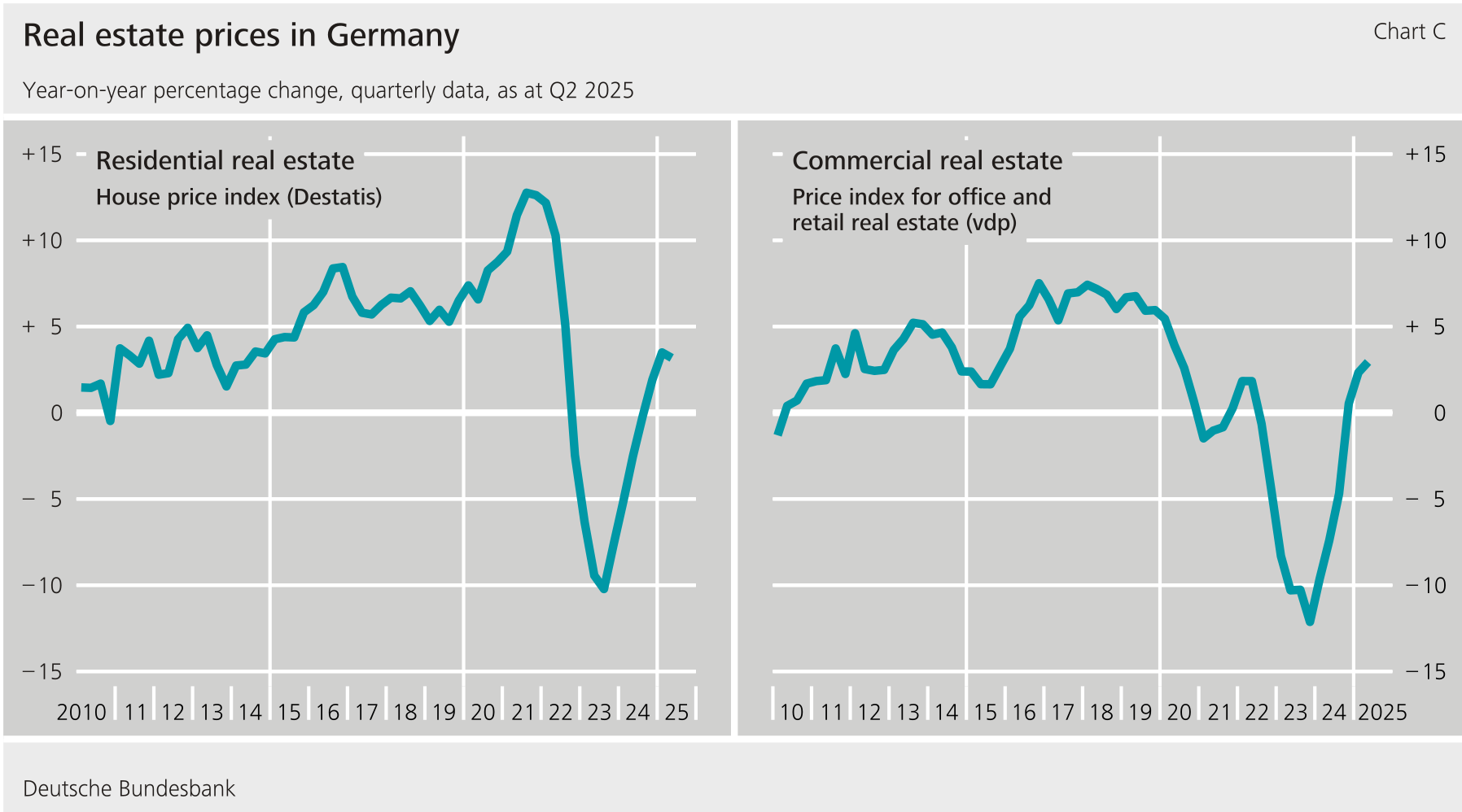
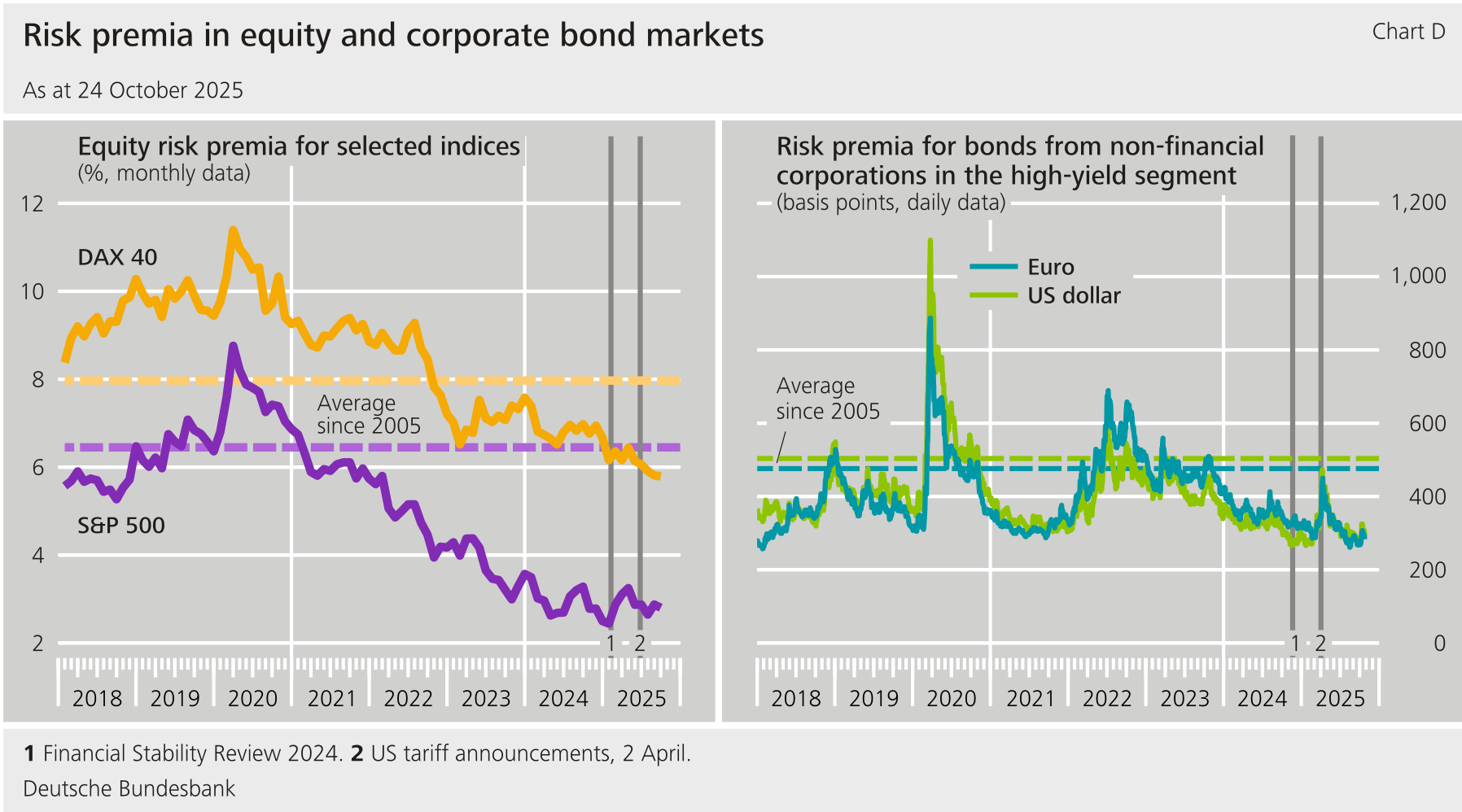
Although the macro-financial environment has deteriorated markedly, there are early signs that the financial cycle in Germany has passed its trough. The financial cycle entered a phase of pronounced decline in 2023. During this period, the vulnerabilities in the German financial system that had previously built up were reduced in an orderly manner, albeit not in full. These vulnerabilities include interest rate risk and potentially overvalued real estate. Robust economic growth during the low interest rate period, the decline in credit defaults and fiscal policy interventions supporting the corporate sector during the COVID-19 pandemic have made it more difficult to assess medium-term credit default risks for some time. As a result of these developments, credit risk could continue to be underestimated. Indicators for the financial cycle are now pointing to the start of an expansion phase. While lending by the German banking sector remains subdued by historical standards, it is showing signs of a revival. Price developments in the German residential real estate market are also signalling a recovery. Prices in the commercial real estate markets are stabilising, but the situation remains fragile overall (see Chart C). Following the financial market turmoil caused by the US tariff announcements in April 2025, risky securities such as equities and corporate bonds recovered swiftly. However, the persistently high and elevated financial market valuations pose the risk of renewed and larger, sudden market price corrections (see Chart D).
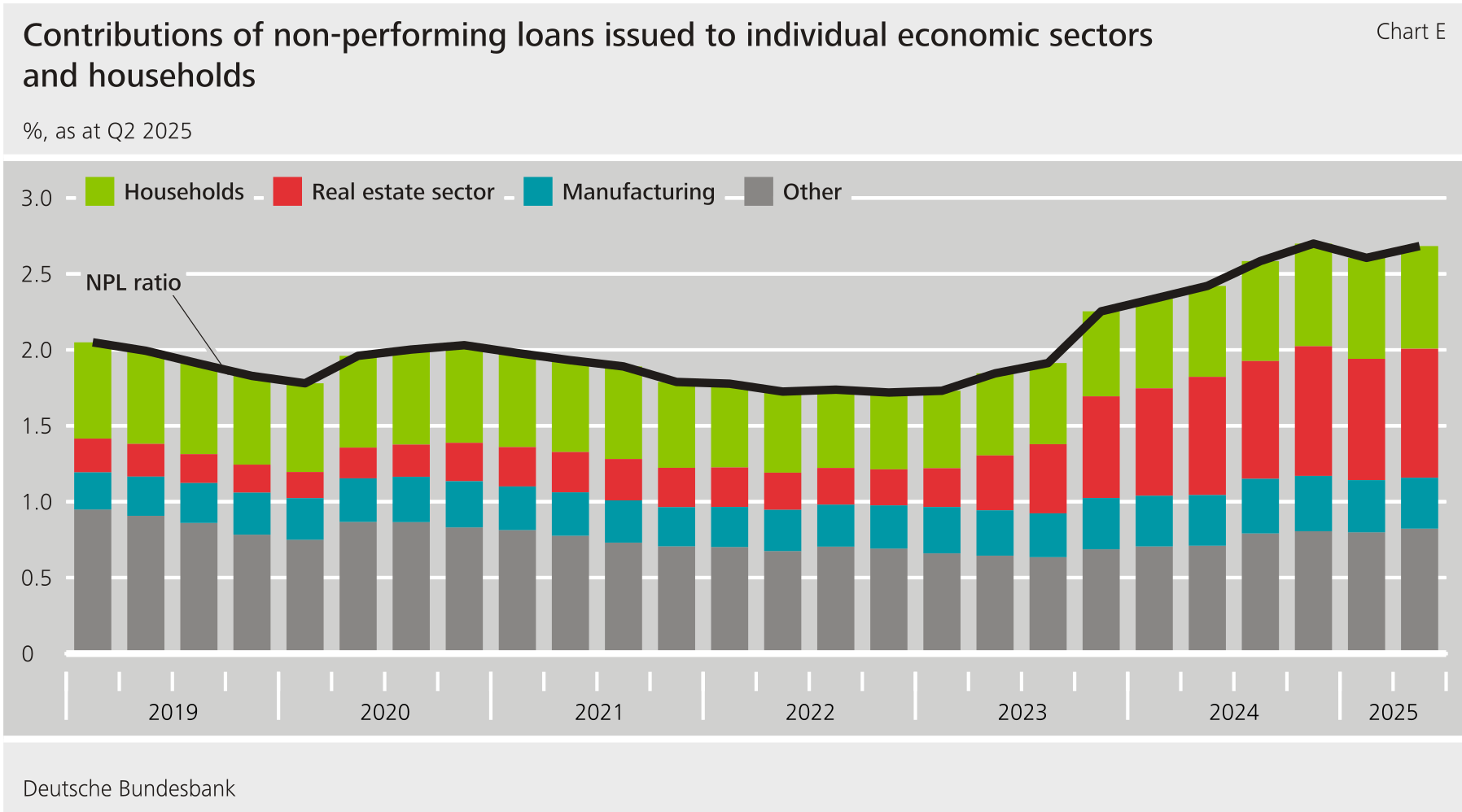
At the same time, risks in German banks’ lending business have been rising for some time now and could continue to mount in light of the cyclical and structural challenges. The non-performing loans ratio increased steadily from the end of 2022 to the end of 2024, with loans to the real estate sector playing the largest part in this (see Chart E). Weak economic activity and the rise in interest rates in 2022 contributed to an increase in credit defaults. US tariffs are also likely to lead to higher credit defaults amongst export-oriented firms in the future. However, they account for a limited share of German banks’ total lending. Credit risk has also increased slightly among households. The non-performing loans ratio for residential real estate financing remains low. It is well below the ratio for consumer credit. A significant proportion of new residential real estate loans are being granted to borrowers with higher debt ratios, specifically debt-to-income ratios. For this reason, new lending remains exposed to moderate vulnerabilities.
The risk of market value losses in banks’ bond portfolios is increasing owing to high and still rising government debt ratios in some euro area countries. German banks are exposed to spread risk, not least because of their bond portfolios’ international allocation. The share of German government bonds in German banks’ portfolios has fallen significantly in recent years. At the same time, the share of bonds with a less favourable credit rating has gone up. All else being equal, the losses immediately incurred in a stress episode would probably be limited. However, potential contagion effects could considerably increase capital losses.
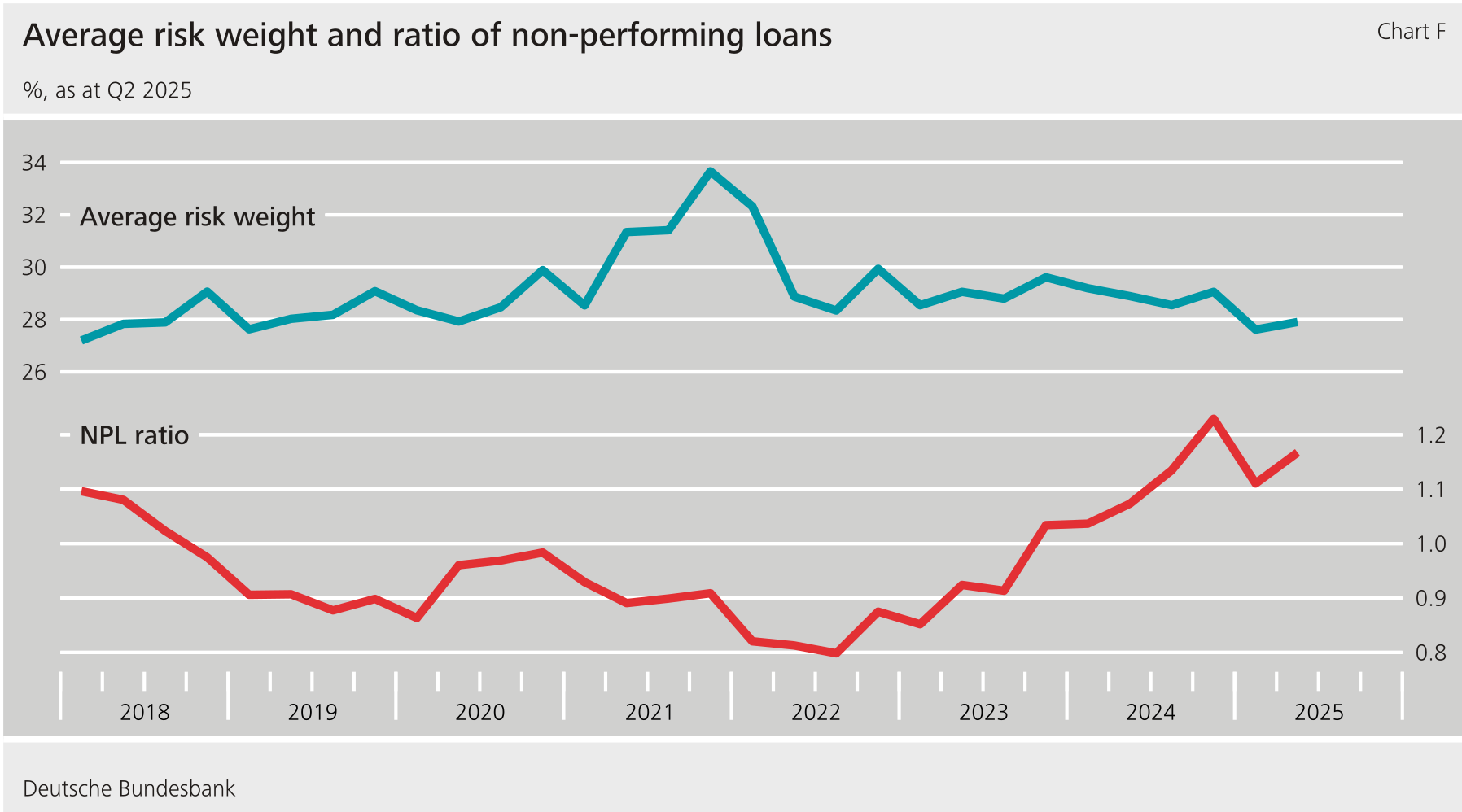
Banks’ regulatory capital adequacy remains sound, but resilience should not be overestimated in the current macro-financial environment. The regulatory capital ratios are at a high level. Despite the deteriorating risk landscape and rising credit defaults, though, systemically important banks’ average risk weights remain low (see Chart F). In the event of capital losses or stricter capital requirements, banks could reduce their balance sheets to keep their capital ratios stable. Capital buffers that the Federal Financial Supervisory Authority (BaFin) can release in response to system-wide losses, for example, mitigate this risk. Banks’ liquidity positions are good overall, but credit institutions are vulnerable to disruptions in US dollar funding markets.
The package of macroprudential measures, consisting of the countercyclical capital buffer of 0.75 % and the sectoral systemic risk buffer, remains adequate in view of persistent vulnerabilities. Following the partial reduction of vulnerabilities in the residential real estate market, BaFin lowered the sectoral systemic risk buffer on loans secured by residential real estate from 2 % to 1 % in May 2025. Given the worsened environment, the remaining scope for macroprudential action should be maintained.
In view of banking regulation’s growing complexity, the Bundesbank is committed to simplifying it, as well as to strengthening capital market funding by advancing the savings and investments union. The Basel III reforms have sustainably strengthened the resilience of the banking system. At the same time, supervisory requirements have become more complex. Small, non-complex institutions, in particular, would benefit from regulation that is geared more to banks’ size and risk structure. However, regulation must not be simplified at the expense of the financial system’s robustness. In addition to a resilient and effective banking system, resilient and effective capital markets are necessary to help finance the real economy. The Bundesbank therefore supports the advancement of the savings and investments union.
Alongside banks, non-bank financial intermediaries such as insurers and funds are becoming increasingly important for the stability of the system as a whole. Their close interconnections with each other and with the banking system can amplify, but also absorb, shocks (see Chart G). It is therefore important to closely monitor and improve their resilience and the quality of available data.
Insurers’ solvency is robust overall, but it could be overestimated in the future owing to regulatory changes. The solvency ratio of German life insurers is currently well above requirements and has further increased since 2024. As part of its Solvency II review, the European Commission is planning to make it easier to classify investments as long-term equity investments. As a result, German life insurers’ resilience could be overestimated in the future. This planned adjustment therefore appears problematic from a financial stability perspective. In addition, life insurers still have material unrealised losses on their books. These limit their ability to take action to stabilise the financial system and can thus render the financial system more vulnerable during periods of stress.
Although the German fund sector is resilient overall, the period of stress in April 2025 uncovered vulnerabilities. The US tariff announcements in April 2025 led to net outflows of funds from German retail securities funds. This caused the liquidity situation for parts of this sector to worsen, at times markedly. However, as tensions over trade policy eased and the preliminary trade deal was reached, net inflows of funds resumed. By contrast, open-end retail real estate funds have been recording net outflows of funds since 2023. However, for many of these funds, risks are limited by the redemption notice periods and minimum holding periods introduced in 2013. The liquidity buffers held by these funds, which, on aggregate, are well above statutory requirements, also limit risks.
The manner in which already collected data are shared needs to be improved to enable vulnerabilities in the non-bank financial intermediaries sector to be identified at an early stage. German funds are increasingly holding foreign investment fund shares. However, granular data on funds in other jurisdictions are available to only a limited extent, as the legal and operational framework for sharing already collected data between central banks and supervisory authorities is lacking. This makes it more difficult to identify vulnerabilities and assess systemic risks. Risk analyses at banks and insurers, which are also interconnected with the fund sector, could also benefit from increased data sharing.
The supplementary information in this year’s Financial Stability Review focuses on specific, current challenges and risks to German financial stability. The supplementary information entitled “Artificial intelligence and its effects on financial stability” outlines the transmission channels through which AI systems can influence developments in the financial system. Meanwhile, the supplementary information entitled “How stablecoins affect financial stability” explains the increasing importance of stablecoins and how they are interconnected with the traditional financial system. This connection could give rise to risks to financial stability. Lastly, the supplementary information entitled “Direct interconnectedness heightens liquidity risk for European funds” looks at the interaction between structural liquidity risks and risks arising from interconnectedness in the open-end fund sector.