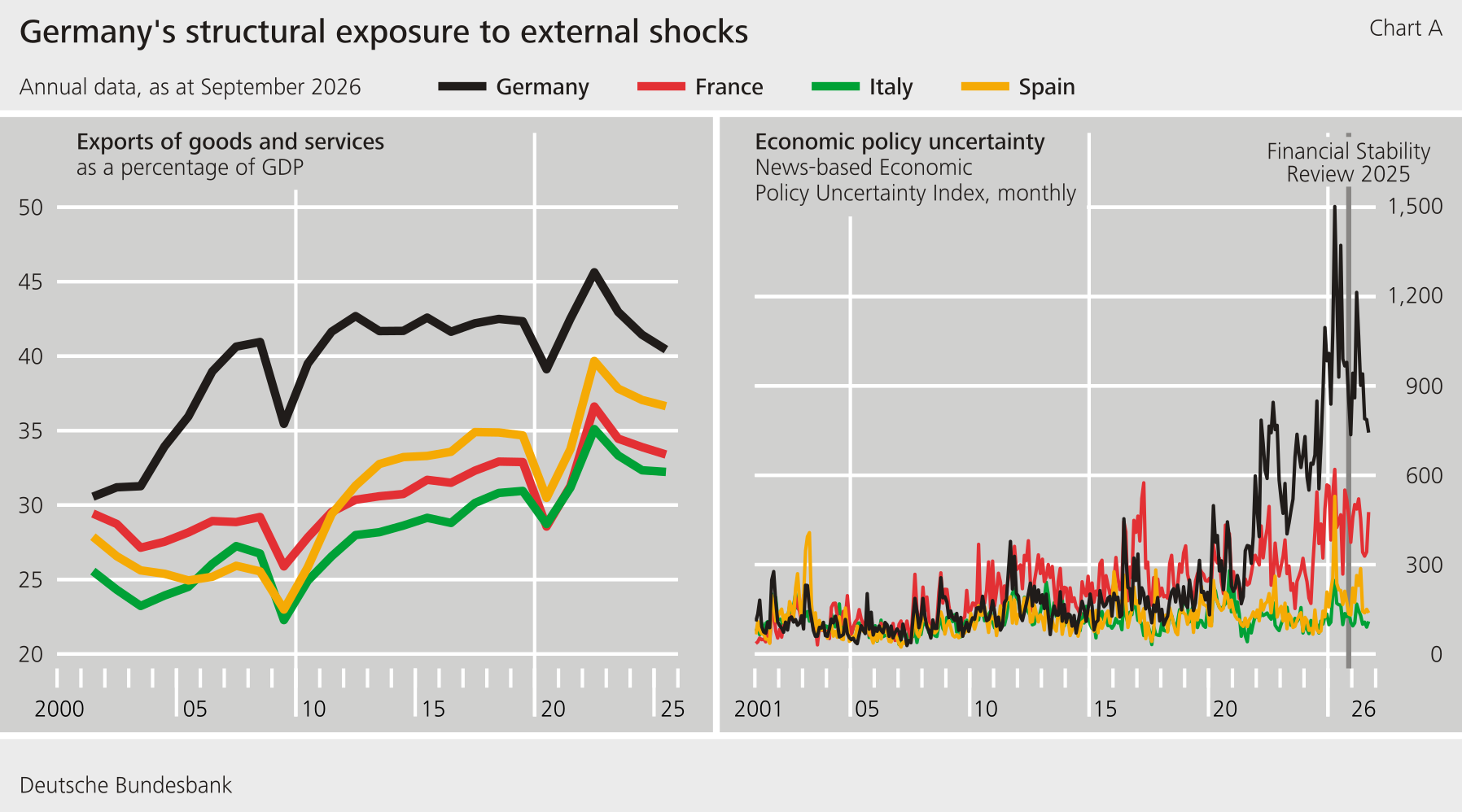
Risks to financial stability remain elevated. This is due, in particular, to ongoing geopolitical tensions and external pressures. While uncertainty around trade policy was the main focus of last year’s edition of the Financial Stability Review, during 2026 a renewed, sharp rise in energy prices in the wake of the Iran conflict had a bearing on economic developments in Germany (see Section 1.1). Such abrupt deteriorations, which have occurred in quick succession over recent years, particularly affect Germany’s export-dependent economy and thus also the country’s financial system (see Chart A, left-hand side). In addition to these supply shocks and the persistently high level of economic policy uncertainty (see Chart A, right-hand side), structural adjustment processes are also weighing on the growth outlook in Germany. There are currently no signs of a return to a calmer external environment.
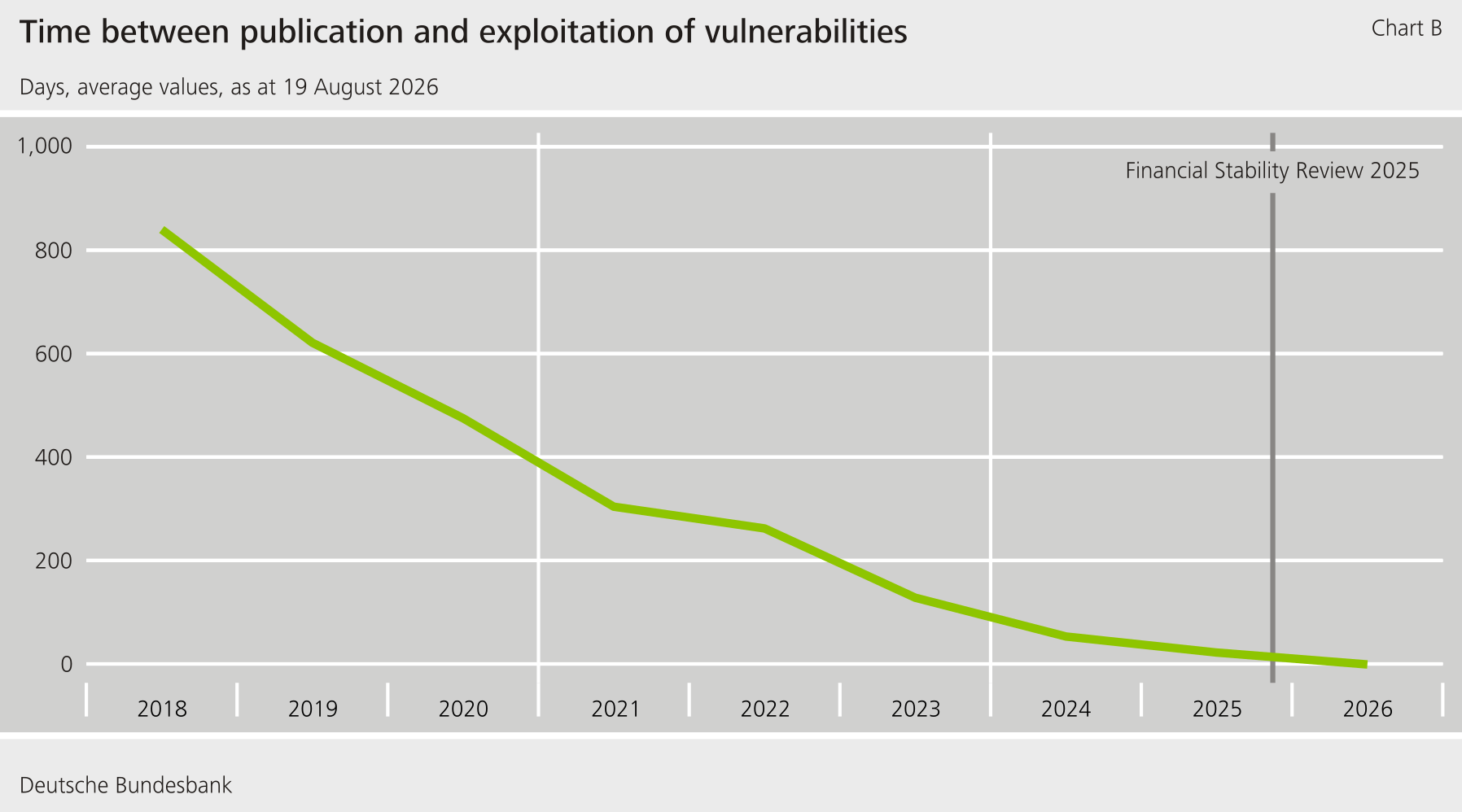
Rapid developments in artificial intelligence (AI) have the potential to further amplify existing vulnerabilities in the financial system.AI-induced productivity gains can improve firms’ profitability and debt sustainability. However, differences in ability to adapt to technological change, additional investment needs and structural shifts can stress individual firms and economic sectors. This could increase firms’ credit risk. If these stresses affect employment and income, households’ credit risk could also increase. AI can also influence the operational security of the financial system. It can improve financial intermediaries’ cyber defences, but it can also help attackers to identify and exploit vulnerabilities more quickly and make cyberattacks more scalable and more sophisticated (see Chart B). On the whole, the German financial system must therefore adapt to recurring disruptions and structural changes that are difficult to gauge.
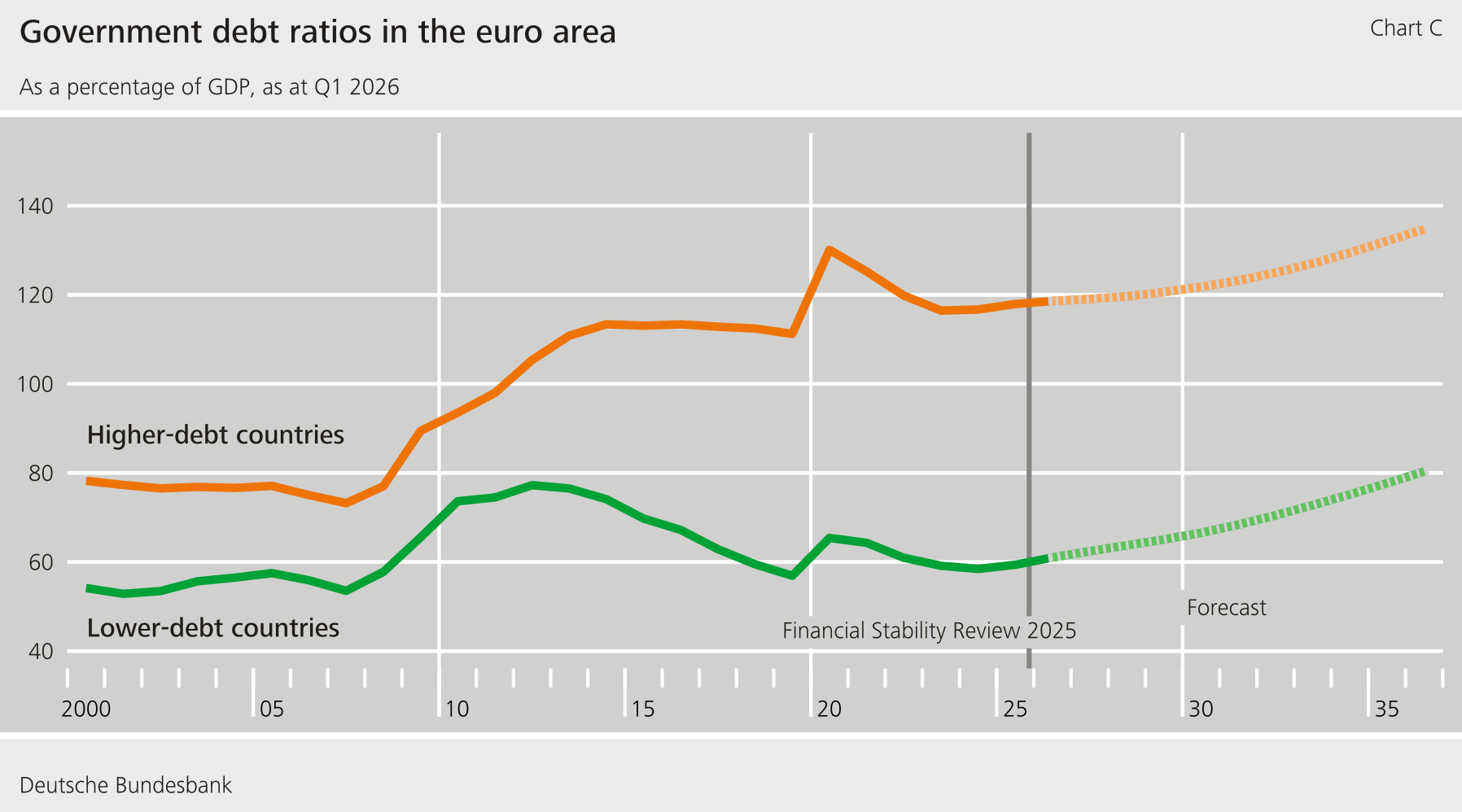
Risks from high government debt in the euro area have risen further compared with the previous year (see Section 1.3). High debt levels in many European countries, which will continue to rise in the future (see Chart C), even in countries that are already relatively highly indebted, are coinciding with weak growth, higher funding costs and rising structural expenditure needs. In Germany, too, fiscal space has continued to decline: additional defence and infrastructure expenditure is likely to increase the deficit and debt ratio in Germany markedly in the coming years, even if debt sustainability remains favourable by European standards. A repricing of fiscal risks in the euro area could trigger valuation losses on government bonds. Such losses could weigh on the balance sheets of banks and other financial intermediaries. Due to the close interconnectedness among European financial systems, these risks could also spill over to the German financial system.
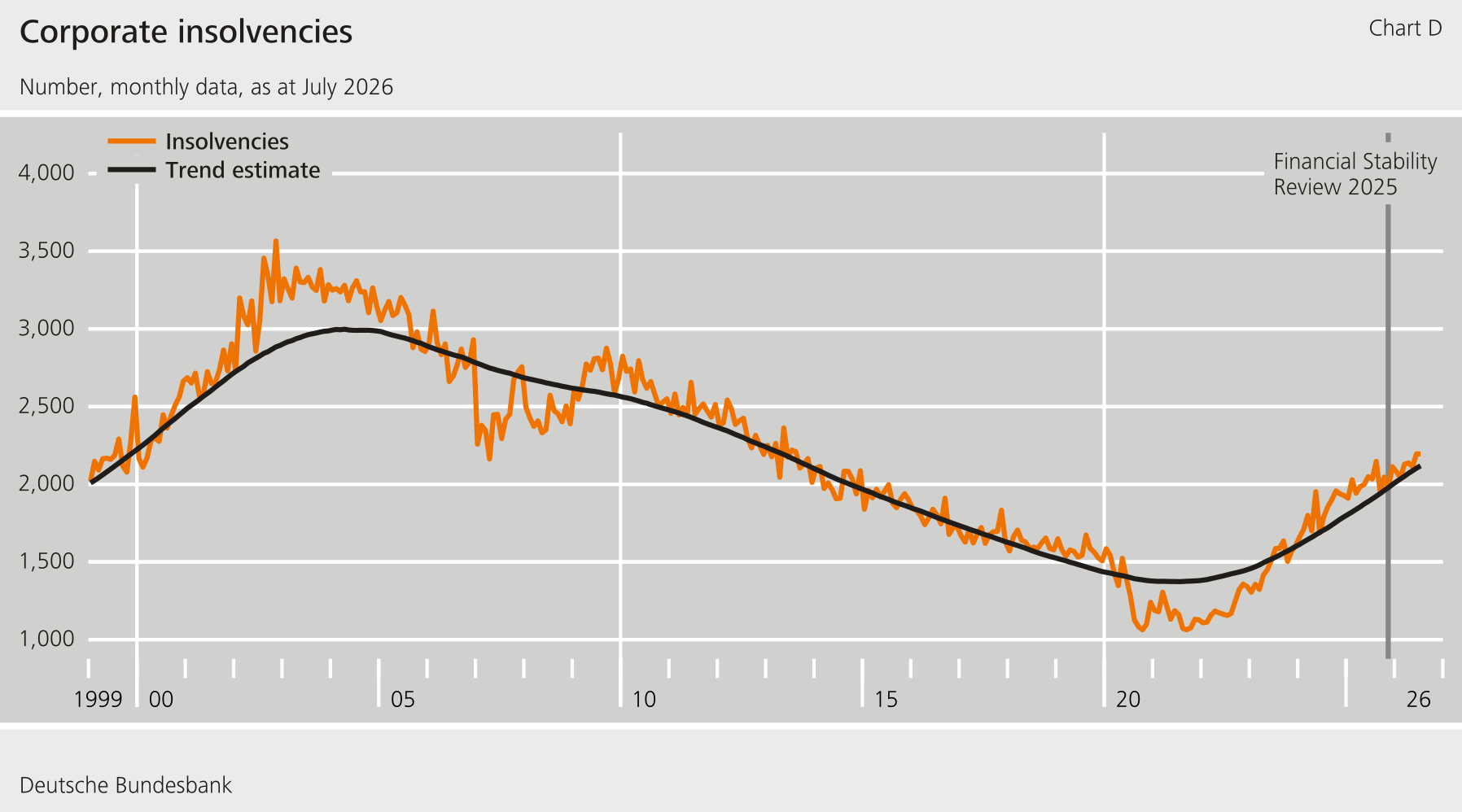
Pressure on the corporate sector has intensified further since last year (see Section 1.5). The economic recovery in Germany has so far been based primarily on fiscal stimulus. However, it is producing barely any increase in potential output. Its long-term stabilising effect on financial stability is therefore likely to remain limited. At the same time, upside risks to inflation and interest rates have increased, and many firms continue to face considerable pressure to make structural adjustments. The number of insolvencies has continued to rise and is likely to remain high over the next few months (see Chart D). Pressure on profitability and higher financing costs are making it more difficult for firms to service their debt. This could cause credit defaults to increase and banks and other financial intermediaries to sustain higher losses.
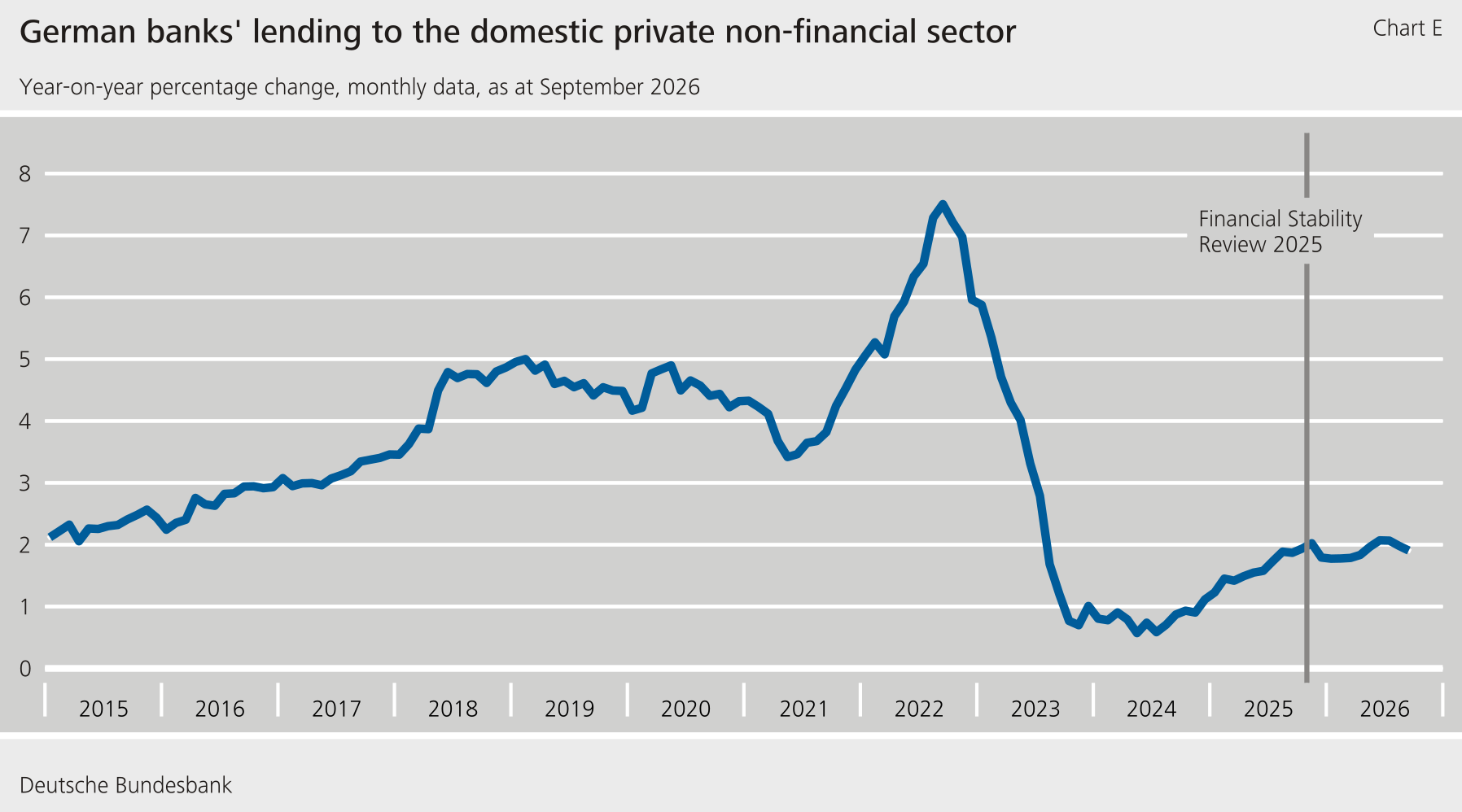
Developments in credit and real estate markets remain subdued, and risk appetite in financial markets is high(see Section 1.6). Bank lending to firms and households is continuing to grow only weakly (see Chart E), mainly owing to subdued loan demand and heightened uncertainty. By contrast, bank-related factors are not constraining the supply of credit at present. In the housing market, price dynamics have stabilised at a moderate level. Transaction volumes in the commercial real estate market remain low and price developments still show no signs of a sustained recovery. Downside risks to commercial real estate prices therefore remain.
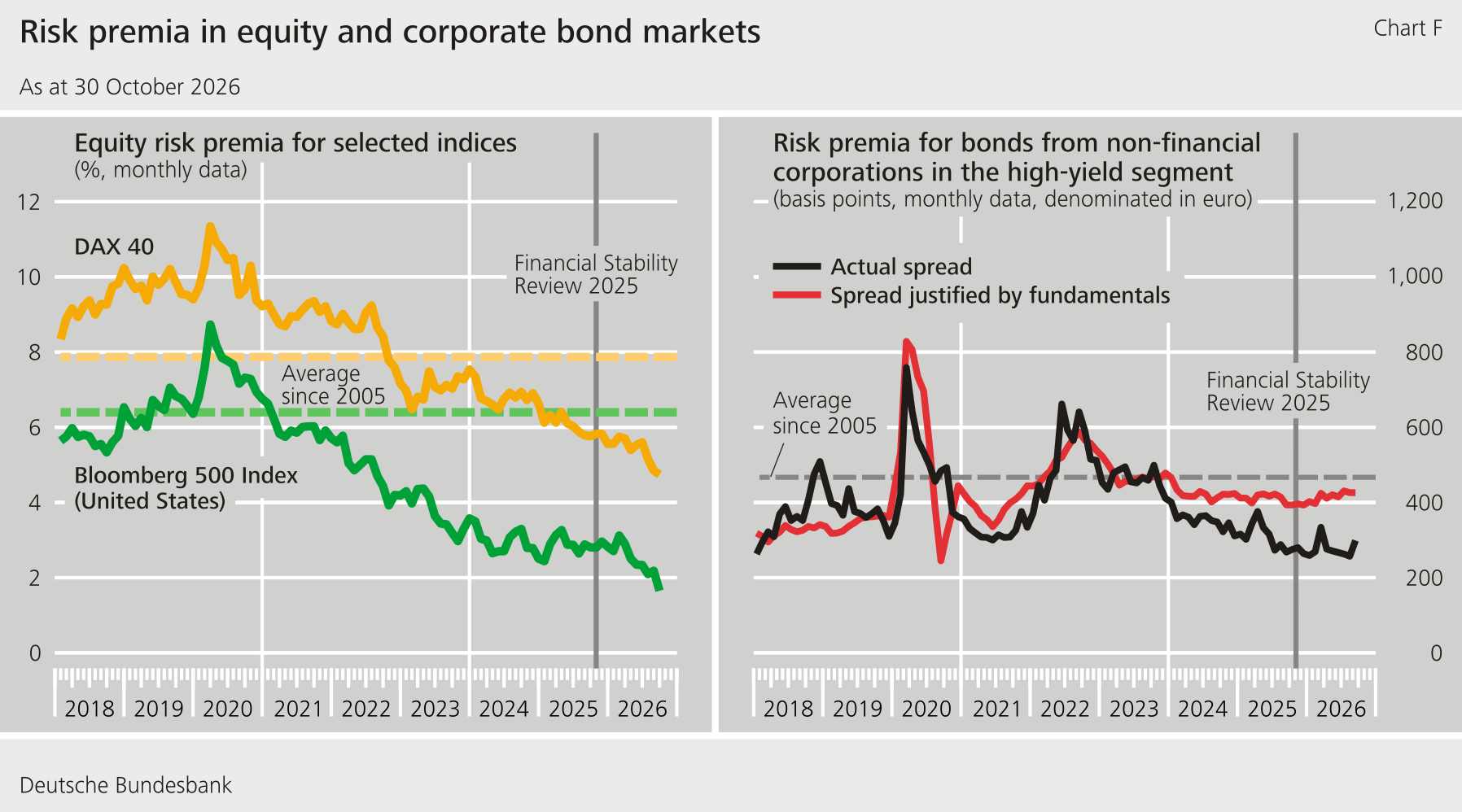
By contrast, valuations of equities and corporate bonds remain high and risk premia persist at low levels (see Chart F). Despite the adverse macro-financial environment, risk appetite is high, which gives rise to considerable potential for corrections. Price losses triggered by abrupt revaluations could increase liquidity needs, for example via margin calls, outflows from funds or contagion effects from less transparent market segments (see Section 3.4).
Risks associated with commercial real estate loans remain elevated (see Section 2.3). Credit defaults in this segment continued to rise last year, albeit somewhat more slowly. German banks have reduced their exposure to the particularly stressed US commercial real estate sector. Overall, however, counterparty credit risk remains high. Where refinancing is required, German project developers could be exposed to funding risk.
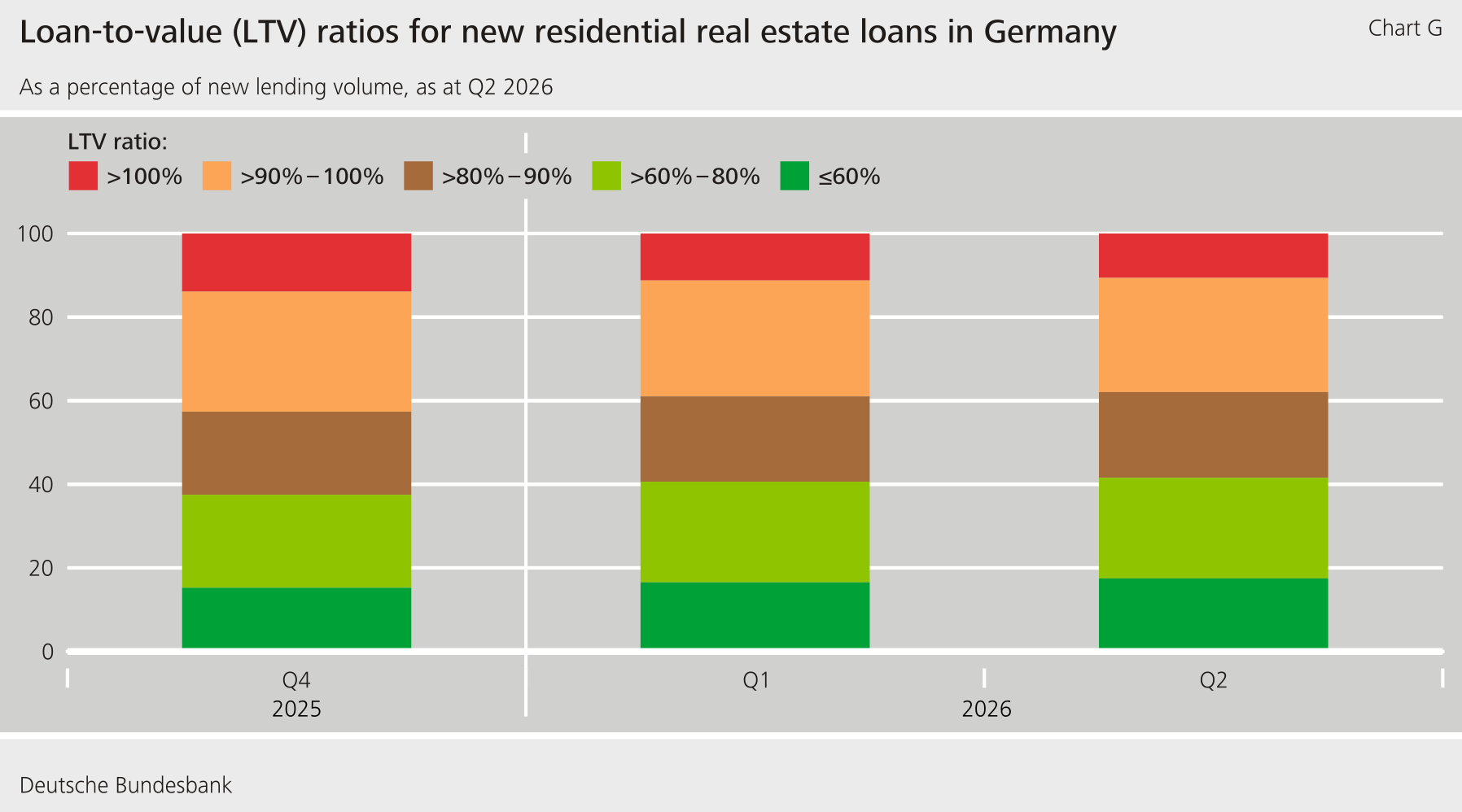
Loose lending standards for some new residential real estate lending point to growing vulnerabilities. Vulnerabilities arising from loans to households that accumulated during the prolonged period of low interest rates have declined, but remain relevant. In addition, new data on residential real estate lending suggest that lending standards for some new loans are loose (see the supplementary information entitled “New data provide deeper insights into the financing of housing loans in Germany”). Almost 40 % of residential real estate loans newly granted in the second quarter currently have a loan-to-value ratio (LTV) of over 90 %; more than 10 % of loans have ratios of over 100 % (see Chart G). The risks associated with the high loan-to-value ratios remain even when additional collateral is taken into account.
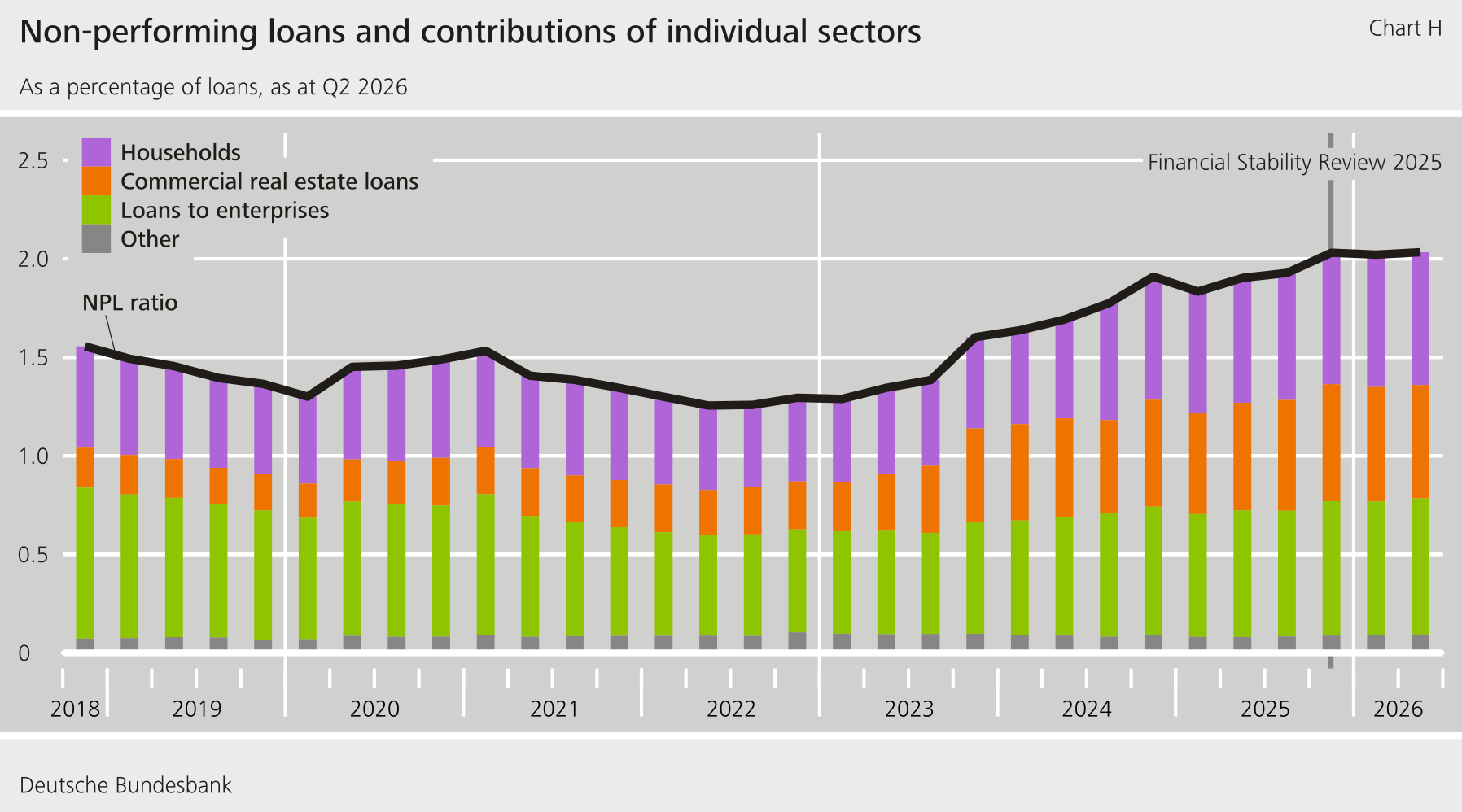
The German banking sector is in good shape overall, but could come under pressure if the macro-financial environment were to deteriorate significantly. Profitability remains high, mainly because net interest income continues to be strong. Capital ratios are sound and the liquidity position is stable overall. However, external headwinds and the structural weakness of the German economy are weighing on lending business. The share of NPLs (see Chart H) has continued to rise since the middle of last year, but remains at a low level. The continued external headwinds and structural burdens mean, though, that a further increase is to be expected. In stress scenarios in which structural burdens intensify or interest rates rise sharply, losses on German banks’ corporate loan portfolios could increase significantly. Moreover, large, systemically important banks may be less able to absorb losses than their reported capital buffers suggest due to comparatively lower risk weights and, in some cases, limited buffer usability (see Section 2.7).
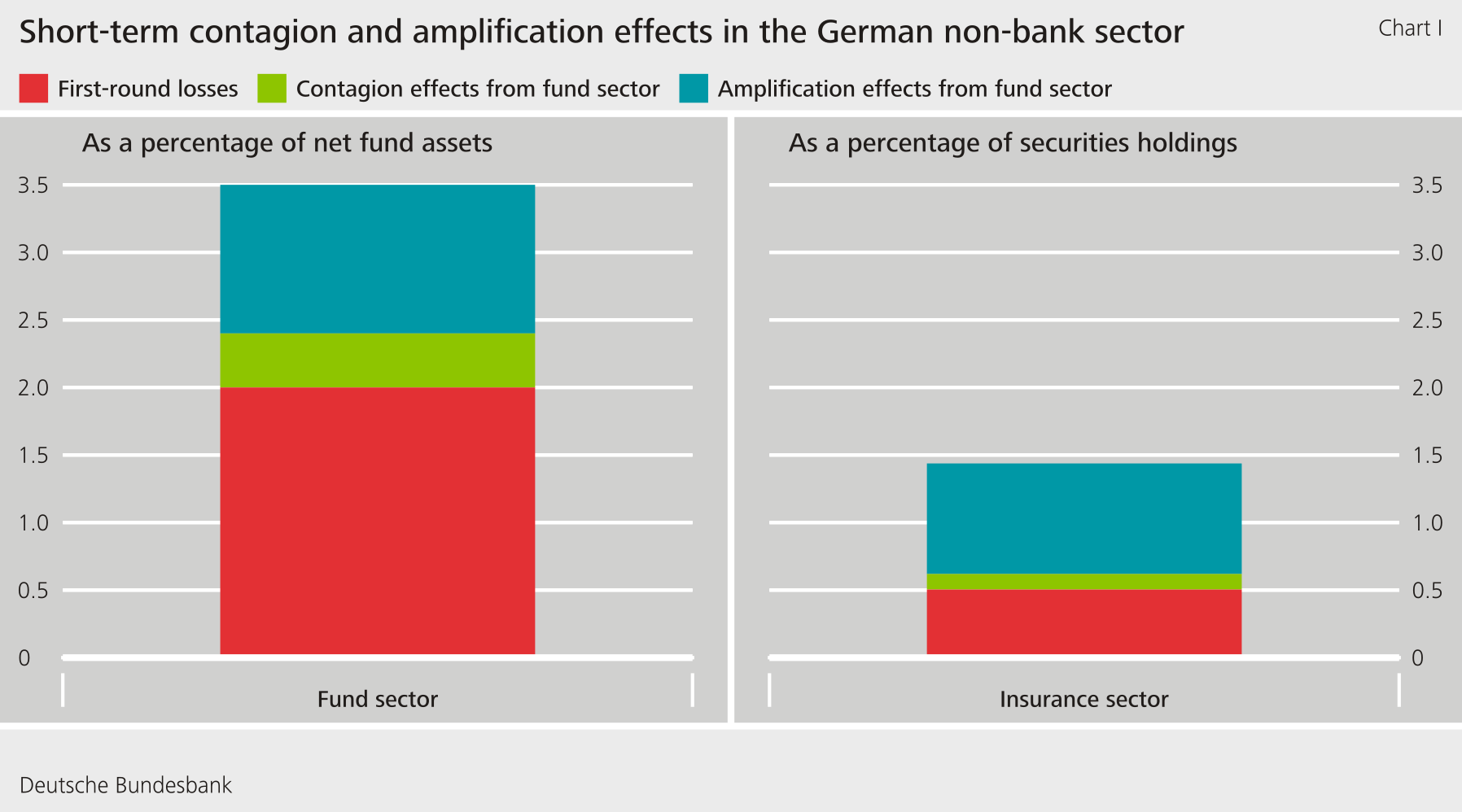
The risks in the fund and insurance sectors have increased. The liquidity position of some real estate funds is tight. Individual funds have already been forced to suspend redemptions due to a lack of liquidity. Real estate funds’ fire sales of property could continue to weigh on the commercial real estate market. Life insurers’ liquidity risk has increased in recent years. The liquidity of investments has declined, while lapse rates have risen recently. Solvency ratios sit at a comfortable level. The increasing interconnectedness of funds with each other and with banks, insurers and pension funds can amplify losses and liquidity shortfalls and cause them to spill over between sectors more quickly (see Section 3.4). A scenario analysis shows that contagion and amplification effects originating in the fund sector can significantly increase losses sustained by both funds and insurers under stress (see Chart I).
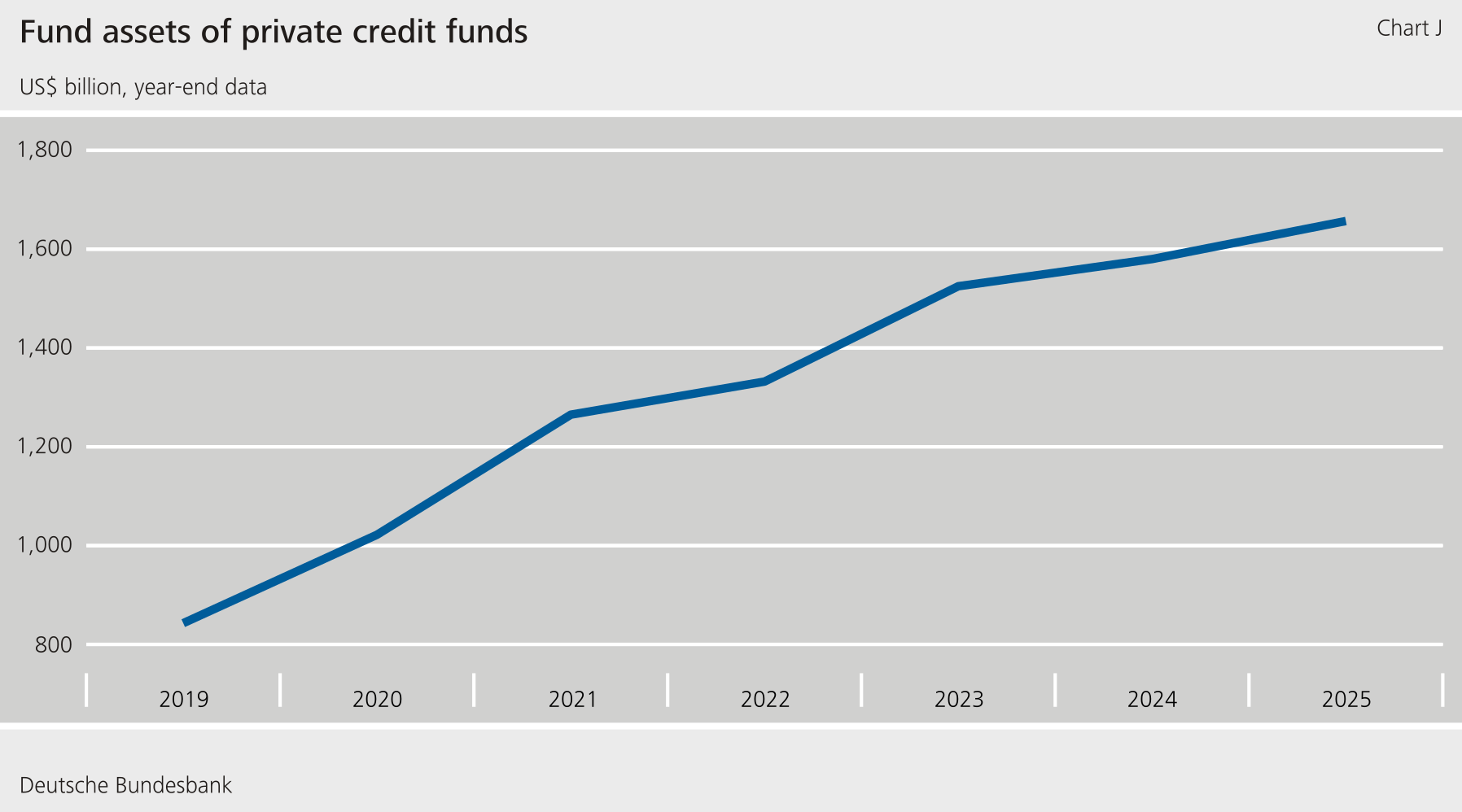
Private credit funds are becoming increasingly important as a channel for the transmission of risks. The segment has grown strongly internationally (see Chart J), is relatively opaque and is increasingly interconnected with banks, insurers and pension funds. Although the direct exposures of German financial intermediaries appear limited on aggregate, they are concentrated among individual actors. In periods of stress, losses on private credit portfolios could therefore be transmitted to the German financial system via fund investments, credit lines and common borrowers. The market segment is still comparatively small in Germany, but is growing rapidly.
Ongoing digitalisation is changing the structure of the financial system. Digital financial innovations such as tokenisation and stablecoins can fundamentally transform market infrastructures, payment settlement and bank refinancing (see the supplementary information entitled “Tokenisation could fundamentally change the financial system”). Tokenisation involves the digital representation of assets. This allows processes to be automated. Tokenisation can make the issuance, trading and settlement of financial instruments more efficient. At the same time, wider use of stablecoins could increase liquidity risks in the banking system. If households shift bank deposits into stablecoins, these households’ comparatively stable deposits would flow out and be replaced to some extent by less stable deposits from stablecoin issuers (see the supplementary information entitled “Stablecoin growth: impact on the deposit base and the liquidity of German banks”). In addition, concentration risks could arise if a small number of large issuers hold substantial balances at individual banks. If these balances are withdrawn at short notice in response to redemption requests, this could strain the liquidity of the affected banks.
The existing macroprudential space should be maintained. The German financial system remains resilient. Banks, insurers and funds coped well with the burdens of the year under review, all in all. The countercyclical capital buffer (CCyB) and the sectoral systemic risk buffer (sSyRB) for loans secured by residential real estate strengthen the banking system’s ability to absorb losses and maintain its lending function even during periods of stress. German banks’ existing capital buffers remain appropriate. The strong profitability situation gives them sufficient scope to maintain their resilience (see Sections 2.7 and 2.8). Their provisioning should adequately reflect rising credit risk. Banks can also build up additional own funds by retaining profits. Overall, the Solvency II review could lead to significant capital relief for insurance corporations. From a macroprudential perspective, these plans are a cause for concern, as the capital relief is not based on a change in risk assessment.
Given systemic risks stemming from cyberattacks and hybrid threats, financial institutions should strengthen their resilience to operational risks. These risks are becoming increasingly significant in the light of the geopolitical situation and increase the risk of disruptions to critical functions of the financial system (see Section 1.2). Hybrid threats can jeopardise financial stability by combining cyberattacks with operational and communicative risk channels. Against this backdrop, the outsourcing of services to specialised third-party service providers is becoming increasingly relevant for macroprudential supervision. Although such outsourcing can enhance efficiency, it can also create dependencies: if business-critical functions are concentrated on a small number of service providers, systemic concentration risks may arise in the financial system. If, for example, a cyberattack were to cause one service provider to fail, several institutions could then be affected simultaneously, impairing the stability of the financial system. AI is further changing the risk situation. Financial intermediaries should continuously review their IT systems, quickly eliminate vulnerabilities and limit their dependence on a small number of critical third-party service providers. Risks arising from the increasing use of AI in core functions of the financial system, from growing dependencies on third-party service providers, including in the area of AI, and from the use of similar AI models are becoming increasingly relevant for financial stability.
Macroprudential policy should be further developed and enhanced through targeted measures in the light of identified risks and vulnerabilities in the financial system. New technological developments such as AI should also be taken into account. AI could help to evaluate large and heterogeneous data volumes more quickly and thereby improve risk analysis. The ongoing European efforts to simplify banking regulation should focus on reducing unnecessary burdens and complexity without weakening the stability and resilience of the sector. The regulatory framework should be made simpler and more effective. In particular, the usability of macroprudential buffers should be improved, for example by ensuring that capital intended as a buffer against systemic risks is used exclusively for this purpose (see Section 2.8). A legal basis for income-based instruments for residential real estate financing should be established. Where necessary, limits for debt service-to-income ratios and total debt-to-income ratios could prevent systemic vulnerabilities from building up in new business.
In order to limit investment funds’ liquidity risk, the existing supervisory toolkit should be expanded to include a macroprudential dimension. National authorities, central banks and European supervisory authorities and bodies, in particular the European Securities and Markets Authority (ESMA) and the European Systemic Risk Board (ESRB), should work more closely together in the supervision and oversight of NBFIs. Macroprudential surveillance of the NBFI sector should be improved through an efficient European exchange of data that have already been collected. There are considerable information gaps on leverage, liquidity risk, lending and indirect links with banks, insurance corporations and pension funds in areas that lack transparency and feature cross-border activity, such as private credit.
Moreover, from a financial stability perspective the regulatory framework for stablecoins, other crypto-assets and tokenised financial instruments needs to be further developed in a risk-appropriate manner in order to keep pace with dynamic market developments.