
How the debt brake could be developed further A Bundesbank contribution to the reform debate

Study
A Bundesbank contribution to the reform debate

How the debt brake could be developed further

11/11/2025

Germany’s fiscal rules were fundamentally reformed in March. Extensive scope for borrowing now exists to address the major challenges in the areas of defence and infrastructure. This is appropriate on a temporary basis. However, because there is unlimited scope to borrow for defence spending, neither sound government finances nor compliance with the EU rules are guaranteed over the longer term. Also, the preferential status accorded to government investment within the scope for borrowing is only temporary. The following proposal to reform the debt brake addresses both of these issues.

This contribution to the debate builds upon the reform proposals presented by the Bundesbank back in March and takes the new situation into account. The aim is to reliably safeguard sound government finances and government investment, take the EU rules into account, and facilitate a relatively steady fiscal policy. To this end, the Bundesbank is proposing a reform process made up of three stages: the current phase with higher deficits for defence and infrastructure; a transitional phase in which defence expenditure is gradually financed to an increasing extent by the current budget; and lastly, a permanent target zone with a debt brake that is fit for purpose. The contribution to the debate specifies the length and design of the three stages and provides the reasoning for the specification. The contribution also refers to design options. This is ultimately a matter for politicians to decide. Whatever shape or form a reform might take, though, it is crucial for deficits to be kept at a sustainable level going forward – one that safeguards a sound debt position and is compatible with the European rules.

Symbolic image: Detailed graphic of two stars lying next to each other

1 Overview 1   

The Bundesbank recommends gearing fiscal policy and debt brake towards current challenges and sound government finances in a targeted and planned manner across three stages:  

  • Current borrowing ceilings until 2029: large deficits are possible; however, borrowing is focused on significant needs for defence and infrastructure.
  • Transitional phase 2030‑35: deficits are gradually scaled back, as required by the EU rules, in order to restore sound government finances.
  • Target zone as of 2036: the debt brake stabilises the scope for borrowing for government investment, and guarantees sound government finances and steady fiscal policy. 

The recommendations aim to achieve different objectives: 

  • A consistent overall package for effective fiscal policy and sound government finances: high deficits are possible temporarily to strengthen defence and infrastructure, with sound government finances being reliably safeguarded thereafter.
  • Planning certainty and steady fiscal policy: deficits are scaled back smoothly and predictably over the transitional phase; consolidation does not take place abruptly.
  • EU rules taken into account: the 60 % debt ratio is the anchor. High structural deficit ratios are reduced by around ½ percentage point each year. The target for a sound budgetary position is a structural deficit ratio of 1 % or 1½ % of GDP.
  • The amount of defence spending financed by borrowing is gradually reduced; scope to borrow for infrastructure investment is stabilised: scope for borrowing is increasingly focused on investment. The scope for investment borrowing will pick up where the Infrastructure and Climate Neutrality Fund leaves off.
  • Additional elements of the reform as of 2036 facilitate steady fiscal policy, amongst other things. 
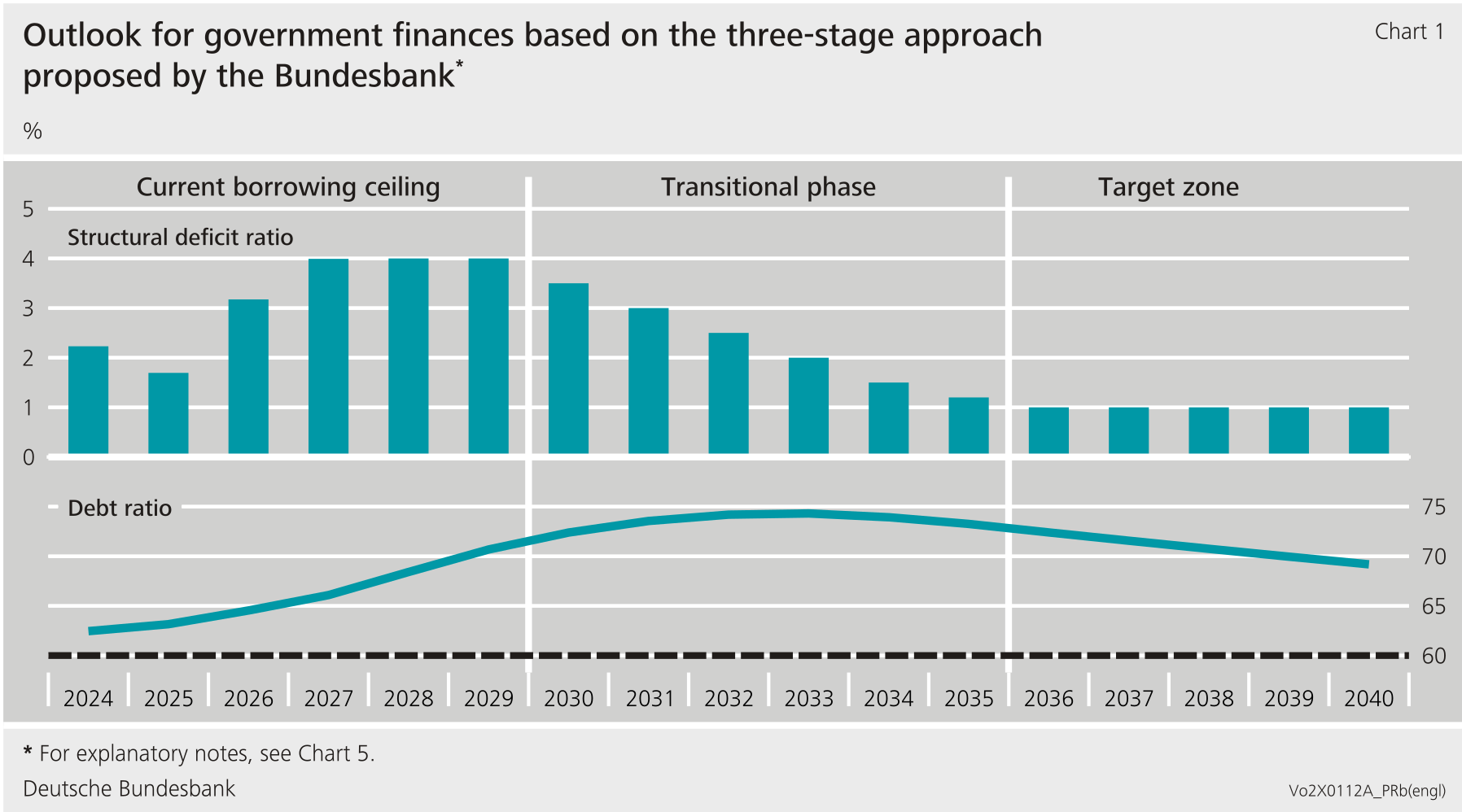
Ausblick auf die Staatsfinanzen nach der 3-Stufen Empfehlung der Bundesbank

The main elements of the three stages are as follows:

Current borrowing ceilings until 2029: the borrowing ceilings remain unchanged; the scope for deficits is used in a more targeted manner.

  • Existing borrowing ceilings continue to exist. The (structural) deficit ratio could thus be around 4 % in 2029, in line with the EU rules, if central government does not stretch the already soft deficit rules any further.
  • It is also advisable to bind additional borrowing for defence and infrastructure more closely to additional spending in these areas. This borrowing would thus be used in a targeted manner to overcome the current challenges. Stricter priorities would have to be set to achieve this, but at the same time, there would be less need to consolidate further down the line.

Transitional phase until 2035: deficits recede gradually, as required by the EU rules, to reach a sound position. The exemption for defence spending is gradually curtailed.

  • The structural deficit ratio gradually declines towards 1 % (by around ½ percentage point per year). This is likely to be consistent with the EU rules.
  • Specifically:
  1. Defence spending is increasingly financed without borrowing. The threshold above which defence spending is allowed to be financed by borrowing increases in equal annual increments. At the end of the transitional phase, it stands at 4 % of GDP.
  2. Outflow from Infrastructure and Climate Neutrality Fund is stabilised (around 0.8 % of GDP each year, with the final disbursement being made in the last year of the transitional phase).
  3. Central and state governments each keep their borrowing ceilings of 0.35 % of GDP. Utilisation is limited if borrowing would otherwise clash with the EU rules.

Target zone as of 2036: safeguarding sound government finances, EU rules, investment and steady fiscal policy (closely based on the Bundesbank’s March 2025 proposal to reform the debt brake):

  1. Investment is given preferential treatment: central government’s scope to borrow for additional investment amounts to 0.8 % of GDP (picking up where the Infrastructure and Climate Neutrality Fund leaves off, irrespective of the debt ratio).
  2. Additional scope for central and state government borrowing depends on the debt ratio so as to firmly anchor the 60 % EU reference value:
    > 60 %: the scope for central and state government borrowing amounts to 0.1 % of GDP in each case;
    < 60 %: the scope for borrowing amounts to 0.35 % of GDP in each case (as is currently the case).

    Utilisation is limited if borrowing would otherwise clash with the EU rules.

  3. The requirement to draw up an amortisation plan for emergency borrowing could be dispensed with.
  4. Other design options support a steady fiscal policy. A modified cyclical adjustment procedure, amongst other things.

2 Status quo: what is permitted under the German and European fiscal rules

2.3 The debt brake was eased significantly in March 2025

Up until 2024, the scope for borrowing was strictly limited: 

  • Central government: structural net borrowing of 0.35 % of GDP.
  • State governments: structural net borrowing of 0 %.
  • Armed Forces Fund (since 2022): borrowing scope of €100 billion.
    (Utilisation in 2024: €17 billion, around 0.4 % of GDP; €77 billion left at the end of 2024). 

The debt ratio would have fallen markedly below 60 % over time.

The scope for borrowing was widened considerably in the first quarter of 2025: 

  • Central government: unlimited scope to borrow, provided defence and security-related spending exceeds 1 % of GDP (for brevity “defence-related expenditure”).
  • Infrastructure and Climate Neutrality Fund: €500 billion. There are no annual ceilings for outflows; the Infrastructure and Climate Neutrality Fund will run for 12 years.
  • State governments: 0.35 % of GDP. Non-earmarked, breakdown roughly in line with the “Königsteiner Schlüssel” financing key.
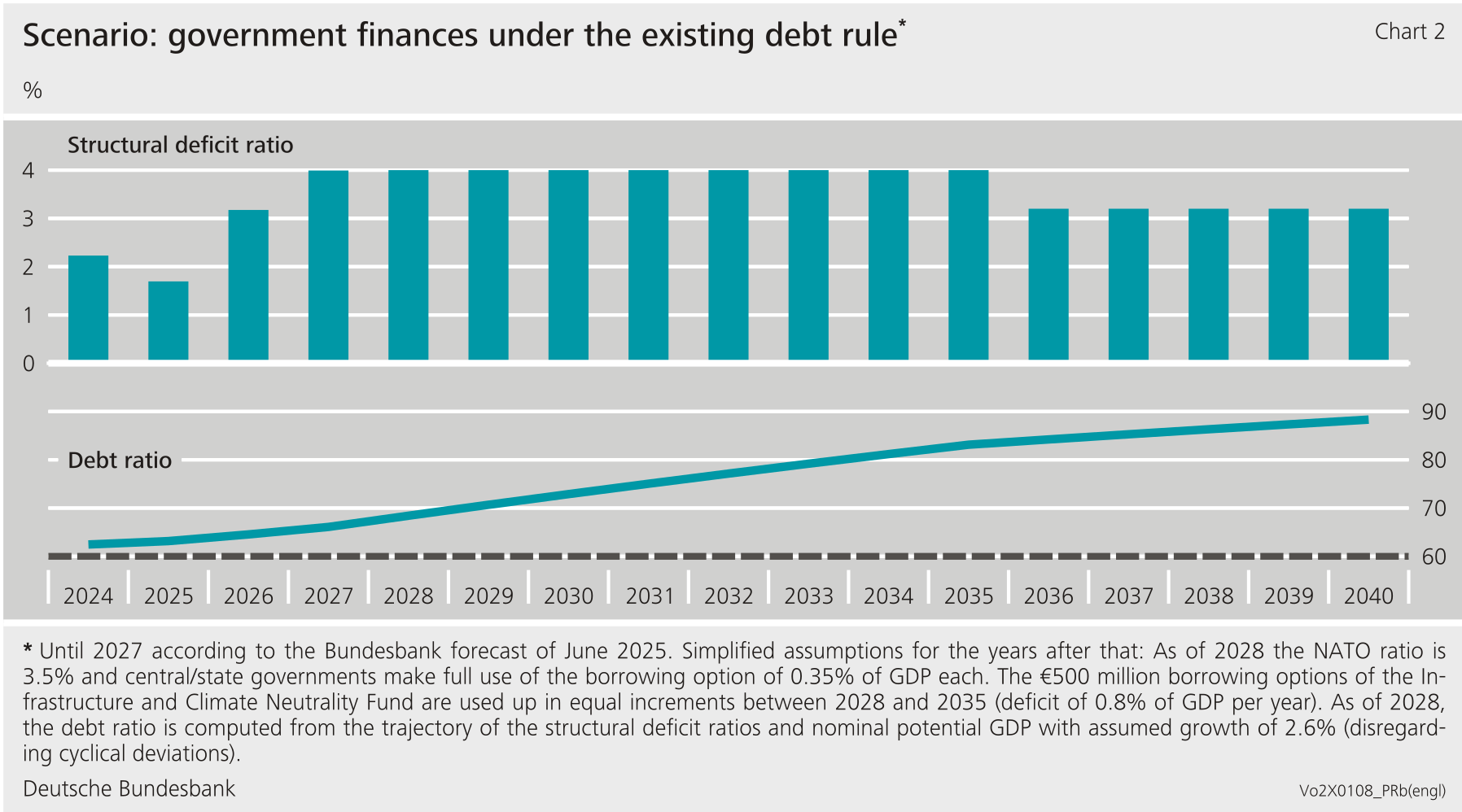
According to the Bundesbank’s June 2025 Forecast for Germany , the structural deficit ratio will rise to around 4 % by 2027. After that, values of around 4 % by 2035 and (after the Infrastructure and Climate Neutrality Fund has been exhausted) of just over 3 % as of 2036 seem plausible, based on the rules. The debt ratio will thus rise towards 90 % in 2040 and exceed 100 % thereafter.

Szenario: Staatsfinanzen bei geltenden Schuldenregeln

2.2 The EU rules permit large deficits on an exceptional and temporary basis

The reformed EU rules are currently being applied for the first time. Looser conditions for the plans are envisaged when the rules are applied for the first time. Moreover, the EU sectoral exemption for defence spending allows additional deficits. 

The German fiscal plan for 2025‑29 and Germany’s sectoral exemption for defence spending have been accepted by the EU bodies. Central government’s medium-term planning up to 2029 and the Bundesbank’s forecast up to 2027 with the aforementioned extrapolation up to 2029 are likely to comply with the EU requirements. 

As of 2030, the EU rules (as opposed to the national debt brake) are likely to call for a more distinct decline in the deficit.

  • The current fiscal plan runs until 2029. Germany has to agree on a new plan for the years as of 2030 (at the latest). The expenditure growth to be agreed will then be based on the deficit ratio in 2029.
  • Given a seven-year adjustment period, it seems plausible that a plan for expenditure growth will have to be made according to which the structural deficit ratio declines to around 1 % by 2036. As of 2030, the structural deficit ratio would therefore have to be reduced by around ½ percentage point per year.
  • But even if that were the case, the debt ratio would still far exceed 60 % in 2040. With a structural deficit ratio that is still at 1 %, the debt ratio could fall below 60 % in the mid-2050s, based on the assumptions made.
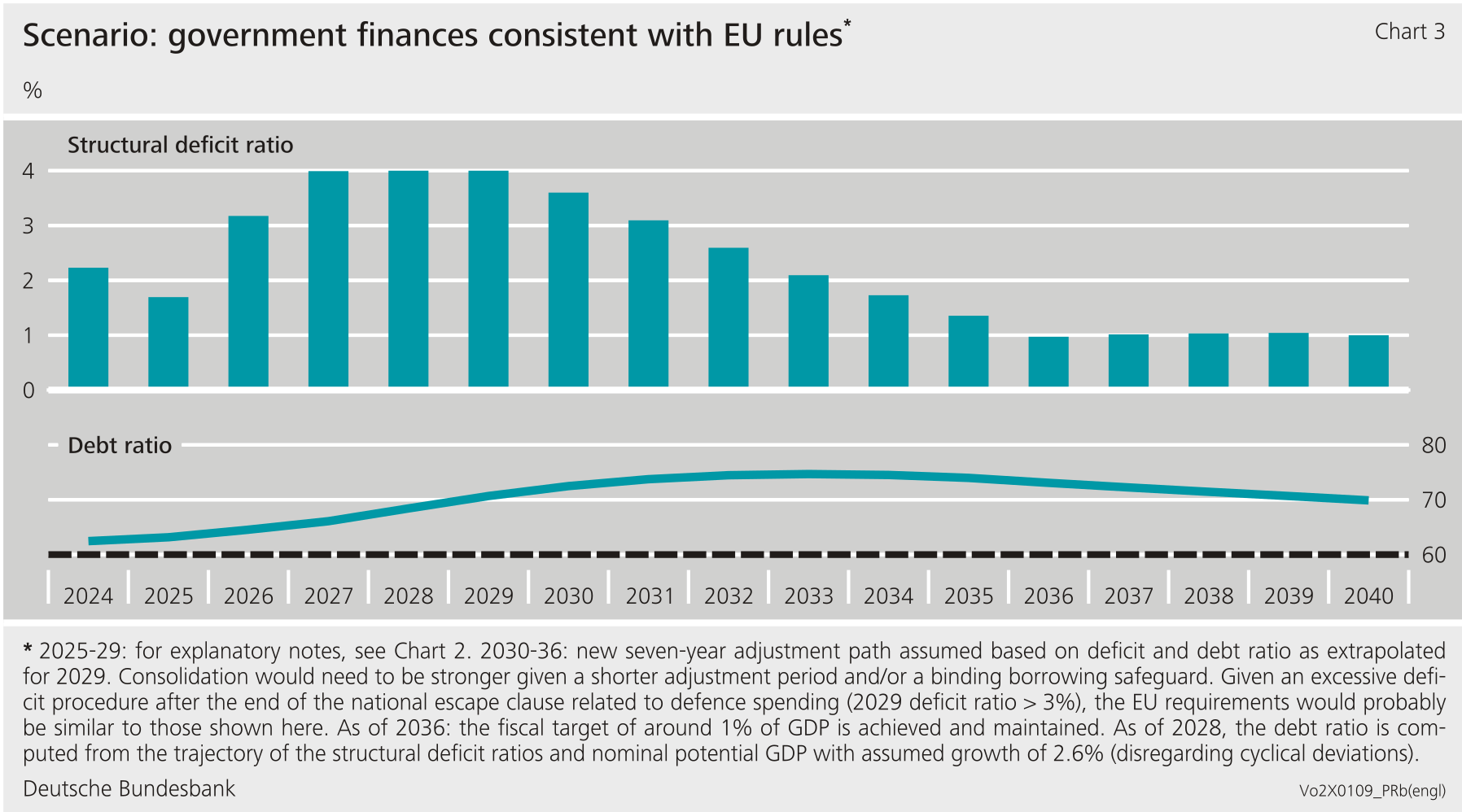
Szenario: Staatsfinanzen in Einklang mit EU-Vorgaben

3 The Bundesbank’s reform recommendations: three stages 

3.1 Current borrowing ceilings until 2029: focus on stringent implementation

The current rules remain unchanged in the first stage. Under plausible assumptions, the structural deficit ratio could thus, as described above, rise to around 4 % in 2029 (see Chart 2 above: Government finances under the current debt rule): 

  • central government then finances 2½ % of security and defence spending by borrowing (NATO rate of 3½ % of GDP announced);
  • the Infrastructure and Climate Neutrality Fund spends just under 1 % of GDP per annum;
  • central and state governments each make full use of the ceiling of 0.35 % of GDP. 

It is advisable to make targeted use of the extended scope for borrowing in order to address the challenges in the areas of defence and government infrastructure. This was envisaged when the Basic Law was amended. At present, however, there are plans to use a portion differently. To effectively address the challenges, the logical next step would be to gear the scope for borrowing more towards the priorities in the areas of infrastructure and defence.

Specifically, the Bundesbank recommends that the additionality of defence and infrastructure spending financed by borrowing should be safeguarded more strongly. Its proposals in this regard are as follows :

  • flesh out the additionality of the investment such that borrowing via the Infrastructure and Climate Neutrality Fund safeguards additional investment compared with the starting year of 2024;
  • envisage an additionality requirement of this kind for the state governments as well,
  • define the 10 % investment ratio in the central government budget differently;
  • change the sectoral exemption for defence spending so that only additional expenditure compared with the defence ratio in 2024 counts.

Furthermore, it would seem appropriate to already refrain in the current situation from new measures that represent a structural burden and are not counterfinanced: That would reduce the need for action in future to close budget gaps so as to comply with the debt brake. 

3.2 2030‑35 transitional phase: convergence to a sound position

The EU fiscal rules will probably envisage a decline in Germany’s deficit once the exemption for defence spending comes to an end. The national rules, by contrast, will only restrict the scope for borrowing (moderately) once the Infrastructure and Climate Neutrality Fund is exhausted. It seems plausible that the structural deficit ratio will have to decline towards 1 % as of 2030 under the EU rules, in minimum steps of ½ percentage point per year (see C.1). This will be necessary if only to achieve an underlying position from which Germany can converge again, in appropriate steps, towards the 60 % limit enshrined in the EU Treaty. 

This backdrop is another reason why the reform proposal envisages amending the national borrowing ceilings in the Basic Law so as to gradually lower the deficit ratio as of 2030: 

  • Defence: financed increasingly without borrowing. 

    According to the proposal, defence spending would be financed without special defence loans in the longer term so as to reserve expanded scope for borrowing primarily for investment expenditure. To this end, the defence spending exemption would be reduced in a planned manner during the transitional phase (the sectoral exemption will no longer exist in the target zone as of 2036).

    The proposal here is to raise the threshold above which special loans are possible by 0.5 percentage point per year: to 1.5 % in 2030 and up to 3.5 % in 2034 and 4 % in 2035. 2

  • Infrastructure and Climate Neutrality Fund resources: outflows relatively even during the transitional phase. 

    The resources still available at the end of 2029 will be distributed relatively evenly over the transitional phase. The proposal assumes outflows of 0.8 % of GDP per year for 2028 to 2035.

  • Central and state government borrowing ceilings would each generally be left at 0.35 % of GDP; they would, however, be subject to examination for compliance with the EU rules. That examination can be carried out by the Stability Council, assisted by the Independent Advisory Council. To smooth the transition to the target zone, the ceilings for central and state governments could each fall to 0.2 % as early as 2034 (and then – given a debt ratio above 60 % – to 0.1 % upon entry into the target zone).
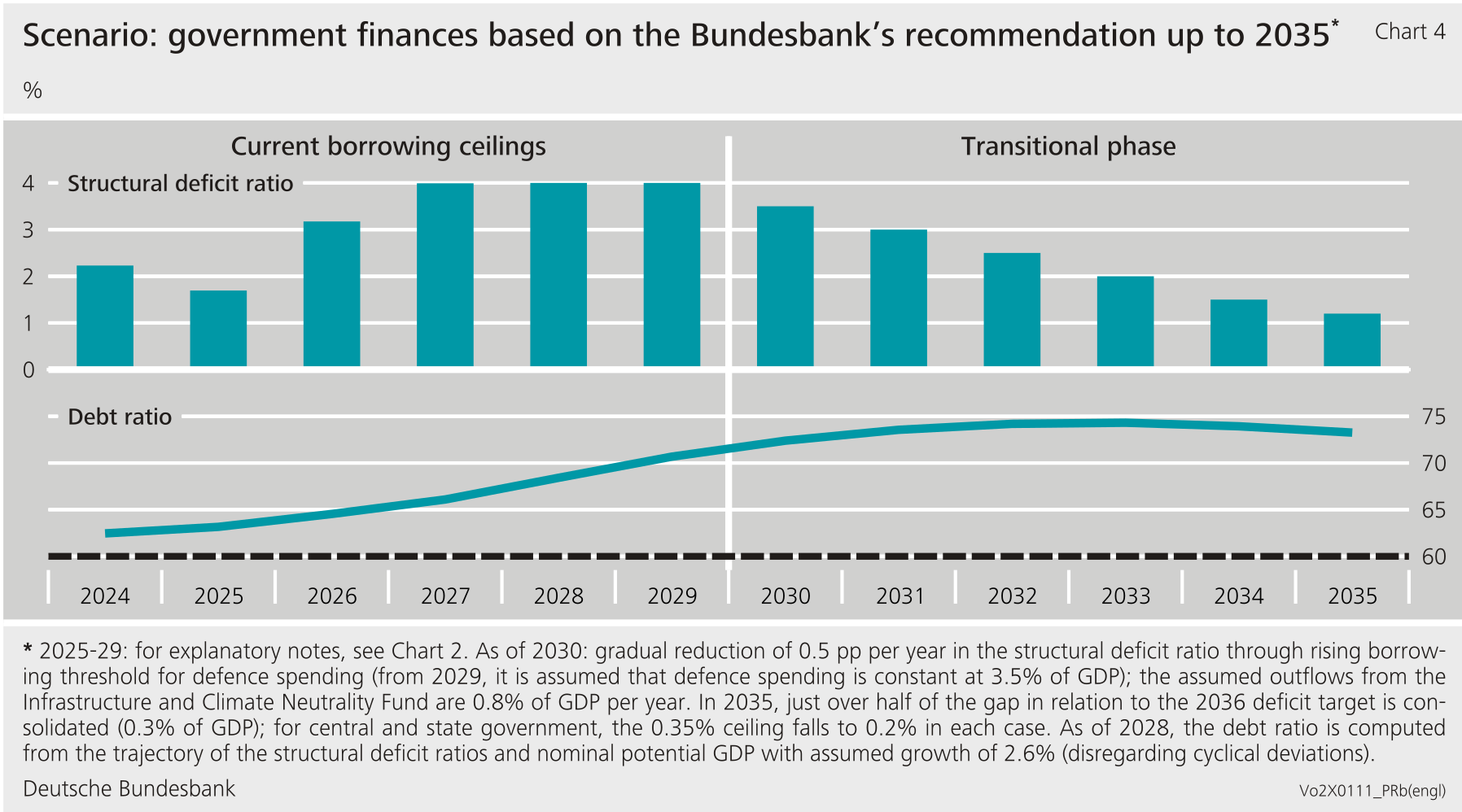
By the end of the transitional period, based on the proposal the structural deficit ratio would fall fairly steadily to just over 1 % of GDP under plausible assumptions (see the scenario in the chart below). 

Szenario: Staatsfinanzen bei Bundesbank-Empfehlung bis 2035

3.3 The target zone from 2036

3.3.1 The revised reform proposal presented by the Bundesbank in March enters into force

After the transitional period, the achieved secure position should be stabilised in line with EU rules. In principle, the debt brake reform proposal presented by the Bundesbank in March still appears well suited to achieving this aim (slightly updated below). The proposal centres, first, on firmly anchoring the general government debt ratio at the EU reference value of 60 %. Second, debt-financed government investment expenditure would remain permissible to a limited extent, following on from the Infrastructure and Climate Neutrality Fund once it has been exhausted. 

Specifically, the proposal envisages the following:

  • In general, central government will have borrowing scope amounting to 0.8 % of GDP for additional fixed asset formation 3  (irrespective of the debt ratio). This would stabilise the scope for investment borrowing provided by the Infrastructure and Climate Neutrality Fund, which, under the proposal, will be permitted to borrow around 0.8 % of GDP per year for investment expenditure up to 2035. Investment grants to the federal states for additional investment by state and local governments would remain possible irrespective of state governments’ new borrowing scope.
  • In addition, borrowing scope will be available depending on the level of the debt ratio.
    • If the debt ratio is below 60 %, the current structural borrowing scope of 0.35 % of GDP for central and state government will remain unchanged.
    • If the debt ratio is above 60 %, the structural borrowing scope will fall to 0.1 % of GDP each for central and state government in order to more quickly reach the 60 % anchor for the debt ratio and take account of the EU rules.
  • The limits should not be exhausted if a conflict with EU rules would otherwise arise (as in the transitional phase).

Regarding parameter selection:

  • A general government deficit ratio of around 1 % given debt above 60 % of GDP and of approximately 1½ % given debt below 60 % is in line with the fundamental EU requirements and the 60 % anchor for the debt ratio. 4
  • Arrangements concerning the distribution between central and state government and the specific definition of investment and its additionality could also take a different form.
    • However, there is much to suggest that the borrowing scope should primarily rest with central government. If necessary, state governments could be entitled to specific transfers from these funds in order to finance preferentially treated investment by state or local governments.
    • The broader the definition of investment, the more likely it is that the desired “protection” of investment would prove ineffective. This would also be the case if safeguards on additionality were weak.
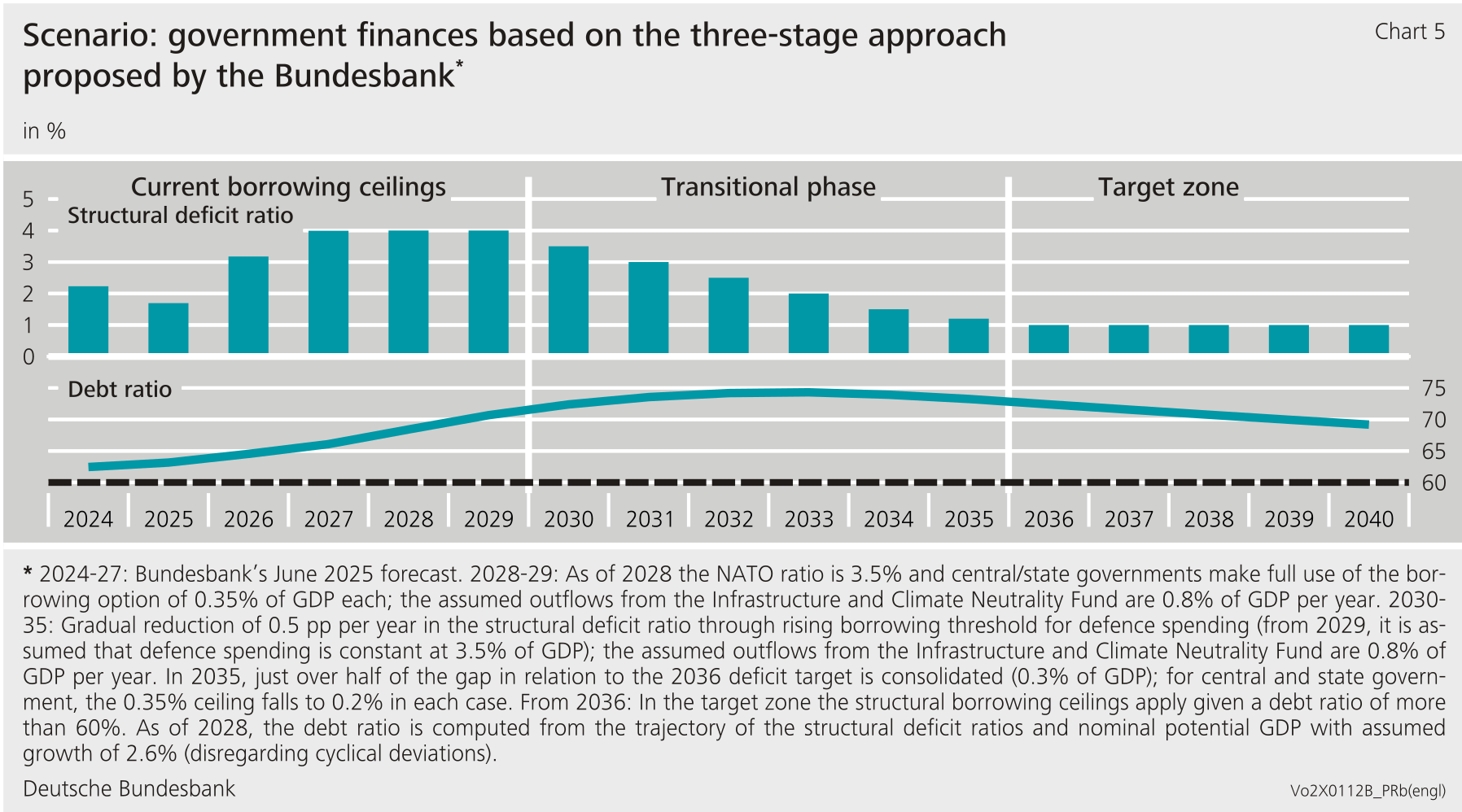
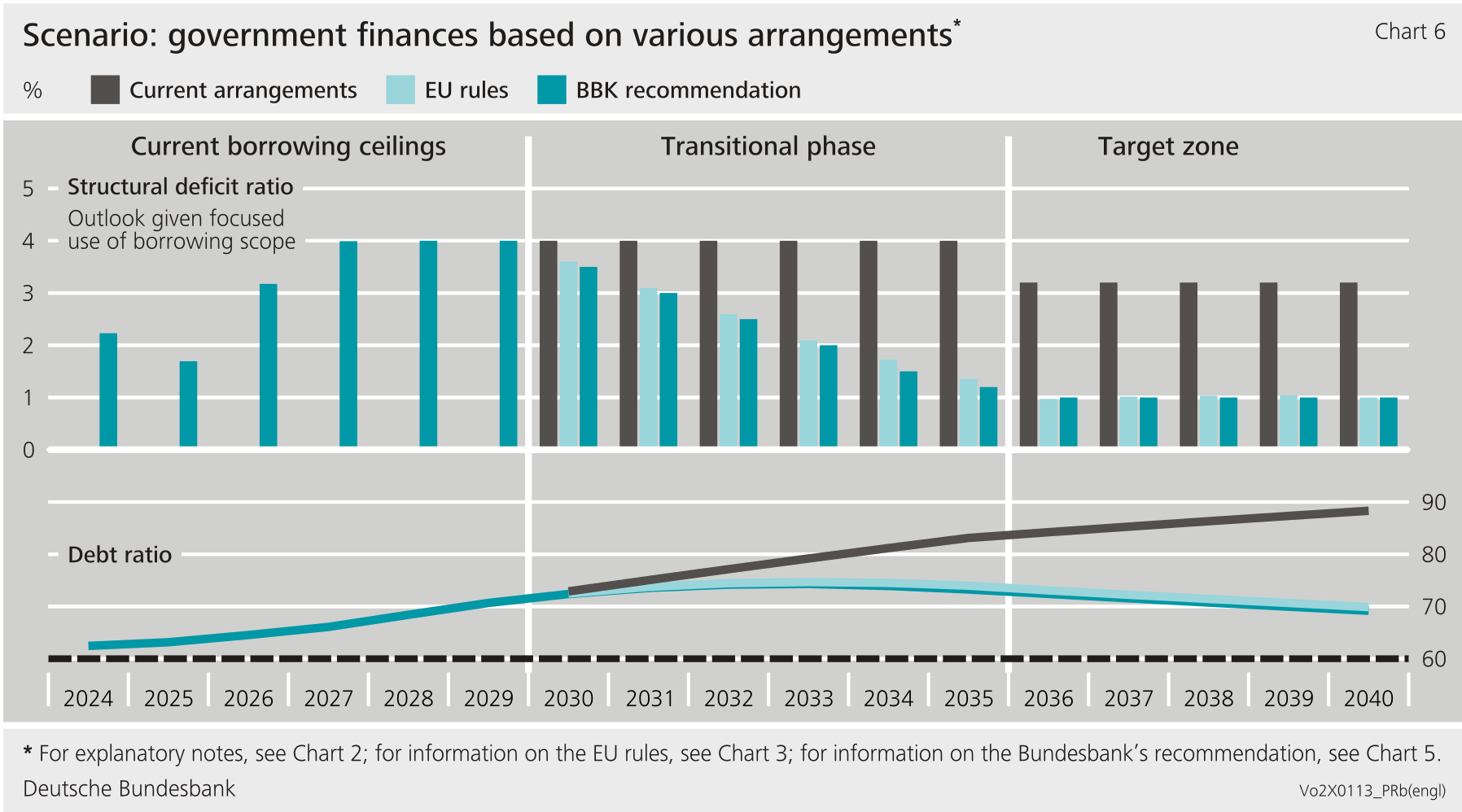
The proposal ultimately results in structural deficits being limited to around 1 % of GDP for an extended period of time, as the debt ratio would remain above 60 % over the longer term. Based on the assumptions made, it would not fall below the 60 % limit until the mid-2050s. As things stand, the proposal is compatible with the EU rules and places significantly tighter limits on deficits and debt ratios in the medium and long term than the current rules (see Chart 5 and Chart 6 below).

Ultimately, it is up to policymakers to select the specific parameters, and different versions are conceivable. 

Whatever shape or form a reform might take, though, it is crucial for the deficits to be kept at a sustainable level going forward – one that safeguards a sound debt position and is compatible with the European rules.

Szenario: Staatsfinanzen nach der 3-Stufen Empfehlung der Bundesbank
Szenario: Staatsfinanzen gemäß unterschiedlicher Regelungen

The Bundesbank also proposes a number of additional amendments. These go beyond a new borrowing limit and restrictions or requirements on use (see the March Monthly Report for more detailed and comprehensive information). They include the following elements, among others: 5

The cyclical adjustment method should also include an error correction component.
This would allow delayed adjustment of fiscal policy to unexpected developments, as it extends the adjustment period following unexpected negative developments in structural tax revenue to up to four years. It would thus prevent short-term adjustments, which tend to have a procyclical effect, and facilitate steady fiscal policymaking. This would not be confined to revisions of GDP growth or potential GDP but would also include inaccurate estimates regarding tax revenue as a whole (thus similar to tax trend methods). In particular, classic cyclical adjustment procedures (such as the one used by central government) often allow only limited adjustment for fluctuations in profit-related taxes, which are a volatile item. 

The borrowing ceiling trigger of a 60 % debt ratio should not necessitate any short-term adjustments to fiscal policy. To ensure this, an extended transition would be needed, with the ceiling only falling if the 60 % threshold has been exceeded in the previous year and is also set to do so in the coming year according to an independently certified forecast.

The current constitutional requirement to draw up repayment plans for emergency borrowing could be lifted. The stricter borrowing limit applicable once the debt ratio passes 60 % should ensure that the debt ratio is brought back down towards the threshold. Consequently, the requirement to provide repayment plans could be lifted in general. 6 There is no comparable requirement in the EU rules either. While lifting the requirement to provide repayment plans would mean loosening the borrowing ceiling somewhat, the risk of existing repayment plan obligations being postponed repeatedly appears high anyway, with 2022 being a case in point. Making repayment plans mandatory has not proved particularly effective so far.

Has this page helped you?