EU finances: Member States’ financial relationships with the EU in 2024 and the multiannual financial framework for 2028-34 Monthly Report – October 2025
Published on
EU finances: Member States’ financial relationships with the EU in 2024 and the multiannual financial framework for 2028-34 Monthly Report – October 2025
Monthly Report Published on
Last year, the EU budget comprised expenditure of €146 billion, or just under 0.8 % of EU gross national income (EUGNI), down from around 1 % in 2023. Fewer funds went from the EU to the Member States, as many of them called up less cohesion funding. Instead, they primarily made use of funds from the NextGenerationEU (NGEU) off-budget entity, which are due to expire in 2026. The combined payments from both the EU budget and NGEU came to around 1.3 % of EUGNI, which was only slightly down on the previous year (− 0.1 percentage point).
Member States finance the EU budget primarily through contributions based on their respective GNI. These contributions vary relatively little, while the payments to the Member States from the EU budget and NGEU differ greatly. This results in net contributors and net recipients. Germany was among the ten net contributor countries again in 2024, at 0.4 % of its GNI (€18 billion). Of the 17 net recipient countries, Latvia received the most funds in net terms, at more than 3 %. In July, the European Commission published an initial proposal for the new multiannual financial framework for 2028 to 2034, according to which the EU budget, as a percentage of EUGNI, would rise roughly in line with the repayments and interest burdens for NGEU. Member States’ payments would be correspondingly higher. At the same time, the European Commission is proposing various new borrowing options, primarily to fund additional loans to Member States. The European Commission wants to gear the EU budget more towards European tasks and also make financing simpler and more transparent. Both of these objectives are to be welcomed, and increased efforts could be made towards them in the upcoming negotiations. However, it makes less sense to tie EU funds to reform plans for national tasks and projects monitored by the European Commission. This poses the threat of additional bureaucracy, and the responsibilities could become increasingly blurred. The experience with NGEU is at least ambivalent in this regard.
1 Review of payment flows in 2024
Member States vote on joint spending commitments and their funding for a period of seven years. For this purpose, they set out a multiannual financial framework (MFF). The current MFF runs from 2021 to 2027. The majority of the spending goes to Member States in the form of grants, whilst a smaller share is used to fund joint expenditure, such as on border protection and humanitarian aid, for example. The annual EU budgets set out more precise spending plans for the duration of each financial framework. In the current financial framework, the EU budget amounts to around 1 % of EUGNI. 1 The EU budget is financed largely through current contributions by Member States in proportion to their economic performance.
NGEU supplements the regular EU budget from 2021 to 2026. The NGEU off-budget entity was adopted by the Member States as a one-off crisis measure during the COVID-19 pandemic. It is limited to six years and comprises grants and loans to Member States. The centrepiece of NGEU is the Recovery and Resilience Facility (RRF). It accounts for all of the loans and around 80 % of the grants. The remaining 20 % of the grants is covered by existing spending programmes within the regular EU budget. The NGEU grants entail additional spending in the period from 2021 to 2026, averaging 0.5 % of EUGNI per year. 2
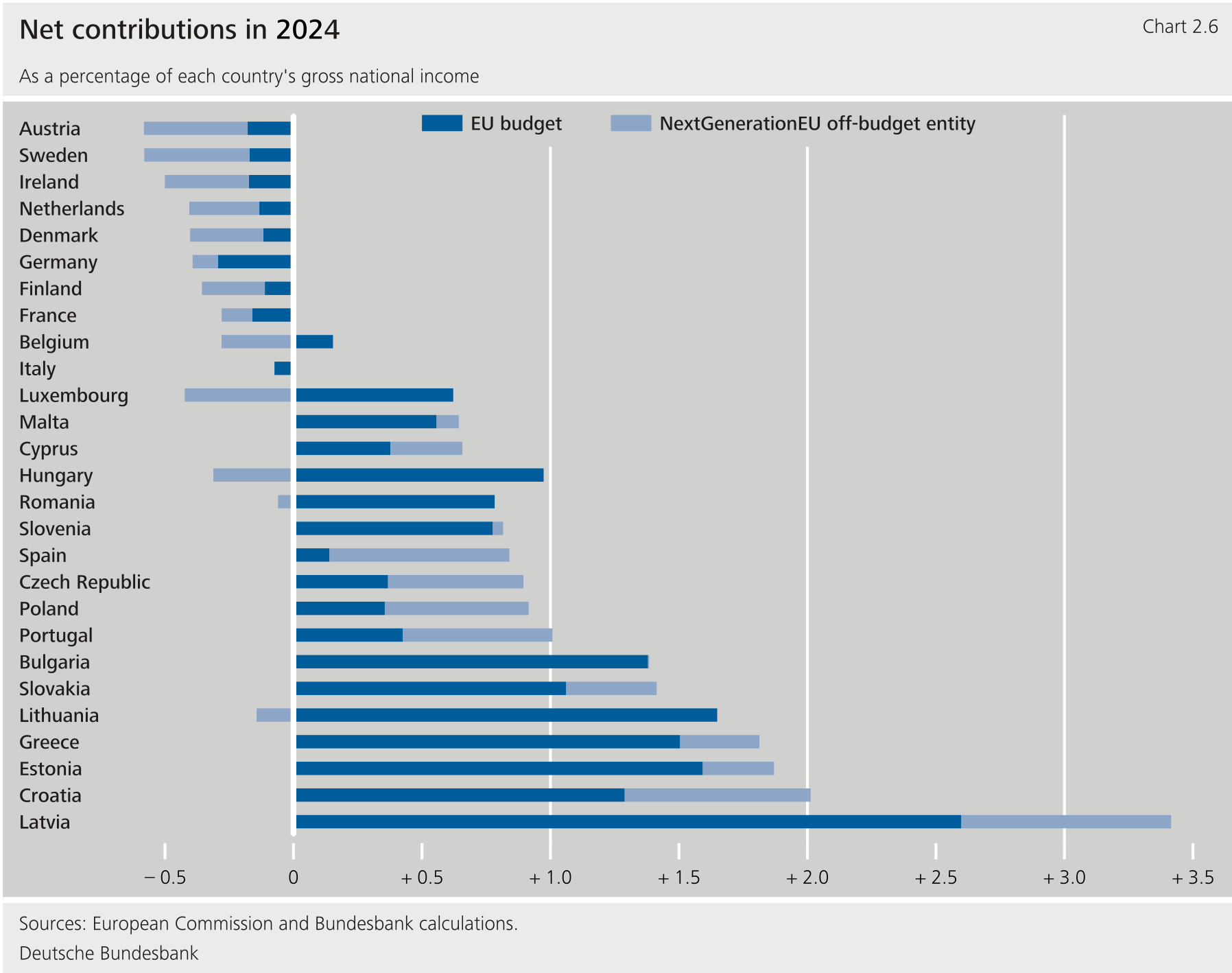
Whether a country is a net contributor to or a net recipient from the EU budget is determined mainly by differing levels of grants from the EU budget. The payments contributed by Member States are roughly equivalent. However, countries with lower economic performance (measured in terms of GNI per capita) tend to receive disproportionately high grants out of the EU budget. Net contributions can be calculated for NGEU as well. However, in some cases, the Member States apply for NGEU funds in larger blocks at irregular intervals. Net contributions to NGEU therefore fluctuate more strongly from year to year than those to the EU budget (see the supplementary information entitled “Methodological information on determining net contributions”).
The EU budget redistributes financial resources from economically stronger Member States to economically weaker ones. It would be appropriate for the European Commission to report net contributions to the EU budget in a timely and transparent manner. 3 However, the net contributions should be interpreted with caution. The net contributions show that the financial burdens and financial relief associated with the Community budgets vary between the Member States. However, they do not reflect the costs and benefits of a country’s membership in the EU.
Supplementary information
Methodological information on determining net contributions
In order to determine net contributions in a meaningful way, it is necessary to adjust the spending and revenue figures of the EU budget. The expenditure side takes account only of operating payments that go to the EU Member States. In particular, it does not include administrative expenditure, as this cannot be attributed to individual Member States in any meaningful way. The EU budget also funds grants to countries outside the EU, such as for development and humanitarian aid, for example. These payments likewise have no impact on the net contributions of Member States described here.
On the revenue side, only the current contributions of Member States are taken into account when calculating net contributions. These are determined on the basis of various national metrics: gross national income (GNI-based own resource), (standardised) value added tax revenue (VAT-based own resource), and the amount of non-recycled packaging waste (plastics own resource). The GNI-based own resources play a special role in the EU budget. They represent the largest item and are adjusted in such a way that they always balance the EU budget. Alongside the current contributions from the Member States, the EU budget is also funded by customs duties. However, these are incurred mainly at the EU’s external borders and it is therefore not appropriate to attribute these to the Member States that collect them. There are other revenue items as well, such as receipts from fines for violating EU competition law or fines paid by Member States.
When calculating net contributions from the NextGenerationEU (NGEU) off-budget entity, it is assumed that Member States fund NGEU grants in accordance with their GNI shares. This is deemed appropriate because the financial contributions roughly correspond to both current and prospective future GNI shares. The net contributions calculated in this manner are the same as if the Member States funded NGEU annually via the regular EU budget. 1 Debt service in the EU budget is not included in the operating expenditure taken into account here. This prevents expenditure items from being counted twice.
1.1 The EU budget for 2024 (excluding NGEU)
The EU budget for 2024 comprised expenditure of around €146 billion, which was €19 billion less than in the previous year. 4 At just over 0.8 % of EUGNI, expenditure was lower than usual (around 1 % of EUGNI). Administrative expenditure remained unchanged on the previous year at €12 billion. This corresponds to around 8 % of total expenditure. Expenditure on servicing NGEU debt came to €2 billion, or 1.5 % of total expenditure.
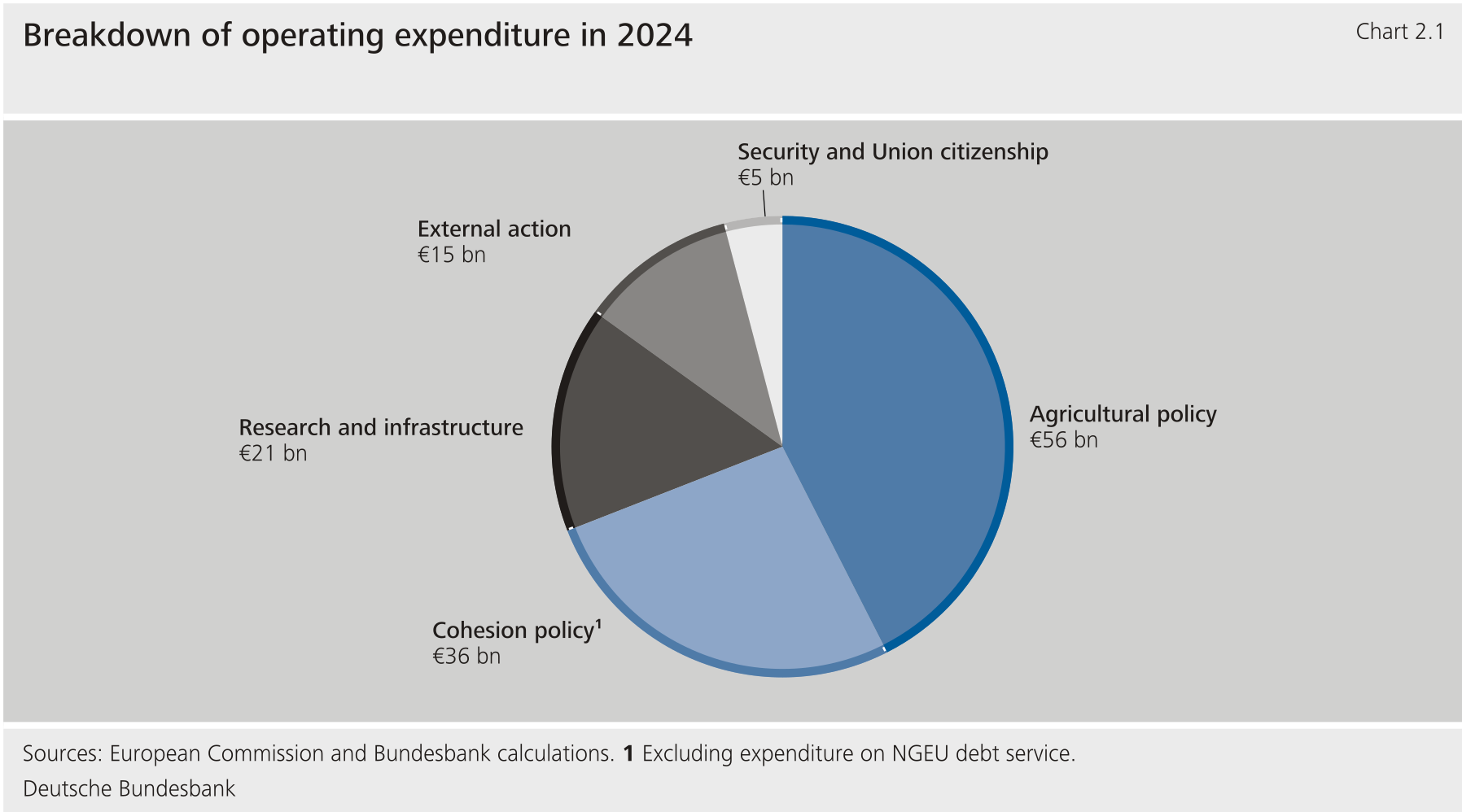
Spending on cohesion policy, which fell by almost 40 %, was the decisive factor behind the decline in expenditure. As a result, operating expenditure 5 also fell by a total of just over €20 billion to €132 billion. The share of spending on cohesion policy decreased to just 27 % (see Chart 2.1). Unlike in the preceding years, it was thus well below the share attributable to agricultural policy (42 %). The remaining 30 % of operating expenditure was distributed across the categories of research and infrastructure, external action, and security and Union citizenship. Just over €20 billion of operating expenditure went to recipients outside the EU, mainly in the area of external action (this is not included in the net contributions; see the supplementary information entitled “Methodological information on determining net contributions”).
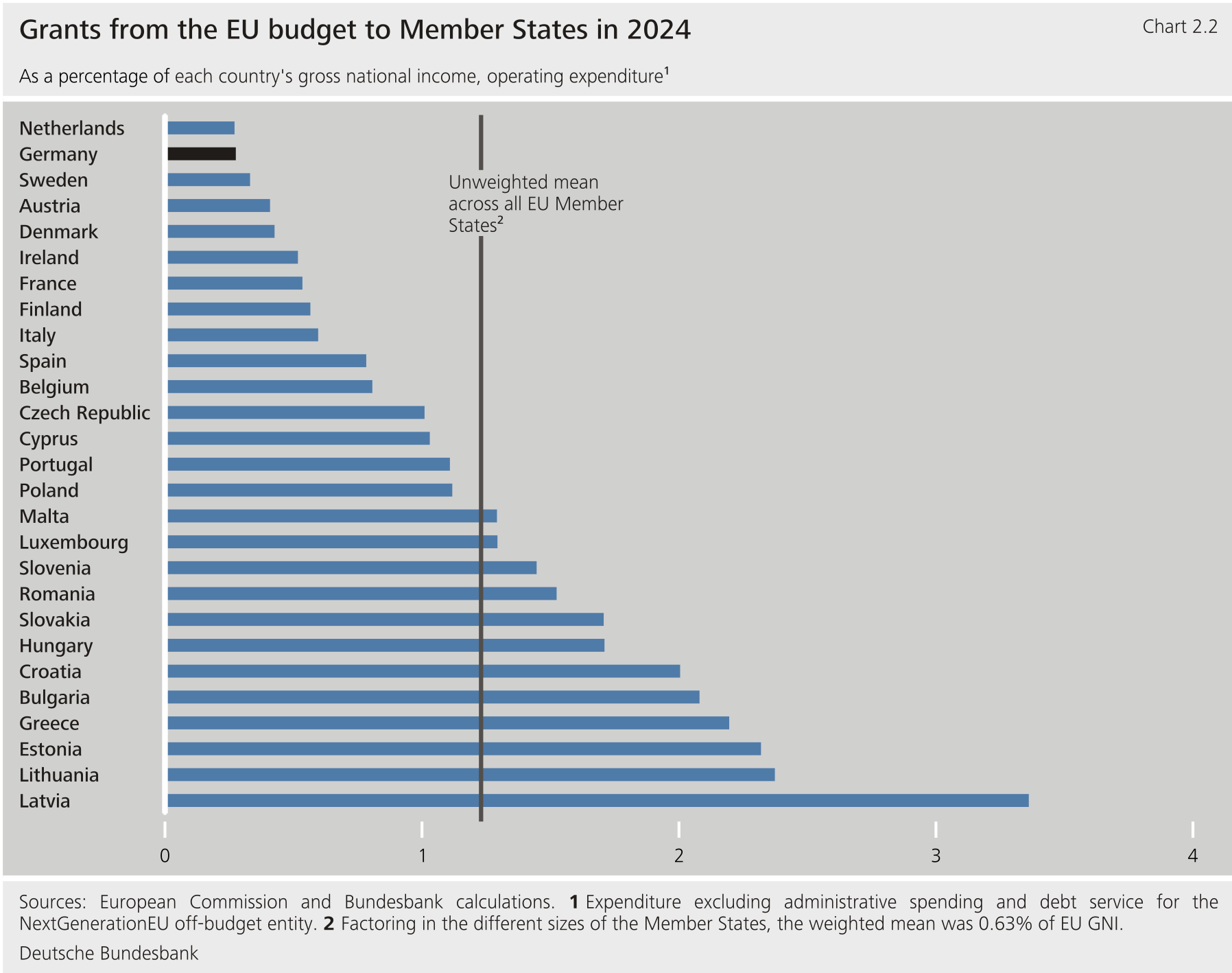
The amounts of spending that went from the EU budget to Member States differed significantly between countries again in 2024 (see Chart 2.2). At just under 3½ % of its GNI, Latvia received the most funds. At less than ½ % of their respective GNI, the least funds went to the Netherlands, Germany, Sweden, Austria and Denmark.
All countries called up significantly less cohesion funding in relation to their GNI than in the preceding years. This is likely to be due to the fact that they primarily made use of funds from the Recovery and Resilience Facility before they expired. Overall, cohesion funding fell from 0.37 % to 0.17 % of EUGNI on average over the period from 2021 to 2023. This decline was particularly large in Hungary and Poland, at 1.7 and 1.4 percentage points, respectively.Cohesion funding in relation to national GNI also fell by more than 1 percentage point in Slovakia, Estonia, Lithuania, Croatia and Romania. In Spain, Italy, Portugal and Slovenia, cohesion funding as a proportion of GNI had already fallen significantly before this time. The aforementioned countries all received above-average amounts of RRF funds. It seems reasonable to assume that the RRF funds replaced some of the cohesion funding, as Member States are required to apply for RRF funds by the end of September 2026, when they are due to expire. Cohesion funding is likely to rise significantly from 2027 at the latest as a result of catch-up effects.
Member States’ payments into the EU budget came to €128 billion in 2024. On (unweighted) average, Member States paid just over 0.7 % of their respective GNI into the EU budget (see Chart 2.3). In line with the lower expenditure, the payments into the EU budget were also somewhat down compared with the average of the previous years. The gap between the countries with the lowest and highest payments was just under 0.4 percentage point. This was thus roughly on par with other years. As usual, the largest share was attributable to GNI-based own resources (€95 billion). Customs revenue amounted to €21 billion.
1.2 NGEU in 2024
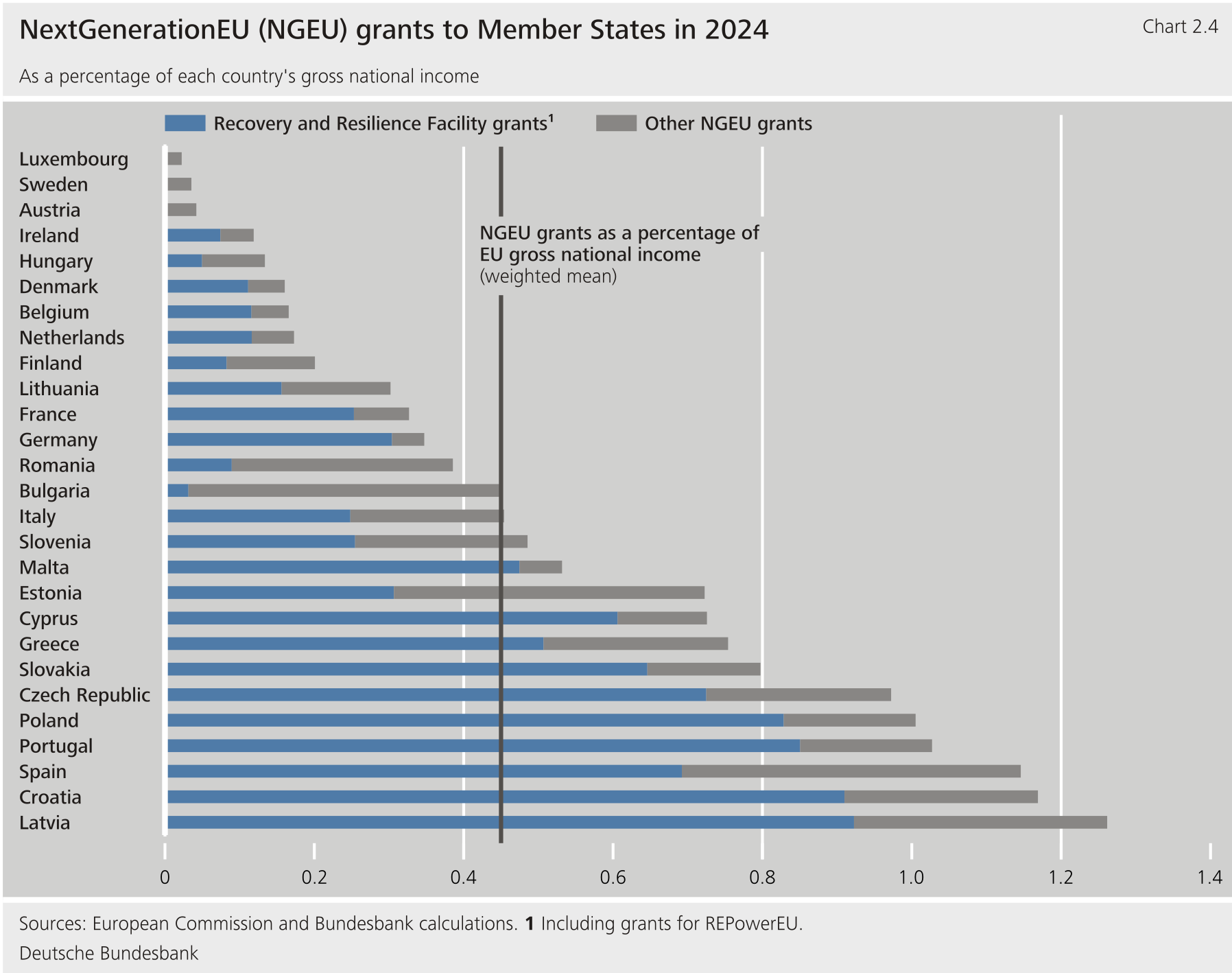
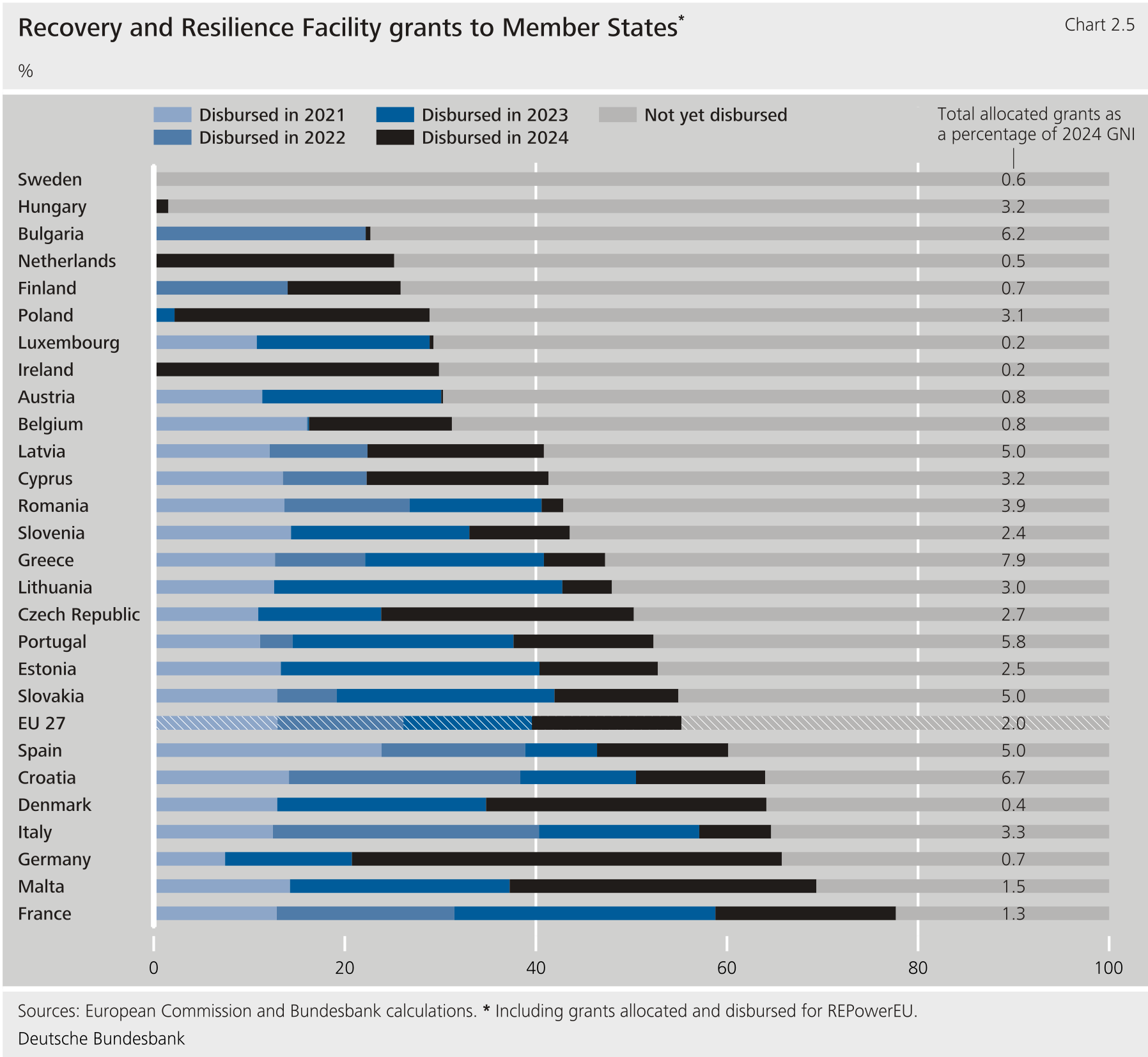
In 2024, disbursed NGEU grants totalled €80 billion, or just under 0.5 % of EUGNI (see Chart 2.4), with €56 billion of this figure attributable to the RRF (including REPowerEU). Latvia, Croatia and Spain received the most funds in relation to their respective GNI (between 1.5 % and 1.3 %), while Luxembourg, Sweden and Austria each received less than 0.1 %. These differences are due not only to the varying levels of the allocated grants, but also to the fact that Member States apply for RRF grants in larger blocks and, in some cases, at irregular intervals (see Chart 2.5).
Overall, 16 % of the allocated RRF grants were disbursed in 2024 (see Chart 2.5). This was up somewhat on the previous years (13 % each). Again, there were significant differences between countries. Four countries did not call up any or any significant portion of their allocated funds (Sweden, Austria, Luxembourg and Bulgaria), while Germany called up the most, at 45 %. The Netherlands, Hungary and Ireland received RRF funds for the first time in 2024.
Out of the total RRF grants available, 55 % have been disbursed to Member States since 2021. Outflows will need to accelerate further to prevent the funds from expiring, because the European Commission is allowed to disburse them only up until the end of 2026. Germany had been disbursed 66 % of its allocated resources by the end of 2024. In addition, ten further countries had received more than half of their allocated funds by the end of 2024 (Czech Republic, Portugal, Estonia, Slovakia, Spain, Croatia, Denmark, Italy, Malta and France). Sweden is the only country not to have been disbursed any funds by the end of 2024. However, Sweden, too, received its first payment in July 2025. 6
1.3 Net contributions in 2024
Looking at the EU budget and NGEU as a whole, ten countries were net contributors in 2024 (see Chart 2.6 for the individual countries, broken down into EU budget and NGEU). The largest net contributions were from Austria, Sweden and Ireland, at more than 0.5 % of their respective GNI. Germany was also a net contributor. However, it did not rank among the frontrunners in 2024, as it received a significant portion of its RRF grants. The German net contribution to NGEU was therefore low. Seventeen countries were net recipients from the EU budget and the NGEU off-budget entity. Among these, Latvia received the highest net grants at almost 3½ %, followed by Croatia, Estonia and Greece at around 2 %.
2 Outlook for the next multiannual financial framework
In July, the European Commission published a package of initial comprehensive proposals for the multiannual financial framework for 2028 to 2034. 7 Now, the Member States and the European Parliament must draw up a position on this. As the new financing period does not begin until 2028, an agreement is not to be expected before 2027. The European Commission’s package contains detailed proposals regarding the scope and structure of future spending programmes. It also outlines how the Member States would finance these in the future. In addition, there are plans for the European Commission to be able to take on additional joint EU debt in crisis situations, for which the Member States would bear liability via the EU budget. Selected aspects of the European Commission’s proposals are described below.
2.1 More funds needed to service debt for NGEU loans
The European Commission is proposing to increase the maximum scope of the EU budget from up to 1.13 % of EUGNI per year at present to 1.26 %. 8 This increase is needed mainly for servicing NGEU debt. For the period from 2028 to 2034, a total EU budget of €1,763 billion 9 is envisaged. The European Commission is budgeting €150 billion to service NGEU debt (just under 9 % of the envisaged funds). 10 This will be used for interest and repayments.
The spending set out in the multiannual financial framework is intended to take account of greater fluctuations in inflation in future. Spending is normally set out for the entire planning period in constant prices of a given base year. This base year is 2018 for the current financial framework and 2025 for the next one. In order to take account of inflation, these figures have thus far been extrapolated at 2 % annually, irrespective of the actual rate of inflation. The European Commission wants to adjust this approach in the event of particularly high or particularly low inflation rates. It is proposing to apply the actual rate of inflation if it is above 3 % or below 1 %. 11 This would be likely to stabilise expenditure in relation to GNI.
Supplementary information
Development of deficits and debt at the EU level
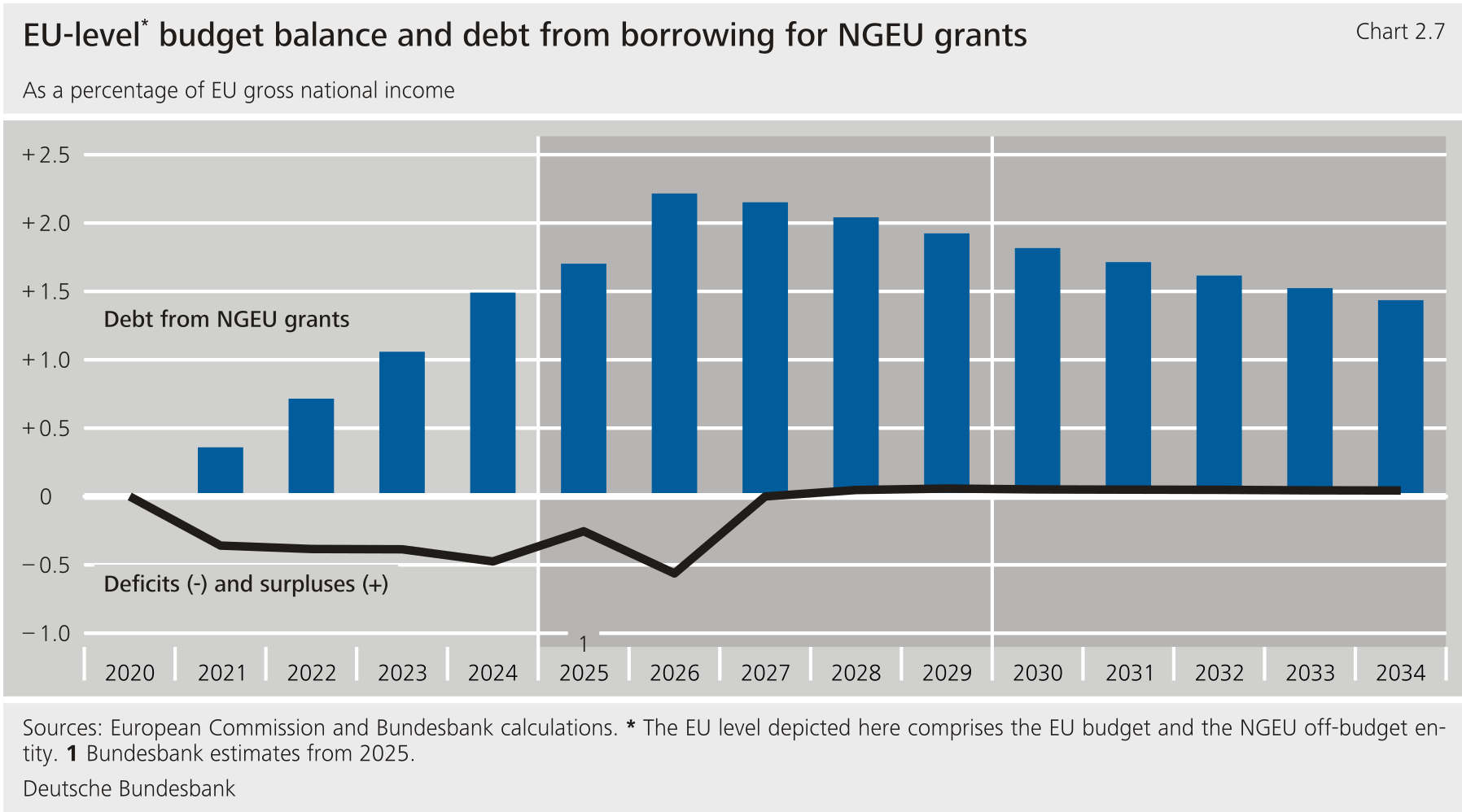
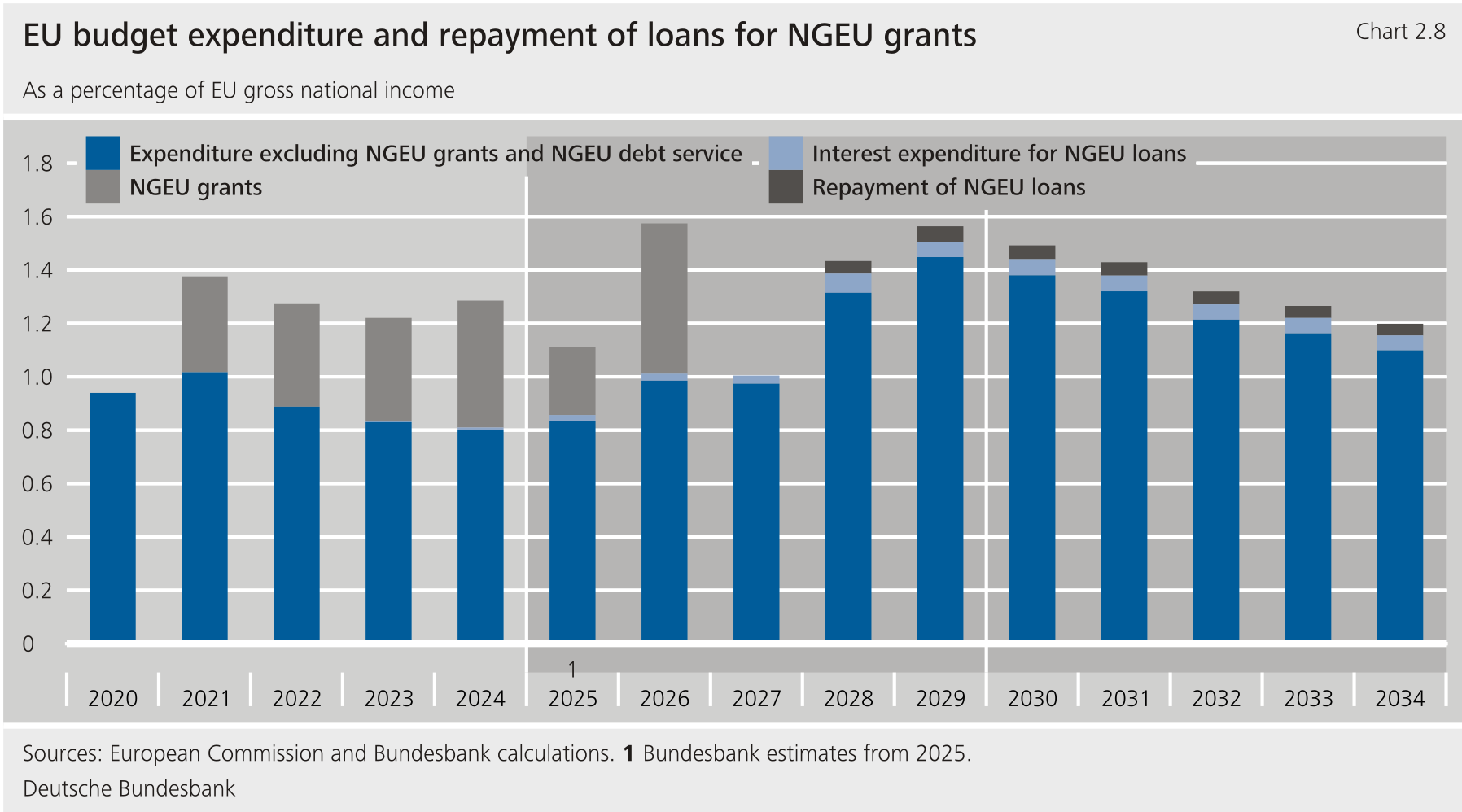
The EU budget is fundamentally balanced and posts no deficits. Due to NGEU, however, the EU level temporarily records deficits, followed later by surpluses for repayments. As an exception, NGEU grants result in deficits at the EU level in the period from 2021 to 2026 (see Chart 2.7). 1 At the end of the 2026 disbursement period, the NGEU debt in question is likely to amount to around 2.2 % of EU gross national income (GNI). From 2028 onwards, the debt taken on for this purpose will be gradually repaid. To this end, the EU budget will need to achieve surpluses over a large number of years. The EU debt ratio will then fall again (partly due to rising GNI in the denominator). The interest burden arising from the accrued debt will prospectively amount to less than 0.1 % of EUGNI annually until the end of the next financial framework in 2034 (see Chart 2.8).
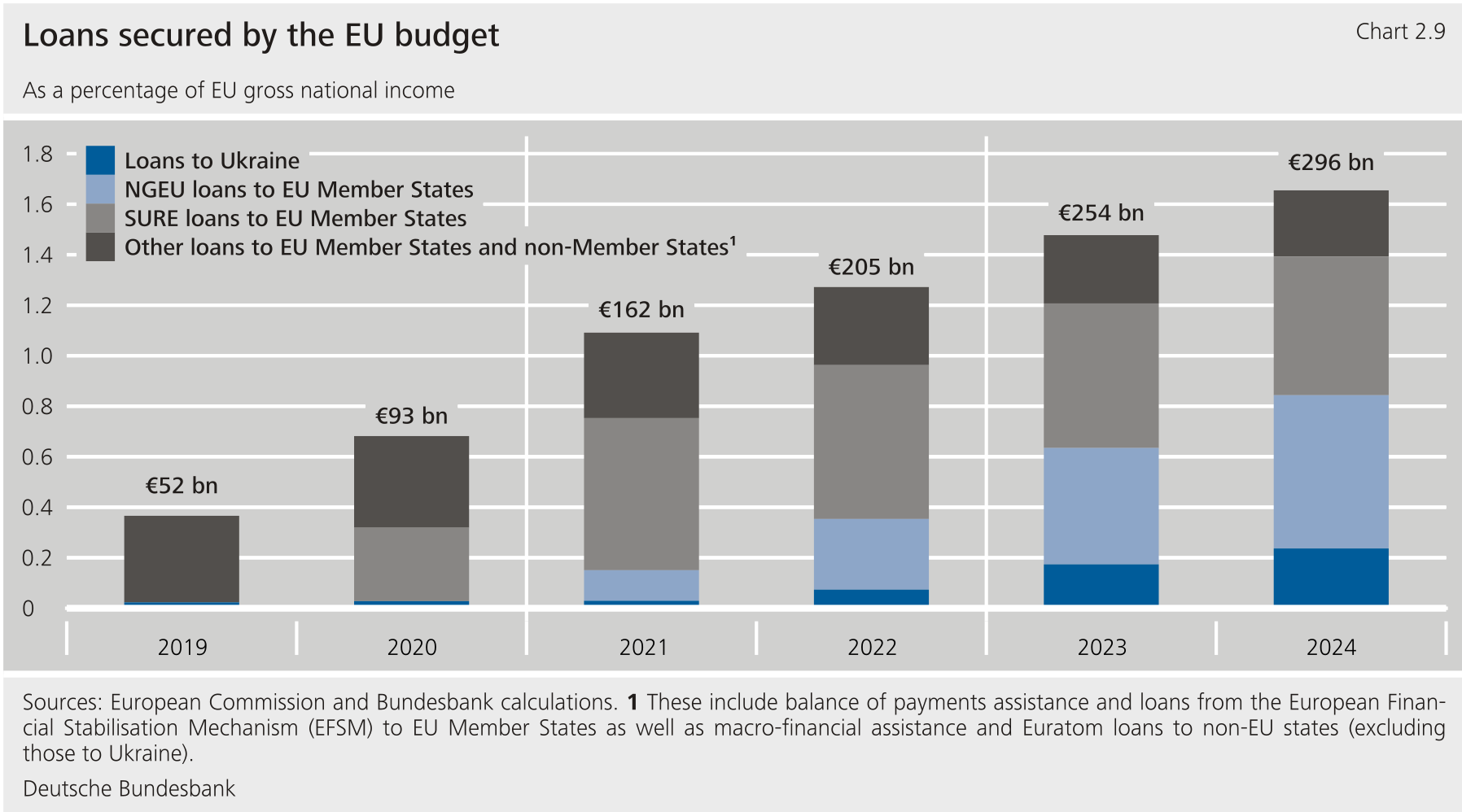
In addition to debt taken on for grants, the EU is increasingly borrowing for loans to Member States and Ukraine. 2 In this context, the greater debt is offset by the larger claims from the issued loans, meaning that it does not result in deficits. As early as 2019, these debts and claims amounted to €52 billion, or almost 0.4 % of EUGNI (see Chart 2.9). These mainly comprised loans from the European Financial Stabilisation Mechanism (EFSM) as well as macro-financial assistance to non-EU countries. The latter accounted for just under €5 billion of this figure. It also includes two lending programmes to Member States that were introduced during the coronavirus pandemic: the EU'sSURE short-time work scheme from 2020 onwards and NGEU loans from 2021 onwards. By the end of 2024, these two lending programmes represented the largest share of the outstanding loans, accounting for 1.2 % of EUGNI. In addition, loans to Ukraine have been gaining significance since 2022. At the end of 2024, they totalled around €40 billion, or 0.2 % of EUGNI. Overall, by the end of 2024, the volume of loans secured by the EU budget had risen to just under €300 billion (1.7 % of EUGNI).
From 2026, there will be an additional €150 billion in loans for the EU’s new Security Action for Europe (SAFE) debt instrument.SAFE is part of the “Readiness 2030” initiative adopted by the Council at the end of May 2025. 3 The loans earmarked for this purpose are intended to fund up to €150 billion of investment in defence capabilities. These loans, as well as those mentioned above, will not represent a burden on the EU budget if the credit claims are serviced as planned. The interest payments on own debt are offset by the interest income from credit claims.
2.2 New focal points for spending
In the negotiations for the next multiannual financial framework, the Member States can adjust the focal points of spending in the EU budget towards new challenges. Thus far, a large share of expenditure has been attributable to agricultural policy and cohesion policy. The spending on agricultural policy focuses on supporting farmers’ income, while cohesion policy aims to promote economic convergence within the EU. As a result, the funds for these two areas of activity go mainly to the economically weaker Member States. In the current financial framework, these areas account for two-thirds of total expenditure.
The European Commission’s proposal would strengthen the areas of research, infrastructure and defence (see Chart 2.10). It envisages a larger share of funds being allocated to these areas. In addition, the European Commission wants to pool these areas under one category in future. Within an ongoing financial framework, it is easier to move spending between different areas in the same category. The European Commission is proposing to allocate 0.37 % of EUGNI to this new category. 12 This is double the amount compared with the current financial framework. The amount spent on defence would rise particularly sharply, from 0.01 % in the current financial framework to 0.08 % of EUGNI in future. In addition, the areas of external action and migration, security and border protection would also be strengthened.
By contrast, the European Commission is proposing significantly less funding for agricultural policy, while funding for cohesion policy would remain virtually unchanged. The share of funding for agricultural policy in EUGNI would be reduced by half to just under 0.2 %. However, funding for cohesion policy would remain virtually unchanged at 0.34 %. For the purposes of this comparison, the funds that are to be allocated to the area of research, infrastructure and defence in future are excluded from the current financial framework. Administrative expenditure would also remain practically unchanged at 0.08 % of EUGNI.
In the areas receiving greater focus, there are good reasons for implementing expenditure on a joint European basis. Undertaking major research and infrastructure projects in a centralised way offers advantages, such as through economies of scale or if they would be unfeasible at the national level. In the areas of external action and migration, a joint European approach is likely to be more effective than solo efforts by individual national governments. In the area of border protection, joint protection of the EU’s external borders makes sense due to freedom of movement within the EU. Furthermore, network and external effects, in particular, speak in favour of also stepping up activity for climate protection and safeguarding the supply of energy at the European level. However, in each case, it is important to review whether this would bring benefits compared with purely national approaches. By contrast, agricultural policy and cohesion policy largely comprise grants to Member States without any particular European connection. If the primary intention here is redistribution between the Member States, this could be implemented in a more transparent way.
In defence policy, more intensive cooperation and collaboration in Europe appears urgently needed. Since Russia’s invasion of Ukraine, the Member States have undertaken to increase their defence capabilities. 13 A joint approach would be essential in many areas. This is the case, for instance, with large-scale armament projects promising Europe-wide protection. It would also undoubtedly make sense to coordinate weapons systems so that Member States are able to deploy them easily and jointly should the need arise. At the same time, it is also important to involve non-EU countries that have similar security and defence interests, such as the United Kingdom. And, not least, it is necessary to find suitable decision-making and financing structures that facilitate a well-coordinated and swift approach. It remains to be determined which role the existing EU structures will play in this regard. New coordination instruments should be considered if they are better able to guarantee more efficient defence. Generally, multiple factors suggest that essential ongoing defence spending should not be funded by debt, but by current revenue.
2.3 Changes to the funding structure
The European Commission is proposing five new own resources for funding the EU budget that would yield a total of €44 billion each year (0.25 % of EUGNI). 14 These are:
own resource based on the volume of uncollected electrical and electronic waste (€15 billion);
own resource based on excise duty on tobacco (€11.2 billion);
own resource based on the emissions trading system (30 % of national ETS1 revenues; €9.6 billion);
a lump-sum progressive contribution based on the amount of net revenue of large companies with net annual turnover in excess of €100 million (€6.8 billion);
own resource based on the carbon border adjustment mechanism (75 % of national CBAM revenues; €1.4 billion).
The European Commission also wants to adjust and, in some cases, simplify the existing own resources. It is proposing three changes to the existing own resources:
The share of customs revenue that Member States retain as collection costs for the customs revenue that they levy is to be reduced from 25 % to 10 %. This is intended bring them more into line with the actual collection costs, which are likely to be well below 25 %. This high level of reimbursement primarily benefits the Netherlands and Belgium. These two countries, with their large international ports, regularly accrue an above-average share of the EU’s customs revenue. 15 To this extent, the high reimbursement of collection costs represent a hidden rebate.
In order to increase transparency in the calculation of own resources, country-specific correction mechanisms are to be abolished.
The rate of call for the plastics own resources is to be increased in order to take account of inflation developments.
New own resources do not reduce the financing burden on the Member States. The impression is sometimes conveyed that new own resources would relieve Member States because their contributions would be lower. However, in most cases, the Member States surrender part of their national tax revenue to the EU. This would be the case with the proposed tobacco own resource, for example. In other cases, the Member States would forego their own options for taxation. For instance, while the proposed corporate resource would not be levied at the national level, it would increase the burden on domiciled companies. In any case, the financial burden would be borne by the citizens of the Member States.
The proposed adjustments to the existing own resources would simplify the system of own resources. This is to be welcomed. However, new own resources would likely entail new rebates and reduce the transparency of the system of own resources again. The EU budget could be funded in a significantly simpler and more transparent manner via the GNI-based own resource alone. The wide range of correction mechanisms and hidden rebates mean that the system of own resources is complicated and lacks transparency overall. They are the result of political negotiations and also reduce the financial contributions of some countries at the expense of others. The proposed new own resources would also shift the financing burden between the Member States. These effects are relevant for negotiations and could, in turn, entail new demand for rebates. Otherwise, Member States that would incur higher contributions as a result of changes to the system of own resources would likely have only very limited acceptance for such changes. Ultimately, it is to be expected that Member States will continue to finance the EU budget roughly in line with their GNI shares in future, too. It therefore makes sense to switch financing to this simple and transparent benchmark entirely.
There are many arguments for allocating revenue from the ETS trading system and the carbon border adjustment mechanism to the European level as well. This is already the case for customs revenue. This revenue results from the joint European customs policy, whereby the customs revenue accrued is collected by the Member States, particularly in countries with large international seaports. To compensate costs incurred at the national level, the Member States receive a flat-rate reimbursement of their collection costs (25 % of customs revenue). A similar procedure would appear to make sense for the revenue from the ETS trading system, too. This revenue results from the joint European climate policy. At present, ETS revenue is allocated to the Member States roughly in line with their historic carbon pollution shares. However, the arguments for this allocation method do not seem very convincing, as the damage caused by carbon emissions does not stop at national borders. By contrast, allocation to the EU level is already envisaged for revenue from the carbon border adjustment mechanism. This mechanism will apply from 2027 and impose duties on imports for products that do not yet contain a carbon price component comparable to the ETS. As is already the case for customs duties, three-quarters of the revenue will go to the EU budget.
2.4 National reform plans
The European Commission wants to agree plans with the Member States bilaterally and deploy selected EU budgetary resources for these in future. 16 To this end, the Member States would present national and regional partnership plans that also contain investments and reforms. These plans would cover all areas for which pre-agreed resources exist – agricultural policy, cohesion policy, and migration, security and border protection. 17 The national plans would also contain investments and reforms. The disbursement of the funds would be tied to Member States implementing the promised reforms and achieving milestones as agreed.
Amongst other things, the European Commission expects this would enable it to deploy financial resources more closely in line with the EU’s political priorities. However, it does not appear certain that this will succeed. Instead, it is expected that this would harbour significant bureaucratic burdens. This is indicated, not least, by experiences with the RRF, for which the Member States likewise negotiated plans with the Commission. The European Court of Auditors has pointed out the weaknesses of the RRF on multiple occasions: the RRF resources were not deployed sufficiently effectively for the targeted objectives in the areas of digital and green transformation. 18 Funds were also able to be disbursed without the Member States having implemented the agreed objectives. In general, the European Court of Auditors takes a critical view of the fact that the European Commission reimburses costs that have not actually been incurred. Instead, the funds are disbursed as planned if the Member States achieve the agreed milestones. However, the European Court of Auditors does not consider these to be sufficient. 19 Irrespective of this, a stronger, broad-based influence of the European Commission does not generally seem to make sense. There is much to be said for focusing on policy areas that actually have a strong European connection, such as the single market or joint climate policy.
2.5 New leeway for joint debt
The European Commission’s proposal allows for more leeway for joint debt of up to €645 billion (3.6 % of 2024 EUGNI). 20 The European Commission wants to include some of the joint debt as a fixed part of the budget. This would be disbursed as loans to the Member States (€150 billion) and to Ukraine (€100 billion). In addition, up to €395 billion would be made available for a precautionary crisis mechanism. This would be used to grant loans to EU Member States in the event of a crisis. 21
The own-resources ceiling would rise in order to secure the joint borrowing. This ceiling determines the extent to which Member States can be called upon to fund the EU budget each year (as a proportion of their respective GNI). Its spread against the expenditure ceilings set out in the financial framework serves as a financial buffer. This buffer can be used in the event of unforeseen developments. In addition, it also secures the servicing of EU debt used to grant loans via the EU budget. As long as this EU debt is used to fund loans to Member States and other countries, the debt is, in principle, serviced by the borrowing countries (interest and repayments). If, however, a borrower defaults, all of the Member States bear liability up to the agreed own-resources ceiling.
The own-resources ceiling would rise from a regular 1.4 % to 1.75 % of EUGNI. This would also secure additional EU borrowing of up to €250 billion (1.4 % of 2024 EUGNI). The proposed increase of the own-resources ceiling is attributable to the larger scope of the EU budget only to a limited extent. Instead, it would serve more to increase the buffer, enabling additional new joint debt to be secured. The European Commission wants to use this to finance loans – €100 billion to Ukraine and €150 billion to the Member States. The latter would feed into the new Catalyst Europe instrument, which is intended to supplement the partnership plans with a loan component. This would mean that Member States would also be able to apply for loans in addition to the grants envisaged in the bilaterally agreed plans.
Furthermore, in the event of a crisis, it would be possible to raise the own-resources ceiling by a further 25 percentage points on a temporary and earmarked basis. 22 This is intended to secure any potential further joint borrowing in the event of a crisis, as described above. The Council would decide when to deploy this crisis measure and how it would be structured. The European Parliament would have to grant its approval. If the Council were to activate the crisis measure, it would authorise the European Commission to borrow up to €395 billion on the capital market (2.2 % of 2024 EUGNI). These funds would be available to the affected Member States in the form of loans in order to mitigate the impact of the crisis. These kinds of loans are attractive for Member States with higher financing costs. They would benefit from more favourable interest rate conditions compared to those on the market. As the funds would be disbursed exclusively as loans, the borrowing Member States would, in principle, be liable for interest and repayments. However, the other Member States would have to secure the joint borrowing in the EU budget by means of a higher own-resources ceiling earmarked for this purpose.
This kind of precautionary crisis mechanism does not appear to make sense in view of the existing crisis architecture. The European Commission wants to enable the EU to provide financial assistance to Member States more easily in the event of a crisis than has been possible thus far. However, the euro area already has the European Stability Mechanism. Additional provisions for crises in the EU budget therefore do not seem necessary.
European Commission (2025a), Consolidated annual accounts of the European Union: 2024 Integrated financial and accountability reporting, Publications Office of the European Union, 2025.
European Commission (2025b), A dynamic EU budget for the priorities of the future – The Multinational Financial Framework 2028‑2034, COM(2025) 570 final, Brussels, 16 July 2025.
European Commission (2025c), Proposal for a Council Decision on the system of own resources of the European Union and repealing Decision (EU, Euratom) 2020/2053, COM/2025/574 final, Brussels, 16 July 2025.
European Court of Auditors (2025a), Support from the Recovery and Resilience Facility for the digital transformation in EU member states – A missed opportunity for strategic focus in addressing digital needs, Special report 13/2025.
European Court of Auditors (2025b), Performance-orientation, accountability and transparency – lessons to be learned from the weaknesses of the RRF, Review 02/2025.
European Court of Auditors (2024), Green transition – Unclear contribution from the Recovery and Resilience Facility, Special report 14/2024.