In the October 2025 Monthly Report, one article looks at the finances of the European Union, examining Member States’ financial relationships with the EU in 2024 as well as the multiannual financial framework for the period from 2028 to 2034. In another article, authors analyse the effects of global uncertainty on international portfolio flows.
Monthly Report – October 2025 Vol. 77 No 10
Monthly Report
The fiscal position of state governments, and especially their local governments, worsened significantly in 2024. However, the combined deficit of €43 billion (1 % of GDP) was partly the result of one-off factors and was markedly lower in structural terms (€25 billion). The situation at the local government level is especially strained: the bulk of the overall structural deficit is here, and expenditure rose sharply across the board. There are no signs of this changing much this year.
In 2024, the financial positions of the individual state governments (including local governments) again varied greatly. Rhineland-Palatinate and Thuringia recorded surpluses. The city state of Bremen closed the year with a particularly large per capita deficit despite receiving a large amount of budgetary recovery assistance from central government. Bremen also recorded by far the highest per capita debt amongst all state governments, while Saarland, the other recipient of recovery assistance, recorded the highest per capita debt among the non-city states. The lowest per capita debt was recorded in Saxony and Bavaria. State governments have made varying use of emergency funds in recent years. Bremen was by far the biggest such borrower (in per capita terms), followed by Saarland. This means that their debt is not converging with that of the other federal states, which is the actual intended aim of budgetary recovery assistance.
Thanks to the debt brake reform, state governments have further fiscal leeway and receive investment grants from the new central government special fund. This leeway to spend is not ring-fenced, and investment grants will not be reserved exclusively for additional investment. However, the reason for reforming the Basic Law was to address the major challenges with respect to infrastructure. It is strongly recommended that state governments use this new scope primarily to further strengthen their investment activity and that of their local governments. In day-to-day running, it would make sense to review cost efficiency and, in the process, boost digitalisation. To make digitalisation work more efficiently, it is a good idea to adopt a common approach across all federal states. This could also alleviate anticipated staff shortages.
Greater scope for borrowing makes fiscal surveillance even more important. This applies especially to those federal states that are already very highly indebted. However, it is still difficult to take stock of and compare state government finances and results under state-specific debt brakes. The onus remains on the Stability Council to closely monitor budgets and increase transparency.
Local governments’ fiscal positions are at risk of coming under further strain. If fundamental adjustments are not made, room for fiscal manoeuvre will shrink further and many local governments will likely find themselves back in increasingly difficult situations with sizeable cash advances. State governments bear much of the responsibility for their local governments’ finances. If tougher consolidation requirements as an instrument of budgetary oversight are insufficient or do not appear workable, state governments need to allocate more funding to their local governments. It is also worth considering only allowing local governments to take out cash advances from their own state government and making sure that said state government counts those advances towards its borrowing limit. This setup would reflect the responsibility borne by state governments and provide incentives to promptly address strained local government finances.
1 Federal state aggregate: large structural deficit at local government level
The financial situation of state governments, and especially their local governments, worsened significantly in 2024. This regular report on state government finances takes a closer look at the figures. It also shines a light on the outlook for the current year and the new scope for borrowing. Two comprehensive tables provide a detailed overview of budgetary figures for 2024 (Table 4.2) and how these changed against 2023 (Table 4.3). These contain extensive information on the individual federal states. Annex 1 explains how the data were prepared and what shortcomings remain. Some of the footnotes in this report contain more detailed technical notes or information on specific developments in individual federal states.
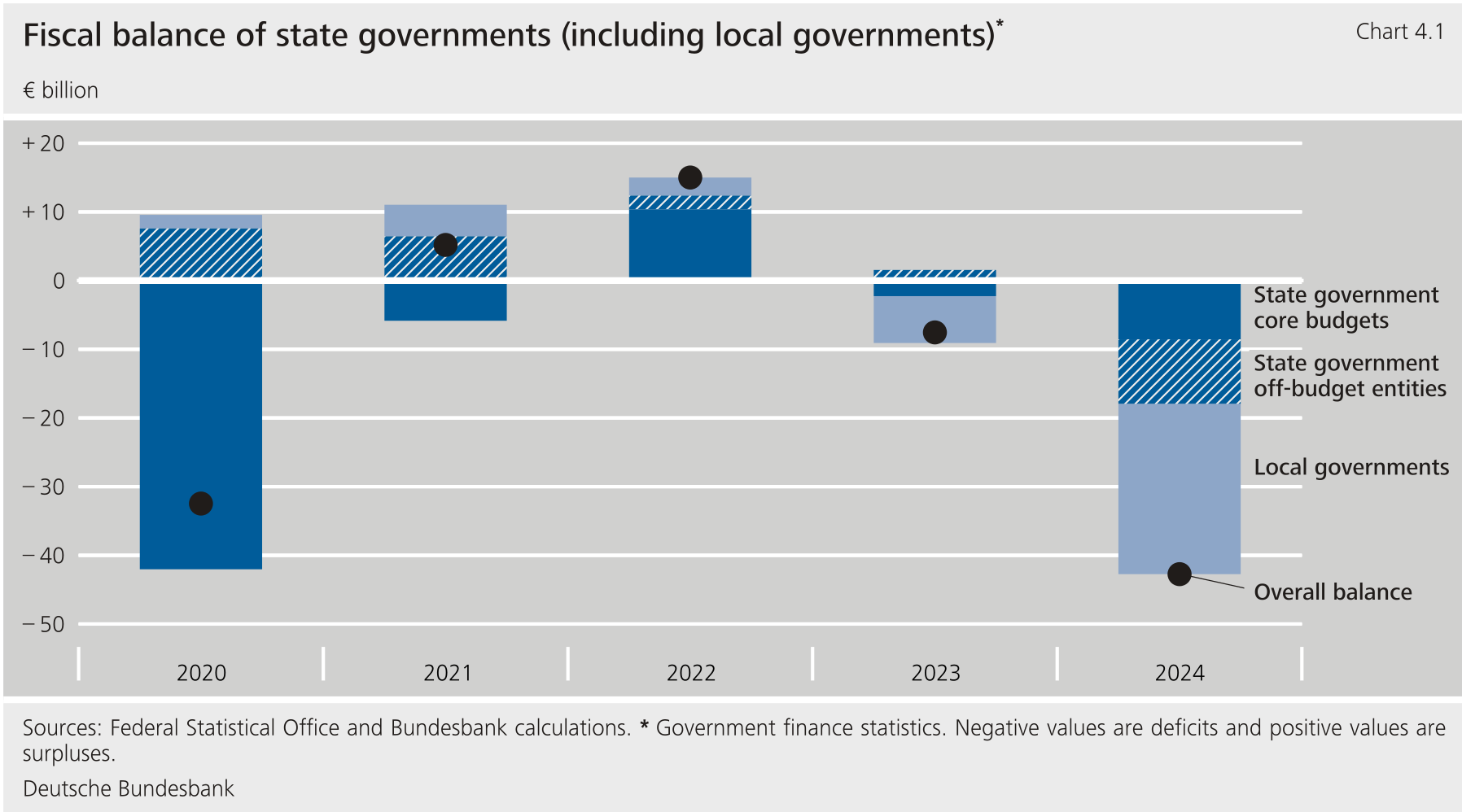
State and local governments reported a large unadjusted deficit of €43 billion (1.0 % of GDP) in 2024. The state governments accounted for €18 billion of that amount. This deficit was spread almost equally across their core budgets and off-budget entities. The local governments (of non-city states) recorded an even larger deficit of €25 billion (see Table 4.1, item 1 and Chart 4.1).
The (unadjusted) deficit of state governments (including local governments) rose sharply on the year. This was ultimately due to strong expenditure growth of 8 %, spread across many expenditure categories.Personnel expenditure, a major expenditure item, went up by 8 %, bolstered mainly by pay rises but also by increased staffing levels. At 8½ %, fixed asset formation also saw strong growth, and operating expenditure’s upward trajectory was only slightly weaker. However, the reclassification of numerous local transport companies to the government sector continued to have an impact in these three categories. The reason for that change was the introduction of the DeutschlandTicket in the spring of 2023. The reclassification also boosted total revenue growth (+ 3½ %) through additional fee receipts. Tax revenue grew by 3 %. A surge in receipts from withholding tax on interest income and capital gains contributed 1 percentage point. Reduced revenue shortfalls resulting from temporary crisis response measures contributed around half as much. Pressure was felt at the local government level due to the stagnation of local business tax, a major source of revenue.
Table 4.1: Budgetary figures for state governments (including local governments) as a whole € billion
Position
Item no
2021
2022
2023
2024
Fiscal balance
1
5.1
15.0
− 7.7
− 42.7
Financial transactions (net)
2
− 8.5
− 12.2
− 6.3
− 13.3
Settlement of payments under state government financial equalisation scheme
3
0.4
− 0.8
0.0
0.0
Cyclical component1
4
0.7
5.5
9.1
1.2
One-off effects (coronavirus response and energy measures)2
5
− 9.1
− 22.2
− 10.6
− 5.2
Structural balance
6 = 1 – 2 + 3 – 4 – 5
22.4
43.2
0.2
− 25.3
Net interest burden
7
10.2
9.6
9.1
8.9
Structural primary balance
8 = 6 + 7
32.6
52.8
9.2
− 16.4
Sources: Federal Statistical Office and Bundesbank calculations. 1 Cyclical component according to the Bundesbank’s June 2025 Forecast for Germany. 2 Including various minor one-off effects that are unrelated to coronavirus response or energy measures.
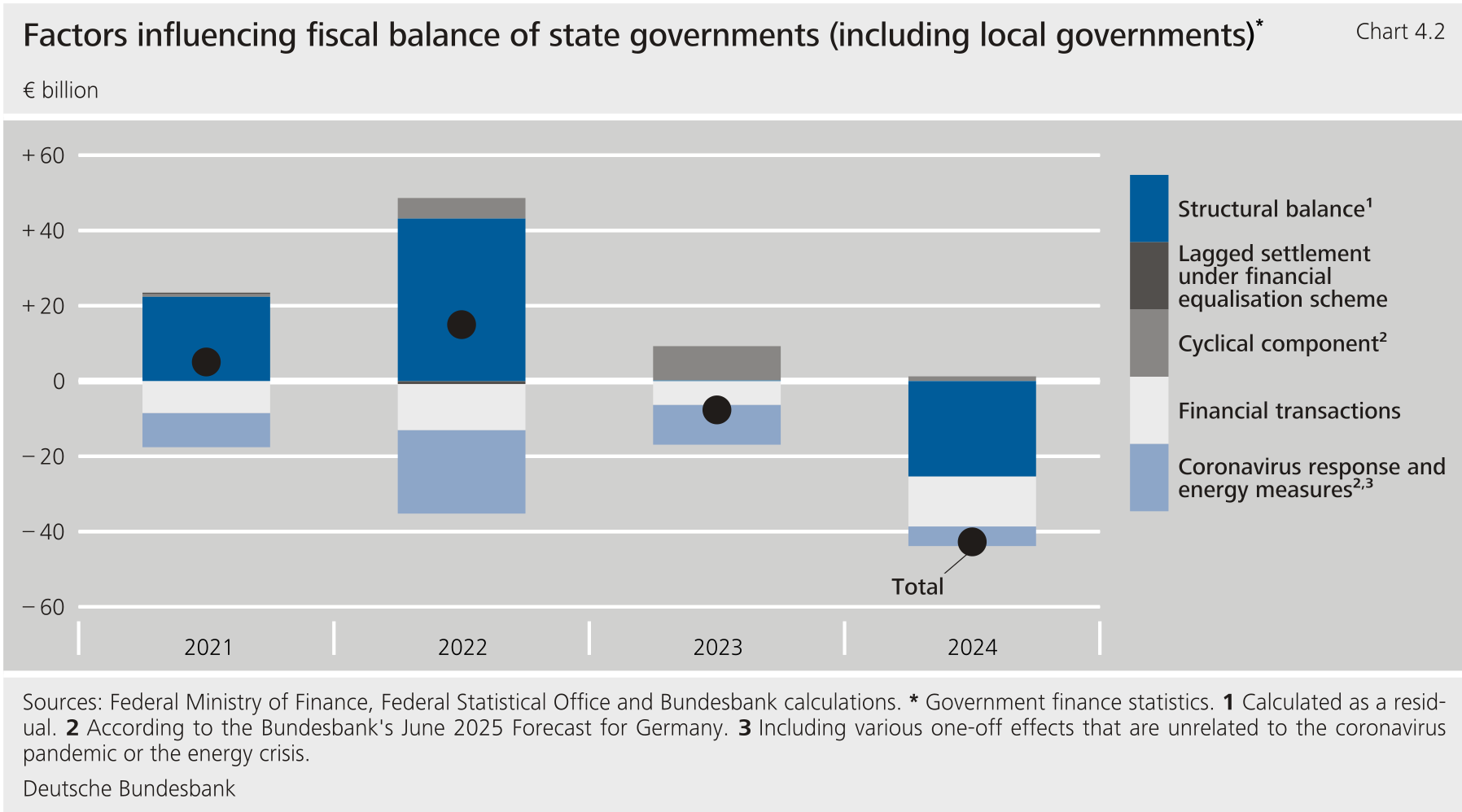
State and local governments also recorded a structural deficit of just over €25 billion. However, this was significantly lower than the unadjusted deficit, and the year-on-year increase was also smaller 1 (see Table 4.1 above, items 2 to 6). Temporary burdens were higher in 2024 than in the year before. As these are factored out when calculating the structural deficit, this rose by less than the unadjusted deficit. The following factors explain why, in net terms, the structural deficit was lower than the unadjusted deficit:
Financial transactions increased the unadjusted deficit by €13 billion. 2 Temporary measures in response to the energy price crisis contributed a further €5 billion (of which, based on a Bundesbank estimate, just over two-thirds stems from the tax exemption of inflation compensation bonuses).
Meanwhile, economic activity still had a slightly positive impact on state and local government budgets last year (€1 billion). No major state-specific, one-off effects were identified, meaning that no adjustment took place. The lagged settlement of payments under the state government financial equalisation scheme (including supplementary central government grants that are dependent on financial capacity) had a marked impact on certain federal states, but not on the aggregate (see Chart 4.2 below for a breakdown of the effects).
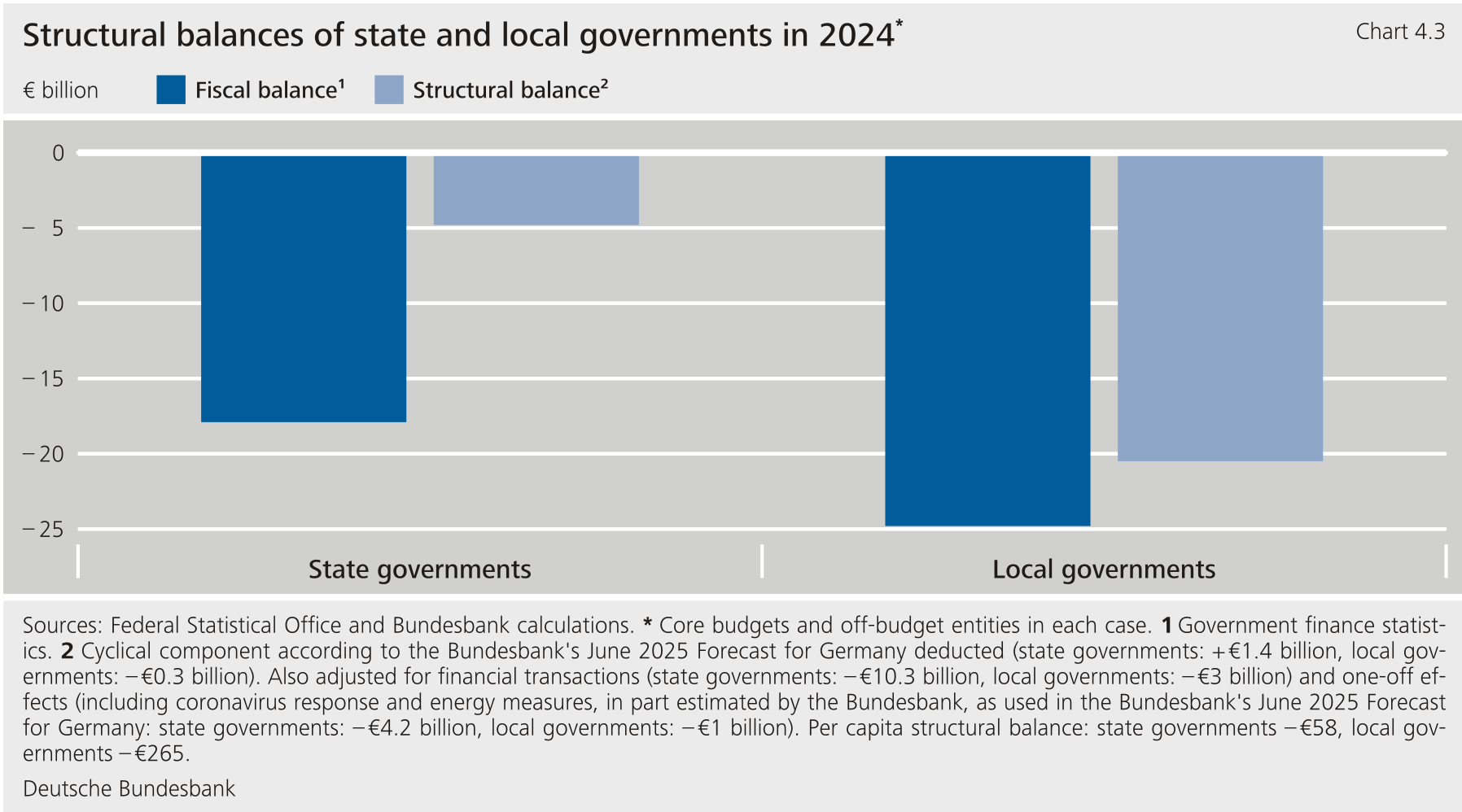
The lion’s share of the structural deficit was attributable to local governments (€21 billion). Their financial situation is particularly strained. The structural deficit at the state government level was relatively small (€4½ billion; see Chart 4.3). 3 A structural deficit at the local government level is not necessarily indicative of any particular budget strains. Budgetary rules for local governments do permit high-performing local governments 4 to run debt-financed deficits for net investment. However, developments in 2024 show that investment expenditure was not the primary cause of rising deficits. These were mainly due to higher spending on social benefits and personnel. At the same time, tax revenue growth remained moderate. 5
The strained state of local government finances is clearly reflected in rising cash advances. 6 Cash advances indicate that budgets are not regularly financed, and they are actually intended only as a temporary source of funding. Cash advances not repaid by the end of the year are therefore a good indicator of budget strains. The volume of cash advances did, in fact, rise markedly throughout Germany in 2024 (after declining or remaining stable between end-2016 and end-2023). Adjusted for Rhineland-Palatinate’s partial debt relief programme, they grew by €5 billion. While that is less than the significantly larger structural deficit, one big reason for this is probably the fact that, alongside still relatively large regular borrowing authorisations, reserves were also available. However, that source of funding will soon dry up due to budgets remaining tight, and the scope for borrowing is likely to narrow. It should be noted that the situation varies from state to state. However, local governments as a whole are unlikely to be able to rebalance their budgets on their own. State governments are jointly responsible for solving financial problems at the local government level (see Chapter 4.4).
2 The situation from state to state: big differences in financial situation 7
2.1 Unadjusted deficits
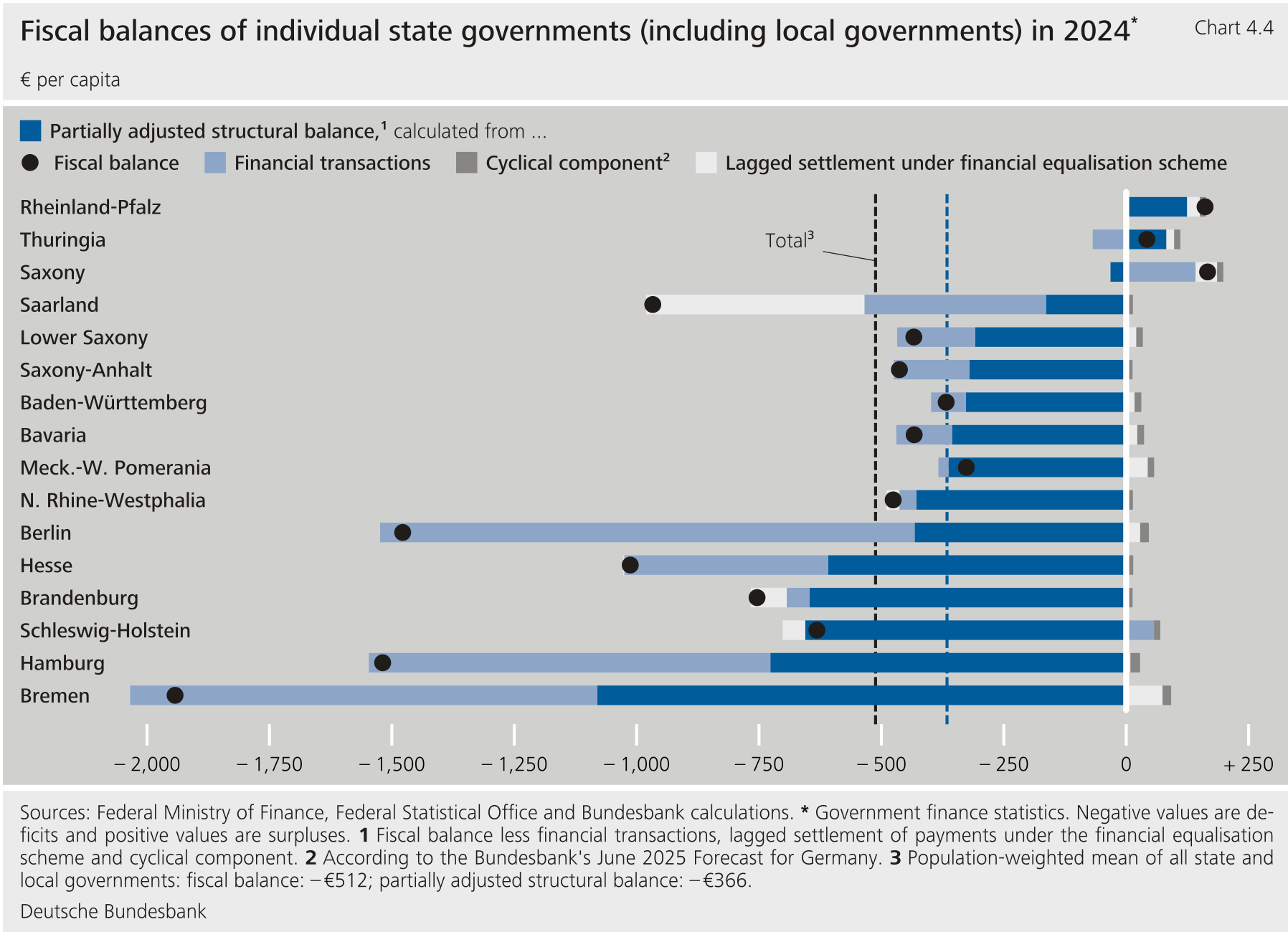
With the exception of three, all state governments recorded an unadjusted deficit in 2024 (including local governments in each case). The range in per capita results was very wide, at just over €2,100. Saxony recorded the highest per capita surplus (€170), closely followed by Rhineland-Palatinate. Thuringia also recorded a per capita surplus. In Rhineland-Palatinate and Thuringia, per capita expenditure was almost €1,000 lower than the average of the non-city states (€9,200). Of these, Hesse recorded the highest per capita deficit (€1,010). By far the highest in Germany was recorded by Bremen, coming in at €1,940. Like Saarland, it has been receiving extensive budgetary recovery assistance of €400 million per year since 2020. This amounted to €570 per capita in Bremen, of which one-fifth is supposed to be used to repay its high legacy debt. However, in view of Bremen having proclaimed an emergency, the Federal Ministry of Finance once again refrained from cutting back on recovery assistance.
2.2 Partially adjusted structural deficits
In structural (partially adjusted 8 ) terms, the deficit in most federal states (in each case, state governments including local governments) was lower than in unadjusted terms, and the disparity between the states was considerably lower (see Table 4.2, item 6). This was mainly due to the adjustment factoring out very large equity acquisitions, particularly in federal states with very large deficits (see Table 4.2, item 2). This applies especially to the three city states (over €820 in Hamburg and Bremen, and as high as €1,090 in Berlin). Among the non-city states, equity acquisitions were a particularly significant factor in Hesse and Saarland (over €370). Equity acquisitions are factored out when calculating the structural balance because the expenditure is accompanied by an increase in financial assets. In some cases, however, the value of that increase appears questionable, though it is not possible to examine this more closely in this report. 9
Year on year, the structural (partially adjusted) result worsened in 14 federal states. The two exceptions were also the only federal states with a positive balance: Rhineland-Palatinate recorded a surplus of €120 per capita, followed by Thuringia. The structural (partially adjusted) deficit averaged across all federal states amounted to €370. Among the non-city states, Schleswig-Holstein recorded the highest such deficit (€660), closely followed by Brandenburg and Hesse. As in the two previous years, Bremen had the highest such deficit in Germany. At €1,080, it was not only well above the figures recorded by the other federal states but also higher than its prior-year figure (+ €610).
The per capita tax revenue of state governments (including local governments) continues to vary significantly. 11 The difference from highest to lowest was €800 for the non-city states. 12 Frontrunner Hesse (just under €6,600) outperformed last-placed Saxony-Anhalt by 14 % (see also Table 4.2, item 19). It should be noted here that Hesse has already transferred €600 per capita under the state government financial equalisation scheme and Saxony-Anhalt has received €1,330 per capita (including supplementary central government grants that are dependent on financial capacity). The remaining deviation is largely due to the fact that the financial equalisation scheme does not fully redistribute funds and only partially takes into account local government revenue. However, the fact that higher tax rates were in place in Hesse (real estate acquisition tax rates and the state-average multipliers for real estate taxes and local business tax) also plays a role, explaining 21 % of the difference.
2.4 Debt and interest burdens
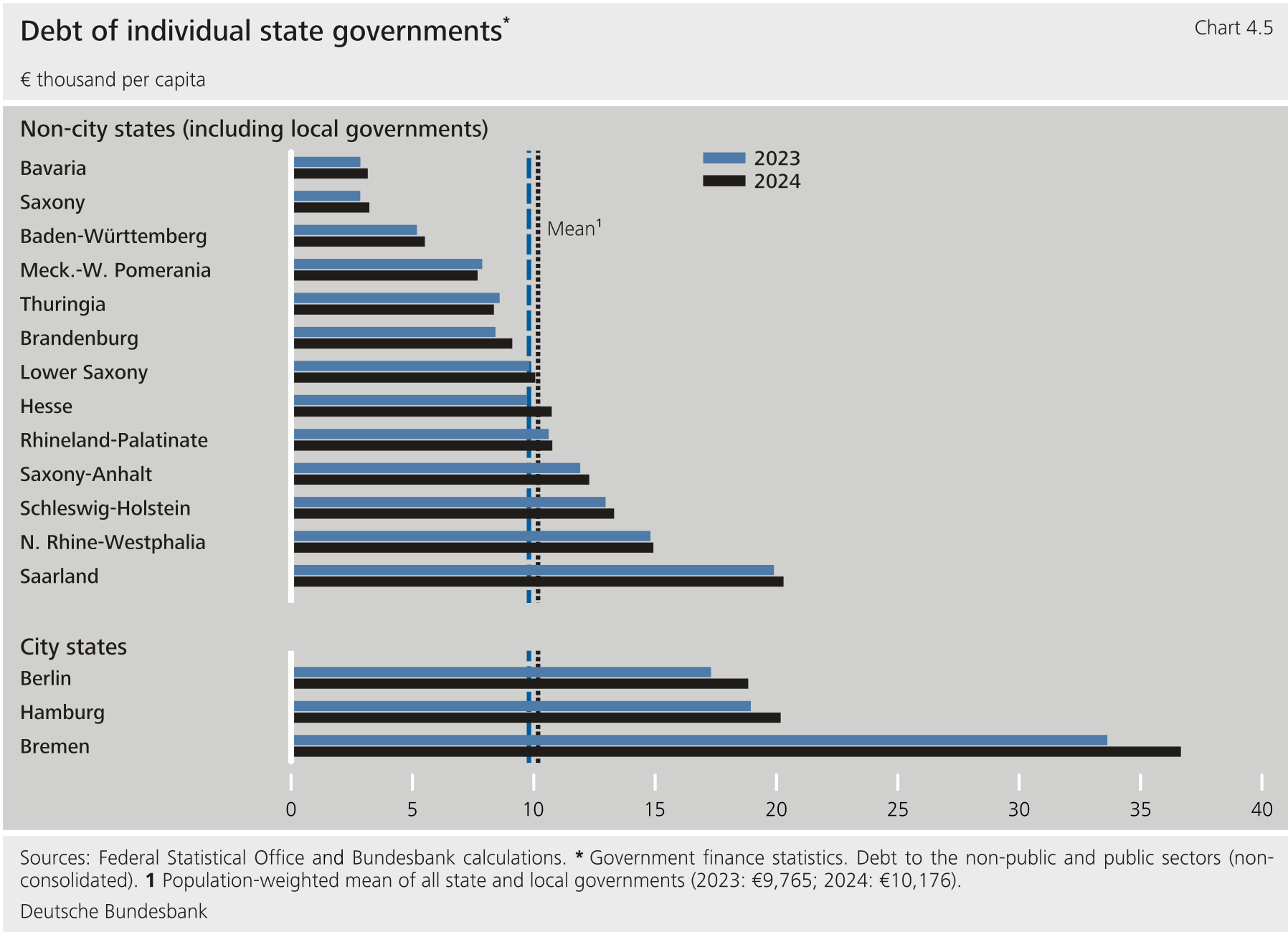
The debt of state and local governments stood at €850 billion (around €10,200 per capita) across Germany. Per capita debt levels continue to differ very widely between state governments (including their local governments). 13 Bremen had by far the highest per capita figure, at €36,700, followed by Saarland with €20,300 and Hamburg with €20,200. Bavaria reported the lowest figure, at just under €3,200, closely followed by Saxony. Per capita debt rose particularly sharply in Bremen (+ €3,000). Far behind this, the next highest rises were in Berlin (+ €1,500), Hesse and Hamburg. Bremen recorded a very large deficit. Its debt level also rose further because of the market value of its extensive interest rate hedges moving negatively. 14
The average interest rate payable on state and local government debt rose on the year across Germany. It went up by 0.2 percentage point to 1.9 % (see Tables 4.2 and 4.3, item 24 in each). Although individual state governments can borrow at similar conditions in the capital market, differences in factors such as borrowing dates, interest rate fixation periods and interest rate hedges result in average interest rates varying.
The highest average interest rate in 2024 was recorded for Bremen. At just under 2.7 %, however, it barely changed on the year. Interest rate hedges lead to relatively high interest costs but prevent a substantial increase. Average interest rates fell particularly sharply in Baden-Württemberg and Mecklenburg-West Pomerania (by 0.6 percentage point in each case). 15 The lowest average interest rates were calculated for Berlin (just over 1.2 %).
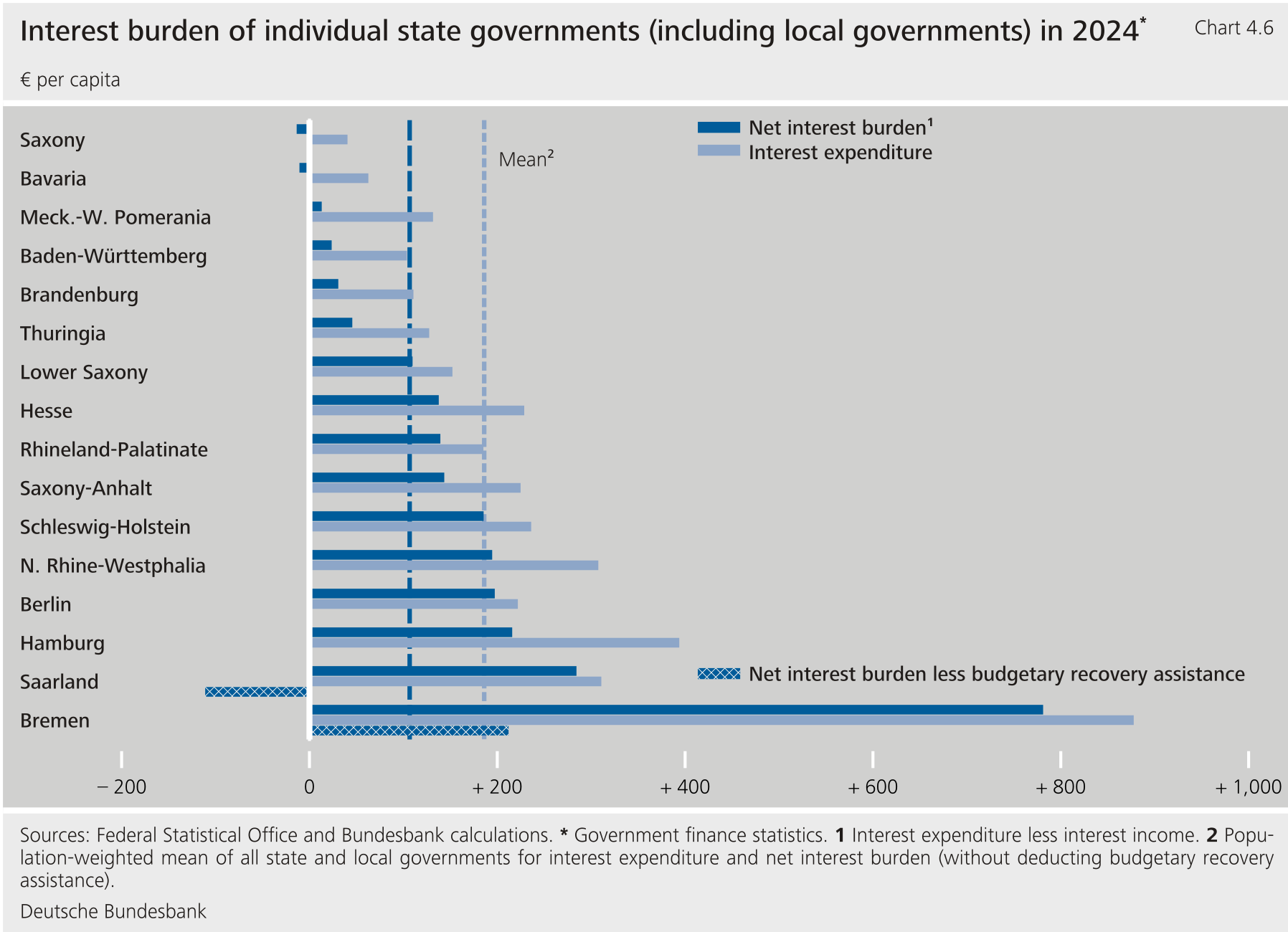
Interest expenditure of state governments (including local governments) continued to rise overall. However, the rise in interest income was slightly stronger still (as in the year before). Net interest burdens (where interest income is deducted from interest expenditure) thus declined. This was mainly due to Baden-Württemberg, which was able to boost its interest income as interest expenditure fell. It was a similar story in Mecklenburg-West Pomerania (net interest burdens of − €60 per capita). By contrast, the largest increase in net interest burdens was recorded in North Rhine-Westphalia. At €30 per capita, however, this figure was still moderate. Bremen recorded by far the highest net interest burdens per capita (€780), followed by Saarland (€280; see Table 4.2, item 7).
The extent to which state governments are constrained by their net interest burden is illustrated by the burden’s relation to tax revenue. Across Germany, the figure stood at just over 1½ %. Bremen recorded by far the highest figure (just under 10 %), followed by Saarland (just under 5 %). However, the effective interest burden of these two states is much lower than signalled by the standard indicator because budgetary recovery assistance is provided by central government: deducting this assistance from the interest burden, Bremen’s net interest burden was 2½ %. This corresponds to the level in Hamburg and Berlin. In Saarland, the adjusted ratio is even negative (almost − 2 %). Central government assistance thus exceeds Saarland’s net interest burdens.
3 State government debt brakes
3.1 Significant differences in cyclical adjustment
There is significant variation between states when it comes to how they factor cyclical effects out of debt brake calculations. Most federal states use a similar method to central government to determine cyclical influences when drawing up the budget. 16 By contrast, some determine the cyclical component completely differently. In some cases, they calculate it as a deviation of tax revenue from a long-term trend. In other cases, meanwhile, they derive a reference level from the recent past and calculate the cyclical component as a deviation from that level. 17 Bavaria is the only state that still completely refrains from cyclical adjustment. North Rhine-Westphalia, by contrast, made use of cyclical adjustment for the first time in 2024, thereby creating additional scope for borrowing.
Taken together, the federal states factored out cyclical burdens totalling €7½ billion for 2024. However, the different procedures used mean that the cyclical influences taken into account differ considerably in each case. This is in spite of the state government financial equalisation scheme, which was intended to largely offset cyclical differences – such as discrepancies in financial strength. Several federal states reported relieving cyclical effects (Rhineland-Palatinate, Hamburg and Bremen). 18 In addition to Bavaria, Mecklenburg-West Pomerania, Saxony and Thuringia also applied no cyclical effects. 19 By contrast, most federal states reported extensive adverse cyclical effects. Higher net borrowing by these states was thus possible within the scope of their debt brakes.
Selected results of state government cyclical adjustment
The peak cyclical burden in Saarland is due to the fact that the state government financial equalisation scheme had settled a one-off effect from 2023. In this respect, the high figure does not represent a cyclical fluctuation; rather, it offsets strong fluctuations in revenue. It is well justified for the purposes of counteracting such fluctuations. 20
This special case aside, Saxony-Anhalt reported the largest cyclical burden per capita (€370). This goes back to the fact that the state had already determined its starting figure for the cyclical burden in May 2023. Tax revenue developed much more weakly than expected thereafter, which increased the cyclical burden calculated in this way at budget outturn.
Baden-Württemberg did not make full use of the calculated negative cyclical effects for borrowing. The budget thus closed the year more favourably than the debt brake would have allowed for. This was not the case in previous years. 21
The various and, in some cases, complex procedures for cyclical adjustment make it considerably more difficult to analyse state government finances with regard to the debt brakes. Consistently large deviations between the calculated cyclical effects of individual federal states are difficult to justify economically amid cyclical developments that typically run broadly in parallel. It is therefore not possible to make a meaningful comparison of cyclically adjusted results based on state government data. Furthermore, arithmetically different cyclical effects between the federal states also imply different requirements imposed by the debt brakes. This, too, is not easily justifiable in economic terms. Notwithstanding, it is generally recommended that cyclical burdens and relief be factored in symmetrically and in the full amount. This is the best way to ensure the desired steady fiscal policy.
3.2 Emergency borrowing repaid in spite of deficits
In 2024, most state governments were well able to absorb the overall deficit in the borrowing limits of their debt brakes and even managed to repay emergency borrowing. 22 However, the results of the individual federal states differed strongly here, too – in some cases far beyond the state-specific cyclical effects described above.
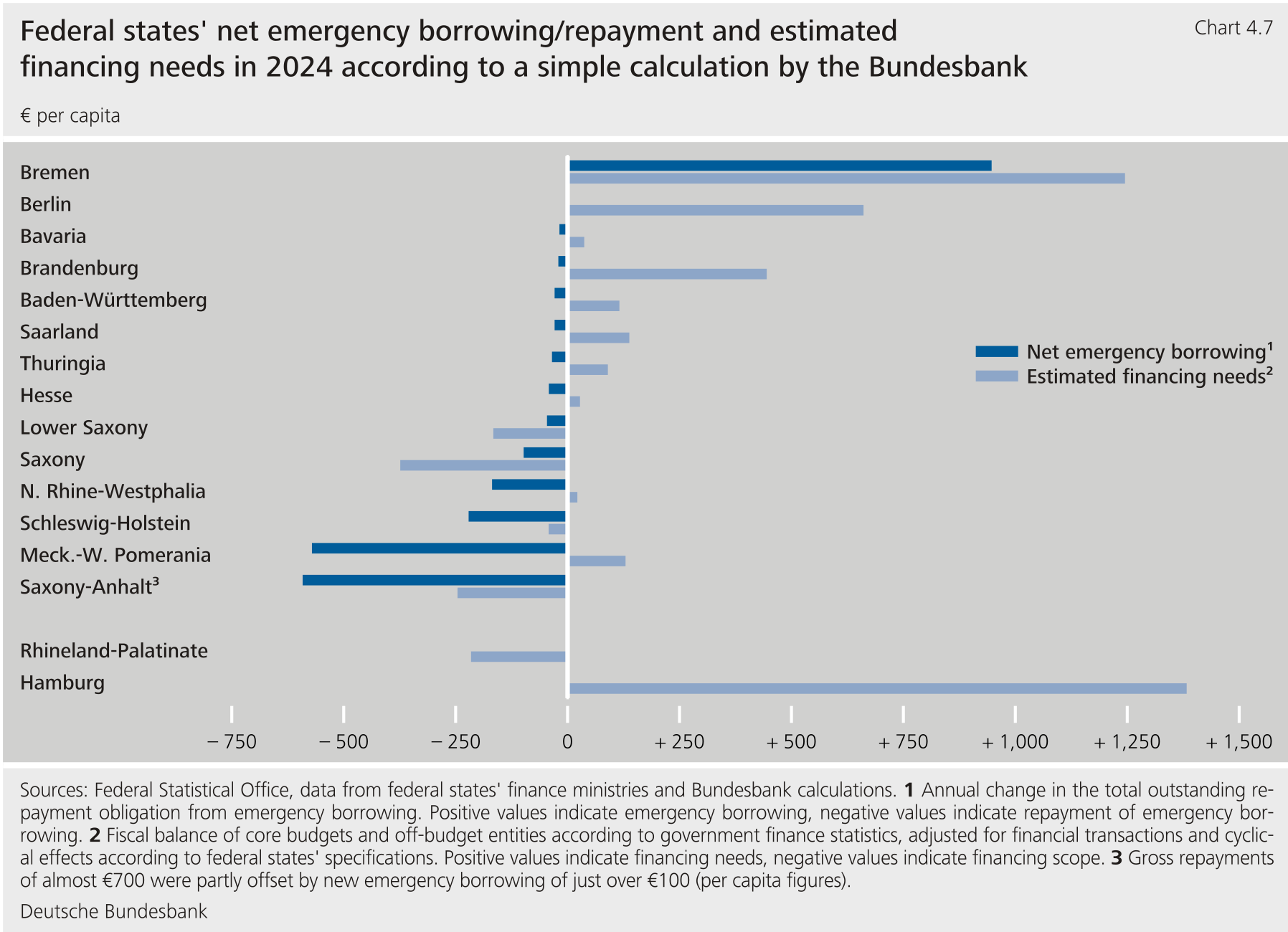
On balance, state governments repaid emergency borrowing of €7 billion. To this end, it appears that they largely used reserves that they had previously built up from emergency borrowing (see the supplementary information entitled “Development of emergency borrowing in individual states in the 2024 financial year”). Bremen was alone in recording increased levels of emergency borrowing (up by just over €½ billion). Saarland also made recourse to emergency borrowing of €½ billion, but had already reported this amount as having been taken out in the previous year. Saxony-Anhalt borrowed new funds in a smaller amount, but overall, repayments were significantly predominant there. 23
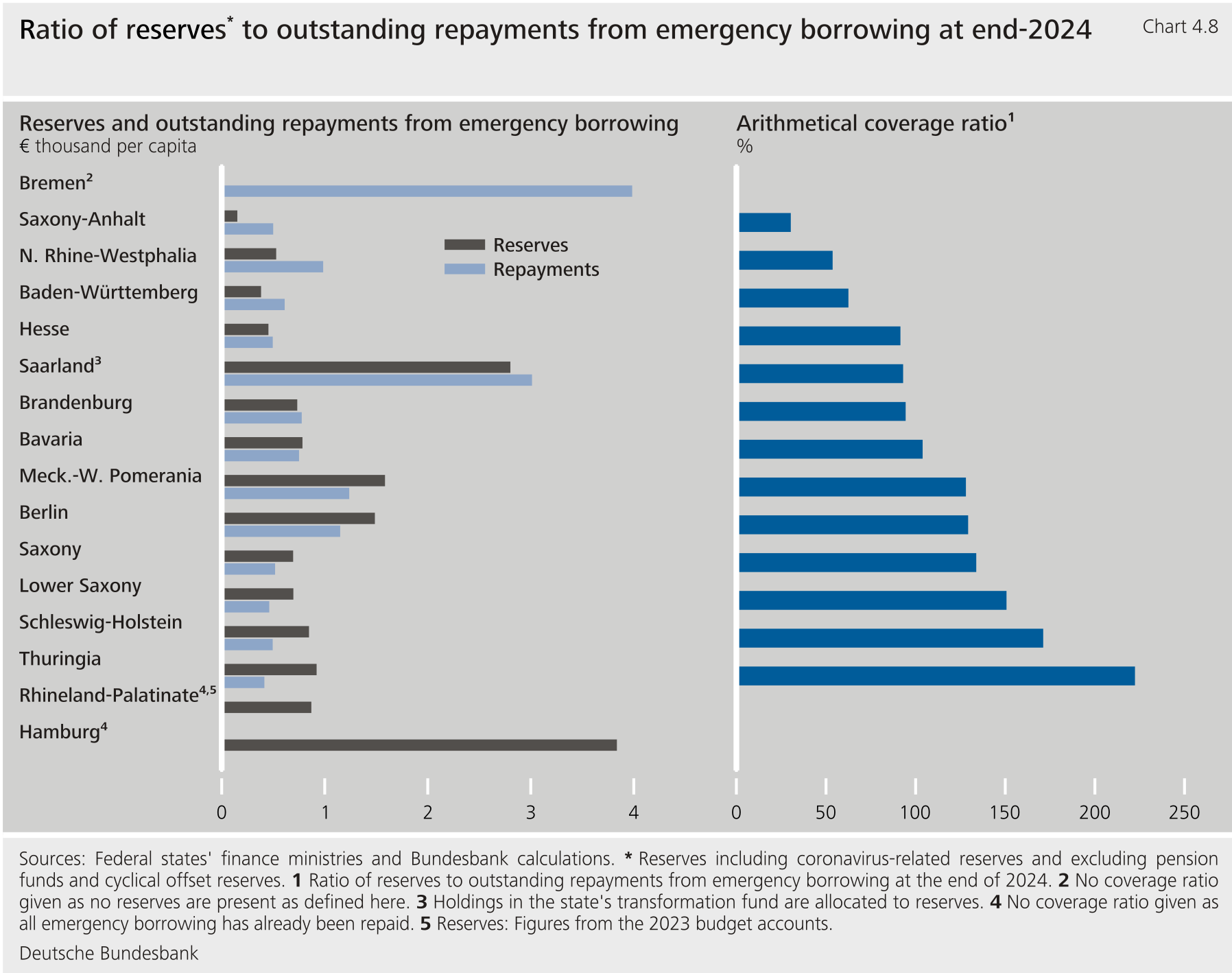
At the end of 2024, state governments reported outstanding emergency borrowing totalling around €60½ billion, or just over €700 per capita 24 (see also Table 4.4). Upon approval of emergency borrowing, the federal states are required to adopt a repayment schedule. The repayment obligations accrued from such borrowing vary greatly from one federal state to the next. 25 Rhineland-Palatinate had already repaid its emergency borrowing in 2021, and Hamburg did so in 2023. The reported outstanding per capita commitments remain highest in Bremen and Saarland (€4,000 and €3,000, respectively). Both federal states receive extensive budgetary recovery assistance from central government. In return, they have committed to reducing their debt levels. However, extensive emergency borrowing will increase this debt for a prolonged period, thus widening the gap between these and the other federal states.
label.digression
Development of emergency borrowing in individual states in the 2024 financial year
For this article, the Bundesbank has performed its own simple calculation of federal states’ financing needs and scope for repayment. Although this calculation uses state governments’ own specifications on excluded cyclical effects and financial transactions, the fiscal balance taken as its starting point differs from the starting point in the state governments’ debt brake accounting (see Table4.4). 1
The Bundesbank’s simple calculation suggests that federal states primarily made their repayments using reserves. For state governments as a whole, the calculation does not indicate any net repayment scope for 2024 from the budget outturn; it shows a structural deficit of €4½ billion in the 2024 budgets. 2 Reserves appear to have been pivotal in enabling states to repay emergency borrowing in spite of this deficit.
North Rhine-Westphalia, for example, repaid emergency borrowing of €3 billion when it fell due. It appears that the state did not spend the funds originally raised on the capital market on crisis measures, but invested them instead.
Schleswig-Holstein had actually intended to use emergency borrowing to meet its financing needs, but this was prohibited by a ruling from its state constitutional court. The state’s own accounting thus shows a marked decline in outstanding emergency borrowing due to repayments from reserves. 3
Mecklenburg-West Pomerania even repaid a substantial amount of its emergency borrowing despite having structural financing needs. In Saxony-Anhalt, repayments exceeded the calculated structural surplus.
The federal states plan to repay outstanding emergency borrowing over varying periods. Federal states that have borrowed more tend to have longer repayment periods. That of Saxony is the shortest, ending in 2030. North Rhine-Westphalia has a particularly long repayment period, spanning 50 years up to 2070. Its annual burdens are therefore relatively low. In almost all federal states, repayment schedules had already started in 2024 – notwithstanding some decisions to defer these repayments. Some federal states repaid more than would have been expected, looking at their repayment plans. Mecklenburg-West Pomerania repaid €900 million, with repayments under its schedule set to begin in 2028. Bremen was the only federal state not to have made net repayments in 2024, instead taking out additional emergency borrowing. However, Saarland, too, expanded its effective repayment burdens further by using up emergency borrowing that it had previously taken out. Saarland’s repayment process is scheduled to begin in 2025, whereas in Bremen it will not begin until 2028.
However, taken in isolation, repayment obligations stemming from emergency borrowing are not a good indicator of how burdened future budgets will be. In addition, existing contingency funds or reserves must be taken into account. State governments reserve a large part of their reserves for special tasks. However, they may, in part, disregard this earmarking if particular needs for funds exist in other areas. In this respect, contingency funds can alleviate the burdens caused by repayment obligations arising from emergency borrowing. That being said, a comprehensive overview of such funds is still lacking. A new Bundesbank survey continues to point to very different levels of holdings across federal states (see Annex 2).
4 Outlook: Make targeted use of new state government fiscal leeway, increase transparency
4.1 Deficit developments in 2025
Taken together, the overall deficit of state and local governments might change only slightly compared with the previous year. The expected subdued macroeconomic developments imply only a moderate increase in tax revenue. At the federal state level, however, the acquisition of financial assets could decline. Conversely, other state government spending, particularly on personnel, could see continued substantial growth. Local government tax revenue is likely to increase at a somewhat slower pace than that of state governments. At the same time, there are set to be significant and broader-based spending hikes at the local government level in areas such as social benefits, personnel and other operating expenditure.
label.digression
Local government finances in the first half of 2025
Local governments (core budgets and off-budget entities) closed the first half of 2025 with a very large deficit. According to the quarterly cash statistics, it came to €20 billion, which was €2½ billion higher than it had been a year earlier. The fact that general purpose grants were brought forward in Baden-Württemberg 1 had reduced this deficit by just over €2 billion.
Revenue saw year-on-year growth of just over 6 % in the first half of 2025, of which around 1 percentage point was due to the Baden-Württemberg grants being brought forward. Revenue from fees grew briskly, probably also because local governments increased their cost coverage rate by raising fees in order to reduce budget gaps. Tax receipts grew moderately overall, by just under 3 %, with stagnation in the major revenue item local business tax.
Expenditure continued to rise quite steeply (by 7 %, or €13 billion), with all major areas recording significant growth. Growth in interest expenditure was far above average (+ 21 %), although this item still had only a minor impact overall, at 1 % of total expenditure. Of the social benefits, benefits for integration assistance rose particularly sharply. However, this contrasted with weaker growth, not least, in accommodation costs for recipients of the basic allowance, and a fall in benefits for asylum seekers.
Local government debt rose significantly in the first half of the year compared with the level recorded at the end of 2024, with cash advances also seeing accelerated growth. Local government debt to the non-public sector rose by around €9½ billion (+ 5 %) in the first half of the year. At €6 billion, around two-thirds of this was attributable to cash advances.
It remains unclear how the March 2025 amendments to the Basic Law will impact on the financial performance of state governments (including local governments) this year. 26 From the current perspective, however, they are unlikely to dominate the underlying trends described above.
According to central government plans, the federal states are still set to receive €8½ billion from the Infrastructure and Climate Neutrality Fund this year. However, the actual inflows could be lower, as the requirements for drawing upon these funds still need to be determined. In line with the wishes of the federal states, it looks as though there will be no need to demonstrate additional investment expenditure. If, therefore, substantial funds were still to flow in from central government this year, this would likely curb the deficits of state governments – and potentially the deficits of local governments, too, if the state governments were to pass on a part of these funds.
With the additional scope for borrowing of 0.35 % of GDP per year (€15 billion at present), the federal states could already expand their deficit significantly in 2025. However, it is questionable whether more extensive additional deficit-increasing measures will take effect by the end of the year. In any case, the deficit of state and local governments taken together will not change if state governments direct funds to the local level and use them to close funding gaps there (with the result that deficits then rise for state government and fall for local government). If state governments put funds aside in off-budget entities, this will not influence the deficit considered here, either.
4.2 Use new scope for borrowing cautiously amid high debt levels
The expanded scope for borrowing creates room for manoeuvre. However, higher debt increases future interest burdens. The new leeway must be used with due care, especially in the case of federal states that are already highly indebted. State governments will be given greater leeway and can also continue to include state-specific cyclical effects and the balance of financial transactions in their scope for borrowing. Among the federal states, the scope of 0.35 % of GDP is based on the “Königsteiner Schlüssel” financing key and is thus primarily divided according to the states’ tax potential. 27 This seems sensible. However, in addition to tax potential, the burdens arising from existing and new debt must also be taken into account. Bremen and Saarland are currently receiving budgetary recovery assistance transfers from central government so that they can bear their high interest burdens and reduce their high debt levels. As long as they remain reliant on such assistance, extensive new borrowing is hard to justify. However, the other federal states also need to ensure that the additional lending rates remain permanently affordable. Here, too, interest burdens are already likely to increase as average interest rates continue to rise.
4.3 Use funds from the Infrastructure and Climate Neutrality Fund in a targeted manner
Scope for borrowing for additional infrastructure investment was enshrined in the Basic Law. The Infrastructure and Climate Neutrality Fund is intended to provide the federal states with a sum of €108 billion. 28 State governments, and in particular local governments, are responsible for the majority of public infrastructure. Accordingly, it falls to them to address the growing deficiencies. In this respect, it makes sense for extensive funds from the special fund to be channelled to the federal states, and for the latter to transfer sizeable amounts to their local governments.
However, the planned additionality of the projects appears to have been abandoned for the state government funds, putting the necessary modernisation of infrastructure in jeopardy. For example, the planned statutory provisions do not ensure that state and local governments only use the Infrastructure and Climate Neutrality Fund to finance additional projects. The federal states had explicitly attached importance to this design, apparently in order to be able to use the funds to finance projects that had already been planned. One important reason for this is likely to be the large budget gaps, especially at the local government level. However, it would be a setback if the infrastructure modernisation were to fail as a result of the new central government debt largely being used to plug budget gaps.
This can be prevented by tying funds from the Infrastructure and Climate Neutrality Fund to additional spending on infrastructure.In practical terms, central government could grant funds for a given year only if a federal state is planning to up fixed asset formation as a percentage of GDP compared with 2024 and then provides evidence of this in the annual accounts. This approach was suggested by the Bundesbank in its debt brake reform proposal in March. In its latest fiscal estimate up to 2029, the Federal Ministry of Finance is indeed expecting only more or less stable nominal expenditure on fixed asset formation for the core budgets of state and local governments, despite the extensive grants. If central government truly wishes to modernise state and local government infrastructure, it would be logical to make some amendments in line with the suggestions outlined.
The Infrastructure and Climate Neutrality Fund could also represent an opportunity to promote digitalisation uniformly across the federal states. To this end, a part of the funds could be used for joint digitalisation projects that improve the quality of public services. 29 An efficient digital administration across federal states is likely to be better achieved with a highly coordinated approach. Digitalisation is also likely to help address the foreseeable shortage of staff.
4.4 State governments bear responsibility for local government finances; financial reform advisable
State governments bear a great responsibility for local government finances. They play a key role in assigning financial resources and tasks to their local governments. On the financing side, they provide extensive funds and limit discrepancies in financial power. They are also responsible for local financial supervision. This is intended to prevent budgetary imbalances. If stricter supervisory requirements are insufficient to achieve sound public finances, larger transfers of funds from state government are warranted.
Against this backdrop, it is to be welcomed that state governments with high local government cash advances have changed their course and initiated a reduction in these loans in recent years. Cash advances indicate unfavourable developments in local government finances (see also Chapter 1). After decades of unfavourable developments, cash advances fell from €46 billion at the end of 2016 to €27 billion at the end of 2023. Key contributions were made by central government-funded financial assistance and state-specific debt relief programmes. Towards the end of the last decade, the “Hessenkasse” fund was particularly comprehensive. Saarland and Rhineland-Palatinate have also taken on a large part of the accumulated debt from cash advances in recent years. In return for the state government relief programmes, the local governments receiving support will have to limit their cash advances to such an extent that they will not require assistance again.North Rhine-Westphalia was the last federal state with high local government cash advances to pass a law on partial debt relief, doing so in the summer of 2025. 30
However, local government finances had begun deteriorating again in 2024, and cash advances rose once more, in some cases significantly. It appears that reserves were also deployed in order to prevent an even faster increase. Without countermeasures, more and more local governments are likely to use up the reserves they have formed in recent years. To prevent cash advances from rising further and at an accelerated pace, local government finances need to improve sustainably throughout Germany. This in turn requires further steps to be taken.
State governments are called upon to prevent financial distress at the local government level in good time. This entails, first of all, consistent supervision of financially distressed local governments with the aim of ensuring that funds are used prudently and efficiently. Local tax increases should also be considered, although setting high multipliers for local business tax will weigh on the place concerned in terms of its status as a business location. Once the scope for expenditure and contributions has been exhausted, state governments must increase the financial resources available to their local governments. Some federal states have already stepped up transfers within their local government financial equalisation schemes. 31 However, it also appears that the federal states might be reckoning with central government funds from the Infrastructure and Climate Neutrality Fund being used to plug gaps in local government budgets. If these funds are not channelled into additional investment, though, this runs the risk of preventing any progress being made in the necessary modernisation of local government infrastructure.
In order to stabilise revenue in the long term, reduce large cash advances and prevent structural budgetary imbalances, a fundamental reform of local government finances is recommended. 32 Local government revenue from local business tax (which is currently a major source of revenue) and, in part, revenue from transfers from state government is highly volatile. A reform could stabilise this revenue. This would help local governments to optimise their planning and management processes. As a short-term source of assistance, it would be worth considering increasing the local government share of VAT. In order to better take account of state governments’ responsibility for local government finances, it could be stipulated that local governments only be permitted to take out cash advances from their own state. It would also be logical for state governments to count such loans towards their own credit limits under their debt brakes. 33 Were they to do so, growing financial distress at local government level would be directly reflected in the state government budget. This would incentivise prompt action to address such distress.
4.5 Increase transparency of state government finances
State government finances remain very opaque. The federal states do not seem to be making much effort to publish meaningful, comparable key figures. This applies to both the results and the budgeted figures. The latter are often outdated and of only limited informative value – for the Stability Council’s fiscal surveillance, for instance. State governments should at least report the need to adjust their planned tax revenue following changes to tax legislation or new official tax estimates. Without better data on state government finances, it is also difficult to assess and compare degrees of budgetary leeway. Last year’s report included detailed recommendations to improve statistical reporting and harmonise the debt brakes. These recommendations still apply. 34
In addition, the individual federal states should submit their preliminary financial results under their debt brake rules in the spring of the following year, meaning that they can be interpreted in good time and thus also have political relevance. This would be in line with central government’s approach of publishing preliminary results in the second quarter of the year before presenting the final figures in September. To date, state government debt brake figures have only been available by the autumn of the following year, when the Stability Council releases its analyses on the topic. However, by then, the focus is mostly on budget planning for the subsequent year.
Annex 1: How the state government figures were prepared for this report and where problems still exist
In order to compare the finances of the individual federal states, this article looks at the core budgets of both state governments and local governments, as well as all off-budget entities at both levels (based on the cash statistics). This prevents tasks and financing burdens that are shifted between these entities from distorting the results. For city states, the state government data already include the local government level.
In addition, structural balances are calculated so that the underlying developments can be more properly assessed. These balances are produced by factoring out financial transactions (such as loan issuance and repayments), 35 temporary cyclical influences, temporary crisis measures 36 and major known one-off effects (such as special dividend pay-outs). In addition, financial equalisation and supplementary central government grants are included in accordance with the first settlement in the following year in order to record revenue on an accruals basis. Cyclical influences are calculated using the Bundesbank’s methodology on the basis of its June 2025 Forecast for Germany. 37 Temporary influences from the last measures taken in the wake of the energy price crisis (2024: tax-free inflation compensation bonuses and VAT reduction on gas and district heating up to the end of March) are only adjusted for in the result for Germany as a whole (consolidated across all federal states). Given that the correction is incomplete in this regard, the adjusted balances of the individual federal states are marked as partially adjusted structural balances.
When interpreting the state government figures, it should be borne in mind that a federal state’s financial relationships with its off-budget entities may distort the reported fiscal balance. However, in contrast to previous years, it appears that there were no notable effects in the reporting year. It cannot be assured in all cases that payment flows between the core budget and the off-budget entity are recorded in a corresponding manner on both sides in the financial statistics. For example, revenue from intra-government transfers may be recorded at a different point in time than the corresponding expenditure. However, it should not generally be assumed that a statistical error has been made if, for example, the revenue of a state government’s core budget from off-budget entities is not equal to the corresponding expenditure of the state government’s off-budget entities. This is because, to a limited extent, both core budgets and off-budget entities can also maintain payment relationships with off-budget entities of another state or of central government (although intra-government cash flows are not broken down in more detail in this regard). The very large discrepancies in Bremen (deficit in intra-government payments: €850 per capita) are due to a different reason. Note that the budget system does not recognise the category “off-budget entities”. The state governments therefore also record payments to public enterprises and institutions under the budget system categories of the same name – regardless of whether the recipients are off-budget entities or not. The financial statistics reclassify such data, but possibly too extensively in the recent case of Bremen. In this respect, the financing deficit is not distorted because only expenditure categories are exchanged and revenue is not corrected. Because no updated information from the subsequent annual accounting statistics points to an error in the deficit mentioned here, the figure remains unchanged (unlike last year for Bremen and Schleswig-Holstein).
Key categories of expenditure delineated by the individual states are comparable to only a limited extent in some cases. For example, state and local governments can provide services using their own staff in the core budget or ensure that similar services are provided by subsidising non-government entities to do so. This is then reflected, for instance, in statistically different levels of personnel expenditure despite largely identical overall expenditure. However, similar services can also lead to different total expenditure if services are no longer provided in the core budget but rather in off-budget entities that receive a service fee from the core budget. The cash statistics consolidate cash flows within the government sector only if they are classified as transfers, but not if a state government pays service fees instead.
Figures for the individual state governments are generally shown in relation to the respective population size. This ensures better comparability between federal states. Particularly in the state government financial equalisation scheme, population size is a key measure of funding needs and the basis on which resources are redistributed among the federal states. 38
As outlined above, temporary crisis measures cannot be factored out on a state-by-state basis. This is why the partially adjusted structural balances are less favourable than fully adjusted structural balances. According to the Bundesbank’s estimate, the difference across Germany amounts to just over €5 billion or slightly more than €60 per capita.
Tables 4.2 to 4.4 provide a more detailed picture of the annual results on the one hand and the year-on-year changes on the other. Results are presented by federal state. They show the steps taken to derive the partially adjusted structural balance from the official cash statistics. Moreover, they contain additional key metrics. These comprise tax revenue, including the state government financial equalisation scheme (based on provisional settlement figures), debt and interest burdens. Alongside major expenditure categories, the tables contain additional data such as state average multipliers for real estate and local business tax, state-specific real estate acquisition tax rates and benchmark figures for state governments’ civil servant salaries.
Annex 2: Reserves
Types of reserves and data availability
Reserves provide room for manoeuvre in the event of budget shortfalls. As a rule, the state-specific debt brakes set limits on (structural) net borrowing. Using reserves can reduce (structural) net borrowing (while forming reserves increases it). 39 State governments often establish reserves in the core budget and special funds. In many cases, the legislator ties them to specific purposes but can change this if necessary. Reserves are not usually liquid funds (such as bank deposits), but rather borrowing authorisations that have only been used formally (for the purposes of the budget).
A complete overview of federal states’ reserves is still lacking. 40 The Stability Council should increase transparency here. The transparent disclosure of reserves would make it much easier to assess and compare state government finances. The reserves and special funds are part of the state governments’ budget accounts. However, most federal states’ budget accounts are not made available until well after the end of the year 41 and fail to clearly summarise what are often very different types of reserves. This information gap makes it difficult to gauge budgetary leeway.
For this Monthly Report, the Bundesbank surveyed the state governments about their reserve holdings as at the end of 2024. As in previous years, the picture remained incomplete. For example, some federal states close the year with target appropriations still in their budgets and thus transfer unused borrowing authorisations to subsequent years. In addition, self-management funds are recorded as disbursed at the end of the fiscal year, but this is not always associated with an outflow of cash. This mainly applies to one federal state where, as revenue to balance the budget, such reversals take on the character of reserves. 42 This article therefore allocates these self-management funds to reserves.
The size of reserves based on a Bundesbank survey
The various types of funds set aside are grouped together here as reserves. All in all, the state governments reported a decline of €8 billion, which reduced the holdings in core budgets and in special funds to a still very large €135 billion. In most cases, it is not known what portion of the reserves is already scheduled to be ring-fenced for subsequent years. The reserves include, in particular, general reserves and reserves for civil servants’ pensions.
General reserves
The figure reported for general reserves came to €35 billion (€415 per capita) at the end of 2024. They thus fell by €2½ billion on the year. The general reserves per capita are highest in Hamburg (€3,840 in total and €1,520 in the core budget), followed by Mecklenburg-West Pomerania (€1,270). Berlin, Schleswig-Holstein and Saarland did not report any general reserves; in North Rhine-Westphalia and Bremen, only a small residual amount was left over. Lower Saxony saw significant increases compared with the end of last year. Lower Saxony generated surpluses in its core budget that were only partially channelled into repayments. By contrast, general reserves fell particularly sharply in Brandenburg and Mecklenburg-West Pomerania. In Brandenburg, a 2024 ruling by the State Constitutional Court plays a major role in this. The state government had not met the conditions for recourse to emergency borrowing in its 2024 budget plan. The government felt unable to make legally sound improvements and therefore decided to use reserves instead of emergency borrowing. 43
Reserves for civil servants’ pensions
Civil servants’ pensions represent a growing burden on state government budgets; the federal states have expanded their overall provisioning in this area by €6 billion to €63 billion. Pension provisions are by far the largest group of reserves. 44 Saxony has the highest level of funds set aside for pensions, at almost €3,200 per capita, although the western German states have far higher pension obligations relative to the size of their populations. Saxony is aiming to fully fund pension burdens from its reserves in future. 45 The next highest funds are those of Baden-Württemberg and Saxony-Anhalt (at around €1,000 per capita). Thuringia and Saarland have (almost) no pension reserves. Several years ago, Thuringia made adjustments to its pension funding and, since then, has repaid fixed amounts of its legacy debt in order to cover new civil servants’ pensions. This took place in the reporting year, too, albeit to a much lesser extent than the increase in reserves in Saxony. Saarland still has particularly high pension obligations. To ease the tightness in its budget, it has discontinued transfers to its pension reserves. Hamburg reports its prospective total pension obligations in its annual report at a discounted rate. Including the local government level and the beneficiaries in off-budget entities, the burden came to almost €22,000 per capita at the end of 2024 – more than Hamburg’s outstanding debt. Compared to this, however, the reserves set aside for pensions by Hamburg in a special fund are relatively minor in scale.
Cyclical offset reserves
The figure reported for cyclical offset reserves (in other words, the cyclical item) remained virtually unchanged at €8½ billion. Cyclical effects must be recorded symmetrically under the debt brake. The reserves then fill during upturns and empty during downturns, ebbing and flowing in time with the economic cycle. No overview of the cyclically induced loans taken out in total is available. At €6½ billion, the majority of the reserves were attributable to Hamburg, which in the reporting year effected a transfer matching the amount of the moderate cyclical relief calculated for its budget. 46
Coronavirus-related reserves
Coronavirus-related reserves were reported only in North Rhine-Westphalia. In this case, holdings fell by €3½ billion owing to repayments and interest payments (which the state government thus effectively continues to finance via emergency borrowing). At the end of 2024, the coronavirus special fund still contained just under €2½ billion. Saxony-Anhalt, in particular, reported the repayment of the outstanding amount of €1½ billion. Berlin, Mecklenburg-West Pomerania and Schleswig-Holstein had not previously reported the holdings released in the reporting year as coronavirus-related reserves.
Reserves in off-budget entities for investment purposes
For the federal states as an aggregate, reserves in pre-financed off-budget entities for investment purposes fell by just over €2 billion to €6½ billion. Only six state governments reported such reserves (Berlin, Brandenburg, Lower Saxony, Saxony, Schleswig-Holstein and Thuringia).
Energy reserves and other reserves
Taken together, the energy reserves and other reserves of the federal states (including self-management funds) fell by €3 billion to €21 billion. In addition to the use of self-management funds in North Rhine-Westphalia, this was due not least to the fact that Saarland used resources from its transformation fund, but had already reported these loan holdings as having been taken out in a prior year.
Comparison of reserves and outstanding emergency borrowing
While some reserves are earmarked for specific tasks, they could, in theory, be mobilised to repay emergency borrowing. State governments would then no longer need to stay below their structural borrowing limits by making savings in the amount of the principal payments. Disregarding the often extensive funds for civil servants’ pensions as well as cyclical offset reserves, the reserves as a whole are slightly higher than emergency borrowing. The picture for the individual federal states is very mixed. Reserves predominated to a significant degree in Thuringia and Lower Saxony, with moderate levels of emergency borrowing. By contrast, Bremen, in particular, had relatively small reserves with very high emergency borrowing. To put the relatively low arithmetical coverage ratio in Baden-Württemberg into perspective, alongside the reserves, the state has put extensive additional funds aside, not least in the form of surpluses from previous years.
(This article reflects data up to 15 October 2025.)
List of references4
Deutsche Bundesbank (2025), Public finances, Monthly Report, May 2025.
Deutscher Bundestag (2025): Gesetzesentwurf der Bundesregierung: Entwurf eines Gesetzes zur Ausführung von Artikel 109 Absatz 3 Satz 6 und Satz 7 des Grundgesetzes und Änderung anderer Gesetze, Drucksache 21/1087, July 2025.
Joint central government-federal government working group (2025), Decision issued by joint central government-federal government working group, 23 June 2025.
Meyer, B. (2025), Länderfinanzbericht Baden-Württemberg 2024, in: Junkernheinrich et al. (eds., 2025), Jahrbuch für öffentliche Finanzen (Journal of Public Finance and Fiscal Federalism), Vol. 1, No 1, pp. 107‑116.