Long-term government bond yields in the United States and the euro area are up significantly on the end of June. This was due in part to robust US activity and inflation-related expectations of higher policy rates going forward. Concerns about persistently high inflation rates intensified in the face of the repeated flare-ups of the conflict in the Middle East and higher energy prices. Against this backdrop, the ECB Governing Council and the US Federal Reserve each raised their key interest rates once during the reporting period. Market participants recently expected monetary policy to be tighter up to and including the middle of 2027. This marks a departure from their expectations at the end of June 2026.
Spreads widened in European bond markets, while euro area and US equity markets held largely steady overall.Concerns about the sustainability of France’s public finances weighed on that country’s government bonds. Those worries also contributed to the euro’s depreciation against the US dollar. Spreads widened on corporate bonds, especially high-yield and financial paper. Doubts around the prospective earnings from the heavy investment in artificial intelligence (AI) weighed on tech stocks. All the same, profit expectations for firms in general rose significantly on both sides of the Atlantic.
2 Exchange rates
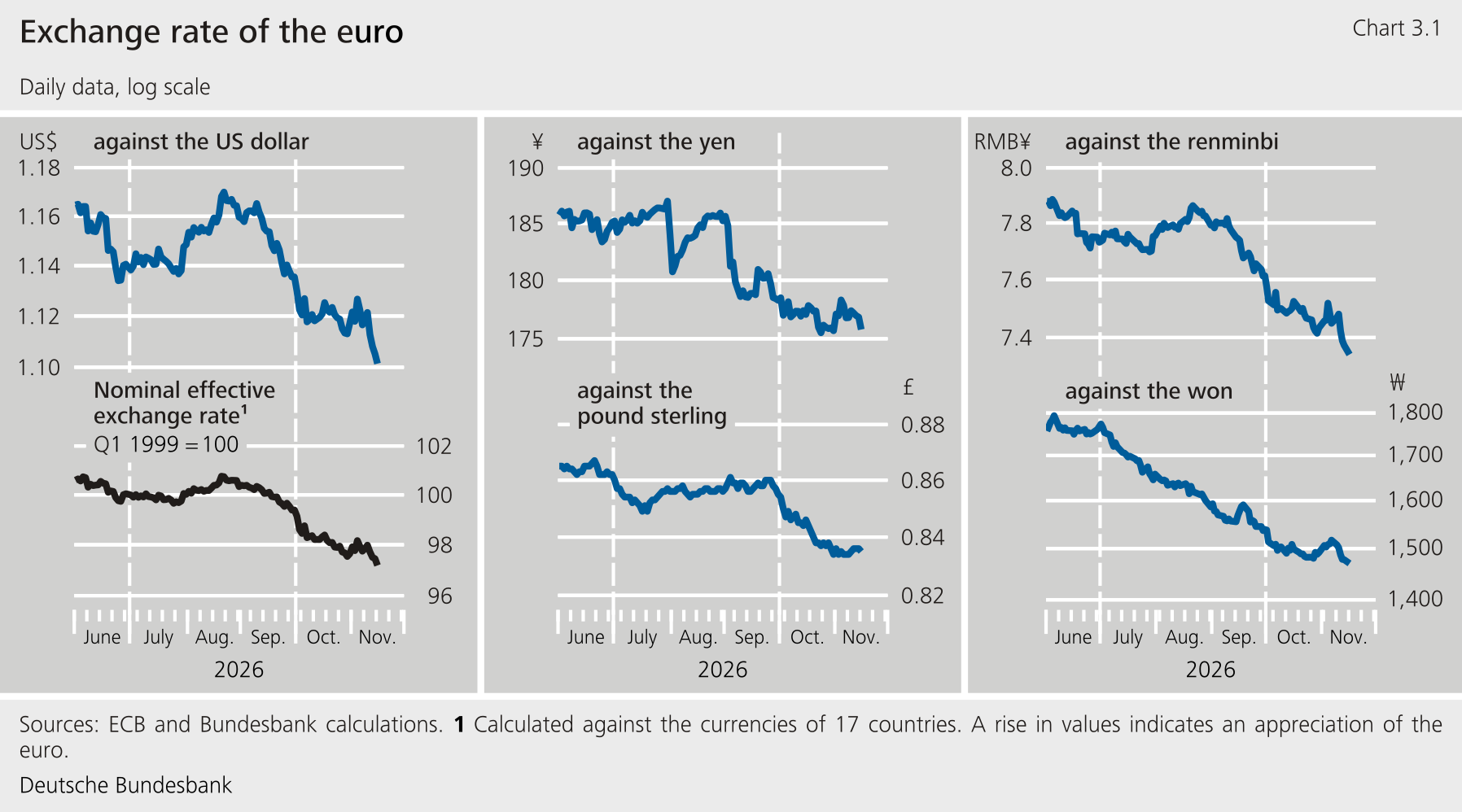
Since the beginning of the second half of 2026, the euro has fallen against the US dollar on balance, although it had appreciated into the second half of August. The initial appreciation of the euro was supported by the then still unexpectedly weak US labour market data and the US Federal Reserve’s decision to leave US policy rates unchanged in July. At the same time, stronger than expected economic growth in the euro area in the second quarter and persistent inflationary pressures supported the outlook for a tighter monetary policy stance in the Eurosystem and thus the euro. In mid-August, the US Department of the Treasury announced an expansion of buybacks of long-dated US government bonds. This gave the euro additional impetus since it increased concerns in financial markets about US fiscal policy. From the end of August, however, a trend reversal began when statements by the Fed Chair at the Jackson Hole Economic Policy Symposium reinforced expectations of future US interest rate hikes. Surprisingly robust US economic data and the Federal Reserve’s policy rate hike subsequently adopted in mid-September strengthened these expectations and put the euro under increasing pressure. From the end of September onwards, there were also concerns about France's fiscal position (see the supplementary information entitled “Fiscal risks and financial markets”). In mid-November the single currency thus reached its lowest level against the US dollar in 19 months. The euro was trading at around US$1.10 at the end of the reporting period, 3.3 % lower than at the end of June.
On balance, the euro also depreciated against the yen during the reporting period, at times showing strong fluctuations. Initially, the euro largely recouped the losses recorded at the end of July caused by foreign exchange market interventions in favour of the yen. It was able to do this thanks to the persistent interest rate advantage in the euro area until the end of August. From the beginning of September, however, it came under renewed pressure. Repeated warnings of intervention by the Japanese authorities and increasing expectations of further tightening of Japanese monetary policy supported the yen. These expectations intensified when surprisingly high Japanese inflation figures were released, giving the Japanese currency additional impetus. At the same time, the concerns over France's fiscal position mentioned above weighed on the euro. Towards the end of the reporting period, the euro stood at around ¥176 and was thus 5.0 % weaker than at the end of June.
On a weighted average against the currencies of 17 trading partners, the euro also depreciated during the reporting period. In addition to the losses against the US dollar and the yen described above, this was mainly due to the depreciation against the renminbi, the pound sterling and the South Korean won. The euro fell particularly sharply against the won (− 16.8 %). Record exports, of semiconductors in particular, supported the won given high global investment in AI. At the same time, the associated growth dynamics contributed to the Bank of Korea’s tightening of monetary policy. The euro depreciated 5.0 % against the renminbi, recording a greater loss than against the US dollar. The euro fell by 3.2 % on balance against the pound sterling. Robust UK economic and inflation data supported expectations of a tighter monetary policy stance by the Bank of England. In net terms, the nominal effective exchange rate of the euro has declined by 2.8 % since the end of June.
label.digression
Fiscal risks and financial markets
If financial market participants’ expectations concerning a country’s fiscal risks shift, this affects not only government bond yields, but also other financial market prices. This much has been observed in recent weeks in the case of France. How can these effects be separated from the impact of other influencing factors? To answer this question, a structural vector autoregressive (VAR) model using daily financial market data is estimated below. The model contains 14 variables, including government bond yields of different maturities, equity prices, the euro-US dollar exchange rate and the yield spread between ten-year French and German government bonds.
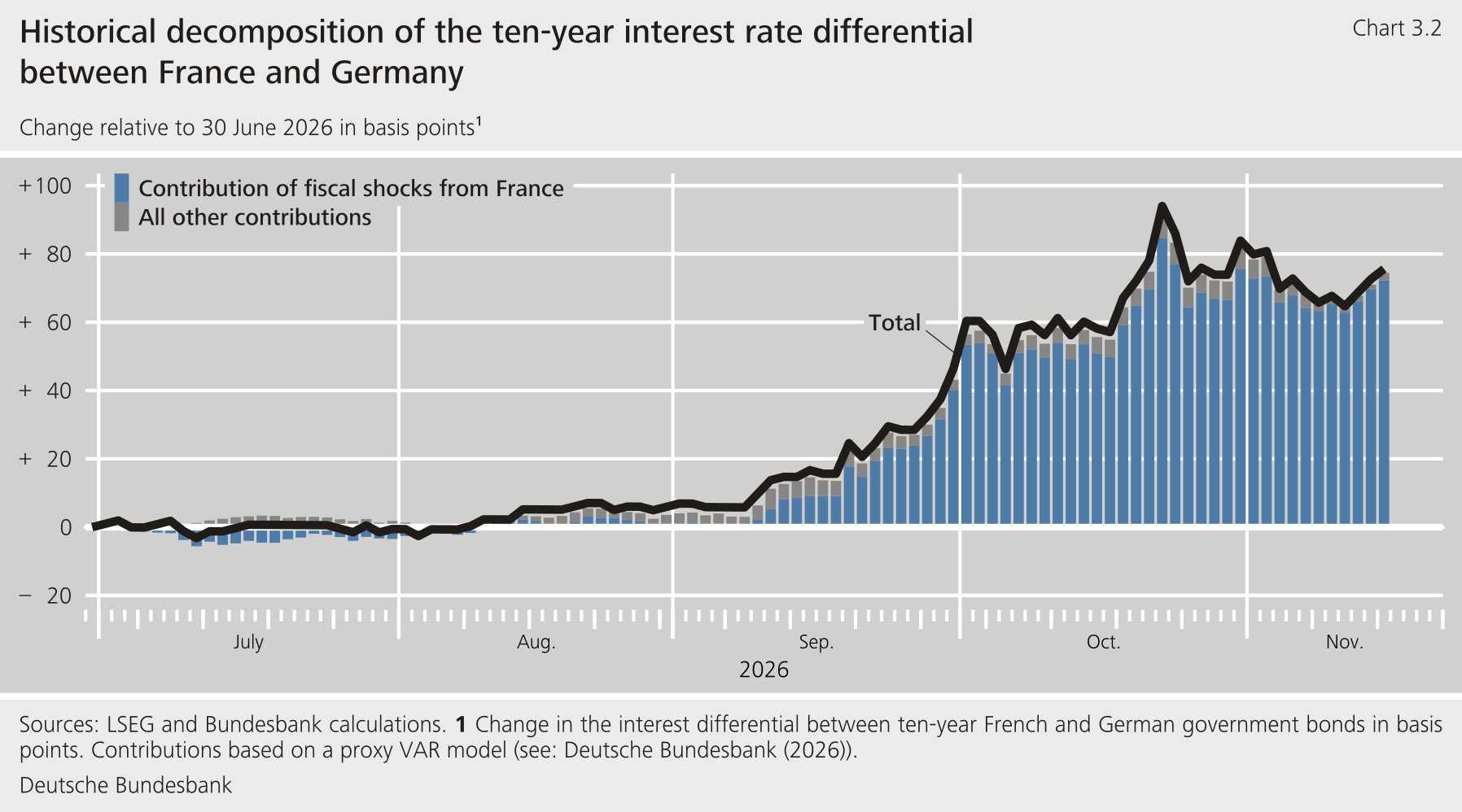
The impact of the assessment of fiscal policy on all these variables is isolated in the model by drawing on the immediate response of yields to news of fiscal policy relevance from France. There were 14 events between June 2024 and October 2026, including the dissolution of the French National Assembly on 9 June 2024 and the hearing on France’s draft budget for 2027 on 1 October 2026. Changes in the yield spread between ten-year French and German government bonds (“the spread”) when the news hits serve as an indicator of the extent to which financial markets perceive the news to be a burden on the foreseeable development of French government debt. The change in the spread is measured over a narrow period of time around the event. 1 By assuming that the response of the spread in this short period is largely attributable to the news in question, the impulse (“shock”) that it generates on the financial market variables in the model can be isolated. A shock emanating from the French fiscal outlook is referred to below as a “fiscal shock”. 2 Similarly, other impulses are identified in the model, namely monetary policy shocks, demand shocks from the euro area and the United States, and supply shocks in the energy sector. 3
According to the model estimate, financial markets have, since the beginning of the second half of 2026, been expecting a less favourable development in French government debt than before. This was a major factor behind the recent widening of the French-German government bond spread.The estimated VAR model allows the contributions of the various identified shocks to the development of the financial market variables in the model to be quantified (“historical decomposition”). This can be illustrated using the example of the yield spread between ten-year French and German government bonds. Since the end of June, this spread has risen by almost 80 basis points. The model mainly ascribes this development to shocks that reflect an increase in French fiscal risk as perceived by financial market participants. By contrast, the contributions of the other identified shocks are comparatively small. The influence of the identified French fiscal shock on the other financial market variables in the model is in most cases fairly small over the observation period. For the period since September 2026, however, the model suggests that, for example, developments in the exchange rate of the euro against the US dollar or in the 10-year Bund yields were, in part, largely determined by this kind of shock.
3 Securities markets
3.1 Bond market
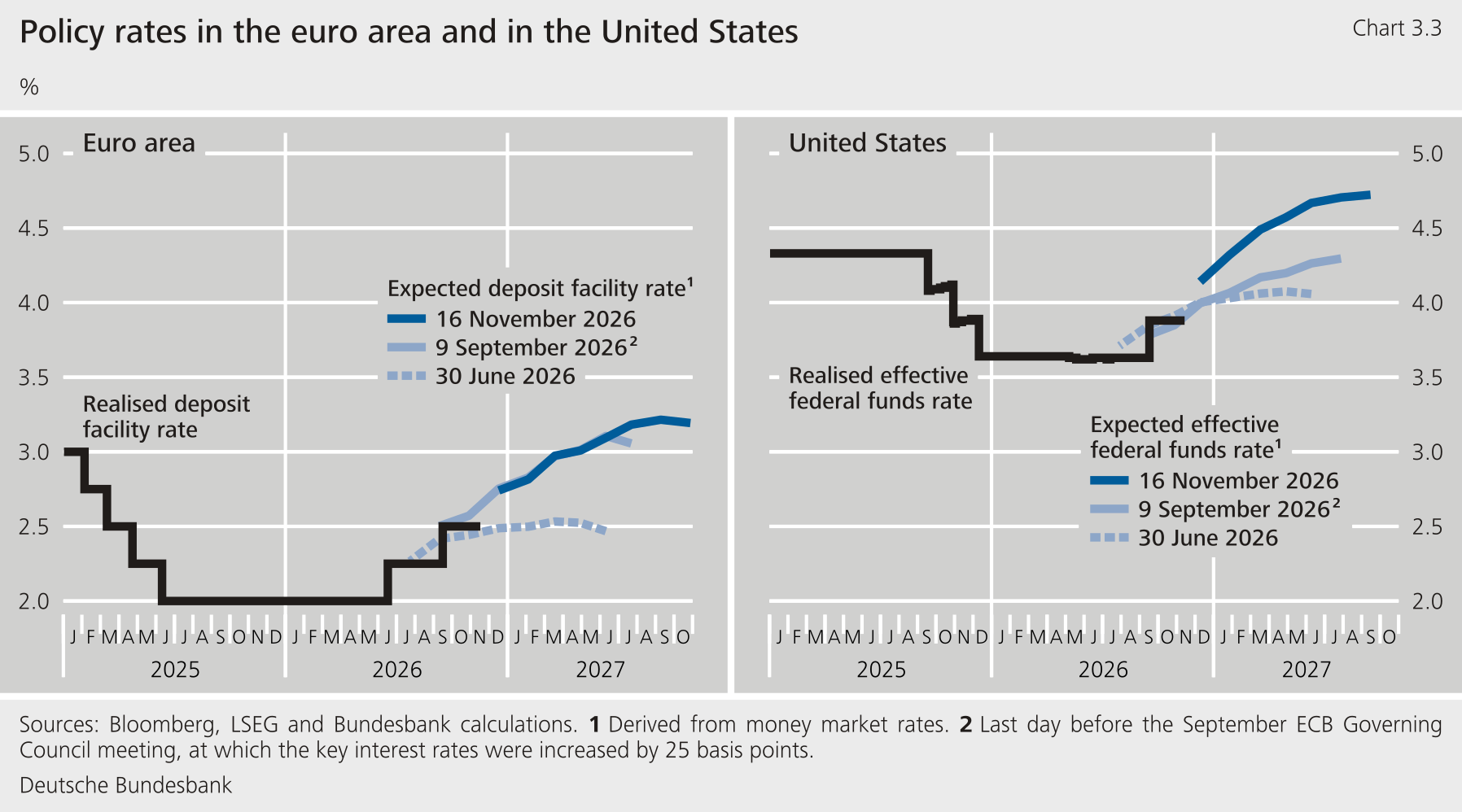
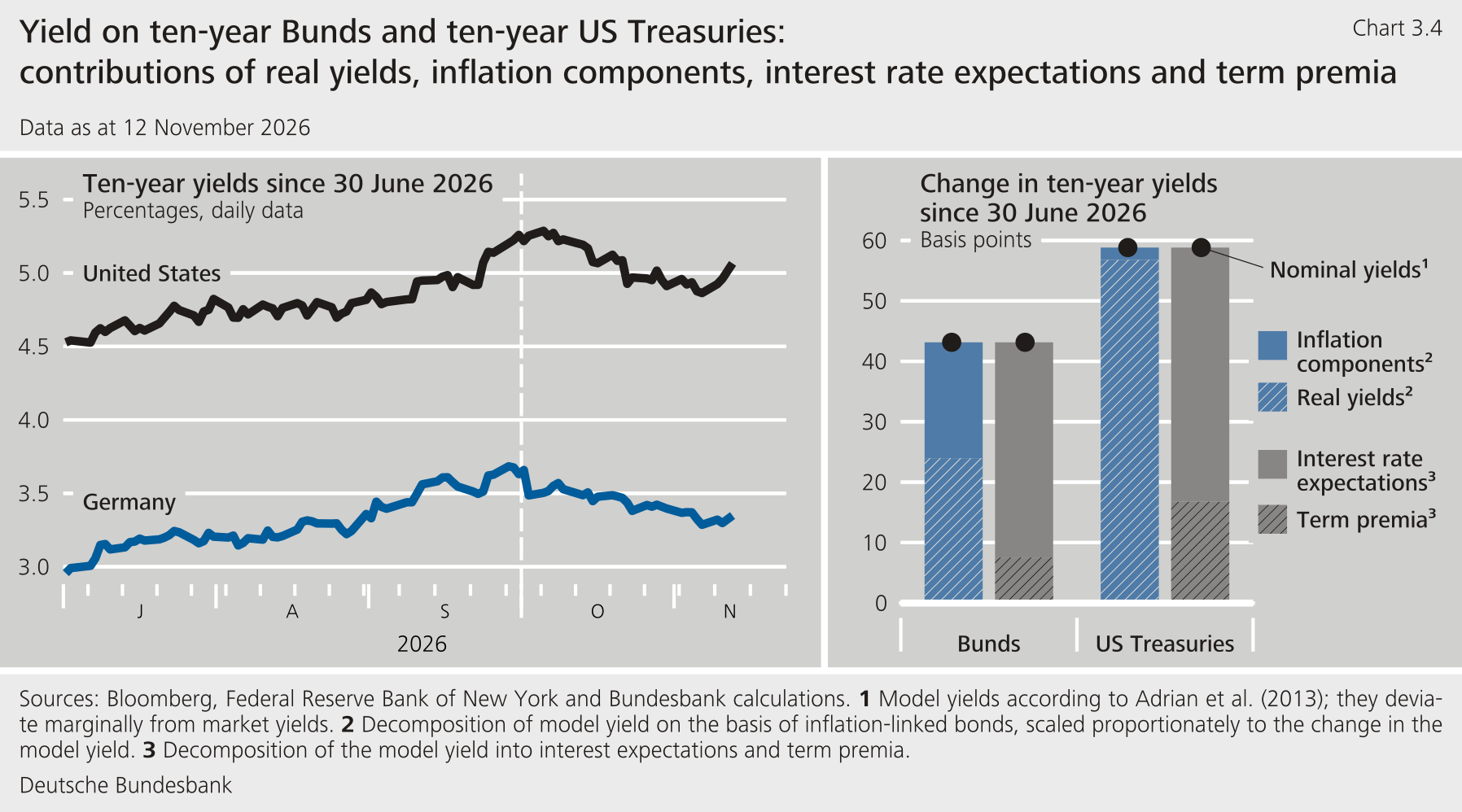
The ten-year US Treasury yield has increased since the end of June by 68 basis points to 5.2 %, most likely driven in particular by robust US economic activity. Analyses suggest that this rise in yields is largely attributable to real economic developments (see Chart 3.4). Indeed, surprisingly favourable purchasing managers’ indices in September, stronger than expected economic growth in the third quarter and robust private domestic demand all painted the picture of a dynamic US economy. The inflation component derived from inflation-linked bonds also rose slightly. This is because rising energy prices and supply and staff bottlenecks reported in surveys of firms have, at the same time, increased concerns that inflation could remain elevated for a prolonged period. Against this backdrop, the Federal Reserve increased its policy rate range by 25 basis points to 3.75 %-4.00 % in September, leaving it unchanged in October. Most recently, market participants expected a tighter US monetary policy than they had anticipated at the end of June. For mid-2027, the expected effective federal funds rate, which is derived from money market rates, was around 4.7 %, and thus some 60 basis points above its level at that time (see Chart 3.3). The decomposition of the ten-year US yield using a term structure model also points to higher expected short-term interest rates. The corresponding expectations component has risen by strongly since the end of June. At the same time, the estimated term premium, i.e. the additional remuneration for holding longer-term bonds, increased significantly. Concerns about the US fiscal outlook and the extensive supply of long-dated bonds issued by large US technology companies may have contributed to this.
The yield on ten-year Bunds has also increased significantly since the end of June by 53 basis points to 3.4 %, a rise likely driven primarily by expectations of tighter monetary policy in the euro area and the increase in US yields. Rising energy prices heightened concerns that inflation could remain elevated for longer and require further policy rate hikes. Compared with the United States, the inflation component accounts for a larger share of the increase in yields on ten-year Bunds (see Chart 3.4). In September, the ECB Governing Council raised the deposit facility rate by 25 basis points to 2.50 %; it left the key ECB interest rates unchanged in October. Market participants most recently expected a deposit facility rate of just over 3 % in mid-2027. At the end of June, they were still expecting a deposit facility rate of around 2.5 % for that point in time. These expectations of tighter monetary policy are also likely to have supported long-term yields in Germany. In addition, Bundesbank analyses point to substantial spillovers from the United States, which contributed to the rise in German yields. Yields declined again slightly towards the end of the reporting period. According to a yield curve decomposition, both lower expected short-term interest rates and a lower term premium contributed to this. Monetary policy expectations derived from money market rates also showed that market participants in part reduced their expectations of further policy rate hikes. As a result, policy rate expectations for the euro area recently returned to where they had been just before the Governing Council meeting at the beginning of September – and this despite short-term inflation expectations having risen markedly since then (see Charts 3.3 and 3.7).
Towards the end of the reporting period, there were indications that Bunds were once again more in demand among investors as a safe haven. Since the end of September, yields on ten-year Bunds have converged towards the €STR swap rates with the same maturity, with their spread declining to 18 basis points most recently. At the same time, ten-year KfW bonds yielded 38 basis points more than Bunds of late – this spread had widened. Bunds thus became more expensive against swaps as well as KfW bonds. This pattern suggests that market participants increasingly sought safe and particularly liquid assets. The comparison with KfW bonds highlights, in particular, the importance of the good tradability of Bunds. Since KfW bonds are explicitly guaranteed by the Federal Government, their yield spread is likely to mainly reflect the higher liquidity and the special role of Bunds as reference instruments in the bond market.
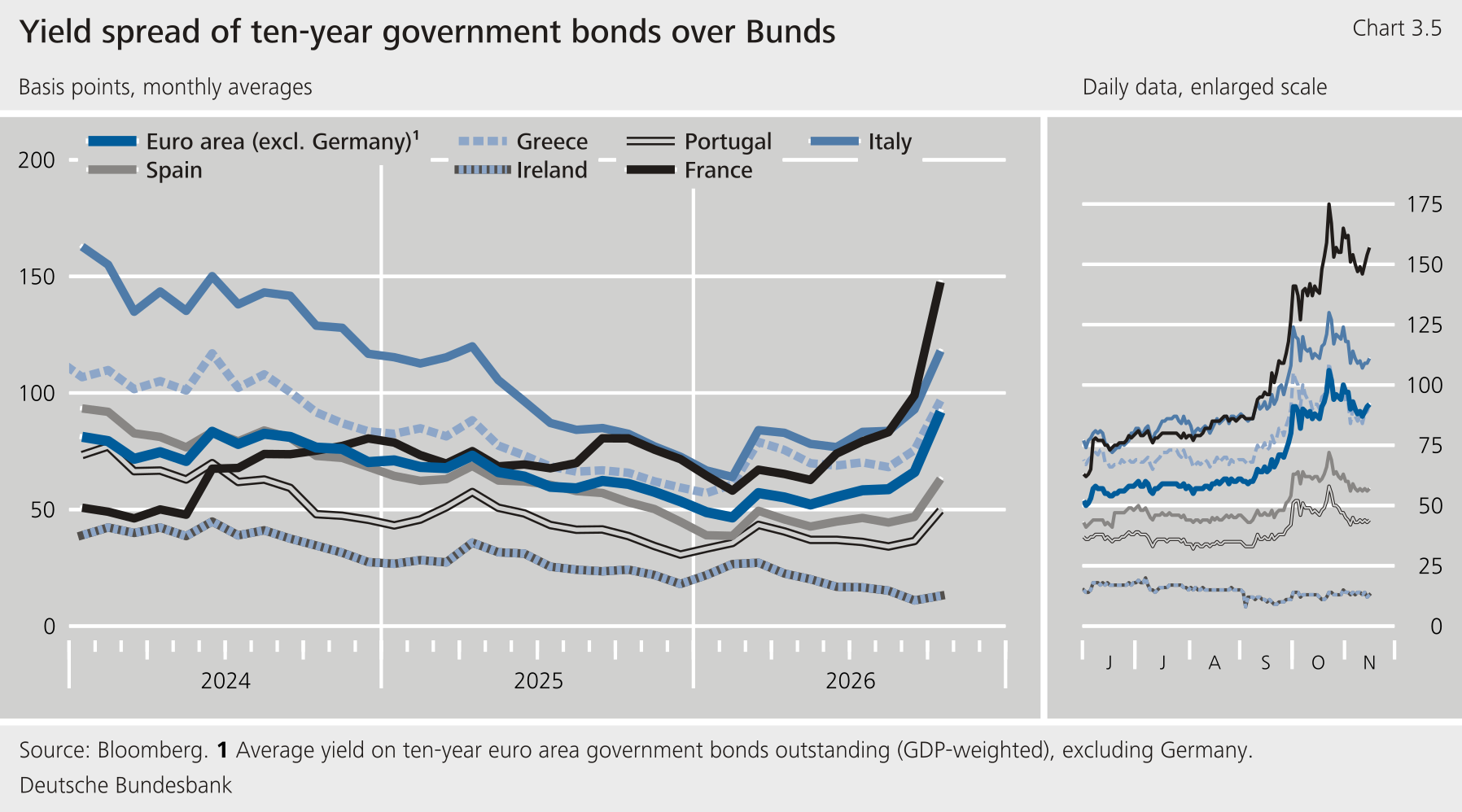
The yield spreads of ten-year French government bonds over Bunds with the same maturity widened significantly. The French yield spread increased by 78 basis points to 157 basis points. In October, it temporarily reached its highest level since 2011. Most recently, the French yield spread was thus well above the Italian yield spread of 111 basis points. The spread widening focused on doubts about France's path of consolidation and uncertainty over fiscal policy following the 2027 presidential election. The draft budget for 2027 envisaged no more than a limited deficit reduction. Concerns about public finances were also accompanied by rising premia for credit default swaps on French government debt. The situation eased temporarily after Moody’s confirmed France’s rating contrary to the expectations of many market participants (see Chart 3.5).
The yield spreads of other highly indebted euro area countries over ten-year German government bonds also rose. For example, the yield spread of Belgian government bonds has increased by 44 basis points and that of Greek government bonds by 24 basis points since the end of June. By contrast, the yield spreads narrowed slightly in the Netherlands and Ireland, countries with lower government debt. The GDP-weighted yield spread of all other euro area countries over ten-year Bunds has widened by 34 basis points to 92 basis points since the end of June. Overall, there were hardly any signs of a disrupted market function or price discovery. The liquidity of euro area government bonds remained robust despite significant price movements.
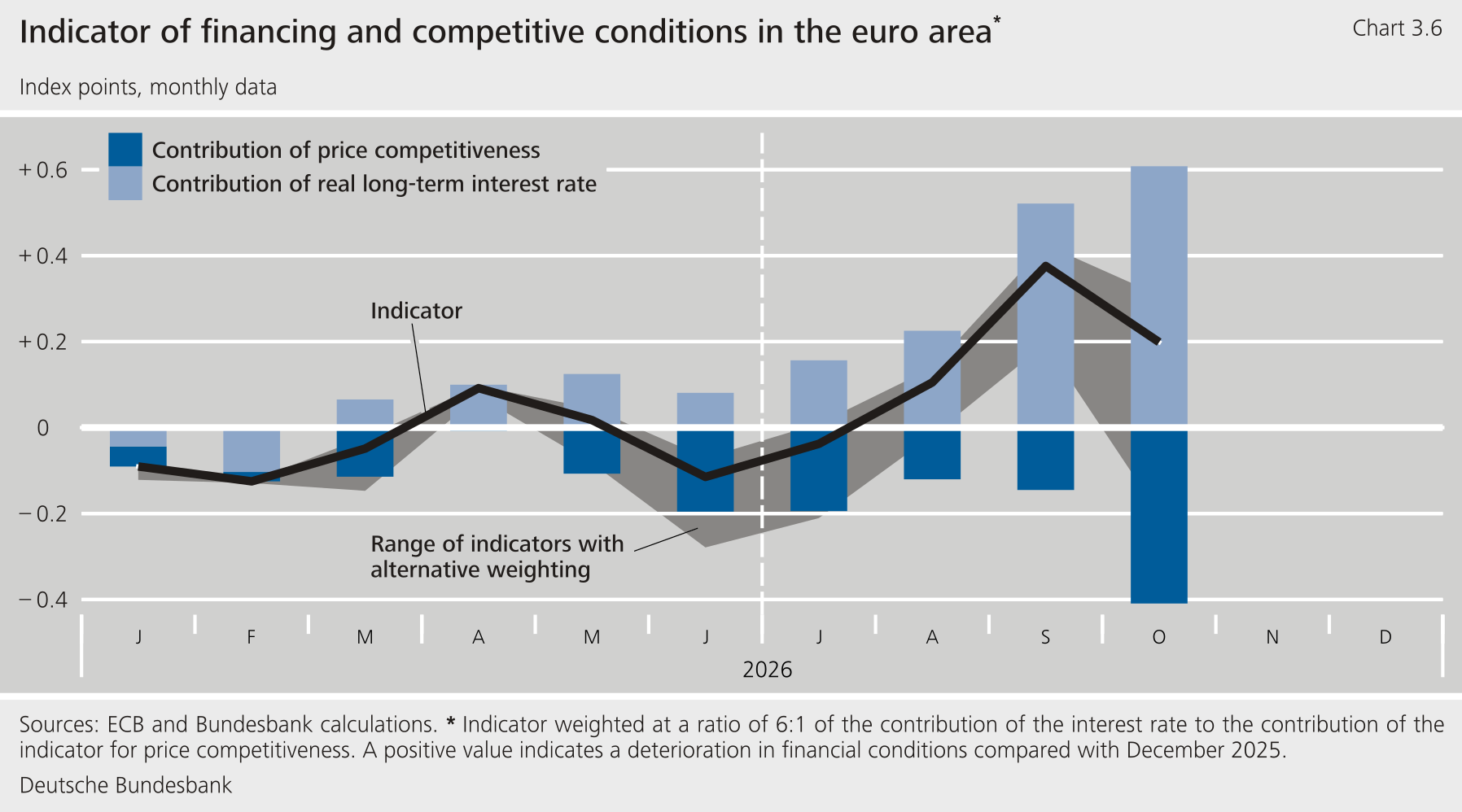
Taken in isolation, higher bond yields tightened financing conditions for euro area firms; however, this effect was counteracted by the real effective depreciation of the euro (see Chart 3.6). The increase in long-term real interest rates in the euro area since the beginning of the second half of 2026 represents a deterioration in financing conditions for euro area firms. However, the impact of this development has recently been mitigated by the fact that the euro depreciated effectively in real terms, and this has been accompanied by an improvement in price competitiveness for the euro area economy.
Long-term UK government bond yields rose more sharply than Japanese yields. In the United Kingdom, the rise in global interest rates, concerns about public finances and expectations of policy rate hikes were accompanied by higher yields. The Bank of England left its policy rate unchanged in September, but decided to raise it to 4 % at the beginning of November. Ten-year UK government bonds most recently yielded 5.4 %, 63 basis points higher than at the end of June. The Bank of Japan raised its policy rate by 25 basis points to 1.25 % in September. The ten-year sovereign bond yield temporarily exceeded 3 %, but has declined again since October. It stood at 2.9 % most recently and was only slightly above the level seen at the end of June.
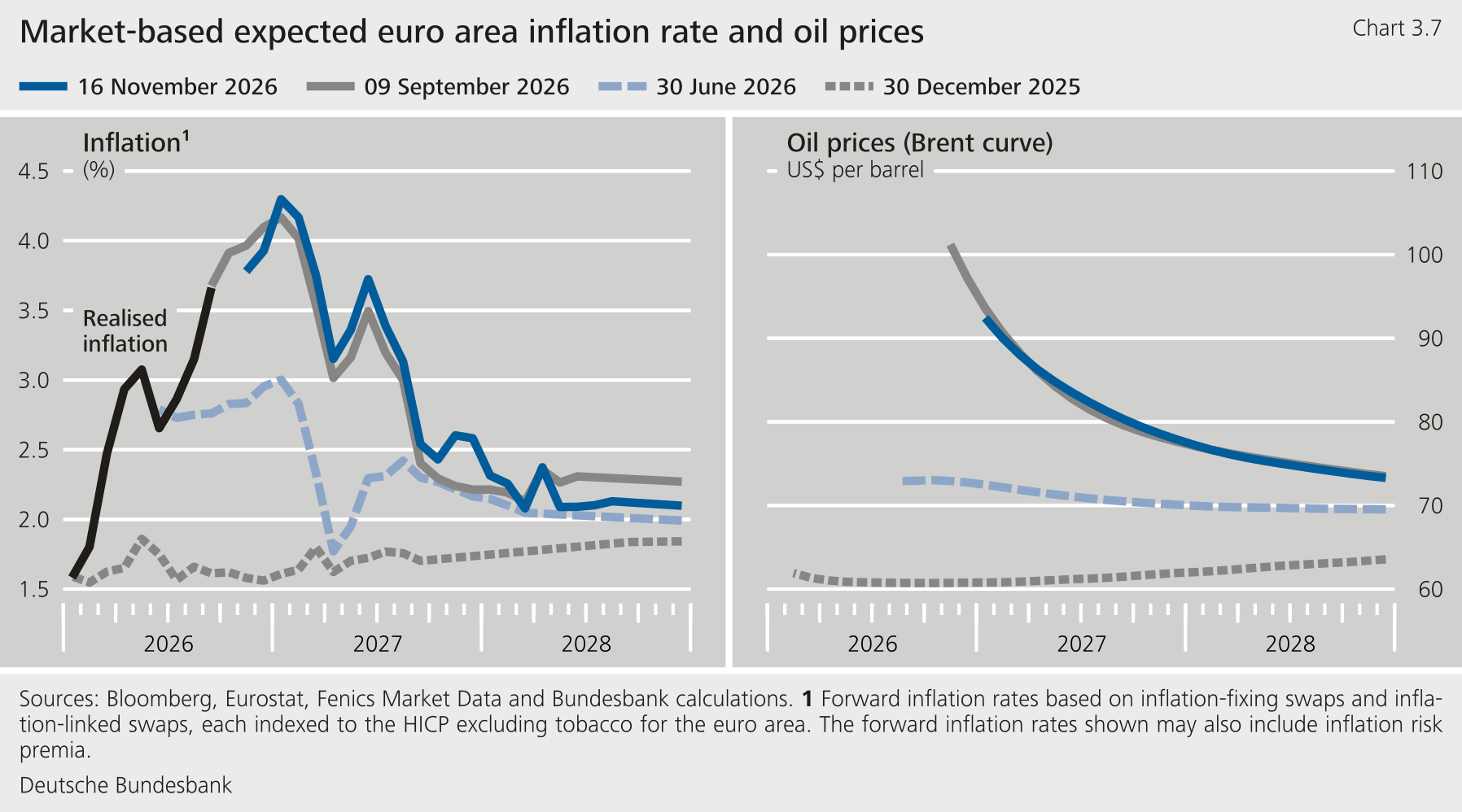
Short-term market-based inflation expectations in the euro area rose quite significantly in line with energy prices (see Chart 3.7). At the end of the reporting period, the average priced-in inflation rate was 3.0 % for 2026 and 3.2 % for 2027. For the current year, this is 37 basis points more than at the end of June, and for 2027 it is as much as 92 basis points higher. Market participants are pricing in higher inflation, especially in the short to medium term. They do not expect inflation to return to the inflation target until the first half of 2028 and project an inflation rate of 2.1 % for 2028 as a whole. In June, the return to the target had been expected for the second quarter of 2027. In addition to energy prices, the depreciation of the euro contributed to the increase in market-based inflation expectations, whereas tensions in France had a slightly dampening effect on market expectations. Expert survey participants also expected higher inflation, albeit with a somewhat smaller increase to just 2.6 % in 2027. One of the reasons for the difference could be that measures derived from inflation swaps contain inflation risk premia in addition to actual expectations.
By contrast, long-term market-based inflation expectations remained close to the Eurosystem’s inflation target. The five-year forward inflation rate five years ahead recently stood at 2.1 % and was thus virtually at the level seen at the end of June 2026. This indicator describes the average inflation rate priced in by the markets for the period five to ten years ahead. Thus, there is no evidence so far of market participants being concerned about a longer-term failure to meet the inflation target in the euro area. However, the rise in short-term inflation since March and persistently high energy futures prices pose the risk that higher expectations will also materialise in the longer term.
Yields on bonds issued by European firms rose both on account of higher safe interest rates and because yield spreads widened. Yields on seven to ten-year AA-rated corporate bonds stood at 4.1 % most recently, thus 71 basis points higher than at the end of June, while those on BBB-rated corporate bonds stood at 4.7 %, 79 basis points higher than at the end of June. Their spreads against maturity-matched Bunds increased by 19 basis points and 27 basis points, respectively. For BBB-rated financial corporations, the rise was even more marked at 37 basis points. In the high-yield segment, the yield spread rose by 56 basis points to 326 basis points, but was still somewhat below the average of the last five years. Premia for credit default swaps also increased slightly. Market participants therefore appear to assess the risk of credit defaults as slightly higher overall. Individual firms postponed planned bond issuance in this environment.
3.2 Equity market
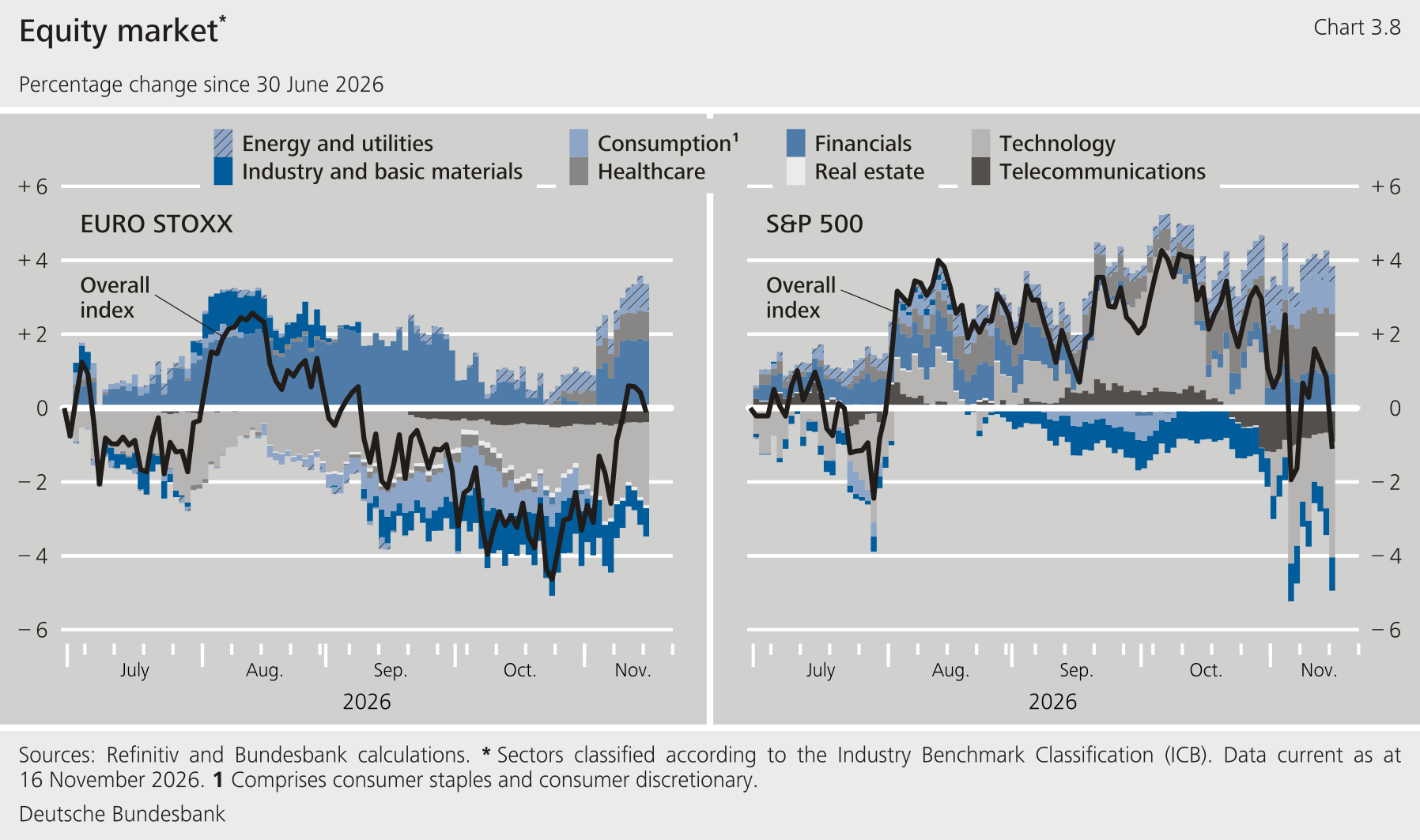
All in all, equity markets in the euro area and the United States have not shown a clear trend since the end of June, with significant differences across euro area countries as well as sectors. Following temporary gains in the summer, euro area share prices fell again as interest rates rose from mid-August onwards. At the end of the reporting period, the EURO STOXX was 0.1 % below its level at the end of June, while the S&P 500 recorded a loss of 1.1 %. The German CDAX rose by 5.3 %. Chart 3.8 shows that, in the euro area, technology stocks in particular contributed negatively to the overall index. The fact that semiconductor manufacturers and corporations with high investment in AI have repeatedly suffered significant price losses since October played an important role in volatile equity market developments in the United States. Market reports linked these losses to doubts about the expected return on investment in AI data centres. As a result of these setbacks, the contribution of the technology sector to the overall index in the United States has been negative on balance since the end of June, although significant positive contributions have been recorded in the meantime.
Bank stocks in the euro area showed a mixed performance across Member States. Since the end of June, they have recorded an overall increase of 1.7 %. Higher interest rates initially supported expectations that bank equities could benefit from rising interest margins. Since then, potential burdens on debtors due to higher financing costs and the quality of loan portfolios have become more prominent. German bank equities have, on balance, risen significantly since the end of June (+ 10.1 %). US bank equities fell by 2.9 % over the same period.
Analysts' expectations continue to paint a very positive picture of firms’ business prospects. A decomposition of equity price developments based on a dividend discount model attributes price changes to changes in expected corporate profits and the implied cost of equity, which in turn consists of a risk-free interest rate and an equity risk premium. 1 Short-term and medium-term earnings expectations for both the EURO STOXX and the S&P 500 have risen quite significantly since the middle of the year. Analysts therefore continue to expect very high earnings growth by historical standards. The implied cost of equity values equities relative to these high earnings expectations. Measured on this basis, equities in the EURO STOXX were valued more favourably than at the end of June, whereas this valuation measure barely changed for the S&P 500. Nevertheless, the implied cost of equity is thus above its historical average for the EURO STOXX and somewhat below its historical average for the S&P 500.
This article is based on financial market data up to 16 November 2026.