1 The German economy grew at a slightly slower pace in the third quarter
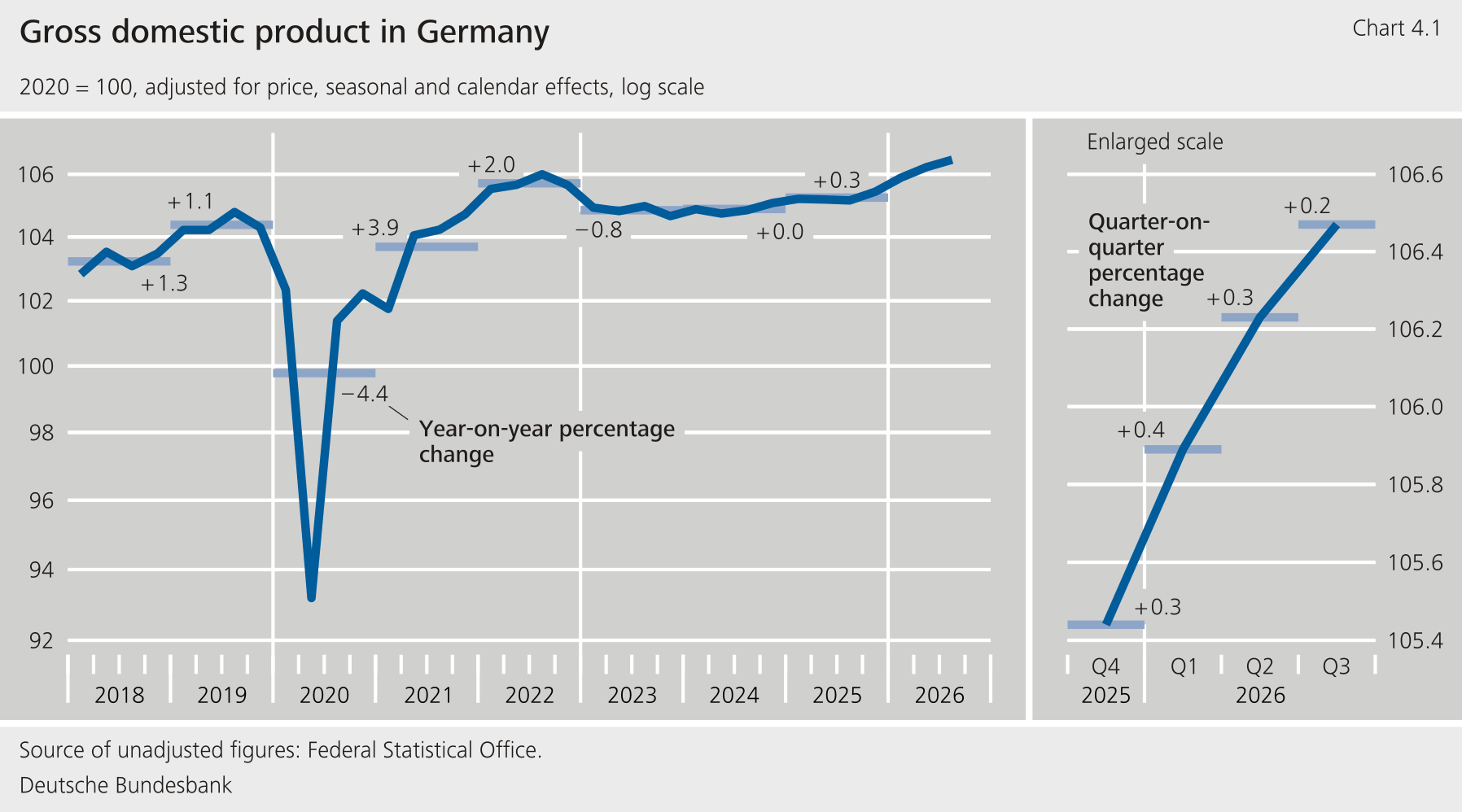
The German economy continued its recovery in the third quarter of 2026. According to the Federal Statistical Office’s flash estimate, real GDP rose by 0.2 % on the quarter after seasonal adjustment. 1 The increase was thus only slightly weaker compared with the first half of the year, and the German economy proved more robust than expected. 2 Although industrial and construction output declined, some services sectors probably expanded. Energy production also rose steeply. According to the Federal Statistical Office, rising consumption provided additional momentum. 3 Private consumption is likely to have risen only slightly, however, as geopolitical conflicts and the resulting high energy prices curbed households’ purchasing power. These factors also dampened export business. After the chemicals industry, in particular, had enjoyed a temporary competitive edge over foreign suppliers in the previous quarter, it now experienced a setback. In addition, low water levels on major waterways put pressure on industry and exports. This was counteracted by the global boom in AI-related investment, which benefited some sectors of the economy such as manufacturers of electrical equipment and of computers, electronic and optical products. The build-up of military equipment also bolstered production. However, the fact that capacity utilisation in industry remained weak dampened firms’ investment in machinery and equipment.
2 Weak activity in industry and construction; growth in some services sectors
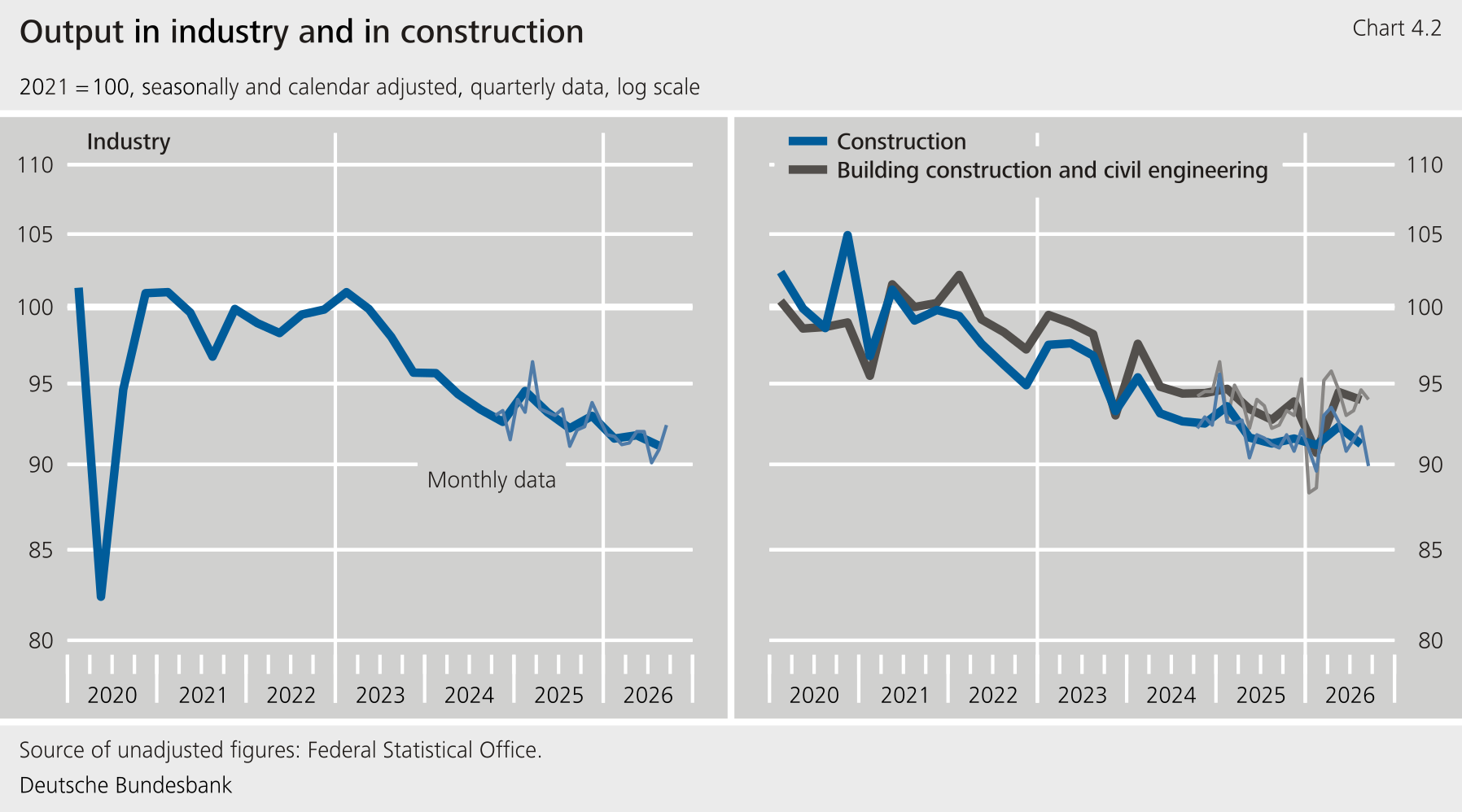
Industry and exports were held back in the third quarter. In the industrial sector, both price-adjusted sales and output declined compared with the previous quarter, falling particularly sharply in the chemicals industry. In the quarter before, this industry had been boosted by a temporary competitive edge over foreign competitors who were hit especially hard by supply chain issues stemming from the war in Iran. This effect has now largely faded. In addition, low water levels on major waterways put particular strain on the chemicals industry by making it more difficult to supply certain intermediate goods and causing additional transport costs. The automotive industry also recorded a decline. By contrast, manufacturers of electrical equipment and of computers, electronic and optical products registered strong growth in sales and production. The global AI boom has been boosting activity in these areas for some time now. While total price-adjusted exports of goods showed no growth, the data available up to August indicate an increase in these two economic sectors. Production of explosives, weapons and ammunition as well as of other transport equipment likewise rose steeply. These areas are likely to have benefited from military armament.
Commercial investment in machinery and equipment is likely to have declined further. According to ifo Institute surveys, capacity utilisation in the manufacturing sector was still weak compared to its long-term average, despite improving markedly in October. This is dampening incentives to invest in capacity expansion. Similarly, the German Chamber of Industry and Commerce (DIHK) autumn survey reveals that only a small number of firms consider expansion a motive for investment. 4 Both domestic sales of capital goods producers and imports of capital goods according to data available up to August declined in price-adjusted terms. Data from the German Association of the Automotive Industry (VDA) reveal that commercial motor vehicle registrations also fell. All this points to a drop in commercial investment in machinery and equipment. However, investment in electrical equipment as well as computers, electronic and optical products is likely to have increased. Domestic sales rose sharply in these areas.
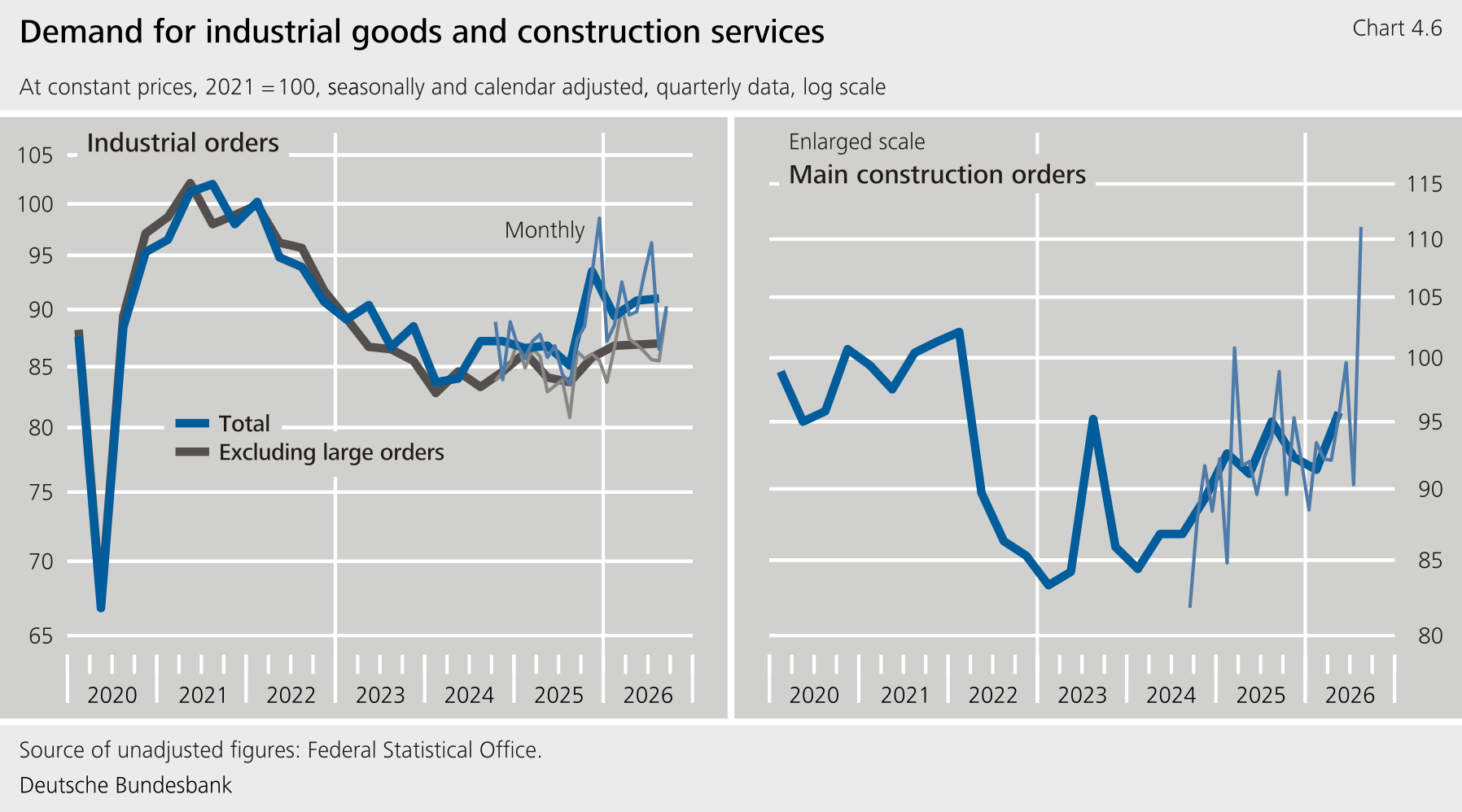
Construction output fell. Output was lower in both building construction and civil engineering as well as in the finishing trades. Higher lending rates and construction costs are weighing on construction investment, especially in housing construction. The sharp rise in new orders in civil engineering probably reflected the expansionary fiscal policy stance.
Private consumption is likely to have risen modestly, at best. High energy prices curtailed households’ purchasing power. In addition, the fuel rebate that applied before and after the third quarter provided incentives to shift fuel purchases to the second or fourth quarter. Price-adjusted retail sales dropped significantly. Although sales of automotive fuel fell particularly sharply, the overall decline was broad-based across product groups. By contrast, data available up to August show that price-adjusted sales in the hotel and restaurant sector increased. The rise in private motor vehicle registrations according to data from the VDA also points to an increase in the purchase of cars. Greater demand for electric cars boosted trade in motor vehicles. Registrations of electric cars rose sharply, at least. Some other service providers likewise recorded growth. According to data available up to August, output rose in areas such as information and communication as well as real estate. By contrast, price-adjusted sales in wholesale trade probably declined in line with weak industrial activity.
3 Labour market slightly weaker again, but could potentially stabilise
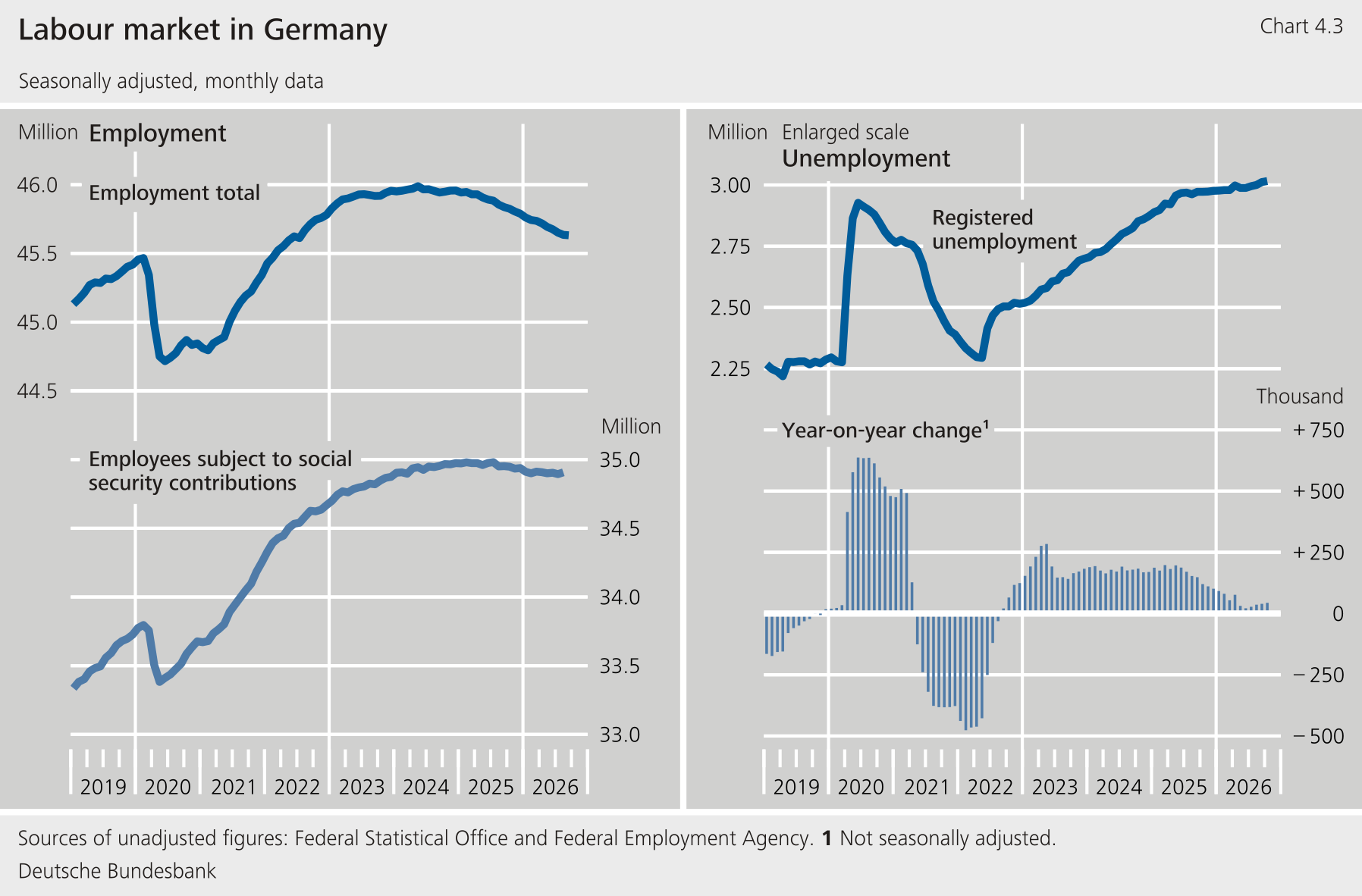
Employment continued to decline in the third quarter of 2026. The decline in the number of persons working in exclusively low-paid part-time jobs was particularly pronounced. Employment subject to social security contributions, on the other hand, stabilised recently. Unemployment rose only slightly. A decrease in the labour force is also likely to have played a role here. A large number of people are reaching retirement age, while immigration this year is barely helping to stabilise the labour supply. Leading indicators of employment are beginning to signal that the decline in employment could at least slow in the coming months.
The number of people in employment fell again in the third quarter. As in the four previous quarters, the pace of the decline was moderate. Averaged over July to September, 45.64 million people were in employment after seasonal adjustment. This was 57,000 people fewer (or just over 0.1 % lower) than in the second quarter. The current decline in employment is mainly due to the fact that there are fewer persons in exclusively low-paid part-time employment. The number of self-employed persons also decreased at an above-average rate. By contrast, employment subject to social security contributions, which represents the core of the workforce, barely fell. However, provisional figures are currently only available up to the reporting month of August.
Sectoral developments in employment subject to social security contributions reflect the major structural change in the German economy. Since the beginning of the year, after seasonal adjustment, an average of 13,000 jobs have disappeared per month in the manufacturing sector. Despite temporary economic relief such as that provided by the recovery in exports in the first half of the year, the need for structural adjustment in industry remains high. Reasons for this include technological change and competition from China, amongst other things. Employment in trade is also down markedly. Besides wholesale and foreign trade, which is closely linked to industry, this also includes retail trade. By contrast, employment in healthcare and long-term care has been growing strongly for some time now. This is also due to a structural process – demographic change. Over the course of the year so far, the number of jobs filled in this sector has risen by 11,000 per month on average. Employment in other sectors of the economy is very stable. In most cases, recruitment even slightly outweighed job cuts. This was the case for construction, energy supply, financial and insurance activities, public administration and other personal service activities.
Registered unemployment rose marginally in the third quarter. On average in the third quarter of 2026, roughly 11,000 persons more were registered as unemployed than in the second quarter in seasonally adjusted terms. The unemployment rate remained unchanged at 6.4 % due to rounding. October saw another slight rise to 3.02 million persons. Up to the present, unemployment covered by the statutory unemployment insurance scheme, in particular, has climbed continuously. It responds strongly to cyclical changes in employment. By contrast, the number of unemployed people receiving the basic welfare allowance decreased in the third quarter. However, the decline was only marginal after a marked drop in the first half of 2026. The reform to the basic welfare allowance that entered into force on 1 July 2026 changed the rules governing jobs that parents of young children can reasonably be expected to accept. Viewed in isolation, this change is likely to lead to higher registered numbers of unemployed people receiving the basic welfare allowance. However, the impact on the unemployment statistics is likely to be modest overall. Unemployment among those receiving the basic welfare allowance has already been trending downwards since mid-2025. One reason for this might be the level of immigration, which is now very low. Some of the immigrants in search of work initially registered as unemployed. Owing to a lack of entitlement under the unemployment insurance scheme, these individuals received the basic welfare allowance if they were eligible. Total underemployment developed differently to registered unemployment. Underemployment also includes people who, owing to labour market policy measures, are not counted as unemployed or in supported employment. Underemployment virtually stopped rising in the third quarter and even decreased in October. This suggests that unemployment has recently risen mainly for temporary statistical reasons, such as the aforementioned change in the rules governing which jobs can reasonably be accepted, or as a result of labour market policy measures that alleviate the unemployment statistics to a lesser degree.
In addition to the high retirement rate stemming from demographic change, the labour force (the number of employed and unemployed persons) is likely to decline considerably in 2026, owing, amongst other things, to net immigration, which has practically come to a standstill of late. While around 400,000 people migrated to Germany in the first eight months of 2023 in net terms, this figure fell continuously after that. According to provisional data from the Federal Statistical Office’s foreign migration statistics, it stood at just 17,000 in the first eight months of 2026. This is not only due to the huge decline in the immigration of refugees from Syria, Afghanistan or Ukraine, for example. Germany has become considerably less attractive, especially to foreign skilled workers. One reason might be the weak labour market developments over the last few years. Compared with other EU countries, net migration has been negative since 2024. Once again, significantly more people emigrated this year, especially to countries in central and south-eastern Europe. However, Germany remains reliant on foreign workers to sustain higher economic growth. It is therefore crucial to provide attractive conditions for skilled workers.
Leading labour market indicators have improved somewhat of late. Although they do not signal an increase in employment, a slower decline in employment can already count as an improvement from a cyclical perspective if the shrinking potential labour force is taken into account. Unemployment could then also fall. The short-term unemployment indicator – the IAB unemployment barometer – has improved in recent months and is now in neutral territory. It suggests that unemployment is unlikely to rise further over the coming months. Among the employment indicators, the ifo employment barometer, in particular, improved considerably in the third quarter. The barometer surveys the industrial sector’s recruitment plans for the next three months. In the manufacturing sector, in particular, plans to cut jobs are now less pronounced. Most recently, in the commercial services sector, plans to create jobs even predominated on balance. However, the construction industry is taking a slightly more pessimistic view of the future. The outlook for trade remained significantly negative. The IAB employment barometer, which additionally includes publicly financed services sectors such as healthcare, education and administration, also improved, returning to neutral territory. The number of vacancies reported to the Federal Employment Agency remained largely unchanged in recent months in seasonally adjusted terms. However, labour demand shifted slightly from predominantly publicly financed sectors to more cyclical sectors such as manufacturing and construction. The automotive industry remains an exception. There, job vacancies continued to decline. Overall, the transition rates from employment to unemployment have fallen recently in industry.
4 Negotiated wages up somewhat more strongly in the third quarter, but remain moderate
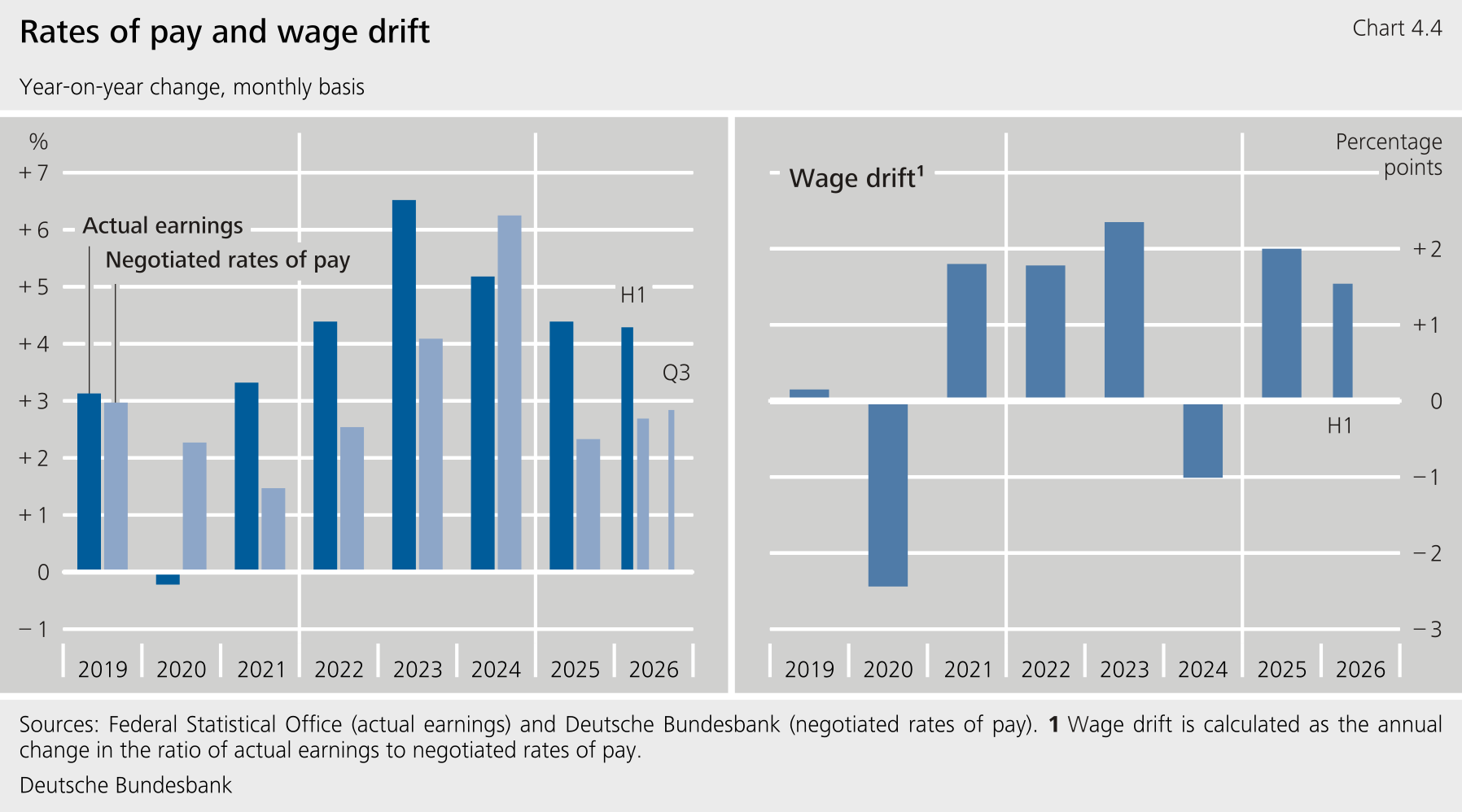
In the third quarter of 2026, growth in negotiated wages was slightly stronger than before. Including ancillary agreements, they went up by 2.8 % on the year in the third quarter. Despite higher inflation, negotiated wages continued to rise rather modestly, as they have done for some time now. At 2.6 %, the rise in negotiated wages was somewhat weaker in the second quarter. However, this was mainly due to “zero months” in retail, wholesale and foreign trade in the second quarter. This also explains why growth in basic pay, from which special and one-off payments are factored out, increased slightly in the third quarter to 2.9 % on the year.
The latest negotiated wage agreements, too, were again markedly lower than in previous years. The wage agreement in the retail sector envisages wage growth of around 2.4 % per year, including the “zero months”. This is close to the long-term industry average since 1995. In the printing industry, which is contracting, wage bargainers agreed on wage increases of just 1.4 % per year in annualised terms.
Structural change and job retention are recurring themes in the current wage negotiations. This is particularly true of the manufacturing sector, which is seeing significant job cuts in net terms. In the current negotiations in the metal and electrical engineering industry, IG Metall is calling for a wage increase of 5 % over a period of 12 months and for stronger increases in the lower pay grades. This figure is below the long-term average since 1995. At the same time, safeguarding jobs and business locations is a major issue in this sector. The situation is similar in the steel industry, which is also calling for wage growth of 5 % and the protection of jobs. And at Volkswagen, two opposing sides are engaged in a tough wage dispute, with one party demanding wage increases of 5 % and the preservation of jobs and locations, and the other calling for lower labour costs and longer working hours. For private banks, the trade union ver.di is asking for wage growth of 6 % as well as binding regulations on employment protection, staff planning and the use of artificial intelligence. Building cleaners are demanding €2 more per hour, which is an increase of around 10 % in the agreed basic pay rate.
So far, there is no evidence that the energy price shock will lead to second-round effects on inflation via higher wages. The wage agreements concluded recently have been relatively modest. Higher inflation since the outbreak of the war in Iran has not led to significant increases in pay. Trade unions’ wage demands in the ongoing negotiations are not excessively high. They reflect the difficult labour market situation brought about by structural change and other one-off factors such as the upcoming increase in the minimum wage.
In the third quarter, actual earnings growth is likely to have resembled that of the second quarter. This is indicated by the results of the Federal Statistical Office’s earnings survey for the period from July to September, according to which nominal wages are up 4.1 % on the year. 5 The fact that actual earnings are currently rising more sharply than negotiated wages is due in large part to one-off payments, particularly in the manufacturing sector. Severance payments are probably playing a significant role here. However, no separate statistical data are collected by type of one-off payment.
5 Inflation rate likely to rise sharply after the turn of the year
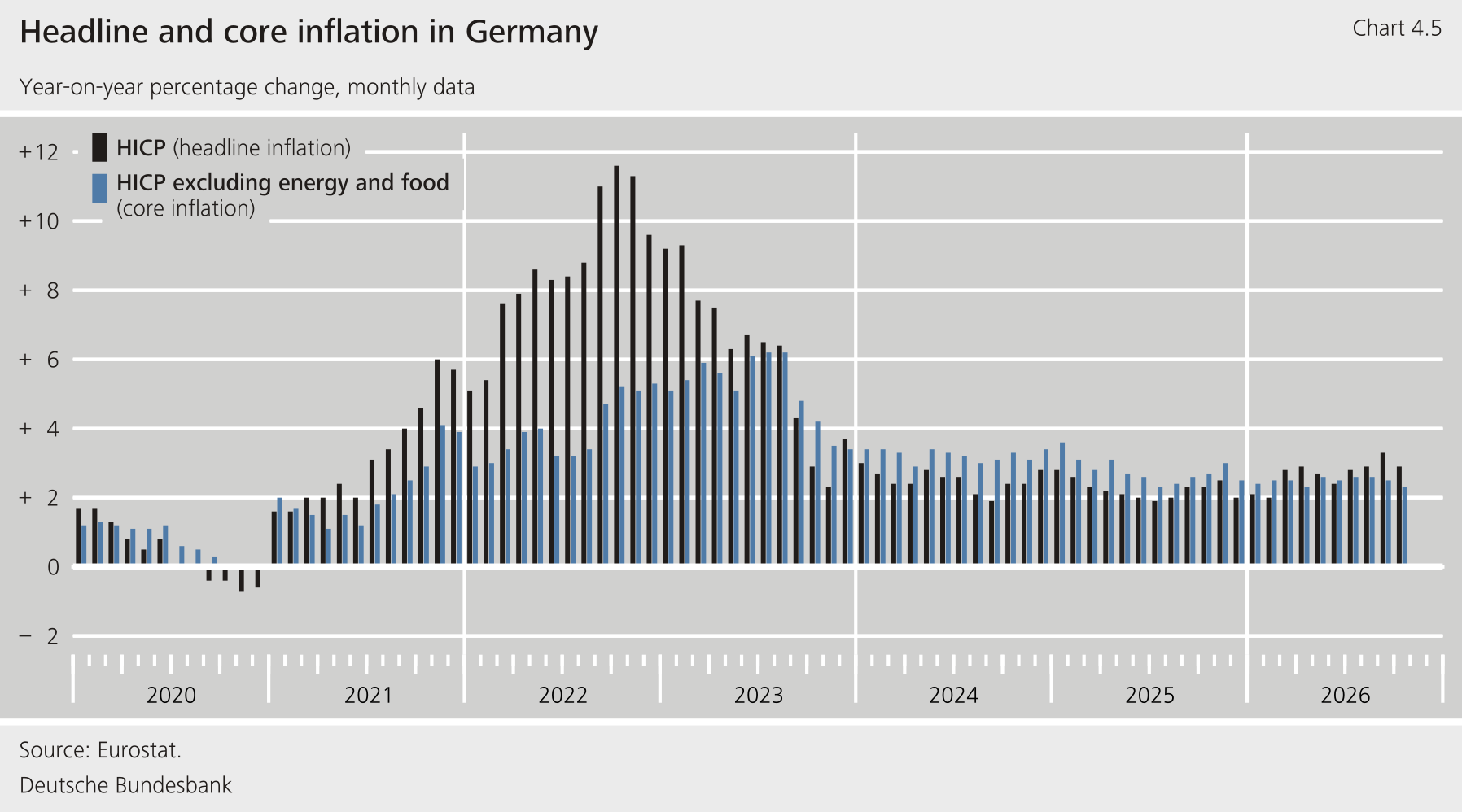
Consumer prices continued to increase sharply in the third quarter. In seasonally adjusted terms, the Harmonised Index of Consumer Prices (HICP) rose again by 0.9 % on the quarter. Energy prices surged further, partly because the fuel rebate 6 expired at the end of June. In addition, slightly lower US dollar-denominated crude oil prices on average over the quarter were offset by higher refining prices and a depreciation of the euro. By contrast, the low water level on the Rhine from July onwards was only accompanied by regional increases in fuel prices, and barely had an impact on HICP inflation (see the supplementary information entitled “Impact of low Rhine water levels in 2026 on fuel prices in Germany”). Prices for non-energy industrial goods likewise rose steeply, partly because fixed amounts and prescription charges for pharmaceuticals were adjusted as of 1 July. As a result, the costs that insured persons have to cover themselves went up for some of the pharmaceuticals in question. By contrast, services inflation declined markedly. Lower prices for air travel and motor vehicle insurance, in particular, had a dampening effect here. As in previous quarters, food prices rose only slightly.
The annual inflation rate increased markedly again in the third quarter. The inflation rate rose from 2.6 % in the second quarter to 3.0 % in the third quarter. This was mainly due to the significantly larger rise in energy prices. There were still no signs of a broad-based pass-through of higher energy prices to other consumer prices, however. For instance, services continued to undergo disinflation, even though the inflation rate here remains above average by historical standards. Food inflation also declined. Factoring out the price surge for pharmaceuticals, non-energy industrial goods inflation remained roughly stable. Core inflation excluding energy and food rose from 2.4 % to 2.6 %. Without the surge in the price of pharmaceuticals, it would even have fallen slightly. 7
In October, inflation fell markedly to 2.9 %. As recently as September, it had stood at 3.3 %. Core inflation excluding energy and food dropped from 2.5 % to 2.3 %. A dampening base effect in services and non-energy industrial goods contributed to the decline in the annual rate. At the same time, the HICP fell by a seasonally adjusted 0.2 % on the month. This was first and foremost because energy prices fell markedly, mainly owing to lower fuel prices. First, a new fuel rebate was introduced between October and December. Second, the sizeable crack spreads (the difference between the prices of crude oil and the corresponding refined oil products) narrowed to a degree. Prices for non-energy industrial goods also went down slightly, despite higher energy costs. Food prices remained stable overall. The cost of services increased at a similar rate to the previous month.
The inflation rate is likely to pick up sharply at the start of the new year. However, uncertainty about future developments remains high. Upside risks to the inflation outlook continue to predominate, mainly owing to the military conflict in the Middle East. 8 By the end of the year, the inflation rate could hover at around its current level, as the fuel rebate is still having a dampening effect. At the beginning of the new year, however, the inflation rate is likely to pick up sharply as the fuel rebate expires and a number of inflationary government measures are brought in. Overall, this could raise the inflation rate by half a percentage point. 9 In addition, gas tariffs are likely to be raised markedly. Moreover, higher energy and input costs are expected to gradually feed into the prices of other goods and individual services. While broad-based indirect effects at the consumer level have been barely discernible so far, import prices for HICP consumer goods have already risen distinctly of late. Food products may also experience lagged effects from the heat and drought this summer. The first hints of this are evident from the recent rise in producer prices for vegetable products. In addition to crude oil prices, available refining capacity in the Middle East and Russia, in particular, will be key to further developments in fuel and heating oil prices.
Supplementary information
Impact of low Rhine water levels in 2026 on fuel prices in Germany
Low water levels can increase the cost of transporting petroleum products by water. When water levels are low, inland waterway vessels have to carry smaller loads, which can increase transport costs per unit. Supply bottlenecks may also necessitate costly alternative transport by road or rail. This can also affect petrol stations supplied by fuel depots that receive deliveries via the Rhine. The analysis presented here examines whether fuel prices in areas close to the Rhine increased more strongly during the low-water period than in more distant regions.
Price and petrol station data from the "Tankerkönig" website allow a systematic comparison of regional fuel prices. 1 The dataset used in the analysis covers 15,095 petrol stations over the period from 1 May to 30 September 2026. 2,568 of these stations are located within 25 km of the Rhine, while the comparison group comprises 8,775 petrol stations more than 100 km away. Petrol stations located between those distances are excluded from the regional price comparison. Depending on the type of fuel, 10,498 to 11,317 petrol stations are included in the analysis. 2 The actual supply routes of individual petrol stations are not known, so their distance from the Rhine is used as a proxy for their integration into Rhine-related supply chains.
The analysis covers the period from 1 July to 30 September 2026. The first ten days of July serve as the reference period. 3 11 July is taken as the start of the low-water period. This cut-off is based on low-water monitoring data for the Kaub gauging station published by the German Federal Institute of Hydrology (BfG) and the International Commission for the Protection of the Rhine (ICPR). The sample period ending on 30 September thus provides three calendar months for the monthly HICP estimates. 4
Low water levels on the Rhine in summer 2026 coincided with sharper increases in fuel prices near the river than in regions further away. This finding is based on a panel regression comparing price developments at petrol stations near and further away from the Rhine during the low-water period with their respective developments in the reference period. 5 Between 1 July and 10 July, the average price difference was 0.2 cents per litre for diesel, 1.7 cents per litre for E5 and 1.8 cents per litre for E10. Between 11 July and the end of the sample on 30 September 2026, the price differential reversed on average. Prices at petrol stations near the Rhine were now 1.9 cents per litre higher for diesel, 1.2 cents per litre for E5 and 1.1 cents per litre for E10. Prices rose in both regions. However, the increase was stronger near the Rhine. Compared with the first ten days of July, the regional price spread thus widened by around 2.1 cents per litre for diesel and around 2.9 cents per litre for petrol.
Table 4.1: Regional price differential and estimated mark-up Cents per litre; positive values indicate higher prices at petrol stations near the Rhine
Fuel
1-10 July
11 July-30 September
Change
Estimated mark-up near the Rhine
Price differential in cents per litre
Diesel
− 0.20
+ 1.92
+ 2.12
+ 2.11
E5
− 1.72
+ 1.17
+ 2.89
+ 2,87
E10
− 1.83
+ 1.09
+ 2.92
+ 2.91
Source: Tankerkönig and Bundesbank calculations. The first three results columns show descriptive means or changes in these means. The final column shows the change in the price differential during the low-water period relative to the first ten days of July, as estimated using the panel regression.The panel regression includes petrol station and day fixed effects, with standard errors clustered by petrol station and day. All three estimated coefficients are statistically significant at the 0.1 % level.
The estimated fuel price mark-ups near the Rhine remain statistically significant under alternative specifications. This applies both to changes to the start date of the low-water period and extensions of the reference period. Restricting the estimation to price observations from Monday to Friday also has little effect on the results. In addition, the change in the regional price differential in 2026 is compared with the corresponding change over the same calendar periods in 2025. This comparison also yields positive and statistically significant additional mark-ups near the Rhine. 6 An earlier study likewise documented regional differences in diesel price developments during the 2018 low-water period. 7
The estimated fuel price mark-ups cannot be attributed entirely to low water levels. Although the estimates control for nationwide factors that change over time, including crude oil and petroleum product prices as well as nationwide changes in refinery margins, the estimated mark-ups may also reflect regional differences in refinery margins, local supply bottlenecks and other region-specific factors. The estimation cannot distinguish these factors from the effects of low water levels on transport and supply. The results should therefore not be interpreted as the causal effect of low water levels alone.
A rough extrapolation is used to estimate the impact of the regional fuel price mark-ups on the inflation rate. To this end, the regional price mark-up is first expressed as a percentage of the average fuel price in the comparison group. Petrol stations near the Rhine account for around 17 % of all petrol stations covered by the dataset, and the resulting percentage price effect is weighted by this share. As no data are available on actual consumer spending by petrol station location, the extrapolation assumes that these stations account for around 17 % of nationwide consumer spending on diesel and the same share of spending on petrol. The resulting percentage effects are then combined with the HICP weights of 0.8 % for diesel and 2.6 % for petrol. The mechanical extrapolation suggests that the regional fuel price mark-ups contributed approximately 0.1 percentage points to the annual rate of change in the energy component of the HICP in August 2026. Their contribution to the headline HICP inflation rate is therefore negligible. 8
Table 4.2: Contribution of the regional fuel price mark-up to the HICP
Contribution in percentage points
July 2026
August 2026
September 2026
… to the annual rate of change in the energy component of the HICP
+ 0.05
+ 0.12
+ 0.07
… to the annual rate of change in the HICP
+ 0.005
+ 0.011
+ 0.006
Sources: BAFA,Eurostat, Tankerkönig and Bundesbank calculations. Notes: Additional calculated contribution relative to a scenario without a regional price premium. The contributions to the annual rate of change are calculated as the difference between the estimated effect in the respective month of 2026 and the corresponding effect in the same month of 2025.
6 The fourth quarter will probably see stronger GDP growth.
The fourth quarter will probably see stronger GDP growth again. Expansionary fiscal policy remains a source of impetus. Higher government spending on defence and infrastructure will probably continue to be visible in economic activity. Industry is benefiting from both growing domestic demand and expanding global trade. Both output and exports are therefore likely to pick up. However, water levels on major waterways remained low as this report was published. This is likely to have curbed economic activity, and a normalisation with corresponding catch-up effects will likely extend into the first quarter of 2027. Capacity utilisation in the manufacturing sector improved visibly, but remained below its long-term average. This, and the fact that interest rates have risen, means that enterprises’ propensity to invest is likely to remain low. Higher mortgage rates are dampening demand for construction work. Civil engineering activity, though, will probably continue to benefit from government investment in infrastructure. Private consumption is likely to remain muted, even if the temporary fuel rebate goes some way towards cushioning the impact of high energy prices.
Industrial production and exports are likely to pick up again after the temporary damper in the preceding quarter. They are still under pressure from high energy costs. And the fact that water levels on the Rhine remained low, at least until this report was published, is also likely to have dampened output. However, sentiment indicators and the improved order situation suggest that momentum is picking up again. According to ifo Institute surveys, the manufacturing sector’s business situation and business expectations entered positive territory in October for the first time in more than three years. Both these indicators, as well as export expectations and short-term production plans, were significantly higher than in the previous quarter. The order situation in industry also brightened. Industrial orders went up markedly in September. Averaged across the third quarter as a whole, they thus rose slightly again, both including and excluding volatile large orders. In the third quarter, positive demand stimulus came mainly from within Germany, especially from other transport equipment, which encompasses important parts of the defence industry. In the area of weapons and ammunition, new orders from Germany likewise rose steeply. Manufacturers of electrical equipment also saw a particularly sharp rise in new orders from Germany and abroad. Manufacturers of computer, electronic and optical products recorded a decline in new orders, but this followed a sharp increase in the previous quarter. Demand stimulus stemming from the global AI boom is therefore still visible. However, this was also reflected in an increased shortage of materials in the relevant areas according to ifo Institute data. By contrast, new orders in the automotive industry fell significantly for the second consecutive quarter. The smaller number of cars produced in October according to the VDA also suggests that the automotive sector is likely to remain weak in the current quarter. The overall more favourable industrial activity this year is reflected in somewhat brighter profit expectations for firms in the manufacturing sector this year. (For an analysis of developments in German enterprises and groups in 2025 with a focus on profitability and financial stability based on extrapolated data from annual accounts, see the supplementary information entitled “German enterprises' profitability and financing in 2025” and “Profitability and financial position of German listed groups in 2025 and an outlook for 2026”.)
Private consumption is likely to remain subdued. Despite the fuel rebate, it is being held back by the sharp rise in energy prices. The GfK consumer climate index deteriorated recently owing to lower income expectations and a lower propensity to purchase. However, other indicators point to an increase in private consumption. According to the ifo Institute, enterprises in the consumer-related retail and hospitality sectors rated their business situation in October as worse than in the previous month, but better than in the previous quarter. Private motor vehicle registrations were also significantly higher in October than in the third quarter, despite a month-on-month decline.
Supplementary information
German enterprises' profitability and financing in 2025
Profitability in 2025
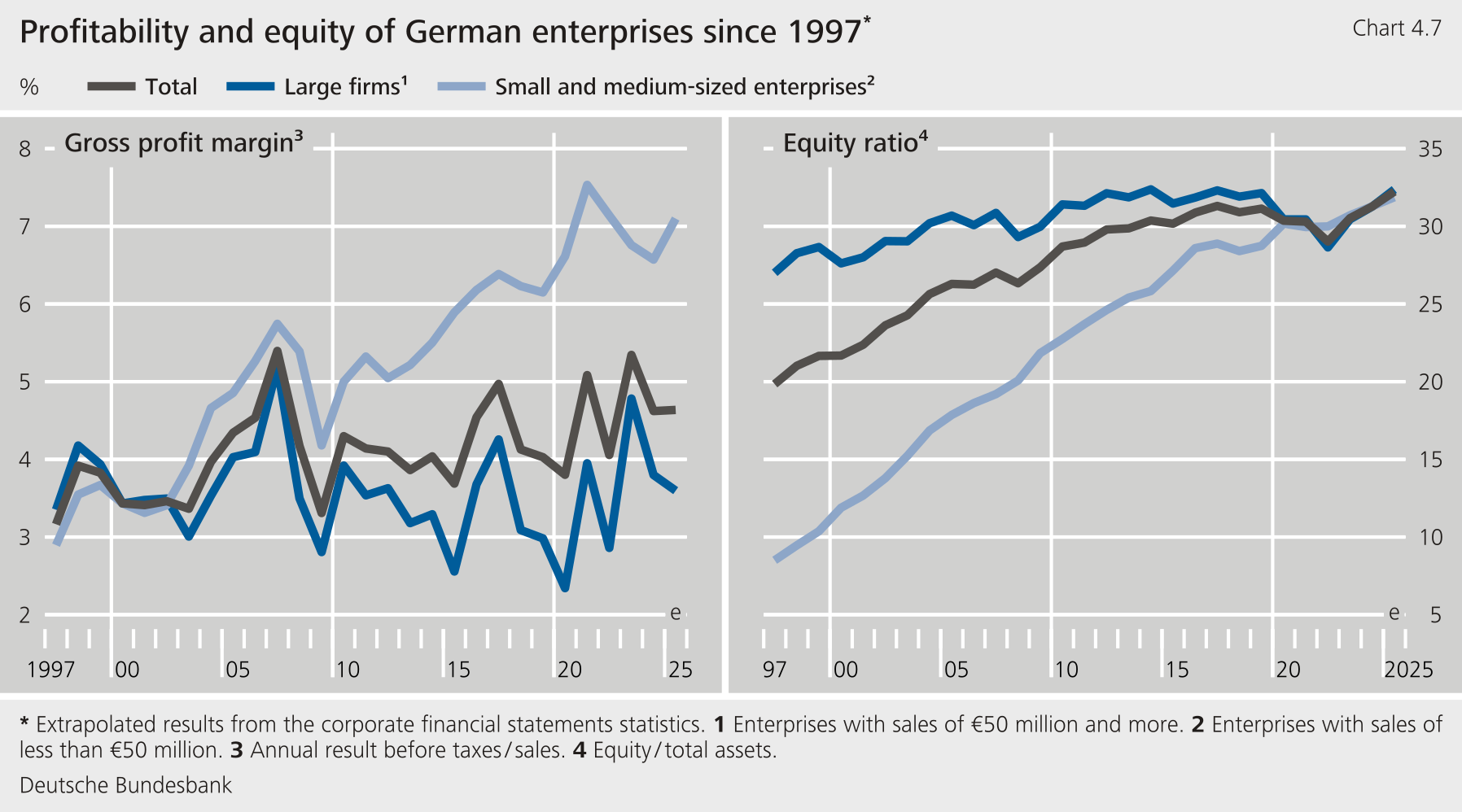
Against the backdrop of a stagnating German economy, the profitability of German enterprises changed little in 2025. The pre-tax return on sales remained at the previous year's level. 1 At 4.6 %, profitability continued to be solid and was slightly above the average of 4.1 % recorded since 1997. Total income and expenses increased to the same extent. On the income side, sales rose by just 1.2 %, in line with weak GDP growth. Interest income and income from long-term equity investments, by contrast, fell sharply, by 16 % and 18 %, respectively. The cost of materials remained virtually unchanged, reflecting subdued business activity, while personnel costs rose by around 3 % owing to substantial wage increases. Falling energy prices are also likely to have helped ease the cost of materials. Interest expenses fell sharply, by 9 %. This was probably mainly because the reduction in short-term interest rates since mid-2024 had a greater impact on financing costs in 2025.
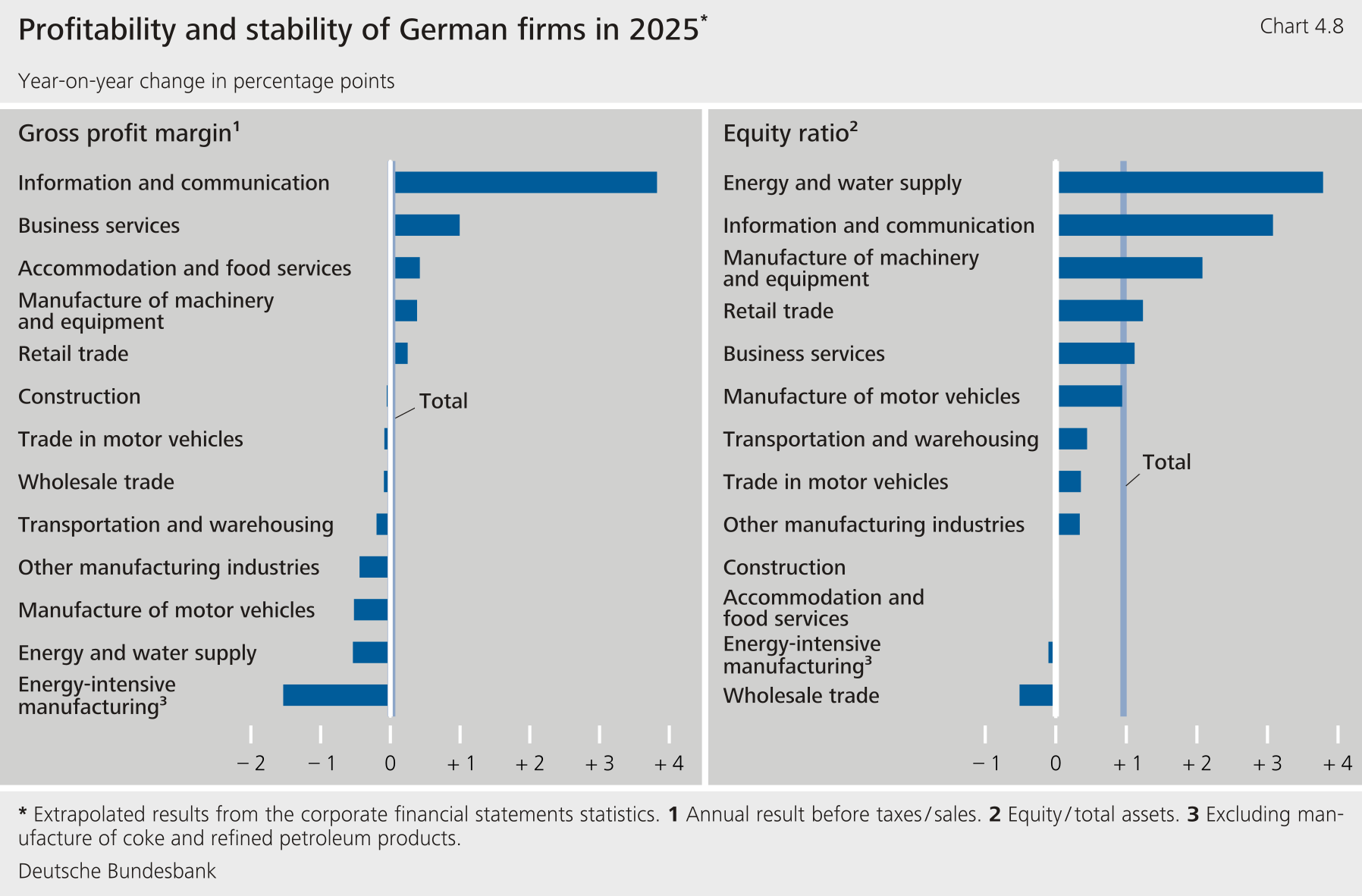
Profitability increased on average in the services sector and among small and medium-sized enterprises (SMEs) in 2025. The information and communication sector recorded the strongest increase in gross profit margin, while profitability also rose noticeably in business services. 2 In both service sectors, these improvements were attributable to developments at individual large enterprises. Software, artificial intelligence (AI) and cloud services are likely to have been the main drivers of higher profitability in the information and communications sector. By contrast, profitability continued to weaken among enterprises in the production sector and, to a lesser extent, large enterprises. The chemical and pharmaceutical industry recorded a particularly sharp fall in gross profit margin. 3 Weak demand, significant underutilisation of capacity and intense price pressure from Chinese competition are likely to have continued to weigh on the chemical industry in 2025. The generally less favourable earnings performance of large enterprises and those in the manufacturing sector in 2025 is also reflected in developments at corporate groups (see the supplementary information entitled “Profitability and financial position of German listed groups in 2025 and an outlook for 2026”). 4
Financial stability in 2025
Enterprises were well positioned in 2025 in terms of their financial stability. The equity ratio continued to rise, reaching an average of 32.2 %, its highest level since the records began. 5 This was because equity increased substantially, while liabilities and provisions rose only slightly. 6 The growth in equity was driven by both retained earnings and external capital injections.
The equity ratio rose in almost all sectors. It increased for both large enterprises and SMEs. The strongest increases were recorded among large energy enterprises and large enterprises in the information and communication sector. By contrast, the greatest declines were seen among large enterprises in wholesale trade (excluding motor vehicles) and accommodation and food services. However, these decreases were relatively modest, at around 1.0 % and 0.7 %, respectively. The long-term debt ratio contracted in most sectors. 7
Enterprises’ liquidity positions also remained robust in 2025. The quick ratio 8 remained unchanged from the previous year, standing at its average level since 1997. The other liquidity ratios also displayed a robust performance. Moreover, in 2025, energy-intensive companies were no worse off in terms of liquidity than companies in other sectors.
Situation in energy-intensive industries
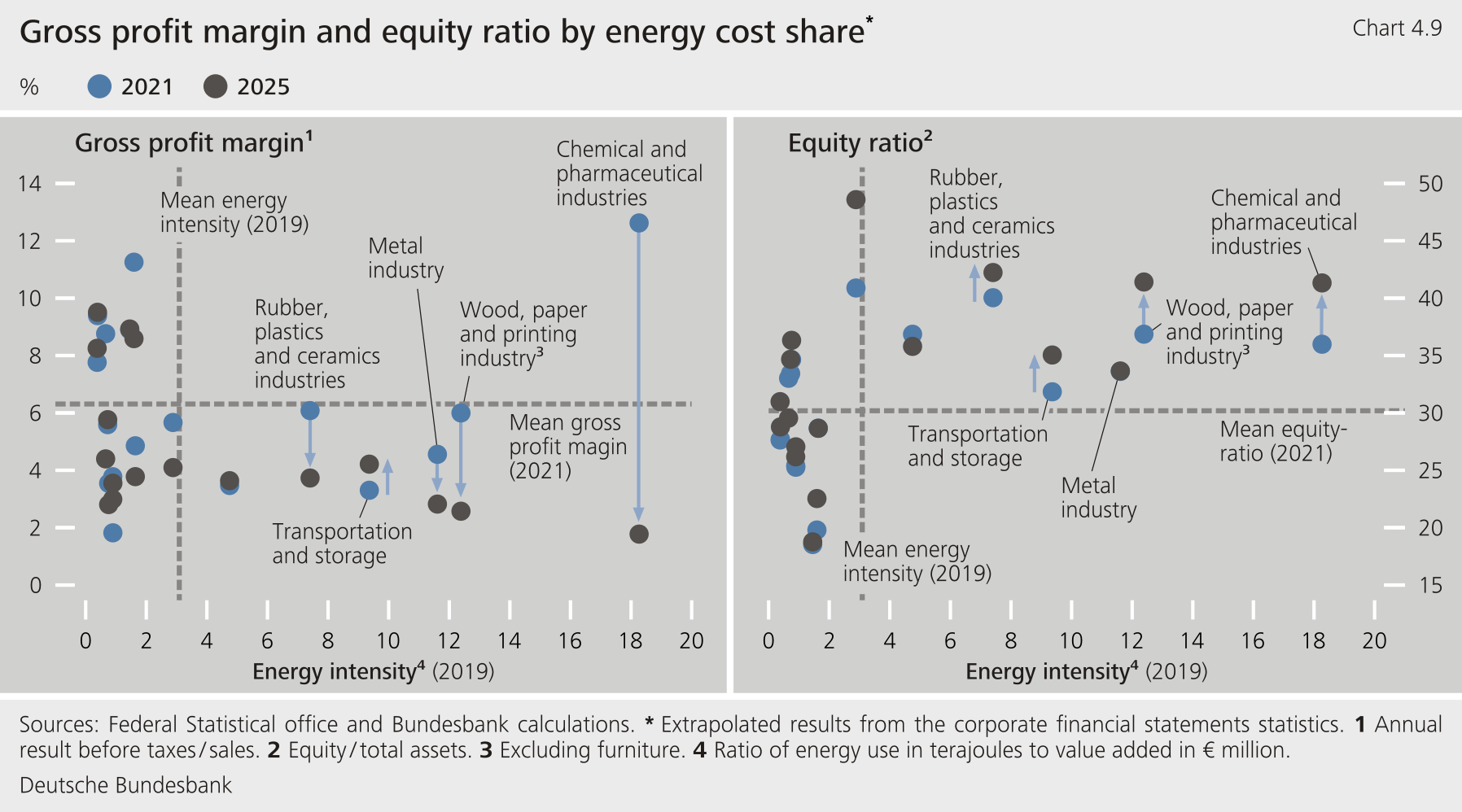
The renewed energy price shock in 2026 is hitting energy-intensive manufacturing industries with subdued profitability but solid financial positions. With energy prices rising sharply again this year, the question is how well prepared energy-intensive industries are to withstand the shock compared with 2021. The gross profit margin of companies in energy-intensive manufacturing has declined significantly since 2021. 9 On average, it fell from 7.8 % in 2021 to 2.6 % in 2025. Profitability in energy-intensive manufacturing was below the average for the rest of the enterprise sector (4.9 %) in 2025. Higher energy costs for energy-intensive companies since Russia's invasion of Ukraine are likely to have weakened their competitiveness in international trade. By contrast, the transportation and storage sector, which is also energy-intensive, has improved its profitability since 2021.Financial stability in energy-intensive sectors has improved overall and is likely to support their resilience. Some energy-intensive companies may have built up financial buffers as a precaution in recent years.
Energy-intensive industries are likely to weather the renewed rise in energy prices in 2026, at least in the short term. This is also supported by the fact that, unlike the energy price shock of 2022, the 2026 shock does not primarily affect the EU and Germany. Rather, it is global in nature, with Asian countries tending to be even more severely affected. The impact on the competitiveness of German manufacturing industry is therefore likely to be considerably smaller than in 2022 and 2023. Furthermore, the 2026 energy price shock initially had an effect mainly on oil prices, whereas gas is a more important energy source for energy-intensive manufacturing industries. However, if the recent sharp rise in gas prices persists, these industries could come under greater pressure.
Corporate insolvencies in 2025 and 2026
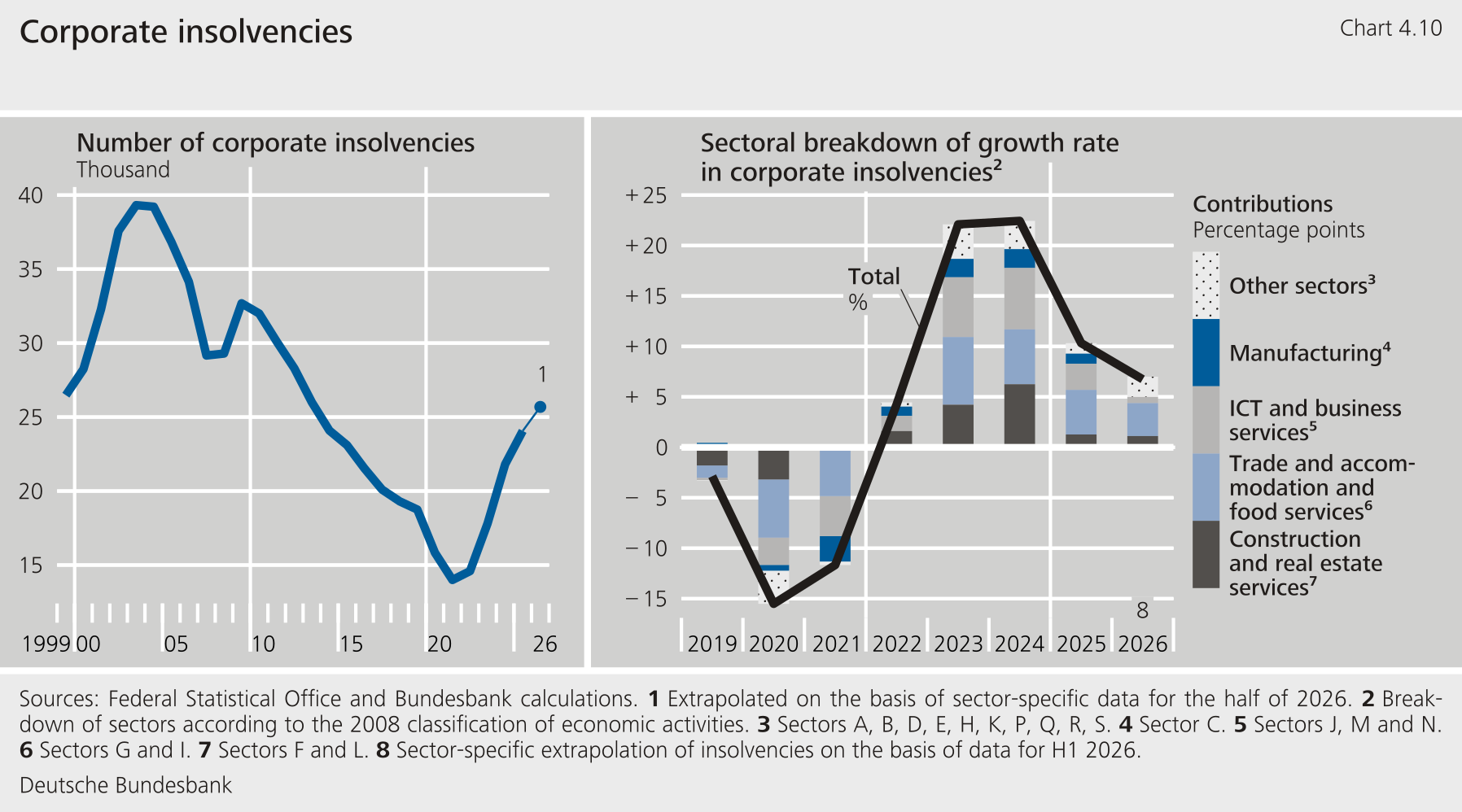
The number of corporate insolvencies continued to rise in 2025, albeit at a much slower pace than in previous years. Just under 24,100 companies filed for insolvency, a level similar to that seen in the mid-2010s. This represented an increase of 10 % compared with 2024, following rises of more than one-fifth in each of the preceding two years. The slower increase last year was likely due to the waning catch-up effects from the COVID‑19 pandemic, the diminishing impact of earlier interest rate hikes and a gradual economic recovery. 10 Despite the considerable challenges facing the manufacturing sector, insolvency numbers remained relatively low. The pace of increase has slowed further this year as the economy has recovered. In the first half of 2026, just under 7 % more firms filed for insolvency than in the same period of 2025.
Profitability outlook for 2026
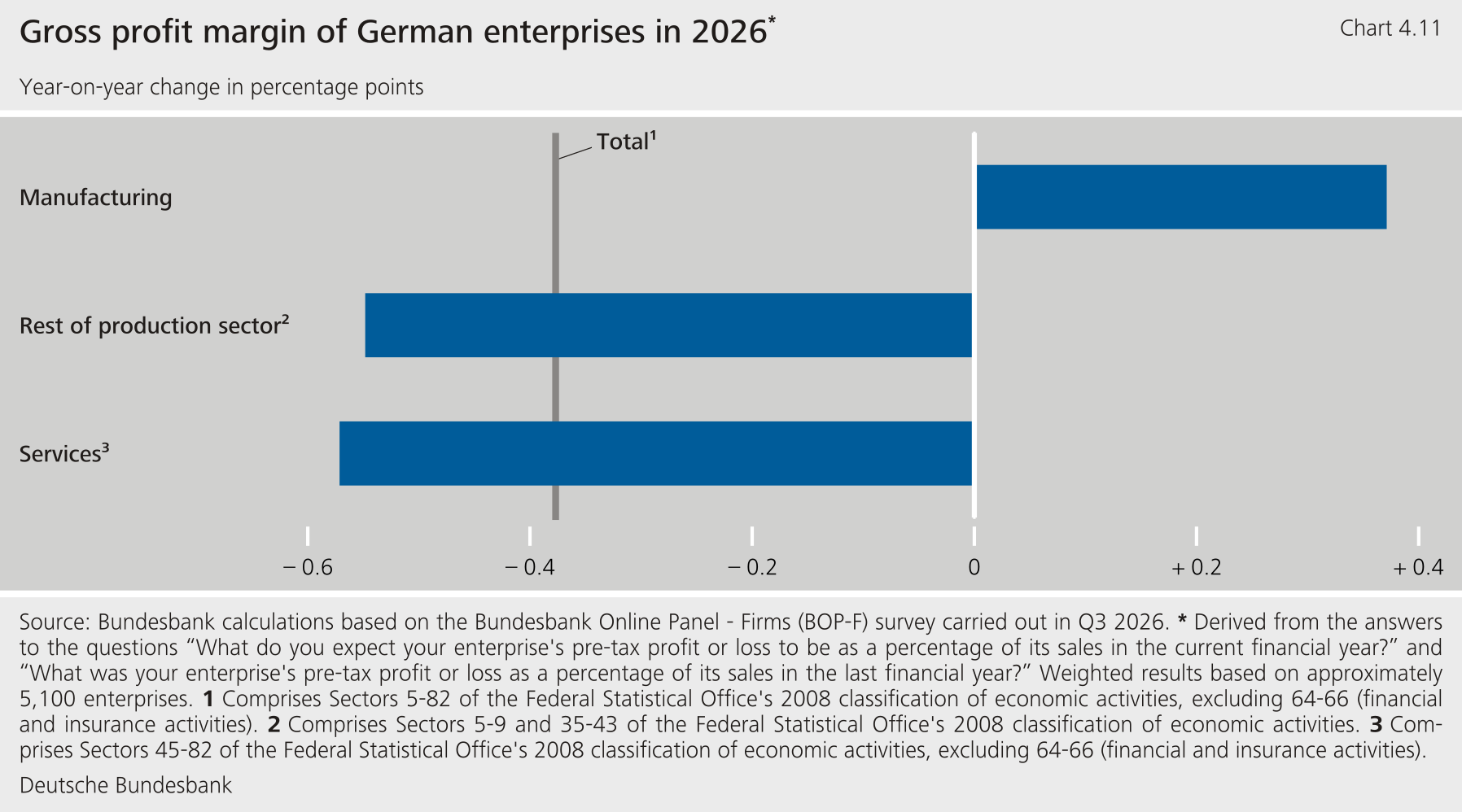
Companies expect profitability to decline slightly overall in 2026. According to the results of the Bundesbank Online Panel – Firms (BOP‑F) for the third quarter of 2026, the average gross profit margin is expected to fall by around 0.4 percentage points compared with the previous year. Small and medium-sized companies, in particular, expect lower profitability, while large companies expect only a slight decline in their gross profit margins. This may reflect robust global economic activity and the associated strong performance of German exports, as well as the greater international orientation of large companies.
In the manufacturing sector, profitability could recover this year following the decline in the previous year. In particular, rising demand from abroad is likely to have boosted companies’ gross profit margins. By contrast, the construction sector continued to perform poorly in the first half of the year, which is also likely to have weighed on profitability in the rest of the production sector. The weak earnings performance of the services sector so far this year is likely to be linked to subdued household consumption in 2026.
Long time series of extrapolated results of the corporate financial statement statistics are available online.
Supplementary information
Profitability and financial position of German listed groups in 2025 and an outlook for 2026
The consolidated financial statement statistics complement the corporate financial statements statistics by covering large, internationally active listed groups. Unlike the broad corporate financial statement statistics, they cover a relatively small group of companies and capture their worldwide business activities, including those of foreign subsidiaries. One advantage of the consolidated financial statement statistics is that the data become available relatively quickly, allowing an early assessment of profitability trends in the current year. 1
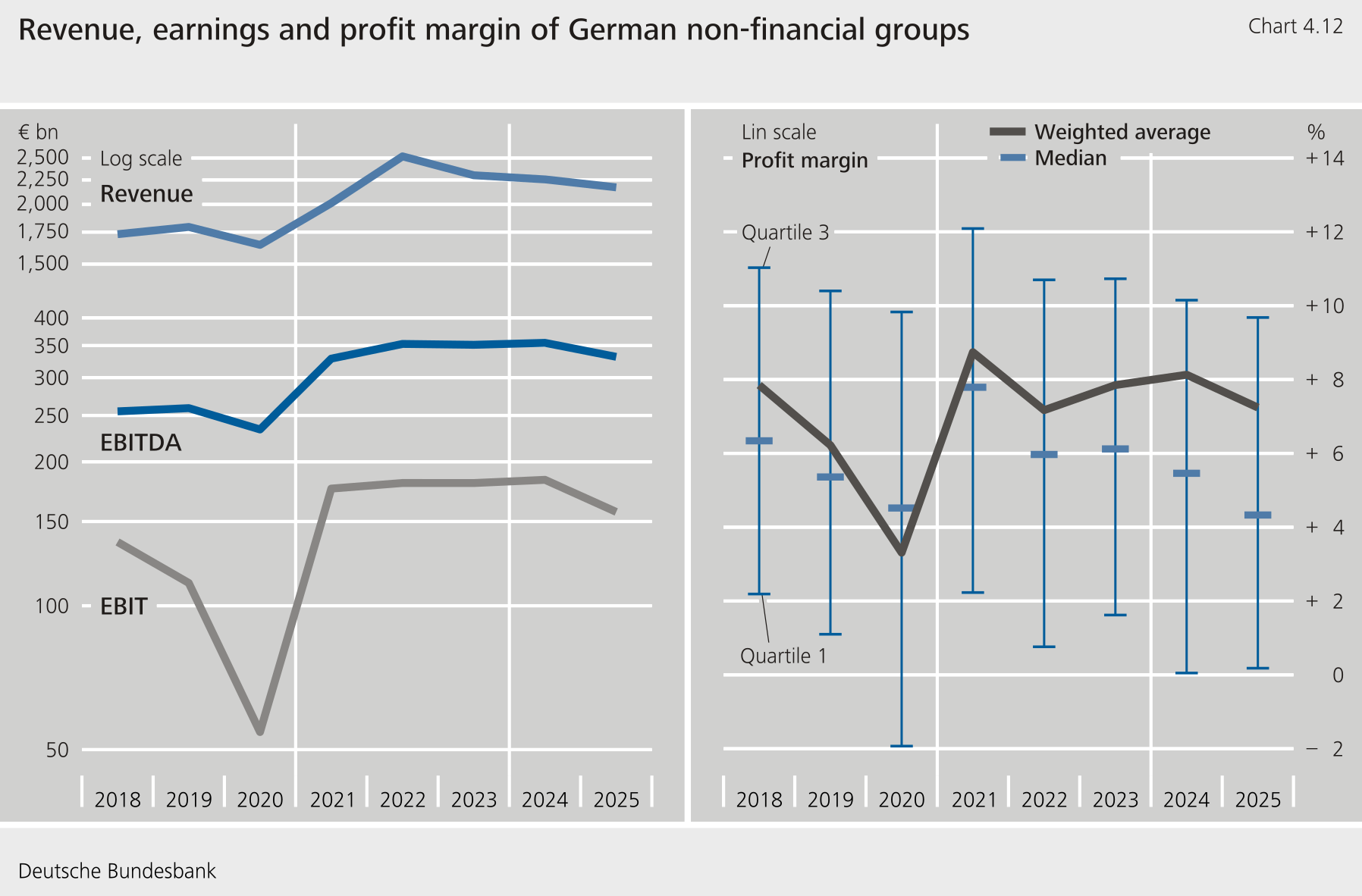
Persistently weak economic activity weighed on the profitability of German non-financial groups in 2025. Sales declined by 1 %, while operating profit after depreciation and amortisation (EBIT) fell by 14 %. 2 As a result, the weighted profit margin declined by 1 percentage point to 7.2 %. Groups operating primarily in the production sector recorded a decrease of 1.5 percentage points to 6.0 %, while those in the services sector saw a slight increase to 11.0 %.
Motor vehicle manufacturers were the main driver of developments in the production sector. According to company annual reports, intense competition in the Chinese market and higher US import tariffs were the main drags on performance. Groups reported declining sales volumes and reduced pricing power. Operating margins came under additional pressure from adverse exchange rate effects following the appreciation of the euro, particularly against the US dollar and the renminbi, as well as restructuring and impairment charges associated with the industry's transformation. Energy utilities also contributed significantly to the deterioration in the production sector, although their performance was heavily influenced by one-off effects. In particular, earnings no longer benefited from gains arising from the IFRS valuation of derivatives, which had boosted results in the previous year. Margins also returned towards more normal levels after being exceptionally high the year before. Weather-related factors and stagnating industrial electricity demand amid weak economic activity put further pressure on earnings. By contrast, higher regulated network revenues resulting from the expansion of grid infrastructure provided support. The chemicals and pharmaceuticals industry also recorded declines in sales and earnings, mainly due to price and exchange rate effects. Profitability developed more favourably among information technology service providers and in the aerospace industry, both of which benefited from higher sales volumes and a better product mix. Information technology service providers were the main driver of the increase in the weighted profit margin in the services sector.
Profit margins declined at 55 % of groups, indicating that the deterioration was not limited to the companies with the highest sales. Declines in both the median and the third quartile point to a broad-based weakening in profitability, while there was little change at the lower end of the distribution. As a result, profitability in the middle and upper parts of the distribution fell to levels comparable to those seen during the crisis year of 2020.
Currency translation effects weighed on corporate group balance sheets in 2025, with aggregate total assets declining by 1 %. As the assets and liabilities of foreign subsidiaries are translated into euro at the exchange rate prevailing on the balance sheet date, the appreciation of the euro compared with the previous year reduced their reported values. Despite these adverse currency translation effects, tangible fixed assets increased slightly, driven by investment in generation facilities and grid infrastructure by energy utilities as part of the energy transition, as well as growth in the vehicle leasing business among motor vehicle manufacturers. 3 Corporate group liabilities fell by 2 %, reflecting currency translation effects, a decline in provisions for pensions due to higher discount rates and a marked reduction in derivative liabilities at energy utilities.
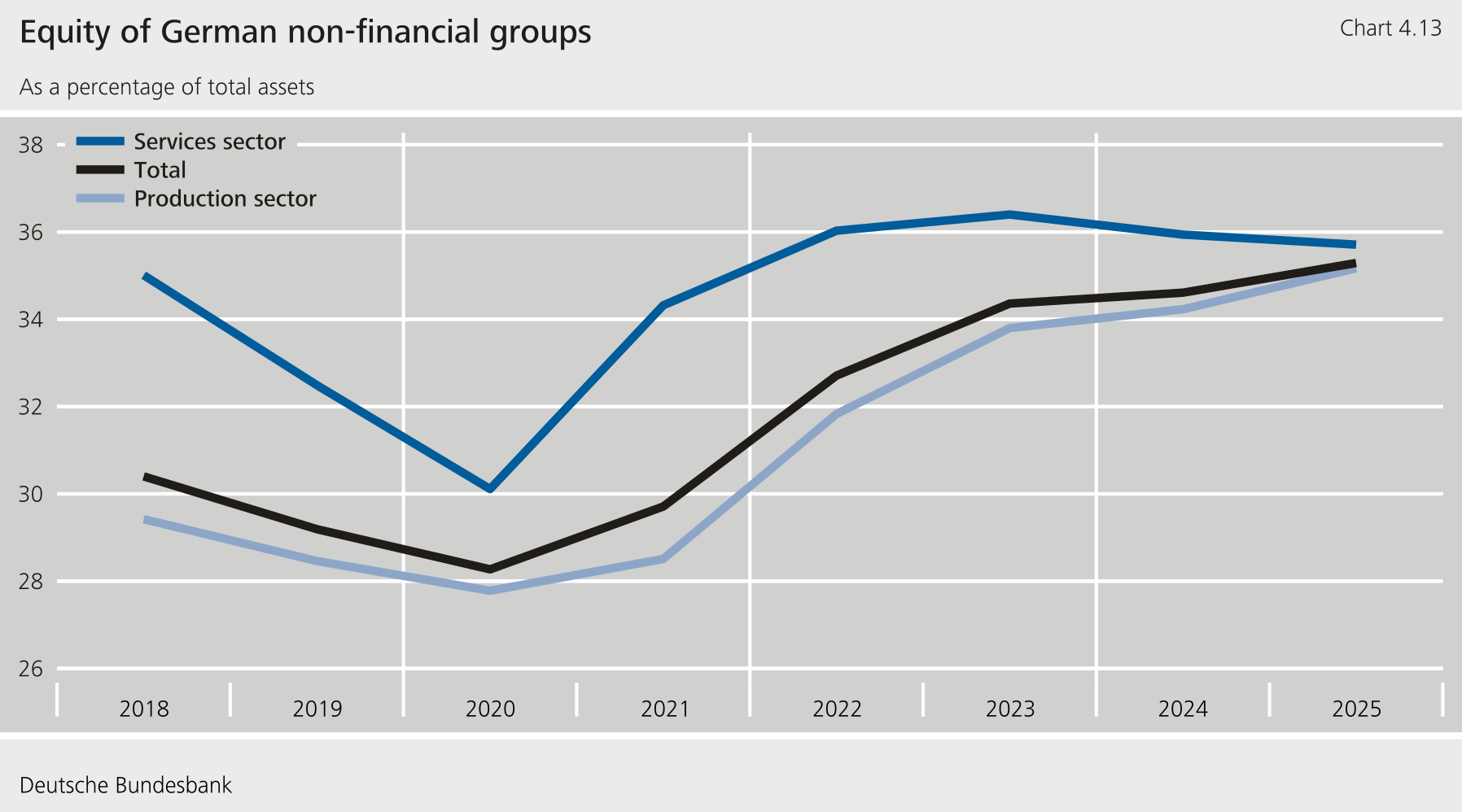
Groups’ equity increased by 1 %. Retained earnings grew, mainly as a result of undistributed profits. This increase was partly offset by movements in other equity reserves, particularly adverse currency translation effects arising from the appreciation of the euro. 4 By contrast, the valuation of hedging instruments and financial assets made positive contributions. 5 Alongside profitability, non-cash valuation changes were therefore a major factor influencing equity. The equity ratio rose from 34.6 % to 35.3 %, although developments differed between the production and services sectors. In the production sector, both equity and the equity ratio were higher, supported by capital increases at individual large groups in addition to the broader factors described above. In the services sector, however, equity and the equity ratio both declined, mainly as a result of share buybacks by individual large groups.
Overall, profitability looks set to improve in 2026. In their interim financial statements published so far, most large groups forecast higher earnings and margins for the year as a whole. In the first half of 2026, the weighted profit margin across all groups covered by the statistics had already risen slightly compared with the same period of the previous year.The largest increases were due to a base effect, as some large groups had incurred substantial impairment charges and expenses related to provisions in the previous year that did not recur in 2026. Higher commodity prices also led to positive valuation effects on derivatives held by energy utilities. Stronger demand and higher margins in mechanical engineering, the chemicals industry and among information technology service providers contributed to the improvement. By contrast, motor vehicle manufacturers continued to face the pressures seen in the previous year. In shipping and aviation, disruptions to transport routes and higher fuel costs resulting from the crisis in the Middle East weighed on profit margins.
This article reflects data up to 17 November 2026, 41:00.