1 Temporary loss of momentum in the German economy
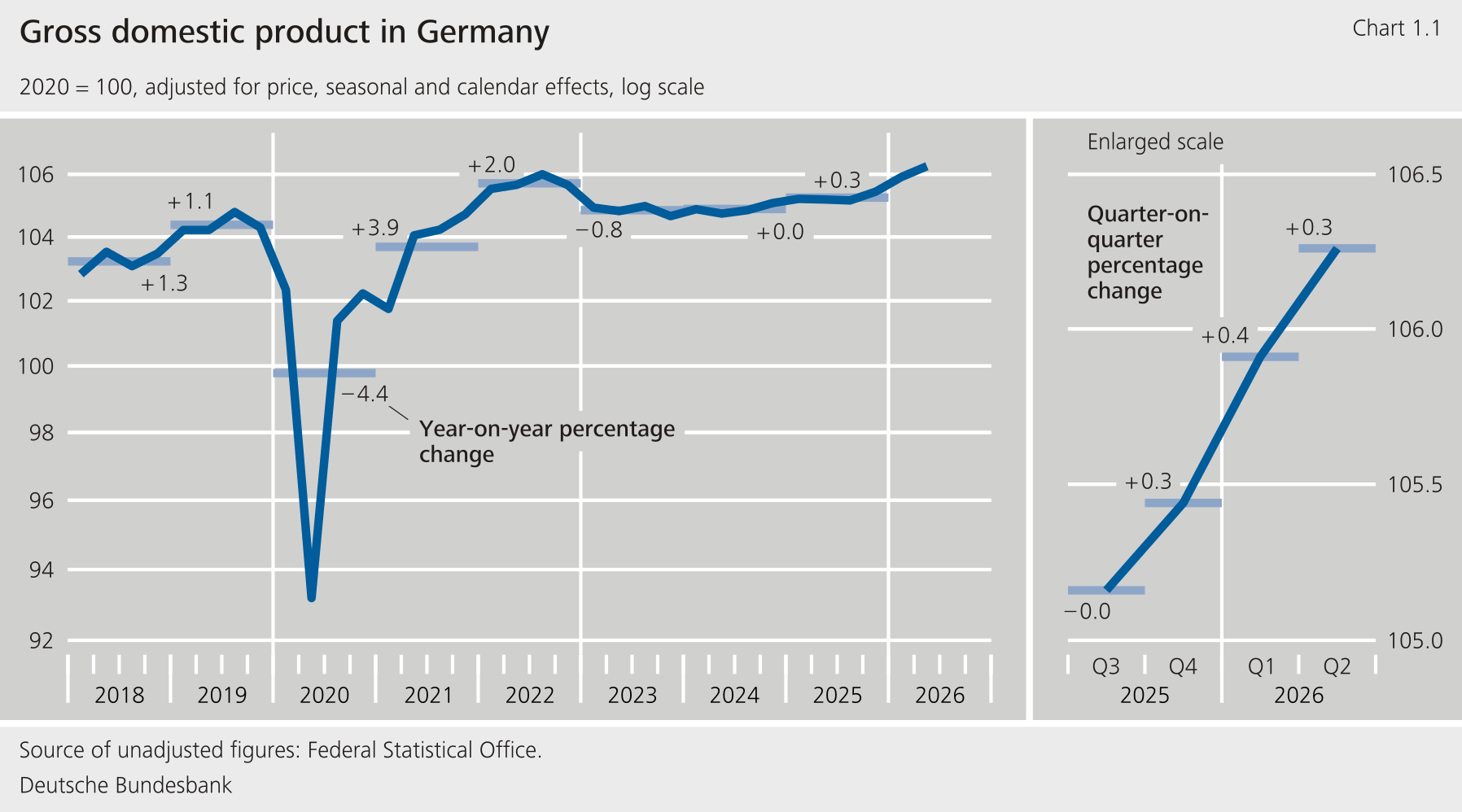
The German economy is likely to lose momentum temporarily in the third quarter of 2026. Following a significant increase in the previous two quarters, real GDP will grow only slightly in seasonally adjusted terms 1 in the current quarter. In general, however, the German economy will not stray from its path to recovery. This is because the slower pace largely stems from temporary stress factors. Catch-up effects should come into play once these factors subside. In particular, the Rhine's low water levels are putting the brakes on activity in the current quarter. This was already reflected by weak industrial output in July. Exports are also expected to make a smaller contribution to growth in the third quarter. In addition, private consumption is likely to remain subdued. The removal of the “fuel rebate” weighed significantly on the retail sector at the start of the quarter. 2 In price-adjusted terms, petrol stations suffered sharp losses in sales as consumers took advantage of the cheaper prices still available in June. In addition, high energy prices curbed consumers’ purchasing power, as well as their spending on other goods. Yet overall, the German economy has remained fairly resilient to elevated energy prices and supply chain problems to date. This is also reflected by the ifo and S&P Global sentiment indicators for German industry, which improved significantly in July and August. The easing of fiscal policy is creating additional impetus. This should also provide a sustained boost to the construction sector, in particular civil engineering. However, higher interest rates and rising construction costs are dampening household demand for construction work. Increased interest rates and persistently low capacity utilisation are weighing on private investment. Growth in the German economy is likely to pick up again in the fourth quarter. However, this will also depend on how the conflict in the Middle East evolves and how quickly normal water levels are restored on major waterways.
2 Industry temporarily depressed by one-off effects
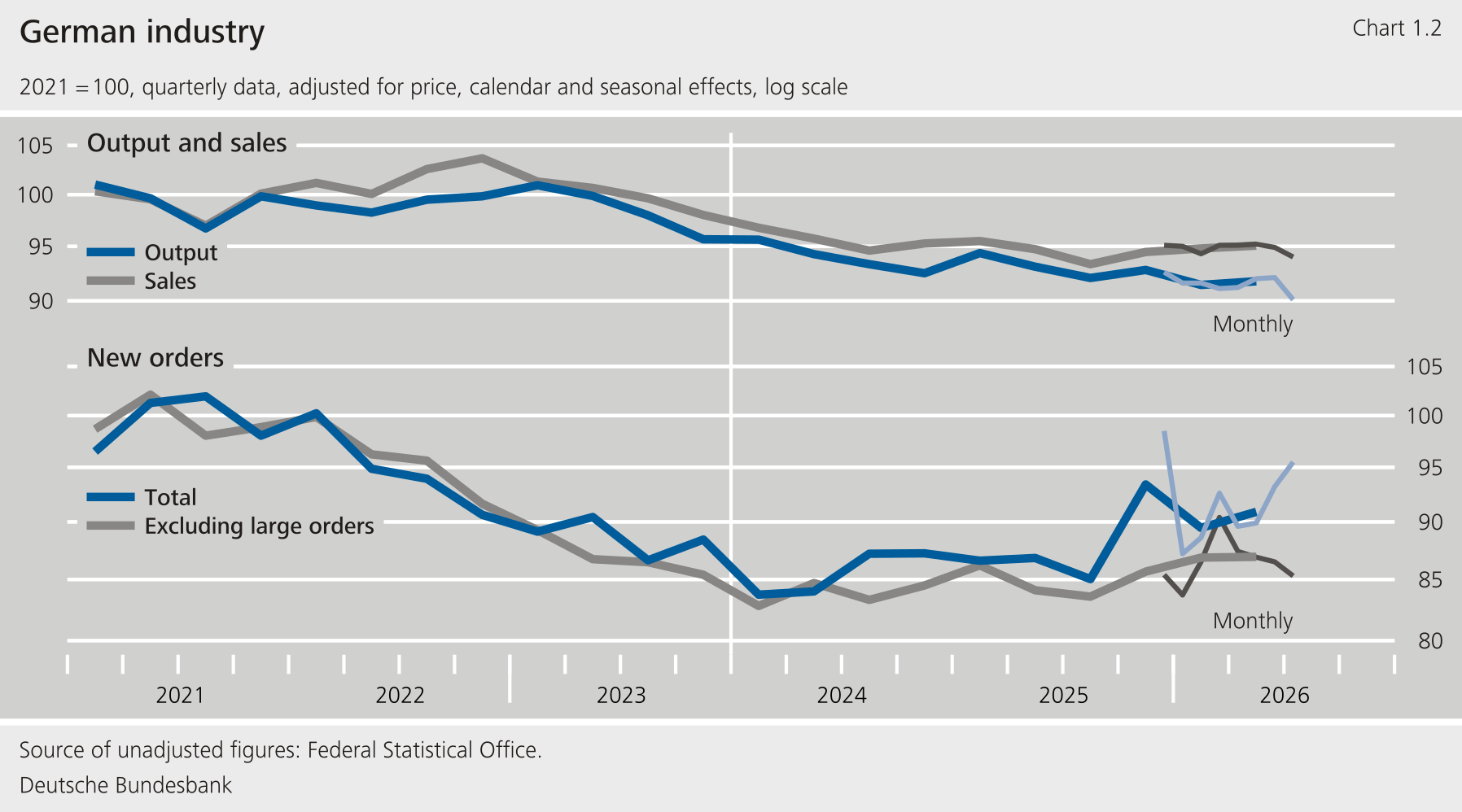
Industrial production declined sharply at the start of the third quarter due to pressure from one-off effects. In July 2026, industrial output and sales fell palpably on the month and on the quarter in seasonally adjusted terms. The low water levels that emerged in July impaired transport on major rivers and transport costs rose sharply. 3 For example, industrial sectors that were impacted more heavily by supply bottlenecks saw a notable drop in output. This also tended to affect energy-intensive sectors such as the manufacture of coke and refined petroleum products, chemicals and metals, which also suffered due to high prices for key fossil fuels. Price-adjusted goods exports also dropped markedly in July compared with the previous month, falling below the average for the previous quarter. Low water levels are likely to have had significant adverse effects on output and foreign trade over the remainder of the quarter. Water levels were low throughout the month of August, in particular. An additional one-off effect in the automotive industry is likely to have weighed on output, especially at the start of the quarter. One factory suspended production for several weeks as it converted the plant to manufacture electric vehicles, which had a dampening effect in July. 4 Production in the automotive industry is expected to return to normal from August onwards. 5
The order situation in industry has improved. New orders recorded another sharp increase in July. As in the previous months, demand for German industrial products was heavily driven by large orders. Other transport equipment, which includes important parts of the defence industry, was the main beneficiary of these orders. 6 However, excluding large orders, new orders declined for the fourth consecutive month. The ifo survey for the manufacturing sector in August points to a better order situation and extended production plans. The steep rise in export expectations reported to the ifo Institute also suggests that exports will improve in the near term. Thus, the underlying trend in demand is still heading upwards overall. This means that the conditions are in place for industry to return to its recent, more robust pace of activity once the negative one-off effects have dissipated.
3 Gradual recovery in construction despite headwinds
Construction output rose significantly at the beginning of the quarter. Output increased across all sectors in July in a countermovement to the particularly weak trend in the previous month. As a result, overall output returned to the average for the second quarter. In the main construction sector, output reflects the favourable trend in new orders in the second quarter. New orders were up somewhat for building construction and rose sharply for civil engineering. This marked a continuation of the recovery in new orders that has been ongoing for around three years amid repeated setbacks.
The recovery in construction output is likely to continue. Business expectations as surveyed by the ifo Institute improved noticeably in July and August. At the same time, the share of enterprises reporting material shortages declined again, at only 4 % in August. This suggests that pressure on the construction sector’s supply chains due to the Iran war and low water levels is easing overall. Civil engineering, in particular, should continue to benefit from increasing infrastructure investment from central government’s special fund, even though capacity utilisation is already high in large parts of the sector. Conversely, the recovery in building construction and, in particular, housing construction is likely to be slow at best given rising construction costs and high interest rates for building finance.
4 Labour market remains on a slightly downward track, with leading indicators showing initial signs of stabilisation
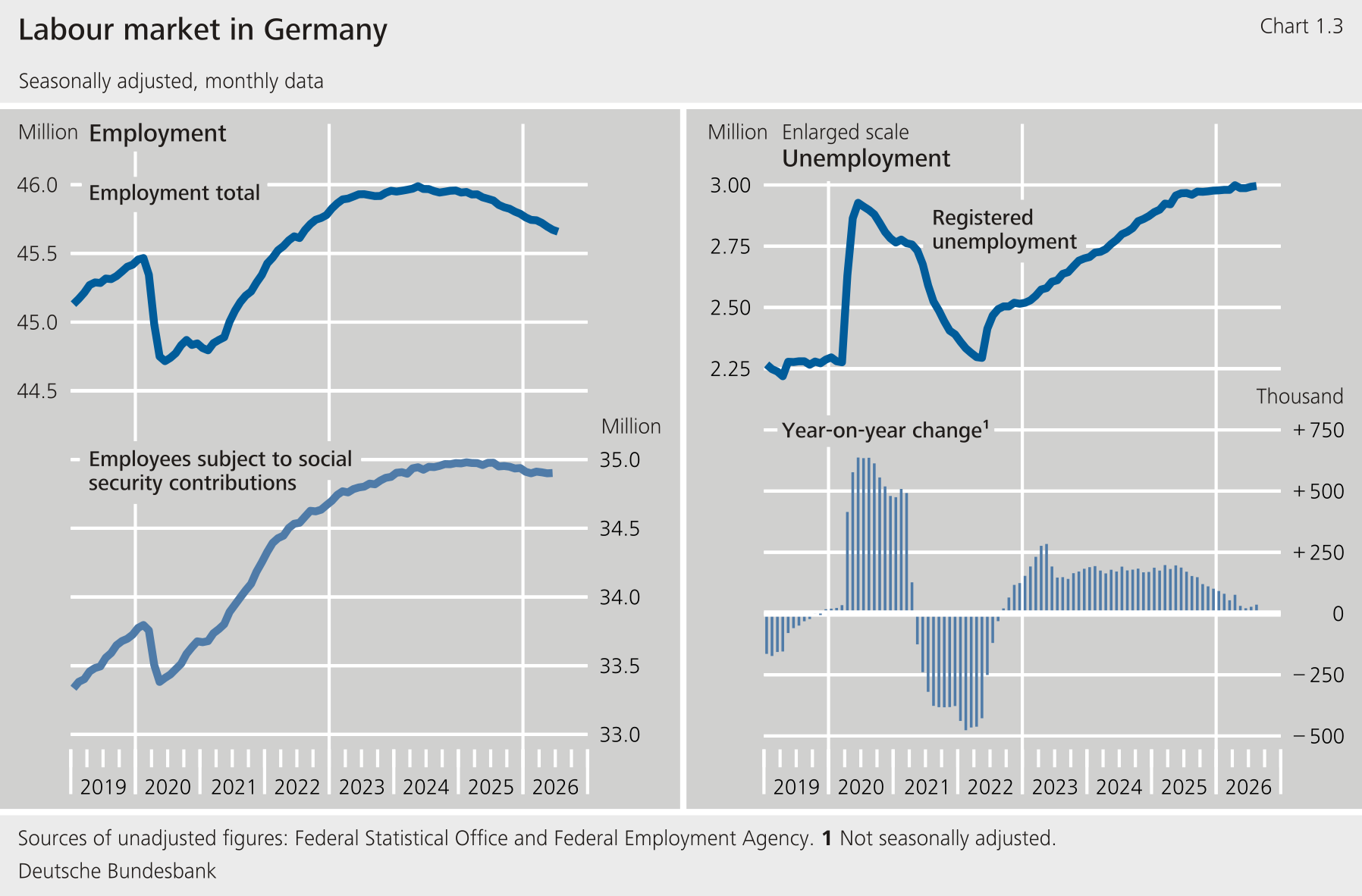
Employment continued to decline slightly at the start of the third quarter. In July, employment in Germany declined on the month after seasonal adjustment, falling by 14,000 to 45.66 million persons. The slight drop in recent months is mainly due to the reduced number of people in exclusively low-paid part-time work and self-employment. By contrast, employment subject to social security contributions – estimates of which are currently only available for June – remained virtually stable. Nonetheless, job cuts in the manufacturing sector continued at their recent pace. The retail sector also saw a further fall in employment. Employment remained stable in the construction sector. As has been the case for some time now, additional labour was needed primarily in healthcare and social services. To a lesser extent, this was also true for a number of other services sectors.
The leading indicators of employment are increasingly showing initial signs of stabilisation for the months ahead. The ifo employment barometer, which reflects employment plans in trade, industry and services over the next three months, rose appreciably in August. This is mainly due to a significantly improved assessment of the situation in manufacturing. That said, employment plans in this sector remains clearly in negative territory on balance. Similarly, the outlook in the commercial services sector improved somewhat. The employment component of the IAB labour market barometer, which also encompasses publicly financed sectors, remained more or less constant on the month in slightly negative territory. The total number of vacancies reported to the Federal Employment Agency was likewise virtually unchanged after seasonal adjustment. However, the number of new vacancies for jobs subject to social security contributions rose to its highest level since the beginning of 2024. In the manufacturing sector, in particular, significantly more job vacancies were reported to the Federal Employment Agency compared with the previous year. However, the level is still fairly moderate based on a long-term comparison. The leading indicators thus point to a more gradual fall in employment, especially in industry.
Registered unemployment remained largely unchanged, at a heightened level of just under 3 million. The number of persons officially registered as unemployed was 2.996 million in August in seasonally adjusted terms. This was 3,000 more than in July. The unemployment rate remained unchanged at 6.4 %. Unemployment covered by the statutory unemployment insurance scheme, which is closely linked to current cyclical developments, continued to rise somewhat in August. The number of unemployed people receiving the basic welfare allowance, which has been trending downwards for just over a year, remained unchanged on the month. According to the IAB unemployment barometer, unemployment will probably barely increase over the next few months. The leading indicator was unchanged on the month, at slightly below the neutral threshold.
5 Energy commodity prices up sharply across the board
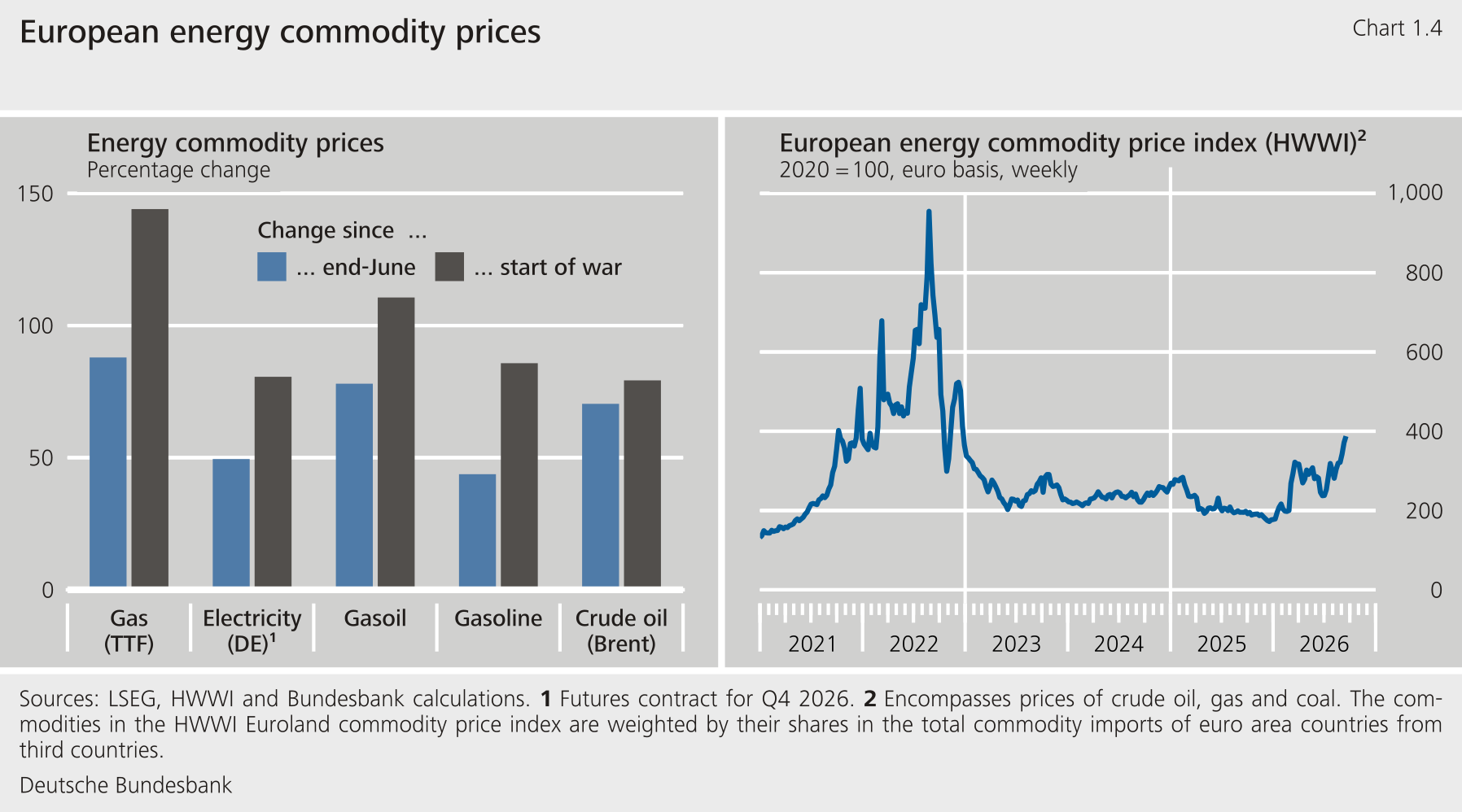
Energy commodity prices picked up again sharply across the board in August and September. This was mainly due to a renewed escalation of the conflict in the Middle East after the memorandum of understanding between the US and Iran stalled. Accordingly, energy exports in the Gulf region passing through the Strait of Hormuz remained severely constrained, even declining again recently in some cases. Exports of natural gas and petroleum products were particularly affected. Against this backdrop, natural gas prices rose steeply. One megawatt hour of gas recently cost around €77 in Europe. Wholesale prices for electricity, diesel and petrol also increased sharply. Crude oil prices have also spiked again in recent weeks after the latest flare-up and attacks on the key East-West pipeline in Saudi Arabia. A barrel of Brent crude oil cost US$121 at last report. Taken together, European energy commodity prices are thus now at their highest level since the Iran conflict began (see the supplementary information entitled "The recent rise in energy prices due to the ongoing conflict with Iran").
Supplementary information
The recent rise in energy prices due to the ongoing conflict with Iran
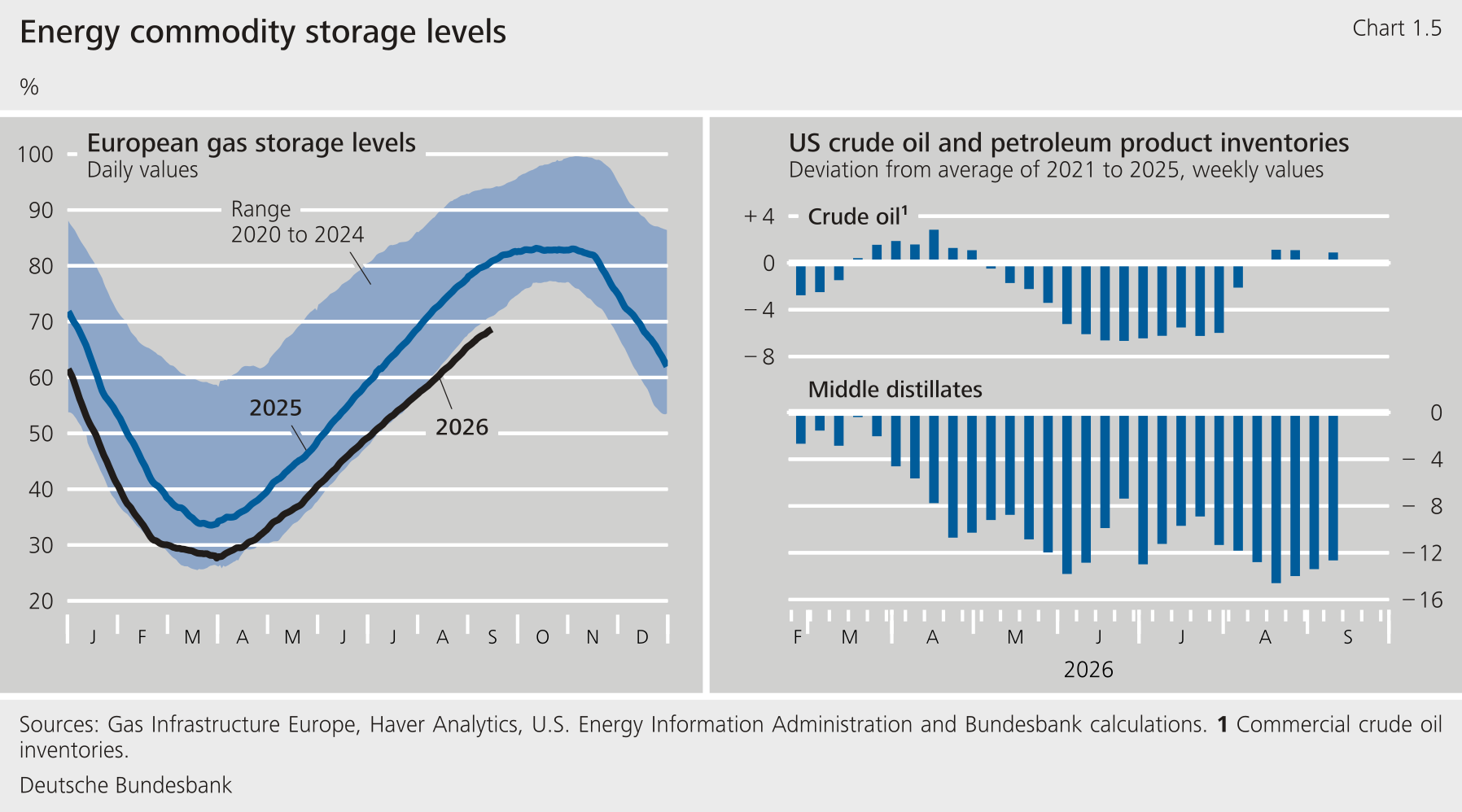
Energy commodity prices have resurged markedly since the memorandum of understanding between the United States and Iran stalled at the end of June. Prior to this, they had fallen sharply amid mounting hopes of a rapid end to the conflict. Natural gas prices have risen most significantly since the renewed escalation of the Iran conflict. Wholesale prices for electricity and for petroleum products such as diesel and petrol have also soared. Crude oil prices likewise picked up again sharply in recent weeks.
The main drivers of the surge in European gas prices are ongoing restrictions on liquefied natural gas (LNG) shipments from the Middle East. It is more or less impossible for these shipments to bypass the Strait of Hormuz. In this setting, European gas inventories have been replenished only slowly of late. Europe is thus expected to be reliant on exceptionally large imports of LNG for heating in the coming winter season. Gas prices therefore look set to remain high. Moreover, prolonged supply restrictions pose an upside risk to the outlook for European gas prices. This is also suggested by the current prices in futures and options markets. However, supply shortages are not currently foreseeable given Europe’s high LNG import capacities and the structural growth in global LNG supply.
European market prices for electricity have also increased sharply. These typically closely track natural gas prices. Prices were also driven up by unfavourable weather conditions in the summer months, which dampened electricity production from hydro and nuclear power in some European countries.
Global crude oil markets were relatively well supplied in July and August despite the ongoing conflict. This was mainly because more crude oil was exported from the Middle East for a time. Tankers increasingly attempted to pass through the Strait of Hormuz despite the high risks. A considerable amount of exports were also diverted via pipelines. At the same time, global oil demand has remained noticeably subdued of late. In the summer months, the global oil market was therefore probably only moderately undersupplied. 1 This is consistent with recent evidence of only a measured drop in global crude oil inventories. However, the recent escalation in the Middle East and the attacks on the important East-West pipeline in Saudi Arabia are increasingly putting these developments in doubt and have sent crude oil prices soaring again recently.
Markets for petroleum products remained very strained throughout the summer, by contrast. Exports of petroleum products from the Gulf region were consistently severely restricted. At the same time, Russian exports of petroleum products have fallen considerably of late due to Ukrainian attacks on Russia’s oil infrastructure. In other regions of the world, refineries have broadly reached their capacity limits. Global output has therefore failed to fully meet global demand. As a result, inventories of many petroleum products have continued to decline and price mark-ups against crude oil (known as crack spreads) have reached all-time highs in some cases.
Taken together, European energy commodity prices are thus now at their highest level since the Iran conflict began. Overall, however, they are still far from the levels reached during the energy crisis of 2021‑22. 2 Futures, especially for crude oil and petroleum products, are signalling somewhat lower prices in the coming months. However, the renewed escalation of the conflict in the Middle East recently points to significant upside risks for prices. Given the low inventories, this applies in particular to petroleum products and natural gas, as well as to closely related European electricity prices.
6 Inflation up slightly to 2.9 % in August
Prices at the upstream stages of the economy saw a recent month-on-month rise in seasonally adjusted terms. This was true for import prices, which are available up to and including July, as well as industrial producer prices for domestic sales, which are already available for August. Energy prices picked up markedly again at both levels. For other goods, the increase in prices slowed at the import level, while it accelerated slightly in the domestic sales market. In year-on-year terms, import prices rose by 6.8 % and industrial producer prices by 4.6 %.
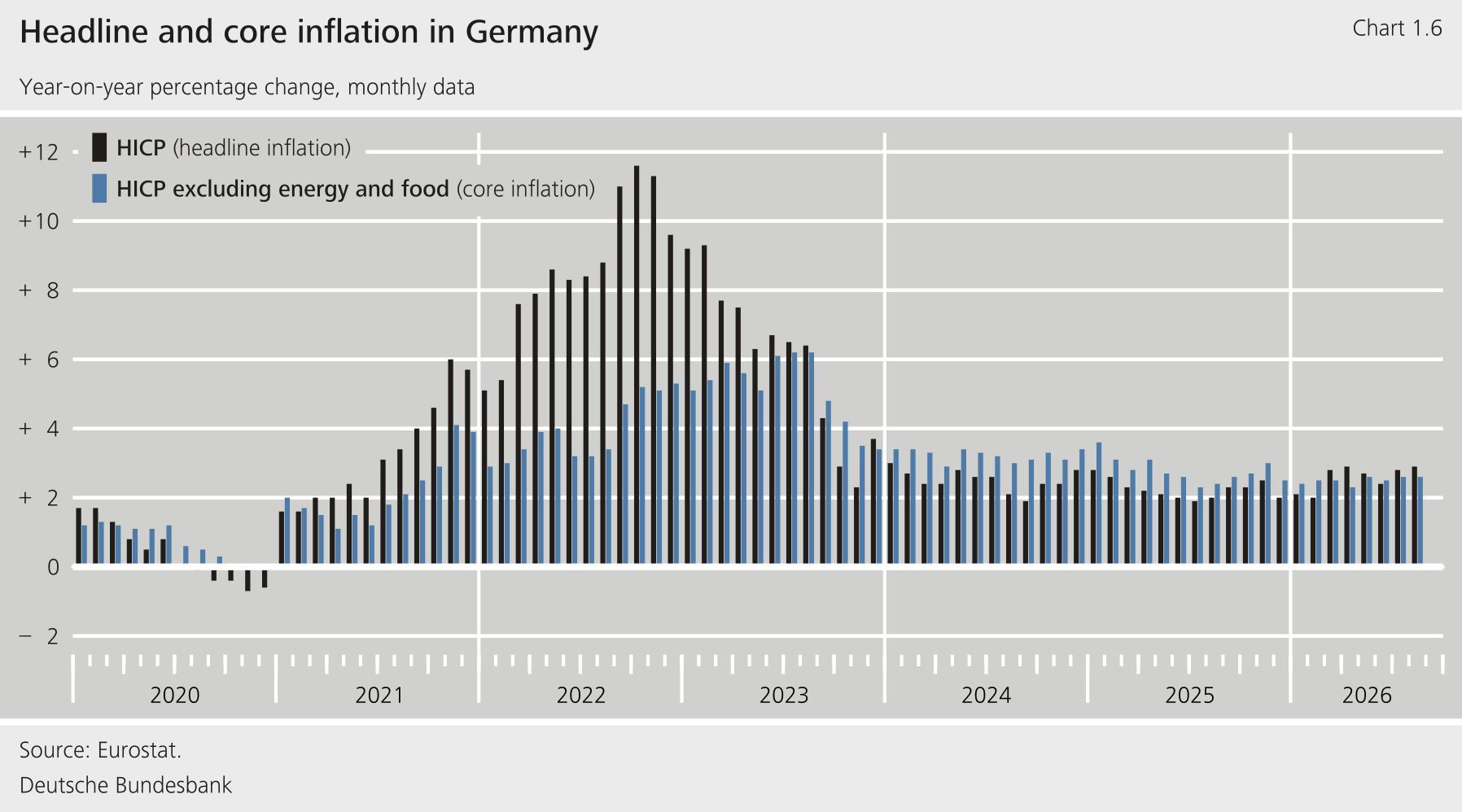
The inflation rate climbed a little further in August, mainly due to higher energy prices. The annual Harmonised Index of Consumer Prices (HICP) rate rose from 2.8 % in July to 2.9 % in August. 7 The core rate (excluding energy and food) remained at 2.6 %. The pharmacy reform, which came into force in July, will push up the inflation rate by around 0.2 percentage points up to June 2027 (with the core rate going up 0.3 percentage points). The HICP increased in August by a seasonally adjusted 0.3 % on the month. This partly stemmed from a marked rise in fuel and heating oil prices as a result of higher wholesale prices. Non-energy industrial goods also became significantly more expensive. By contrast, food and services prices barely changed overall. In the services sector, this was partly due to falling prices for travel services including train tickets.
The inflation rate is likely to remain elevated for the time being. The prevailing sharp rise in energy prices could continue for some time yet. For example, the latest futures prices suggest that the current exceptionally high difference in prices between crude oil and refined products, such as petrol and diesel, will shrink at only a very gradual pace. In this respect, low inventories and storage volumes also pose upside risks to the price trend going forward. In addition, the indirect effects of the recent surge in energy prices are likely to materialise gradually. Higher energy prices usually feed through to other components of the HICP basket of goods only after a time lag. Amongst other things, this depends on how soon firms are confronted with higher production, transportation and input costs and how quickly they pass them on to households. 8 The planned health reform at the beginning of the new year is likely to push up the rate by around 0.2 percentage points for one year. This, combined with the impact of the pharmacy reform in July 2026, should temporarily push up the inflation rate by just under ½ percentage point in the first half of 2027. Persistently high prices for crude oil, as well as for gas and electricity, could amplify direct and indirect effects and delay the return to an inflation rate of 2 %.
This article is based on data available up to 18 September 2026, 11:00.
Wollmershäuser, T., L. Best, S. Ederer, M. Fell, E. Höslinger, F. Koch, M. Lay, R. Lehmann, S. Link, A. Ruffert, M. Schasching and T. Wibault (2026), ifo Konjunkturprognose Herbst 2026: Erholungskräfte gewinnen Oberhand, ifo Institute, ifoSchnelldienst digital, Vol. 7, No 15, pp. 1-19.