
Monthly Report – March 2026 Vol. 78 No 3

Monthly Report

Non-final working translation

1 Economic conditions

1.1 German economy sluggish at start of year
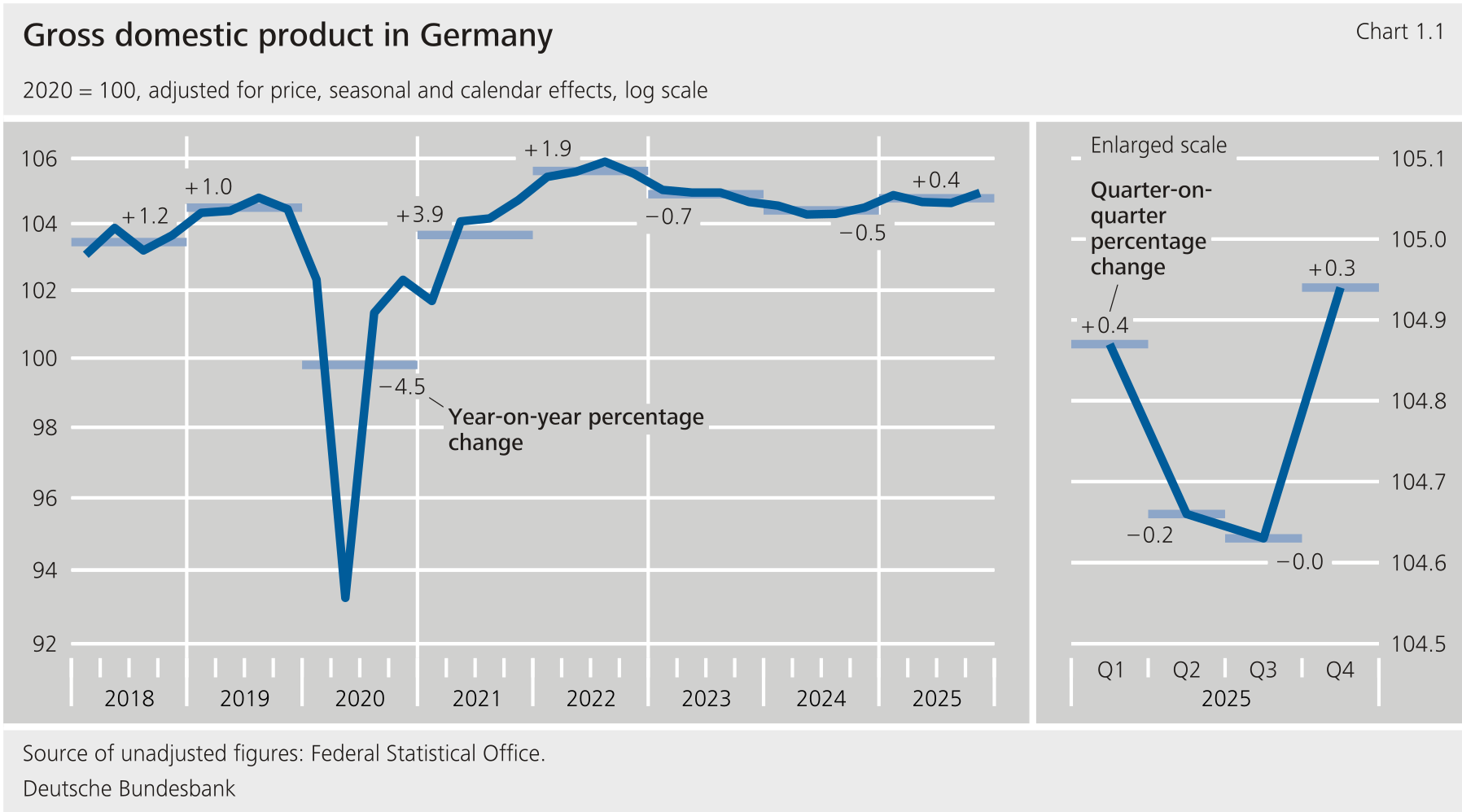
German economic output is likely to stagnate in the first quarter of 2026. Following the significant increase in the previous quarter, real GDP might merely stagnate in the current quarter in seasonally adjusted terms. 1 Capacity utilisation in industry remains low, which is dampening private investment. Owing to its weak competitive position, German industry can derive only limited benefits from global trade growth. The easing of fiscal policy is unlikely to provide a marked boost until later in the year. The exceptionally high level of new domestic orders for the manufacture of other transport equipment and of weapons and ammunition in the fourth quarter of 2025 points to extensive government orders in the defence sector. However, it will probably take some time for these orders to significantly increase production. Industrial output and sales gave out different signals in January, but on the whole point to a subdued start to the new year for industry. The construction sector is being supported by an upward trend in demand for housing construction and civil engineering, but unfavourable weather conditions acted as a drag in January and February. The war in the Middle East will probably put additional strain on households and firms, especially through higher energy prices. This could make itself felt already in the first quarter and clouds the outlook for the second quarter. If the conflict drags on into the second quarter, the associated high level of uncertainty and a weaker global economy will probably create additional headwinds. The outlook from the second half of the year will also heavily depend on how long the conflict lasts and how much the global energy supply is affected.   

Gross domestic product in Germany

1.2 Industry off to a subdued start in the new year
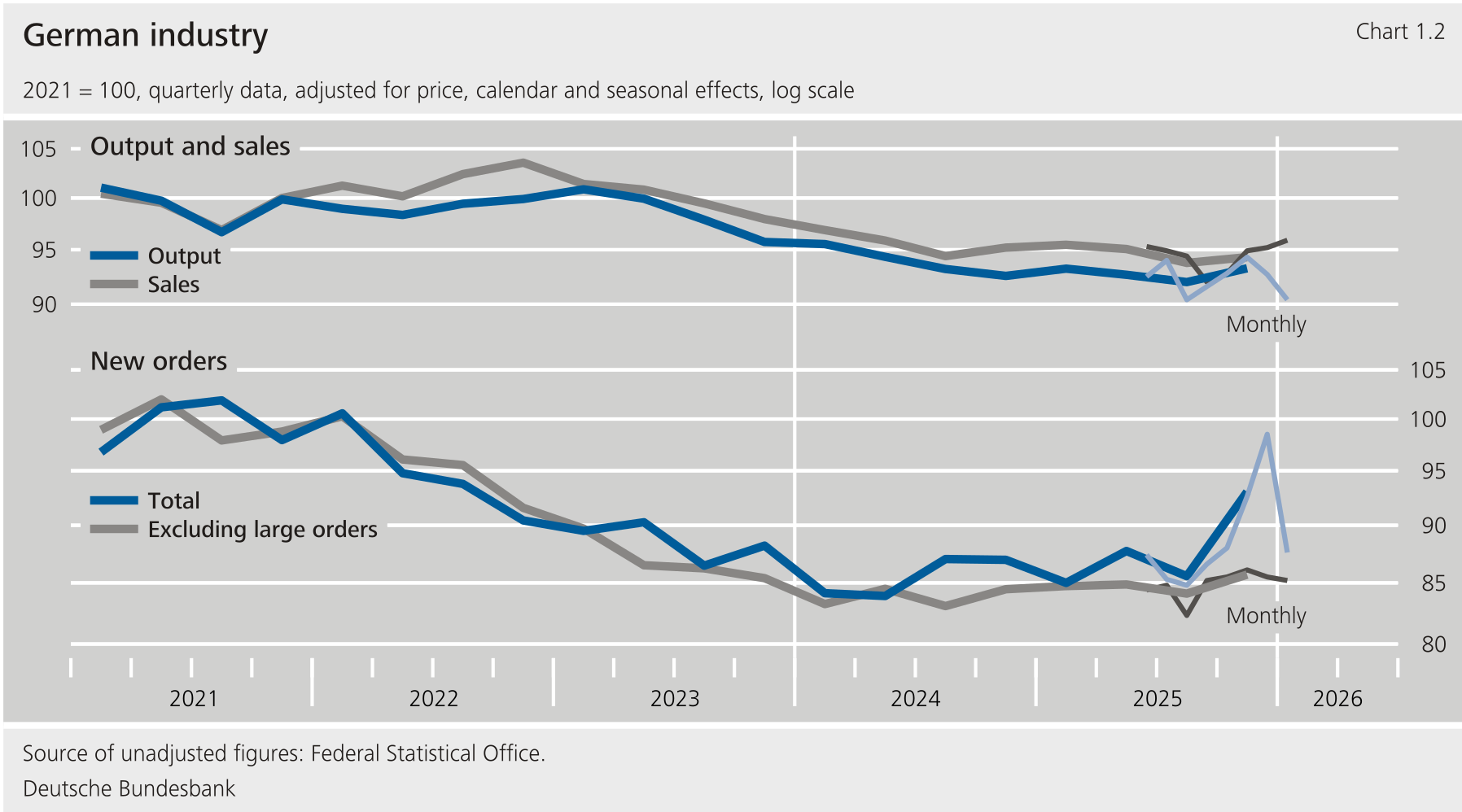
Industrial output and sales are giving conflicting signals and, taken together, point to a subdued start to the year. In January 2026, seasonally adjusted industrial output fell significantly on the month and on the quarter. The way the calendar fell at the beginning of the year, with a relatively large number of bridge days, may have played a role here. Output declined in most sectors. However, the manufacture of weapons and ammunition went up steeply. This reflects the upward trend in orders already observed for more than two years, but not necessarily the strong surge in orders at the end of last year. According to data from the Federal Statistical Office, the reach of order books in this sector rose sharply to around 64 months in the final quarter of 2025. It had been around 58 months one year earlier. These additional orders are therefore likely to impact production only gradually. The speed at which capacity can be expanded in the defence industry will play a role. Price-adjusted industrial sales are showing a significantly more favourable start to the year than output. They rose on both the month and the quarter. Such divergence with output is unusual. The respective signals sent by the two indicators should therefore be interpreted with caution. 

Foreign trade did not provide any stimulus to industry at the beginning of the year. Price-adjusted goods exports fell significantly in January compared with the previous month and the previous quarter. Exports to euro area countries dropped sharply following a marked increase in the four preceding quarters. By contrast, exports to non-euro area countries, which were previously in decline, increased on the quarter. Nominal exports to the United States rose steeply. These had previously seen a significant decline owing to US tariff policy and the appreciation of the euro against the US dollar. The increase points to a degree of normalisation. In response to the US Supreme Court ruling against country-specific additional tariffs at the end of February, the US administration replaced these with a global tariff of 10 %. The effective tariff rate for exports from the EU is thus a little lower. Nevertheless, the impact of the new tariff regime on the German economy is expected to be small.

German industry
German industry

1.3 New industrial orders returning to normal following enormous large orders

Large orders were recently a strong driver of demand for German industrial products. The volume of large orders in German industry, especially from within Germany, was exceptionally high in the fourth quarter of 2025. In January 2026, incoming large orders were down significantly, and overall new orders fell sharply on the month and quarter in seasonally adjusted terms. However, they were still above the level seen in the third quarter of 2025. This also holds true if large orders are factored out. Orders are therefore still showing significant improvement. At the end of last year, manufacturers of weapons and ammunition and of other transport equipment, which also includes military vehicles, received a large number of domestic orders. Government orders for defence are therefore likely to have played an important role. This was the case in January, too – albeit no longer on this exceptionally large scale. Manufacture of other transport equipment again recorded a clear rise in domestic orders in January. By contrast, manufacturers of weapons and ammunition were unable to maintain the high level of the previous quarter. However, they, too, still received significantly more domestic orders than in the third quarter. Despite buoyant domestic demand, foreign demand remains of major importance for German industry. In the fourth quarter, new orders from abroad were likewise boosted by large orders, which returned to normal in January. Excluding large orders, they remained at the previous quarter’s level. The underlying trend is still pointing slightly upwards.

1.4 Situation on labour market unchanged
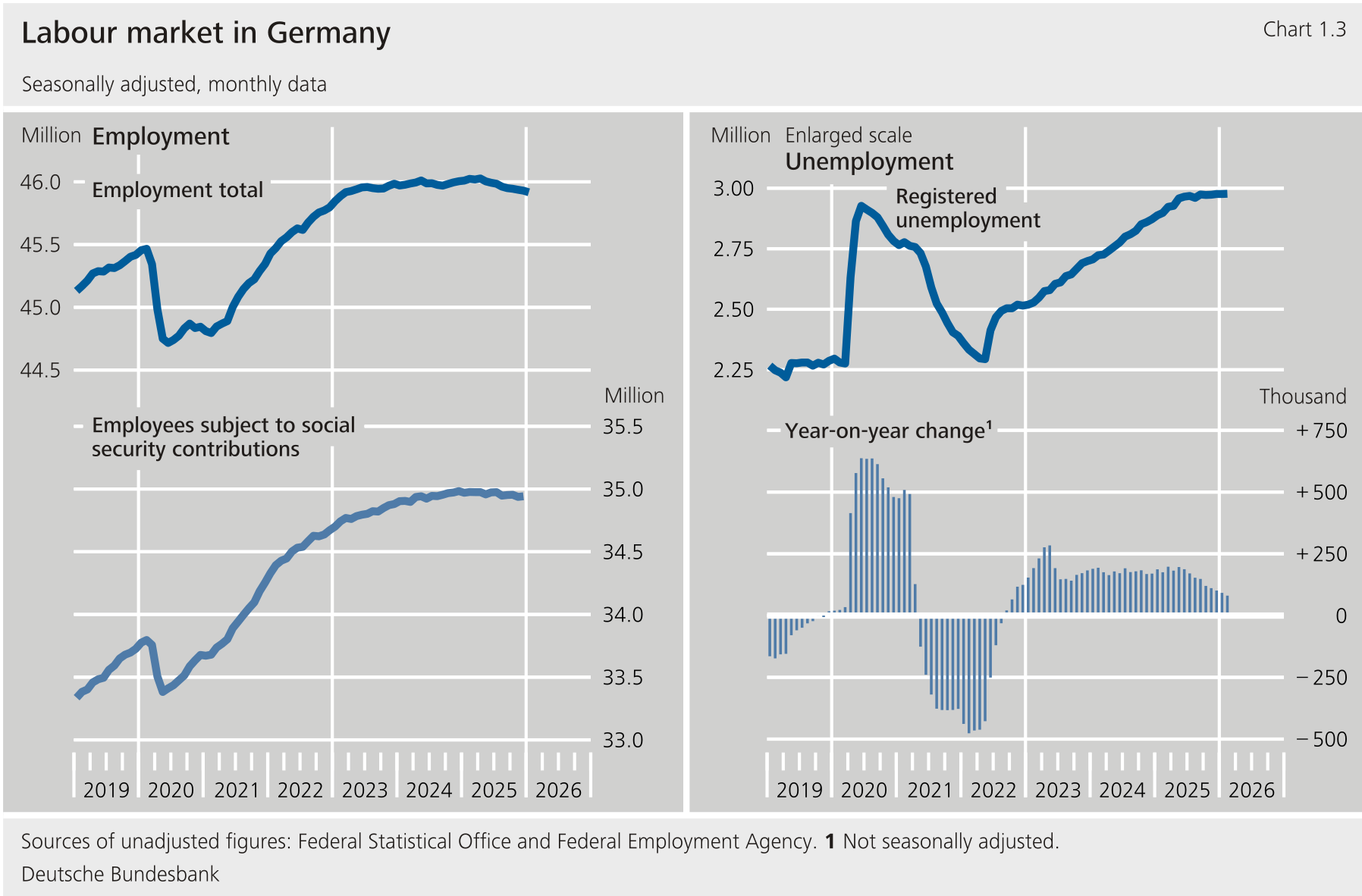
Labour market conditions, which were dampened by the weak economy, remained virtually unchanged at the beginning of 2026. Job losses in manufacturing were largely offset by growth in services. In January, total employment fell by 13,000 on the month to 45.92 million persons in seasonally adjusted terms. By contrast, the number of employees subject to social security contributions remained stable; however, the initial estimate is currently only available for December 2025. Developments diverged at the sector level, however. Employment subject to social security contributions continued to decline significantly in the manufacturing sector. This sector is heavily affected by structural change. By contrast, the services sectors saw an increase, especially health and social services, where steep growth has been observed for years. Demographic change continues to provide strong support to labour demand in this sector. In the construction sector, the number of employees subject to social security contributions rose marginally. The use of short-time work for economic reasons is seeing a downward trend.

Labour market in Germany

Leading indicators of employment do not suggest any improvement in the short term. The ifo employment barometer, which reflects employment plans in trade, industry and services over the next three months, fell slightly in February and remained at a very low level. The employment component of the IAB labour market barometer, which also encompasses publicly financed sectors, remained just above the neutral threshold. Employment is therefore expected to remain stable overall in the coming months. The number of vacancies reported to the Federal Employment Agency has risen by 35,000 on balance since October, after declining for more than three years. According to the Federal Employment Agency, the increase is based on notifications from just a few employers and should therefore not yet be regarded as a sign of a broad increase in employment. 2

As in previous months, unemployment remained stable in February. The number of people officially registered as unemployed stood at 2.98 million in seasonally adjusted terms, virtually unchanged from January. The unemployment rate remained unchanged at 6.3 %. Total underemployment also changed only marginally in seasonally adjusted terms, as in previous months. It appears that the number of people who are participating in integration or labour market policy measures and therefore do not count as unemployed has stabilised recently. However, the outlook for a decline in registered unemployment deteriorated markedly in February. The IAB unemployment barometer dropped well below the neutral threshold. This means unemployment could rise slightly in the coming months.

1.5 Sharp rise in energy commodity prices since start of conflict in Middle East

Energy commodity prices recently increased strongly across the board. The escalation of the conflict in the Middle East was the main trigger. It led to the closure of the Strait of Hormuz, a key route for global trade in oil and liquefied natural gas (LNG). Typically, around 20 % of global oil and LNG supplies are shipped through the strait. There are some possibilities for rerouting deliveries, and members of the International Energy Agency (IEA) have announced a record release from their strategic reserves. However, these measures can only partially compensate for the amounts of energy that have been lost as a result of the blockade. At the end of the reporting period, a barrel of Brent crude oil cost US$108, 53 % more than in February. Prices for diesel, heating oil and kerosene rose even more sharply, reflecting the great importance of the Gulf States in supplying these markets. European gas prices also rose steeply, recently reaching €53 per megawatt hour. Damage to key facilities for LNG production in Qatar were the main reason for this, as well as the country’s decision to temporarily put a complete stop to LNG production because of the conflict. At present, price increases are still being dampened by market participants’ expectations of a swift end to the blockade of the Strait of Hormuz. A more prolonged blockade and severe damage to energy infrastructure in the region are likely to put additional upward pressure on energy prices.

1.6 Inflation down slightly to 2.0 % in February.
Price developments at the upstream stages of the economy were mixed recently. While domestic prices for industrial products fell in February in seasonally adjusted terms, import prices rose in January, the last month for which data are available. Looking at domestic industrial sales, energy prices saw a particular decline, while non-energy producer prices stagnated. By contrast, import prices for both energy and other goods increased. In year-on-year terms, industrial producer prices fell by 3.3 % and import prices by 2.3 %.

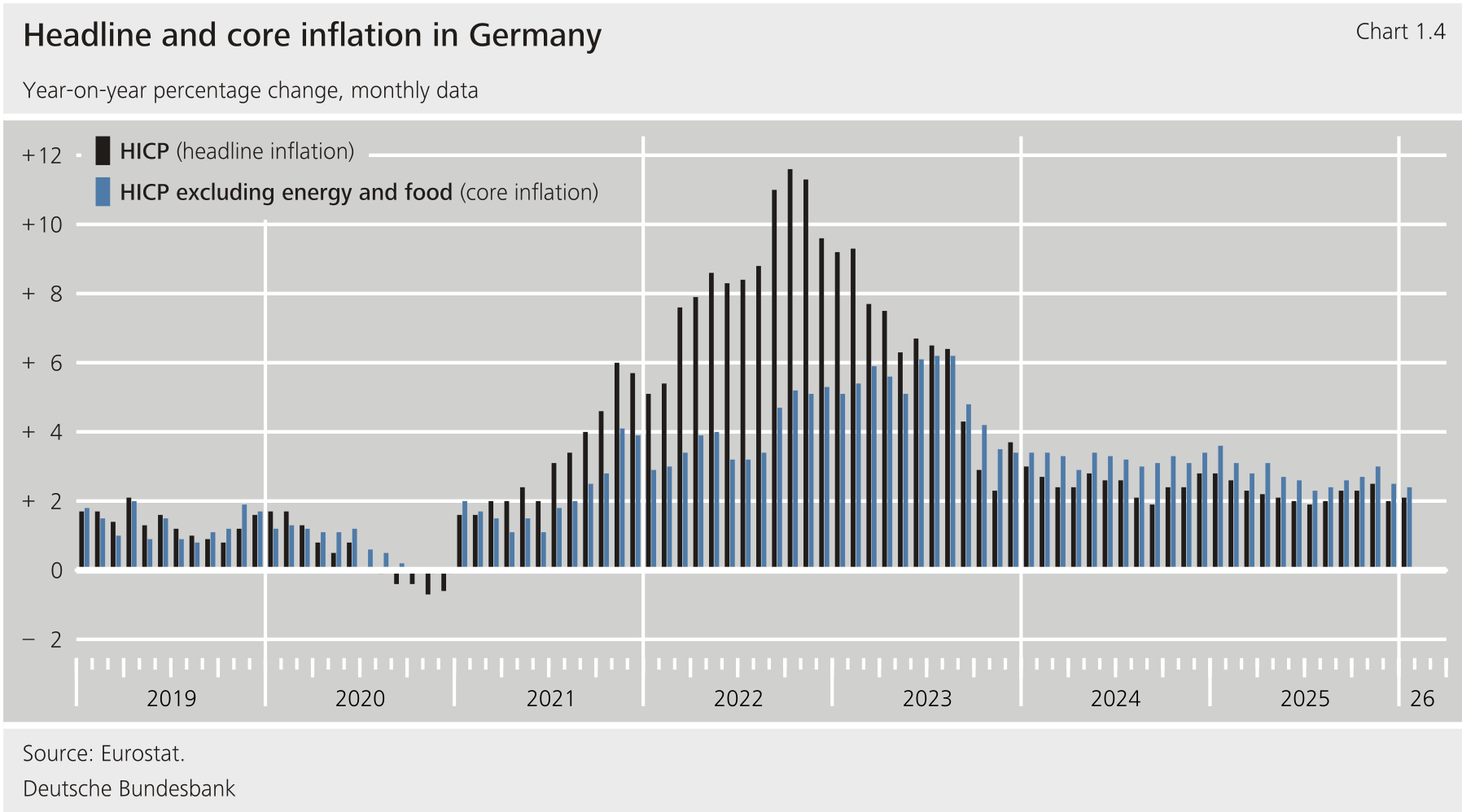
The inflation rate eased slightly in February. The annual headline inflation rate as measured by the Harmonised Index of Consumer Prices (HICP) dropped from 2.1 % in January to 2.0 % in February. 3 This slight decline is due, amongst other things, to the fact that food price inflation was exceptionally strong one year ago. By contrast, core inflation (excluding energy and food) rose slightly, from 2.4 % to 2.5 %. The HICP rose by a seasonally adjusted 0.1 % on the month in February, compared with 0.4 % at the beginning of the year. Prices for services continued to move upwards with momentum. This was due, in particular, to a significantly stronger rise in the prices of administered services. However, price pressures also remained perceptible for the other services components. Energy prices rose only slightly overall, as declining electricity prices largely offset the increases in fuel prices. The prices of food and non-energy industrial goods remained unchanged, however.

Inflation will pick up significantly in the coming months. However, the inflation outlook is particularly uncertain at the current time. In the coming months, the inflation rate is likely to be driven mainly by the conflict in the Middle East and the resulting fluctuations in energy commodity prices, especially for oil and gas. In the short term, the recent significant rise in the price of crude oil will lead to a particular increase in fuel and heating oil prices for consumers. As a result, the inflation rate is likely to climb significantly towards the 3 % mark in the near future. The outlook for inflation largely depends on how the conflict evolves. For example, a prolonged closure of the Strait of Hormuz for shipping and the associated lower energy supply could mean a significantly higher inflation rate over a longer period of time.

Headline and core inflation in Germany

2 Public finances

2.1 Statutory health insurance scheme

2.1.1 Outturn in 2025
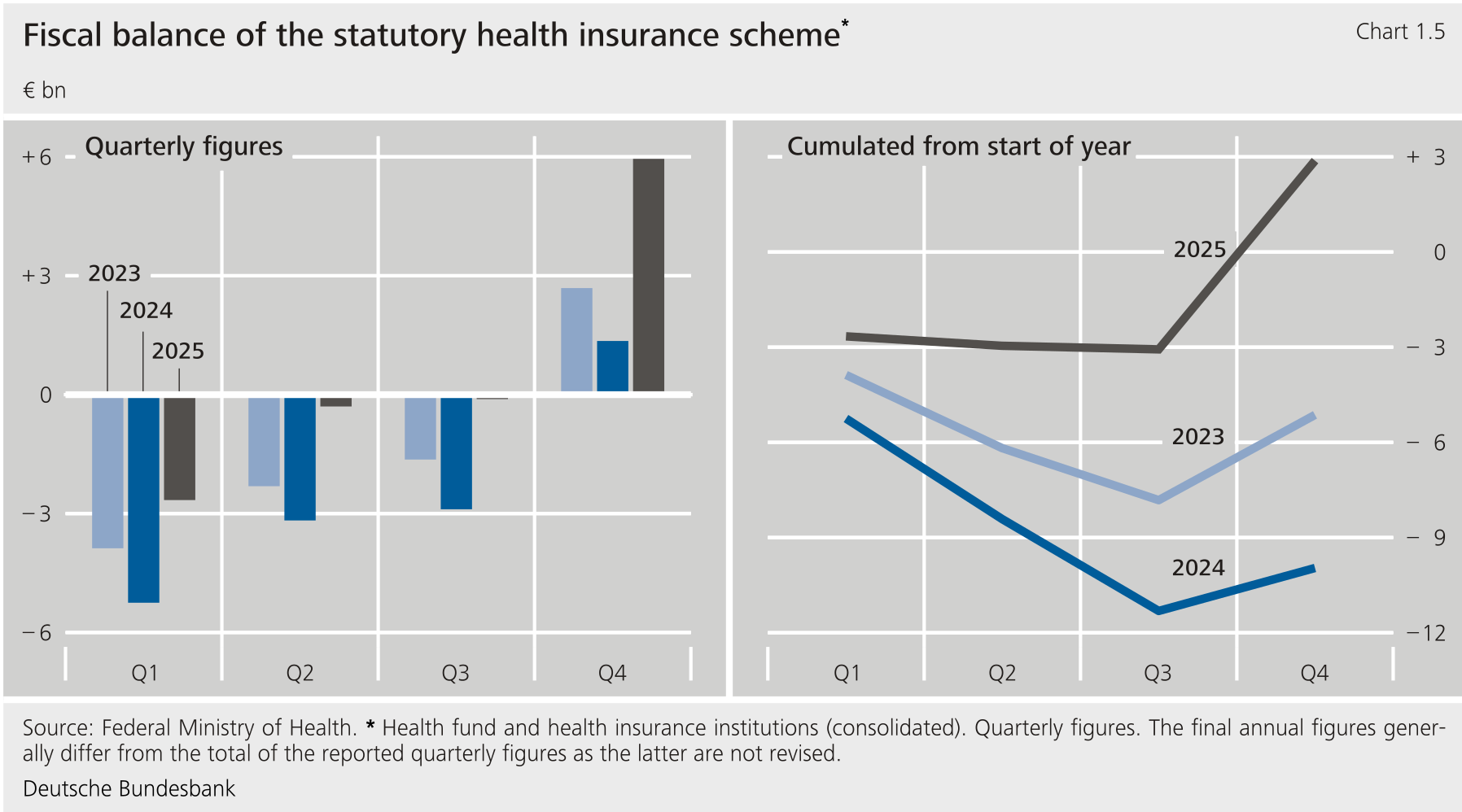
Fiscal balance of the statutory health insurance scheme

A sharp rise in contribution rates significantly improved the statutory health insurance (SHI) scheme’s outturn in 2025. According to preliminary figures, the health insurance institutions and the health fund combined recorded a surplus of €3 billion, which was a sizeable improvement of €13 billion on the year. This occurred because supplementary contribution rates rose by 1.2 percentage points on average to around 2.9 %, generating – when viewed in isolation – almost €23 billion in additional revenue. 

Table 1.1: Statutory health insurance scheme: overview of finances
€ billion
RevenueExpenditure
Item20241202522026fItem20241202522026f
Health fund (HF) 
Contributions3

266.5

280.5

292.2

Transfers to HIIs

314.9

350.7

369.5

Supplementary contributions

30.5

54.1

57.2

Administration

0.1

0.1

0.0

Central government grants

14.4

14.4

14.4

Crisis-related measures

0.9

−⁠ 0.2

0.0

Central government special payments

1.0

1.3

2.5


Other revenue

0.1

0.0

0.0

Other expenditure4

0.4

0.4

0.6

Deficit

3.7

0.6

3.8

Surplus

-

-

-

Total

316.2

351.0

370.1

Total

316.2

351.0

370.1

Health insurance institutions (HIIs)  
Transfers from HF

314.9

350.7

369.5

Spending on benefits

311.7

335.7

354.8

Other contributions

1.2

1.3


Administration

12.6

13.3

14.1

Central government grants to AHIIs5

0.1

0.1

0.1

Other expenditure7

3.1

3.4

0.1

Other revenue6

4.7

3.8


Deficit

6.6

-

-

Surplus

-

3.5

0.6

Total

327.4

355.9

369.6

Total

327.4

355.9

369.6

Health fund and health insurance institutions combined  
Contributions8

298.2

335.9

349.4

Spending on benefits

311.7

335.7

354.8

Central government grants

14.5

14.5

14.5

Administration

12.7

13.3

14.1

Central government special payments

1.0

1.3

2.5

Crisis-related measures

0.9

−⁠ 0.2

0.0

Other revenue

4.8

3.8

0.0

Other expenditure

3.5

3.8

0.7

Deficit

10.3

-

3.2

Surplus

-

2.9

-

Total

328.7

355.5

369.6

Total

328.7

355.5

369.6

Memo items: 
Central government loans

-

2.3

2.3


Cumulated loans outstanding

1.0

3.3

5.6


HF liquidity reserve

5.7

7.7

6.2


HII reserves

2.1

5.2

5.8


f Estimates based on the assumptions of the group of SHI estimators. For other contributions, other revenue and other expenditure of the HIIs, there are no assumptions by the group of estimators, with the exception of the HIIs' transfers to the Innovation Fund. 1 Final annual figures (KJ 1). 2 Preliminary quarterly figures (KV 45). 3 Excluding contributions to the agricultural health insurance institutions. 4 Including transfers to the Innovation Fund and the Structural Fund. 5 Agricultural health insurance institutions. 6  The HIIs' receipts from the HF are higher than the transfers to the HIIs recorded by the HF. This difference and the difference between claims and liabilities are taken into account here. 7 Including transfers to the Innovation Fund. 8 Including supplementary contributions and contributions to the agricultural health insurance institutions.

In particular, health insurance institutions saw a strong improvement in their outturn. They recorded a surplus of €3½ billion (previous year: deficit of €6½ billion). Spending on benefits grew dynamically, by just over 7½ %, with a rise of 9 % in expenditure on hospital treatment, 8 % on remedies and therapeutic appliances, 7 % on medical treatment and 6 % on medicines. However, the additional revenue from higher supplementary contribution rates had an even greater impact. This increased cash reserves. At the end of the year, however, they stood at €5 billion (in total) and were thus slightly below 0.2 times the scheme’s monthly expenditure (€5½ billion). 4

The health fund closed the year with a small deficit of €½ billion after recording a deficit of just over €3½ billion in the previous year. On the revenue side, higher contribution rates and a sharp rise of 5 % in earnings subject to compulsory contributions (primarily wages and pensions) had an impact. This improvement occurred in part because a large portion of the central government transfers for hospitals’ immediate transformation costs 5 had not yet been paid (only just over €½ billion out of €1½ billion). At the end of the year, the fund’s reserves amounted to €7½ billion. This includes the remaining funds for the transfers to cover hospitals’ immediate transformation costs. In addition, central government granted a loan of €2.3 billion, which substantially increased the fund’s reserves (without affecting the health fund’s budget balance). This loan is intended to temporarily alleviate future pressure to raise supplementary contribution rates further. It is to be repaid gradually from 2029 onwards. Conversely, this will then increase the pressure on the contribution rate. 

2.1.2 Outlook for 2026

The Federal Government expects the supplementary contribution rate to remain largely unchanged in 2026, at 2.9 %. This should leave the health insurance institutions with a broadly balanced result and the health fund with a deficit of just over €3½ billion (see Table 1.1). 6  The group of SHI estimators assume that, in the health fund, contribution receipts will rise significantly, by 4 %. However, at just over 5½ %, growth in transfers to the health insurance institutions will be stronger still. This is due, first, to a further central government loan of €2.3 billion, 7 which the fund will pass on to the health insurance institutions in the form of a grant. Second, central government will transfer additional funds of €2½ billion 8 via the health fund to the health insurance institutions to cover immediate transformation costs. 

The health fund also transfers €½ billion from its liquidity reserve to the Innovation Fund and the Structural Fund. Health insurance institutions’ spending on benefits is expected to continue rising sharply, by 6½ % compared with 2025. 

As things stand, the finances of the health insurance institutions could improve somewhat, resulting in a small surplus. This is because the health insurance institutions raised the supplementary contribution rates to 3.1 % on average. Compared with the Federal Government’s assumptions, this results in additional revenue of around €3 billion. This revenue would enable the health insurance institutions to increase their reserves, not least in order to meet the statutory minimum level again.

2.1.3 Short-term measures are expected to close structural financing gaps in 2027

At present, central government is using its multi-year loans to bridge structural funding gaps. A commission has been tasked with preparing short-term reform proposals by the end of March in order to close these gaps in 2027 and slow down a further increase in expenditure. Structural reforms and efficiency gains could limit the strong trend increase in spending on benefits in the SHI scheme. If insured persons are to be made more cost aware, some sort of surgery visit fee could be brought in or certain deductibles charged. 9

2.2 Public long-term care insurance scheme 10

2.2.1 Outturn in 2025
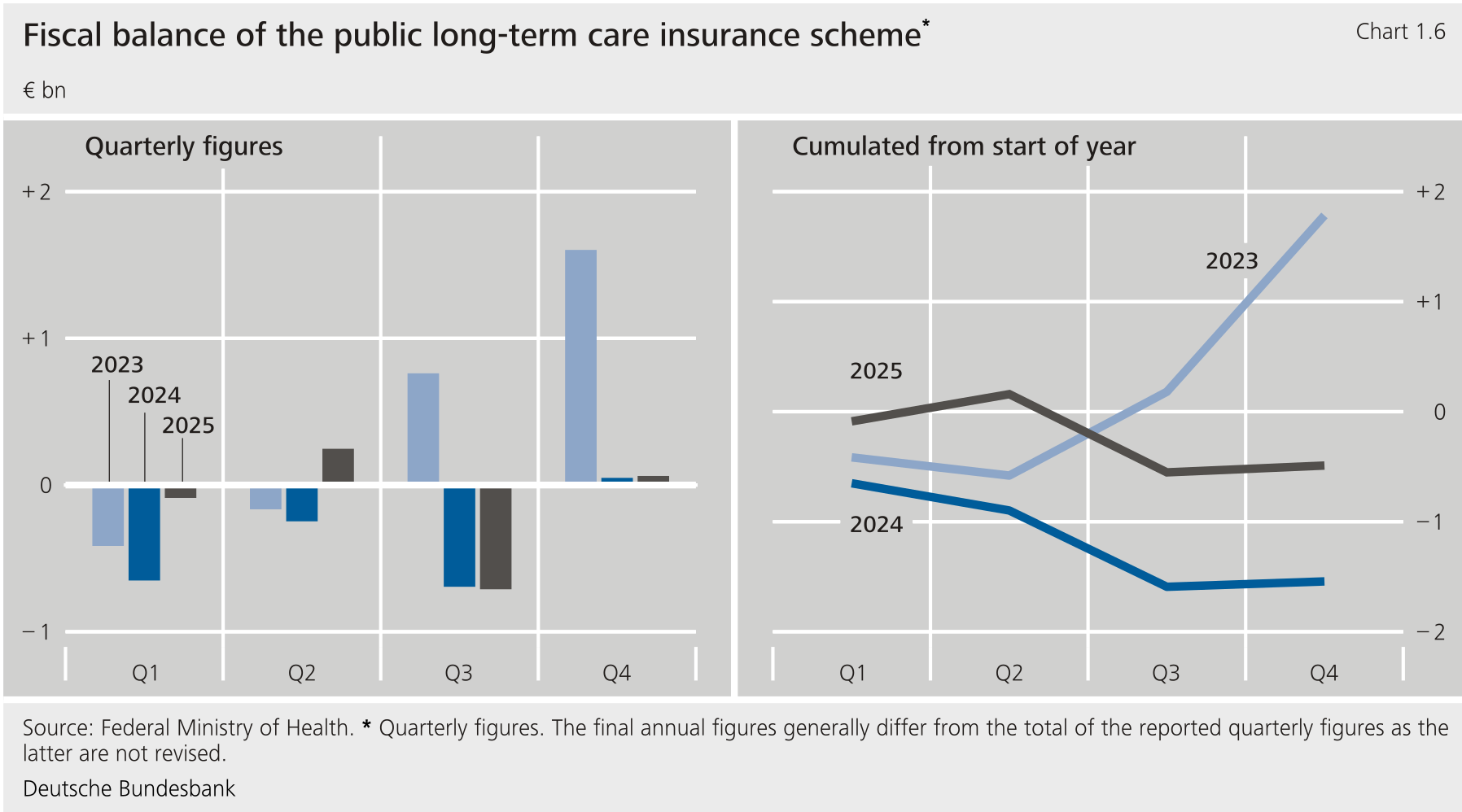
Fiscal balance of the public long-term care insurance scheme

The public long-term care insurance scheme recorded a deficit of €½ billion for 2025 as a whole. 11 Despite the higher contribution rate, it was therefore unable to fully close the financing gap. To safeguard the funding of the long-term care insurance scheme, the contribution rate was raised by 0.2 percentage point at the beginning of 2025 to 3.6 % for standard insured persons (with one child) and 4.0 % for childless persons. This generated additional revenue of €4 billion. By contrast, the deficit fell by just €1 billion on the year.

A central government loan ensured the liquidity of the long-term care insurance scheme. The scheme’'s reserves came to only €5 billion at the end of 2025, which was around €1 billion under the lower limit of one month’s expenditure. To safeguard the solvency of the long-term care insurance scheme over the course of the year, a loan of €½ billion was paid out of the central government budget, which will not have to be repaid for several years.

The long-term care insurance scheme saw steep revenue growth of 10 %. Of this revenue, earnings subject to compulsory contributions (primarily wages and pensions) rose by just over 4½ %. The higher contribution rate contributed around 6 percentage points to the increase. 

The long-term care insurance scheme’s expenditure grew almost as sharply, by 8½ %. The fact that the back payment to the long-term care provident fund from 2024 (2½ of total expenditure, or just over €1½ billion) was now absent in 2025 had a one-off dampening effect on expenditure growth. At +⁠ 11½ %, expenditure on benefits continued to rise dynamically, and thus at a much faster pace than the contribution base. This increase occurred partly because benefit rates for the long-term care allowance and non-financial care increased at the beginning of the year (+⁠ 4½ %).

2.2.2 Outlook

In structural terms, the long-term care insurance scheme is still running deficits. Extensive central government loans are temporarily preventing another increase in the contribution rate. Central government will provide further loans of almost €3½ billion in 2026. The repayments will increase financing pressures in subsequent years. Without reforms, further marked contribution rate increases are likely to be a regular occurrence, as spending on benefits will continue to rise at a much faster pace than the contribution base.

At the end of 2025, a reform commission had not yet made any concrete proposals to curb expenditure. To dampen demographic financing pressures alone, particular attention should be paid to the scope of insurance. 12 These pressures cannot be alleviated by increasing grants from central government: the central government budget is already under a lot of strain, and the burdens would therefore have to be counterfinanced there, too. 

This article is based on data available up to 25 March 2026, 11:00.

List of references

Statistics provided by the Federal Employment Agency (2026), Berichte: Blickpunkt Arbeitsmarkt – Monatsbericht zum Arbeits- und Ausbildungsmarkt , Nuremberg, February 2026.

Deutsche Bundesbank (2024), Public finances, Monthly Report, November 2024.

publication.footer

Has this page helped you?