The impact of exchange rate changes on domestic prices in times of high inflation Monthly Report – September 2025

Consumer prices in the euro area and many other advanced economies rose exceptionally sharply in 2022 and 2023. It is plausible to assume that, in times of high domestic inflation, firms’ price-setting behaviour changes: firms should adjust their prices more quickly, responding more strongly to the altered external influences. Exchange rates are one such external influence. With this in mind, the recent period of high inflation rates is taken as an opportunity to investigate in greater depth the way in which fluctuations in exchange rates impact consumer and import prices, a phenomenon known as exchange rate pass-through. 

The article describes how high domestic inflation alters the basic channels through which exchange rate movements affect consumer prices. It presents new empirical findings for the member countries of the Organisation for Economic Co-operation and Development (OECD) which corroborate the existence of an increase in exchange rate pass-through during the recent rise in inflation. They also show that the relationship was not a random one. Rather, the speed and strength of exchange rate pass-through are fundamentally determined by the prevailing inflation rate in the country at hand: in times of moderate inflation, pass-through during the observation period was estimated to be comparatively weak, while times of high inflation saw far stronger pass-through. It is particularly striking that, in times of high inflation, there ends up being barely any difference between the advanced economies under review and the emerging market economies in terms of the way prices respond to exchange rate fluctuations. For the euro area countries included in the sample, the results are subject to a higher degree of estimation uncertainty and are less robust, yet there are signs that for these economies, too, exchange rate pass-through is more pronounced when inflation is high. This insight is also of relevance for monetary policy.

1 Introduction

The impact of exchange rate movements on domestic inflation rates is referred to as exchange rate pass-through. 1 If, for example, the euro depreciates, euro-denominated imports should become more expensive. This, in turn, could translate into a rise in domestic consumer prices. A price impulse stemming from a depreciation is indeed frequently to be observed, though not in every case.

Their influence on consumer prices means that changes in the exchange rate have a bearing on monetary policy. By the same token, monetary policy decisions themselves often lead to exchange rate responses, 2 and these, in turn, affect the real economy. It is therefore important for central banks to take exchange rate movements into account when making monetary policy decisions, even though the exchange rate does not constitute a monetary policy objective in its own right. Furthermore, central banks require as precise an understanding as possible of how much and how fast consumer prices respond to fluctuations in exchange rates. This is particularly true in times of high inflation or when there is a great deal of uncertainty surrounding the inflationary process. Decisions on monetary policy measures thus need to take into account the magnitude and duration of exchange rate movements as well as the speed and extent of exchange rate pass-through. 

Exchange rate pass-through describes both the direct impact of exchange rate changes on domestic import prices and the indirect impact on consumer prices. A distinction is drawn between two stages of exchange rate pass-through: the first stage denotes the impact of exchange rate changes on import prices denominated in domestic currency, as mentioned at the outset. In a second stage, changes in import prices are passed (to a greater or lesser extent) onto consumer prices through a variety of channels. This article and the Bundesbank’s empirical analysis which it covers focus on the dynamic response of consumer prices to exchange rate changes, which is of particular importance to central banks. 3  

In many countries, the impact of the exchange rate on import and consumer prices lessened over recent decades as inflation rates trended downwards. There is empirical evidence to support this. 4 Studies find that the effects of exchange rate changes on consumer prices in advanced economies had dropped to almost negligible levels. The literature posits a number of possible reasons for this. Explanatory approaches attributing the decline in exchange rate pass-through into import and consumer prices to a more stability-oriented monetary policy and lower inflation have attracted particular attention. 5

The high inflation rates of the recent past, which also hit advanced economies, consequently raise new questions about exchange rate pass-through. First, starting from its low level, did exchange rate pass-through rise once inflation rates surged upwards? Second, is exchange rate pass-through influenced by the inflation environment currently prevailing in the country in question? Third, what is the approximate threshold value for inflation above which the exchange rate pass-through becomes markedly higher?

This article provides answers to these questions, both in terms of general principles and drawing on the Bundesbank’s own empirical analyses. It starts by describing the primary theoretical channels through which exchange rate changes can generally exert an impact on import and consumer prices. 6 Building on that, the article goes on to explain the extent to which the inflation environment and monetary policy can influence the potency of the channels outlined. It then presents and contextualises the Bundesbank’s empirical findings, which do indeed suggest that the exchange rate pass-through in OECD countries increased markedly during the recent period of high inflation and is generally much more pronounced during such periods.

2 Transmission channels of exchange rate changes to domestic prices

Changes in exchange rates affect the price of imported consumer goods and intermediate goods. For simplicity’s sake, assume that the euro depreciates against the US dollar. 7 All else being equal, this increases the euro-denominated price of consumer goods imported from the United States (direct channel). However, intermediate goods imported from the United States, which feed into domestic production, also become more expensive because of the depreciation. Assuming euro area producers pass on at least part of their increased costs to consumers, a depreciation will also lead to an increase in domestic consumer prices via this second channel (indirect channel). 

The degree of pass-through is heavily dependent on the intensity of competition and the associated scope for strategic price-setting behaviour on the part of the stakeholders involved. The key players in the case of the illustrative scenario here include exporters from the United States and euro area wholesalers and retailers. If US exporters set the price of their export goods in US dollars (producer currency pricing), the depreciation of the euro is passed on in full: 8 the exporter continues to ask the same US dollar-denominated export price, which means that the import price of the respective goods in euro rises proportionally to the euro’s depreciation. If, however, US exporters set their prices in euro from the outset (local currency pricing), the depreciation would not affect import prices at all, but rather would trim down exporters’ mark-up. 9 The exporter’s choice of strategy depends on a number of factors. This includes, most notably, the intensity of competition in the export market, which is contingent on the degree of product differentiation for the respective product. The importance of the exporter’s home currency – the US dollar in the example here – in global trade and in international financial markets is probably also a factor. Whether or not the US exporter purchases some of the inputs needed for production from the euro area itself also plays a role. 10  

Domestic wholesalers and retailers, for their part, have the option of passing on only a portion of the cost increase resulting from higher import prices to final consumers. Such a muted pass-through of costs might be motivated by a desire on the part of euro area wholesalers and retailers to defend market shares. Moreover, price adjustments usually entail costs. If the exchange rate-induced cost increases are regarded as short-lived – for example, because an opposite exchange rate movement, in this case a euro appreciation, is expected to follow soon – price adjustment might be waived entirely, at least if the anticipated euro appreciation actually materialises. This avoids multiple costly price changes. 11 The expected persistence of changes in cost – in this case due to exchange rate movement – therefore plays an important role when it comes to firms’ price-setting behaviour. These and other reasons mean that the exchange rate pass-through to import prices is more pronounced than the pass-through to consumer prices. 12

Exchange rate pass-through should be stronger in the medium to long term than immediately after the depreciation. This is partly because, as mentioned above, price adjustments give rise to costs and therefore do not take place on an ongoing basis. And there is another mechanism which should lead to a stronger pass-through over the longer term: if import prices rise as a result of the euro’s depreciation, that same depreciation will also improve the price competitiveness of competing products produced in the euro area – on both domestic and foreign markets. Euro area producers then benefit from the relative price increase of imported goods from the United States compared with substitutes produced in the euro area. Domestic and foreign demand are likely to shift accordingly, in favour of goods produced in the euro area; this, in turn, is likely to lead to rising wages and prices here. However, the exchange rate pass-through via these demand-side effects will only materialise after some lag, once wages adjust alongside prices and demand shifts as a result.

3 Fundamental reflections on the dependence of exchange rate pass-through on the inflation environment

Higher inflation and larger fluctuations in inflation can lead to exchange rate changes being transmitted more quickly and more strongly to domestic prices. Such is the conclusion reached by literature on the subject. 13 The main focus of the thinking here is on firms’ strategic price-setting behaviour, which is influenced by the inflation environment and monetary policy stance. 

When inflation is high, prices are typically adjusted more frequently than during times of low inflation. If importing firms tend to change their prices more frequently in times of high inflation anyway, they will also tend to pass on exchange rate-related cost increases to the retail sector or end customers more frequently. 14 Another argument is that, when inflation is low, firms fear that putting their prices up might result in them losing market share. They may lack the necessary market power. On the supply side, it is less likely in such an environment that competitors will be quick to increase their prices too. Second, on the demand side, when operating in an environment of relatively stable prices, consumers are more likely to notice price increases in comparison with competitors’ products. 15 Ultimately, a high rate of inflation means that cost increases – including those caused by a depreciation – are passed on more quickly. Exchange rate pass-through is therefore comparatively high in times of high inflation. 

Changes in costs are more likely to be passed on to domestic prices if they are perceived as lasting. 16 Developments in domestic inflation influence the extent to which cost changes are perceived as lasting. When inflation is high compared with trading partners, firms are more likely to expect a lasting depreciation in the domestic currency. This is because large price differentials between domestic and foreign markets trigger arbitrage transactions, which bring about that kind of depreciation as an adjustment response. With this interplay in mind, firms are more likely to pass on the rise in costs. That makes for a relatively high exchange rate pass-through in such cases. 17

Stability-oriented monetary policy can influence the price-setting behaviour of domestic firms and foreign exporters and contributes to low levels of exchange rate pass-through. If the central bank is credible in its safeguarding of price stability, domestic firms expect inflation rates that deviate from the inflation target to be short-lived at most. The central bank thus creates the conditions favouring the mechanisms leading to lower interest rate pass-through described above. 18 This highlights the importance of market participants’ belief that central banks can credibly deliver on their promise of stability. A high level of credibility makes it easier for the central bank to stabilise the inflation rate.

4 Did exchange rate pass-through increase during the recent period of high inflation?

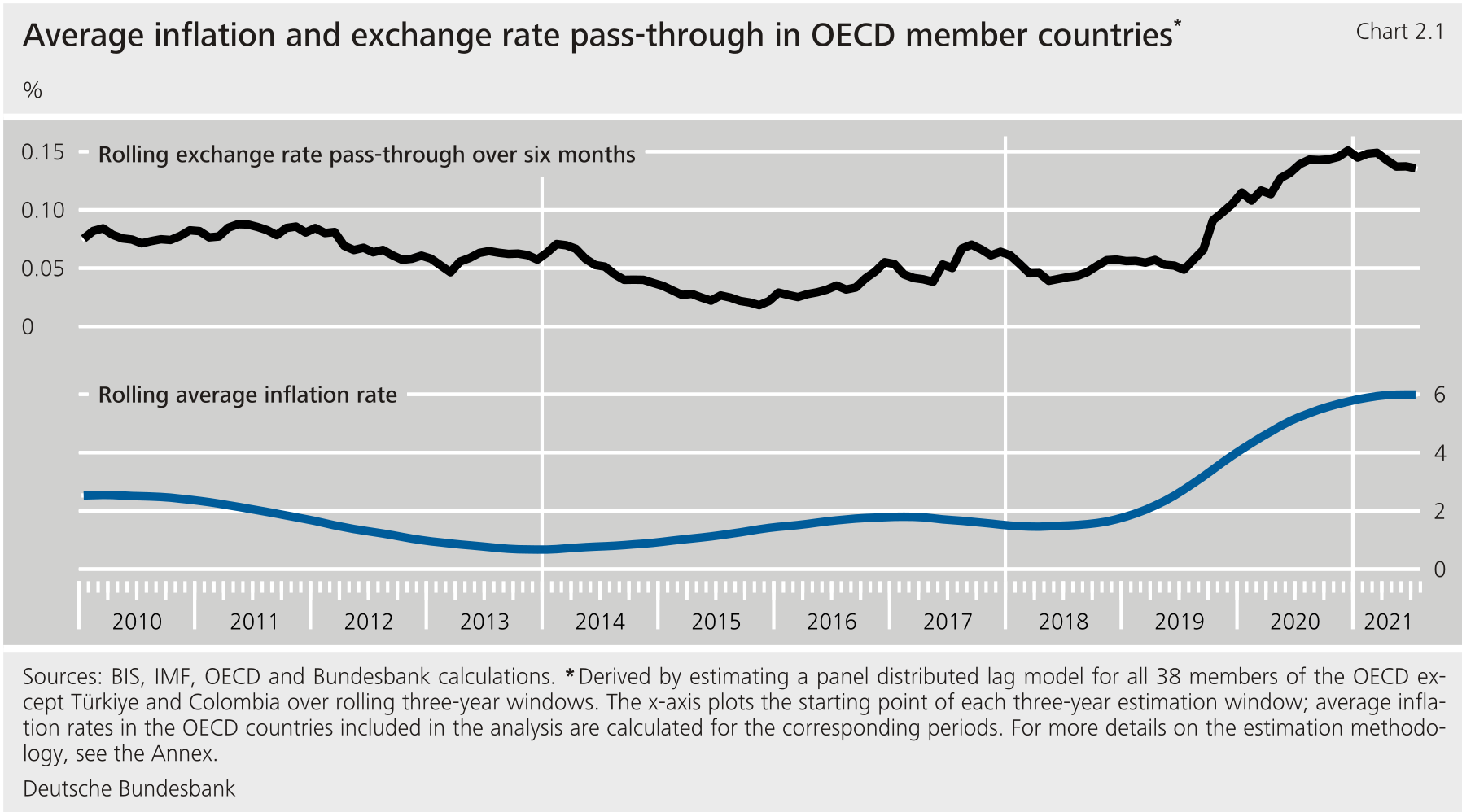
The empirical work of the Bundesbank presented here explores how exchange rate pass-through evolved in the member countries of the OECD during the significant rise in global inflation from mid-2021 onwards. The OECD comprises the majority of advanced economies, Germany included, as well as some emerging market economies. The upper part of Chart 2.1 shows rolling estimates of exchange rate pass-through to consumer prices for this group of countries 19 over time. The black line shows the estimated average exchange rate elasticity of inflation over time across the 36 OECD countries considered in the study. It indicates the effect that an effective depreciation of the respective domestic currency by 1 % has on domestic inflation within six months. 20  The estimation period is three years in each case. The chart’s horizontal axis shows the start of each estimation period. 21 22 Average inflation in the OECD countries over the corresponding three-year period is plotted as a separate line in the lower part of the chart. 

Average inflation and exchange rate pass-through in OECD member countries

The chart shows that exchange rate pass-through increased markedly as inflation rose at the end of the period under review. Three observations can be made. First, the estimated pass-through effect stayed low for a long time. 23 Second, the effect initially fell further during the long period of exceptionally low inflation rates, reaching its trough in 2015. Third, according to the estimations, exchange rate pass-through climbed significantly over the past few years, in line with the sharp rise in inflation from around mid-2021 onwards. The estimated elasticity towards the end of the observation period was approximately 0.15, 24 nearly four times as large as during the estimation period immediately prior to the onset of the significant rise in inflation (where it was still around 0.04). 25  

The estimations suggest that exchange rate pass-through is unstable over time. The next section examines this instability in more detail, based on new Bundesbank estimations. It asks, first, whether the estimated exchange rate pass-through depends on which OECD group of countries 26 a country belongs to, and, second, to what extent exchange rate pass-through depends on the inflation environment in that country, i.e. in technical terms, on whether a country is in a “high-inflation” or “low-inflation” regime. The analysis employs a panel local projections method. 27  The method is able to ascertain the gradual adjustment path of consumer prices in response to exchange rate changes by using a separate model each time to estimate the pass-through over alternative projection periods – in this instance ranging from one month to 12 months. 28 The “projection period” refers to the time interval over which the price increase since the exchange rate change is measured. 29 The method provides a simple way of modelling the hypothesised dependence of the exchange rate pass-through on the inflation environment. Controls for other factors that determine domestic consumer prices have been built in. 30  

5 How strongly do changes in OECD countries’ exchange rates impact on the domestic rate of inflation over time? Is exchange rate pass-through generally dependent on the current inflation environment?

5.1 Estimated exchange rate pass-through by group of countries – with no account taken of a potential dependence on the domestic inflation environment

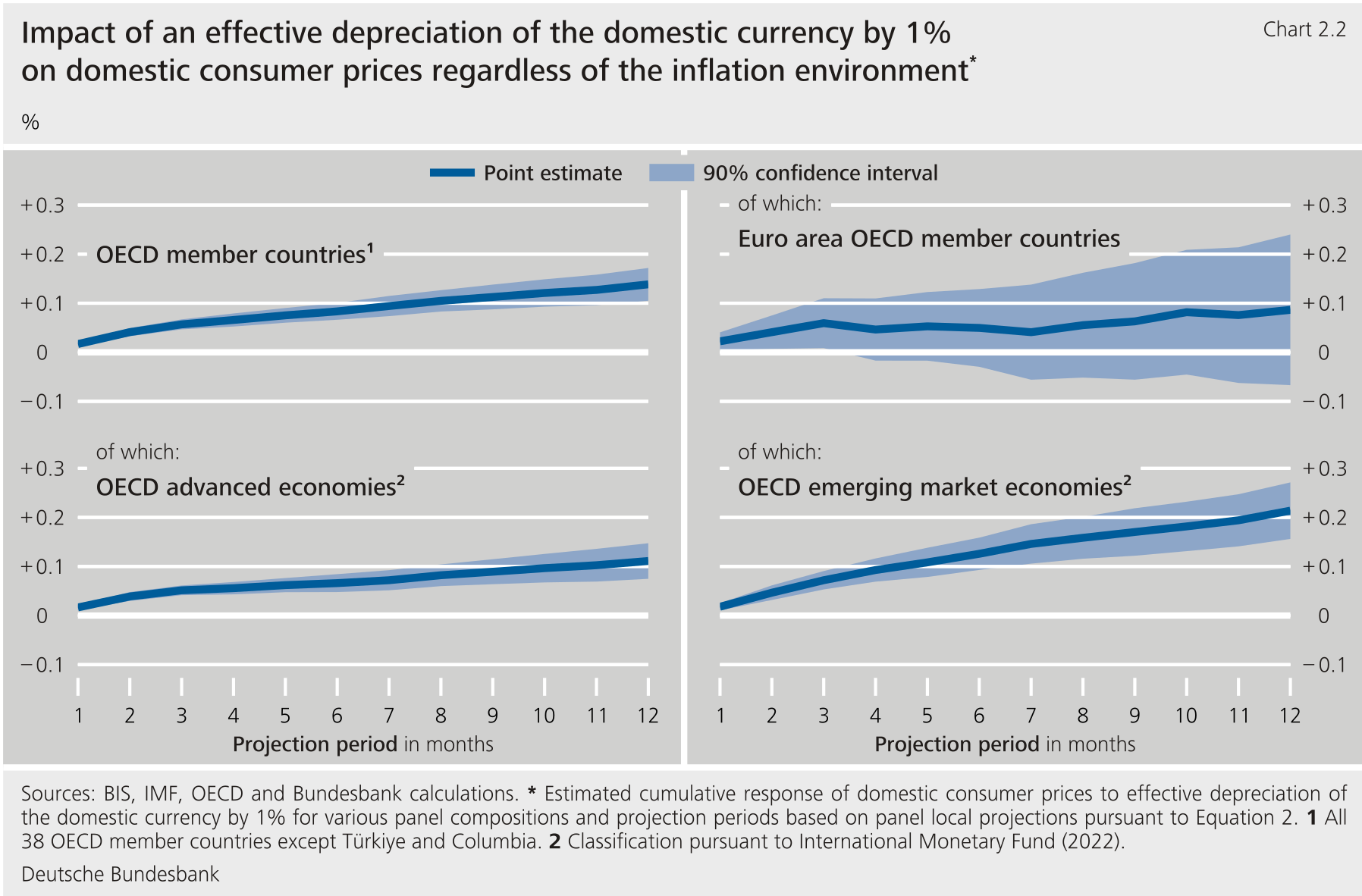
Chart 2.2 illustrates the results of the estimation for four different country compositions independently of the inflation regime: all OECD member countries under review, OECD advanced economies, OECD emerging market economies and euro area OECD member countries. In each case, each point on the various curves indicates the percentage impact that an effective depreciation of the domestic currency by 1 % has on consumer prices over the specified time period, all other things being equal. 

Impact of an effective depreciation of the domestic currency by 1% on domestic consumer prices

The longer the projection period is, the stronger the impact of a depreciation of the domestic currency on domestic consumer prices in OECD countries. The upper left quadrant shows the adjustment path of domestic consumer prices in response to a 1 % effective depreciation for the group of all OECD countries under review. It shows that a 1 % depreciation over the course of one year is associated, on average, with an increase in domestic consumer prices of around 0.14 %. According to the estimates, the effect increases during the projection period. 31

Exchange rate pass-through in OECD advanced economies is low and significantly less pronounced than in OECD emerging market economies. This is evident from a comparison of the estimated adjustment paths shown in the lower left quadrant for advanced economies and in the lower right quadrant for emerging market economies. The estimated impact is only 0.11 % for OECD advanced economies, while it is roughly twice as high for OECD emerging market economies, at around 0.21 %. 32 This is in line with the results of previous studies in that they also note significant differences in the exchange rate pass-through of advanced and emerging market economies. 33 One possible explanation for this difference is that the inflation rate in the emerging market group was usually markedly above that of the advanced economies group during the observation period, which should lead to a higher pass-through based on the fundamental considerations described above. The results for the 17 euro area OECD member countries are only statistically significant within the first quarter. This is consistent with the results of earlier studies. 34 In addition, estimation uncertainty is significantly higher for this group of countries than for other groups of countries. 

5.2 The estimated exchange rate pass-through by group of countries – depending on the domestic inflation environment

The estimation presented above can also be carried out depending on the prevailing inflation environment. Panel local projections can be used to determine the strength of exchange rate pass-through for specific inflation regimes, in other words depending on whether an OECD country is currently in a low-inflation or a high-inflation regime. 35 36 The inflation-rate threshold value above which a country moves from a low-inflation to a high-inflation regime is likewise estimated. 37 In principle, each projection period may prove to have a different threshold. This is because pass-through is – as mentioned above – estimated separately for each projection period. 

The estimates show a rate of consumer price inflation of at least 3 % as the threshold for high-inflation regimes where pass-through is significantly higher. For OECD countries, the estimated thresholds for country-specific inflation above which the pass-through effect is found to be significantly more pronounced are in a relatively narrow range of around 3.1 % to 3.9 % over the various projection periods. 38 If a country's inflation rate exceeds the respective threshold, the exchange rate pass-through differs significantly from that below, according to the estimation results. In order to make the results easier to interpret, an identical threshold of 3 % is henceforth assumed for all projection periods. 39

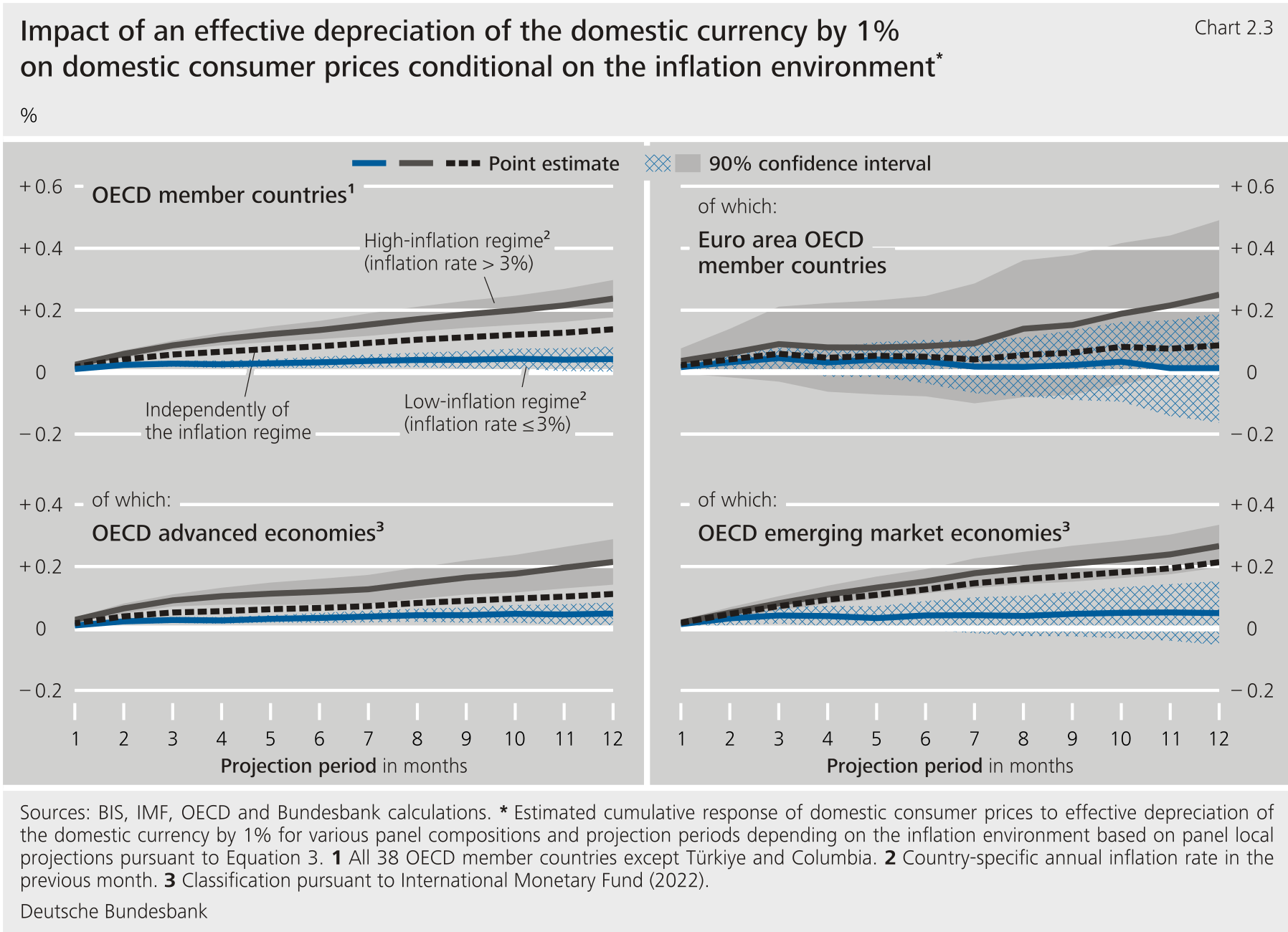
Impact of an effective depreciation of the domestic currency by 1% on domestic consumer prices conditional

Chart 2.3 shows the adjustment paths of domestic consumer prices in response to an effective depreciation by 1 % depending on whether a country in the respective group of countries under review is in a high-inflation or a low-inflation regime. The blue lines illustrate the adjustment paths for countries in the respective group of countries that had inflation rates below 3 % in the previous month, while the grey lines illustrate the adjustment paths for countries with higher inflation. The black dashed lines represent the previously estimated adjustment paths for which no regime distinction was made. 40

The estimation results point to significant differences between adjustment paths where inflation is high and those where inflation is low. The adjustment paths determined depending on the inflation environment also differ significantly from those of the basic model, which did not take the inflation environment into account. Below the inflation threshold of 3 %, the response of prices to exchange rate fluctuations is weaker than in the basic model, whereas it is stronger above the threshold. This applies to the estimation for all OECD countries and the sub-groups considered alike. For OECD countries, the estimated price effect of a 1 % depreciation is, for example, 0.24 % if this depreciation occurred in an environment of high inflation. This is almost twice as high as in the basic model and more than five times as high as in the low-inflation regime. 

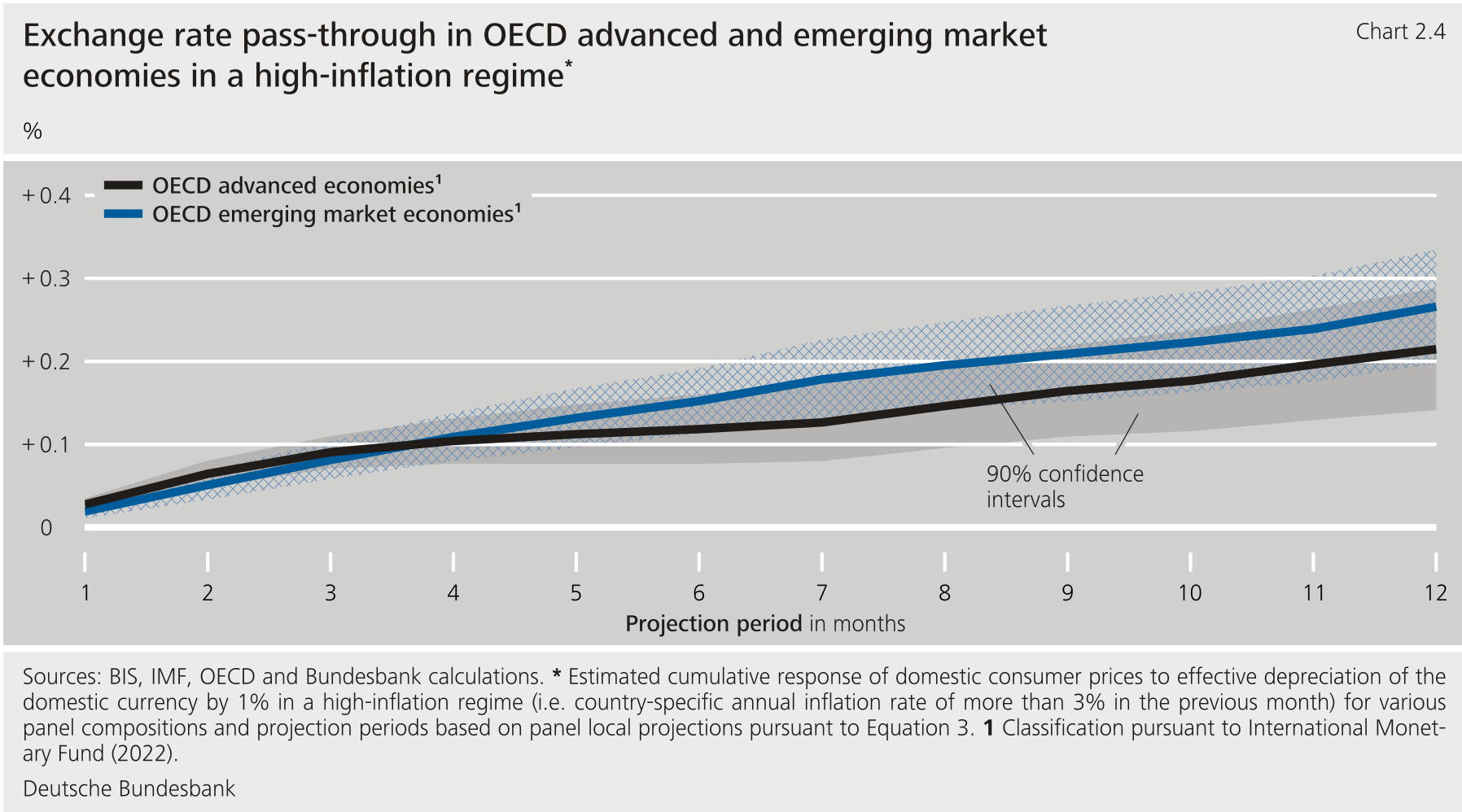
Exchange rate pass-through in OECD advanced and emerging market economies in a high-inflation regime

Exchange rate pass-through in the considered OECD advanced economies and OECD emerging market economies is similar if the inflation environment is likewise similar. Chart 2.4 illustrates the estimated adjustment paths of the domestic inflation rate in OECD emerging market and OECD advanced economies in each case under the high-inflation regime, in other words where inflation is above 3 %. In marked contrast to the basic model without regime distinction, the adjustment paths of consumer prices can now hardly be distinguished within a 12-month period between the advanced and emerging market economies under review. As the 90 % confidence intervals for advanced and emerging market economies presented overlap for each of the projection periods shown here, the difference in pass-through coefficients is not statistically significant. 41 By contrast, the fact that analyses that do not distinguish between different inflation environments reveal significant differences in exchange rate pass-through between advanced and emerging market economies may be due to the fact that, historically, inflation rates in emerging market economies often exceeded the estimated threshold of 3 %. These countries therefore have high-inflation regimes as defined here (see Chart 2.3). For emerging market economies, the adjustment path based on the regime-independent estimation is thus closer to the path of the high-inflation regime.

Euro area countries’ exchange rate pass-through is also higher if domestic inflation exceeds 3 %. The estimates suggest that, in euro area countries, too, exchange rate fluctuations have a stronger impact on consumer prices, at least over longer projection periods, when inflation rates are above 3 %. Within a year, an effective depreciation of the euro by 1 % is estimated to have led to an increase in prices of around 0.25 % in the euro area countries, if domestic inflation had previously exceeded 3 %. This estimate is virtually indistinguishable from the one obtained for all countries in the sample. Mechanically extrapolated and under simplifying assumptions, for example, just under 1.3 percentage points of consumer price inflation in September 2023 can be attributed to the effective depreciation of the euro between September 2021 and September 2022. 42 Based on the estimates which do not explicitly take into account the inflation environment, the conclusion would have been that the price effect of the euro depreciation is only around half as large. 43

Estimation uncertainty for the adjustment paths of euro area countries is higher than for other OECD member countries. The statistical uncertainty is reflected in very broad confidence intervals. 44 One reason for this may be that the effective exchange rates of the euro area member countries under consideration exhibit comparatively little fluctuation. This is attributable to the high share of intra-euro area trade, which means that the other euro area member countries – against which there are no exchange rate fluctuations at all – have a high weighting overall. The parameter estimates for the euro area countries are therefore less precise than the parameter estimates for the other OECD member countries. 

Two methodological constraints should be taken into account when assessing the results on the impact of the exchange rate on prices presented here. First, the cause of the exchange rate movement was not taken into account, although it could be relevant for the price adjustment. 45 The estimated adjustment paths presented here therefore only reflect the average response of domestic prices to all impulses that triggered exchange rate movements during the period under review. Second, the classification into inflation regimes based on a 3 % threshold may be too rigid, as exchange rate pass-through probably changes more gradually in practice. 

6 Conclusion

The impact of exchange rate fluctuations on consumer prices increases in periods of high domestic inflation of above 3 % in both emerging and advanced OECD countries. For monetary policy, this means that exchange rate developments will either cause stronger tailwinds or greater headwinds in the fight against inflation when inflation is high than in times of low inflation, all other things being equal. Central banks therefore need to keep a close eye on exchange rate movements, especially when inflation is high. The results consequently provide helpful benchmarks for monetary policy.

Annex: Methodological approach to panel estimations of exchange rate pass-through

The analysis uses panel data to assess whether exchange rate pass-through is dependent on the specific inflation environment in a given country; panel methods are used due to the small number of high-inflation observations in the 36 OECD countries in the reference period from 2000 to 2024. The analysis presented here focuses on the question of whether exchange rate pass-through is dependent on the prevailing inflation environment in a given country. Due to the fact that for many of the 36 OECD countries under review – especially the advanced economies in the OECD – there are comparatively few observations with high inflation rates during the reference period (January 2000 to June 2024), only panel data analysis methodologies are employed here. Using panel data generally improves the accuracy of the estimation compared with purely country-specific estimations, as this takes account of the variance in the data both over time as well as across the countries under review. In addition, by factoring in country-specific constants (fixed effects), it is possible to control for unobserved time-invariant heterogeneity between the countries, which would not be possible in the case of purely country-specific estimations. One disadvantage is that these panel estimations assume that the slope coefficients are homogenous, at least within each group of countries under analysis. 46

The estimations capture the average impact of exchange rate developments on consumer price inflation without differentiating between the causes of exchange rate movements. All of the estimations are based on single-equation models that do not differentiate between the sources of exchange rate movements. Compared with more complex models, single-equation models have the advantage that model variations, such as possible regime dependence – in this case, dependence of exchange rate pass-through on the inflation environment – can be easily integrated into the model with the results remaining intuitive to interpret. The literature shows that exchange rate pass-through can differ depending on the cause of a change in exchange rates. 47 However, reduced-form estimations also provide valuable insight, as they depict the average impact of exchange rate movements on consumer price inflation during the reference period, regardless of the source of the change in the exchange rate, which cannot always be determined definitively and directly.

The stability of exchange rate pass-through over time is assessed by estimating an empirical model on a rolling basis, i.e. repeatedly for overlapping three-year estimation windows that shift by one month each time. A common method for estimating exchange rate pass-through is the distributed lag (DL) model. The DL model allows the exchange rate to affect prices with a time lag as well. This model is sometimes applied to multiple countries at the same time (cross-section). In this case, it is referred to as a “panel DL model”. 48 This approach is also employed in this analysis. This model does not explicitly take account of the prevailing inflation environment in any given country.

$$ \begin{align} \Delta p_{i,t} &= \alpha_i+ \sum_{k=0}^{6} \beta_k\, \Delta neer_{i,t-k}+ \sum_{k=0}^{6} \phi_k\, \Delta p^*_{i,t-k} \\& + \sum_{k=0}^{6} \eta_k\, og_{i,t-k}+ \sum_{k=0}^{6} \theta_k\, \Delta oil_{t-k}+ \varepsilon_{i,t} \end{align} \tag{1} $$

The model explains domestic consumer price inflation based on nominal effective exchange rate changes, inflation in partner countries, the output gap, and crude oil prices, each including time-lagged effects. In the model, the dependent variable is the monthly rate of change in the consumer price index in country \( i \) \((\Delta p_{i,t}) \), the explanatory variables are the rate of change in the nominal effective exchange rate of country \( i \) \( (\Delta neer_{i,t}) \) as well as a number of control variables that potentially affect consumer prices in country\( i \) and that are possibly correlated with the exchange rate term. 49 These are the inflation rates in partner countries weighted by their shares of trade \( (\Delta p^*_{i,t}) \), the output gap in country \( i \) \((og_{i,t}) \) – i.e. the deviation of current output from potential output 50  – and the rate of change in global crude oil prices (\( \Delta oil_t \)). Alongside the contemporaneous values, lagged values of these three explanatory variables and the rate of change in the exchange rate are also included in the model. 51 In addition, the model contains country-specific fixed effects (\( \alpha_i \)).

The sum of the seven\( \beta_k \) coefficients for each three-year estimation window rises noticeably towards the end of the reference period, which is indicative of increasing exchange rate pass-through over time. The estimated \( \beta_k \) coefficients are of key importance for determining exchange rate pass-through. Their sum reflects the cumulative percentage effect that a present depreciation of the domestic currency by 1 % exerts on the consumer price index over a period from \( k=0 \) to \( K=6 \) months. In order to assess the stability of the correlation, the model is estimated for a panel of 36 OECD countries across overlapping three-year windows. Here, the estimation period is successively shifted along by one month and the model is re-estimated; this is repeated until the end of the reference period, which, in this case, is mid-2024. There is a clearly noticeable rise in the calculated pass-through effect towards the end of the reference period (see also Chart 2.1 in the main text). 52  

Panel local projections are suitable for examining whether the strength of exchange rate pass-through is non-linearly dependent on the inflation environment. In order to examine whether exchange rate pass-through is dependent on the prevailing inflation environment in a given country, state-dependent panel local projections are used. 53 These enable the dynamic adjustment path of domestic consumer prices in relation to exchange rate changes to be estimated in a simple and robust way. Unlike the panel DL model used previously, panel local projections allow non-linear (i.e. regime-dependent) and other asymmetric effects to be integrated flexibly without the need to specify a fixed structure for their dynamics. 54 For this reason, all other estimations are based on this methodology. 

The further analysis is based consistently on panel local projections, with the results that do not take account of the specific inflation environment in any given country serving as a reference point for findings that do take account of country-specific inflation environments. As a reference point for the state-dependent regression results, the regressions are first estimated in a state-independent way – i.e. without modelling the effect of country-specific inflation on pass-through – on the basis of panel local projections and an otherwise identical model specification. This ensures that any differences between the results of regime-dependent and regime-independent estimations are not attributable to the use of different methodological approaches, such as panel DL estimations and panel local projections. The state-independent model is specified as follows: 

$$ \begin{align} p_{i,t+h} – p_{i,t-1} &= \alpha_{i,h} + \beta_{h} \Delta neer_{i,t} \\ &+ \sum_{j=0}^{J} \left( \delta_{j,h} og_{i,t-j} + \phi_{j,h} \Delta p^{*}_{i,t-j} + \zeta_{j,h} \Delta oil_{t-j} \right) \\ &+ \sum_{j=1}^{J} \left( \gamma_{j,h} \Delta neer_{i,t-j} + \phi_{j,h} \Delta p_{i,t-j} \right) + \varepsilon_{i,t+h} \end{align} \tag{2} $$

Using this model allows the dynamic response of domestic prices to changes in the exchange rate to be calculated in a simple and robust way over various projection periods, with each analysed projection period denoted in months by \( h+1 \) with \( h=\{0,...,H\} \). 55 In addition to the variables included in the previous model, lagged values of the domestic monthly inflation rate are also factored in here.

The panel local projections method estimates pass-through coefficients for each projection period. As separate panel regressions are estimated for each projection period, this approach also produces pass-through coefficients estimated directly for each projection period. 56 The dynamics of the effects are therefore not constrained in the estimation. All else being equal, the parameter \( \beta_h \) thus reflects the percentage effect of a 1 % depreciation in the nominal effective exchange rate on the domestic price level within \( h+1 \) months. The model is estimated for \( h=\{0,...,11\} \), meaning that it covers projection periods of up to one year. 57  

The panel local projections model can be expanded to include an indicator variable, which enables pass-through coefficients to be estimated depending on a predefined state, which, in this case, is the inflation environment. The panel local projections model is expanded to include an interaction term between the rate of change in the exchange rate and an indicator variable \( I \). The latter takes a value of one when the annual rate of inflation, \( \pi \), in country \( i \) exceeds a threshold \( q_h \) in the previous month, with the threshold being determined in the model. If annual inflation is below the threshold, the indicator variable takes a value of zero (see Equation 3): 

$$ \begin{align} p_{i,t+h} – p_{i,t-1} &= \alpha_{i,h} + \beta_{low,h} \Delta neer_{i,t} \\ &+ \beta_{\Delta high,h} I \left( \pi_{i,t-1} > q_h \right) \Delta neer_{i,t} \\ &+ \sum_{j=0}^{J} \left( \delta_{j,h} og_{i,t-j} + \phi_{j,h} \Delta p^{*}_{i,t-j} + \zeta_{j,h} \Delta oil_{t-j} \right) \\ &+ \sum_{j=1}^{J} \left( \gamma_{j,h} \Delta neer_{i,t-j} + \phi_{j,h} \Delta p_{i,t-j} \right) + \varepsilon_{i,t+h} \end{align} \tag{3} $$

where

$$ I(\pi_{i,t-1}>q_h)=\left\{\begin{array}{@{}l@{\quad}l@{}} 1 & \text{if } \pi_{i,t-1}>q_h,\\ 0 & \text{sonst} \end{array}\right. $$ 

For each projection period \( h+1 \), the expanded panel local projections model calculates a dedicated threshold value to differentiate between low-inflation and high-inflation regimes. In order to determine such threshold values for the lagged annual rates of inflation, a grid search is carried out for each projection period to calculate the threshold value that maximises the explanatory power of the model across both regimes. 58 Each of the calculated threshold values is then tested for significance. For the entire OECD panel, the threshold values for the inflation rate identified using this method all lie within a fairly narrow range of 3.1 % to 3.9 % and are statistically significant. For the sake of simplicity, it therefore seems reasonable to assume a uniform threshold value of 3 % for all of the projection periods under review instead of the individual endogenously calculated, optimal values. In Charts 2.2 to 2.4 as well as the underlying estimations, the value of 3 % thus always represents the threshold between low-inflation and high-inflation regimes. Subsequently, the dynamic response of prices to exchange rate changes is estimated for various panel compositions (all 36 OECD countries under consideration, OECD advanced economies, OECD emerging market economies, and OECD euro area member countries) conditional on the inflation environment. 59 The coefficients calculated through this approach are shown in Chart 2.3.


List of references

Bailliu, J. and H. Bouakez (2004), Exchange rate pass-through in industrialized countries , Bank of Canada Review (Spring), pp. 19‑28.

Barhoumi, K. (2006), Differences in long run exchange rate pass-through into import prices in developing countries: An empirical investigation , Economic Modelling, Vol. 23, pp. 926‑951.

Barnichon, R. and C. Brownlees (2019), Impulse response estimation by smooth local projections , Review of Economics and Statistics, Vol. 101(3), pp. 522‑530.

Calvo, G. A. and C. M. Reinhart (2000), Fear of Floating , NBER Working Paper No 7993.

Carrière-Swallow, Y., M. Firat, D. Furceri and D. Jimenez (2023), State-Dependent Exchange Rate Pass-Through , IMF Working Paper No 86. 

Carrière-Swallow, Y., B. Gruss, N. E. Magud and F. Valencia (2021), Monetary policy credibility and exchange rate pass-through , International Journal of Central Banking, Vol. 17 (3), pp. 61‑94.

Caselli, F. G. and A. Roitman (2019), Nonlinear exchange rate pass‐through in emerging markets , International Finance, Vol. 22(3), pp. 279‑306.

Cheikh, N. B. and W. Louhichi (2016), Revisiting the role of inflation environment in exchange rate pass-through: A panel threshold approach , Economic Modelling, Vol. 52, pp. 233‑238.

Choudhri, E. U. and D. S. Hakura (2006), Exchange rate pass-through to domestic prices: Does the inflationary environment matter? , Journal of International Money and Finance, Vol. 25(4), pp. 614‑639.

Colavecchio, R. and I. Rubene (2020), Non-linear exchange rate pass-through to euro area inflation: a local projection approach , ECB Working Paper No 2362.

Devereux, M. B. and C. Engel (2001), Endogenous Currency of Price Setting in a Dynamic Open Economy Model , NBER Working Paper 8559.

Devereux, M. B., C. Engel and P. E. Storgaard (2004), Endogenous exchange rate pass-through when nominal prices are set in advance , Journal of International Economics, Vol. 63(2), pp. 263‑291.

Devereux, M. B. and J. Yetman (2010), Price adjustment and exchange rate passthrough , Journal of International Money and Finance, Vol. 29, pp. 181‑200.

Driscoll, J. C. and A. C. Kraay (1998), Consistent covariance matrix estimation with spatially dependent panel data , Review of Economics and Statistics, Vol. 80, pp. 549‑560.

Forbes, K., I. Hjortsoe and T. Nenova (2018), The shocks matter: Improving our estimates of exchange rate pass-through , Journal of International Economics, Vol. 114, pp. 255‑275.

Gagnon, J. E. and J. Ihrig (2004), Monetary policy and exchange rate pass-through , International Journal of Finance & Economics, Vol. 9(4), pp. 315‑338.

Goldberg, L. S. and C. Tille (2008), Vehicle currency use in international trade , Journal of International Economics, Vol. 76(2), pp. 177‑192.

Gopinath, G., O. Itskhoki and R. Rigobon (2010), Currency choice and exchange rate pass-through , American Economic Review, Vol. 100(1), pp. 304‑336.

Ha, J., M. M. Stocker and H. Yilmazkuday (2020), Inflation and exchange rate pass-through , Journal of International Money and Finance, Vol. 105, pp. 1‑21.

Hansen, B. E. (1999), Threshold effects in non-dynamic panels: Estimation, testing, and inference , Journal of Econometrics, Vol. 93(2), pp. 345‑368.

Hossfeld, O. (forthcoming), Exchange rate pass-through in OECD economies: Revived by high inflation? Deutsche Bundesbank discussion paper. 

International Monetary Fund (2022), World Economic Outlook Report October 2022 .

Jordà, Ò. (2023), Local Projections for Applied Economics , Annual Review of Economics, Vol. 15, pp. 607‑631.

Jordà, Ò. (2005), Estimation and Inference of Impulse Responses by Local Projections , American Economic Review, Vol 95(1), pp. 161‑182.

Laflèche, T. (1996), The impact of exchange rate movements on consumer prices , Bank of Canada Review (Winter), pp. 21‑32.

López-Villavicencio, A. and V. Mignon (2017), Exchange rate pass-through in emerging countries: Do the inflation environment, monetary policy regime and central bank behavior matter? , Journal of International Money and Finance, Vol. 79, pp. 20‑38.

Shambaugh, J. (2008) A new look at pass-through , Journal of International Money and Finance, Vol. 27, pp. 560‑591.

Stützel, W. (1983), Über unsere Währungsverhältnisse: Zehn Jahre Floating: Verheißungen und Erfahrungen, Walter Eucken Institute, Vorträge und Aufsätze, Vol. 91. 

Taylor, J. B. (2000), Low-inflation, pass-through, and the pricing power of firms , European Economic Review, Vol. 44(7), pp. 1389‑1408.

Wang, Q. (2015), Fixed-effect panel threshold model using Stata , The Stata Journal, Vol. 15(1), pp. 121‑134.


Has this page helped you?