Commentaries Monthly Report – September 2025

1 Economic conditions

1.1 German economy likely to grow slightly in third quarter
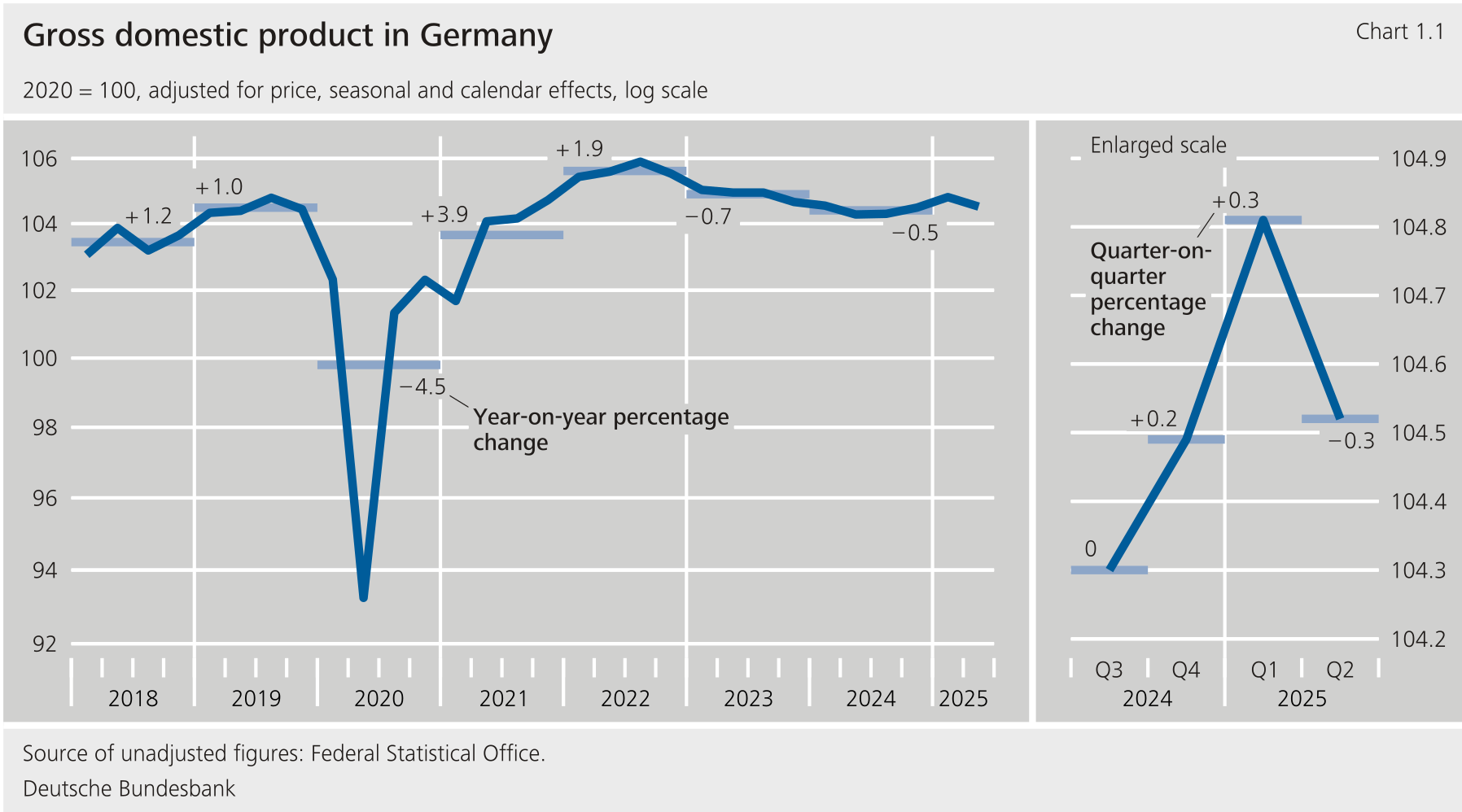
The German economy is proving relatively robust in a difficult environment. Overall, from today’s perspective, real gross domestic product (GDP) could increase slightly in the third quarter of 2025. Investment conditions for firms remain unfavourable amid weak competitiveness and low capacity utilisation. However, there are no signs of any major setback for industry in the third quarter, despite additional burdens caused by the new US tariffs. On the contrary, it could even make a positive contribution to GDP growth. Industrial output rose steeply in July after seasonal adjustment. 1 Price-adjusted sales increased significantly as well. As this noticeably good start to the quarter is based on notable developments in the case of the mechanical engineering sector and car manufacturers, it is unlikely to be sustained. However, combined with the leading indicators, it suggests that output will increase on a quarterly average. In fact, the underlying trend in new orders is still pointing upwards. In addition, following the preliminary trade agreement between the United States and the EU, survey indicators showed signs of a slowdown in August, but remained relatively robust overall. Exports to the United States are unlikely to weigh as heavily as in the second quarter. These had risen sharply in the first quarter ahead of the introduction of US tariffs in April and then plummeted. A recovery is yet to materialise in the construction sector. Financing conditions remained stable and demand is tending to increase. However, improved demand is not yet reflected in higher output. Private consumption is likely to rise slightly, if at all. The labour market is not currently providing any stronger stimulus in the form of rising employment, and the steep wage growth so far is likely to tail off. There are signs of a sideways movement in the services sector (excluding trade). According to the ifo Institute, businesses believe their current business situation to be worse averaged across July and August than in the previous quarter, but they were more optimistic looking ahead. 

Gross domestic product in Germany

1.2 Industrial output is likely to provide positive growth stimuli
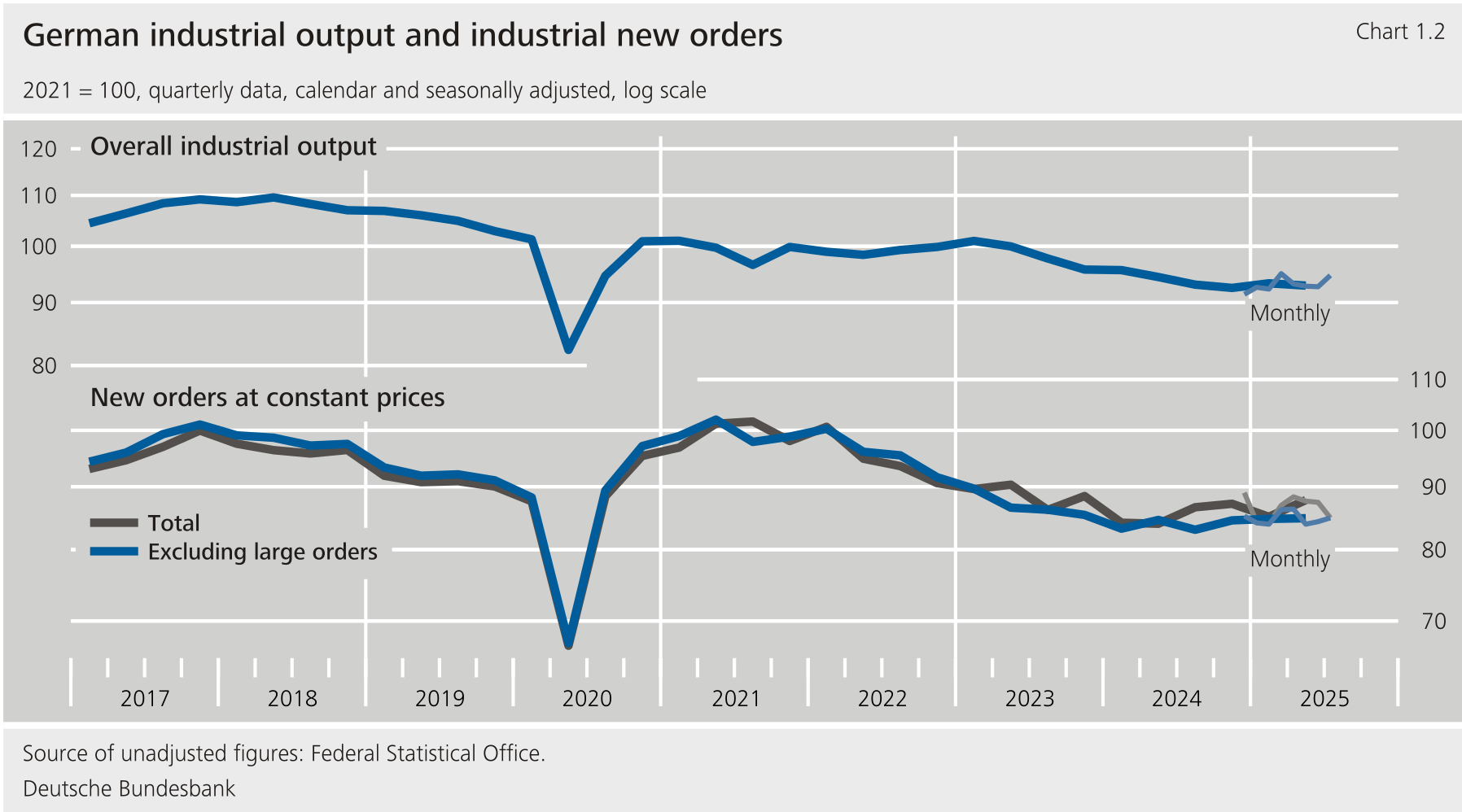
Industry got off to a surprisingly good start in the third quarter. Following the June figure, which had undergone substantial upward revision, seasonally adjusted industrial output rose steeply in July. 2 Industry recorded a steep quarter-on-quarter increase in output as well. Sales reflect this momentum: price-adjusted industrial sales were also significantly higher in July, both on the month and the quarter. Export business, in particular, continued its recovery path, which had already started last year. The output growth in July spread across all categories of goods, with capital goods producers standing out as the main driver. Mechanical engineering, in particular, saw unusually strong growth compared with both the previous month and the previous quarter. Output in the automotive industry also exceeded the already elevated level recorded in the previous month. The timing of plant shutdowns is likely to have played a role in this, however. In August, the German Association of the Automotive Industry again reported a decline in the number of passenger cars produced. 3 Taking the average of July and August, the figure was down on the previous quarter. The special developments in these two sectors suggest that output was only significantly higher in July.

The underlying trend dynamics of demand for German industrial goods are still pointing upwards. Industrial new orders declined significantly in July compared with the previous month and quarter. However, this was mainly due to the fact that fewer large individual orders were received than in previous months. Excluding these volatile large orders, new orders rose for the second consecutive month and were also higher than in the previous quarter. This was mainly due to somewhat stronger domestic demand, which had been weaker still in the previous quarter. By contrast, demand from abroad declined slightly overall despite an increase in orders from the euro area. However, the moderately positive underlying trend seen in recent quarters continues. Nevertheless, the shortage of orders in industry remains a challenge. According to the ifo Institute, just under 40 % of enterprises continue to suffer from weak orders. Short-term ifo export and production expectations suffered a setback in August, too. This may have been related to the provisional trade agreement between the United States and the EU, which raised tariffs on exports to the United States again slightly on average. However, according to the ifo Institute, both the assessment of the current situation and business expectations remained fairly robust and, averaged across July and August, even showed an improvement on the quarter. The S&P Global Purchasing Managers’ Index for manufacturing increased in August and is now significantly higher than the expansion threshold when compared to the previous month. Although the high level of output seen in July is unlikely to be maintained, the sentiment indicators combined with the overall fairly robust leading indicators suggest that industrial output will increase on a quarterly average.

German industrial output and industrial new orders

1.3 An upturn in construction activity has yet to materialise.

Construction output remained at a low level in July. It rose slightly compared with the previous month but remained at the level of the previous quarter. It is surprising that output has not picked up given that new orders in the main construction sector have been on the rise since the beginning of last year, albeit from a low level. New orders fell significantly in the second quarter for the first time in a year but this is unlikely to have halted the upward trend. This blip was mainly due to a countermovement in civil engineering, which was unable to continue its strong start to the year. Construction firms currently appear to be further building up their order books. Since the beginning of the year, the reach of orders has been markedly higher again than in the previous year according to the ifo Institute. However, there are likely to be a number of motives behind this. In building construction, for example, demand had fallen particularly sharply in the wake of the interest rate reversal in 2022, mainly owing to the weakness in housing construction, and it is still very depressed. According to the ifo Institute, 45 % of firms still report a lack of demand. They are likely to replenish their order books somewhat initially before embarking on a significant expansion of production. By contrast, the trend of rising demand in civil engineering is already being met by a significant increase in capacity utilisation. Here, only one in four firms complained of a lack of demand, which is already roughly the long-term average. Production in civil engineering has been rising for a few quarters now and a longer order reach is more likely due to already elevated capacity utilisation. These sectoral differences are also reflected in the latest output figures. The upward movement in civil engineering continued in July, while the downward trend in building construction persisted. 

A recovery in construction output is yet to materialise. According to the ifo Institute, taking the average of July and August, construction contractors assessed their business situation as worse than in the previous quarter. This suggests that output will fail to rise in the third quarter. Firms showed much more optimism with their expectations, however. This confidence could also be attributable to the prospect of future infrastructure investment from the Federal Government’s new special fund. However, the construction sector can only expect marked impetus from these investments with a time lag. In addition, they mainly affect civil engineering, where most of the capacities have been utilised. In the short term, the outlook for the construction sector therefore remains subdued.

1.4 Labour market broadly stable

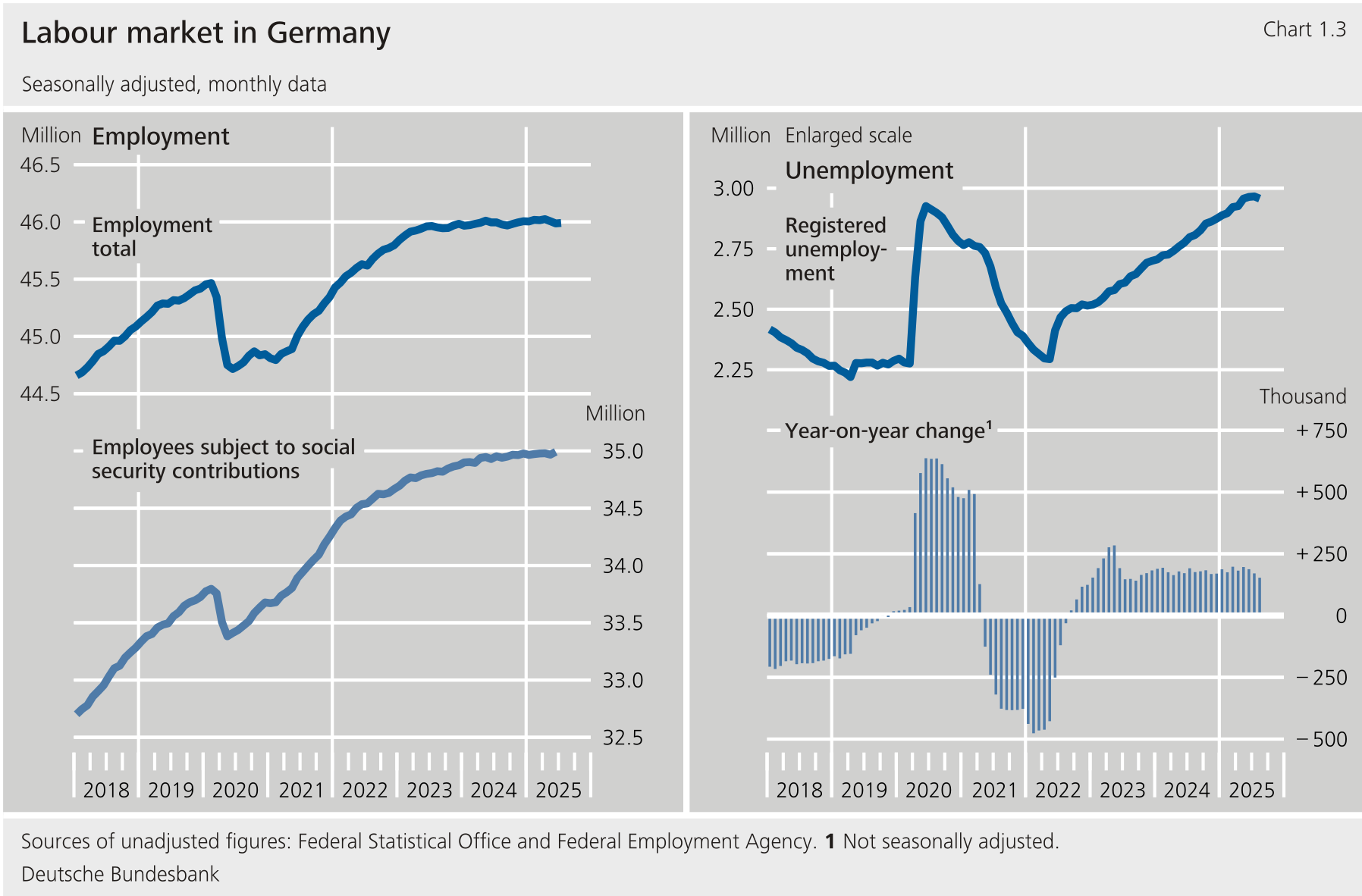
Total employment remained virtually unchanged again in July. As in the previous month, a seasonally adjusted 45.99 million persons are in employment in Germany. The relatively constant level of employment for what has now been two years obscures the enormous shifts between economic sectors. According to the Federal Employment Agency’s initial estimates of employment subject to social security contributions for June by sector, the marked reduction in industrial jobs continued. Nevertheless, slightly fewer jobs were lost in the manufacturing sector than in the first few months of this year. The automotive industry saw a particularly sharp reduction in jobs at the beginning of 2025. This was offset by an increase in employment in various services sectors. Health and social services have been one of these for some time now, but business-related services and logistics have also developed positively. The number of jobs in the construction sector is stable. Markedly less use was made of short-time work for economic reasons than at the beginning of the year. 

Labour market in Germany

Leading indicators of employment suggest little change in the short term. The ifo employment barometer, a survey of the recruitment plans of trade and industry over the next three months, remained virtually unchanged at its low level, with plans to reduce staff predominating. As in the previous months, this is particularly true of the manufacturing and trade sectors. By contrast, the IAB employment barometer – which also encompasses publicly financed sectors – continued to improve somewhat into expansionary territory. This suggests that overall employment could pick up again in the coming months. The number of vacancies reported to the Federal Employment Agency fell only marginally, following substantial declines. Newly reported job vacancies improved, albeit from a depressed level. 

After seasonal adjustment, unemployment dropped in August 2025 for the first time since 2022. The number of people officially registered as unemployed fell by 9,000 to 2.96 million. 4 The unemployment rate remained unchanged at 6.3 % due to rounding. The decline only affected unemployment amongst those receiving the basic welfare allowance. Here, the share of immigrants is relatively large and their gradual integration into employment, mainly in the growing services sectors, is progressing. By contrast, unemployment in the statutory unemployment insurance scheme, which is more cyclically driven, remained unchanged in August. The total number of underemployed persons reported by the Federal Employment Agency, which includes persons in labour market policy measures, fell for the third consecutive month. The outlook continued to improve. The IAB unemployment barometer recovered considerably in August and has now turned positive, which suggests that unemployment will decline over the next three months. However, this decline is likely to stem less from broader labour demand and mainly from the fact that labour supply is being dampened by demographics and relatively low immigration. 

1.5 Energy commodity prices slightly lower recently

Energy commodity prices have fallen somewhat recently. Crude oil prices fell by just over 4 % in August. The main reason for this is likely to have been the decision by some OPEC countries to expand their oil production again markedly. Oil prices fell further in September. As this report went to press, the price of a barrel of Brent crude oil stood at US$70. European gas prices were likewise down somewhat in August and September. This was partly due to increased US liquified natural gas exports. Similar to crude oil prices, gas prices are thus down slightly by around 13 % on the previous year’s level.

1.6 Inflation rose to 2.1 % in August

Price developments at the upstream stages of the economy were uneven. Import prices declined in July compared with the previous month. This was the case for both energy and other goods. By contrast, prices in industrial domestic sales showed no clear direction either in aggregate terms or in the sub-components. In July, annual import prices fell by 1.4 % and industrial producer prices by 1.5 %.

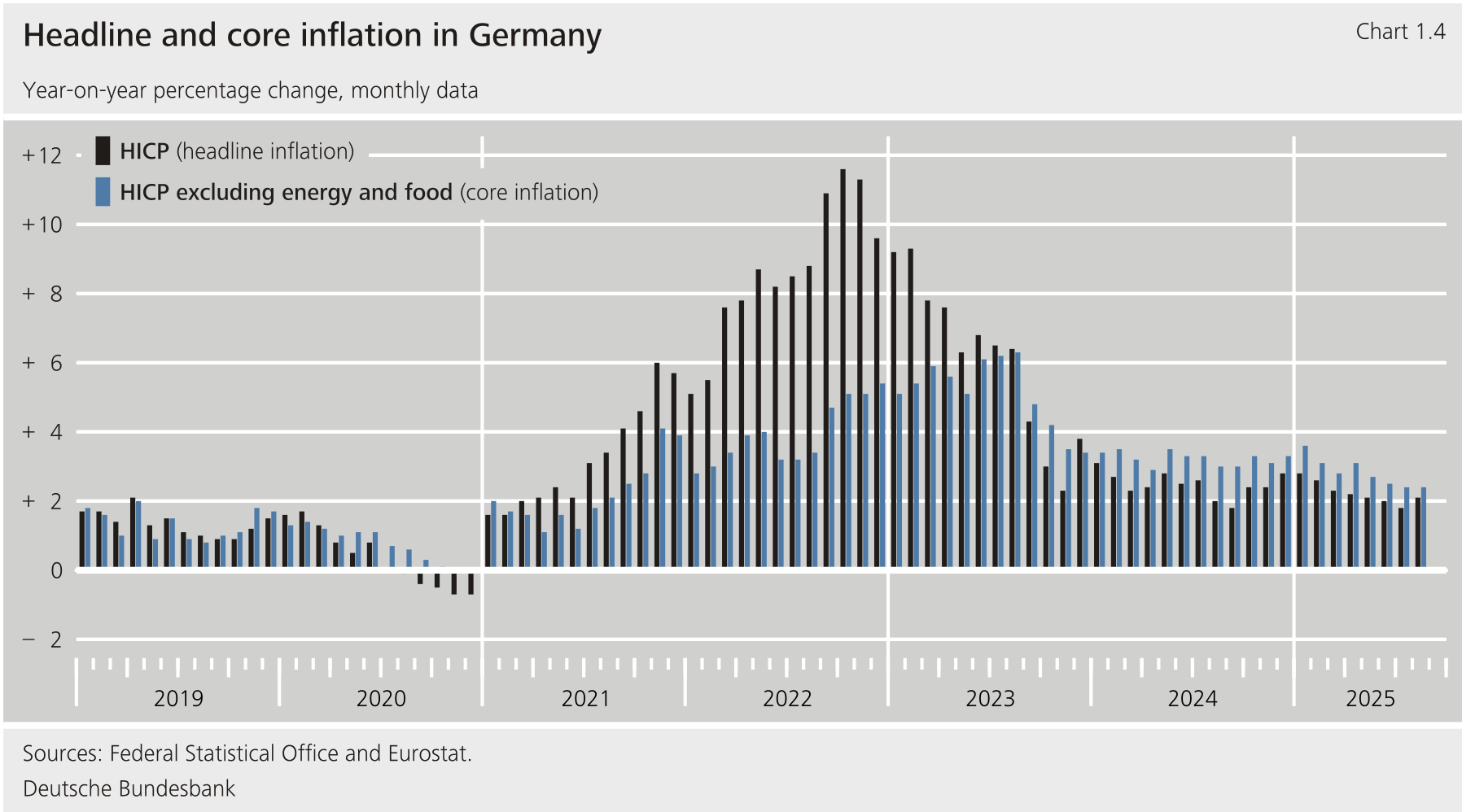
The inflation rate rose again in August. The Harmonised Index of Consumer Prices (HICP) rose again by a seasonally adjusted 0.2 % compared with the previous month. Food products, in particular, saw another marked price increase and services prices were also distinctly higher again following sideways movement in July. By contrast, the prices of industrial products excluding energy remained unchanged. Energy prices fell again somewhat following a temporary rise in July. The annual inflation rate increased from 1.8 % in July to 2.1 % in August. 5 The core rate excluding energy and food persisted at 2.4 %.

Headline and core inflation in Germany

The inflation rate is likely to fluctuate slightly above the 2 % mark up until the end of the year. The volatile profile is mainly due to base effects in the energy and services sectors. The contribution of energy to the inflation rate will be significantly higher for a time over the next few months, as energy prices had temporarily fallen considerably last autumn. Services inflation is likely to rise significantly for a time at the end of the year, as travel prices were down markedly in the fourth quarter of 2024. However, services inflation is then likely to gradually drop below 3 %. This should contribute to a further decline in underlying inflation, which is currently still distinctly higher than the historical average.

2 Public finances

2.1 Statutory health insurance scheme

2.1.1 Result in first half of 2025
Finances of the statutory health insurance scheme

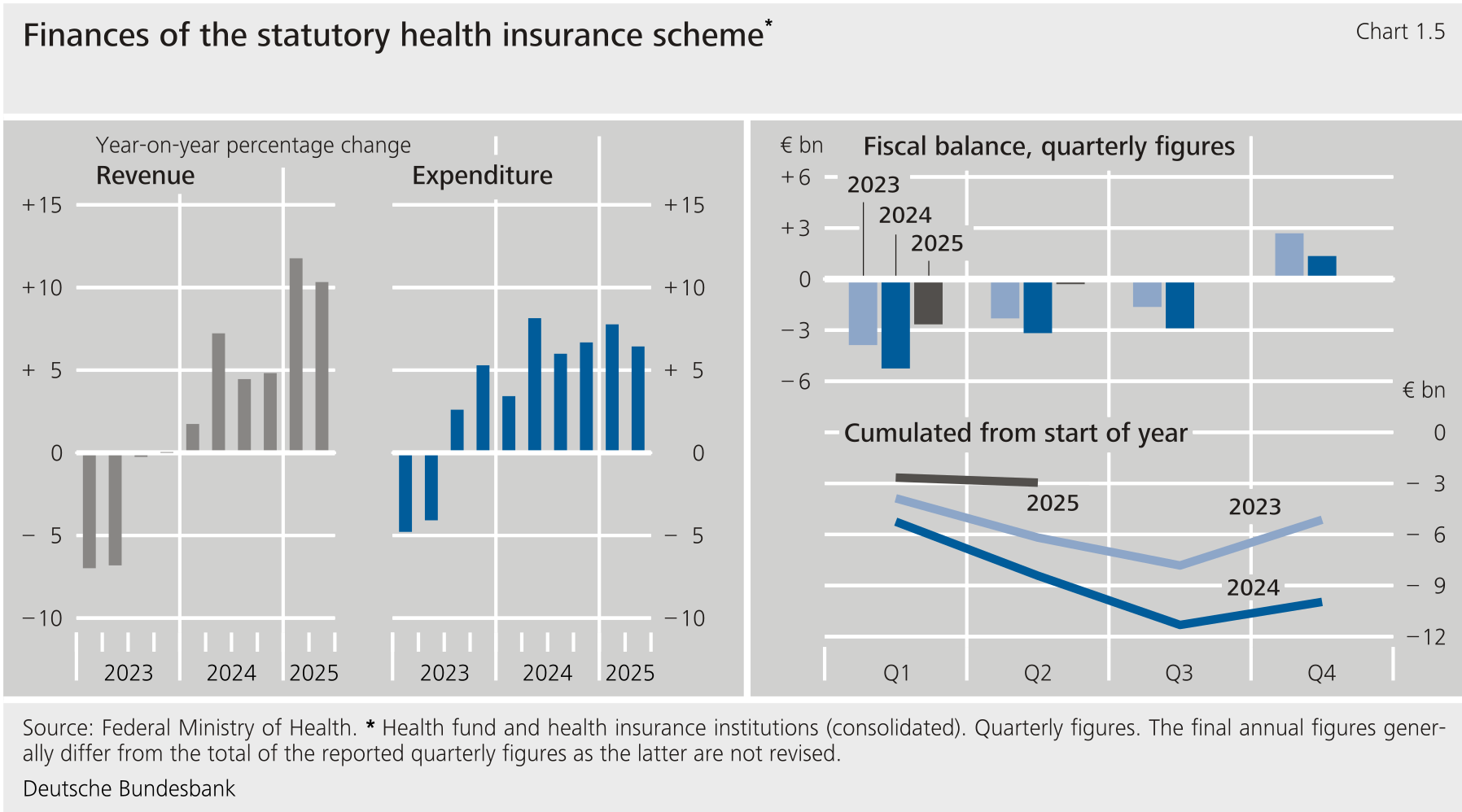
The statutory health insurance (SHI) scheme (comprising the health insurance institutions and the health fund) posted a deficit of €3 billion in the first half of 2025, according to preliminary figures. A significantly higher deficit of €8½ billion had been recorded in the previous year. The health fund’s deficit declined only slightly, to €6 billion. This improvement was thus almost entirely attributable to the health insurance institutions, which recorded a surplus of €3 billion. This was due to the considerably higher supplementary contribution rates (+ 1.1 percentage point compared with the annual average for 2024), which generated additional revenue of around €10 billion in the first half of the year. The health insurance institutions were thus able to cover the further sharp rise in benefit expenditure and replenish their reserves. These were just over €3 billion below the statutory minimum at the end of 2024.

In the first half of 2025, the SHI scheme’s revenue grew by 11 % on the year. Contribution receipts saw an even sharper rise of almost 13 %. Almost 8 percentage points of this can be explained by the rise in supplementary contribution rates to 2.9 % on average. There was a dampening effect from the reduction of around €1 billion in central government payments to the health fund, as refunds to hospitals for higher energy costs had been discontinued. 

The SHI scheme’s expenditure continued to grow dynamically, by 7 %: while special energy crisis-related payments from the health fund were discontinued (-€1 billion), health insurance institutions’ spending on benefits rose by 8 %. Expenditure on hospital treatment (+ 9½ %), medical treatment (just over + 7½ %) and medicines as well as on remedies and therapeutic appliances (around + 6 % in each case) all increased sharply. 

2.1.2 Outlook for 2025

The SHI scheme is likely to post a small surplus for the year as a whole.This would be a far more favourable result than in the previous year. It would also be better than anticipated in the plans of the group of SHI estimators from 2024. This is due to the fact that the supplementary contribution rates are well above the level deemed necessary to cover costs, with the aim of replenishing reserves.

The health fund is likely to end the year with a small deficit. With the plans of the group of SHI estimators and the health fund’s payments to the innovation fund and the hospital structures fund, a deficit of around €1 billion was expected. A central government loan of €2.3 billion is intended to ensure that the health fund’s reserves do not fall below the statutory minimum. 6  

With the steep rise in supplementary contribution rates, the health insurance institutions are set to record a surplus despite a significant increase in spending on benefits. On average, the health insurance institutions raised the supplementary contribution rate by 0.4 percentage point more than was calculated by the Federal Ministry of Health. This has resulted in additional revenue of €5½ billion compared with the government figure. Overall, a surplus is to be expected – even though the health insurance institutions' expenditure in 2024 was around €2 billion higher than estimated and, given developments to date, expenditure growth is likely to be above the figure projected by the group of estimators (+ 7 %). However, it remains to be seen whether this surplus will enable the financial reserves to be replenished up to the statutory minimum.

2.1.3 Outlook for subsequent years

The group of SHI estimators will discuss further financial developments beyond the current year in October. Subsequently, the Federal Ministry of Health will calculate the supplementary contribution rate necessary to cover expenditure for 2026. There is alleviation of the upward pressure, first, from the fact that central government will provide a further loan of €2.3 billion in 2026 according to the draft budget. Second, central government delayed repayment of a €1 billion loan taken out in 2023 until 2033. Originally, it was due to be repaid in 2026. Central government is thus using multi-year loans to bridge acute liquidity bottlenecks.

Such loans cannot close structural financing gaps, however.A commission has therefore been tasked with drawing up reform proposals by the spring of 2027. Structural reforms and efficiency gains could limit the strong trend increase in spending on benefits in the SHI scheme. Insured persons could also be made more cost aware, for example by bringing in some sort of surgery visit fee or charging certain deductibles. 7

2.2 Public long-term care insurance scheme 8  
Finances of the public long-term care insurance scheme

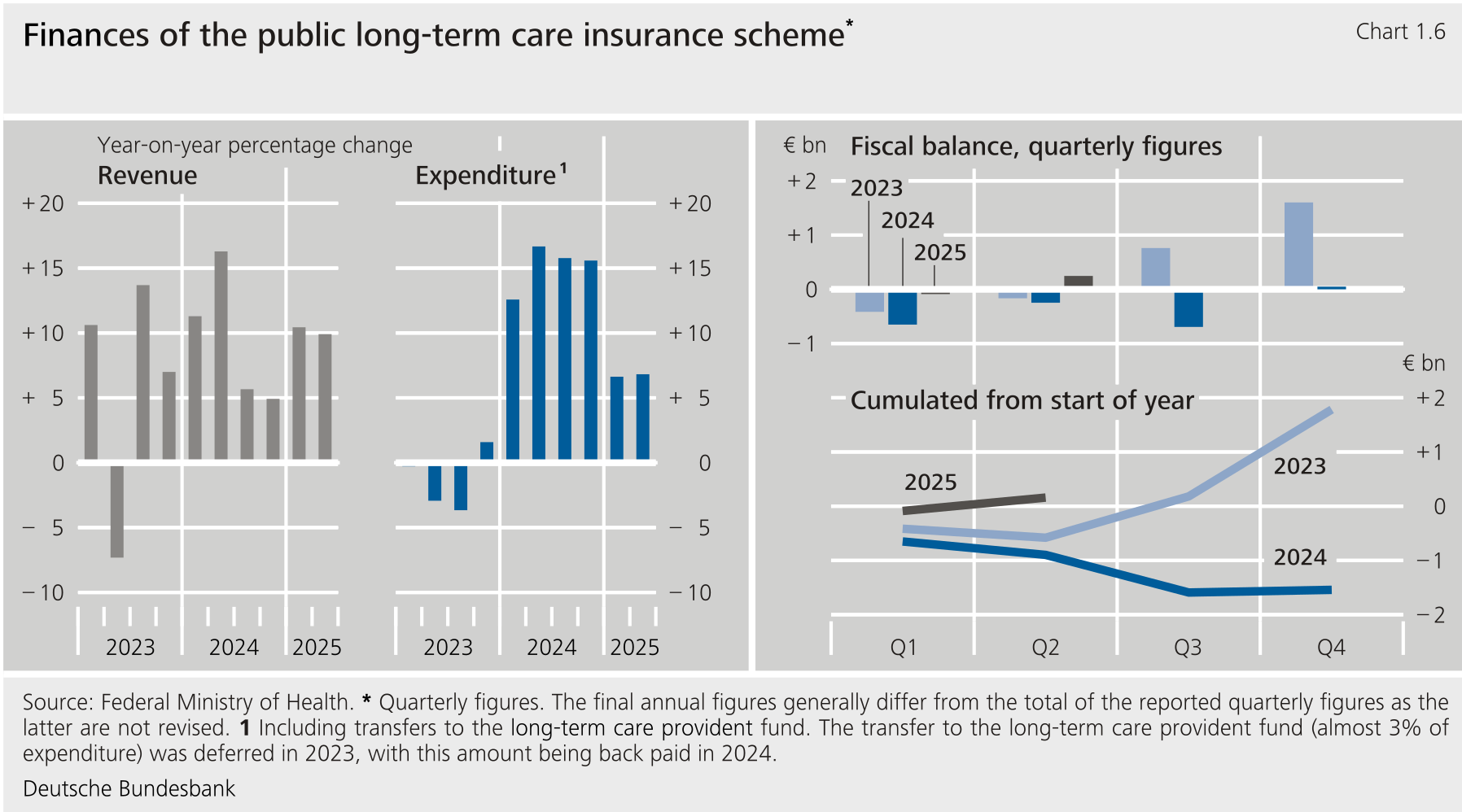
The public long-term care insurance scheme posted a broadly balanced result in the first half of 2025. The balance improved by €1 billion compared with the same period of the previous year. To ensure the liquidity of the public long-term care insurance scheme, the contribution rate was raised by 0.2 percentage point at the beginning of 2025 to 3.6 % for insured persons with one child and 4.2 % for childless persons. This generated additional revenue of €2 billion in the first half of the year. Revenue increased by 10 % in total. Unlike last year, moreover, no back-payment was made to the long-term care provident fund (lower expenditure of €1 billion). Expenditure on benefits also saw dynamic growth of + 10 %. This is due to the adjustment of benefit rates for the long-term care allowance and non-financial care at the beginning of the year (+ 4½ %).

A broadly balanced result is on the cards for 2025 as a whole (following a deficit of €1½ billion in the previous year). 9  The underlying development seen in the first half of 2025 is likely to continue over the remainder of the year. In particular, expenditure is likely to continue its steep rise.

The long-term care insurance scheme is burdened primarily by demographic financing pressures, but also by past benefit increases. Without reforms, contribution rates are therefore set to rise sharply. According to the draft budget, central government will provide a loan of €1½ billion in 2026. This is likely to prevent a further rise in the contribution rate in the short term. However, the forthcoming loan repayments to central government will additionally increase the financial pressures faced in subsequent years. Action is therefore needed, and a reform commission has been tasked with drawing up proposals on this by the end of 2025. A key decision will concern the scope of insurance. 10 In any case, a shift towards permanent financial contributions from central government is not an option without counterfinancing measures: even without any new burdens, there is already a considerable need for consolidation in the central government budget from 2027 onwards in order to meet the requirements of the loosened debt brake. 11  

(This article is based on data available up to 17 September 2025, 11:00.)

List of references

Association of the German Automotive Industry (2025), “Car production declined in August”, Production and market in August 2025. , press release of 3 September 2025.

Deutsche Bundesbank (2025), Public finances, Monthly Report, August 2025.

Deutsche Bundesbank (2024), Public finances, Monthly Report, November 2024.

Federal Statistical Office (2025), Gross domestic product: detailed economic performance results for the 2nd quarter of 2025 , press release No 310 of 22 August 2025 


Has this page helped you?