German enterprises’ profitability and financing in 2024 Monthly Report – December 2025
Published on
German enterprises’ profitability and financing in 2024 Monthly Report – December 2025
Monthly Report Published on
The profitability of non-financial enterprises deteriorated in 2024, which represented the trough of the German economy’s recent recession. The pre-tax profit margin fell from 5.1 % in the previous year to 4.4 %, with some important areas of the German corporate sector suffering a significant decline in profitability. The decisive factor behind the decline lay in reduced sales, with costs falling to a lesser extent. Large enterprises, the automotive industry, the chemical and pharmaceutical industry and the information and communication technologies (ICT) sector were particularly affected by a downturn in profitability. Meanwhile, small and medium-sized enterprises maintained largely stable profitability.
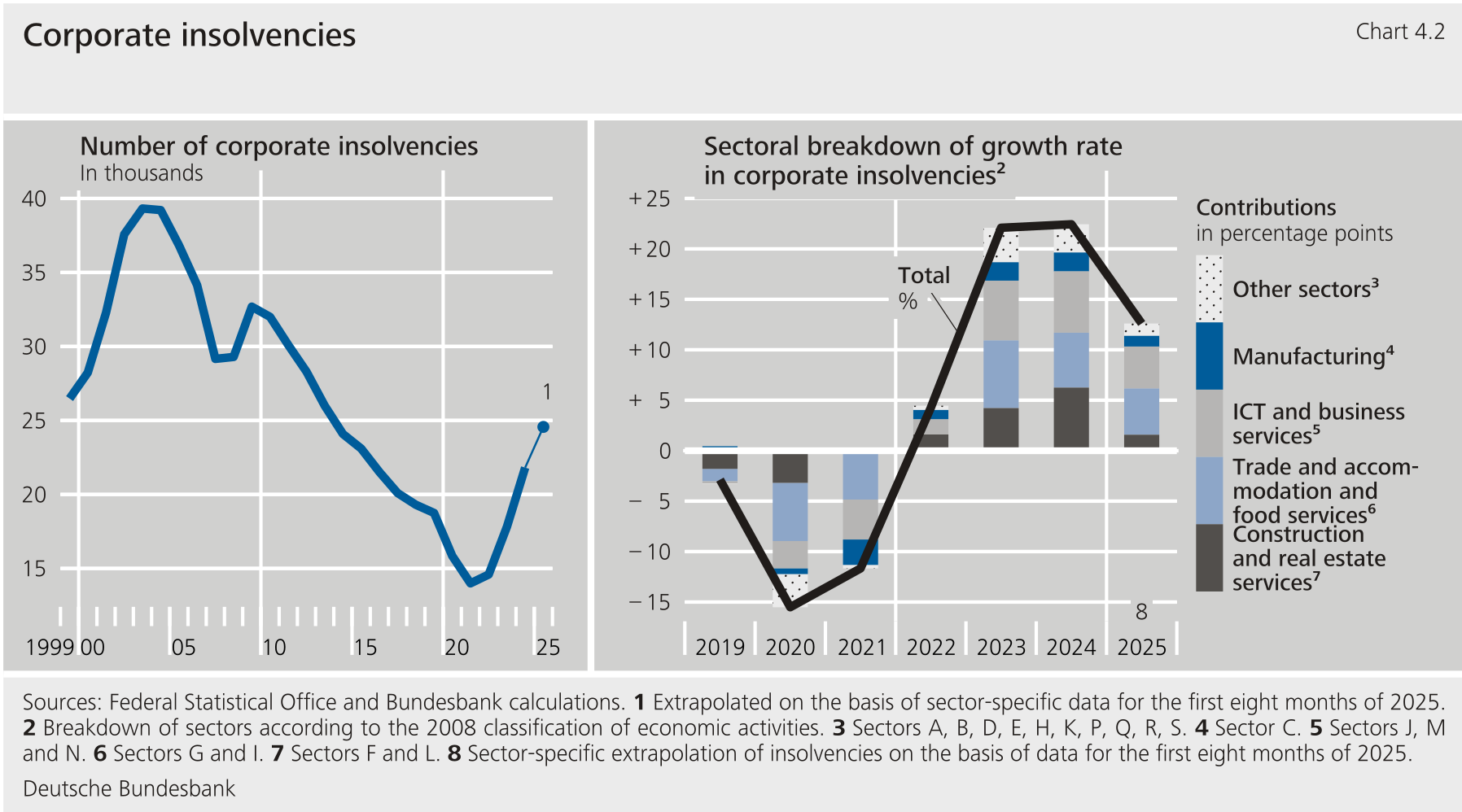
Corporate insolvencies rose significantly in 2024 compared with the previous year. This was particularly the case for interest rate-sensitive sectors such as construction and services sectors such as trade and the accommodation and food services sector. The ICT sector and business-related services also contributed significantly to the increase. As before, the insolvency figures in the manufacturing sector were not unusually high, despite a number of job cuts.
Notwithstanding several years of weak economic growth, the equity ratio of German enterprises rose again in 2024 to around its pre-pandemic level. Enterprises’ liquidity positions also remained robust in 2024.
US tariffs and competitiveness problems, above all, have been curbing the business activity and sales growth of German enterprises in the current year. Cost pressures remain high. Insolvency numbers will rise further in 2025. According to the Bundesbank’s survey of firms, profitability in the manufacturing sector is set to sustain a further significant fall in 2025.Large enterprises and manufacturing firms are particularly affected due to weak global demand and increased competitive pressure. By contrast, small and medium-sized enterprises, whose business tends to be more domestic, are only expecting a slight downturn in gross profit margins.
1 Underlying trends
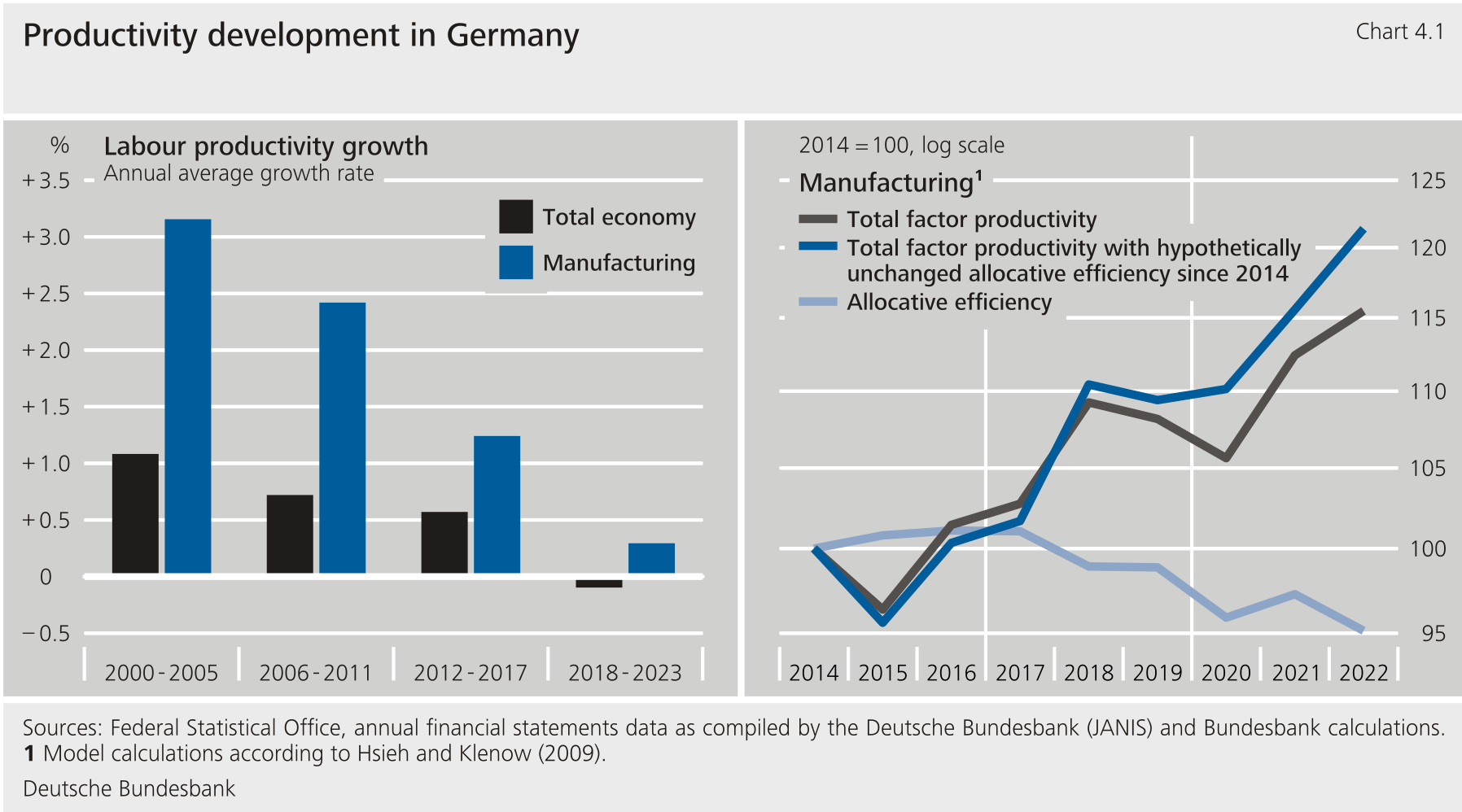
The German economy contracted in 2024 owing to persistent structural challenges and continued weak economic activity. Real GDP declined by a seasonally adjusted 0.5 % compared to the previous year, due partly to the ongoing structural problems of the German economy and partly to the poor economic situation. This was accompanied by a further fall in labour productivity following that of the previous year (see the supplementary information entitled “Allocative efficiency and productivity development in the German manufacturing sector since the mid-2010s” for an analysis of productivity trends in the manufacturing sector over the past ten years). The robust labour market situation enabled employees to continue asserting wage increases. This supported private consumption, but increased enterprises’ personnel expenses. Despite lower energy prices, the weak demand at home and abroad and the resultant low propensity to invest hindered the economic recovery. Furthermore, Germany once again lost significant export market shares. 1
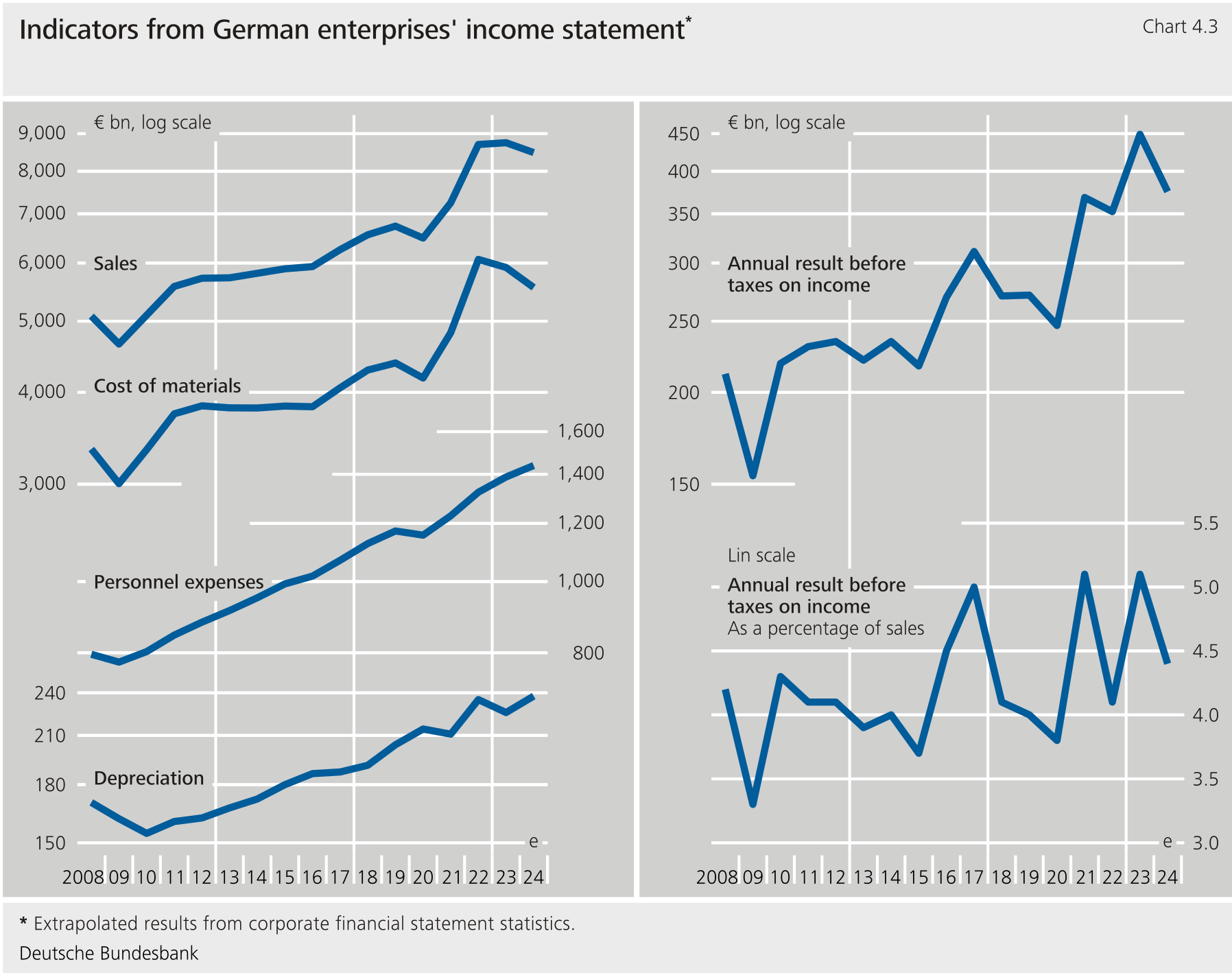
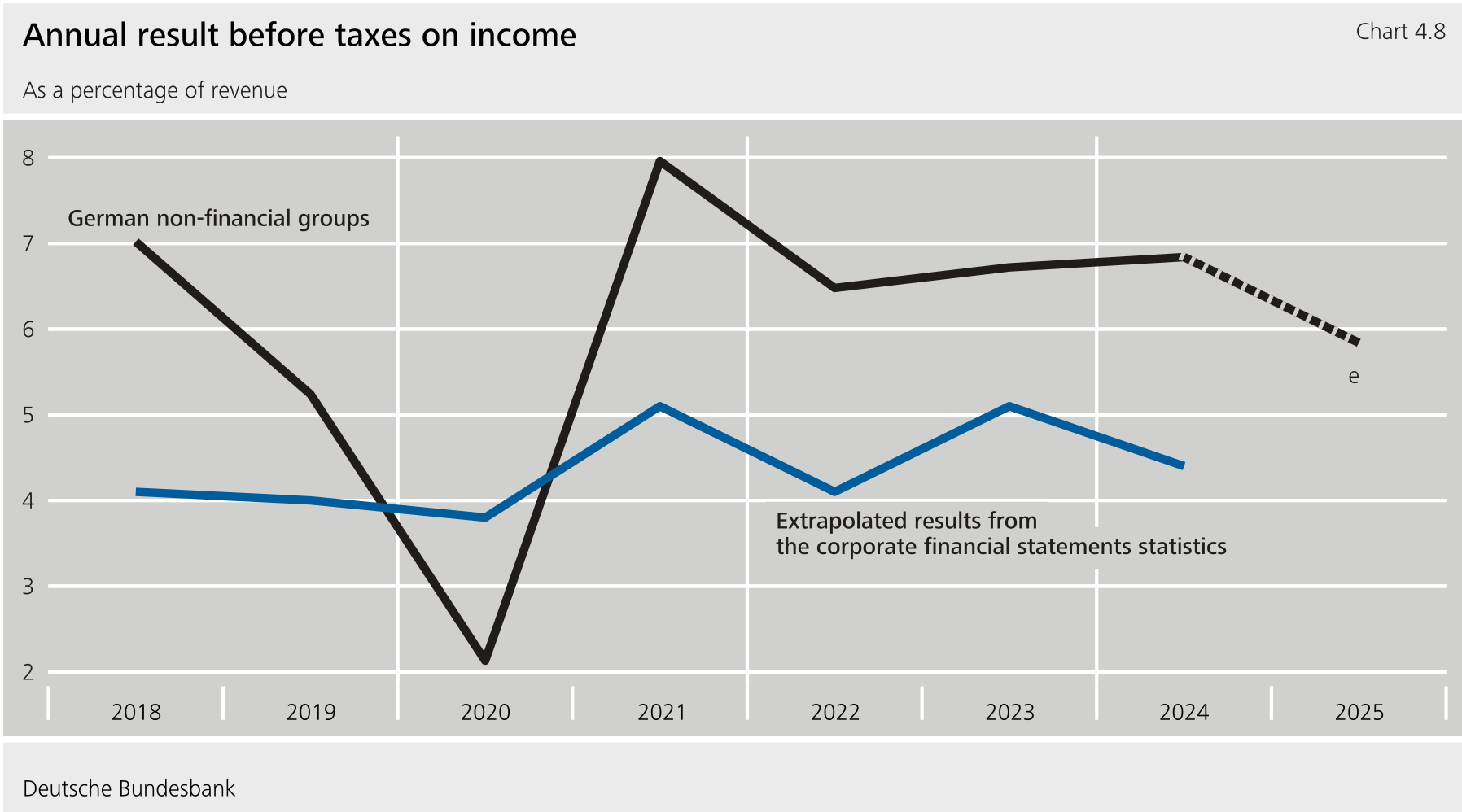
Though profitability remained robust, German enterprises' pre-tax profit margin declined markedly in 2024. 2 It fell from 5.1 % in the previous year to 4.4 %. Although this was down on the peaks recorded in 2021 and 2023, it was still slightly above the average since 1997 despite poor macroeconomic productivity. This development was due to falling income, with costs falling less sharply. On the income side, sales declined by 3 %. Whilst at 6 %, the cost of materials fell disproportionately relative to sales, personnel expenses rose by almost 4 % despite the poorer business situation. Interest costs also increased from a low level.
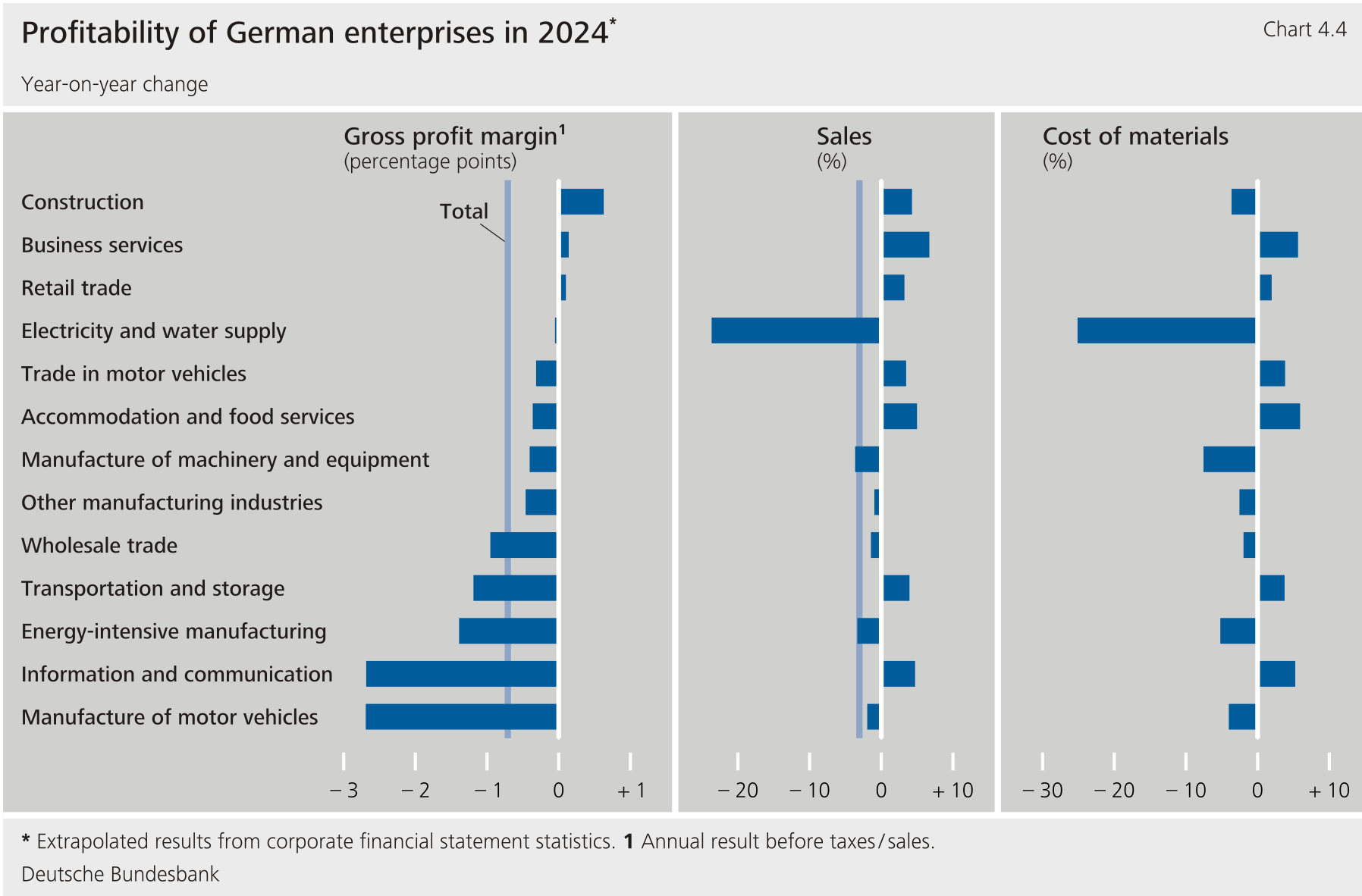
However, the average conceals the fact that some major areas of the German corporate sector lost significant profitability. These include large enterprises and the automotive industry, as well as the chemical and pharmaceutical industry and the information and communication sector. The other sectors, including construction, evidently managed to shield their profitability to a large extent from the economic and structural downward forces. Comparatively robust private consumption contributed to this.
Enterprises remained well positioned in 2024 in terms of their liquidity and stability. The equity ratio rose in 2024 due to the sharp increase in equity in most sectors, and, at 31 %, averaged at around its pre-pandemic level. Enterprises’ liquidity positions also remained robust in 2024. The quick ratio 3 stood at its average since 1997 despite a slight downturn compared to the previous year. The other liquidity ratios also displayed robust performance.
Supplementary information
Allocative efficiency and productivity development in the German manufacturing sector since the mid-2010s
Productivity growth in Germany has been falling for some time, with weaker manufacturing productivity playing a notable role in its decline. Traditionally, manufacturing has been a major contributor to aggregate productivity growth in Germany. This has also boosted the competitiveness of the German export industry. However, a sharp drop in industrial productivity growth over recent years has contributed to the weakness in aggregate productivity.
Several factors have weighed on manufacturing productivity in recent years. These include cyclical factors such as labour hoarding 1 and the normalisation of monetary policy, which has dampened firms’ investment activity. 2 Moreover, productivity growth has been constrained by structural challenges such as a shortage of skilled workers, higher labour and production costs, as well as rising bureaucratic hurdles. 3
The muted trend seen in industrial productivity for some time may also be linked to a decline in allocative efficiency. By definition, allocative efficiency in a given sector is high (and misallocation is accordingly low) when the available production factors of labour and capital are used to maximise value added in that sector. The main prerequisite for this is that the available resources are used to a greater degree by more productive enterprises. This also requires that the resources involved are correspondingly mobile. In reality, rigidities can prevent resources from being distributed efficiently across enterprises, or reallocated appropriately from less productive to more productive firms. Such rigidities can reflect factors including market power, credit constraints, labour market regulation or other government interventions such as subsidies. The optimum allocative efficiency is unobservable and has to be derived from models.
The misallocation of production factors can be measured using the Hsieh and Klenow (2009) model. The measurement is based on the dispersion of nominal total factor productivity (TFP) between firms in an industry. 4 The rationale behind this approach is that, in an efficient equilibrium, the marginal revenue products of the production input factors labour and capital and, consequently, the nominal TFP should be equalised across firms in a given sector. Accordingly, resources would be wasted in particular if the marginal revenue products of an additional input unit were very high for one enterprise and very low for another. This is because aggregate productivity would increase if input factors were reallocated from the firm with low marginal revenue product to the one with high marginal revenue product. In a hypothetical frictionless economy, companies would remunerate their input factors according to their marginal products, with the marginal revenue products equalised between firms. In this case, the nominal TFP would be identical for all enterprises in a given sector.
The approach of Hsieh and Klenow (2009) can be used to measure how changes in allocative efficiency affect aggregate productivity growth. This involves calculating the hypothetical, aggregate real TFP that would be generated if there were no changes in misallocation relative to a given base year. 5 The analysis is based on the annual financial statements data compiled by the Bundesbank (JANIS), with a focus on manufacturing for the period from 2014 to 2022. 6
According to the model calculation, allocative efficiency in German manufacturing fell materially on balance between 2017 and 2022, especially during the pandemic. The decline was exceptionally sharp during the acute phase of the pandemic in 2020. 7 Allocative efficiency did not recover until 2022.
Greater misallocation in recent years has appreciably dampened TFP growth in manufacturing. According to the model calculation, manufacturing TFP would have been around 5 % higher in 2022 if allocative efficiency had not declined in the last decade. This efficiency gap does not reflect a contraction in absolute terms, but a relative difference in productivity. Total factor productivity rose, albeit to a lower extent than was hypothetically possible if allocative efficiency had remained constant.
The analysis does not provide clear reasons for the decrease in allocative efficiency. One possible explanation for the particularly marked drop in allocative efficiency during the pandemic is the heightened take-up of government support measures at the time. These included extended and widely used short-time working rules, generous support loans or loan guarantees, as well as the temporary suspension of the obligation to file for insolvency. These measures may have played a role in hampering the productivity-enhancing reallocation of resources to more productive firms. 8
2 Development of corporate insolvencies
Year-on-year corporate insolvencies rose sharply in 2024. On the one hand, the interest rate reversal initiated in the summer of 2022 weighed particularly heavily on interest rate-sensitive sectors. For example, construction and real estate activities together accounted for almost one-third of the increase in insolvencies. Insolvencies in these sectors thus rose even more sharply than in the previous year. At the same time, catch-up and normalisation effects in the wake of the pandemic also pushed up corporate insolvencies in 2024. This particularly applies to trade and the accommodation and food services sector, which accounted for just under one-quarter of the increase in corporate insolvencies in 2024. Although economic activity in these contact-intensive sectors declined, in some cases significantly, during the coronavirus pandemic in 2020 and 2021, corporate insolvencies in these industries also fell sharply. The suspension of the obligation to file for insolvency and extensive government support measures contributed to this. 4 Normalisation effects could also have caused insolvencies to rise last year in those sectors that temporarily benefited from extremely high demand during the pandemic. This is the case for information and communication services and business services, which together accounted for just over one-fifth of the increase in corporate insolvencies in 2024. By comparison, the manufacturing sector only made a small contribution of one-tenth to the growth of corporate insolvencies, which was probably due to robust stability ratios.
3 Sales and income
Owing to the recession of the German economy, it comes as little surprise that the earnings performance of non-financial enterprises in 2024 was poor, although the performance of the different sectors varied greatly. Overall sales in the non-financial corporate sector declined again for the first time since 2020. Price effects may also have played a role here, as producer prices of industrial products fell. Sales in energy and water supply declined exceptionally sharply. The decrease in sales in energy supply is likely to also be due to a fall in energy prices and energy consumption. The manufacture of machinery and equipment sector and the energy-intensive manufacturing sector sustained sharp declines in sales, too. 5 The further fall in sales in the energy-intensive manufacturing sector is likely to be related to energy prices, which remain high in an international comparison. 6 By contrast, sales rose in most services sectors and in construction. Income from other long-term equity investments decreased sharply owing to developments in the chemical and pharmaceutical industries but remained at a high level. 7
Corporate profits declined in line with the poor earnings performance. Average expenses were lower due to the decreasing cost of materials. However, sales fell more sharply. Falling energy prices are likely to have contributed most significantly to the lower cost of materials. The decrease in the cost of materials was therefore particularly large amongst energy suppliers, and also strong in the energy-intensive manufacturing sector. 8 The cost of materials among service providers rose in line with the increase in sales. There were further sharp increases in personnel expenses, due to significant wage increases, and in interest expenditure. The growth in personnel expenses was primarily attributable to service providers and construction. These expenses rose comparatively little in the manufacturing sector and in the energy and water supply sector. The sharp rise in interest expenditure affected almost all sectors.
The development of gross profit margins varied particularly strongly by sector and firm size in 2024. While small and medium-sized enterprises maintained virtually stable profitability, at 7.1 %, large enterprises sustained major declines in profitability. Their pre-tax profit margin fell from 4.4 % to 3.2 %. The automotive industry also found itself in a considerably more challenging market environment. In combination with the expiry of one-off developments from the previous year, this led to a significant decline in profitability, which undershot the long-term average, on balance. The chemical and pharmaceutical industry and the information and communication sector were similarly affected. The sharp fall in the gross profit margins of the latter was primarily due to one-off developments at individual enterprises. The manufacture of machinery and equipment sector only sustained a marginal profitability decline despite weak export demand. By contrast, construction performed positively, bolstered at times by large orders in civil engineering. Profitability among business service providers and in the retail sector remained practically unchanged.
Tabelle 4.1: Enterprises' income statement1
Item
2022
2023
2024 e
2023
2024 e
Year-on-year change
Income
€ billion
%
Sales
8,700.5
8,748.8
8,481.7
0.6
– 3.1
Change in finished goods2
108.4
63.5
50.2
– 41.4
– 20.9
Gross revenue
8,808.8
8,812.3
8,531.9
0.0
– 3.2
Interest and similar income
21.3
53.6
66.3
151.8
23.8
Other income3
334.7
354.2
320.3
5.8
– 9.6
of which:
from other long-term equity investments
74.7
93.3
85.3
24.9
– 8.6
Total income
9,164.9
9,220.0
8,918.6
0.6
– 3.3
Expenses
Cost of materials
6,068.6
5,917.0
5,556.6
– 2.5
– 6.1
Personnel expenses
1,323.3
1,388.0
1,438.7
4.9
3.7
Depreciation
234.9
225.6
237.6
– 4.0
5.3
of tangible fixed assets4
201.4
202.0
208.3
0.3
3.1
Other5
33.5
23.6
29.3
– 29.7
24.1
Interest and similar expenses
79.0
84.3
97.7
6.6
16.0
Operating taxes
4.9
5.2
5.6
6.2
6.7
Other expenses6
1,101.6
1,150.9
1,207.1
4.5
4.9
Total expenses before taxes on income
8,812.4
8,770.9
8,543.3
– 0.5
– 2.6
Annual result before taxes on income
352.5
449.1
375.2
27.4
– 16.5
Taxes on income7
81.7
83.6
76.1
2.3
– 9.0
Annual result
270.7
365.6
299.2
35.0
– 18.2
Memo items:
Cash flow8
626.3
606.9
502.7
– 3.1
– 17.2
Net interest paid
57.8
30.7
31.4
– 46.9
2.4
As a percentage of sales
In percentage points
Gross income9
31.5
33.1
35.1
1.6
2.0
Annual result
3.1
4.2
3.5
1.1
– 0.7
Annual result before taxes on income
4.1
5.1
4.4
1.1
– 0.7
Net interest paid
0.7
0.4
0.4
– 0.3
0.0
1 Extrapolated results; differences in the figures due to rounding. 2 Including other own work capitalised. 3 Excluding income from profit transfers (parent company) and loss transfers (subsidiary). 4 Including write-downs of intangible fixed assets. 5 Predominantly writedowns of receivables, securities and other long-term equity investments. 6 Excluding cost of loss transfers (parent company) and profit transfers (subsidiary). 7 In the case of partnerships and sole proprietorships, trade earnings tax only. 8 Annual result, depreciation, and changes in provisions, in the special tax-allowable reserve and in prepaid expenses and deferred income. 9 Gross revenue less cost of materials.
4 Balance sheet development
Growth in corporate assets remained weak in 2024 in view of the economic recession. Growth in non-financial enterprises’ total assets was, on average, similar to that of the previous year. As in the previous year, enterprises used additional funds largely for the formation of non-financial assets (gross investments). Non-financial assets rose markedly on average due to the increase in tangible fixed assets. However, compared to the three preceding years, the formation of non-financial assets was significantly lower. Intangible fixed assets increased again slightly following the downturn in the previous year. The growth of inventories was low, which was also due to the subdued price growth and falling sales, while the acquisition of financial assets remained weak. Liquid funds in the form of cash and bank deposits rose more sharply than in the previous year. However, there was no sign of a broad-based increase in liquidity needs across all sectors.
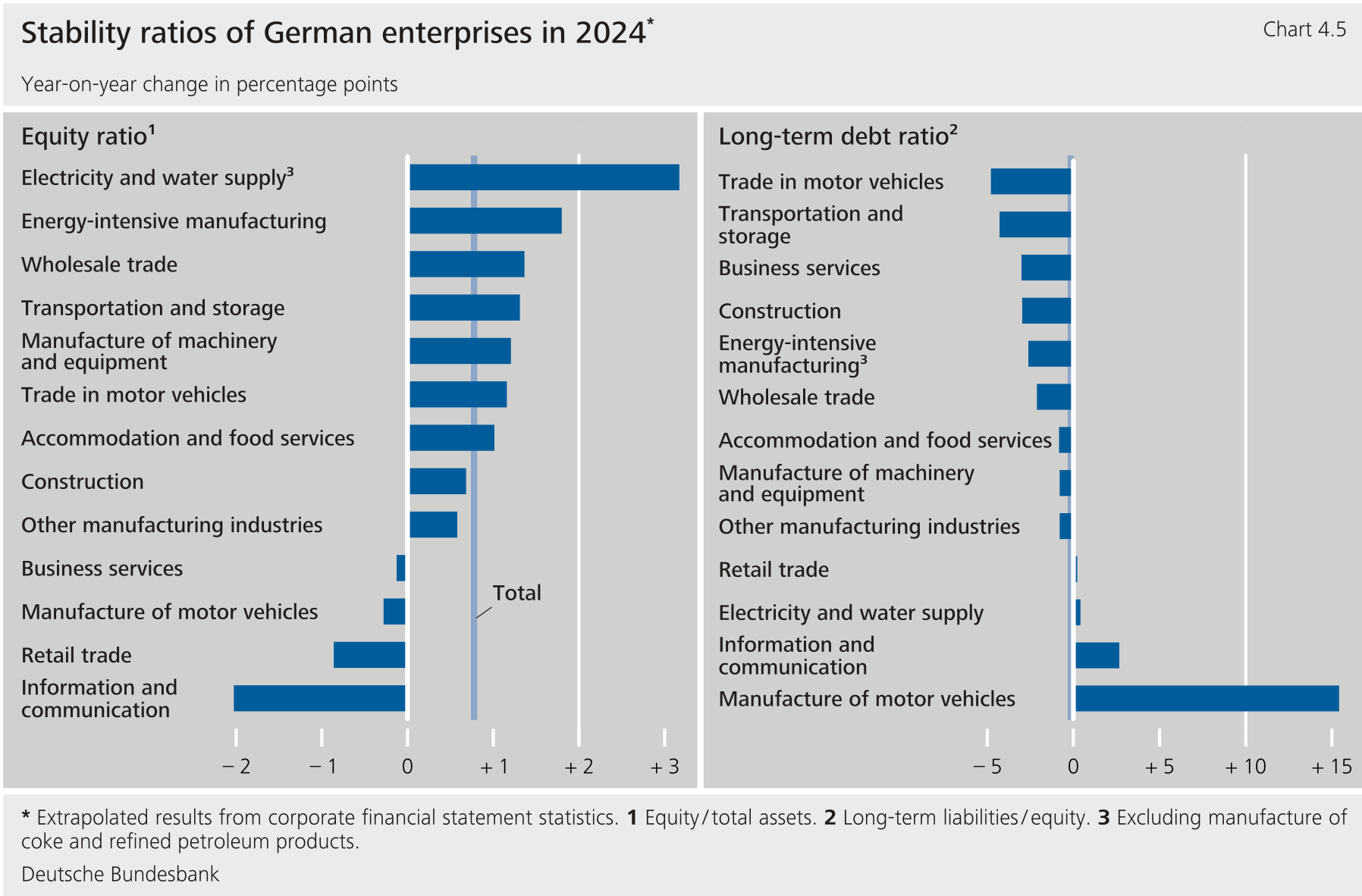
Enterprises’ capital base improved in 2024. On the revenue side, most of the additional corporate funds were sourced internally. Retained earnings also contributed to this, although they were no longer as high as in the previous year. The equity ratio rose in almost all sectors. It fell significantly in the information and communication sector and in retail due to one-off developments at individual large enterprises. In contrast to equity, liabilities and provisions only increased slightly. The long-term debt ratio decreased in most sectors, whilst in transport equipment it rose sharply due to developments at individual large enterprises.
In contrast to the three preceding years, long-term liabilities rose more on balance than short-term liabilities. Similarly to the previous year, the latter only increased slightly on average in 2024. Although, above all, advance payments received on account of orders and other short-term liabilities increased sharply, the reduction of short-term liabilities to banks and short-term bonds had an offsetting effect. Liabilities to affiliated companies made a significant contribution to the sharp rise in long-term liabilities. Long-term bonds and other long-term liabilities also increased significantly. However, long-term liabilities to banks were reduced, as in the two preceding years. 9 The decline in bank loans is likely also to be attributable to the ongoing higher interest rates in 2024. Provisions likewise decreased. The main reason for this was the reduction of pension provisions. The further rise in the discount rate may also have provided relief in this respect.
Tabelle 4.2: Enterprises' sources and uses of funds1 € billion
Item
2022
2023
2024 e
Year-on-year change
2023
2024 e
Sources of funds
Capital increase from profits and contributions to the capital of non-corporations2
44.2
71.7
48.9
27.5
– 22.8
Depreciation (total)
234.9
225.6
237.6
– 9.3
12.0
Increase in provisions3
120.6
15.8
– 34.0
– 104.9
– 49.8
Internal funds
399.7
313.0
252.4
– 86.7
– 60.6
Increase in capital of corporations4
55.4
46.4
39.1
– 9.0
– 7.3
Change in liabilities
379.6
6.1
66.1
– 373.5
60.0
Short-term
370.5
9.8
31.5
– 360.7
21.7
Long-term
9.0
– 3.7
34.6
– 12.8
38.3
External funds
435.0
52.5
105.2
– 382.5
52.7
Total
834.7
365.5
357.7
– 469.2
– 7.9
Use of funds
Increase in tangible fixed assets (gross)
269.0
273.7
270.5
4.7
– 3.2
Increase in tangible fixed assets (net)5
67.6
71.7
62.2
4.1
– 9.4
Depreciation of tangible fixed assets
201.4
202.0
208.3
0.6
6.3
Change in inventories
193.1
42.1
10.0
– 151.0
– 32.1
Non-financial asset formation (gross investments)
462.1
315.8
280.5
– 146.3
– 35.3
Change in cash
23.8
1.9
16.4
– 22.0
14.5
Change in receivables6
234.1
– 18.8
6.9
– 252.9
25.7
Short-term
224.1
– 26.4
– 20.7
– 250.6
5.7
Long-term
9.9
7.6
27.6
– 2.3
20.0
Acquisition of securities
12.1
– 4.8
– 6.8
– 16.9
– 2.0
Acquisition of other long-term equity investments7
102.6
71.5
60.7
– 31.1
– 10.8
Financial asset formation
372.6
49.8
77.1
– 322.9
27.4
Total
834.7
365.5
357.7
– 469.2
– 7.9
Memo item:
Internal funds as a percentage of gross investments
86.5
99.1
90.0
.
.
1 Extrapolated results; differences in the figures due to rounding. 2 Including “GmbH und Co. KG” and similar legal forms. 3 Including change in the balance of prepaid expenses and deferred income. 4 Increase in nominal capital through the issue of shares and transfers to capital reserves. 5 Change in tangible fixed assets (including intangible assets but excluding goodwill). 6 Including unusual write-downs of current assets. 7 Including change in goodwill.
Tabelle 4.3: Enterprises' balance sheet1
Item
2022
2023
2024 e
2023
2024 e
Year-on-year change
€ billion
%
Assets
Intangible fixed assets2
86.5
85.7
87.3
– 0.9
1.9
Tangible fixed assets
1,374.3
1,446.8
1,507.4
5.3
4.2
Inventories
1,123.3
1,165.4
1,175.4
3.7
0.9
Non-financial assets
2,584.1
2,697.8
2,770.1
4.4
2.7
Cash
521.1
522.9
539.3
0.4
3.1
Receivables
2,083.8
2,061.9
2,065.1
– 1.0
0.2
of which:
Trade receivables
571.4
582.2
578.7
1.9
– 0.6
Receivables from affiliated companies
1,207.7
1,196.5
1,202.2
– 0.9
0.5
Securities
127.8
123.0
116.2
– 3.8
– 5.5
Other long-term equity investments3
1,088.3
1,139.3
1,174.4
4.7
3.1
Prepaid expenses
39.7
41.2
40.2
3.8
– 2.4
Financial assets
3,860.7
3,888.4
3,935.3
0.7
1.2
Total assets4
6,444.8
6,586.2
6,705.4
2.2
1.8
Capital
Equity4
1,870.3
1,988.3
2,076.4
6.3
4.4
Liabilities
3,477.9
3,484.0
3,550.1
0.2
1.9
of which:
to banks
631.5
625.6
596.8
– 0.9
– 4.6
Trade payables
472.3
462.2
460.2
– 2.1
– 0.4
to affiliated companies
1,504.4
1,496.9
1,536.2
– 0.5
2.6
Advance payments received on account of orders
423.9
472.4
503.8
11.4
6.6
Provisions
1,031.5
1,043.9
1,010.3
1.2
– 3.2
of which:
Provisions for pensions
382.1
386.3
366.5
1.1
– 5.1
Deferred income
65.1
70.0
68.5
7.6
– 2.1
Liabilities and provisions
4,574.6
4,597.9
4,629.0
0.5
0.7
Total capital4
6,444.8
6,586.2
6,705.4
2.2
1.8
Memo items:
Sales
8,700.5
8,748.8
8,481.7
0.6
– 3.1
Sales as a percentage of total assets
135.0
132.8
126.5
.
.
1 Extrapolated results; differences in the figures due to rounding. 2 Excluding goodwill. 3 Including shares in affiliated companies and goodwill. 4 Less adjustments to equity.
Tabelle 4.4: Enterprises' balance sheet ratios1
Item
2022
2023
2024 e
As a percentage of total assets2
Intangible fixed assets3
1.3
1.3
1.3
Tangible fixed assets
21.3
22.0
22.5
Inventories
17.4
17.7
17.5
Short-term receivables
29.8
28.7
27.8
Long-term equity and liabilities4
48.2
49.0
49.7
of which:
Equity2
29.0
30.2
31.0
Long-term liabilities
13.3
12.9
13.2
Short-term liabilities
40.7
40.0
39.7
As a percentage of tangible fixed assets5
Equity2
128.0
129.7
130.2
Long-term equity and liabilities4
212.8
210.6
208.8
As a percentage of fixed assets6
Long-term equity and liabilities4
111.6
110.6
109.7
As a percentage of short-term liabilities
Cash resources7 and short-term receivables
95.2
93.5
92.1
As a percentage of liabilities and provisions8
Cashflow9
15.5
14.9
12.3
1 Extrapolated results; differences in the figures due to rounding. 2 Less adjustments to equity. 3 Excluding goodwill. 4 Equity, provisions for pensions, long-term liabilities and the special tax-allowable reserve. 5 Including intangible fixed assets (excluding goodwill). 6 Tangible fixed assets, intangible fixed assets, other long-term equity investments, long-term receivables and long-term securities. 7 Cash and short-term securities. 8 Liabilities, provisions, deferred income and proportionate special tax-allowable reserve less cash. 9 Annual result, depreciation, and changes in provisions, in the special tax-allowable reserve and in prepaid expenses and deferred income.
Supplementary information
Profitability and financial position of German listed groups in 2024 and an outlook for 2025
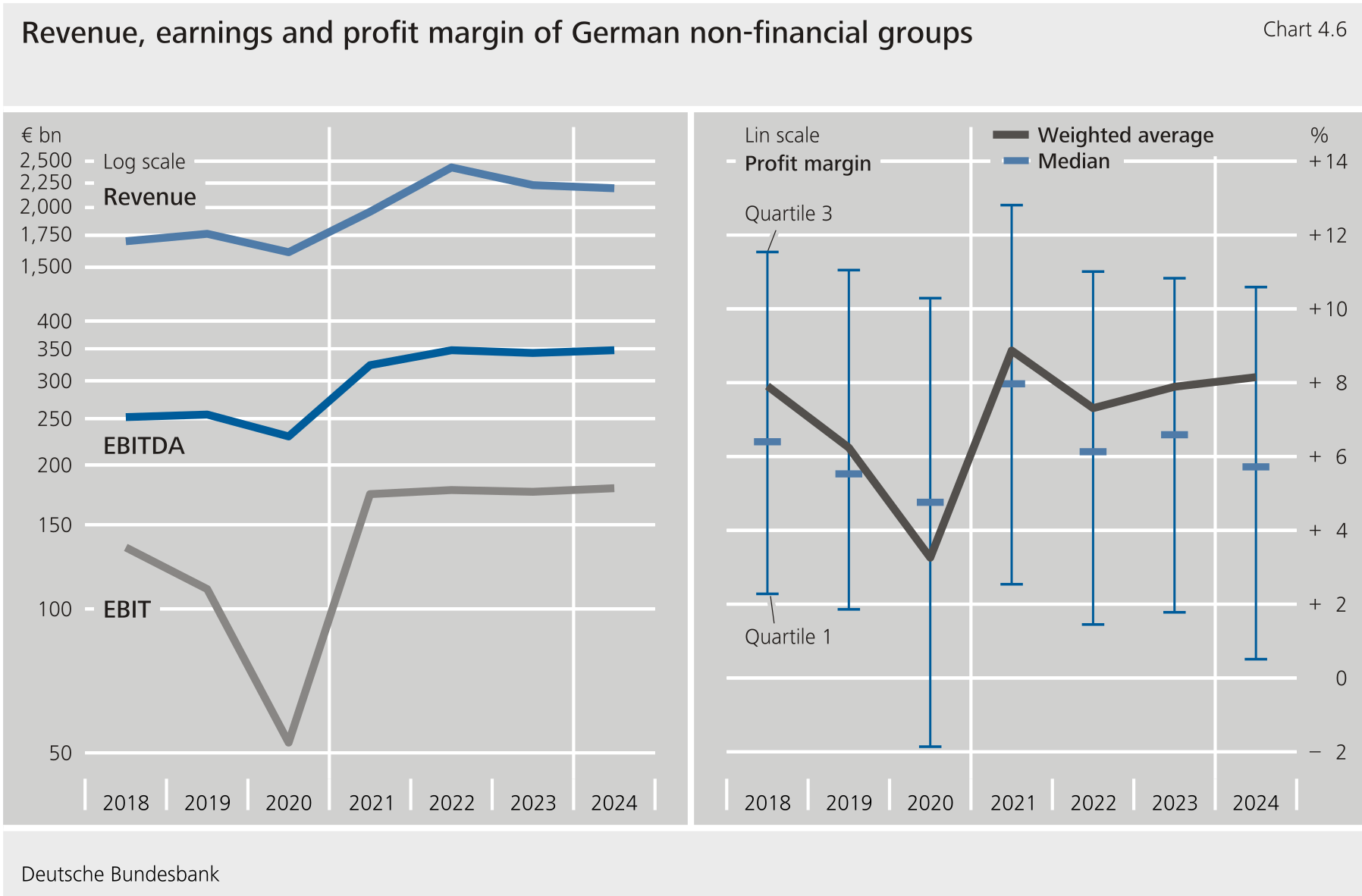
In 2024, the challenging macroeconomic environment caused a decline in the profitability of most German non-financial groups. 1 According to group reports, the main headwinds were subdued economic demand and heightened price and margin pressures due to a difficult competitive and cost environment, with geopolitical tensions and uncertainty surrounding economic policy conditions additionally having a negative impact. Against this backdrop, the revenue of German non-financial groups fell by more than 2 %, while earnings before interest and taxes (EBIT) remained at the previous year’s level. 2 The weighted profit margin thus remained virtually unchanged at 8.1 %. However, this was not due to generally robust profitability but primarily to the improvements achieved by a few large groups. 3 Nonetheless, the distribution of the profit margin points to profitability mostly declining. The fall in aggregate profitability was driven by the manufacture of transport equipment. Its revenue, which was primarily weighed down by weaker demand in the core markets of Germany and China, decreased by 3 %. In particular, higher investment and restructuring expenditure as part of the sector’s transformation meant that costs did not fall to the same extent, leading to a decline of more than a quarter in profits. The weak developments in the manufacture of transport equipment also weighed on supply sectors.
A rise in investment activity and growth in vehicle leasing business led to a significant increase in long-term assets. In particular, manufacturers of transport equipment sharply increased their tangible fixed assets. 4 As part of the energy transition, energy groups invested in production facilities and network infrastructure. Groups in other sectors pressed ahead with the digitalisation and decarbonisation of their business processes and expanded capacities in order to reduce their dependence on supply chains. Currency translation effects in the valuation of foreign subsidiaries had a supportive impact, as the euro depreciated, in particular, against the US dollar and the renminbi compared with the end of 2023. 5
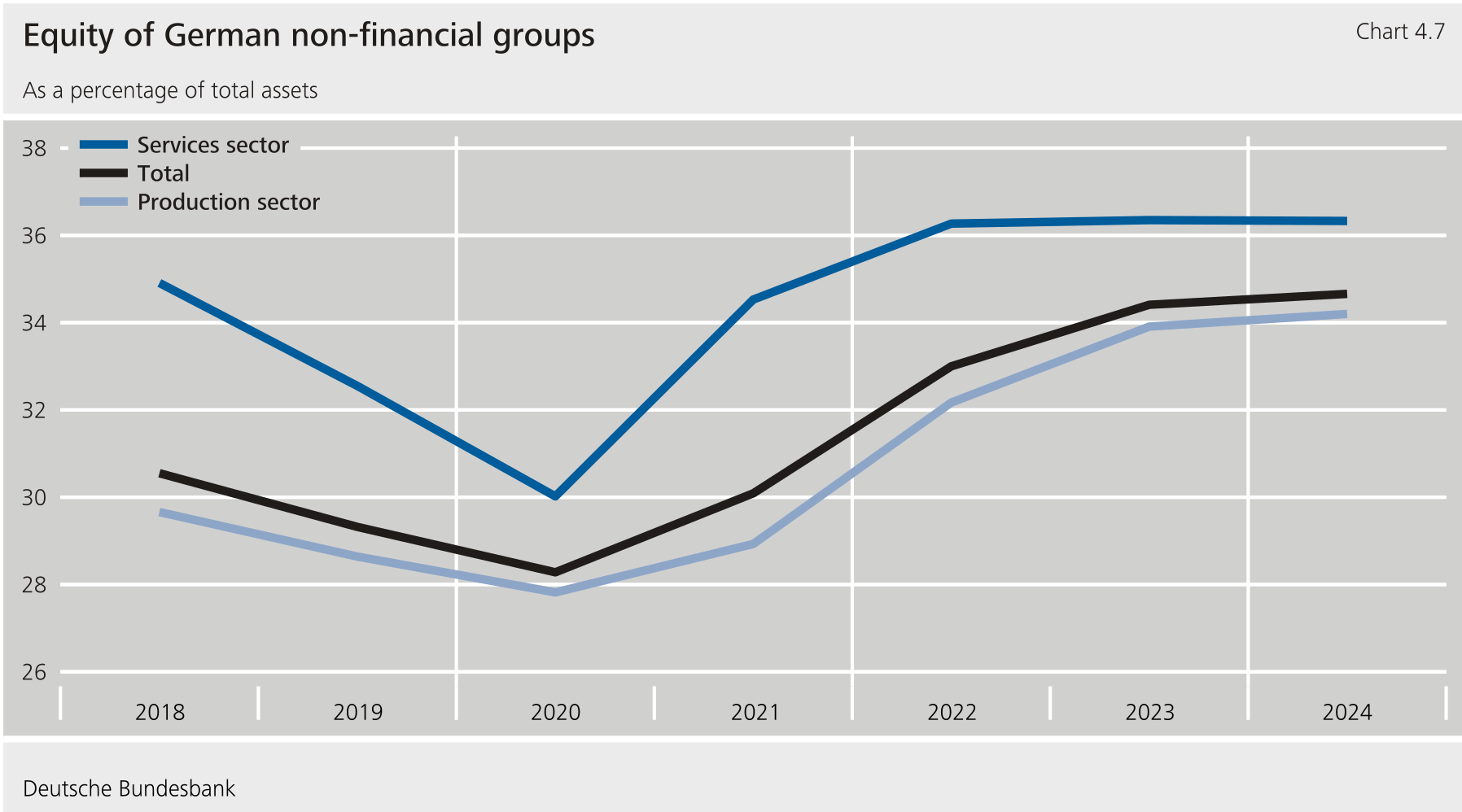
The groups’ equity ratio barely changed, while investment led to an increase in long-term financial debt. Notably, manufacturers of transport equipment increased their long-term debt to refinance their leasing business. At the same time, positive exchange rate effects, in particular, supported equity on aggregate. 6 This meant that, despite stagnating net income for the period, equity increased and the equity ratio rose slightly by 0.3 percentage point to 34.7 %. As with the profit margin, the aggregate increase is attributable to a few large groups, while a narrow majority recorded declines. In 2024, the lower equity ratio of the manufacturing sector compared with the services sector was once again attributable to the financing business of transport equipment manufacturers, which had a major impact on the capital structure at group level. Excluding these group segments with a focus on financial services, the equity ratio of the manufacturing sector would be around 7 percentage points higher.
According to an evaluation of the group interim financial statements available so far for 2025, the ongoing economic burdens are likely to lead to a moderate decline in revenue and a significant drop in pre-tax profits. On balance, groups’ profit margin is likely to decline. Over the course of the year so far, the appreciation of the euro has weighed on groups’ competitive position and the proceeds of their foreign subsidiaries translated into euro. In view of the high competitive pressures, ongoing transformation costs and the tariffs imposed by the United States, transport equipment is again expected to account for the bulk of the decline in revenue and profits.
5 A glance at profitability in 2025
In 2025, it is above all the US tariffs and competitiveness problems of the German economy that have been curbing business activity and therefore the sales growth of enterprises. At the same time, cost pressures remain high, chiefly due to a continued rise in wage expenses. The pressures are reflected in, amongst other things, the further increase in the number of corporate insolvencies. On the one hand, global demand is weak and protectionism is on the rise. On the other hand, the German economy continues to face structural challenges. The Federal Government’s fiscal package is unlikely to generate any noticeable impact before 2026. 10
The increase in corporate insolvencies is continuing in the current year. Extrapolated to the year, corporate insolvencies are almost one-third higher than in 2019, and therefore roughly as high as ten years ago. However, the rise is significantly lower than in the same period of the previous year despite the fact that the economy is barely emerging from its stagnation in 2025. The lower increase is likely to be particularly attributable to the subsiding impact of monetary policy tightening. The construction sector and real estate activities are hardly making any contribution to insolvencies in 2025. At the same time, the recession of the preceding years and the weak recovery are likely to have made themselves felt this year. Corporate insolvencies continued to rise sharply in particular in trade, accommodation and food services and the ICT sector, albeit to a lesser extent than in 2024. However, the manufacturing sector continues to contribute little to the growth of insolvencies this year against the backdrop of declining profitability and significant job cuts.
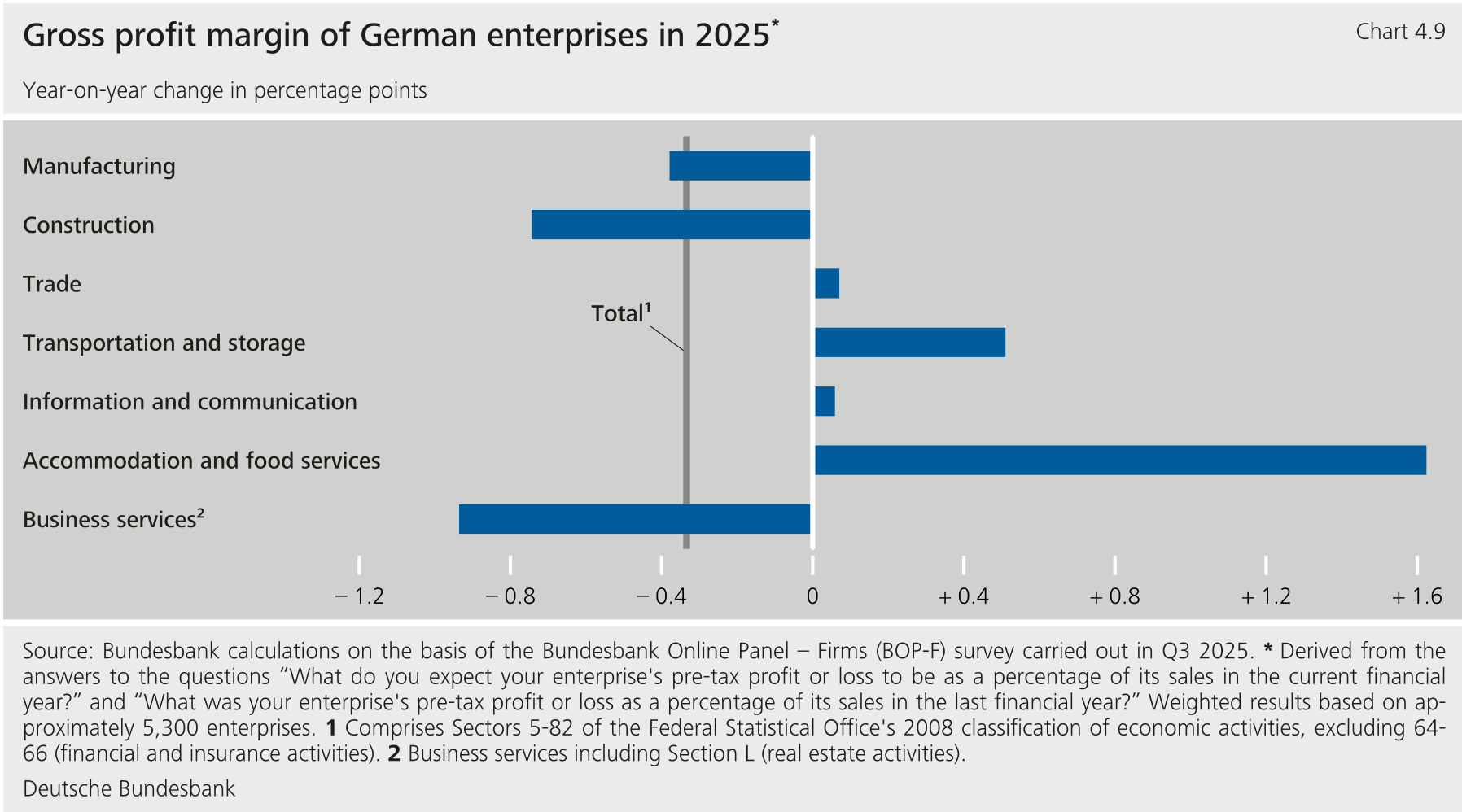
The profitability of companies is set to decrease further in 2025 with major differences between sectors. According to the results of the Bundesbank Online Panel – Firms (BOP-F), companies expect their average gross profit margin to decline somewhat in the current financial year compared to the previous year. 11 While small and medium-sized enterprises expect a slight fall of 0.3 percentage point in their gross profit margin, large enterprises are anticipating a more significant decline of 0.7 percentage point on average. This is also likely to be due to the more international focus of large enterprises that exposes them more to the weak global demand and tougher competitive conditions. The results are in line with the current earnings trends of German listed groups (see the supplementary information entitled “Profitability and financial position of German listed groups in 2024 and an outlook for 2025”).
Profitability in the manufacturing sector is likely to continue falling significantly. Business-related service providers will probably be unable to keep avoiding the impact of subdued business activity in the manufacturing sector and the spillover effects of the US tariffs. In addition, the particularly high wage increases there are set to weigh on the gross profit margin. However, it is this sector that previously generated particularly high profit margins. According to the survey results, the ICT sector is stabilising its profitability following the losses due to one-off developments in the previous year. There are signs in construction of a noticeable countermovement to the previous year as profitability declines. The construction sector was clearly only allowed to pause for breath in 2024. The ongoing weak demand in residential construction, continued rise in construction costs and unchanged high construction interest rates are now set to make themselves felt. By contrast, the accommodation and food servicessector expects some recovery in its profitability.
Long series of extrapolated results of the corporate financial statement statistics are available online.