Cash acceptance in Germany Monthly Report – December 2025
Published on
Cash acceptance in Germany Monthly Report – December 2025
Monthly Report Published on
Cash remains the most widely used means of payment in Germany and fulfils important societal functions, including ensuring all segments of the population can participate in the economy as well as resilience to crises. In order for the freedom of choice between cash and digital means of payment to endure and for cash to be able to fulfil its societal functions, it should be accepted by businesses and other recipients of payments. The Bundesbank is therefore investigating the extent to which cash can be used for payments at physical points of sale in Germany.
To determine cash acceptance, a market research institute conducted test purchases on the Bundesbank’s behalf. The focus was on companies in retail trade, food and beverage service activities and services sectors, as consumers in these economic sectors regularly conduct transactions at physical points of sale. In the course of their daily lives, test buyers made purchases from a sample of around 2,000 companies from these sectors of the economy in summer 2025. Cash payments were possible at 99.4 % of the points of sale visited, with a high acceptance rate being observed for companies from all economic sectors and size categories examined. At present, cash can therefore be used almost universally for payments at physical points of sale in the sectors under review.
Cash also plays a role in other payment situations, but these cannot be directly integrated into the classification scheme of the sample of companies. By way of illustration, cash acceptance in bus transport and at public authorities was therefore examined by means of 30 additional test payments in each case. In all tests, it was possible to pay for a public transport ticket for a bus journey in cash either at the bus stop or on the bus. In addition, test buyers attempted to pay in cash for everyday public services such as issuing an identity card or registering a motor vehicle. In 8 out of 30 cases, it was not possible to pay for these public services in cash. These results suggest that cash can only be used to a limited extent for payments to public authorities.
Overall, the results indicate that the acceptance of cash in Germany is currently guaranteed. Politicians, central banks and stakeholders in the cash cycle are working together to ensure that cash remains generally accepted and available as a means of payment in the future.
1 Introduction
Euro banknotes and coins are legal tender in the euro area. Payees are thus generally obliged to accept euro cash for the fulfilment of payment obligations. However, in Germany, the parties to a transaction are free to agree on or rule out certain means of payment. In practice, such agreements can be made through general terms and conditions, for instance, which can preclude the use of certain banknote denominations – or of cash altogether. Cash must generally also be accepted by public authorities, but they can also exclude its use under certain conditions. 1
The European Commission has put forward a proposal for a regulation on the legal tender of euro banknotes and coins to consolidate the role of euro cash. 2 The proposed regulation defines payment situations in which the acceptance of cash would be mandatory for companies and public authorities. In addition, the proposal requires Member States to monitor the availability and acceptance of cash. If any irregularities were identified, Member States would be required to take appropriate countermeasures. This proposal for a regulation is currently in the process of being passed into law and has not yet entered into force. Test purchases could be a suitable analytical tool for Member States to monitor cash acceptance.
In order for the freedom of choice between cash and digital means of payment to endure and for cash to be able to fulfil its social functions, it should be possible to use cash for payments. 3 The Bundesbank therefore investigated the extent to which cash is accepted for everyday payments at physical points of sale. A market research institute conducted test purchases at selected sales outlets on behalf of the Bundesbank between May and August 2025 and observed whether and under what conditions cash payments are possible. 4 In this article, the Bundesbank analyses the acceptance of cash in Germany for the first time in detail and explores test purchases as an instrument for investigating this topic. 5
2 Acceptance of cash by companies in Germany
The acceptance of cash as a means of payment by companies was investigated using test purchases in bricks-and-mortar retail stores, food and beverage service activities as well as at selected service providers. These sectors of the economy were examined because consumers in these sectors regularly carry out in-store transactions at physical points of sale. 6 To determine cash acceptance, test buyers made a total of 2,060 test purchases of goods and services. The test procedure stipulated that the buyers should first attempt to pay in cash at staffed checkouts. If a cash payment was not possible, the test buyers asked staff whether a cash payment could be made possible, nevertheless. If the cash payment request was rejected again, and provided that cash payment was also not possible at another point of sale in the sales outlet, a cashless payment was made (see also the supplementary information on the methodology).
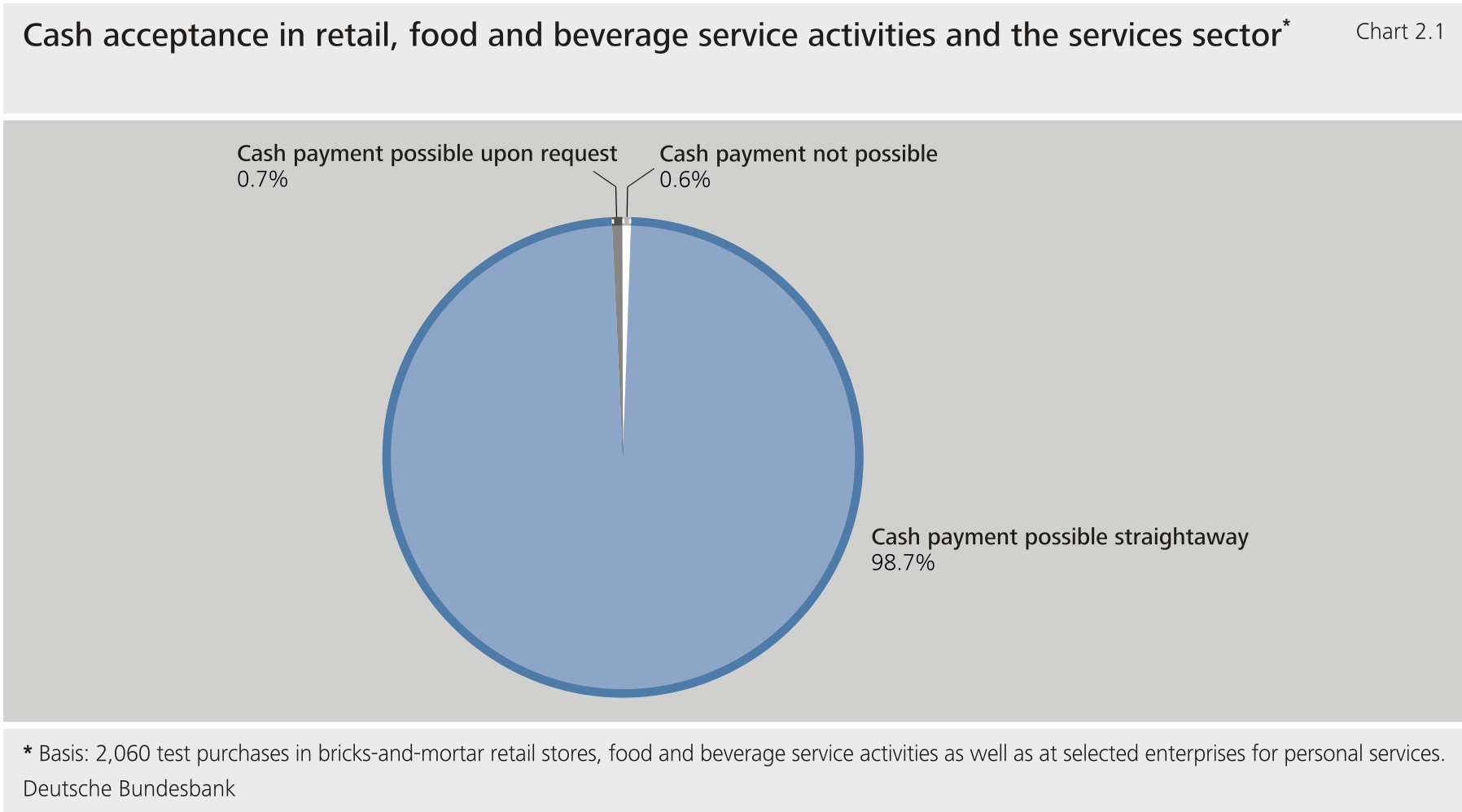
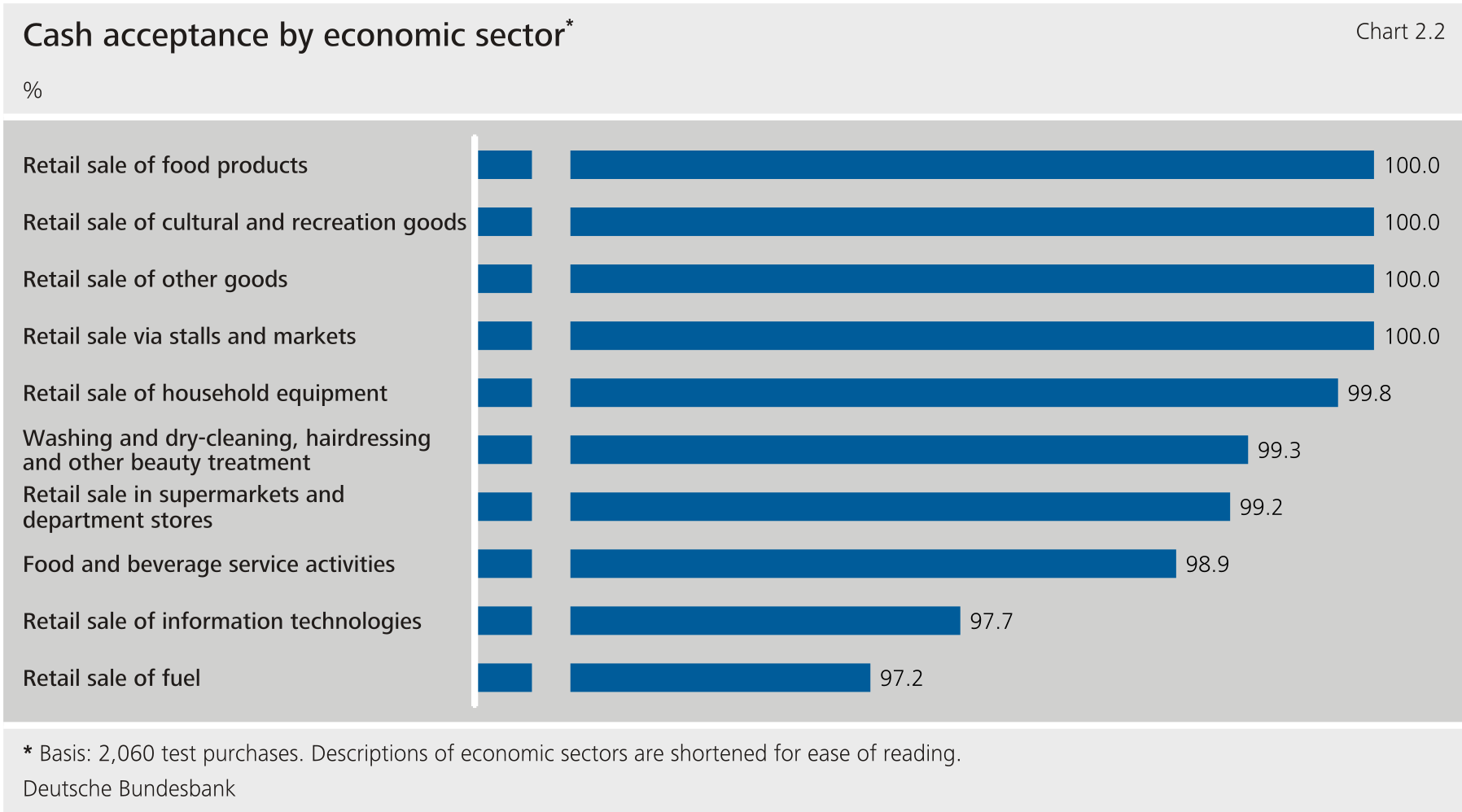
Consumers are able to pay for goods and services with cash at physical points of sale with virtually no restrictions. Only in a few exceptional cases were test buyers unable to pay for their purchases with cash. In total, 99.4 % of the companies examined accepted cash, with cash payments being possible at the first checkout chosen and without having to be requested in 98.7 % of all cases. In only 0.7 % of all cases was cash payment only possible upon request or at another checkout. Cash acceptance is calculated at over 97 % in all economic sectors under review – retail trade, food and beverage service activities and selected service providers (see Chart 2.2). Petrol stations have the lowest cash acceptance rate in the retail sector. 7 Companies of all sizes have a high rate of cash acceptance.
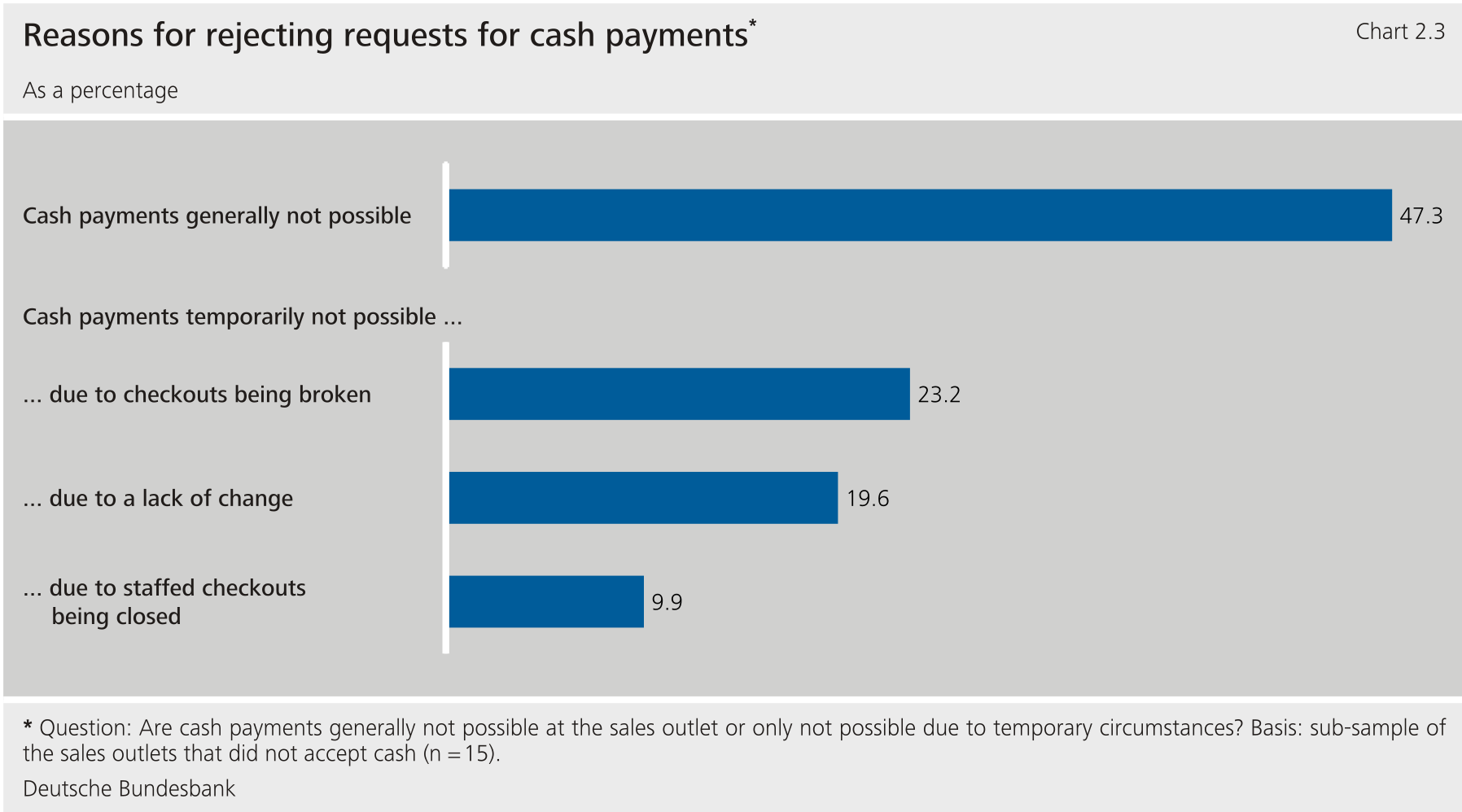
Temporary impediments occurred in around half of the sales outlets where cash payment was not possible. 42.8 % of test purchases in which cash payments were not possible were due to a lack of change or checkouts being broken. In 9.9 % of the locations, test buyers also stated that cash payments are generally possible, but only if a staffed checkout is open. At the time of the test purchases, however, these checkouts were closed (see Chart 2.3). Sales outlets that fundamentally do not accept cash are predominantly those that were exclusively equipped with vending machines or self-service checkouts, such as self-service petrol stations. 8
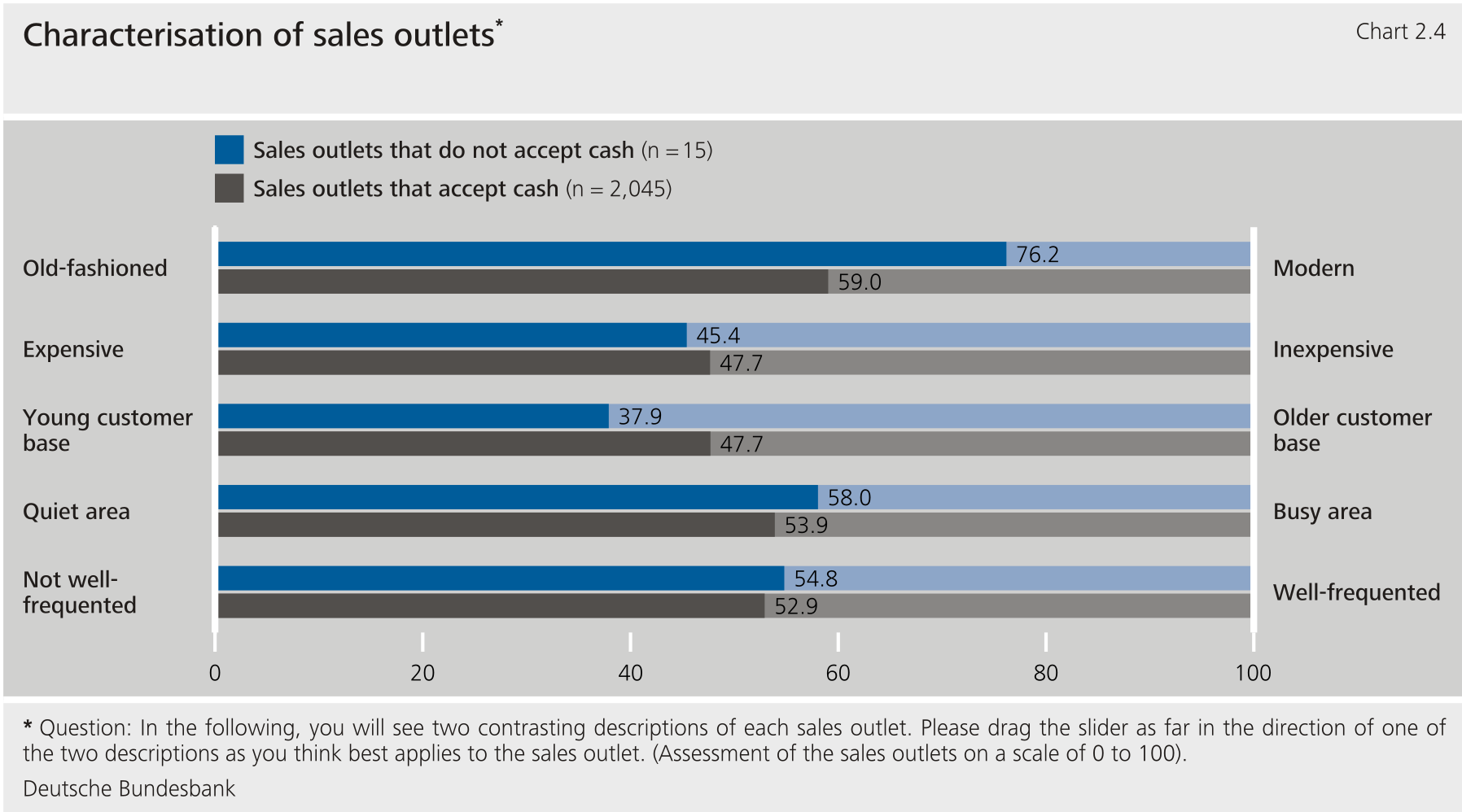
Sales outlets that do not accept cash were often perceived by test buyers as modern. After making their purchases, the test buyers assessed the sales outlets using various pairs of opposing characteristics. 9 On average, there were hardly any differences between sales outlets that do and do not accept cash in terms of price level, location or the number of visitors observed. However, test buyers perceived sales outlets that do not accept cash as more modern; these outlets also appear to be more frequently aimed at a younger customer base (see Chart 2.4).
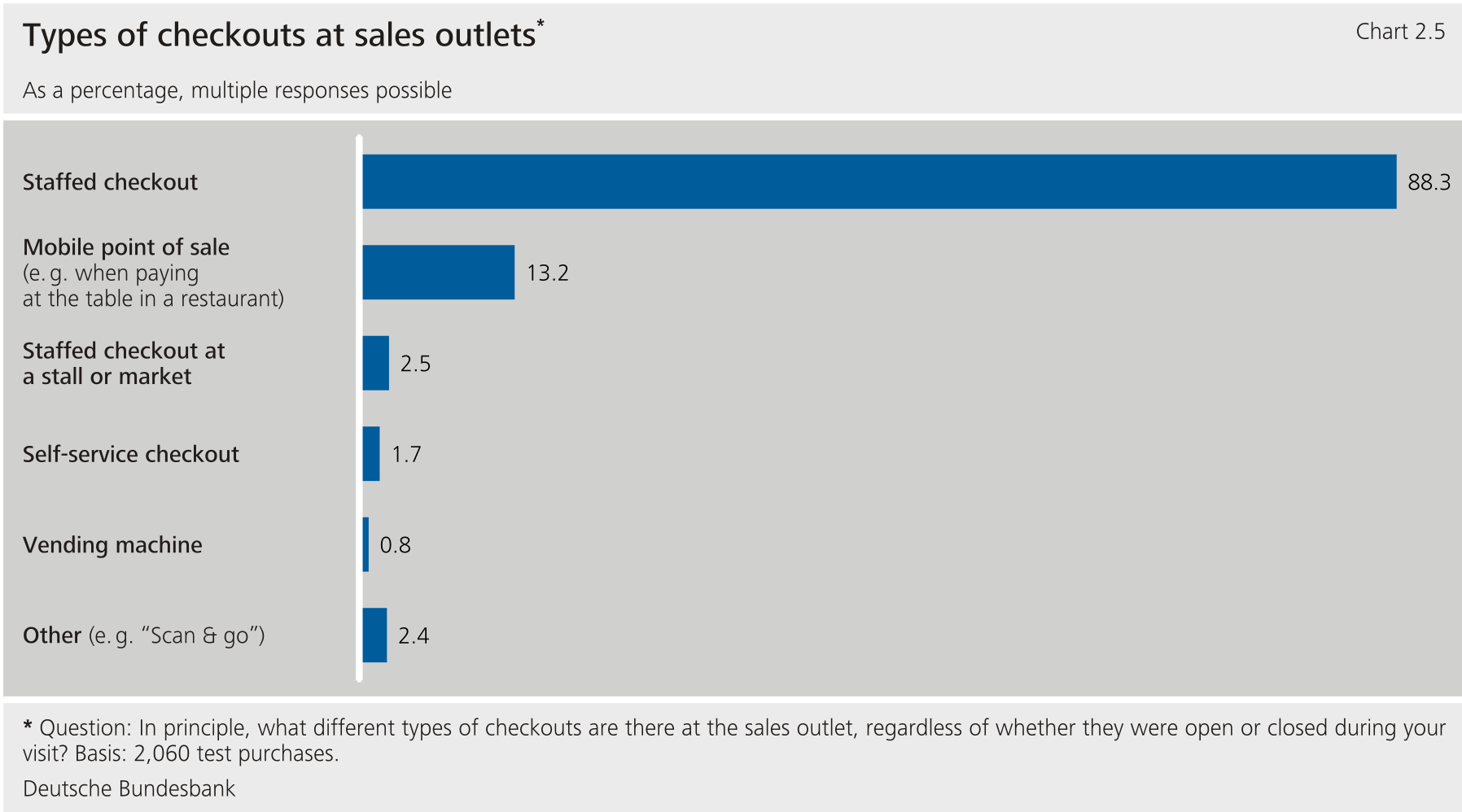
Almost all sales outlets in the economic sectors under review had at least one staffed point of sale. In most cases this was a staffed checkout. 10 In food and beverage service activities, it was often also possible to make payments in person to a member of staff directly at the table. Vending machines and self-service checkouts were rarely available in the sales outlets (see Chart 2.5). However, the importance of self-service checkouts differs greatly between sectors. For example, 13.8 % of non-specialised retailers (usually supermarkets and department stores) had at least one self-service checkout. 11
Cash payments were often not possible at self-service checkouts. In only one-quarter of cases (26.6 %) where there were self-service checkouts in a sales outlet were test buyers able to identify at least one self-service checkout that accepted cash payments. 12 Given that the number of self-service checkouts is expected to rise sharply, especially in supermarkets, drugstores and DIY stores, 13 this could worsen the acceptance of cash in these sectors. In particular, a gradual replacement of staffed checkouts with self-service checkouts that do not accept cash payments could lead to cash payments becoming significantly more time-consuming than cashless payments, as only a few checkouts would be available for this purpose.
Apart from a few exceptions, cash payments were made smoothly and without any irregularities. Negative responses to attempts to pay in cash were reported extremely rarely by test buyers (in only 0.4 % of test purchases). It was also rare for a cashier to request a cashless payment (which likewise occurred in 0.4 % of test purchases). Evidence to suggest that card payments are desirable was recorded for 0.5 % of the sales outlets visited. 14 A little more frequently, in 4.2 % of test purchases, the cashier asked for other banknotes or coins, for example with the question “Do you have anything smaller?”. Overall, however, cash payments were smooth in the vast majority of cases and did not involve the cashier making any particular responses or requests.
Studies on cash acceptance are also being carried out at the international level. For instance, the Dutch central bank (De Nederlandsche Bank, DNB) examined cash acceptance by means of observations. On behalf of the DNB, 5,000 shops were visited and the presence of signs pointing to certain payment methods was investigated. According to these observations, cash payments were only offered at around 95 % of the sales outlets visited, with cash payments particularly often not being possible in cinemas and pharmacies. 15 In addition, the Swiss National Bank conducted a survey of payment methods at companies and found that most companies in retail trade and the hotel and restaurant sector in Switzerland accept common means of payment, such as cash and debit cards. 16
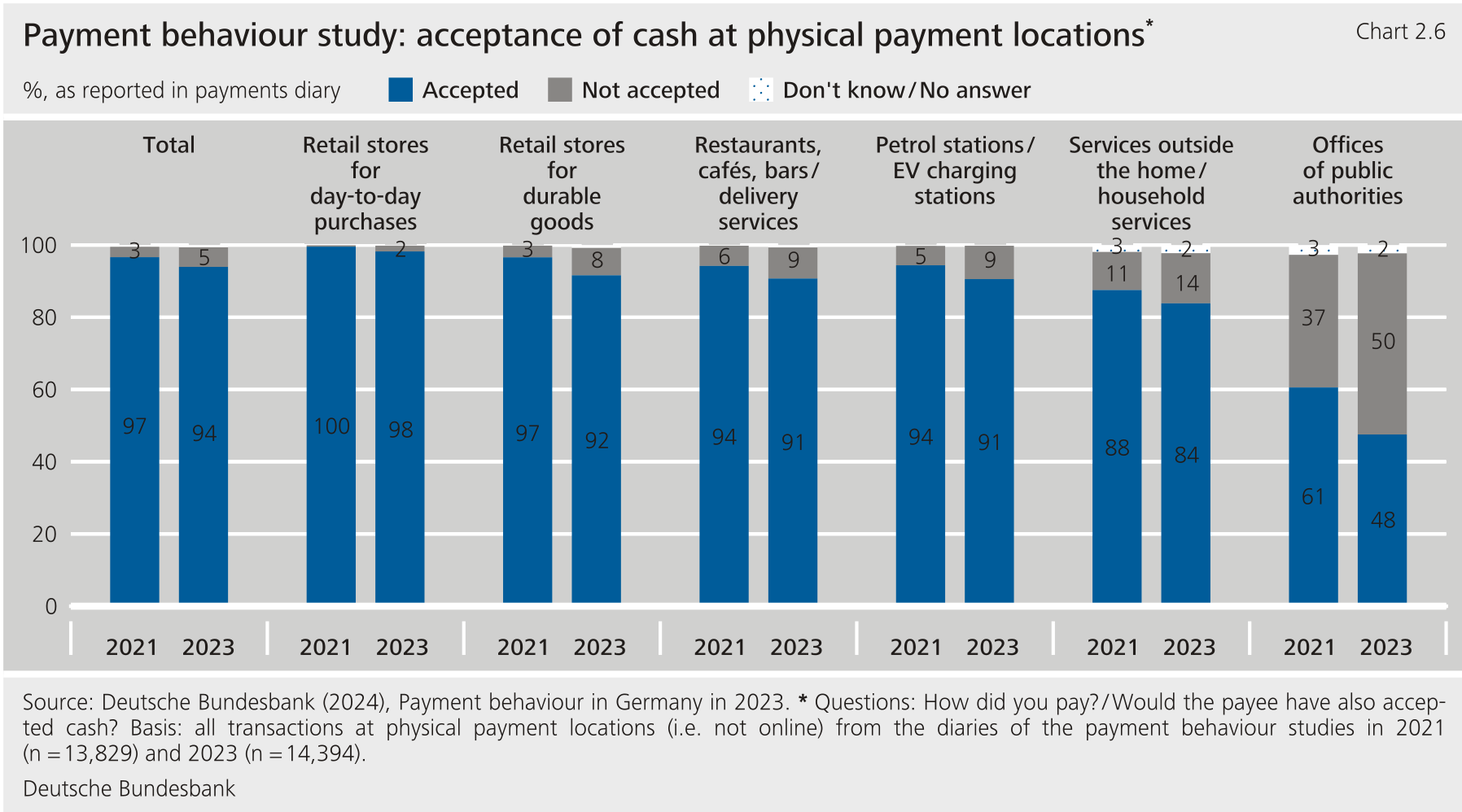
The Bundesbank’s series of studies on payment behaviour in Germany also identified high levels of cash acceptance in the retail sector and in food and beverage service activities in Germany. The payment behaviour study captured from the consumer’s perspective whether a cash payment would have been possible for transactions. 17 The results for the 2023 survey year indicate that cash acceptance in Germany remains at a high level, but is declining compared with previous surveys. For example, cash payments were possible in 2023 for 94 % of the transactions recorded in the study compared with 97 % in 2021 (see Chart 2.6). At 98 %, the figure recorded for cash acceptance for day-to-day retail transactions was similar to that of the present study. Due to differences in methodology and deviations in the economic sectors under review, the results of the payment behaviour studies and the test purchases are not fully comparable. 18 However, both analyses show that consumers are currently able to pay for goods and services with cash at physical points of sale with almost no restrictions.
3 Other payment situations
Cash is also used in other payment situations. In addition to payments to the companies examined in the previous section, cash also plays a role in payments such as those between individuals, for recreational activities, for public transport or to public authorities. 19 Further test payments with a smaller sample size are intended to provide insights into the usability of cash in such payment situations. As an example, 30 test payments were used to analyse cash acceptance in bus transport and for payments to public authorities, respectively. As the number of tests carried out for these other payment situations is comparatively small, the results should be interpreted with caution and validated by further analyses.
The test scenario for bus transport involved attempting to purchase a ticket for a bus journey in cash either at a bus stop or on the bus. Test buyers had to go to the nearest bus stop to their place of residence and first attempt to buy a ticket from a ticket machine using cash. If this was not possible, test buyers had to try to buy a ticket in cash from the bus driver or a ticket machine on the bus. The test purchases were carried out at various public transport companies throughout Germany, with no transport company being tested twice. The small sample size means that this does not provide representative coverage of the transport companies in Germany.
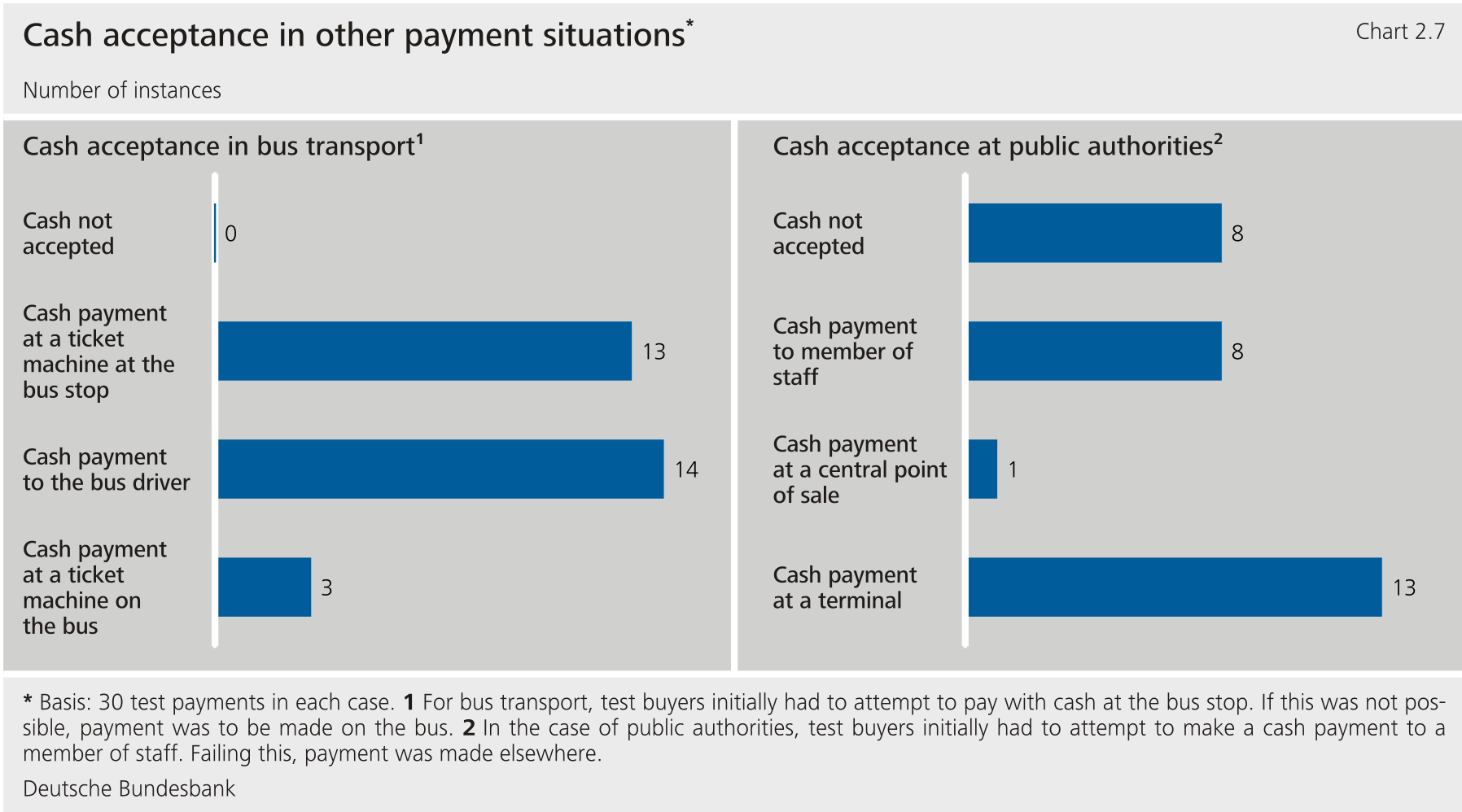
A cash payment option is guaranteed in bus transport. The results show that it was possible to pay for the bus journey with cash in all the cases considered. In 13 cases, tickets were purchased directly at the bus stop. In 17 cases, tickets were purchased on the bus, of which 14 were purchased from the driver and 3 from a ticket machine on the bus (see Chart 2.7). 20 In the recent past, transport companies have been considering restricting the acceptance of cash on buses. 21 According to the results of the test purchases, such restrictions are either not yet noticeable or are still so rare that they could not be picked up by the small sample size. It should also be noted that purchasing a ticket with cash at the bus stop already qualified as a positive test result in the test scenario and that cash acceptance by the driver on the actual bus was not the focus of the research.
The acceptance of cash by public authorities was also tested. In 30 cases, test buyers attempted to pay for a fee-based public service using cash. To this end, test buyers visited 20 municipal administration offices, 6 motor vehicle registration authorities and 4 driving licence authorities. The public authorities in the sample were distributed throughout Germany, with no authority being visited twice. The test procedure initially stipulated that test buyers should attempt to pay cash directly to the member of staff responsible for processing the transactions. If this was not possible, test buyers had to inquire about a central point of sale or a terminal within the authority and attempt to make a cash payment there.
Cash payments to public authorities are not possible across the board. In a total of 8 out of 30 cases, cash payment within the public authority was not possible. 22 It was possible to pay cash in person to the responsible member of staff in 8 out of 30 cases. In addition, in 14 cases, cash payments could be made via other means within the public authority, in one case at a central point of sale and in 13 cases at terminals. 23 The results of the Bundesbank’s payment behaviour study confirm the assumption that cash payments to public authorities are not universally possible. In this study, cash payments to public authorities were only possible in 48 % of the transactions recorded by respondents (see Chart 2.6). 24 The acceptance rate recorded in the payment behaviour study at public authorities is therefore lower than the rate determined by the test purchases. This could be due to some respondents being put off by the additional effort of making a cash payment at a central location within the authority and already being offered the choice to pay with an alternative payment method following an unsuccessful attempt to make a cash payment to the member of staff responsible.
4 Summary and classification
In order for consumers to be able to use cash, it should be available via ATMs and other cash withdrawal facilities and be accepted for payments. To analyse cash acceptance in Germany, around 2,000 test purchases were carried out at companies with physical points of sale in retail trade, food and beverage service activities and personal services. 99.4 % of the companies visited accept cash. Thus, the use of cash is guaranteed almost across the board at physical points of sale in retail trade, food and beverage service activities and in the services sector. 25
In addition, small samples of 30 test payments in each case were used to examine whether cash payments are possible in bus transport and at public authorities. In all the cases considered, it was possible to purchase a ticket with cash at the bus stop or on the bus. In the case of payments to public authorities, however, it was not possible to pay for the public service with cash in around 27 % of the test payments. As these results are based on small samples, further analysis is required to verify the statements. In order for cash to fulfil its societal functions, it should be accepted in as many shopping and payment situations as possible.
In the field of payments, the Bundesbank is committed to ensuring the public’s freedom of choice. This freedom of choice requires not only the availability and acceptance of cash, but also of cashless means of payment. 26 The digital euro could expand this freedom of choice in a useful way in future as a digital complement to cash, not only for payments at physical locations but also online.
Politicians, central banks and the stakeholders in the cash cycle are working together to ensure that cash can continue to be used in the future. The European Commission has presented a proposal for a regulation on euro cash as a legal tender to ensure the role of euro cash. In Germany, supplying the economy with cash is the Bundesbank’s task. In order to continue performing this task in the future, the Bundesbank is investing in a future-proofed branch network. Furthermore, in the context of the National Cash Forum, the Bundesbank, together with credit institutions, cash-in-transit companies, retailers and other stakeholders, is working to ensure that cash is supplied and accepted. 27
Supplementary information
Methodology
The survey aims to show the extent to which specific payees in Germany enable cash payments. Consumers in Germany use cash in a wide range of situations. Payments can be categorised by type of payee: for example, payments to individuals, payments to companies or payments to public authorities. 1 Besides this, cash payments are made in various economic sectors and via differing distribution channels. This complexity is addressed using a two-step approach. The analysis focuses on a representative sample of companies, looking at the most important economic sectors in which consumers regularly make transactions at physical points of sale in everyday life. 2 Payments in bus transport and to public authorities are also examined (using smaller sample sizes) to take account of other payment situations in which cash plays a part.
The economic sectors studied in the sample of companies were selected using the Federal Statistical Office’s Classification of Economic Activities (WZ 2008). 3 The aim was to examine economic sectors in which consumers regularly conduct transactions at physical points of sale in everyday life and where cash acceptance can be measured using a standardised survey instrument. 4 As a result, the following kinds of sectors are included: retail trade in stores and via stalls and markets (WZ 2008: 47.1 to 47.8) and food and beverage services (56.1), as well as selected service providers in the areas of washing and dry-cleaning (96.01) and hairdressing and other beauty treatment (96.02). 5
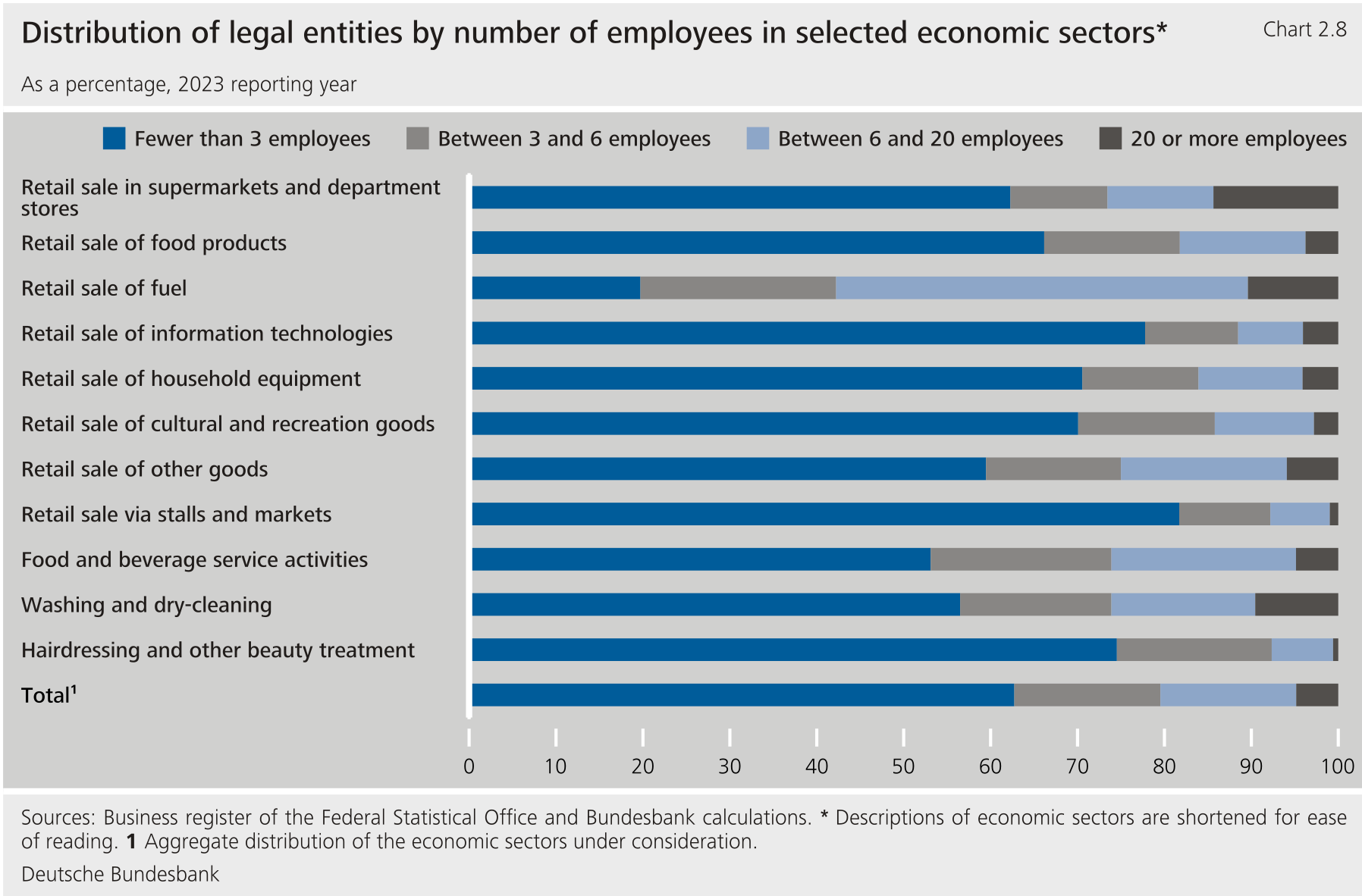
The population studied can be described using data from the Federal Statistical Office’s statistical business register. 6 This contains information on legal entities from various economic sectors in Germany. In the business register, “legal entities” are natural persons engaged in economic activities, legal persons and associations of persons. Examples include sole proprietors, partnerships such as general partnerships and corporations such as public limited companies. 7 Overall, the population under review comprises just under 500,000 companies employing around 3.7 million people and generating sales of €676.7 billion (see Table 2.1). 8 In terms of turnover and employees, the following sectors are particularly weighty: non-specialised retail sale (e.g. supermarkets and department stores), retail sale of other goods (e.g. clothing and shoe stores, pharmacies) and food and beverage service activities. Retail sale of other goods, food and beverage services and hairdressing and other beauty treatment are particularly prominent in terms of numbers of firms. Looking at the size distribution of companies, it can be seen that small companies with fewer than three employees make up the majority of companies in almost all sectors of the economy (see Chart 2.8). Petrol stations are an exception to this. Large companies with more than 20 employees are comparatively rare in all sectors of the economy.
Table 2.1: Description of sectors under consideration1
Economic sector
Number of legal entities
Percentage
Number of employees (in thousands)
Percentage
Turnover in € billion
Percentage
Retail sale in non-specialised stores
36.824
7.4 %
952.1
26.0 %
263.4
38.9 %
Retail sale of food, beverages and tobacco
38,869
7.8 %
204.6
5.6 %
29.9
4.4 %
Retail sale of automotive fuel
6,321
1.3 %
63.2
1.7 %
19.2
2.8 %
Retail sale of information and communication equipment
14,969
3.0 %
64.0
1.7 %
20.1
3.0 %
Retail sale of other household equipment
43,827
8.8 %
318.8
8.7 %
73.2
10.8 %
Retail sale of cultural and recreation goods
23,798
4.8 %
114.0
3.1 %
22.6
3.3 %
Retail sale of other goods
98,799
19.8 %
874.0
23.8 %
175.4
25.9 %
Retail sale via stalls and markets
5,438
1.1 %
12.1
0.3 %
1.7
0.2 %
Restaurants and mobile food service activities
140,661
28.2 %
818.4
22.3 %
57.5
8.5 %
Washing and dry-cleaning
4,356
0.9 %
52.0
1.4 %
3.9
0.6 %
Hairdressing and other beauty treatment
85,620
17.1 %
191.5
5.2 %
9.9
1.5 %
Total
499,482
100.0 %
3,664.8
100.0 %
676.7
100.0 %
Source: Business register of the Federal Statistical Office. 1 2023 reporting year.
Cash acceptance by companies in the identified population was ascertained using test purchases. The Bundesbank commissioned a market research institute to carry out the test purchases. 9 Test buyers visited selected companies and determined whether cash payment was possible when making purchases. 10 In addition, they recorded the circumstances of their in-store transactions: for example, how sellers responded to their attempt to pay in cash. A note was also made of the number and type of checkouts available. Training materials and a detailed reporting template ensured the tests were carried out in a standardised manner. 11
An alternative option would be to use a survey to determine the acceptance of means of payment by companies. Surveys of companies have the advantage of making it possible to analyse the reasons for deciding to accept certain means of payment. However, the advantage of test purchases is that cash acceptance can be observed as part of standard business operations, meaning that it does not entail an additional burden on businesses. Moreover, it would have been possible to gather survey data in Germany only if firms volunteered to be involved, meaning there would always be a possibility of systematic non-response bias distorting the data. 12
The companies tested were randomly selected from a commercial business register. To be able to make reliable statements about sub-groups as well, the sample size was disproportionately split across different economic sectors and size categories. The disproportionate selection was offset by a weighting so that the results were representative of the population studied. The Bundesbank cannot identify the companies visited.
A total of 2,060 test purchases took place across Germany. The test purchases took place in all federal states and in both rural and urban areas of Germany. Test buyers spent an average of €11.98 per test purchase. The highest amount spent was €179, while the lowest was €0.19. At €28.81, average expenditure on services, such as visits to the hairdresser, far exceeded average expenditure in the retail sector (€7.16 per purchase), as expected. Almost all denominations of banknotes and coins were used for the test purchases, with the exception of €200 and €500 banknotes.
While the study provides a meaningful picture of cash acceptance in Germany, it does not take into account all the everyday situations in which consumers use cash. For instance, expenditure at recreational facilities, cultural sites, services rendered by public authorities and public transport tickets have not been included in the reporting population considered to date. To round off the results, 30 test payments were made to test cash acceptance by public authorities and in public transport, respectively. 13 The standardised tests determined whether it was possible to pay in cash for bus tickets and for services rendered at municipal administration offices, such as the issuance of ID documents or certification of copies. Due to their low number, these additional test payments are merely exploratory.