1 The German economy suffered a setback in the second quarter
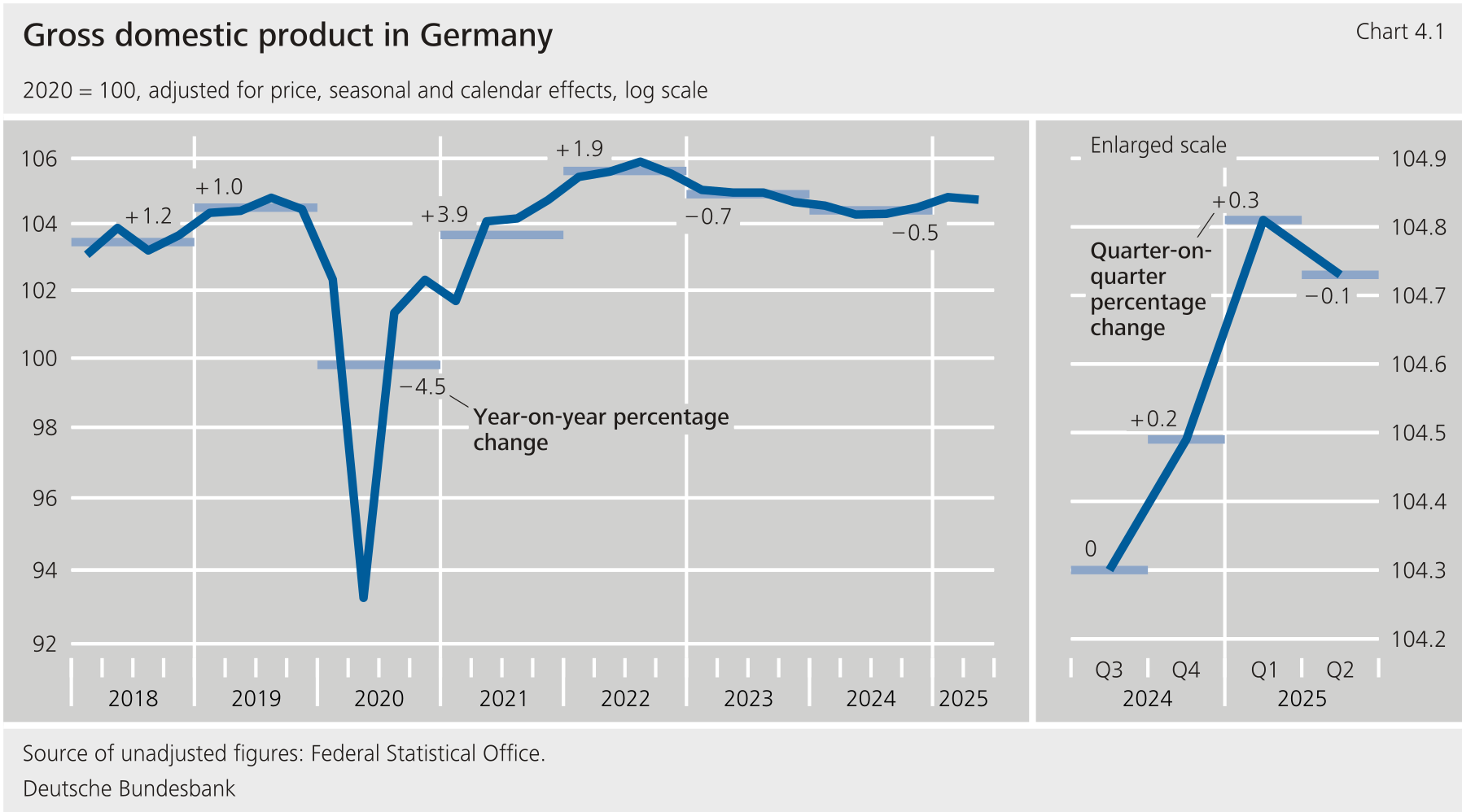
The recovery in economic output in Germany suffered a setback in the second quarter of 2025. According to the Federal Statistical Office’s flash estimate, real gross domestic product (GDP) decreased by 0.1 % on the quarter after seasonal adjustment 1 . Revised data indicate that it was still rising markedly in the previous two quarters. In its flash estimate of GDP for the second quarter of 2025, the Federal Statistical Office published revisions with a significant impact on the GDP path between 2021 and 2024. 2 Firstly, the recovery after the coronavirus pandemic in 2021 and 2022 appears to have been stronger. Second, the bout of weakness following the start of Russia’s war of aggression against Ukraine is now more pronounced. This means that the German economy was now clearly in recession in the years 2023 and 2024, in the sense of a significant, prolonged and broad-based decline in economic output with underutilisation of aggregate capacity. 3 This decline faded out in the middle of last year and evolved into a slight recovery (see the supplementary information on Recent revisions to German GDP and their impact on the economic picture). In the first quarter of 2025, economic output was additionally supported by front-loading effects in anticipation of higher US tariffs. After tariffs were raised at the beginning of April, however, industrial output and exports recorded rebound effects in the second quarter. Economic policy uncertainty remained high, mainly owing to the trade dispute with the United States. The future level of US tariffs remained unclear initially, as did any countermeasures from the EU. This weighed on planning certainty and thus on firms’ investment. Orders in the construction sector were still too weak to provide impetus for higher production. Private consumption benefited from strong wage growth. However, the labour market remained weak, which counteracted a significant increase in consumption.
Supplementary information
Recent revisions to German GDP and their impact on the economic picture
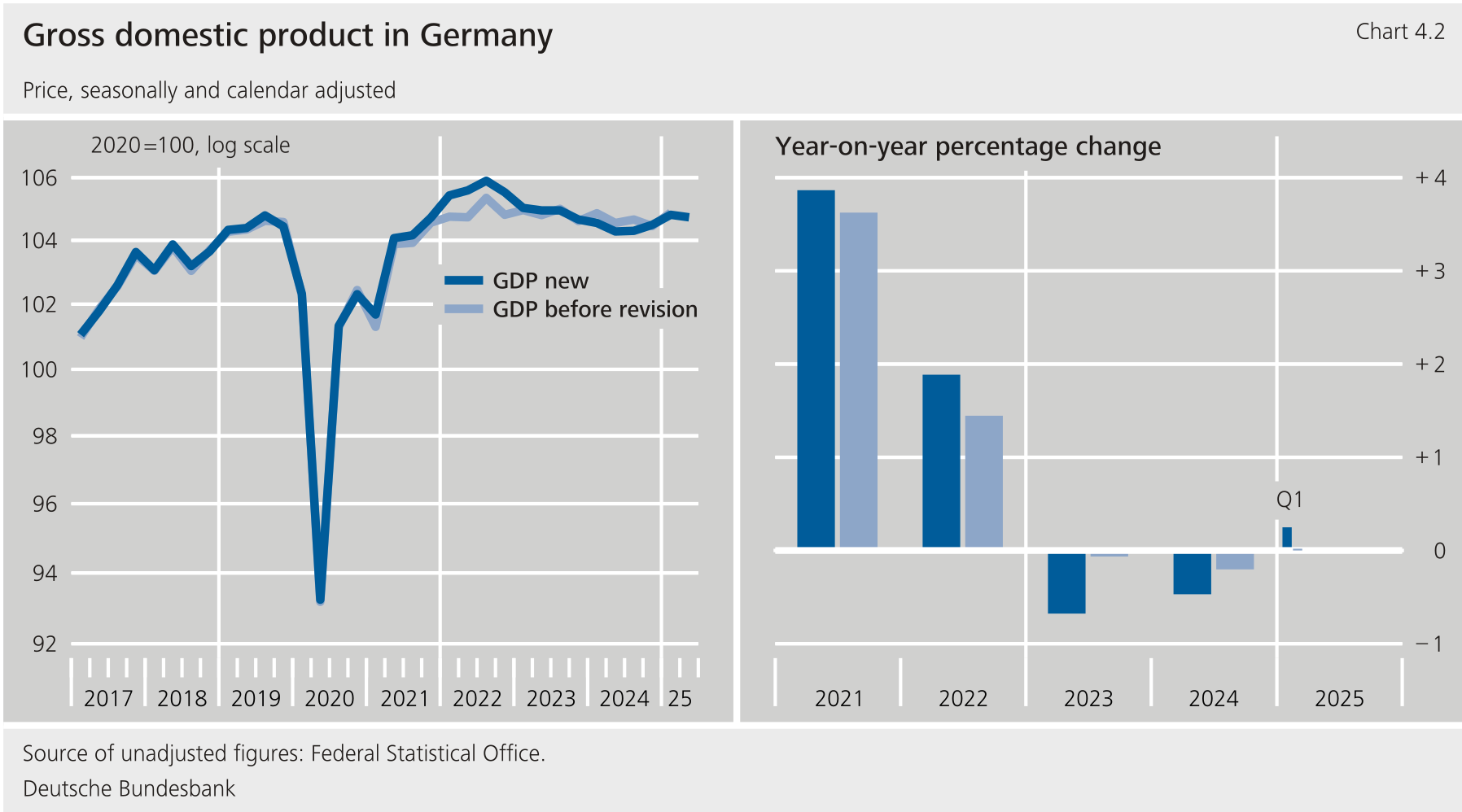
With the publication of the flash estimate of gross domestic product (GDP) for the second quarter of 2025, the Federal Statistical Office also significantly revised the data for the previous quarters and years from 2021 onwards. 1 Unusually, the revisions considerably changed the course of real GDP this time. 2 As a result, the picture of the economic outlook has changed in two points in particular. First, the recovery in the German economy following the pandemic is now more pronounced. Second, the period of economic weakness following the start of Russia’s war of aggression against Ukraine is now proving a significant decline in economic output.
For the years 2021 to 2024, the revisions to GDP growth now paint a more consistent picture of economic developments. The path of GDP development is now more consistent with other indicators and with historical events. According to the new data, real GDP in the third quarter of 2022 exceeded its pre-pandemic level by a seasonally adjusted 1.4 % (before revision: 0.7 %). In 2021 and 2022, GDP grew more strongly than previously stated, at 3.9 % and 1.9 % in calendar-adjusted terms (before revision: 3.6 % and 1.4 %). The now stronger recovery points to larger catch-up effects following the easing or respectively the lifting of coronavirus mitigation measures. By contrast, from the fourth quarter of 2022 onwards, the negative economic impact of Russia’s war of aggression and the after-effects of global supply chain problems, particularly in the form of high inflation in Germany and many other economies, are now becoming more apparent. The revised GDP profile now more clearly reflects the negative factors. From the fourth quarter of 2022 to the third quarter of 2024, GDP fell in almost all quarters following the revision, in some cases sharply (by a total of 1.5 %, before revision by 0.8 %). On an annual average, GDP correspondingly contracted more significantly in 2023 and 2024, at ‑0.7 % and ‑0.5 % in calendar-adjusted terms, than previously reported (before revision: ‑0.1 % and ‑0.2 %). Higher domestic price pressure appears to be one of the reasons for these revisions. The increase in the GDP deflator was revised significantly upwards for 2023. 3
According to the revised results, the German economy was in a recession, in other words a period with a significant, prolonged and broad-based decline in economic output accompanied by capacity underutilisation. 4 This is now also more in line with the marked decline in ifo capacity utilisation, which has so far been in some contrast to developments in GDP.
The short-term outlook for the German economy is not significantly altered by the revisions at the current end. However, the GDP rate in 2025 could prove to be slightly higher than expected in the June forecast for Germany. According to the revised picture, the downward movement in economic activity ended back in mid-2024. Since then, GDP has been rising moderately again. In the first quarter of 2025, its level was only marginally lower than before the revision. The more buoyant path towards the end of the previous year means that the statistical carry-over for 2025 is 0.3 percentage point higher, in other words the starting point is improved. In addition, the newly reported momentum in the short term tends to suggest a slightly higher underlying cyclical trend compared with the June forecast for Germany. The unexpectedly favourable developments in the sentiment indicators also suggest a slightly better sentiment for the third quarter. Overall, the German economy could therefore grow slightly on average this year. By contrast, the June forecast for Germany had anticipated that calendar-adjusted GDP would merely stagnate. 5
2 Fall-off effects weighed on industrial output and exports, whilst investment remained weak
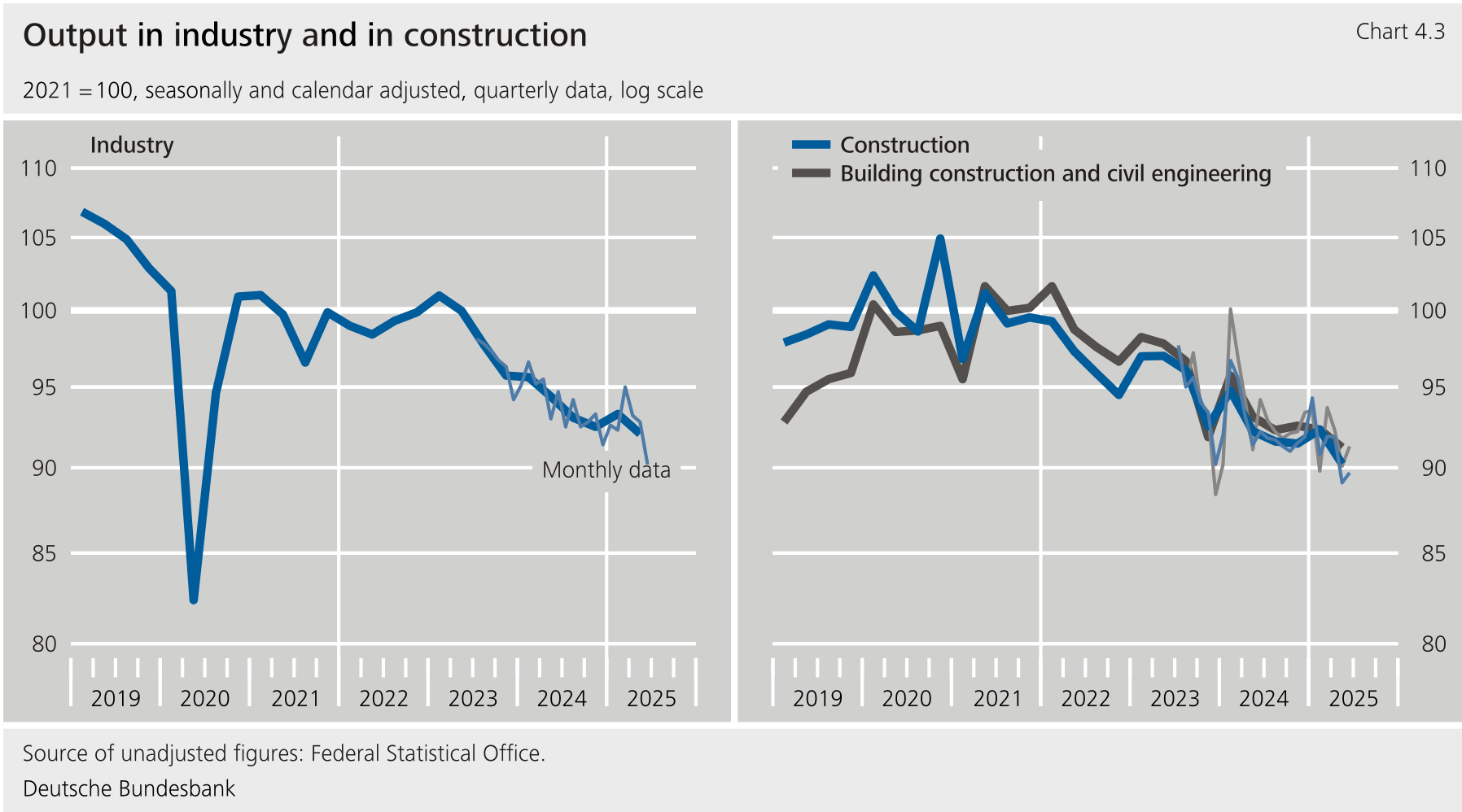
Industrial output and exports suffered significant tariff-related fall-off effects in the second quarter. In June, seasonally adjusted industrial output fell sharply compared with the previous month, which had been revised steeply downwards. Taking the average of the second quarter, it also fell significantly on the quarter. This decline affected most industrial sectors. Only motor vehicle production and other transport equipment reported a renewed increase. The fall in output contrasts with a continuous rise in orders. The ifo Institute also indicates an improvement in the order situation in manufacturing on average over the second quarter for the first time in almost four years. The decline in industrial output is therefore likely to be mainly attributable to fall-off effects following the front-loading effects triggered by US tariff policy in the first quarter. Output in industries such as pharmaceuticals and mechanical engineering, which are highly dependent on the US market, saw a particularly significant fall. Fall-off effects were also evident in exports. Exports of goods to the United States dropped sharply in the second quarter, after having risen substantially. The depreciation of the dollar against the euro and the lasting repercussions of the tariff increases in force since April may also have played a role here. These losses were offset, amongst other things, by an increase in exports to euro area countries. Price-adjusted goods exports thus stagnated in the second quarter overall.
Business investment in machinery and equipment is likely to have fallen in the second quarter. This is indicated by the price-adjusted domestic sales of capital goods producers, which declined significantly compared with the previous quarter. There are still some factors weighing on business investment. Industrial demand is still so weak that capacity utilisation remains low. According to ifo surveys, capacity utilisation in the manufacturing sector has risen slightly since the beginning of the year. However, it still remained well below its long-term average in July. Many industries therefore have little need for investment to extend production capacity. The financing environment is still not easy, even though demand for loans was stronger than in previous quarters. While the ECB’s Bank Lending Survey (BLS) continues to show a downward trend in financing costs for firms on a quarterly average, banks tightened their credit standards in the second quarter. 4 This is mainly due to higher credit risk and lower risk tolerance among lenders. Finally, economic policy uncertainty remained high, primarily owing to the trade dispute between the United States and the EU, which weighed on planning certainty and thus on firms’ propensity to invest.
Construction remained weak and construction investment is expected to have declined in the second quarter. After a slight expansion in the previous quarter, construction output fell sharply again in seasonally adjusted terms. It even reached its lowest level in ten years, although weather factors were less of a drag on output than in the previous quarter, according to ifo surveys. The decline in output was mainly attributable to building construction and finishing trades, while civil engineering output rose slightly compared with the previous quarter. Measured in terms of order intake, demand for construction work is trending upwards. However, this has not boosted output yet. According to the ifo Institute, firms continue to report a severe lack of orders. In addition, financing conditions have not provided any further impetus in demand for housing construction recently. In the second quarter, at an average of 3.7 %, effective interest rates on housing loans were up slightly on the previous quarter. In addition, according to the BLS, lending guidelines for mortgage loans in Germany were tightened after being eased in the first quarter. 5
Private consumption is likely to have risen slightly in the second quarter, and this is probably also true of service providers as a whole. The private consumption indicators show a mixed picture but point to a slight increase overall. The retail sector, in particular, remained robust and was able to increase its real sales again compared with the previous quarter. In addition, the number of private car registrations went up again slightly. By contrast, price-adjusted sales in the hotel and restaurant sector declined again according to the data available up to May. This was mainly due to a very weak May. The more favourable development of consumption expected overall is likely to have been driven by sharp increases in wages, while the labour market remained too weak to generate stronger momentum in consumption. Along with private consumption, the services sector as a whole is likely to have expanded somewhat in the second quarter. Real wholesale sales were down on the quarter and real motor vehicle sales (data available up to May) also indicate a decline compared with the previous quarter. However, after a weak first quarter, service providers (excluding trade) expanded their output according to data available up to May.
Imports posted an exceptionally strong increase in the second quarter. Imports of goods rose sharply in price-adjusted terms. Along with investment in machinery and equipment and exports, those expenditure components that typically have a particularly high import content remained weak, which suggests a marked build-up of inventories. One factor in this could be that firms also increasingly imported certain goods from the United States in anticipation of possible retaliatory tariffs imposed by the EU. Imports from the United States had already risen steeply in the first quarter and were up again substantially in the second quarter. 6 However, imports from other countries, especially from the euro area, central and eastern European countries and China, were also higher. However, it is not yet possible to determine with certainty whether diversion effects in global goods trade may have played in this.
3 Labour market remains weak
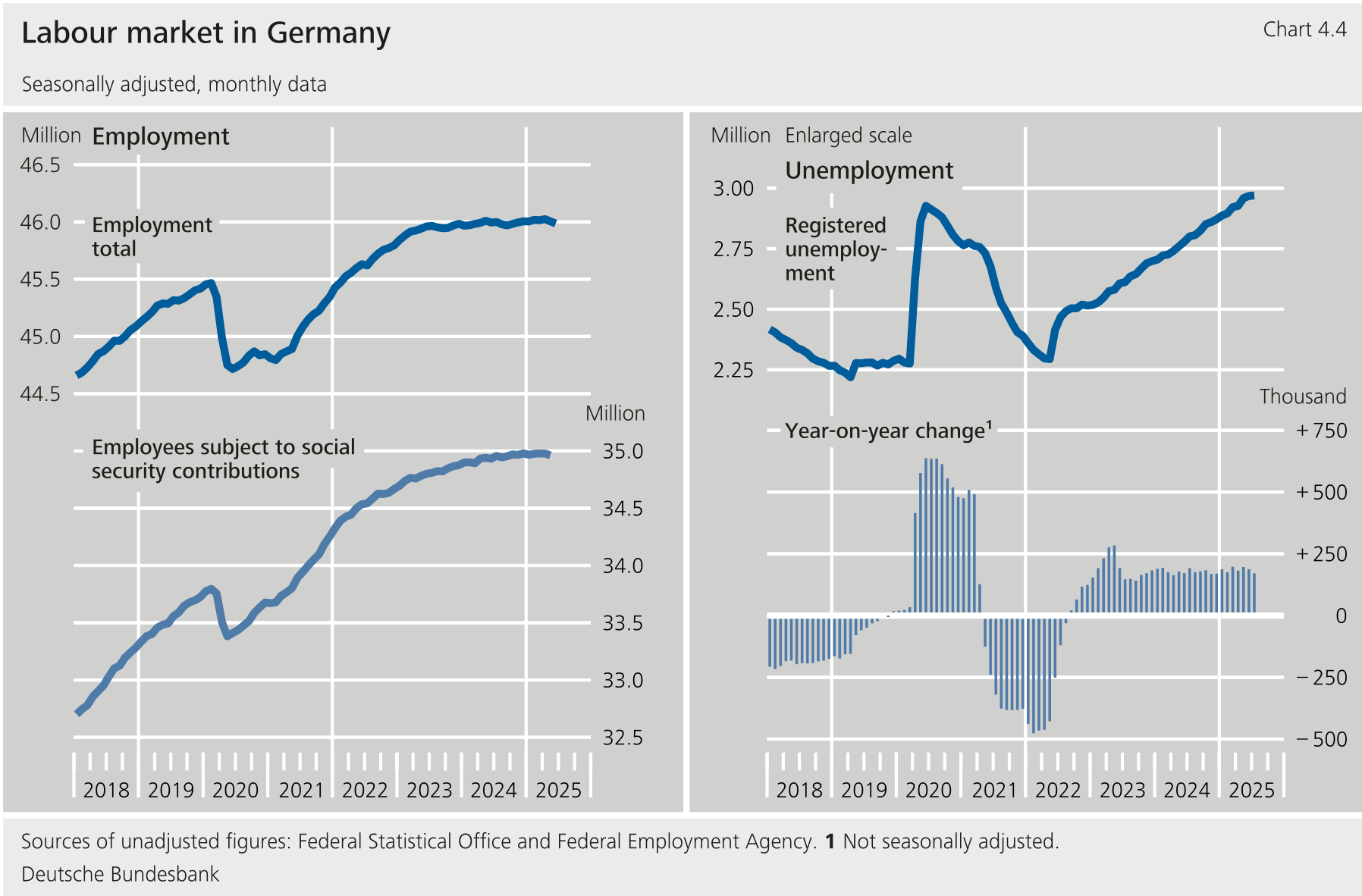
The labour market continued its sideways movement in the second quarter. The level of employment has been virtually unchanged for two years now. However, this is due to significant sectoral upheavals. Unemployment saw a moderate uptick again. Leading indicators do not suggest any fundamental change in this development over the next few months.
The number of people in employment in the second quarter of this year remained at the previous quarter’s level in seasonally adjusted terms. According to the initial estimate by the Federal Statistical Office, 46.0 million persons were employed on average between April and June. 7 This was a marginal decline of 7,000 persons compared with the average of the winter months. Weak economic output is thus leaving slight traces in employment. The decline in self-employment, already evident for some time, continued. The number of employees remained stable. This applies both to employees subject to social security contributions and those in exclusively low-paid part-time work, although data on these are currently only available up to and including May. According to initial estimates by the Federal Employment Agency, short-time work for economic reasons was used somewhat less frequently in April and May than in the winter half-year. Its utilisation remained slightly elevated, however, and mainly relates to the manufacturing sector. Further developments are thus closely linked to the manufacturing outlook.
Sectoral shifts in headcounts between economic sectors continued unabated. Employment in the manufacturing sector continued to fall markedly. Over the past 12 months, the number of employees subject to social security contributions in the industrial sector fell by around 2 %. The production of intermediate goods with its often high energy intensity was disproportionately hard hit. However, staff levels are also being increasingly reduced in Germany’s major metals and electrical engineering sectors, such as the manufacture of fabricated metal products and motor vehicle production. The previously heavily prevalent adjustment through a reduced use of temporary staff in the industrial sector now appears to be diminishing in importance. After the number of temporary workers subject to social security contributions dropped by almost one-quarter over the past three years, their number declined only moderately in recent months. By contrast, the stabilisation of employment figures in the construction sector is likely to be due to a slow recovery in orders. Employment growth, which was still spread across many services sectors until the beginning of the year, is increasingly narrowing to just one sector of the economy: health and social affairs. Employment in this sector, which also includes the long-term care sector, has been rising significantly for some time now and is therefore following the demographic trend. Some other services and energy supply are recording small increases but taken together they are smaller than those seen in healthcare and long-term care alone.
Registered unemployment continued to rise in the reporting quarter. Averaged over the second quarter of 2025, a seasonally adjusted 2.95 million persons were registered as unemployed, around 50,000 more than in the first quarter. The unemployment rate went up by 0.1 percentage point to 6.3 %. Registered unemployment barely increased in July and the unemployment rate remained unchanged. The increase in the second quarter is likely to be largely due to fewer labour market policy measures, language and integration courses. Total underemployment (excluding short-time work), which also includes persons taking part in these measures, stayed almost constant compared with the previous quarter.
Over the past three years, it has become increasingly difficult for unemployed persons to move into employment. The decline in the job finding rate is particularly pronounced for people covered by the statutory unemployment insurance scheme. The strong structural change makes it difficult for the unemployed to find a new job in their old profession and sector. Their search therefore takes longer. More and more individuals have to reorient themselves professionally or regionally or accept less attractive jobs. This adjustment process takes time and therefore initially causes structural unemployment to be higher. By contrast, the job finding rate has barely fallen for unemployed persons receiving the basic welfare allowance. The job finding rate among people receiving the basic allowance is in general significantly lower, as long periods of unemployment have caused them to have less access to the labour market or they are facing multiple placement difficulties. However, the ongoing integration of refugees, who predominantly receive the basic allowance in the event of unemployment, has a positive impact. For example, the number of Ukrainians moving into employment has improved considerably, from a low level, since the beginning of 2024. For other refugees, too, the employment rate continued to rise on the back of improved job finding rates. The probability of unemployed basic welfare recipients finding a job is now higher for both Ukrainians and other refugees than for German nationals. Overall, however, the job-finding rate of Germans is higher than that of immigrants. This is due to the fact that the share of German nationals in the statutory unemployment insurance scheme is higher and that here the job finding rates are higher than in the basic welfare scheme.
The outlook for the labour market remains muted in the coming months. Leading indicators paint a persistently mixed picture. The ifo employment barometer, which reflects recruitment plans in trade and industry for the next three months, improved marginally in July following a significant setback in June. It is still deep in negative territory. This mainly affects manufacturing and trade. The IAB employment barometer, which also takes into account the predominantly publicly financed services sectors such as health, education and administration, has recently stabilised slightly above the neutral threshold. The number of vacant positions reported to the Federal Employment Agency continued to decline in July. The Federal Employment Agency has received few new job offers subject to social security contributions of late. Overall, the employment outlook has not deteriorated any further recently. However, a sustainable positive development in the coming months is not evident in the indicators. It looks only marginally better for unemployment over the next three months. Although the IAB unemployment barometer rose considerably in July and moved significantly closer to the neutral threshold, it remained below it. Unemployment could rise further at first.
4 Negotiated wages rose significantly more strongly for a time
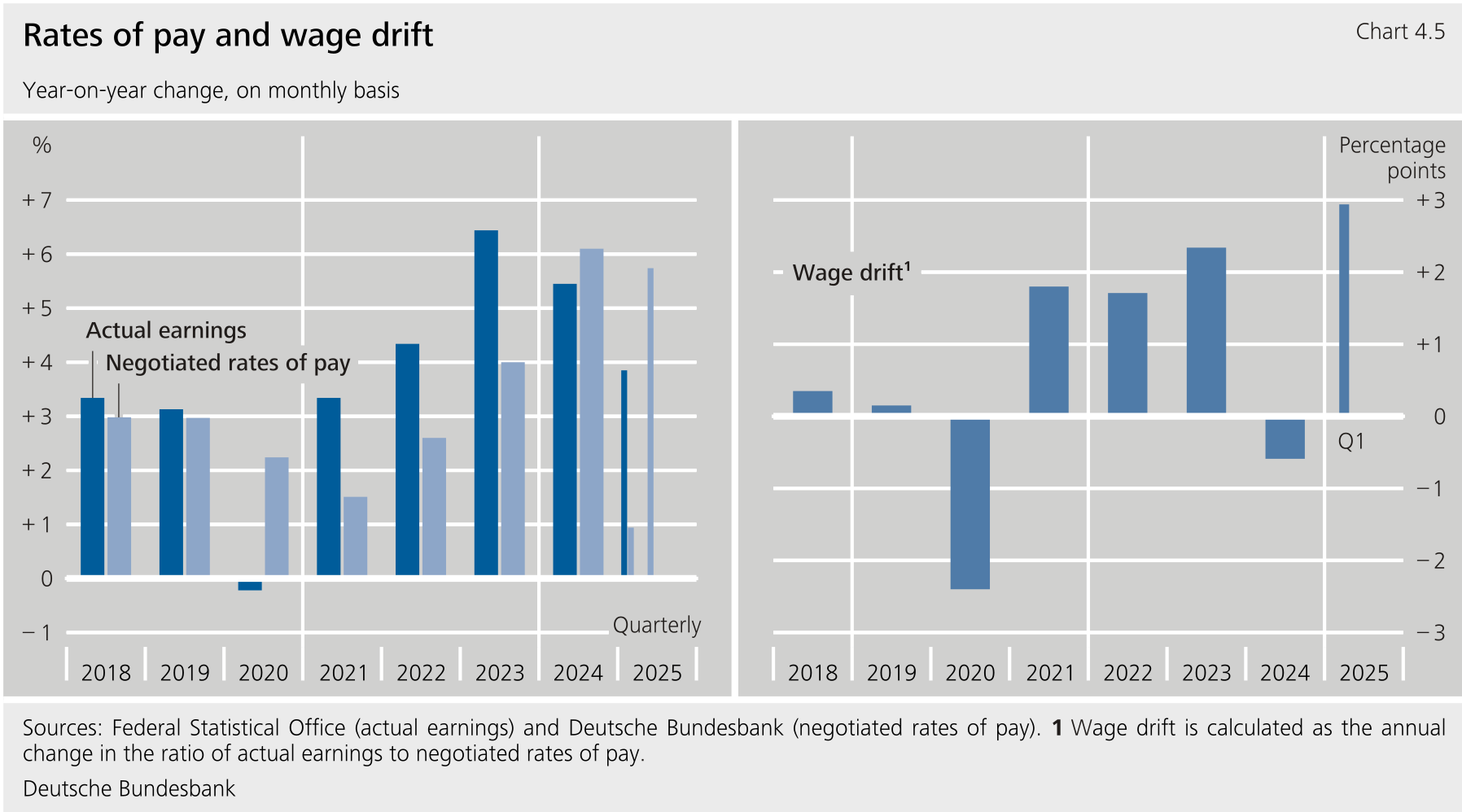
In the second quarter, the increase in negotiated wages was much stronger than in the first quarter. Including additional benefits, they were up by 5.7 % on the year in the second quarter of 2025, compared with only 0.9 % in the quarter before. The sharp surge in the second quarter is mainly due to higher permanent wage increases in retail and wholesale trade, as well as in the central and local government areas of the public sector. 8 By contrast, in the first quarter, negative base effects from the high inflation compensation bonuses 9 a year ago and “zero months“ in new wage agreements had dampened wage growth, in particular. In order to eliminate one-off factors such as the lingering effects of inflation compensation bonuses and to take a closer look at the underlying dynamics of negotiated wages, special and one-off payments are excluded. With a year-on-year rise of 6.7 % in the second quarter of 2025, basic pay rates for the economy as a whole calculated in this way rose just as sharply as in the first quarter. This is also due to the fact that old wage agreements with higher phased increases are still having an impact.
Recent wage agreements show predominantly lower wage increases than before, however. Agreements such as those in the plastics processing industry and textile services envisage significantly lower wage increases than during the period of high inflation. At 3.8 % per annum, only the insurance sector concluded a wage agreement in July that was higher than average by this sector’s historical standards. This means that employees will receive further partial compensatory pay 10 for the period of high inflation rates.
The remaining new wage agreements to be concluded by the end of 2025 are likely to be lower than last year’s as inflation rates are falling and the economic environment is weak. Trade unions’ wage demands continue to decline, and the percentage of their demands achieved are markedly lower than when inflation was at its peak. In the coming months up to the end of the year, new agreements will be negotiated for around 3½ million salaried employees. The rise in negotiated wages in the second half of the year is being dampened in part by inflation compensation bonuses, which were paid in the previous year and have now been discontinued.
In the second quarter of 2025, actual earnings probably rose by less than negotiated wages. They may have increased at a similar rate to the previous quarter, in which growth stood at around 4 % on the year. This is indicated by the nominal wage data for April to June obtained from the Federal Statistical Office’s earnings survey.
The general statutory minimum wage is to be raised substantially from January 2026 onwards following a recommendation of the independent Minimum Wage Commission. The Minimum Wage Commission is proposing a phased increase from the current level of €12.82 per hour to €13.90 as at 1 January 2026 and to €14.60 per hour as at 1 January 2027. Overall, the minimum wage thus rises by 13.9 %, but falls short of demands made in the run-up to the decision calling for an increase to €15. Germany’s labour minister immediately announced that she would endorse this recommendation and would table it in the Federal Cabinet. According to Federal Statistical Office (2025c), this potentially benefits up to 6.6 million employees directly in January 2026 and possibly even more in January 2027. Their real wages would rise significantly. The planned increases in the minimum wage will also have a marked impact on remuneration in the low-wage sector and will likewise help drive up aggregate wages through spillover effects. Nonetheless, the upside risks that the minimum wage poses to aggregate average wages as compared with the June Forecast for Germany are limited. From a macroeconomic perspective, no strong impact on employment is expected in the short term. However, the minimum wage could cause a reluctance to recruit new staff. 11
5 The inflation rate fell distinctly in the second quarter
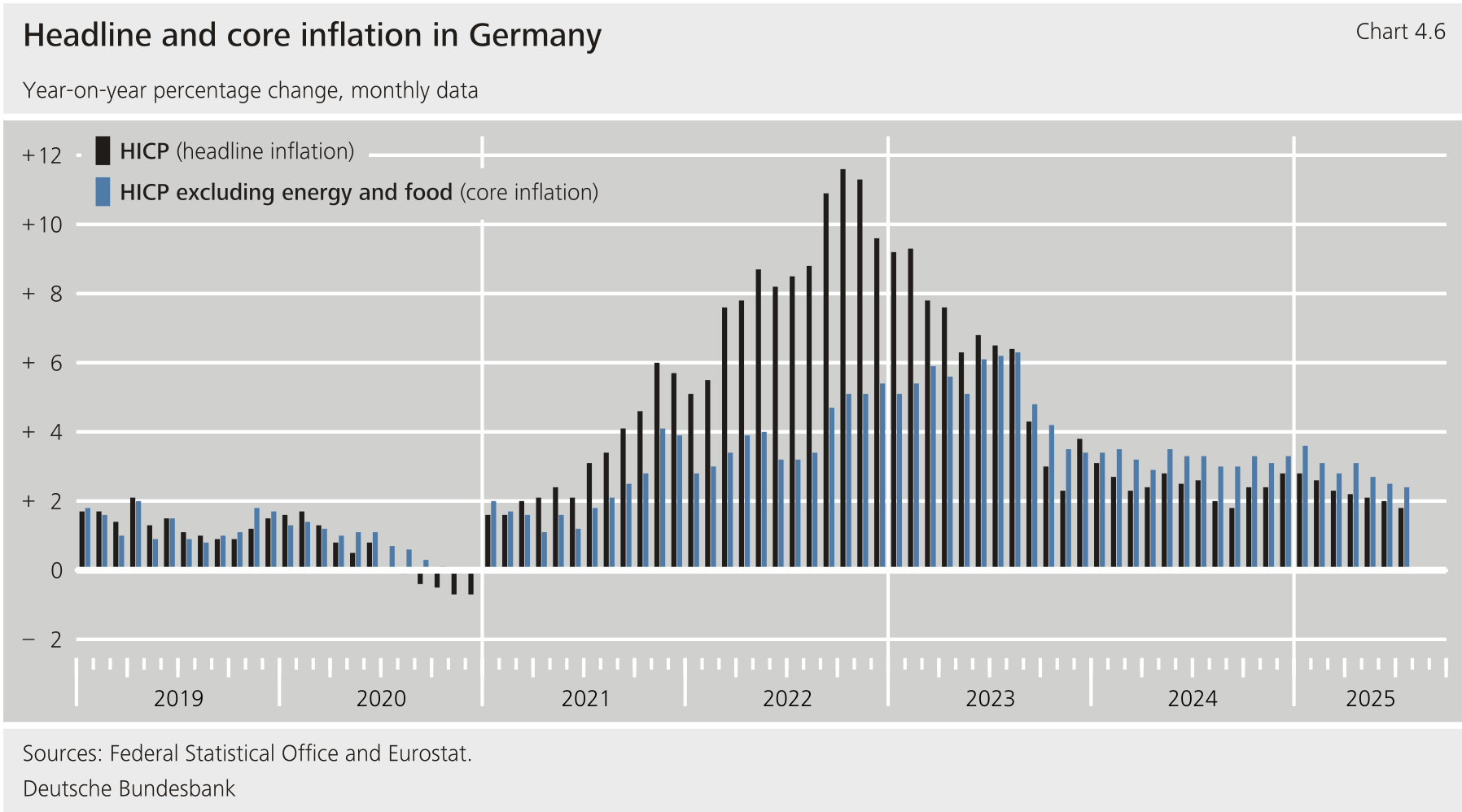
Inflation declined significantly in the second quarter. Consumer prices (HICP) rose by a seasonally adjusted 0.4 % on the quarter in the second quarter of 2025, compared with 0.7 % in the first quarter. This was chiefly due to falling energy prices. The significant drop in oil prices, whose impact was further amplified by the appreciation of the euro, caused prices for mineral oil products, in particular, to fall noticeably. This sharp decline in energy prices was overshadowed by increases in the prices of the other components. For instance, the prices of services rose significantly again. This was due in part to rents, which experienced above-average increases by historical standards. However, the prices of other services, such as motor vehicle insurance, also rose significantly. Repair costs had increased significantly over the past two years, causing insurers to respond by raising their premiums. Food prices likewise went up markedly and again appreciated more strongly than in the first quarter of 2025. Unprocessed meat products, in particular, cost more. Here, producer prices had risen significantly as a result of higher production costs. However, prices for processed food such as cocoa, chocolate and coffee were also subject to above-average growth in a longer-term comparison. This is due to the increasing occurrence of extreme weather phenomena as a result of climate change as well as higher production and transport costs. By contrast, prices of industrial goods excluding energy rose only slightly. The appreciation of the euro against the US dollar could have been a dampening factor here.
The annual inflation rate also fell sharply in the second quarter of 2025. It fell from 2.6 % in the first quarter to 2.1 % in the second quarter, partly owing to a stronger dampening contribution from energy prices. Another factor was that services prices no longer rose quite as sharply as in the previous quarters. The core inflation rate (HICP excluding energy and food) dropped from 3.2 % in the previous quarter to 2.8 %. However, the decline in core inflation was mainly attributable to a sharp and unexpected decline in the rate for travel services. Excluding the volatile components clothing and travel services, the core rate remained unchanged at around 3 %, as it has for several quarters.
Prices rose somewhat more sharply in July than in the previous two months. After seasonal adjustment, the HICP ticked up by 0.2 % compared with June. The prices of non-energy industrial goods rose more sharply than in the preceding months. Energy prices also rose, despite a slight decline in oil prices and a further appreciation of the euro. The prices of diesel fuels, in particular, appreciated. Manufacturers appear to have widened their margins after prices for mineral oil products had fallen significantly in the preceding months. Food prices also went up significantly. This was again mainly driven by meat products and coffee. Meanwhile, the prices of services remained unchanged. The declines in travel prices offset the increases in rents that were again raised at above-average rates. Looking at the year-on-year figures, the inflation rate fell markedly from 2.0 % to 1.8 %, 12 and the core rate eased slightly (from 2.5 % to 2.4 %).
The inflation rate is likely to be temporarily somewhat higher in the next few months. Based on current crude oil futures prices, energy prices should remain stable until the end of the year, following a slight increase. However, a base effect means that the previously negative energy inflation will turn positive. This will drive up the headline inflation rate over the next few months. In the services sector, the disinflation process continues in principle, with lower wage increases having an impact. In the coming months, the disinflation process will pause, however, and a base effect means that higher rates are temporarily expected at the end of the year. In terms of food, the current rate of inflation is likely to change little initially. In the fourth quarter, however, lower rates are to be expected temporarily, as the annual rate will then no longer include strong price increases from the previous year. Overall, the inflation rate is likely to rise to slightly above 2 % and thus be temporarily somewhat higher than expected in the June projection. Core inflation could likewise turn out to be slightly higher and is likely to fluctuate around the level reached in July. However, due to geopolitical factors the outlook remains highly uncertain.
6 Economic activity could languish in the third quarter
In the third quarter, economic activity could more or less stagnate. The basic agreement in the trade dispute between the United States and the EU has likely reduced uncertainty about future tariff levels. It remains high nonetheless given that questions remain unanswered and US economic policy is volatile. On average, the negotiated tariff rates on exports to the United States differ only slightly from the baseline assumption made in the June Forecast for Germany. 13 The negative impact of US tariffs is, however, being offset by demand from other economic areas that proved to be somewhat more robust than expected. Overall, foreign demand for German industrial products has recently trended up. Strong frontloading in the first quarter means, though, that there could yet be marked rebound effects in industrial production and exports in the current quarter. The gloomy outlook for global trade, the still weak orders situation and low utilisation of existing capacity are expected to continue to weigh on business investment. Construction is unlikely to provide any strong stimuli yet, although new orders continue to exhibit signs of recovery. The subdued labour market outlook and the weakening wage dynamics are holding back private consumption. Service providers as a whole are also likely to remain lacklustre. This is suggested by ifo Institute and S&P Global sentiment indicators.
Industry is not yet expected to provide any growth stimuli in the third quarter. After the weak June, industrial output is starting into the third quarter at a low level. According to surveys conducted by the ifo Institute, however, business conditions and the short-term production plans of companies in the manufacturing sector improved significantly in July, both on the month and on the quarter. The same is also true of short-term expectations for exports. It remains to be seen, though, to what extent business expectations adjust following the announcement of the US-EU trade agreement and further US tariffs. Though capacity utilisation continued to increase slightly, having already risen somewhat in the previous quarter, it remains well below its long-term average. Seasonally adjusted industrial new orders were down again in June 2025 compared with the previous month, which had been revised slightly upwards. Nonetheless, averaged across the second quarter, new orders rose sharply. The increase was attributable to capital goods. Excluding large orders, new orders increased only marginally though, having risen more significantly in the two preceding quarters. Orders from abroad went up strongly, while domestic orders fell steeply. Incoming orders from abroad have thus followed an upward trajectory for a year now, in trend terms, despite slight temporary setbacks.
Private consumption is expected to remain listless in the current quarter. According to surveys conducted by the market research institute GfK, consumer sentiment deteriorated again during the period under review. In July, consumers’ propensity to purchase and economic expectations declined, and their propensity to save increased. By contrast, income expectations continued to improve. The ifo Institute’s surveys likewise point to weak consumption. They indicate that business conditions in retail and in the hotel and restaurant sector were seen as worse in July than in the previous quarter. By contrast, motor vehicle purchases likely provided positive stimuli. According to data provided by the German Association of the Automotive Industry (VDA), private vehicle registrations rose sharply in July.
This article is based on data available up to 19 August 2025, 11:00.