1.1 Favourable economic signals and robust risk appetite shaped the financial markets
Favourable economic signals and robust risk appetite prevailed on the financial markets, overshadowed at times by fears of an overvaluation of the US equity market and geopolitical risks. Favourable economic data from both sides of the Atlantic, for instance regarding the US labour market, reinforced expectations of robust global economic growth. The economic optimism boosted the yields on ten-year US Treasuries and Bunds right into January. Long-term government bond yields in Japan rose particularly sharply. However, the macroeconomic environment was less of a contributing factor than fears of an easing of budgetary discipline there. The major indices on the international equity markets were supported by robust risk appetite and achieved record highs once emerging concerns about an “AI bubble” had receded again by the end of the year.
1.2 Geopolitical risks weighed on the markets
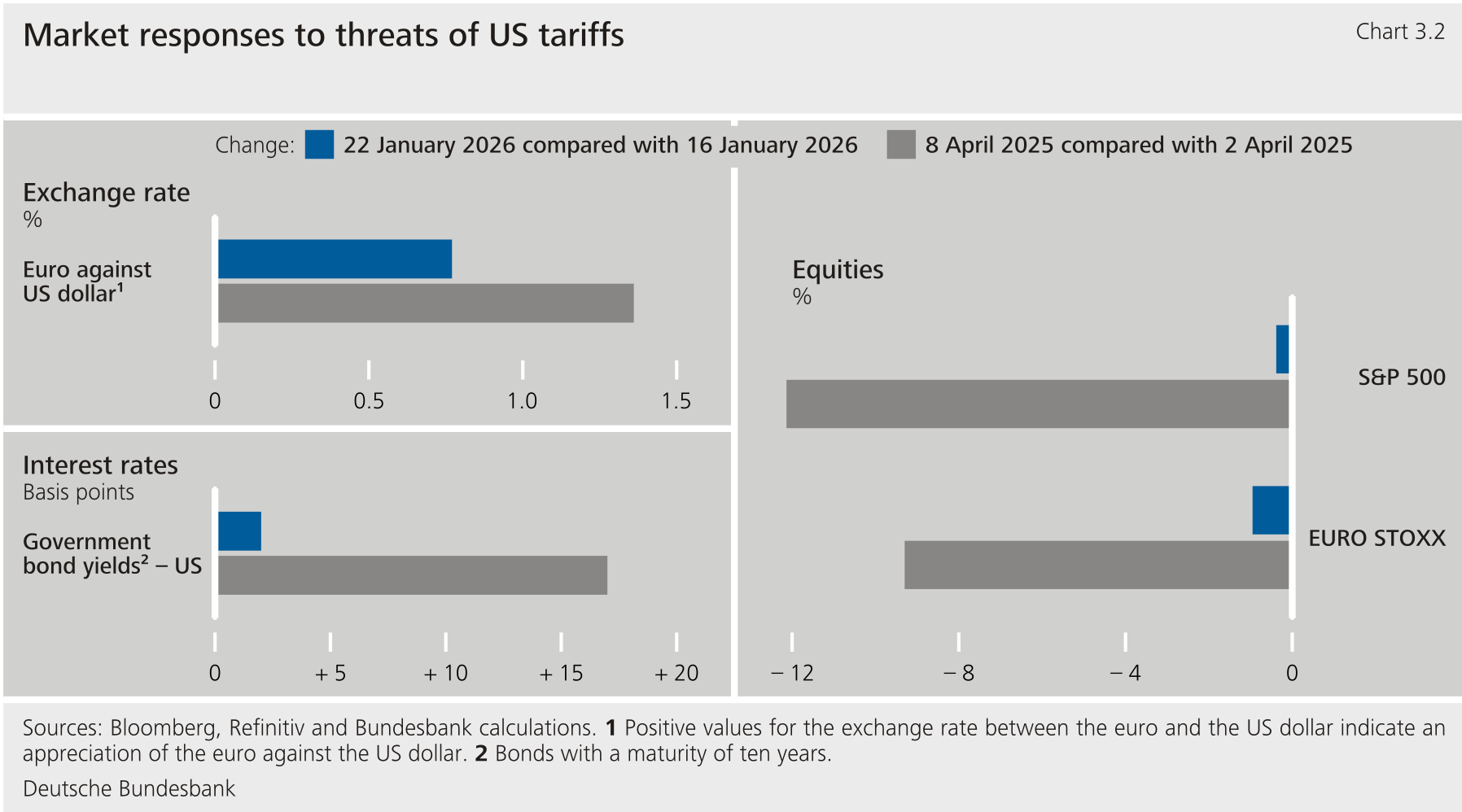
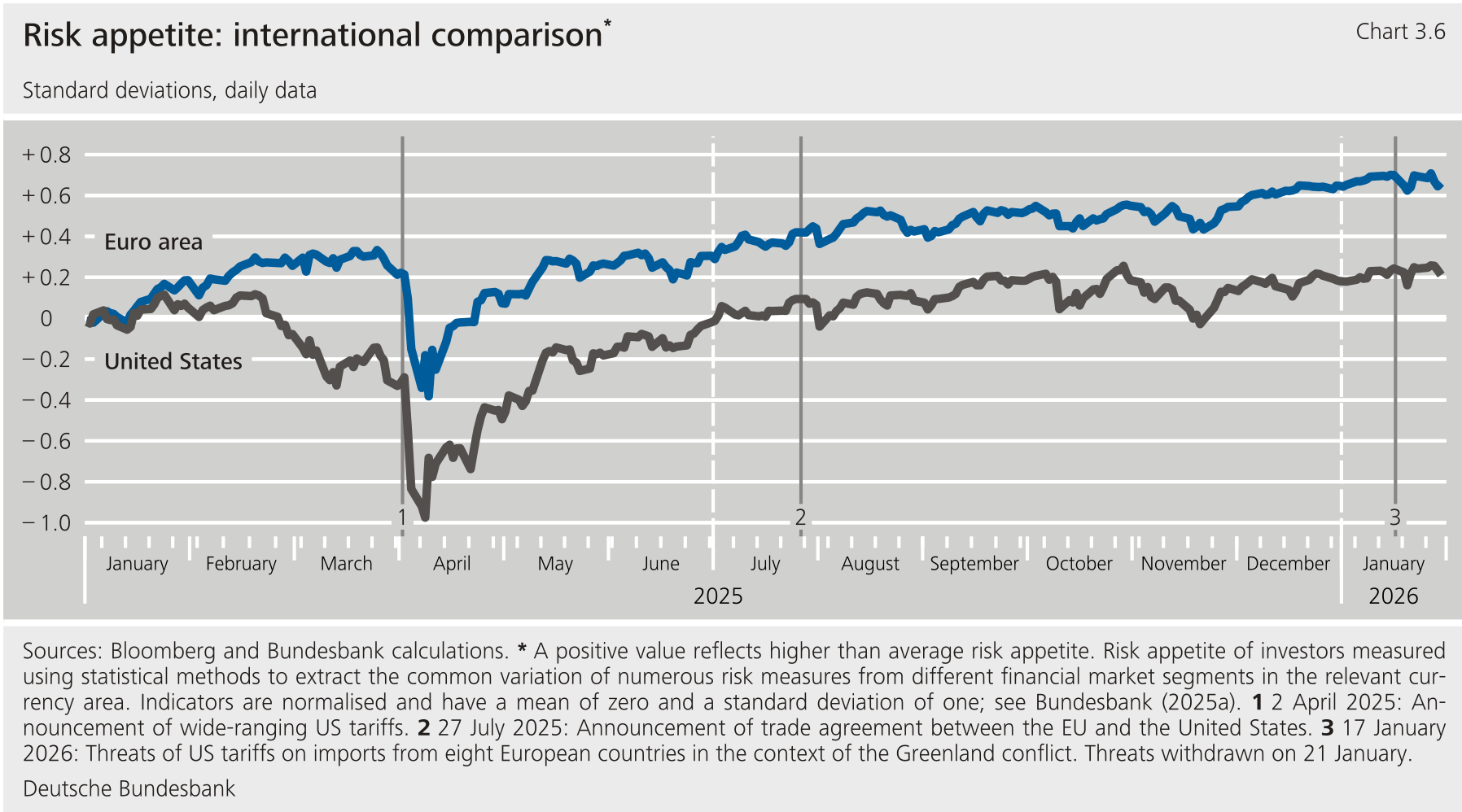
In the new year, however, geopolitical risks then came to the fore. Uncertainty arose in January about possible new US tariffs against European countries due to the US claim to Greenland. This led to market participants perceiving greater risks to growth, particularly in the United States, which in turn weighed on confidence in the US dollar. At the same time, the US dollar depreciated, the yields on US Treasuries rose and equity prices fell worldwide – an interplay of asset price changes that was recently also referred to as “debasement trade”. The response pattern corresponded to the market responses following the extensive global tariff announcements by the US administration at the beginning of April 2025, albeit to a muted extent. The price of gold also rose significantly. Given that the Greenland conflict ultimately did not escalate and the United States withdrew its tariff threat, the equity markets subsequently recovered, although geopolitical uncertainty still remained high, also in view of a potential conflict between Iran and United States. This increased demand for comparatively safe investments in particular towards the end of the reporting period and primarily weighed on ten-year US Treasuries yields. The euro recorded a slight appreciation on balance against the US dollar.
2 Exchange rates
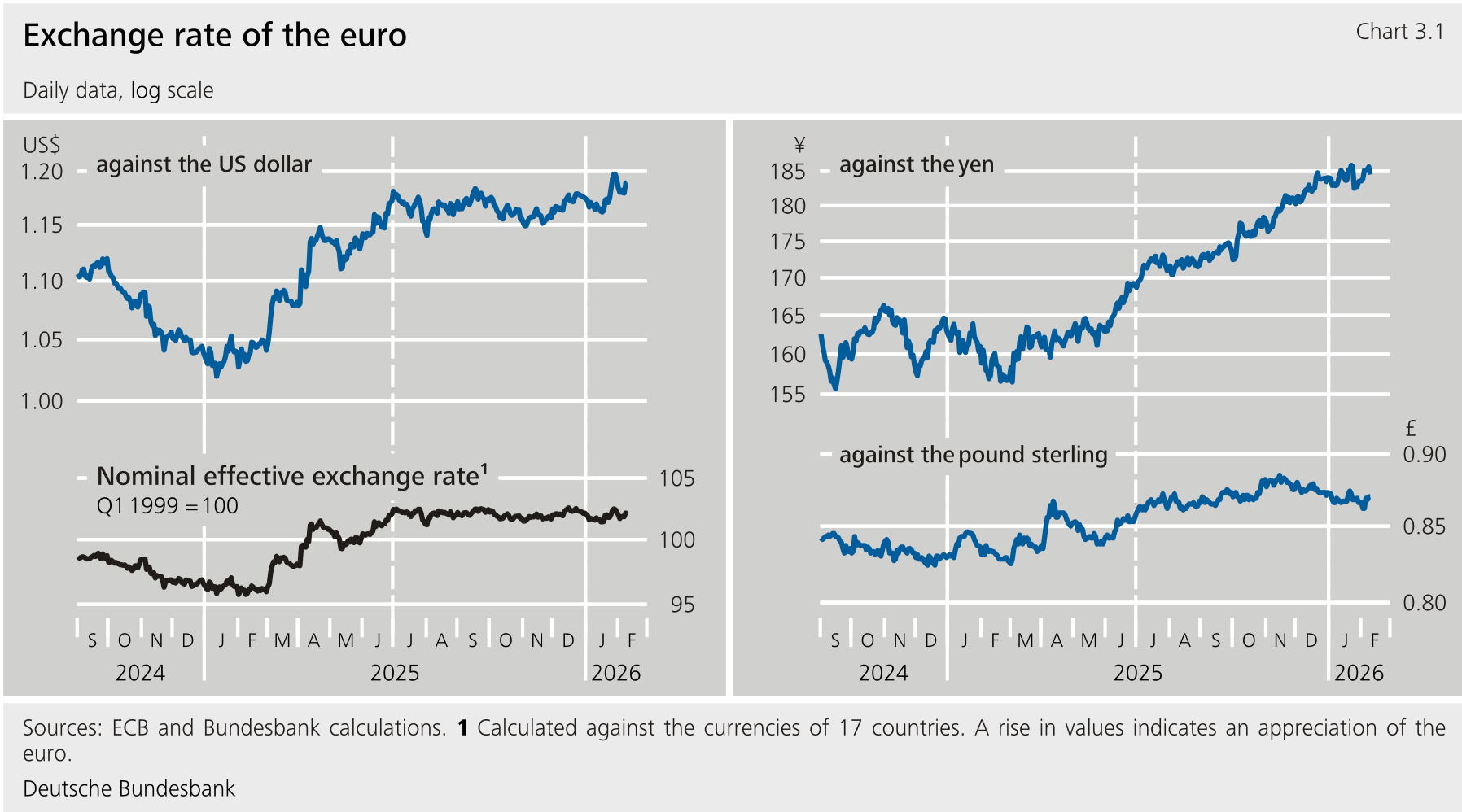
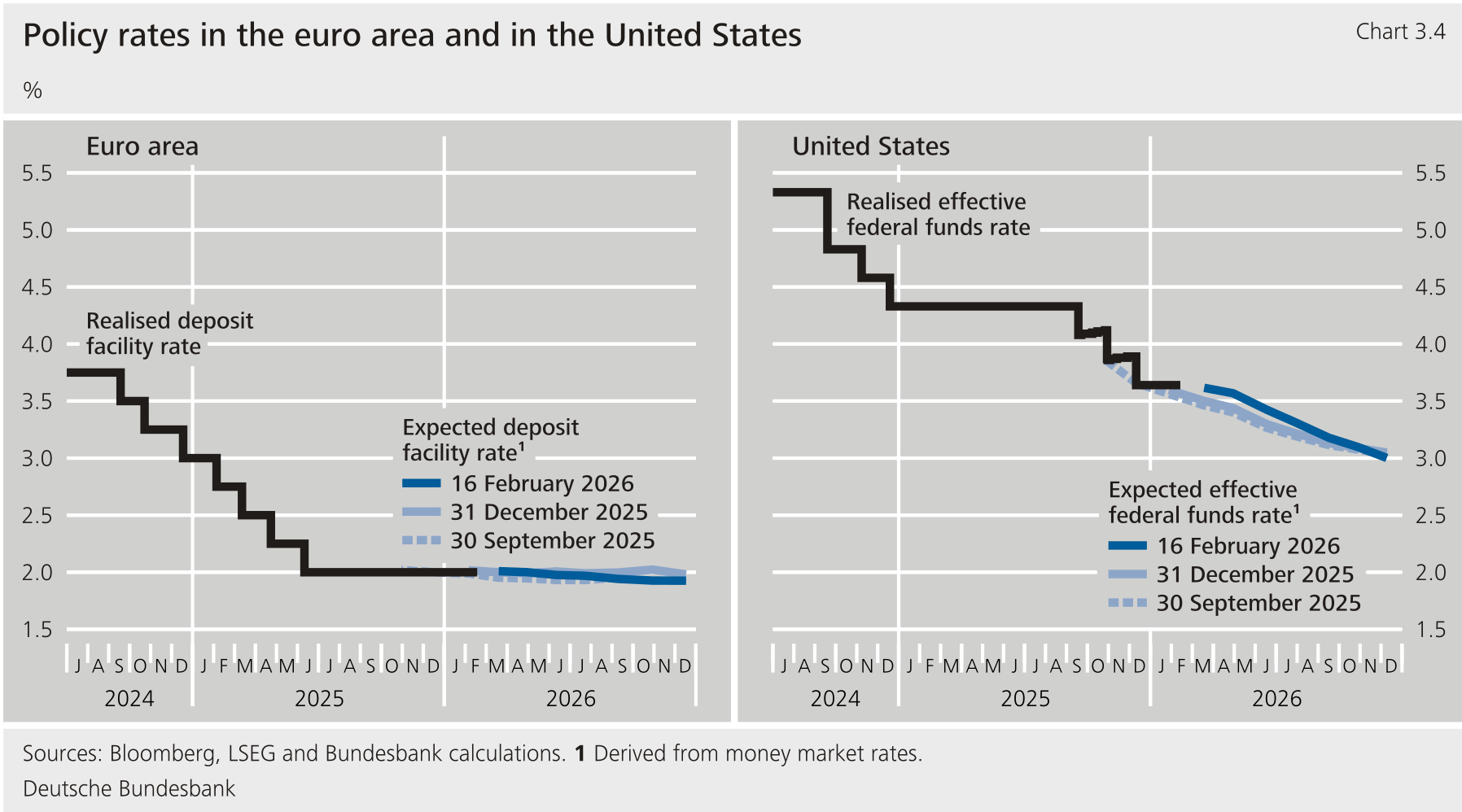
The euro-US dollar exchange rate was particularly influenced by US macroeconomic data in the final quarter of 2025 and into January 2026. The changing assessments of market participantsabout the speed and scope of the interest rate cuts to be expected from the Fed played an important role here. The euro gained value, for instance, when the President of the New York Fed pointed to an initial slowdown of the US labour market that would provide scope for interest rate cuts. The Fed’s rate cut in December also strengthened the euro, especially as the communication accompanying it was largely interpreted as accommodative. By contrast, surprisingly robust US economic data, including a US growth rate significantly above expectations in the third quarter of 2025 and favourable consumer confidence indicators, caused the euro to depreciate. These effects partially cancelled each other out overall so that on balance the euro only slightly lost ground against the US dollar by mid-January. Increased uncertainty in the foreign exchange markets was caused in the fourth quarter of 2025 by the US government shutdown, owing to which the publication of important economic data was delayed.
The US dollar at times came under significant downward pressure from mid-January due to losses of confidence in US policy, meaning that the euro overall slightly gained in value against the US currency from the start of the fourth quarter of 2025. News that Fed Chair Jerome Powell had been served a subpoena by the US Department of Justice only put the US dollar under slight pressure. Observers considered the subpoena by the Department of Justice to be a politically motivated attempt to undermine the independence of the Fed. This could have resulted in considerable downward pressure on the US dollar. However, the market movement remained comparatively limited due to parallel political events, such as the pending “Trump vs. Cook” hearing before the Supreme Court of the United States concerning the legal limits of the US President’s dismissal powers over members of the Open Market Committee, as well as public declarations by influential central bank representatives and economists clearly upholding the benefits of an independent central bank. However, the US dollar considerably lost value against the euro and other currencies when US President Trump asserted the United States' claim to Greenland. He also threatened allied European countries with an additional hike in import tariffs if they continued to reject his demands. The associated economic risks, primarily for the United States, led to increased volatility in the foreign exchange markets and at times weighed on trust in the US dollar, which lost value together with equities and US bonds. The downward pressure on the US dollar increased further after it became known that the US Department of Treasury had initiated market surveys about the exchange rate of the US dollar to the Japanese yen (see the information below about the exchange rate development of the yen). When US President Trump replied to the question of how he viewed the weaker US dollar by saying it was “doing great”, the US dollar temporarily fell to its lowest level in four and a half years. It only recovered again after the US President suggested nominating Kevin Warsh as Jerome Powell’s successor as Chair of the Fed. The euro was trading at around US$1.19 at the end of the reporting period, 1.0 % higher than at the end of September 2025.
Market responses to threats of Us tariffs
The euro appreciated against the yen again and temporarily reached new historic peaks. The comprehensive fiscal package promised by Prime Minister Sanae Takaichi in November fuelled existing concerns about the sustainability of Japan’s government debt and accordingly weighed on the yen. The interest rate hike by the Bank of Japan in December also failed to reduce the pressure on the Japanese currency in view of the ongoing interest rate differentials. Speculation about early elections that was confirmed in mid-January increased the downward pressure on the yen due to fears among market participants that the new government would ease budgetary discipline. This was attributable, amongst other things, to proposals by the government to respond to the weak growth with an economic stimulus package and tax relief. In addition, data revealing a surprisingly sharp fall in inflation in Japan were published. As a result, the euro appreciated further against the yen and reached a new all-time high of ¥186. The US dollar also gained value against the yen and traded only marginally below the level at which the Bank of Japan had intervened in July 2024 to contain the weakness of the yen on the foreign exchange market. Shortly afterwards the mood turned round in favour of the yen when media reports emerged according to which the US Department of Treasury had initiated rate checks for the exchange rate of the US dollar against the yen. The expectation accordingly arose in the foreign exchange market that a coordinated intervention in favour of the yen might potentially be imminent. The Fed, the Bank of Japan and other central banks last intervened in a coordinated manner in 2011 when an appreciation of the yen shortly after the Fukushima disaster placed an additional burden on the Japanese economy. A coordinated intervention with the aim of weakening the US dollar could be perceived as a departure from the exchange rate policy pursued by consensus by the key central banks in recent years and thus serve to unsettle the markets. The euro was last trading at around ¥182 and has therefore gained 4.6 % in value since the end of September 2025.
The euro depreciated slightly against the pound sterling in the reporting period. The pound sterling was supported due to concerns in the market of a sharp rise in new borrowing in the United Kingdom receding. Above all, the UK budget presented in November proved less expansive than previously feared. Monetary policy factors provided additional support for the UK currency. Although the Bank of England cut its key interest rate in December as expected, the decision proved surprisingly close. As with the previous interest rate cut in August, four out of the nine members of the Monetary Policy Committee were in favour of leaving the key interest rate unchanged. On balance, the euro has depreciated by 0.2 % against the pound sterling since the end of September and was last trading at £0.87.
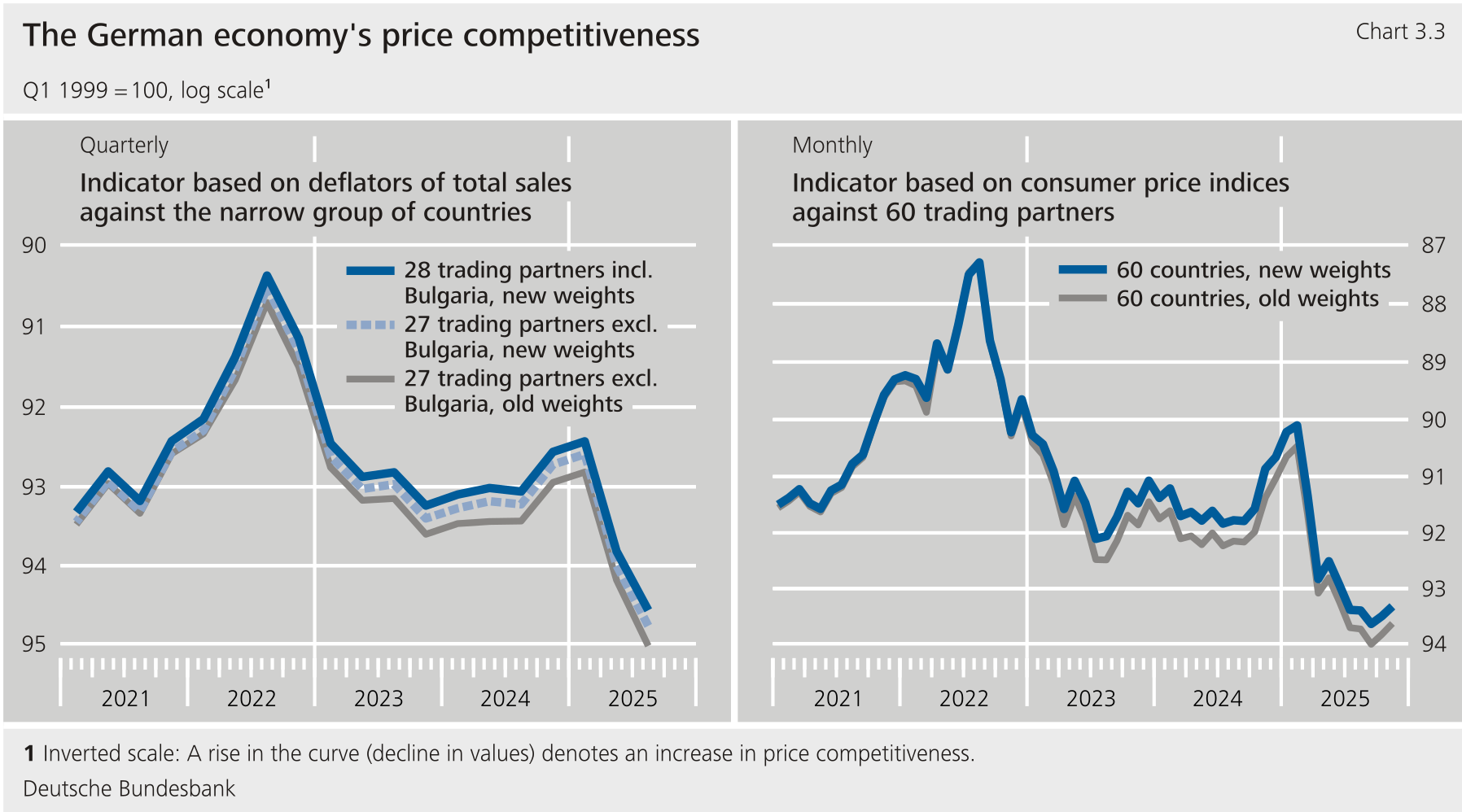
On a weighted average against major trading partners, the effective exchange rate of the euro lost value on balance in the reporting period. The aforementioned gains in value against the US dollar and the yen were offset by exchange rate losses against currencies including the renminbi, the Swiss franc, the Swedish krona and the pound sterling. On a weighted average against major trading partners, the euro depreciated on balance by 0.5 %. Based on the productivity approach and against a broad group of countries, the price competitiveness of the euro area is currently deemed neutral. This also applies to the price competitiveness of the German economy. The weights for the price competitiveness indicators were recalculated at regular intervals based on up-to-date trade data. The fact that Bulgaria has no longer been a trading partner but itself a member of the euro area since the start of the year was also taken into account. The following supplementary information describes the impact of the recalculation of the foreign trade weights on the price competitiveness indicators of the German economy.
label.digression
Recalculated weights for indicators of the German economy’s price competitiveness
The trade weights for the indicators of price competitiveness are adjusted on a regular basis using current foreign trade data. The Bundesbank regularly calculates and publishes indicators of the German economy’s price competitiveness that depict relative price and cost developments in Germany against the weighted average of key trading partners. In terms of both their design and the calculation procedure used, the indicators are in line with the real effective euro exchange rates published by the European Central Bank. Individual partner countries are factored into the calculation with trade weights that are intended to represent the intensity of their trade links with Germany. 1
The weights are adjusted every three years on the basis of current trade data in order to take account of the latest developments in foreign trade. This was the case for the most recent recalculation as well. Prior to this recalculation, the weights for all indicator series from 2019 onwards were based on trade data for the years 2019 to 2021. From 2022, however, the recalculated indicators use weights derived from trade links prevailing between 2022 and 2024.
Bulgaria’s accession to the euro area has a small impact overall. Table 3.1 shows the recalculated weights that are used to calculate the indicator of the German economy’s price competitiveness against a broad group of 60 trading partners as of 2022. The table also shows the weights from previous calculation periods that have been revised as part of the recalculation based on more up-to-date data. Using appropriate standardisation, the weights for the indicators against the narrow group of 28 countries and the extended group of 37 countries can be calculated from those for the broad group of countries. With its accession to the euro area on 1 January 2026, Bulgaria became part of the narrow group of countries, which has now grown from 27 to 28 countries. As a result, there has been a change in the indicators of Germany’s price competitiveness that are calculated against this narrow group of countries. However, due to Bulgaria’s low foreign trade weight, the impact on the corresponding indicators is small overall. Bulgaria’s accession to the euro area has had no impact on the foreign trade weights of the broad and extended groups of countries.
Within the narrow group of countries, the United States’ significance for Germany’s foreign trade increased the most during the reference period (2022 to 2024), while the significance of the United Kingdom, Japan, and France decreased the most. Compared with the previous reference period (2019 to 2021), the trade weight of the United States increased the most overall in the new reference period (2022 to 2024). It now stands at almost 10 %. This reference period lies prior to the second presidency of Donald Trump and thus before the start of the United States’ aggressive and erratic tariff policy. Within the narrow group of countries, the weights of the Netherlands and Ireland have also increased noticeably. The Netherlands thus continues to have the highest trade weight for Germany out of all the euro area countries, ranking third overall behind China and the United States. The high trade weight of the Netherlands is also related to the role of the Port of Rotterdam. As the central logistics hub in Europe, a considerable proportion of Germany’s imports from and exports to the rest of the world are handled there. Consequently, Germany’s trade links with the Netherlands appear larger in the statistics relative to the actual volume of trade between the two countries excluding merchanting. Ireland’s growing importance for German foreign trade is attributable primarily to its role as a European location for multinational corporations, intra-group supply flows, charges for the use of intellectual property, and trade policy adjustments resulting from the United Kingdom’s withdrawal from the European Union. Within the monetary union, France’s significance for German foreign trade declined the most. Among the non-euro area trading partners in the narrow group of countries, particularly Japan and, to a greater extent, the United Kingdom saw their weights go down. The United Kingdom’s withdrawal from the European Union is likely to have continued to weigh on its foreign trade relations with Germany.
The decline in the foreign trade weights of China and Russia is consistent with increasing geopolitical fragmentation. Among Germany’s trade links outside of the narrow group of countries, China’s weight – which had grown continually and, in cumulative terms, very considerably since 1997 – fell for the first time, dropping markedly to just over 10 %. As a result, China now ranks only slightly ahead of the United States among Germany’s foreign trade weights. The largest decline amongst all of Germany’s trading partners was recorded by Russia: its share more than halved to around 0.5 % in connection with western countries decoupling their economies from Russia following its invasion of Ukraine, as well as the subsequent sanctions imposed on Russia by the EU. By contrast, the trade weights of Poland, several other central and eastern European partner countries, India, and Turkey have gained in significance.
The impact of the recalculated weights on the indicator of price competitiveness is limited overall. For instance, the recalculated indicator of price competitiveness against the broad group of 60 trading partners based on consumer prices 2 shows a decline in price competitiveness of 4½ % since December 2021; if the old weights had been used, the indicator would have shown a deterioration of almost 5 %. At last report, Germany’s price competitiveness was 2½ % more favourable than the reference value calculated based on the new weights using the productivity approach.
Bulgaria’s price competitiveness is favourable in light of the country’s past economic convergence process. The productivity approach takes account of the impact of relative productivity developments on the real exchange rate and is therefore particularly suitable for assessing the price competitiveness of a transition country like Bulgaria. The approach is based on the idea that economic convergence processes in transition countries typically entail above-average productivity growth in conjunction with higher inflation rates. While these also lead to real appreciation, they are, however, primarily a reflection of the convergence process and do not necessarily entail a deterioration in price competitiveness. When Bulgaria acceded to the euro area at the beginning of the year, its price competitiveness was 9½ % more favourable than the reference value calculated based on the new weights using the productivity approach.
Tabelle 3.1: Weighting scheme for the price competitiveness indicator of the German economy against a broad group of 60 trading partners Figures in thousandths
Group of countries / country
Up to 19971
1998 to 2000
2001 to 2003
2004 to 2006
2007 to 2009
2010 to 2012
2013 to 20015
2016 to 2018
2019 to 2021
From 20222
Narrow group of countries
797.5
789.9
766.0
726.9
694.3
660.1
650.8
645.0
632.2
634.3
Austria
51.8
48.1
47.0
46.6
45.6
44.4
43.9
43.3
41.6
40.6
Belgium
51.7
46.2
49.1
51.3
50.6
45.0
41.9
40.9
41.0
39.8
Bulgaria
1.1
1.3
1.8
2.3
2.6
2.6
2.9
3.0
3.3
3.9
Canada
7.7
8.6
8.8
8.4
7.8
8.1
7.8
7.5
7.2
7.2
Croatia
2.7
2.2
2.7
3.0
2.9
2.4
2.5
2.8
2.7
3.3
Cyprus
1.0
0.8
0.7
0.9
1.0
0.9
0.8
0.7
0.8
1.0
Denmark
17.8
15.7
16.0
15.2
15.1
13.0
13.1
12.8
12.7
13.0
Estonia
0.4
0.6
0.8
1.1
1.0
1.1
1.1
1.1
1.4
1.4
Finland
9.7
10.5
10.4
10.2
10.6
7.6
7.4
7.5
7.6
7.0
France
105.0
101.3
95.0
87.4
83.6
84.1
81.8
73.8
67.9
64.8
Greece
9.0
7.9
6.8
6.7
6.3
4.6
4.2
4.1
4.1
4.7
Ireland
10.9
15.5
16.1
15.2
14.1
12.9
13.7
16.7
22.3
24.9
Italy
84.8
78.5
74.4
69.5
64.5
58.0
52.7
52.7
51.3
51.6
Japan
49.9
47.0
40.3
36.5
32.7
31.9
26.1
25.8
23.8
19.9
Latvia
0.5
0.7
0.8
0.9
1.0
0.9
0.9
1.0
1.1
1.2
Lithuania
0.9
1.1
1.5
1.6
1.8
1.8
1.9
2.0
2.6
3.0
Luxembourg
5.8
5.6
6.1
7.1
7.3
7.3
8.0
8.4
10.2
11.3
Malta
0.7
0.6
0.5
0.6
0.6
0.7
0.8
1.0
1.2
1.7
Netherlands
68.2
67.0
64.6
66.2
66.7
67.1
65.7
69.0
71.9
74.4
Norway
7.5
7.0
6.9
7.0
7.2
6.0
5.0
4.9
4.7
5.0
Portugal
10.5
10.2
9.4
8.0
7.5
6.7
6.7
7.1
7.0
7.6
Slovakia
4.1
5.6
7.2
8.6
9.7
10.9
12.0
12.1
12.3
12.0
Slovenia
4.2
4.2
4.2
4.2
4.5
4.3
4.4
4.8
5.3
6.0
Spain
43.1
43.1
41.6
41.2
39.5
34.1
32.6
33.7
31.3
32.9
Sweden
21.6
20.5
18.6
19.4
18.9
17.6
16.7
16.8
16.4
15.7
Switzerland
47.2
42.7
43.5
41.8
41.9
42.7
42.7
41.0
40.4
38.6
United Kingdom
81.3
82.2
78.2
71.5
62.7
57.8
60.2
57.2
49.5
44.3
United States
98.4
115.2
113.0
94.5
86.6
85.6
93.3
93.3
90.6
97.5
Countries additionally included in the extended group
105.3
118.1
140.5
171.0
196.1
222.1
232.9
243.4
260.6
258.7
Australia
4.3
4.0
4.1
4.1
4.4
5.1
4.6
4.4
4.1
4.2
China
21.4
25.9
37.0
53.4
69.9
91.7
97.6
98.8
109.4
104.1
Czech Republic
14.4
18.3
22.2
24.6
27.6
29.0
29.6
32.2
32.7
33.9
Hong Kong SAR
12.9
12.0
12.1
12.6
11.5
11.6
11.2
10.8
10.0
8.9
Hungary
9.1
14.4
16.5
17.8
17.3
16.3
17.8
18.6
19.3
18.8
Korea, Republic of
13.9
11.6
12.8
17.0
16.3
16.5
16.2
16.2
16.1
15.7
Poland
16.6
19.7
22.3
27.4
32.9
34.4
37.1
41.3
47.1
50.2
Romania
3.2
3.6
4.6
6.3
8.1
8.7
10.2
12.4
13.0
13.2
Singapore
9.5
8.6
8.9
7.8
8.1
8.8
8.6
8.7
8.9
9.7
Countries additionally included in the broad group
97.2
92.0
93.5
102.1
109.6
117.8
116.3
111.6
107.2
107.0
Algeria
0.5
0.4
0.5
0.6
0.7
0.6
0.7
0.7
0.5
0.5
Argentina
2.0
1.8
1.2
1.1
1.5
2.1
1.8
1.6
1.2
1.2
Brazil
7.1
6.7
5.7
6.5
7.8
8.5
7.1
5.9
5.2
5.5
Chile
1.4
1.2
1.1
1.7
1.9
2.1
1.8
1.5
1.4
1.5
Colombia
1.0
0.7
0.7
0.7
0.8
0.9
1.0
0.9
0.8
0.8
Iceland
0.4
0.5
0.6
0.7
0.6
0.5
0.3
0.4
0.4
0.4
India
6.3
5.4
5.9
7.7
10.3
12.1
12.2
12.8
13.3
15.3
Indonesia
5.4
3.7
3.3
3.0
2.9
3.5
3.4
3.3
2.9
3.1
Israel
4.0
4.1
3.6
3.0
3.0
3.2
3.2
3.4
3.4
3.4
Malaysia
6.2
5.5
5.6
5.2
5.3
5.8
6.0
6.1
5.9
6.0
Mexico
4.6
7.1
7.5
6.9
7.4
7.9
8.6
9.5
9.4
10.0
Morocco
1.3
1.4
1.3
1.2
1.3
1.3
1.4
1.7
1.6
2.2
New Zealand
0.8
0.7
0.8
0.9
0.8
0.9
1.0
1.0
0.8
0.7
Peru
0.5
0.4
0.3
0.4
0.6
0.7
0.7
0.6
0.6
0.6
Philippines
2.5
2.9
3.0
2.5
2.1
2.0
2.5
2.5
2.5
2.2
Russian Federation
11.6
9.1
10.8
14.1
17.1
17.7
15.2
12.0
11.7
5.1
Saudi Arabia
1.9
1.8
2.2
2.7
3.1
3.4
3.9
3.0
2.9
3.3
South Africa
5.4
5.1
5.4
6.1
5.8
5.9
5.2
5.3
5.0
4.7
Taiwan
10.7
11.4
10.2
9.2
7.7
8.3
8.1
8.6
9.3
9.8
Thailand
6.4
4.8
4.9
4.8
5.3
5.8
6.1
6.2
5.6
5.6
Turkey
13.3
13.5
14.0
16.1
15.6
16.4
17.8
16.4
15.2
17.3
Ukraine
1.9
1.7
2.2
3.0
3.4
3.1
2.4
2.2
2.5
2.0
United Arab Emirates
2.0
2.1
2.7
4.0
4.6
5.1
5.9
6.0
5.1
5.8
Total
1,000.0
1,000.0
1,000.0
1,000.0
1,000.0
1,000.0
1,000.0
1,000.0
1,000.0
1,000.0
1 Basis 1995 to 1997. 2 Basis 2022 to 2024.
3 Securities markets
3.1 Bond market
US government bond yields declined slightly on balance. Market participants were only able to make relatively unprecise assessments of the US economy up until November as an unusually long government shutdown prevented the publication of a considerable amount of macroeconomic data. Subsequently published data pointed from the market’s perspective to an overall stable US labour market and a robust US economy, which supported the yields on ten-year US Treasuries. Against the backdrop of decreasing US inflation expectations, the Fed cut its key interest rate by 25 basis points in October and December, respectively. Despite the attacks on the Fed’s independence, ten-year US yields initially only experienced a slight and temporary decline. The outlined political factors curbing the market response contributed decisively to this. Towards the end of the reporting period, however, US government bond yields came under stronger pressure as market participants shifted their funds to comparatively safer investments in view of the geopolitical uncertainty regarding Iran.
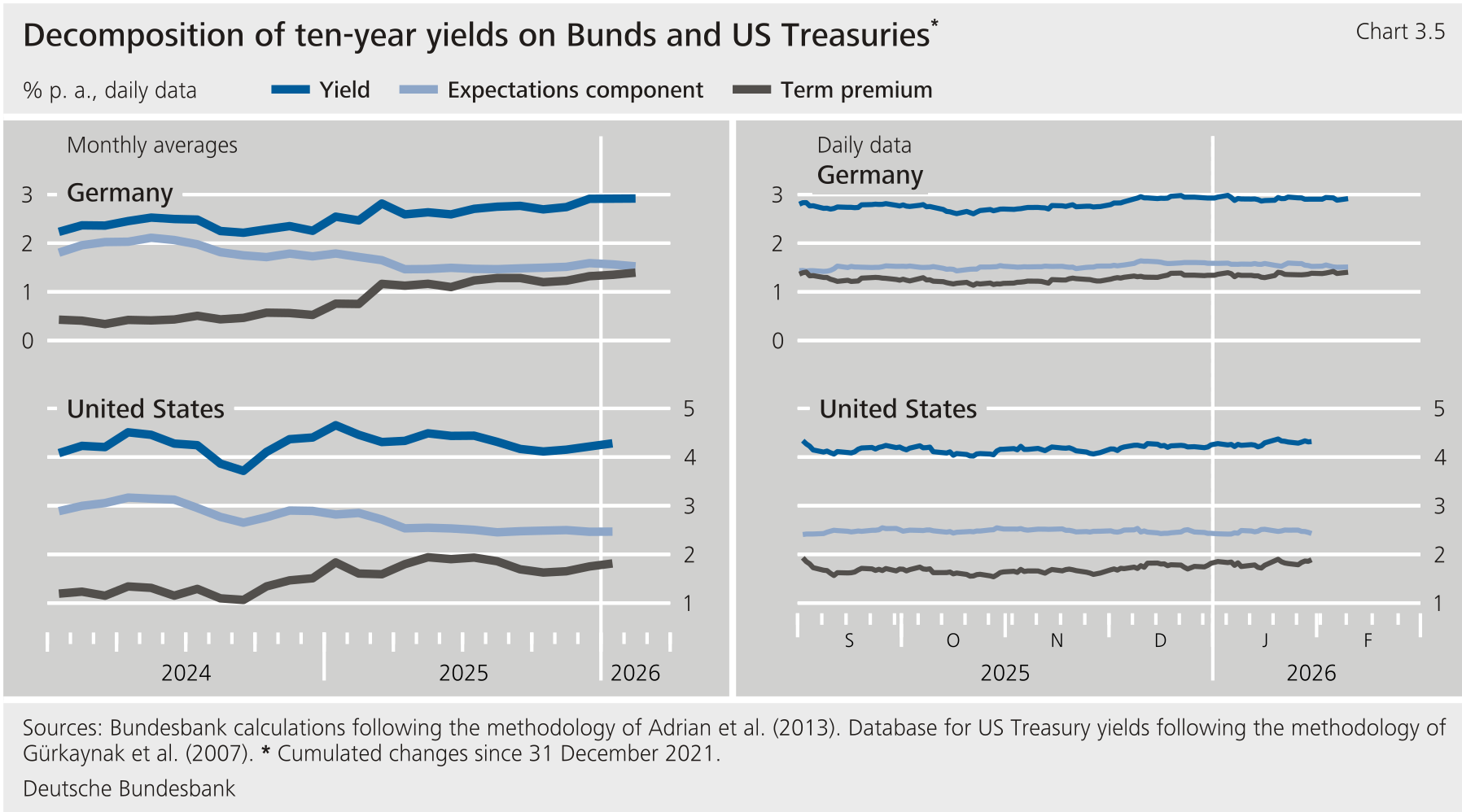
Yields on ten-year Bunds rose slightly on the back of more favourable economic data from both sides of the Atlantic. The initial rise in US yields, supported by the more optimistic US economic picture, partly spilled over to Bund yields through international interest rate linkages. An additional boost came from market participants’ noticeably more optimistic assessment of the economic outlook for the euro area as well. Compared with the growth outlook, monetary policy in the euro area only had a small impact on long-term Bund yields. This reflects the fact that, for now, market participants expect key interest rates to remain constant in view of expected inflation rates in the medium term at the level of the stability objective and firmly anchored long-term inflation expectations. A model-based decomposition of Bund yields into an expectations component and a term premium also shows that the slight yield rise was exclusively attributable to the maturity premium, while expected short-term interest rates hardly changed (see Chart 3.5). 1 This is in line with higher term premia on long-term US Treasuries. By contrast, Bund yields fell slightly in the reporting period during phases of increased uncertainty when market participants sought investments in a “safe haven”. Examples of these include the fears arising at the end of 2025 of an “AI bubble” and the US tariff threat to European countries in connection with the US claim to Greenland asserted by US President Trump. Overall, Bund yields have risen slightly to 2.8 % since the end of September.
GDP-weighted yield spreads of ten-year euro area government bonds over Bunds with the same maturity narrowed significantly. The compressed yield spreads are in line with the overall growth in the investors' risk appetite. The yield spreads on French government bonds, which had widened visibly in the second quarter, also contracted considerably in this environment. Concerns regarding fiscal difficulties receded into the background here. For example, the fact that the parliament was unable in December 2025 to pass a draft budget for 2026 was not visibly reflected in the yield spreads. It instead initially adopted an interim budget before the budget was passed in the new year without an act of parliament, thanks to confidence votes won by the government.
The long-term yields on Japanese government bonds rose significantly, while the yields on UK bonds fell. The Bank of Japan continued its monetary policy normalisation and raised its key interest rate to 0.75 % in December 2025. It also signalled its intention to pursue a cautious, data-dependent approach. The fact that the ten-year yields on Japanese government bonds continued their upward trend and even reached a long-term high, largely reflected concerns about increasing government debt and the associated debt sustainability. These expectations increased visibly after the Japanese Prime Minister had announced early elections, from which the government ultimately emerged stronger (see the section entitled "Exchange rates"). As a result, ten-year yields surged unusually sharply by 57 basis points to 2.2 %, their highest level in 27 years. By contrast, the ten-year yields of UK government bonds contracted from a high level by 30 basis points to 4.5 %. As well as subdued economic signals, announcements by the government of its intention to pursue a stronger fiscal consolidation path is likely to have contributed to this. Furthermore, the Bank of England cut its key interest rate by 25 basis points in December as largely expected by market participants.
The price of gold has risen to new record levels since the end of September, bolstered by geopolitical risks and possible doubts about the monetary policy and institutional stability of the United States. The aforementioned attacks on the Fed’s independence made a considerable contribution to this. The damage to confidence resulting from this particularly supported demand for gold but barely influenced the price of US Treasuries. In addition, the price of gold was boosted by the uncertainty concerning who would succeed of Jerome Powell as Fed Chair. This persisted into the current year and was at times rated as an institutional risk. Market observers are also linking the gold price rally with concerns about high public debt in the United States, the weakness of the US dollar and geopolitical risks. One example of the latter is the dispute about Greenland triggered by the US claim that cast transatlantic relations in a particularly fragile light. This fuelled fears that these risks would not subside again swiftly, but rather potentially reflect a structural change in the transatlantic relationship and would therefore weigh on the markets permanently. The announcement by US President Trump of his intention to nominate Kevin Warsh as new Fed Chair triggered a downward correction of the price of gold towards the end of the reporting period. According to market observers, this nomination curbed the prospect of a relaxed monetary policy and accordingly put the gold price, which had previously risen very sharply, under pressure.
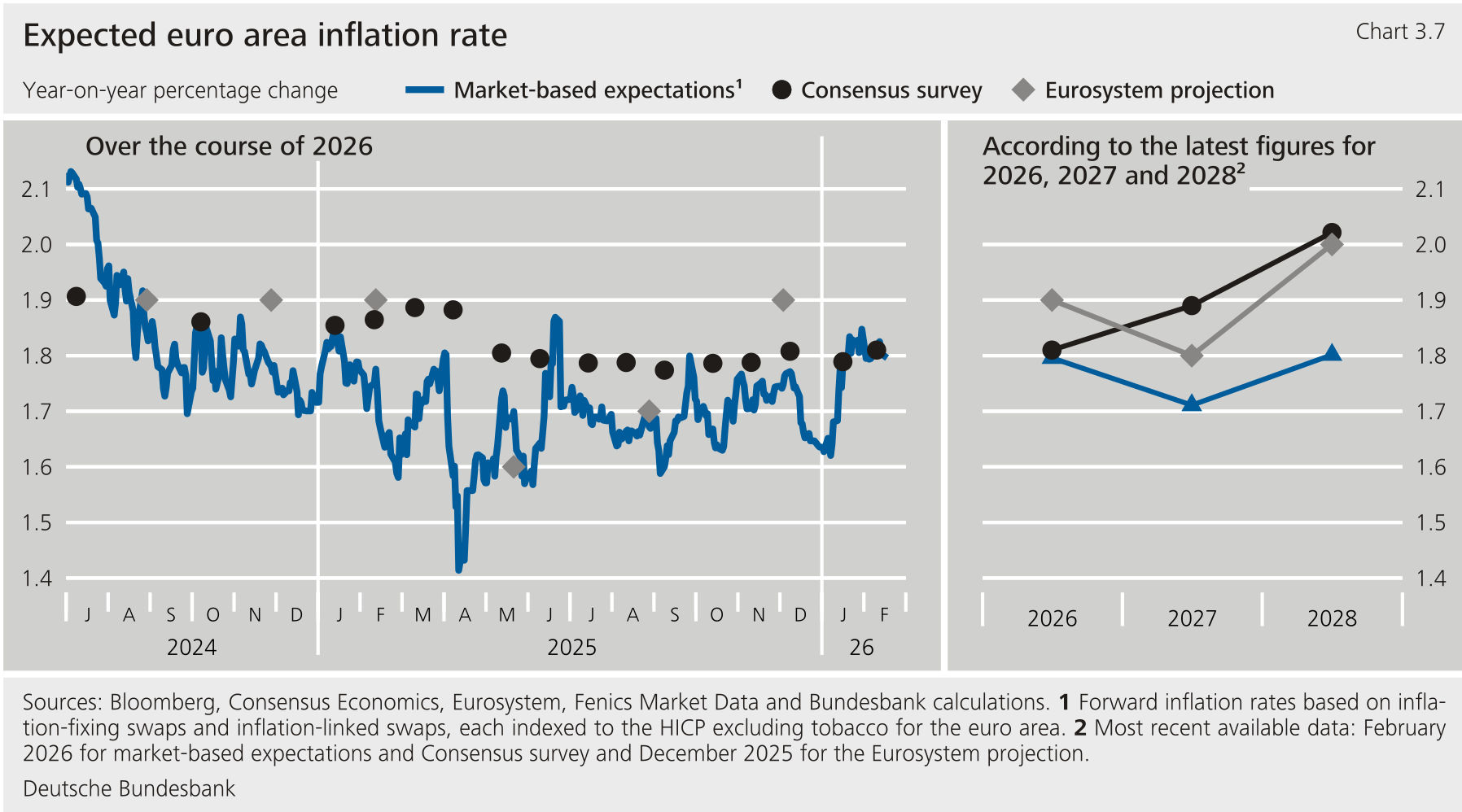
Market-based inflation expectations for 2026 derived from euro area inflation swaps rose slightly. The inflation expectations for 2026 rose particularly at the start of the year, meaning that the market expected inflation of 1.8 % at the end of the reporting period. The increase in inflation expectations for the current year reflected the renewed rise in crude oil prices since the start of the year that were influenced by the geopolitical tensions and the intervention of the United States in Venezuela. By contrast, the expectations for the years 2027 and 2028 decreased to approximately 1.7 % and 1.8 %, respectively, but thus remained close to the inflation target of 2 %. The experts participating in the Survey of Professional Forecasters conducted by the ECB expected inflation at the level of the inflation target and generally considered the risks to be tilted slightly to the upside in view of geopolitical tensions.
Market-based indicators and surveys confirm long-term inflation expectations. The five-year forward inflation rate five years ahead rose slightly compared with the end of the third quarter and thus stands at 2.1 %. Longer-term survey-based inflation expectations calculated on a quarterly basis by Consensus Economics remained close to the 2 % inflation target in January. Both indicators show that the anchoring of inflation expectations remained unchanged in the reporting period.
Yields on European corporate bonds and the yield spreads over Bunds changed only marginally. Yields on seven to ten-year BBB-rated corporate bonds remained virtually unchanged for both financial and non-financial corporations. As the yields on matched-maturity Bunds only changed slightly, the yield spreads likewise remained almost constant. The yield spreads of high-yield bonds also only changed marginally. The temporary upturn in geopolitical and trade policy uncertainty at the start of 2026 due to the Greenland conflict only temporarily widened yield spreads. Overall, the yield spreads of European corporations therefore remained close to long-term lows regardless of their credit quality.
3.2 Equity market
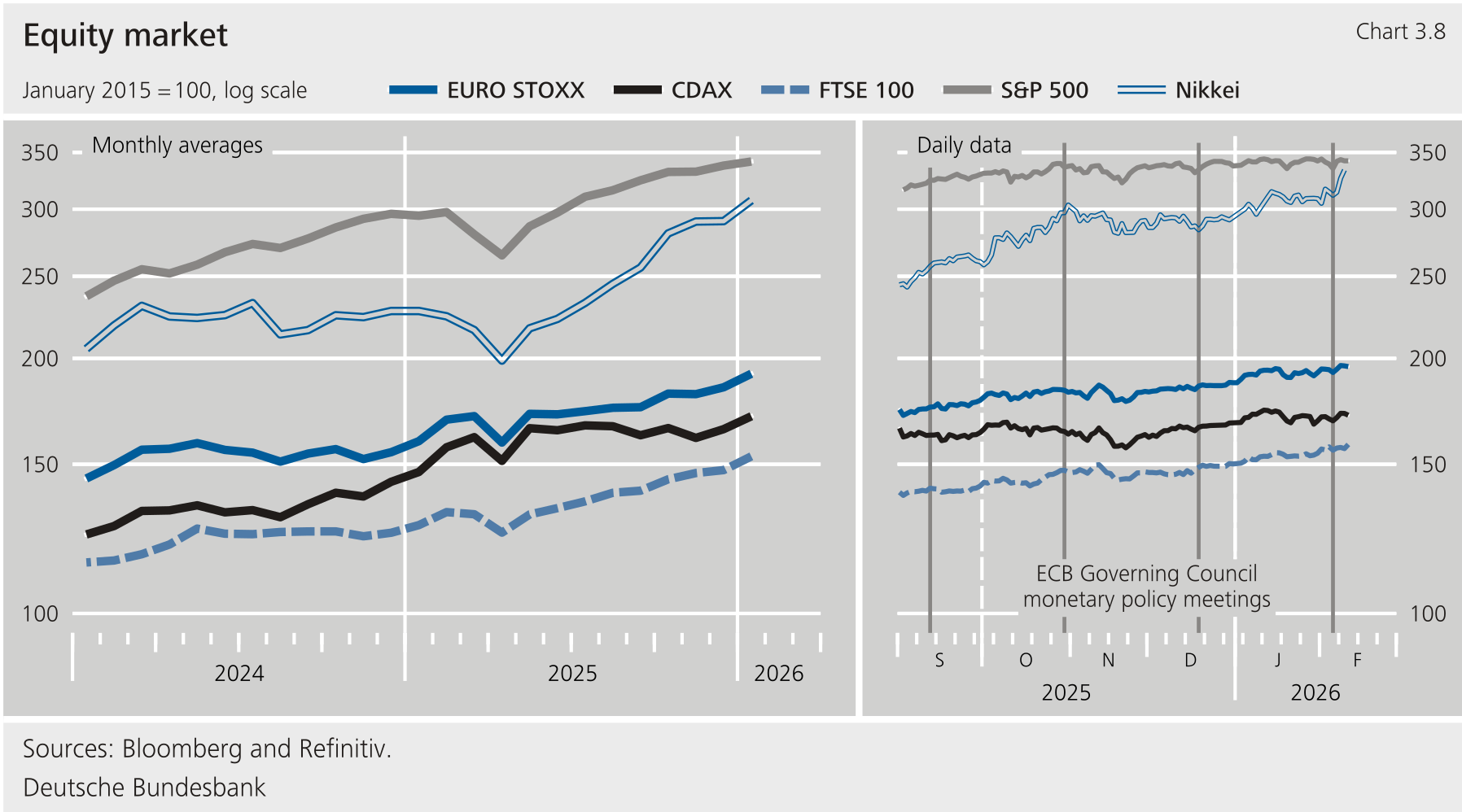
Prices in the international equity markets rose on the back of the favourable economic signals and increased risk appetite and temporarily reached new peaks. Repeated uncertainties simultaneously arose in the reporting period that weighed on prices at times. Quarterly figures of some AI companies perceived to be weak fuelled fears of an “AI bubble” at the end of 2025. This put the equity markets under pressure not only in the United States, but also in Europe and was reflected in a significant rise in uncertainty surrounding further price developments as measured by implied volatility. However, surprisingly high profits of one US technology company specialising in graphics processing units and computing platforms for artificial intelligence and whose profits are frequently taken as an indicator for the AI sector as a whole then caused concerns about a general overvaluation of the AI sector to recede into the background and accordingly boosted risk appetite. Together with favourable economic signals reflected in higher earnings expectations, the EURO STOXX reached a new all-time high at the start of the year. In January, complex uncertainties triggered by the US claim to Greenland once again weighed on equity prices. Investors feared a spiral of escalating political tensions and additional trade policy measures. Equity prices did not recover until the US President publicly declared in Davos that he would not be deploying any military force to acquire Greenland and would withdraw the previous threat of tariffs. Furthermore, the equity markets received an additional boost from more favourable economic data. Negatively received quarterly figures of major technology companies curbed equity prices slightly towards the end of the reporting period, with equity price losses sustained in particular by companies supplying software. This reflected expectations amongst investors that new language models of major AI providers could exacerbate competition in this sector and thereby dampen profits. On balance, however, both European and US equities recorded price gains (EURO STOXX + 8.6 % and S&P 500 + 2.2 %). Japanese equity prices rose particularly sharply (Nikkei + 26.7 %). The price increase was thus lower from the perspective of investors calculating in euro due to the yen's depreciation of around 5 %. The price gains of Japanese equities above and beyond the depreciation of the yen were particularly linked to the prospect of additional fiscal stimulus following the elections and improved price competitiveness of export-oriented enterprises. The prices of German and UK equities as measured by the CDAX and the FTSE 100 rose by 4.0 % and 12.0 %, respectively.
Euro area bank equities gained more value compared with the overall market. The equity prices of European banks have risen significantly since the end of September 2025 (12.0 %). An important reason for this was improved bank earnings expectations. In addition, some surprisingly positive quarterly results strengthened investor confidence. The equities of US banks recorded gains of 2.7 %. The equity prices of US banks benefited from the favourable quarterly figures of some major US banks. According to market observers, regulatory and political uncertainties could have weighed on prices. These include, for example, the uncertainty surrounding a proposed upper limit for credit card interest rates that, according to market observers, could make it more difficult for higher-risk borrowers to gain access to credit and could curb consumer spending.
The valuation levels of European and US equities are above their long-term averages. The equity risk premia for European equities fell, while the implied cost of equity, i.e. the sum of risk-free interest rates and risk premia, hardly changed. These valuation measures, calculated using a dividend discount model, take into account both short and medium-term earnings expectations and risk-free interest rates. Alongside the lower equity risk premium, the price gains of European equities were attributable to more favourable short and medium-term earnings expectations, while the rise in risk-free interest rates weighed on prices. The equity risk premia and implied cost of equity for US equities rose. A below-average performance of equities of the “Magnificent 7” companies contributed to the lower valuation. This reflected the overall increase in doubts concerning the profitability of high investments in the field of artificial intelligence during the reporting period, despite the short-lived fears of an “AI bubble” at the end of 2025 having receded again. Measured in terms of the implied cost of equity, the valuations of both European and US equities were recently above their long-term averages.
This article is based on data available up to 16 February 2026, 17:30.