The performance of German credit institutions in 2024 Monthly Report – September 2025
Published on
The performance of German credit institutions in 2024 Monthly Report – September 2025
Published on
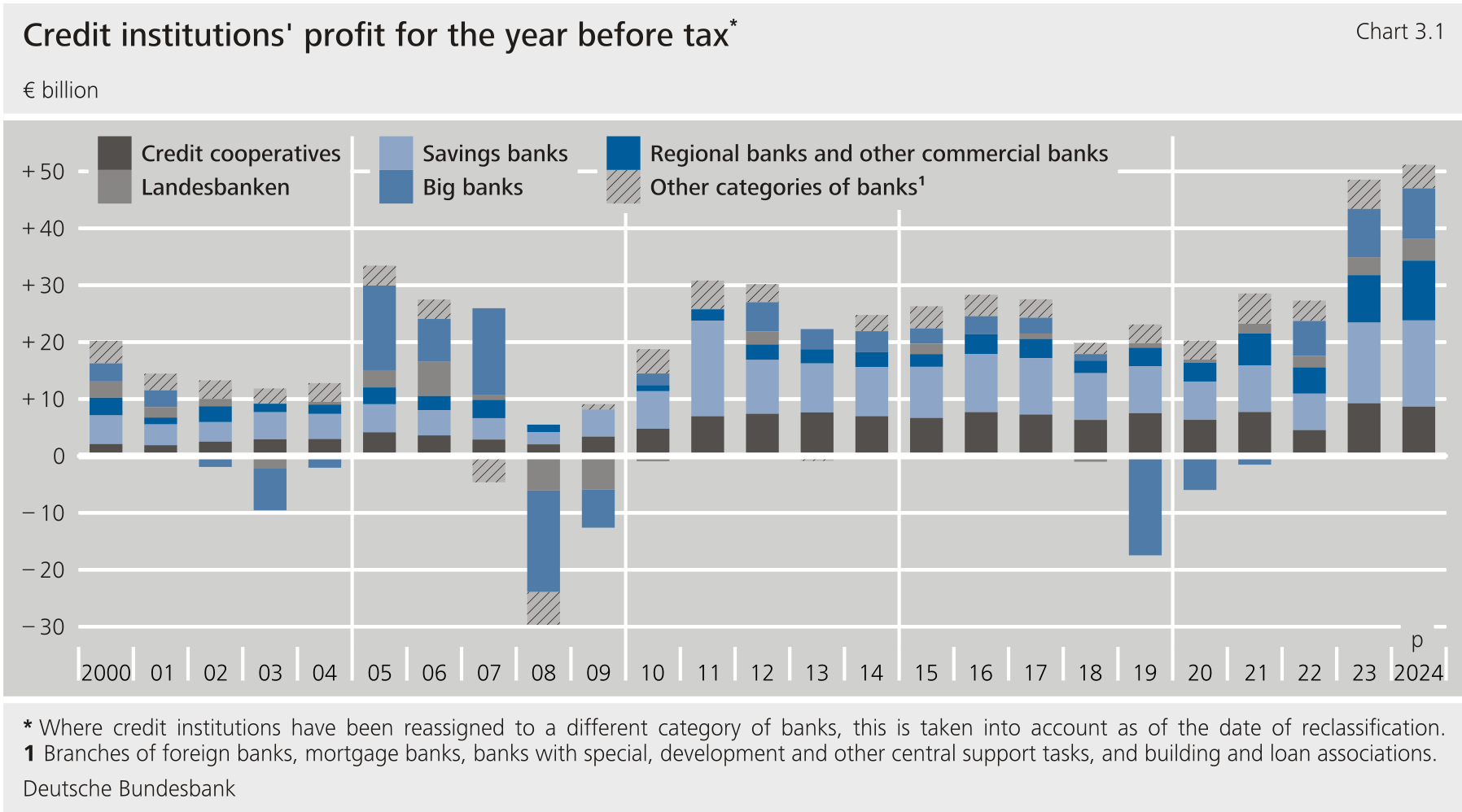
In the current reporting year, the record level of profit for the financial year before tax achieved in 2023 was exceeded. Following its exceptionally strong increase in the previous year, profit for the financial year before tax improved once more, by just over 5 % overall. At €51 billion, the profit of German credit institutions reached its highest level since the start of the reporting period for the profit and loss statistics in 1999.
Unlike in the previous year, the increase was driven not by operating business, but rather by the balance in the other and extraordinary account. Growth in this item was propelled chiefly by one-off effects in the category of big banks as well as regional and other commercial banks. Disregarding the contribution of the balance in the other and extraordinary account, aggregate profit for the financial year would have been somewhat lower than in the previous year. Overall, however, banks’ performance remained very comfortable, with profits considerably above the long-term average.
In operating business, German banks generated income slightly above the record level reached in the previous year (+0.8 %). Net interest income rose somewhat from the exceptionally high level of the previous year (+0.6 %) despite the period of interest rate cuts beginning in the middle of the year. At the same time, net commission income (+9.0 %) increased significantly. However, the deterioration in the other operating result of one institution in the category of big banks almost completely offset the rise in income in aggregate terms. As a result, the only slight overall increase in operating income was insufficient to compensate for the simultaneous rise in administrative spending (+1.4 %).
Net valuation charges rose markedly overall (+27.9 %). This was mainly due to significantly higher depreciation of and value adjustments to loans and advances, and provisions for contingent liabilities and for commitments resulting from dampened economic growth, structural adjustments in the commercial real estate market and generally heightened uncertainty due to geopolitical developments.
This year, German credit institutions' business environment remains challenging. Geopolitical risks are having a negative effect on future macroeconomic developments. The credit risk materialising as a result could weigh on the profitability of German credit institutions. The extent to which the key interest rate cuts that began in June 2024 will have an impact on net interest income as the most important source of income for German credit institutions, and thus ultimately on their performance, remains to be seen going forward.
1 Business environment and structural developments in the German banking sector
In the reporting year, German credit institutions were operating in a macroeconomic environment that continued to prove difficult. The German economy remained in a pronounced period of weakness, which has been ongoing since the start of Russia’s war of aggression against Ukraine in February 2022. 1 Since then, the effects of geopolitical conflicts, restrictive monetary policy and heightened economic policy uncertainty have weighed on macroeconomic developments. At the same time, the German economy is under great pressure to adapt due to changing structural conditions both at home and abroad.
Overall credit growth remained subdued in 2024. Persisting macroeconomic uncertainty dampened loan demand from enterprises and households. Demand increased from the second half of the year onwards as a result of lower interest rates, but remained at a low level. In addition, credit institutions tightened their credit standards in view of increased credit risk and a more cautious perception of risk. 2 By contrast, the decline in funding costs was a positive development for German credit institutions. Against a backdrop of falling inflation rates and a favourable inflation outlook, the Eurosystem loosened its monetary policy stance over the course of 2024. 3
1.1 Macroeconomic environment
The German economy contracted in the reporting year. Following the Federal Statistical Office’s latest revisions, price and calendar-adjusted gross domestic product fell by 0.5 %, having already seen a marked decline in the previous year. 4 It became increasingly apparent that this development is not only cyclical but also structural in nature.There is pressure to adapt due to, amongst other things, increasing competition in international markets, the consequences of demographic change and the transition to a carbon-neutral economy. 5
The inflation rate in Germany weakened significantly over the course of 2024. Inflation as measured by the Harmonised Index of Consumer Prices (HICP) fell from an annual average of 6 % in the previous year to 2.5 %. The disinflation process in Germany thus progressed further. In the euro area, too, inflation rates fell markedly in the reporting year. 6
In view of the improved inflation outlook, the ECB loosened its monetary policy stance. The Governing Council lowered the deposit facility rate – through which monetary policy is steered – by a total of 1 percentage point in four steps, starting in June 2024. German credit institutions’ financing costs declined due to the interest rate cuts.
Phases of high volatility in the equity markets were short-lived. In particular, the surprise announcement of new elections in France in June 2024 elicited considerable market reactions in the euro area for a short time. Notable equity price losses recorded by French companies weighed on the performance of the European equity market due to heightened political uncertainty. In addition, the US presidential election in November 2024 created additional economic and geopolitical uncertainty. 7 The anticipated economic developments connected with the change in US presidency were reflected in the international financial markets, with large price gains being recorded mainly by listed companies in the United States. Market participants assumed that these companies would benefit from the deregulation, tariff collection and tax cut measures announced by the new US administration. By contrast, lower earnings expectations and the uncertainty surrounding US tariff policy dampened equity price developments in the euro area. 8
1.2 Balance sheet and structural developments in the German banking sector
The consolidation process in the German banking sector continued in the reporting year.As in the previous years, both the number of credit institutions and the number of branches contracted further. 9 Credit cooperatives again accounted for the bulk of the decline. The fall in the number of branches was primarily attributable to a reduction in the case of big banks. However, savings banks and credit cooperatives also significantly scaled back their number of branches once again. 10
Table 3.1: Structural data on German credit institutions Year-end data
Category of banks
Number of institutions1
Number of branches1
2022
2023
2024
2022
2023
2024
All categories of banks
1,396
1,340
1,305
20,432
19,488
17,857
Commercial banks
247
242
238
4,825
4,572
3,292
Big banks
3
3
3
3,719
3,471
2,184
Regional banks and other commercial banks
142
137
133
954
941
943
Branches of foreign banks
102
102
102
152
160
165
Landesbanken
6
6
6
144
139
138
Savings banks
362
354
349
7,326
6,965
6,788
Credit cooperatives
735
696
671
6,881
6,575
6,389
Mortgage banks
8
7
7
31
31
31
Building and loan associations
18
14
13
1,205
1,186
1,202
Banks with special, development and other central support tasks2
20
21
21
20
20
17
1 Source: Bank office statistics, in Deutsche Bundesbank, Banking statistics, tables contained in the Statistical Series, IV. Structural figures, multi-office banks, p. 104. The term “credit institution” is used as in the Banking Act, resulting in divergences from data in the monthly balance sheet statistics and the statistics on the banks’ profit and loss accounts. 2 Including DZ Bank AG.
German credit institutions’ aggregate average total assets for the year declined slightly for the first time since 2018. According to the monthly balance sheet statistics, they stood at €10.6 trillion in 2024 (-0.9 % compared with 2023). They had already been growing at a much slower pace in 2023 than in the period from 2019 to 2022. The decline was particularly pronounced for Landesbanken (-4.9 %) and big banks (-4.7 %). 11 By contrast, regional and other commercial banks recorded significant balance sheet growth (+6.7 %). The increase recorded by credit cooperatives was also noteworthy, at + 1.9 %. Savings banks’ average total assets for the year remained virtually unchanged (+0.2 %).
German banks’ deposits with the central bank fell significantly again. On an annual average of 2024, credit institutions’ interest-bearing deposits fell by 10 %, which was once again a stronger decline than in the previous year. First, banks repaid the amounts borrowed under the last outstanding targeted longer-term refinancing operations (TLTROs). Second, the reduction of monetary policy securities holdings accelerated considerably: the Eurosystem substantially scaled back reinvestments under the pandemic emergency purchase programme (PEPP) in the second half of 2024 and fully discontinued them at the end of the year. Reinvestments under the asset purchase programme (APP) had already been discontinued at the beginning of July 2023. 12
Furthermore, growth in loans declined substantially on the assets side of the German banking system’s aggregate balance sheet. According to data from the monthly balance sheet statistics, annual average growth in loans to domestic non-banks decreased to 0.8 % in the reporting year, the lowest level since 2014. In a cross-comparison of all categories of banks, above-average growth was mainly recorded by credit cooperatives (+2.2 %) and regional and other commercial banks (+2.1 %). By contrast, the loan portfolios of savings banks saw continued below-average growth (+0.6 %). Furthermore, the declines recorded by big banks (-1.7 %) and Landesbanken (-1.6 %) in particular had a negative effect.
Lending to non-financial corporations, in particular, remained weak during the reporting period. For one thing, the difficult macroeconomic environment dampened loan demand. Aside from the initially still high funding costs over the course of the year, this was mainly due to the uncertain economic outlook. For another, banks in Germany tightened their credit standards for corporate lending further overall. The banks surveyed by the Bank Lending Survey put this down to a lower risk tolerance and an increase in credit risk owing to the general economic situation. 13
Loans to households recovered somewhat over the course of the year. Lending to households for house purchase, in particular, recorded a slight overall increase (+0.8 %). Owing to the lower general level of interest rates and households’ more optimistic assessments of housing market prospects, overall demand for loans to households for house purchase was stronger in 2024 than in the year before. At the same time, however, banks in Germany tightened their credit standards in this segment, too. 14 Regional banks and other commercial banks, above all, recorded particularly high credit growth in lending to households for house purchase, at 3.4 %. Credit cooperatives also recorded above-average credit growth in a cross-comparison of all categories of banks, at + 1.8 %, but this was significantly below the previous year’s figure (+3.1 %). By contrast, growth at savings banks stagnated (+0.1 %) following an increase of 1.6 % in the previous year. At big banks, lending to households for house purchase declined (-1.8 %).
On the liabilities side of the aggregated bank balance sheet, growth in deposits compared with the long-term average (3.4 %) was similarly weak to the previous year. Deposits held by domestic non-banks with German credit institutions grew by 2.3 %. 15 Sight deposits, in particular, declined significantly again (-3.0 %), albeit less than in 2023 (-4.5 %). In addition, time deposit growth almost halved (+15.2 %). Owing to the narrowed yield spreads between the individual types of deposit and changes in interest rate expectations, the reallocations from sight deposits to time deposits observed since the interest rate reversal in 2022 came to a halt over the course of 2024. 16
On an average for the year, German credit institutions’ balance sheet equity grew substantially (+4.4 %). In a cross-comparison of all categories of banks, big banks, in particular, recorded above-average increases (+7.5 %). However, the equity capital of credit cooperatives (+5.4 %), savings banks (+5.1 %) and regional and other commercial banks (+4.1 %) also rose significantly,while the increase in equity capital at Landesbanken was below average (+1.8 %).
2 Performance, profitability and cost efficiency
Overall, German credit institutions’ performance remained very comfortable in the current reporting year, with profits considerably above the long-term average. Profit for the financial year before tax 17 rose again from the exceptionally high level of the previous year. In operating business, German banks generated income slightly above the record level reached the year before. However, in contrast to the previous year, developments at the level of the individual institutions were mixed. Back then, developments had still been based on a broad improvement in the annual results across all categories of banks considered in the statistics on banks’ profit and loss accounts. 18
Supplementary information
Methodical notes
The results from the profit and loss accounts are based on the published annual reports of the individual institutions in accordance with the provisions set forth in the German Commercial Code (Handelsgesetzbuch) and the Regulation on the Accounting of Credit Institutions (Verordnung über die Rechnungslegung der Kreditinstitute). In terms of their conception, structure and definitions, they differ from the International Financial Reporting Standards (IFRS) 1 for publicly traded banking groups. This means that – from a methodological viewpoint – business performance and certain balance sheet or individual profit and loss items are not comparable across the national and international accounting frameworks. For reasons of comparability within Germany, it is advisable to consider the individual accounts when analysing financial performance. The figures for balance sheet capital (total equity), total assets and other stock variables are not obtained from the annual reports but are taken as annual average values on the basis of the monthly balance sheet statistics reported for the institution as a whole.
The reporting group for profit and loss statistics includes all banks which are monetary financial institutions (MFIs) that conform to the definition of a credit institution under the Capital Requirements Regulation (CRR) as set forth in Article 4(1) number 1 of Regulation (EU) No 575/2013 and are domiciled in Germany. Branches of foreign banks that are exempted from the provisions of Section 53 of the German Banking Act (Kreditwesengesetz), banks in liquidation and banks with a financial year of less than 12 months (truncated financial year) are not included in this performance analysis. Individual institutions are allocated to categories of banks in the same way as they are allocated according to banking statistics.
At the launch of monetary union in 1999, the reporting group relevant for calculating the money supply and for monetary analysis was uniformly defined by the European Central Bank for the euro area as a whole and designated as the MFI sector. Unlike the population of banks used for the Bundesbank’s analysis up to that point, building and loan associations are also included.
Except where another time period is explicitly mentioned, the calculations with regard to the longer-term average cover the years since the launch of monetary union, i.e. from 1999 to 2024.
2.1 Profit for the financial year before tax
The year 2024 saw profit for the financial year improve again on the previous year’s unusually strong increase of 77.8 %, growing by €2.6 billion, or 5.4 %. At€51.2 billion, annual profitability was the highest it had been in 26 years, well up on its long-term average of €20.8 billion. 19
Overall, though, it wasn’t operating activities that pushed the profit for the financial year above the very high figure for 2023. While operating income edged higher again on aggregate, coming in 0.8 % above the previous year’s high level, that slight uptick was not enough to make up for the simultaneous 1.4 % increase in administrative spending. The annual result was also squeezed by a significant 27.9 % increase on the year in net valuation charges.
Rather, profitability was driven primarily by the balance in the other and extraordinary account. Growth in this item was propelled chiefly by one-off effects in the category of big banks and the category of regional and other commercial banks. If the balance in the other and extraordinary account is disregarded, profit for the financial year would have fallen short of the previous year’s level on aggregate, though it still would have been well up on its long-term average.
Unlike in the previous year, the categories of banks under review saw mixed developments. Regional and other commercial banks in particular helped push up profit for the financial year, with an increase of almost €2.2 billion, or 26.0 %. Another important contribution was made by savings banks, which once again raised their profit for the financial year significantly year on year, adding nearly €1.0 billion (an increase of 6.8 %) to this item. Credit cooperatives, meanwhile, reported a distinct drop overall of €0.6 billion, or 6.3 %. Even so, their profit for the financial year was still well above the long-term average. Big banks saw their profitability grow by €0.4 billion, or 4.8 %, while profit for the financial year at Landesbanken improved by a significant €0.7 billion, or 20.9 %.
The increase in regional and other commercial banks’ profit for the financial year was entirely due to the balance in the other and extraordinary account. While their operating income improved again markedly in the reporting period, and there was significant growth in their trading result and net commission income, in particular, this was not enough to make up for the sharply higher administrative spending and the considerable increase in net valuation charges.
Savings banks’ profit for the financial year was mainly up significantly because net valuation charges were down. Net valuation charges declined by 21.4 % on 2023, bucking the general trend in the German banking sector. Furthermore, savings banks’ operating activities generated significant growth in net commission income as well as a slight uptick in net interest income, which more than made up for the comparatively strong rise in their administrative spending.
Credit cooperatives’ net valuation charges were up significantly. The 83.5 % increase in this item was largely to blame for the drop in their profit for the financial year. This mainly came about due to higher depreciation of and value adjustments to loans and advances, and provisions for contingent liabilities and for commitments, combined with lower income from value readjustments in the same item. Net interest income remained almost unchanged at the previous year’s high level. The slight rise in net commission income was just enough to offset the higher administrative spending.
The increase in profit for the financial year at big banks was solely attributable to the balance in the other and extraordinary account, just as it was at regional and other commercial banks. While a significantly worse other operating result at one particular institution within this category of banks was mainly to blame for the drop in big banks’ operating income, their earnings from operating activities would have been down slightly even without this effect, and would not have been enough to cancel out the significantly higher net valuation charges. Net commission income increased overall and administrative spending was reduced substantially, while net interest income and the trading result dropped markedly.
The comparatively strong improvement in profit for the financial year at Landesbanken was likewise solely the result of developments in the balance in the other and extraordinary account. Sharply higher net valuation charges almost entirely eroded the significant increase in their operating income.
The picture is also mixed when we look individually at all the credit institutions covered by the profit and loss data. Somewhat more than half of the institutions reported that their profit for the financial year was higher, and somewhat fewer than half of them said it was lower. 20
Table 3.2: Major income and expense items for individual categories of banks in 2024p As a percentage of operating income
Item
All categories of banks
Big banks
Regional banks and other commercial banks
Landesbanken
Savings banks
Credit cooperatives
Mortgage banks
Building and loan associations
Banks with special, development and other central support tasks
Net interest income
64.9
51.0
55.4
69.2
72.3
72.9
102.0
99.1
69.5
Net commission income
24.8
34.6
23.5
14.0
26.0
23.4
− 3.3
− 5.5
23.0
Result from the trading portfolio
7.1
17.8
13.0
8.6
0.0
0.0
0.0
0.0
1.2
Other operating result
3.2
− 3.5
8.1
8.3
1.7
3.7
1.3
6.5
6.4
Operating income
100.0
100.0
100.0
100.0
100.0
100.0
100.0
100.0
100.0
General administrative spending
− 59.6
− 71.5
− 54.3
− 54.1
− 56.8
− 60.6
− 41.4
− 70.4
− 56.7
of which:
Staff costs
− 30.2
− 30.9
− 25.1
− 27.2
− 34.0
− 33.6
− 19.5
− 27.4
− 29.0
Other administrative spending
− 29.4
− 40.6
− 29.2
− 26.9
− 22.8
− 27.0
− 21.9
− 43.1
− 27.8
Result from the valuation of assets
− 8.0
− 9.1
− 7.2
− 16.0
− 5.9
− 7.8
− 8.2
− 3.2
− 7.9
Other and extraordinary result
− 1.4
6.9
− 9.1
2.9
− 0.6
− 0.6
− 19.2
− 9.5
− 6.9
2.1.1 Operating income and its components
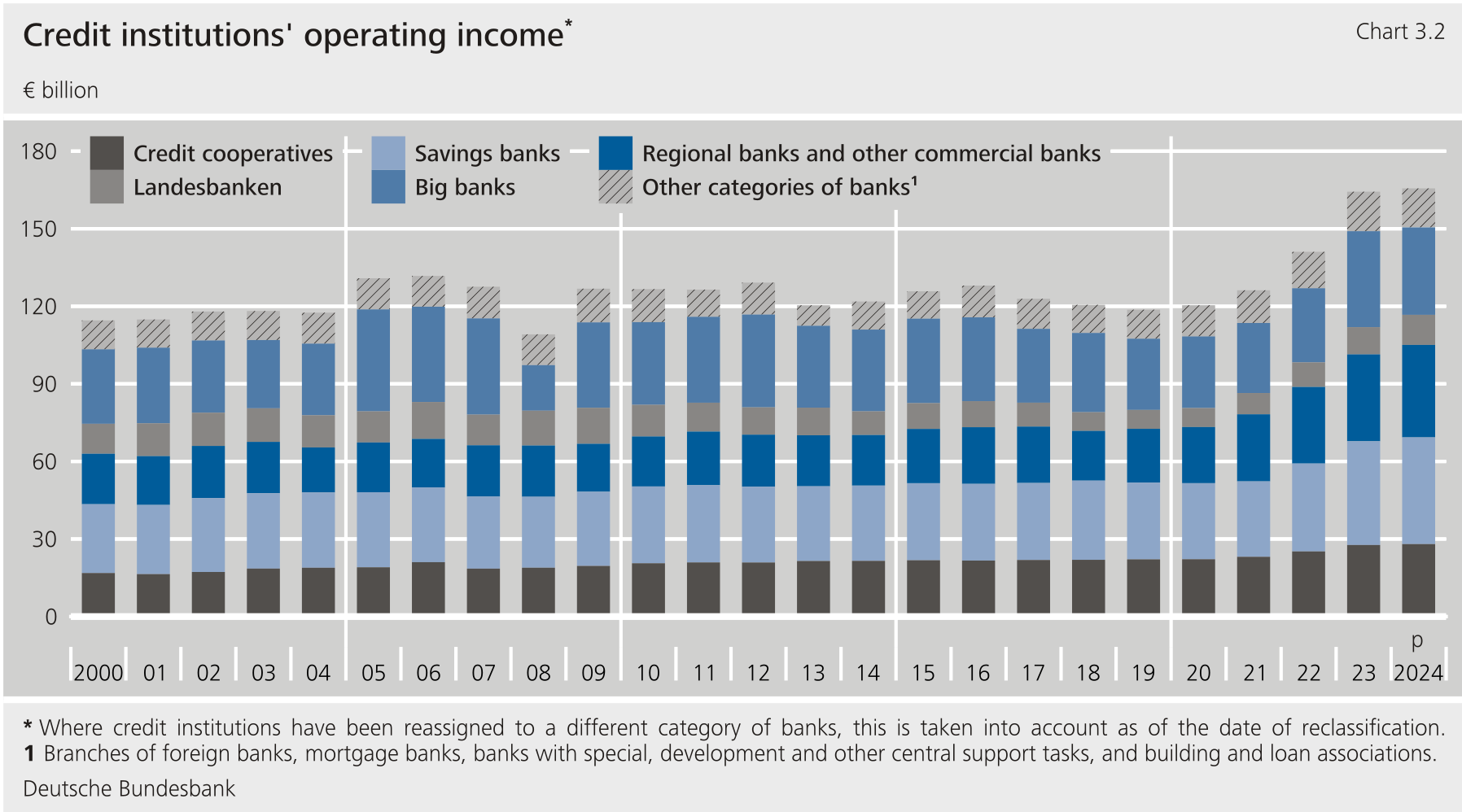
Operating income 21 in 2024 increased again slightly on the previous year’s unusually high level, growing by 0.8 %. At €165.6 billion, it was the highest it has been in 26 years, just as profit for the financial year was.
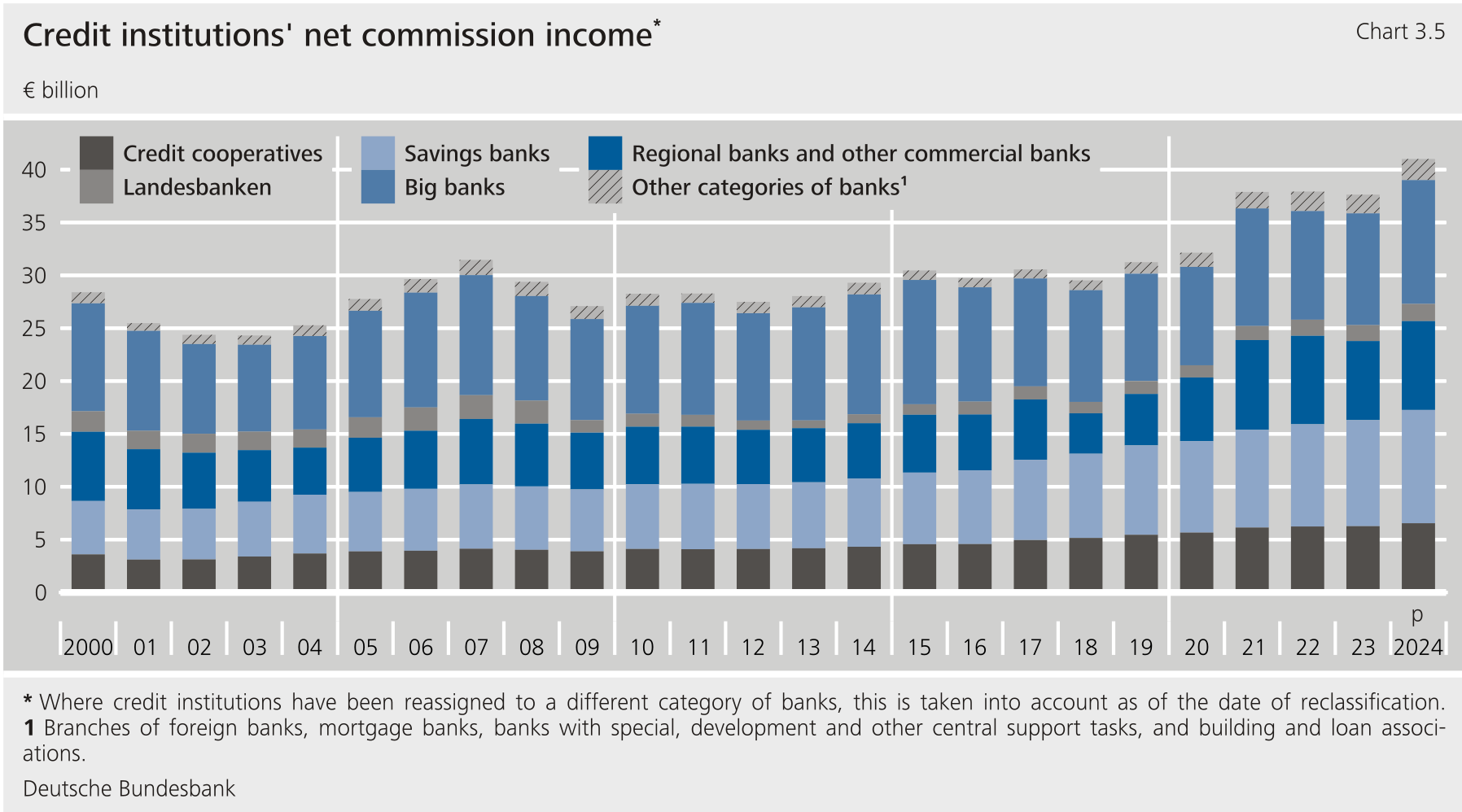
Net commission income was the chief driver of operating income growth in the reporting year. This item continues to be the second most important source of income for German credit institutions, accounting for just under 25 % of operating income. Net interest income, on the other hand, which had been the main driver of growth in 2023, did not contribute to growth in any significant way, though it did slightly exceed the previous year’s record level. Net interest income represents the main source of earnings for German credit institutions, contributing around 65 % of operating income. The trading result and the other operating result were once again secondary sources of income for German credit institutions as a whole in 2024. The increase in the trading result benefited regional banks and other commercial banks in particular.
Unlike in the previous years, operating income patterns were mixed across categories of banks as well as individual institutions. The largest increase in relative terms among categories of banks was recorded by Landesbanken, with growth of 10.4 %, and regional and other commercial banks, up 6.4 %. Savings banks and, trailing further behind, credit cooperatives also recorded increases in their operating income, with gains of 2.9 % and 1.2 %, respectively. By contrast, the comparatively sharp decline in operating income at big banks (down 8.9 %) dragged on the overall improvement in operating income. Viewed individually, 69 % of the institutions overall saw their operating income increase.
2.1.1.1 Net interest income
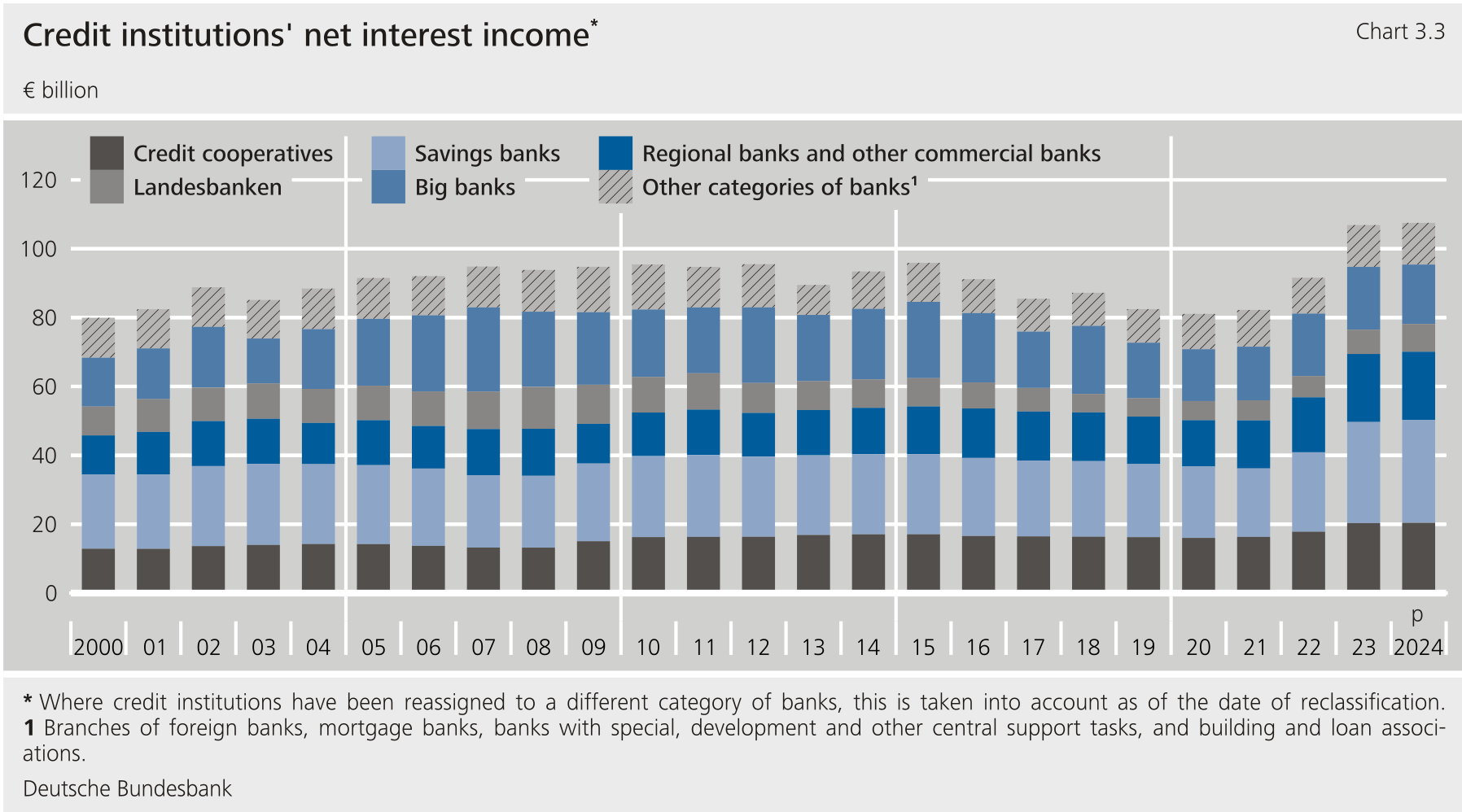
Net interest income, 22 too, improved again slightly in the reporting period on the previous year’s unusually high level, growing by €0.6 billion, or 0.6 %. At €107.5 billion in 2024, it reached its highest value since 1999 – the relevant reporting period for profit and loss statistics – and was still significantly above the long-term average of €90.5 billion.
Net interest income increased slightly on the back of growth in current income from shares and other variable-yield securities. But even without this contribution, net interest income was still well above its long-term average. This is striking in light of the increased share of time deposits as key interest rates began rising as of 2022, the intense competitive pressure overall surrounding the remuneration of deposits 23 and the generally subdued new lending activity. 24
Landesbanken and savings banks were mainly responsible for the increase in net interest income. Landesbanken raised their net interest income by just under €1.0 billion, or 14.1 %, albeit from a comparatively low level. Savings banks, meanwhile, managed to improve again slightly on their record level of net interest income for 2023, boosting this item by €0.5 billion, or 1.7 %, though this was entirely due to higher current income from shares and other variable-yield securities. The same can be said for credit cooperatives, whose net interest income was up slightly (€0.1 billion, or 0.4 %) on the previous year’s level. Excluding the increase in current income from shares and other variable-yield securities, their net interest income would have declined somewhat. Big banks saw their net interest income deteriorate significantly, dropping by almost €1.0 billion, or 5.3 %. Two factors were at play here. First, significantly lower income from profit pooling, profit transfer agreements and partial profit transfer agreements weighed on their net interest income. Second, big banks could not quite match the previous year’s earnings contribution from actual interest-related business. Net interest income at regional banks and other commercial banks remained almost unchanged. Overall, just under 60 % of institutions reported an increase on the year. 40 % of all the banks under review were unable to match the previous year’s record performance. 25
Savings banks and credit cooperatives together generated almost half of total net interest income again in 2024, contributing €29.9 billion and €20.4 billion, respectively. Both categories of banks focus their activities predominantly on traditional lending and deposit business, which is why their profitability is determined to a large extent by developments in net interest income. As in 2023, they each derived almost three-quarters of their operating income in 2024 from net interest income. At €19.8 billion, net interest income at regional banks and other commercial banks, which also have a large footprint in traditional lending and deposit business, nearly matched the figure for credit cooperatives, though this item accounted for just 55 % of total operating income for this category of banks.
Overall, almost 80 % of the increase in interest income came from lending and money market transactions. Interest income from fixed income securities and debt register claims also grew strongly, rising by 39.1 % across all the categories of banks under review. Landesbanken in particular benefited from significant growth of 61.4 % in their interest income from this segment, which at the same time explains the sharp increase in their net interest income.
Interest income on deposits with the central bank made a further substantial contribution to net interest income, even though the volume of these deposits shrank. At €41.1 billion, this interest income roughly matched the previous year’s level, accounting for around 11 % of interest income overall. Interest expenses for monetary policy refinancing operations was just under 78 % lower than in 2023, meanwhile. At €1.1 billion (previous year: €5.0 billion), this represented a mere 0.4 % of total interest expenses. 26 Repayment of the final TLTRO III operation reduced the loans taken out from the central bank by €66.8 billion overall. The key interest rate cuts that started in mid-2024 can be expected to compress both interest income from deposits with the central bank and interest expenses for monetary policy refinancing operations in 2025.
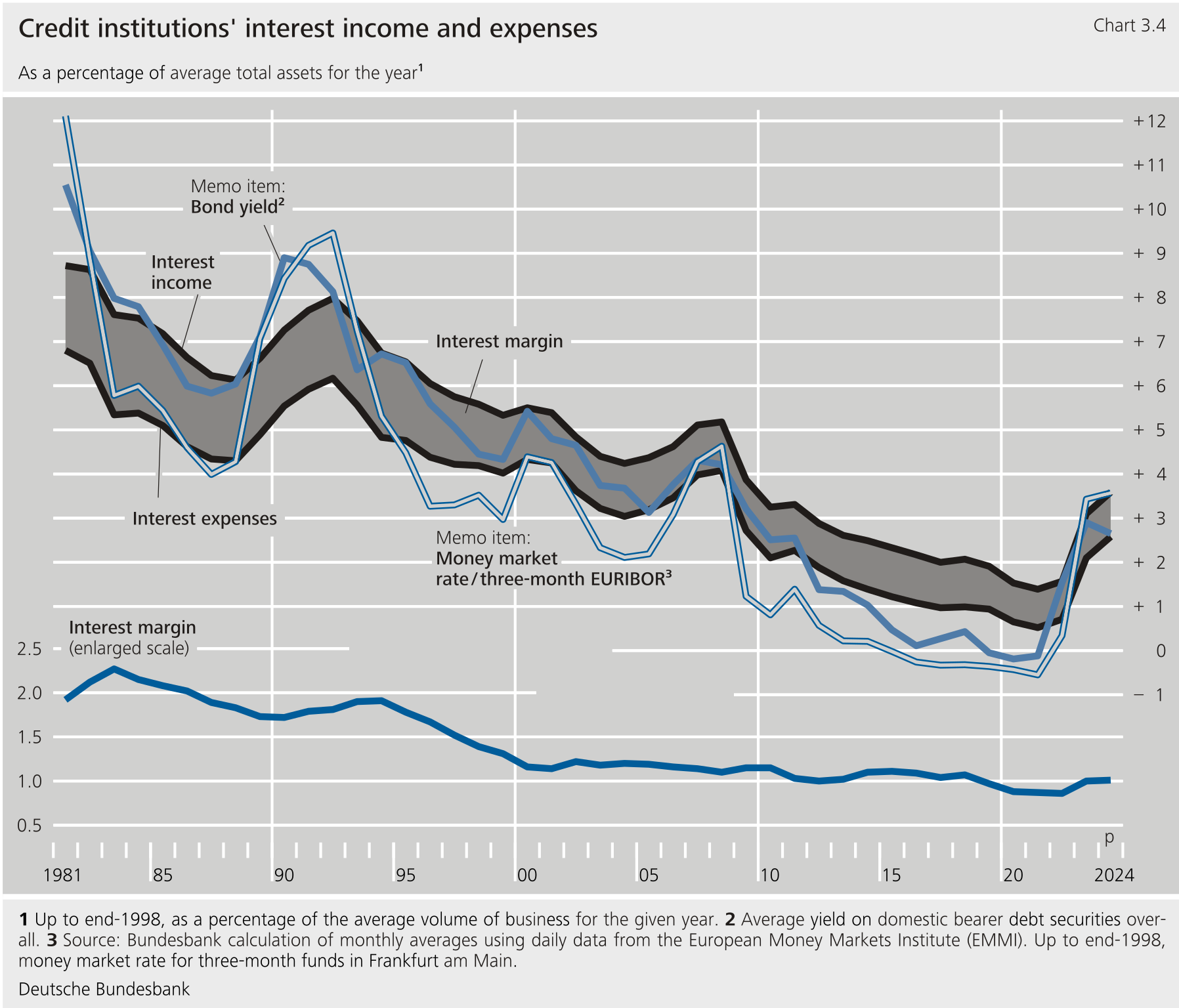
At 1.01 %, the interest margin 27 in the reporting year hovered around the previous year’s level. It is thus down slightly on the long-term average of 1.08 %. The interest margin is still above average at savings banks (1.91 %) and credit cooperatives (1.73 %), even though credit cooperatives (unlike the savings banks) reported a slight decline year on year. Regional and other commercial banks saw the interest margin narrow slightly. At 0.94 %, it is only marginally below the average across all categories of banks. Landesbanken significantly improved their interest margin to 0.85 %, while big banks again recorded an interest margin of just 0.66 %.
2.1.1.2 Net commission income
Net commission income rose significantly in 2024, growing by €3.4 billion, or 9.0 %, to what was by far its highest level since the relevant period for the profit and loss statistics began. At €41.0 billion, it was significantly up on the long-term average of €29.8 billion. Unlike in the previous year, it also contributed substantially to developments in operating income. On aggregate, growth in net commission income was driven primarily by securities business and security deposit business for commercial and retail customers as well as payments business. Commissions in lending business, by contrast, declined overall amid weak demand for loans.
Big banks and regional and other commercial banks contributed much of the increase. Big banks raised their net commission income by almost 11 %, and regional banks and other commercial banks by just over 12 %. This accounted for more than 60 % of the overall increase. Savings banks, too, reported significant growth of 6.8 %, while credit cooperatives recorded a 4.4 % increase and Landesbanken saw their net commission income grow by 8.1 %.
Unlike net interest income, net commission income patterns were fairly uniform at the level of individual institutions as well. This profit and loss item rose at 948 institutions – that is to say, at just over three-quarters of all banks – and declined at just 252 credit institutions. The commission margin 28 widened to 0.39 %, climbing back above its long-term average for the first time since 2021. Savings banks and credit cooperatives once again achieved the widest commission margins across all the categories of banks under review, at 0.69 % and 0.55 %, respectively. Commission margins at big banks and regional banks and other commercial banks were significantly lower in the reporting year, at 0.45 % and 0.40 %, respectively.
2.1.1.3 Net result from the trading portfolio
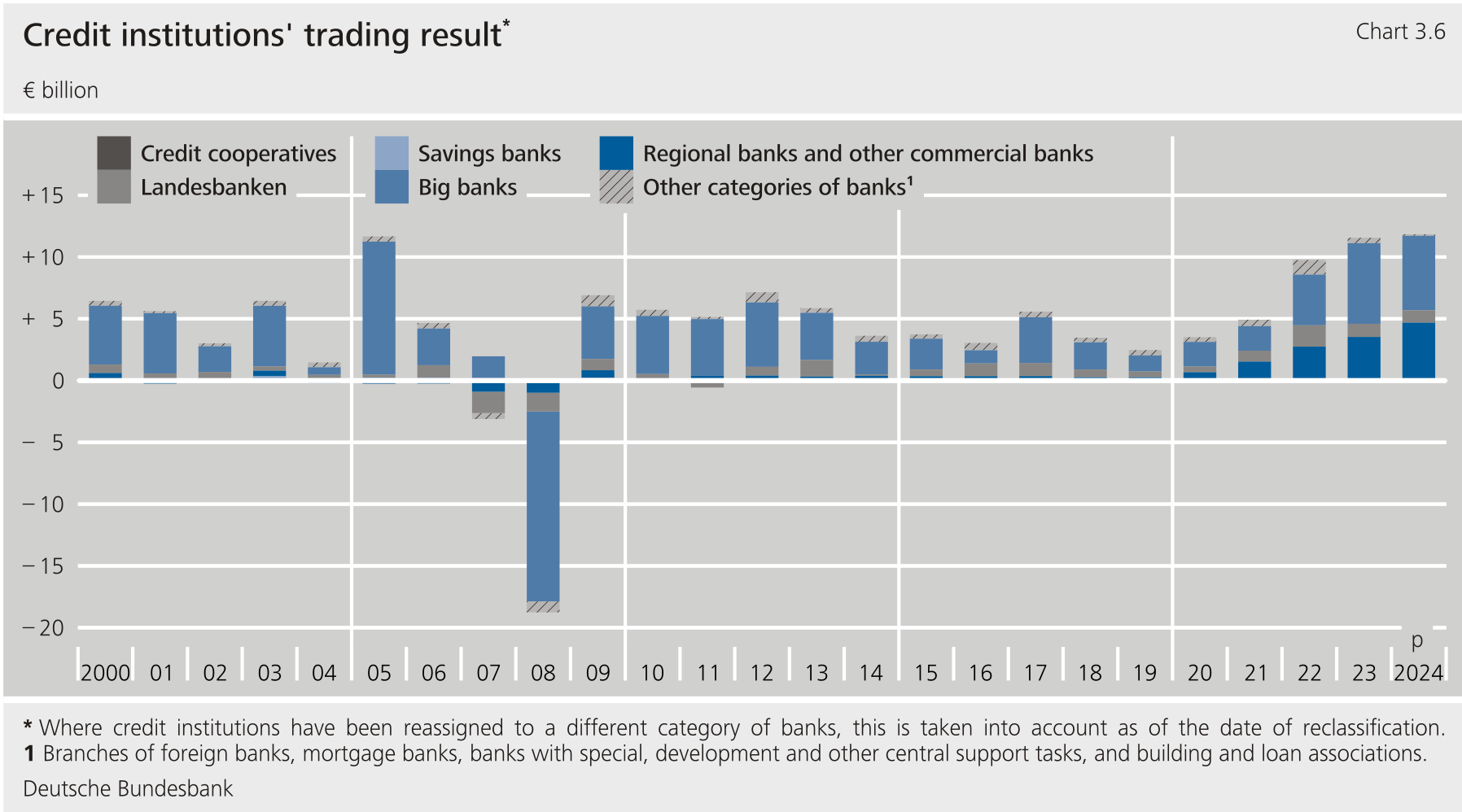
The net result from the trading portfolio improved by a slim 2.4 % on the year, reaching €11.8 billion – its highest level since 1999. That said, the trading result is a highly volatile income component and one that, for business model reasons, only constitutes a key source of income for big banks, regional and other commercial banks, and Landesbanken.
The increase in the reporting year was driven primarily by regional and other commercial banks, which posted a rise of 32.8 %. Almost all of it was generated by two institutions. These benefited from brisker customer business amid heightened volatility in financial markets. The trading result was down 7.5 % at big banks and 6.2 % at Landesbanken, meanwhile.
2.1.1.4 Other operating result
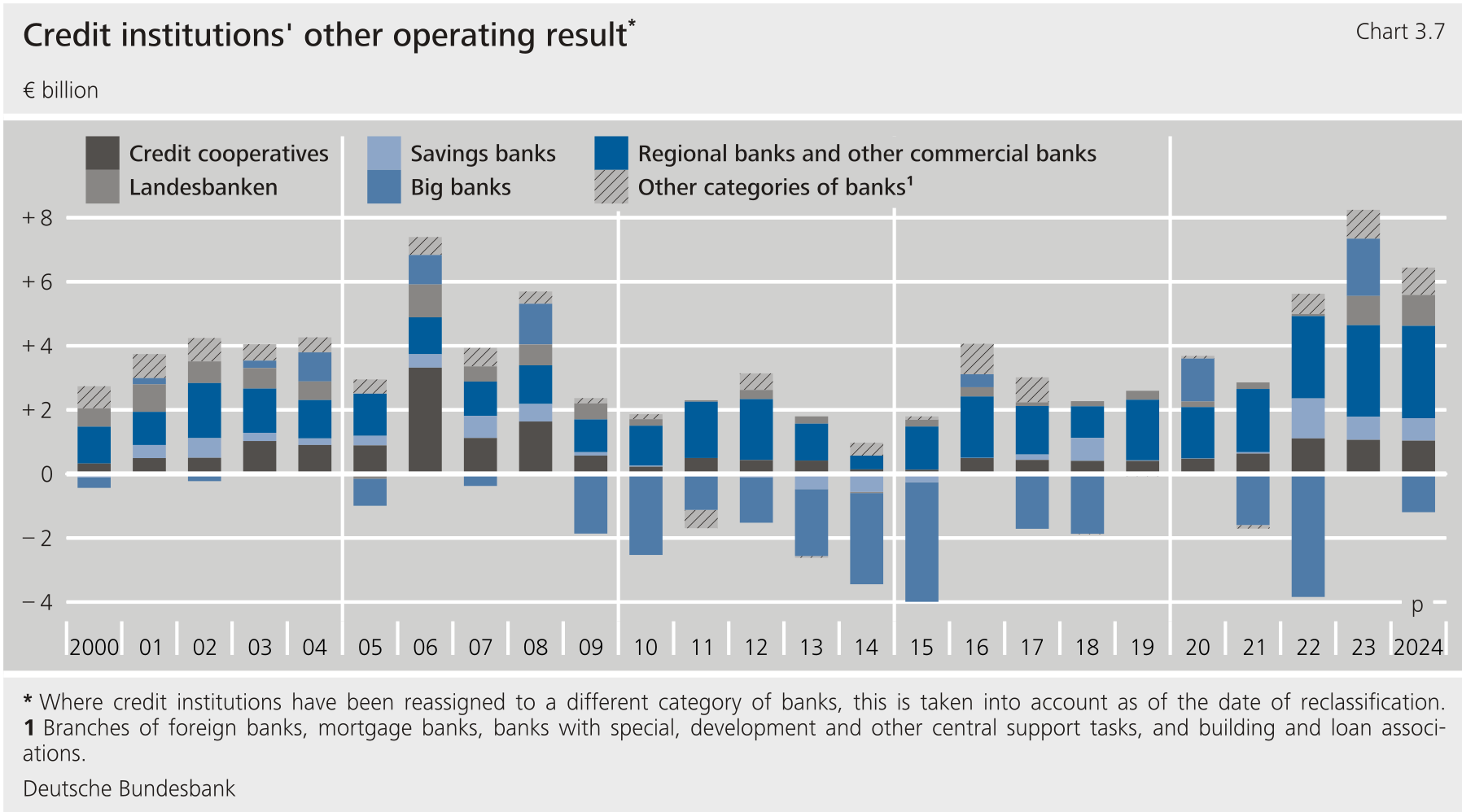
The other operating result 29 was down by €3.0 billion, or 36.3 %, in 2024. This drop almost entirely offset the increase in net commission income and was once again driven primarily by big banks. Their other operating result was just under €3.0 billion down on the previous year, with the bulk of this decline being due to changes in value arising from non-trading derivatives as well as transfers to provisions at one particular institution. The remaining categories of banks 30 recorded only minimal changes on the year.
2.1.2 Net valuation charges
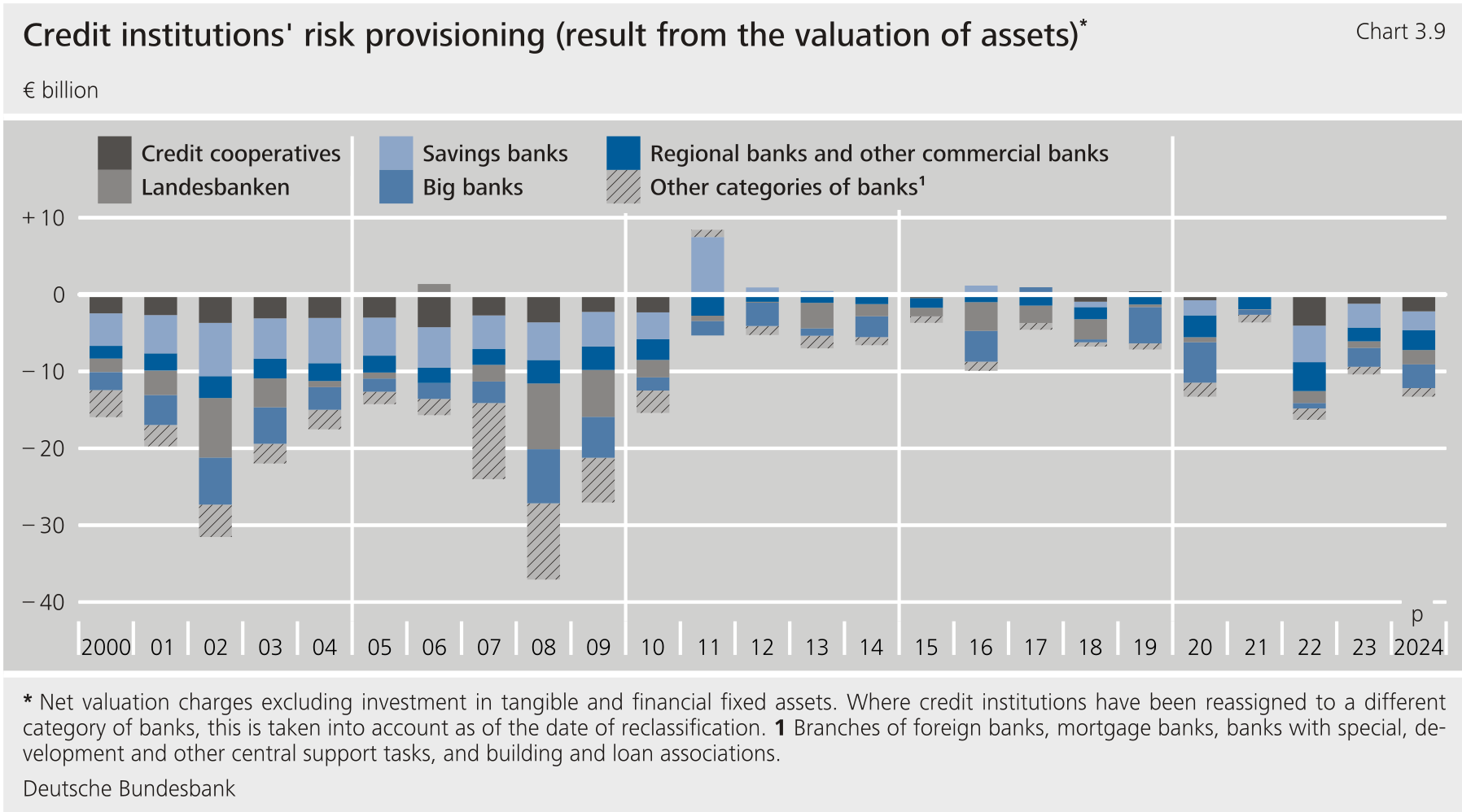
German credit institutions’ net valuation charges 31 rose markedly again following the significant decline in the previous year. At €2.9 billion (+27.9 %), this increase was significantly smaller in absolute terms than the decline in the previous year (-€5.9 billion). Overall, net valuation charges in the reporting year stood at €13.3 billion, almost at the level of the long-term average of €13.5 billion.
The deterioration in the valuation result was chiefly attributable to the significantly higher depreciation of and value adjustments to loans and advances, and provisions for contingent liabilities and for commitments. At €14.8 billion, they remained below their long-term average of €17.1 billion, but rose by almost one-quarter on the year. Landesbanken recorded a particularly strong increase of 82.0 %, albeit from a comparatively low level. Credit cooperatives and regional and other commercial banks likewise saw considerable increases of 42.0 % and 39.1 %, respectively. Big banks also recorded a marked increase in depreciation and value adjustments, up 25.3 %. Only savings banks saw a decline overall (-16.9 %).
At the same time, income from value readjustments to loans and advances, and provisions for contingent liabilities and for commitments declined (-3.9 %). The decline was particularly large for credit cooperatives (-45.0 %). By contrast, savings banks recorded a slight increase (+11.4 %). For big banks, regional banks and other commercial banks, developments in income from value readjustments were of minor importance. In general, changes in income from value readjustments were significantly smaller for all categories of banks than changes in depreciation and value adjustments.
On balance, almost all categories of banks reported increased net valuation charges owing to subdued macroeconomic developments, structural adjustments in the commercial real estate market and generally heightened uncertainties in the wake of geopolitical developments. For credit cooperatives, net valuation charges rose significantly by just under €1.0 billion to €2.2 billion (+83.5 %), although 403 out of a total of 668 credit cooperatives recorded a deterioration. The increase was similarly high at Landesbanken, rising by €1.0 billon, or 119.3 %. There were also significant increases in net valuation charges at big banks (+25.3 %) as well as regional banks and other commercial banks (+44.9 %). By contrast, savings banks were able toreduce their net valuation charges markedly. They improved their valuation result by 21.4 % overall. However, at €2.4 billion, their net valuation charges, too, were still slightly above the long-term average. Moreover, the situation at the individual bank level was not clear-cut, with less than half of savings banks (167 out of 349 institutions) showing an improvement. Nevertheless, the positive changes outweighed the negative ones in quantitative terms.
Overall, the materialisation of credit risk increasingly impacted the valuation result. In terms of the banking sector as a whole, almost 60 % of institutions reported increased net valuation charges. As the German economy will probably remain weak this year after two years of negative GDP growth and given that adverse macroeconomic developments are typically only reflected in banks’ balance sheets with a time lag, rising credit risk is likely to have an impact on the valuation result, and thus also on the profitability of German credit institutions, in 2025 as well. The impact of the current environment on developments in asset quality in the portfolios of German credit institutions is examined in more detail in the following supplementary information.
Supplementary information
Impact of the current environment on developments in asset quality in the portfolios of German credit institutions
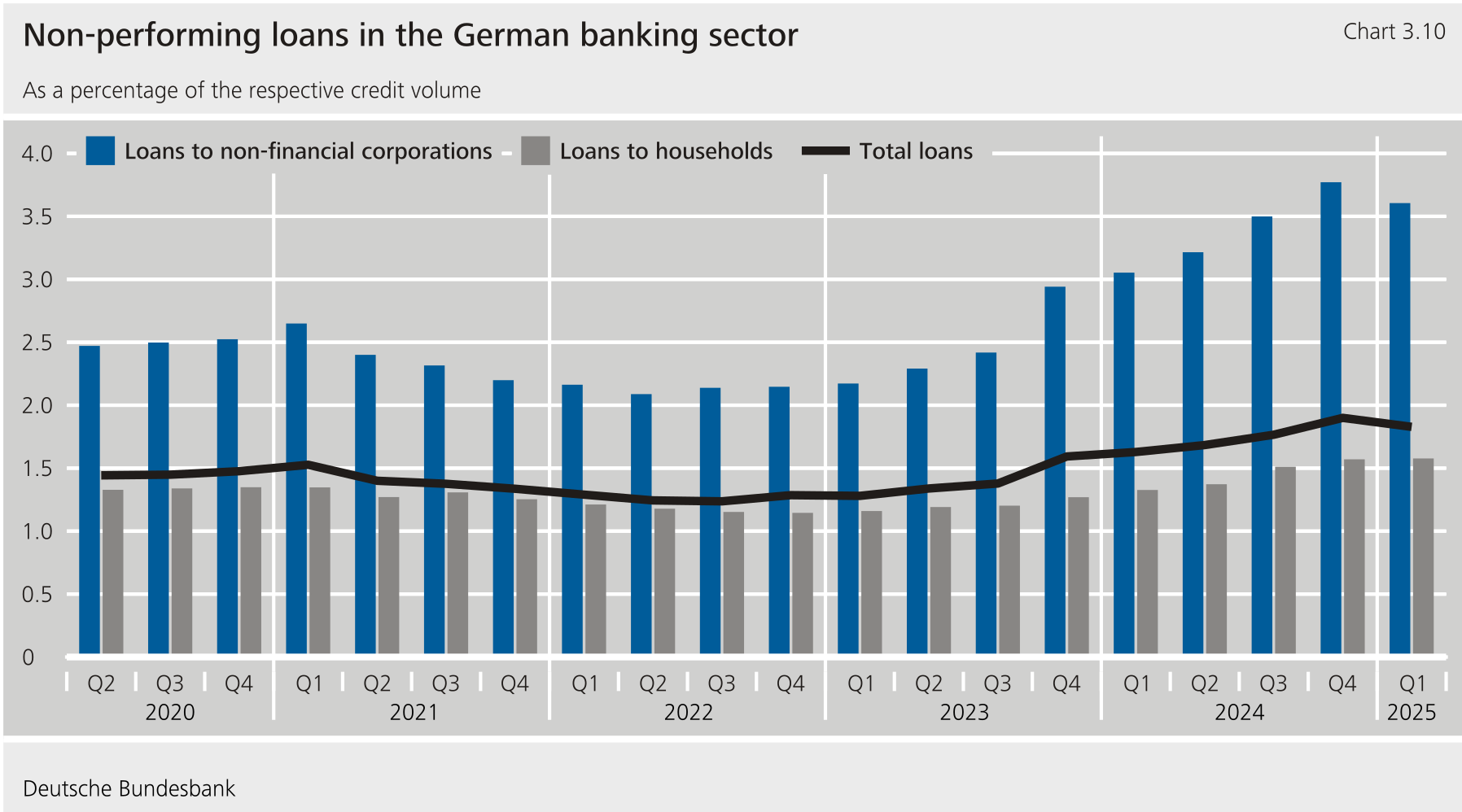
The materialising credit risk is likely to continue to be reflected in the performance of German credit institutions. In the first quarter of 2025, the NPL ratio for the banking sector as a whole stood at 1.8 %, thus worsening by around 20 basis points on the year. 1 The NPL ratio essentially measures the ratio of loans that are more than 90 days past due, or for which it is considered unlikely that the debt vis-à-vis the institution will be repaid in full, to total loans. 2 It has been increasing more or less continuously since the end of 2022. Although it remained at a low level in the first quarter of 2025, also with regard to the NPL ratio in Germany in historical terms as well as the NPL ratios in other countries within the euro area, the increased risk provisioning expenses show it is already having an impact on the performance of German credit institutions. However, the impact varies in severity depending on the business model.
Subdued macroeconomic developments, structural adjustments in the commercial real estate market and overall higher financing costs remain the main causes of the materialising credit risk. Credit risk is increasingly materialising in the corporate sector, in particular. According to figures from the Federal Statistical Office, corporate insolvencies have risen significantly since 2022, albeit from a comparatively low level. A further increase in insolvency rates cannot be ruled out if economic developments remain subdued.
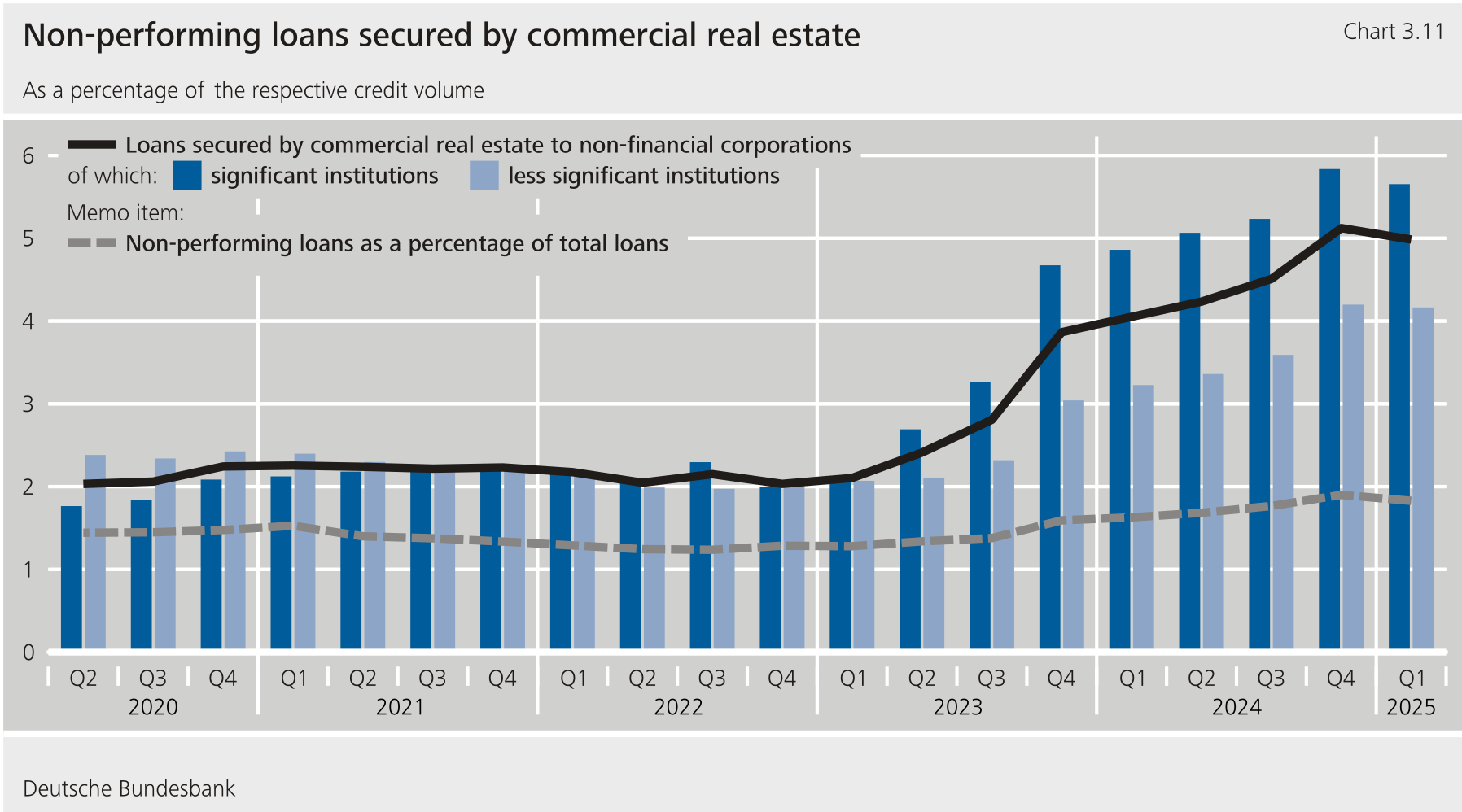
The NPL ratio for loans to non-financial corporations stood at 3.6 % in the first quarter of 2025, 55 basis points up on the previous year’s figure. Developments in the commercial real estate market remain a key driver of the increase in the NPL ratio for loans to non-financial corporations.The NPL ratio for loans secured by commercial real estate to non-financial corporations increased by almost 1 percentage point on the year to stand at 5.0 % in the first quarter of 2025. The deterioration was thus smaller than in the same period of the previous year (+1.9 percentage point). However, loans secured by commercial real estate still account for around one-third of loans granted to non-financial corporations, which is why the increase was significant. 3 Due to weak macroeconomic developments, the ongoing weakness in the commercial real estate market and the upcoming refinancing of low-interest loans, 4 further increases in the NPL ratios and risk provisioning are likely over the next few quarters. Fears of a recession have also increased the risks of a renewed downturn in the US commercial real estate market, in which some major German institutions are active. Although the NPL ratio for loans secured by commercial real estate to non-financial corporations has recently declined in aggregate terms, this was largely driven by the reduction of NPLs in the US commercial real estate portfolios of individual significant institutions (SIs). 5 This reduction contributed to SIs’ NPL ratio for total loans also declining in the first quarter of 2025. However, the NPL ratio for less significant institutions (LSIs) remained relatively stable. 6
Both SIs and LSIs have seen an increase in the NPL ratio for loans secured by commercial real estate since 2023. The increase was significantly more pronounced at first among SIs, not least due to their credit exposures in the United States. In addition, there are still significant differences in the levels of NPL ratios between SIs and LSIs. However, these differences are diminishing: the NPL ratio for loans secured by commercial real estate stood at 4.2 % for LSIs in the first quarter of 2025, almost 1 percentage point above the previous year’s level. By contrast, for SIs, the NPL ratio for loans secured by commercial real estate fell to 5.7 % in the first quarter of 2025 due to the aforementioned reduction in NPLs in individual institutions’ US portfolios. It was therefore just under 80 basis points above the previous year’s figure and 18 basis points below the previous quarter’s figure. Incidentally, at just over 13 %, the share of loans secured by commercial real estate in total loans is even slightly higher for LSIs than for SIs (11 %). 7 The business area – despite its different orientation and partly different risk profile – is therefore also very relevant for LSIs.
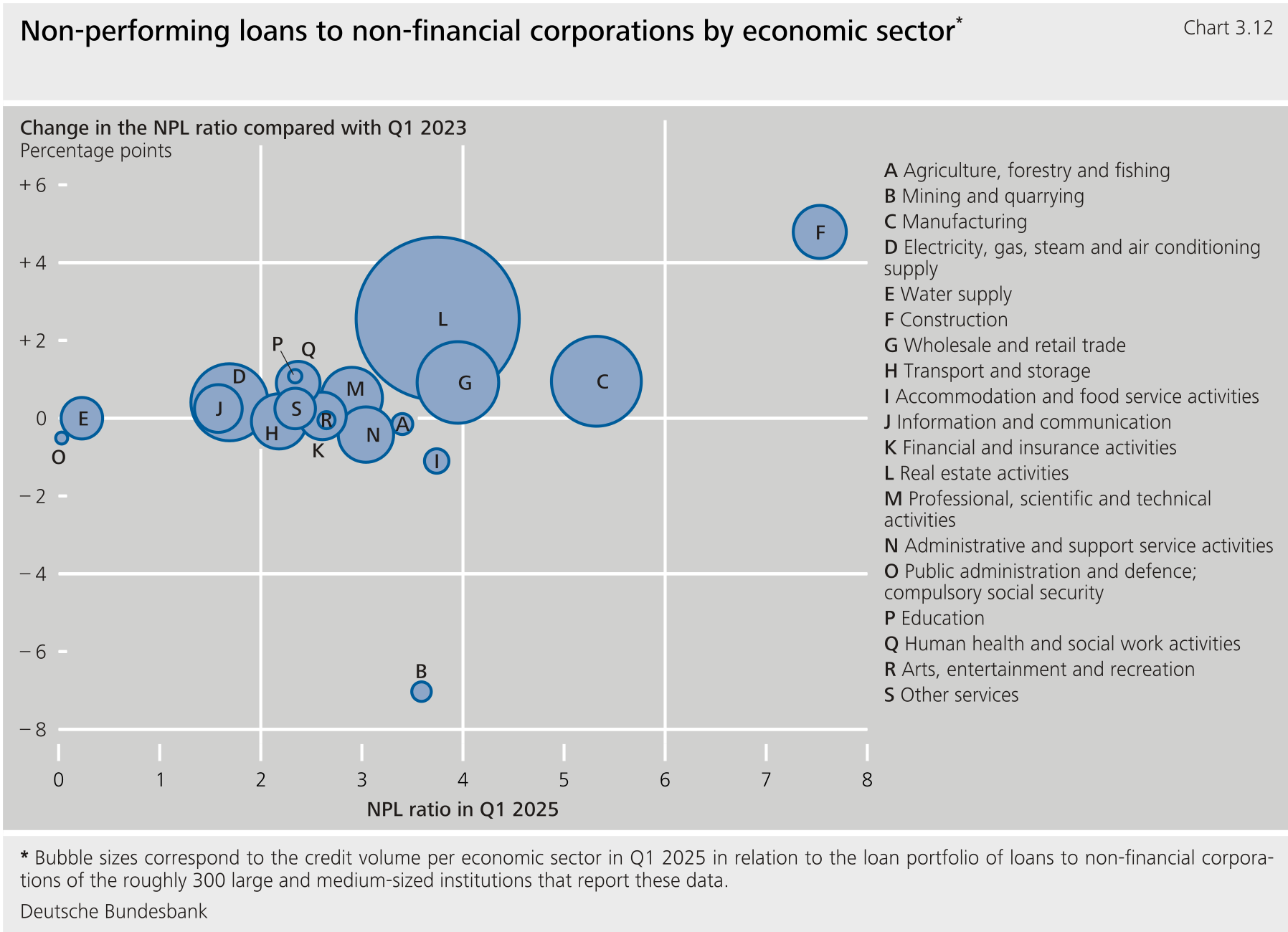
While loans secured by commercial real estate to non-financial corporations have been the main focus in the past, risks are increasingly spreading to other economic sectors, too. 8 The NPL ratio for loans not secured by commercial real estate to non-financial corporations stood at 2.9 % in the first quarter of 2025, around 40 basis points up on the previous year’s figure. A worsening in the already tense global political situation could further increase the need for impairments in this segment, too, and thus feed through to the performance of German credit institutions. In addition to the real estate sector (sector L “real estate activities” and sector F “construction”), the credit quality of loans to enterprises has deteriorated over the past two years, particularly in sectors C “manufacturing” and G “wholesale and retail trade”. This is also reflected in the Bank Lending Survey: the surveyed banks tightened their credit standards to a greater degree in the aforementioned sectors than in other economic sectors. 9
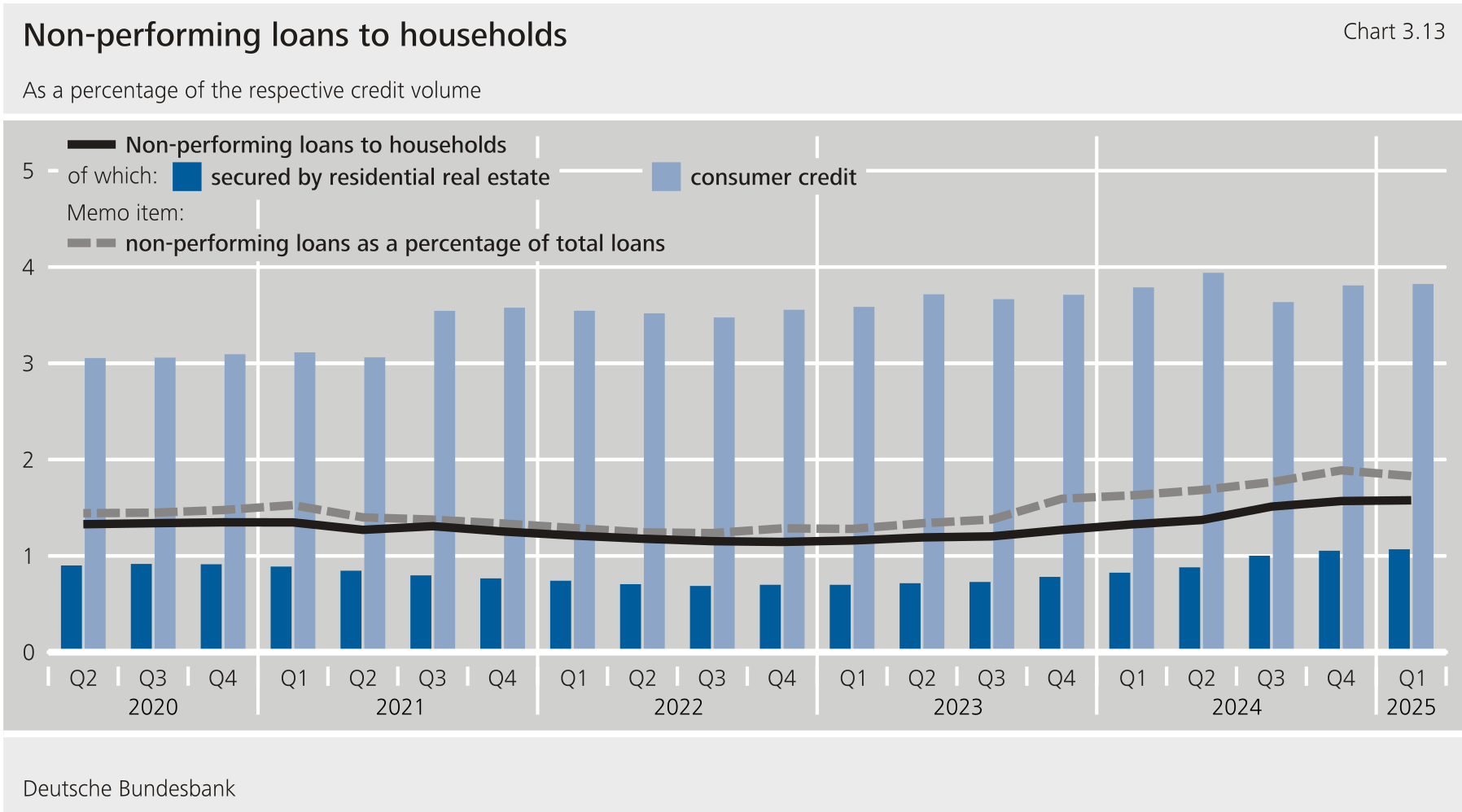
Macroeconomic developments are also having an impact on households. Credit risk has so far only been materialising slowly on bank balance sheets: the NPL ratio for the portfolio of loans to households rose only slightly on the year. It stood at 1.6 % in the first quarter of 2025, 25 basis points above the previous year’s level. Nonetheless, looking ahead, the difficult macroeconomic environment could contribute to credit risk materialising to a greater extent in this segment, too. So far, however, loans to households have played only a minor role in the deterioration in the asset quality of German banks’ total loans.
The slight increase in the NPL ratio for the portfolio of loans to households was almost exclusively attributable to developments in the residential real estate loan portfolio. The NPL ratio for loans secured by residential real estate to households stood at around 1.1 % in the first quarter of 2025, implying a year-on-year increase of 24 basis points. By contrast, the NPL ratio for consumer credit remained constant, albeit naturally at a higher level given that these loans are primarily granted to lower-income borrowers with small financial reserves. In future, further deteriorations in the labour market situation could be reflected in this ratio. At the same time, however, owing to the small share of consumer credit in total loans to households, this would still have no significant overall impact on developments in the NPL ratios and thus on the performance of German credit institutions. 10
In the coming quarters too, loans granted to households are likely to entail only low risks to earnings. The NPL ratio for loans secured by residential real estate to households remains at a low level, despite the slight increase observed. In addition, the risk situation in the residential real estate market has improved overall: overvaluations have largely receded. Risks remain, however, say in the event of a significant deterioration in the labour market situation. Vulnerabilities exist in particular for residential real estate loans that were granted in the years surrounding the peak in prices with high loan-to-value ratios. 11 Loans secured by residential real estate account for around 29 % of German credit institutions’ total loans, which is why the impact would be considerable if credit risk were to materialise on a broad basis. 12 Residential real estate loans are a key component of the business model for LSIs, in particular. Adverse developments in the residential real estate market would therefore have a stronger impact on the performance of LSIs than on the performance of SIs. Loans secured by residential real estate account for around 46 % of total loans to LSIs; this share is only around 19 % for SIs. Although more new loans are now being granted in this area again, 13 the risks described above are yet to materialise.
The increase in net valuation charges observed in the reporting year based on data from the profit and loss statistics is therefore still primarily attributable to credit risk materialising in the corporate sector. German credit institutions increased their depreciation of and value adjustments to loans and advances, and provisions for contingent liabilities and for commitments by almost one-quarter in 2024. At the same time, income from value readjustments to loans and advances as well as provisions for contingent liabilities and for commitments declined by €0.1 billion (around 4 %). In view of the macroeconomic situation, which has not improved fundamentally, and given that adverse macroeconomic developments are typically only reflected in banks’ balance sheets with a time lag, we expect a further increase in German credit institutions’ net valuation charges going forward.
To date, German banks have not yet made extensive use of the fund for general banking risks to offset losses. Instead, they again reported net transfers to the fund for general banking risks in 2024.Theseamounted to €14.5 billion and were thus even up slightly on the year (+2.6 %). 32 Overall, this indicates that institutions also used the year 2024 as far as possible to prepare themselves for rising net valuation charges. At the level of the categories of banks, however, the picture is mixed. Savings banks, in particular, significantly increased their net transfers by 8.6 % to €8.2 billion, thus exceeding the exceptionally high level of the previous year. By contrast, credit cooperatives reduced their net transfers by 6.4 % on the year to €4.3 billion.
2.1.3 Administrative spending
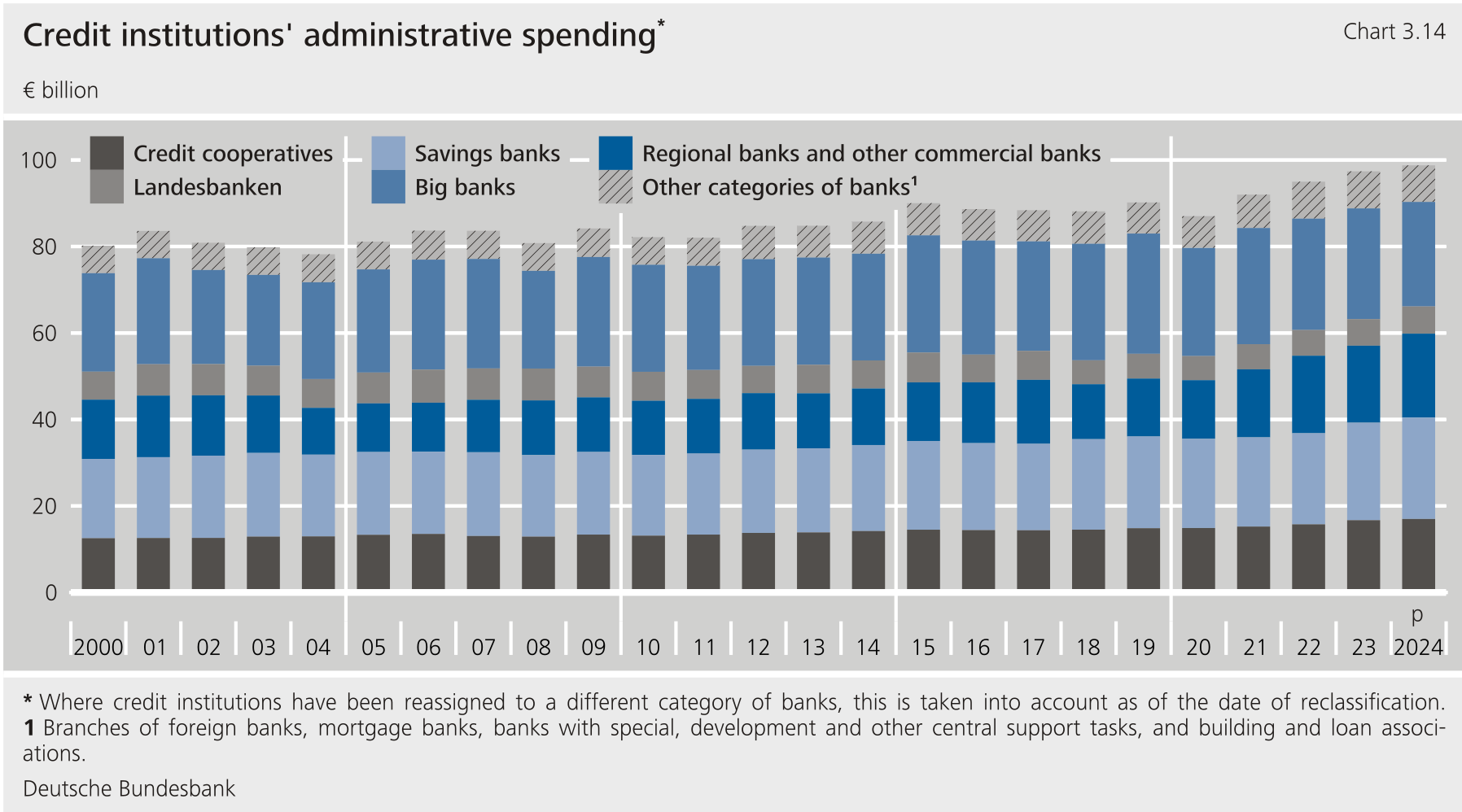
The growth trend in administrative spending 33 which started in 2020 continued in the reporting year (+1.4 %). At €98.8 billion in 2024, it was again well above the long-term average of €85.5 billion. Staff costs and other administrative spending each continued to account for about half of total spending.
Measured in terms of the inflation rate, administrative spending rose only slightly overall. However, the decline in administrative spending at big banks (-5.6 %) significantly dampened the increase on aggregate. The rise in administrative spending was particularly strong at regional and other commercial banks (+9.1 %). At savings banks, too, the increase (+3.9 %) was markedly stronger than for credit cooperatives (+1.7 %).
In aggregate terms, this increase was almost exclusively attributable to staff costs (+3.0 %), driven by higher wages and salaries. In absolute terms, this increase was almost twice as high as the simultaneous decline in costs relating to pensions. By contrast, other administrative spending, which reflects amongst other things investments by German credit institutions in digitalisation, hovered roughly around the level of the previous year overall.
Mixed developments at the level of the categories of banks. For big banks, for example, the reduction in other administrative spending even contributed somewhat more to the overall decline in administrative spending than the reduction in staff costs. In addition, they recorded a significant decline of almost 80 % in their costs relating to pensions. Around 60 % of the significant increase in administrative spending at regional banks and other commercial banks was attributable to higher staff costs and around 40 % to higher other administrative spending. For savings banks, too, the increase in staff costs carried more weight, accounting for 71 % of the increase. In the case of credit cooperatives, by contrast, just under 66 % of the increase in administrative spending was caused by other administrative spending.
2.1.4 Balance in the other and extraordinary account
The negative balance in the other and extraordinary account 34 fell significantly on the year, dropping by €5.6 billion, or 70.3 %. The decline was mainly attributable to two factors. First, income from value readjustments to participating interests, shares in affiliated enterprises and securities treated as fixed assets increased by a total of €4.4billion.Second, depreciation of and value adjustments to participating interests, shares in affiliated enterprises, and securities treated as fixed assets decreased by €1.7 billion.
This development was driven chiefly by one-off effects in the category of big banks and the category of regional and other commercial banks. Big banks improved the balance in the other and extraordinary account by €2.9 billion. This was mainly the result of reversals of impairment losses on shares in affiliated enterprises and value readjustments to the carrying amounts of investments. Regional and other commercial banks improved their balance by €2.4 billion. Here, too, the improvement was largely due to higher income from value readjustments to participating interests, shares in affiliated enterprises and securities treated as fixed assets. This increase of €1.6 billion was almost entirely attributable to a single institution and arose from the sale of a subsidiary specialising in software solutions.
Table 3.3: Breakdown of extraordinary result € million
Item
2022
2023
2024p
Other and extraordinary result
− 2,475
− 8,007
− 2,376
Income (total)
6,155
2,675
6,625
Value readjustments to participating interests, shares in affiliated enterprises, and securities treated as fixed assets
5,175
1,567
5,942
from loss transfers
33
26
41
Extraordinary income
947
1,082
642
Charges (total)
− 8,630
− 10,682
− 9,001
Depreciation of and value adjustments to participating interests, shares in affiliated enterprises, and securities treated as fixed assets
− 3,424
− 2,609
− 899
from loss transfers
− 566
− 480
− 334
Extraordinary charges
− 983
− 753
− 537
Profits transferred under profit pooling, a profit transfer agreement or a partial profit transfer agreement
− 3,657
− 6,840
− 7,231
2.2 Profitability and cost efficiency
Measured in terms of the return on assets and return on equity, 35 profitability remained at the high level of the previous year. By contrast, cost efficiency as measured by the cost/income ratio deteriorated slightly.
2.2.1 Return on assets
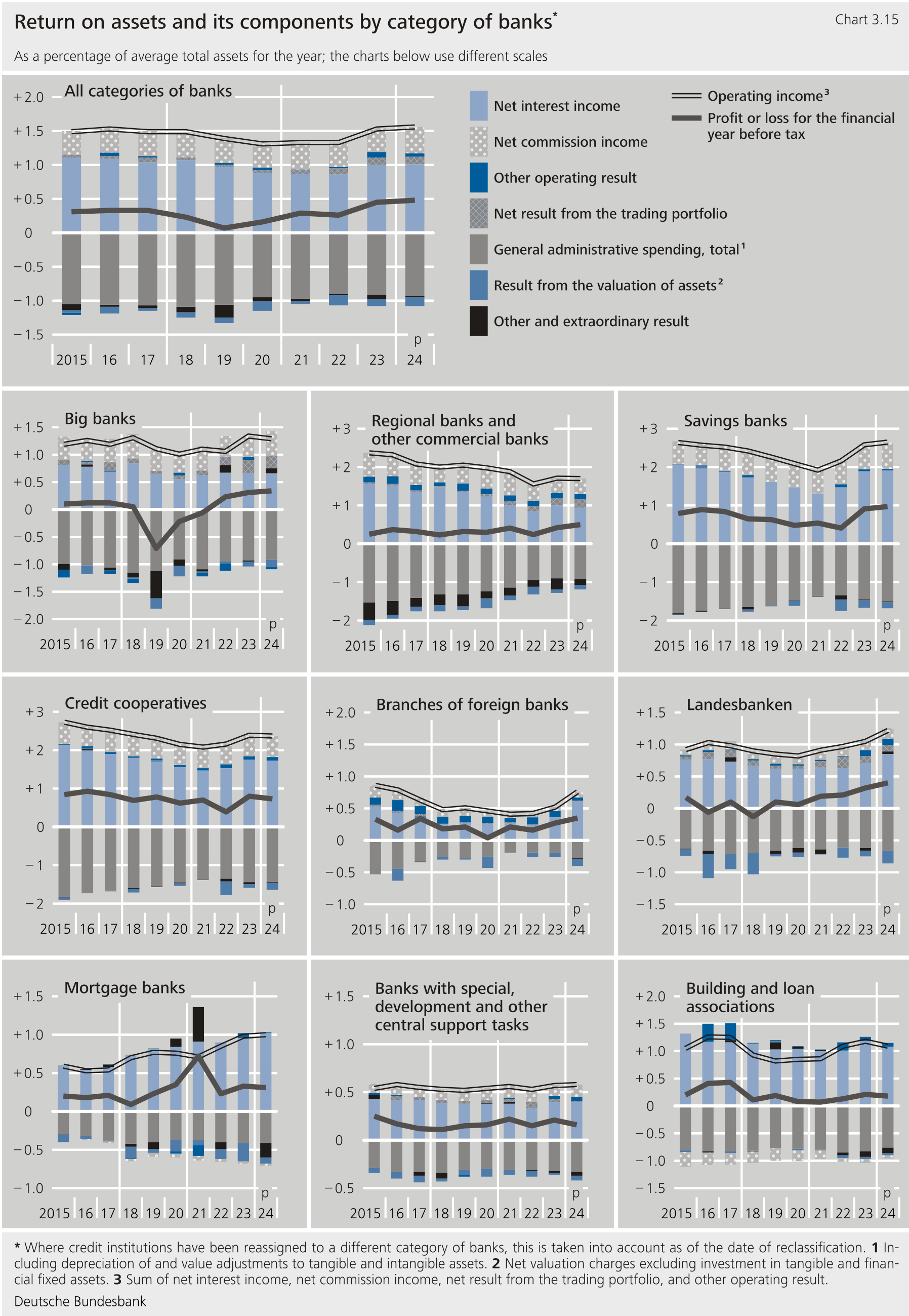
German credit institutions’ return on assets increased only marginally in the reporting year (+0.03 percentage point). However, the level of 0.48 % reached in 2024 is the highest level recorded in the last 26 years and double the long-term average. The slight improvement on aggregate was primarily due to the increase in profit for the financial year. The slight decline in average total assets for the year also contributed marginally to the increase.
As was the case in the previous years, savings banks and credit cooperatives once again achieved the highest return on assets across all the categories of banks under review. However, savings banks were able to increase their return on assets by 0.06 percentage point compared with 2023 to 0.97 %, while credit cooperatives’ return on assets decreased by 0.07 percentage point to 0.73 %.Landesbanken and regional and other commercial banks recorded the largest improvement in their return on assets compared with the previous year, posting an increase of 0.08 percentage point in each case. Nevertheless, the return on assets of Landesbanken in 2024 was below average overall, at 0.40 %. By contrast, regional banks and other commercial banks achieved a slightly above-average level (0.50 %) overall.By contrast, at just 0.34 %, the level of big banks’ return on assets in the reporting year was significantly below the average across all categories of banks.
2.2.2 Return on equity
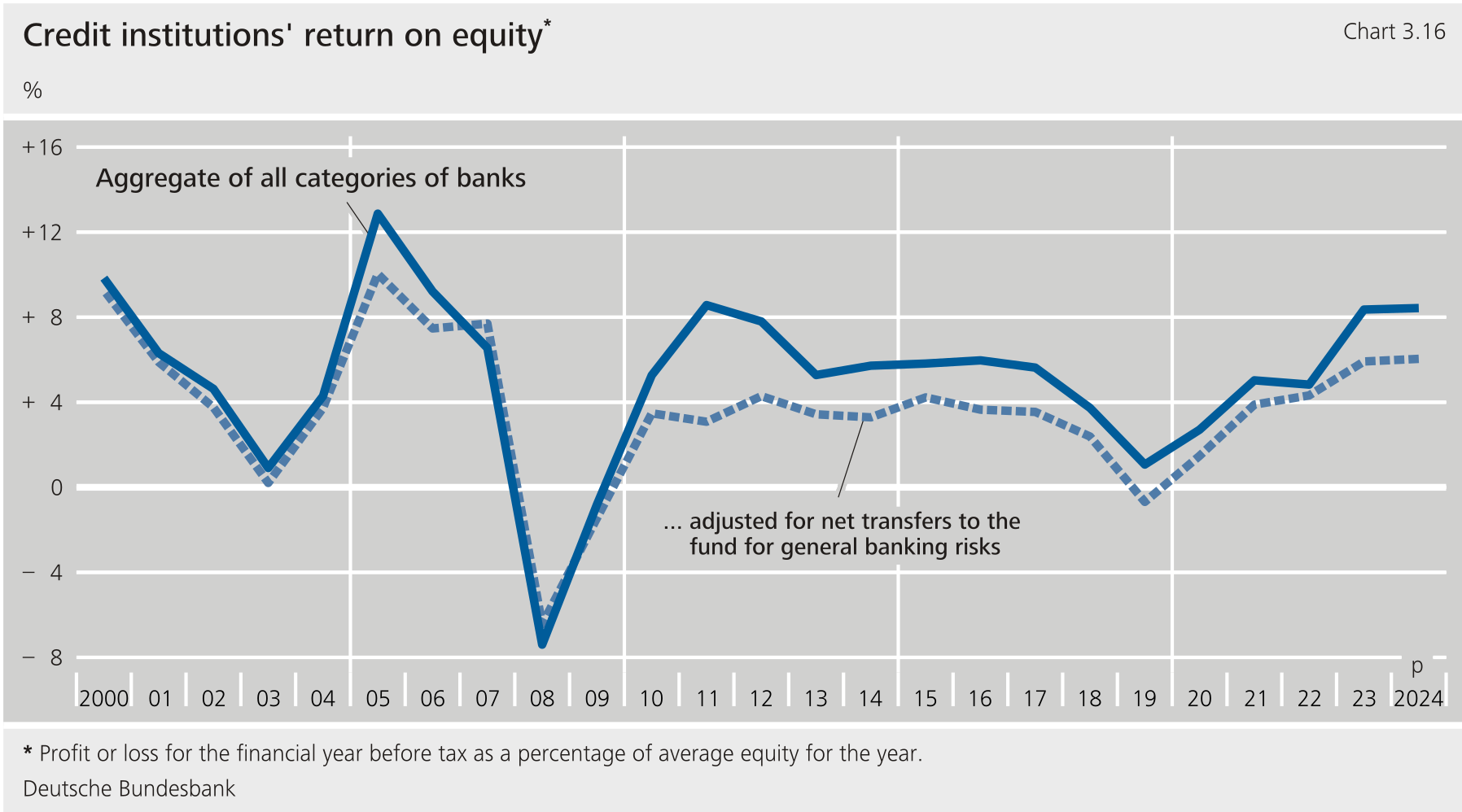
The return on equity increased by 0.07 percentage point in 2024, reaching 8.43 %, the highest it has been the last 13 years. It was thus significantly higher than the long-term average of 5.46 %. Measured by the improvement in profit for the financial year, the increase in return on equity could have been greater. However, German credit institutions’ equity also increased significantly (+4.4 %), counteracting further growth.
Table 3.4: Return on equity of individual categories of banks* %
Category of banks
2020
2021
2022
2023
2024p
All categories of banks
2.71
(1.12)
5.03
(3.22)
4.83
(3.86)
8.36
(6.18)
8.43
(6.14)
Commercial banks
− 1.56
(-2.95)
2.65
(1.41)
6.05
(5.97)
9.16
(7.02)
10.00
(7.18)
of which:
Big banks
− 7.08
(-8.22)
− 2.26
(-2.13)
9.12
(12.29)
12.12
(11.91)
11.81
(9.26)
Regional banks and other commercial banks
4.10
(2.46)
6.00
(3.81)
4.27
(2.25)
7.49
(4.15)
9.06
(6.02)
Landesbanken
1.29
(0.84)
4.02
(2.26)
4.77
(2.72)
7.45
(5.01)
8.84
(7.31)
Savings banks
5.36
(3.36)
6.27
(4.22)
4.74
(2.82)
10.17
(7.09)
10.34
(7.25)
Credit cooperatives
7.31
(4.98)
8.37
(6.19)
4.59
(3.46)
8.92
(6.47)
7.92
(5.53)
Mortgage banks
8.06
(1.40)
16.91
(5.73)
5.99
(3.76)
8.89
(5.69)
7.95
(4.47)
Building and loan associations
1.66
(0.86)
1.41
(0.50)
2.79
(1.65)
4.14
(1.99)
3.60
(3.17)
* Profit or loss for the financial year before tax (in brackets: after tax) as a percentage of annual average equity as shown in the balance sheet (including the fund for general banking risks, but excluding participation rights capital).
2.2.3 Cost efficiency
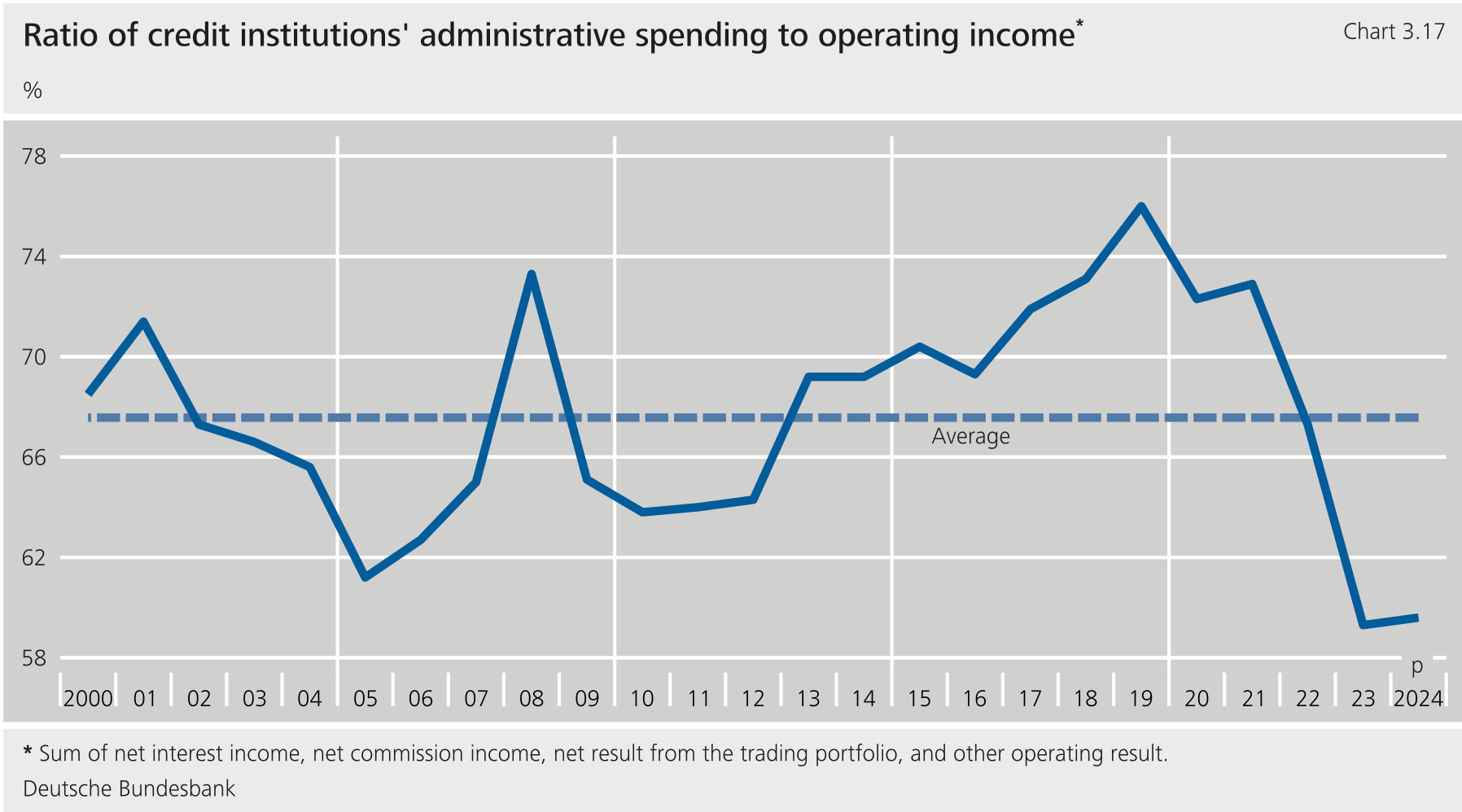
At 59.6 %, the cost/income ratio in its broad definition 36 was well below the long-term average in the reporting year. However, it had deteriorated by 0.3 percentage point on the year. Excluding the reduction in administrative spending at big banks, the increase would have been markedly larger on aggregate.
In line with the mixed developments in operating income and administrative spending at the level of the categories of banks, different developments were also evident in the cost/income ratio across the individual categories of banks. Despite higher operating income, the cost/income ratios of savings banks and credit cooperatives rose slightly (+0.6 % and + 0.2 percentage point, respectively) as a result of the simultaneous increase in administrative spending. At 56.8 %, however, the cost/income ratio of savings banks was somewhat better, while that of credit cooperatives, at 60.6 %, was somewhat worse than the aggregate of all categories of banks. At big banks, the cost/income ratio deteriorated significantly to 71.5 % (+2.5 percentage points), despite the reduction in their administrative spending, owing to the simultaneous decline in their operating income. They were thus still significantly above the average across all categories of banks. At regional and other commercial banks, by contrast, the cost/income ratio rose above average (+1.3 percentage point), but at 54.3 % remained below the average across all categories of banks.
Table 3.5: Cost/income ratios by category of banks %
Category of banks
General administrative spending in relation to operating income1
2022
2023
2024p
All categories of banks
67.3
59.3
59.6
Commercial banks
74.6
61.1
62.4
Big banks
89.8
69.0
71.5
Regional banks and other commercial banks
60.5
53.0
54.3
Branches of foreign banks
45.2
38.2
37.4
Landesbanken
62.6
58.4
54.1
Savings banks
62.0
56.2
56.8
Credit cooperatives
62.5
60.4
60.6
Mortgage banks
47.3
42.0
41.4
Building and loan associations
78.2
70.5
70.4
Banks with special, development and other central support tasks
59.4
56.7
56.7
1 Sum of net interest income, net commission income, net result from the trading portfolio and other operating result.
3 Outlook
German credit institutions’ business environment remains challenging in 2025. In particular, protectionist and volatile US economic policy is likely to weigh on macroeconomic developments not only in Germany but also worldwide. Despite the recent agreement between the United States and the EU, trade policy uncertainty remains high. In addition, the level of the agreed tariffs is dampening the growth of the German economy markedly this year. However, this is accompanied by upside opportunities afforded by the announced easing of fiscal policy and the associated economic stimulus. 37
The German banking industry is likely to face rising costs from many directions. Materialising credit risk is likely to continue to weigh on the earnings situation of German credit institutions. Provided that the period of weakness in the German economy continues, the probability of credit defaults will increase. Furthermore, both the growing threat situation and the higher requirements for cyber and IT security in the general context of digitalisation will continue to require increasing investment in the future as well. Moreover, it remains to be seen how the key interest rate cuts that began in June 2024 will affect net interest income, the main source of income for German credit institutions, this year.