Geopolitical Hybrid Threats 83rd edition – June 2026

Research Brief

Norbert Metiu, Martin Völpel

83rd edition – June 2026

Geopolitical Hybrid Threats

— Norbert Metiu, Martin Völpel

Rising geopolitical tensions are leading to an increase in hybrid threats such as cyberattacks, infrastructure sabotage, espionage, economic and political coercion, the spread of disinformation, and other forms of hybrid warfare. But how do these hybrid threats affect the economy and financial markets? To answer this question, we develop a new index that measures geopolitical hybrid threats and examine their macroeconomic and financial impact. We find that hybrid threats primarily suppress aggregate demand – through heightened uncertainty, weaker confidence, and tighter financial conditions. At the same time, they trigger policy responses, such as increased defence spending and monetary policy easing. These findings contrast with the predominantly supply-side effects of geopolitical risk documented in the literature.

Diagram showing binary numbers on an abstract background – picture.source monsitj – stock.adobe.com
Diagram showing binary numbers on an abstract background
picture.source monsitj – stock.adobe.com

doi.org/10.71734/RB-83-en

What are geopolitical hybrid threats and what are their economic consequences?

We have entered a time of great-power politics, declared Chancellor Friedrich Merz in his speech at the 2026 World Economic Forum in Davos. The increasingly complex and multifaceted nature of geopolitical tensions between states is exemplified by hybrid threats that blur the boundaries between war and peace. Historically, hybrid threats encompass a wide range of hostile activities, from the high-profile Soviet espionage cases revealed in the 1980s to more recent incidents, such as the annexation of Crimea in 2014 by Russian irregular forces, Russian interference in the 2016 U.S. presidential election, the WannaCry global cyberattack in 2017 attributed to North Korean hackers, and the sabotage of the Nord Stream pipeline in the Baltic Sea in 2022. Unlike traditional military conflicts, hybrid threats often operate below the threshold of open warfare, undermining international relations and the stability of states. Despite the growing significance of hybrid threats, their economic impact remains largely unexplored – mainly due to the absence of a suitable approach for measuring them. We address this gap in a new study (Metiu and Völpel 2026). First, we quantify hybrid threats based on the frequency of newspaper coverage. Then, we analyse their macroeconomic and financial effects using a structural vector autoregression (VAR) model. This model allows us to identify and better understand the key transmission channels.

Measuring geopolitical hybrid threats
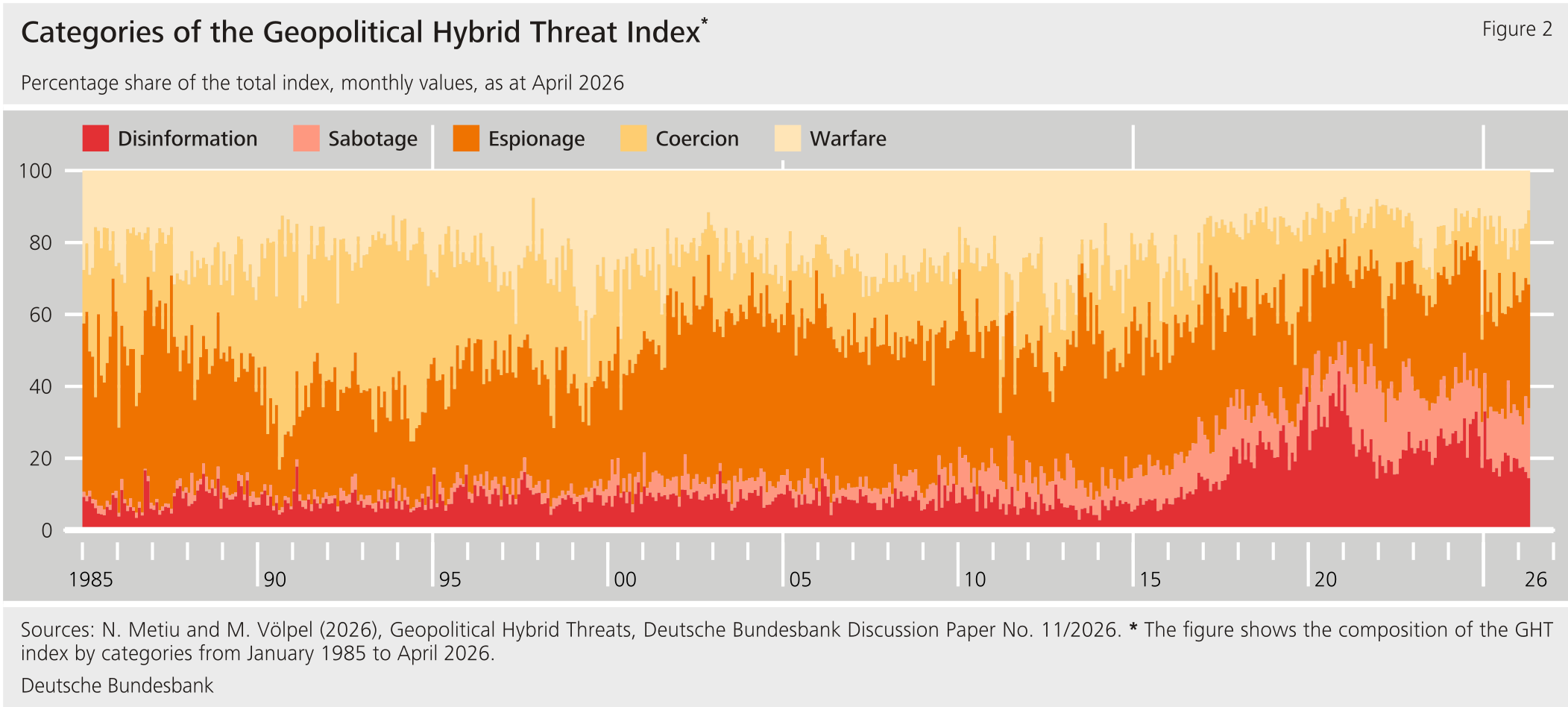
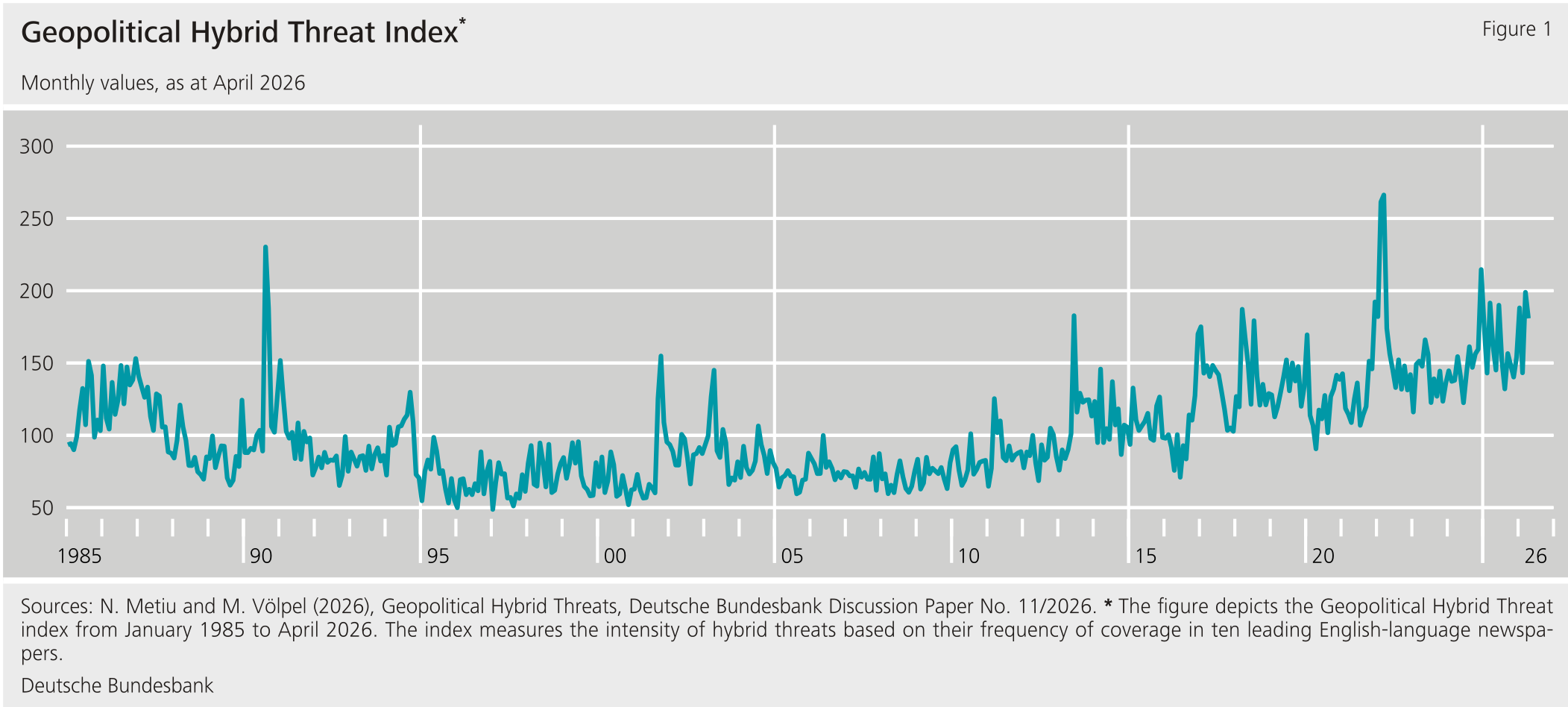
We develop a novel index for Geopolitical Hybrid Threats (GHT). This index is based on a detailed text analysis of over twelve million articles from ten leading English-language newspapers with international reach, covering the period from 1985 to early 2026. The index measures the frequency of specific terms associated with globally occurring geopolitical hybrid threats. These include, for example, sabotage of critical infrastructure (both physical and cyber-based), economic and political coercion, espionage, disinformation, and other forms of hybrid warfare. The GHT index shows a sharp rise in hybrid threats since the mid-2010s, surpassing even the levels observed during the late Cold War (see Figure 1). This highlights the growing significance of hybrid threats. A detailed analysis of the index reveals that the use of disinformation and sabotage of critical infrastructure, including cyberattacks, has become increasingly important in recent years (see Figure 2).

Geopolitical Hybrid Threat Index
Categories of the Geopolitical Hybrid Threat Index

Analysing the macroeconomic and financial impact of hybrid threat shocks
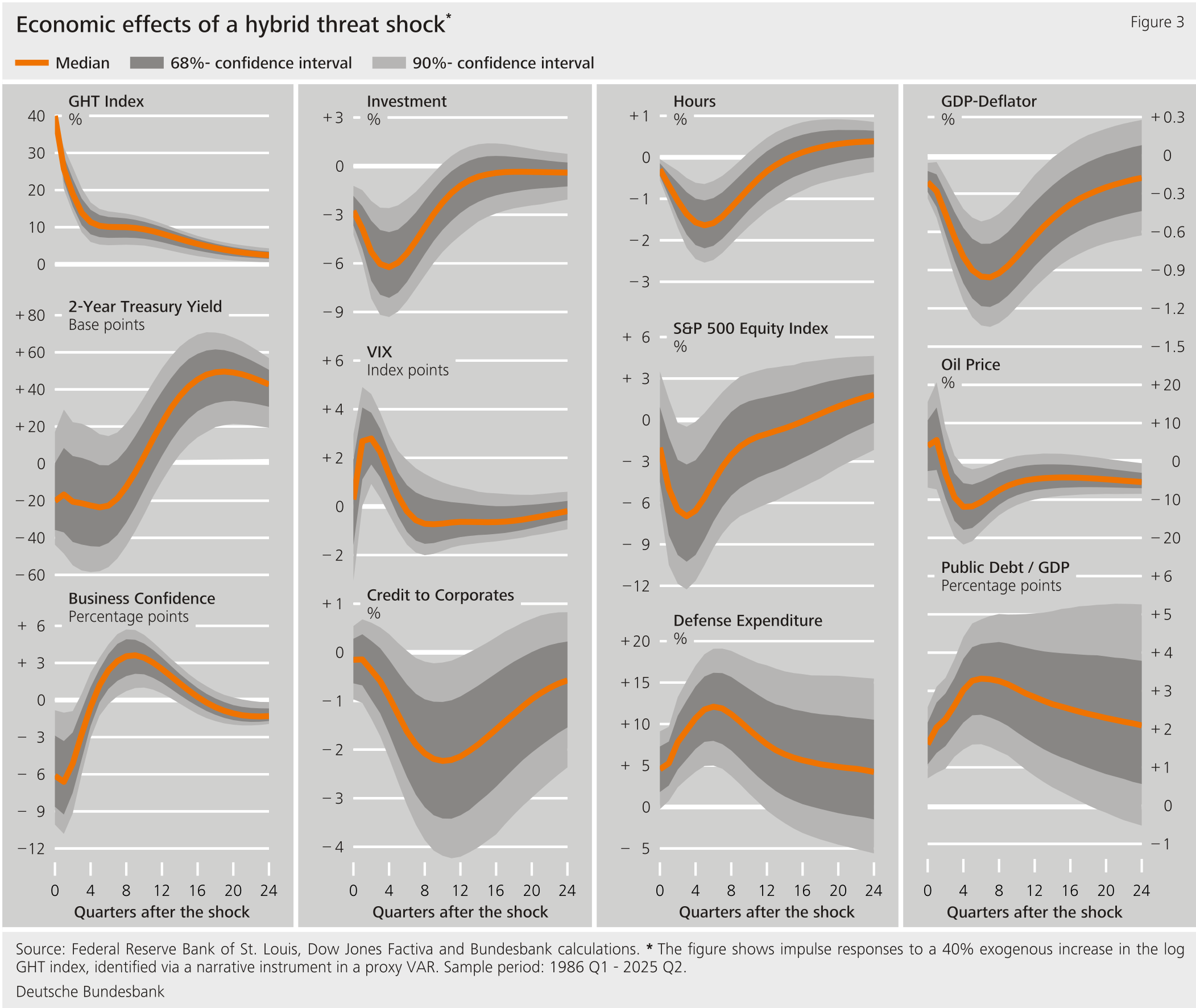
We analyse the macroeconomic and financial impact of hybrid threats using a structural vector autoregression (VAR) model with U.S. and global data from Q1 1986 to Q2 2025. To identify the causal effects of hybrid threats, we employ a narrative approach. Specifically, we use a dummy variable that captures historically significant hybrid threat events, which are typically associated with noticeable spikes in the GHT-index. Our analysis yields three key findings (see Figure 3; for better interpretability, the shock is scaled to match the increase in the GHT index observed during the Russian invasion of Ukraine in the first quarter of 2022). First, an exogenous increase in hybrid threats generates macroeconomic effects akin to a negative demand shock: real economic activity and prices decline, while business sentiment deteriorates. At the same time, economic and financial market uncertainty increases. Second, a hybrid threat shock leads to a tightening of indicators of financial conditions. This raises external financing costs for firms and further dampens overall demand. Third, the shock triggers expansionary policy responses: monetary policy eases, while defence spending increases to enhance military capabilities. This occurs against the backdrop of the potential escalation of hybrid threats into open conflicts, leading to a rise in public debt. 

Economic effects of a hybrid threat shock

Conclusion

The development of the novel GHT index enables us to analyse the macroeconomic and financial impact of geopolitical hybrid threats, combining several strands of literature. Our findings show that hybrid threat shocks primarily dampen economic activity by weakening aggregate demand. This contrasts with the predominantly supply-side effects of geopolitical risks resulting from outright military conflicts, as documented in the existing literature (e.g. Caldara and Iacoviello 2022, Bondarenko et al. 2024, Caldara et al. 2026). In this sense, the impacts of hybrid threat shocks align more closely with the macroeconomic consequences of uncertainty shocks (e.g. Leduc and Liu 2016, Basu and Bundick 2017, Deutsche Bundesbank 2025). This association is intuitive, as the objective of hybrid warfare is to destabilise societies and sow fear and uncertainty among the target population. The resulting loss of confidence leads to increased caution among businesses and consumers, which in turn dampens aggregate demand rather than constraining supply. Consequently, monetary policy is eased, and fiscal policy expanded through higher defence spending, financed by public debt. Overall, our analysis suggests that the stimulative effects of these expansionary policies do not offset the negative demand effects of hybrid threat shocks.

List of references

Basu, S. and B. Bundick (2017), Uncertainty shocks in a model of effective demand, Econometrica 85, 937–958.

Bondarenko, Y., V. Lewis, M. Rottner and Y. Schueler (2024), Geopolitical risk perceptions, Journal of International Economics 152, 104005.

Caldara, D. and M. Iacoviello, (2022), Measuring geopolitical risk, American Economic Review 112, 1194–1225.

Caldara, D., S. Conlisk, M. Iacoviello and M. Penn (2026), Do geopolitical risks raise or lower inflation?, Journal of International Economics 159, 104188.

Deutsche Bundesbank (2025), The German economy. Monthly Report, November 2025.

Leduc, S. and Z. Liu (2016), Uncertainty shocks are aggregate demand shocks, Journal of Monetary Economics 82(C), 20–35.

Metiu, N. and M. Völpel (2026), Geopolitical Hybrid Threats, Discussion Paper 11/2026, Deutsche Bundesbank.

label.authors

Norbert Metiu

Deutsche Bundesbank, Directorate General Financial Stability

Martin Völpel

Deutsche Bundesbank, Directorate General Financial Stability

publication.disclaimer.title

publication.disclaimer.description